Abnormal Posture In Respiratory
Conditions And Its
Physiotherapy Management
Presenter:- Rekha Marbate [1ST MPT]
1
CONTENTS
 Posture – Normal and Abnormal
 Effect of abnormal posture on respiratory function
 Abnormal postures in different respiratory conditions
 Physiotherapy management for each posture
 Summary
 References
2
OBJECTIVES
 Physiotherapist should able to know and manage the
postural abnormality in different respiratory conditions.
3
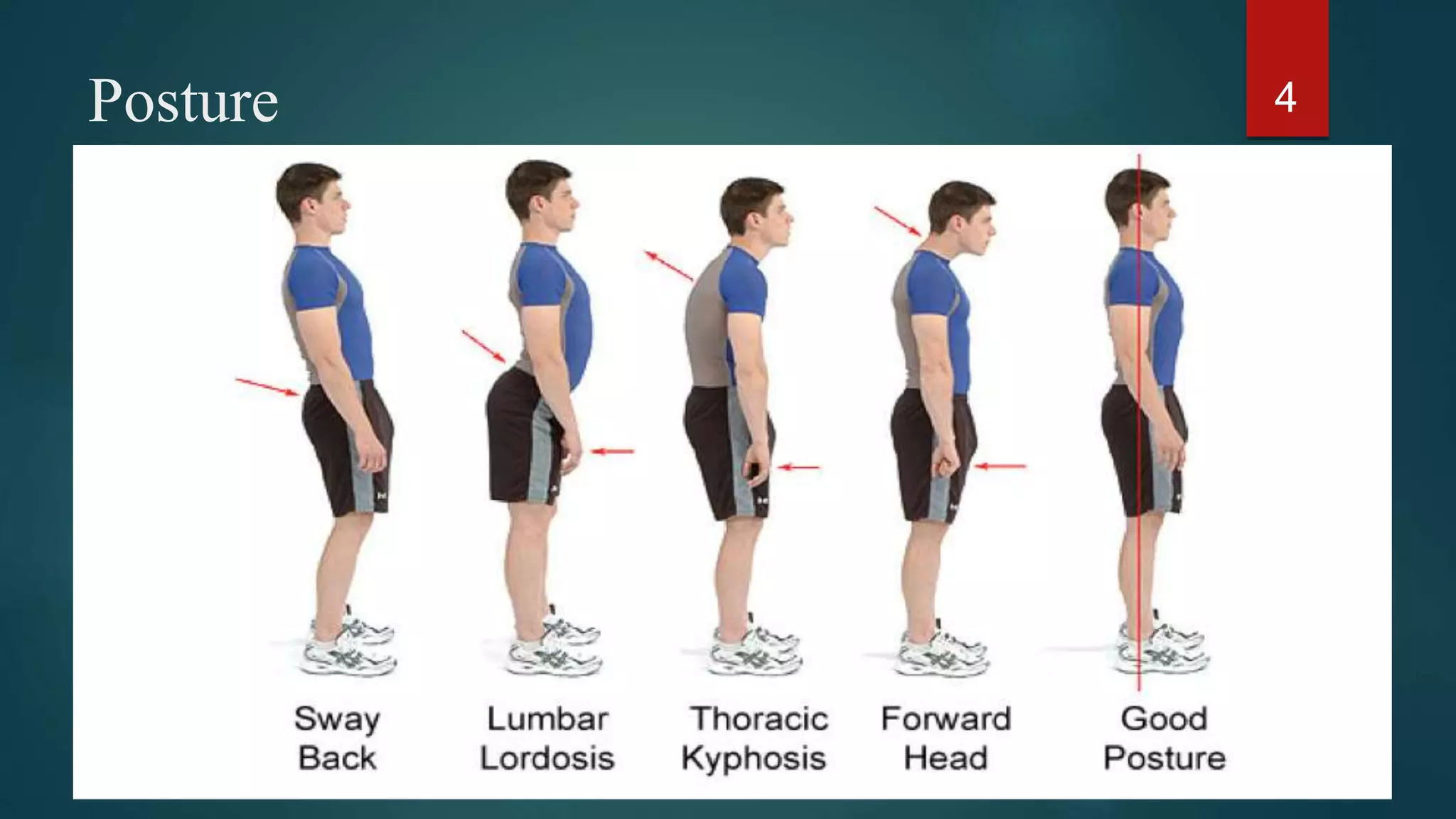
Posture 4
5
j 6
Effect on respiratory function 7
 Reduced anterior chest expansion
Rib approximation impaired pump handle mechanism.
Reduced chest volume
Reduced Total lung capacity
 Jintae Han et al [2016]
Effects of poor head and thoracic posture on forced vital capacity and respiratory
muscles activity.
• FVC and FEV1 - in the forward head posture group than in the normal group.
• Accessory respiratory muscle activity was also lower .
• In particular, SCM and pectoralis major activity
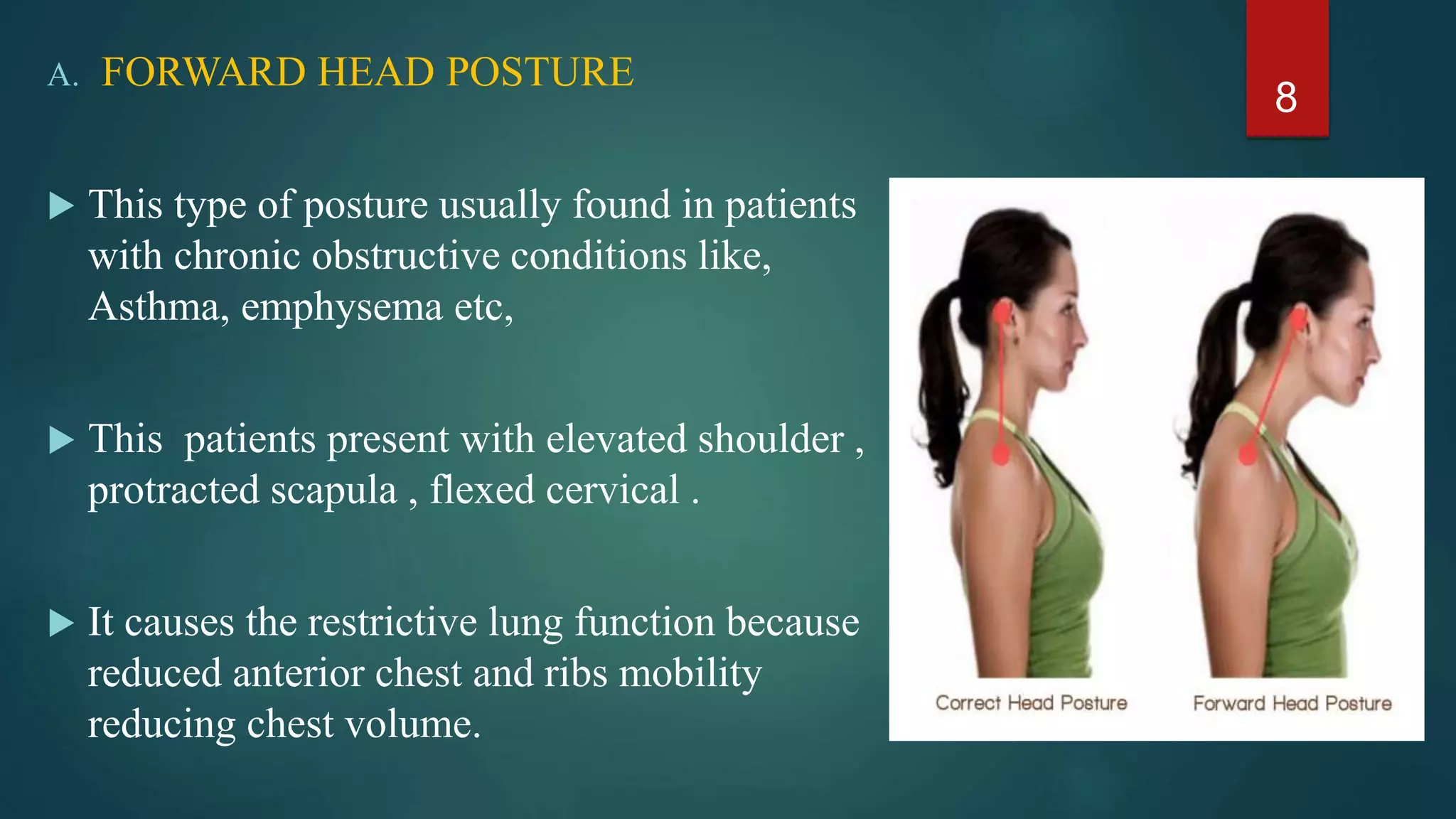
A. FORWARD HEAD POSTURE
 This type of posture usually found in patients
with chronic obstructive conditions like,
Asthma, emphysema etc,
 This patients present with elevated shoulder ,
protracted scapula , flexed cervical .
 It causes the restrictive lung function because
reduced anterior chest and ribs mobility
reducing chest volume.
8
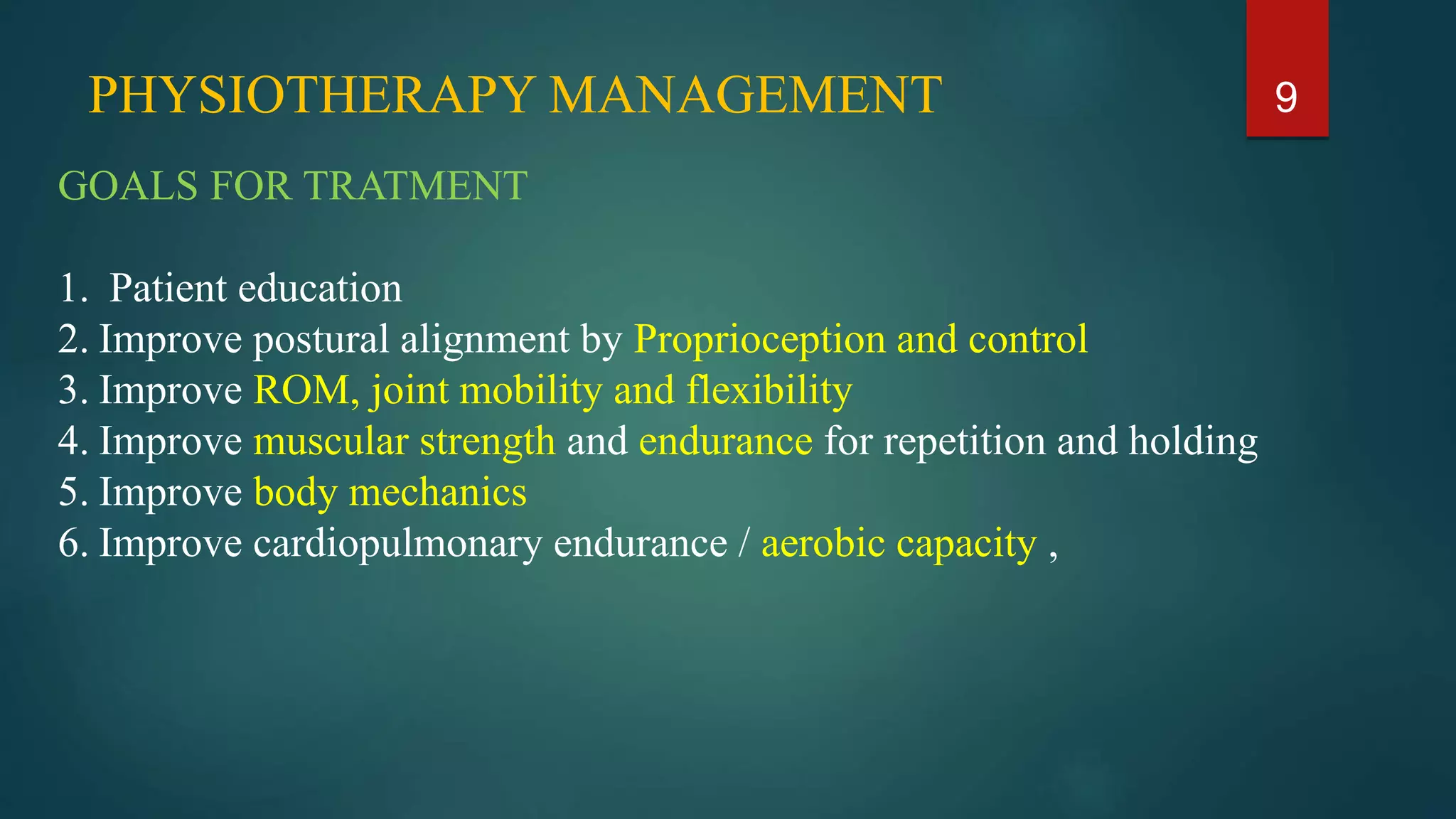
PHYSIOTHERAPY MANAGEMENT 9
GOALS FOR TRATMENT
1. Patient education
2. Improve postural alignment by Proprioception and control
3. Improve ROM, joint mobility and flexibility
4. Improve muscular strength and endurance for repetition and holding
5. Improve body mechanics
6. Improve cardiopulmonary endurance / aerobic capacity ,
10
Patient education
1. Awareness about good posture
2. Develop healthy exercise habits for self maintenance
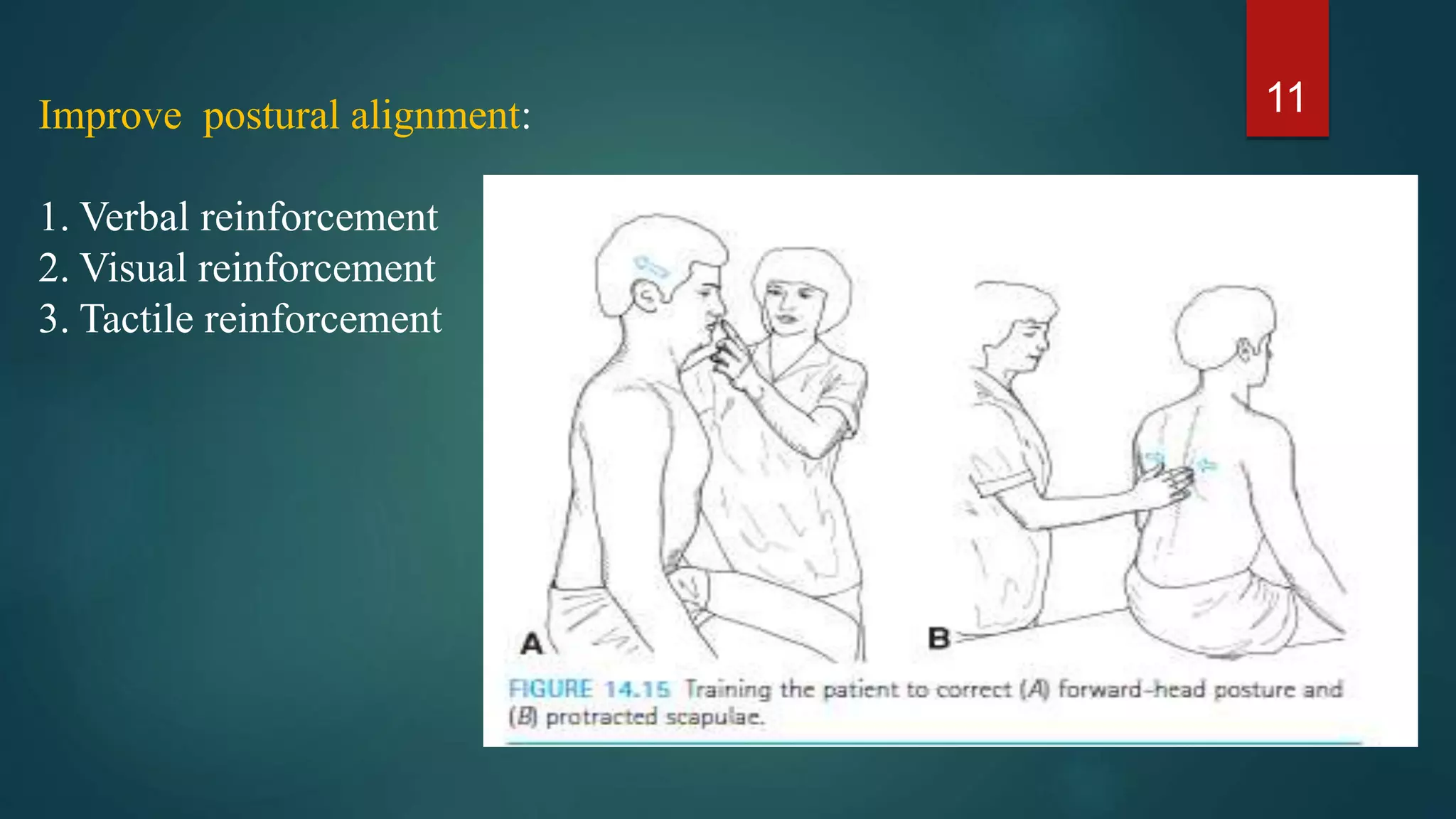
11Improve postural alignment:
1. Verbal reinforcement
2. Visual reinforcement
3. Tactile reinforcement
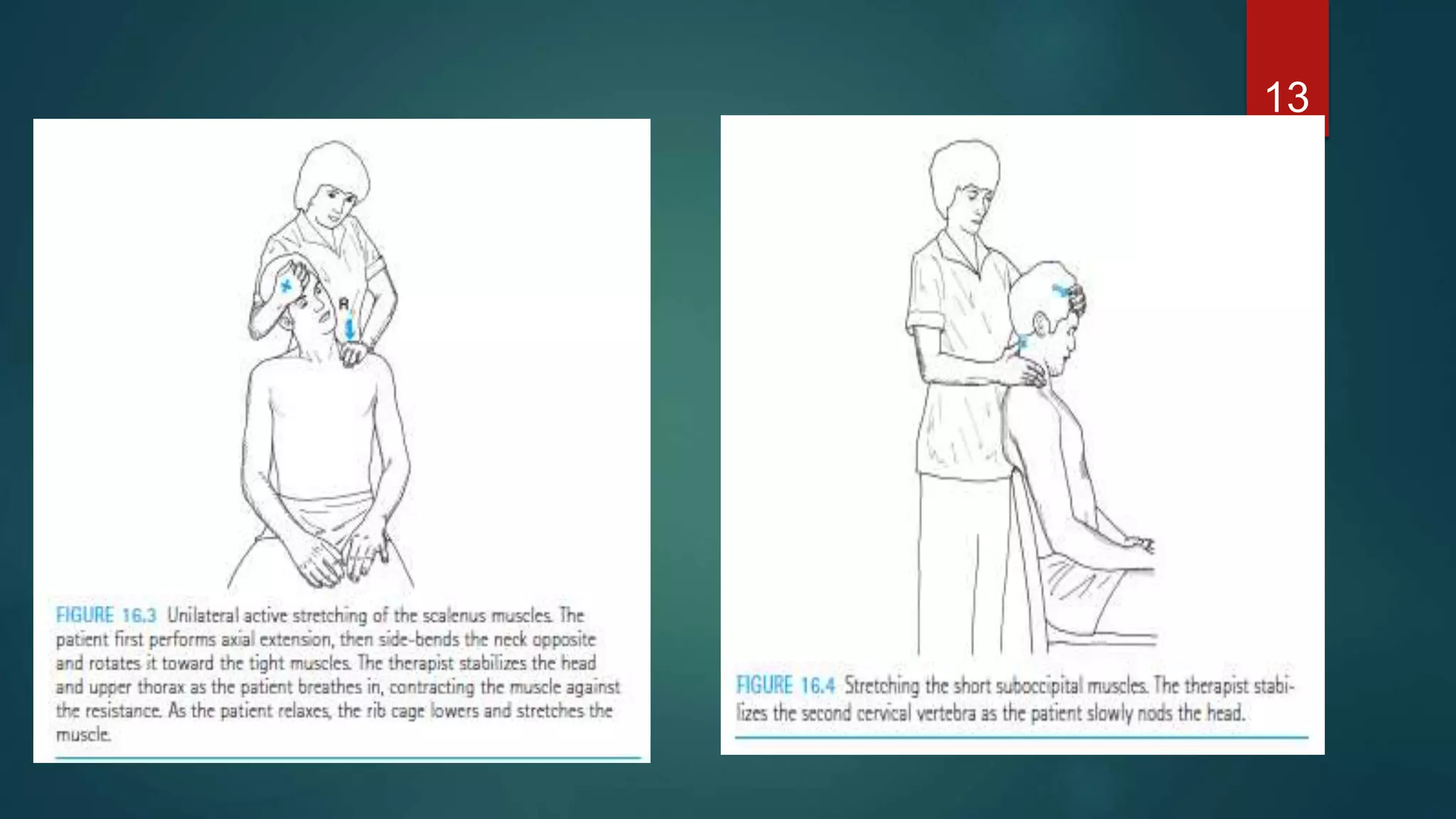
Stretches to immprove ROM and flexibility 12
13
14
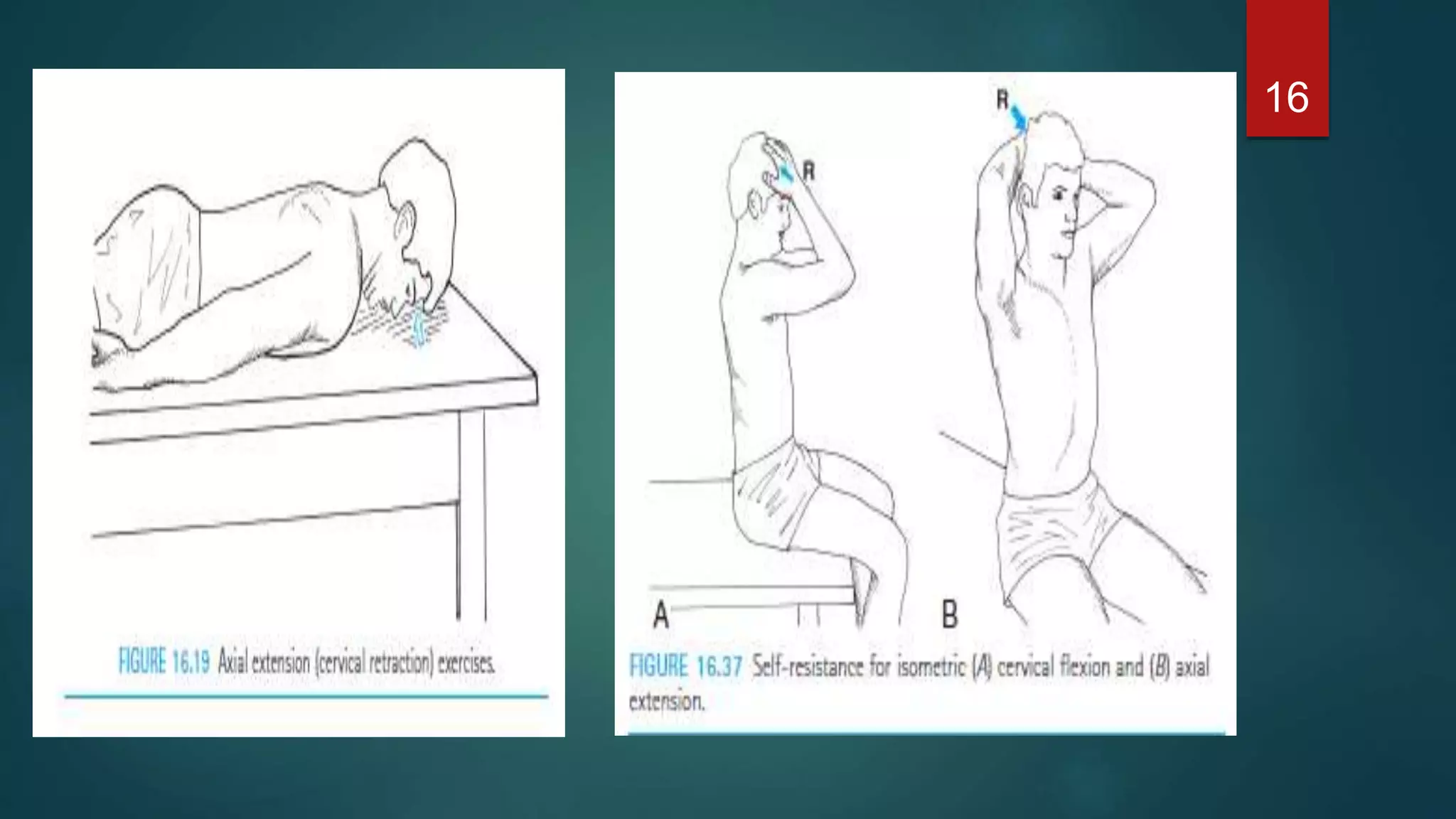
Improve strength
1. Deep Stabilizing (core) muscle Activation and Training
15
16
Improve Body mechanics
 A . Instruction and Training
 B. Environmental Adaptation
chairs and car seat- have lumbar support the person lean over
the work
Desk or Table height – adequate to keep
Working habits- frequent changing of posture
- if sedentary , get up and walk every hour
sleeping environment- firm mattress
- comfortable height of pillow
17
B. THORACIC KYPHOSIS
 Long term forward head posture and lack of postural
awareness results into kyphotic posture in patients with
chronic obstructive pulmonary diseases.
 The postural deformity most commonly
seen in Cystic Fibrosis is an increase in
Thoracic kyphosis.
18
 R Tattersall , J R Soc Med 2003, Posture and cystic fibrosis.
3 reasons of altered posture
 CF is now into their 4th decade
 problems with bone mineralization are common in CF
 as lung disease progresses, the increased work of breathing may cause
muscle imbalance due to the altered mechanics.
19
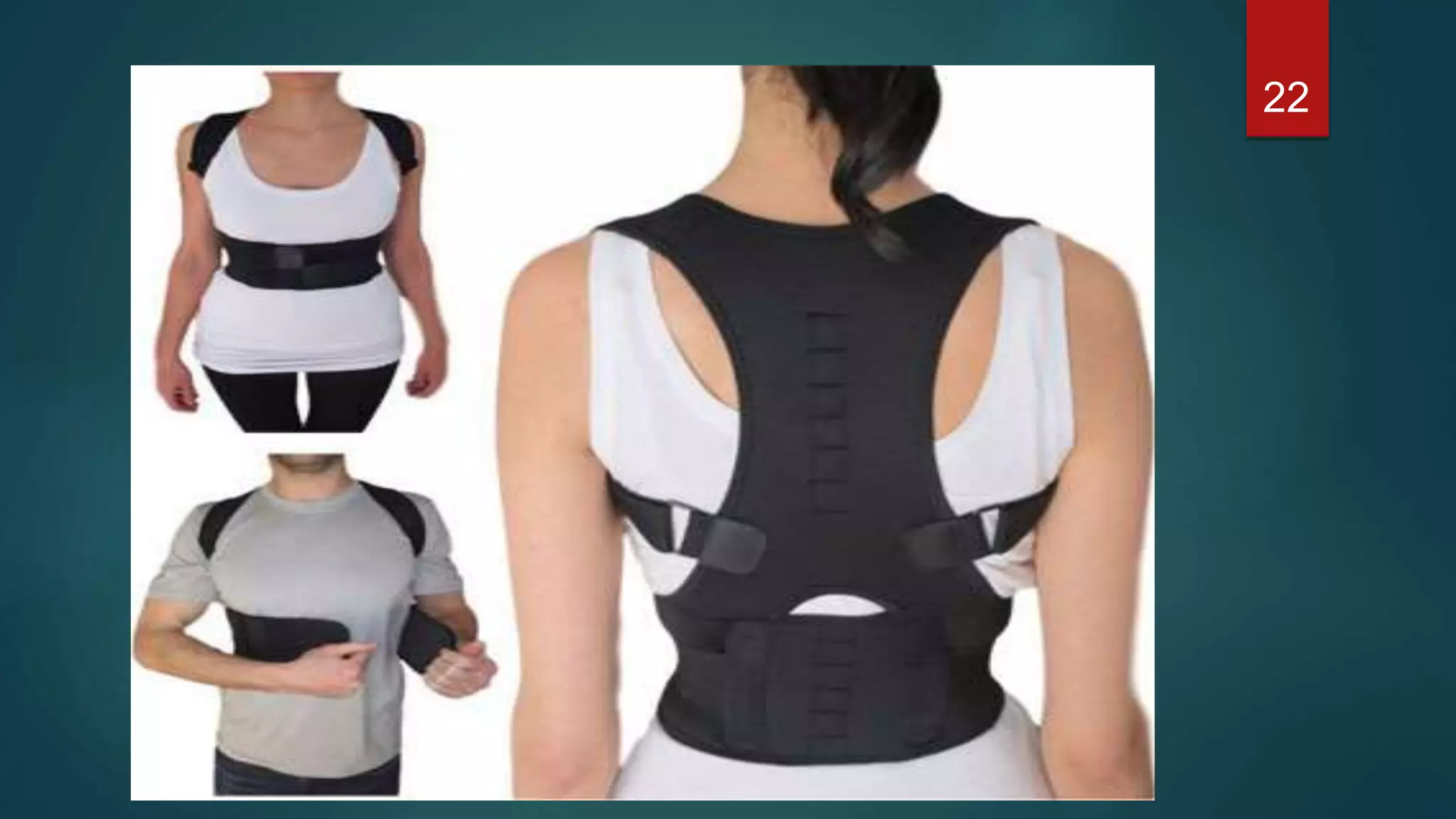
Physiotherapy treatment
 Goals
1. Awareness about posture
2. Stretching of shortened muscle
3. Strengthening of weak muscle
4. Improve Thoracic mobility
20
21
22
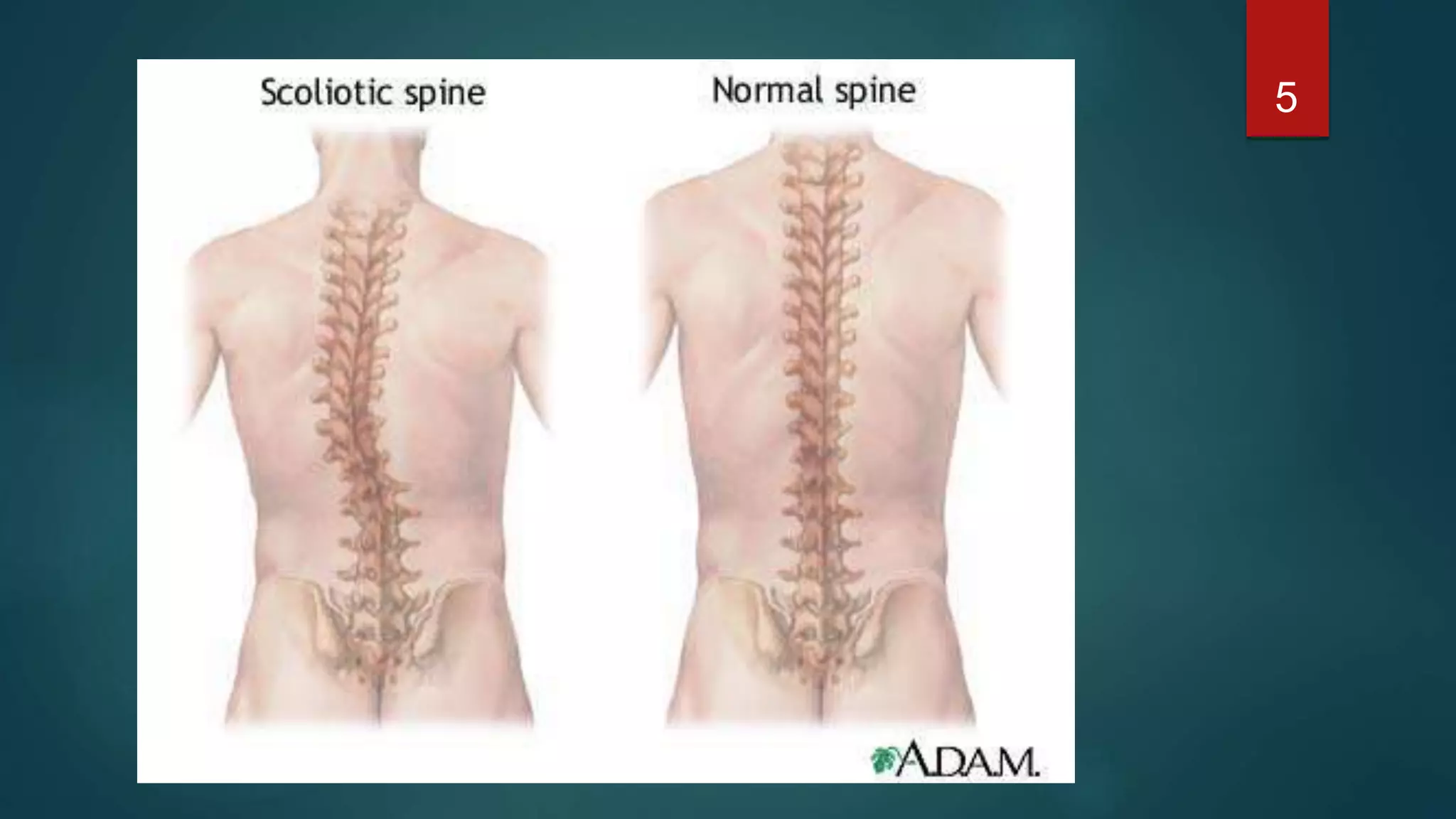
C.SCOLIOSIS
23
Michael P. Glotzbecker, journal’s of Children’s orthopaedics.
 Patients who have had a rib or chest wall resection are at risk for developing
scoliosis, particularly if the resection is performed above the sixth rib
Scoliosis after treatment of esophageal atresia or tracheoesophageal fistula
tends to be concave toward the side of the chest incision, often as a result of rib
fusion
24
Physiotherapy treatment
 Physiotherapeutic Scoliosis Specific Exercises [ PSSE ]
 Scoliosis is a complex three-dimensional (3D) spinal deformity.
 Acquired scoliosis in early childhood may progress into
adulthood and pose an increased risk of health problems and
reduction in quality of life.
25
 Andrea Lebel1* and Victoria Ashley Lebel,
Severe progressive scoliosis in an adult female possibly
secondary thoracic surgery in childhood treated with scoliosis
specific Schroth physiotherapy: Case presentation
case presentation involving a 23-year-old female scoliosis patient
who began an outpatient Schroth physiotherapy exercise program
and was initially monitored monthly and then annually for
improvement in measurements of angle of trunk rotation (ATR)
and chest expansion and improvement in vital capacity measured
with incentive spirometry
26
27
28
29
30
Summary
 What are the bad postures and theire related respiratory
conditions
 Goals while treating the bad postures
 Intervention specific physiotherpy
31
References
1. Orthopedic physical assessment by David J. Magee fifth edition
2. Therapeutic exercise by, Carolyn Kisner 5th edition
3. Physiotherapy in Respiratory Care ,By Alexander Hoff, 3rd edition
4. Physiotherapy for respiratory and cardiac care by, Jennifer A Pryor,2nd edition
5. Hagit Berdishevsky, Physiotherapy scoliosis-specific exercises – a comprehensive
review of seven major schools, Scoliosis and Spinal Disorders (2016) 11:20
6. Andrea Lebel1* and Victoria Ashley Lebel, Severe progressive scoliosis in an adult
female possibly secondary thoracic surgery in childhood treated with scoliosis specific
Schroth physiotherapy: Case presentation. Scoliosis and Spinal Disorders 2016,
11(Suppl 2):41
32
33

Abnormal posture in rs

  • 1.
    Abnormal Posture InRespiratory Conditions And Its Physiotherapy Management Presenter:- Rekha Marbate [1ST MPT] 1
  • 2.
    CONTENTS  Posture –Normal and Abnormal  Effect of abnormal posture on respiratory function  Abnormal postures in different respiratory conditions  Physiotherapy management for each posture  Summary  References 2
  • 3.
    OBJECTIVES  Physiotherapist shouldable to know and manage the postural abnormality in different respiratory conditions. 3
  • 4.
  • 5.
  • 6.
  • 7.
    Effect on respiratoryfunction 7  Reduced anterior chest expansion Rib approximation impaired pump handle mechanism. Reduced chest volume Reduced Total lung capacity  Jintae Han et al [2016] Effects of poor head and thoracic posture on forced vital capacity and respiratory muscles activity. • FVC and FEV1 - in the forward head posture group than in the normal group. • Accessory respiratory muscle activity was also lower . • In particular, SCM and pectoralis major activity
  • 8.
    A. FORWARD HEADPOSTURE  This type of posture usually found in patients with chronic obstructive conditions like, Asthma, emphysema etc,  This patients present with elevated shoulder , protracted scapula , flexed cervical .  It causes the restrictive lung function because reduced anterior chest and ribs mobility reducing chest volume. 8
  • 9.
    PHYSIOTHERAPY MANAGEMENT 9 GOALSFOR TRATMENT 1. Patient education 2. Improve postural alignment by Proprioception and control 3. Improve ROM, joint mobility and flexibility 4. Improve muscular strength and endurance for repetition and holding 5. Improve body mechanics 6. Improve cardiopulmonary endurance / aerobic capacity ,
  • 10.
    10 Patient education 1. Awarenessabout good posture 2. Develop healthy exercise habits for self maintenance
  • 11.
    11Improve postural alignment: 1.Verbal reinforcement 2. Visual reinforcement 3. Tactile reinforcement
  • 12.
    Stretches to immproveROM and flexibility 12
  • 13.
  • 14.
  • 15.
    Improve strength 1. DeepStabilizing (core) muscle Activation and Training 15
  • 16.
  • 17.
    Improve Body mechanics A . Instruction and Training  B. Environmental Adaptation chairs and car seat- have lumbar support the person lean over the work Desk or Table height – adequate to keep Working habits- frequent changing of posture - if sedentary , get up and walk every hour sleeping environment- firm mattress - comfortable height of pillow 17
  • 18.
    B. THORACIC KYPHOSIS Long term forward head posture and lack of postural awareness results into kyphotic posture in patients with chronic obstructive pulmonary diseases.  The postural deformity most commonly seen in Cystic Fibrosis is an increase in Thoracic kyphosis. 18
  • 19.
     R Tattersall, J R Soc Med 2003, Posture and cystic fibrosis. 3 reasons of altered posture  CF is now into their 4th decade  problems with bone mineralization are common in CF  as lung disease progresses, the increased work of breathing may cause muscle imbalance due to the altered mechanics. 19
  • 20.
    Physiotherapy treatment  Goals 1.Awareness about posture 2. Stretching of shortened muscle 3. Strengthening of weak muscle 4. Improve Thoracic mobility 20
  • 21.
  • 22.
  • 23.
    C.SCOLIOSIS 23 Michael P. Glotzbecker,journal’s of Children’s orthopaedics.  Patients who have had a rib or chest wall resection are at risk for developing scoliosis, particularly if the resection is performed above the sixth rib Scoliosis after treatment of esophageal atresia or tracheoesophageal fistula tends to be concave toward the side of the chest incision, often as a result of rib fusion
  • 24.
  • 25.
    Physiotherapy treatment  PhysiotherapeuticScoliosis Specific Exercises [ PSSE ]  Scoliosis is a complex three-dimensional (3D) spinal deformity.  Acquired scoliosis in early childhood may progress into adulthood and pose an increased risk of health problems and reduction in quality of life. 25
  • 26.
     Andrea Lebel1*and Victoria Ashley Lebel, Severe progressive scoliosis in an adult female possibly secondary thoracic surgery in childhood treated with scoliosis specific Schroth physiotherapy: Case presentation case presentation involving a 23-year-old female scoliosis patient who began an outpatient Schroth physiotherapy exercise program and was initially monitored monthly and then annually for improvement in measurements of angle of trunk rotation (ATR) and chest expansion and improvement in vital capacity measured with incentive spirometry 26
  • 27.
  • 28.
  • 29.
  • 30.
  • 31.
    Summary  What arethe bad postures and theire related respiratory conditions  Goals while treating the bad postures  Intervention specific physiotherpy 31
  • 32.
    References 1. Orthopedic physicalassessment by David J. Magee fifth edition 2. Therapeutic exercise by, Carolyn Kisner 5th edition 3. Physiotherapy in Respiratory Care ,By Alexander Hoff, 3rd edition 4. Physiotherapy for respiratory and cardiac care by, Jennifer A Pryor,2nd edition 5. Hagit Berdishevsky, Physiotherapy scoliosis-specific exercises – a comprehensive review of seven major schools, Scoliosis and Spinal Disorders (2016) 11:20 6. Andrea Lebel1* and Victoria Ashley Lebel, Severe progressive scoliosis in an adult female possibly secondary thoracic surgery in childhood treated with scoliosis specific Schroth physiotherapy: Case presentation. Scoliosis and Spinal Disorders 2016, 11(Suppl 2):41 32
  • 33.