Pin Description of
80386dx.
Introduction to 80386dx Architecture.
Introduction to the
80386 Microprocessor
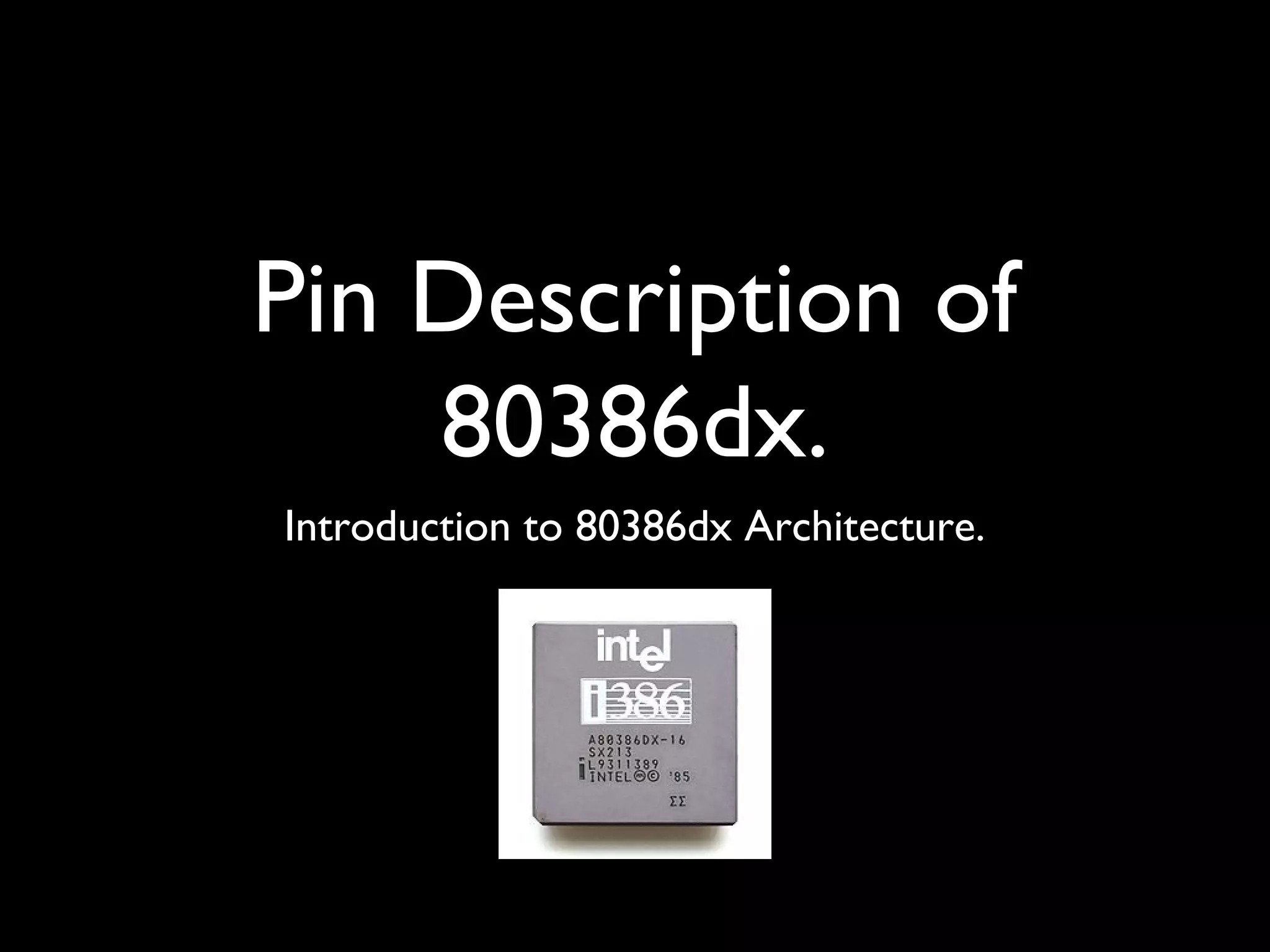
• the 80386DX is packaged in a 132-pin PGA.
• 80386DX addresses 4G bytes of memory
through its 32-bit data bus and 32-bit
address.
Function of each
80386dx group of pins:
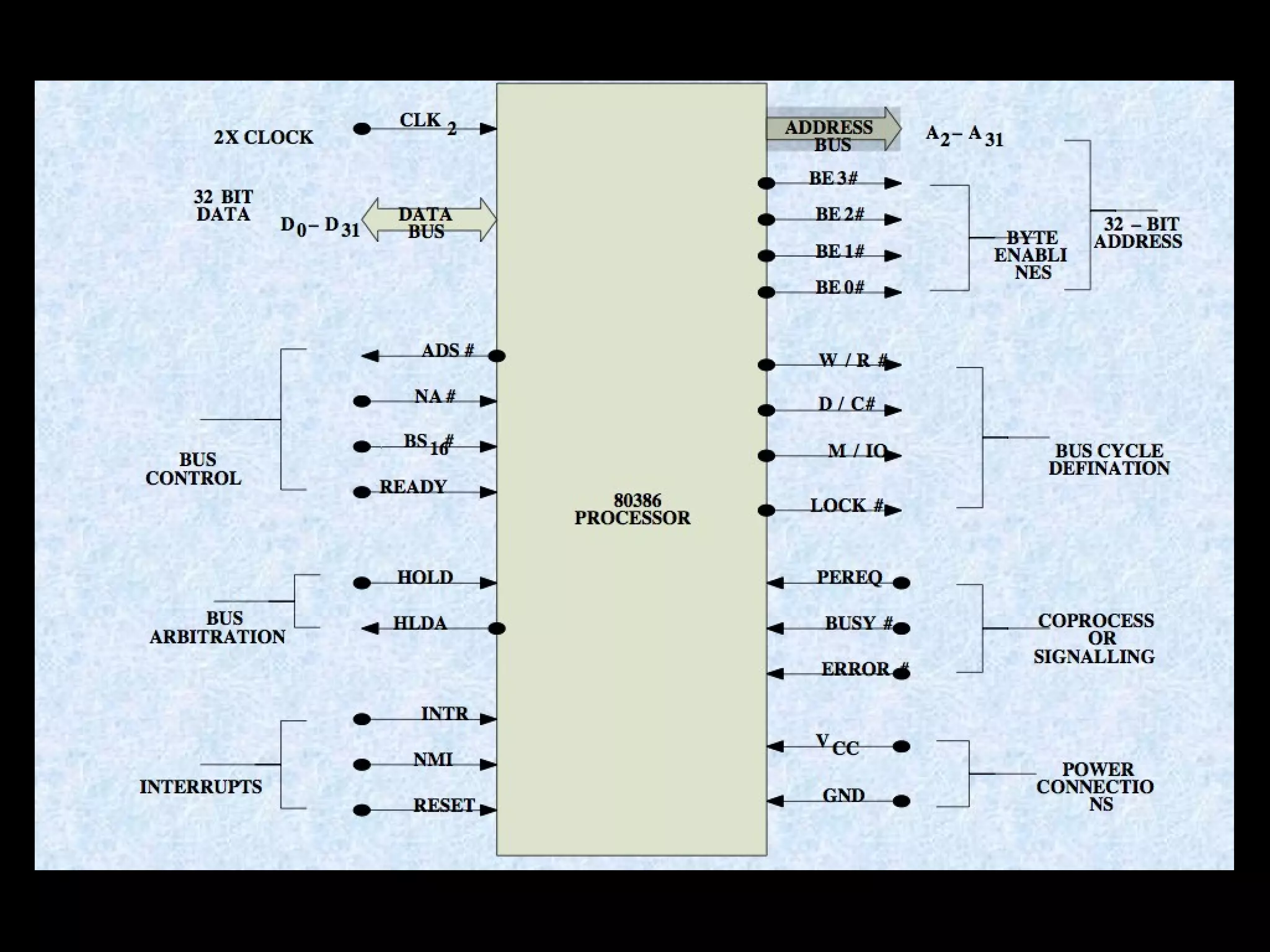
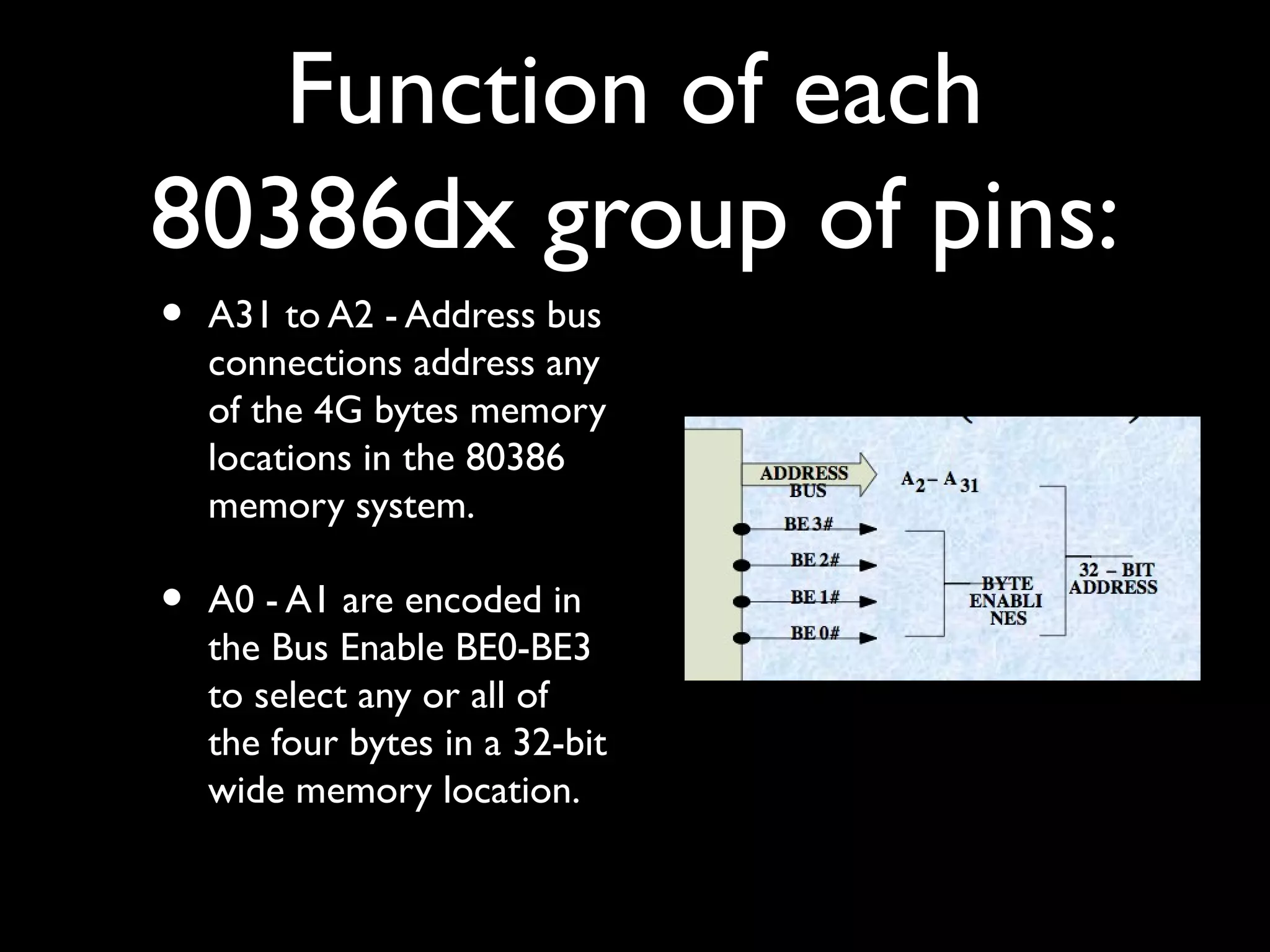
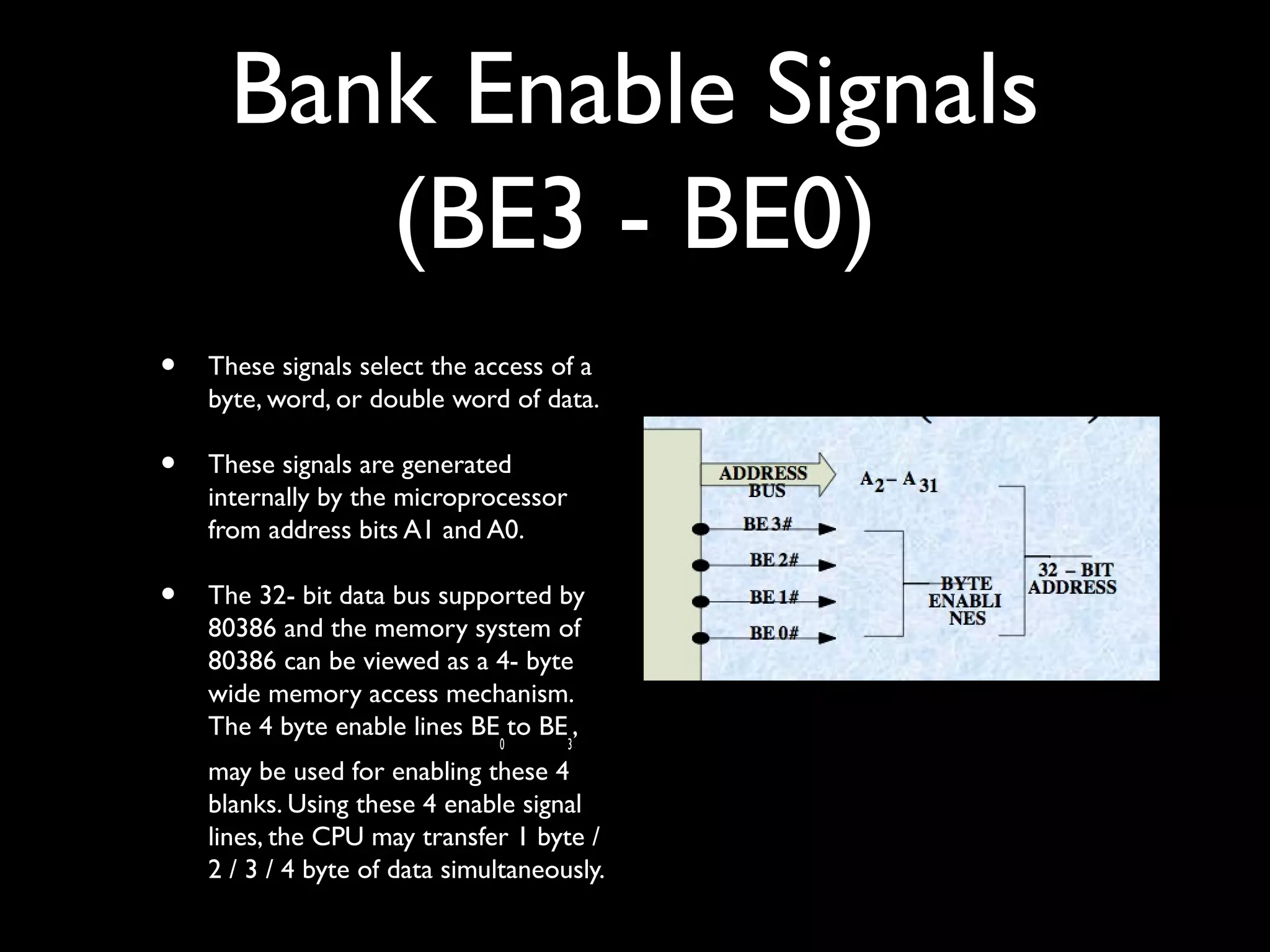
• A31 to A2 - Address bus
connections address any
of the 4G bytes memory
locations in the 80386
memory system.
• A0 - A1 are encoded in
the Bus Enable BE0-BE3
to select any or all of
the four bytes in a 32-bit
wide memory location.
Bank Enable Signals
(BE3 - BE0)
• These signals select the access of a
byte, word, or double word of data.
• These signals are generated
internally by the microprocessor
from address bits A1 and A0.
• The 32- bit data bus supported by
80386 and the memory system of
80386 can be viewed as a 4- byte
wide memory access mechanism.
The 4 byte enable lines BE
0
to BE
3
,
may be used for enabling these 4
blanks. Using these 4 enable signal
lines, the CPU may transfer 1 byte /
2 / 3 / 4 byte of data simultaneously.
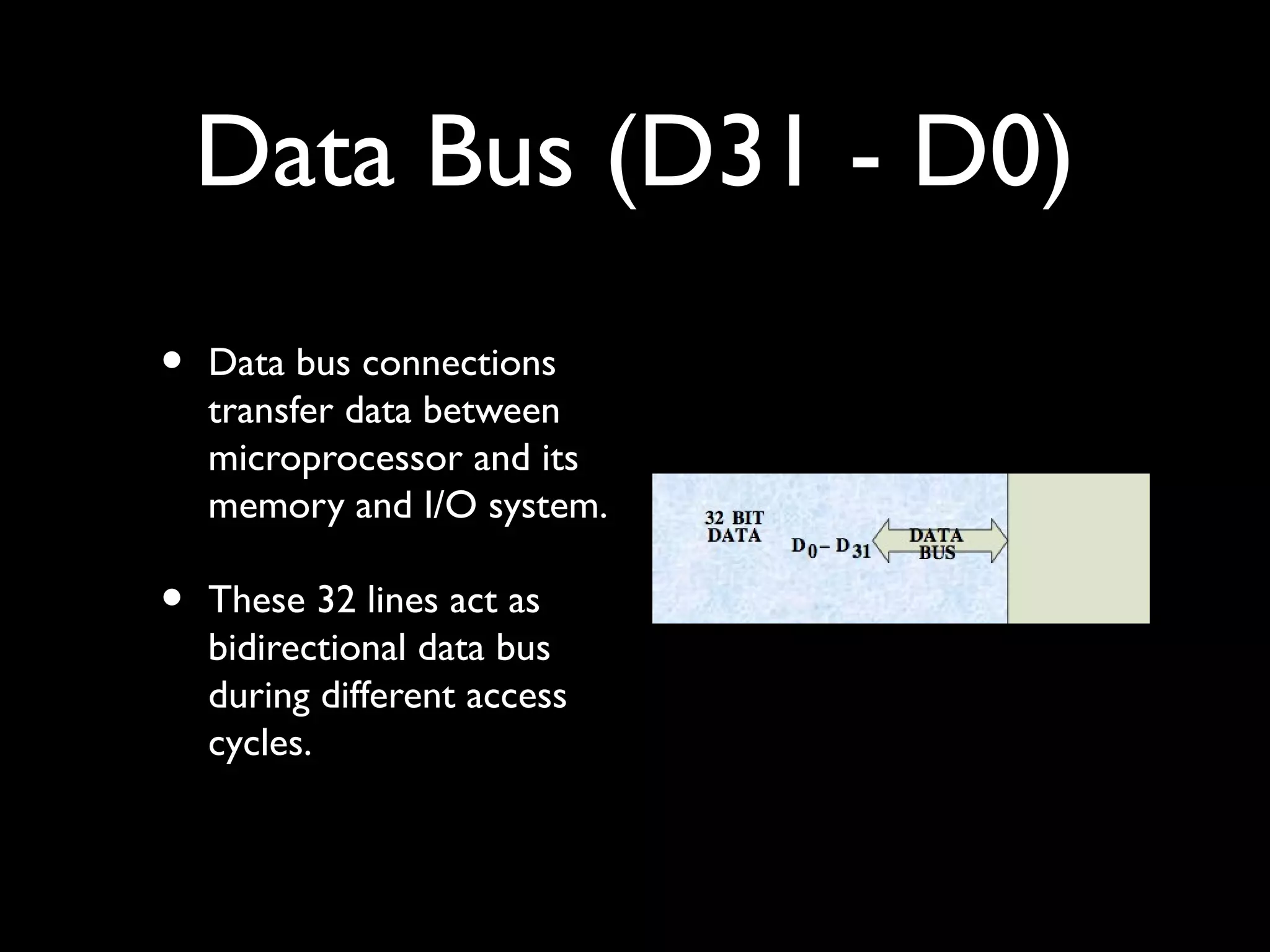
Data Bus (D31 - D0)
• Data bus connections
transfer data between
microprocessor and its
memory and I/O system.
• These 32 lines act as
bidirectional data bus
during different access
cycles.
Bus Cycle Definition
Pins
• M/IO -
a)This output pin
differentiates between
memory & I/O cycles.
b)The pin selects a memory
device when at logic 1 and an
I/O device in case of logic 0.
• W/R -
a) This pin distinguishes the
read and write cycles from
one another.
b) It indicates that the
current bus cycle is a write
when at logic 1 and a read at
logic 0.
Bus Cycle Definition
Pins• D/C - Data/Control Pin
a) This pin distinguishes a data
transfer cycle from a machine
control cycle.
b) Indicates that the data bus
contains data for or from
memory of I/O when at logic 1.
c) At logic 0, microprocessor is
halted or executes an interrupt
acknowledge.
• LOCK - this pin enables the
CPU from preventing other bus
masters from gaining control of
the system bus.
Bus Control Pins
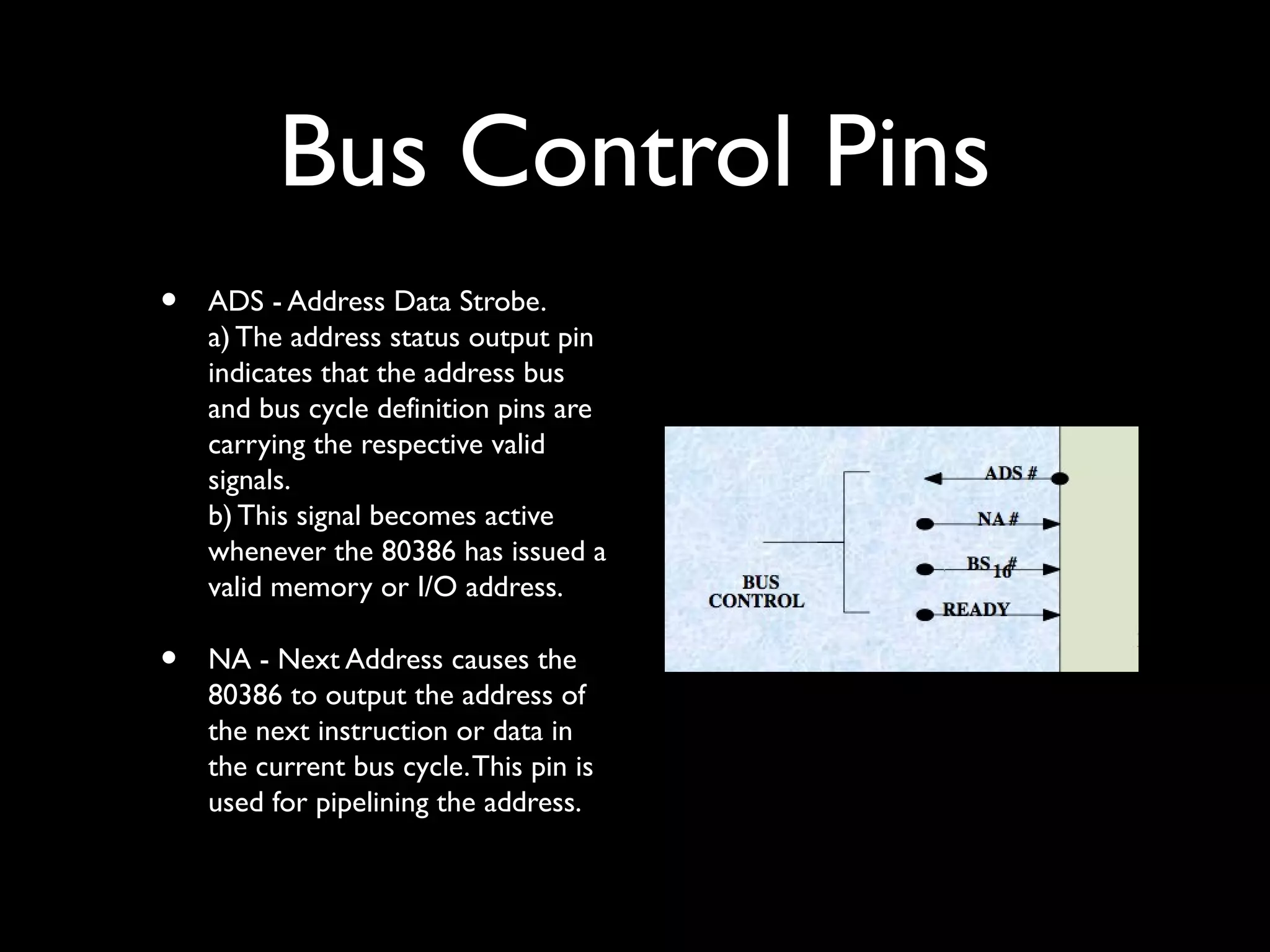
• ADS - Address Data Strobe.
a) The address status output pin
indicates that the address bus
and bus cycle definition pins are
carrying the respective valid
signals.
b) This signal becomes active
whenever the 80386 has issued a
valid memory or I/O address.
• NA - Next Address causes the
80386 to output the address of
the next instruction or data in
the current bus cycle.This pin is
used for pipelining the address.
Bus Control Pins
• BS16 - Bus Size 16 pin selects either
a 32 bit data bus (BS16 = 1) or a 16
bit data bus (BS16 = 0)
a) In most cases, 80386DX is
operated on 16 bit data bus.
b)The bus size16 input pin allows
the interfacing of 16 bit devices with
the 32 bit wide 80386 data bus.
• READY - The ready signals indicates
to the CPU that the previous bus
cycle has been terminated and the
bus is ready for the next cycle.The
signal is used to insert WAIT states
in a bus cycle and is useful for
interfacing of slow devices with
CPU.
Interrupts
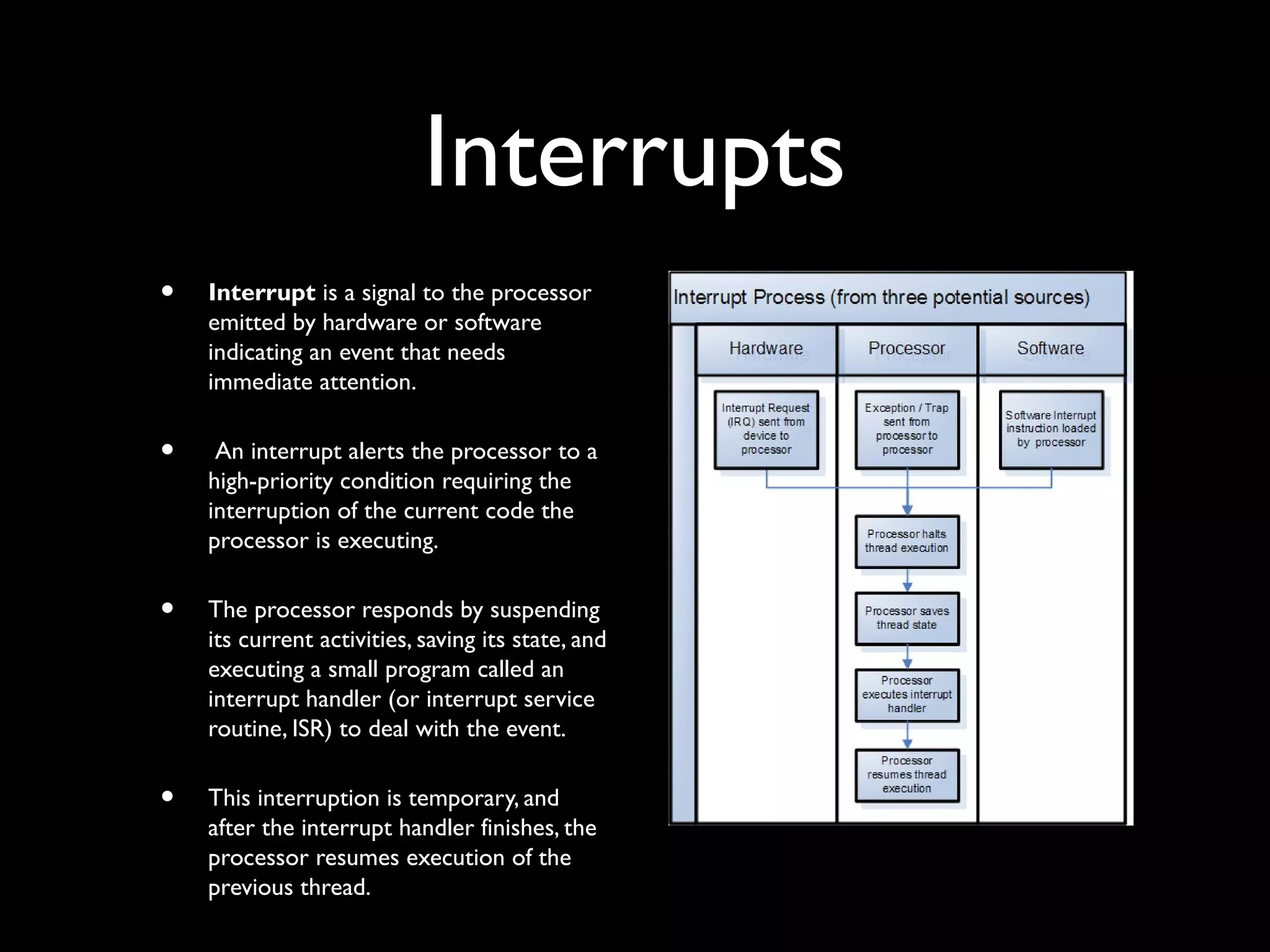
• Interrupt is a signal to the processor
emitted by hardware or software
indicating an event that needs
immediate attention.
• An interrupt alerts the processor to a
high-priority condition requiring the
interruption of the current code the
processor is executing.
• The processor responds by suspending
its current activities, saving its state, and
executing a small program called an
interrupt handler (or interrupt service
routine, ISR) to deal with the event.
• This interruption is temporary, and
after the interrupt handler finishes, the
processor resumes execution of the
previous thread.
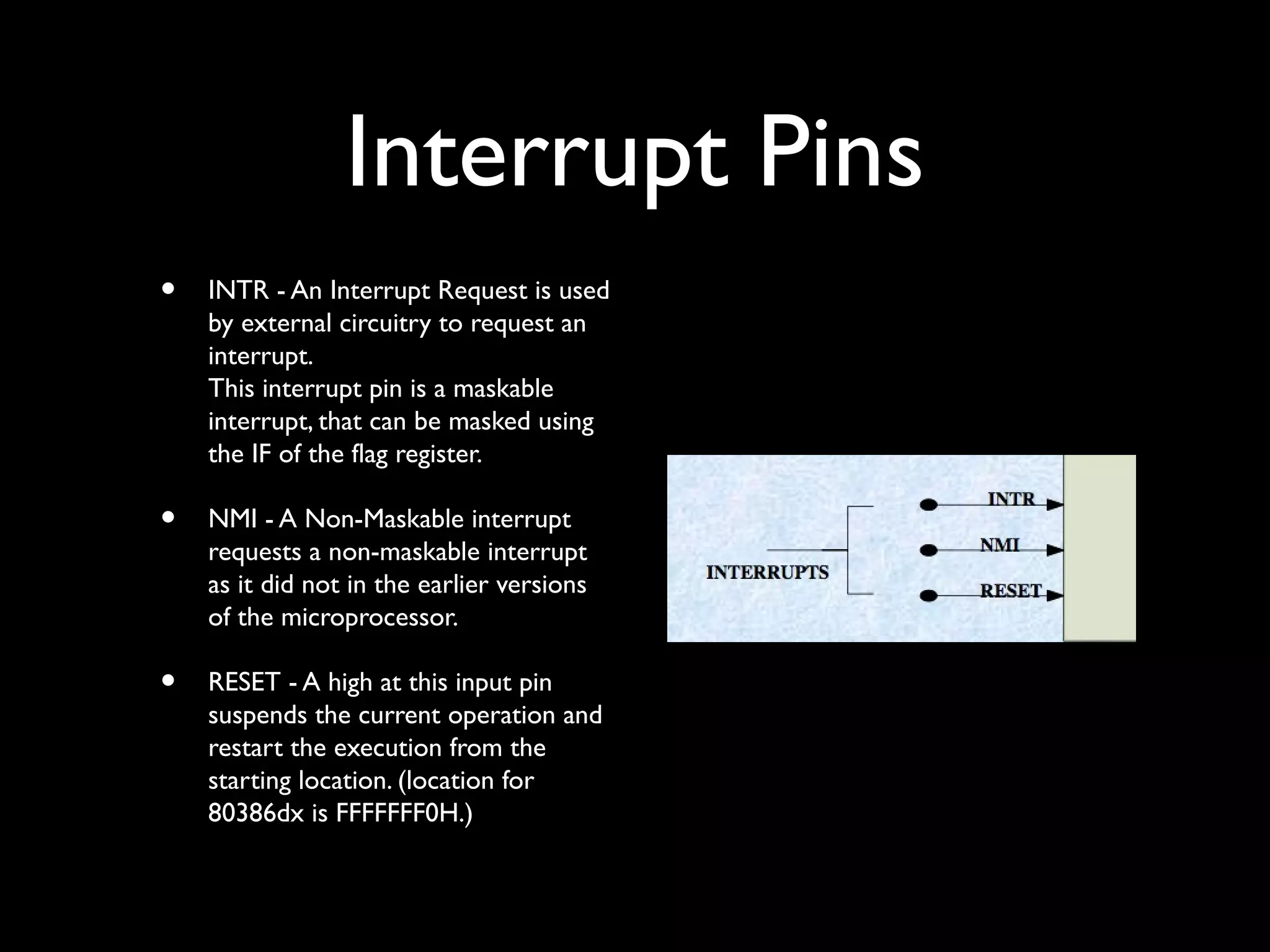
Interrupt Pins
• INTR - An Interrupt Request is used
by external circuitry to request an
interrupt.
This interrupt pin is a maskable
interrupt, that can be masked using
the IF of the flag register.
• NMI - A Non-Maskable interrupt
requests a non-maskable interrupt
as it did not in the earlier versions
of the microprocessor.
• RESET - A high at this input pin
suspends the current operation and
restart the execution from the
starting location. (location for
80386dx is FFFFFFF0H.)
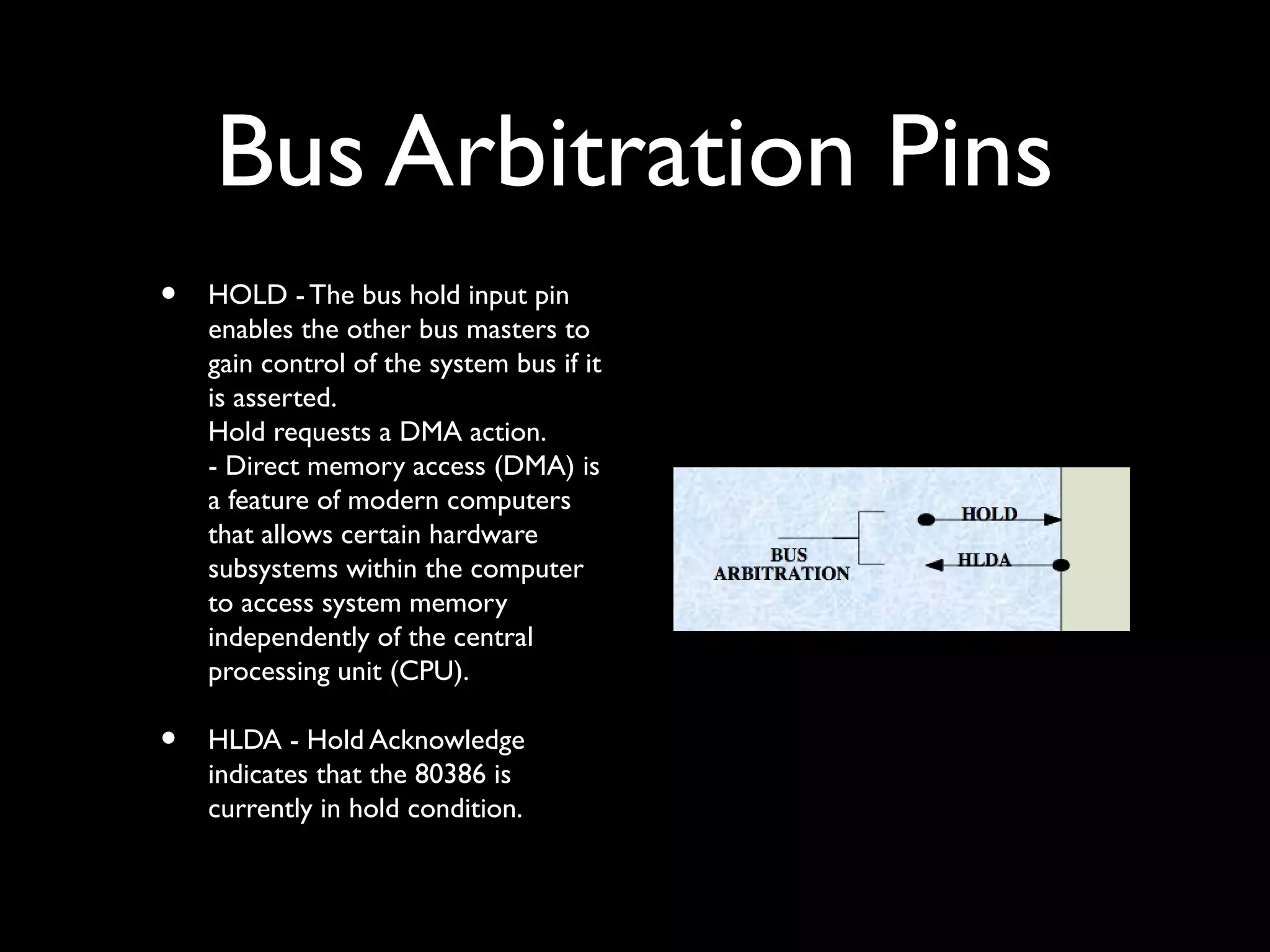
Bus Arbitration Pins
• HOLD -The bus hold input pin
enables the other bus masters to
gain control of the system bus if it
is asserted.
Hold requests a DMA action.
- Direct memory access (DMA) is
a feature of modern computers
that allows certain hardware
subsystems within the computer
to access system memory
independently of the central
processing unit (CPU).
• HLDA - Hold Acknowledge
indicates that the 80386 is
currently in hold condition.
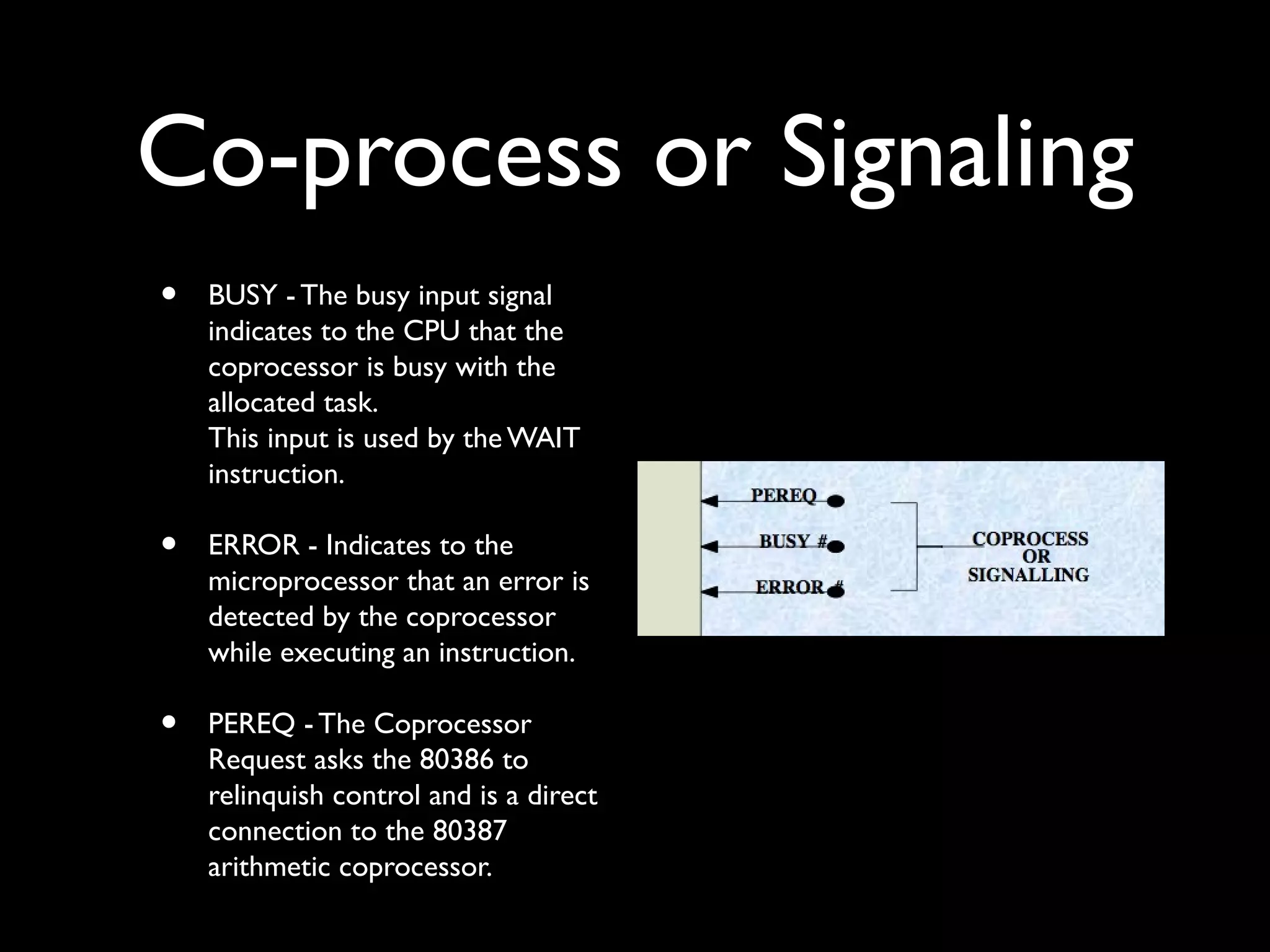
Co-process or Signaling
• BUSY - The busy input signal
indicates to the CPU that the
coprocessor is busy with the
allocated task.
This input is used by the WAIT
instruction.
• ERROR - Indicates to the
microprocessor that an error is
detected by the coprocessor
while executing an instruction.
• PEREQ - The Coprocessor
Request asks the 80386 to
relinquish control and is a direct
connection to the 80387
arithmetic coprocessor.
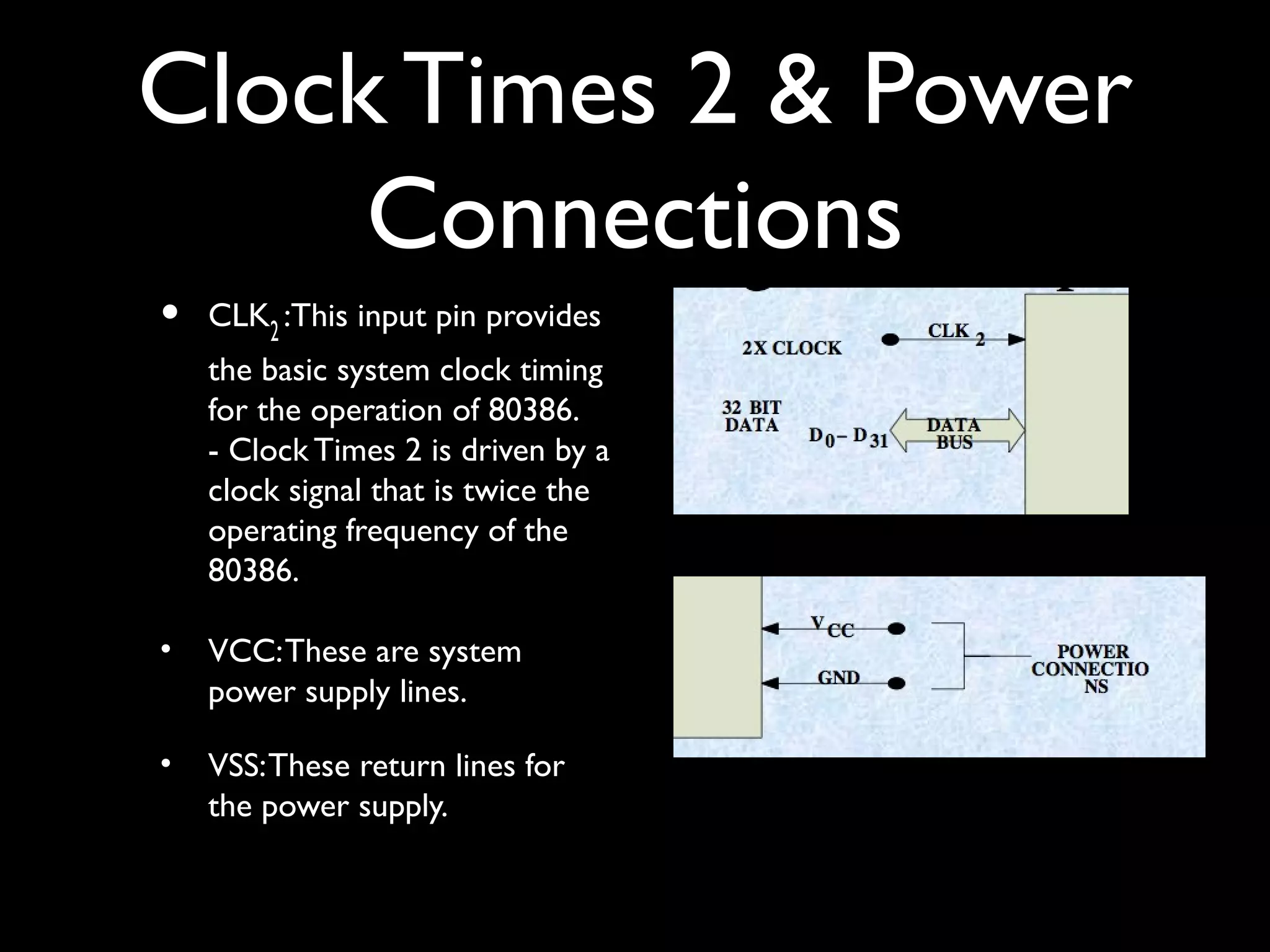
Clock Times 2 & Power
Connections
• CLK2 :This input pin provides
the basic system clock timing
for the operation of 80386.
- Clock Times 2 is driven by a
clock signal that is twice the
operating frequency of the
80386.
• VCC:These are system
power supply lines.
• VSS:These return lines for
the power supply.
References
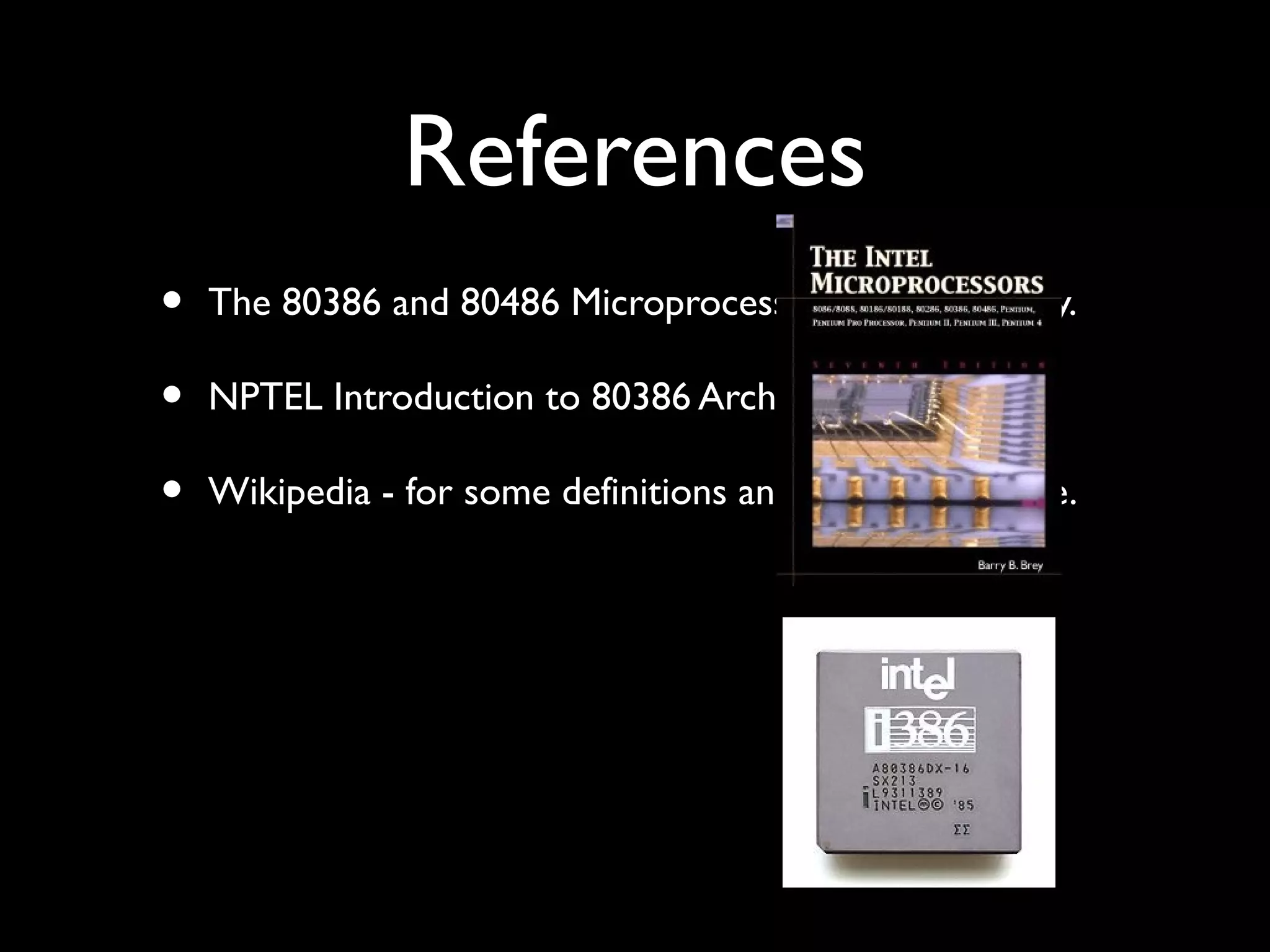
• The 80386 and 80486 Microprocessor - Barry B. Brey.
• NPTEL Introduction to 80386 Architecture PDF.
• Wikipedia - for some definitions and 80386DX Image.

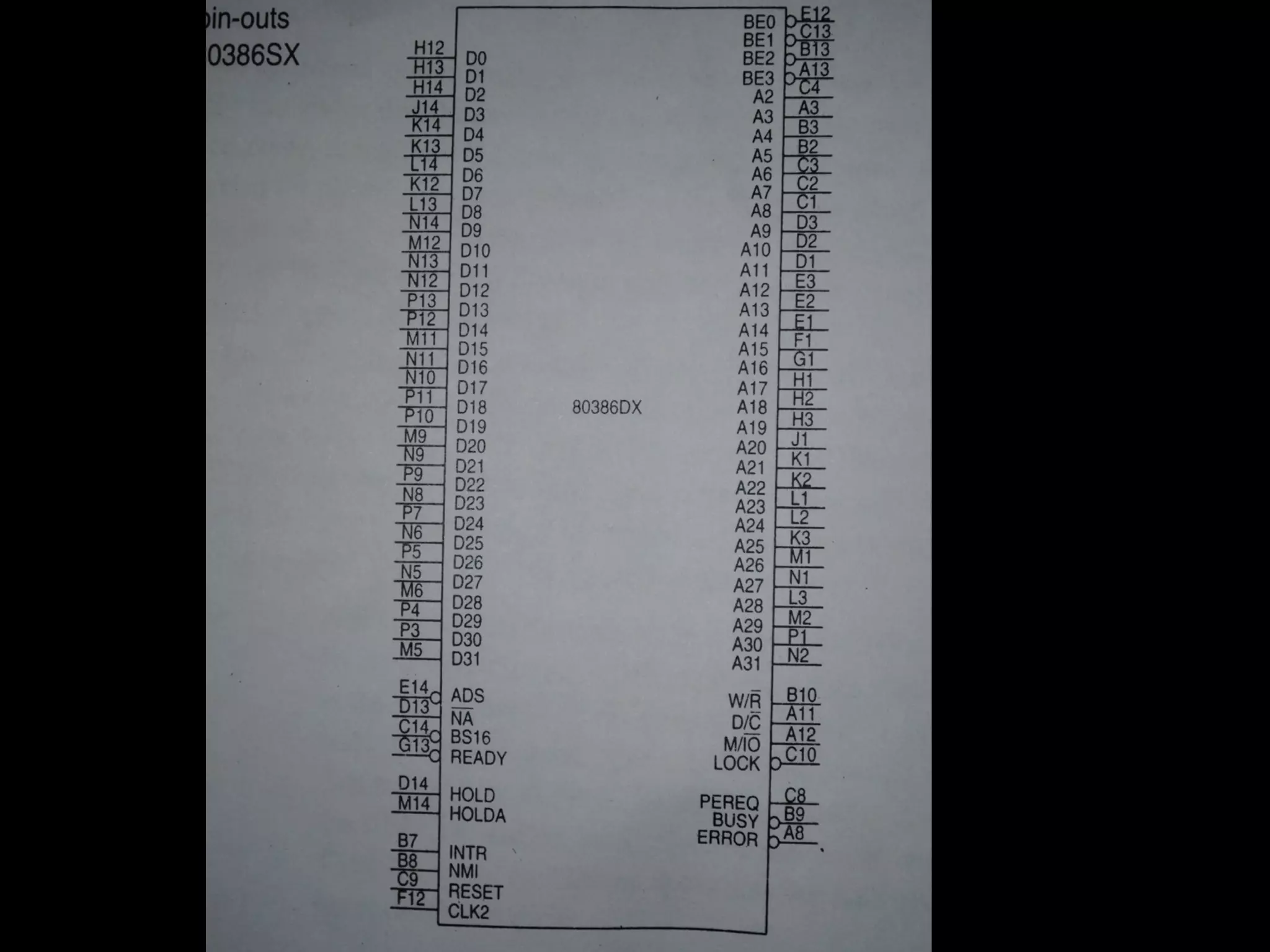
Pin Description Diagram of Intel 80386 DX Microprocessor

  • 1.
  • 2.
    Introduction to the 80386Microprocessor • the 80386DX is packaged in a 132-pin PGA. • 80386DX addresses 4G bytes of memory through its 32-bit data bus and 32-bit address.
  • 5.
    Function of each 80386dxgroup of pins: • A31 to A2 - Address bus connections address any of the 4G bytes memory locations in the 80386 memory system. • A0 - A1 are encoded in the Bus Enable BE0-BE3 to select any or all of the four bytes in a 32-bit wide memory location.
  • 6.
    Bank Enable Signals (BE3- BE0) • These signals select the access of a byte, word, or double word of data. • These signals are generated internally by the microprocessor from address bits A1 and A0. • The 32- bit data bus supported by 80386 and the memory system of 80386 can be viewed as a 4- byte wide memory access mechanism. The 4 byte enable lines BE 0 to BE 3 , may be used for enabling these 4 blanks. Using these 4 enable signal lines, the CPU may transfer 1 byte / 2 / 3 / 4 byte of data simultaneously.
  • 7.
    Data Bus (D31- D0) • Data bus connections transfer data between microprocessor and its memory and I/O system. • These 32 lines act as bidirectional data bus during different access cycles.
  • 8.
    Bus Cycle Definition Pins •M/IO - a)This output pin differentiates between memory & I/O cycles. b)The pin selects a memory device when at logic 1 and an I/O device in case of logic 0. • W/R - a) This pin distinguishes the read and write cycles from one another. b) It indicates that the current bus cycle is a write when at logic 1 and a read at logic 0.
  • 9.
    Bus Cycle Definition Pins•D/C - Data/Control Pin a) This pin distinguishes a data transfer cycle from a machine control cycle. b) Indicates that the data bus contains data for or from memory of I/O when at logic 1. c) At logic 0, microprocessor is halted or executes an interrupt acknowledge. • LOCK - this pin enables the CPU from preventing other bus masters from gaining control of the system bus.
  • 10.
    Bus Control Pins •ADS - Address Data Strobe. a) The address status output pin indicates that the address bus and bus cycle definition pins are carrying the respective valid signals. b) This signal becomes active whenever the 80386 has issued a valid memory or I/O address. • NA - Next Address causes the 80386 to output the address of the next instruction or data in the current bus cycle.This pin is used for pipelining the address.
  • 11.
    Bus Control Pins •BS16 - Bus Size 16 pin selects either a 32 bit data bus (BS16 = 1) or a 16 bit data bus (BS16 = 0) a) In most cases, 80386DX is operated on 16 bit data bus. b)The bus size16 input pin allows the interfacing of 16 bit devices with the 32 bit wide 80386 data bus. • READY - The ready signals indicates to the CPU that the previous bus cycle has been terminated and the bus is ready for the next cycle.The signal is used to insert WAIT states in a bus cycle and is useful for interfacing of slow devices with CPU.
  • 12.
    Interrupts • Interrupt isa signal to the processor emitted by hardware or software indicating an event that needs immediate attention. • An interrupt alerts the processor to a high-priority condition requiring the interruption of the current code the processor is executing. • The processor responds by suspending its current activities, saving its state, and executing a small program called an interrupt handler (or interrupt service routine, ISR) to deal with the event. • This interruption is temporary, and after the interrupt handler finishes, the processor resumes execution of the previous thread.
  • 13.
    Interrupt Pins • INTR- An Interrupt Request is used by external circuitry to request an interrupt. This interrupt pin is a maskable interrupt, that can be masked using the IF of the flag register. • NMI - A Non-Maskable interrupt requests a non-maskable interrupt as it did not in the earlier versions of the microprocessor. • RESET - A high at this input pin suspends the current operation and restart the execution from the starting location. (location for 80386dx is FFFFFFF0H.)
  • 14.
    Bus Arbitration Pins •HOLD -The bus hold input pin enables the other bus masters to gain control of the system bus if it is asserted. Hold requests a DMA action. - Direct memory access (DMA) is a feature of modern computers that allows certain hardware subsystems within the computer to access system memory independently of the central processing unit (CPU). • HLDA - Hold Acknowledge indicates that the 80386 is currently in hold condition.
  • 15.
    Co-process or Signaling •BUSY - The busy input signal indicates to the CPU that the coprocessor is busy with the allocated task. This input is used by the WAIT instruction. • ERROR - Indicates to the microprocessor that an error is detected by the coprocessor while executing an instruction. • PEREQ - The Coprocessor Request asks the 80386 to relinquish control and is a direct connection to the 80387 arithmetic coprocessor.
  • 16.
    Clock Times 2& Power Connections • CLK2 :This input pin provides the basic system clock timing for the operation of 80386. - Clock Times 2 is driven by a clock signal that is twice the operating frequency of the 80386. • VCC:These are system power supply lines. • VSS:These return lines for the power supply.
  • 17.
    References • The 80386and 80486 Microprocessor - Barry B. Brey. • NPTEL Introduction to 80386 Architecture PDF. • Wikipedia - for some definitions and 80386DX Image.