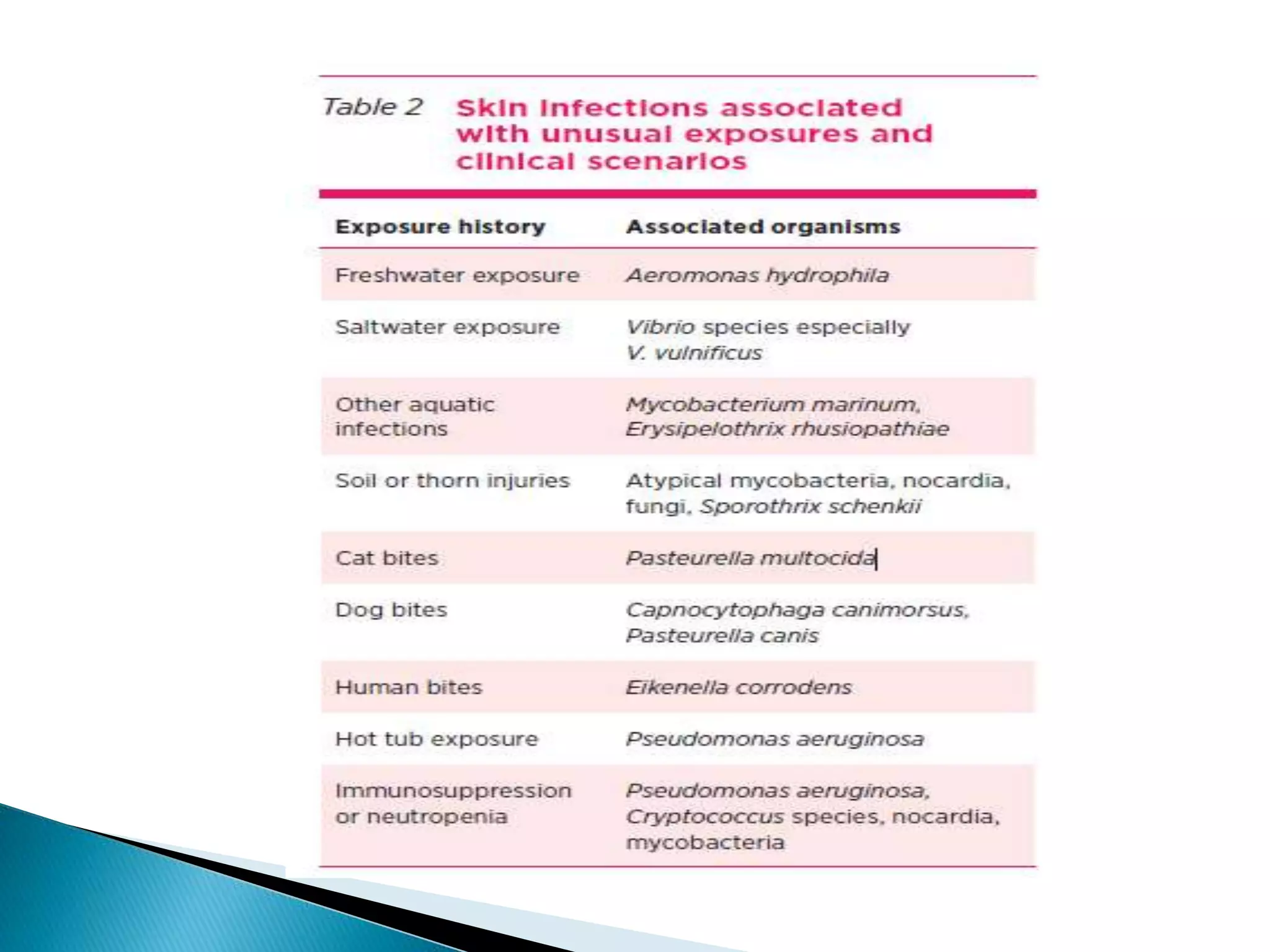
IMPETIGO, ABSCESSES, CELLULITIS, AND ERYSIPELA
1
2
 Erysepelas:
 Impetigo
 Folliculitis Erysepalas
Impetigo
Folliculitis
 Erysipelas involves the upper dermis and
superficial lymphatics. Skin lesions are
usually raised with a clear demarcation of
infected skin. Classically, erysipelas affects
the face (but it can also involve other areas
such as the lower limb. It is most commonly
caused by Streptococcus pyogenes (group A
streptococcus).
 Impetigo is a superficial bacterial infection that
can develop either through direct invasion of
normal skin (primary) or infection at sites of
damaged skin (secondary) It is common in
children and is highly contagious. There are two
forms:
 non-bullous or crusted impetigo – distinct
yellow, crusting lesions that may be itchy.
Typically involves face or extremities
 bullous impetigo – usually caused by
Staphylococcus aureus. Presents as bullae that
rupture to form a brown crust.
 This usually presents as a crop of pustules
affecting areas of moist skin with hair. It is
most commonly caused by S. aureus but can
also be linked to other organisms like
Pseudomonas aeruginosa when associated
with specific exposures like hot tubs and
spas.
 Ecthyma
 Frunclosis
 Carbunclosis
 Ecthyma is a skin infection characterised by
crusted sores beneath which ulcers form. It is
a deep form of impetigo, as the same
bacteria causing the infection are involved.
Ecthyma causes deeper erosions of the skin
into the dermis.
 Furuncles and carbuncles.
 Furuncles (or “boils”) are infections of the hair
follicle (folliculitis ), usually caused by S. aureus, in
which suppuration extends through the dermis into
the subcutaneous tissue
 Carbuncle- extension to involve several adjacent
follicles with coalescent inflammatory mass - back of
the neck especially in diabetics
 Larger furuncles and all carbuncles require incision
and drainage.
 Systemic antibiotics are usually unnecessary
9
10
 Families-prisons-sports teams
 Inadequate personal hygiene
 Repeated attacks of furunculosis
 Presence of S. aureus in the anterior nare- 20-
40%
 Mupirocin ointment- eradicate staphylococcal
carriage nasal colonization
 Cellulitis
 Acute spreading infection involves the deeper dermis and
subcutaneous tissues.
 β-hemolytic streptococci, Group A streptococci, and group
B streptococci-diabetics
 S. aureus : commonly causes cellulitis- penetrating
trauma.
 Haemophilus influenzae periorbital cellulitis in children
 Risk factors ; Obesity, venous insufficiency, lymphatic
obstruction (operations), preexisting skin infections-
ulceration, or eczema,
 CA-MRSA
Carry Panton-Valentine leukocidin gene
More sensitive to antibiotics
Can lead to sever skin and soft tissue infection or septic shock
11
 Clinical diagnosis Symptoms and Signs
 High WBCs, blood culture rarely needed (Celullulitis)
 Aspiration and biopsy , diabetes mellitus, malignancy, animal
bites, neutropenia (Pseudomonas aeruginosa )
immunodeficiency, obesity and renal failure
 progression to severe infection(increased in size with
systemic manifestation. (fever, leukocytosis)
 Treatment: cover streptococcus and staphylococcus
 Penicillin, cloxacillin,
cefazolin(cephalexin),clindamycin
 Vancomycin or linazolid in case of MRSA
 Clindamycin, TMP-SMZ for CaMRSA.
12
flesh-eating disease
13
14
 rare deep skin and subcutaneous tissues infection
 It can be monomicrobial or (polymicrobial) infection
 Most common in the arms, legs, and abdominal wall and is fatal in 30%-
40% of cases.
 Fournier's gangrene (testicular), Necrotizing cellulitis
 Group A streptococcus (Streptococcus pyogenes)
 Staphylococcus aureus or CA-MRSA
 Clostridium perfringens (gas in tissues)
 Bacteroides fragilis
 Vibrio vulnificus (liver function)
 Gram-negative bacteria (synergy).
◦ E. coli, Klebsiella, Pseudomonas
 Fungi
15
 Immune-suppression
 Chronic diseases: ( diabetes, liver and kidney diseases, malignancy
 Trauma:(laceration, cut, abrasion, contusion, burn, bite, subcutaneous injection,
operative incision)
 Recent viral infection rash (chickenpox)
 Steroids
 Alcoholism
 Malnutrition
 Idiopathic
16
 destruction of skin and muscle by releasing
toxins
 Streptococcal pyogenic exotoxins
 Superantigen
 Non-specific activation of T-cells
 Overproduction of cytokines
 Severe systemic illness (Toxic shock syndrome)
17
 Rapid progression of sever pain with fever , chills
(typical)
 Swelling , redness, hotness, blister, gas formation,
gangrene and necrosis
 Blisters with subsequent necrosis , necrotic
eschars
 Diarrhea and vomiting (very ill)
 Shock organ failure
 Mortality as high as 73 % if untreated
18
Diagnosis
19
 A delay in diagnosis is associated
with a grave prognosis and
increased mortality
 Clinical-high index of suspicion
 Blood tests
 CBC-WBC , differential , ESR
 BUN (blood urea nitrogen)
 Surgery debridement- amputation
 Radiographic studies
 X-rays : subcutaneous gases
 Doppler CT or MRI
 Microbiology
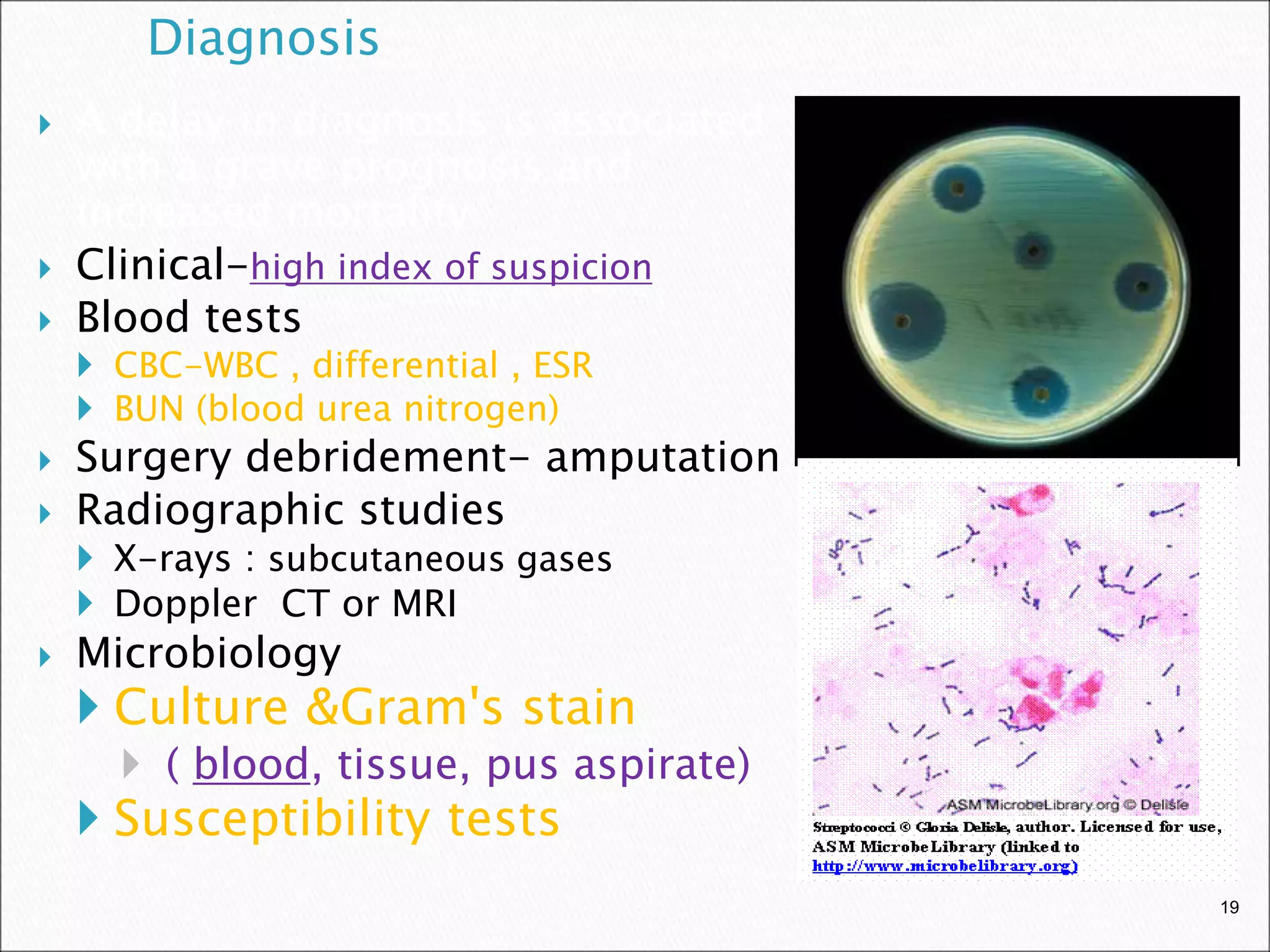
 Culture &Gram's stain
 ( blood, tissue, pus aspirate)
 Susceptibility tests
20
 If clinically suspected patient needs to be hospitalized OR
require admission to ICU
 Start intravenous antibiotics immediately
 Antibiotic selection based on bacteria suspected
 broad spectrum antibiotic combinations against
 methicillin-resistant Staphylococcus aureus (MRSA)
 anaerobic bacteria
 Gram-negative and gram-positive bacilli
 Surgeon consultation
 Extensive Debridement of necrotic tissue and collection of tissue
samples
 Can reduce morbidity and mortality
21
 Antibiotics combinations
 Penicillin-clindamycin-gentamicin
 Ampicillin/sulbactam
 Cefazolin plus metronidazol
 Piperacillin/tazobactam
 Clostridium perfringens - penicillin G
 Hyperbaric oxygen therapy (HBO) treatment
 Acute bacterial infection of skeletal muscle,
usually caused by Staph. aureus
 No predisposing penetrating wound, vascular
insufficiency, or contiguous infection
 Most cases occur in the tropics
 60% of cases outside of tropics have
predisposing RF: DM, EtOH liver disease,
steroid rx, HIV, hematologic malignancy
 Hx of blunt trauma or vigorous exercise
(50%), then period of swelling without pain.
10-21 days later, pain, tenderness, swelling
and fever, Pus can be aspirated from muscle.
3rd stage: sepsis, later metastatic abscesses if
untreated
 Dx: X-ray, US, MRI or CT
 Rx: surgical drainage +abx
STREPTOCOCCUS
• The genus streptococcus consists of chain-
forming Gram-positive cocci that are facultative
anaerobes.
CLASSIFICATION OF STREPTOCOCCI
• Streptococci are first divided into obligate
anaerobes and facultative anaerobes.
• The obligate anaerobes are known as pepto
streptococci.
• The aerobic and facultative anaerobic
streptococci are classified based on their
haemolyitc properties into a, b & g.
Hemolysis
1. a-hemolysis: incomplete lysis of RBC with the
formation of green pigment.
2. b-hemolysis: complete hemolysis
3. γ- hemolysis : No hemolysis
Lancefield classification: a serologic classification
(A to V): Biochemical reactions are used for species
that can not be classified into the Lancefield
classification (nongroupable), e.g. viridans
streptococci.
Classification
It belongs to group ‘A’ of haemolytic streptococcus.
MORPHOLOGY
• The individual cocci are spherical or oval 0.5-1 μ in
diameter.
• They are arranged in chains.
• Chain formation is due to the cocci
dividing in one plane only and
daughter cells failing to separate completely.
• They are Non-motile, non-sporing .
CULTURAL CHARACTERISTICS
• It is an aerobe and facultative anaerobe, growing
best at a temperature of 37o C (range 22o – 42o C)
• It is exacting in nutritive requirements, growth
occuring only in media containing fermentable
carbohydrates or enriched with blood or serum.
• In Glucose or serum broth, growth occurs as a
granular turbidity with a powdery deposit.
ON BLOOD AGAR :
• After incubation for 24 hours, the colonies are small (0.5-
1.0 mm), circular, semitransparent, low convex discs with an
area of clear haemolysis around them.
• Growth and haemolysis are promoted by 10% Co2.
ON MAC CONKEY MEDIA :
• It does not grow on MacConkey Media.
BIOCHEMICAL REACTIONS
• Streptococci are Catalase –ve (Staphylococci are catalase
positive).
• Not soluble in 10% bile, unlike pneumococci.
 Inactivated by heat at 56⁰ C for 30 minutes.
 Rapidly inactivated by antiseptics.
 Susceptible to sulphonamides and many antibiotics.
 Sensitivity to bacitracin is used to differentiate
S.pyogenes from other haemolytic streptococci.
 S.pyogenes is resistant to SXT (trimethoprim –
sulphamethoxazole).
ANTIGENIC STRUCTURE
1. CAPSULE
The capsule when present is composed of
hyaluronic acid. It inhibits phagocytosis. It is not
antigenic in man.
2. CELL WALL :
The cell wall is composed of an outer layer of
protein, a middle layer of group specific
carbohydrate, an inner layer of peptidoglycan.
a) The peptidoglycan (mucoprotien) is
responsible for cell wall rigidity. It has also
some biological properties such as pyogenic
and thrombolytic activity.
b) Group specific Carbohydrate :- Serologocial
grouping of streptococci depends on the C
Carbohydrate.
c) Outer part of the cell wall contains M, T & R
antigens.
• Hair like pili project through the capsule of group
A streptococci.
• The pili consist partly of M protein and are
covered with lipoteichoic acid which is important
in the attachment of streptococci to epithelial cells.
TOXINS AND OTHER VIRULENCE FACTORS
Haemolysins :-
Streptococci produce two haemolysins, streptolysin ‘O’
and ‘S’.
1. Streptolysin O is so called because it is oxygen labile. It is
heat labile also.
- It is virulent in nature.
- It has cardiotoxic and leucotoxic activity.
- Streptolysin O is antigenic and anti streptolysin appears in
sera following streptococcal infection.
2. Streptolysin S is an oxygen stable haemolysin &
so is responsible for the haemolysis around
streptococcal colonies on blood agar plates .
- called streptolysin S since it is soluble in serum.
- shown experimentally to be nephrotoxic but its
significance in pathogenesis is not understood.
2.Erythrogenic toxins:- are responsible for the rash
in scarlet fever. There are three serologically
distinct A,B,C toxins that are antigenic and
neutralized by specific antitoxins.
3. Streptokinase (Fibrinolysin) :-
• This toxin promotes the lysis of human fibrin
clots by activating a plasma precursor
(plasminogen).
• It is antigenic protein and neutralising
antibodies appear in convalescent sera.
• Fibrinolysin acts by breaking down in the fibrin
barrier around the lesions and facilitating the
spread of infection.
- Streptokinase is given I/V for the treatment of
pulmonary emboli and venous thrombosis.
4. Deoxyribonucleases (Streptodornase):-
- These cause depolymerisation of DNA.
- Pyogenic exudates contain large amounts of DNA, dervied
from the nuclei of necrotic cells.
- Streptodormase helps to liquify the thick pus and may be
responsible for the thin serous character of streptococcol
exudates.
- Four antigenically distinct streptodormases A, B, C, D have
been recognised of which B is the most antigenic.
5. Nicotinamide adenine dinucleotidase (NAD-
ase) :- This acts on the co-enzyme NAD and
liberates nicotinamide from the molecule. It is
antigenic and is specifically neutralised by the
antibody in convalescent sera.
6.Hyaluronidase :- This enzyme breaks down the
hyaluronic acid of the tissues.
S. pyogenes can transiently colonize the oropharynx and
skin.
Diseases are caused by recently acquired strains that can
establish an infection of the pharynx or skin.
S. pyogenes causes pharyngitis mainly in children of 5 to
15 years old.
Streptococcus pyogenes
• The pathogen is spread mainly by respiratory
droplets.
• Crowding increases the opportunity for the
pathogen to spread, particularly during the winter
months.
• Soft tissue infections are preceded by skin
colonization and the
organisms are introduced into
the superficial or deep tissue
through a break in the skin.
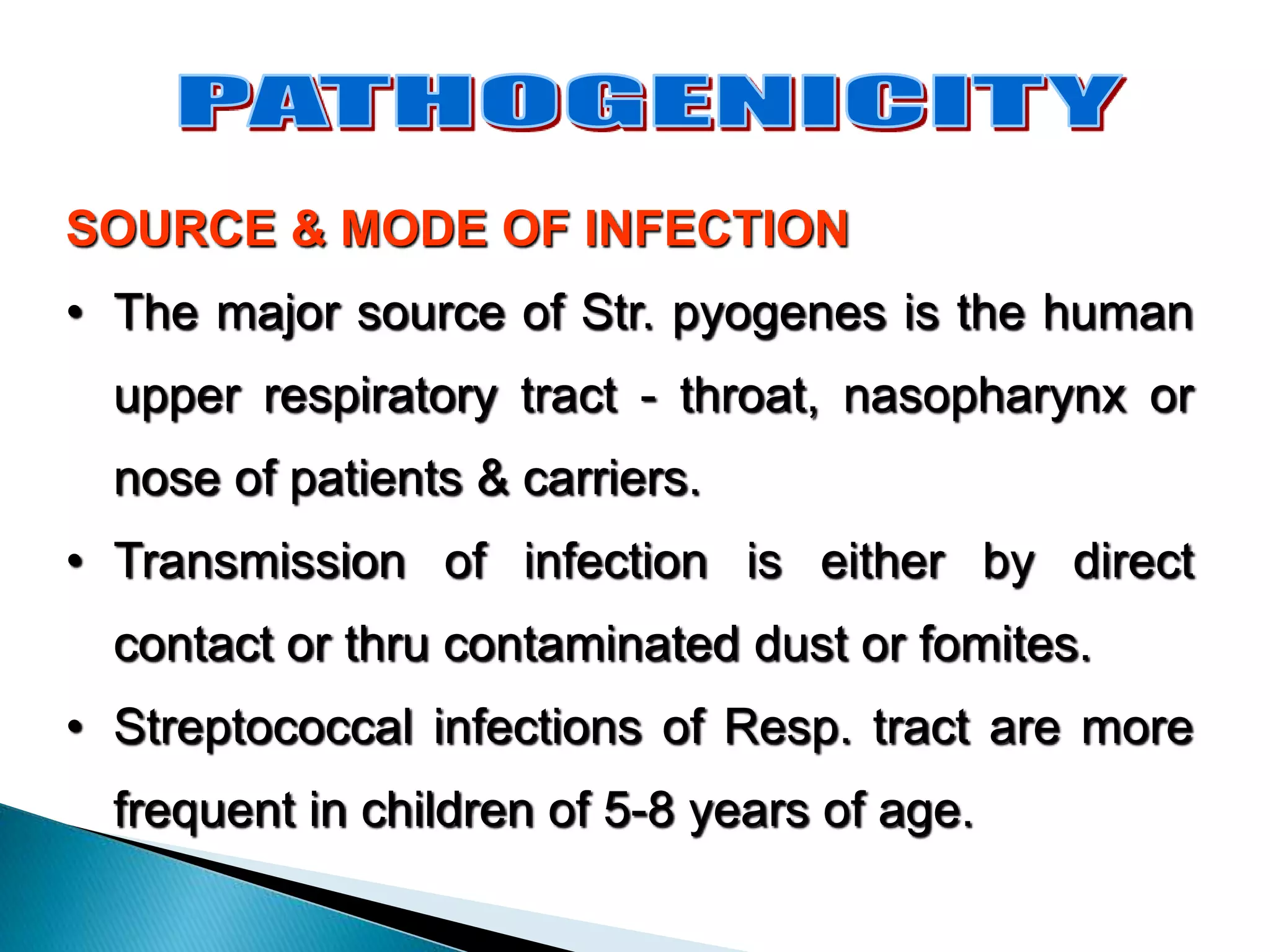
SOURCE & MODE OF INFECTION
• The major source of Str. pyogenes is the human
upper respiratory tract - throat, nasopharynx or
nose of patients & carriers.
• Transmission of infection is either by direct
contact or thru contaminated dust or fomites.
• Streptococcal infections of Resp. tract are more
frequent in children of 5-8 years of age.
1. Respiratory infections :-
- Sore throat is the commonest.
- It may be localised as tonsillitis or many involve
pharynx more diffusely (pharyngitis).
- Pharyngitis is mainly caused by Group A.
- Rheumatic fever may occur in upto 3% of
individuals during epidemic pharyngitis.
• From the throat, streptococcoi may spread to
the surrounding tissues, leading to
suppurative complications such as otitis
media, mastoiditis, quinsy, Ludwig’s angina,
suppurative adenitis.
• Streptococcal pneumonia seldom follows
throat infection.
• Scarlet fever is a special variety of
streptococcal sore throat caused by strain
producing erythrogenic toxin in which
characteristic erythematous rash occurs.
Does not occur in India.
3. Genital infections :- Causes puerperal sepsis.
4.Other suppurative infections :- Str. Pyogenes
may cause abscesses in internal organs such as
the brain, lung, liver, kidney and may also cause
septicaemia and pyaemia.
6. Poststreptococcal diseases Str. Pyogenes
infections lead to two important non suppurative
sequelae-
Acute rheumatic fever
And
Acute glomerulonephritis.
• These complications occur one to three weeks
after the acute infection so that the organism is
not detectable when sequelae set in.
LAB. DIAGNOSIS
• In acute infections, diagnosis is established by culture while
in the non-suppurative complications, diagnosis is based on
the demonstration of antibodies.
• Presumptive information may be obtained by an examination
of Gram stained, smears from pus and CSF.
• The presence of Gram positive cocci in chains is indicative
of streptococcal infection.
• But smears are of no value in infections of the throat or
genitalia, where streptococci may from part of the residential
flora.
• For cultures, swabs should be collected from the affected
site and either plated immediately or sent to the
laboratory in Pike’s medium (Blood agar containing 1 in
10 lakh crystal violet and 1 in 16,000 sod. Azide.
• The specimen is plated on blood agar and incubated at
37o C anaerobically or under 5-10% CO2 as haemolysis
develops better under these conditions.
• Haemolytic streptococci are grouped by the Lancefield
technqiue.
THE SELECTIVE MEDIA USED ARE :
Crystal violet blood agar :
• The addition of a low conc (1 in 5 lakh i.e. 0.0002%) of crystal
violet to blood agar inhibits the growth of some bacteria, notably
staphylococci while allowing the growth of streptococci.
• Crystal violet blood agar is therefore a selective medium for S.
pyogenes.
PNF Medium :-
• Horse blood agar with the addition of Polymyxin B
sulphate, neomycin sulphate and Fusidic acid is selective
for β haemolyic streptococci.
Bacitracin sensitivity test
• Disks containing 0.04 units of bacitracin may be added to
primary culture plates.
• Streptococci of lancefield group A are sensitive i.e. give a
large zone (g > 15 mm diameter) of inhibition around the
disk.
• Most other streptococci are resistant ie., give no inhibition
or only a small zone.
Treatment :
• All beta haemolytic group A Streptococci are
sensitive to erythromycin.
• In patients allergic to penicillin, erythromycin or
cephalexin may be used.
• Antimicrobial drugs have no effect on established
glomerulonephritis and rheumatic fever.
GROUP B
These are important pathogens of cattle producing bovine
mastitis (Str. agalactiae).
- These also cause septicaemia & meningitis in
neonates.
- In adults cause pneumonia
endocarditis
meningitis
cellulitis
arthritis, particularly in
compromised host.
- also causes puerperal sepsis.
- Group B streptococci may also grow on Mac Conkey
medium.
• Nalidixic acid and an aminoglycoside (eg.
Gentamicin) are useful selective agents in blood
media.
• Presumptive tests for identification of group B
streptococci are the CAMP reaction, hydrolysis of sod.
hippurate and the test for production of orange
pigment.
CAMP TEST
• Streak a β lysin producing staphylococcus aureus
strain (NCTC 1803) (National Collection Type culture)
on a blood agar plate.
• Then make a single streak of the streptococcal strain
perpendicular to the staphylococcal streak.
• Leave about a 1 cm space between the two inoculation
lines.
• Incubate the inoculated plates for 24 hr at 37° C in air
or in air with 10% Co2.
• Under aerobic conditions, group β streptococci but
not other streptococci produce CAMP (Christie
Atkins Munch - Peterson) factor that enhances
the β - lysis produced by the staphylococcus and an
area of increased lysis appears at the junction of
the two organisms.
• This area frequently appears in the shape of an
arrow head or butterfly appearance.
Microbiology
 Family Micrococcaceae
 Genus Micrococcus & Staphylococcus
 Species
S. aureus
S. saprophyticus
S. epidermidis
M. luteus
more
than 20
specie
s
 Main group of medically important gram
positive cocci along with streptococci
 Infections range from severe to fatal
conditions
 Difficult to treat, especially those acquired
in the hospital
 Remarkable ability to acquire antibiotic
resistance
 Ubiquitous - Part of human flora, inanimate
objects
 Many species are medically important
1. S. aureus –
 most virulent species
 Most common cause of bacterial infections, food
poisoning & toxic shock syndrome
2. S. epidermidis – important cause of prosthetic
implant infections
3. S. saprophyticus – UTI, especially cystitis in women
 Gram +ve cocci arranged
in grape like cluster
 Facultative anaerobes
 Produce catalase
 Major component of
normal flora in humans
◦ Skin
◦ Nose
◦ Mucosal membranes
 Coagulase positive
 Ferments mannitol
 Beta hemolytic colonies on BA
 Produces golden yellow pigment
 Produces phospahatse
 Reduces tellurite producing black colonies
 Highly resistant non sporing bacteria
 Can grow in the presence of 10 – 15%
NaCl.
 Resistance to Penicillin
 Colonise skin, mucosa of anterior nares and vagina
 Source of infection – human patients & carriers
 About 10-30% of healthy persons carry staphylococci in
the nose, about 10% in the perineum and hair.
 Vaginal carriage is about 5-10%, which rises during
menses.
 Modes of transmission – by direct contact or through
fomites, by dust or by airborne droplets.
 Common cause of postoperative wound infection & other
hospital cross infections – multidrug resistant strains.
 Diseases produced by S. aureus can be due
to
1. Infection – cocci gain access to damaged skin,
mucosa or tissue, colonise at the site, multiply &
cause damage
2. Intoxication – bacterial toxins produced either in
the host or preformed invitro
3. Combination of infection & intoxication.
 The virulence of S. aureus depends on a
number of factors. These can be:
1. Cell associated polymers and surface proteins,
2. Enzymes &
3. Toxins – cytolytic & superantigen exotoxins
 Teichoic acid:- promotes colonization of
host tissues
 Capsule (slime layer):- inhibits
phagocytosis
 Protein A:- major component of cell wall,
has many biological properties:
Antiphagocytic
Anticomplementary
Binds to the Fc part of IgG
Role in coagglutination – for streptococcal
grouping & gonococcal typing
 Clumping factor –
a surface protein
Also called “Bound Coagulase”
Responsible for “slide coagulase test” – routinely
used for the presumptive identification of S.
aureus strains
Saline suspension of S. aureus + drop of human
plasma – clumping of cocci
 Fibronectin binding protein (FnBP) – binding
to mucosa & tissue
 Coagulase –
Clotting of human or rabbit plasma in the presence
of ‘coagulase reacting factor’ (CRF)
Binds to prothrombin in the plasma & results in the
conversion of fibrinogen to fibrin
Responsible for “tube coagulase test” – standard
criterion for the identification of S. aureus
Eight types have been identified.
Most human strains form coagulase type A.
No evidence that it is a virulence factor
 Staphylokinase (Fibrinolysin) – lysis fibrin
clots, spread of infection
 Hyaluronidase – breaks down the
connective tissue, initition & spread of
infection
 Lipase – infection of skin & subcutaneous
tissue
 Nuclease – degrades DNA
 Catalase –
enhance their survival in phagocytes by
inactivating toxic H2O2 & free radicals released
after the ingestion of staphylococci.
A. Cytolytic exotoxins: hemolysins (alpha,
beta, gamma & delta), leucocidins -
membrane active substances
I. Alpha hemolysin
 Most potent membrane-damaging toxin
 Toxin subunits create a central pore through which
cellular contents leak
 Septic shock
II. Beta hemolysin
 Sphingomyelinase - damages membranes rich in
this lipid
III. Leucocidin
 important factor in necrotizing skin infections.)
B. Superantigen exotoxins
I. Enterotoxin: Eight antigenic types - A, B, C 1 to
3, D, E and H, causes food poisoning
II. Toxic shock syndrome toxin (TSST)
III. Exfoliatin (epidermolytic toxin)
1. Skin & soft tissue infections
◦ Localized skin infection - Folliculitis, furuncle
(boil), carbuncle, abscess (particularly in
breast), wound infection (surgical, traumatic),
impetigo
◦ Deep, localized infections – Osteomyelitis (S.
aureus is the most common cause), arthritis
(septic arthritis in children)
2. Respiratory tract infections
◦ bronchopneumonia, tonsillitis, pharyngitis,
sinusitis, lung abscess, empyema
3. CNS infections – abscess, meningitis,
intracranial thrombophlebitis
4. Endovascular – bacteremia, septicemia,
pyemia, endocarditis
5. Urinary tract infection often in association
with local instrumentation, implants or
diabetes
6. Nosocomial infections – wound infection,
catheter associated bacteremia.
7. Staphylococcal food poisoning
◦ Occurs 1 to 6 hrs after consumption of food
contaminated with preformed toxins
(enterotoxins – very fast acting)
◦ Nausea, vomiting, abdominal cramps &
diarrhoea
◦ Self limiting condition, 1 to 3 days
◦ Toxins are resistant to heat, resistant to
cooking
◦ Highest risk of contamination: sliced meat,
puddings, pastries, sandwiches, milk & cheese
◦ Source of infection – food handler
◦ Type A enterotoxin is responsible for most
8. Toxic shock syndrome
◦ Caused by TSST-1 (formerly known as
Enterotoxin F): responsible for 75% of TSS,
including all menstrual (tampon related TSS)
cases
◦ Enterotoxins B and C cause 50% of non-
menstrual cases of TSS
◦ Mostly in females however cases have been
reported in males as well (e.g. surgical site
infection)
◦ Fatal multisystem disease
 Prodromal period of 2-3 days
 High grade fever and/or chills
 Nausea and/or vomiting
 Profuse watery diarrhea with abdominal pain
 Mucosal hyperemia (vaginitis, conjunctivitis) &
erythematous rash which desquamates in 1-2
weeks
 Myalgias and/or arthralgias
 Headache
 Confusion (more common with staphylococcal TSS
than with streptococcal TSS)
 Fever, hypotension, and rash
 Involvement of 3 or more organ systems
 Absence of serologic evidence of Rocky
Mountain spotted fever, leptospirosis,
measles, hepatitis B, antinuclear antibody,
positive Venereal Disease Research
Laboratory (VDRL) test results, and
antibodies at Monospot testing
9. Staphylococcal scalded skin syndrome
(SSSS)
◦ Exfoliative skin disease – outer layer of
epidermis gets separated from the underlying
tissues
◦ Cause – exfoliative toxin that damages
desmosomes
◦ Severe form of SSSS is
1. “Ritter’s Disease” in newborns and
2. Toxic epidermal necrolysis in older patients
◦ Milder forms are
1. Pemphigus neonatorum
2. Bullous impetigo
 Signs And Symptoms:
◦ Fever
◦ Generalized erythema
◦ skin slips off with gentle pressure
leaving wet red areas (Nikolsky
sign)
◦ exfoliation or desquamation
◦ painful skin
 Treatment:
◦ Fluid rehydration
◦ Topical wound care: saline AND
topical antibiotic ointment
 Healing begins in about 10 days following
treatment.
 A full recovery is expected.
 Possible Complications
◦ septicemia
◦ dehydration or electrolyte imbalance
◦ poor temperature control (in young infants)
◦ cellulitis
 The disorder may not be preventable;
Prompt treatment
 Specimen – depends on type of lesion
1. Pus - Suppurative lesion
2. Sputum – respiratory tract infection
3. Feces & remains of food – food poisoning
4. Blood – septicemia
5. Nasal swab – detection of carriers
 Microscopy
◦ Gram stain – gram +ve cocci in clusters
 Culture – specimens are
plated on
1. NA - golden yellow colony
2. BA – hemolytic colonies
3. Selective media – Ludlam’s
media, Mannitol salt agar
(MSA)
MSA
 Biochemical tests
1. Catalase test – using 3% H2O2 :all Staphylococci
are catalase positive, gives effervescence
 Biochemical tests
2. Coagulase test – S. aureus
is coagulase +ve
◦ Done by two methods
 Slide coagulase test –
detects bound coagulase
(clumping factor)
 Tube coagulase test –
detects free coagulase
 Bacteriophage typing -
for epidemiological
purposes
Coagulase NEG
Coagulase POS
Staphylococcus
aureus
 S. epidermidis;75% of clinical isolates
 S. saprophyticus
 S. haemolyticus
 S. hominis
 S. capitis
 Important agents of nosocomial infections
 Associated with increased use of implants
such as CSF shunts, IV lines, cardiac valves,
pacemakers, artificial joints, urinary catheters
 Morphologically similar to S. aureus, however
they form white colonies, and are coagulase
negative.
 Prosthetic valve
endocarditis
 Meningitis
 Peritonitis
 UTI in pregnant women
(S. saprophyticus)
 Treatment is with
Vancomycin, if not
resistant.
S. saprophyticus
responds to
trimethoprim or to
quinolones.
Characters S. aureus S. epidermidis S. saprophyticus
Coagulase + - -
Mannitol
fermentation
+ - -
Novobiocin
sensitivity
S S R
Phosphatase + + -
 Drain infected area
 Deep/metastatic infections
◦ semi-synthetic penicllins
◦ cephalosporins
◦ erythromycin
◦ clindamycin
 Endocarditis
◦ semi-synthetic penicillin + an aminoglycoside
 Life threatening staphylococcal infections, Vancomycin is
the drug of choice
 However, the appropriate antibiotic should be chosen
based on AST.
 First developed resistance against Penicillin
 Resistance to penicillin can be due to:
1. Mutation in chromosomal genes followed by
selection of resistant strains
2. Acquisition of resistance genes as
extrachromosomal plasmids, transducing
particles, transposons, or other types of DNA
inserts.
3. Production of penicillinases
4. Changes in bacterial surface receptors
5. Development of tolerance
 To combat resistance due to penicillinase,
Methicillin was developed & now methicillin
resistant strains have evolved due to
◦ Chromosomal acquisition of gene coding for a
modified PBP
 Plasmid borne resistance to erythromycin,
tetracyclines, aminoglycosides and almost all
clinically useful antibiotics
 occur in otherwise healthy people who have
not been recently (within the past year)
hospitalized
 had a medical procedure (such as dialysis,
surgery, catheters)
 community-associated (CA)-MRSA infections
skin infections: abscesses, boils, and other
pus-filled lesions
 In hospitals, the most important reservoirs of
MRSA are infected or colonized patients
 HOSPITAL PERSONNEL: commonly identified
as a link for transmission between colonized
or infected patients.
 via hands (especially health care workers')
which may get contaminated by contact with
1. colonized or infected patients
2. colonized or infected body sites of the personnel
themselves,
3. devices, items, or environmental surfaces
contaminated with body fluids containing MRSA.
 Glycopeptides
1. Vancomycin
2. Teicoplanin
 1996, MRSA strains with decreased
susceptibility to vancomycin
 VISA: if the MIC for vancomycin is 4-8µg/ml,
 VRSA :MIC is >16µg/ml.
 several underlying health conditions (such as
diabetes and kidney disease)
 previous infections with methicillin-resistant
Staphylococcus aureus (MRSA)
 intravenous [IV] catheters
 recent hospitalizations
 recent exposure to vancomycin and other
antimicrobial agents.
 limited treatment options for VISA/VRSA
infections
 rifampin, gentamicin, imipenem,
chloramphenicol, trimethoprim-
sulfamethoxazole, and tetracycline
 Carrier status prevents complete control
 Proper hygiene, segregation of carrier from highly
susceptible individuals
 Good aseptic techniques when handling surgical
instruments
 Control of nosocomial infections
 Treatment with
◦ Bacitracin
◦ Chlorhexidine (locally)
◦ Vancomycin

bacterial skin and soft tissue infections.ppt

  • 1.
  • 2.
  • 3.
     Erysepelas:  Impetigo Folliculitis Erysepalas Impetigo Folliculitis
  • 4.
     Erysipelas involvesthe upper dermis and superficial lymphatics. Skin lesions are usually raised with a clear demarcation of infected skin. Classically, erysipelas affects the face (but it can also involve other areas such as the lower limb. It is most commonly caused by Streptococcus pyogenes (group A streptococcus).
  • 5.
     Impetigo isa superficial bacterial infection that can develop either through direct invasion of normal skin (primary) or infection at sites of damaged skin (secondary) It is common in children and is highly contagious. There are two forms:  non-bullous or crusted impetigo – distinct yellow, crusting lesions that may be itchy. Typically involves face or extremities  bullous impetigo – usually caused by Staphylococcus aureus. Presents as bullae that rupture to form a brown crust.
  • 6.
     This usuallypresents as a crop of pustules affecting areas of moist skin with hair. It is most commonly caused by S. aureus but can also be linked to other organisms like Pseudomonas aeruginosa when associated with specific exposures like hot tubs and spas.
  • 7.
  • 8.
     Ecthyma isa skin infection characterised by crusted sores beneath which ulcers form. It is a deep form of impetigo, as the same bacteria causing the infection are involved. Ecthyma causes deeper erosions of the skin into the dermis.
  • 9.
     Furuncles andcarbuncles.  Furuncles (or “boils”) are infections of the hair follicle (folliculitis ), usually caused by S. aureus, in which suppuration extends through the dermis into the subcutaneous tissue  Carbuncle- extension to involve several adjacent follicles with coalescent inflammatory mass - back of the neck especially in diabetics  Larger furuncles and all carbuncles require incision and drainage.  Systemic antibiotics are usually unnecessary 9
  • 10.
    10  Families-prisons-sports teams Inadequate personal hygiene  Repeated attacks of furunculosis  Presence of S. aureus in the anterior nare- 20- 40%  Mupirocin ointment- eradicate staphylococcal carriage nasal colonization
  • 11.
     Cellulitis  Acutespreading infection involves the deeper dermis and subcutaneous tissues.  β-hemolytic streptococci, Group A streptococci, and group B streptococci-diabetics  S. aureus : commonly causes cellulitis- penetrating trauma.  Haemophilus influenzae periorbital cellulitis in children  Risk factors ; Obesity, venous insufficiency, lymphatic obstruction (operations), preexisting skin infections- ulceration, or eczema,  CA-MRSA Carry Panton-Valentine leukocidin gene More sensitive to antibiotics Can lead to sever skin and soft tissue infection or septic shock 11
  • 12.
     Clinical diagnosisSymptoms and Signs  High WBCs, blood culture rarely needed (Celullulitis)  Aspiration and biopsy , diabetes mellitus, malignancy, animal bites, neutropenia (Pseudomonas aeruginosa ) immunodeficiency, obesity and renal failure  progression to severe infection(increased in size with systemic manifestation. (fever, leukocytosis)  Treatment: cover streptococcus and staphylococcus  Penicillin, cloxacillin, cefazolin(cephalexin),clindamycin  Vancomycin or linazolid in case of MRSA  Clindamycin, TMP-SMZ for CaMRSA. 12
  • 13.
  • 14.
    14  rare deepskin and subcutaneous tissues infection  It can be monomicrobial or (polymicrobial) infection  Most common in the arms, legs, and abdominal wall and is fatal in 30%- 40% of cases.  Fournier's gangrene (testicular), Necrotizing cellulitis  Group A streptococcus (Streptococcus pyogenes)  Staphylococcus aureus or CA-MRSA  Clostridium perfringens (gas in tissues)  Bacteroides fragilis  Vibrio vulnificus (liver function)  Gram-negative bacteria (synergy). ◦ E. coli, Klebsiella, Pseudomonas  Fungi
  • 15.
    15  Immune-suppression  Chronicdiseases: ( diabetes, liver and kidney diseases, malignancy  Trauma:(laceration, cut, abrasion, contusion, burn, bite, subcutaneous injection, operative incision)  Recent viral infection rash (chickenpox)  Steroids  Alcoholism  Malnutrition  Idiopathic
  • 16.
    16  destruction ofskin and muscle by releasing toxins  Streptococcal pyogenic exotoxins  Superantigen  Non-specific activation of T-cells  Overproduction of cytokines  Severe systemic illness (Toxic shock syndrome)
  • 17.
    17  Rapid progressionof sever pain with fever , chills (typical)  Swelling , redness, hotness, blister, gas formation, gangrene and necrosis  Blisters with subsequent necrosis , necrotic eschars  Diarrhea and vomiting (very ill)  Shock organ failure  Mortality as high as 73 % if untreated
  • 18.
  • 19.
    Diagnosis 19  A delayin diagnosis is associated with a grave prognosis and increased mortality  Clinical-high index of suspicion  Blood tests  CBC-WBC , differential , ESR  BUN (blood urea nitrogen)  Surgery debridement- amputation  Radiographic studies  X-rays : subcutaneous gases  Doppler CT or MRI  Microbiology  Culture &Gram's stain  ( blood, tissue, pus aspirate)  Susceptibility tests
  • 20.
    20  If clinicallysuspected patient needs to be hospitalized OR require admission to ICU  Start intravenous antibiotics immediately  Antibiotic selection based on bacteria suspected  broad spectrum antibiotic combinations against  methicillin-resistant Staphylococcus aureus (MRSA)  anaerobic bacteria  Gram-negative and gram-positive bacilli  Surgeon consultation  Extensive Debridement of necrotic tissue and collection of tissue samples  Can reduce morbidity and mortality
  • 21.
    21  Antibiotics combinations Penicillin-clindamycin-gentamicin  Ampicillin/sulbactam  Cefazolin plus metronidazol  Piperacillin/tazobactam  Clostridium perfringens - penicillin G  Hyperbaric oxygen therapy (HBO) treatment
  • 22.
     Acute bacterialinfection of skeletal muscle, usually caused by Staph. aureus  No predisposing penetrating wound, vascular insufficiency, or contiguous infection  Most cases occur in the tropics  60% of cases outside of tropics have predisposing RF: DM, EtOH liver disease, steroid rx, HIV, hematologic malignancy
  • 23.
     Hx ofblunt trauma or vigorous exercise (50%), then period of swelling without pain. 10-21 days later, pain, tenderness, swelling and fever, Pus can be aspirated from muscle. 3rd stage: sepsis, later metastatic abscesses if untreated  Dx: X-ray, US, MRI or CT  Rx: surgical drainage +abx
  • 25.
  • 26.
    • The genusstreptococcus consists of chain- forming Gram-positive cocci that are facultative anaerobes.
  • 27.
    CLASSIFICATION OF STREPTOCOCCI •Streptococci are first divided into obligate anaerobes and facultative anaerobes. • The obligate anaerobes are known as pepto streptococci. • The aerobic and facultative anaerobic streptococci are classified based on their haemolyitc properties into a, b & g.
  • 28.
    Hemolysis 1. a-hemolysis: incompletelysis of RBC with the formation of green pigment. 2. b-hemolysis: complete hemolysis 3. γ- hemolysis : No hemolysis Lancefield classification: a serologic classification (A to V): Biochemical reactions are used for species that can not be classified into the Lancefield classification (nongroupable), e.g. viridans streptococci. Classification
  • 30.
    It belongs togroup ‘A’ of haemolytic streptococcus. MORPHOLOGY • The individual cocci are spherical or oval 0.5-1 μ in diameter. • They are arranged in chains. • Chain formation is due to the cocci dividing in one plane only and daughter cells failing to separate completely. • They are Non-motile, non-sporing .
  • 32.
    CULTURAL CHARACTERISTICS • Itis an aerobe and facultative anaerobe, growing best at a temperature of 37o C (range 22o – 42o C) • It is exacting in nutritive requirements, growth occuring only in media containing fermentable carbohydrates or enriched with blood or serum. • In Glucose or serum broth, growth occurs as a granular turbidity with a powdery deposit.
  • 33.
    ON BLOOD AGAR: • After incubation for 24 hours, the colonies are small (0.5- 1.0 mm), circular, semitransparent, low convex discs with an area of clear haemolysis around them. • Growth and haemolysis are promoted by 10% Co2. ON MAC CONKEY MEDIA : • It does not grow on MacConkey Media.
  • 34.
    BIOCHEMICAL REACTIONS • Streptococciare Catalase –ve (Staphylococci are catalase positive). • Not soluble in 10% bile, unlike pneumococci.
  • 35.
     Inactivated byheat at 56⁰ C for 30 minutes.  Rapidly inactivated by antiseptics.  Susceptible to sulphonamides and many antibiotics.  Sensitivity to bacitracin is used to differentiate S.pyogenes from other haemolytic streptococci.  S.pyogenes is resistant to SXT (trimethoprim – sulphamethoxazole).
  • 36.
    ANTIGENIC STRUCTURE 1. CAPSULE Thecapsule when present is composed of hyaluronic acid. It inhibits phagocytosis. It is not antigenic in man. 2. CELL WALL : The cell wall is composed of an outer layer of protein, a middle layer of group specific carbohydrate, an inner layer of peptidoglycan.
  • 37.
    a) The peptidoglycan(mucoprotien) is responsible for cell wall rigidity. It has also some biological properties such as pyogenic and thrombolytic activity. b) Group specific Carbohydrate :- Serologocial grouping of streptococci depends on the C Carbohydrate. c) Outer part of the cell wall contains M, T & R antigens.
  • 38.
    • Hair likepili project through the capsule of group A streptococci. • The pili consist partly of M protein and are covered with lipoteichoic acid which is important in the attachment of streptococci to epithelial cells.
  • 39.
    TOXINS AND OTHERVIRULENCE FACTORS Haemolysins :- Streptococci produce two haemolysins, streptolysin ‘O’ and ‘S’. 1. Streptolysin O is so called because it is oxygen labile. It is heat labile also. - It is virulent in nature. - It has cardiotoxic and leucotoxic activity. - Streptolysin O is antigenic and anti streptolysin appears in sera following streptococcal infection.
  • 40.
    2. Streptolysin Sis an oxygen stable haemolysin & so is responsible for the haemolysis around streptococcal colonies on blood agar plates . - called streptolysin S since it is soluble in serum. - shown experimentally to be nephrotoxic but its significance in pathogenesis is not understood. 2.Erythrogenic toxins:- are responsible for the rash in scarlet fever. There are three serologically distinct A,B,C toxins that are antigenic and neutralized by specific antitoxins.
  • 41.
    3. Streptokinase (Fibrinolysin):- • This toxin promotes the lysis of human fibrin clots by activating a plasma precursor (plasminogen). • It is antigenic protein and neutralising antibodies appear in convalescent sera. • Fibrinolysin acts by breaking down in the fibrin barrier around the lesions and facilitating the spread of infection. - Streptokinase is given I/V for the treatment of pulmonary emboli and venous thrombosis.
  • 42.
    4. Deoxyribonucleases (Streptodornase):- -These cause depolymerisation of DNA. - Pyogenic exudates contain large amounts of DNA, dervied from the nuclei of necrotic cells. - Streptodormase helps to liquify the thick pus and may be responsible for the thin serous character of streptococcol exudates. - Four antigenically distinct streptodormases A, B, C, D have been recognised of which B is the most antigenic.
  • 43.
    5. Nicotinamide adeninedinucleotidase (NAD- ase) :- This acts on the co-enzyme NAD and liberates nicotinamide from the molecule. It is antigenic and is specifically neutralised by the antibody in convalescent sera. 6.Hyaluronidase :- This enzyme breaks down the hyaluronic acid of the tissues.
  • 44.
    S. pyogenes cantransiently colonize the oropharynx and skin. Diseases are caused by recently acquired strains that can establish an infection of the pharynx or skin. S. pyogenes causes pharyngitis mainly in children of 5 to 15 years old. Streptococcus pyogenes
  • 45.
    • The pathogenis spread mainly by respiratory droplets. • Crowding increases the opportunity for the pathogen to spread, particularly during the winter months. • Soft tissue infections are preceded by skin colonization and the organisms are introduced into the superficial or deep tissue through a break in the skin.
  • 46.
    SOURCE & MODEOF INFECTION • The major source of Str. pyogenes is the human upper respiratory tract - throat, nasopharynx or nose of patients & carriers. • Transmission of infection is either by direct contact or thru contaminated dust or fomites. • Streptococcal infections of Resp. tract are more frequent in children of 5-8 years of age.
  • 47.
    1. Respiratory infections:- - Sore throat is the commonest. - It may be localised as tonsillitis or many involve pharynx more diffusely (pharyngitis). - Pharyngitis is mainly caused by Group A. - Rheumatic fever may occur in upto 3% of individuals during epidemic pharyngitis.
  • 48.
    • From thethroat, streptococcoi may spread to the surrounding tissues, leading to suppurative complications such as otitis media, mastoiditis, quinsy, Ludwig’s angina, suppurative adenitis. • Streptococcal pneumonia seldom follows throat infection. • Scarlet fever is a special variety of streptococcal sore throat caused by strain producing erythrogenic toxin in which characteristic erythematous rash occurs. Does not occur in India.
  • 49.
    3. Genital infections:- Causes puerperal sepsis. 4.Other suppurative infections :- Str. Pyogenes may cause abscesses in internal organs such as the brain, lung, liver, kidney and may also cause septicaemia and pyaemia.
  • 50.
    6. Poststreptococcal diseasesStr. Pyogenes infections lead to two important non suppurative sequelae- Acute rheumatic fever And Acute glomerulonephritis. • These complications occur one to three weeks after the acute infection so that the organism is not detectable when sequelae set in.
  • 51.
    LAB. DIAGNOSIS • Inacute infections, diagnosis is established by culture while in the non-suppurative complications, diagnosis is based on the demonstration of antibodies. • Presumptive information may be obtained by an examination of Gram stained, smears from pus and CSF. • The presence of Gram positive cocci in chains is indicative of streptococcal infection. • But smears are of no value in infections of the throat or genitalia, where streptococci may from part of the residential flora.
  • 52.
    • For cultures,swabs should be collected from the affected site and either plated immediately or sent to the laboratory in Pike’s medium (Blood agar containing 1 in 10 lakh crystal violet and 1 in 16,000 sod. Azide. • The specimen is plated on blood agar and incubated at 37o C anaerobically or under 5-10% CO2 as haemolysis develops better under these conditions. • Haemolytic streptococci are grouped by the Lancefield technqiue.
  • 53.
    THE SELECTIVE MEDIAUSED ARE : Crystal violet blood agar : • The addition of a low conc (1 in 5 lakh i.e. 0.0002%) of crystal violet to blood agar inhibits the growth of some bacteria, notably staphylococci while allowing the growth of streptococci. • Crystal violet blood agar is therefore a selective medium for S. pyogenes. PNF Medium :- • Horse blood agar with the addition of Polymyxin B sulphate, neomycin sulphate and Fusidic acid is selective for β haemolyic streptococci.
  • 54.
    Bacitracin sensitivity test •Disks containing 0.04 units of bacitracin may be added to primary culture plates. • Streptococci of lancefield group A are sensitive i.e. give a large zone (g > 15 mm diameter) of inhibition around the disk. • Most other streptococci are resistant ie., give no inhibition or only a small zone.
  • 56.
    Treatment : • Allbeta haemolytic group A Streptococci are sensitive to erythromycin. • In patients allergic to penicillin, erythromycin or cephalexin may be used. • Antimicrobial drugs have no effect on established glomerulonephritis and rheumatic fever.
  • 57.
    GROUP B These areimportant pathogens of cattle producing bovine mastitis (Str. agalactiae). - These also cause septicaemia & meningitis in neonates. - In adults cause pneumonia endocarditis meningitis cellulitis arthritis, particularly in compromised host. - also causes puerperal sepsis. - Group B streptococci may also grow on Mac Conkey medium.
  • 58.
    • Nalidixic acidand an aminoglycoside (eg. Gentamicin) are useful selective agents in blood media. • Presumptive tests for identification of group B streptococci are the CAMP reaction, hydrolysis of sod. hippurate and the test for production of orange pigment.
  • 59.
    CAMP TEST • Streaka β lysin producing staphylococcus aureus strain (NCTC 1803) (National Collection Type culture) on a blood agar plate. • Then make a single streak of the streptococcal strain perpendicular to the staphylococcal streak. • Leave about a 1 cm space between the two inoculation lines. • Incubate the inoculated plates for 24 hr at 37° C in air or in air with 10% Co2.
  • 60.
    • Under aerobicconditions, group β streptococci but not other streptococci produce CAMP (Christie Atkins Munch - Peterson) factor that enhances the β - lysis produced by the staphylococcus and an area of increased lysis appears at the junction of the two organisms. • This area frequently appears in the shape of an arrow head or butterfly appearance.
  • 62.
  • 63.
     Family Micrococcaceae Genus Micrococcus & Staphylococcus  Species S. aureus S. saprophyticus S. epidermidis M. luteus more than 20 specie s
  • 64.
     Main groupof medically important gram positive cocci along with streptococci  Infections range from severe to fatal conditions  Difficult to treat, especially those acquired in the hospital  Remarkable ability to acquire antibiotic resistance  Ubiquitous - Part of human flora, inanimate objects
  • 65.
     Many speciesare medically important 1. S. aureus –  most virulent species  Most common cause of bacterial infections, food poisoning & toxic shock syndrome 2. S. epidermidis – important cause of prosthetic implant infections 3. S. saprophyticus – UTI, especially cystitis in women
  • 66.
     Gram +vecocci arranged in grape like cluster  Facultative anaerobes  Produce catalase  Major component of normal flora in humans ◦ Skin ◦ Nose ◦ Mucosal membranes
  • 67.
     Coagulase positive Ferments mannitol  Beta hemolytic colonies on BA  Produces golden yellow pigment  Produces phospahatse  Reduces tellurite producing black colonies  Highly resistant non sporing bacteria  Can grow in the presence of 10 – 15% NaCl.  Resistance to Penicillin
  • 68.
     Colonise skin,mucosa of anterior nares and vagina  Source of infection – human patients & carriers  About 10-30% of healthy persons carry staphylococci in the nose, about 10% in the perineum and hair.  Vaginal carriage is about 5-10%, which rises during menses.  Modes of transmission – by direct contact or through fomites, by dust or by airborne droplets.  Common cause of postoperative wound infection & other hospital cross infections – multidrug resistant strains.
  • 69.
     Diseases producedby S. aureus can be due to 1. Infection – cocci gain access to damaged skin, mucosa or tissue, colonise at the site, multiply & cause damage 2. Intoxication – bacterial toxins produced either in the host or preformed invitro 3. Combination of infection & intoxication.
  • 70.
     The virulenceof S. aureus depends on a number of factors. These can be: 1. Cell associated polymers and surface proteins, 2. Enzymes & 3. Toxins – cytolytic & superantigen exotoxins
  • 71.
     Teichoic acid:-promotes colonization of host tissues  Capsule (slime layer):- inhibits phagocytosis  Protein A:- major component of cell wall, has many biological properties: Antiphagocytic Anticomplementary Binds to the Fc part of IgG Role in coagglutination – for streptococcal grouping & gonococcal typing
  • 72.
     Clumping factor– a surface protein Also called “Bound Coagulase” Responsible for “slide coagulase test” – routinely used for the presumptive identification of S. aureus strains Saline suspension of S. aureus + drop of human plasma – clumping of cocci  Fibronectin binding protein (FnBP) – binding to mucosa & tissue
  • 73.
     Coagulase – Clottingof human or rabbit plasma in the presence of ‘coagulase reacting factor’ (CRF) Binds to prothrombin in the plasma & results in the conversion of fibrinogen to fibrin Responsible for “tube coagulase test” – standard criterion for the identification of S. aureus Eight types have been identified. Most human strains form coagulase type A. No evidence that it is a virulence factor
  • 74.
     Staphylokinase (Fibrinolysin)– lysis fibrin clots, spread of infection  Hyaluronidase – breaks down the connective tissue, initition & spread of infection  Lipase – infection of skin & subcutaneous tissue  Nuclease – degrades DNA  Catalase – enhance their survival in phagocytes by inactivating toxic H2O2 & free radicals released after the ingestion of staphylococci.
  • 75.
    A. Cytolytic exotoxins:hemolysins (alpha, beta, gamma & delta), leucocidins - membrane active substances I. Alpha hemolysin  Most potent membrane-damaging toxin  Toxin subunits create a central pore through which cellular contents leak  Septic shock II. Beta hemolysin  Sphingomyelinase - damages membranes rich in this lipid III. Leucocidin  important factor in necrotizing skin infections.)
  • 76.
    B. Superantigen exotoxins I.Enterotoxin: Eight antigenic types - A, B, C 1 to 3, D, E and H, causes food poisoning II. Toxic shock syndrome toxin (TSST) III. Exfoliatin (epidermolytic toxin)
  • 78.
    1. Skin &soft tissue infections ◦ Localized skin infection - Folliculitis, furuncle (boil), carbuncle, abscess (particularly in breast), wound infection (surgical, traumatic), impetigo ◦ Deep, localized infections – Osteomyelitis (S. aureus is the most common cause), arthritis (septic arthritis in children) 2. Respiratory tract infections ◦ bronchopneumonia, tonsillitis, pharyngitis, sinusitis, lung abscess, empyema
  • 79.
    3. CNS infections– abscess, meningitis, intracranial thrombophlebitis 4. Endovascular – bacteremia, septicemia, pyemia, endocarditis 5. Urinary tract infection often in association with local instrumentation, implants or diabetes 6. Nosocomial infections – wound infection, catheter associated bacteremia.
  • 80.
    7. Staphylococcal foodpoisoning ◦ Occurs 1 to 6 hrs after consumption of food contaminated with preformed toxins (enterotoxins – very fast acting) ◦ Nausea, vomiting, abdominal cramps & diarrhoea ◦ Self limiting condition, 1 to 3 days ◦ Toxins are resistant to heat, resistant to cooking ◦ Highest risk of contamination: sliced meat, puddings, pastries, sandwiches, milk & cheese ◦ Source of infection – food handler ◦ Type A enterotoxin is responsible for most
  • 81.
    8. Toxic shocksyndrome ◦ Caused by TSST-1 (formerly known as Enterotoxin F): responsible for 75% of TSS, including all menstrual (tampon related TSS) cases ◦ Enterotoxins B and C cause 50% of non- menstrual cases of TSS ◦ Mostly in females however cases have been reported in males as well (e.g. surgical site infection) ◦ Fatal multisystem disease
  • 83.
     Prodromal periodof 2-3 days  High grade fever and/or chills  Nausea and/or vomiting  Profuse watery diarrhea with abdominal pain  Mucosal hyperemia (vaginitis, conjunctivitis) & erythematous rash which desquamates in 1-2 weeks  Myalgias and/or arthralgias  Headache  Confusion (more common with staphylococcal TSS than with streptococcal TSS)
  • 85.
     Fever, hypotension,and rash  Involvement of 3 or more organ systems  Absence of serologic evidence of Rocky Mountain spotted fever, leptospirosis, measles, hepatitis B, antinuclear antibody, positive Venereal Disease Research Laboratory (VDRL) test results, and antibodies at Monospot testing
  • 86.
    9. Staphylococcal scaldedskin syndrome (SSSS) ◦ Exfoliative skin disease – outer layer of epidermis gets separated from the underlying tissues ◦ Cause – exfoliative toxin that damages desmosomes ◦ Severe form of SSSS is 1. “Ritter’s Disease” in newborns and 2. Toxic epidermal necrolysis in older patients ◦ Milder forms are 1. Pemphigus neonatorum 2. Bullous impetigo
  • 87.
     Signs AndSymptoms: ◦ Fever ◦ Generalized erythema ◦ skin slips off with gentle pressure leaving wet red areas (Nikolsky sign) ◦ exfoliation or desquamation ◦ painful skin  Treatment: ◦ Fluid rehydration ◦ Topical wound care: saline AND topical antibiotic ointment
  • 88.
     Healing beginsin about 10 days following treatment.  A full recovery is expected.  Possible Complications ◦ septicemia ◦ dehydration or electrolyte imbalance ◦ poor temperature control (in young infants) ◦ cellulitis  The disorder may not be preventable; Prompt treatment
  • 89.
     Specimen –depends on type of lesion 1. Pus - Suppurative lesion 2. Sputum – respiratory tract infection 3. Feces & remains of food – food poisoning 4. Blood – septicemia 5. Nasal swab – detection of carriers  Microscopy ◦ Gram stain – gram +ve cocci in clusters
  • 90.
     Culture –specimens are plated on 1. NA - golden yellow colony 2. BA – hemolytic colonies 3. Selective media – Ludlam’s media, Mannitol salt agar (MSA) MSA
  • 91.
     Biochemical tests 1.Catalase test – using 3% H2O2 :all Staphylococci are catalase positive, gives effervescence
  • 92.
     Biochemical tests 2.Coagulase test – S. aureus is coagulase +ve ◦ Done by two methods  Slide coagulase test – detects bound coagulase (clumping factor)  Tube coagulase test – detects free coagulase  Bacteriophage typing - for epidemiological purposes
  • 93.
  • 94.
     S. epidermidis;75%of clinical isolates  S. saprophyticus  S. haemolyticus  S. hominis  S. capitis
  • 95.
     Important agentsof nosocomial infections  Associated with increased use of implants such as CSF shunts, IV lines, cardiac valves, pacemakers, artificial joints, urinary catheters  Morphologically similar to S. aureus, however they form white colonies, and are coagulase negative.
  • 97.
     Prosthetic valve endocarditis Meningitis  Peritonitis  UTI in pregnant women (S. saprophyticus)  Treatment is with Vancomycin, if not resistant. S. saprophyticus responds to trimethoprim or to quinolones.
  • 98.
    Characters S. aureusS. epidermidis S. saprophyticus Coagulase + - - Mannitol fermentation + - - Novobiocin sensitivity S S R Phosphatase + + -
  • 99.
     Drain infectedarea  Deep/metastatic infections ◦ semi-synthetic penicllins ◦ cephalosporins ◦ erythromycin ◦ clindamycin  Endocarditis ◦ semi-synthetic penicillin + an aminoglycoside  Life threatening staphylococcal infections, Vancomycin is the drug of choice  However, the appropriate antibiotic should be chosen based on AST.
  • 100.
     First developedresistance against Penicillin  Resistance to penicillin can be due to: 1. Mutation in chromosomal genes followed by selection of resistant strains 2. Acquisition of resistance genes as extrachromosomal plasmids, transducing particles, transposons, or other types of DNA inserts. 3. Production of penicillinases 4. Changes in bacterial surface receptors 5. Development of tolerance
  • 101.
     To combatresistance due to penicillinase, Methicillin was developed & now methicillin resistant strains have evolved due to ◦ Chromosomal acquisition of gene coding for a modified PBP  Plasmid borne resistance to erythromycin, tetracyclines, aminoglycosides and almost all clinically useful antibiotics
  • 102.
     occur inotherwise healthy people who have not been recently (within the past year) hospitalized  had a medical procedure (such as dialysis, surgery, catheters)  community-associated (CA)-MRSA infections skin infections: abscesses, boils, and other pus-filled lesions
  • 103.
     In hospitals,the most important reservoirs of MRSA are infected or colonized patients  HOSPITAL PERSONNEL: commonly identified as a link for transmission between colonized or infected patients.
  • 104.
     via hands(especially health care workers') which may get contaminated by contact with 1. colonized or infected patients 2. colonized or infected body sites of the personnel themselves, 3. devices, items, or environmental surfaces contaminated with body fluids containing MRSA.
  • 105.
  • 106.
     1996, MRSAstrains with decreased susceptibility to vancomycin  VISA: if the MIC for vancomycin is 4-8µg/ml,  VRSA :MIC is >16µg/ml.
  • 107.
     several underlyinghealth conditions (such as diabetes and kidney disease)  previous infections with methicillin-resistant Staphylococcus aureus (MRSA)  intravenous [IV] catheters  recent hospitalizations  recent exposure to vancomycin and other antimicrobial agents.
  • 108.
     limited treatmentoptions for VISA/VRSA infections  rifampin, gentamicin, imipenem, chloramphenicol, trimethoprim- sulfamethoxazole, and tetracycline
  • 109.
     Carrier statusprevents complete control  Proper hygiene, segregation of carrier from highly susceptible individuals  Good aseptic techniques when handling surgical instruments  Control of nosocomial infections  Treatment with ◦ Bacitracin ◦ Chlorhexidine (locally) ◦ Vancomycin

Editor's Notes

  • #19 Necrotizing fasciitis and clostridial myonecrosis due to infection with Clostridium septicum. The patient required multiple extensive debridements down to bone (see image), but did not survive the severe infection with severe septic shock. Blood and wound cultures were positive for the organism. At autopsy, an occult colonic malignancy was also noted--presumably the source for her infection.