Introduction
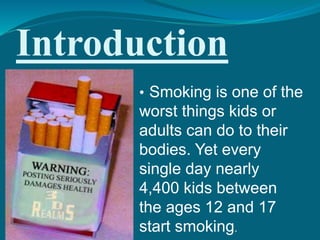
• Smoking is one of the
worst things kids or
adults can do to their
bodies. Yet every
single day nearly
4,400 kids between
the ages 12 and 17
start smoking.
Definition:
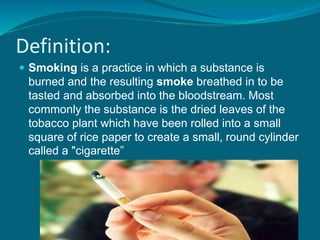
 Smoking is a practice in which a substance is
burned and the resulting smoke breathed in to be
tasted and absorbed into the bloodstream. Most
commonly the substance is the dried leaves of the
tobacco plant which have been rolled into a small
square of rice paper to create a small, round cylinder
called a "cigarette"
Active smoking:
Cigarette smoking refers to the active smoking of one
or more manufactured or hand rolled tobacco cigarettes,
from purchased or home grown tobacco, per day. The
term smoking refers to active smoking behaviour, that is,
the intentional inhalation of tobacco smoke.
Passive Smoking:
The involuntary inhaling of smoke from other people's
cigarettes, cigars, or pipes.
"children are more susceptible to the effects of passive
smoking".
Why do people smoke??
 There's more than just one simple
answer. Some kids may start
smoking just because they're
curious. Others may like the idea
of doing something dangerous -
something grown-ups don't want
them to do. Still others might
have grown up around lots of
people who smoke and they
might think it's the way to act like
an adult....
What is Smoking and
Smokeless Tobacco?
 Tobacco is a plant that
can be smoked in
cigarettes, pipes, or
cigars. It's the same plant
that's in smokeless
tobacco, known as dip,
chew, snuff, spit, or
chewing tobacco.
Smokeless tobacco is not
lit and breathed in like
tobacco in cigarettes,
pipes, and cigars. Instead,
smokeless tobacco is put
between the lip and gum
and sucked on inside the
mouth.
What is the main ingredient in
tobacco?
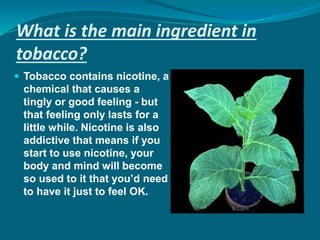
 Tobacco contains nicotine, a
chemical that causes a
tingly or good feeling - but
that feeling only lasts for a
little while. Nicotine is also
addictive that means if you
start to use nicotine, your
body and mind will become
so used to it that you’d need
to have it just to feel OK.
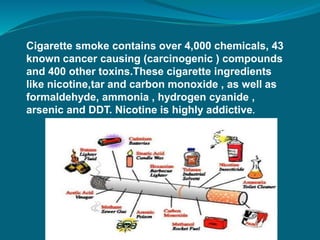
Cigarette smoke contains over 4,000 chemicals, 43
known cancer causing (carcinogenic ) compounds
and 400 other toxins.These cigarette ingredients
like nicotine,tar and carbon monoxide , as well as
formaldehyde, ammonia , hydrogen cyanide ,
arsenic and DDT. Nicotine is highly addictive.
Effects of Smoking
Heart Disease
 Smoking damages your heart and your blood
circulation, increasing the risk of conditions such as
coronary heart disease, heart attack.
 Carbon monoxide from the smoke and nicotine both
put a strain on the heart by making it work faster. They
also increase your risk of blood clots.
 In fact, smoking doubles your risk of having a heart
attack, and if you smoke you have twice the risk of
dying from coronary heart disease than lifetime non-
smokers.
Lung Cancer
 Your lungs can be very badly affected by smoking
Coughs, colds and wheezing are just the start.
 Smoking causes 84% of deaths from lung cancer and
83% of deaths from chronic obstructive pulmonary
disease (COPD).
Throat Cancer
 The most serious damage smoking causes in your
mouth and throat is an increased risk of cancer in your
lips, tongue, throat, voice box and oesophagus. More
than 93% of oropharyngeal cancers (cancer in part of
the throat) are caused by smoking.
Bladder Cancer
The following factors may raise a person's risk of
developing bladder cancer:
Tobacco use. The most common risk factor
is cigarette smoking, although smoking cigars
and pipes can also raise the risk of
developing bladder cancer.Smokers are 4 to 7
times more likely to develop bladder cancer than
nonsmokers.
Emphysema
• Tobacco smoke also damages the air sacs in the
lungs.Over time this leads to progressive lose of lungs
function and a condition known as emphysema.
• One sign of emphysema is shortness of breath.
Smoking causes 82% of emphysema / chronic
bronchitis among males and 76% among females
Stomach cancer
 Smokers have an increased chance of getting stomach
cancer or ulcers. Smoking can weaken the muscle that
controls the lower end of your gullet (oesophagus) and
allow acid from the stomach to travel in the wrong
direction back up your gullet, a process known as
reflux.
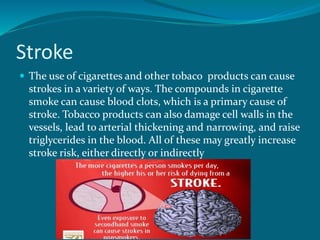
Stroke
 The use of cigarettes and other tobaco products can cause
strokes in a variety of ways. The compounds in cigarette
smoke can cause blood clots, which is a primary cause of
stroke. Tobacco products can also damage cell walls in the
vessels, lead to arterial thickening and narrowing, and raise
triglycerides in the blood. All of these may greatly increase
stroke risk, either directly or indirectly
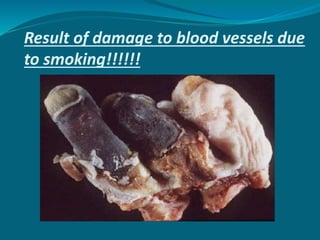
Damaged toes due to poor blood
circulation- will lead to
amputation
Result of damage to blood vessels due
to smoking!!!!!!
Expansion of finger ends-
associated with breathing and
heart problems!
How to stop smoking?
 Make a cigarette case ‘sleeve’ with your reasons for
quiting (perhaps pictures of your grandkids , names of
people or reasons you want to quit) and keep your
cigarette in that sleeve.
 Switch to decaf to reduce the jitters. Calming your
whole system down will reduce the urge to smoke.
 Eat nuts in the shell - four nuts every time you are
carving a cigarette. This will keep your hands and
mouth busy , just like when you smoke .
 Drink wheatgrass juice one a day .The flavor is said to
kill nicotine carvings.
 Try a homeopat spray . Just spray it in your mouth
every time you crave a cigarette and wait 90 seconds.
Smoking [autosaved]
Smoking [autosaved]
Smoking [autosaved]

Smoking [autosaved]

  • 1.
    Introduction • Smoking isone of the worst things kids or adults can do to their bodies. Yet every single day nearly 4,400 kids between the ages 12 and 17 start smoking.
  • 2.
    Definition:  Smoking isa practice in which a substance is burned and the resulting smoke breathed in to be tasted and absorbed into the bloodstream. Most commonly the substance is the dried leaves of the tobacco plant which have been rolled into a small square of rice paper to create a small, round cylinder called a "cigarette"
  • 3.
    Active smoking: Cigarette smokingrefers to the active smoking of one or more manufactured or hand rolled tobacco cigarettes, from purchased or home grown tobacco, per day. The term smoking refers to active smoking behaviour, that is, the intentional inhalation of tobacco smoke. Passive Smoking: The involuntary inhaling of smoke from other people's cigarettes, cigars, or pipes. "children are more susceptible to the effects of passive smoking".
  • 4.
    Why do peoplesmoke??  There's more than just one simple answer. Some kids may start smoking just because they're curious. Others may like the idea of doing something dangerous - something grown-ups don't want them to do. Still others might have grown up around lots of people who smoke and they might think it's the way to act like an adult....
  • 5.
    What is Smokingand Smokeless Tobacco?  Tobacco is a plant that can be smoked in cigarettes, pipes, or cigars. It's the same plant that's in smokeless tobacco, known as dip, chew, snuff, spit, or chewing tobacco. Smokeless tobacco is not lit and breathed in like tobacco in cigarettes, pipes, and cigars. Instead, smokeless tobacco is put between the lip and gum and sucked on inside the mouth.
  • 6.
    What is themain ingredient in tobacco?  Tobacco contains nicotine, a chemical that causes a tingly or good feeling - but that feeling only lasts for a little while. Nicotine is also addictive that means if you start to use nicotine, your body and mind will become so used to it that you’d need to have it just to feel OK.
  • 7.
    Cigarette smoke containsover 4,000 chemicals, 43 known cancer causing (carcinogenic ) compounds and 400 other toxins.These cigarette ingredients like nicotine,tar and carbon monoxide , as well as formaldehyde, ammonia , hydrogen cyanide , arsenic and DDT. Nicotine is highly addictive.
  • 8.
  • 9.
    Heart Disease  Smokingdamages your heart and your blood circulation, increasing the risk of conditions such as coronary heart disease, heart attack.  Carbon monoxide from the smoke and nicotine both put a strain on the heart by making it work faster. They also increase your risk of blood clots.  In fact, smoking doubles your risk of having a heart attack, and if you smoke you have twice the risk of dying from coronary heart disease than lifetime non- smokers.
  • 11.
    Lung Cancer  Yourlungs can be very badly affected by smoking Coughs, colds and wheezing are just the start.  Smoking causes 84% of deaths from lung cancer and 83% of deaths from chronic obstructive pulmonary disease (COPD).
  • 12.
    Throat Cancer  Themost serious damage smoking causes in your mouth and throat is an increased risk of cancer in your lips, tongue, throat, voice box and oesophagus. More than 93% of oropharyngeal cancers (cancer in part of the throat) are caused by smoking.
  • 13.
    Bladder Cancer The followingfactors may raise a person's risk of developing bladder cancer: Tobacco use. The most common risk factor is cigarette smoking, although smoking cigars and pipes can also raise the risk of developing bladder cancer.Smokers are 4 to 7 times more likely to develop bladder cancer than nonsmokers.
  • 14.
    Emphysema • Tobacco smokealso damages the air sacs in the lungs.Over time this leads to progressive lose of lungs function and a condition known as emphysema. • One sign of emphysema is shortness of breath. Smoking causes 82% of emphysema / chronic bronchitis among males and 76% among females
  • 15.
    Stomach cancer  Smokershave an increased chance of getting stomach cancer or ulcers. Smoking can weaken the muscle that controls the lower end of your gullet (oesophagus) and allow acid from the stomach to travel in the wrong direction back up your gullet, a process known as reflux.
  • 16.
    Stroke  The useof cigarettes and other tobaco products can cause strokes in a variety of ways. The compounds in cigarette smoke can cause blood clots, which is a primary cause of stroke. Tobacco products can also damage cell walls in the vessels, lead to arterial thickening and narrowing, and raise triglycerides in the blood. All of these may greatly increase stroke risk, either directly or indirectly
  • 17.
    Damaged toes dueto poor blood circulation- will lead to amputation
  • 18.
    Result of damageto blood vessels due to smoking!!!!!!
  • 19.
    Expansion of fingerends- associated with breathing and heart problems!
  • 20.
    How to stopsmoking?  Make a cigarette case ‘sleeve’ with your reasons for quiting (perhaps pictures of your grandkids , names of people or reasons you want to quit) and keep your cigarette in that sleeve.  Switch to decaf to reduce the jitters. Calming your whole system down will reduce the urge to smoke.  Eat nuts in the shell - four nuts every time you are carving a cigarette. This will keep your hands and mouth busy , just like when you smoke .  Drink wheatgrass juice one a day .The flavor is said to kill nicotine carvings.
  • 21.
     Try ahomeopat spray . Just spray it in your mouth every time you crave a cigarette and wait 90 seconds.