Don’t Look Back in Anger
Oasis– NoelGallagher
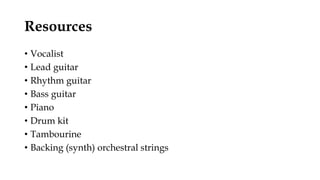
Resources
• Vocalist
• Lead guitar
• Rhythm guitar
• Bass guitar
• Piano
• Drum kit
• Tambourine
• Backing (synth) orchestral strings
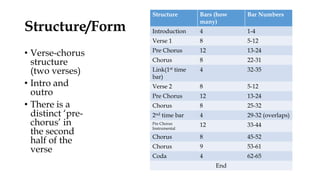
Structure/Form
• Verse-chorus
structure
(two verses)
• Intro and
outro
• There is a
distinct ‘pre-
chorus’ in
the second
half of the
verse
Structure Bars (how
many)
Bar Numbers
Introduction 4 1-4
Verse 1 8 5-12
Pre Chorus 12 13-24
Chorus 8 22-31
Link(1st time
bar)
4 32-35
Verse 2 8 5-12
Pre Chorus 12 13-24
Chorus 8 25-32
2nd time bar 4 29-32 (overlaps)
Pre Chorus
Instrumental
12 33-44
Chorus 8 45-52
Chorus 9 53-61
Coda 4 62-65
End
Texture
• Melody Dominated Homophony (tune and accompaniment)
• Simple quaver rocking chords in the piano and accompaniment
and crotchet chords in verse one
• Decorated bass line with a repetitive one-bar pattern in verse
one create a sense of movement
Tonality
• Diatonic C major – Uses Eb which cause the piece to lean
towards C blues
Harmony
• Mostly diatonic in a consonant style
• Some chromatic chords created by passing notes in the bass
• Simple chord sequences in the verse and chorus and a
contrasting one in the pre chorus and instrumental section that
are repeated many times in the course of the music
Melody
• First part of the guitar and vocal melody is pentatonic
• The pitches of the vocal melody from the chorus (bars33) come fro, a
hexachord (diatonic scale minus the leading note)
• Phrases in the vocal melody frequently have a falling profile
• Guitar melody is often decorated by appoggiaturas (bar 4, 6, 41…)
• Vocal melody (similar to John Lennon) is often restricted to just a
few notes
• The chorus contains a memorable hook
• Some countermelodies and fills in the lead guitar
• Lengthy guitar solo, with an improvisatory nature
• An anacrusis to the chorus
Rhythm and Metre
• Much syncopation in the melody
• Anticipatory notes in the vocal melody, particularly on the last
notes of the phrase
• Common time of 4/4
Word Setting
• Mostly syllabic except for ornamentation of the final words in
phrases, which are often stretched out with a falling melisma
What Makes It Britpop?
• Britpop was influenced by the 60’s and 70’s.
• Noel Gallagher used John Lennon (The Beatles member) as inspiration and
used a similar intro to his song ‘Imagine’ (just swapped some of the
instruments around) and created the lyrics ‘So I start a revolution from my
bed…’ from the time John Lennon spent 2 weeks in bed in protest of the
Vietnam war.
• Another key feature is nostalgic lyrics
• Britpop often uses guitar, drums, piano and vocals – Traditional pop
instruments
• It will have certain guitar features such as hammer-ons, palm muting, and
pitch bending
• Britpop was used to react against other styles such as American
dance/grunge music and electronic dance music.
Key Words for Don’t Look Back in Anger
• Strophic – Intro, Verse, Pre chorus, Bridge and Outro
• Homophonic
• Tonal – C major
• Diatonic
• Dominant 7th
• Diminished 7th
• Dominant pedal
• Hook
• Pentatonic
• Hexachord
• Anacrusis
• Syncopation
• Syllabic / Melisma
• Transcription
• Double/multi tracking

Don’t look back in anger

  • 1.
    Don’t Look Backin Anger Oasis– NoelGallagher
  • 2.
    Resources • Vocalist • Leadguitar • Rhythm guitar • Bass guitar • Piano • Drum kit • Tambourine • Backing (synth) orchestral strings
  • 3.
    Structure/Form • Verse-chorus structure (two verses) •Intro and outro • There is a distinct ‘pre- chorus’ in the second half of the verse Structure Bars (how many) Bar Numbers Introduction 4 1-4 Verse 1 8 5-12 Pre Chorus 12 13-24 Chorus 8 22-31 Link(1st time bar) 4 32-35 Verse 2 8 5-12 Pre Chorus 12 13-24 Chorus 8 25-32 2nd time bar 4 29-32 (overlaps) Pre Chorus Instrumental 12 33-44 Chorus 8 45-52 Chorus 9 53-61 Coda 4 62-65 End
  • 4.
    Texture • Melody DominatedHomophony (tune and accompaniment) • Simple quaver rocking chords in the piano and accompaniment and crotchet chords in verse one • Decorated bass line with a repetitive one-bar pattern in verse one create a sense of movement
  • 5.
    Tonality • Diatonic Cmajor – Uses Eb which cause the piece to lean towards C blues
  • 6.
    Harmony • Mostly diatonicin a consonant style • Some chromatic chords created by passing notes in the bass • Simple chord sequences in the verse and chorus and a contrasting one in the pre chorus and instrumental section that are repeated many times in the course of the music
  • 7.
    Melody • First partof the guitar and vocal melody is pentatonic • The pitches of the vocal melody from the chorus (bars33) come fro, a hexachord (diatonic scale minus the leading note) • Phrases in the vocal melody frequently have a falling profile • Guitar melody is often decorated by appoggiaturas (bar 4, 6, 41…) • Vocal melody (similar to John Lennon) is often restricted to just a few notes • The chorus contains a memorable hook • Some countermelodies and fills in the lead guitar • Lengthy guitar solo, with an improvisatory nature • An anacrusis to the chorus
  • 8.
    Rhythm and Metre •Much syncopation in the melody • Anticipatory notes in the vocal melody, particularly on the last notes of the phrase • Common time of 4/4
  • 9.
    Word Setting • Mostlysyllabic except for ornamentation of the final words in phrases, which are often stretched out with a falling melisma
  • 10.
    What Makes ItBritpop? • Britpop was influenced by the 60’s and 70’s. • Noel Gallagher used John Lennon (The Beatles member) as inspiration and used a similar intro to his song ‘Imagine’ (just swapped some of the instruments around) and created the lyrics ‘So I start a revolution from my bed…’ from the time John Lennon spent 2 weeks in bed in protest of the Vietnam war. • Another key feature is nostalgic lyrics • Britpop often uses guitar, drums, piano and vocals – Traditional pop instruments • It will have certain guitar features such as hammer-ons, palm muting, and pitch bending • Britpop was used to react against other styles such as American dance/grunge music and electronic dance music.
  • 11.
    Key Words forDon’t Look Back in Anger • Strophic – Intro, Verse, Pre chorus, Bridge and Outro • Homophonic • Tonal – C major • Diatonic • Dominant 7th • Diminished 7th • Dominant pedal • Hook • Pentatonic • Hexachord • Anacrusis • Syncopation • Syllabic / Melisma • Transcription • Double/multi tracking