1. How does your Media Product use or challenge conventions and how does
it represent social groups and issues?
I developed a Food Magazine for my print media project with desserts as its sub genre. The overall look and
presentation of the magazine follows the codes and conventions of a food magazine rather than challenging it.
It was my own decision to go by the codes and conventions of a food, especially desert magazine rather than
challenging it since I had a clear image of how the final look of my magazine would be like.
After going through ample of food magazines and understanding the genre in depth, I was finally prepared to
make my own magazine. We had to do intensive research on our genre and then had to decide whether to
challenge it or follow it. Although, I have made few changes and challenged the genre but my main motive was
to follow the codes and conventions of a food magazine.
Starting with the color palette, I wanted my magazine to immediately catch the audiences attention by the
look, colors and visuals of the magazine. Therefore, it was decided to have a pastel color palette for my
magazine, as most magazines have.
Moving on to the name of the magazine, SPRINKLES. The name itself suggests the genre of the magazine. With
the overall look of the magazine, it becomes very obvious that it is a colorful magazine and then will attract the
audience. Along with name, I decided to make my magazine have a soft, colorful and girly look so that the
consumer is forced to buy this magazine and to read what's inside!
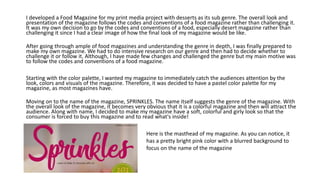
Here is the masthead of my magazine. As you can notice, it
has a pretty bright pink color with a blurred background to
focus on the name of the magazine
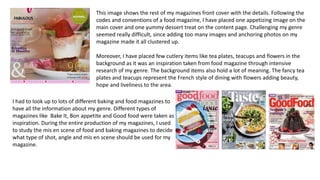
This image shows the rest of my magazines front cover with the details. Following the
codes and conventions of a food magazine, I have placed one appetizing image on the
main cover and one yummy dessert treat on the content page. Challenging my genre
seemed really difficult, since adding too many images and anchoring photos on my
magazine made it all clustered up.
Moreover, I have placed few cutlery items like tea plates, teacups and flowers in the
background as it was an inspiration taken from food magazine through intensive
research of my genre. The background items also hold a lot of meaning. The fancy tea
plates and teacups represent the French style of dining with flowers adding beauty,
hope and liveliness to the area.
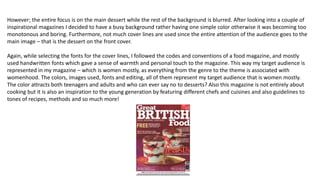
I had to look up to lots of different baking and food magazines to
have all the information about my genre. Different types of
magazines like Bake It, Bon appetite and Good food were taken as
inspiration. During the entire production of my magazines, I used
to study the mis en scene of food and baking magazines to decide
what type of shot, angle and mis en scene should be used for my
magazine.
However; the entire focus is on the main dessert while the rest of the background is blurred. After looking into a couple of
inspirational magazines I decided to have a busy background rather having one simple color otherwise it was becoming too
monotonous and boring. Furthermore, not much cover lines are used since the entire attention of the audience goes to the
main image – that is the dessert on the front cover.
Again, while selecting the fonts for the cover lines, I followed the codes and conventions of a food magazine, and mostly
used handwritten fonts which gave a sense of warmth and personal touch to the magazine. This way my target audience is
represented in my magazine – which is women mostly, as everything from the genre to the theme is associated with
womenhood. The colors, images used, fonts and editing, all of them represent my target audience that is women mostly.
The color attracts both teenagers and adults and who can ever say no to desserts? Also this magazine is not entirely about
cooking but it is also an inspiration to the young generation by featuring different chefs and cuisines and also guidelines to
tones of recipes, methods and so much more!
Here are some clear differences of how I have managed to follow the codes and conventions of a food
magazine instead of challenging them. Majority of the inspirational magazines I came across followed the rule
of third for the main image with either eye level angle or birds view angle. It was decided to have a rule of third
with eye level angle for my print media project. However; the major challenging portion for my magazine is the
fact that there are hardly any food – especially baking magazines to be specific, are available in Pakistani, hence
it is very challenging to make sure that this issue will be a hit or not! The only magazines available with such
content are the ones who only have recipes to different dishes.
This can challenging since my magazines features restaurants, dishes, chefs, products, reviews and also recipes!
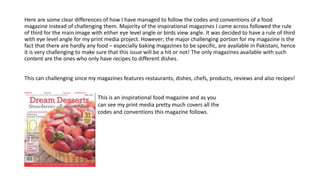
This is an inspirational food magazine and as you
can see my print media pretty much covers all the
codes and conventions this magazine follows.
2. How does your product engage with audiences and how would it be
distributed as a real media text?
As mentioned earlier, it is important to notice that food magazines with such content are not readily available in
Pakistan. This will be a very challenging yet an open opportunity for women especially teenagers to get an
inspiration from such magazines.
My print media project pretty much engages with the audience I have targeted. It follows all the aspects a food
magazine have. With the color scheme used, and such a appetizing and tempting image on the front cover and the
content page, it will attract the audience and force them to read the magazine. Since there is only done appealing
dish on the front cover and one on the content page, the entire focus of the consumers goes on the image and it
stands out from the rest of the magazines.
Furthermore, not one color is used on the magazine but instead, shades of pink and red are used which not only
goes with the theme of the magazine but makes it clear what type of audience is being targeted. I have used a very
stereotypical way to target my audience, that is by the use of color and the genre, that pink is for women and they
belong in the kitchen. The reason behind this is because of the society we live in, and that how gender is being
defined in our society.
Moreover, I have kept in mind the name of the magazine and likewise I have used an actual picture of sprinkles as
the background for the content page, and for the double spread, the same shades of pink and the same theme is
used, as used on the cover page.
The language and expression used on the magazine is very simple, elegant and engaging. The keywords are
highlighted with a different color on the cover lines, as such that it automatically denotes a meaning out of it. For
example, love is painted in read, while chocoholics is painted brown.
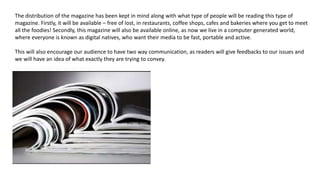
The distribution of the magazine has been kept in mind along with what type of people will be reading this type of
magazine. Firstly, it will be available – free of lost, in restaurants, coffee shops, cafes and bakeries where you get to meet
all the foodies! Secondly, this magazine will also be available online, as now we live in a computer generated world,
where everyone is known as digital natives, who want their media to be fast, portable and active.
This will also encourage our audience to have two way communication, as readers will give feedbacks to our issues and
we will have an idea of what exactly they are trying to convey.
3. How did your production skill develop throughout the project?
It has been a long journey from the basics to becoming a professional in Photoshop. I started off as a basic who only knew
few basic tools of Photoshop, but gradually I got a hang of it. Before making the actual magazine, we had to cover the
preliminary task for the AS Media Project. It was a great way to learn all the Photoshop tools and know how editing is done.
Initially, it was difficult to memorize all the tools and what they are used for, but because of continuous editing, blogging
and posting, I had developed enough production skills to complete my AS print media project.
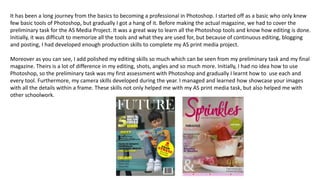
Moreover as you can see, I add polished my editing skills so much which can be seen from my preliminary task and my final
magazine. Theirs is a lot of difference in my editing, shots, angles and so much more. Initially, I had no idea how to use
Photoshop, so the preliminary task was my first assessment with Photoshop and gradually I learnt how to use each and
every tool. Furthermore, my camera skills developed during the year. I managed and learned how showcase your images
with all the details within a frame. These skills not only helped me with my AS print media task, but also helped me with
other schoolwork.
In addition to this, the extensive research before the making of the final magazine and understanding the genre had been
of great help. I got to know how different fonts and colors automatically create meaning and how different angles are
used to distinguish an action of an object. Moreover; I learnt how to use a blog, which I had never done before. It
seemed pretty hard in the starting, but gradually I became a pro at it!
There has been a drastic change in my production skills, which can be seen by comparing the preliminary task and the
final magazine from print media project. Even though I used the same camera and the same editing software that is
Photoshop, we can see a drastic change in the production skills. Overtime, I learnt new Photoshop tools, how to handle
the camera, how to take different photographs, and this was only possible through constant practice and numerous
Youtube tutorials.
4. How did you integrate technologies – software, hardware and online,
in this project?
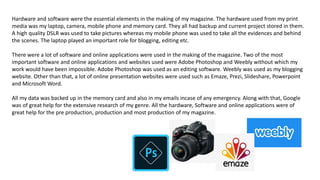
Hardware and software were the essential elements in the making of my magazine. The hardware used from my print
media was my laptop, camera, mobile phone and memory card. They all had backup and current project stored in them.
A high quality DSLR was used to take pictures whereas my mobile phone was used to take all the evidences and behind
the scenes. The laptop played an important role for blogging, editing etc.
There were a lot of software and online applications were used in the making of the magazine. Two of the most
important software and online applications and websites used were Adobe Photoshop and Weebly without which my
work would have been impossible. Adobe Photoshop was used as an editing software. Weebly was used as my blogging
website. Other than that, a lot of online presentation websites were used such as Emaze, Prezi, Slideshare, Powerpoint
and Microsoft Word.
All my data was backed up in the memory card and also in my emails incase of any emergency. Along with that, Google
was of great help for the extensive research of my genre. All the hardware, Software and online applications were of
great help for the pre production, production and most production of my magazine.

Critcal reflective 1

  • 1.
    1. How doesyour Media Product use or challenge conventions and how does it represent social groups and issues?
  • 2.
    I developed aFood Magazine for my print media project with desserts as its sub genre. The overall look and presentation of the magazine follows the codes and conventions of a food magazine rather than challenging it. It was my own decision to go by the codes and conventions of a food, especially desert magazine rather than challenging it since I had a clear image of how the final look of my magazine would be like. After going through ample of food magazines and understanding the genre in depth, I was finally prepared to make my own magazine. We had to do intensive research on our genre and then had to decide whether to challenge it or follow it. Although, I have made few changes and challenged the genre but my main motive was to follow the codes and conventions of a food magazine. Starting with the color palette, I wanted my magazine to immediately catch the audiences attention by the look, colors and visuals of the magazine. Therefore, it was decided to have a pastel color palette for my magazine, as most magazines have. Moving on to the name of the magazine, SPRINKLES. The name itself suggests the genre of the magazine. With the overall look of the magazine, it becomes very obvious that it is a colorful magazine and then will attract the audience. Along with name, I decided to make my magazine have a soft, colorful and girly look so that the consumer is forced to buy this magazine and to read what's inside! Here is the masthead of my magazine. As you can notice, it has a pretty bright pink color with a blurred background to focus on the name of the magazine
  • 3.
    This image showsthe rest of my magazines front cover with the details. Following the codes and conventions of a food magazine, I have placed one appetizing image on the main cover and one yummy dessert treat on the content page. Challenging my genre seemed really difficult, since adding too many images and anchoring photos on my magazine made it all clustered up. Moreover, I have placed few cutlery items like tea plates, teacups and flowers in the background as it was an inspiration taken from food magazine through intensive research of my genre. The background items also hold a lot of meaning. The fancy tea plates and teacups represent the French style of dining with flowers adding beauty, hope and liveliness to the area. I had to look up to lots of different baking and food magazines to have all the information about my genre. Different types of magazines like Bake It, Bon appetite and Good food were taken as inspiration. During the entire production of my magazines, I used to study the mis en scene of food and baking magazines to decide what type of shot, angle and mis en scene should be used for my magazine.
  • 4.
    However; the entirefocus is on the main dessert while the rest of the background is blurred. After looking into a couple of inspirational magazines I decided to have a busy background rather having one simple color otherwise it was becoming too monotonous and boring. Furthermore, not much cover lines are used since the entire attention of the audience goes to the main image – that is the dessert on the front cover. Again, while selecting the fonts for the cover lines, I followed the codes and conventions of a food magazine, and mostly used handwritten fonts which gave a sense of warmth and personal touch to the magazine. This way my target audience is represented in my magazine – which is women mostly, as everything from the genre to the theme is associated with womenhood. The colors, images used, fonts and editing, all of them represent my target audience that is women mostly. The color attracts both teenagers and adults and who can ever say no to desserts? Also this magazine is not entirely about cooking but it is also an inspiration to the young generation by featuring different chefs and cuisines and also guidelines to tones of recipes, methods and so much more!
  • 5.
    Here are someclear differences of how I have managed to follow the codes and conventions of a food magazine instead of challenging them. Majority of the inspirational magazines I came across followed the rule of third for the main image with either eye level angle or birds view angle. It was decided to have a rule of third with eye level angle for my print media project. However; the major challenging portion for my magazine is the fact that there are hardly any food – especially baking magazines to be specific, are available in Pakistani, hence it is very challenging to make sure that this issue will be a hit or not! The only magazines available with such content are the ones who only have recipes to different dishes. This can challenging since my magazines features restaurants, dishes, chefs, products, reviews and also recipes! This is an inspirational food magazine and as you can see my print media pretty much covers all the codes and conventions this magazine follows.
  • 6.
    2. How doesyour product engage with audiences and how would it be distributed as a real media text?
  • 7.
    As mentioned earlier,it is important to notice that food magazines with such content are not readily available in Pakistan. This will be a very challenging yet an open opportunity for women especially teenagers to get an inspiration from such magazines. My print media project pretty much engages with the audience I have targeted. It follows all the aspects a food magazine have. With the color scheme used, and such a appetizing and tempting image on the front cover and the content page, it will attract the audience and force them to read the magazine. Since there is only done appealing dish on the front cover and one on the content page, the entire focus of the consumers goes on the image and it stands out from the rest of the magazines. Furthermore, not one color is used on the magazine but instead, shades of pink and red are used which not only goes with the theme of the magazine but makes it clear what type of audience is being targeted. I have used a very stereotypical way to target my audience, that is by the use of color and the genre, that pink is for women and they belong in the kitchen. The reason behind this is because of the society we live in, and that how gender is being defined in our society. Moreover, I have kept in mind the name of the magazine and likewise I have used an actual picture of sprinkles as the background for the content page, and for the double spread, the same shades of pink and the same theme is used, as used on the cover page. The language and expression used on the magazine is very simple, elegant and engaging. The keywords are highlighted with a different color on the cover lines, as such that it automatically denotes a meaning out of it. For example, love is painted in read, while chocoholics is painted brown.
  • 8.
    The distribution ofthe magazine has been kept in mind along with what type of people will be reading this type of magazine. Firstly, it will be available – free of lost, in restaurants, coffee shops, cafes and bakeries where you get to meet all the foodies! Secondly, this magazine will also be available online, as now we live in a computer generated world, where everyone is known as digital natives, who want their media to be fast, portable and active. This will also encourage our audience to have two way communication, as readers will give feedbacks to our issues and we will have an idea of what exactly they are trying to convey.
  • 9.
    3. How didyour production skill develop throughout the project?
  • 10.
    It has beena long journey from the basics to becoming a professional in Photoshop. I started off as a basic who only knew few basic tools of Photoshop, but gradually I got a hang of it. Before making the actual magazine, we had to cover the preliminary task for the AS Media Project. It was a great way to learn all the Photoshop tools and know how editing is done. Initially, it was difficult to memorize all the tools and what they are used for, but because of continuous editing, blogging and posting, I had developed enough production skills to complete my AS print media project. Moreover as you can see, I add polished my editing skills so much which can be seen from my preliminary task and my final magazine. Theirs is a lot of difference in my editing, shots, angles and so much more. Initially, I had no idea how to use Photoshop, so the preliminary task was my first assessment with Photoshop and gradually I learnt how to use each and every tool. Furthermore, my camera skills developed during the year. I managed and learned how showcase your images with all the details within a frame. These skills not only helped me with my AS print media task, but also helped me with other schoolwork.
  • 11.
    In addition tothis, the extensive research before the making of the final magazine and understanding the genre had been of great help. I got to know how different fonts and colors automatically create meaning and how different angles are used to distinguish an action of an object. Moreover; I learnt how to use a blog, which I had never done before. It seemed pretty hard in the starting, but gradually I became a pro at it! There has been a drastic change in my production skills, which can be seen by comparing the preliminary task and the final magazine from print media project. Even though I used the same camera and the same editing software that is Photoshop, we can see a drastic change in the production skills. Overtime, I learnt new Photoshop tools, how to handle the camera, how to take different photographs, and this was only possible through constant practice and numerous Youtube tutorials.
  • 12.
    4. How didyou integrate technologies – software, hardware and online, in this project?
  • 13.
    Hardware and softwarewere the essential elements in the making of my magazine. The hardware used from my print media was my laptop, camera, mobile phone and memory card. They all had backup and current project stored in them. A high quality DSLR was used to take pictures whereas my mobile phone was used to take all the evidences and behind the scenes. The laptop played an important role for blogging, editing etc. There were a lot of software and online applications were used in the making of the magazine. Two of the most important software and online applications and websites used were Adobe Photoshop and Weebly without which my work would have been impossible. Adobe Photoshop was used as an editing software. Weebly was used as my blogging website. Other than that, a lot of online presentation websites were used such as Emaze, Prezi, Slideshare, Powerpoint and Microsoft Word. All my data was backed up in the memory card and also in my emails incase of any emergency. Along with that, Google was of great help for the extensive research of my genre. All the hardware, Software and online applications were of great help for the pre production, production and most production of my magazine.