Class report


                   CLASS ASSIGNMENT- 2
                    OBSERVER PATTERN


         SHARE PRICE NOTIFICATION:


Introduction:
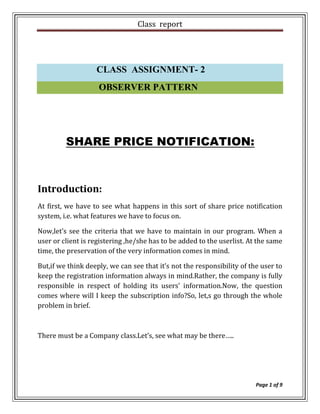
At first, we have to see what happens in this sort of share price notification
system, i.e. what features we have to focus on.

Now,let’s see the criteria that we have to maintain in our program. When a
user or client is registering ,he/she has to be added to the userlist. At the same
time, the preservation of the very information comes in mind.

But,if we think deeply, we can see that it’s not the responsibility of the user to
keep the registration information always in mind.Rather, the company is fully
responsible in respect of holding its users’ information.Now, the question
comes where will I keep the subscription info?So, let,s go through the whole
problem in brief.


There must be a Company class.Let’s, see what may be there…..


                                                                         Page 1 of 9
Class report

Company:
Company name:

Supportive information:

Userlist;

Shareprice:

So, some methods may be present like;

Registration();

ChangeShare();

NotifyUsers();


Again, there must be a User class.The features may be ….


User:
Name:

Description:

Functions like;

ReceiveNotification();

                         -may be present.


Another class named Share may be present. But, it’s not mandatory to take it
as a class .Rather, we can easily include it in the Company class.

Actually, what functions will play the key role can easily be detected.As,


                                                                        Page 2 of 9
Class report


Company                                           User

NotifyUser();                                     ReceiveNotification();


However;

           let’s focus, how we will troubleshoot the problem.

Company Class:
At first , we have to create a registration method in Company class in order to
maintain the generic registration issues.As for example;

Registration(User us){

Userlist.add(us);

}


Now, we have to maintain a suitable connection with the users who are added
to the userlist. If there is any change found in the share price then the
company has to notify the users about the possible change. As,

ChangeShare(double price){

If (shareprice !=price){

Shareprice=price;

NotifyUser();

}

}


                                                                      Page 3 of 9
Class report

NotifyUser(){

For all users in userlist{

//loop;

User.ReceiveNotification(shareprice,company name);

}}


User Class:
Now, after being called by NotifyUser() method, the ReceiveNotification()
method becomes active. So, it somehow sends the message that it has been
notifed. As,

ReceiveNotification(double price,company name){

Print(“I have been notified”);

}


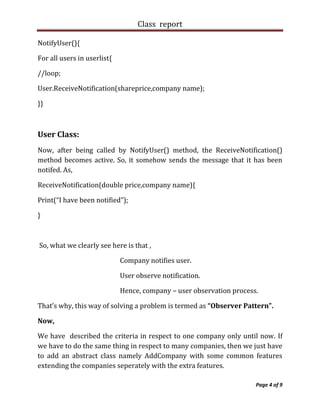
So, what we clearly see here is that ,

                             Company notifies user.

                             User observe notification.

                             Hence, company – user observation process.

That’s why, this way of solving a problem is termed as “Observer Pattern”.

Now,

We have described the criteria in respect to one company only until now. If
we have to do the same thing in respect to many companies, then we just have
to add an abstract class namely AddCompany with some common features
extending the companies seperately with the extra features.

                                                                      Page 4 of 9
Class report


Likewise,


                           AddCompany


   Company1                  Company2                    ...............


Similarly,

We can use the same concept in case of multiple users,likewise;


                                                                           Page 5 of 9
Class report


                               AddUser


      User1                      User2                  .........


The main code to solve the problem is shown below:


Main Code:


User Class:


public class User {

      public static void main(String[ ] args) {

              Company cmp1 = new Company("Yahoo", 5000000);
              Company cmp2 = new Company("Apple", 4000000);

              ShareHolder sh1 = new ShareHolder("Mahedi", cmp1);
              cmp1.addShareHolder(sh1);
              ShareHolder sh2 = new ShareHolder("Mahfuj", cmp1);
              cmp1.addShareHolder(sh2);

                                                                    Page 6 of 9
Class report

            ShareHolder sh3 = new ShareHolder("Anik", cmp2);
            cmp2.addShareHolder(sh3);

            cmp1.changePrice(7000000);
            cmp2.changePrice(6000000);

      }
}


Company Class:

import java.util.ArrayList;

public class Company {

      private double sharePrice;
      private ArrayList<ShareHolder> sh;
      private String companyName;

      public Company(String cn,double sPrice){
            companyName = cn;
            sharePrice = sPrice;
            sh = new ArrayList<ShareHolder>();
      }

      public void addShareHolder(ShareHolder sh){
            this.sh.add(sh);
      }

                                                               Page 7 of 9
Class report

      public void changePrice(double sPrice){
            if(this.sharePrice != sPrice){
                   java.util.Iterator<ShareHolder> itr = sh.iterator();
                   while(itr.hasNext()){

      itr.next().receiveNotification(getCompanyName(),sPrice);
                   }
             }
      }

      public String getCompanyName() {
            return companyName;
      }

      }


Shareholder Class:
//This class is not mandatory.We can add the shareholder information in the
company class even.//

import java.util.ArrayList;

public class ShareHolder {

      private String holderName;
      private ArrayList<Company> regCom;

      public ShareHolder(String hn,Company cm){
            holderName = hn;
            regCom = new ArrayList<Company>();
      }

      public void registerTo(Company cm){
            this.regCom.add(cm);
      }


                                                                          Page 8 of 9
Class report

    public void receiveNotification(String cName,double sPrice){
          System.out.println(this.holderName + " is notified as sharePrice of
          " + cName + " is changed to " + sPrice);
    }

     }


……………………………………………………………………………..X…………………………………………………………………………………


                                                                    Page 9 of 9

Observer pattern

  • 1.
    Class report CLASS ASSIGNMENT- 2 OBSERVER PATTERN SHARE PRICE NOTIFICATION: Introduction: At first, we have to see what happens in this sort of share price notification system, i.e. what features we have to focus on. Now,let’s see the criteria that we have to maintain in our program. When a user or client is registering ,he/she has to be added to the userlist. At the same time, the preservation of the very information comes in mind. But,if we think deeply, we can see that it’s not the responsibility of the user to keep the registration information always in mind.Rather, the company is fully responsible in respect of holding its users’ information.Now, the question comes where will I keep the subscription info?So, let,s go through the whole problem in brief. There must be a Company class.Let’s, see what may be there….. Page 1 of 9
  • 2.
    Class report Company: Company name: Supportiveinformation: Userlist; Shareprice: So, some methods may be present like; Registration(); ChangeShare(); NotifyUsers(); Again, there must be a User class.The features may be …. User: Name: Description: Functions like; ReceiveNotification(); -may be present. Another class named Share may be present. But, it’s not mandatory to take it as a class .Rather, we can easily include it in the Company class. Actually, what functions will play the key role can easily be detected.As, Page 2 of 9
  • 3.
    Class report Company User NotifyUser(); ReceiveNotification(); However; let’s focus, how we will troubleshoot the problem. Company Class: At first , we have to create a registration method in Company class in order to maintain the generic registration issues.As for example; Registration(User us){ Userlist.add(us); } Now, we have to maintain a suitable connection with the users who are added to the userlist. If there is any change found in the share price then the company has to notify the users about the possible change. As, ChangeShare(double price){ If (shareprice !=price){ Shareprice=price; NotifyUser(); } } Page 3 of 9
  • 4.
    Class report NotifyUser(){ For allusers in userlist{ //loop; User.ReceiveNotification(shareprice,company name); }} User Class: Now, after being called by NotifyUser() method, the ReceiveNotification() method becomes active. So, it somehow sends the message that it has been notifed. As, ReceiveNotification(double price,company name){ Print(“I have been notified”); } So, what we clearly see here is that , Company notifies user. User observe notification. Hence, company – user observation process. That’s why, this way of solving a problem is termed as “Observer Pattern”. Now, We have described the criteria in respect to one company only until now. If we have to do the same thing in respect to many companies, then we just have to add an abstract class namely AddCompany with some common features extending the companies seperately with the extra features. Page 4 of 9
  • 5.
    Class report Likewise, AddCompany Company1 Company2 ............... Similarly, We can use the same concept in case of multiple users,likewise; Page 5 of 9
  • 6.
    Class report AddUser User1 User2 ......... The main code to solve the problem is shown below: Main Code: User Class: public class User { public static void main(String[ ] args) { Company cmp1 = new Company("Yahoo", 5000000); Company cmp2 = new Company("Apple", 4000000); ShareHolder sh1 = new ShareHolder("Mahedi", cmp1); cmp1.addShareHolder(sh1); ShareHolder sh2 = new ShareHolder("Mahfuj", cmp1); cmp1.addShareHolder(sh2); Page 6 of 9
  • 7.
    Class report ShareHolder sh3 = new ShareHolder("Anik", cmp2); cmp2.addShareHolder(sh3); cmp1.changePrice(7000000); cmp2.changePrice(6000000); } } Company Class: import java.util.ArrayList; public class Company { private double sharePrice; private ArrayList<ShareHolder> sh; private String companyName; public Company(String cn,double sPrice){ companyName = cn; sharePrice = sPrice; sh = new ArrayList<ShareHolder>(); } public void addShareHolder(ShareHolder sh){ this.sh.add(sh); } Page 7 of 9
  • 8.
    Class report public void changePrice(double sPrice){ if(this.sharePrice != sPrice){ java.util.Iterator<ShareHolder> itr = sh.iterator(); while(itr.hasNext()){ itr.next().receiveNotification(getCompanyName(),sPrice); } } } public String getCompanyName() { return companyName; } } Shareholder Class: //This class is not mandatory.We can add the shareholder information in the company class even.// import java.util.ArrayList; public class ShareHolder { private String holderName; private ArrayList<Company> regCom; public ShareHolder(String hn,Company cm){ holderName = hn; regCom = new ArrayList<Company>(); } public void registerTo(Company cm){ this.regCom.add(cm); } Page 8 of 9
  • 9.
    Class report public void receiveNotification(String cName,double sPrice){ System.out.println(this.holderName + " is notified as sharePrice of " + cName + " is changed to " + sPrice); } } ……………………………………………………………………………..X………………………………………………………………………………… Page 9 of 9