Downloaded 58 times

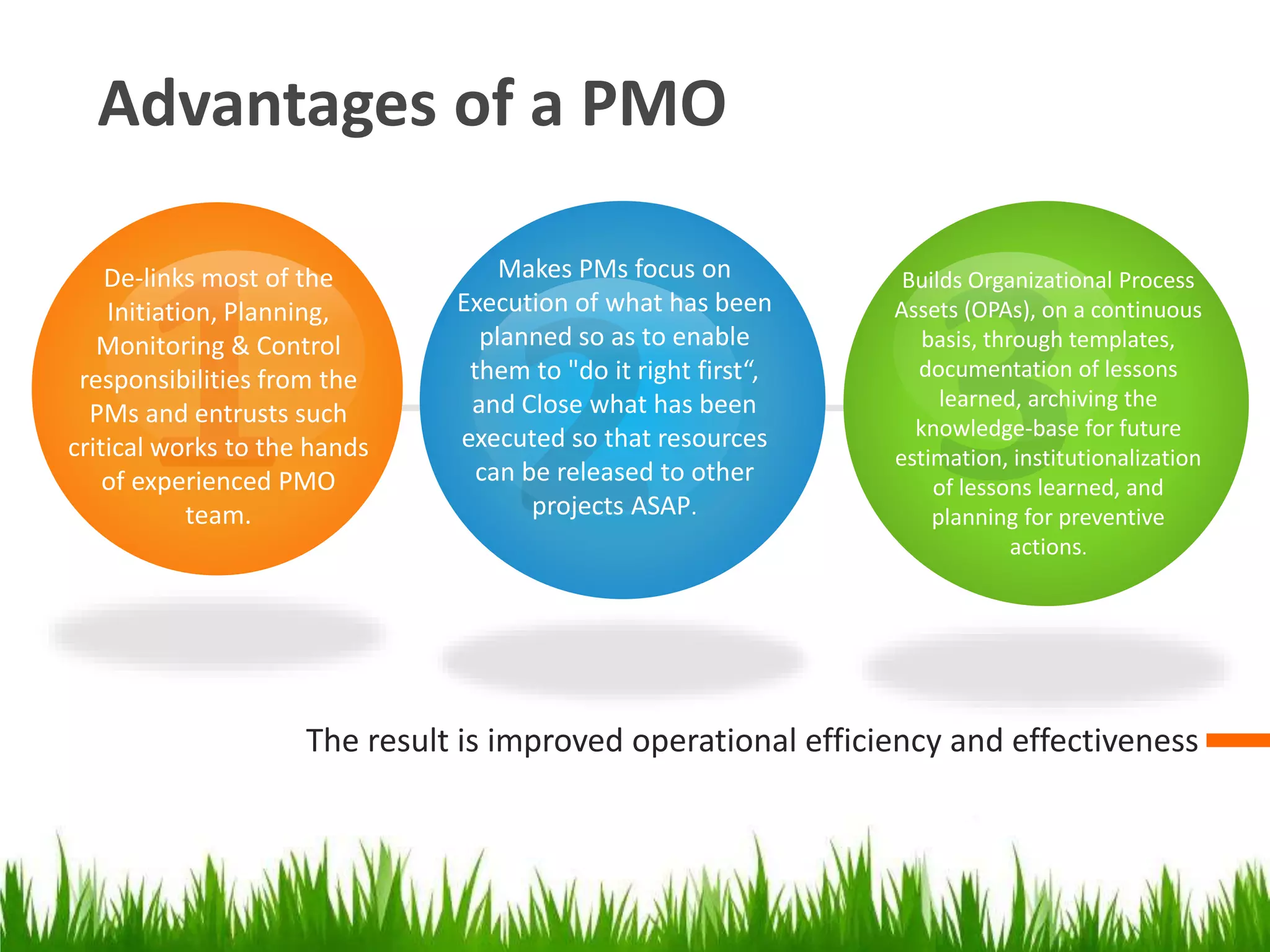


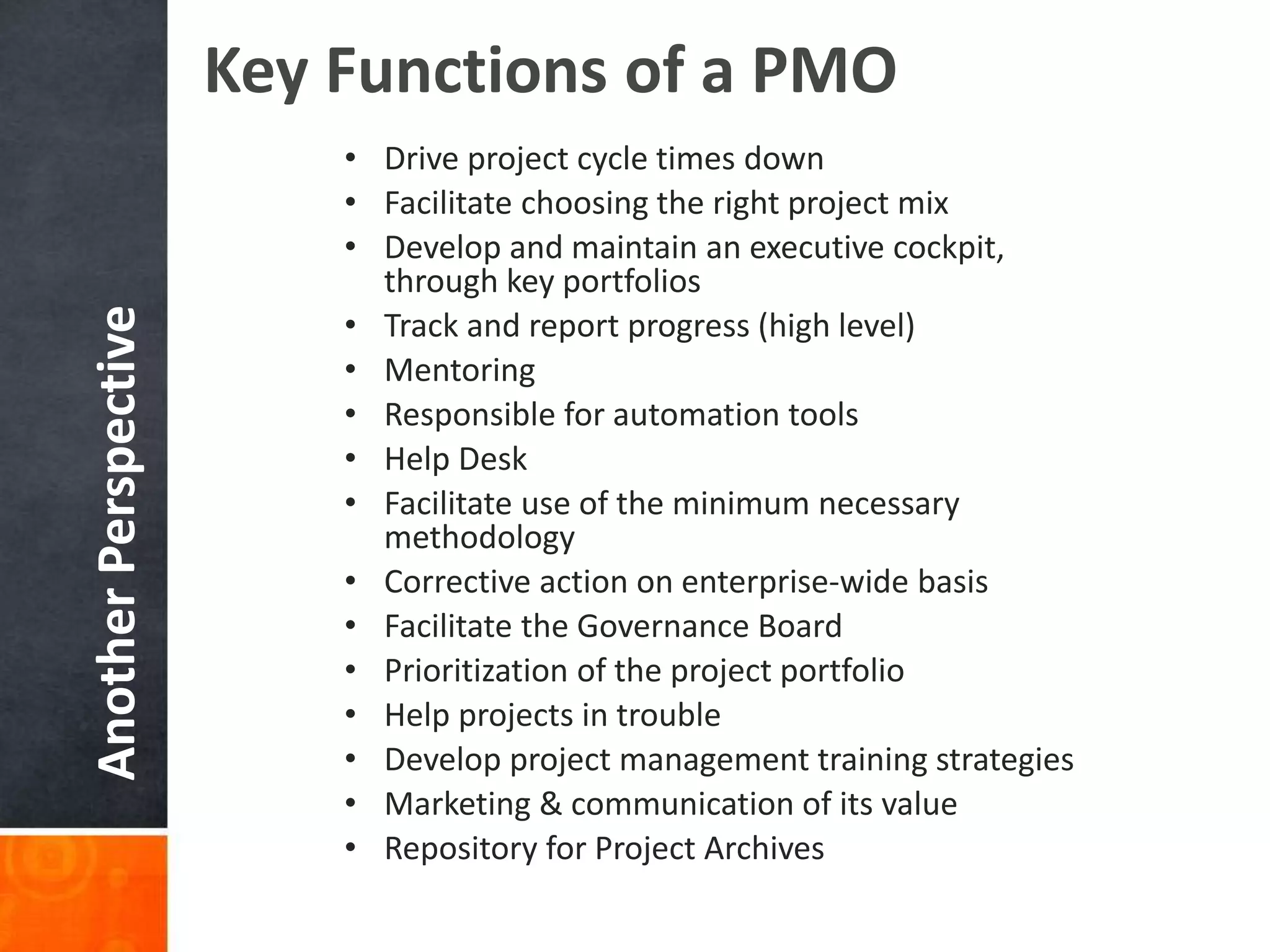




The document discusses the advantages and key functions of a Project Management Office (PMO), emphasizing improved operational efficiency and the delegation of critical tasks to an experienced PMO team. It outlines functions such as developing standard methodologies, monitoring project performance, and promoting a project management culture within the organization. The document encourages sharing experiences and knowledge about the PMO to enhance its value in the organization.
Overview of PMOs, their key functions and advantages including improved efficiency and focused execution.
Detailed functions of PMOs encompassing reporting, standard methodologies, performance monitoring, and competency development.
Promotion of project management culture, marketing PMO value, and organizational communication strategies.
Encouragement to reach out for more information about PMOs from the presenter.


