Downloaded 16 times
![© 2020, Amazon Web Services, Inc. or its affiliates. All rights reserved.
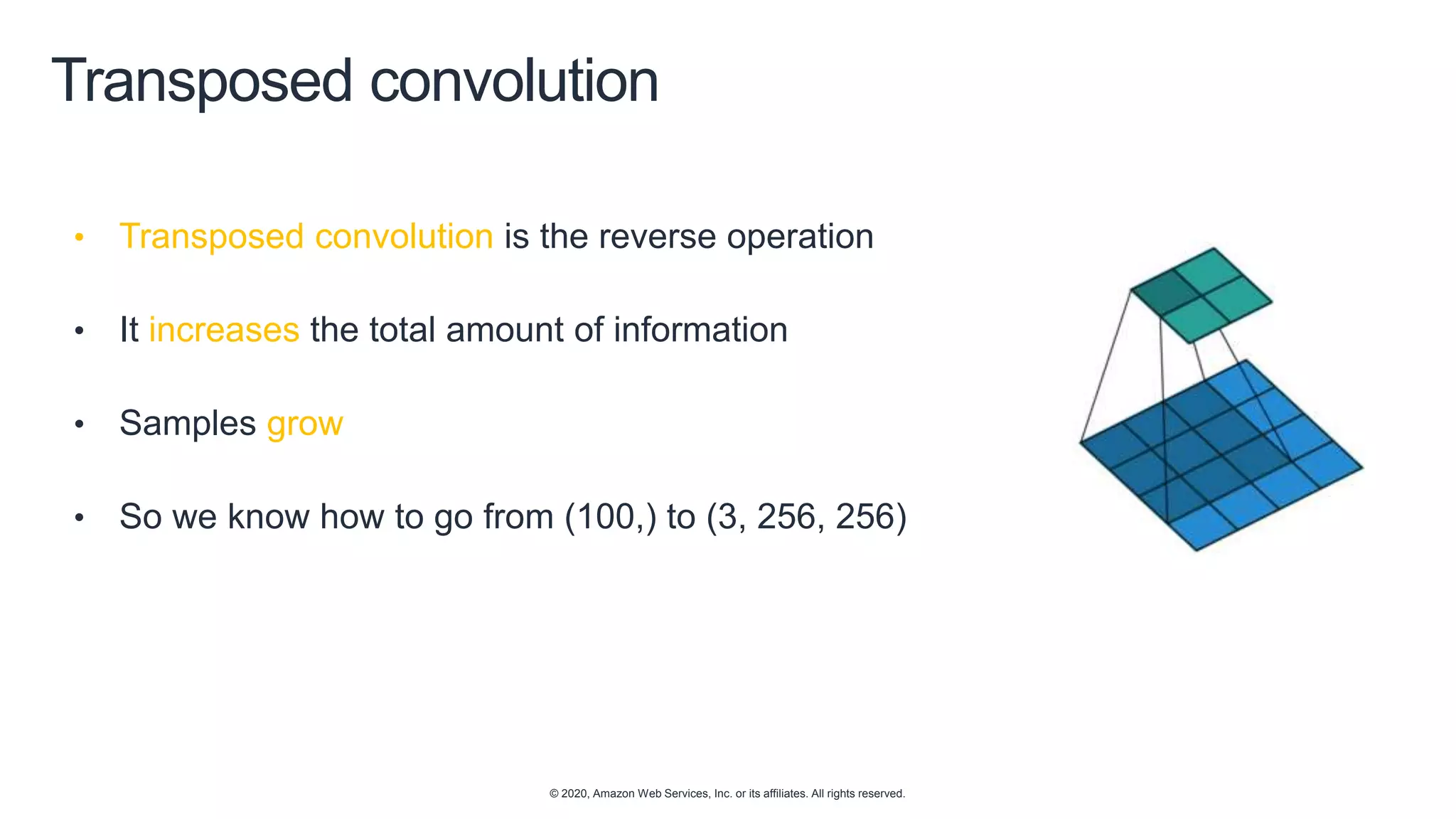
Let’s take about convolution for a minute
• Convolution extracts features
from complex data samples
• It reduces the total amount of
information
• Samples can shrink, keeping
only the « good stuff »
• Padding and stride
• So we know how to go from (3,
256, 256) to [0,1]
• From images to probabilities
• Can we do the opposite?](https://image.slidesharecdn.com/mlt4gan-200416080616/75/An-Introduction-to-Generative-Adversarial-Networks-April-2020-7-2048.jpg)
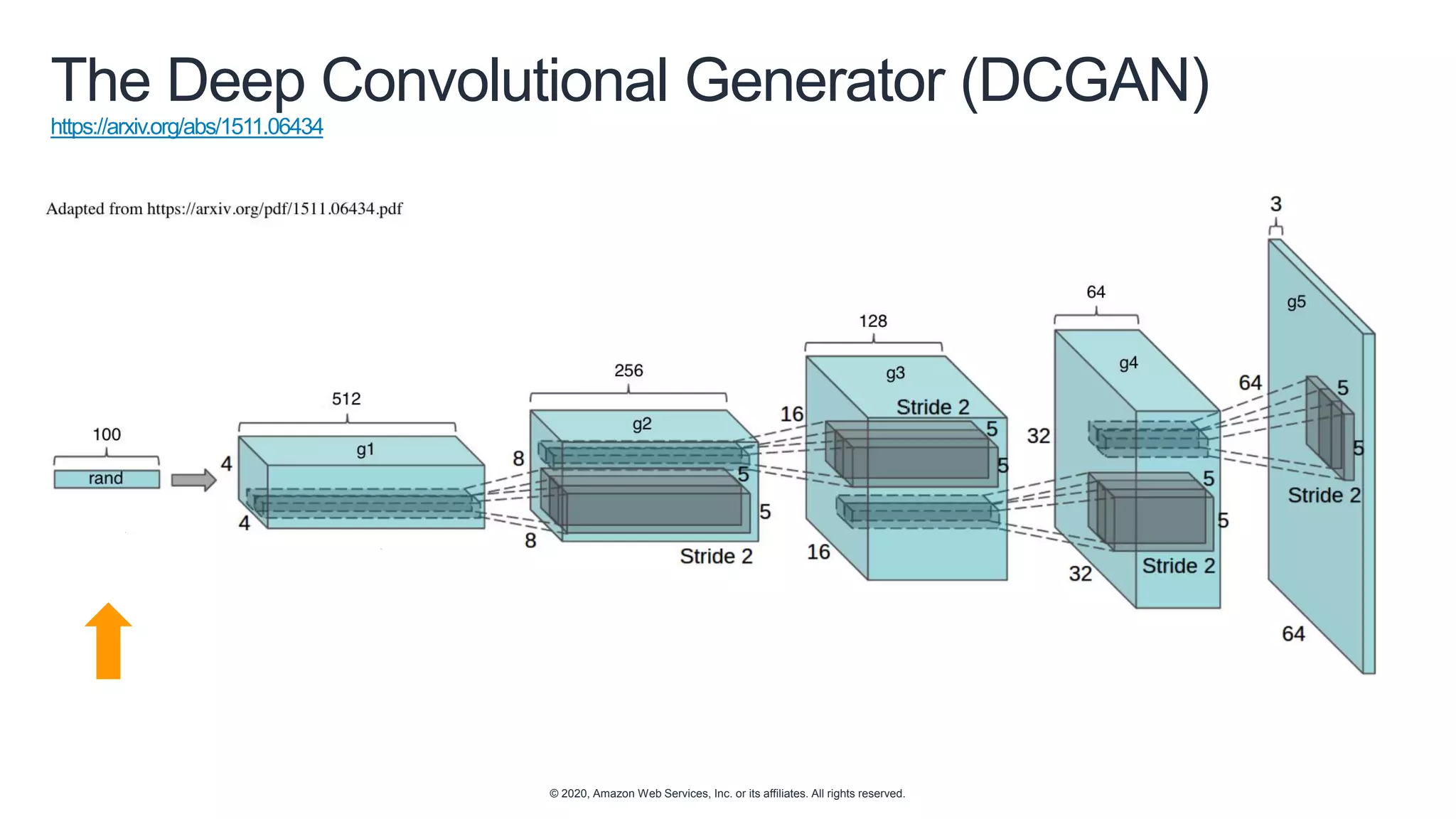
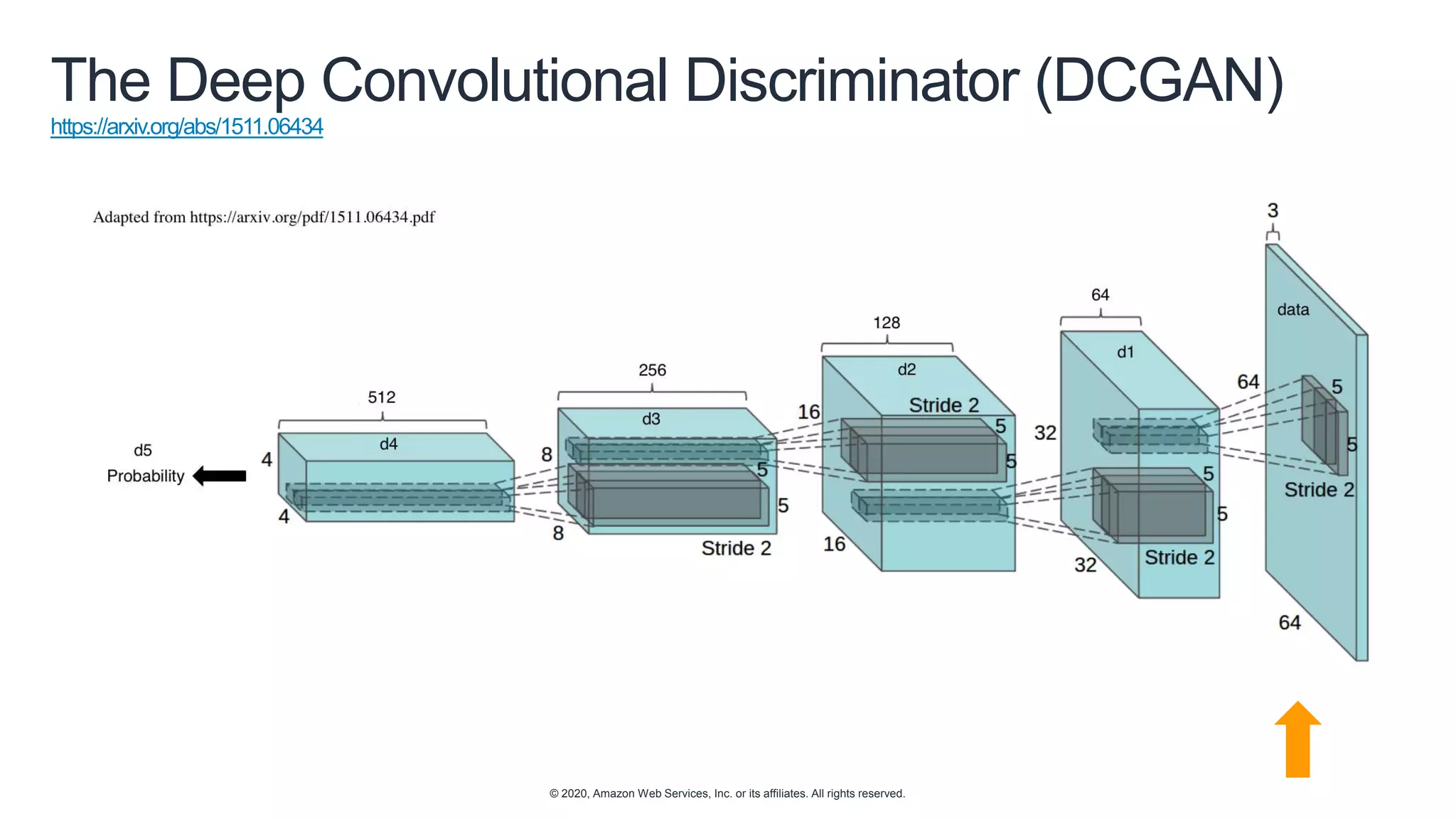
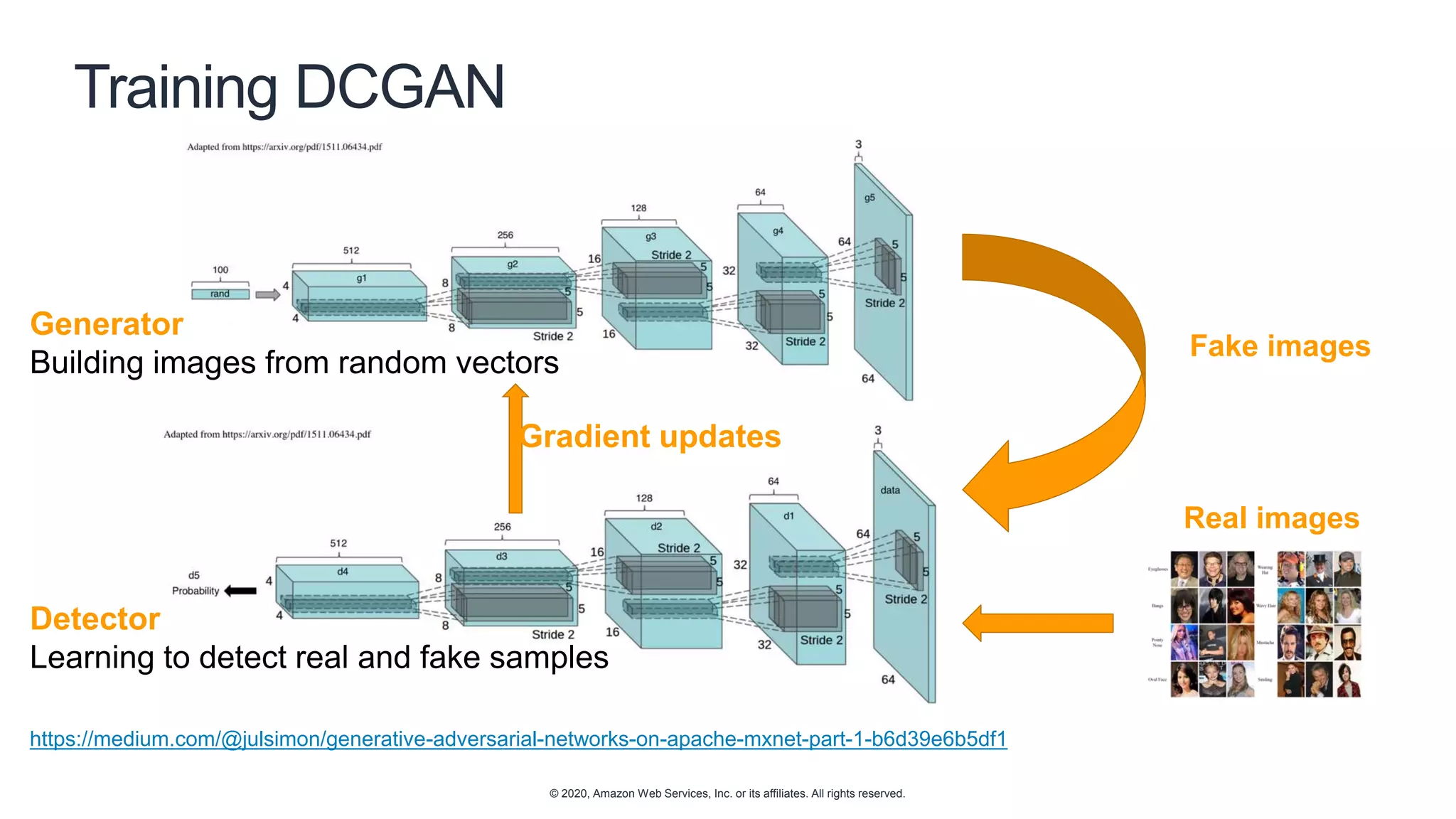
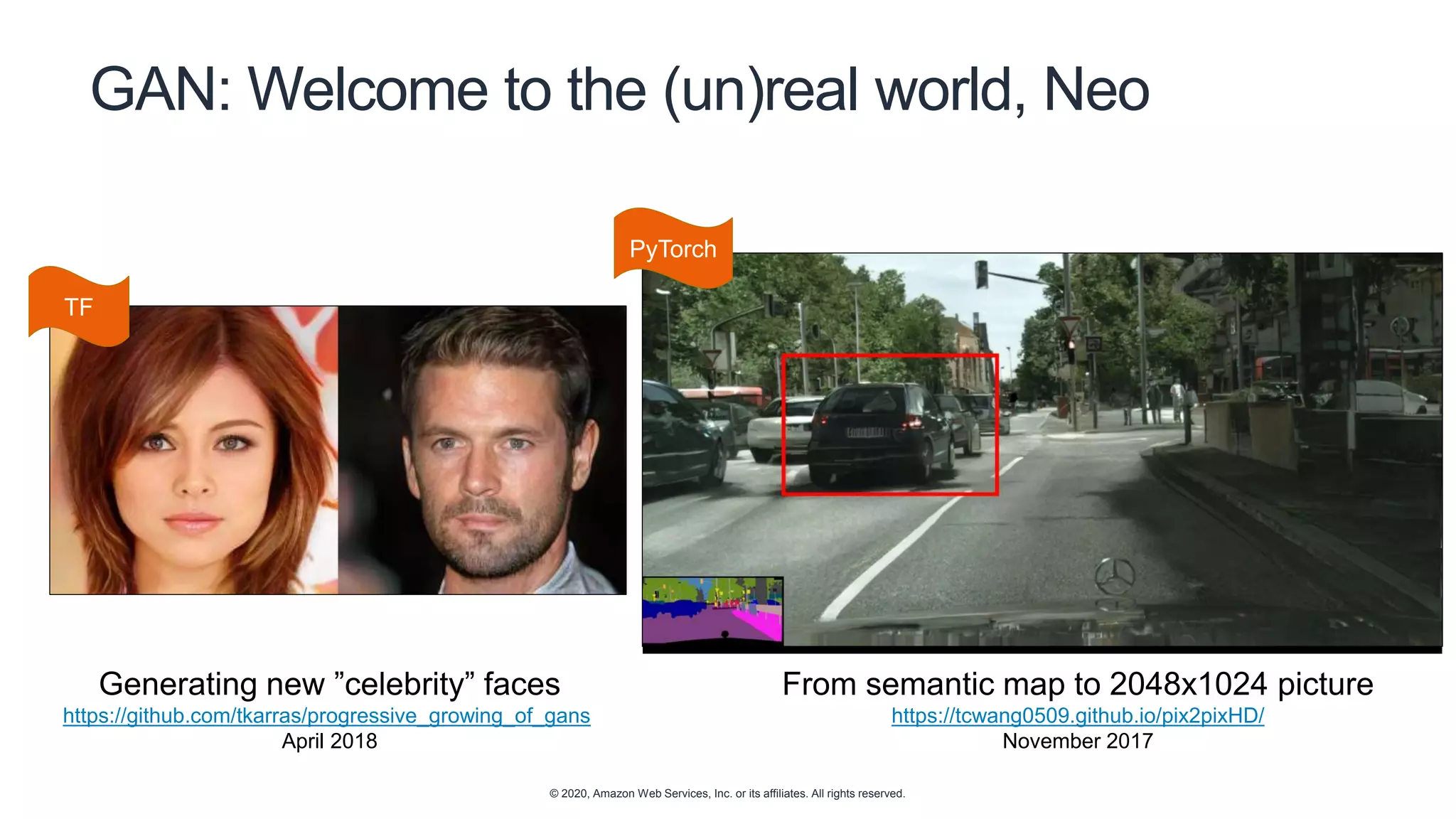
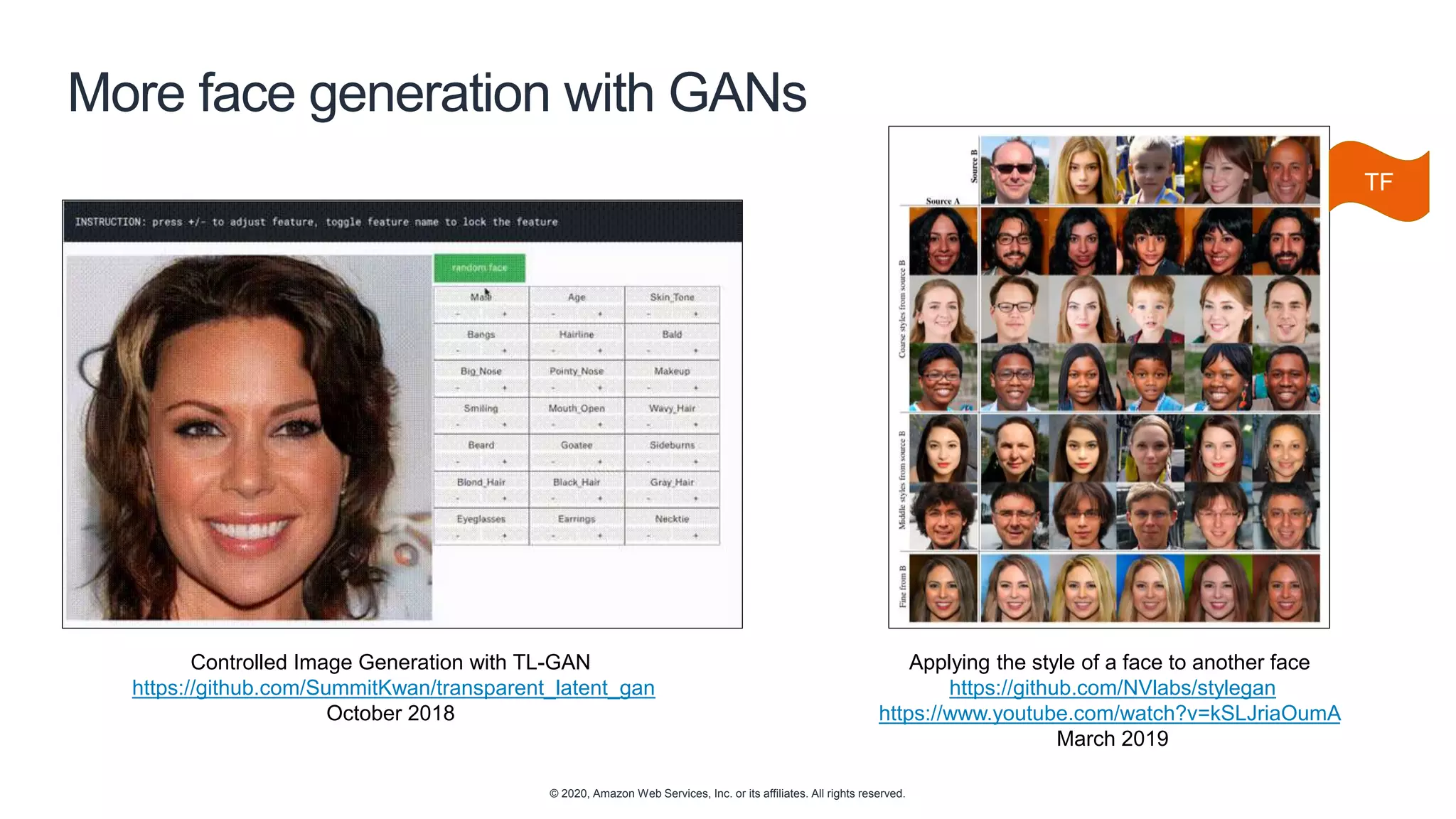
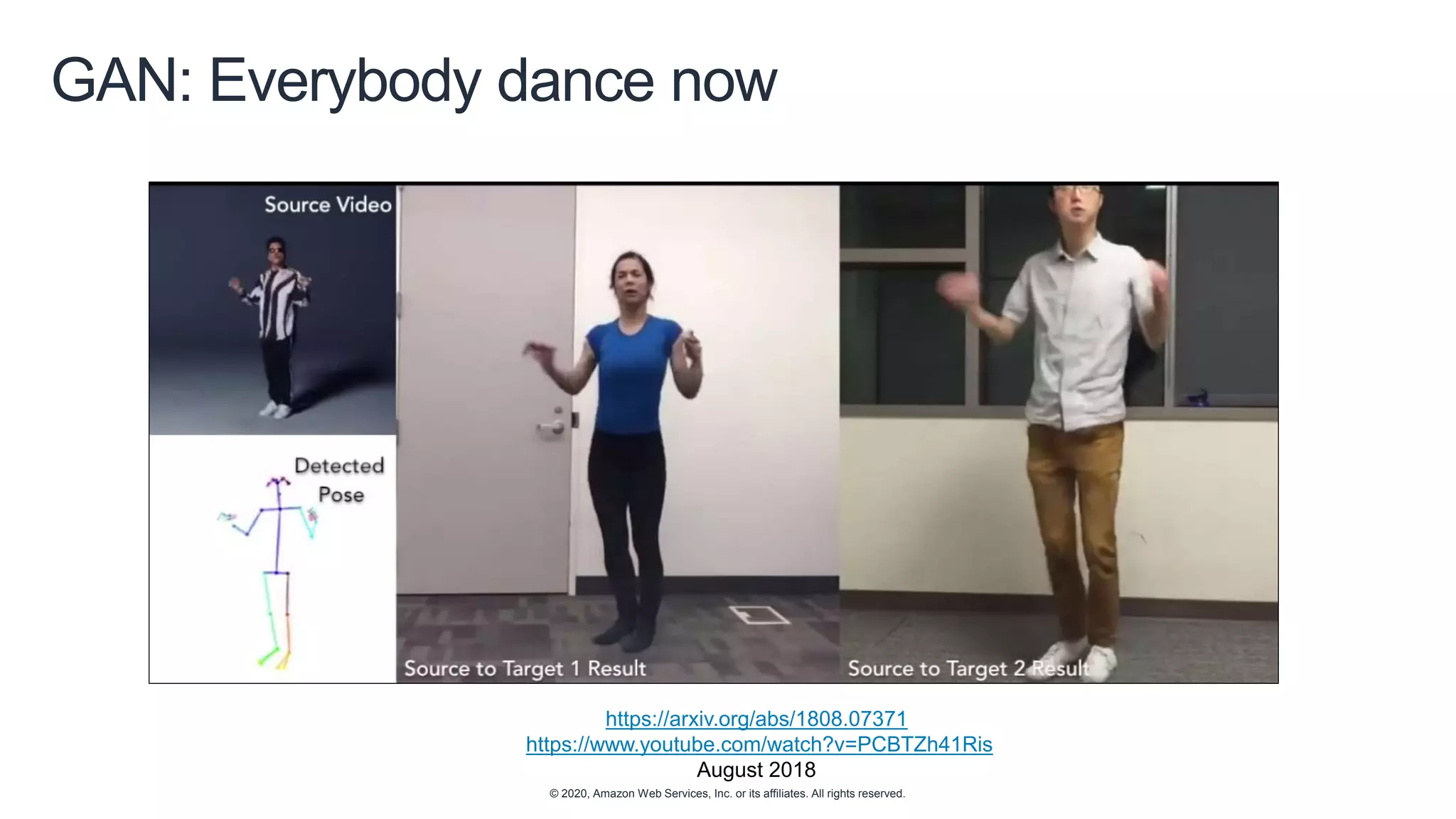
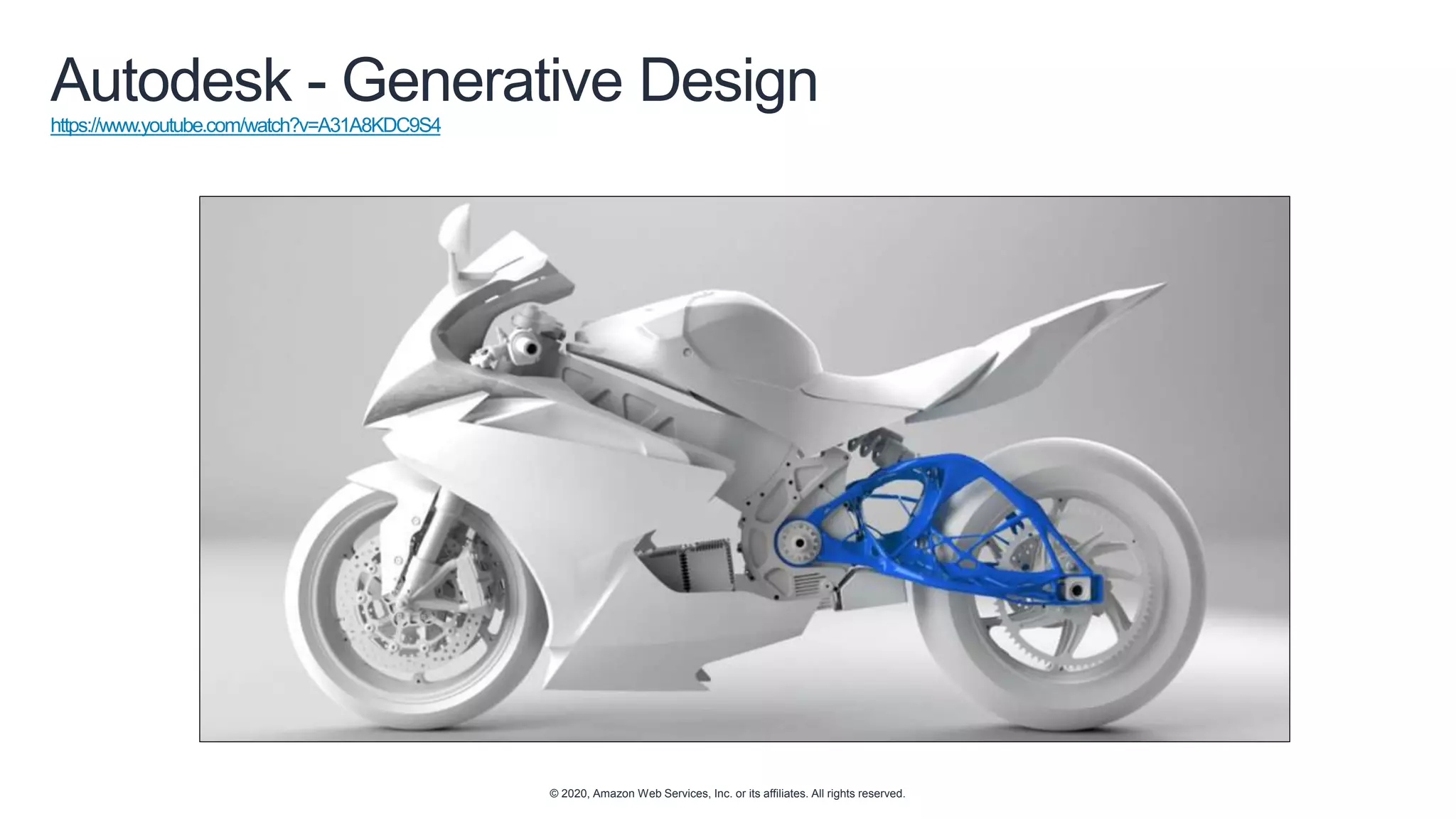
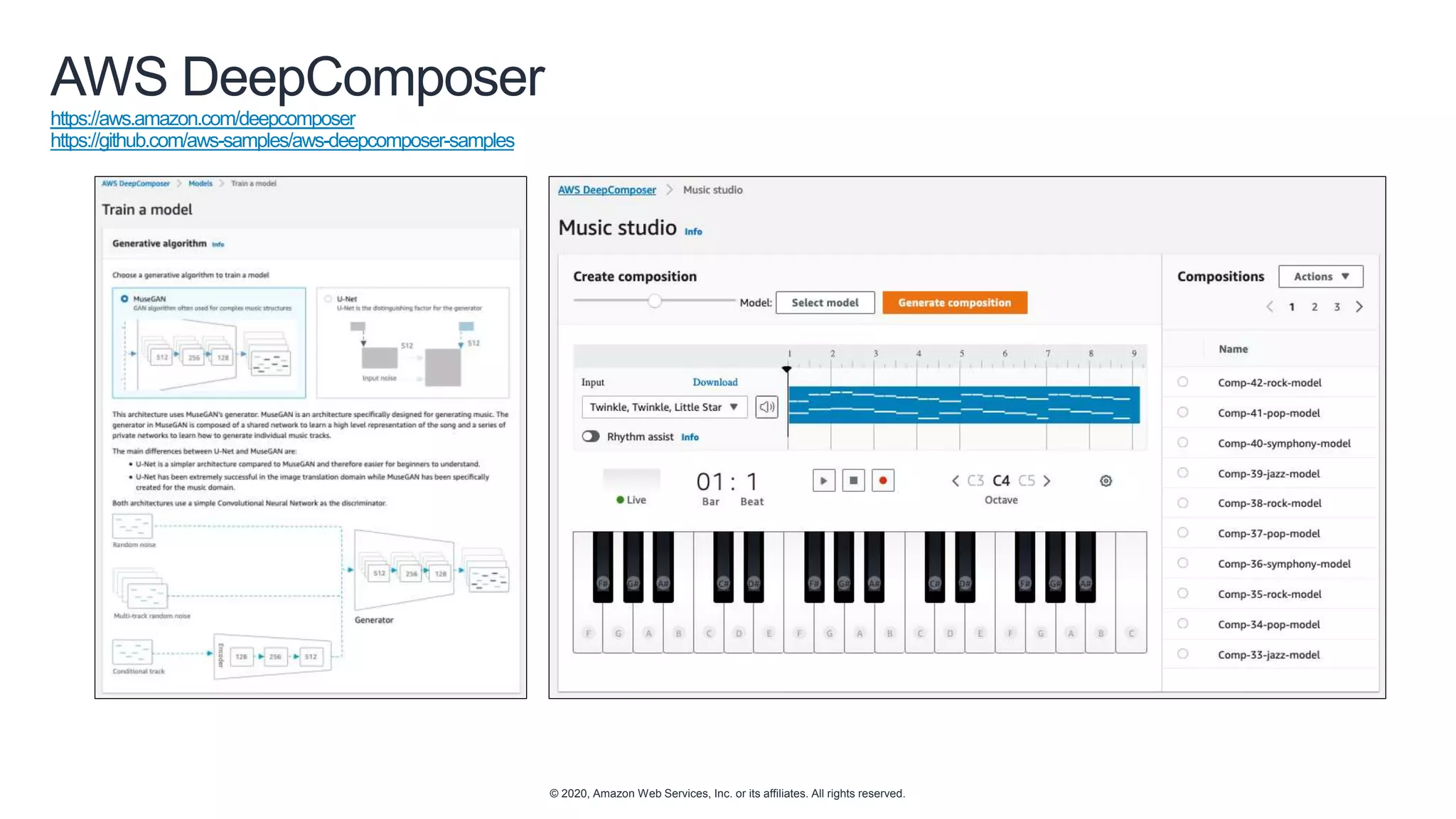
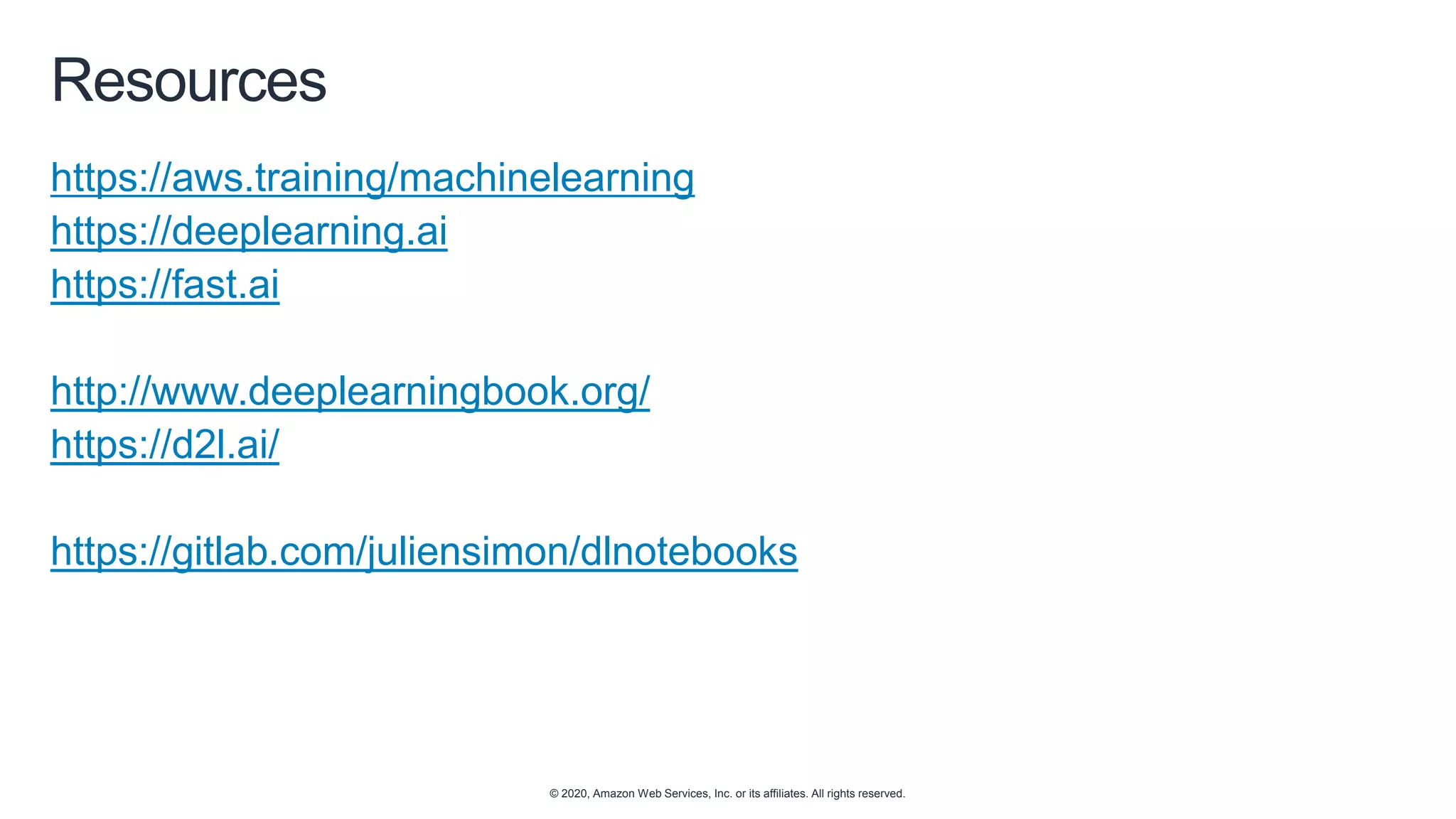

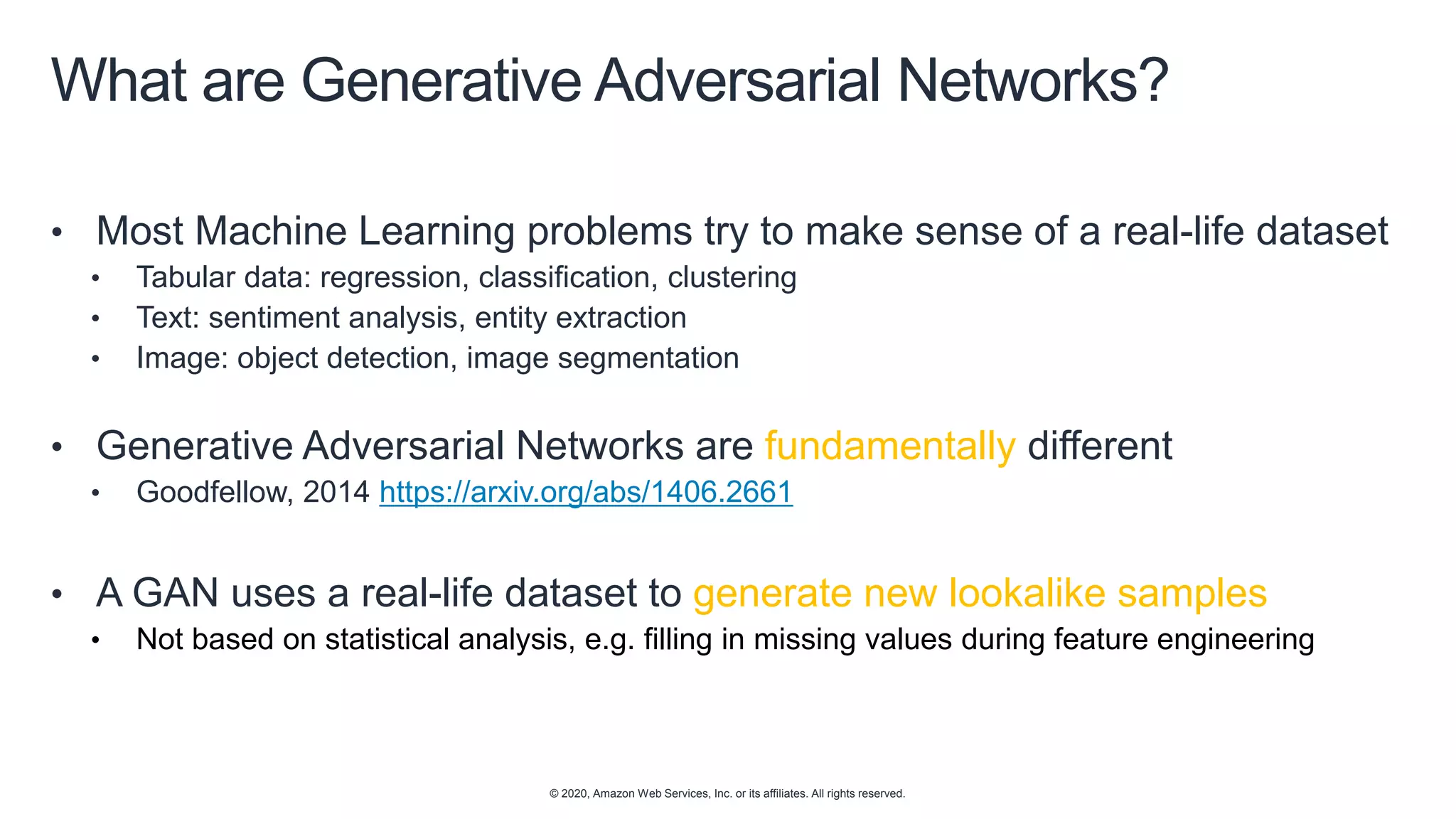
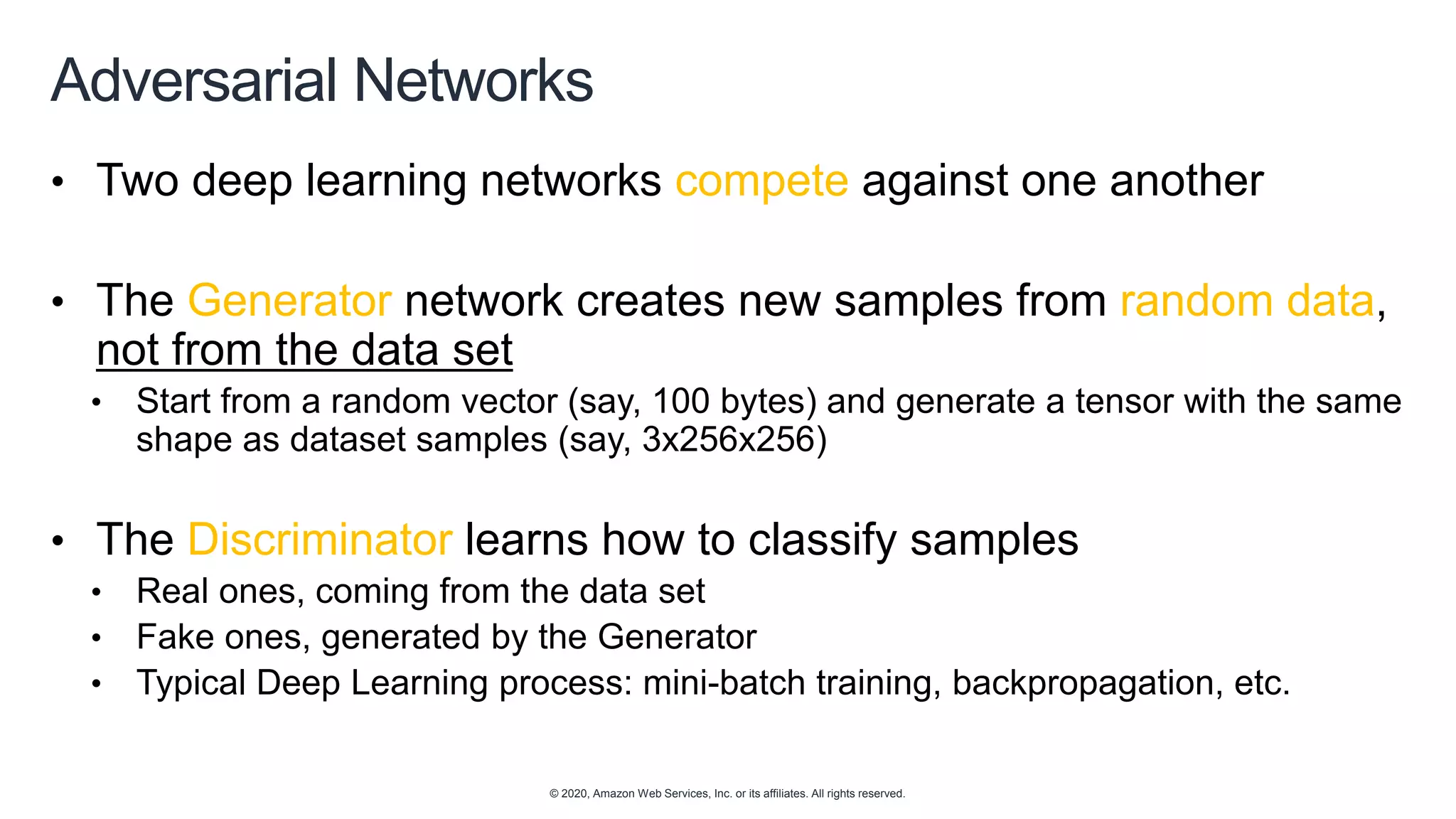
Generative adversarial networks (GANs) use two neural networks, a generator and discriminator, that compete against each other. The generator creates synthetic samples and the discriminator evaluates them as real or fake. This training process allows the generator to produce highly realistic samples. GANs have been used to generate new images like faces, as well as music, dance motions, and design concepts. Resources for learning more about GANs include online courses, books, and example notebooks.


![Coded Agents – with UiPath SDK + LangGraph [Virtual Hands-on Workshop]](https://cdn.slidesharecdn.com/ss_thumbnails/codedagentsdeck-251215155422-5497c599-thumbnail.jpg?width=640&height=640&fit=bounds)


