JISC BDC & DEI
Community of Practice
26 May 2022
Irina Niculescu – University of Surrey
Digital Learning Design and Development Manager
Presentation
outline
Context
About me
Surrey Institute of
Education
Digital Learning team
Journey so far - JISC Building Digital
Capabilities Service
Next steps
Invitation
About me
8 years of L&D and 4 different roles: Xerox EU R&D
and 3 roles at Surrey
BA Sociology and Film, Fellow of Advance HE, MA
in Design for learning & Higher Education
Training in systemic modelling of transformation
and change
Currently managing the design and development
stream of work in SIoE, Digital Learning
Focus on academics’ CPD and Development and
Student-Staff partnerships
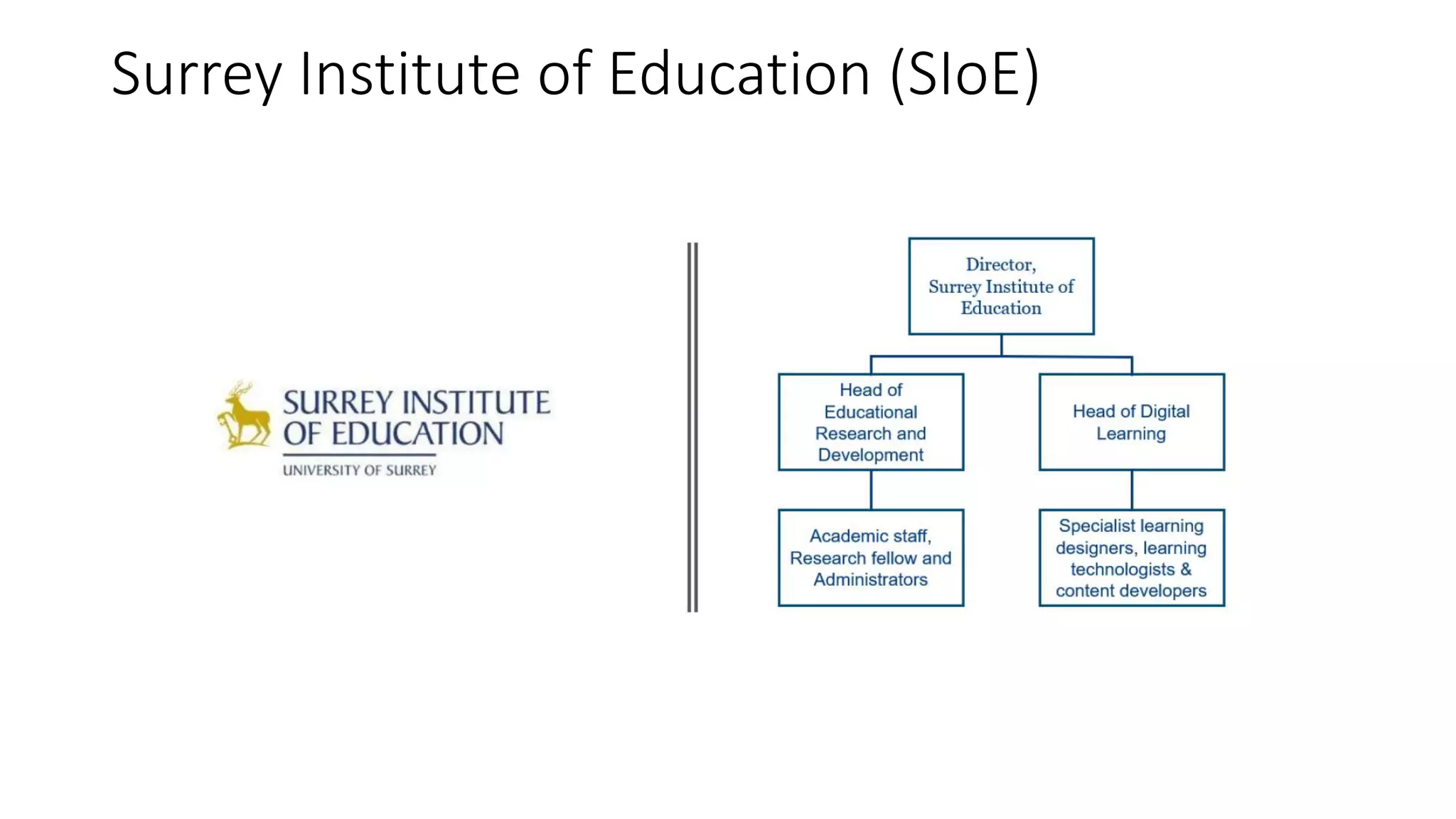
Surrey Institute of Education (SIoE)
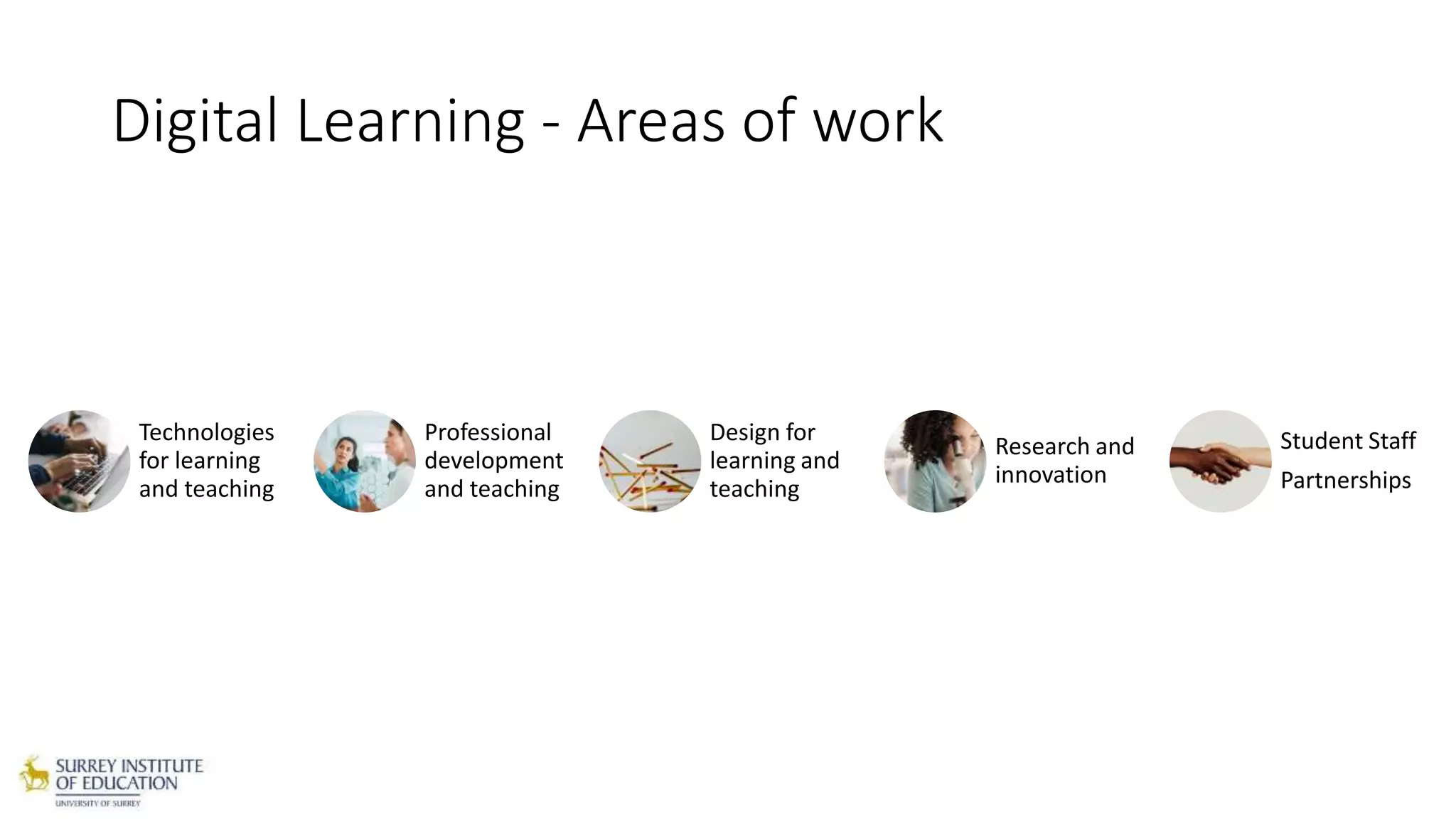
Digital Learning - Areas of work
Technologies
for learning
and teaching
Professional
development
and teaching
Design for
learning and
teaching
Research and
innovation
Student Staff
Partnerships
Digital Learning? TEL? E-learning?
‘Concepts like digital education can be useful insofar as they
encourage people to look closer at the design and practice of
teaching and learning.
They become problematic when used to close down ideas or
attribute essential properties to technology.’
(Fawns, 2018: 132)
Fawns, T., 2018. Postdigital Education in Design and Practice. Postdigital Science and Education,1(1), pp.132-145.
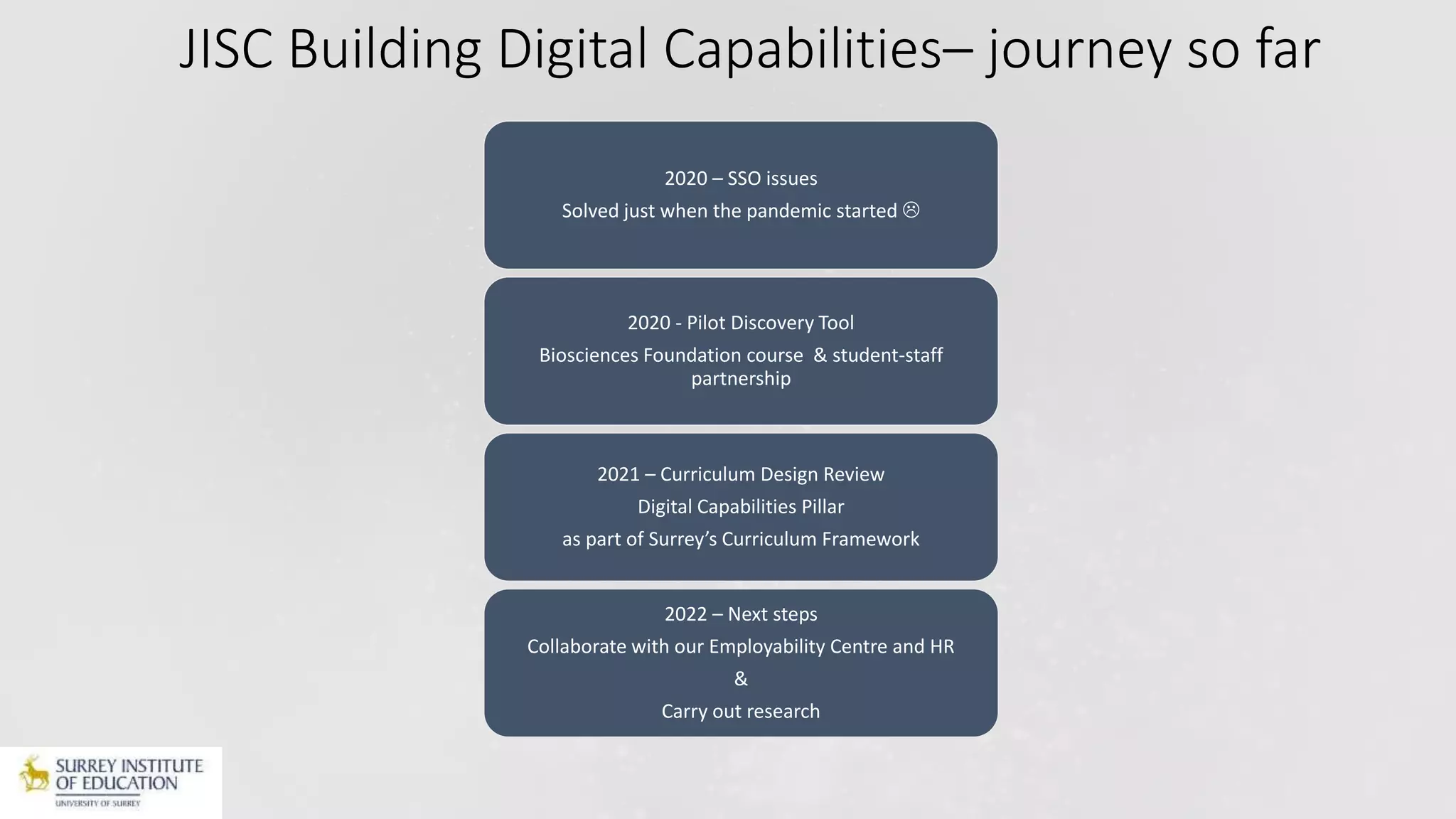
JISC Building Digital Capabilities– journey so far
2020 – SSO issues
Solved just when the pandemic started 
2020 - Pilot Discovery Tool
Biosciences Foundation course & student-staff
partnership
2021 – Curriculum Design Review
Digital Capabilities Pillar
as part of Surrey’s Curriculum Framework
2022 – Next steps
Collaborate with our Employability Centre and HR
&
Carry out research
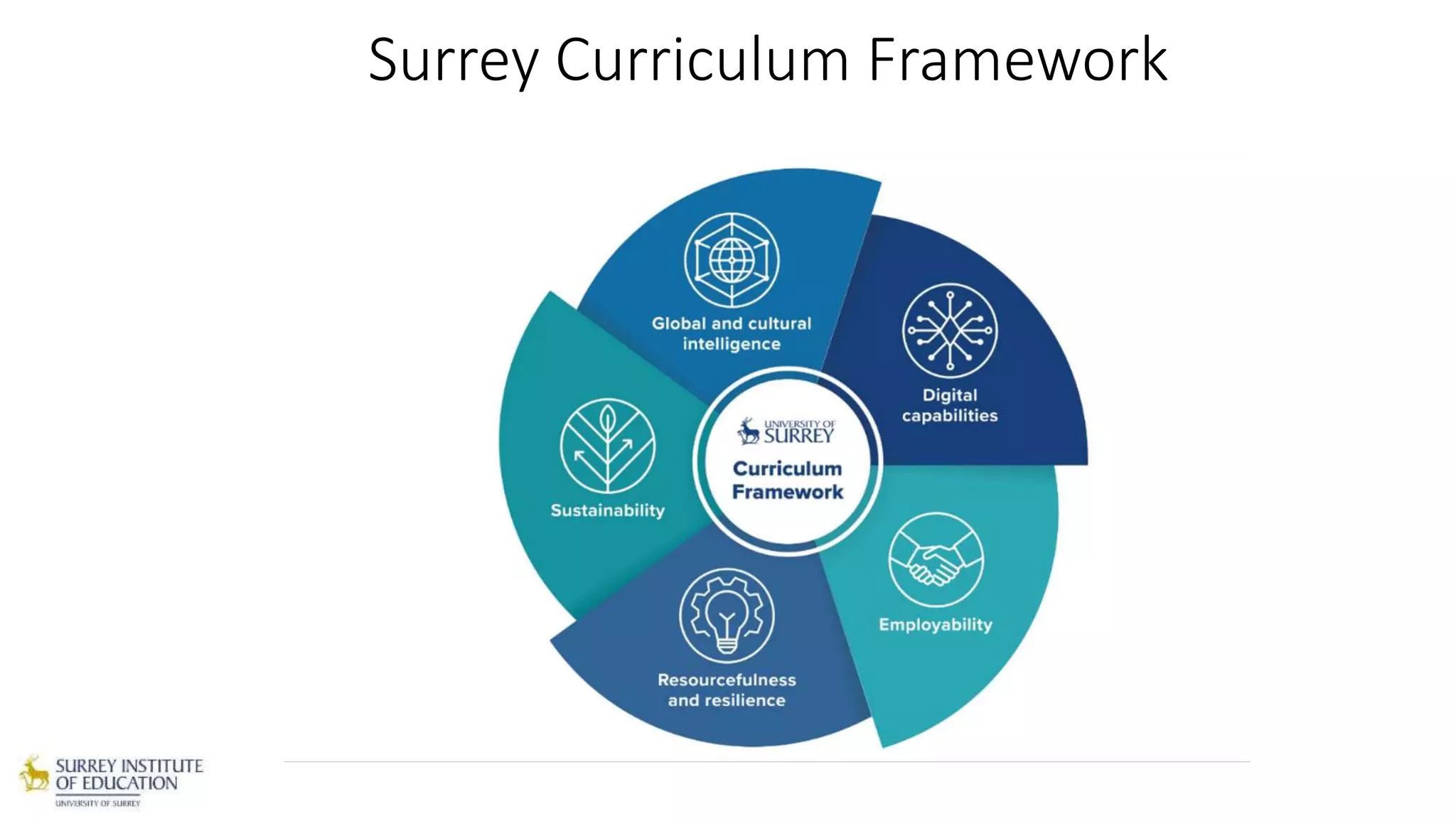
Surrey Curriculum Framework
Invitation
Explore how we can engage with digital
capabilities in a more systemic way
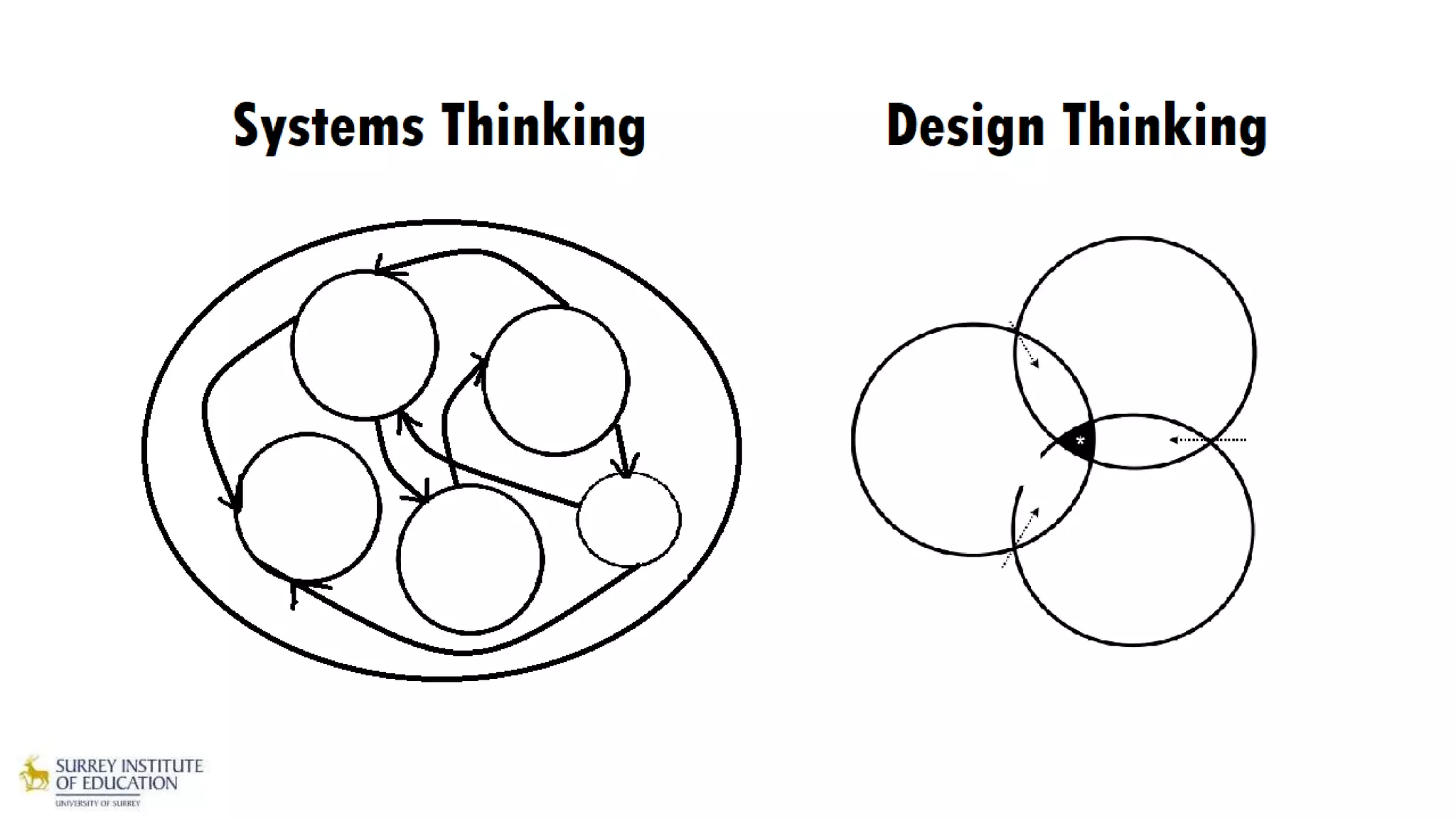
Systems thinking is a way of making sense of the complexity of the world
by looking at it in terms of wholes and relationships
rather than by splitting it down into its parts.
(Ramage and Karen, 2009)
Ramage, M. and Shipp, K., 2009. Systems Thinkers. 1st ed. London: Springer London.
Suggested questions
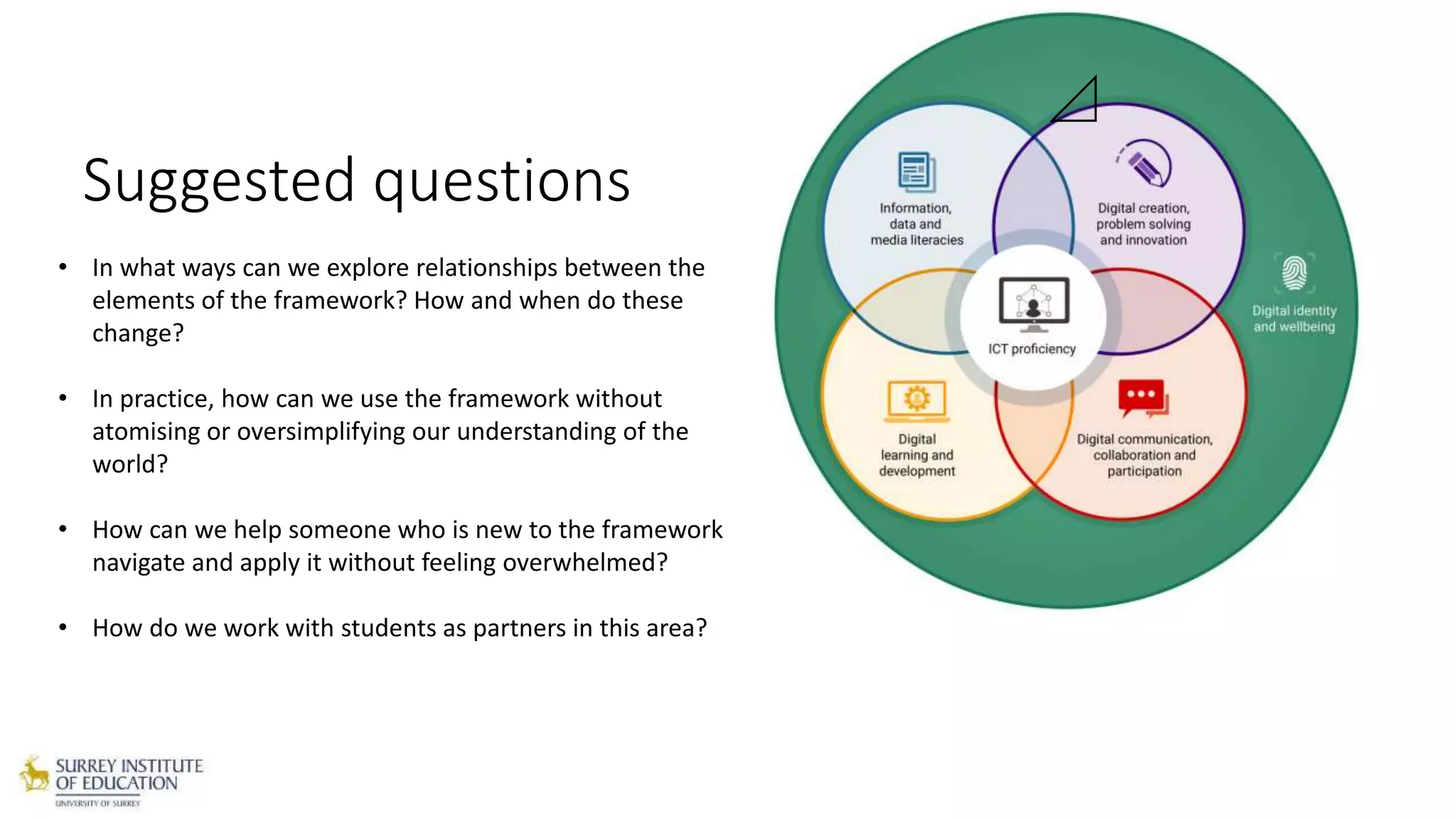
• In what ways can we explore relationships between the
elements of the framework? How and when do these
change?
• In practice, how can we use the framework without
atomising or oversimplifying our understanding of the
world?
• How can we help someone who is new to the framework
navigate and apply it without feeling overwhelmed?
• How do we work with students as partners in this area?
Invitation
• 1 hour online gathering to start a dialogue on this topic
• No fixed output, we could explore:
• Setting up a book/journal club
• Collaborate on research
• Discuss and develop workshop designs
• Share your name and email via the chat if interested

JISC BDC and DEI community of practice

  • 1.
    JISC BDC &DEI Community of Practice 26 May 2022 Irina Niculescu – University of Surrey Digital Learning Design and Development Manager
  • 2.
    Presentation outline Context About me Surrey Instituteof Education Digital Learning team Journey so far - JISC Building Digital Capabilities Service Next steps Invitation
  • 3.
    About me 8 yearsof L&D and 4 different roles: Xerox EU R&D and 3 roles at Surrey BA Sociology and Film, Fellow of Advance HE, MA in Design for learning & Higher Education Training in systemic modelling of transformation and change Currently managing the design and development stream of work in SIoE, Digital Learning Focus on academics’ CPD and Development and Student-Staff partnerships
  • 4.
    Surrey Institute ofEducation (SIoE)
  • 5.
    Digital Learning -Areas of work Technologies for learning and teaching Professional development and teaching Design for learning and teaching Research and innovation Student Staff Partnerships
  • 6.
    Digital Learning? TEL?E-learning? ‘Concepts like digital education can be useful insofar as they encourage people to look closer at the design and practice of teaching and learning. They become problematic when used to close down ideas or attribute essential properties to technology.’ (Fawns, 2018: 132) Fawns, T., 2018. Postdigital Education in Design and Practice. Postdigital Science and Education,1(1), pp.132-145.
  • 7.
    JISC Building DigitalCapabilities– journey so far 2020 – SSO issues Solved just when the pandemic started  2020 - Pilot Discovery Tool Biosciences Foundation course & student-staff partnership 2021 – Curriculum Design Review Digital Capabilities Pillar as part of Surrey’s Curriculum Framework 2022 – Next steps Collaborate with our Employability Centre and HR & Carry out research
  • 8.
  • 9.
    Invitation Explore how wecan engage with digital capabilities in a more systemic way Systems thinking is a way of making sense of the complexity of the world by looking at it in terms of wholes and relationships rather than by splitting it down into its parts. (Ramage and Karen, 2009) Ramage, M. and Shipp, K., 2009. Systems Thinkers. 1st ed. London: Springer London.
  • 11.
    Suggested questions • Inwhat ways can we explore relationships between the elements of the framework? How and when do these change? • In practice, how can we use the framework without atomising or oversimplifying our understanding of the world? • How can we help someone who is new to the framework navigate and apply it without feeling overwhelmed? • How do we work with students as partners in this area?
  • 12.
    Invitation • 1 houronline gathering to start a dialogue on this topic • No fixed output, we could explore: • Setting up a book/journal club • Collaborate on research • Discuss and develop workshop designs • Share your name and email via the chat if interested

Editor's Notes

  • #9 Global and cultural intelligence; Digital capabilities; Sustainability; Resourcefulness and resilience; Employability
  • #11 V helpful – however Overly focused on the challenge -