C. DIFF DIARRHEA:
VANCOMYCIN VS. METRONIDAZOLE
OVMC LANDMARK TRIALS SERIES
Zar FA, et al. "A comparison of vancomycin and
metronidazole for the treatment of Clostridium difficile-
associated diarrhea, stratified by disease severity". Clinical
Infectious Diseases. 2007. 45(3):302-7.
BACKGROUND
 C. diff diarrhea is most common infectious
entity in nosocomial diarrhea, accounting for
15-25% of all cases
 Metronidazole is first line, but more treatment
failures evolving
 Therefore, C.diff has been increasing in
incidence and severity
 It is known that Vancomycin orally can treat
C.diff; however, it is unclear when Vanc should
be used
 Prior to this study, no studies have been
published on vancomycin versus
metronidazole for treating C.diff, stratifying
patients in terms of severity
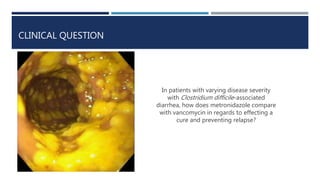
CLINICAL QUESTION
In patients with varying disease severity
with Clostridium difficile-associated
diarrhea, how does metronidazole compare
with vancomycin in regards to effecting a
cure and preventing relapse?
DESIGN
 Analysis: Intention-to-treat
 Single center, double-blinded, parallel-group, placebo, randomized controlled trial
 N=150
 Metronidazole (n=79)
 Vancomycin (n=71)
 Setting: Affiliate of University of Illinois at Chicago
 Enrollment: 1994-2002
 Follow-up: 21 days
 Primary outcomes:
 Cure
 Relapse
POPULATION
Inclusion Criteria
 Diarrhea (>3 nonformed stools/24h), and
 Clostridium difficile toxin A in stool within 48h of
study entry, or
 Pseudomembranes on endoscopy
 Ability to receive oral medications
Exclusion Criteria
 Suspected or proven life-threatening
intraabdominal complications (eg, perforated
viscus, bowel obstruction)
 Pregnancy
 History of allergy to either study drug
 Prior treatment with metronidazole PO/IV or
oral vancomycin in 14 days prior to trial
 Patients not allowed to receive antidiarrheal
medications or drugs with potential activity
against Clostridium difficile
INTERVENTIONS
 Randomization to a group:
 Metronidazole 250mg PO QID x 10 days, or
 Vancomycin 125mg PO QID x 10 days
 Stool assays performed on days 6 and 10 of therapy, and again on day 21 if diarrhea was present.
 Interviews conducted on days 5, 11, and 21 after completion of therapy.
 Thirteen patients (6 vs. 7) with severe disease were lost to follow-up or withdrawn due to death or
noncompliance.
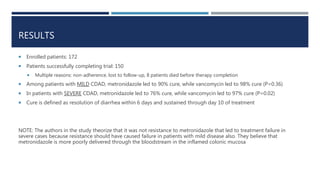
RESULTS
 Enrolled patients: 172
 Patients successfully completing trial: 150
 Multiple reasons: non-adherence, lost to follow-up, 8 patients died before therapy completion
 Among patients with MILD CDAD, metronidazole led to 90% cure, while vancomycin led to 98% cure (P=0.36)
 In patients with SEVERE CDAD, metronidazole led to 76% cure, while vancomycin led to 97% cure (P=0.02)
 Cure is defined as resolution of diarrhea within 6 days and sustained through day 10 of treatment
NOTE: The authors in the study theorize that it was not resistance to metronidazole that led to treatment failure in
severe cases because resistance should have caused failure in patients with mild disease also. They believe that
metronidazole is more poorly delivered through the bloodstream in the inflamed colonic mucosa
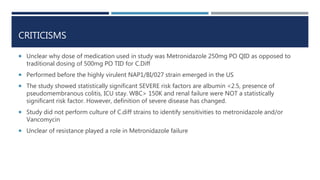
CRITICISMS
 Unclear why dose of medication used in study was Metronidazole 250mg PO QID as opposed to
traditional dosing of 500mg PO TID for C.Diff
 Performed before the highly virulent NAP1/BI/027 strain emerged in the US
 The study showed statistically significant SEVERE risk factors are albumin <2.5, presence of
pseudomembranous colitis, ICU stay. WBC> 150K and renal failure were NOT a statistically
significant risk factor. However, definition of severe disease has changed.
 Study did not perform culture of C.diff strains to identify sensitivities to metronidazole and/or
Vancomycin
 Unclear of resistance played a role in Metronidazole failure
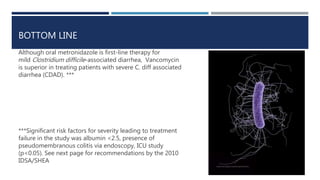
BOTTOM LINE
Although oral metronidazole is first-line therapy for
mild Clostridium difficile-associated diarrhea, Vancomycin
is superior in treating patients with severe C. diff associated
diarrhea (CDAD). ***
***Significant risk factors for severity leading to treatment
failure in the study was albumin <2.5, presence of
pseudomembranous colitis via endoscopy, ICU study
(p<0.05). See next page for recommendations by the 2010
IDSA/SHEA
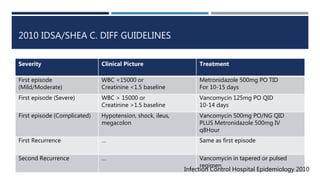
2010 IDSA/SHEA C. DIFF GUIDELINES
Severity Clinical Picture Treatment
First episode
(Mild/Moderate)
WBC <15000 or
Creatinine <1.5 baseline
Metronidazole 500mg PO TID
For 10-15 days
First episode (Severe) WBC > 15000 or
Creatinine >1.5 baseline
Vancomycin 125mg PO QID
10-14 days
First episode (Complicated) Hypotension, shock, ileus,
megacolon
Vancomycin 500mg PO/NG QID
PLUS Metronidazole 500mg IV
q8Hour
First Recurrence … Same as first episode
Second Recurrence … Vancomycin in tapered or pulsed
regimen
Infection Control Hospital Epidemiology 2010
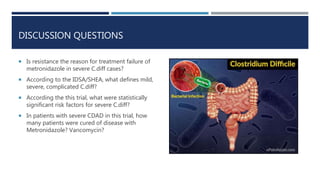
DISCUSSION QUESTIONS
 Is resistance the reason for treatment failure of
metronidazole in severe C.diff cases?
 According to the IDSA/SHEA, what defines mild,
severe, complicated C.diff?
 According the this trial, what were statistically
significant risk factors for severe C.diff?
 In patients with severe CDAD in this trial, how
many patients were cured of disease with
Metronidazole? Vancomycin?
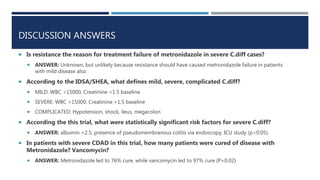
DISCUSSION ANSWERS
 Is resistance the reason for treatment failure of metronidazole in severe C.diff cases?
 ANSWER: Unknown, but unlikely because resistance should have caused metronidazole failure in patients
with mild disease also
 According to the IDSA/SHEA, what defines mild, severe, complicated C.diff?
 MILD: WBC <15000, Creatinine <1.5 baseline
 SEVERE: WBC >15000, Creatinine >1.5 baseline
 COMPLICATED: Hypotension, shock, ileus, megacolon
 According the this trial, what were statistically significant risk factors for severe C.diff?
 ANSWER: albumin <2.5, presence of pseudomembranous colitis via endoscopy, ICU study (p<0.05).
 In patients with severe CDAD in this trial, how many patients were cured of disease with
Metronidazole? Vancomycin?
 ANSWER: Metronidazole led to 76% cure, while vancomycin led to 97% cure (P=0.02)
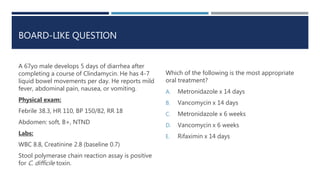
BOARD-LIKE QUESTION
A 67yo male develops 5 days of diarrhea after
completing a course of Clindamycin. He has 4-7
liquid bowel movements per day. He reports mild
fever, abdominal pain, nausea, or vomiting.
Physical exam:
Febrile 38.3, HR 110, BP 150/82, RR 18
Abdomen: soft, B+, NTND
Labs:
WBC 8.8, Creatinine 2.8 (baseline 0.7)
Stool polymerase chain reaction assay is positive
for C. difficile toxin.
Which of the following is the most appropriate
oral treatment?
A. Metronidazole x 14 days
B. Vancomycin x 14 days
C. Metronidazole x 6 weeks
D. Vancomycin x 6 weeks
E. Rifaximin x 14 days
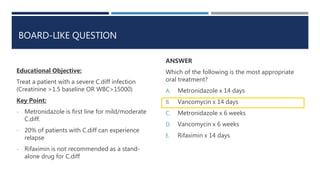
BOARD-LIKE QUESTION
ANSWER
Which of the following is the most appropriate
oral treatment?
A. Metronidazole x 14 days
B. Vancomycin x 14 days
C. Metronidazole x 6 weeks
D. Vancomycin x 6 weeks
E. Rifaximin x 14 days
Educational Objective:
Treat a patient with a severe C.diff infection
(Creatinine >1.5 baseline OR WBC>15000)
Key Point:
- Metronidazole is first line for mild/moderate
C.diff.
- 20% of patients with C.diff can experience
relapse
- Rifaximin is not recommended as a stand-
alone drug for C.diff
REFERENCES
 Zar FA, et al. "A comparison of vancomycin and
metronidazole for the treatment of Clostridium
difficile-associated diarrhea, stratified by
disease severity". Clinical Infectious Diseases.
2007. 45(3):302-7.
 Vancomycin vs. Metronidazole in C. difficile
Diarrhea
LLC Brain -
https://www.wikijournalclub.org/wiki/Vancomycin_vs._
Metronidazole_in_C._difficile_Diarrhea

Vancomycin vs Metronidazole in C.Diff

  • 1.
    C. DIFF DIARRHEA: VANCOMYCINVS. METRONIDAZOLE OVMC LANDMARK TRIALS SERIES Zar FA, et al. "A comparison of vancomycin and metronidazole for the treatment of Clostridium difficile- associated diarrhea, stratified by disease severity". Clinical Infectious Diseases. 2007. 45(3):302-7.
  • 3.
    BACKGROUND  C. diffdiarrhea is most common infectious entity in nosocomial diarrhea, accounting for 15-25% of all cases  Metronidazole is first line, but more treatment failures evolving  Therefore, C.diff has been increasing in incidence and severity  It is known that Vancomycin orally can treat C.diff; however, it is unclear when Vanc should be used  Prior to this study, no studies have been published on vancomycin versus metronidazole for treating C.diff, stratifying patients in terms of severity
  • 4.
    CLINICAL QUESTION In patientswith varying disease severity with Clostridium difficile-associated diarrhea, how does metronidazole compare with vancomycin in regards to effecting a cure and preventing relapse?
  • 5.
    DESIGN  Analysis: Intention-to-treat Single center, double-blinded, parallel-group, placebo, randomized controlled trial  N=150  Metronidazole (n=79)  Vancomycin (n=71)  Setting: Affiliate of University of Illinois at Chicago  Enrollment: 1994-2002  Follow-up: 21 days  Primary outcomes:  Cure  Relapse
  • 6.
    POPULATION Inclusion Criteria  Diarrhea(>3 nonformed stools/24h), and  Clostridium difficile toxin A in stool within 48h of study entry, or  Pseudomembranes on endoscopy  Ability to receive oral medications Exclusion Criteria  Suspected or proven life-threatening intraabdominal complications (eg, perforated viscus, bowel obstruction)  Pregnancy  History of allergy to either study drug  Prior treatment with metronidazole PO/IV or oral vancomycin in 14 days prior to trial  Patients not allowed to receive antidiarrheal medications or drugs with potential activity against Clostridium difficile
  • 7.
    INTERVENTIONS  Randomization toa group:  Metronidazole 250mg PO QID x 10 days, or  Vancomycin 125mg PO QID x 10 days  Stool assays performed on days 6 and 10 of therapy, and again on day 21 if diarrhea was present.  Interviews conducted on days 5, 11, and 21 after completion of therapy.  Thirteen patients (6 vs. 7) with severe disease were lost to follow-up or withdrawn due to death or noncompliance.
  • 8.
    RESULTS  Enrolled patients:172  Patients successfully completing trial: 150  Multiple reasons: non-adherence, lost to follow-up, 8 patients died before therapy completion  Among patients with MILD CDAD, metronidazole led to 90% cure, while vancomycin led to 98% cure (P=0.36)  In patients with SEVERE CDAD, metronidazole led to 76% cure, while vancomycin led to 97% cure (P=0.02)  Cure is defined as resolution of diarrhea within 6 days and sustained through day 10 of treatment NOTE: The authors in the study theorize that it was not resistance to metronidazole that led to treatment failure in severe cases because resistance should have caused failure in patients with mild disease also. They believe that metronidazole is more poorly delivered through the bloodstream in the inflamed colonic mucosa
  • 9.
    CRITICISMS  Unclear whydose of medication used in study was Metronidazole 250mg PO QID as opposed to traditional dosing of 500mg PO TID for C.Diff  Performed before the highly virulent NAP1/BI/027 strain emerged in the US  The study showed statistically significant SEVERE risk factors are albumin <2.5, presence of pseudomembranous colitis, ICU stay. WBC> 150K and renal failure were NOT a statistically significant risk factor. However, definition of severe disease has changed.  Study did not perform culture of C.diff strains to identify sensitivities to metronidazole and/or Vancomycin  Unclear of resistance played a role in Metronidazole failure
  • 10.
    BOTTOM LINE Although oralmetronidazole is first-line therapy for mild Clostridium difficile-associated diarrhea, Vancomycin is superior in treating patients with severe C. diff associated diarrhea (CDAD). *** ***Significant risk factors for severity leading to treatment failure in the study was albumin <2.5, presence of pseudomembranous colitis via endoscopy, ICU study (p<0.05). See next page for recommendations by the 2010 IDSA/SHEA
  • 11.
    2010 IDSA/SHEA C.DIFF GUIDELINES Severity Clinical Picture Treatment First episode (Mild/Moderate) WBC <15000 or Creatinine <1.5 baseline Metronidazole 500mg PO TID For 10-15 days First episode (Severe) WBC > 15000 or Creatinine >1.5 baseline Vancomycin 125mg PO QID 10-14 days First episode (Complicated) Hypotension, shock, ileus, megacolon Vancomycin 500mg PO/NG QID PLUS Metronidazole 500mg IV q8Hour First Recurrence … Same as first episode Second Recurrence … Vancomycin in tapered or pulsed regimen Infection Control Hospital Epidemiology 2010
  • 12.
    DISCUSSION QUESTIONS  Isresistance the reason for treatment failure of metronidazole in severe C.diff cases?  According to the IDSA/SHEA, what defines mild, severe, complicated C.diff?  According the this trial, what were statistically significant risk factors for severe C.diff?  In patients with severe CDAD in this trial, how many patients were cured of disease with Metronidazole? Vancomycin?
  • 13.
    DISCUSSION ANSWERS  Isresistance the reason for treatment failure of metronidazole in severe C.diff cases?  ANSWER: Unknown, but unlikely because resistance should have caused metronidazole failure in patients with mild disease also  According to the IDSA/SHEA, what defines mild, severe, complicated C.diff?  MILD: WBC <15000, Creatinine <1.5 baseline  SEVERE: WBC >15000, Creatinine >1.5 baseline  COMPLICATED: Hypotension, shock, ileus, megacolon  According the this trial, what were statistically significant risk factors for severe C.diff?  ANSWER: albumin <2.5, presence of pseudomembranous colitis via endoscopy, ICU study (p<0.05).  In patients with severe CDAD in this trial, how many patients were cured of disease with Metronidazole? Vancomycin?  ANSWER: Metronidazole led to 76% cure, while vancomycin led to 97% cure (P=0.02)
  • 14.
    BOARD-LIKE QUESTION A 67yomale develops 5 days of diarrhea after completing a course of Clindamycin. He has 4-7 liquid bowel movements per day. He reports mild fever, abdominal pain, nausea, or vomiting. Physical exam: Febrile 38.3, HR 110, BP 150/82, RR 18 Abdomen: soft, B+, NTND Labs: WBC 8.8, Creatinine 2.8 (baseline 0.7) Stool polymerase chain reaction assay is positive for C. difficile toxin. Which of the following is the most appropriate oral treatment? A. Metronidazole x 14 days B. Vancomycin x 14 days C. Metronidazole x 6 weeks D. Vancomycin x 6 weeks E. Rifaximin x 14 days
  • 15.
    BOARD-LIKE QUESTION ANSWER Which ofthe following is the most appropriate oral treatment? A. Metronidazole x 14 days B. Vancomycin x 14 days C. Metronidazole x 6 weeks D. Vancomycin x 6 weeks E. Rifaximin x 14 days Educational Objective: Treat a patient with a severe C.diff infection (Creatinine >1.5 baseline OR WBC>15000) Key Point: - Metronidazole is first line for mild/moderate C.diff. - 20% of patients with C.diff can experience relapse - Rifaximin is not recommended as a stand- alone drug for C.diff
  • 16.
    REFERENCES  Zar FA,et al. "A comparison of vancomycin and metronidazole for the treatment of Clostridium difficile-associated diarrhea, stratified by disease severity". Clinical Infectious Diseases. 2007. 45(3):302-7.  Vancomycin vs. Metronidazole in C. difficile Diarrhea LLC Brain - https://www.wikijournalclub.org/wiki/Vancomycin_vs._ Metronidazole_in_C._difficile_Diarrhea