2019
Insight Intelligent
Technology Index
Findings
Insight has released the 2019 Insight Intelligent TechnologyTM
Index
for IT decision-makers worldwide. The findings — from 400 surveyed
North America-based IT decision-makers in enterprises ranging from
1,000 to more than 5,000 employees — uncover attitudes on how
technology is changing all areas of business and making
businesses run smarter.
IT Challenges and Concerns
IT challenges1
IT concerns2
29% Security/safety 35%
37% Upgrading infrastructure 22%
22%
Optimizing IT operations
(performance/customer
service)
20%
12% Staffing/IT talent 10%
9% Controlling IT costs 7%
1
The biggest business challenge IT is being asked to solve within the organization
2
What keeps IT professionals up at night about the state of IT
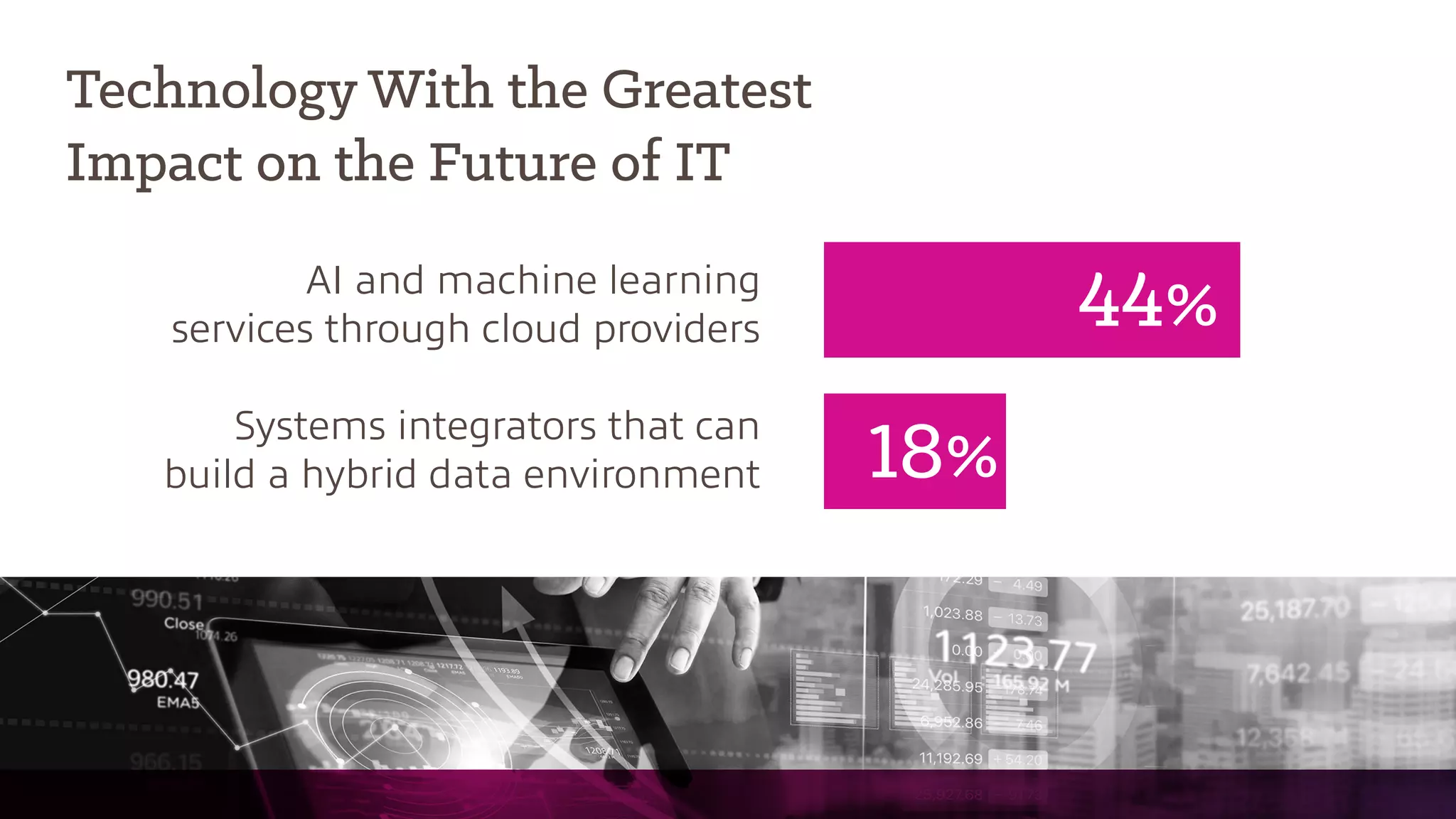
Technology With the Greatest
Impact on the Future of IT
AI and machine learning
services through cloud providers
Systems integrators that can
build a hybrid data environment
44%
18%
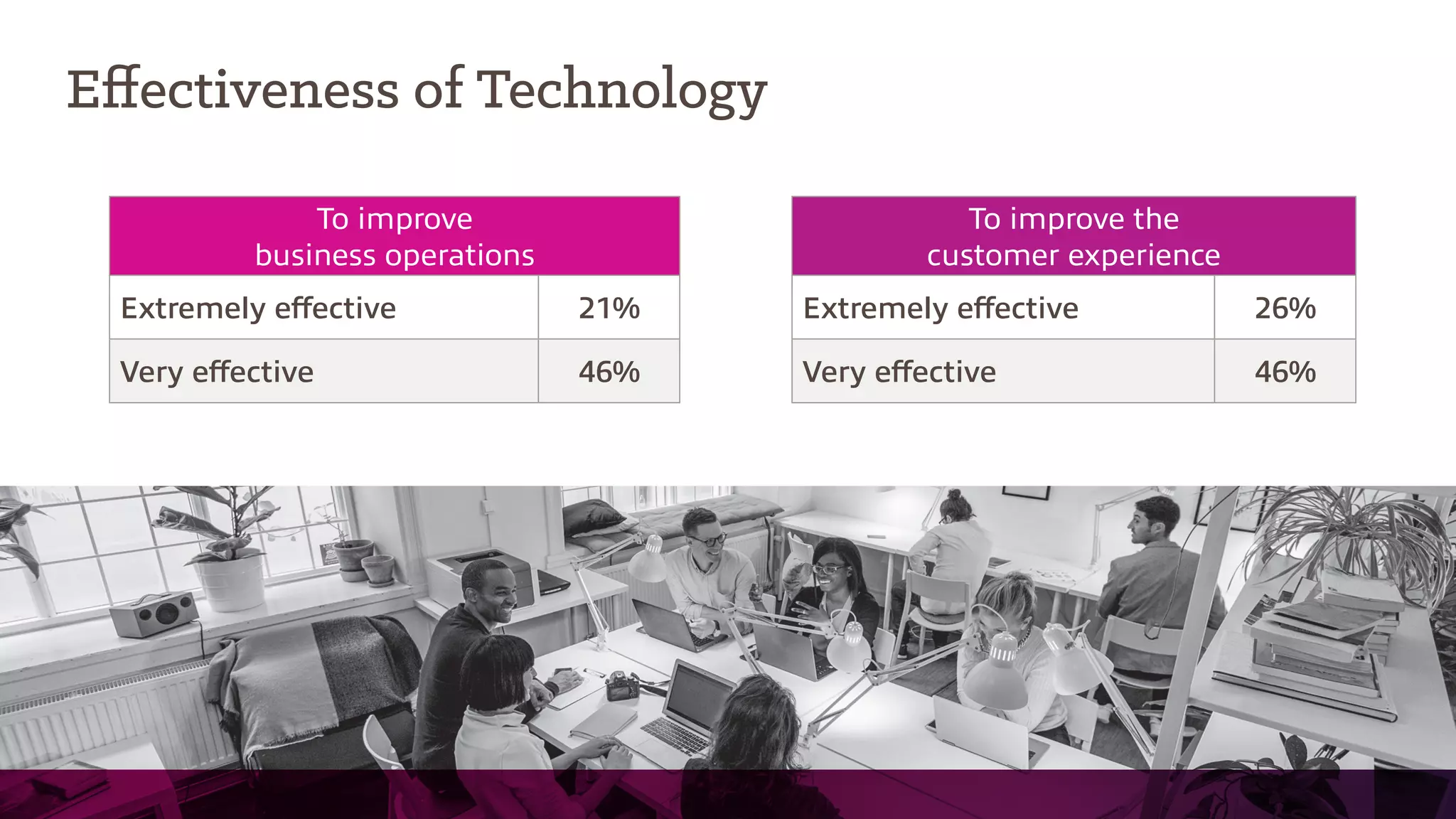
Effectiveness of Technology
To improve
business operations
Extremely effective 21%
Very effective 46%
To improve the
customer experience
Extremely effective 26%
Very effective 46%
IT Supply Chain – Opportunities for Improvement
E-procurement systems
Using providers to streamline
the hardware lifecycle
Using a self-service
e-commerce platform
Access to purchasing analytics
Using software asset management
tools/services
47%
47%
46%
45%
45%
IT pros say their organizations need
a lot of improvement in these areas:
Allow IT staff to
be more efficient
More time to focus on
innovation projects that
move the business forward
Less of their time would go
toward troubleshooting
Changes Needed to Optimize IT Supply Chain
Companies that say their IT supply
chain needs to be more optimized
How companies would benefit
from an optimized supply chain
49%
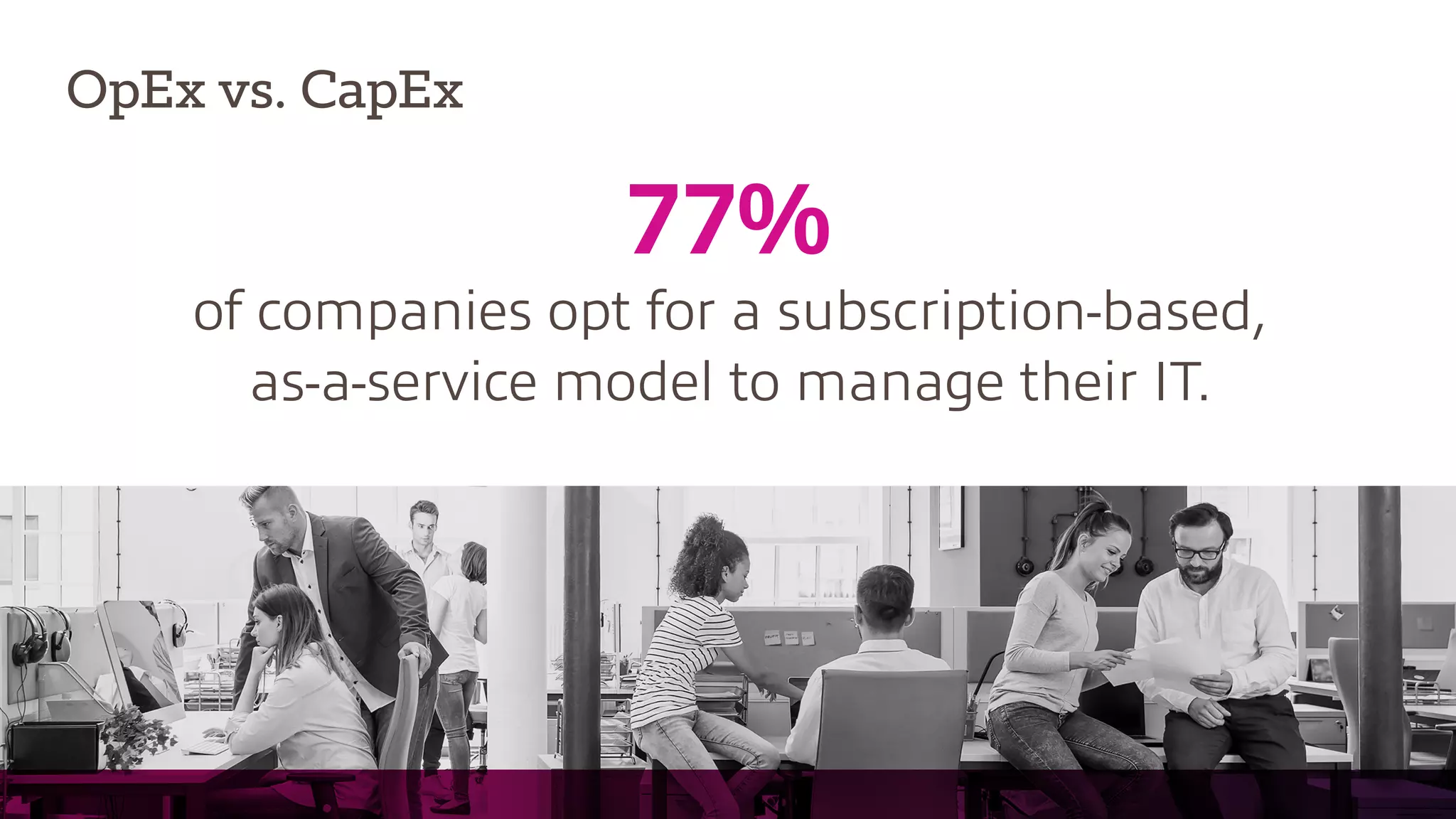
OpEx vs. CapEx
77%
of companies opt for a subscription-based,
as-a-service model to manage their IT.
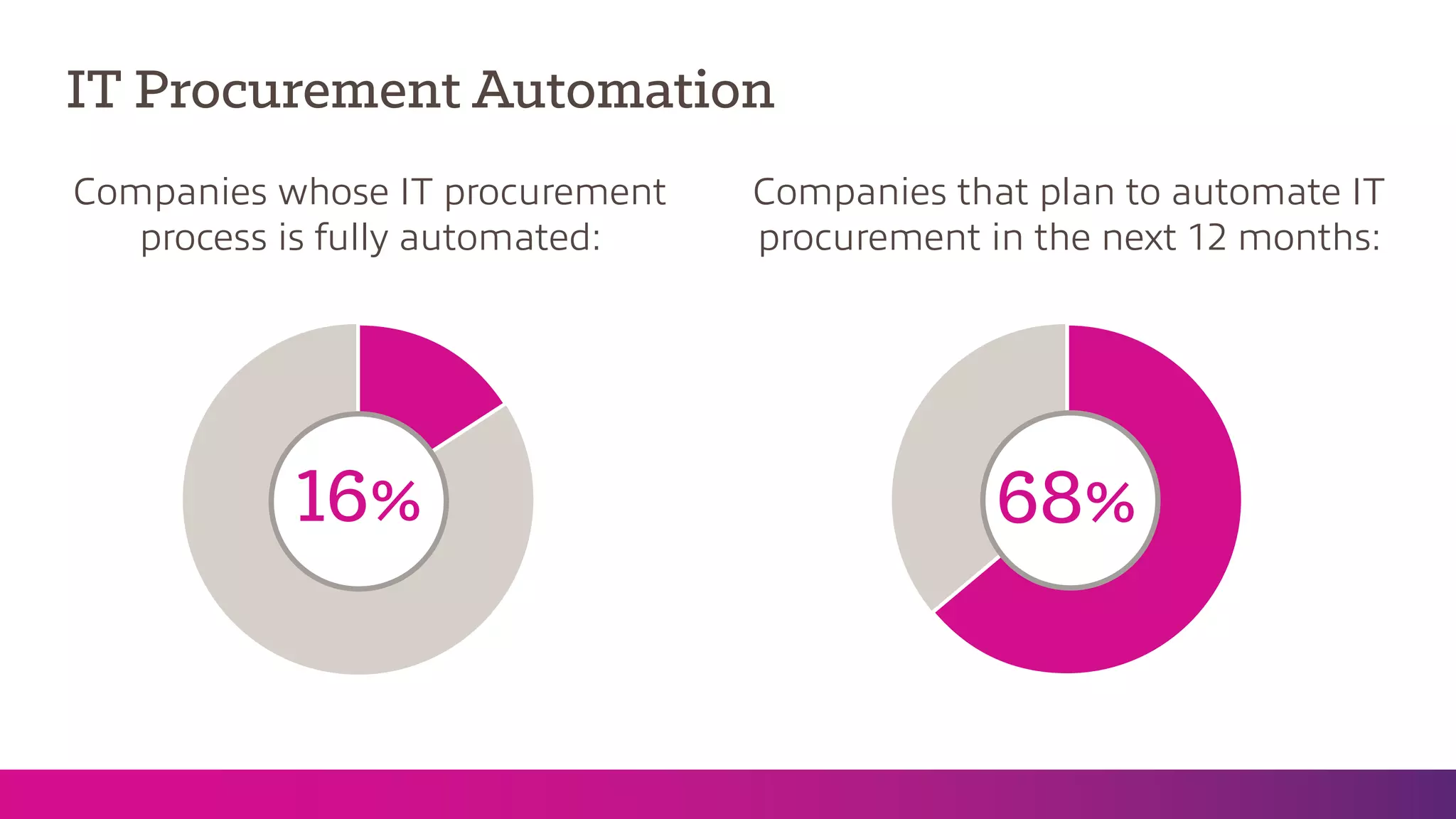
IT Procurement Automation
Companies whose IT procurement
process is fully automated:
Companies that plan to automate IT
procurement in the next 12 months:
16% 68%
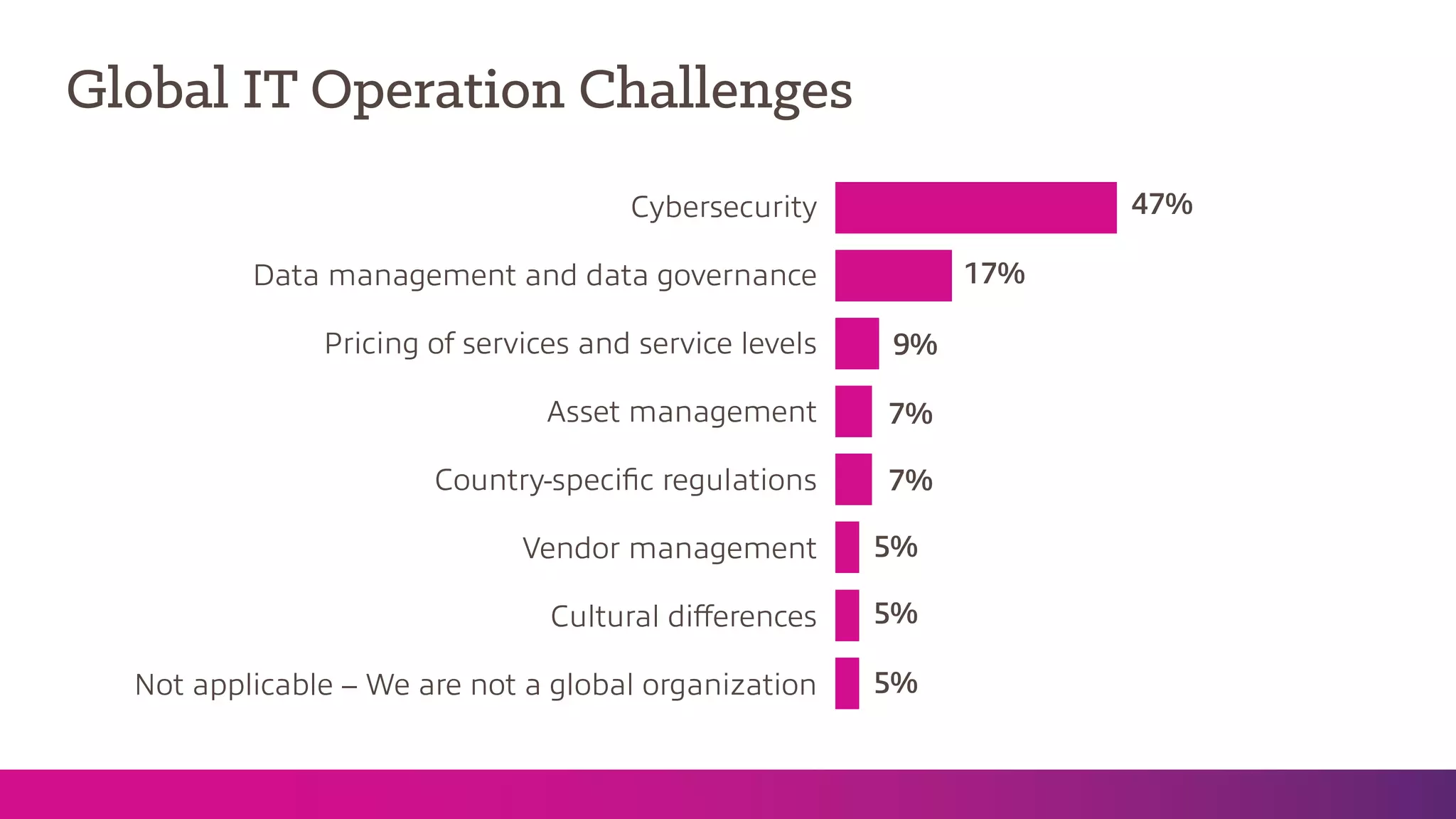
Global IT Operation Challenges
Cybersecurity
Data management and data governance
Pricing of services and service levels
Asset management
Country-specific regulations
Vendor management
Cultural differences
Not applicable – We are not a global organization
47%
17%
7%
9%
7%
5%
5%
5%
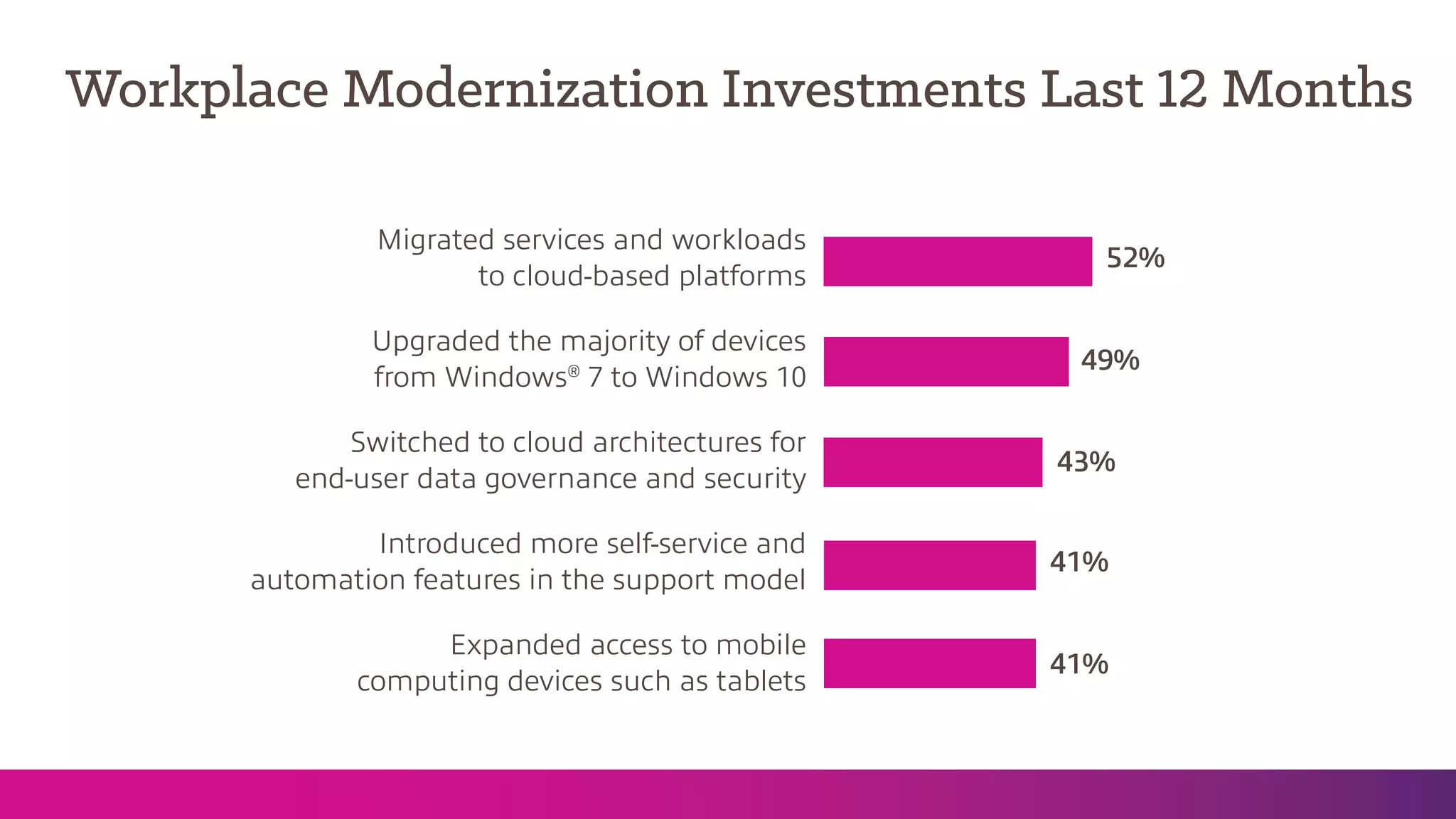
Workplace Modernization Investments Last 12 Months
Migrated services and workloads
to cloud-based platforms
Upgraded the majority of devices
from Windows®
7 to Windows 10
Switched to cloud architectures for
end-user data governance and security
Introduced more self-service and
automation features in the support model
Expanded access to mobile
computing devices such as tablets
52%
49%
43%
41%
41%
Modernization Investments Planned in Next 12 Months
Switching to cloud architectures for
improved identity and access management
Introducing more self-service and
automation features in the support model
Migrating services and workloads to cloud-based
platforms (e.g., Microsoft®
Office 365®
)
Expanding access to mobile computing devices
such as tablets (company- or employee-owned)
Implementing provisioning for operating systems and applications,
such as Windows Autopilot, Intune or Apple®
Deployment Programs
45%
42%
39%
38%
36%
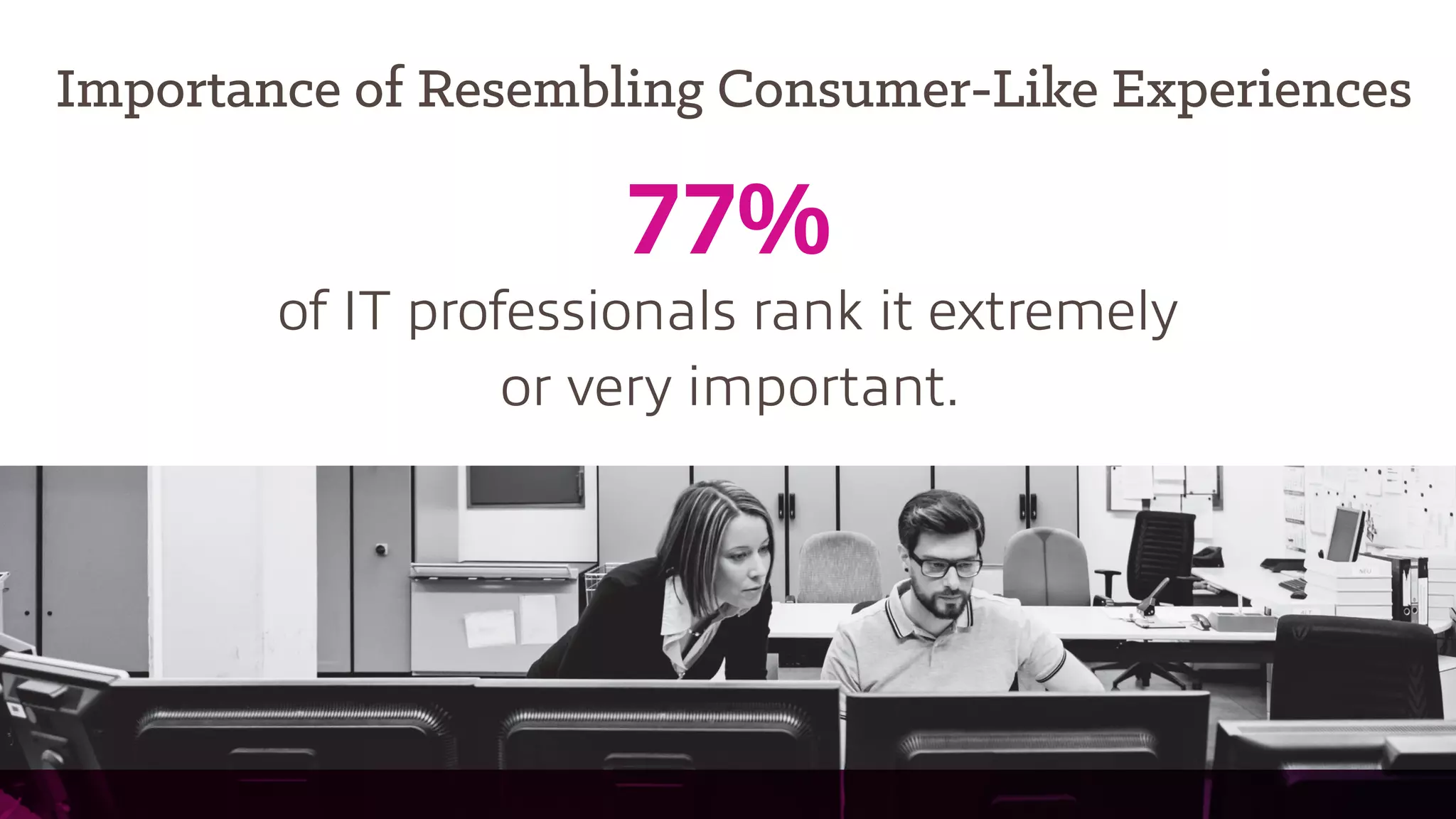
Importance of Resembling Consumer-Like Experiences
77%
of IT professionals rank it extremely
or very important.
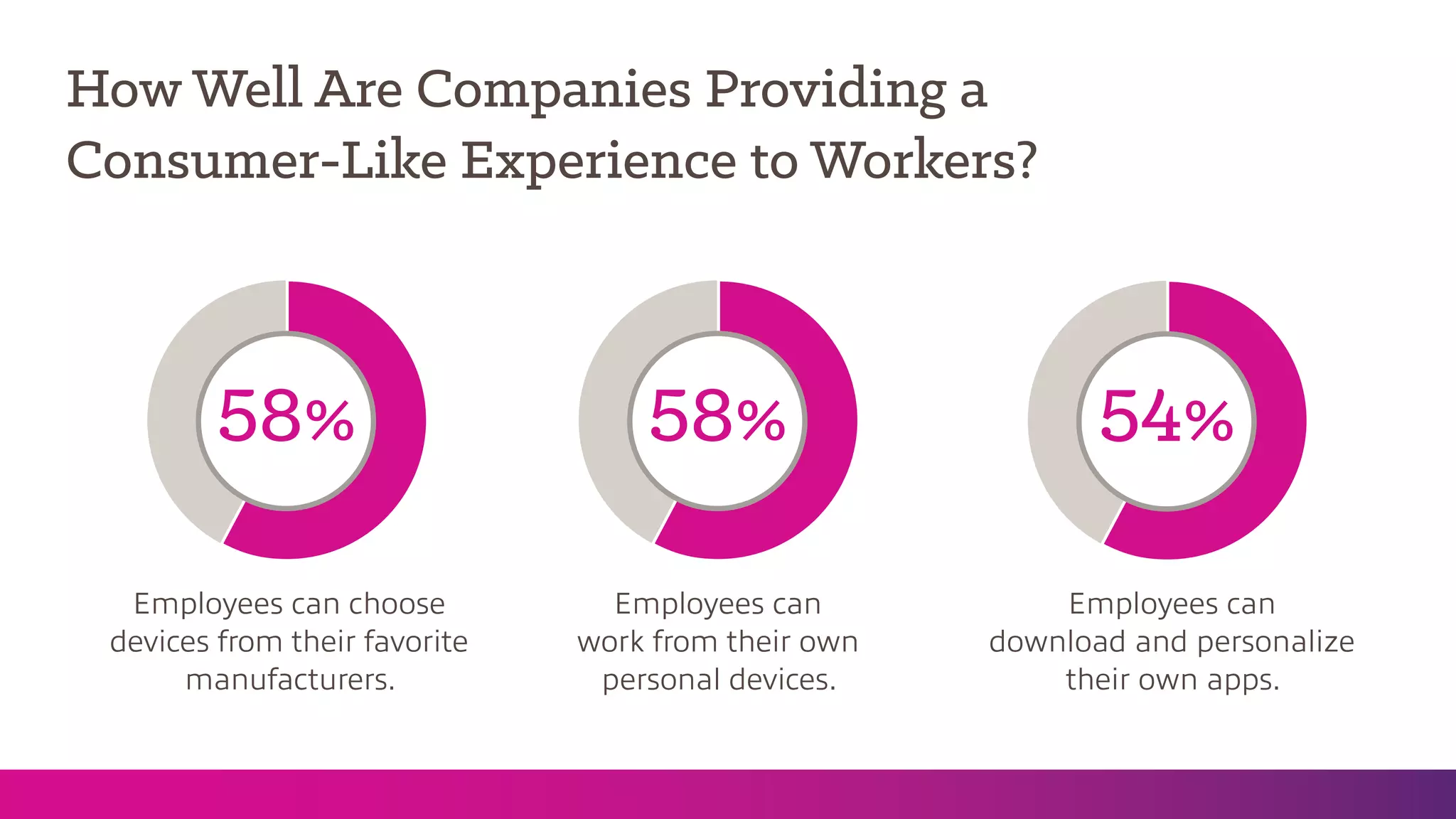
How Well Are Companies Providing a
Consumer-Like Experience to Workers?
Employees can choose
devices from their favorite
manufacturers.
Employees can
work from their own
personal devices.
Employees can
download and personalize
their own apps.
58% 58% 54%
Approach to Device as a Service (DaaS) Models
Companies that
currently consume DaaS
Companies that expect to
consume DaaS in the future
72% 89%
Modern Technology and Attracting/Retaining Talent
84%
of IT professionals agree their organizations
connect the use of modern technology to
attracting and retaining talent.
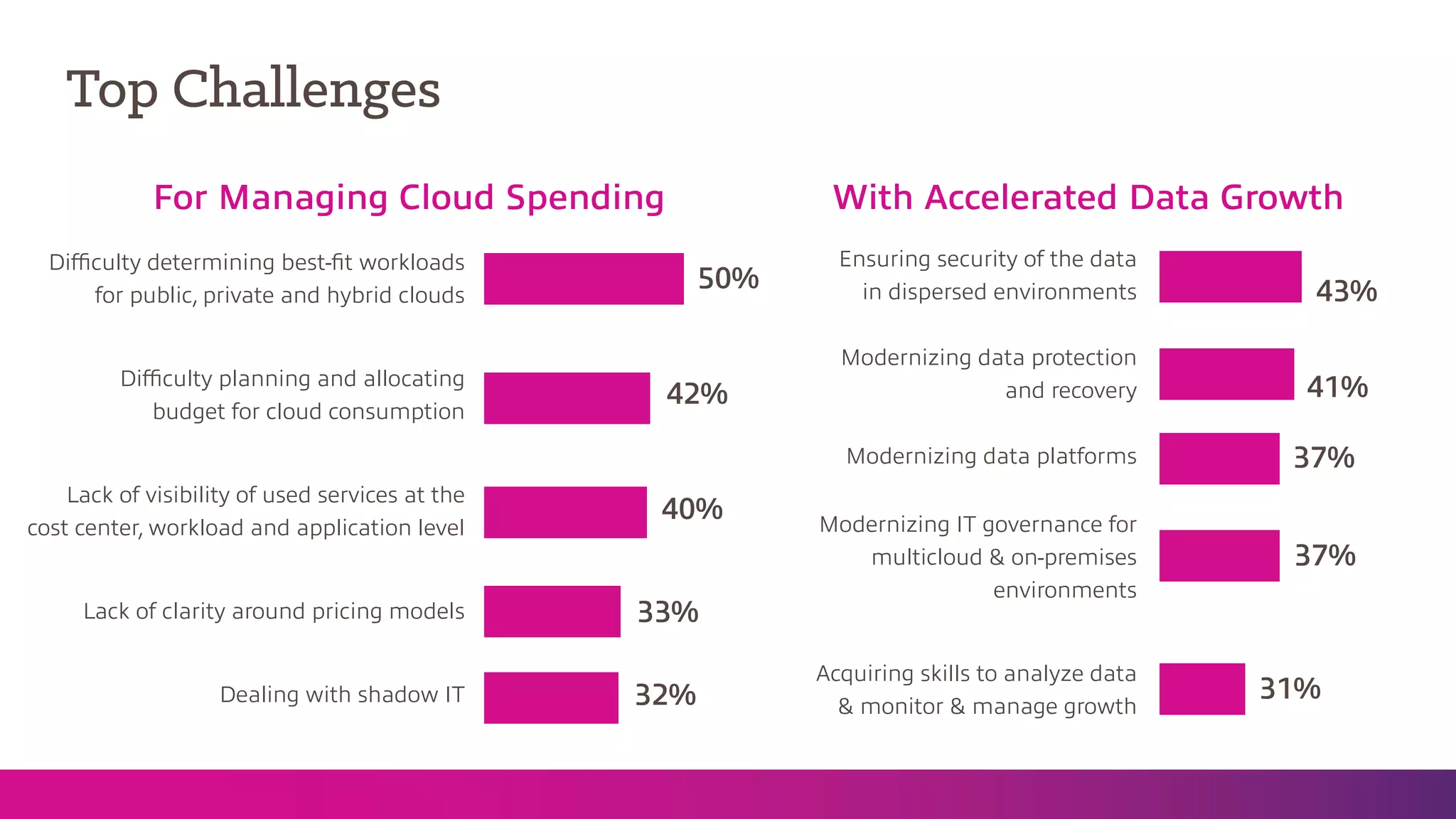
For Managing Cloud Spending With Accelerated Data Growth
Difficulty determining best-fit workloads
for public, private and hybrid clouds
Difficulty planning and allocating
budget for cloud consumption
Lack of visibility of used services at the
cost center, workload and application level
Lack of clarity around pricing models
Dealing with shadow IT
Ensuring security of the data
in dispersed environments
Modernizing data protection
and recovery
Modernizing data platforms
Modernizing IT governance for
multicloud & on-premises
environments
Acquiring skills to analyze data
& monitor & manage growth
50% 43%
42% 41%
40%
37%
33%
37%
32% 31%
Top Challenges
Cybersecurity Concerns
Malicious attack from an outsider
Data breach
Critical system outage/failure
Insider threat
Third-party vendors/contractors
68%
68%
59%
45%
44%
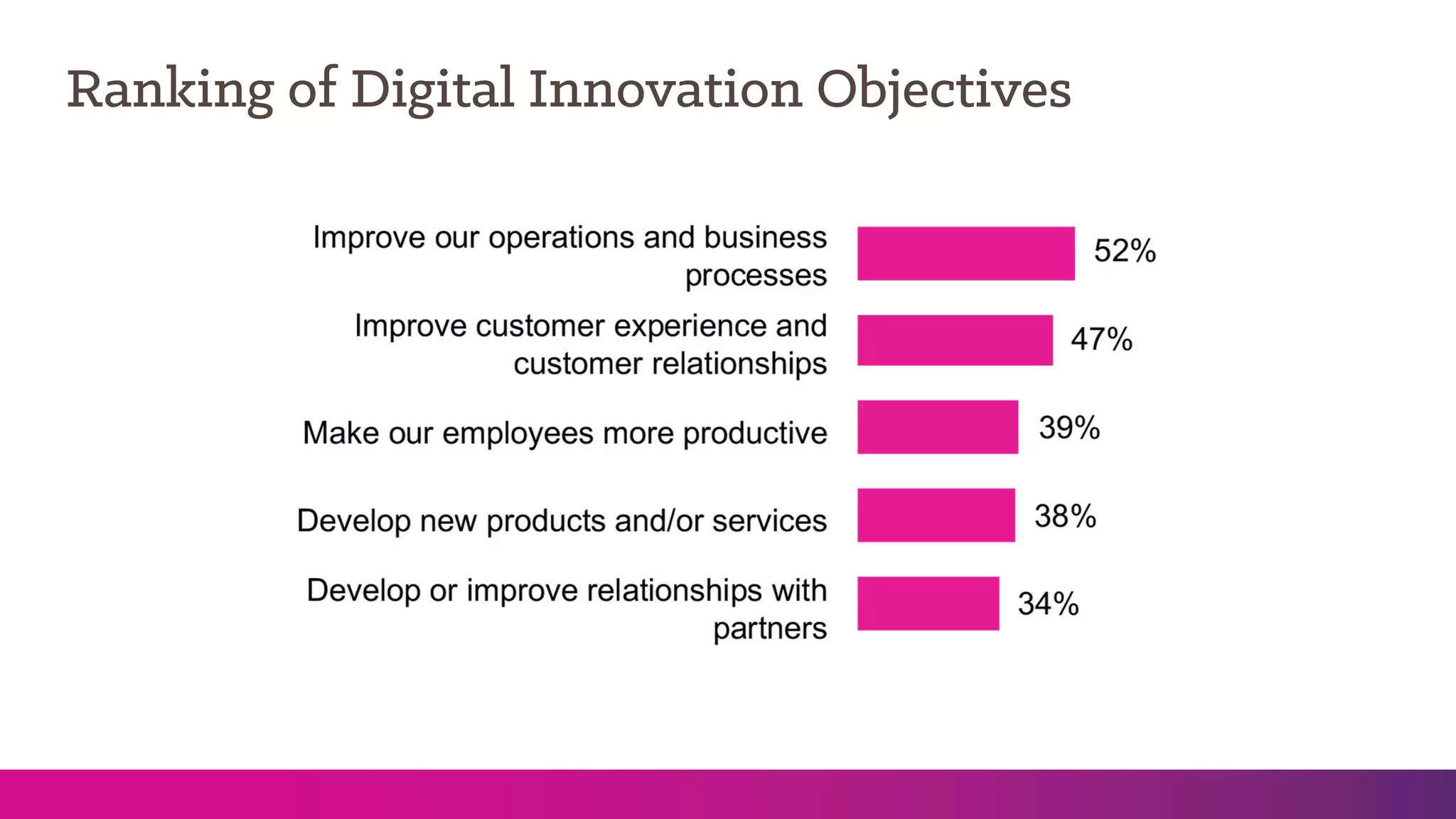
Ranking of Digital Innovation Objectives
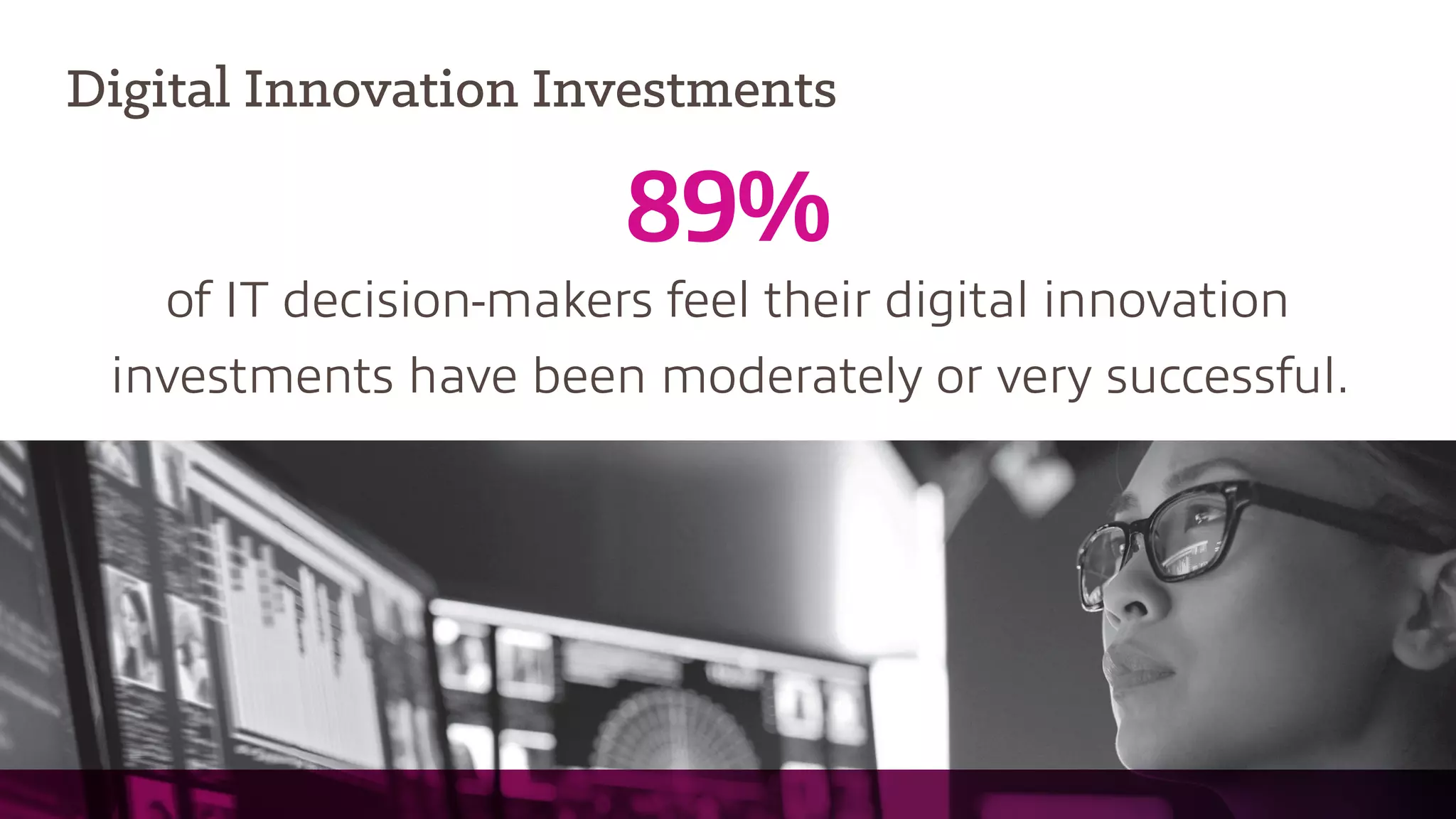
Digital Innovation Investments
89%
of IT decision-makers feel their digital innovation
investments have been moderately or very successful.
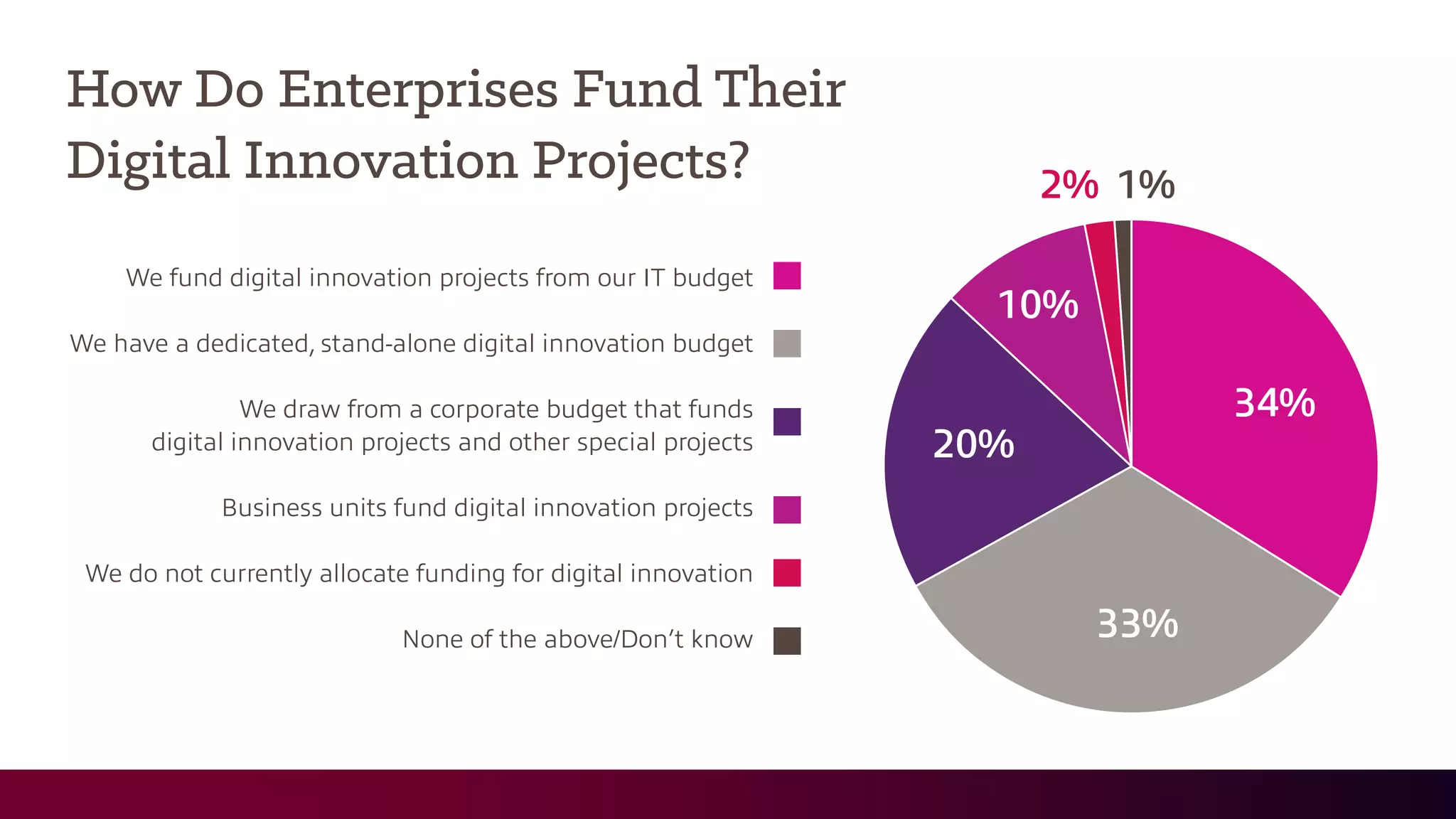
How Do Enterprises Fund Their
Digital Innovation Projects?
We fund digital innovation projects from our IT budget
We have a dedicated, stand-alone digital innovation budget
We draw from a corporate budget that funds
digital innovation projects and other special projects
Business units fund digital innovation projects
We do not currently allocate funding for digital innovation
None of the above/Don’t know
34%
33%
20%
10%
2% 1%
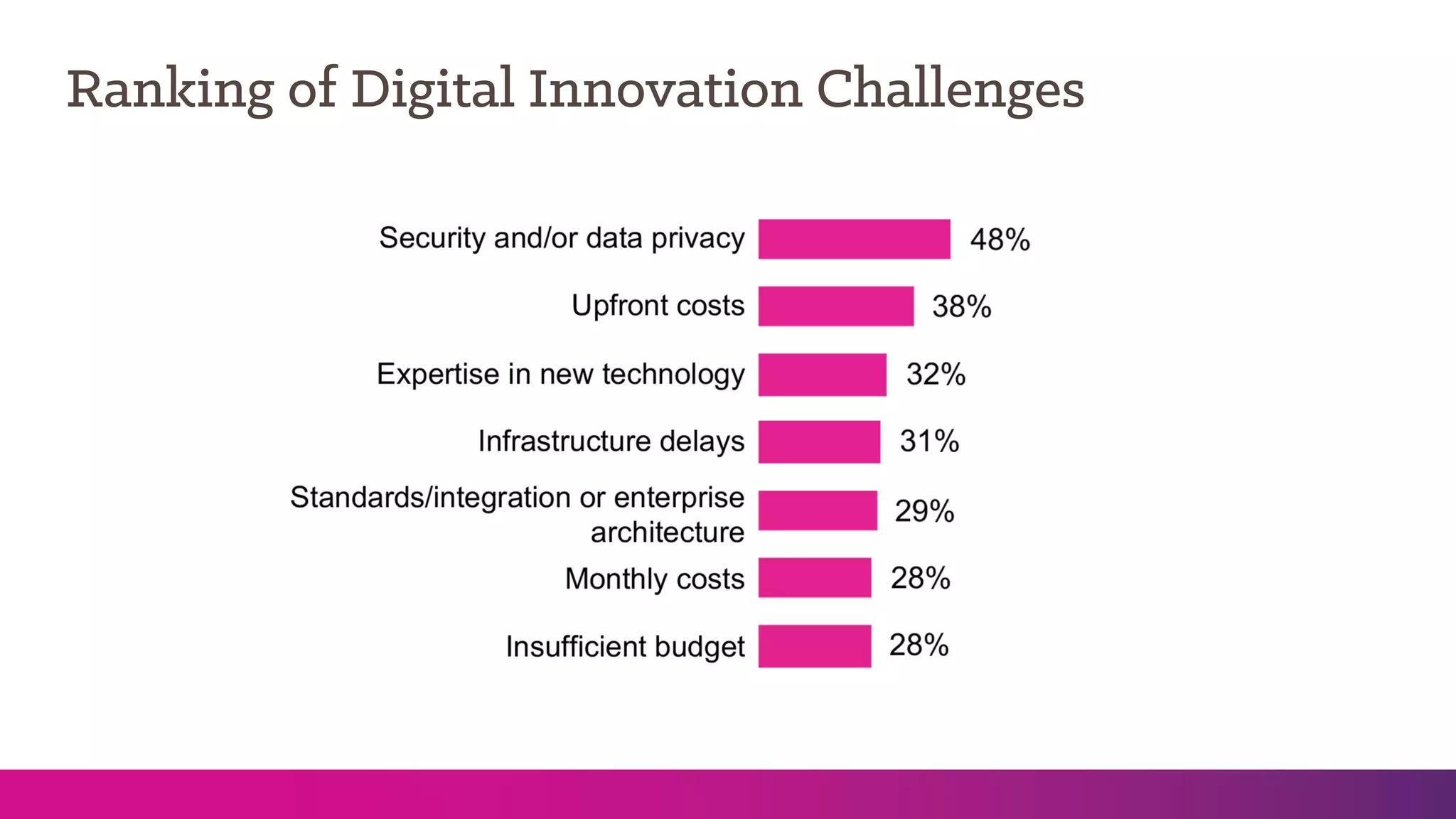
Ranking of Digital Innovation Challenges
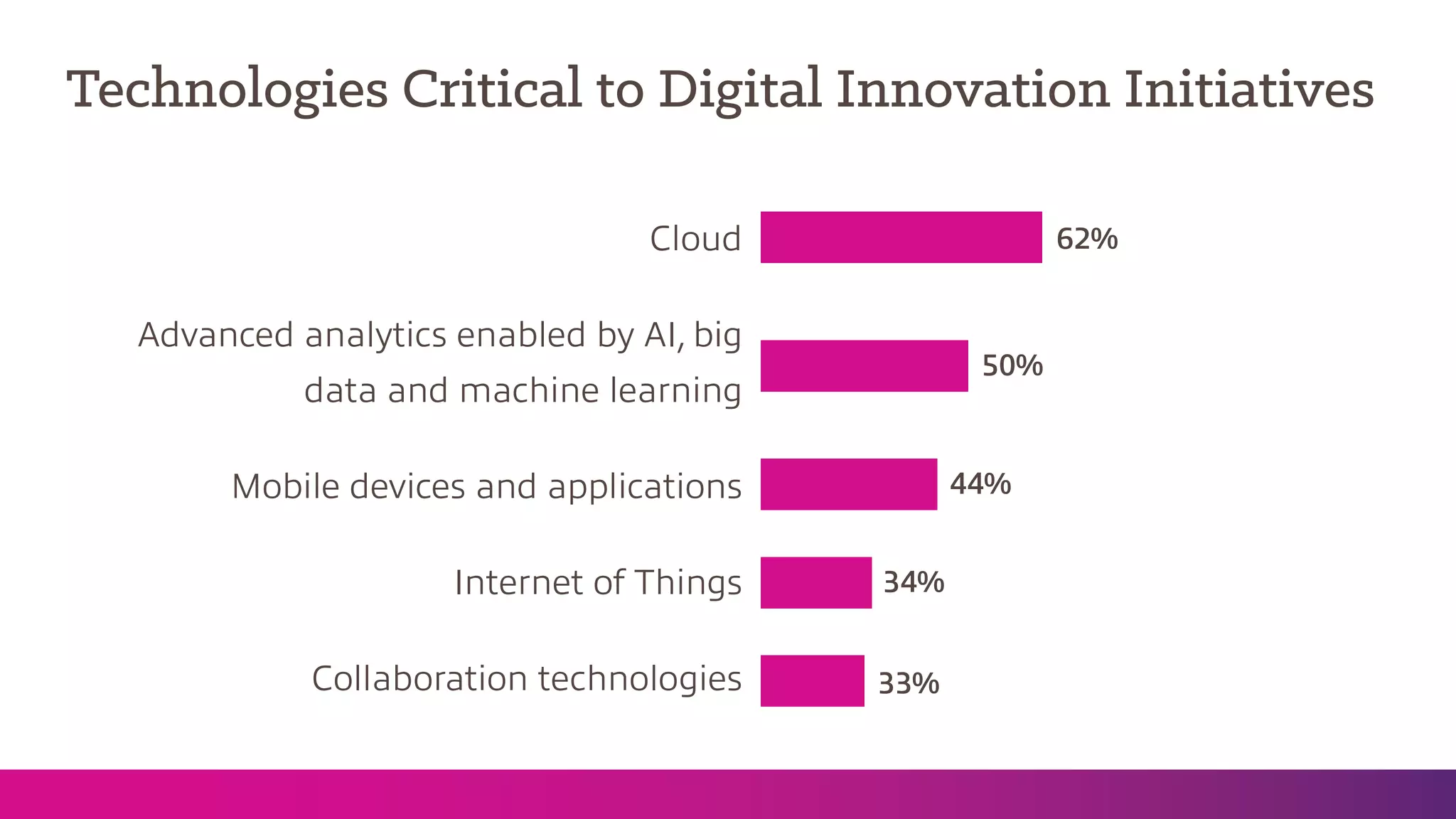
Technologies Critical to Digital Innovation Initiatives
Cloud
Advanced analytics enabled by AI, big
data and machine learning
Mobile devices and applications
Internet of Things
Collaboration technologies
62%
50%
44%
34%
33%
Get the full report: insight.com/iti

2019 Intelligent Technology Index

  • 1.
  • 2.
    Insight has releasedthe 2019 Insight Intelligent TechnologyTM Index for IT decision-makers worldwide. The findings — from 400 surveyed North America-based IT decision-makers in enterprises ranging from 1,000 to more than 5,000 employees — uncover attitudes on how technology is changing all areas of business and making businesses run smarter.
  • 3.
    IT Challenges andConcerns IT challenges1 IT concerns2 29% Security/safety 35% 37% Upgrading infrastructure 22% 22% Optimizing IT operations (performance/customer service) 20% 12% Staffing/IT talent 10% 9% Controlling IT costs 7% 1 The biggest business challenge IT is being asked to solve within the organization 2 What keeps IT professionals up at night about the state of IT
  • 4.
    Technology With theGreatest Impact on the Future of IT AI and machine learning services through cloud providers Systems integrators that can build a hybrid data environment 44% 18%
  • 5.
    Effectiveness of Technology Toimprove business operations Extremely effective 21% Very effective 46% To improve the customer experience Extremely effective 26% Very effective 46%
  • 6.
    IT Supply Chain– Opportunities for Improvement E-procurement systems Using providers to streamline the hardware lifecycle Using a self-service e-commerce platform Access to purchasing analytics Using software asset management tools/services 47% 47% 46% 45% 45% IT pros say their organizations need a lot of improvement in these areas:
  • 7.
    Allow IT staffto be more efficient More time to focus on innovation projects that move the business forward Less of their time would go toward troubleshooting Changes Needed to Optimize IT Supply Chain Companies that say their IT supply chain needs to be more optimized How companies would benefit from an optimized supply chain 49%
  • 8.
    OpEx vs. CapEx 77% ofcompanies opt for a subscription-based, as-a-service model to manage their IT.
  • 9.
    IT Procurement Automation Companieswhose IT procurement process is fully automated: Companies that plan to automate IT procurement in the next 12 months: 16% 68%
  • 10.
    Global IT OperationChallenges Cybersecurity Data management and data governance Pricing of services and service levels Asset management Country-specific regulations Vendor management Cultural differences Not applicable – We are not a global organization 47% 17% 7% 9% 7% 5% 5% 5%
  • 11.
    Workplace Modernization InvestmentsLast 12 Months Migrated services and workloads to cloud-based platforms Upgraded the majority of devices from Windows® 7 to Windows 10 Switched to cloud architectures for end-user data governance and security Introduced more self-service and automation features in the support model Expanded access to mobile computing devices such as tablets 52% 49% 43% 41% 41%
  • 12.
    Modernization Investments Plannedin Next 12 Months Switching to cloud architectures for improved identity and access management Introducing more self-service and automation features in the support model Migrating services and workloads to cloud-based platforms (e.g., Microsoft® Office 365® ) Expanding access to mobile computing devices such as tablets (company- or employee-owned) Implementing provisioning for operating systems and applications, such as Windows Autopilot, Intune or Apple® Deployment Programs 45% 42% 39% 38% 36%
  • 13.
    Importance of ResemblingConsumer-Like Experiences 77% of IT professionals rank it extremely or very important.
  • 14.
    How Well AreCompanies Providing a Consumer-Like Experience to Workers? Employees can choose devices from their favorite manufacturers. Employees can work from their own personal devices. Employees can download and personalize their own apps. 58% 58% 54%
  • 15.
    Approach to Deviceas a Service (DaaS) Models Companies that currently consume DaaS Companies that expect to consume DaaS in the future 72% 89%
  • 16.
    Modern Technology andAttracting/Retaining Talent 84% of IT professionals agree their organizations connect the use of modern technology to attracting and retaining talent.
  • 17.
    For Managing CloudSpending With Accelerated Data Growth Difficulty determining best-fit workloads for public, private and hybrid clouds Difficulty planning and allocating budget for cloud consumption Lack of visibility of used services at the cost center, workload and application level Lack of clarity around pricing models Dealing with shadow IT Ensuring security of the data in dispersed environments Modernizing data protection and recovery Modernizing data platforms Modernizing IT governance for multicloud & on-premises environments Acquiring skills to analyze data & monitor & manage growth 50% 43% 42% 41% 40% 37% 33% 37% 32% 31% Top Challenges
  • 18.
    Cybersecurity Concerns Malicious attackfrom an outsider Data breach Critical system outage/failure Insider threat Third-party vendors/contractors 68% 68% 59% 45% 44%
  • 19.
    Ranking of DigitalInnovation Objectives
  • 20.
    Digital Innovation Investments 89% ofIT decision-makers feel their digital innovation investments have been moderately or very successful.
  • 21.
    How Do EnterprisesFund Their Digital Innovation Projects? We fund digital innovation projects from our IT budget We have a dedicated, stand-alone digital innovation budget We draw from a corporate budget that funds digital innovation projects and other special projects Business units fund digital innovation projects We do not currently allocate funding for digital innovation None of the above/Don’t know 34% 33% 20% 10% 2% 1%
  • 22.
    Ranking of DigitalInnovation Challenges
  • 23.
    Technologies Critical toDigital Innovation Initiatives Cloud Advanced analytics enabled by AI, big data and machine learning Mobile devices and applications Internet of Things Collaboration technologies 62% 50% 44% 34% 33%
  • 24.
    Get the fullreport: insight.com/iti