




Mantis: Netflix's Event 
Stream Processing System 
Justin Becker Danny Yuan 
10/26/2014
Watch the video with slide 
synchronization on InfoQ.com! 
http://www.infoq.com/presentations 
/mantis 
InfoQ.com: News & Community Site 
• 750,000 unique visitors/month 
• Published in 4 languages (English, Chinese, Japanese and Brazilian 
Portuguese) 
• Post content from our QCon conferences 
• News 15-20 / week 
• Articles 3-4 / week 
• Presentations (videos) 12-15 / week 
• Interviews 2-3 / week 
• Books 1 / month
Presented at QCon San Francisco 
www.qconsf.com 
Purpose of QCon 
- to empower software development by facilitating the spread of 
knowledge and innovation 
Strategy 
- practitioner-driven conference designed for YOU: influencers of 
change and innovation in your teams 
- speakers and topics driving the evolution and innovation 
- connecting and catalyzing the influencers and innovators 
Highlights 
- attended by more than 12,000 delegates since 2007 
- held in 9 cities worldwide
Motivation
Traditional TV just works
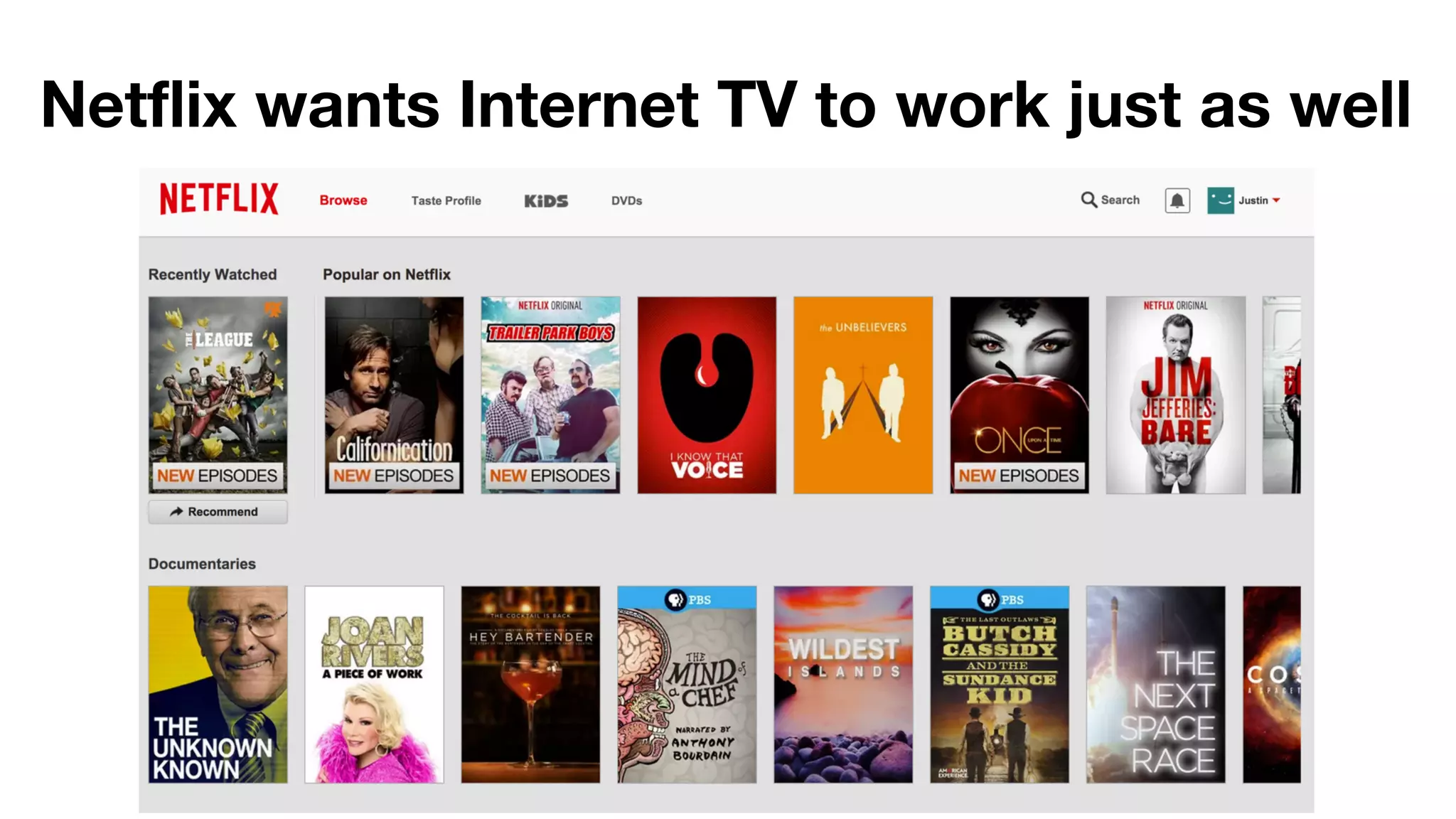
Netflix wants Internet TV to work just as well
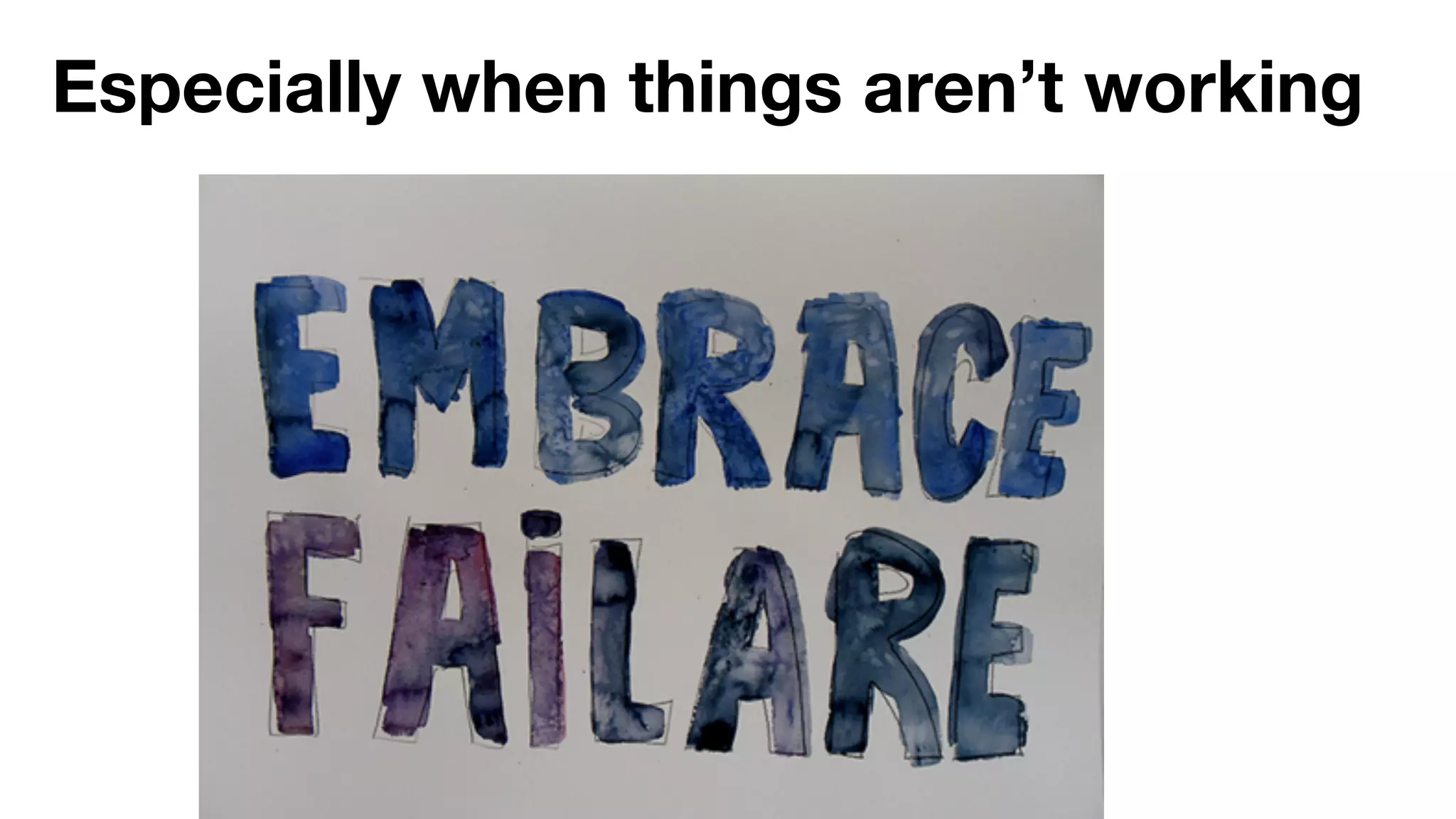
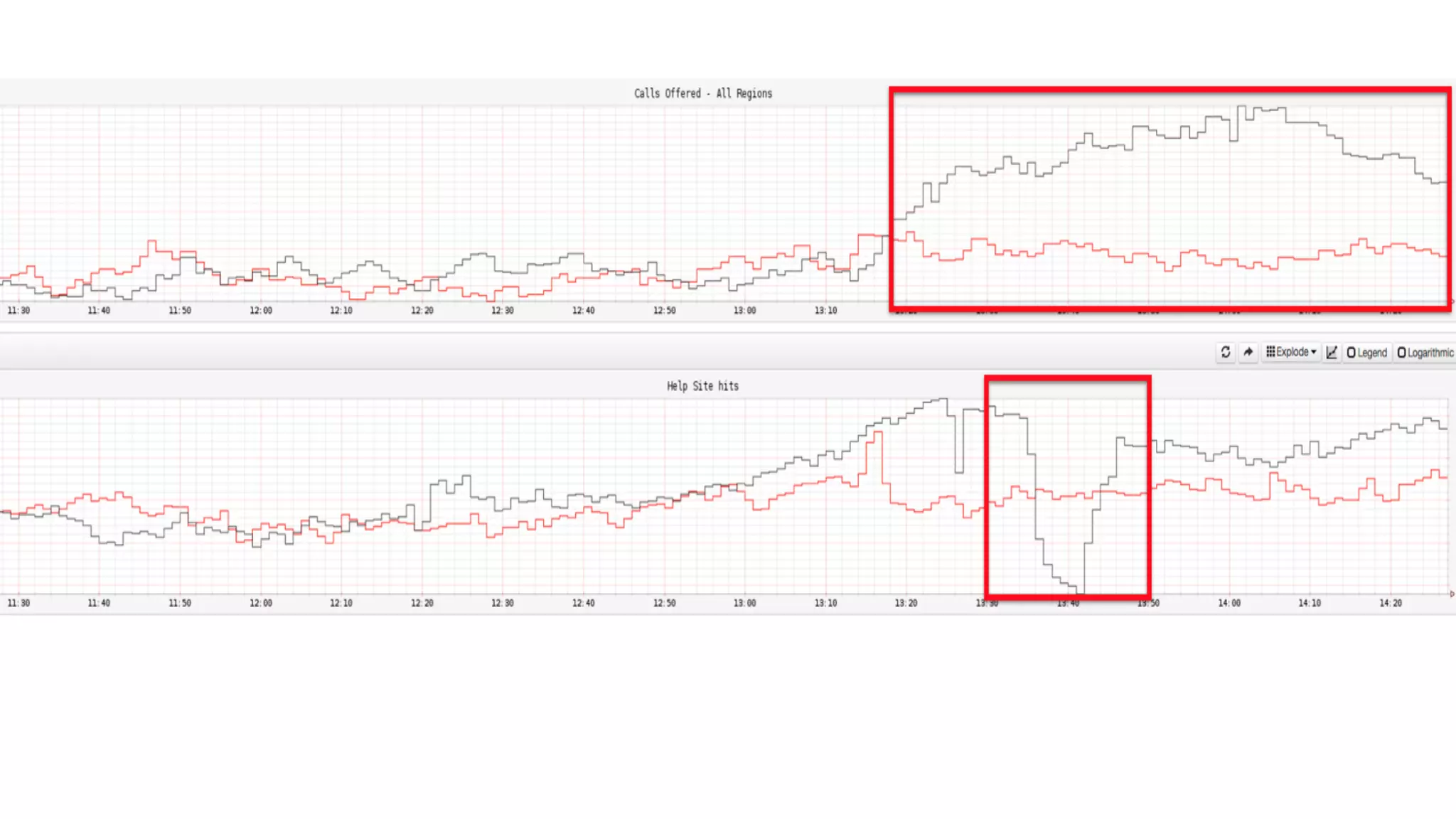
Especially when things aren’t working
Tracking “big signals” is not 
enough
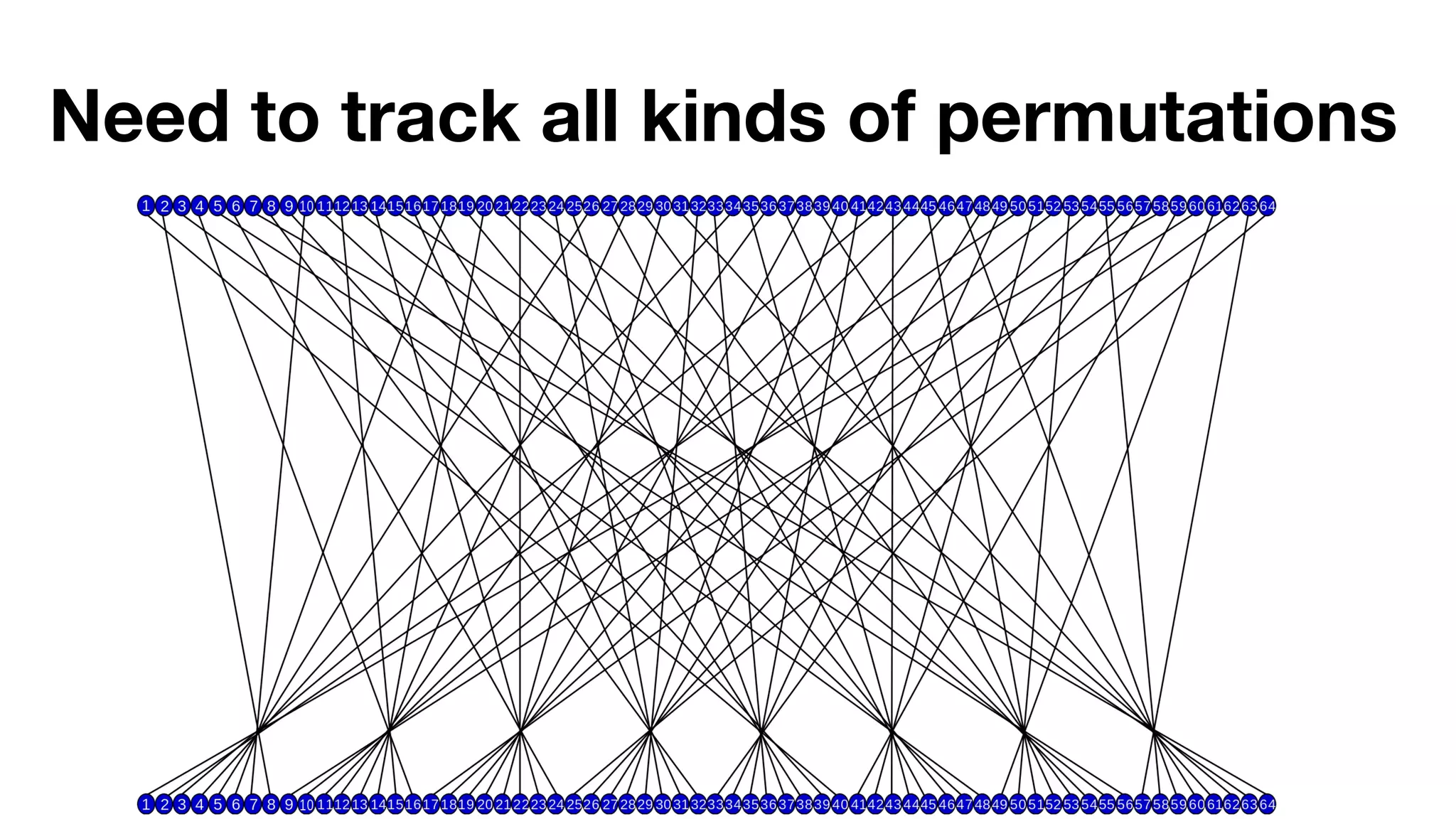
Need to track all kinds of permutations
Detect quickly, to resolve ASAP
Cheaper than product services
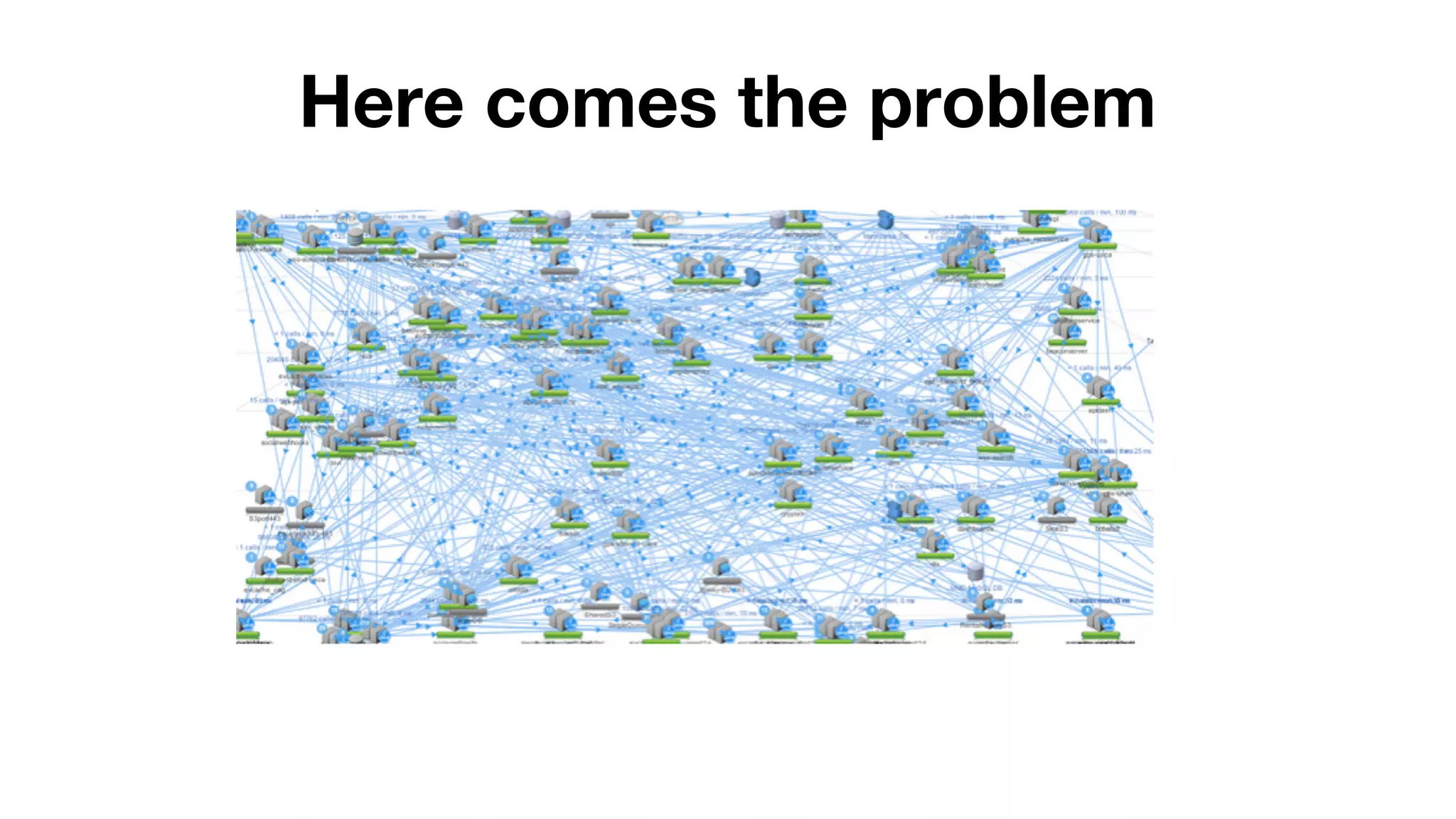
Here comes the problem
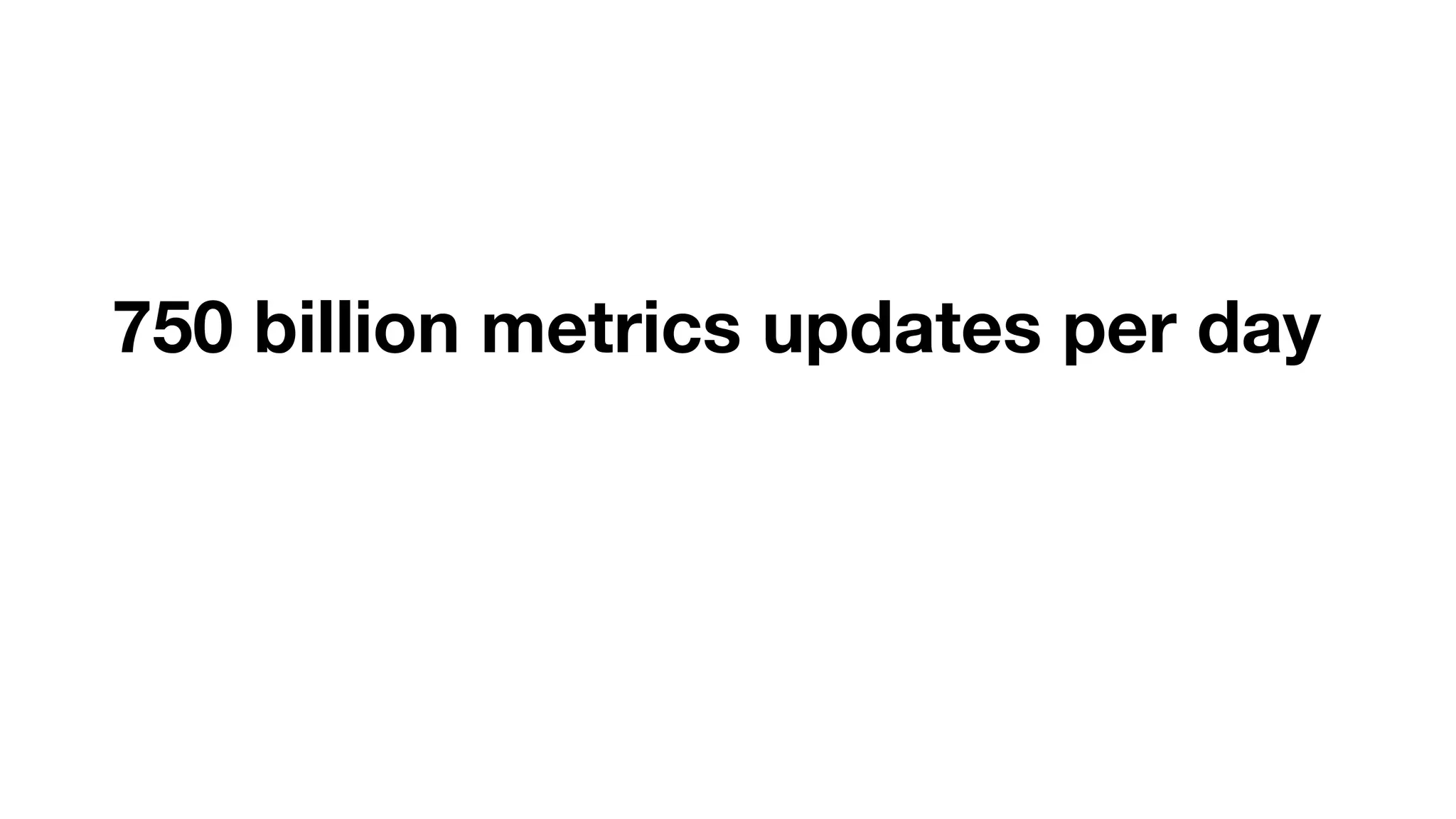
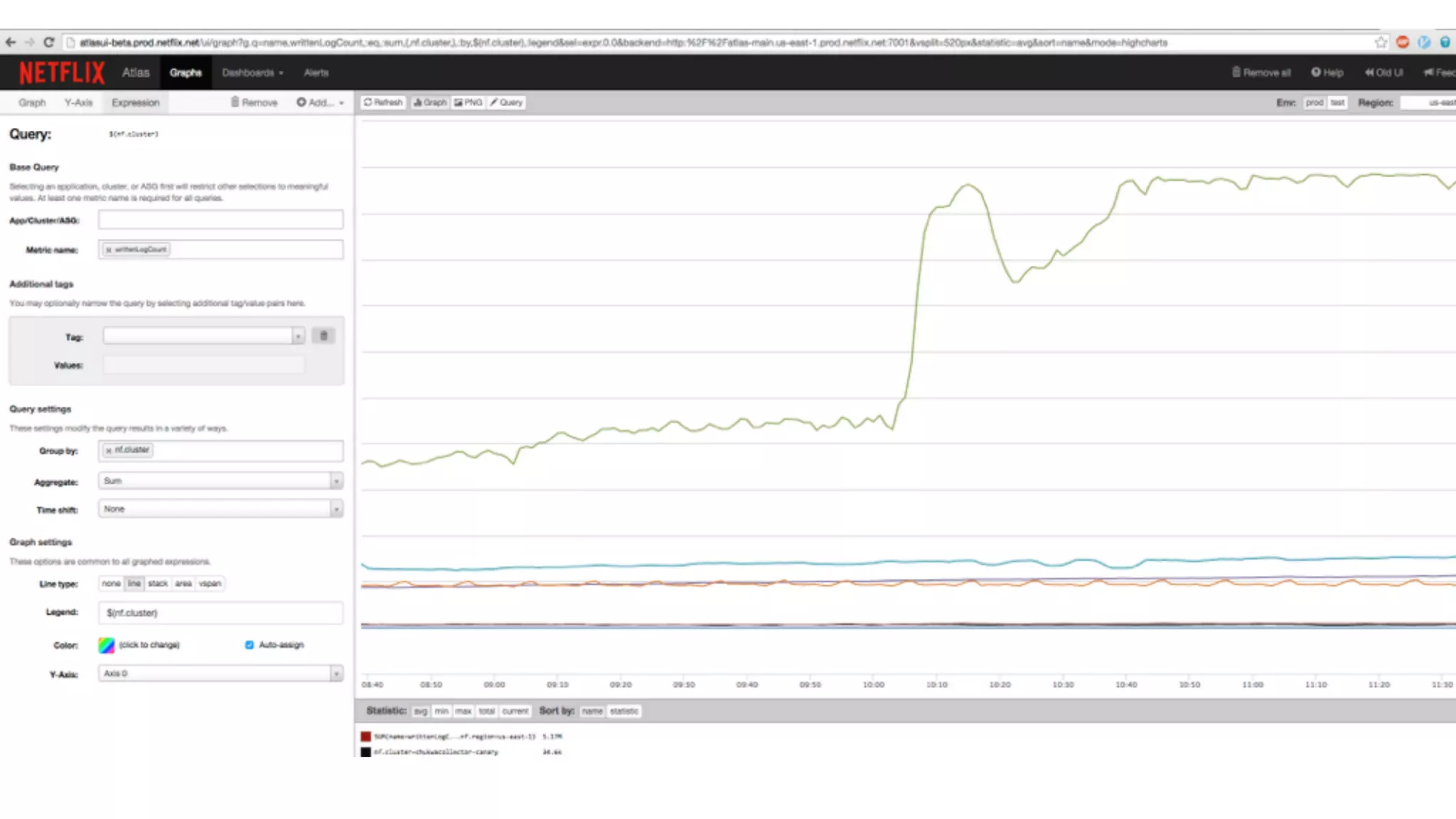
12 ~ 20 million metrics updates per 
second
750 billion metrics updates per day
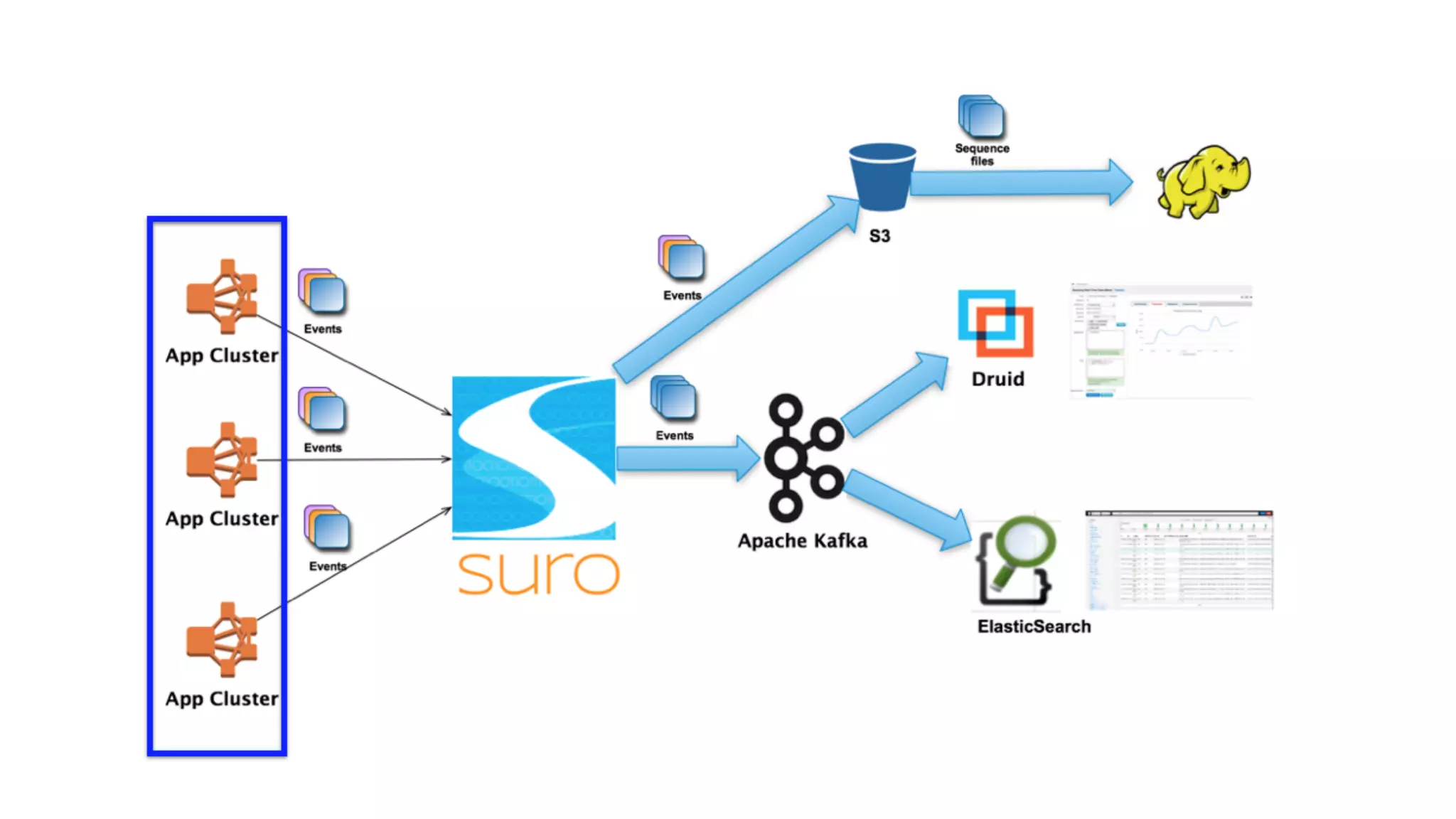
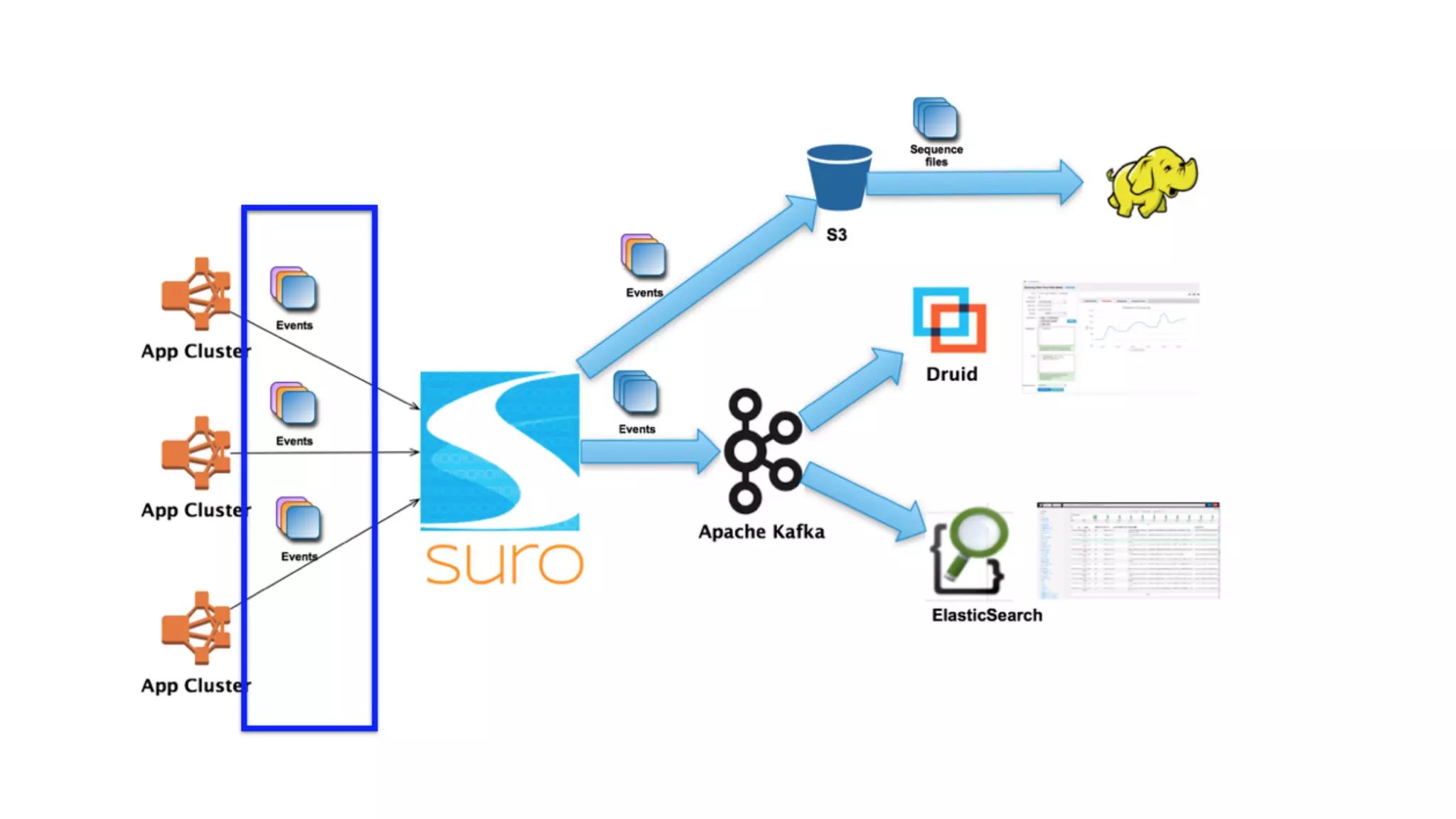
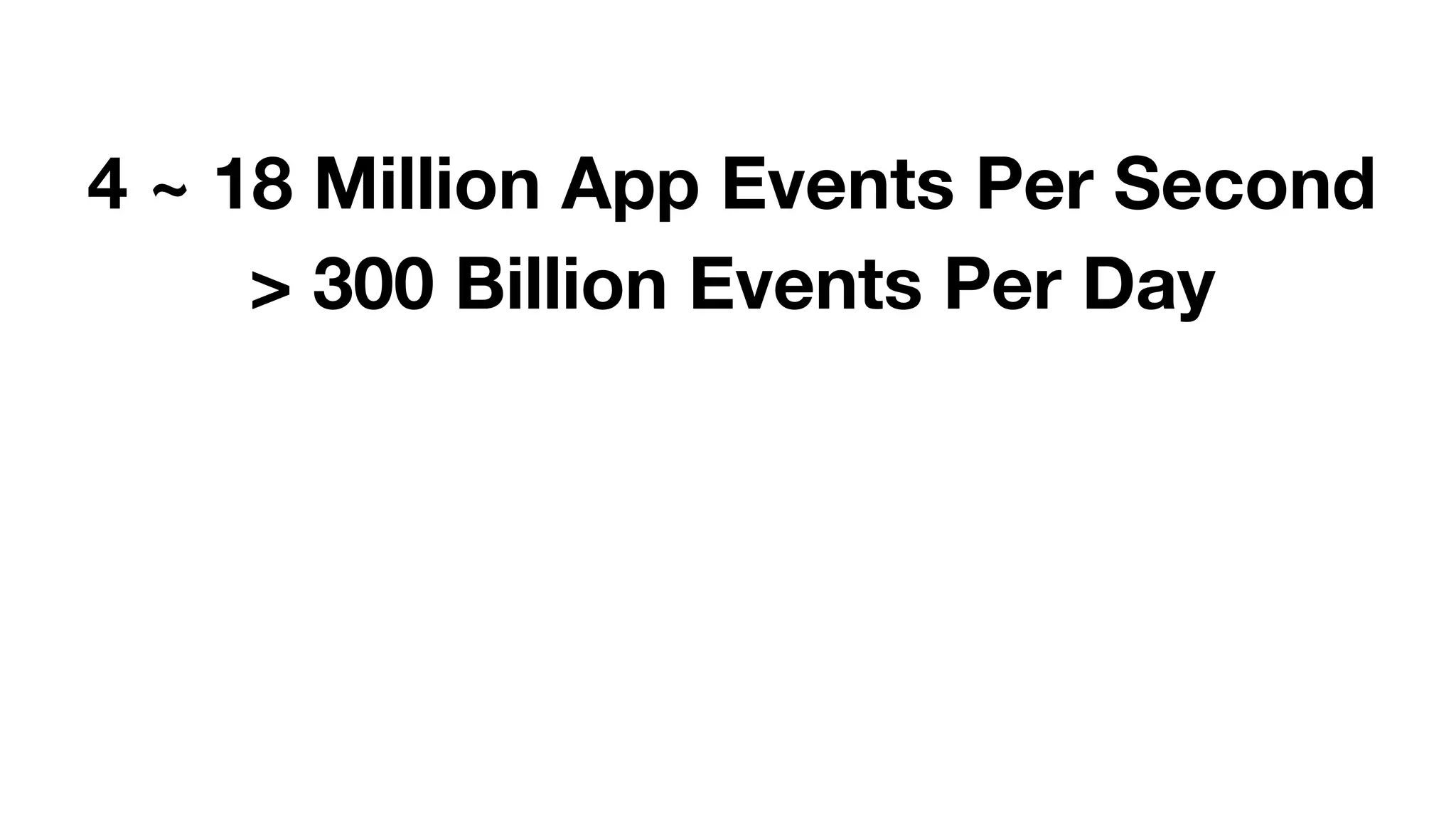
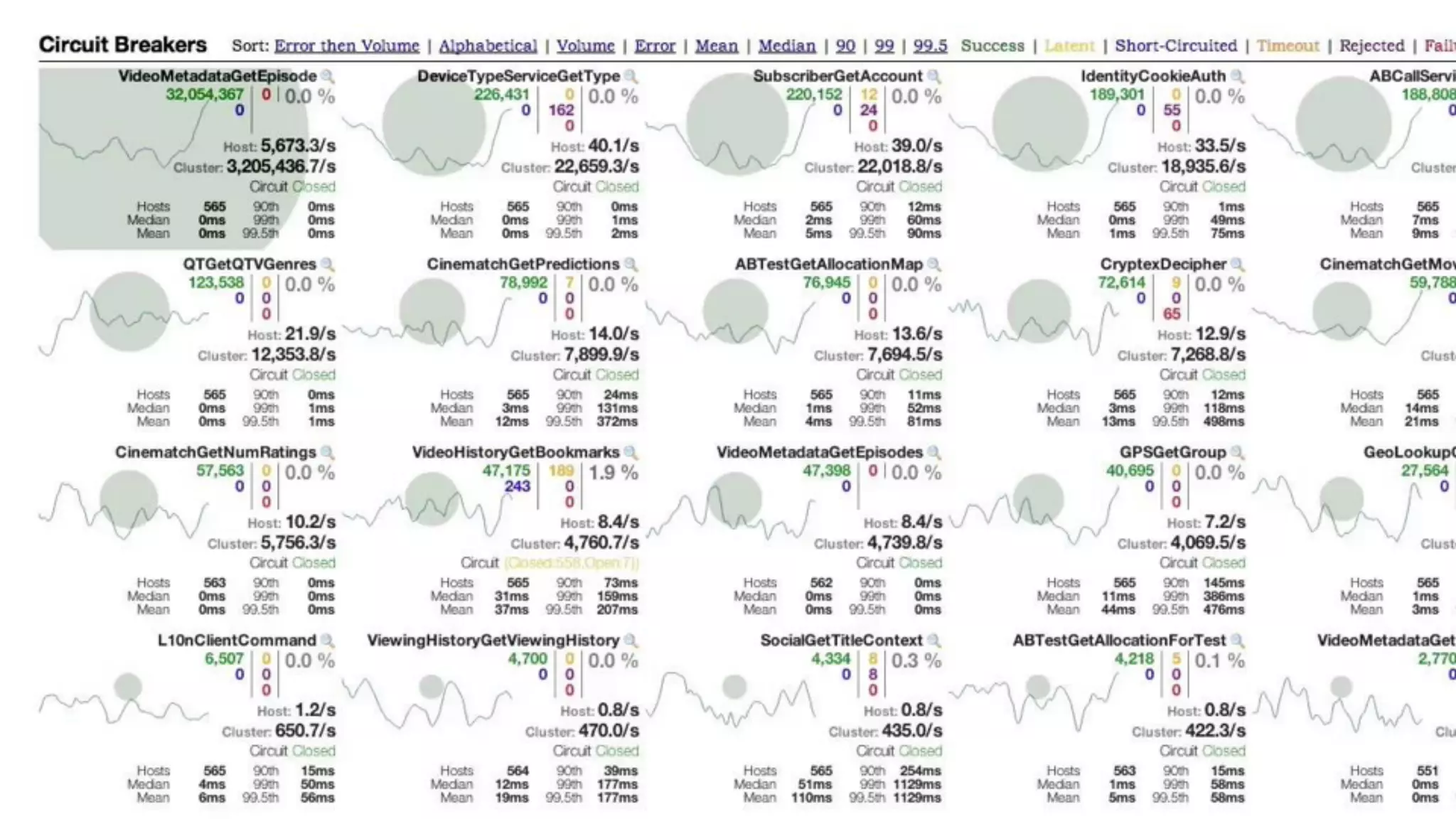
4 ~ 18 Million App Events Per Second 
> 300 Billion Events Per Day
They Solve Specific Problems
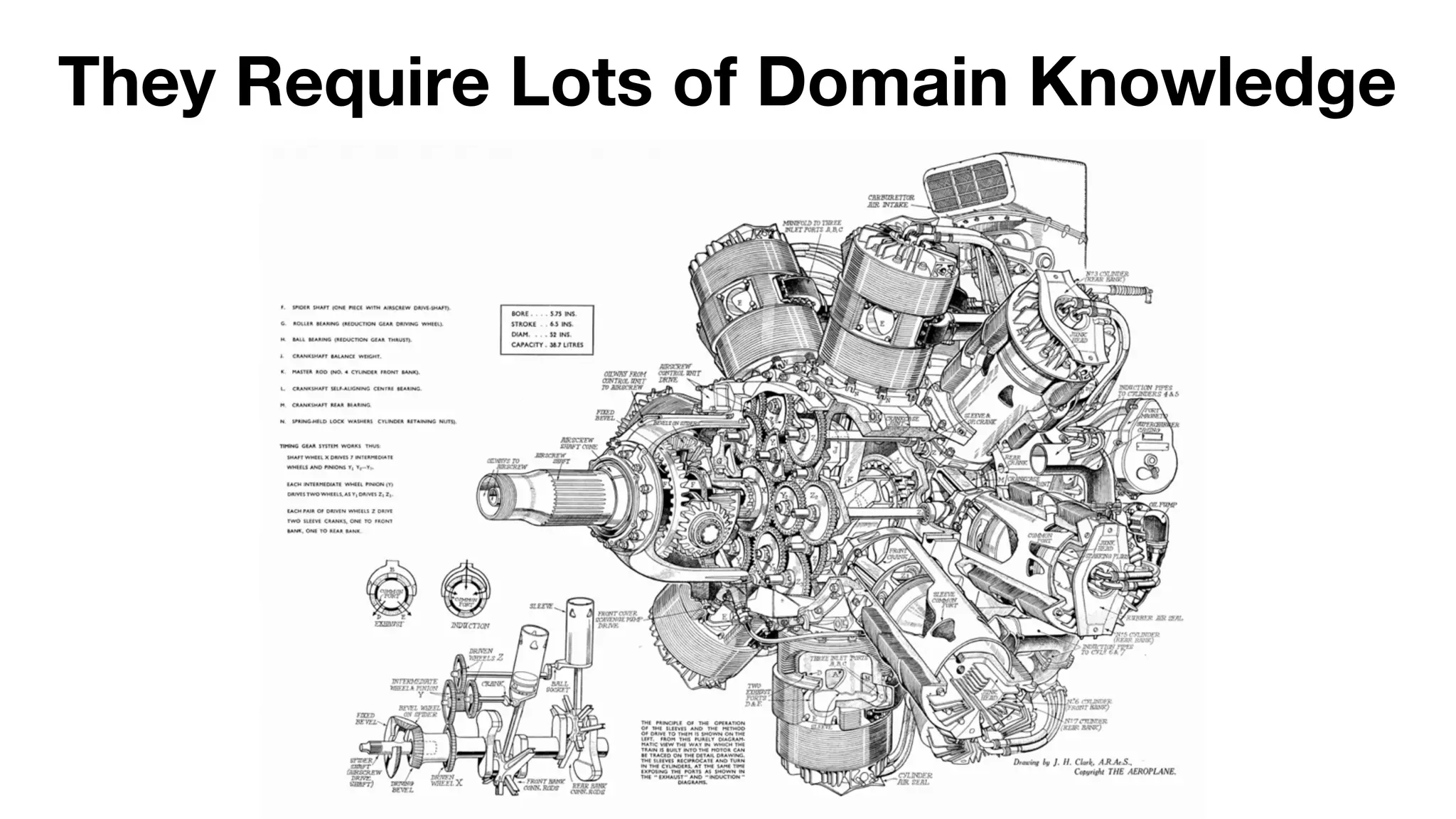
They Require Lots of Domain Knowledge
A System to Rule Them All
Mantis: A Stream Processing System
3
1. Versatile User Demands
Asynchronous Computation Everywhere
3. Same Source, Multiple Consumers
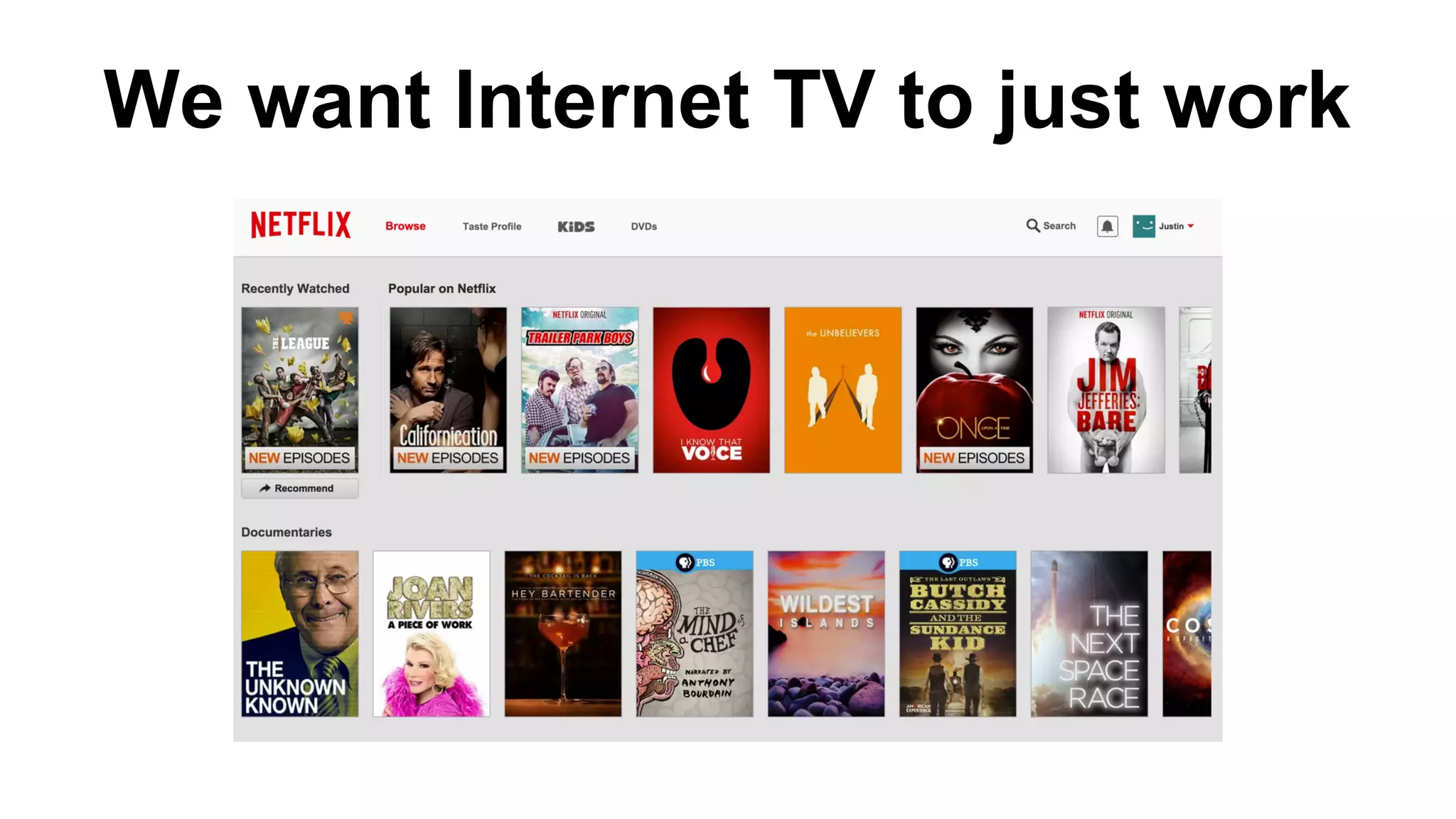
We want Internet TV to just work
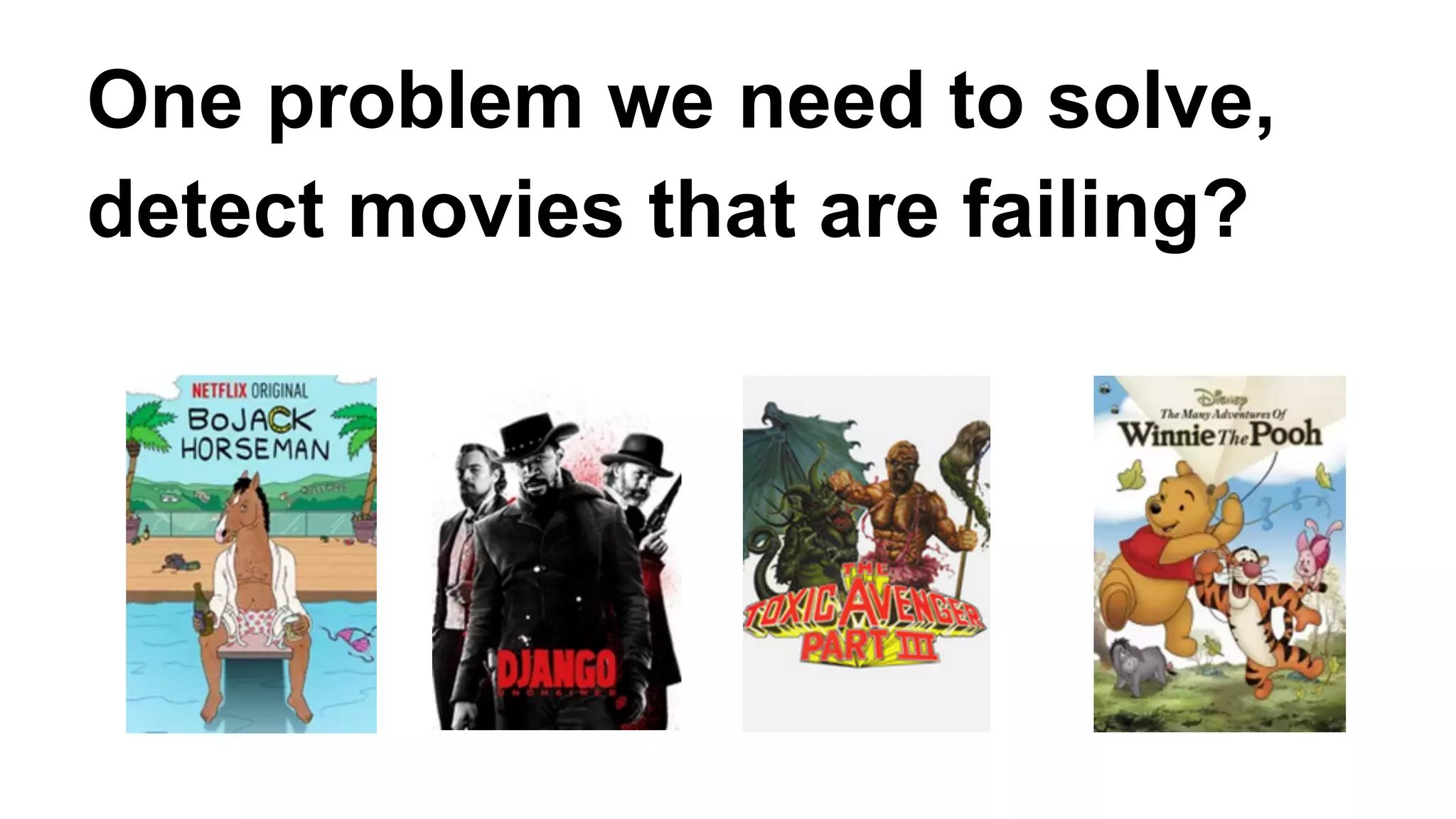
One problem we need to solve, 
detect movies that are failing?
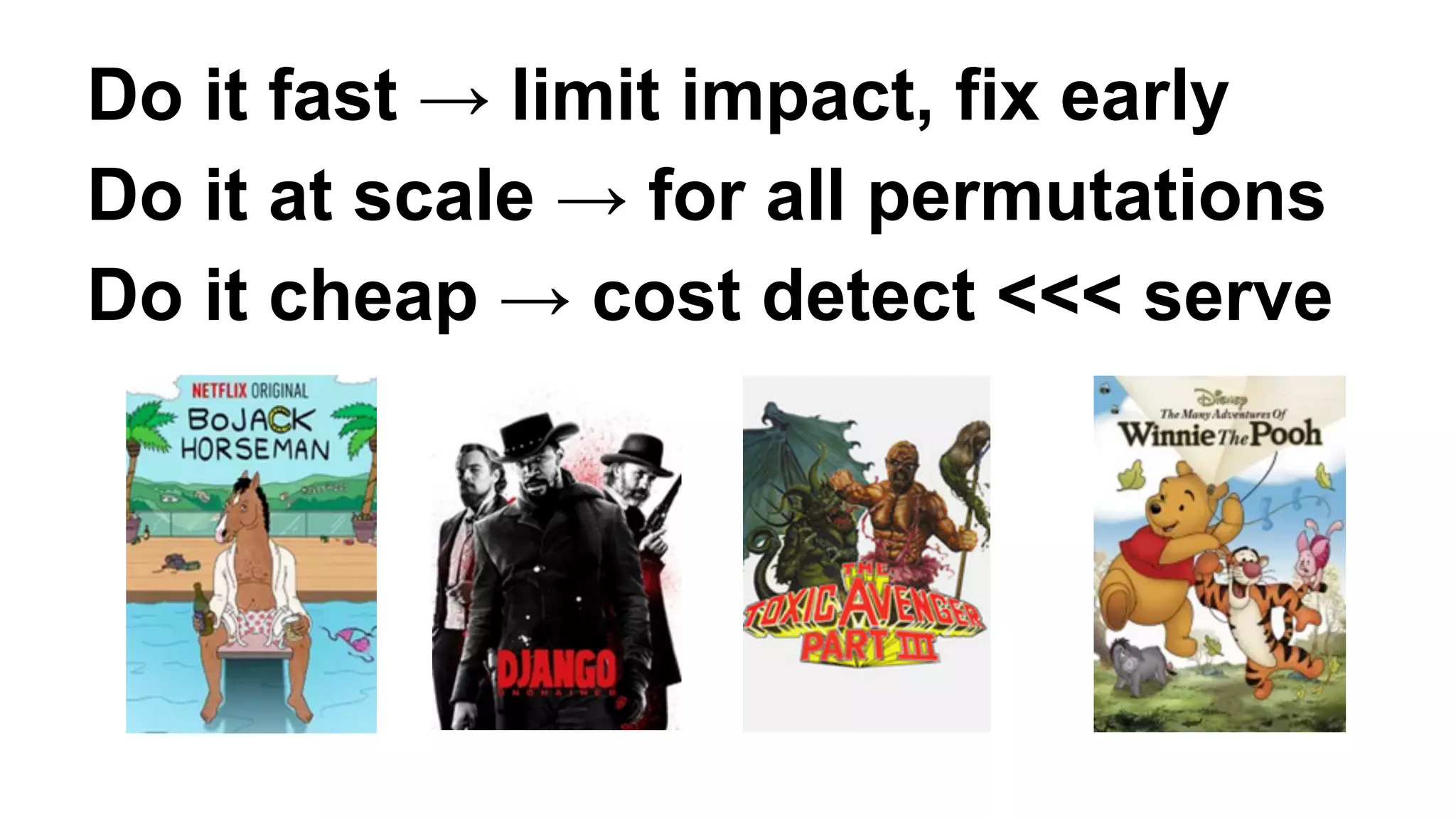
Do it fast → limit impact, fix early 
Do it at scale → for all permutations 
Do it cheap → cost detect <<< serve
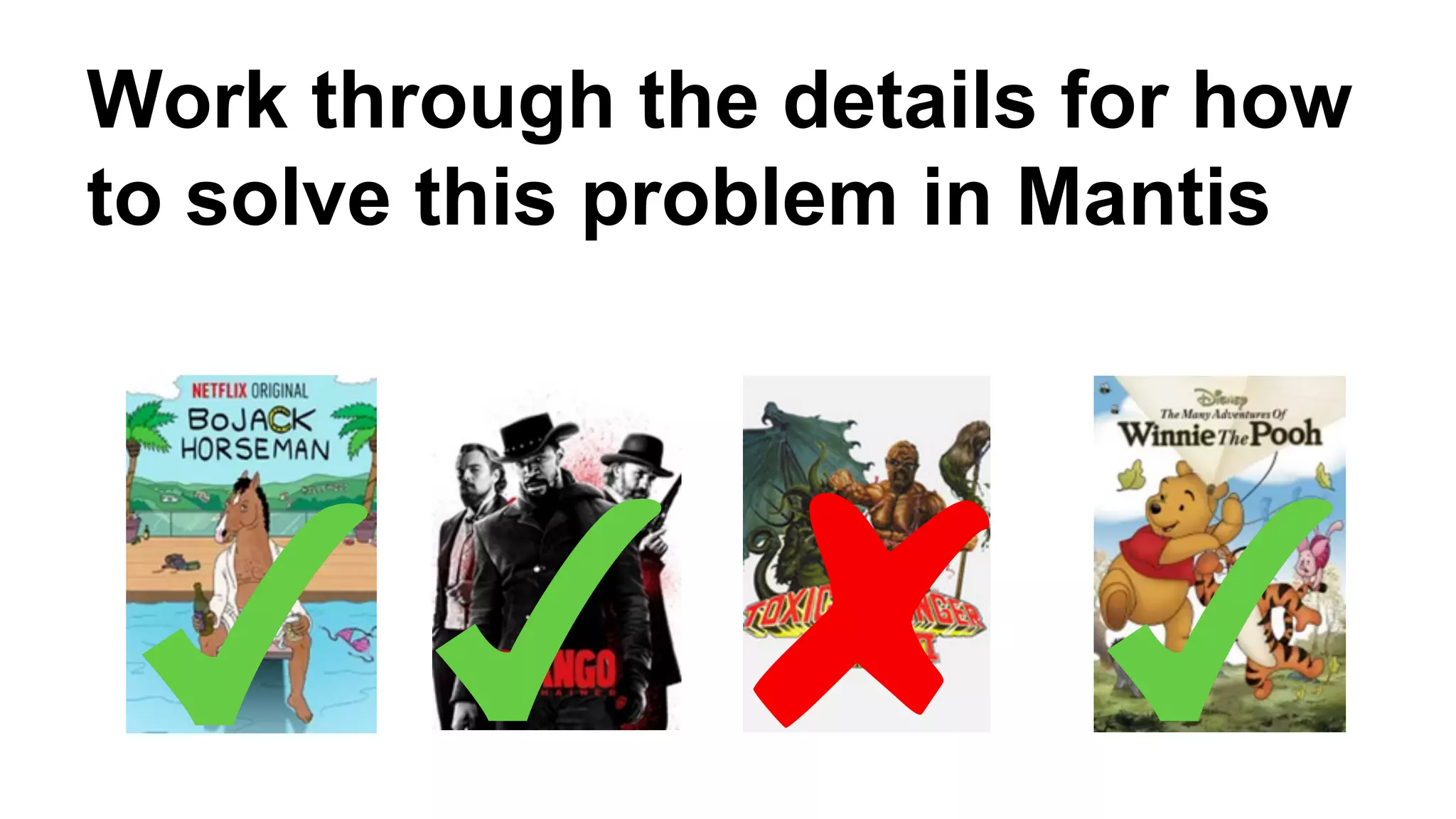
Work through the details for how 
to solve this problem in Mantis
Goal is to highlight unique and 
interesting design features
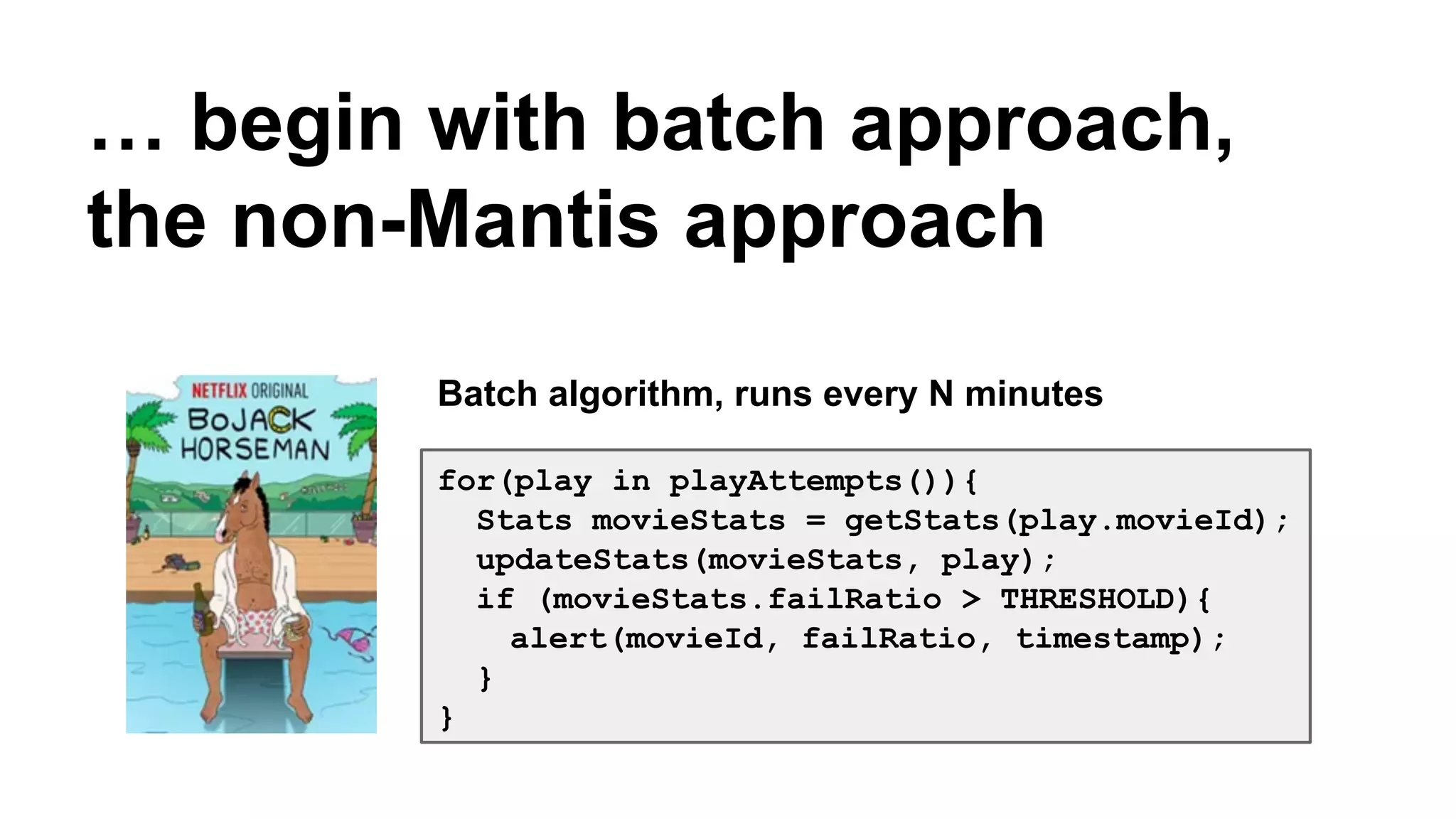
… begin with batch approach, 
the non-Mantis approach 
Batch algorithm, runs every N minutes 
for(play in playAttempts()){ 
Stats movieStats = getStats(play.movieId); 
updateStats(movieStats, play); 
if (movieStats.failRatio > THRESHOLD){ 
alert(movieId, failRatio, timestamp); 
} 
}
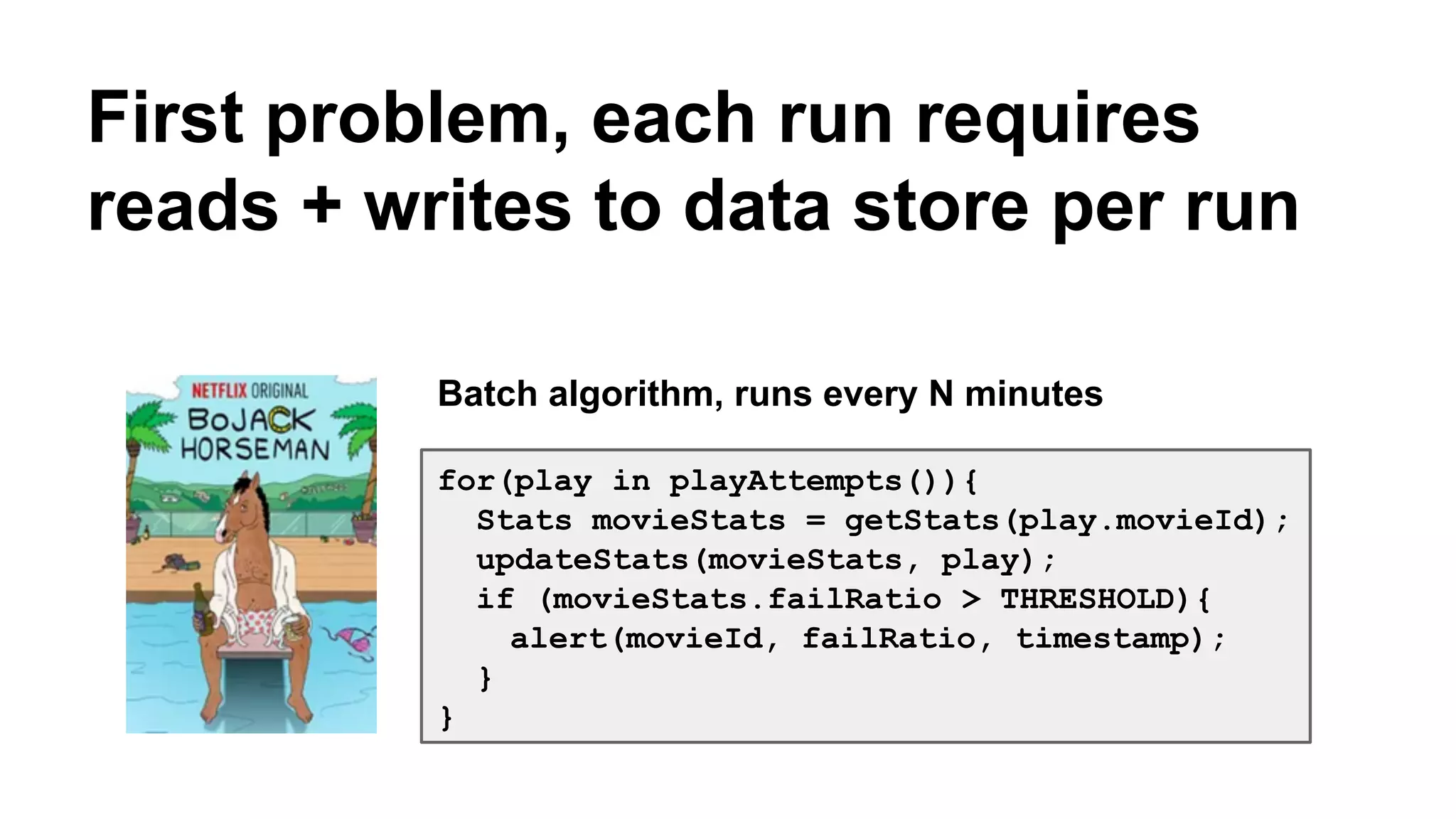
First problem, each run requires 
reads + writes to data store per run 
Batch algorithm, runs every N minutes 
for(play in playAttempts()){ 
Stats movieStats = getStats(play.movieId); 
updateStats(movieStats, play); 
if (movieStats.failRatio > THRESHOLD){ 
alert(movieId, failRatio, timestamp); 
} 
}
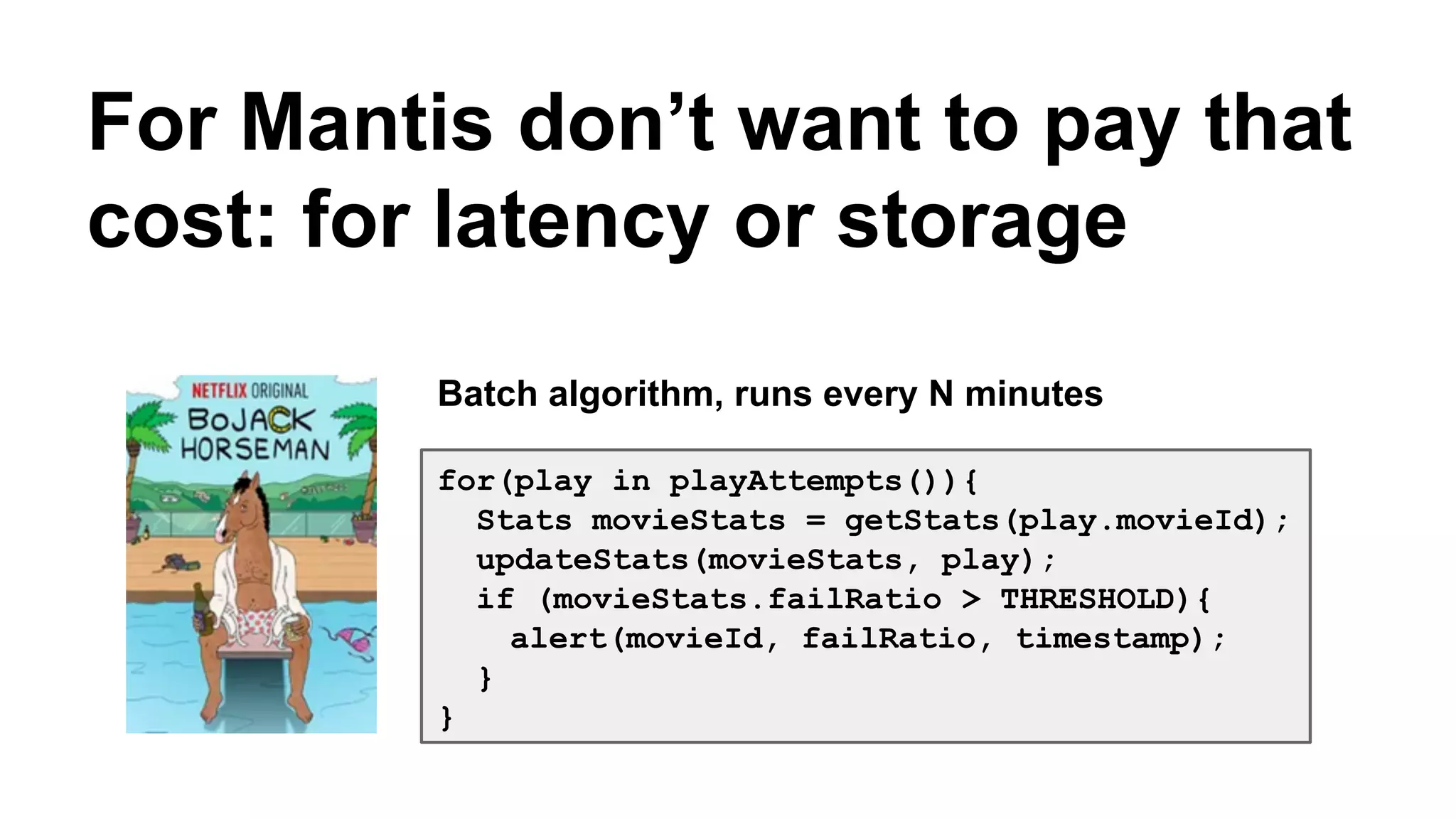
For Mantis don’t want to pay that 
cost: for latency or storage 
Batch algorithm, runs every N minutes 
for(play in playAttempts()){ 
Stats movieStats = getStats(play.movieId); 
updateStats(movieStats, play); 
if (movieStats.failRatio > THRESHOLD){ 
alert(movieId, failRatio, timestamp); 
} 
}
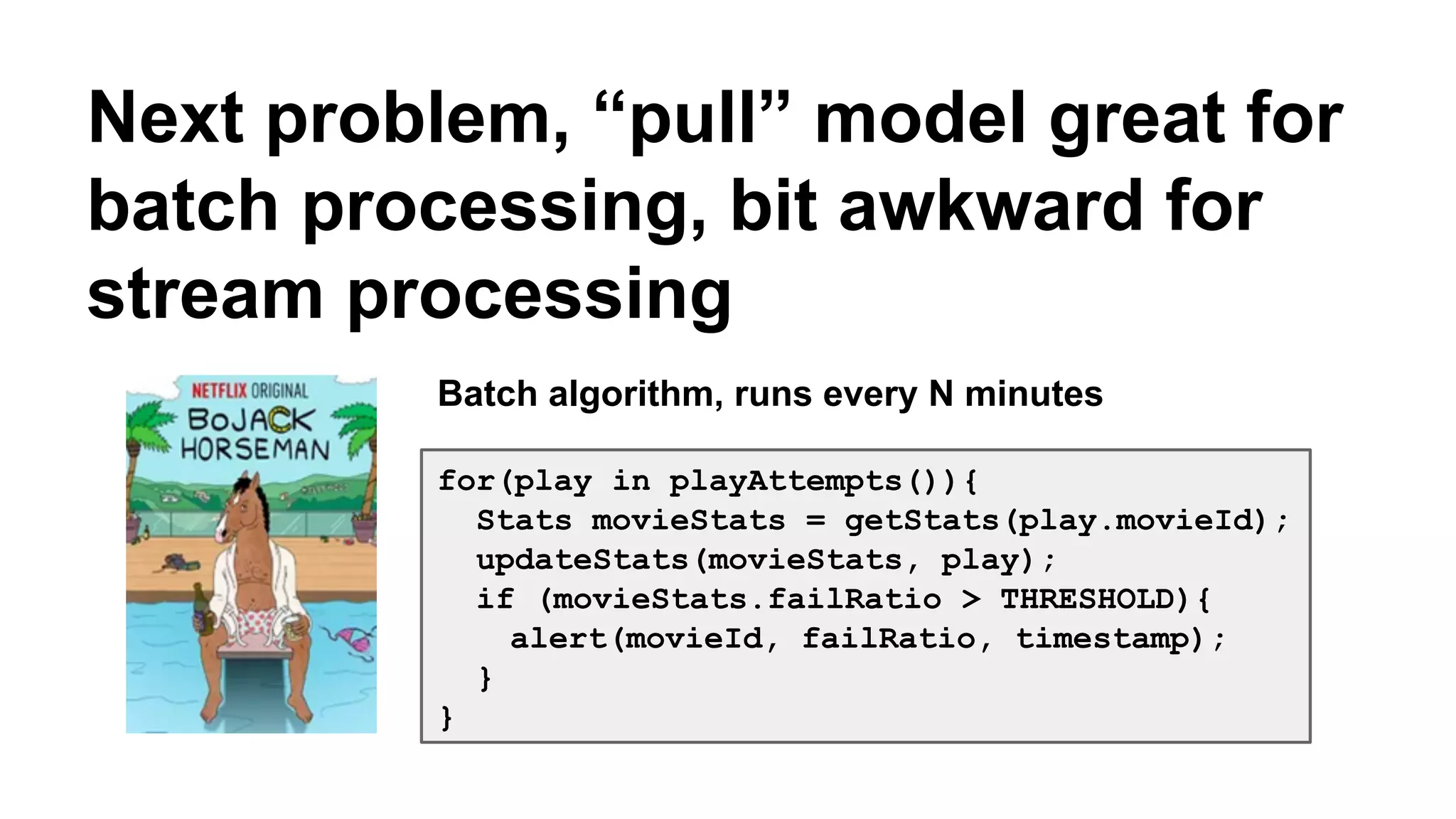
Next problem, “pull” model great for 
batch processing, bit awkward for 
stream processing 
Batch algorithm, runs every N minutes 
for(play in playAttempts()){ 
Stats movieStats = getStats(play.movieId); 
updateStats(movieStats, play); 
if (movieStats.failRatio > THRESHOLD){ 
alert(movieId, failRatio, timestamp); 
} 
}
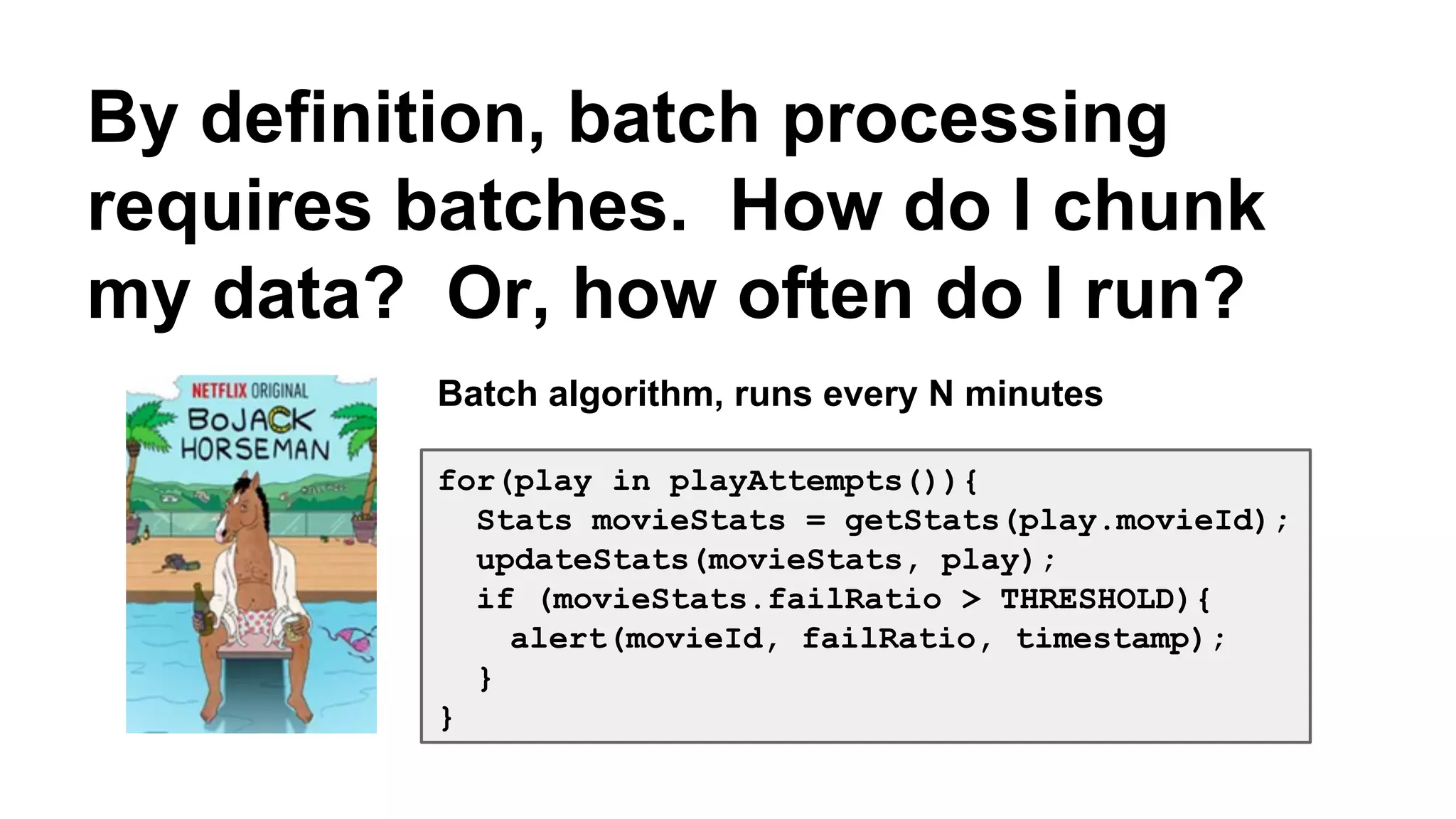
By definition, batch processing 
requires batches. How do I chunk 
my data? Or, how often do I run? 
Batch algorithm, runs every N minutes 
for(play in playAttempts()){ 
Stats movieStats = getStats(play.movieId); 
updateStats(movieStats, play); 
if (movieStats.failRatio > THRESHOLD){ 
alert(movieId, failRatio, timestamp); 
} 
}
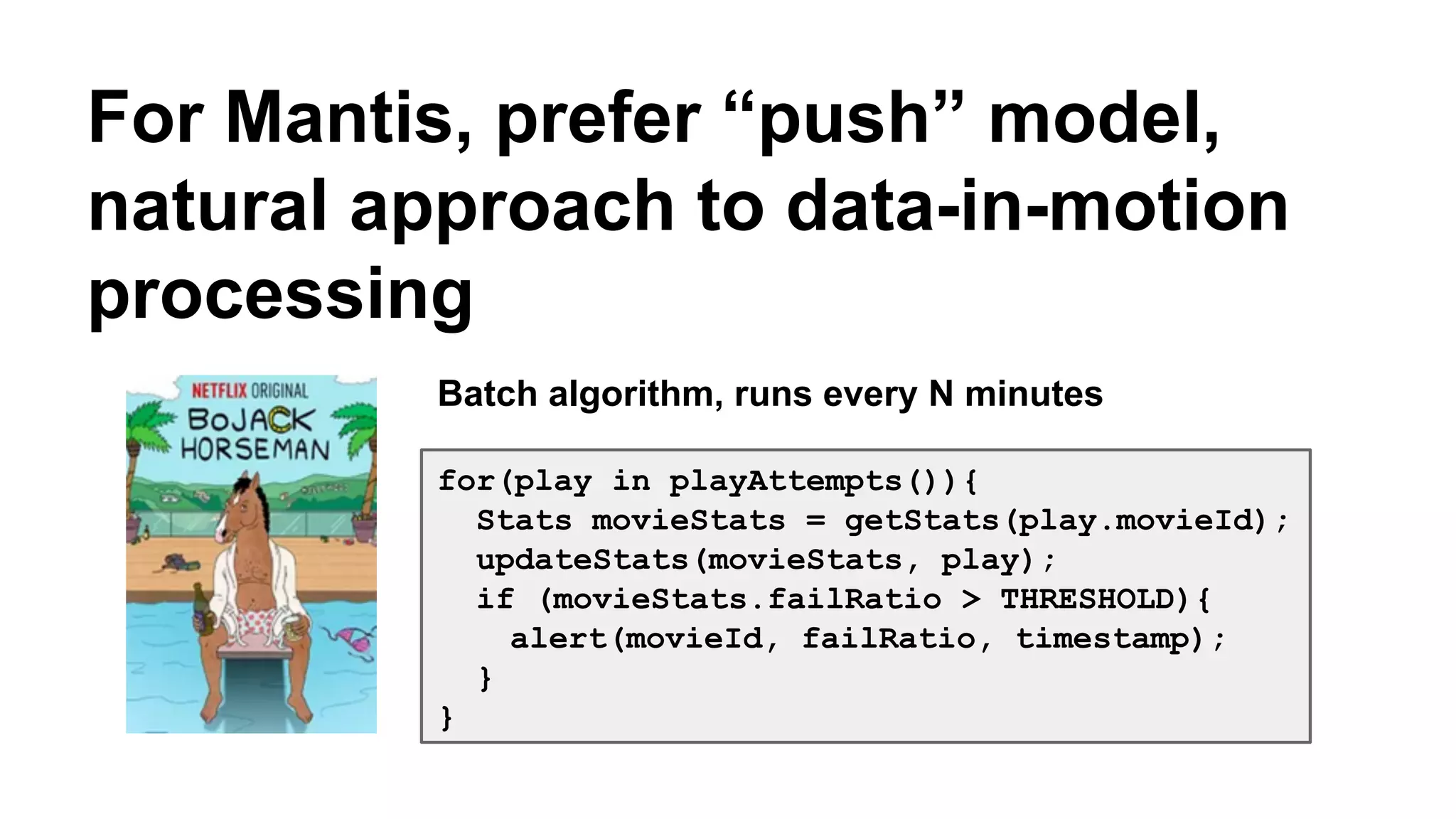
For Mantis, prefer “push” model, 
natural approach to data-in-motion 
processing 
Batch algorithm, runs every N minutes 
for(play in playAttempts()){ 
Stats movieStats = getStats(play.movieId); 
updateStats(movieStats, play); 
if (movieStats.failRatio > THRESHOLD){ 
alert(movieId, failRatio, timestamp); 
} 
}
For our “push” API we decided 
to use Reactive Extensions (Rx)
Two reasons for choosing Rx: 
theoretical, practical 
1. Observable is a natural abstraction for 
stream processing, Observable = stream 
2. Rx already leveraged throughout the 
company
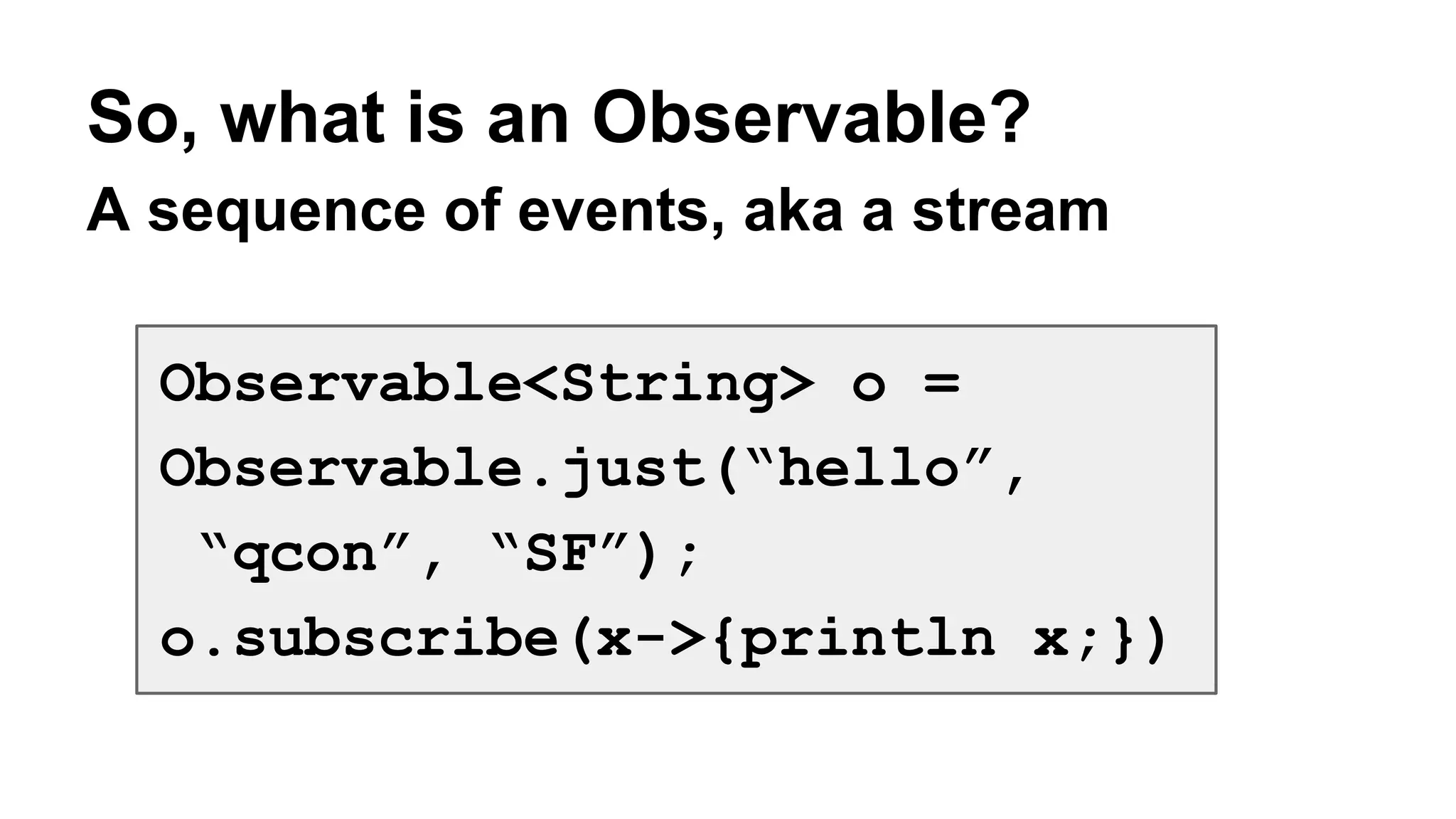
So, what is an Observable? 
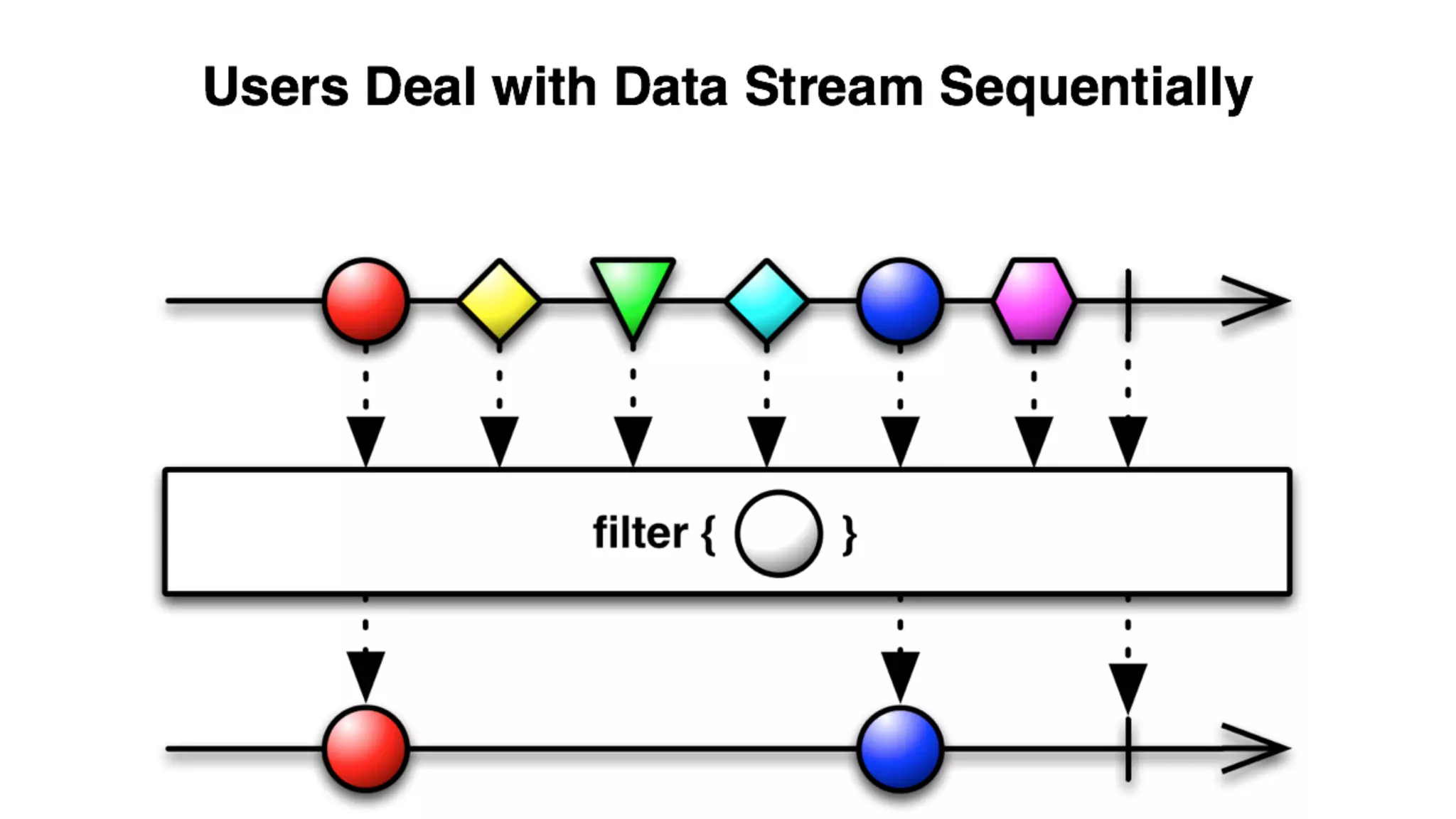
A sequence of events, aka a stream 
Observable<String> o = 
Observable.just(“hello”, 
“qcon”, “SF”); 
o.subscribe(x->{println x;})
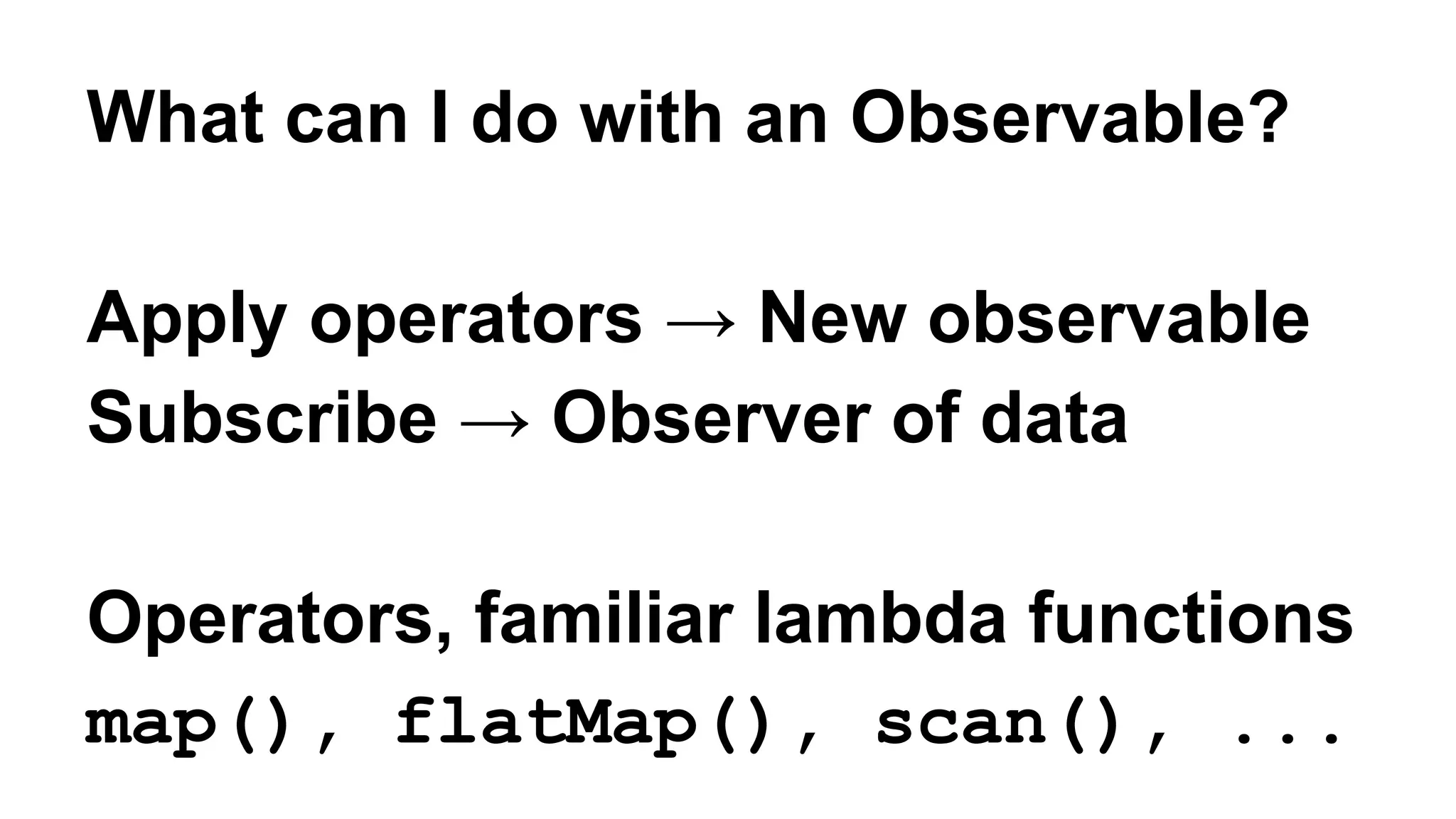
What can I do with an Observable? 
Apply operators → New observable 
Subscribe → Observer of data 
Operators, familiar lambda functions 
map(), flatMap(), scan(), ...
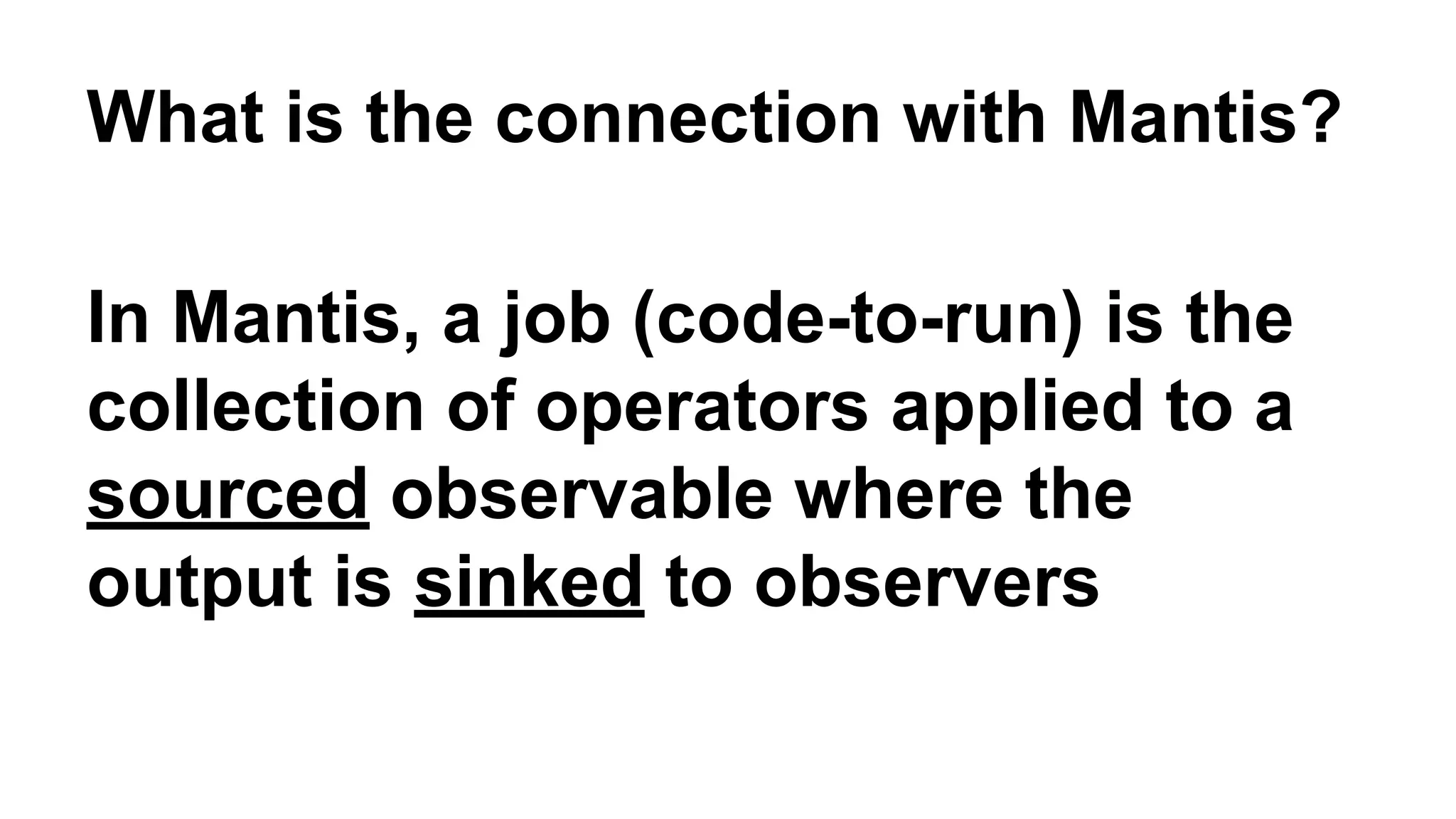
What is the connection with Mantis? 
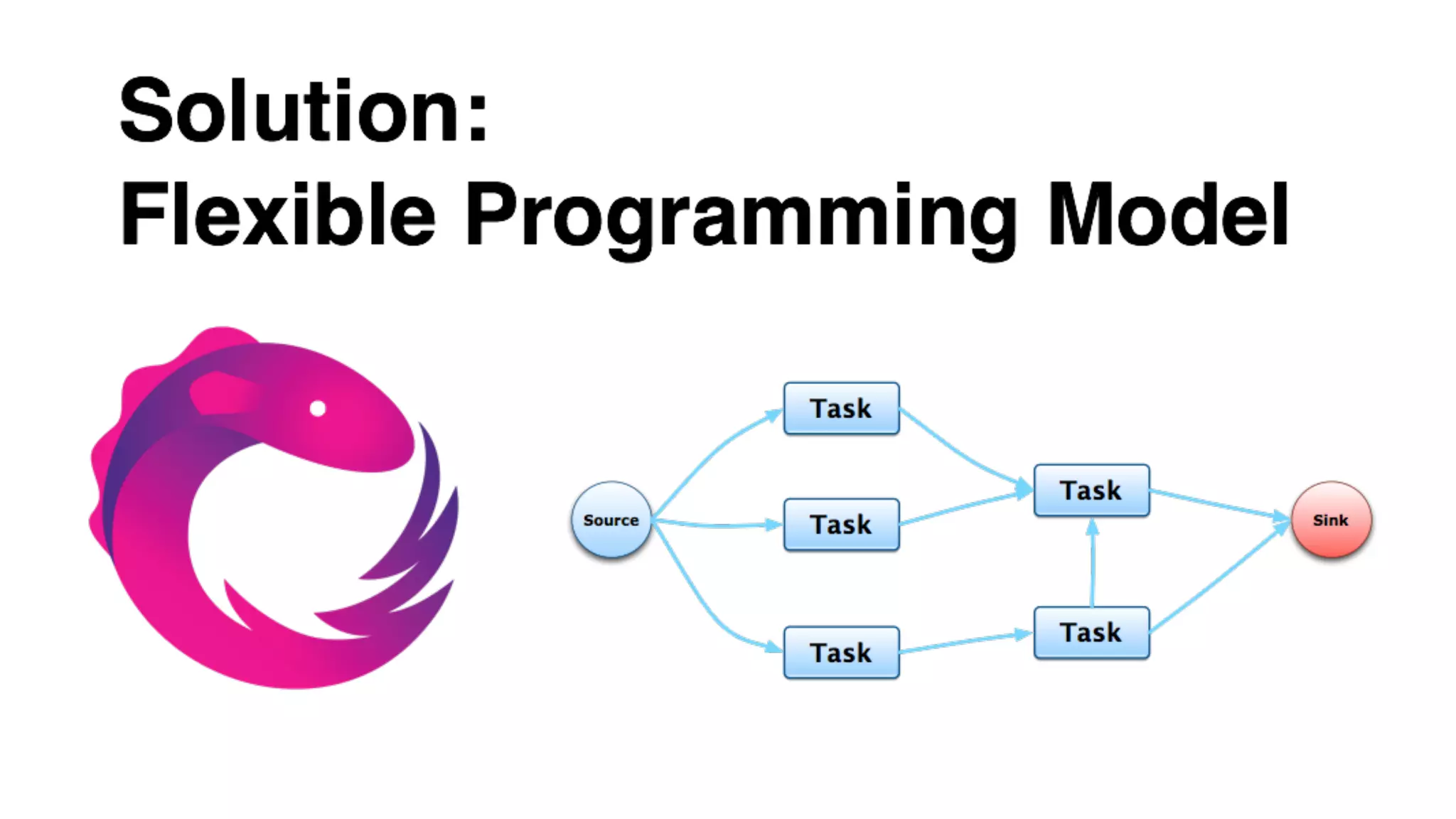
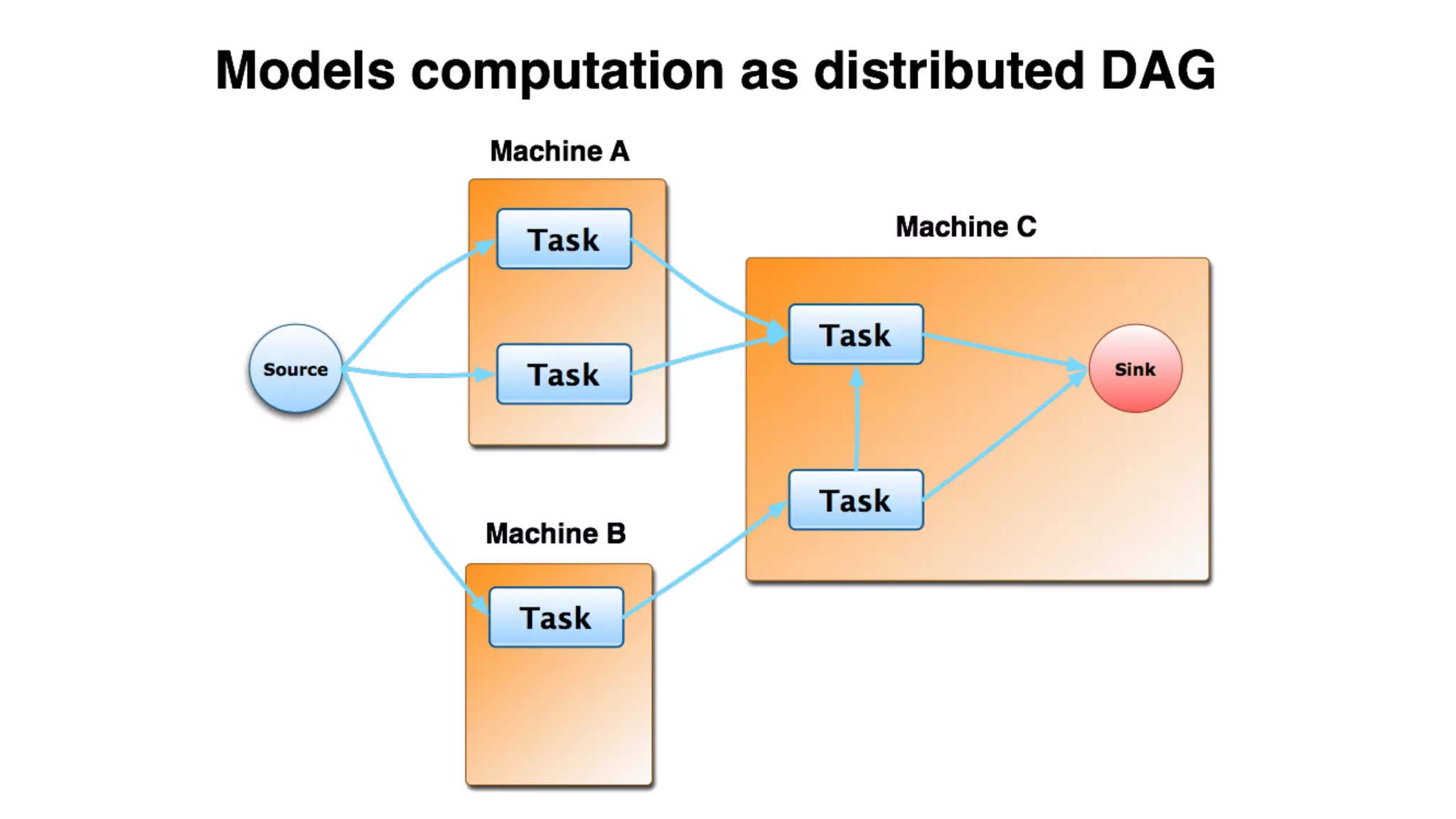
In Mantis, a job (code-to-run) is the 
collection of operators applied to a 
sourced observable where the 
output is sinked to observers
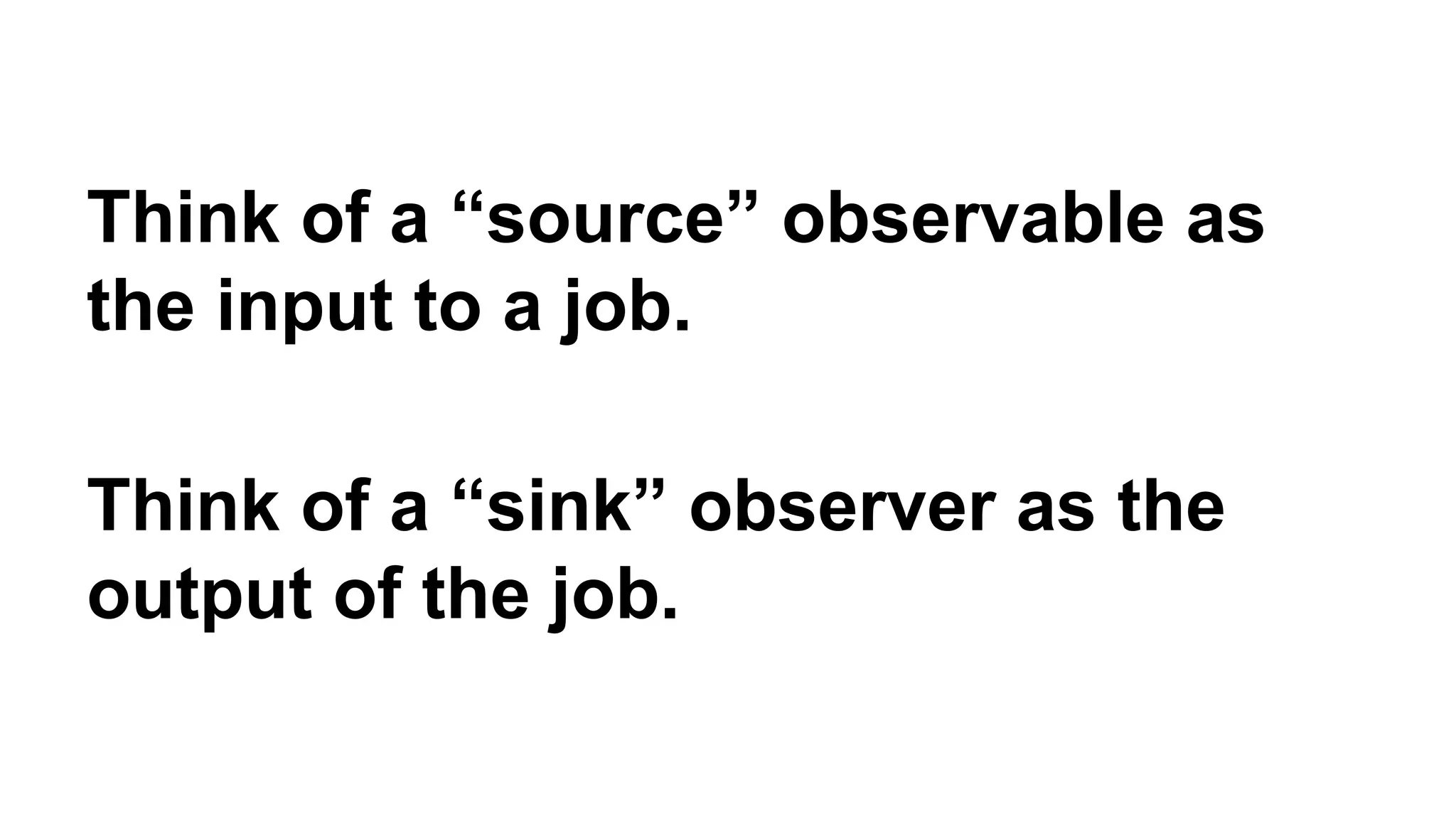
Think of a “source” observable as 
the input to a job. 
Think of a “sink” observer as the 
output of the job.
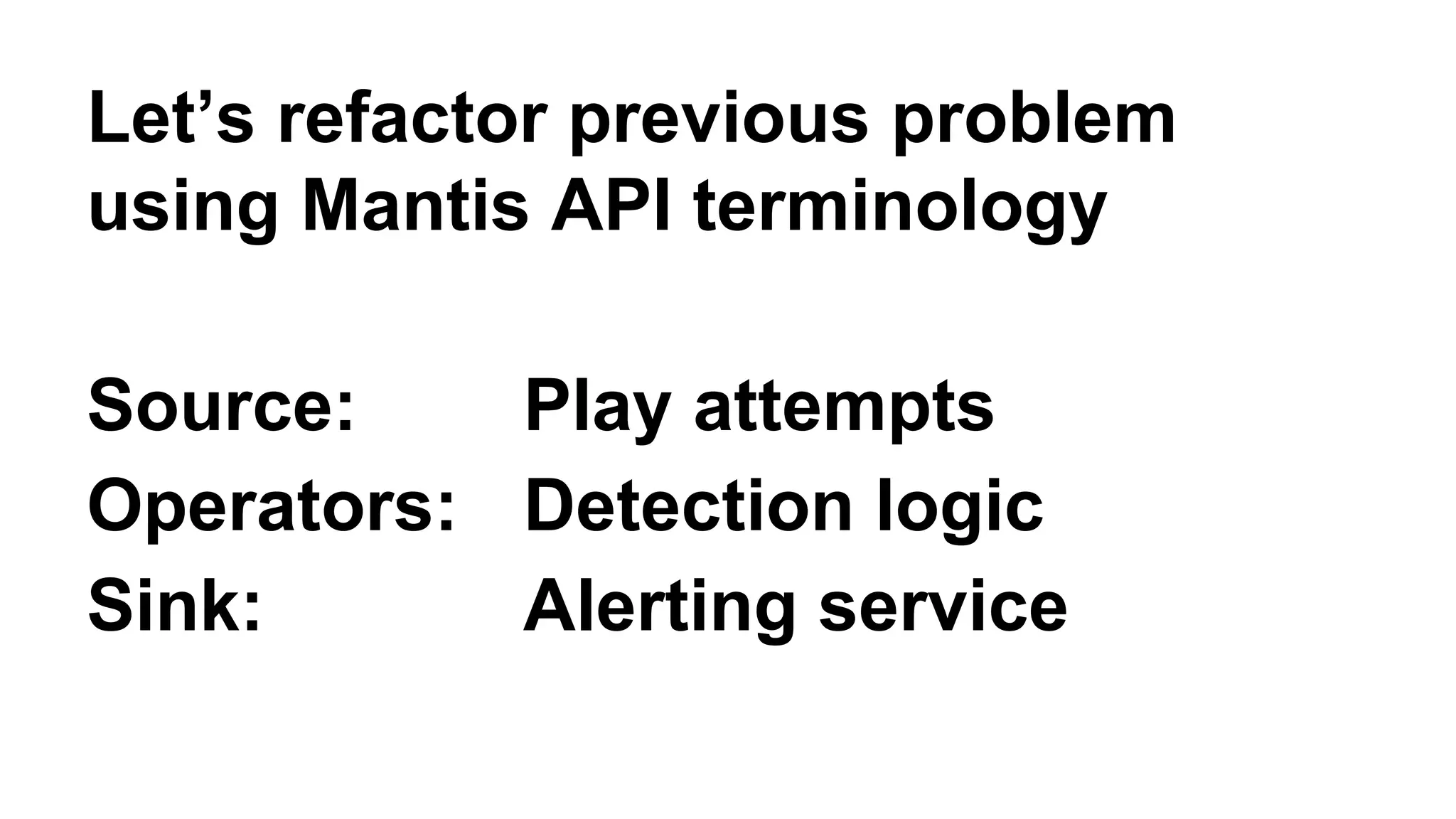
Let’s refactor previous problem 
using Mantis API terminology 
Source: Play attempts 
Operators: Detection logic 
Sink: Alerting service
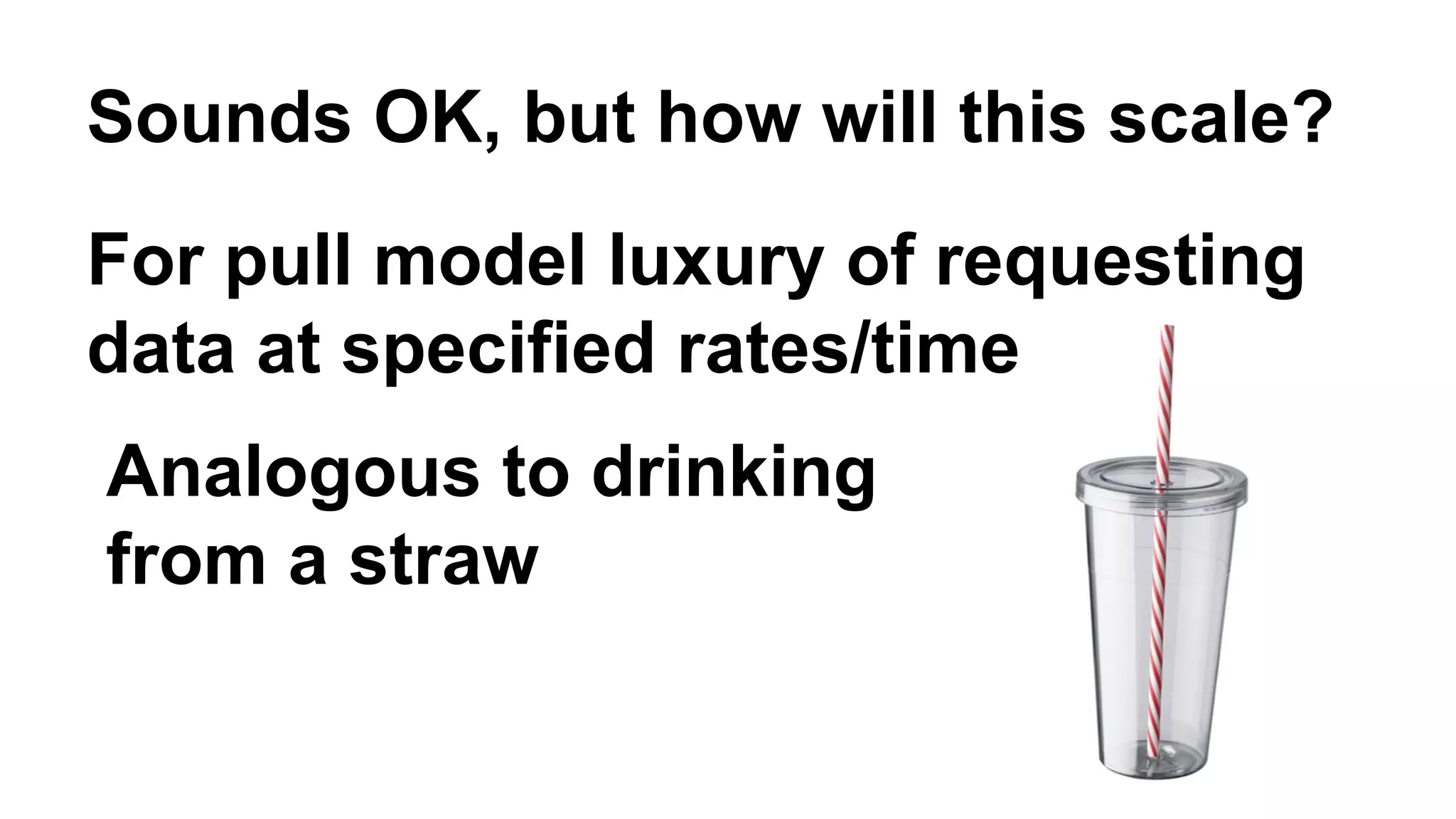
Sounds OK, but how will this scale? 
For pull model luxury of requesting 
data at specified rates/time 
Analogous to drinking 
from a straw
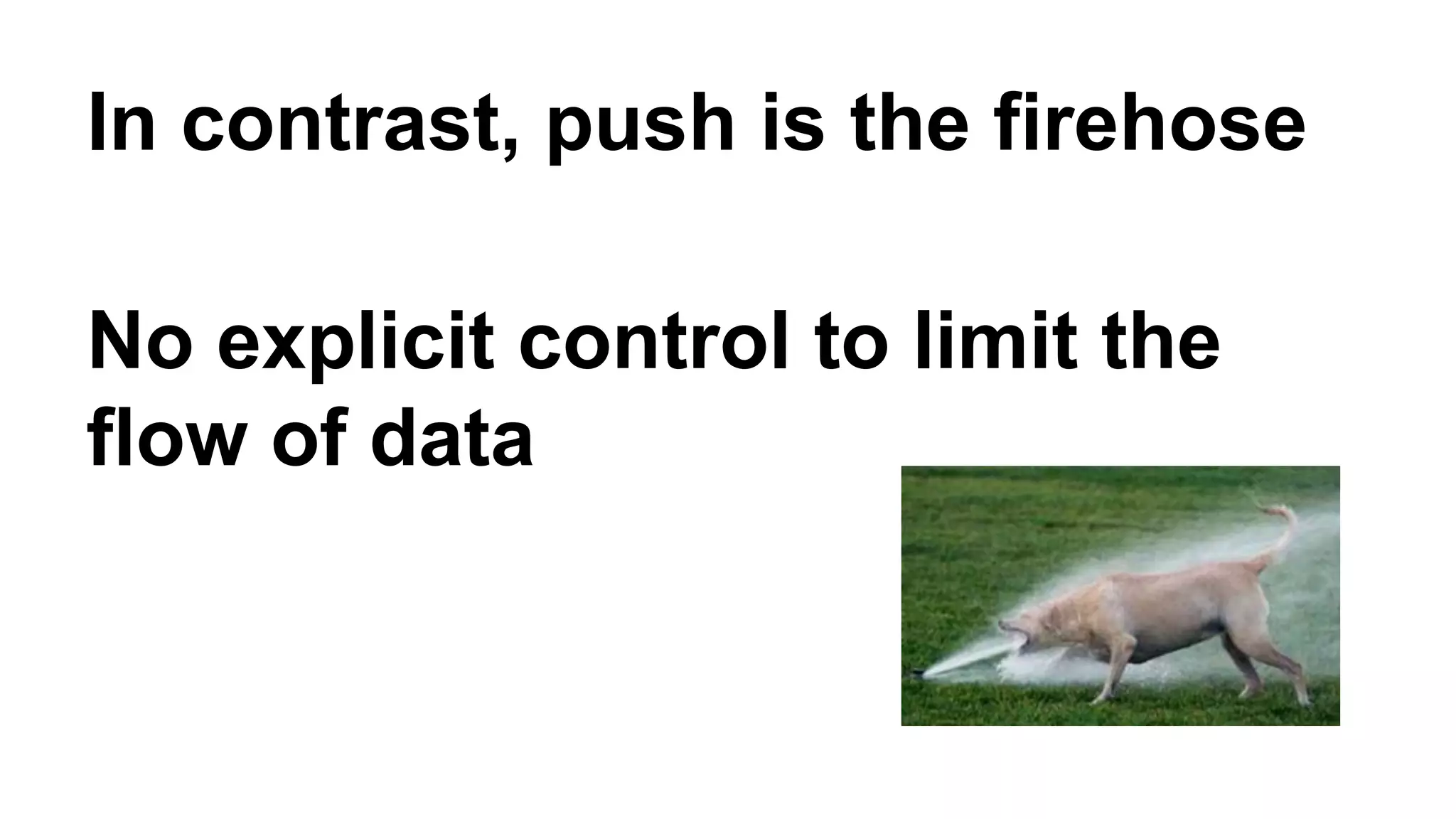
In contrast, push is the firehose 
No explicit control to limit the 
flow of data
In Mantis, we solve this problem 
by scaling horizontally
Horizontal scale is accomplished 
by arranging operators into 
logical “stages”, explicitly by job 
writer or implicitly with fancy 
tooling (future work)
A stage is a boundary between 
computations. The boundary 
may be a network boundary, 
process boundary, etc.
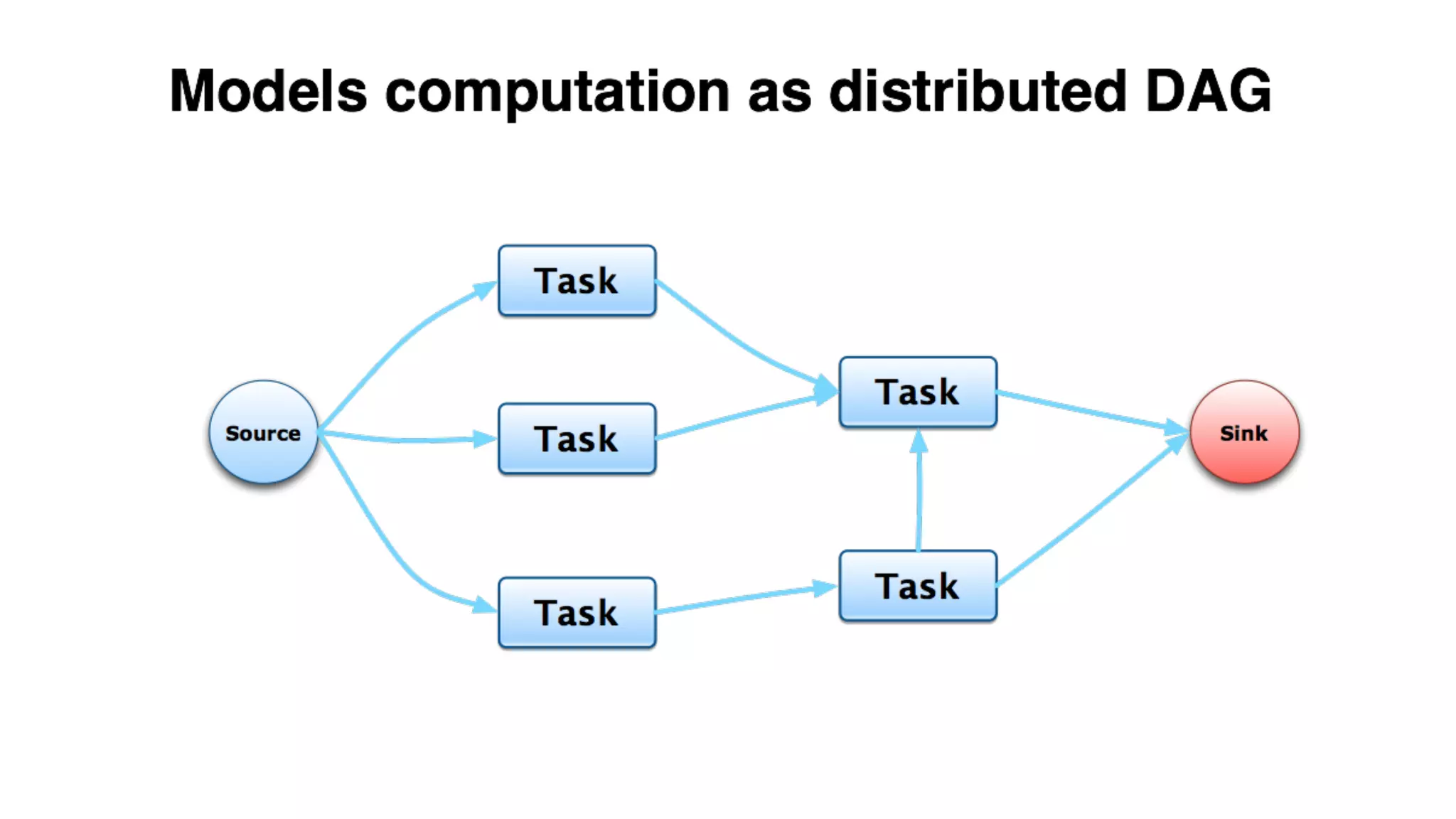
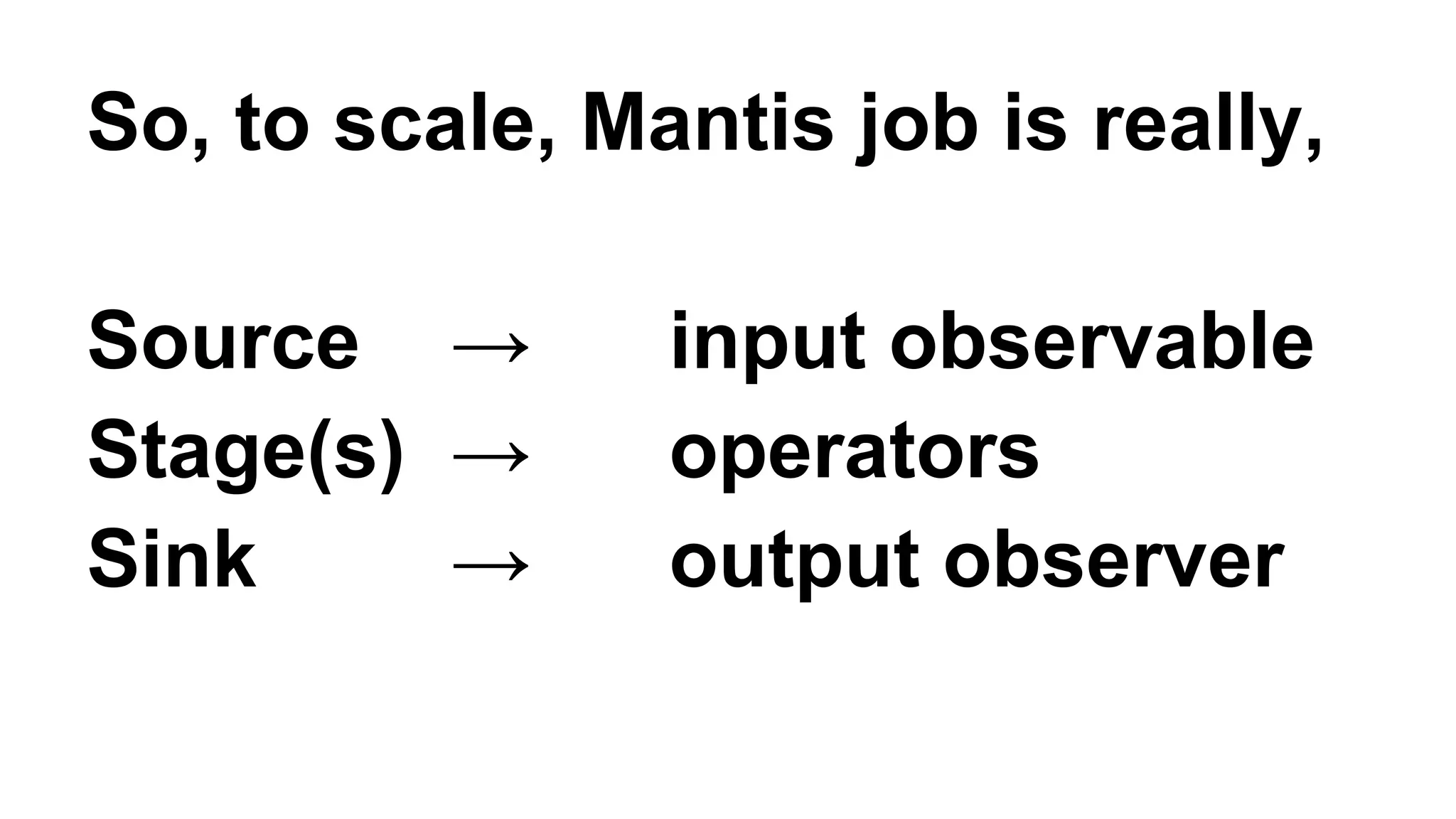
So, to scale, Mantis job is really, 
Source → input observable 
Stage(s) → operators 
Sink → output observer
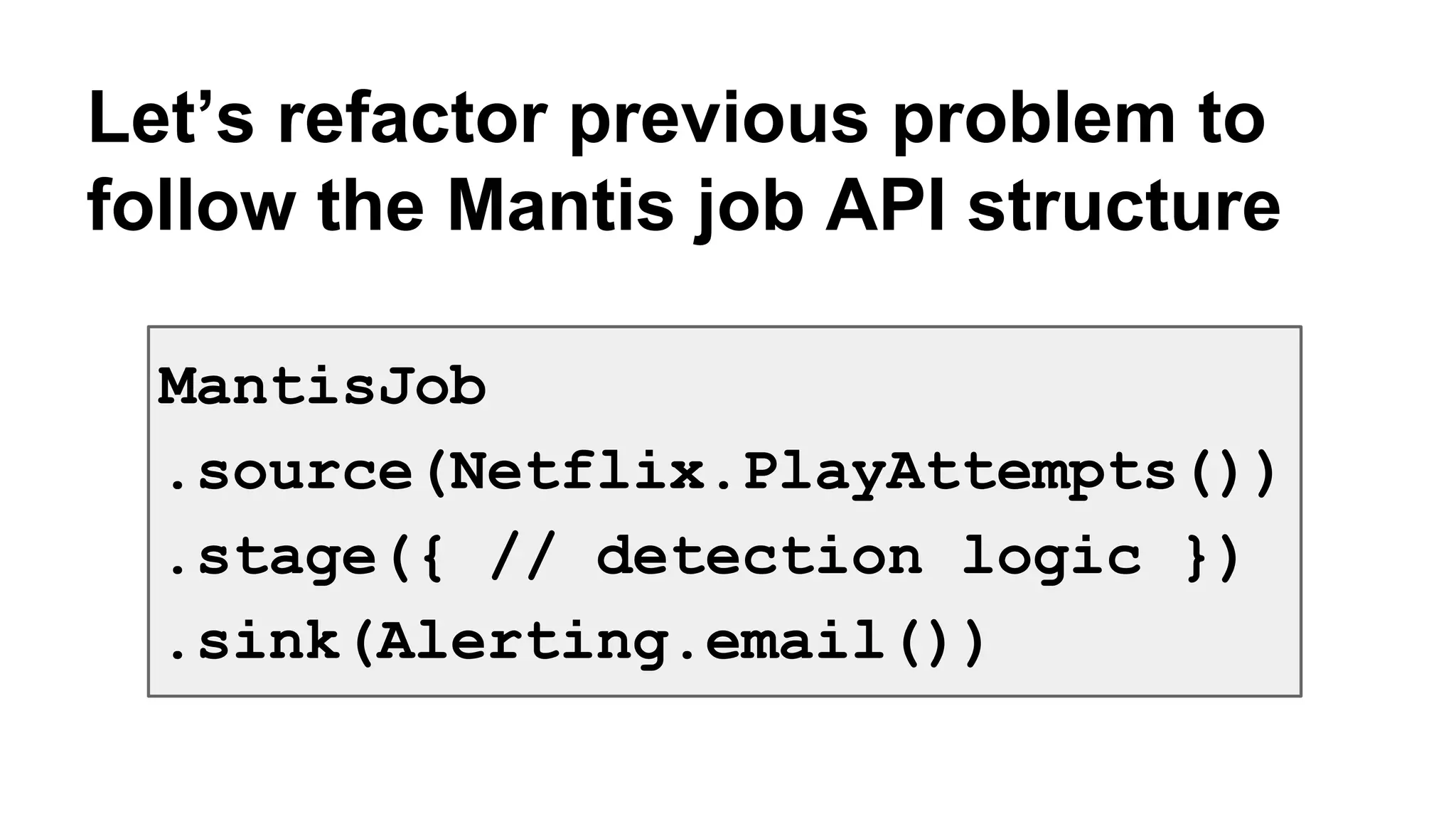
Let’s refactor previous problem to 
follow the Mantis job API structure 
MantisJob 
.source(Netflix.PlayAttempts()) 
.stage({ // detection logic }) 
.sink(Alerting.email())
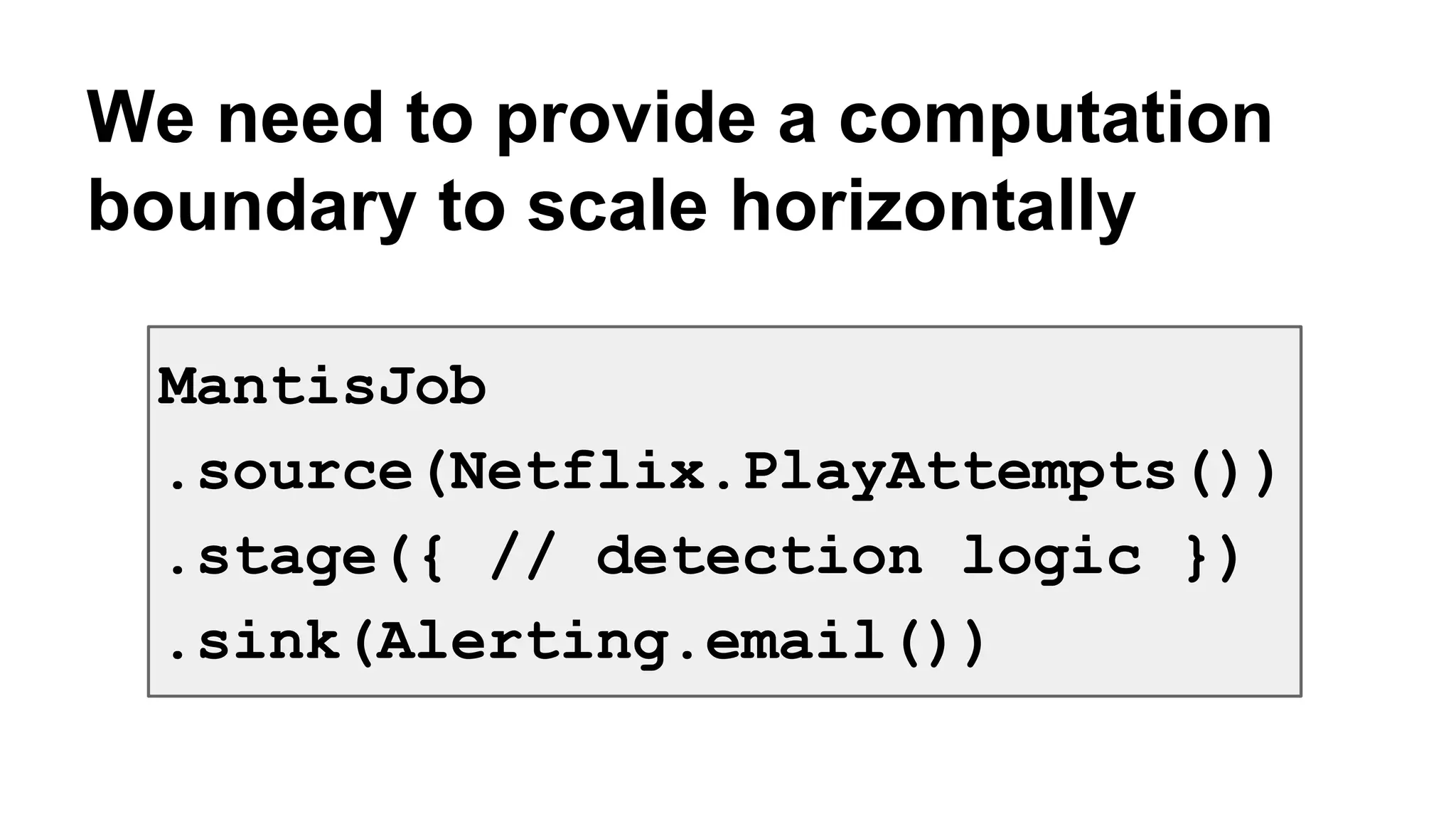
We need to provide a computation 
boundary to scale horizontally 
MantisJob 
.source(Netflix.PlayAttempts()) 
.stage({ // detection logic }) 
.sink(Alerting.email())
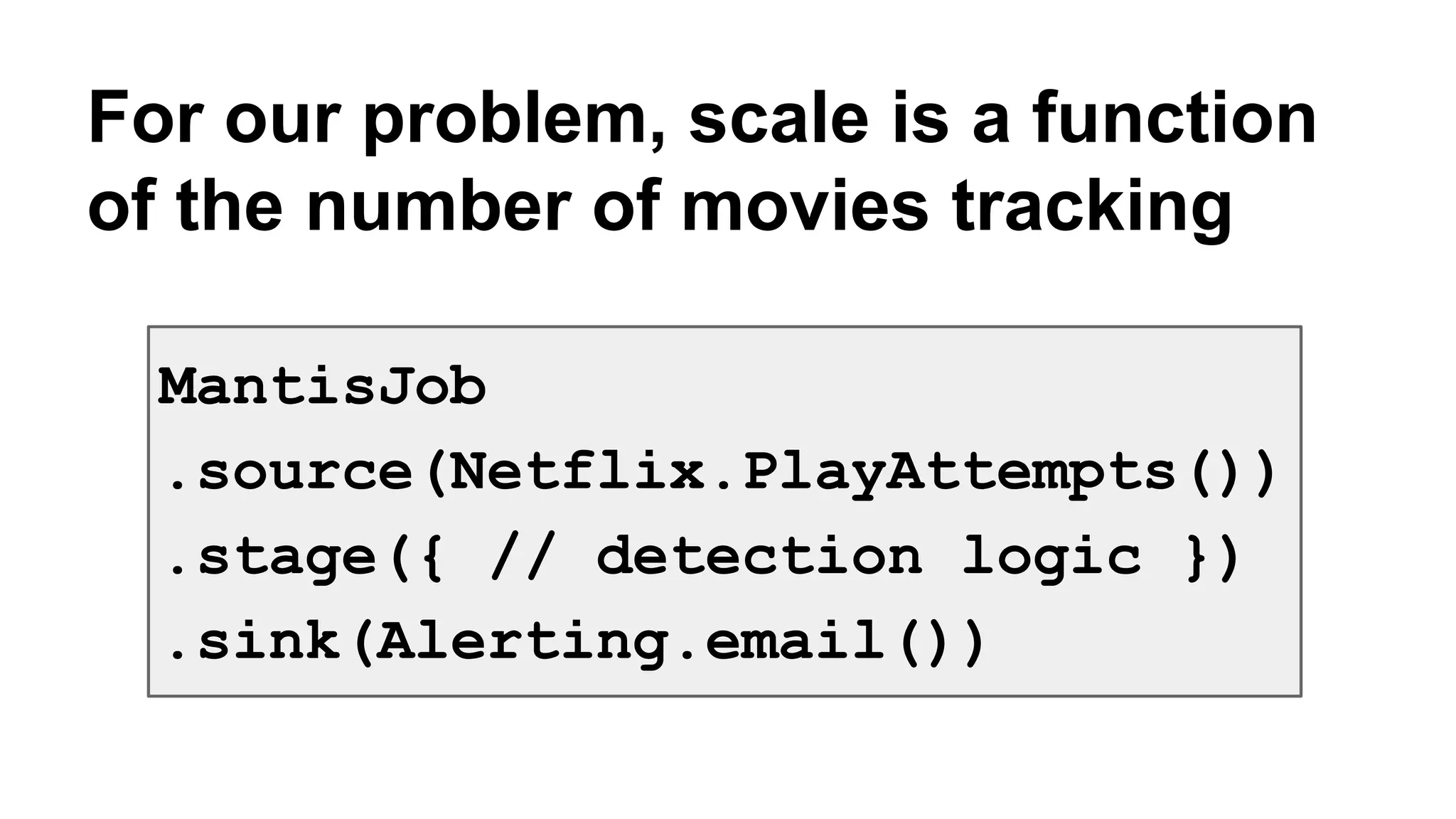
For our problem, scale is a function 
of the number of movies tracking 
MantisJob 
.source(Netflix.PlayAttempts()) 
.stage({ // detection logic }) 
.sink(Alerting.email())
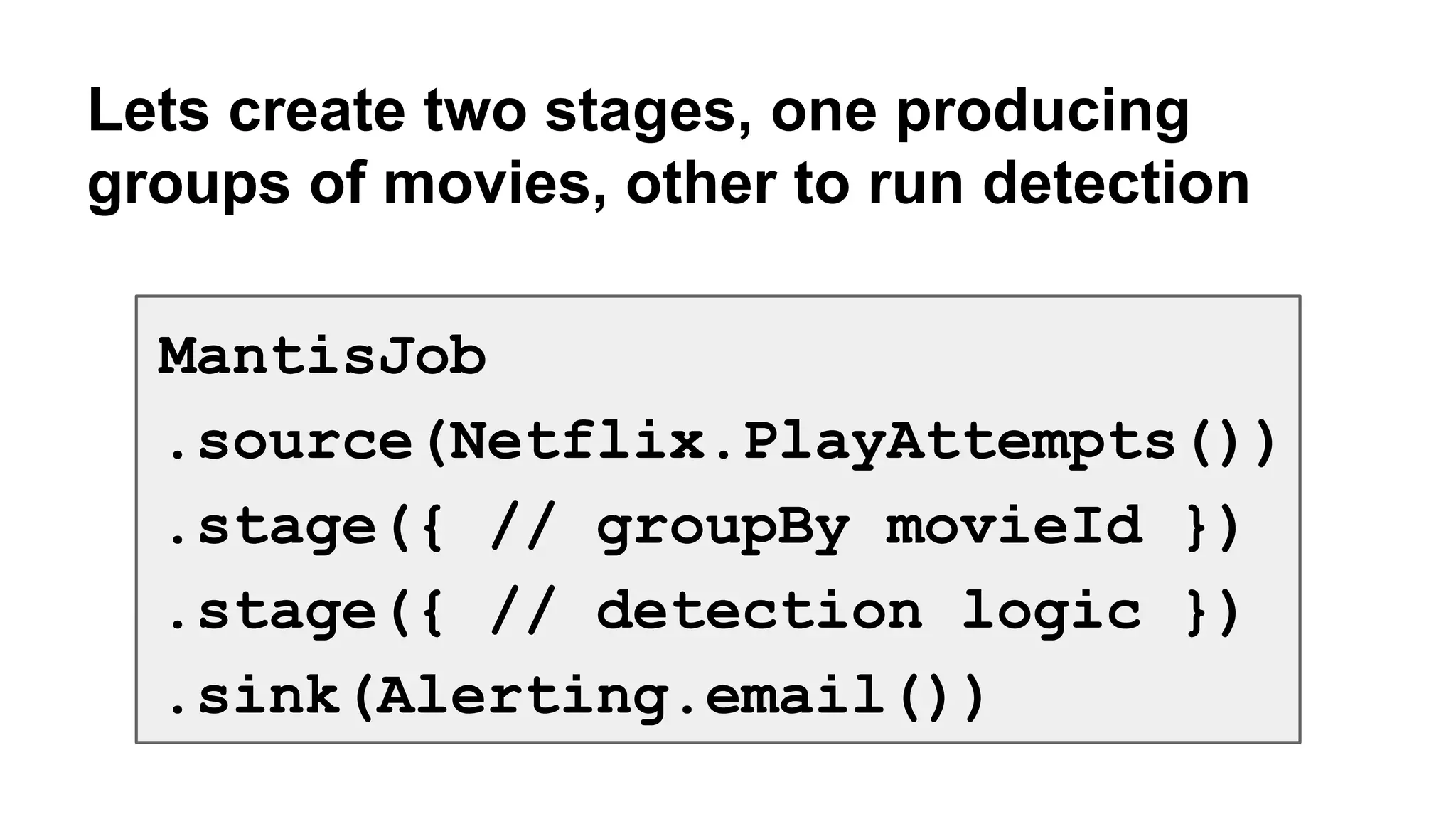
Lets create two stages, one producing 
groups of movies, other to run detection 
MantisJob 
.source(Netflix.PlayAttempts()) 
.stage({ // groupBy movieId }) 
.stage({ // detection logic }) 
.sink(Alerting.email())
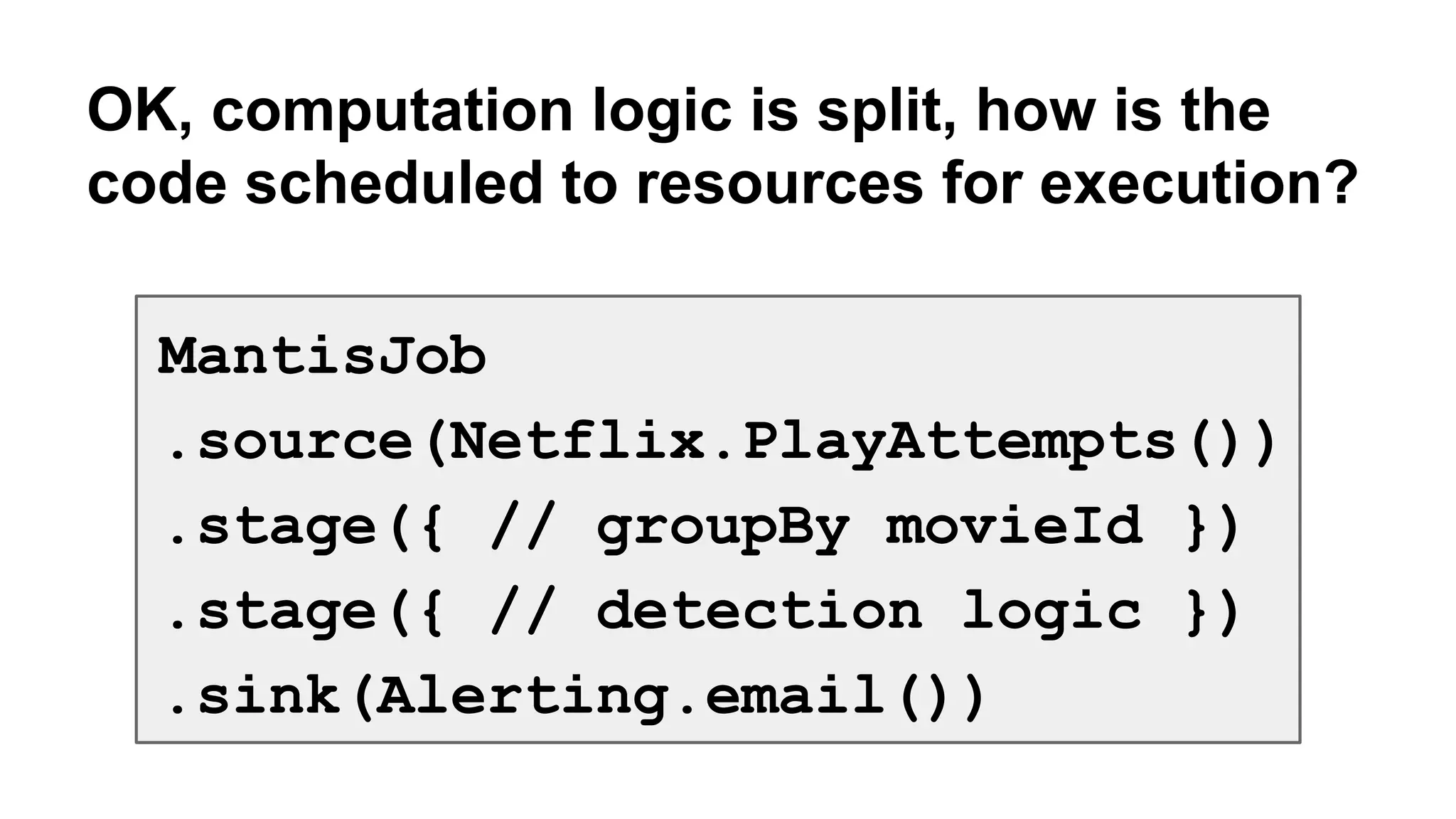
OK, computation logic is split, how is the 
code scheduled to resources for execution? 
MantisJob 
.source(Netflix.PlayAttempts()) 
.stage({ // groupBy movieId }) 
.stage({ // detection logic }) 
.sink(Alerting.email())
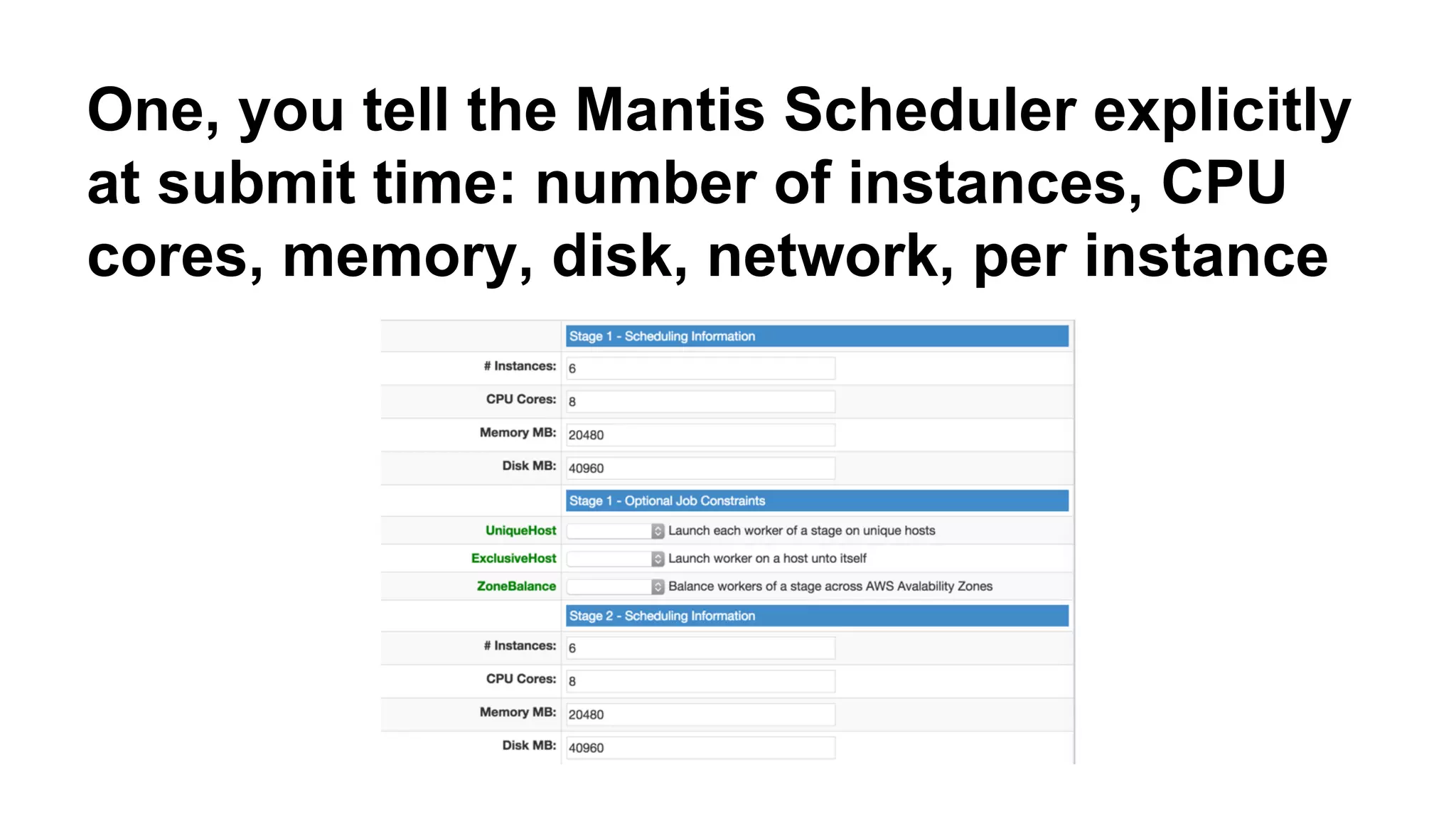
One, you tell the Mantis Scheduler explicitly 
at submit time: number of instances, CPU 
cores, memory, disk, network, per instance
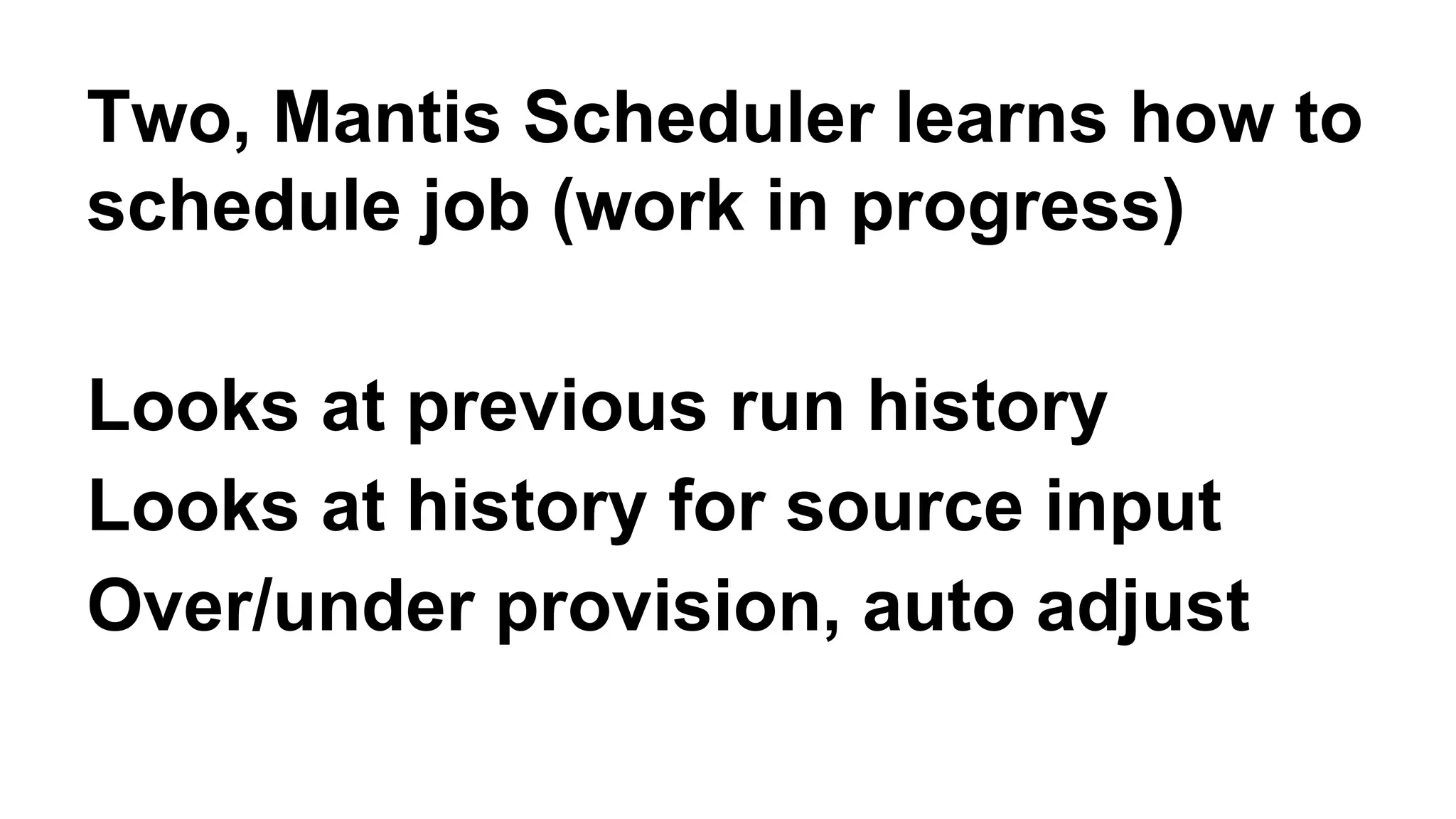
Two, Mantis Scheduler learns how to 
schedule job (work in progress) 
Looks at previous run history 
Looks at history for source input 
Over/under provision, auto adjust
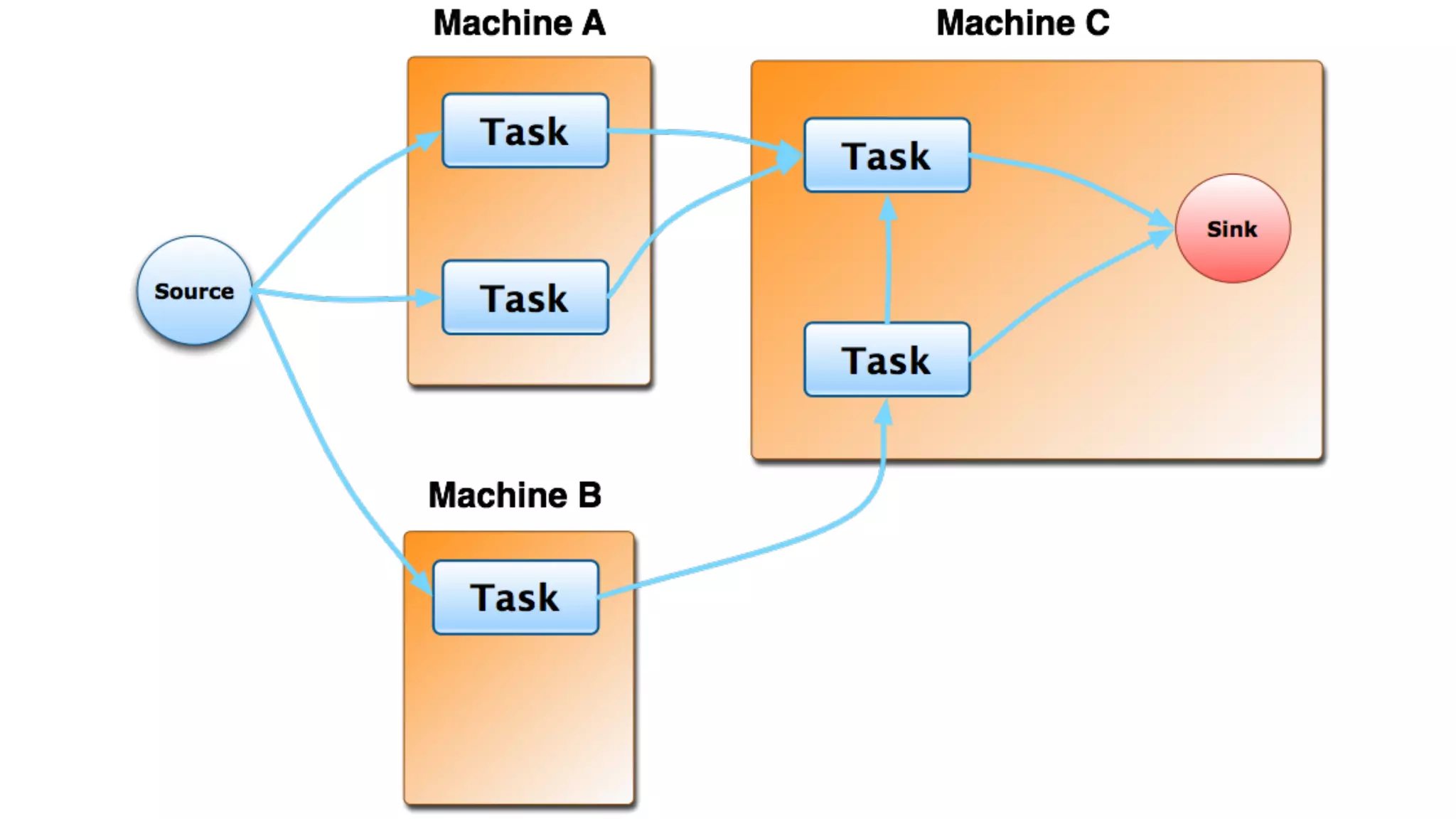
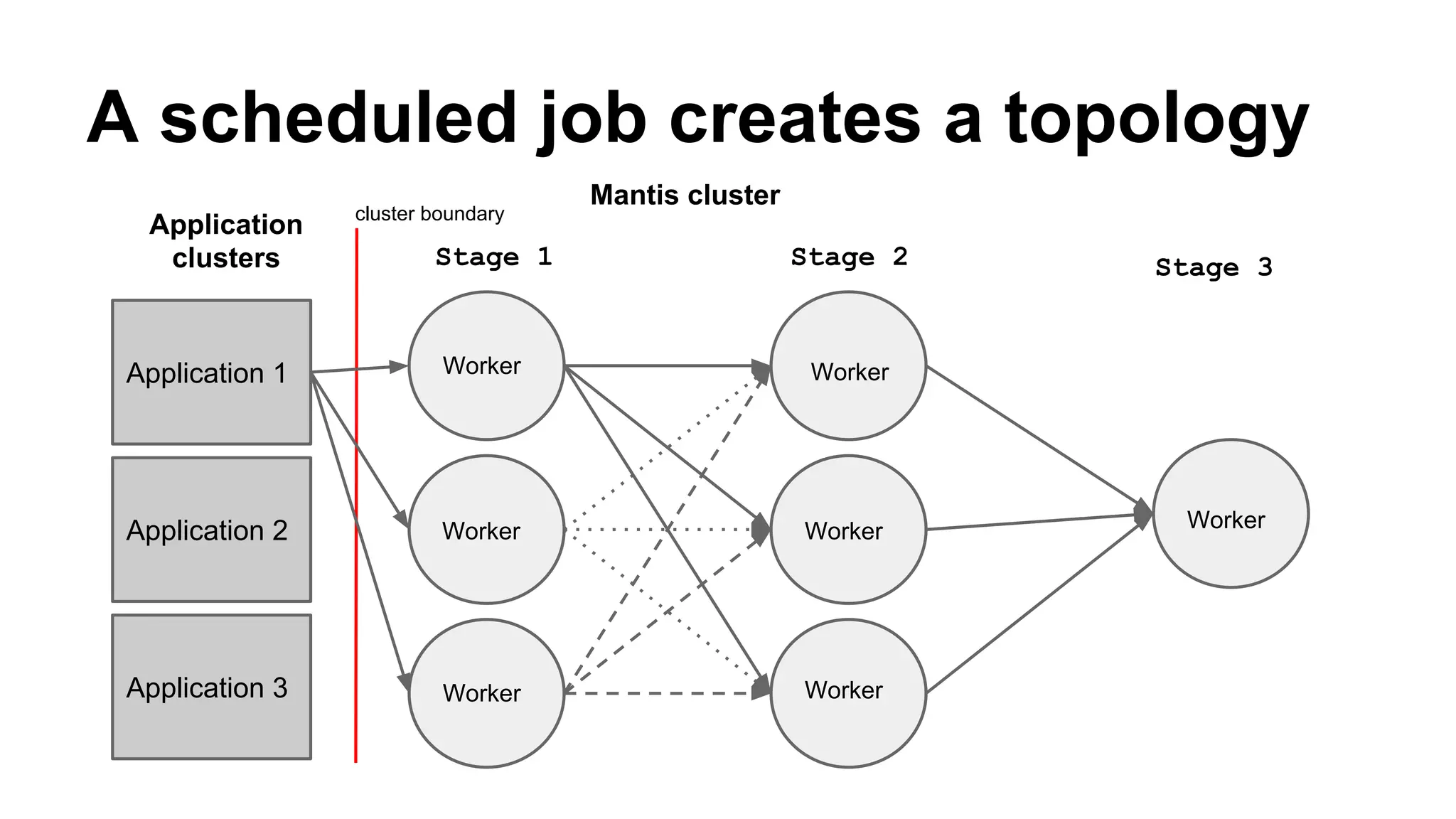
A scheduled job creates a topology 
Stage 1 Stage 2 Stage 3 
Worker 
Worker Worker 
Worker 
Worker 
Worker 
Worker 
Application 1 
Mantis cluster 
Application 
clusters 
Application 2 
Application 3 
cluster boundary
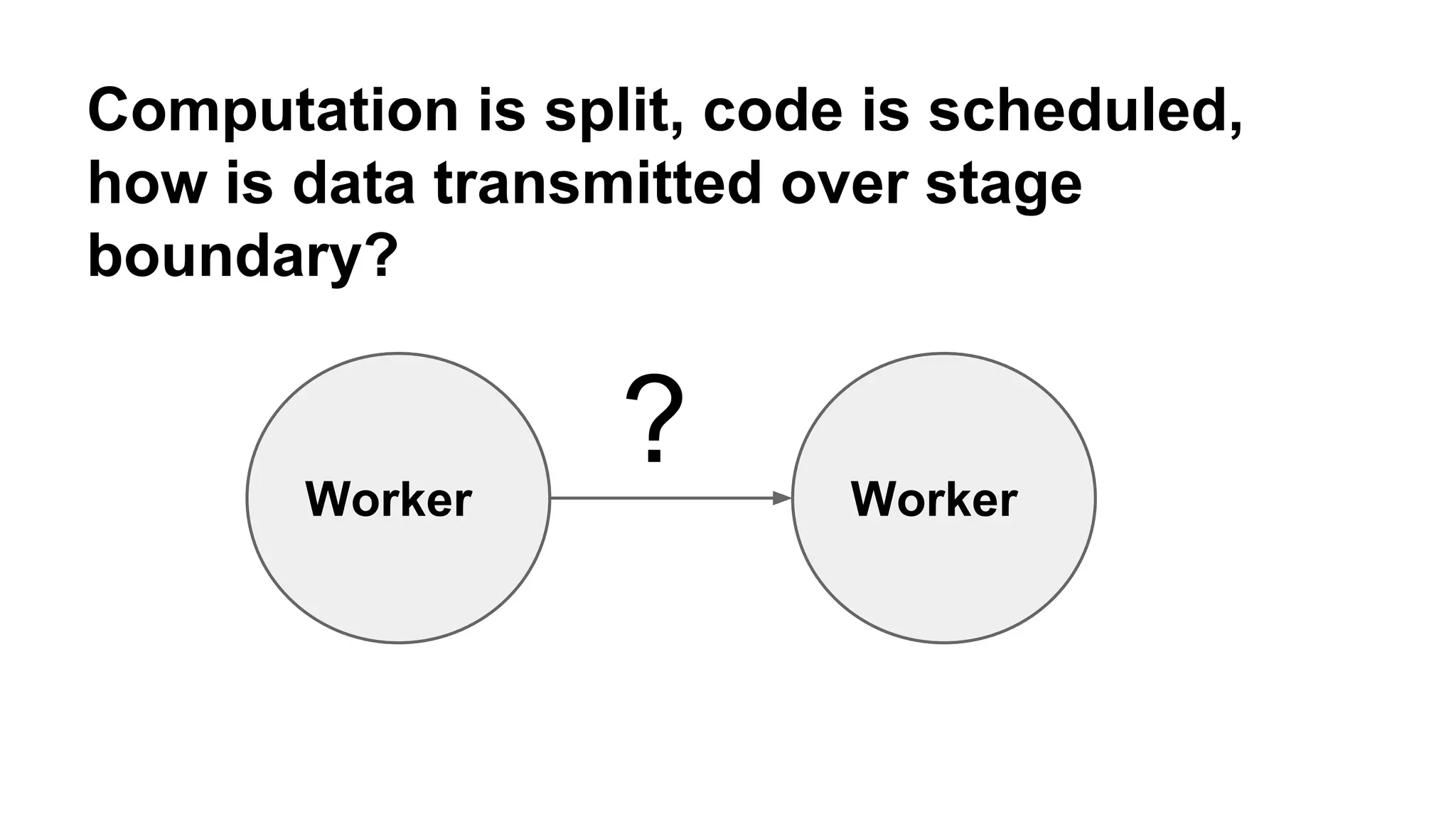
Computation is split, code is scheduled, 
how is data transmitted over stage 
boundary? 
Worker Worker ?
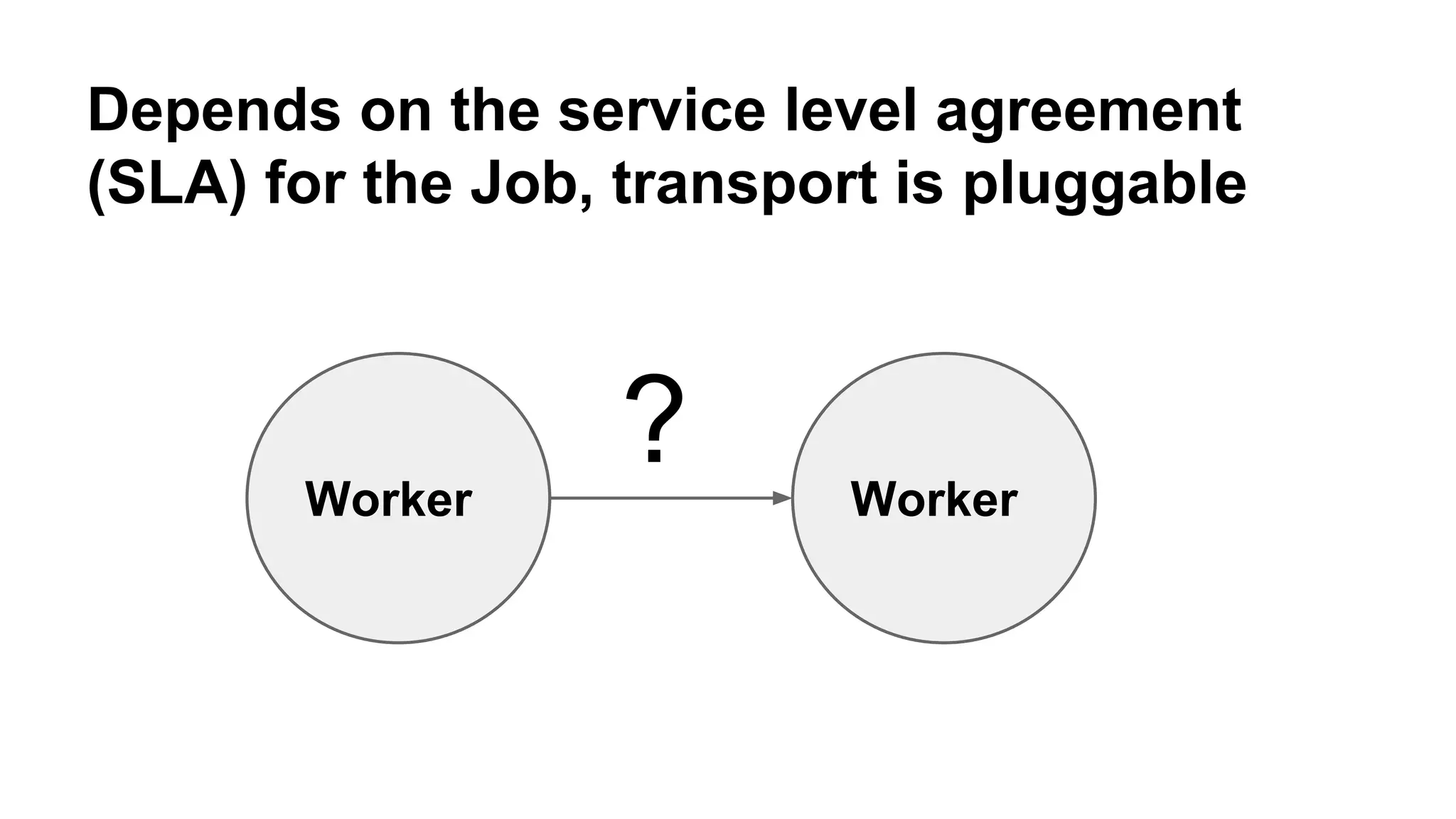
Depends on the service level agreement 
(SLA) for the Job, transport is pluggable 
Worker Worker ?
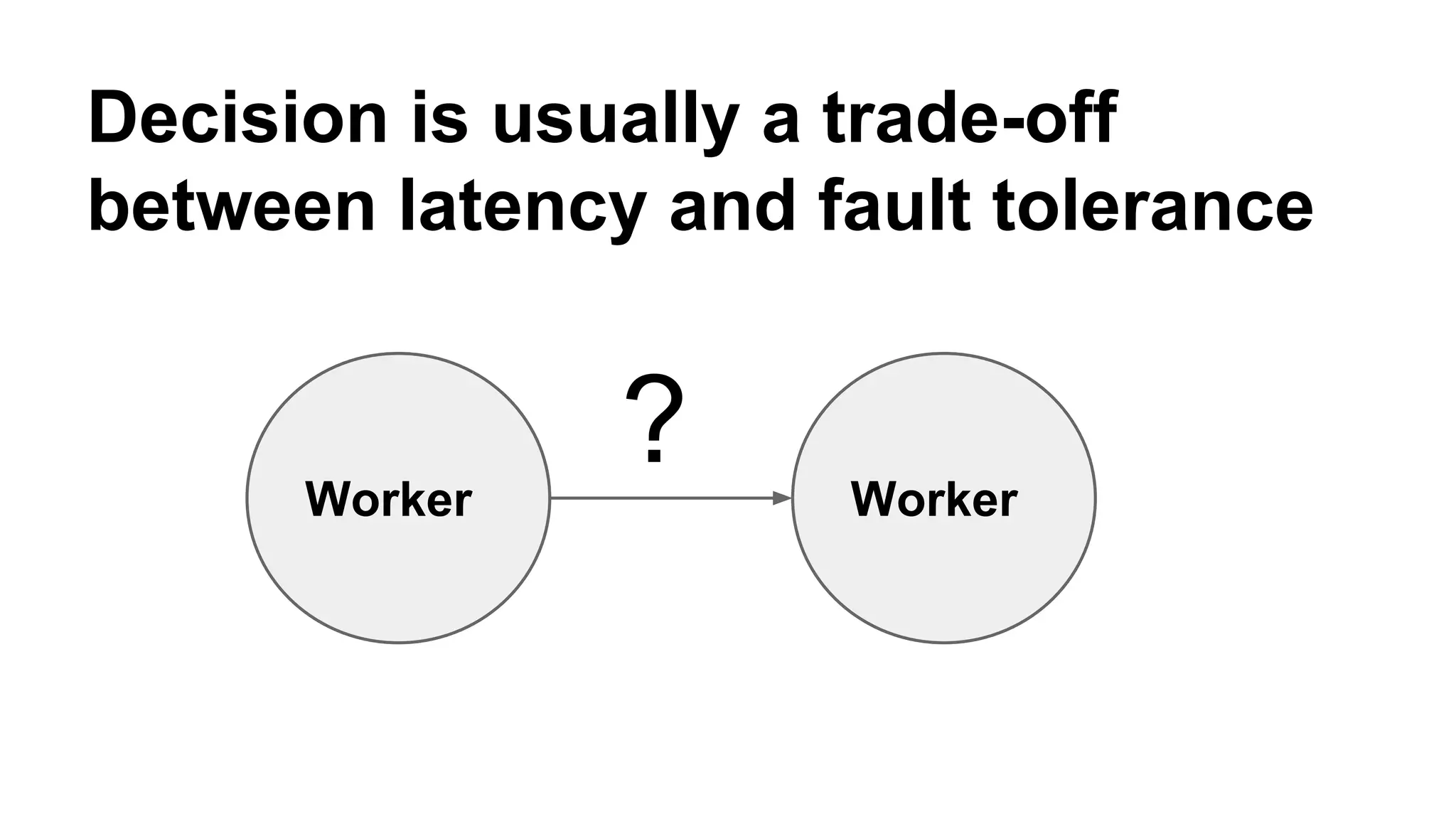
Decision is usually a trade-off 
between latency and fault tolerance 
Worker Worker ?
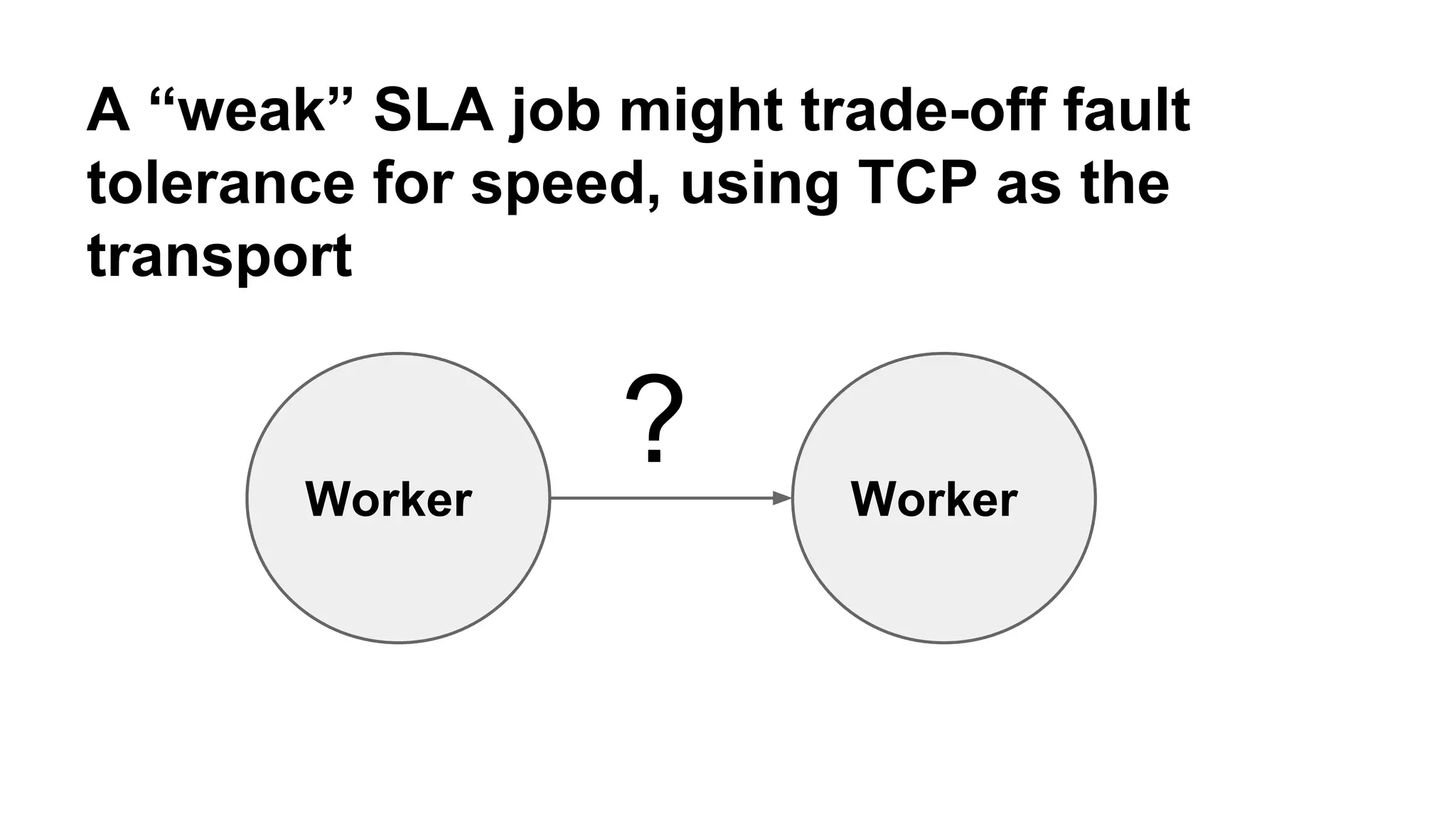
A “weak” SLA job might trade-off fault 
tolerance for speed, using TCP as the 
transport 
Worker Worker ?
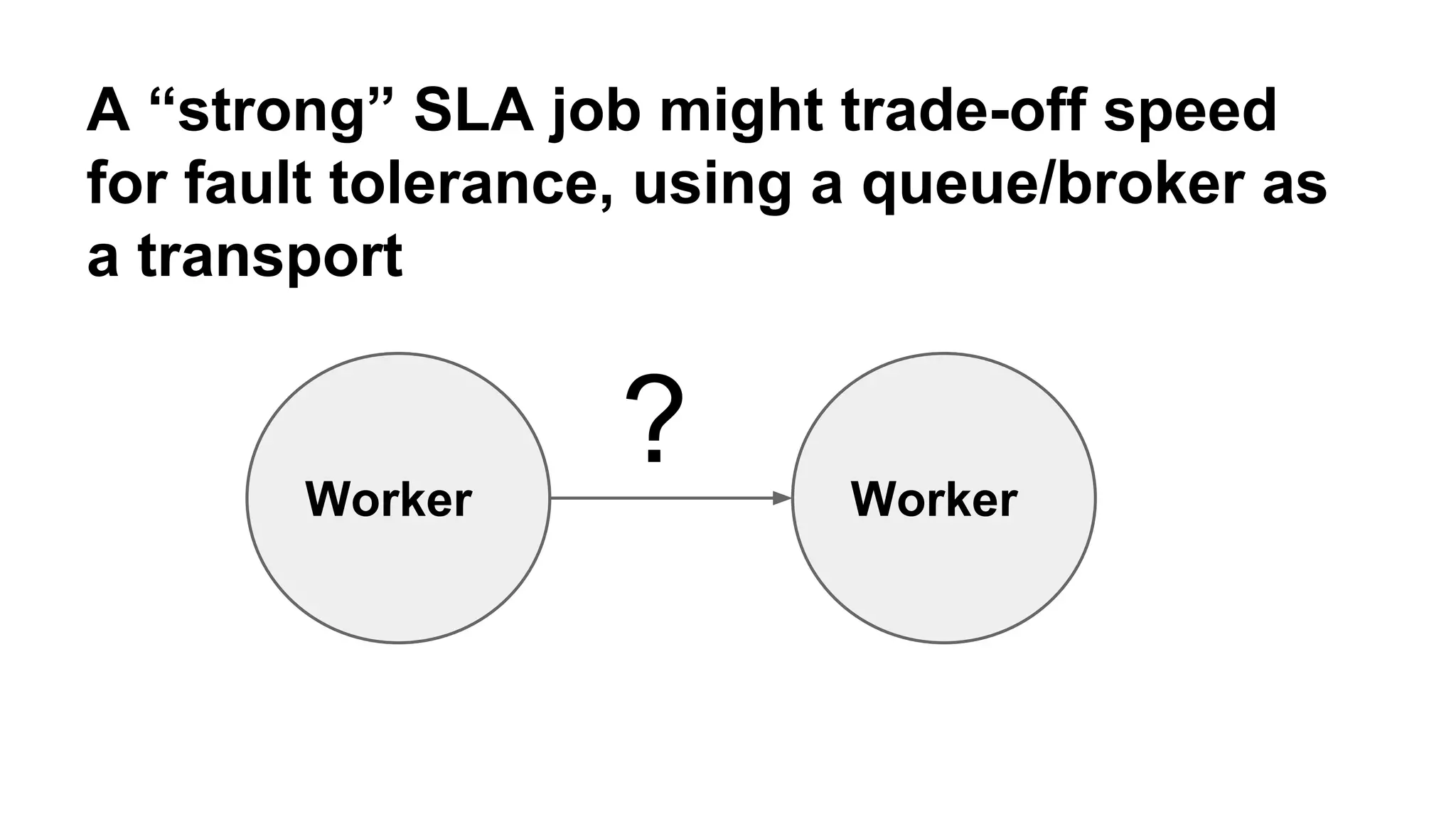
A “strong” SLA job might trade-off speed 
for fault tolerance, using a queue/broker as 
a transport 
Worker Worker ?
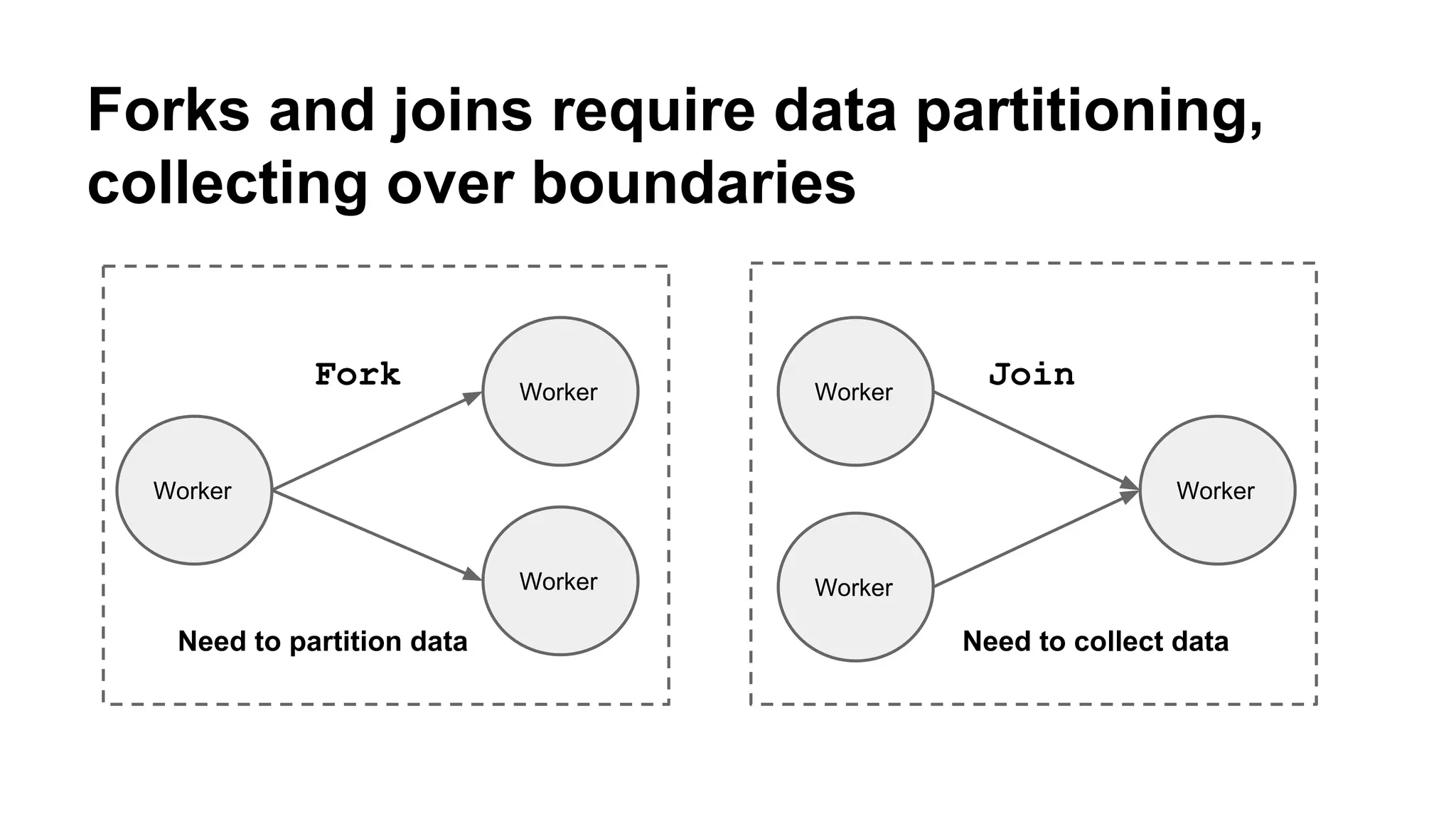
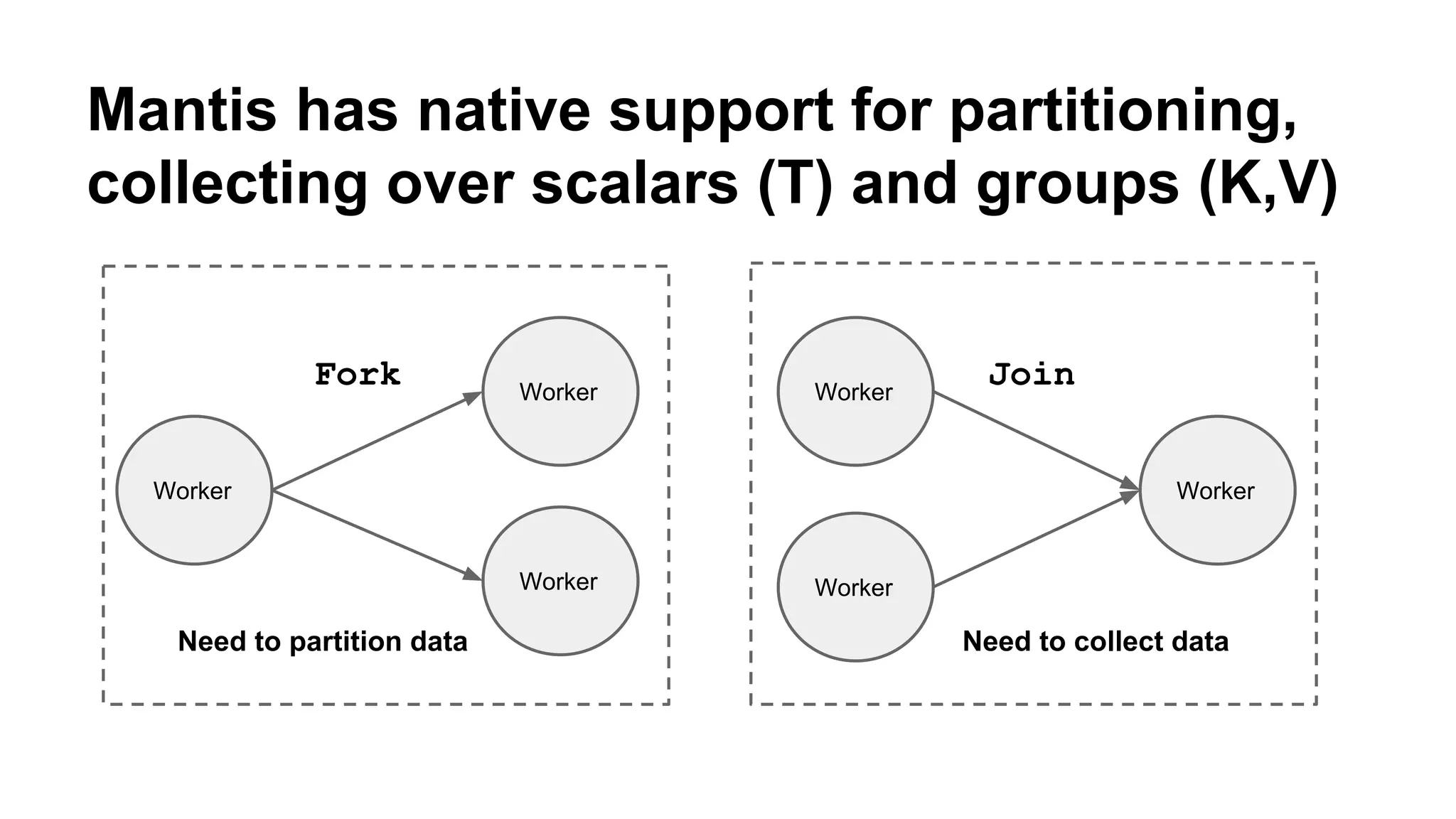
Forks and joins require data partitioning, 
collecting over boundaries 
Worker 
Worker 
Worker 
Fork Worker 
Worker 
Worker 
Join 
Need to partition data Need to collect data
Mantis has native support for partitioning, 
collecting over scalars (T) and groups (K,V) 
Worker 
Worker 
Worker 
Fork Worker 
Worker 
Worker 
Join 
Need to partition data Need to collect data
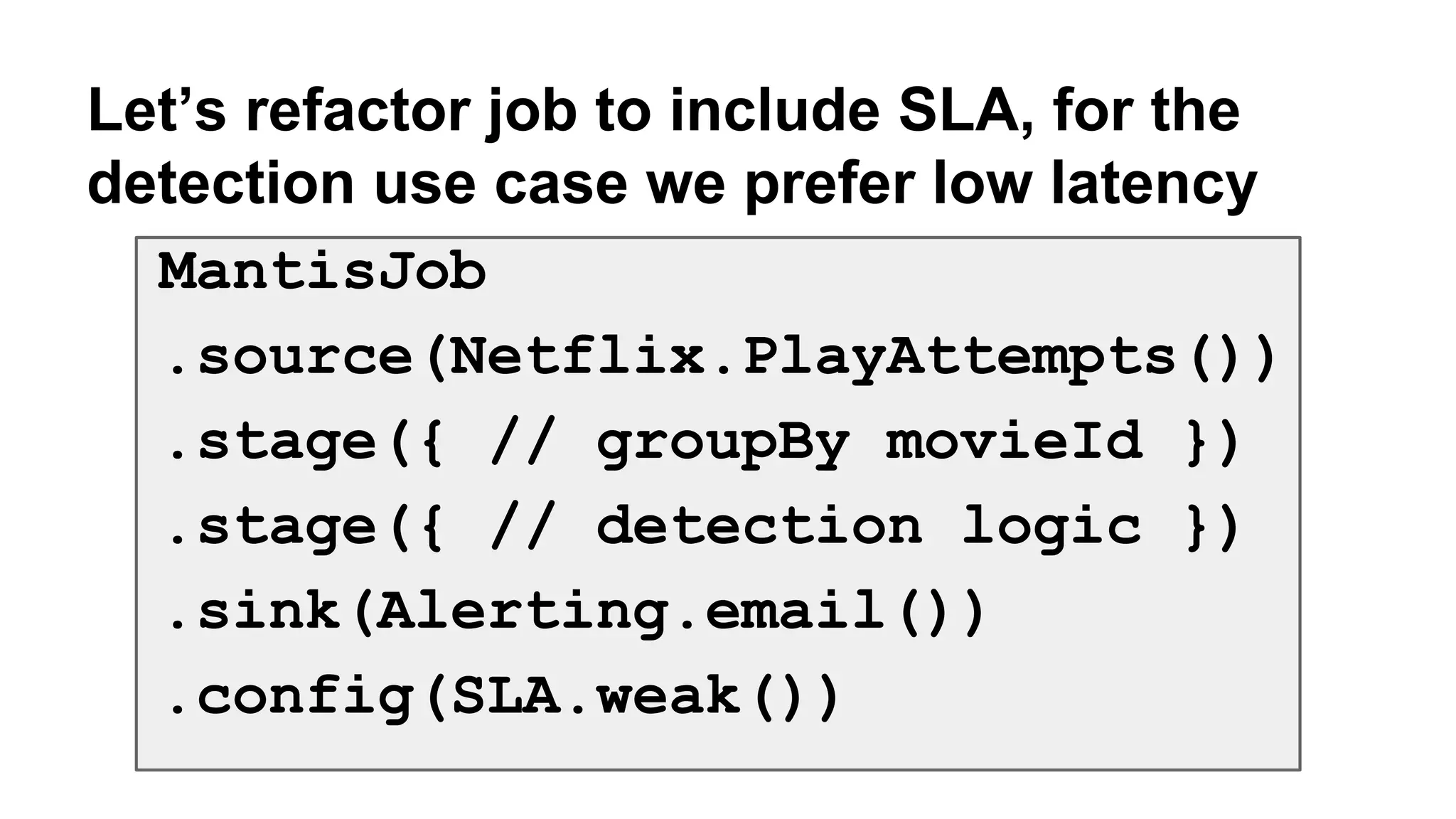
Let’s refactor job to include SLA, for the 
detection use case we prefer low latency 
MantisJob 
.source(Netflix.PlayAttempts()) 
.stage({ // groupBy movieId }) 
.stage({ // detection logic }) 
.sink(Alerting.email()) 
.config(SLA.weak())
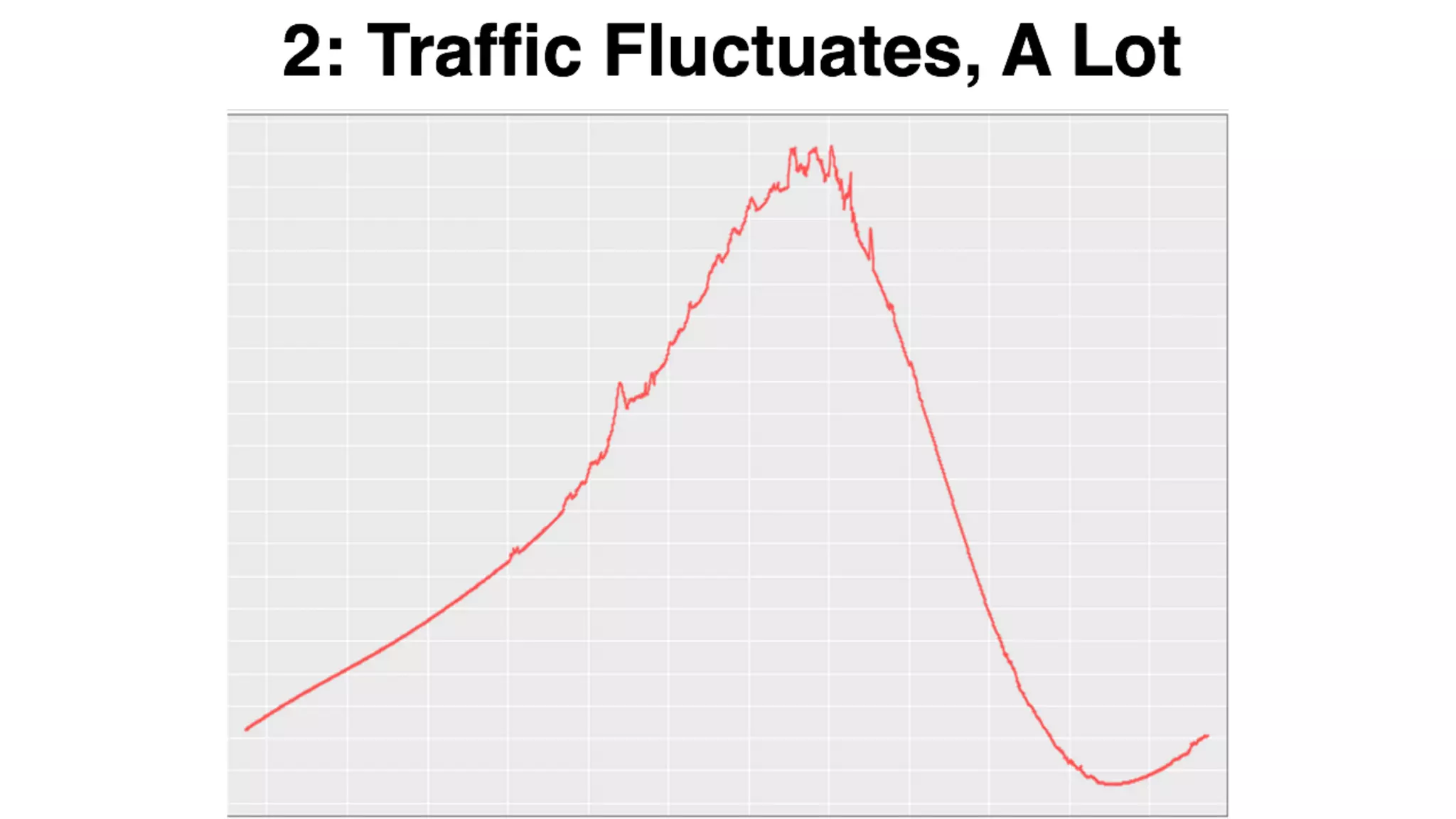
The job is scheduled and running what 
happens when the input-data’s volume 
changes? 
Previous scheduling decision may not hold 
Prefer not to over provision, goal is for cost 
insights <<< product
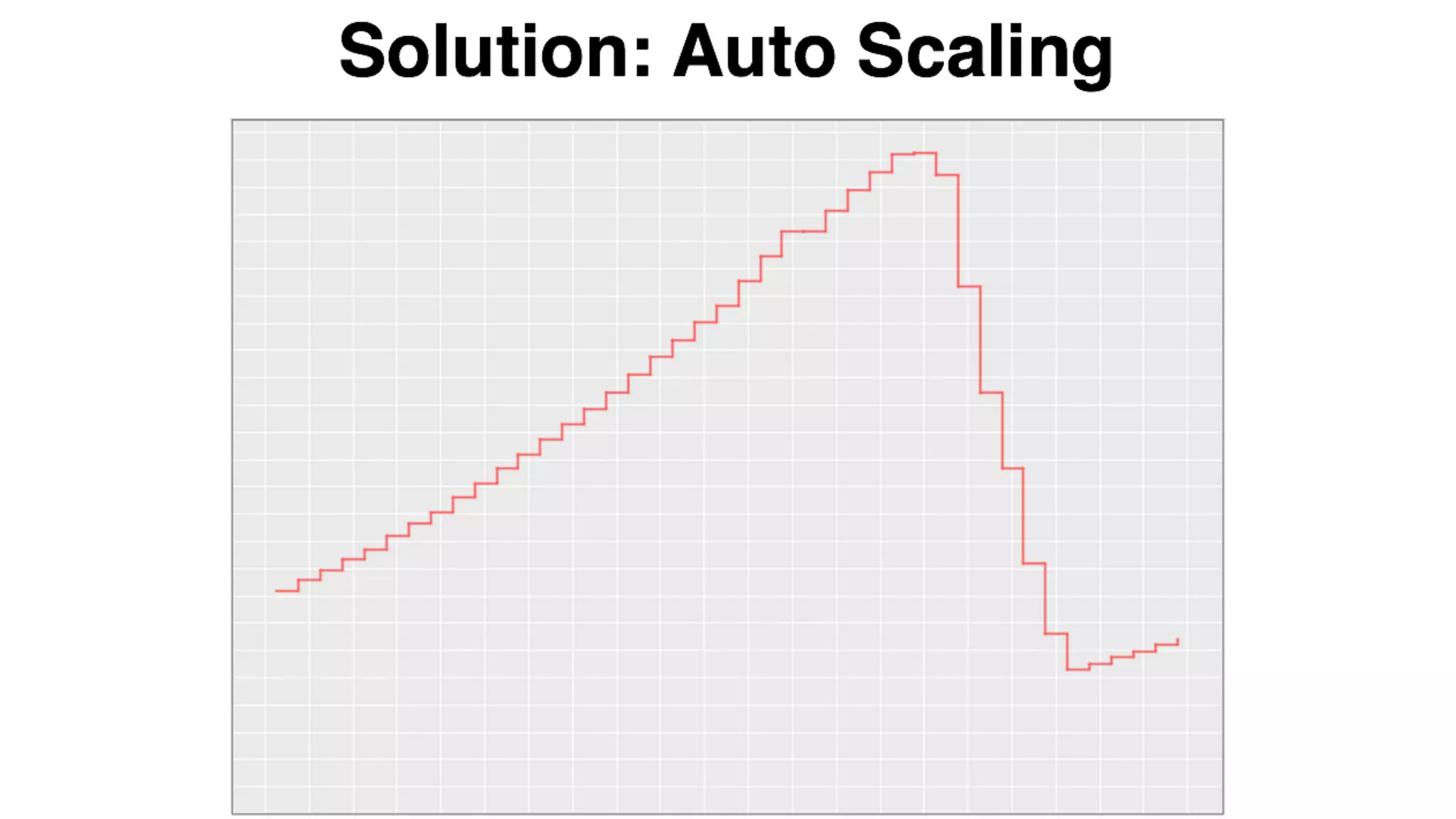
Good news, Mantis Scheduler has the 
ability to grow and shrink (autoscale) the 
cluster and jobs
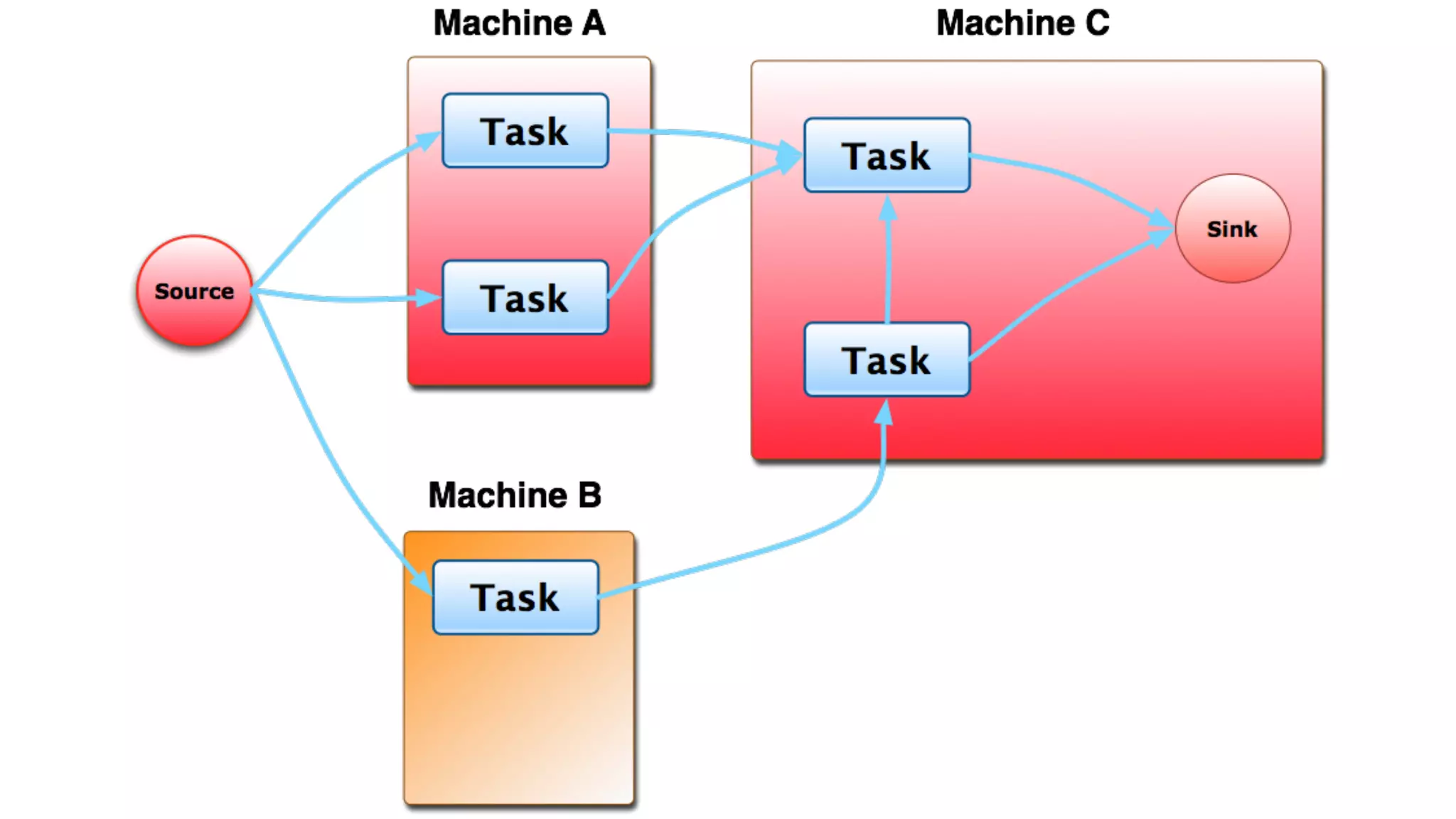
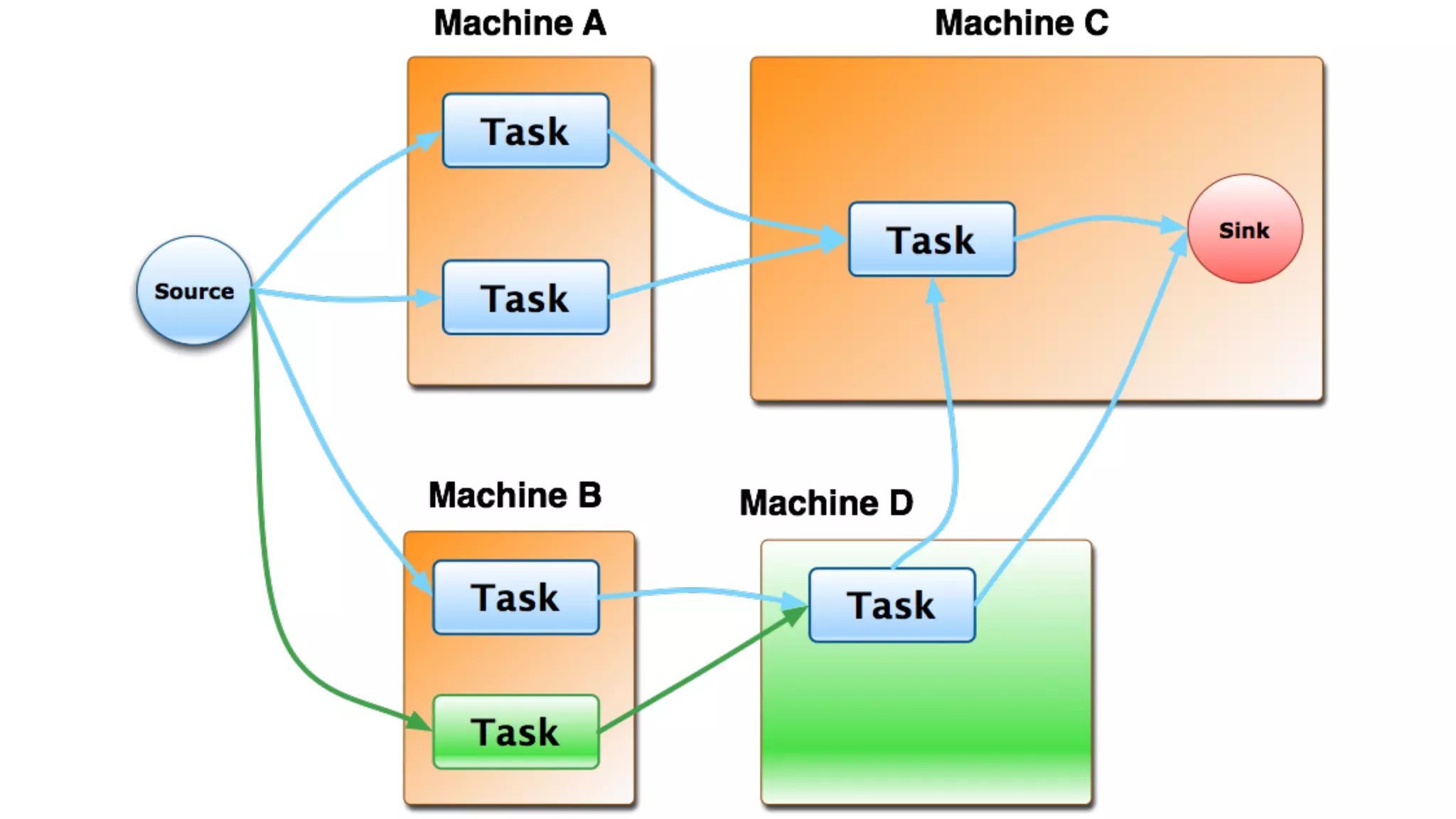
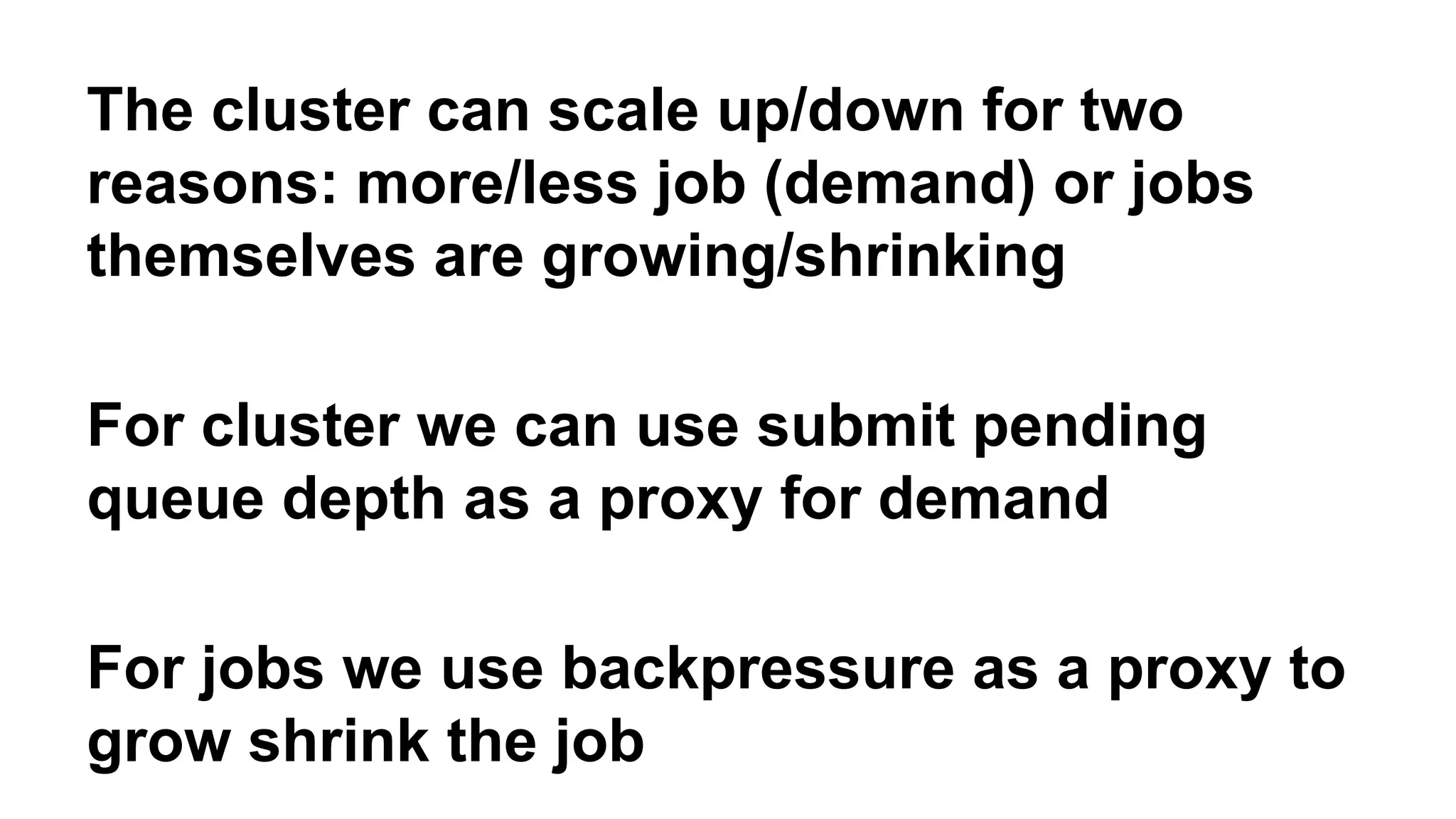
The cluster can scale up/down for two 
reasons: more/less job (demand) or jobs 
themselves are growing/shrinking 
For cluster we can use submit pending 
queue depth as a proxy for demand 
For jobs we use backpressure as a proxy to 
grow shrink the job
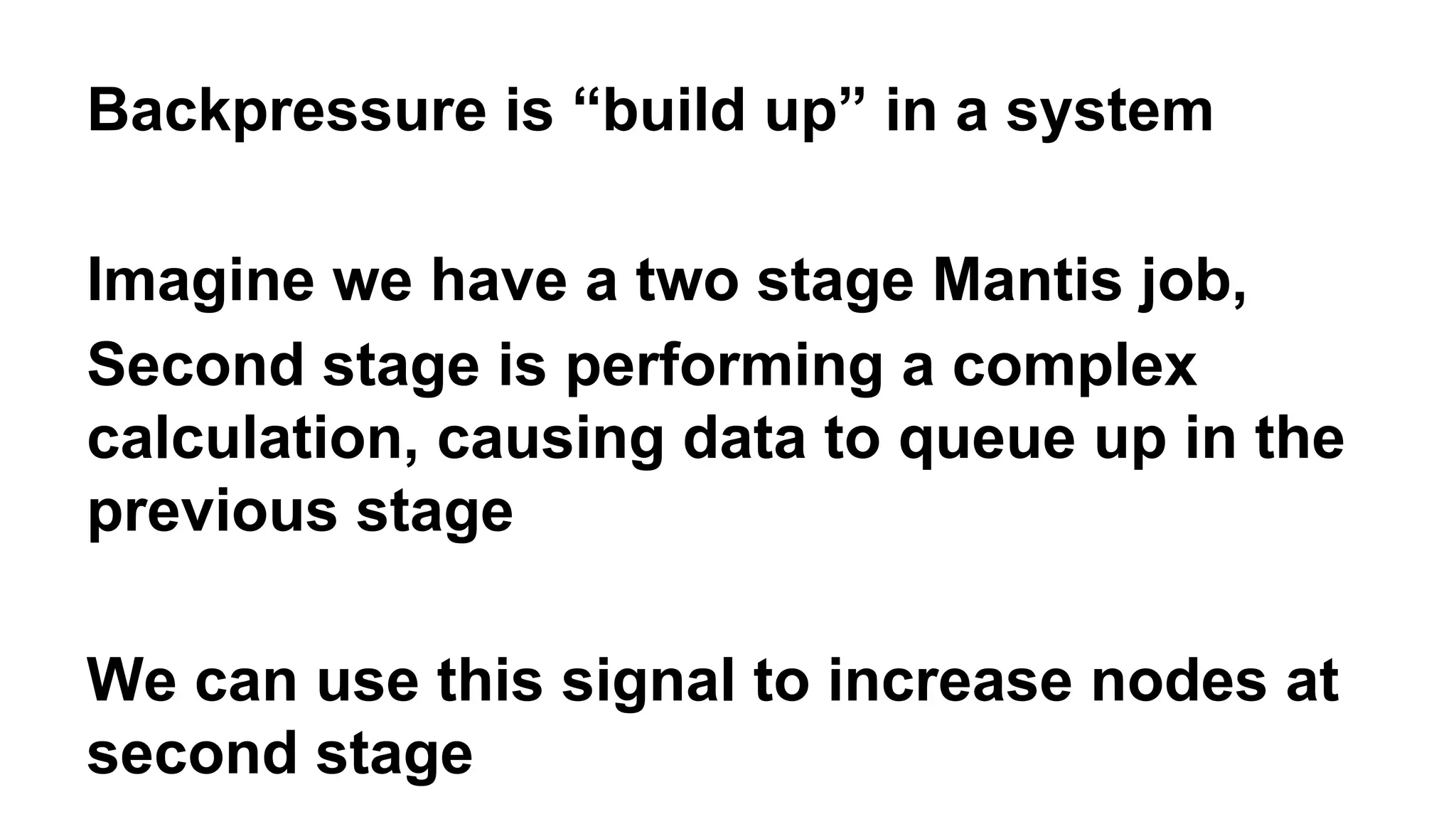
Backpressure is “build up” in a system 
Imagine we have a two stage Mantis job, 
Second stage is performing a complex 
calculation, causing data to queue up in the 
previous stage 
We can use this signal to increase nodes at 
second stage
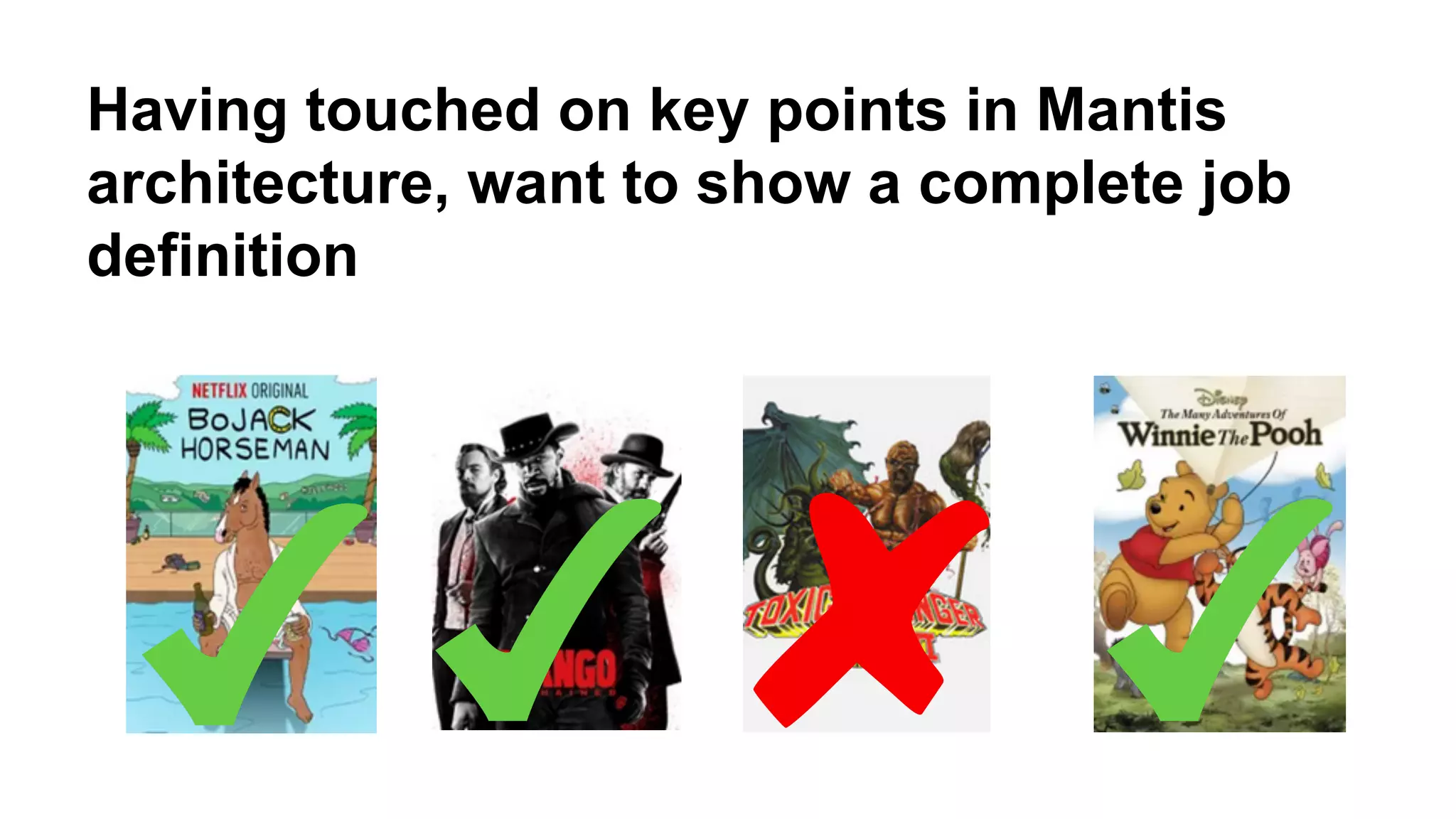
Having touched on key points in Mantis 
architecture, want to show a complete job 
definition
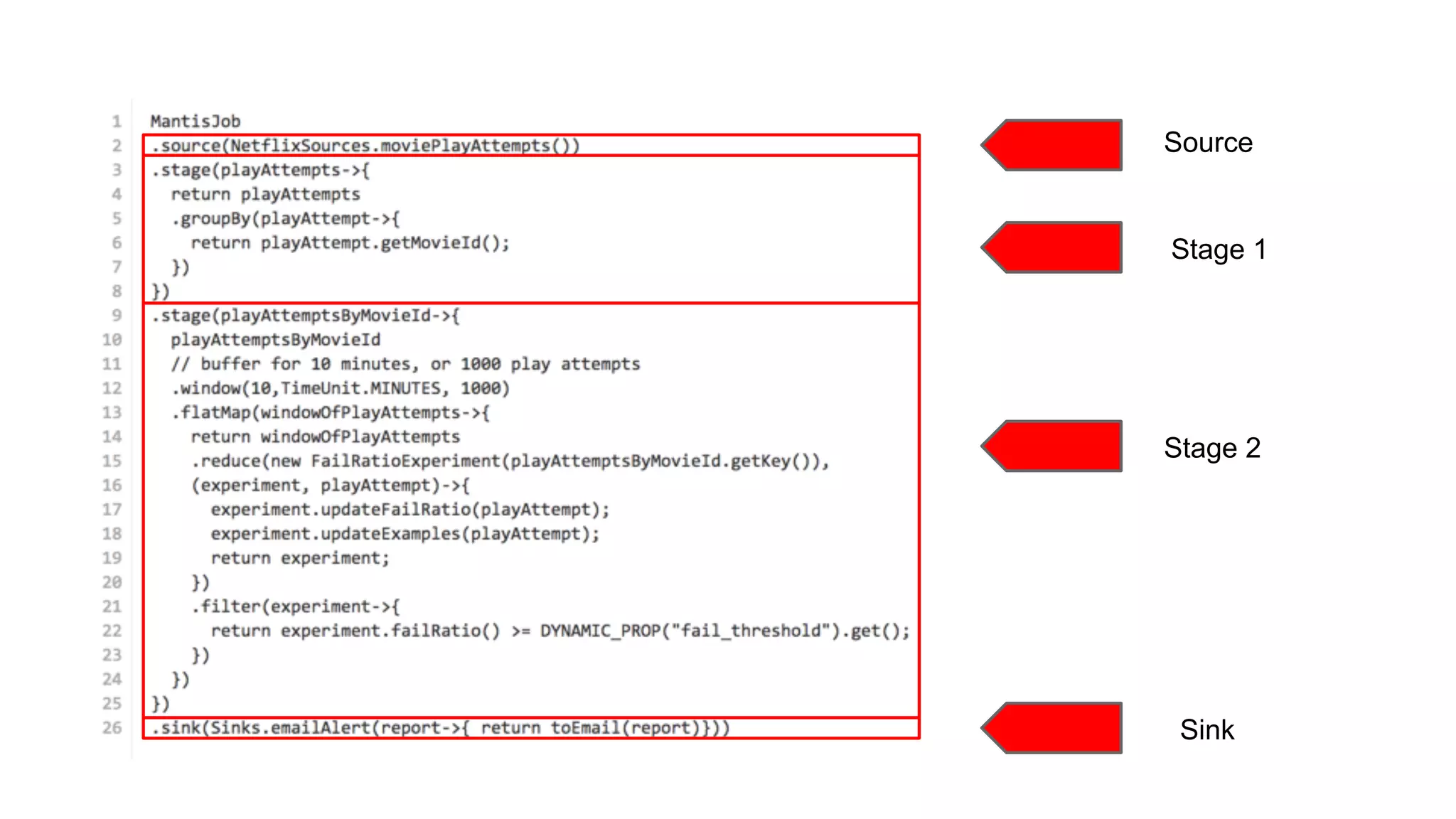
Source 
Stage 1 
Stage 2 
Sink
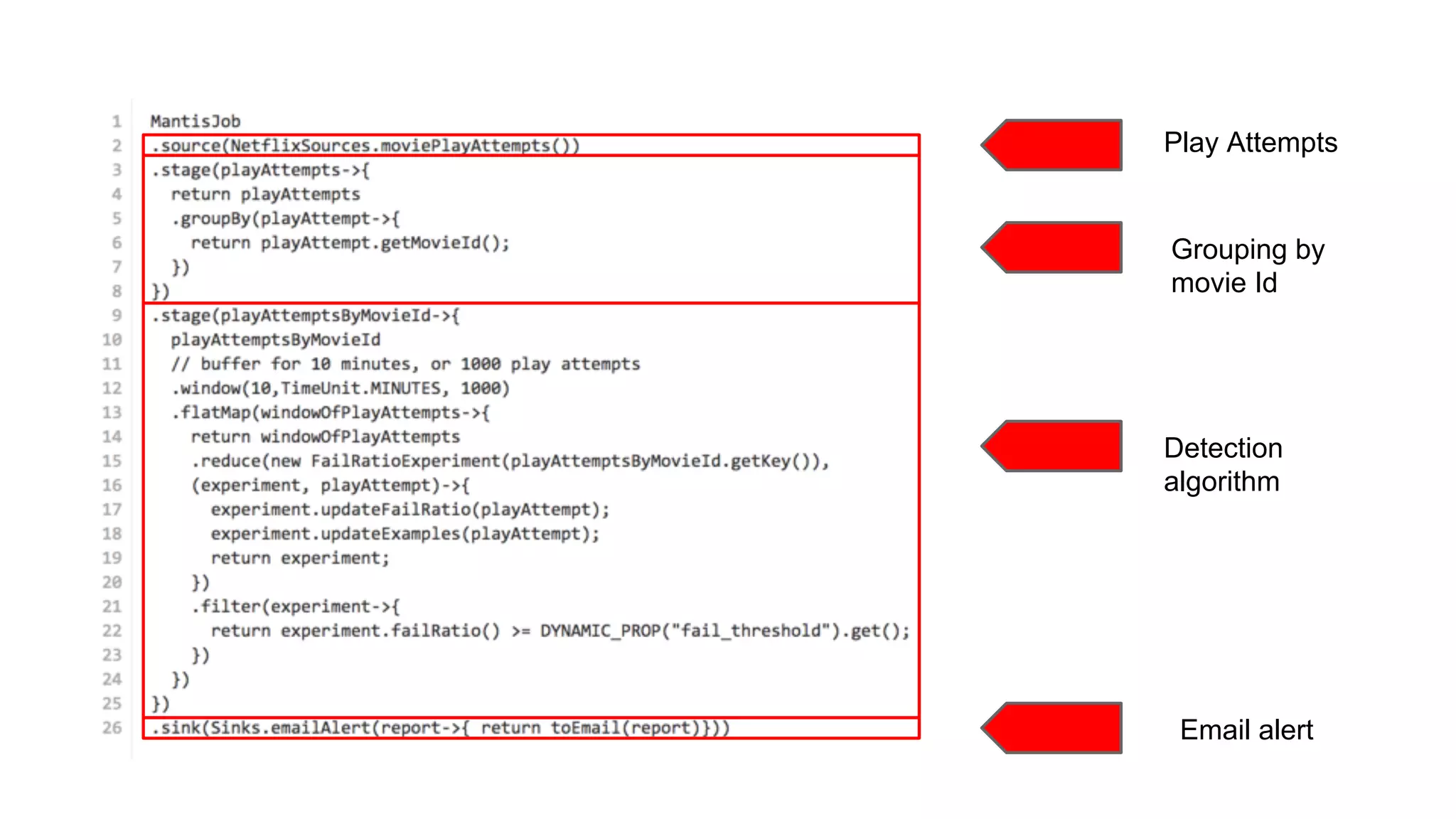
Play Attempts 
Grouping by 
movie Id 
Detection 
algorithm 
Email alert
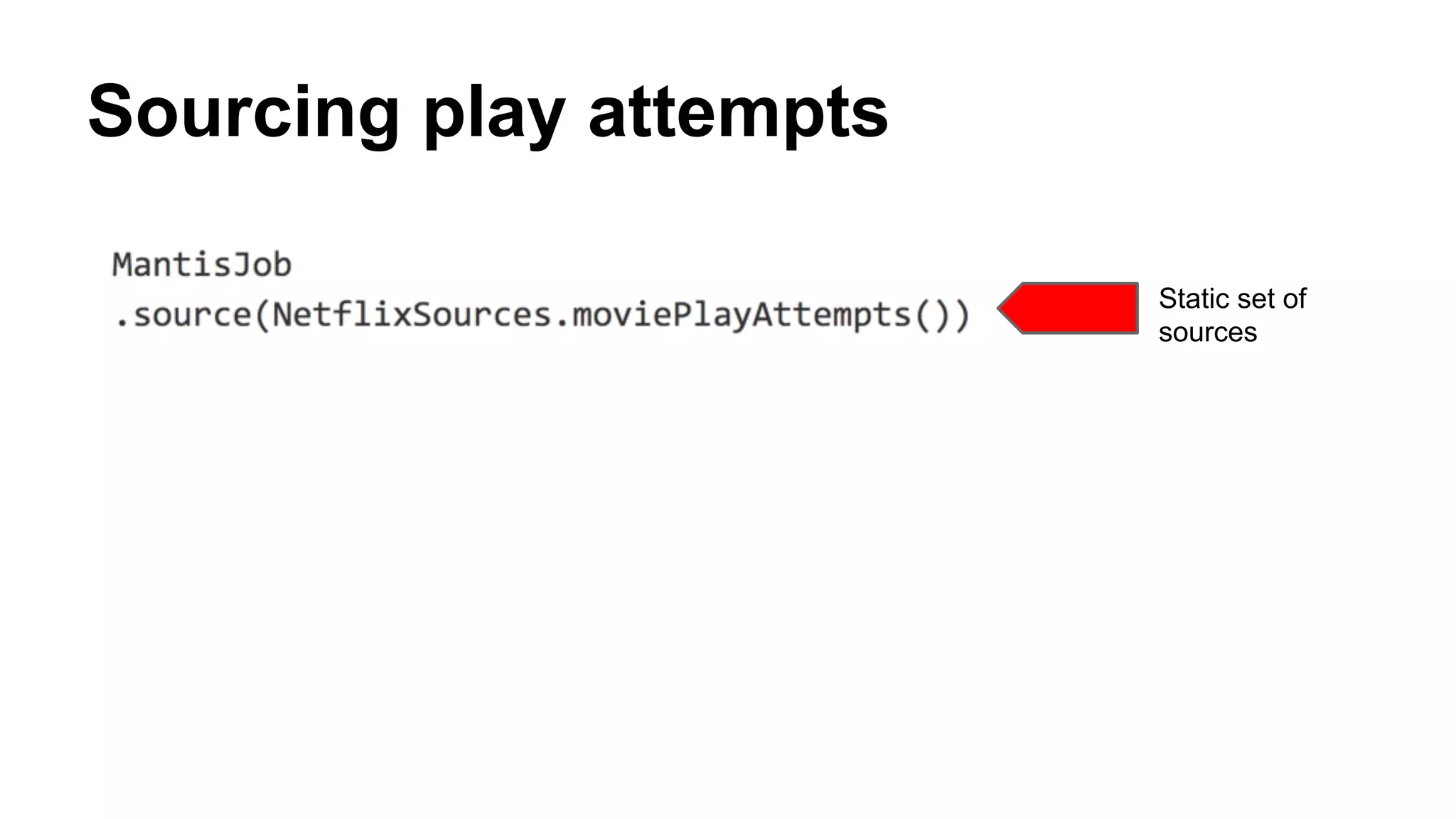
Sourcing play attempts 
Static set of 
sources
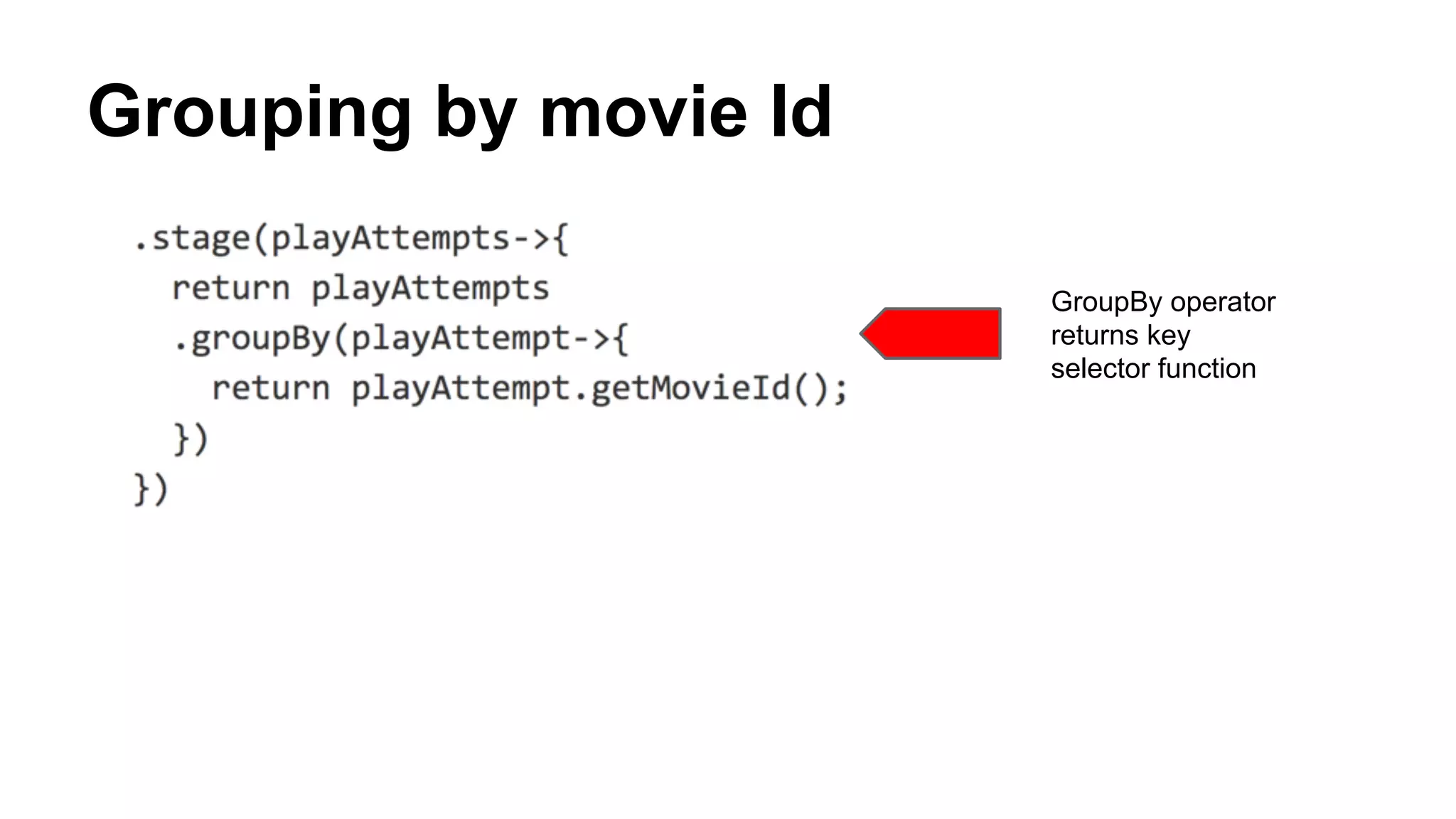
Grouping by movie Id 
GroupBy operator 
returns key 
selector function
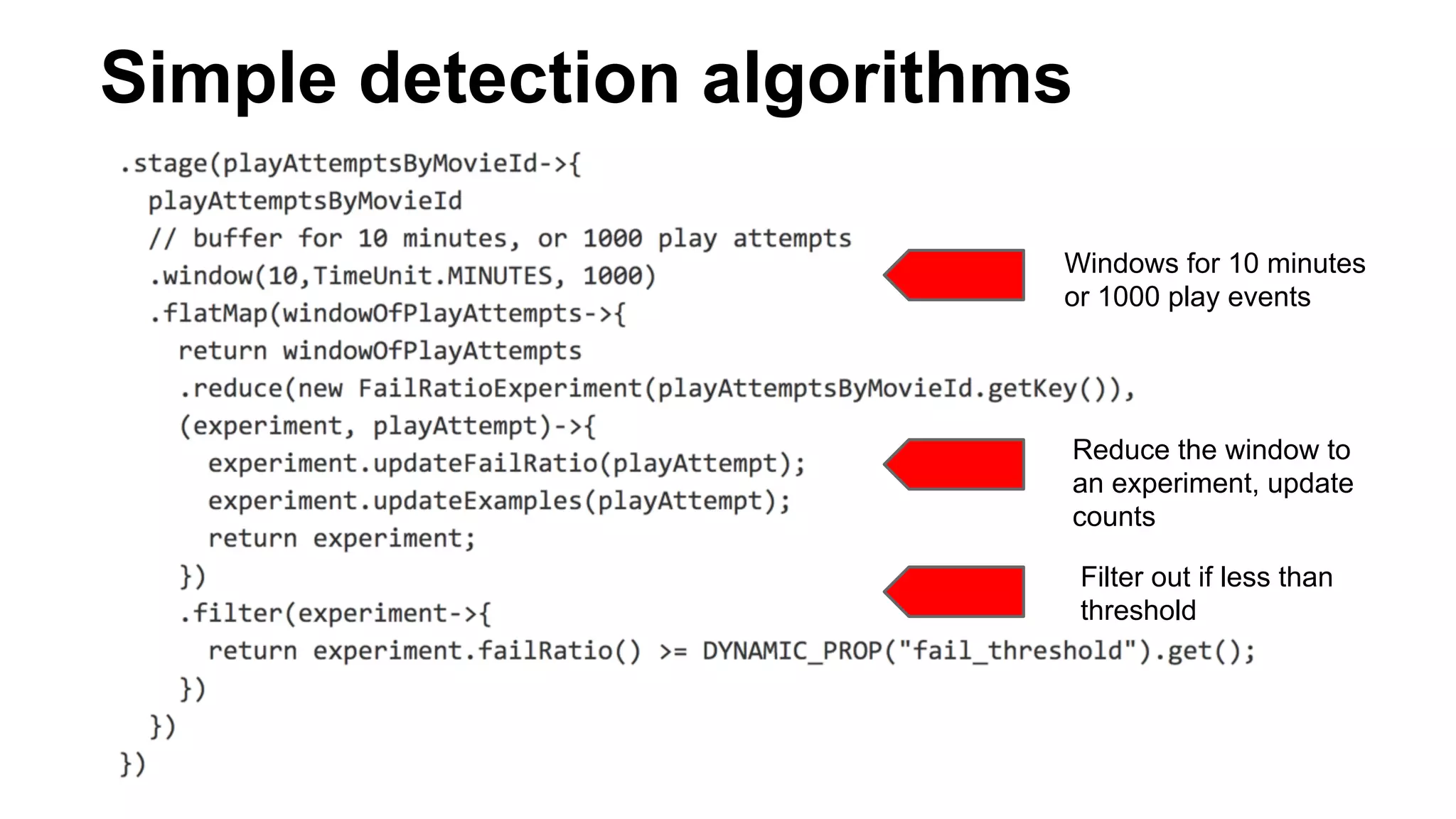
Simple detection algorithms 
Windows for 10 minutes 
or 1000 play events 
Reduce the window to 
an experiment, update 
counts 
Filter out if less than 
threshold
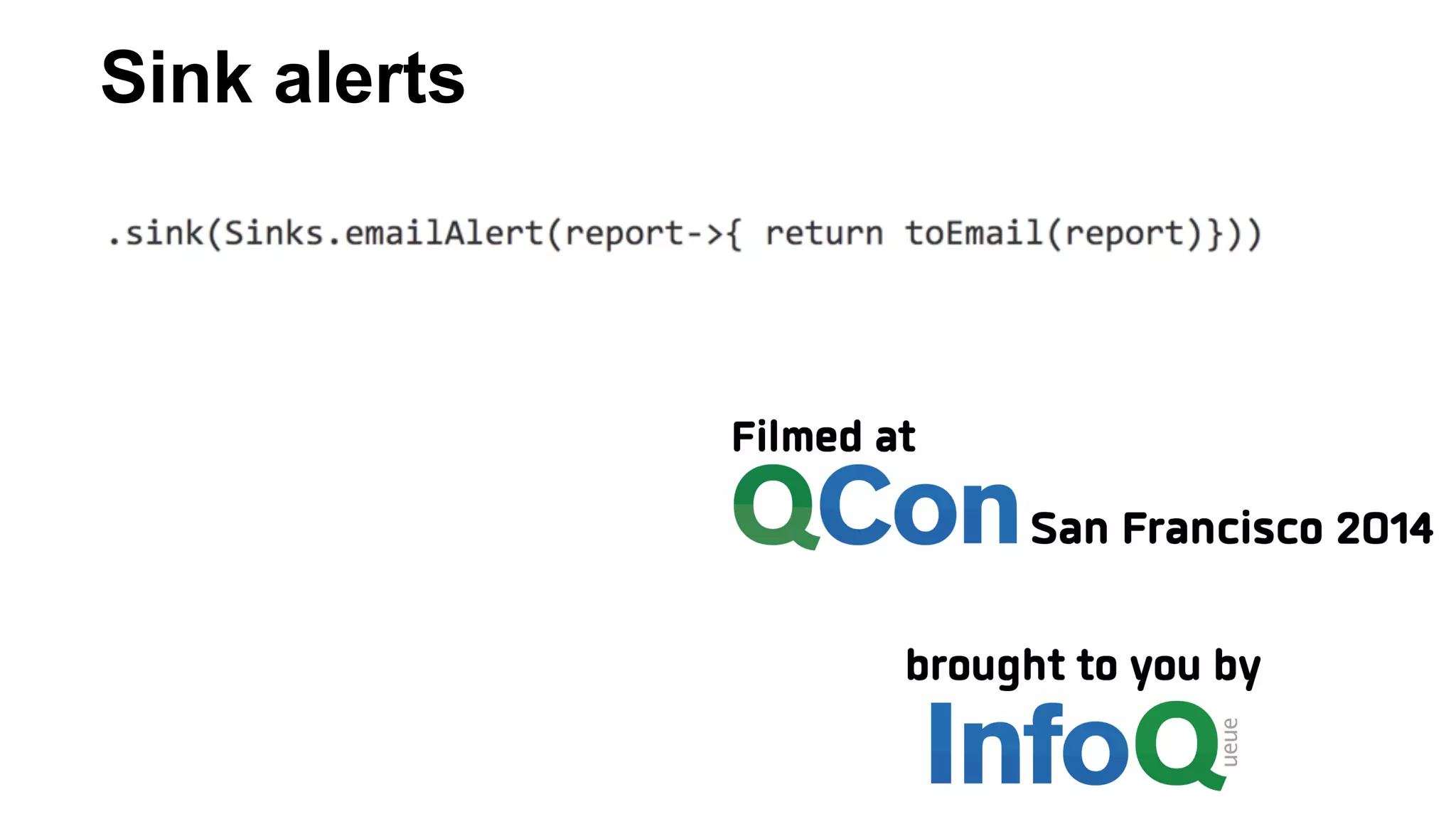
Sink alerts
Watch the video with slide synchronization on 
InfoQ.com! 
http://www.infoq.com/presentations/mantis

Mantis: Netflix's Event Stream Processing System

  • 1.
    Mantis: Netflix's Event Stream Processing System Justin Becker Danny Yuan 10/26/2014
  • 2.
    Watch the videowith slide synchronization on InfoQ.com! http://www.infoq.com/presentations /mantis InfoQ.com: News & Community Site • 750,000 unique visitors/month • Published in 4 languages (English, Chinese, Japanese and Brazilian Portuguese) • Post content from our QCon conferences • News 15-20 / week • Articles 3-4 / week • Presentations (videos) 12-15 / week • Interviews 2-3 / week • Books 1 / month
  • 3.
    Presented at QConSan Francisco www.qconsf.com Purpose of QCon - to empower software development by facilitating the spread of knowledge and innovation Strategy - practitioner-driven conference designed for YOU: influencers of change and innovation in your teams - speakers and topics driving the evolution and innovation - connecting and catalyzing the influencers and innovators Highlights - attended by more than 12,000 delegates since 2007 - held in 9 cities worldwide
  • 4.
  • 5.
  • 6.
    Netflix wants InternetTV to work just as well
  • 8.
    Especially when thingsaren’t working
  • 10.
  • 11.
    Need to trackall kinds of permutations
  • 12.
    Detect quickly, toresolve ASAP
  • 13.
  • 14.
  • 15.
    12 ~ 20million metrics updates per second
  • 16.
    750 billion metricsupdates per day
  • 19.
    4 ~ 18Million App Events Per Second > 300 Billion Events Per Day
  • 28.
  • 29.
    They Require Lotsof Domain Knowledge
  • 30.
    A System toRule Them All
  • 33.
    Mantis: A StreamProcessing System
  • 35.
  • 36.
  • 42.
  • 48.
    3. Same Source,Multiple Consumers
  • 52.
    We want InternetTV to just work
  • 53.
    One problem weneed to solve, detect movies that are failing?
  • 54.
    Do it fast→ limit impact, fix early Do it at scale → for all permutations Do it cheap → cost detect <<< serve
  • 55.
    Work through thedetails for how to solve this problem in Mantis
  • 56.
    Goal is tohighlight unique and interesting design features
  • 57.
    … begin withbatch approach, the non-Mantis approach Batch algorithm, runs every N minutes for(play in playAttempts()){ Stats movieStats = getStats(play.movieId); updateStats(movieStats, play); if (movieStats.failRatio > THRESHOLD){ alert(movieId, failRatio, timestamp); } }
  • 58.
    First problem, eachrun requires reads + writes to data store per run Batch algorithm, runs every N minutes for(play in playAttempts()){ Stats movieStats = getStats(play.movieId); updateStats(movieStats, play); if (movieStats.failRatio > THRESHOLD){ alert(movieId, failRatio, timestamp); } }
  • 59.
    For Mantis don’twant to pay that cost: for latency or storage Batch algorithm, runs every N minutes for(play in playAttempts()){ Stats movieStats = getStats(play.movieId); updateStats(movieStats, play); if (movieStats.failRatio > THRESHOLD){ alert(movieId, failRatio, timestamp); } }
  • 60.
    Next problem, “pull”model great for batch processing, bit awkward for stream processing Batch algorithm, runs every N minutes for(play in playAttempts()){ Stats movieStats = getStats(play.movieId); updateStats(movieStats, play); if (movieStats.failRatio > THRESHOLD){ alert(movieId, failRatio, timestamp); } }
  • 61.
    By definition, batchprocessing requires batches. How do I chunk my data? Or, how often do I run? Batch algorithm, runs every N minutes for(play in playAttempts()){ Stats movieStats = getStats(play.movieId); updateStats(movieStats, play); if (movieStats.failRatio > THRESHOLD){ alert(movieId, failRatio, timestamp); } }
  • 62.
    For Mantis, prefer“push” model, natural approach to data-in-motion processing Batch algorithm, runs every N minutes for(play in playAttempts()){ Stats movieStats = getStats(play.movieId); updateStats(movieStats, play); if (movieStats.failRatio > THRESHOLD){ alert(movieId, failRatio, timestamp); } }
  • 63.
    For our “push”API we decided to use Reactive Extensions (Rx)
  • 64.
    Two reasons forchoosing Rx: theoretical, practical 1. Observable is a natural abstraction for stream processing, Observable = stream 2. Rx already leveraged throughout the company
  • 65.
    So, what isan Observable? A sequence of events, aka a stream Observable<String> o = Observable.just(“hello”, “qcon”, “SF”); o.subscribe(x->{println x;})
  • 66.
    What can Ido with an Observable? Apply operators → New observable Subscribe → Observer of data Operators, familiar lambda functions map(), flatMap(), scan(), ...
  • 67.
    What is theconnection with Mantis? In Mantis, a job (code-to-run) is the collection of operators applied to a sourced observable where the output is sinked to observers
  • 68.
    Think of a“source” observable as the input to a job. Think of a “sink” observer as the output of the job.
  • 69.
    Let’s refactor previousproblem using Mantis API terminology Source: Play attempts Operators: Detection logic Sink: Alerting service
  • 70.
    Sounds OK, buthow will this scale? For pull model luxury of requesting data at specified rates/time Analogous to drinking from a straw
  • 71.
    In contrast, pushis the firehose No explicit control to limit the flow of data
  • 72.
    In Mantis, wesolve this problem by scaling horizontally
  • 73.
    Horizontal scale isaccomplished by arranging operators into logical “stages”, explicitly by job writer or implicitly with fancy tooling (future work)
  • 74.
    A stage isa boundary between computations. The boundary may be a network boundary, process boundary, etc.
  • 75.
    So, to scale,Mantis job is really, Source → input observable Stage(s) → operators Sink → output observer
  • 76.
    Let’s refactor previousproblem to follow the Mantis job API structure MantisJob .source(Netflix.PlayAttempts()) .stage({ // detection logic }) .sink(Alerting.email())
  • 77.
    We need toprovide a computation boundary to scale horizontally MantisJob .source(Netflix.PlayAttempts()) .stage({ // detection logic }) .sink(Alerting.email())
  • 78.
    For our problem,scale is a function of the number of movies tracking MantisJob .source(Netflix.PlayAttempts()) .stage({ // detection logic }) .sink(Alerting.email())
  • 79.
    Lets create twostages, one producing groups of movies, other to run detection MantisJob .source(Netflix.PlayAttempts()) .stage({ // groupBy movieId }) .stage({ // detection logic }) .sink(Alerting.email())
  • 80.
    OK, computation logicis split, how is the code scheduled to resources for execution? MantisJob .source(Netflix.PlayAttempts()) .stage({ // groupBy movieId }) .stage({ // detection logic }) .sink(Alerting.email())
  • 81.
    One, you tellthe Mantis Scheduler explicitly at submit time: number of instances, CPU cores, memory, disk, network, per instance
  • 82.
    Two, Mantis Schedulerlearns how to schedule job (work in progress) Looks at previous run history Looks at history for source input Over/under provision, auto adjust
  • 83.
    A scheduled jobcreates a topology Stage 1 Stage 2 Stage 3 Worker Worker Worker Worker Worker Worker Worker Application 1 Mantis cluster Application clusters Application 2 Application 3 cluster boundary
  • 84.
    Computation is split,code is scheduled, how is data transmitted over stage boundary? Worker Worker ?
  • 85.
    Depends on theservice level agreement (SLA) for the Job, transport is pluggable Worker Worker ?
  • 86.
    Decision is usuallya trade-off between latency and fault tolerance Worker Worker ?
  • 87.
    A “weak” SLAjob might trade-off fault tolerance for speed, using TCP as the transport Worker Worker ?
  • 88.
    A “strong” SLAjob might trade-off speed for fault tolerance, using a queue/broker as a transport Worker Worker ?
  • 89.
    Forks and joinsrequire data partitioning, collecting over boundaries Worker Worker Worker Fork Worker Worker Worker Join Need to partition data Need to collect data
  • 90.
    Mantis has nativesupport for partitioning, collecting over scalars (T) and groups (K,V) Worker Worker Worker Fork Worker Worker Worker Join Need to partition data Need to collect data
  • 91.
    Let’s refactor jobto include SLA, for the detection use case we prefer low latency MantisJob .source(Netflix.PlayAttempts()) .stage({ // groupBy movieId }) .stage({ // detection logic }) .sink(Alerting.email()) .config(SLA.weak())
  • 92.
    The job isscheduled and running what happens when the input-data’s volume changes? Previous scheduling decision may not hold Prefer not to over provision, goal is for cost insights <<< product
  • 93.
    Good news, MantisScheduler has the ability to grow and shrink (autoscale) the cluster and jobs
  • 94.
    The cluster canscale up/down for two reasons: more/less job (demand) or jobs themselves are growing/shrinking For cluster we can use submit pending queue depth as a proxy for demand For jobs we use backpressure as a proxy to grow shrink the job
  • 95.
    Backpressure is “buildup” in a system Imagine we have a two stage Mantis job, Second stage is performing a complex calculation, causing data to queue up in the previous stage We can use this signal to increase nodes at second stage
  • 96.
    Having touched onkey points in Mantis architecture, want to show a complete job definition
  • 97.
    Source Stage 1 Stage 2 Sink
  • 98.
    Play Attempts Groupingby movie Id Detection algorithm Email alert
  • 99.
    Sourcing play attempts Static set of sources
  • 100.
    Grouping by movieId GroupBy operator returns key selector function
  • 101.
    Simple detection algorithms Windows for 10 minutes or 1000 play events Reduce the window to an experiment, update counts Filter out if less than threshold
  • 102.
  • 103.
    Watch the videowith slide synchronization on InfoQ.com! http://www.infoq.com/presentations/mantis