MEDIEVAL MONKS
By Isabel Seacy
A Medieval Monk
 Medieval Monks were similar to Early
Christian Ireland monks but also had
differences.
 They still copied manuscripts and prayed
however, they had different buildings in their
monasteries.
 These monks would have been members of
orders such as the Dominicans or the
Franciscans. Some of these orders still exist
today.
Becoming a monk
When a boy joined a monastery he was called
a novice.
If the Abbot thought he would be a good monk
he would let him take solemn vows....
These were promises of:
Poverty- he must not own anything
Chastity- he must not marry
Obedience- he must do what the Abbot told
him
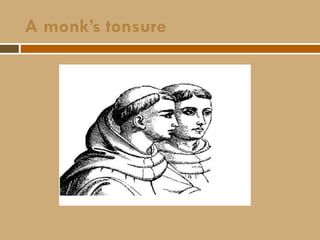
His hair was also cut in a tonsure. This was a
bald patch in the middle of his head.
A monk’s tonsure
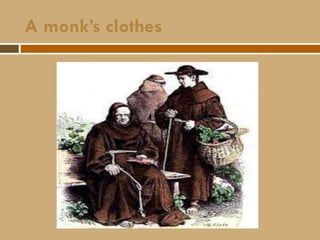
A monk’s clothing
The colour of their clothes varied according to
their order.....
 A tunic, tied around the waist with a cloth or
leather belt.
 Over the tunic was a scapula. This was a long
wide piece of woollen cloth worn over the
shoulders.
 A cowl (a hood) was attached to the scapula.
 Monks would also wear a chain with a cross
around their necks.
A monk’s clothes
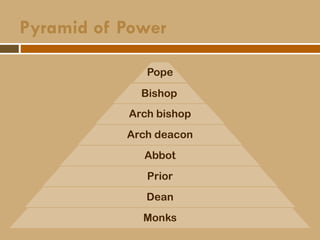
Pyramid of Power
Pope
Bishop
Arch bishop
Arch deacon
Abbot
Prior
Dean
Monks
A Medieval Monastery
 The first type of monastery was established
by St. Benedict in 529 AD.
 Different orders of monks and nuns were
also established during this time such as the
Benedictines, Augustinians and Poor Clares.
 The monks lived in monasteries whereas the
nuns lived in convents.
Uses of a monastery
 A medieval monastery made many works of
charity by feeding the hungry and healing
the sick who were brought to them.
 A monastery provided education for boys
who wanted to become priests.
 A monastery copied manuscripts preserved
valuable books.
 It also kept records of anything eventful that
had happened in the past.
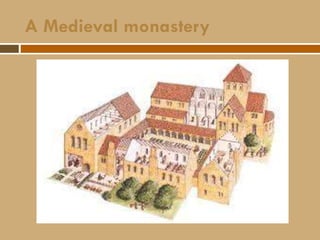
Monastery layout
There are many parts to a monastery such as:
 Church – where the monks prayed every day
 Chapter House – where they met to discuss
business or to elect a new Abbot
 Library – where monks studied
or copied manuscript.
Monastery layout 2
Cloisters – where monks walked and
prayed.
Guest house – where monks gave food
to poor people.
Infirmary – where the sick were
nursed.
Refectory – where the monks ate their
meals.
Dormitory – where the monks slept.
A Medieval monastery
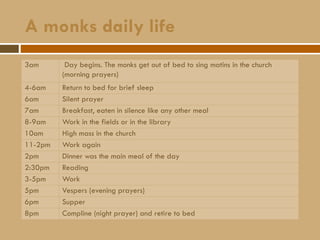
A monks daily life
3am Day begins. The monks get out of bed to sing matins in the church
(morning prayers)
4-6am Return to bed for brief sleep
6am Silent prayer
7am Breakfast, eaten in silence like any other meal
8-9am Work in the fields or in the library
10am High mass in the church
11-2pm Work again
2pm Dinner was the main meal of the day
2:30pm Reading
3-5pm Work
5pm Vespers (evening prayers)
6pm Supper
8pm Compline (night prayer) and retire to bed
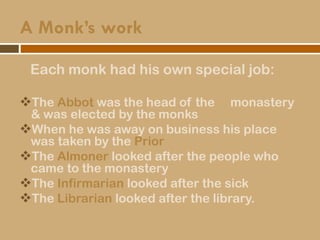
A Monk’s work
Each monk had his own special job:
The Abbot was the head of the monastery
& was elected by the monks
When he was away on business his place
was taken by the Prior
The Almoner looked after the people who
came to the monastery
The Infirmarian looked after the sick
The Librarian looked after the library.

Isabel seacymonks

  • 1.
  • 2.
    A Medieval Monk Medieval Monks were similar to Early Christian Ireland monks but also had differences.  They still copied manuscripts and prayed however, they had different buildings in their monasteries.  These monks would have been members of orders such as the Dominicans or the Franciscans. Some of these orders still exist today.
  • 3.
    Becoming a monk Whena boy joined a monastery he was called a novice. If the Abbot thought he would be a good monk he would let him take solemn vows.... These were promises of: Poverty- he must not own anything Chastity- he must not marry Obedience- he must do what the Abbot told him His hair was also cut in a tonsure. This was a bald patch in the middle of his head.
  • 4.
  • 5.
    A monk’s clothing Thecolour of their clothes varied according to their order.....  A tunic, tied around the waist with a cloth or leather belt.  Over the tunic was a scapula. This was a long wide piece of woollen cloth worn over the shoulders.  A cowl (a hood) was attached to the scapula.  Monks would also wear a chain with a cross around their necks.
  • 6.
  • 7.
    Pyramid of Power Pope Bishop Archbishop Arch deacon Abbot Prior Dean Monks
  • 8.
    A Medieval Monastery The first type of monastery was established by St. Benedict in 529 AD.  Different orders of monks and nuns were also established during this time such as the Benedictines, Augustinians and Poor Clares.  The monks lived in monasteries whereas the nuns lived in convents.
  • 9.
    Uses of amonastery  A medieval monastery made many works of charity by feeding the hungry and healing the sick who were brought to them.  A monastery provided education for boys who wanted to become priests.  A monastery copied manuscripts preserved valuable books.  It also kept records of anything eventful that had happened in the past.
  • 10.
    Monastery layout There aremany parts to a monastery such as:  Church – where the monks prayed every day  Chapter House – where they met to discuss business or to elect a new Abbot  Library – where monks studied or copied manuscript.
  • 11.
    Monastery layout 2 Cloisters– where monks walked and prayed. Guest house – where monks gave food to poor people. Infirmary – where the sick were nursed. Refectory – where the monks ate their meals. Dormitory – where the monks slept.
  • 12.
  • 13.
    A monks dailylife 3am Day begins. The monks get out of bed to sing matins in the church (morning prayers) 4-6am Return to bed for brief sleep 6am Silent prayer 7am Breakfast, eaten in silence like any other meal 8-9am Work in the fields or in the library 10am High mass in the church 11-2pm Work again 2pm Dinner was the main meal of the day 2:30pm Reading 3-5pm Work 5pm Vespers (evening prayers) 6pm Supper 8pm Compline (night prayer) and retire to bed
  • 14.
    A Monk’s work Eachmonk had his own special job: The Abbot was the head of the monastery & was elected by the monks When he was away on business his place was taken by the Prior The Almoner looked after the people who came to the monastery The Infirmarian looked after the sick The Librarian looked after the library.