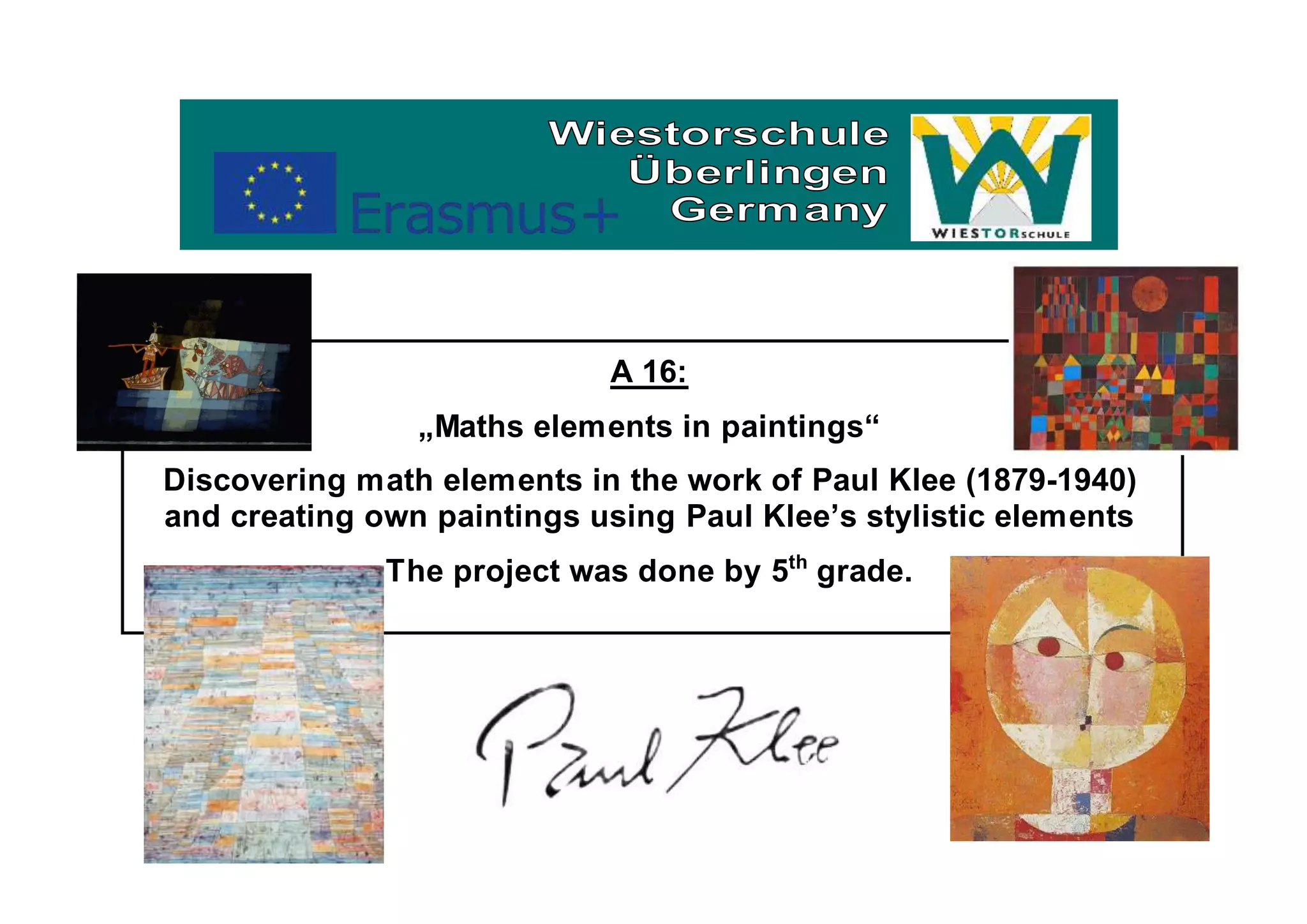
A 16:
„Maths elements in paintings“
Discovering math elements in the work of Paul Klee (1879-1940)
and creating own paintings using Paul Klee’s stylistic elements
The project was done by 5th
grade.
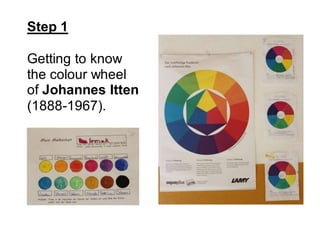
Step 1
Getting to know
the colour wheel
of Johannes Itten
(1888-1967).
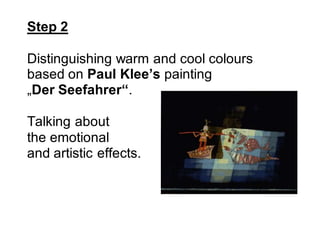
Step 2
Distinguishing warm and cool colours
based on Paul Klee’s painting
„Der Seefahrer“.
Talking about
the emotional
and artistic effects.
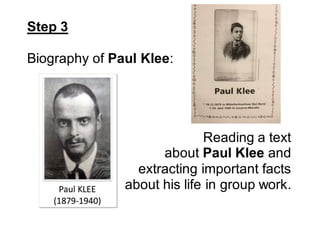
Step 3
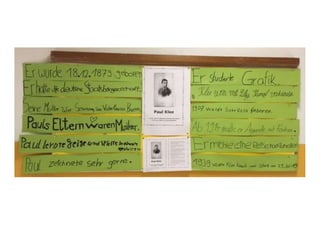
Biography of Paul Klee:
Reading a text
about Paul Klee and
extracting important facts
about his life in group work.
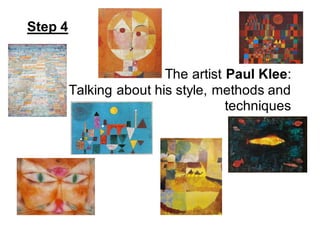
Step 4
The artist Paul Klee:
Talking about his style, methods and
techniques
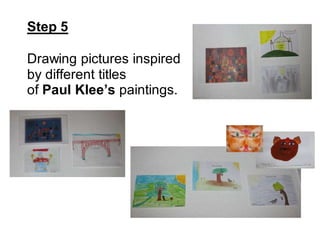
Step 5
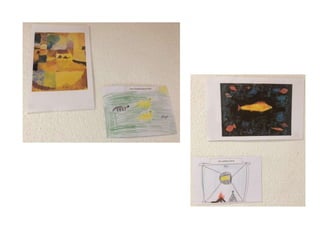
Drawing pictures inspired
by different titles
of Paul Klee’s paintings.
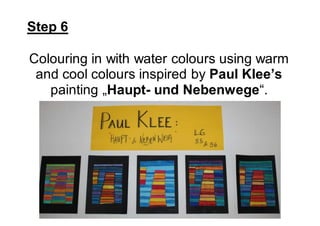
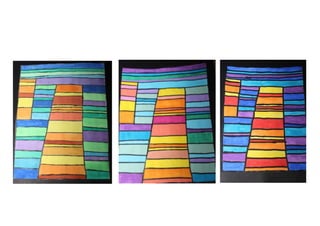
Step 6
Colouring in with water colours using warm
and cool colours inspired by Paul Klee’s
painting „Haupt- und Nebenwege“.
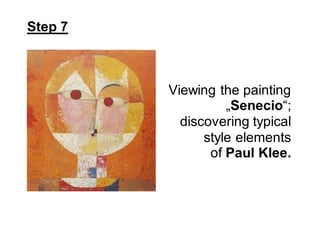
Step 7
Viewing the painting
„Senecio“;
discovering typical
style elements
of Paul Klee.
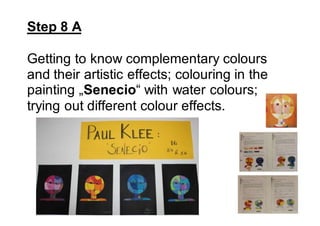
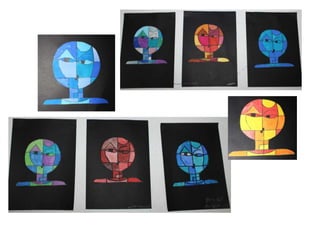
Step 8 A
Getting to know complementary colours
and their artistic effects; colouring in the
painting „Senecio“ with water colours;
trying out different colour effects.
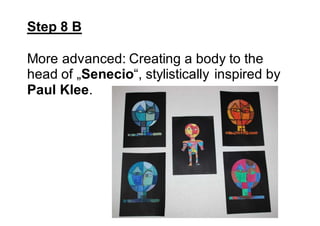
Step 8 B
More advanced: Creating a body to the
head of „Senecio“, stylistically inspired by
Paul Klee.
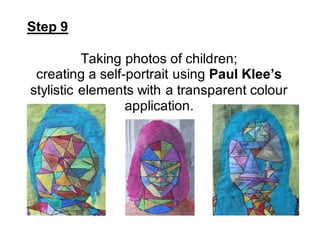
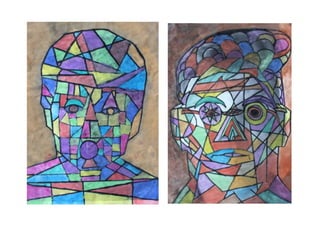
Step 9
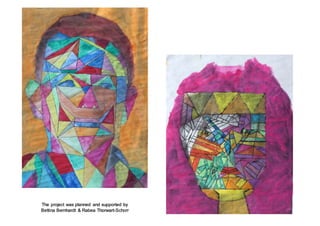
Taking photos of children;
creating a self-portrait using Paul Klee’s
stylistic elements with a transparent colour
application.
The project was planned and supported by
Bettina Bernhardt & Rabea Thorwart-Schorr

Erasmus+ A16

  • 1.
    A 16: „Maths elementsin paintings“ Discovering math elements in the work of Paul Klee (1879-1940) and creating own paintings using Paul Klee’s stylistic elements The project was done by 5th grade.
  • 2.
    Step 1 Getting toknow the colour wheel of Johannes Itten (1888-1967).
  • 3.
    Step 2 Distinguishing warmand cool colours based on Paul Klee’s painting „Der Seefahrer“. Talking about the emotional and artistic effects.
  • 4.
    Step 3 Biography ofPaul Klee: Reading a text about Paul Klee and extracting important facts about his life in group work.
  • 6.
    Step 4 The artistPaul Klee: Talking about his style, methods and techniques
  • 7.
    Step 5 Drawing picturesinspired by different titles of Paul Klee’s paintings.
  • 9.
    Step 6 Colouring inwith water colours using warm and cool colours inspired by Paul Klee’s painting „Haupt- und Nebenwege“.
  • 11.
    Step 7 Viewing thepainting „Senecio“; discovering typical style elements of Paul Klee.
  • 12.
    Step 8 A Gettingto know complementary colours and their artistic effects; colouring in the painting „Senecio“ with water colours; trying out different colour effects.
  • 14.
    Step 8 B Moreadvanced: Creating a body to the head of „Senecio“, stylistically inspired by Paul Klee.
  • 15.
    Step 9 Taking photosof children; creating a self-portrait using Paul Klee’s stylistic elements with a transparent colour application.
  • 17.
    The project wasplanned and supported by Bettina Bernhardt & Rabea Thorwart-Schorr