Photo Composition
Rule of thirds
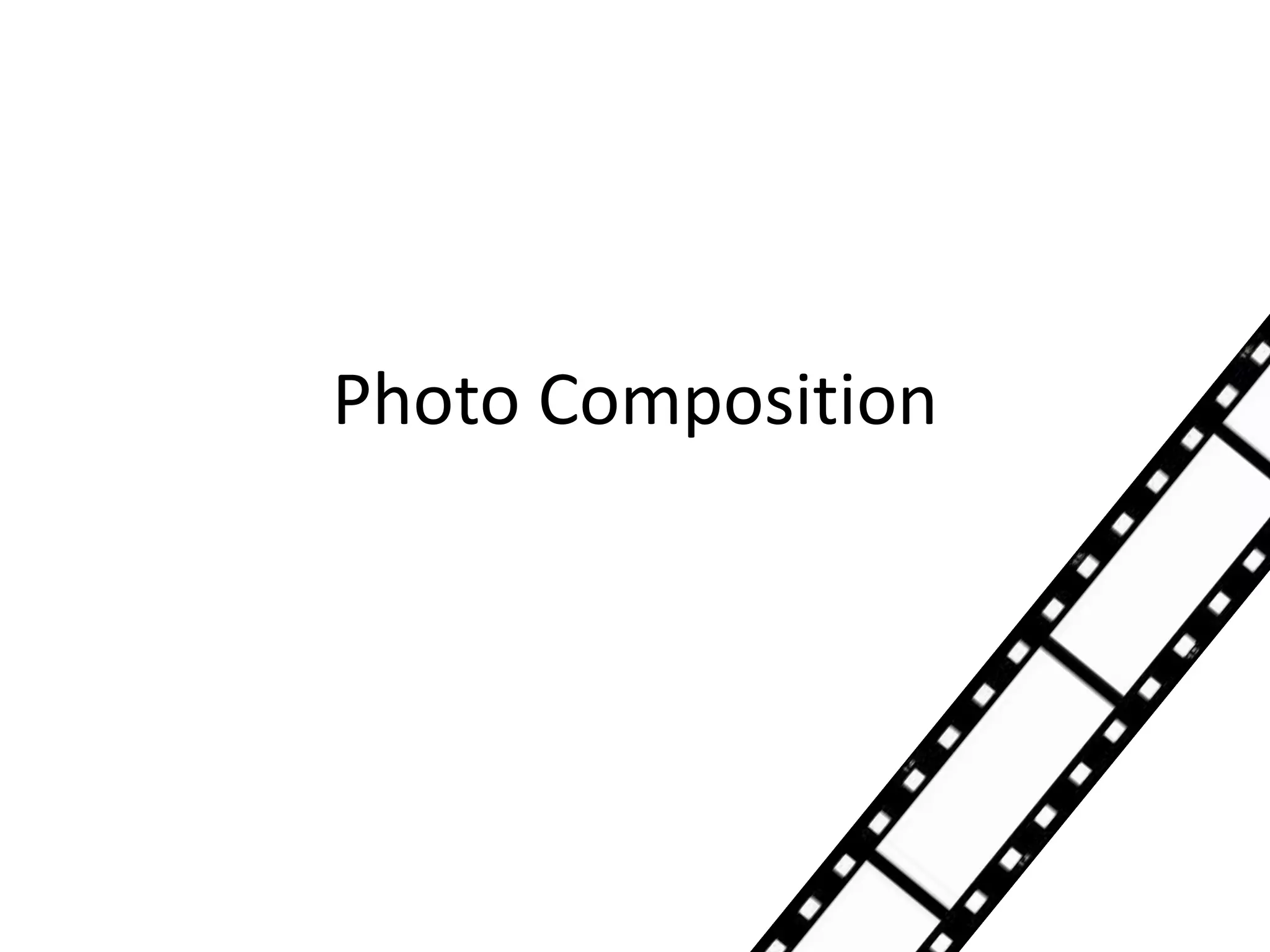
•   In the rule of thirds, photos are divided into thirds with nine sections in the
    images. Some cameras do have an option to superimpose the rule of thirds over
    the screen making it a easier composition to do. It can make a photograph look
    more dynamic as you can place the object at one side adding tension between the
    object and the empty space.
Balancing Elements
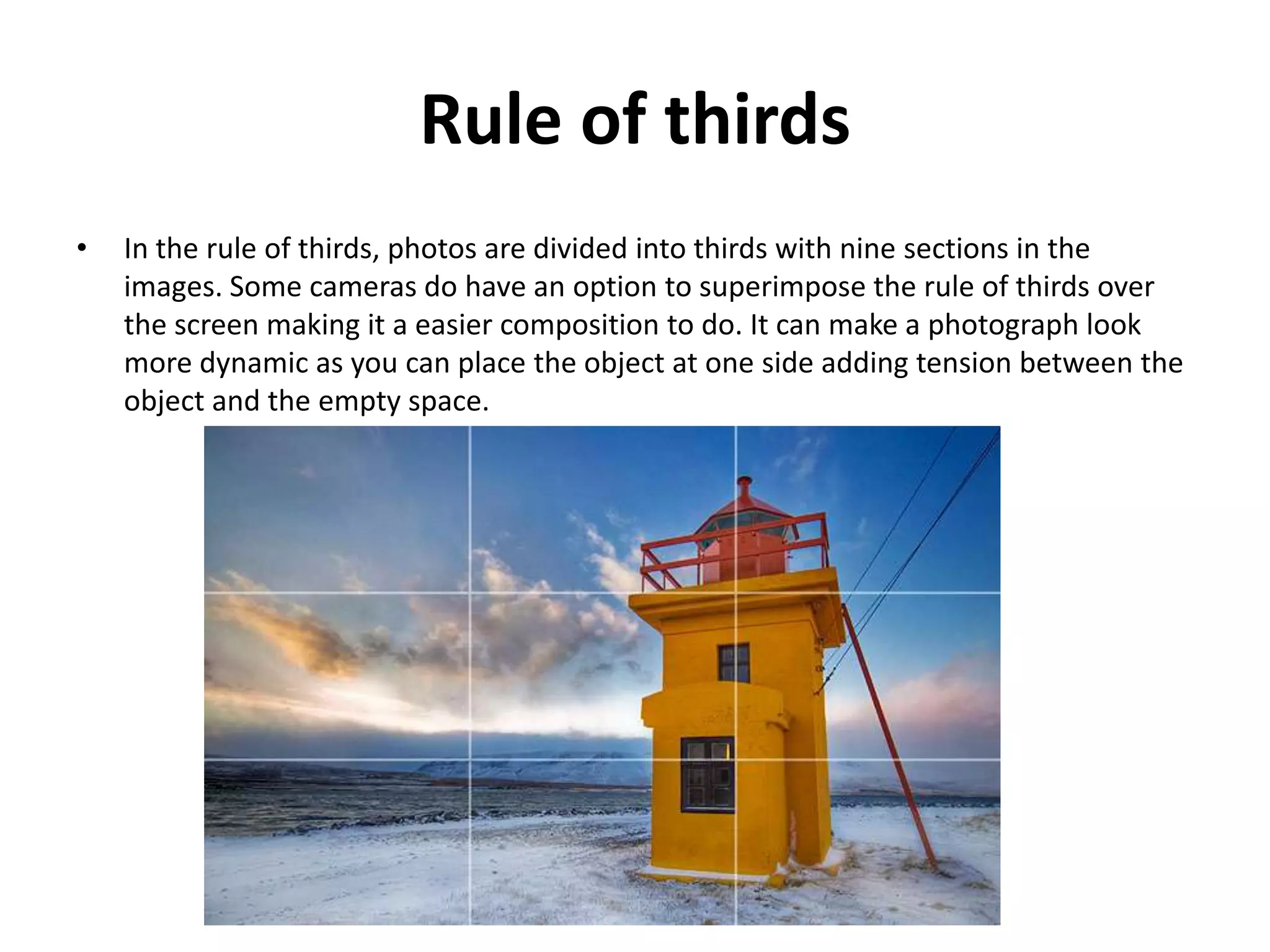
•   Placing the main object off-centre, as with the rule of thirds, can create a more
    dynamic photograph, but it can leave lot of empty space within the photograph
    which can make it look empty. You could therefore balance the object by having
    another object of lesser importance to fill the space.
Leading lines
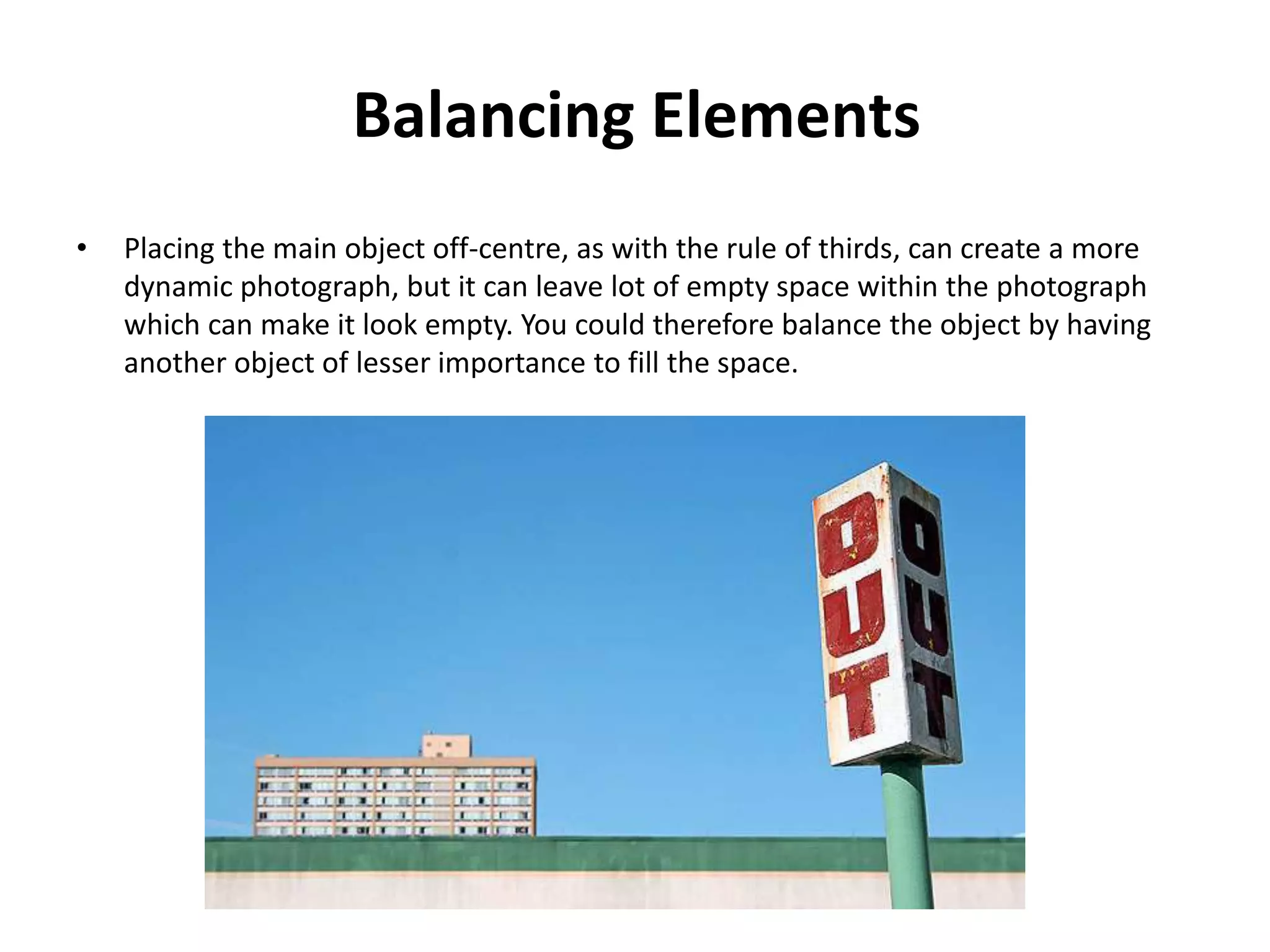
Leading lines could be very important to a photograph because our eyes will naturally
follow lines, therefore if you place lines in the composition it can affect the way we
seen the image as it pulls us into the picture towards the object.
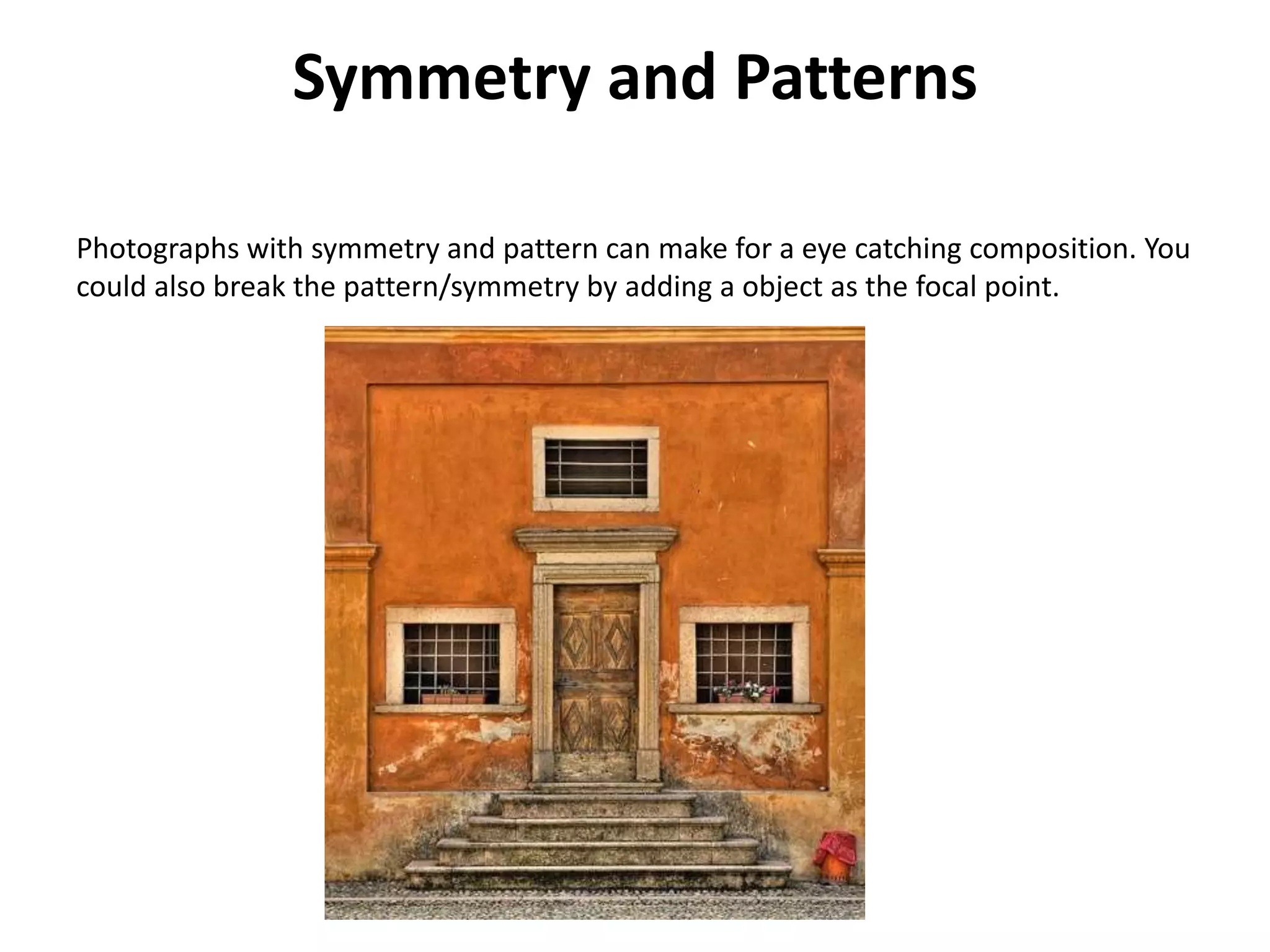
Symmetry and Patterns

Photographs with symmetry and pattern can make for a eye catching composition. You
could also break the pattern/symmetry by adding a object as the focal point.
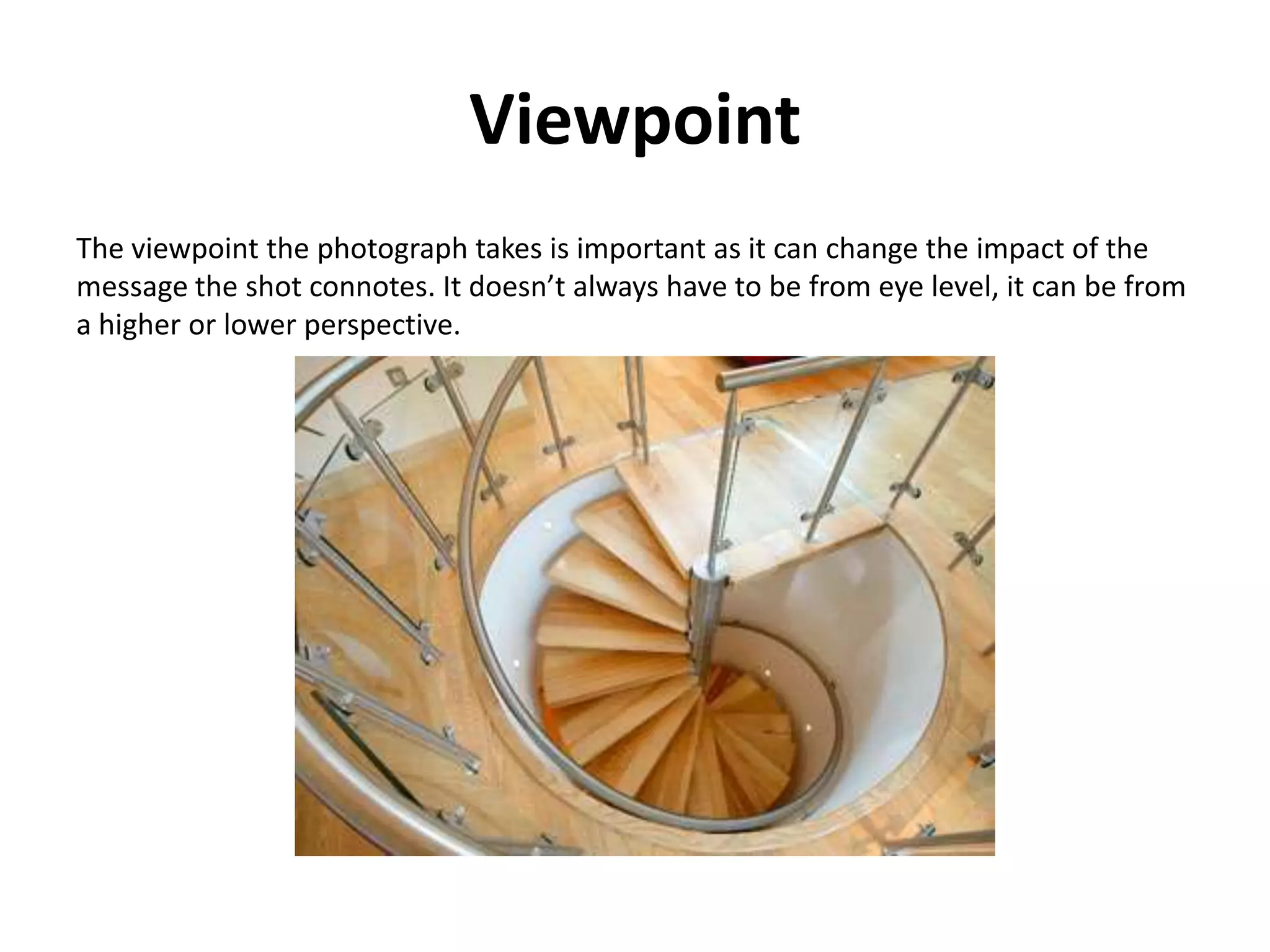
Viewpoint
The viewpoint the photograph takes is important as it can change the impact of the
message the shot connotes. It doesn’t always have to be from eye level, it can be from
a higher or lower perspective.
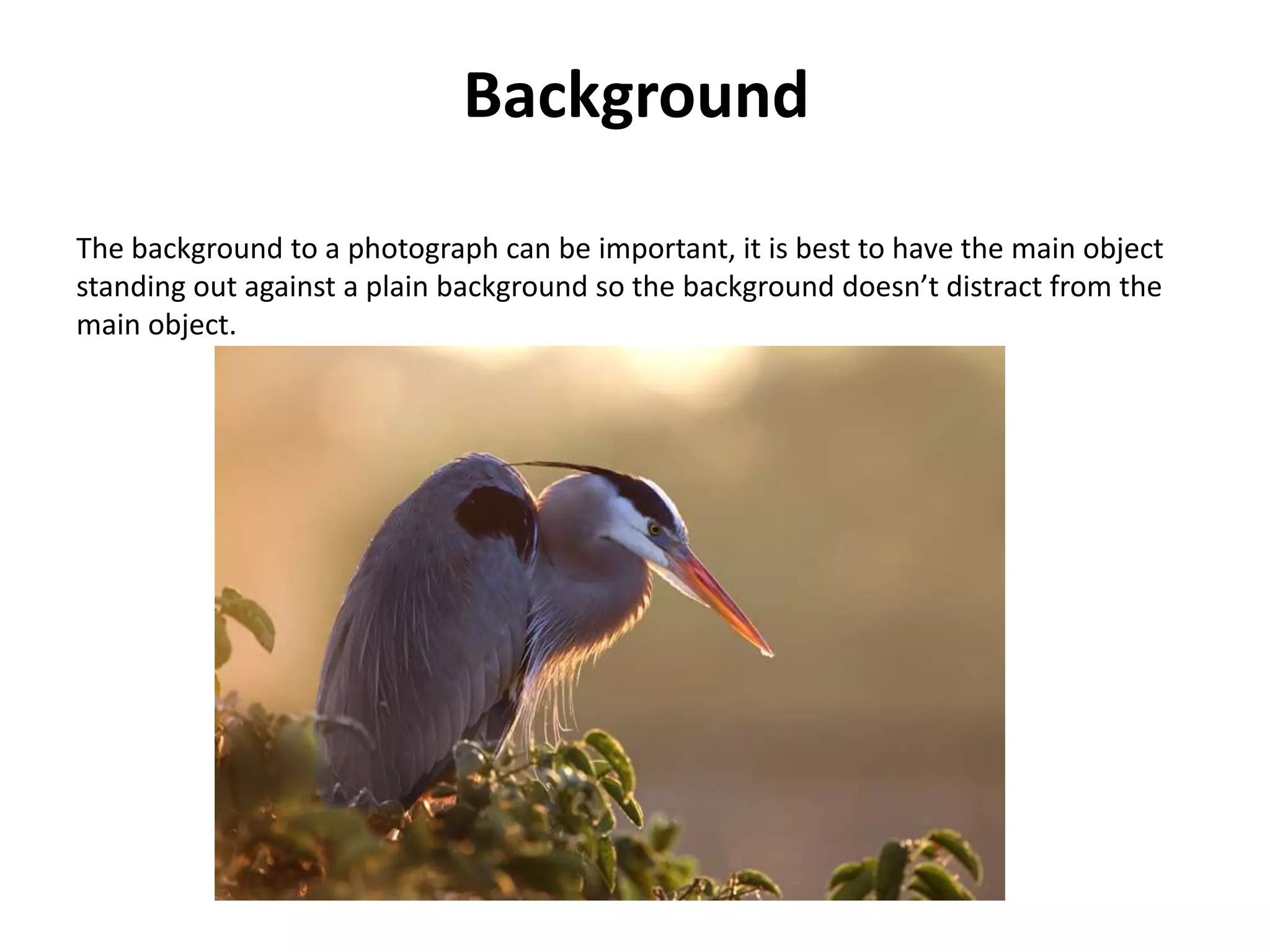
Background

The background to a photograph can be important, it is best to have the main object
standing out against a plain background so the background doesn’t distract from the
main object.
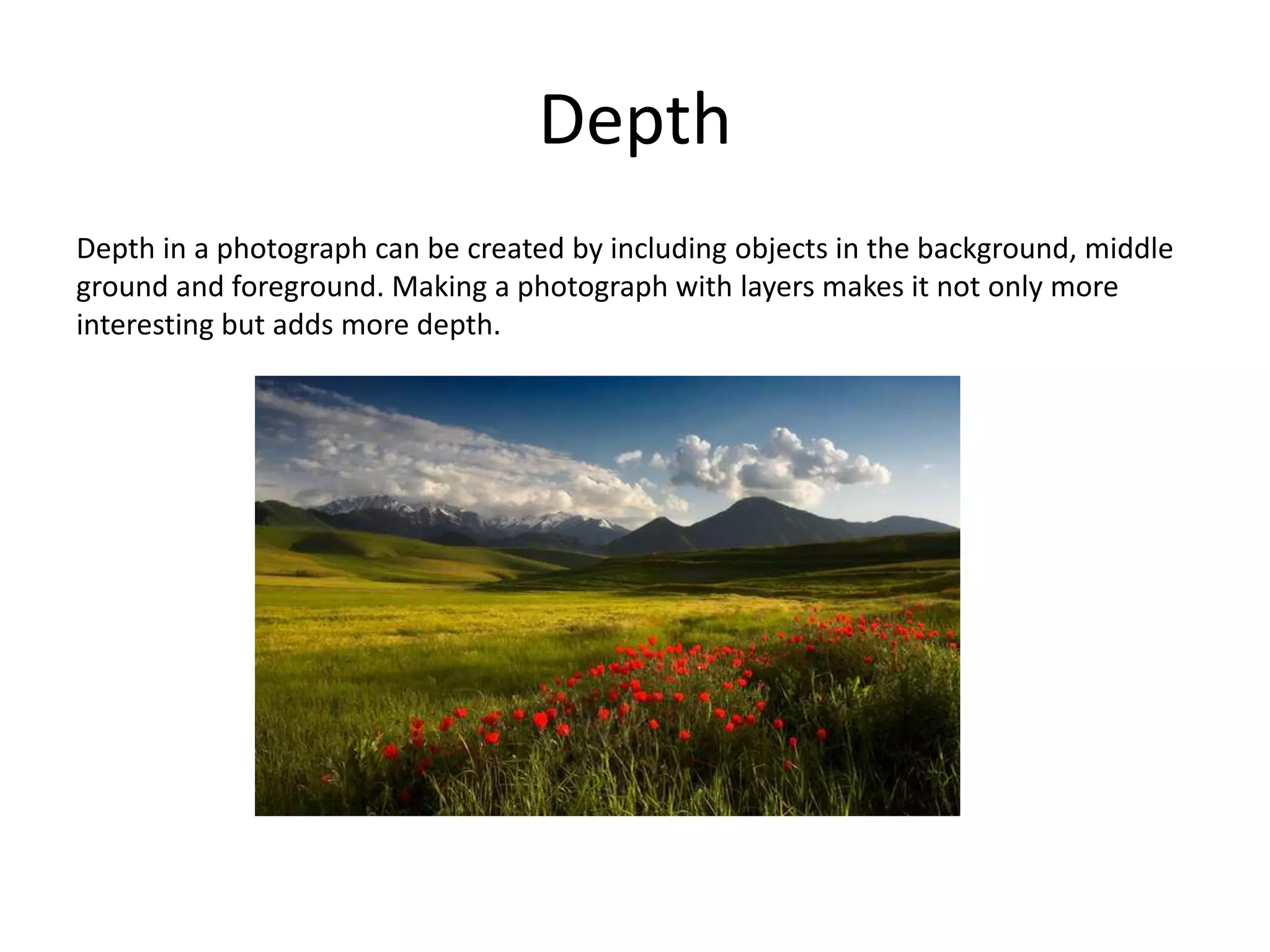
Depth
Depth in a photograph can be created by including objects in the background, middle
ground and foreground. Making a photograph with layers makes it not only more
interesting but adds more depth.
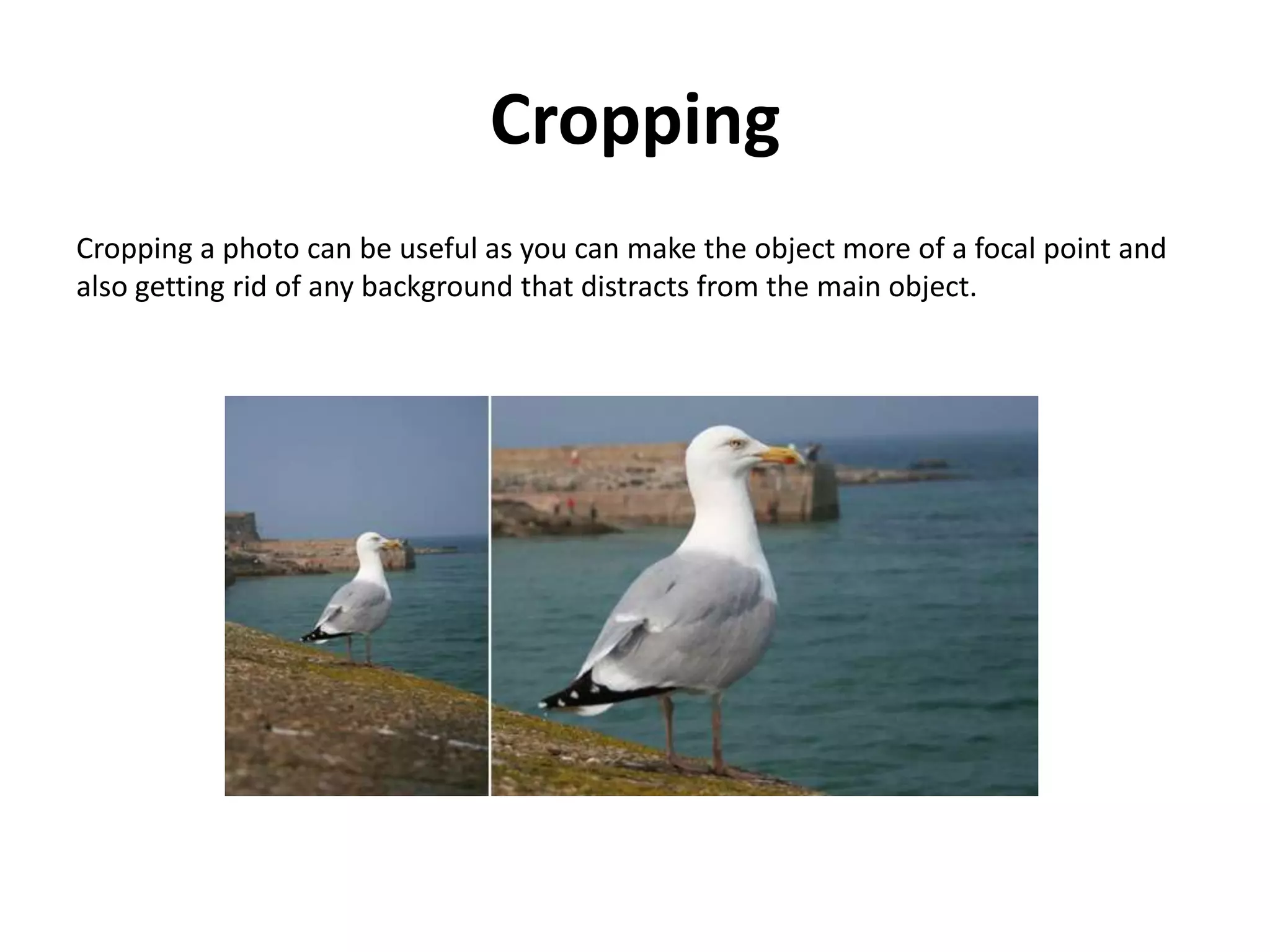
Cropping
Cropping a photo can be useful as you can make the object more of a focal point and
also getting rid of any background that distracts from the main object.
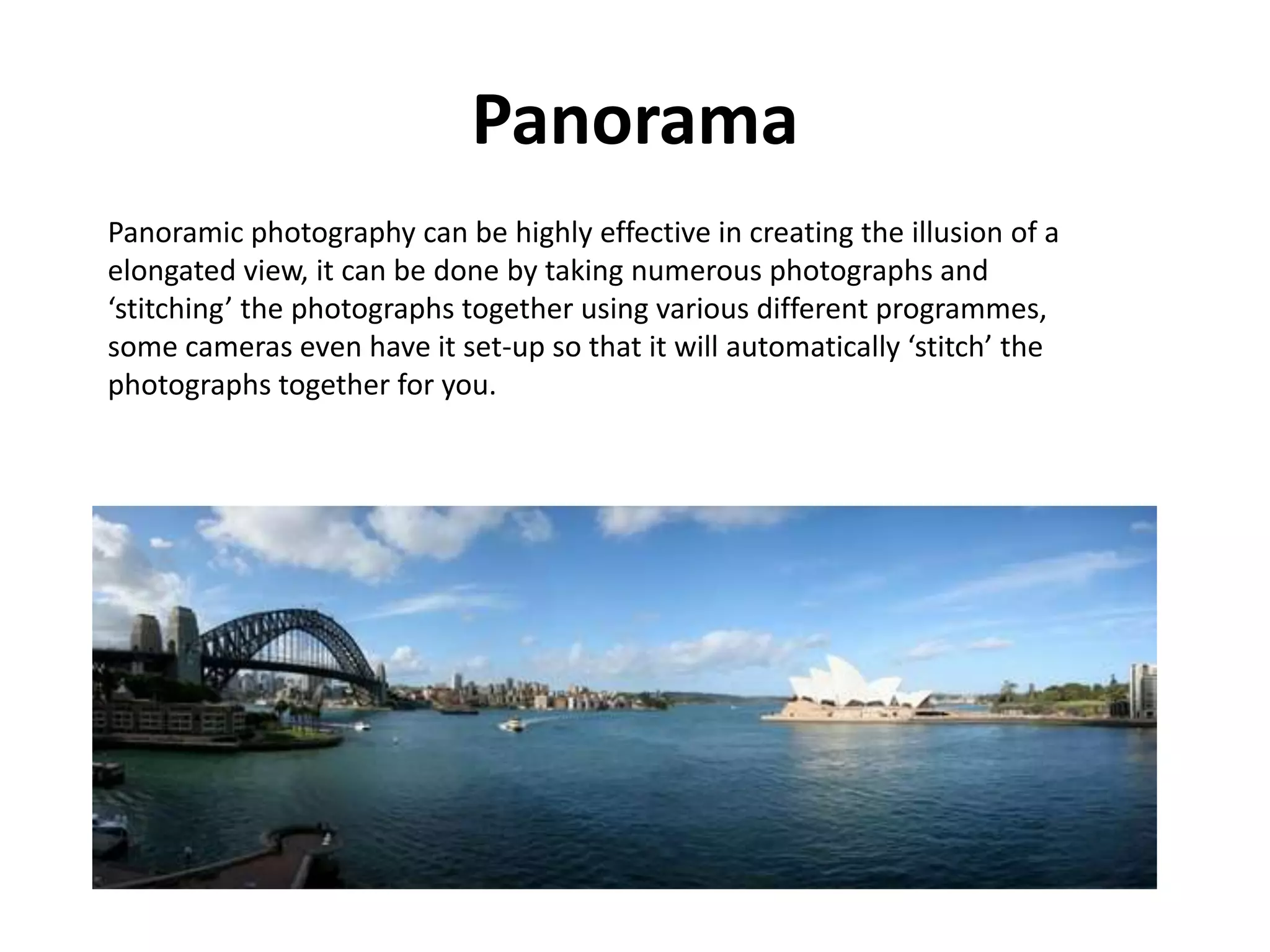
Panorama
Panoramic photography can be highly effective in creating the illusion of a
elongated view, it can be done by taking numerous photographs and
‘stitching’ the photographs together using various different programmes,
some cameras even have it set-up so that it will automatically ‘stitch’ the
photographs together for you.
Basic Technical Aspects
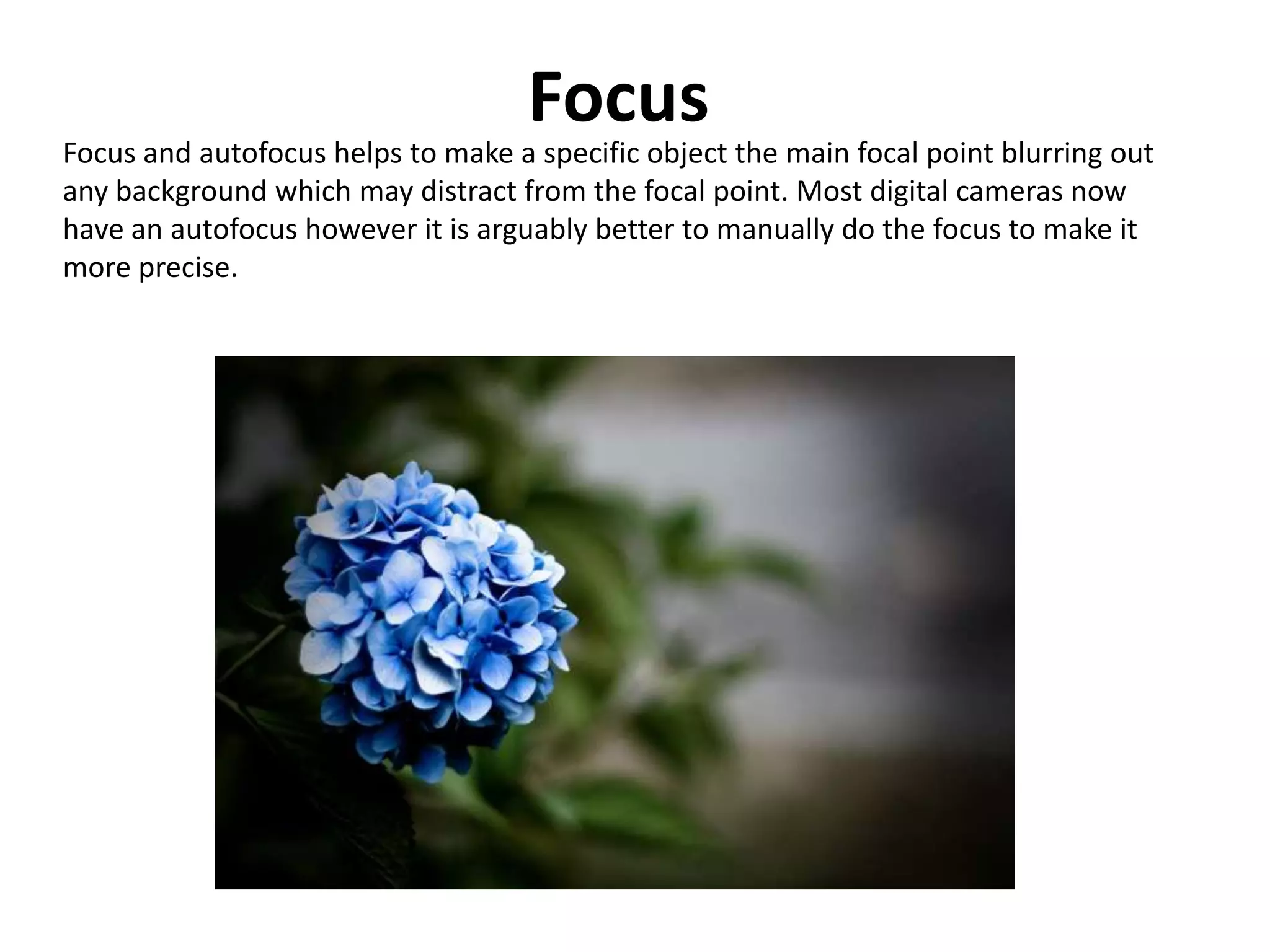
Focus
Focus and autofocus helps to make a specific object the main focal point blurring out
any background which may distract from the focal point. Most digital cameras now
have an autofocus however it is arguably better to manually do the focus to make it
more precise.
Aperture
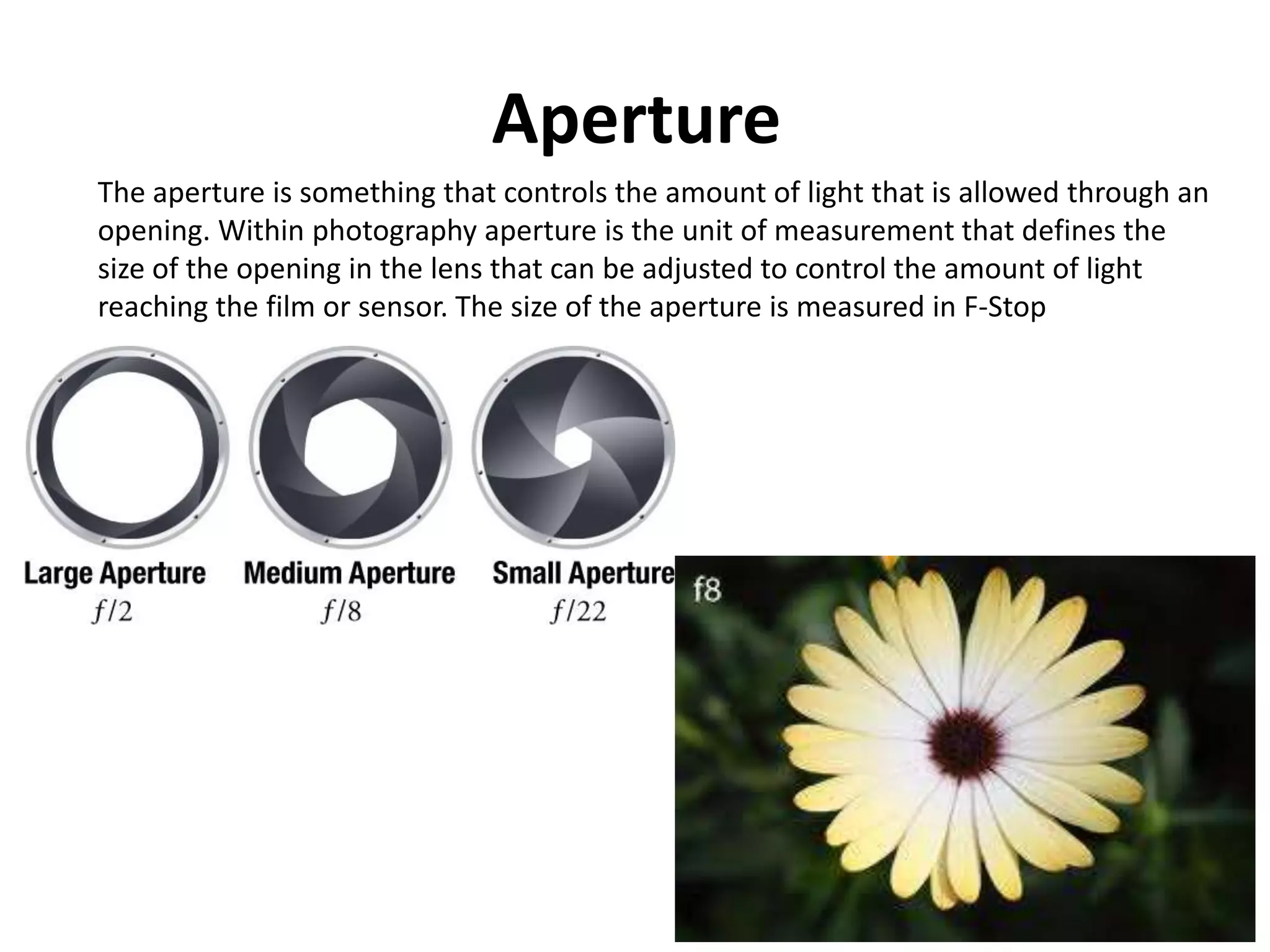
The aperture is something that controls the amount of light that is allowed through an
opening. Within photography aperture is the unit of measurement that defines the
size of the opening in the lens that can be adjusted to control the amount of light
reaching the film or sensor. The size of the aperture is measured in F-Stop
Shutter Speed
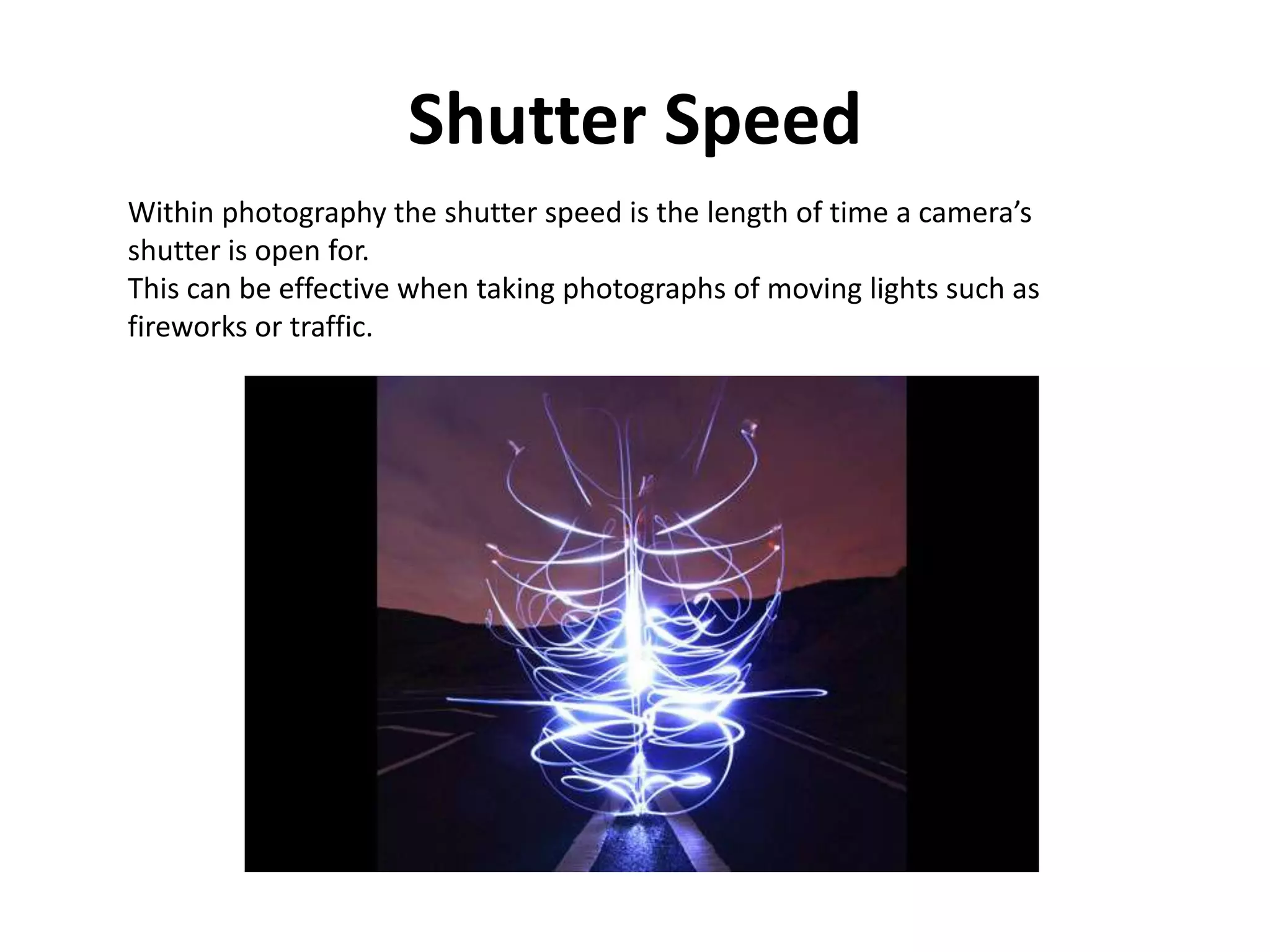
Within photography the shutter speed is the length of time a camera’s
shutter is open for.
This can be effective when taking photographs of moving lights such as
fireworks or traffic.
White balance
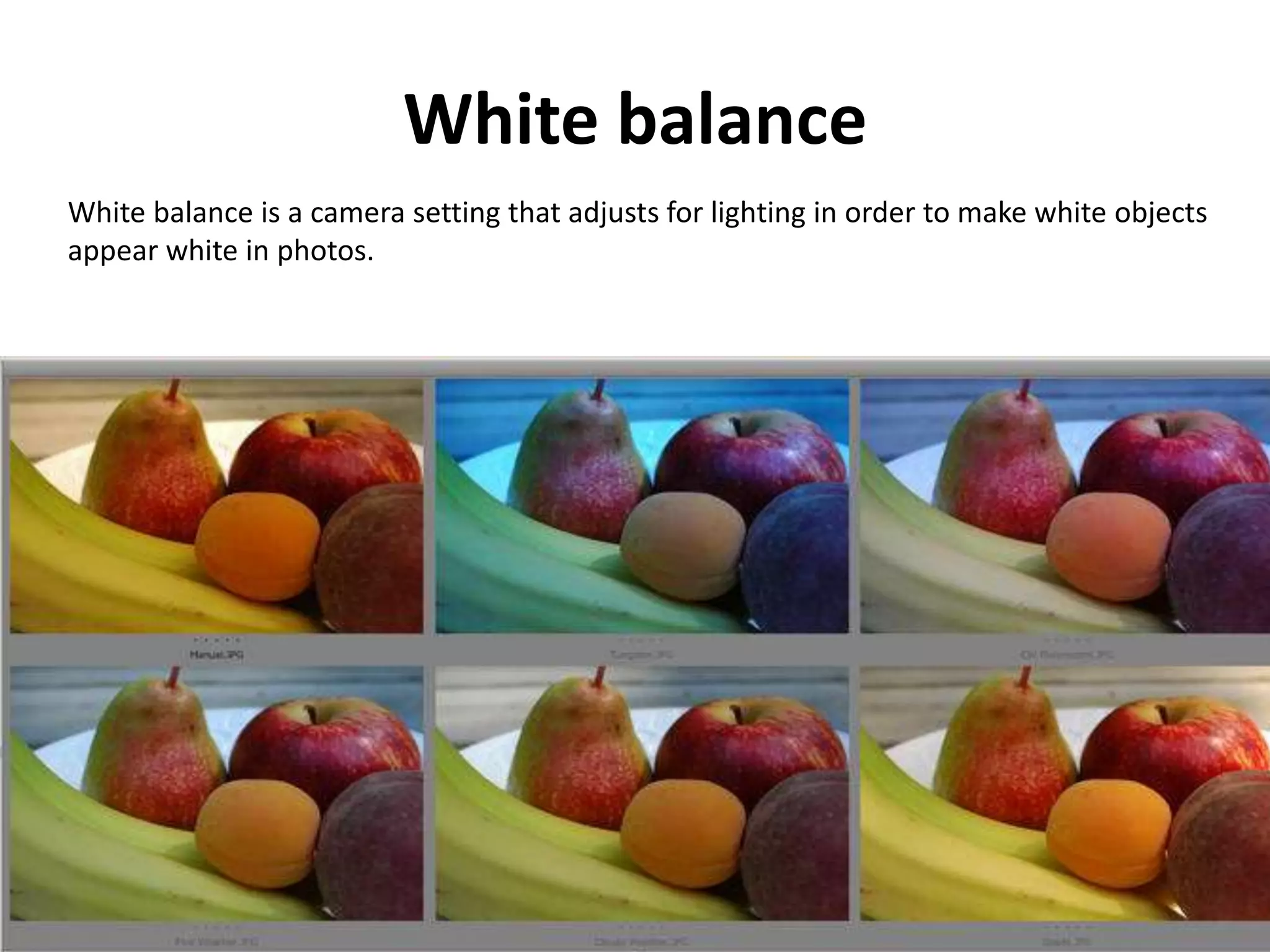
White balance is a camera setting that adjusts for lighting in order to make white objects
appear white in photos.
Iso speed

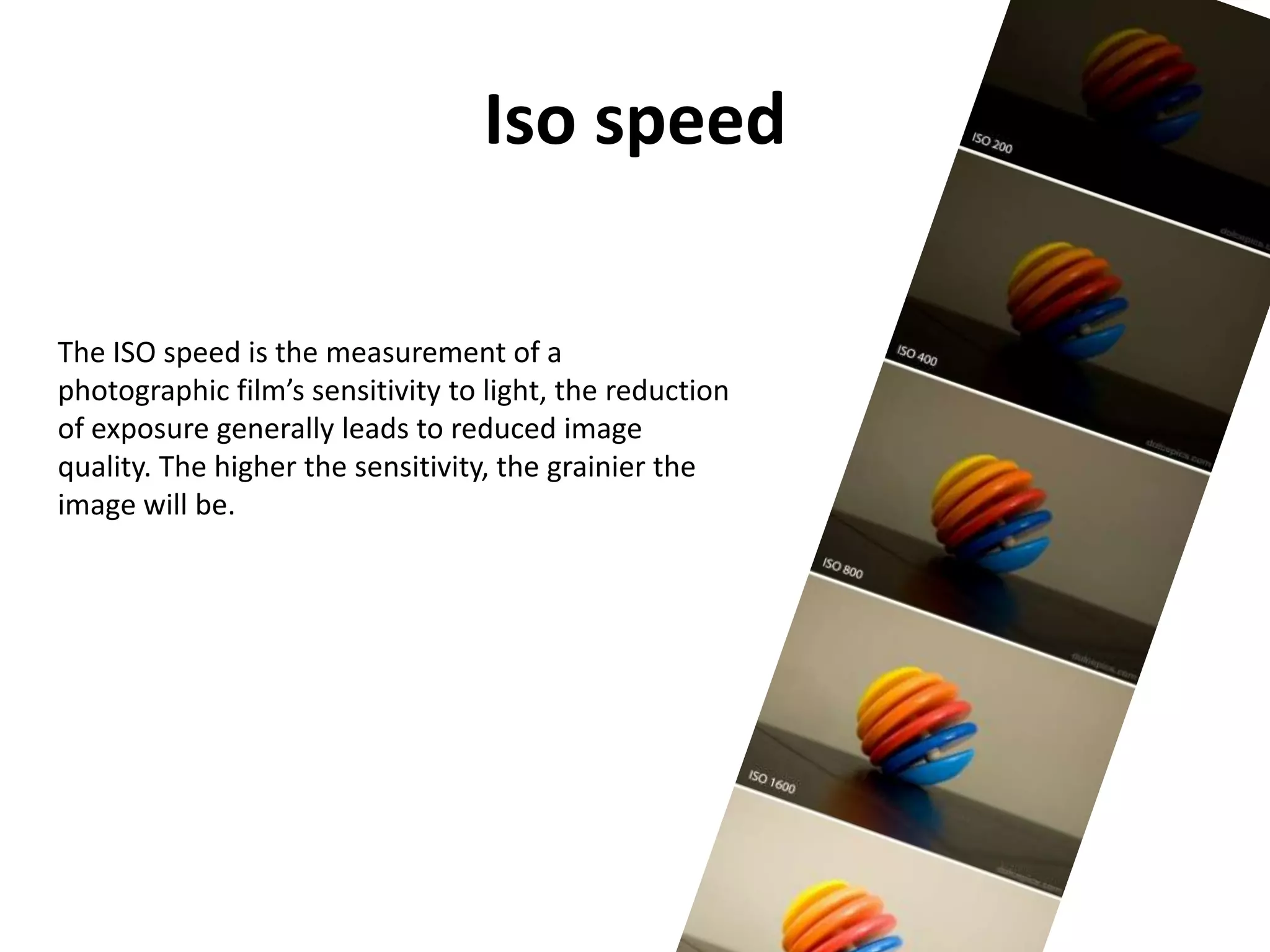
The ISO speed is the measurement of a
photographic film’s sensitivity to light, the reduction
of exposure generally leads to reduced image
quality. The higher the sensitivity, the grainier the
image will be.

Photo composition and technical aspects

  • 1.
  • 2.
    Rule of thirds • In the rule of thirds, photos are divided into thirds with nine sections in the images. Some cameras do have an option to superimpose the rule of thirds over the screen making it a easier composition to do. It can make a photograph look more dynamic as you can place the object at one side adding tension between the object and the empty space.
  • 3.
    Balancing Elements • Placing the main object off-centre, as with the rule of thirds, can create a more dynamic photograph, but it can leave lot of empty space within the photograph which can make it look empty. You could therefore balance the object by having another object of lesser importance to fill the space.
  • 4.
    Leading lines Leading linescould be very important to a photograph because our eyes will naturally follow lines, therefore if you place lines in the composition it can affect the way we seen the image as it pulls us into the picture towards the object.
  • 5.
    Symmetry and Patterns Photographswith symmetry and pattern can make for a eye catching composition. You could also break the pattern/symmetry by adding a object as the focal point.
  • 6.
    Viewpoint The viewpoint thephotograph takes is important as it can change the impact of the message the shot connotes. It doesn’t always have to be from eye level, it can be from a higher or lower perspective.
  • 7.
    Background The background toa photograph can be important, it is best to have the main object standing out against a plain background so the background doesn’t distract from the main object.
  • 8.
    Depth Depth in aphotograph can be created by including objects in the background, middle ground and foreground. Making a photograph with layers makes it not only more interesting but adds more depth.
  • 9.
    Cropping Cropping a photocan be useful as you can make the object more of a focal point and also getting rid of any background that distracts from the main object.
  • 10.
    Panorama Panoramic photography canbe highly effective in creating the illusion of a elongated view, it can be done by taking numerous photographs and ‘stitching’ the photographs together using various different programmes, some cameras even have it set-up so that it will automatically ‘stitch’ the photographs together for you.
  • 11.
  • 12.
    Focus Focus and autofocushelps to make a specific object the main focal point blurring out any background which may distract from the focal point. Most digital cameras now have an autofocus however it is arguably better to manually do the focus to make it more precise.
  • 13.
    Aperture The aperture issomething that controls the amount of light that is allowed through an opening. Within photography aperture is the unit of measurement that defines the size of the opening in the lens that can be adjusted to control the amount of light reaching the film or sensor. The size of the aperture is measured in F-Stop
  • 14.
    Shutter Speed Within photographythe shutter speed is the length of time a camera’s shutter is open for. This can be effective when taking photographs of moving lights such as fireworks or traffic.
  • 15.
    White balance White balanceis a camera setting that adjusts for lighting in order to make white objects appear white in photos.
  • 16.
    Iso speed The ISOspeed is the measurement of a photographic film’s sensitivity to light, the reduction of exposure generally leads to reduced image quality. The higher the sensitivity, the grainier the image will be.