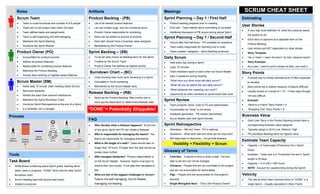
Roles                                                                 Artifacts                                                    Meetings                                                        SCRUM CHEAT SHEET
           Scrum Team                                                            Product Backlog - (PB)                                       Sprint Planning – Day 1 / First Half                           Estimating
             Team is cross-functional and consists of 5-9 people                    List of all desired product features                         Product backlog prepared prior to meeting
                                                                                                                                                                                                             User Stories
             There are no set project roles within the team                         List can contain bugs, and non-functional items              First half – Team selects items committing to complete
                                                                                                                                                                                                                A very high level definition of what the customer wants
             Team defines tasks and assignments                                     Product Owner responsible for prioritizing                   Additional discussion of PB occurs during actual Sprint
                                                                                                                                                                                                                the system to do.
             Team is self-organizing and self-managing                              Items can be added by anyone at anytime                   Sprint Planning – Day 1 / Second Half                             Each story is captured as a separate item on the
             Maintains the Sprint Backlog                                           Each item should have a business value assigned              Occurs after first half done – PO available for questions
                                                                                                                                                                                                                Product Backlog
             Conducts the Sprint Review                                             Maintained by the Product Owner                              Team solely responsible for deciding how to build
                                                                                                                                                                                                                User stories are NOT dependent on other stories
           Product Owner (PO)                                                    Sprint Backlog – (SB)                                           Tasks created / assigned – Sprint Backlog produced
                                                                                                                                                                                                                Story Template:
             Accountable for product success                                        To-do list (also known as Backlog item) for the Sprint    Daily Scrum                                                       “As a <User> I want <function> So that <desired result>
             Defines all product features                                           Created by the Scrum Team                                    Held every day during a Sprint                                 Story Example:
             Responsible for prioritizing product features                          Product Owner has defined as highest priority                Lasts 15 minutes                                               As a user, I want to print a recipe so that I can cook it.
             Maintains the Product Backlog                                                                                                       Team members report to each other not Scrum Master
                                                                                 Burndown Chart – (BC)                                                                                                       Story Points
             Insures team working on highest valued features                                                                                     Asks 3 questions during meeting
                                                                                    Chart showing how much work remaining in a Sprint                                                                           A simple way to initially estimate level of effort expected
           Scrum Master (SM)                                                        Calculated in hours remaining                                “What have you done since last daily scrum?”
                                                                                                                                                                                                                to develop
             Holds daily 15 minute team meeting (Daily Scrum)                       Maintained by the Scrum Master daily                         “What will you do before the next daily scrum?”
                                                                                                                                                                                                                Story points are a relative measure of feature difficulty
             Removes obstacles                                                                                                                   “What obstacles are impeding your work?”
                                                                                                                                                                                                                Usually scored on a scale of 1-10. 1=very easy through
                                                                                 Release Backlog – (RB)                                          Opportunity for team members to synchronize their work
             Shields the team from external interference                                                                                                                                                        10=very difficult
                                                                                    Same as the Product Backlog. May involve one or
             Maintains the Sprint Burndown Chart
                                                                                    more sprints dependent on determined Release date
                                                                                                                                              Sprint Review                                                     Example:
             Conducts Sprint Retrospective at the end of a Sprint                                                                                Team presents “done” code to PO and stakeholders               “Send to a Friend” Story Points = 2
             Is a facilitator not a manager                                      “DONE”= Potentially Shippable!                                  Functionality not “done” is not shown                          “Shopping Cart” Story Points = 9
                                                                                                                                                 Feedback generated - PB maybe reprioritized
Process                                                                                                                                                                                                      Business Value
                                                                                 FAQ                                                             Scrum Master sets next Sprint Review
                                                                                                                                                                                                                Each User Story in the Product Backlog should have a

                                       Daily                                        Who decides when a Release happens? At the end            Sprint Retrospective                                              corresponding business value assigned.
                                      Scrum      Sprint Review
                                                                                    of any given Sprint the PO can initiate a Release.           Attendees – SM and Team. PO is optional                        Typically assign (L,M,H) Low, Medium, High
                                                                                    Who is responsible for managing the teams? The               Questions – What went well and what can be improved?           PO prioritizes Backlog items by highest value
                         Sprint
 Sprint      Product    Backlog                                      Sprint         teams are responsible for managing themselves.               SM helps team in discovery – not provide answers
Planning     Backlog
                                      Sprint     Shippable
                                                  Product
                                                                 Retrospective                                                                                                                               Estimate Team Capacity
                                                                                    What is the length of a task? Tasks should take no             Visibility + Flexibility = Scrum                             Capacity = # Teammates (Productive Hrs x Sprint
                                                                                    longer than 16 hours. If longer then the task should be
                                                                                                                                              Glossary of Terms                                                 Days)
                                                                                    broken down further.
Tools                                                                               Who manages obstacles? Primary responsibility is             Time Box - A period of time to finish a task. The end
                                                                                                                                                                                                                Example – Team size is 4, Productive Hrs are 5, Sprint
                                                                                                                                                                                                                length is 30 days.
Task Board                                                                          on the Scrum Master. However, teams must learn to            date is set and can not be changed
                                                                                                                                                                                                                Capacity = 4 (5 x30) = 600 hours
     White Board containing teams Sprint goals, backlog items,                      resolve their own issues. If not able then escalated to      Chickens – People that are not committed to the project
                                                                                                                                                                                                                NOTE: Account for vacation time during the Sprint!
     tasks, tasks in progress, “DONE” items and the daily Sprint                    SM.                                                          and are not accountable for deliverables
     Burndown chart.                                                                What are two of the biggest challenges in Scrum?             Pigs – People who are accountable for the project’s         Velocity
     Scrum meeting best held around task board                                      Teams not self-managing, Scrum Master                        success                                                        The rate at which team converts items to “DONE” in a
     Visible to everyone                                                            managing not leading.                                        Single Wringable Neck – This is the Product Owner!             single Sprint – Usually calculated in Story Points.

Scrum Cheat Sheet

  • 1.
    Roles Artifacts Meetings SCRUM CHEAT SHEET Scrum Team Product Backlog - (PB) Sprint Planning – Day 1 / First Half Estimating Team is cross-functional and consists of 5-9 people List of all desired product features Product backlog prepared prior to meeting User Stories There are no set project roles within the team List can contain bugs, and non-functional items First half – Team selects items committing to complete A very high level definition of what the customer wants Team defines tasks and assignments Product Owner responsible for prioritizing Additional discussion of PB occurs during actual Sprint the system to do. Team is self-organizing and self-managing Items can be added by anyone at anytime Sprint Planning – Day 1 / Second Half Each story is captured as a separate item on the Maintains the Sprint Backlog Each item should have a business value assigned Occurs after first half done – PO available for questions Product Backlog Conducts the Sprint Review Maintained by the Product Owner Team solely responsible for deciding how to build User stories are NOT dependent on other stories Product Owner (PO) Sprint Backlog – (SB) Tasks created / assigned – Sprint Backlog produced Story Template: Accountable for product success To-do list (also known as Backlog item) for the Sprint Daily Scrum “As a <User> I want <function> So that <desired result> Defines all product features Created by the Scrum Team Held every day during a Sprint Story Example: Responsible for prioritizing product features Product Owner has defined as highest priority Lasts 15 minutes As a user, I want to print a recipe so that I can cook it. Maintains the Product Backlog Team members report to each other not Scrum Master Burndown Chart – (BC) Story Points Insures team working on highest valued features Asks 3 questions during meeting Chart showing how much work remaining in a Sprint A simple way to initially estimate level of effort expected Scrum Master (SM) Calculated in hours remaining “What have you done since last daily scrum?” to develop Holds daily 15 minute team meeting (Daily Scrum) Maintained by the Scrum Master daily “What will you do before the next daily scrum?” Story points are a relative measure of feature difficulty Removes obstacles “What obstacles are impeding your work?” Usually scored on a scale of 1-10. 1=very easy through Release Backlog – (RB) Opportunity for team members to synchronize their work Shields the team from external interference 10=very difficult Same as the Product Backlog. May involve one or Maintains the Sprint Burndown Chart more sprints dependent on determined Release date Sprint Review Example: Conducts Sprint Retrospective at the end of a Sprint Team presents “done” code to PO and stakeholders “Send to a Friend” Story Points = 2 Is a facilitator not a manager “DONE”= Potentially Shippable! Functionality not “done” is not shown “Shopping Cart” Story Points = 9 Feedback generated - PB maybe reprioritized Process Business Value FAQ Scrum Master sets next Sprint Review Each User Story in the Product Backlog should have a Daily Who decides when a Release happens? At the end Sprint Retrospective corresponding business value assigned. Scrum Sprint Review of any given Sprint the PO can initiate a Release. Attendees – SM and Team. PO is optional Typically assign (L,M,H) Low, Medium, High Who is responsible for managing the teams? The Questions – What went well and what can be improved? PO prioritizes Backlog items by highest value Sprint Sprint Product Backlog Sprint teams are responsible for managing themselves. SM helps team in discovery – not provide answers Planning Backlog Sprint Shippable Product Retrospective Estimate Team Capacity What is the length of a task? Tasks should take no Visibility + Flexibility = Scrum Capacity = # Teammates (Productive Hrs x Sprint longer than 16 hours. If longer then the task should be Glossary of Terms Days) broken down further. Tools Who manages obstacles? Primary responsibility is Time Box - A period of time to finish a task. The end Example – Team size is 4, Productive Hrs are 5, Sprint length is 30 days. Task Board on the Scrum Master. However, teams must learn to date is set and can not be changed Capacity = 4 (5 x30) = 600 hours White Board containing teams Sprint goals, backlog items, resolve their own issues. If not able then escalated to Chickens – People that are not committed to the project NOTE: Account for vacation time during the Sprint! tasks, tasks in progress, “DONE” items and the daily Sprint SM. and are not accountable for deliverables Burndown chart. What are two of the biggest challenges in Scrum? Pigs – People who are accountable for the project’s Velocity Scrum meeting best held around task board Teams not self-managing, Scrum Master success The rate at which team converts items to “DONE” in a Visible to everyone managing not leading. Single Wringable Neck – This is the Product Owner! single Sprint – Usually calculated in Story Points.