SCRUM…


Not exactly the Rugby term,
but still we like it!
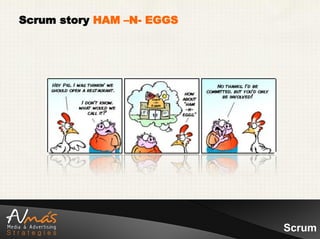
Scrum story HAM –N- EGGS


                           Scrum
What is Scrum?


 Scrum is an agile process most commonly used for product
   development, especially software development.
 Scrum is, however, a general-purpose Project Management
   Framework that is applicable to any project with aggressive
   deadlines with complex requirements and a degree of
   uniqueness.
 In Scrum, projects progress via a series of iterations called
   sprints. Each sprint is typically 2-4 weeks long.


                                                                  Scrum
The Scrum Framework in 3 slides


 A product owner creates a prioritized wish list called
  a product backlog.
 During sprint planning, the team pulls a small chunk
  from the top of that wishlist, a sprint backlog, and
  decides how to implement those pieces.
 The team has a certain amount of time, a sprint, to
  complete its work - usually two to four weeks - but
  meets each day to assess its progress (daily scrum).


                                                         Scrum
The Scrum Framework in 3 slides


 Along the way, the ScrumMaster keeps the team
  focused on its goal.
 At the end of the sprint, the work should be potentially
  shippable, as in ready to hand to a customer, put on a
  store shelf, or show to a stakeholder.


                                                       Scrum
The Scrum Framework in 3 slides

 The sprint ends with a sprint review and retrospective.
 As the next sprint begins, the team chooses another
  chunk of the product backlog and begins working again.


The cycle repeats until enough items in the product backlog
have been completed, the budget is depleted, or a deadline
arrives. Which of these milestones marks the end of the
work is entirely specific to the project. No matter which
impetus stops work, Scrum ensures that the most valuable
work has been completed when the project ends.


                                                        Scrum
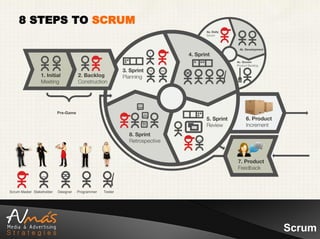
8 STEPS TO SCRUM


                           Pre-Game


Scrum Master Stakeholder   Designer   Programmer   Tester


                                                            Scrum
8 STEPS TO SCRUM


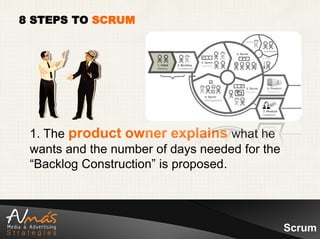
 1. The product owner explains what he
 wants and the number of days needed for the
 “Backlog Construction” is proposed.


                                               Scrum
8 STEPS TO SCRUM


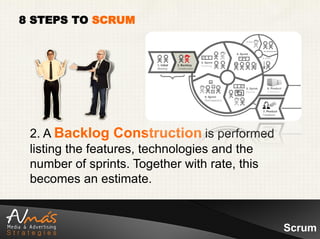
 2. A Backlog Construction is performed
 listing the features, technologies and the
 number of sprints. Together with rate, this
 becomes an estimate.


                                               Scrum
8 STEPS TO SCRUM


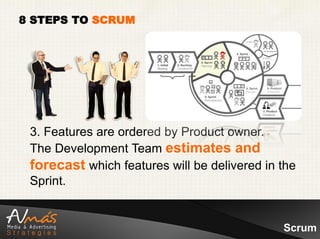
 3. Features are ordered by Product owner.
 The Development Team estimates and
 forecast which features will be delivered in the
 Sprint.


                                              Scrum
8 STEPS TO SCRUM


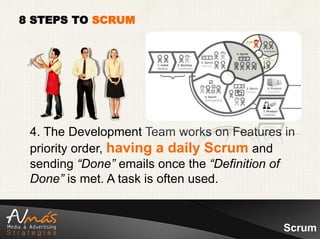
 4. The Development Team works on Features in
 priority order, having a daily Scrum and
 sending “Done” emails once the “Definition of
 Done” is met. A task is often used.


                                            Scrum
8 STEPS TO SCRUM


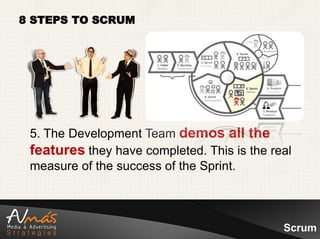
 5. The Development Team demos all the
 features they have completed. This is the real
 measure of the success of the Sprint.


                                             Scrum
8 STEPS TO SCRUM


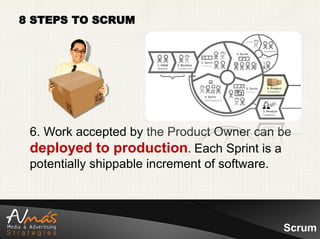
 6. Work accepted by the Product Owner can be
 deployed to production. Each Sprint is a
 potentially shippable increment of software.


                                           Scrum
8 STEPS TO SCRUM


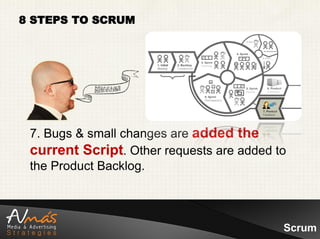
 7. Bugs & small changes are added the
 current Script. Other requests are added to
 the Product Backlog.


                                           Scrum
8 STEPS TO SCRUM


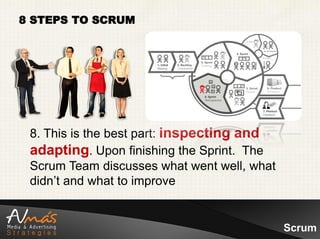
 8. This is the best part: inspecting and
 adapting. Upon finishing the Sprint. The
 Scrum Team discusses what went well, what
 didn’t and what to improve


                                             Scrum
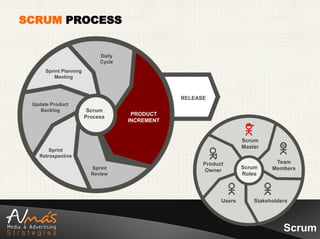
SCRUM PROCESS


                             Daily
                             Cycle
      Sprint Planning
         Meeting


                                                 RELEASE
 Update Product
    Backlog              Scrum
                                      PRODUCT
                        Process
                                     INCREMENT


                                                                     Scrum
                                                                     Master
       Sprint
   Retrospective
                                                       Product                  Team
                          Sprint                                     Scrum     Members
                                                       Owner
                          Review                                     Roles


                                                             Users       Stakeholders


                                                                                   Scrum
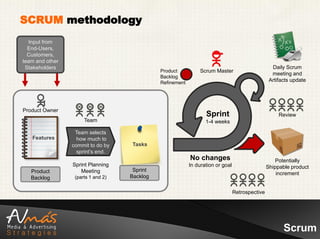
SCRUM methodology
  Input from
  End-Users,
  Customers,
team and other
 Stakeholders                                                                                      Daily Scrum
                                              Product           Scrum Master
                                                                                                   meeting and
                                              Backlog
                                              Refinement                                          Artifacts update


Product Owner
                                                                  Sprint                              Review
                      Team                                        1-4 weeks

                  Team selects
   Features        how much to
                 commit to do by    Tasks
                   sprint’s end.
                                                           No changes                               Potentially
                 Sprint Planning                           In duration or goal                   Shippable product
   Product          Meeting          Sprint
                                                                                                     increment
   Backlog        (parts 1 and 2)   Backlog

                                                                                 Retrospective


                                                                                                        Scrum
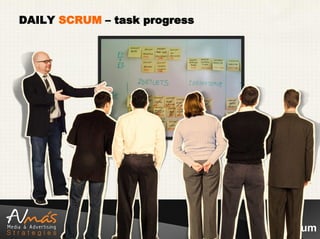
DAILY SCRUM – task progress


                              Scrum
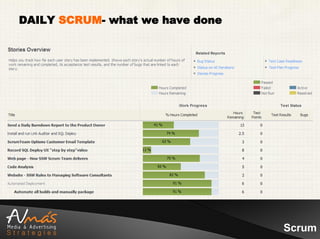
DAILY SCRUM- what we have done


                                 Scrum
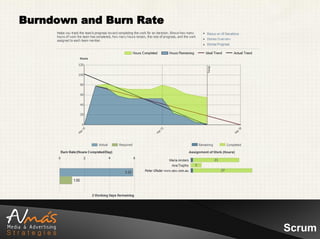
Burndown and Burn Rate


                         Scrum
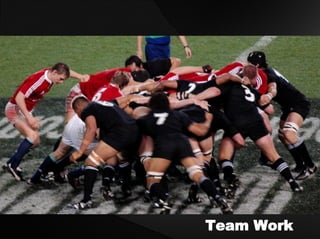
Team Work
Contact andresvargas@avmas.com   @andresvargas

Scrum - A different approach to project management

  • 1.
    SCRUM… Not exactly theRugby term, but still we like it!
  • 2.
    Scrum story HAM–N- EGGS Scrum
  • 3.
    What is Scrum? Scrum is an agile process most commonly used for product development, especially software development.  Scrum is, however, a general-purpose Project Management Framework that is applicable to any project with aggressive deadlines with complex requirements and a degree of uniqueness.  In Scrum, projects progress via a series of iterations called sprints. Each sprint is typically 2-4 weeks long. Scrum
  • 4.
    The Scrum Frameworkin 3 slides  A product owner creates a prioritized wish list called a product backlog.  During sprint planning, the team pulls a small chunk from the top of that wishlist, a sprint backlog, and decides how to implement those pieces.  The team has a certain amount of time, a sprint, to complete its work - usually two to four weeks - but meets each day to assess its progress (daily scrum). Scrum
  • 5.
    The Scrum Frameworkin 3 slides  Along the way, the ScrumMaster keeps the team focused on its goal.  At the end of the sprint, the work should be potentially shippable, as in ready to hand to a customer, put on a store shelf, or show to a stakeholder. Scrum
  • 6.
    The Scrum Frameworkin 3 slides  The sprint ends with a sprint review and retrospective.  As the next sprint begins, the team chooses another chunk of the product backlog and begins working again. The cycle repeats until enough items in the product backlog have been completed, the budget is depleted, or a deadline arrives. Which of these milestones marks the end of the work is entirely specific to the project. No matter which impetus stops work, Scrum ensures that the most valuable work has been completed when the project ends. Scrum
  • 7.
    8 STEPS TOSCRUM Pre-Game Scrum Master Stakeholder Designer Programmer Tester Scrum
  • 8.
    8 STEPS TOSCRUM 1. The product owner explains what he wants and the number of days needed for the “Backlog Construction” is proposed. Scrum
  • 9.
    8 STEPS TOSCRUM 2. A Backlog Construction is performed listing the features, technologies and the number of sprints. Together with rate, this becomes an estimate. Scrum
  • 10.
    8 STEPS TOSCRUM 3. Features are ordered by Product owner. The Development Team estimates and forecast which features will be delivered in the Sprint. Scrum
  • 11.
    8 STEPS TOSCRUM 4. The Development Team works on Features in priority order, having a daily Scrum and sending “Done” emails once the “Definition of Done” is met. A task is often used. Scrum
  • 12.
    8 STEPS TOSCRUM 5. The Development Team demos all the features they have completed. This is the real measure of the success of the Sprint. Scrum
  • 13.
    8 STEPS TOSCRUM 6. Work accepted by the Product Owner can be deployed to production. Each Sprint is a potentially shippable increment of software. Scrum
  • 14.
    8 STEPS TOSCRUM 7. Bugs & small changes are added the current Script. Other requests are added to the Product Backlog. Scrum
  • 15.
    8 STEPS TOSCRUM 8. This is the best part: inspecting and adapting. Upon finishing the Sprint. The Scrum Team discusses what went well, what didn’t and what to improve Scrum
  • 16.
    SCRUM PROCESS Daily Cycle Sprint Planning Meeting RELEASE Update Product Backlog Scrum PRODUCT Process INCREMENT Scrum Master Sprint Retrospective Product Team Sprint Scrum Members Owner Review Roles Users Stakeholders Scrum
  • 17.
    SCRUM methodology Input from End-Users, Customers, team and other Stakeholders Daily Scrum Product Scrum Master meeting and Backlog Refinement Artifacts update Product Owner Sprint Review Team 1-4 weeks Team selects Features how much to commit to do by Tasks sprint’s end. No changes Potentially Sprint Planning In duration or goal Shippable product Product Meeting Sprint increment Backlog (parts 1 and 2) Backlog Retrospective Scrum
  • 18.
    DAILY SCRUM –task progress Scrum
  • 19.
    DAILY SCRUM- whatwe have done Scrum
  • 20.
  • 21.
  • 22.