Analysis Paralysis
For all Business Analysts & You

Business Analyst Learnings
Analysis Paralysis
is
Not a physical disease.
It’s a state of mind that traps
you and stops you from
making progress.
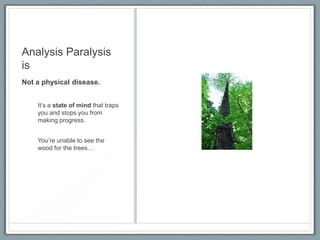
You’re unable to see the
wood for the trees…
Analysis Paralysis
is
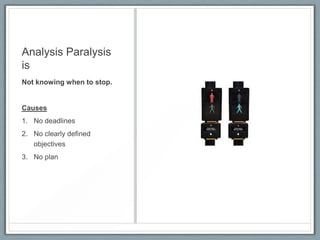
Not knowing when to stop.

Causes
1. No deadlines
2. No clearly defined
objectives
3. No plan
Analysis Paralysis
is
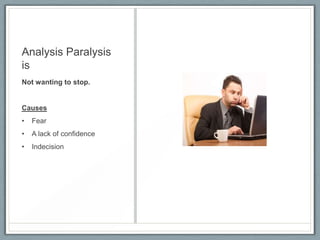
Not wanting to stop.

Causes
•

Fear

•

A lack of confidence

•

Indecision
Analysis Paralysis
is
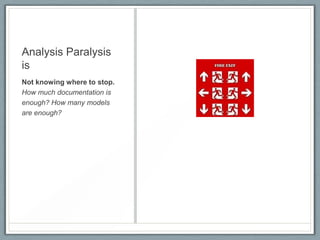
Not knowing where to stop.
How much documentation is
enough? How many models
are enough?
Analysis Paralysis
can lead to:
•

Project Delays

•

Scope Creep

•

Increased Risk

•

Wrong Decisions

•

Project Failure

•

Complexity

“It’s not enough to be busy,
so are the ants. The
question is, what are we
busy doing?”
– Henry David Thoreau
Useful Techniques
for avoiding Analysis Paralysis
1. Timeboxing
―To achieve great things, two things are needed: a plan and not quite enough time.‖
- Leonard Bernstein
Timeboxing ensures that deliverables are turned out within a specific timeframe.
2. 80/20 Rule
―Things which matter most must never be at the mercy of things which matter least.‖
― Johann Wolfgang von Goethe
Prioritize. 80% of the benefits can often be obtained with 20% of the work. Don’t get lost in the
remaining 20%.
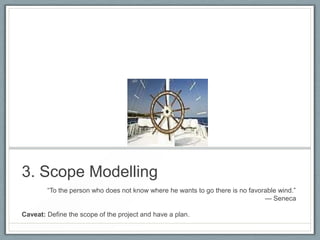
3. Scope Modelling
―To the person who does not know where he wants to go there is no favorable wind.‖
— Seneca
Caveat: Define the scope of the project and have a plan.
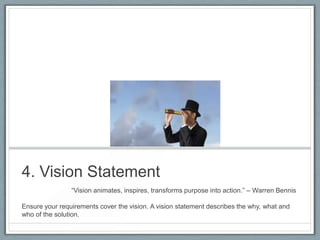
4. Vision Statement
―Vision animates, inspires, transforms purpose into action.‖ – Warren Bennis
Ensure your requirements cover the vision. A vision statement describes the why, what and
who of the solution.
And if these fail you…
• Step away
• Take a Break and
• Try Again

Be guided by the vision and
scope of your project!
Read more on Managing
Analysis Paralysis

Analysis paralysis

  • 1.
    Analysis Paralysis For allBusiness Analysts & You Business Analyst Learnings
  • 2.
    Analysis Paralysis is Not aphysical disease. It’s a state of mind that traps you and stops you from making progress. You’re unable to see the wood for the trees…
  • 3.
    Analysis Paralysis is Not knowingwhen to stop. Causes 1. No deadlines 2. No clearly defined objectives 3. No plan
  • 4.
    Analysis Paralysis is Not wantingto stop. Causes • Fear • A lack of confidence • Indecision
  • 5.
    Analysis Paralysis is Not knowingwhere to stop. How much documentation is enough? How many models are enough?
  • 6.
    Analysis Paralysis can leadto: • Project Delays • Scope Creep • Increased Risk • Wrong Decisions • Project Failure • Complexity “It’s not enough to be busy, so are the ants. The question is, what are we busy doing?” – Henry David Thoreau
  • 7.
  • 8.
    1. Timeboxing ―To achievegreat things, two things are needed: a plan and not quite enough time.‖ - Leonard Bernstein Timeboxing ensures that deliverables are turned out within a specific timeframe.
  • 9.
    2. 80/20 Rule ―Thingswhich matter most must never be at the mercy of things which matter least.‖ ― Johann Wolfgang von Goethe Prioritize. 80% of the benefits can often be obtained with 20% of the work. Don’t get lost in the remaining 20%.
  • 10.
    3. Scope Modelling ―Tothe person who does not know where he wants to go there is no favorable wind.‖ — Seneca Caveat: Define the scope of the project and have a plan.
  • 11.
    4. Vision Statement ―Visionanimates, inspires, transforms purpose into action.‖ – Warren Bennis Ensure your requirements cover the vision. A vision statement describes the why, what and who of the solution.
  • 12.
    And if thesefail you… • Step away • Take a Break and • Try Again Be guided by the vision and scope of your project!
  • 13.
    Read more onManaging Analysis Paralysis