Informative Speech
By
Denise Resen
 First: What are Dental Stem Cells
 Second: What benefits are derived from
Dental Stem Cells
 Third: How are Dental Stem Cells harvested
and stored
 Fourth: When will this new technology be
available
 I have worked in dental field since 1973
 Many articles recently in dental journals
regarding the discovery and uses of Dental
Stem Cells
 Stem cells from placenta in the news; very
controversial
 Ethical issues
 Women having babies to use the placenta for
stem cell harvesting.
 Dental Stem Cells are preserved for future use
to treat diseases
 Less ethical and controversial considerations
than stem cells harvested from the placenta
 Ease of harvesting stem cells from teeth
 Deters women from having a baby just to use
the placenta/embryonic cells to harvest stem
cells
 The way of the future
 Dental stem cells were discovered in dental
pulp in the year 2000.
 Stem cells are immature, unspecialized cells.
 Stem Cells are able to differentiate into
specialized cell types.
 Using one’s own cells reduces the chances of
infection or rejection of donor cells.
 Banking dental stem cells offer the patient an
alternative to the more invasive and ethically
controversial sources of banking stem cells.
 Ease of access; dental stem cells are the most
accessible stem cells.
Used to treat:
 Parkinson’s Disease
 Alzheimer’s
 Autoimmune Disease
 Cardiovascular Disease
 Regenerative Therapy (spinal or brain injury)
 Diabetes
 Many more uses are being discovered with
continued research.
 Dental stem cells are harvested from pulp
tissue of a newly extracted tooth.
 Stem cells within the pulp at the apex (end of
the root) of developing teeth are a valuable
source of very proliferative stem cells.
 Research shows that cells can be preserved
under cryopreservation.
 Stored cells have the ability to differentiate
and proliferate.
 Dental professionals can now assist their
patient with recovering and banking their
dental stem cells.
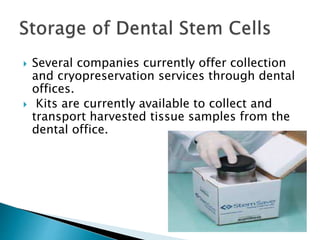
 Several companies currently offer collection
and cryopreservation services through dental
offices.
 Kits are currently available to collect and
transport harvested tissue samples from the
dental office.
 Dental Stem Cells are unspecified cells; cells
that designated to regenerate growth of
human tissues.
 Dental Stem Cells are stored for future use to
treat diseases or tissue regeneration.
 Dental Stem Cells are harvested from a newly
extracted tooth.
 Ease of storage in kits provided at the dental
clinic; technology is now available.
Stemsave.com
Store-a-tooth.com
Spolarich, A. E., 2009. The cell revolution.
Dimensions of Dental Hygiene, 7(1):30-33.
Spolarich, A. E., 2009. The regenerative
process. Dimensions of Dental Hygiene, 7
(2):38-41.
Giannobile, W., 2007. A paradigm shift.
Dimensions of Dental Hygiene, 5 (4): 14-15.

Stem cells

  • 1.
  • 2.
     First: Whatare Dental Stem Cells  Second: What benefits are derived from Dental Stem Cells  Third: How are Dental Stem Cells harvested and stored  Fourth: When will this new technology be available
  • 3.
     I haveworked in dental field since 1973  Many articles recently in dental journals regarding the discovery and uses of Dental Stem Cells  Stem cells from placenta in the news; very controversial  Ethical issues  Women having babies to use the placenta for stem cell harvesting.
  • 4.
     Dental StemCells are preserved for future use to treat diseases  Less ethical and controversial considerations than stem cells harvested from the placenta  Ease of harvesting stem cells from teeth  Deters women from having a baby just to use the placenta/embryonic cells to harvest stem cells  The way of the future
  • 5.
     Dental stemcells were discovered in dental pulp in the year 2000.  Stem cells are immature, unspecialized cells.  Stem Cells are able to differentiate into specialized cell types.
  • 6.
     Using one’sown cells reduces the chances of infection or rejection of donor cells.  Banking dental stem cells offer the patient an alternative to the more invasive and ethically controversial sources of banking stem cells.  Ease of access; dental stem cells are the most accessible stem cells.
  • 7.
    Used to treat: Parkinson’s Disease  Alzheimer’s  Autoimmune Disease  Cardiovascular Disease  Regenerative Therapy (spinal or brain injury)  Diabetes  Many more uses are being discovered with continued research.
  • 8.
     Dental stemcells are harvested from pulp tissue of a newly extracted tooth.  Stem cells within the pulp at the apex (end of the root) of developing teeth are a valuable source of very proliferative stem cells.
  • 9.
     Research showsthat cells can be preserved under cryopreservation.  Stored cells have the ability to differentiate and proliferate.  Dental professionals can now assist their patient with recovering and banking their dental stem cells.
  • 10.
     Several companiescurrently offer collection and cryopreservation services through dental offices.  Kits are currently available to collect and transport harvested tissue samples from the dental office.
  • 11.
     Dental StemCells are unspecified cells; cells that designated to regenerate growth of human tissues.  Dental Stem Cells are stored for future use to treat diseases or tissue regeneration.  Dental Stem Cells are harvested from a newly extracted tooth.  Ease of storage in kits provided at the dental clinic; technology is now available.
  • 12.
    Stemsave.com Store-a-tooth.com Spolarich, A. E.,2009. The cell revolution. Dimensions of Dental Hygiene, 7(1):30-33. Spolarich, A. E., 2009. The regenerative process. Dimensions of Dental Hygiene, 7 (2):38-41. Giannobile, W., 2007. A paradigm shift. Dimensions of Dental Hygiene, 5 (4): 14-15.