UTERINE RUPTURE
Deepa Mishra
Assistant Professor (OBG)
Introduction
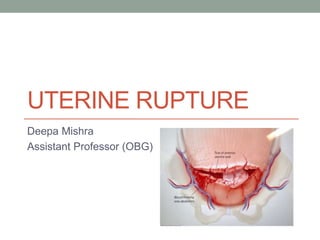
• Uterine rupture is when
the muscular wall of the
uterus tears during
pregnancy or childbirth
• Symptoms while
classically including
increased pain, vaginal
bleeding, or a change in
contractions are not
always present.
• Disability or death of the
mother or baby may
result.
Definition
• Uterine rupture is giving way of gravid uterus or
dissolution in the continuity of uterine wall anytime after
28 weeks of gestation with or without expulsion of the
fetus.
Incidence
• Rates of uterine rupture during vaginal birth following one
previous C-section, done by the typical technique, are
estimated at 0.9%
• Rates are greater among those who have had multiple
prior C-sections or an atypical type of C-section.
• In those who do have uterine scarring, the risk during a
vaginal birth is about 1 per 12,000
• Risk of death of the baby is about 6%
Etiology
Risk Factors
• Previous cesarean section
• Myomectomy
• Dysfunctional labor
• Labor augmentation by oxytocin or prostaglandins
• High parity
• First pregnancy- very rare
Types of uterine rupture
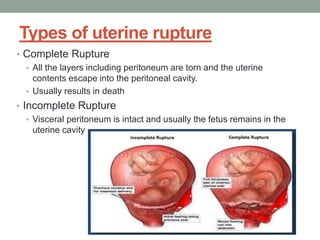
• Complete Rupture
• All the layers including peritoneum are torn and the uterine
contents escape into the peritoneal cavity.
• Usually results in death
• Incomplete Rupture
• Visceral peritoneum is intact and usually the fetus remains in the
uterine cavity
Sign & Symptoms
• Uterine dehiscence and abdominal pain and vaginal
bleeding
• Deterioration of fetal heart rate
• Loss of fetal station on manual vaginal exam
• Hypovolemic shock due to intrabdominal bleeding
• Chest pain between the scapulae, pain during inspiration
due to irritation of blood below the perineum
• Cessation of uterine contractions
• Palpation of fetus outside the uterus
• Signs of abdominal pregnancy
• Post term pregnancy
Diagnosis
• Signs of obstructed labor with dehydration, exhaustion,
tachycardia raised temperature tonic contraction ,
pathological retraction ring
• Absent fetal heart sound
• On PV hot, dry vagina with a large caput over the
presenting part
Prevention
• Early diagnosis and management of CPD mal
presentation and obstructed labor
• Proper selection of cases for vaginal delivery
• Carefull monitoring of oxytocin infusion specially in
multipara
• Avoid intra uterine manipulation no version in single fetus
• Instrumental delivery after cervical dilatation
• Immediate CS in obstructed labor
• Hospital delivery for high risk cases
• ECV should be avoided during general anaesthesia
• Careful manual removal of placenta
Treatment
• Resuscitation with adequate hydration and blood
transfusion
• Laprotomy
• Hysterectomy
• Repair
Complication
• Rupture uterus with haemorrhage, shock and sepsis
• Fetal loss is high in spontaneous and traumatic rupture
• Mortality is low in LSCS scar rupture
Uterine rupture

Uterine rupture

  • 1.
  • 2.
    Introduction • Uterine ruptureis when the muscular wall of the uterus tears during pregnancy or childbirth • Symptoms while classically including increased pain, vaginal bleeding, or a change in contractions are not always present. • Disability or death of the mother or baby may result.
  • 3.
    Definition • Uterine ruptureis giving way of gravid uterus or dissolution in the continuity of uterine wall anytime after 28 weeks of gestation with or without expulsion of the fetus.
  • 4.
    Incidence • Rates ofuterine rupture during vaginal birth following one previous C-section, done by the typical technique, are estimated at 0.9% • Rates are greater among those who have had multiple prior C-sections or an atypical type of C-section. • In those who do have uterine scarring, the risk during a vaginal birth is about 1 per 12,000 • Risk of death of the baby is about 6%
  • 5.
  • 6.
    Risk Factors • Previouscesarean section • Myomectomy • Dysfunctional labor • Labor augmentation by oxytocin or prostaglandins • High parity • First pregnancy- very rare
  • 7.
    Types of uterinerupture • Complete Rupture • All the layers including peritoneum are torn and the uterine contents escape into the peritoneal cavity. • Usually results in death • Incomplete Rupture • Visceral peritoneum is intact and usually the fetus remains in the uterine cavity
  • 8.
    Sign & Symptoms •Uterine dehiscence and abdominal pain and vaginal bleeding • Deterioration of fetal heart rate • Loss of fetal station on manual vaginal exam • Hypovolemic shock due to intrabdominal bleeding • Chest pain between the scapulae, pain during inspiration due to irritation of blood below the perineum • Cessation of uterine contractions • Palpation of fetus outside the uterus • Signs of abdominal pregnancy • Post term pregnancy
  • 9.
    Diagnosis • Signs ofobstructed labor with dehydration, exhaustion, tachycardia raised temperature tonic contraction , pathological retraction ring • Absent fetal heart sound • On PV hot, dry vagina with a large caput over the presenting part
  • 10.
    Prevention • Early diagnosisand management of CPD mal presentation and obstructed labor • Proper selection of cases for vaginal delivery • Carefull monitoring of oxytocin infusion specially in multipara • Avoid intra uterine manipulation no version in single fetus • Instrumental delivery after cervical dilatation • Immediate CS in obstructed labor • Hospital delivery for high risk cases • ECV should be avoided during general anaesthesia • Careful manual removal of placenta
  • 11.
    Treatment • Resuscitation withadequate hydration and blood transfusion • Laprotomy • Hysterectomy • Repair
  • 12.
    Complication • Rupture uteruswith haemorrhage, shock and sepsis • Fetal loss is high in spontaneous and traumatic rupture • Mortality is low in LSCS scar rupture