Prepared by: Deah Grace Galas
• Teaching is a process that
facilitates learning.
• Teaching is the specialized
application of knowledge, skills
and attributes designed to provide
unique service to meet the
educational needs of the
individual and the society.
• Teaching emphasizes the
development of values and guides
students in their social
relationships.
• A profession is an occupation that
involves specialised training and
formal qualification before one is
allowed to practice or work.
• Society and community place a
great deal of trust in the
professions.
A formal qualification (university or
college diploma, degree) gained over
time.
Specialized Knowledge (e.g. teaching
secondary Mathematics)
License or permission to practice
Exhibits high agreed standards of
behavior and practice
Someone with high personal standards
and values
• The certificated teacher is
the essential element in the
delivery of instruction to
students, regardless of the
mode of instruction.
• A teacher has professional
knowledge and skills gained
through formal preparation and
experience. Teachers provide
personal, caring service to
students by diagnosing their
needs and by planning, selecting
and using methods and
evaluation procedures designed
to promote learning.
• The processes of teaching include
understanding and adhering to legal
and legislated frameworks and
policies; identifying and responding to
student learning needs; providing
effective and responsive instruction;
assessing and communicating student
learning; developing and maintaining a
safe, respectful environment conducive
to student learning; establishing and
maintaining professional relationships;
and engaging in reflective professional
practice.
Commitment
to Students
and Student
Learning
Leadership in
Learning
Communities
Professional
Knowledge
Professional
Practice
Outgoing
Professional
Learning Standards
of Practice
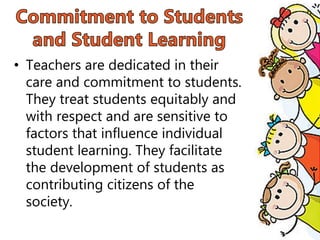
• Teachers are dedicated in their
care and commitment to students.
They treat students equitably and
with respect and are sensitive to
factors that influence individual
student learning. They facilitate
the development of students as
contributing citizens of the
society.
Teachers promote and participate in
the creation of collaborative, safe
and supportive learning
communities. They recognize their
shared responsibilities and leaderhip
roles in facilitating student success.
They maintain and uphold the
principles of the ethical standards in
these learning communities.
Teachers strive to be current in their
professional knowledge and recognize
its relationship to practice. They
understand and reflect on student
development, learning theory,
pedagogy, curriculum, ethics, and
educational research and related
policies and legislation to inform
professional judgment in practice.
Teachers apply
professional knowledge
and experience to
promote student learning.
Teachers use appropriate
pedagogy, assessment and
evaluation, resources and
technology in planning for
and responding to the needs
of the individual students and
learning communities.
Teachers refine their
professional practice
through ongoing inquiry,
dialogue, and reflection.
Teachers recognize that
commitment to ongoing
professional learning is integral to
effective practice and to student
learning.
Professional practice and self-
directed learning are informed by
experience, research, collaboration
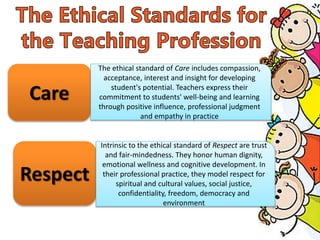
Care
Respect
The ethical standard of Care includes compassion,
acceptance, interest and insight for developing
student's potential. Teachers express their
commitment to students' well-being and learning
through positive influence, professional judgment
and empathy in practice
Intrinsic to the ethical standard of Respect are trust
and fair-mindedness. They honor human dignity,
emotional wellness and cognitive development. In
their professional practice, they model respect for
spiritual and cultural values, social justice,
confidentiality, freedom, democracy and
environment
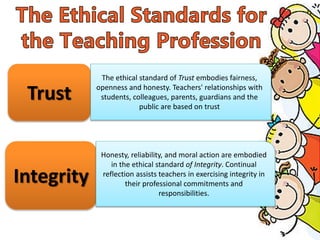
Trust
Integrity
The ethical standard of Trust embodies fairness,
openness and honesty. Teachers' relationships with
students, colleagues, parents, guardians and the
public are based on trust
Honesty, reliability, and moral action are embodied
in the ethical standard of Integrity. Continual
reflection assists teachers in exercising integrity in
their professional commitments and
responsibilities.
1. To inspire teachers to reflect and
uphold the honor and dignity of the
teaching profession
2. To identify the ethical responsibilities
and commitments in the teaching
profession
3. To guide ethical decisions and actions
in the teaching profession
4. To promote public trust and
confidence in the teaching profession

The Teaching Profession

  • 1.
    Prepared by: DeahGrace Galas
  • 2.
    • Teaching isa process that facilitates learning. • Teaching is the specialized application of knowledge, skills and attributes designed to provide unique service to meet the educational needs of the individual and the society.
  • 3.
    • Teaching emphasizesthe development of values and guides students in their social relationships.
  • 4.
    • A professionis an occupation that involves specialised training and formal qualification before one is allowed to practice or work. • Society and community place a great deal of trust in the professions.
  • 5.
    A formal qualification(university or college diploma, degree) gained over time. Specialized Knowledge (e.g. teaching secondary Mathematics) License or permission to practice Exhibits high agreed standards of behavior and practice Someone with high personal standards and values
  • 6.
    • The certificatedteacher is the essential element in the delivery of instruction to students, regardless of the mode of instruction.
  • 7.
    • A teacherhas professional knowledge and skills gained through formal preparation and experience. Teachers provide personal, caring service to students by diagnosing their needs and by planning, selecting and using methods and evaluation procedures designed to promote learning.
  • 8.
    • The processesof teaching include understanding and adhering to legal and legislated frameworks and policies; identifying and responding to student learning needs; providing effective and responsive instruction; assessing and communicating student learning; developing and maintaining a safe, respectful environment conducive to student learning; establishing and maintaining professional relationships; and engaging in reflective professional practice.
  • 9.
    Commitment to Students and Student Learning Leadershipin Learning Communities Professional Knowledge Professional Practice Outgoing Professional Learning Standards of Practice
  • 10.
    • Teachers arededicated in their care and commitment to students. They treat students equitably and with respect and are sensitive to factors that influence individual student learning. They facilitate the development of students as contributing citizens of the society.
  • 11.
    Teachers promote andparticipate in the creation of collaborative, safe and supportive learning communities. They recognize their shared responsibilities and leaderhip roles in facilitating student success. They maintain and uphold the principles of the ethical standards in these learning communities.
  • 12.
    Teachers strive tobe current in their professional knowledge and recognize its relationship to practice. They understand and reflect on student development, learning theory, pedagogy, curriculum, ethics, and educational research and related policies and legislation to inform professional judgment in practice.
  • 13.
    Teachers apply professional knowledge andexperience to promote student learning.
  • 14.
    Teachers use appropriate pedagogy,assessment and evaluation, resources and technology in planning for and responding to the needs of the individual students and learning communities.
  • 15.
    Teachers refine their professionalpractice through ongoing inquiry, dialogue, and reflection.
  • 16.
    Teachers recognize that commitmentto ongoing professional learning is integral to effective practice and to student learning. Professional practice and self- directed learning are informed by experience, research, collaboration
  • 17.
    Care Respect The ethical standardof Care includes compassion, acceptance, interest and insight for developing student's potential. Teachers express their commitment to students' well-being and learning through positive influence, professional judgment and empathy in practice Intrinsic to the ethical standard of Respect are trust and fair-mindedness. They honor human dignity, emotional wellness and cognitive development. In their professional practice, they model respect for spiritual and cultural values, social justice, confidentiality, freedom, democracy and environment
  • 18.
    Trust Integrity The ethical standardof Trust embodies fairness, openness and honesty. Teachers' relationships with students, colleagues, parents, guardians and the public are based on trust Honesty, reliability, and moral action are embodied in the ethical standard of Integrity. Continual reflection assists teachers in exercising integrity in their professional commitments and responsibilities.
  • 19.
    1. To inspireteachers to reflect and uphold the honor and dignity of the teaching profession 2. To identify the ethical responsibilities and commitments in the teaching profession 3. To guide ethical decisions and actions in the teaching profession 4. To promote public trust and confidence in the teaching profession