Key Challenges of Developing a Training Program for Multiple Learners
Know about the key challenges faced by training managers & how to overcome them, when developing online training programs for multiple learners in this slideshare. Learn More: http://bit.ly/1jwE26b
Key Challenges of Developing a Training Program for Multiple Learners
1.
Key Challenges ofDeveloping a Training
Program for Multiple Learners
2.
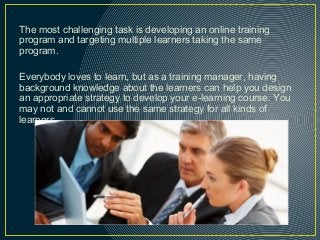
The most challengingtask is developing an online training
program and targeting multiple learners taking the same
program.
Everybody loves to learn, but as a training manager, having
background knowledge about the learners can help you design
an appropriate strategy to develop your e-learning course. You
may not and cannot use the same strategy for all kinds of
learners.
3.
If you understandthe context from which your
learners come, it will help you design a course
that is more learner-centric.
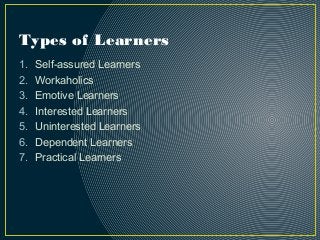
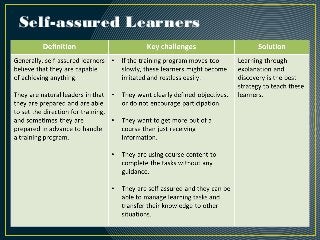
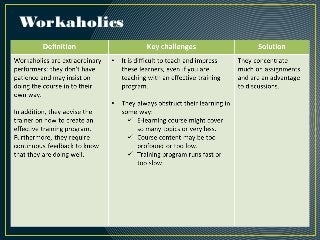
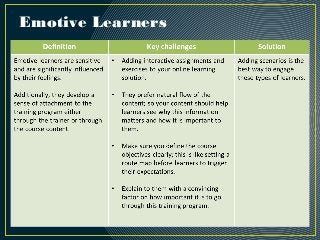
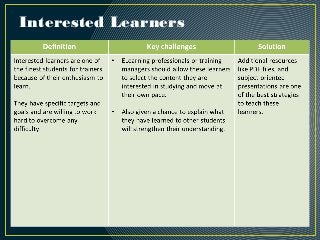
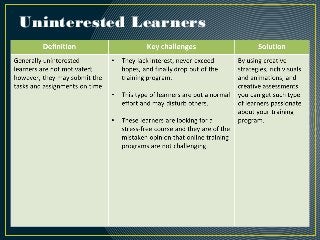
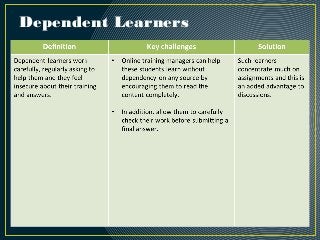
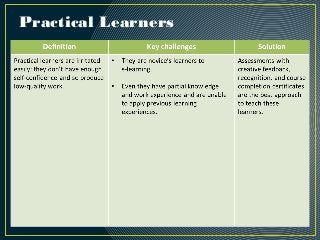
I would like to share with you various types of
learners that I have come across and the key
challenges to develop an online training program
for them.
Summary
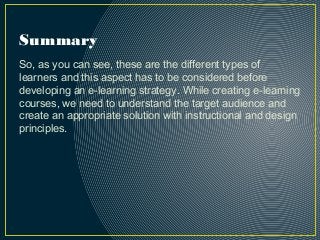
So, as youcan see, these are the different types of
learners and this aspect has to be considered before
developing an e-learning strategy. While creating e-learning
courses, we need to understand the target audience and
create an appropriate solution with instructional and design
principles.
13.
To know moreabout how to align e-learning for workplace training, checkout
our free eBook on "Strategically Aligning E-learning for Holistic Workplace
Training“
http://blog.commlabindia.com/elearning-design/key-challenges-for-a-training-manager



![6 Types of eLearning Videos to Enliven Your Corporate Training! [SlideShare]](https://cdn.slidesharecdn.com/ss_thumbnails/typesoflearningvideos-230120121056-a3bcc4b8-thumbnail.jpg?width=640&height=640&fit=bounds)


