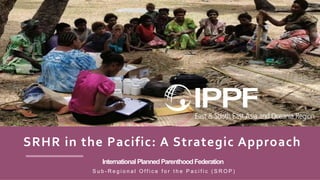
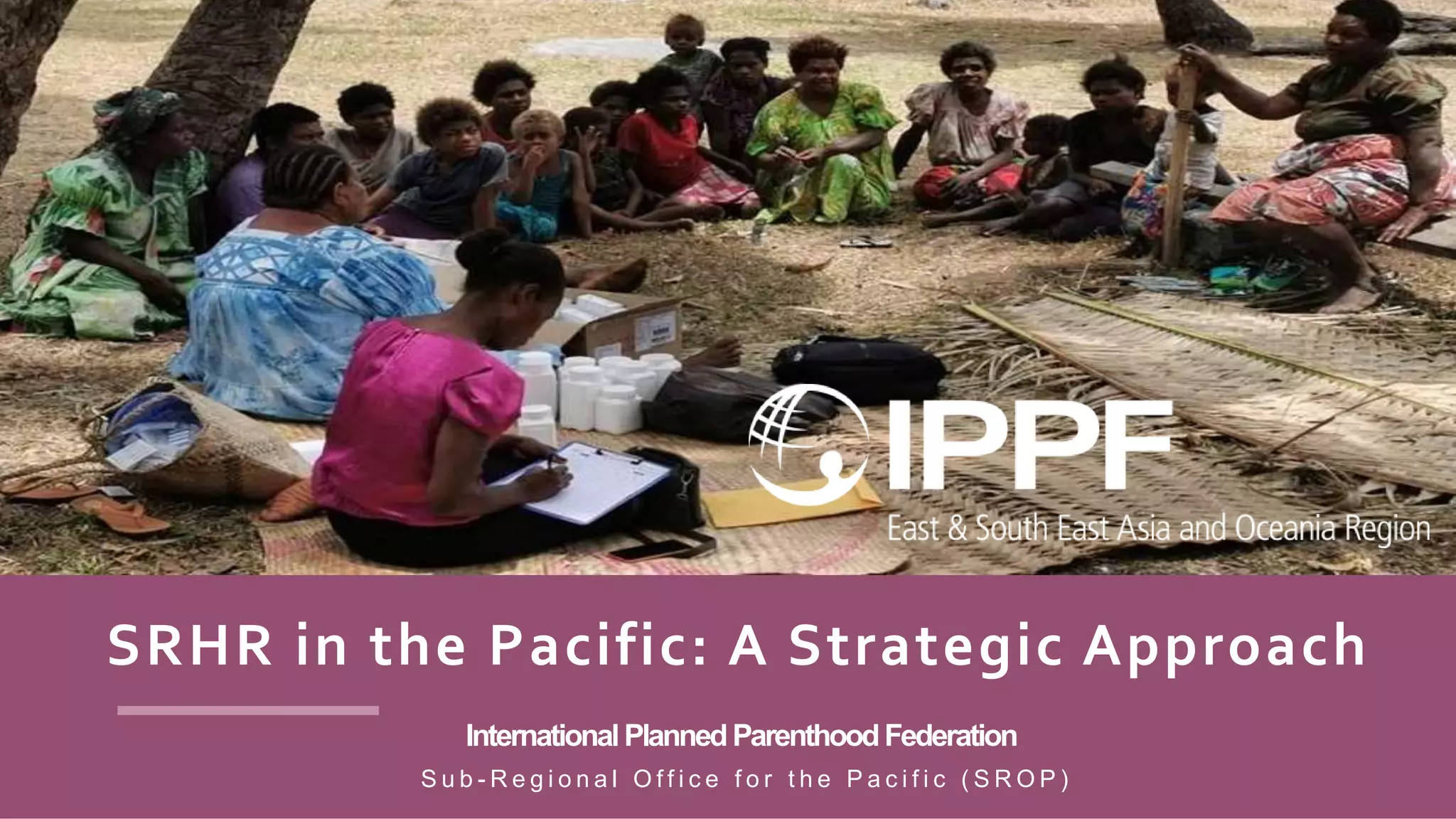
InternationalPlannedParenthoodFederation
S u b - R e g i o n a l O f f i c e f o r t h e P a c i f i c ( S R O P )
SRHR in the Pacific: A Strategic Approach
Over 30-year history
8 Member Associations, 1
Collaborating Partner
DFAT and MFAT are key donor
partners
Sub-Regional Office for the
Pacific, under ESEAOR
Key regional partners:
UNFPA, PDF, UN Women
IPPF
inthe
Pacific
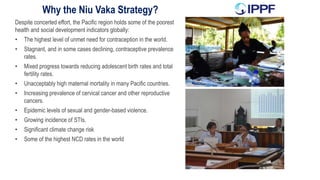
Despite concerted effort, the Pacific region holds some of the poorest
health and social development indicators globally:
• The highest level of unmet need for contraception in the world.
• Stagnant, and in some cases declining, contraceptive prevalence
rates.
• Mixed progress towards reducing adolescent birth rates and total
fertility rates.
• Unacceptably high maternal mortality in many Pacific countries.
• Increasing prevalence of cervical cancer and other reproductive
cancers.
• Epidemic levels of sexual and gender-based violence.
• Growing incidence of STIs.
• Significant climate change risk
• Some of the highest NCD rates in the world
Why the Niu Vaka Strategy?
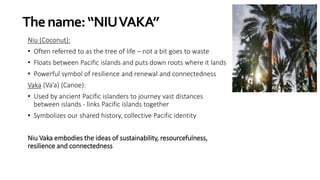
Thename:“NIUVAKA”
Niu (Coconut):
• Often referred to as the tree of life – not a bit goes to waste
• Floats between Pacific islands and puts down roots where it lands
• Powerful symbol of resilience and renewal and connectedness
Vaka (Va’a) (Canoe):
• Used by ancient Pacific islanders to journey vast distances
between islands - links Pacific islands together
• Symbolizes our shared history, collective Pacific identity
Niu Vaka embodies the ideas of sustainability, resourcefulness,
resilience and connectedness
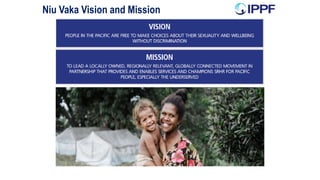
Niu Vaka Vision and Mission
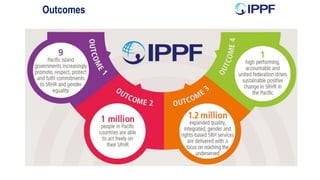
Outcomes
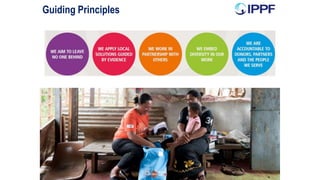
Guiding Principles
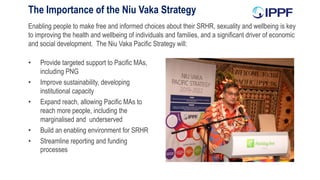
Enabling people to make free and informed choices about their SRHR, sexuality and wellbeing is key
to improving the health and wellbeing of individuals and families, and a significant driver of economic
and social development. The Niu Vaka Pacific Strategy will:
The Importance of the Niu Vaka Strategy
• Provide targeted support to Pacific MAs,
including PNG
• Improve sustainability, developing
institutional capacity
• Expand reach, allowing Pacific MAs to
reach more people, including the
marginalised and underserved
• Build an enabling environment for SRHR
• Streamline reporting and funding
processes
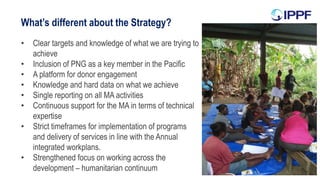
What’s different about the Strategy?
• Clear targets and knowledge of what we are trying to
achieve
• Inclusion of PNG as a key member in the Pacific
• A platform for donor engagement
• Knowledge and hard data on what we achieve
• Single reporting on all MA activities
• Continuous support for the MA in terms of technical
expertise
• Strict timeframes for implementation of programs
and delivery of services in line with the Annual
integrated workplans.
• Strengthened focus on working across the
development – humanitarian continuum
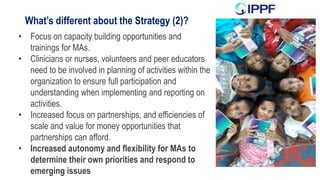
What’s different about the Strategy (2)?
• Focus on capacity building opportunities and
trainings for MAs.
• Clinicians or nurses, volunteers and peer educators
need to be involved in planning of activities within the
organization to ensure full participation and
understanding when implementing and reporting on
activities.
• Increased focus on partnerships, and efficiencies of
scale and value for money opportunities that
partnerships can afford.
• Increased autonomy and flexibility for MAs to
determine their own priorities and respond to
emerging issues
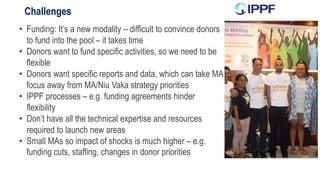
Challenges
• Funding: It’s a new modality – difficult to convince donors
to fund into the pool – it takes time
• Donors want to fund specific activities, so we need to be
flexible
• Donors want specific reports and data, which can take MA
focus away from MA/Niu Vaka strategy priorities
• IPPF processes – e.g. funding agreements hinder
flexibility
• Don’t have all the technical expertise and resources
required to launch new areas
• Small MAs so impact of shocks is much higher – e.g.
funding cuts, staffing, changes in donor priorities
StrategyM&E
Framework&
Target
Achievements
 2018 was baseline input and target
settings for PIC MAs
 2019 was the first year of achievements
of these targets and the PIC MAs have
exceeded or met targets Outcomes 1,2,4
 Outcome 3 had decreased in certain
targets i.e number of clients who are
‘marginalized or ‘underserved’ and
‘number of family planning clients, as a
result of 2018 results/baseline that
included humanitarian PIC response data.
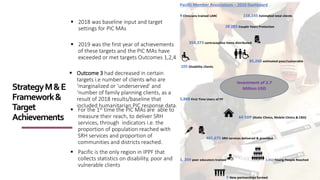
Pacific Member Associations – 2019 Dashboard
9 Clinicians trained LARC 158,145 Estimated total clients
28 282 Couple Years Protection
354,373 contraceptive items distributed
85,268 estimated poor/vulnerable
105 Disability clients
5,888 First Time Users of FP
64 SDP (Static Clinics, Mobile Clinics & CBD)
465,675 SRH services delivered & provided
1, 269 peer educators trained 1,457 Young People Reached
5 New partnerships formed
Investment of 2.7
Million USD
 For the 1st time the PIC MAs are able to
measure their reach, to deliver SRH
services, through indicators i.e. the
proportion of population reached with
SRH services and proportion of
communities and districts reached.
 Pacific is the only region in IPPF that
collects statistics on disability, poor and
vulnerable clients
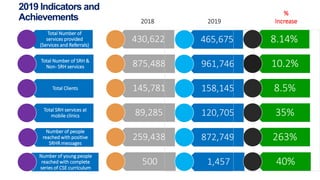
Total Number of
services provided
(Services and Referrals)
Total Number of SRH &
Non- SRH services
Total Clients
Total SRH services at
mobile clinics
Number of people
reached with positive
SRHR messages
Number of young people
reached with complete
series of CSE curriculum
430,622
875,488
145,781
89,285
259,438
500
465,675
961,746
158,145
120,705
872,749
1,457
2018 2019
8.14%
10.2%
8.5%
35%
263%
40%
%
Increase
2019 Indicators and
Achievements
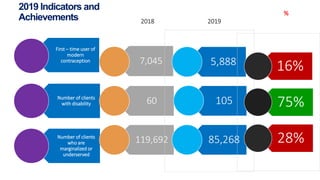
First – time user of
modern
contraception
Number of clients
with disability
Number of clients
who are
marginalized or
underserved
7,045
60
119,692
5,888
105
85,268
2018 2019
16%
75%
28%
%
2019 Indicators and
Achievements
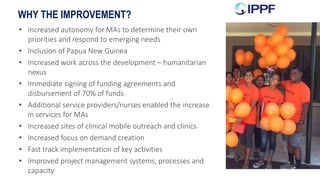
WHY THE IMPROVEMENT?
• Increased autonomy for MAs to determine their own
priorities and respond to emerging needs
• Inclusion of Papua New Guinea
• Increased work across the development – humanitarian
nexus
• Immediate signing of funding agreements and
disbursement of 70% of funds
• Additional service providers/nurses enabled the increase
in services for MAs
• Increased sites of clinical mobile outreach and clinics
• Increased focus on demand creation
• Fast track implementation of key activities
• Improved project management systems, processes and
capacity
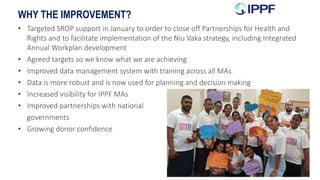
WHY THE IMPROVEMENT?
• Targeted SROP support in January to order to close off Partnerships for Health and
Rights and to facilitate implementation of the Niu Vaka strategy, including Integrated
Annual Workplan development
• Agreed targets so we know what we are achieving
• Improved data management system with training across all MAs
• Data is more robust and is now used for planning and decision making
• Increased visibility for IPPF MAs
• Improved partnerships with national
governments
• Growing donor confidence
Where to from here?

Plenary presentation: Karen Hill (SRHR in the Pacific: strategic approach)

  • 1.
    InternationalPlannedParenthoodFederation S u b- R e g i o n a l O f f i c e f o r t h e P a c i f i c ( S R O P ) SRHR in the Pacific: A Strategic Approach
  • 2.
    Over 30-year history 8Member Associations, 1 Collaborating Partner DFAT and MFAT are key donor partners Sub-Regional Office for the Pacific, under ESEAOR Key regional partners: UNFPA, PDF, UN Women IPPF inthe Pacific
  • 3.
    Despite concerted effort,the Pacific region holds some of the poorest health and social development indicators globally: • The highest level of unmet need for contraception in the world. • Stagnant, and in some cases declining, contraceptive prevalence rates. • Mixed progress towards reducing adolescent birth rates and total fertility rates. • Unacceptably high maternal mortality in many Pacific countries. • Increasing prevalence of cervical cancer and other reproductive cancers. • Epidemic levels of sexual and gender-based violence. • Growing incidence of STIs. • Significant climate change risk • Some of the highest NCD rates in the world Why the Niu Vaka Strategy?
  • 5.
    Thename:“NIUVAKA” Niu (Coconut): • Oftenreferred to as the tree of life – not a bit goes to waste • Floats between Pacific islands and puts down roots where it lands • Powerful symbol of resilience and renewal and connectedness Vaka (Va’a) (Canoe): • Used by ancient Pacific islanders to journey vast distances between islands - links Pacific islands together • Symbolizes our shared history, collective Pacific identity Niu Vaka embodies the ideas of sustainability, resourcefulness, resilience and connectedness
  • 6.
    Niu Vaka Visionand Mission
  • 7.
  • 8.
  • 9.
    Enabling people tomake free and informed choices about their SRHR, sexuality and wellbeing is key to improving the health and wellbeing of individuals and families, and a significant driver of economic and social development. The Niu Vaka Pacific Strategy will: The Importance of the Niu Vaka Strategy • Provide targeted support to Pacific MAs, including PNG • Improve sustainability, developing institutional capacity • Expand reach, allowing Pacific MAs to reach more people, including the marginalised and underserved • Build an enabling environment for SRHR • Streamline reporting and funding processes
  • 10.
    What’s different aboutthe Strategy? • Clear targets and knowledge of what we are trying to achieve • Inclusion of PNG as a key member in the Pacific • A platform for donor engagement • Knowledge and hard data on what we achieve • Single reporting on all MA activities • Continuous support for the MA in terms of technical expertise • Strict timeframes for implementation of programs and delivery of services in line with the Annual integrated workplans. • Strengthened focus on working across the development – humanitarian continuum
  • 11.
    What’s different aboutthe Strategy (2)? • Focus on capacity building opportunities and trainings for MAs. • Clinicians or nurses, volunteers and peer educators need to be involved in planning of activities within the organization to ensure full participation and understanding when implementing and reporting on activities. • Increased focus on partnerships, and efficiencies of scale and value for money opportunities that partnerships can afford. • Increased autonomy and flexibility for MAs to determine their own priorities and respond to emerging issues
  • 12.
    Challenges • Funding: It’sa new modality – difficult to convince donors to fund into the pool – it takes time • Donors want to fund specific activities, so we need to be flexible • Donors want specific reports and data, which can take MA focus away from MA/Niu Vaka strategy priorities • IPPF processes – e.g. funding agreements hinder flexibility • Don’t have all the technical expertise and resources required to launch new areas • Small MAs so impact of shocks is much higher – e.g. funding cuts, staffing, changes in donor priorities
  • 13.
    StrategyM&E Framework& Target Achievements  2018 wasbaseline input and target settings for PIC MAs  2019 was the first year of achievements of these targets and the PIC MAs have exceeded or met targets Outcomes 1,2,4  Outcome 3 had decreased in certain targets i.e number of clients who are ‘marginalized or ‘underserved’ and ‘number of family planning clients, as a result of 2018 results/baseline that included humanitarian PIC response data. Pacific Member Associations – 2019 Dashboard 9 Clinicians trained LARC 158,145 Estimated total clients 28 282 Couple Years Protection 354,373 contraceptive items distributed 85,268 estimated poor/vulnerable 105 Disability clients 5,888 First Time Users of FP 64 SDP (Static Clinics, Mobile Clinics & CBD) 465,675 SRH services delivered & provided 1, 269 peer educators trained 1,457 Young People Reached 5 New partnerships formed Investment of 2.7 Million USD  For the 1st time the PIC MAs are able to measure their reach, to deliver SRH services, through indicators i.e. the proportion of population reached with SRH services and proportion of communities and districts reached.  Pacific is the only region in IPPF that collects statistics on disability, poor and vulnerable clients
  • 14.
    Total Number of servicesprovided (Services and Referrals) Total Number of SRH & Non- SRH services Total Clients Total SRH services at mobile clinics Number of people reached with positive SRHR messages Number of young people reached with complete series of CSE curriculum 430,622 875,488 145,781 89,285 259,438 500 465,675 961,746 158,145 120,705 872,749 1,457 2018 2019 8.14% 10.2% 8.5% 35% 263% 40% % Increase 2019 Indicators and Achievements
  • 15.
    First – timeuser of modern contraception Number of clients with disability Number of clients who are marginalized or underserved 7,045 60 119,692 5,888 105 85,268 2018 2019 16% 75% 28% % 2019 Indicators and Achievements
  • 16.
    WHY THE IMPROVEMENT? •Increased autonomy for MAs to determine their own priorities and respond to emerging needs • Inclusion of Papua New Guinea • Increased work across the development – humanitarian nexus • Immediate signing of funding agreements and disbursement of 70% of funds • Additional service providers/nurses enabled the increase in services for MAs • Increased sites of clinical mobile outreach and clinics • Increased focus on demand creation • Fast track implementation of key activities • Improved project management systems, processes and capacity
  • 17.
    WHY THE IMPROVEMENT? •Targeted SROP support in January to order to close off Partnerships for Health and Rights and to facilitate implementation of the Niu Vaka strategy, including Integrated Annual Workplan development • Agreed targets so we know what we are achieving • Improved data management system with training across all MAs • Data is more robust and is now used for planning and decision making • Increased visibility for IPPF MAs • Improved partnerships with national governments • Growing donor confidence
  • 18.

Editor's Notes

  • #4 One in four women in the Pacific wants to use modern contraception but is currently unable to do so. Up to 80% of women in Pacific Islands Countries reporting having experienced gender based violence. Young people particularly at risk of STIs