Emma Riddiough
John Carner – there are five central elements to documentaries which are:
 Observation:- the programme makers pretend that the camera is
unseen or ignored by the people taking part in the events; e.g. It
places the audience as an “eye witness” to the events
 The Interview:- TV documentaries rely on interviews. The interviewee
addresses the unseen interviewer instead of the audience. Interviews
are intercut with images of observation to illustrate what they are
talking about
 Dramastation:- All documentaries use a sense of drama throughout the
observation element
 Mis-en-scene:- documentary makers carefully compose shots so that
they contain images they want the audience to see
 Explosion:- The line of argument, and the way the argument “unfolds”
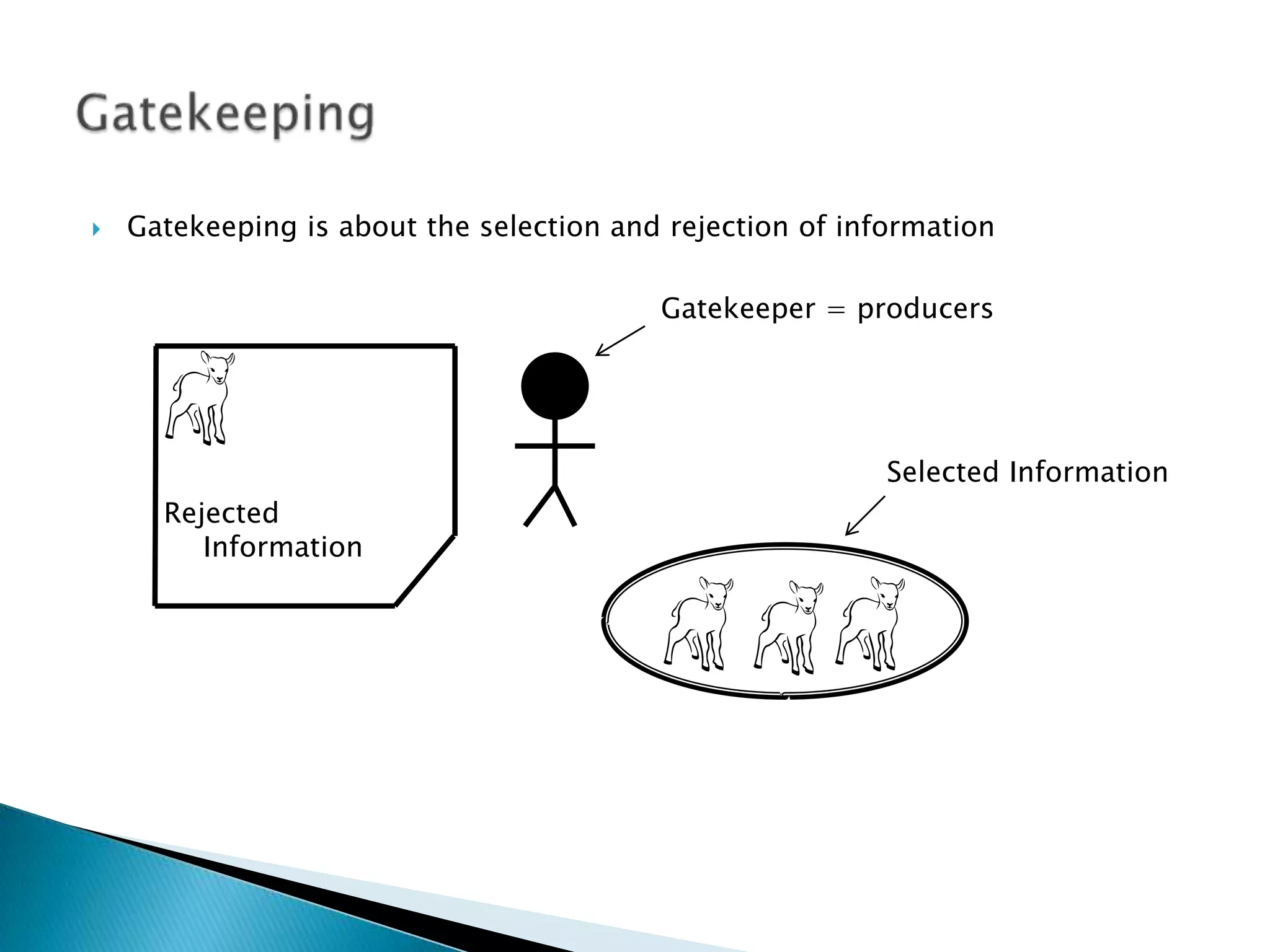
 Gatekeeping is about the selection and rejection of information
Gatekeeper = producers
Selected Information
Rejected
Information
Open vs. Closed
 Open – where there are questions left unanswered (soap opera)
 Closed – where no questions are left unanswered (finding nemo)
Single Strand vs. Multi-Strand
 Single Strands – there is only one narrative thread (finding nemo)
 Multi-Strands – more than one thread, and sometimes they do
converge but not always (soap opera)
Linear vs. Non-Linear
 Linear – chronological order; e.g. Order of time – adverts
 Non-Linear – doesn’t follow chronological order; e.g. Flash forward/
backward; e.g. The time travellers wife
 Circular – at the end of the narrative has gone full circle; e.g.
Dead of Night

Features of a documentary

  • 1.
  • 2.
    John Carner –there are five central elements to documentaries which are:  Observation:- the programme makers pretend that the camera is unseen or ignored by the people taking part in the events; e.g. It places the audience as an “eye witness” to the events  The Interview:- TV documentaries rely on interviews. The interviewee addresses the unseen interviewer instead of the audience. Interviews are intercut with images of observation to illustrate what they are talking about  Dramastation:- All documentaries use a sense of drama throughout the observation element  Mis-en-scene:- documentary makers carefully compose shots so that they contain images they want the audience to see  Explosion:- The line of argument, and the way the argument “unfolds”
  • 3.
     Gatekeeping isabout the selection and rejection of information Gatekeeper = producers Selected Information Rejected Information
  • 4.
    Open vs. Closed Open – where there are questions left unanswered (soap opera)  Closed – where no questions are left unanswered (finding nemo) Single Strand vs. Multi-Strand  Single Strands – there is only one narrative thread (finding nemo)  Multi-Strands – more than one thread, and sometimes they do converge but not always (soap opera) Linear vs. Non-Linear  Linear – chronological order; e.g. Order of time – adverts  Non-Linear – doesn’t follow chronological order; e.g. Flash forward/ backward; e.g. The time travellers wife  Circular – at the end of the narrative has gone full circle; e.g. Dead of Night