Safe Internet For All - SI@A
http://www.sifaplus.eu
ERASMUS+
Changing lives. Opening minds.
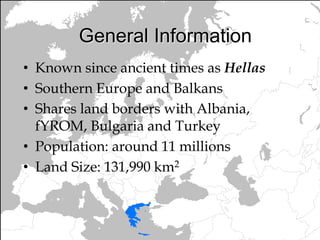
• Known since ancient times as Hellas
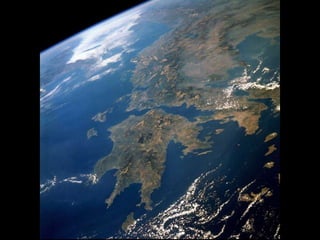
• Southern Europe and Balkans
• Shares land borders with Albania,
fYROM, Bulgaria and Turkey
• Population: around 11 millions
• Land Size: 131,990 km2
General Information
 Religion: 97% Greek Orthodox
 (Muslim, Roman Catholics and Jewish minorities)
 Government: Parliamentary Republic.
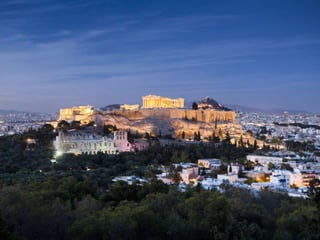
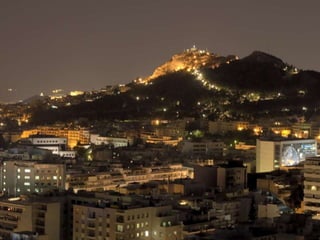
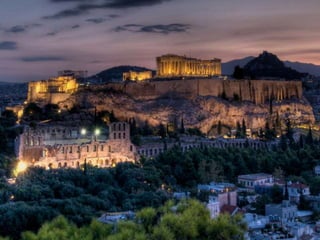
 Athens is the nation's capital and largest
city, with a metropolitan population of
approximately 4 million
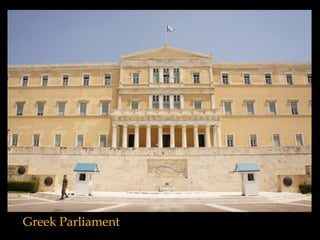
Greek Parliament
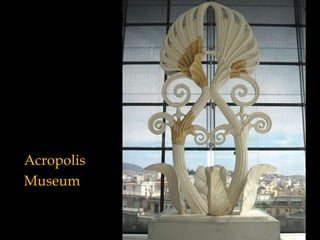
Acropolis
Museum
 Greece is home of the first European
civilization.
 Begins with the Cycladic civilization (3200
BC )
 Minoan civilization in Crete (2700–1500 BC)
 Mycenaean civilization on the mainland
(1900–1100 BC).
 The Classical period was a 200 year period
in Greek history and culture (5th -4th
centuries BC).
 During the 4th century BC, Philip II of Macedon
managed to unite Greek States.
 His son Alexander the Great , had created one of
the largest empires of the ancient world,
stretching from the Ionian Sea to the Himalayas.
 During Middle Ages in Western Europe, the
Byzantine Empire (Byzantium) predominated in
Greece.
 Greece was under Ottoman occupation for almost
400 years and was liberated in 1821.
 Took part in WWII, fought against german and
italian forces and fell under German occupation
until 1944.
 In 1967 the government was overthrowed by a
military dictatorship that lasted up to 1974.
 Greece joined European Union 1981.
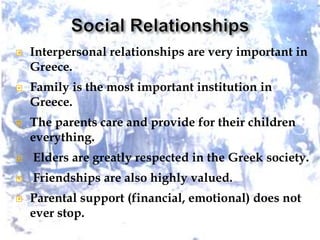
 Interpersonal relationships are very important in
Greece.
 Family is the most important institution in
Greece.
 The parents care and provide for their children
everything.
 Elders are greatly respected in the Greek society.
 Friendships are also highly valued.
 Parental support (financial, emotional) does not
ever stop.
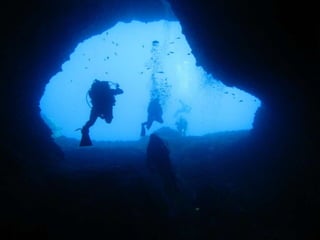
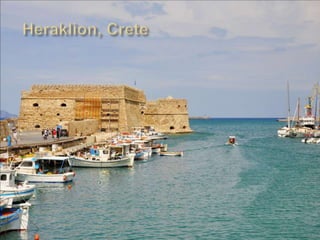
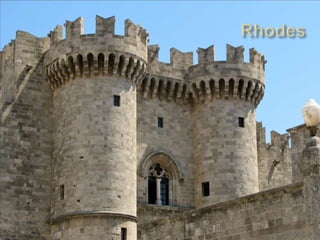
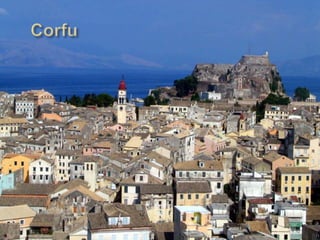
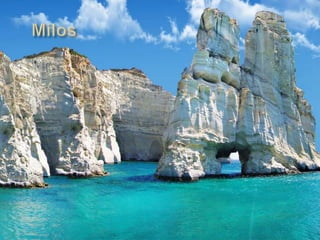
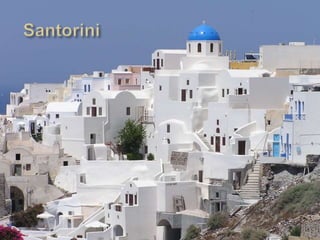
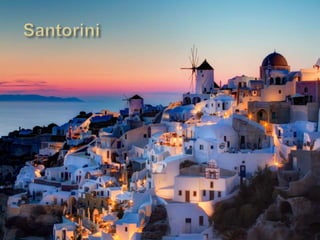
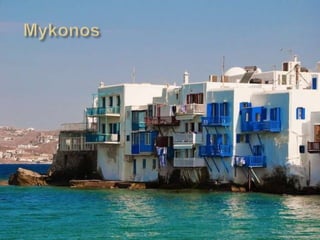
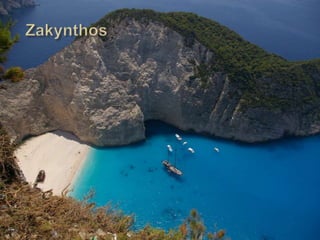
 Greece has the longest coastline on the
Mediterranean Basin and the 11th longest
coastline in the world featuring a vast number
of islands (approximately 1,400, of which 227
are inhabited).
 Some of them…
Greece
Greece
Greece
Greece
Greece
Greece
Greece
Greece
Greece
Greece

Greece

  • 1.
    Safe Internet ForAll - SI@A http://www.sifaplus.eu ERASMUS+ Changing lives. Opening minds.
  • 4.
    • Known sinceancient times as Hellas • Southern Europe and Balkans • Shares land borders with Albania, fYROM, Bulgaria and Turkey • Population: around 11 millions • Land Size: 131,990 km2 General Information
  • 5.
     Religion: 97%Greek Orthodox  (Muslim, Roman Catholics and Jewish minorities)  Government: Parliamentary Republic.  Athens is the nation's capital and largest city, with a metropolitan population of approximately 4 million
  • 6.
  • 8.
  • 12.
     Greece ishome of the first European civilization.  Begins with the Cycladic civilization (3200 BC )  Minoan civilization in Crete (2700–1500 BC)  Mycenaean civilization on the mainland (1900–1100 BC).  The Classical period was a 200 year period in Greek history and culture (5th -4th centuries BC).
  • 13.
     During the4th century BC, Philip II of Macedon managed to unite Greek States.  His son Alexander the Great , had created one of the largest empires of the ancient world, stretching from the Ionian Sea to the Himalayas.  During Middle Ages in Western Europe, the Byzantine Empire (Byzantium) predominated in Greece.  Greece was under Ottoman occupation for almost 400 years and was liberated in 1821.
  • 14.
     Took partin WWII, fought against german and italian forces and fell under German occupation until 1944.  In 1967 the government was overthrowed by a military dictatorship that lasted up to 1974.  Greece joined European Union 1981.
  • 15.
     Interpersonal relationshipsare very important in Greece.  Family is the most important institution in Greece.  The parents care and provide for their children everything.  Elders are greatly respected in the Greek society.  Friendships are also highly valued.  Parental support (financial, emotional) does not ever stop.
  • 16.
     Greece hasthe longest coastline on the Mediterranean Basin and the 11th longest coastline in the world featuring a vast number of islands (approximately 1,400, of which 227 are inhabited).  Some of them…