Dynamics of Dialogue A Workshop on the Use of Dialogue In Multicultural Discourse
Definitions Dialogue From the Greek  dialogos Dia  means “through” or “with each other” Logos  means “the word” or “the meaning” “ meaning flowing through ” Discussion From the Latin  discutere “ to smash together ” Debate From the Latin  de + battere “ to beat down ”
Why Dialogue? Allows “meaning to flow through” Permits depth based on the groups readiness Works (best) as an adjunct to other methods Becomes more group centered over time Gives means to explore complex and conflicted issues  Puts a pause on the need to find the answer Creates (safe) and sacred space  Can be one-time or ongoing process  Fosters reflection in the organization
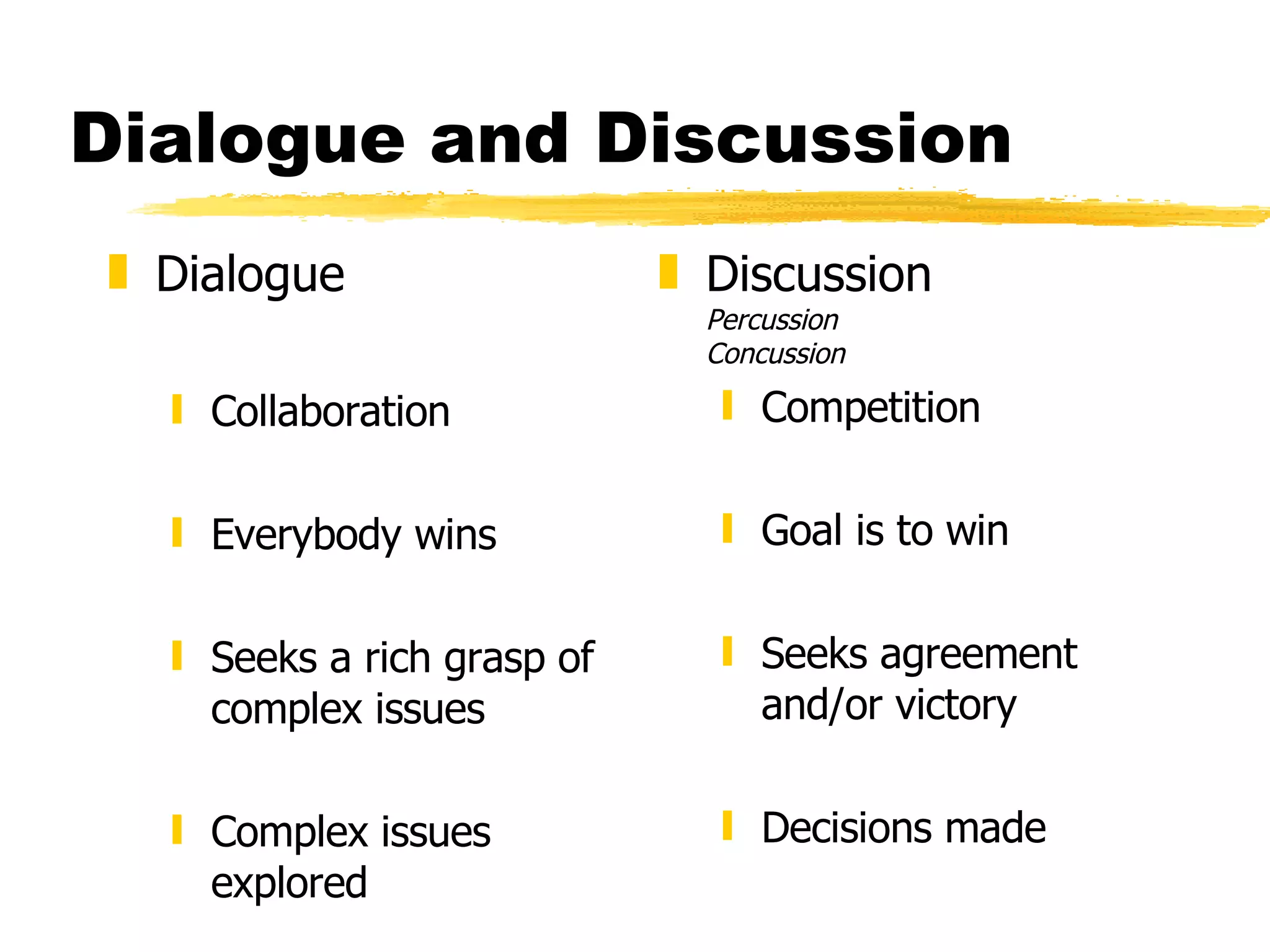
Dialogue and Discussion Dialogue Collaboration Everybody wins Seeks a rich grasp of complex issues Complex issues explored Discussion Percussion Concussion Competition Goal is to win Seeks agreement and/or victory Decisions made
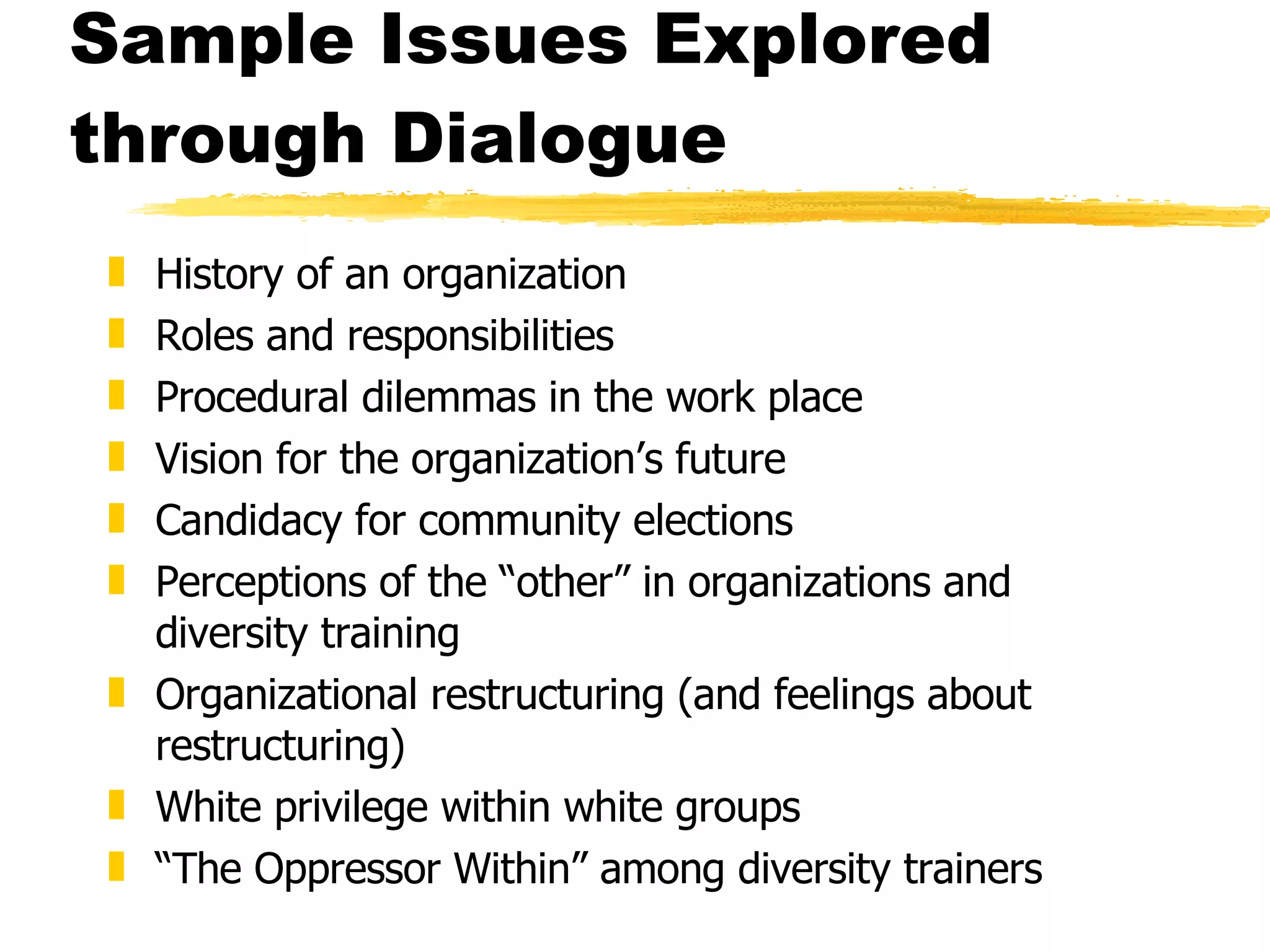
Sample Issues Explored through Dialogue History of an organization Roles and responsibilities Procedural dilemmas in the work place  Vision for the organization’s future Candidacy for community elections Perceptions of the “other” in organizations and diversity training Organizational restructuring (and feelings about restructuring)  White privilege within white groups  “ The Oppressor Within” among diversity trainers
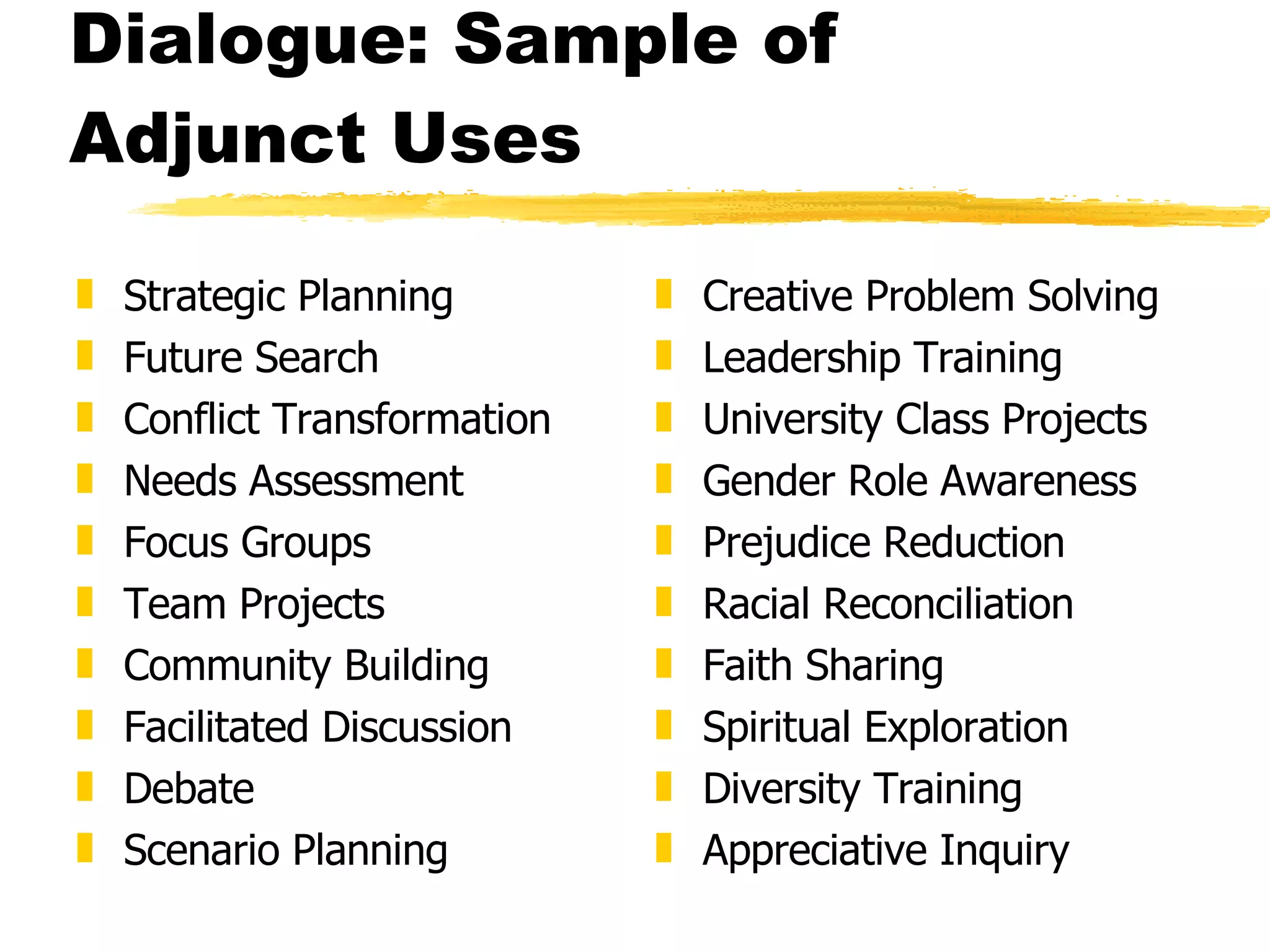
Dialogue: Sample of Adjunct Uses Strategic Planning Future Search Conflict Transformation Needs Assessment Focus Groups Team Projects Community Building Facilitated Discussion Debate Scenario Planning Creative Problem Solving Leadership Training University Class Projects Gender Role Awareness Prejudice Reduction Racial Reconciliation Faith Sharing Spiritual Exploration Diversity Training Appreciative Inquiry
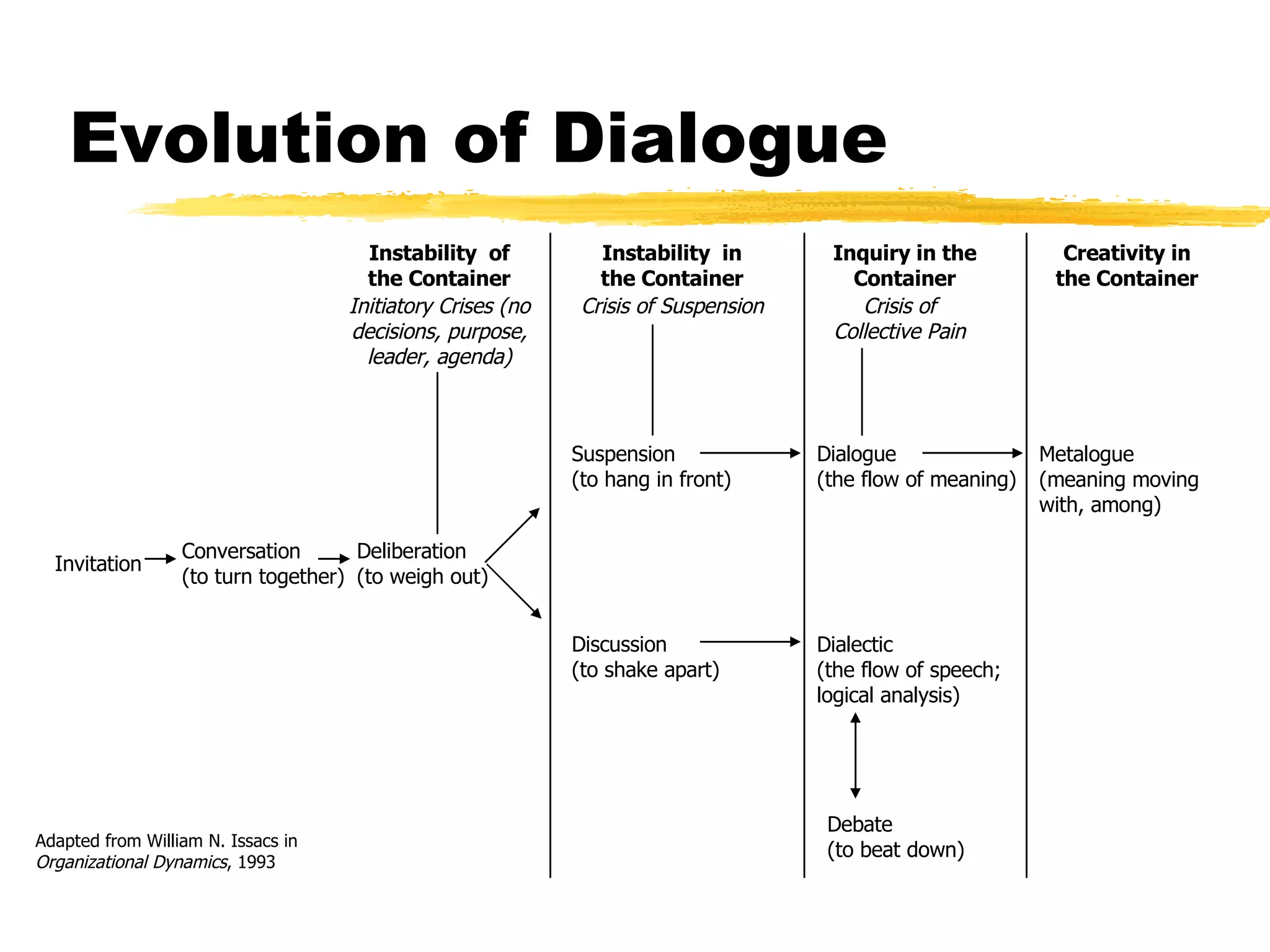
Evolution of Dialogue Invitation Conversation (to turn together) Deliberation (to weigh out) Instability  of the Container Initiatory Crises (no decisions, purpose, leader, agenda) Instability  in the Container Crisis of Suspension Inquiry in the Container Crisis of Collective Pain Creativity in the Container Discussion (to shake apart) Suspension (to hang in front) Dialogue (the flow of meaning) Dialectic (the flow of speech; logical analysis) Metalogue (meaning moving with, among) Debate (to beat down) Adapted from William N. Issacs in  Organizational Dynamics , 1993
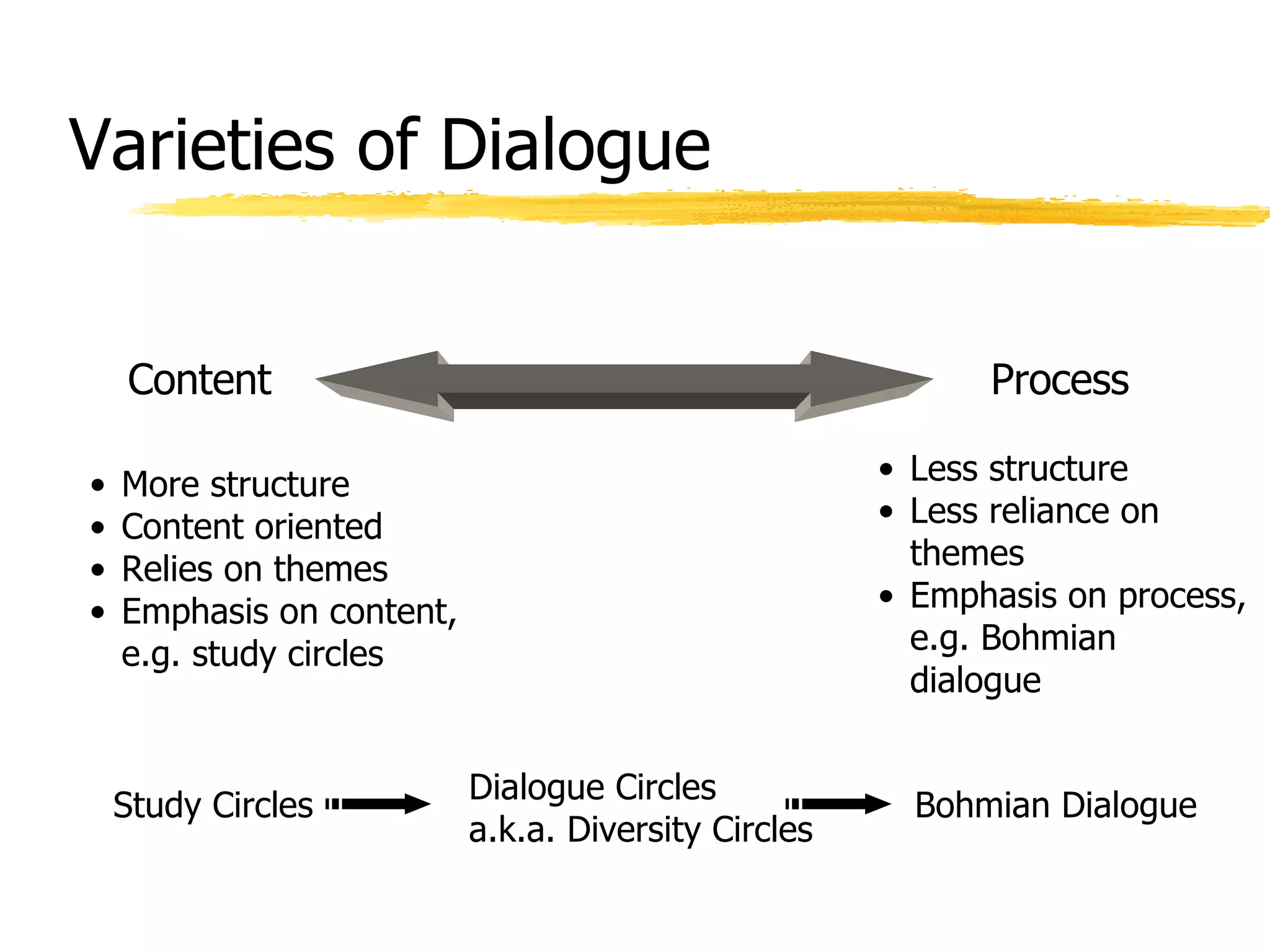
Varieties of Dialogue More structure Content oriented Relies on themes Emphasis on content, e.g. study circles Content Process Less structure Less reliance on themes Emphasis on process, e.g. Bohmian dialogue Study Circles Dialogue Circles a.k.a. Diversity Circles Bohmian Dialogue
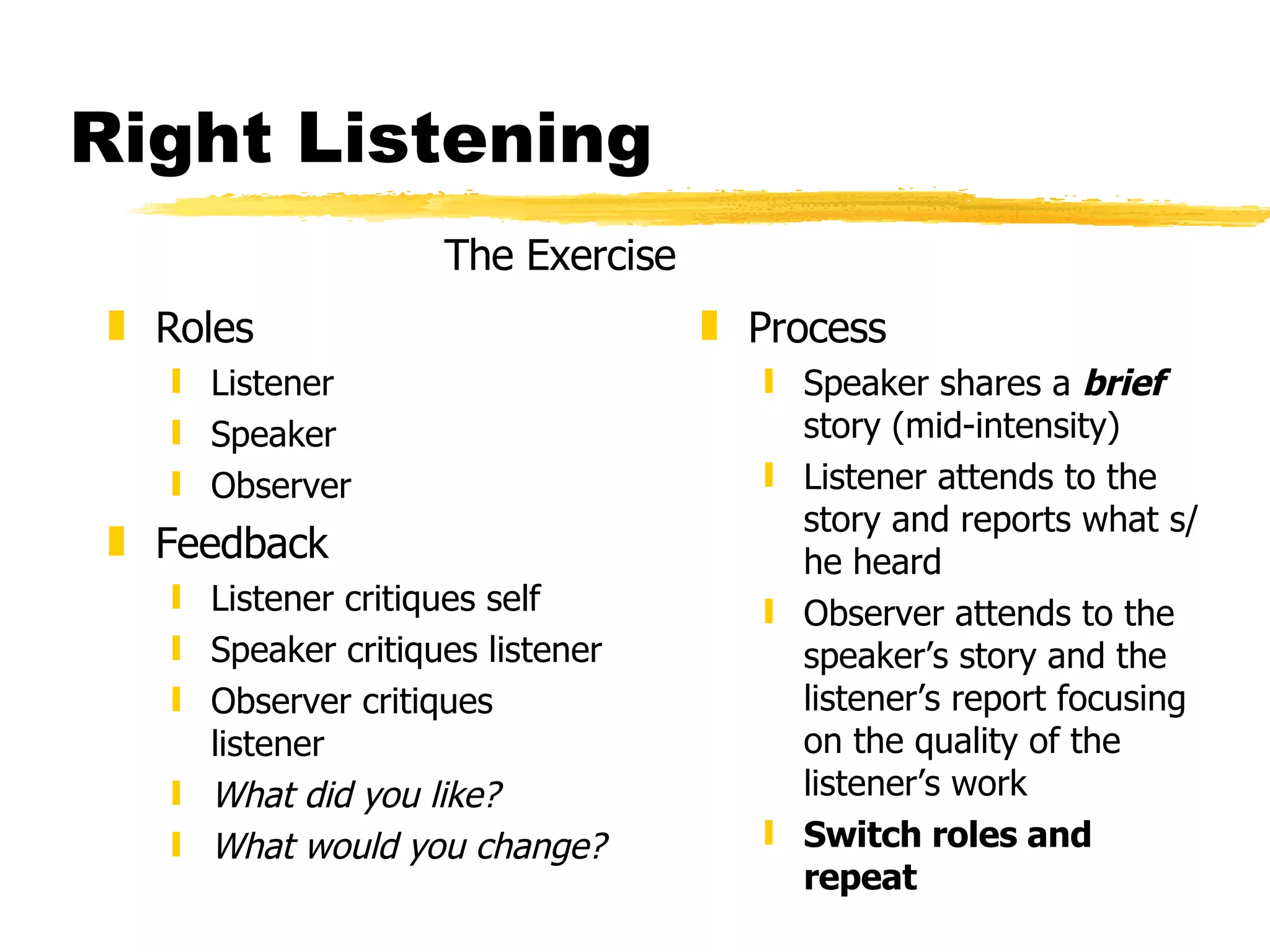
Right Listening Roles Listener Speaker Observer Feedback Listener critiques self Speaker critiques listener Observer critiques listener What did you like? What would you change? Process Speaker shares a  brief  story (mid-intensity) Listener attends to the story and reports what s/he heard Observer attends to the speaker’s story and the listener’s report focusing on the quality of the listener’s work Switch roles and repeat The Exercise
Guidelines for Dialogue Speak from experience Listen as colleagues Suspend assumptions  Respect the speaker Defer the need for clarification Focus on the learning
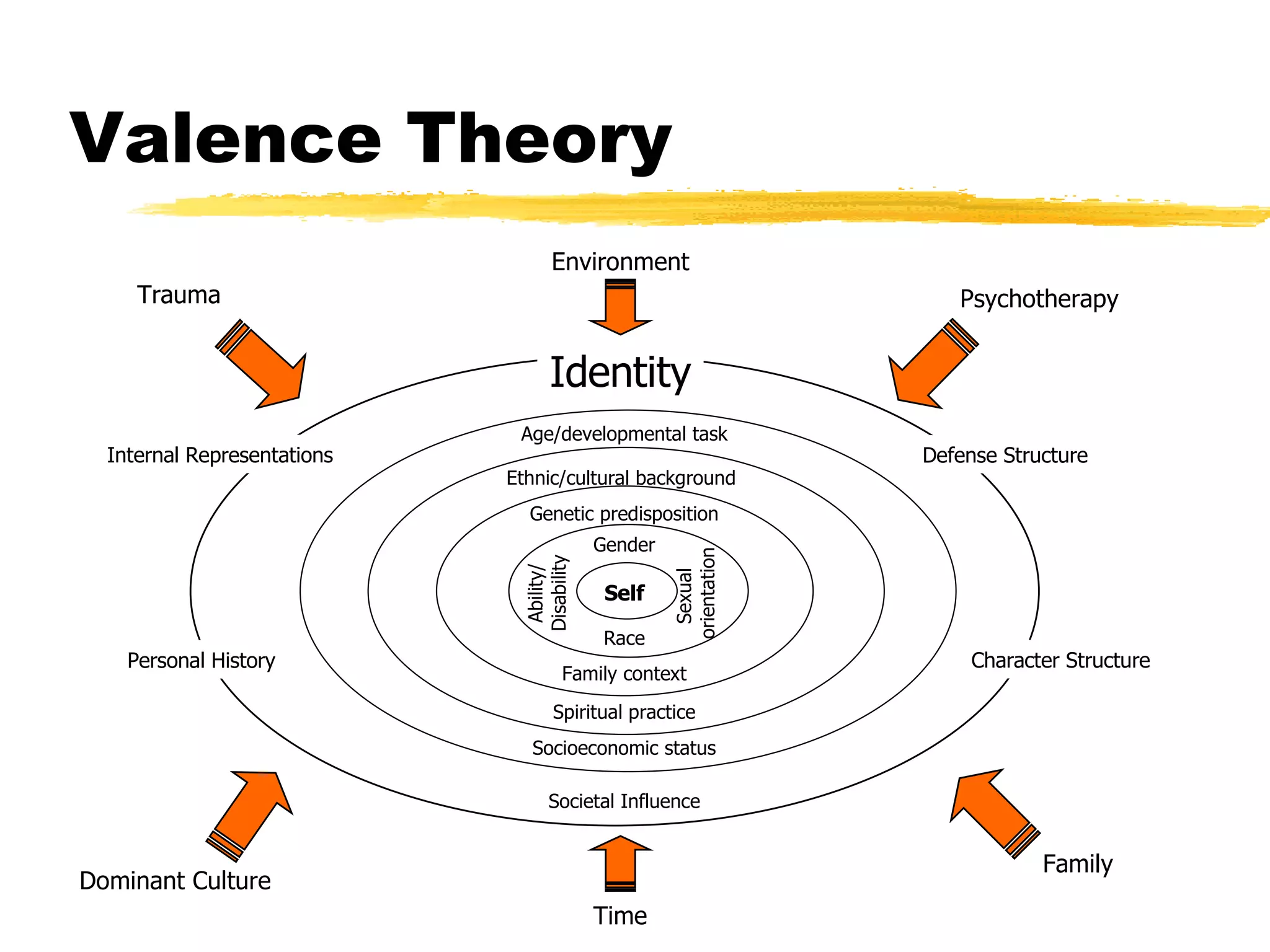
Valence Theory Identity Internal Representations Defense Structure Personal History Character Structure Trauma Environment Psychotherapy Family Dominant Culture Time Self Gender Genetic predisposition Ethnic/cultural background  Age/developmental task Family context Race Spiritual practice Socioeconomic status Societal Influence Sexual  orientation Ability/ Disability
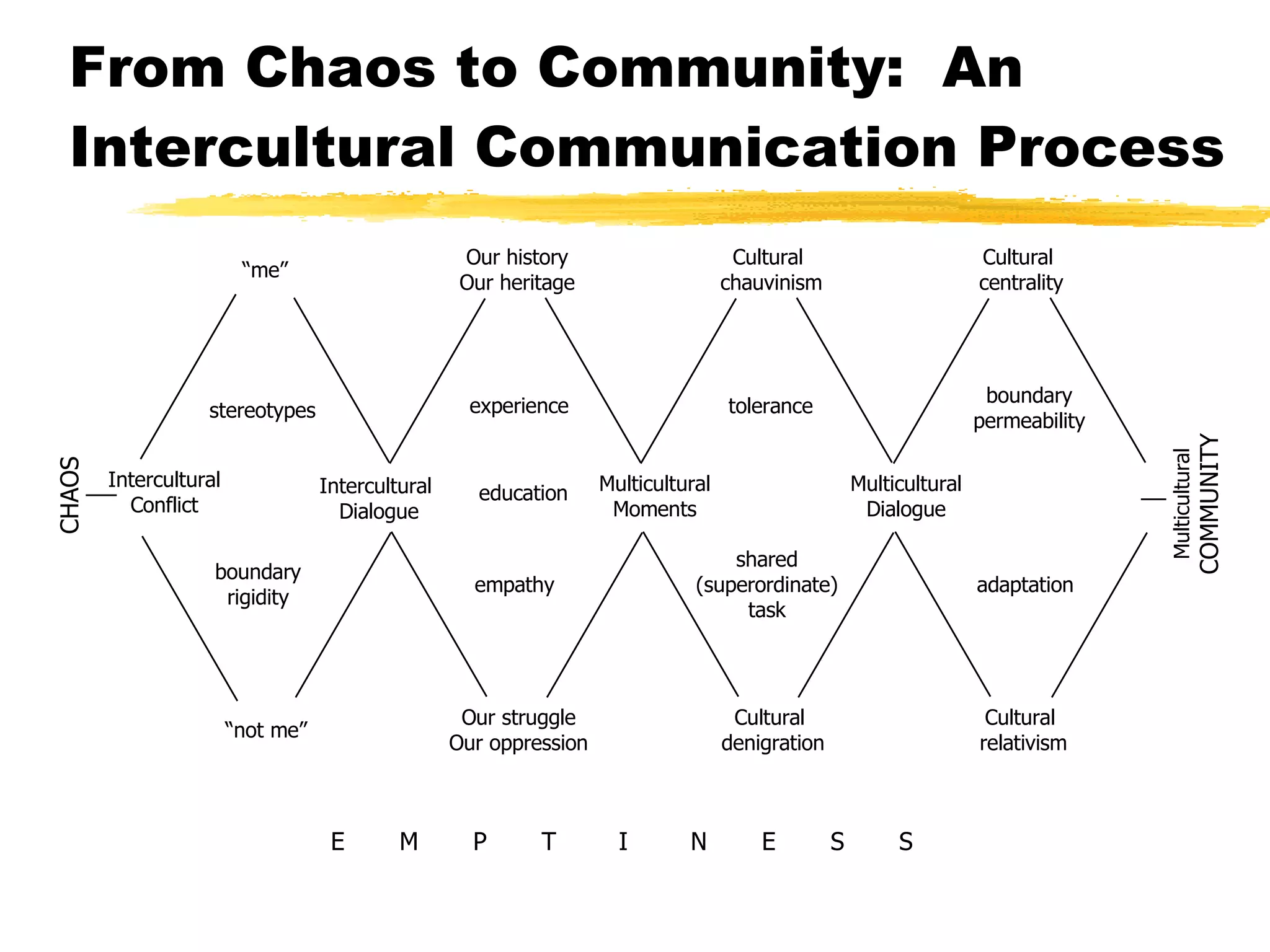
From Chaos to Community:  An Intercultural Communication Process CHAOS Multicultural COMMUNITY Intercultural Conflict Intercultural  Dialogue Multicultural Moments Multicultural Dialogue “ not me” “ me” Our struggle Our oppression Our history Our heritage Cultural  denigration Cultural  chauvinism Cultural  relativism Cultural  centrality E  M  P  T  I  N  E  S  S  boundary rigidity stereotypes empathy experience education shared (superordinate) task tolerance adaptation boundary permeability

Dialogue Slides

  • 1.
    Dynamics of DialogueA Workshop on the Use of Dialogue In Multicultural Discourse
  • 2.
    Definitions Dialogue Fromthe Greek dialogos Dia means “through” or “with each other” Logos means “the word” or “the meaning” “ meaning flowing through ” Discussion From the Latin discutere “ to smash together ” Debate From the Latin de + battere “ to beat down ”
  • 3.
    Why Dialogue? Allows“meaning to flow through” Permits depth based on the groups readiness Works (best) as an adjunct to other methods Becomes more group centered over time Gives means to explore complex and conflicted issues Puts a pause on the need to find the answer Creates (safe) and sacred space Can be one-time or ongoing process Fosters reflection in the organization
  • 4.
    Dialogue and DiscussionDialogue Collaboration Everybody wins Seeks a rich grasp of complex issues Complex issues explored Discussion Percussion Concussion Competition Goal is to win Seeks agreement and/or victory Decisions made
  • 5.
    Sample Issues Exploredthrough Dialogue History of an organization Roles and responsibilities Procedural dilemmas in the work place Vision for the organization’s future Candidacy for community elections Perceptions of the “other” in organizations and diversity training Organizational restructuring (and feelings about restructuring) White privilege within white groups “ The Oppressor Within” among diversity trainers
  • 6.
    Dialogue: Sample ofAdjunct Uses Strategic Planning Future Search Conflict Transformation Needs Assessment Focus Groups Team Projects Community Building Facilitated Discussion Debate Scenario Planning Creative Problem Solving Leadership Training University Class Projects Gender Role Awareness Prejudice Reduction Racial Reconciliation Faith Sharing Spiritual Exploration Diversity Training Appreciative Inquiry
  • 7.
    Evolution of DialogueInvitation Conversation (to turn together) Deliberation (to weigh out) Instability of the Container Initiatory Crises (no decisions, purpose, leader, agenda) Instability in the Container Crisis of Suspension Inquiry in the Container Crisis of Collective Pain Creativity in the Container Discussion (to shake apart) Suspension (to hang in front) Dialogue (the flow of meaning) Dialectic (the flow of speech; logical analysis) Metalogue (meaning moving with, among) Debate (to beat down) Adapted from William N. Issacs in Organizational Dynamics , 1993
  • 8.
    Varieties of DialogueMore structure Content oriented Relies on themes Emphasis on content, e.g. study circles Content Process Less structure Less reliance on themes Emphasis on process, e.g. Bohmian dialogue Study Circles Dialogue Circles a.k.a. Diversity Circles Bohmian Dialogue
  • 9.
    Right Listening RolesListener Speaker Observer Feedback Listener critiques self Speaker critiques listener Observer critiques listener What did you like? What would you change? Process Speaker shares a brief story (mid-intensity) Listener attends to the story and reports what s/he heard Observer attends to the speaker’s story and the listener’s report focusing on the quality of the listener’s work Switch roles and repeat The Exercise
  • 10.
    Guidelines for DialogueSpeak from experience Listen as colleagues Suspend assumptions Respect the speaker Defer the need for clarification Focus on the learning
  • 11.
    Valence Theory IdentityInternal Representations Defense Structure Personal History Character Structure Trauma Environment Psychotherapy Family Dominant Culture Time Self Gender Genetic predisposition Ethnic/cultural background Age/developmental task Family context Race Spiritual practice Socioeconomic status Societal Influence Sexual orientation Ability/ Disability
  • 12.
    From Chaos toCommunity: An Intercultural Communication Process CHAOS Multicultural COMMUNITY Intercultural Conflict Intercultural Dialogue Multicultural Moments Multicultural Dialogue “ not me” “ me” Our struggle Our oppression Our history Our heritage Cultural denigration Cultural chauvinism Cultural relativism Cultural centrality E M P T I N E S S boundary rigidity stereotypes empathy experience education shared (superordinate) task tolerance adaptation boundary permeability