Modernization Case Study


Citizenship
Andrew Grif
fi
th


18 June 2021
1
Outline
• Context


• Ongoing management and processing issues


• COVID impact and response


• Current and future state


• Enablers and requirements


• Bene
fi
ts
2
Context and Background
• Planned spending (2020/21):


• Citizenship $70 million, 2 percent IRCC total


• Passport: $449 million gross (revolving fund), $240 net (7 percent IRCC total):


• 1,774 FTEs for both


• Exclusive federal jurisdiction


• Limited public data sets


• No citizenship “levels” or targets and no meaningful outcome
standard (only service standards)


• Paper-based processes, delayed integration into Global Case
Management System (GCMS)
3
Citizenship Applications & Citizens


Wide
fl
uctuation compared to new PRs—IRCC Operational Data
87,500
175,000
262,500
350,000
2000 2002 2004 2006 2008 2010 2012 2014 2016 2018 2020
Applications Applications 3-Year Moving Average New Citizens
PR Trendline
PR Trendline
4
COVID Impact
• COVID exposed weaknesses of citizenship management


• Secondary priority at political and of
fi
cial levels


• Paper-based processes


• Dated IT infrastructure


• Unlike immigration, IRCC shut-down program with limited
restart given challenges related to ceremonies and tests


• Virtual citizenship ceremonies, piloting on-line
knowledge testing and e-applications


• No data on passports
5
COVID-19 Impact


Change FY 2020/21 compared to 2019/20
6
PR Web Interest (o/s Canada )
PR applications
PR admissions
Cit Web Interest (Canada)
Cit Applications
New Citizens
-100% -75% -50% -25% 0% 25% 50% 75% 100%
-75.3%
-30.5%
149.7%
-46.1%
-38.8%
-2.2%
Citizenship Application Duplication


Basic information
7
Type Questions Pre-
fi
ll?
Basic information (Q 1-8)
Language preference, need for accommodation, name, gender,
height, eye colour, date/place of birth, other name, marital status,
contact info, help
fi
lling out form
Yes
Physical Presence (Q 9-10) Residency and absences Yes
Activity (Q 11) Work, education and other No
Income tax (Q 12) SIN, TTN, ITN, tax
fi
ling, disclosure consent Yes
Other citizenship (Q 13-14)
Other citizenship/immigration status, other passports/travel
documents
Partial
Language evidence (Q 15) Provide proof, LINC CLB 4 or higher, disability Yes
Prohibitions (Q 16)
Incarceration, parole, charged, removal order, war crime, previous
misrepresentation (5 years), revocation for misrepresentation/fraud
(10 years), convicted indictable offence (4 years), convicted
terrorism/treason/spying, served member of country/organization
engaged in armed con
fl
ict with Canada
No
Disclosure personal info (Q 17) Congratulatory letter from MP, Elections Canada or Quebec No
Overall potential
17 questions out of 57 have potential for auto-
fi
lling forms based on
Permanent Resident information
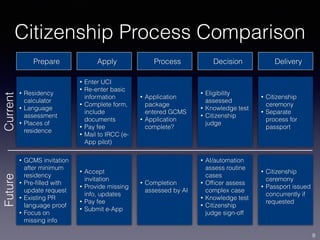
Citizenship Process Comparison
8
Prepare Apply Decision
Process Delivery
• Residency
calculator


• Language
assessment


• Places of
residence
• Enter UCI


• Re-enter basic
information


• Complete form,
include
documents


• Pay fee


• Mail to IRCC (e-
App pilot)
• Application
package
entered GCMS


• Application
complete?
• Eligibility
assessed


• Knowledge test


• Citizenship
judge


• Citizenship
ceremony


• Separate
process for
passport
• GCMS invitation
after minimum
residency


• Pre-
fi
lled with
update request


• Existing PR
language proof


• Focus on
missing info
• Accept
invitation


• Provide missing
info, updates


• Pay fee


• Submit e-App
• Completion
assessed by AI


• AI/automation
assess routine
cases


• Of
fi
cer assess
complex case


• Knowledge test


• Citizenship
judge sign-off


• Citizenship
ceremony


• Passport issued
concurrently if
requested


Current
Future
Enablers and Requirements
• Citizenship and passport fully integrated into GCMS modernization


• “enable improved application processing and support for applicants, beginning in 2023.”
(Budget 2021)


• Consent-based for data linkages along with privacy protections


• “Nudge” immigrants to maintain IRCC Account to ease citizenship/passport
application process


• Accurate CBSA Entry-exit information and linkage for residency calculations


• AI and machine learning building on visitor visa experience, facial recognition
building on passport


• Other channels/alternatives for those who need them


• Integrity (fraud prevention)
9
Bene
fi
ts
• Streamlined and easier process for applicants


• Ef
fi
ciencies for IRCC


• Timely and informative data, including public reporting,
comparable to immigration (no passport data currently)


• Monthly applications


• Age, gender, province of residence, immigration category


• Enable meaningful performance standard, based upon
the percentage of permanent residents who become
Canadian citizens within
fi
ve to nine years of arrival
10
Andrew Grif
fi
th

Email: agrif
fi
th232@gmail.com
Twitter: @andrew_grif
fi
th
LinkedIn: andrewlgrif
fi
th
Facebook: Andrew Grif
fi
th CM
Blog: www.multiculturalmeanderings.wordpress.com
Books: lulu.com

Citizenship Modernization Case Study

  • 1.
  • 2.
    Outline • Context • Ongoingmanagement and processing issues • COVID impact and response • Current and future state • Enablers and requirements • Bene fi ts 2
  • 3.
    Context and Background •Planned spending (2020/21): • Citizenship $70 million, 2 percent IRCC total • Passport: $449 million gross (revolving fund), $240 net (7 percent IRCC total): • 1,774 FTEs for both • Exclusive federal jurisdiction • Limited public data sets • No citizenship “levels” or targets and no meaningful outcome standard (only service standards) • Paper-based processes, delayed integration into Global Case Management System (GCMS) 3
  • 4.
    Citizenship Applications &Citizens Wide fl uctuation compared to new PRs—IRCC Operational Data 87,500 175,000 262,500 350,000 2000 2002 2004 2006 2008 2010 2012 2014 2016 2018 2020 Applications Applications 3-Year Moving Average New Citizens PR Trendline PR Trendline 4
  • 5.
    COVID Impact • COVIDexposed weaknesses of citizenship management • Secondary priority at political and of fi cial levels • Paper-based processes • Dated IT infrastructure • Unlike immigration, IRCC shut-down program with limited restart given challenges related to ceremonies and tests • Virtual citizenship ceremonies, piloting on-line knowledge testing and e-applications • No data on passports 5
  • 6.
    COVID-19 Impact Change FY2020/21 compared to 2019/20 6 PR Web Interest (o/s Canada ) PR applications PR admissions Cit Web Interest (Canada) Cit Applications New Citizens -100% -75% -50% -25% 0% 25% 50% 75% 100% -75.3% -30.5% 149.7% -46.1% -38.8% -2.2%
  • 7.
    Citizenship Application Duplication Basicinformation 7 Type Questions Pre- fi ll? Basic information (Q 1-8) Language preference, need for accommodation, name, gender, height, eye colour, date/place of birth, other name, marital status, contact info, help fi lling out form Yes Physical Presence (Q 9-10) Residency and absences Yes Activity (Q 11) Work, education and other No Income tax (Q 12) SIN, TTN, ITN, tax fi ling, disclosure consent Yes Other citizenship (Q 13-14) Other citizenship/immigration status, other passports/travel documents Partial Language evidence (Q 15) Provide proof, LINC CLB 4 or higher, disability Yes Prohibitions (Q 16) Incarceration, parole, charged, removal order, war crime, previous misrepresentation (5 years), revocation for misrepresentation/fraud (10 years), convicted indictable offence (4 years), convicted terrorism/treason/spying, served member of country/organization engaged in armed con fl ict with Canada No Disclosure personal info (Q 17) Congratulatory letter from MP, Elections Canada or Quebec No Overall potential 17 questions out of 57 have potential for auto- fi lling forms based on Permanent Resident information
  • 8.
    Citizenship Process Comparison 8 PrepareApply Decision Process Delivery • Residency calculator • Language assessment • Places of residence • Enter UCI • Re-enter basic information • Complete form, include documents • Pay fee • Mail to IRCC (e- App pilot) • Application package entered GCMS • Application complete? • Eligibility assessed • Knowledge test • Citizenship judge • Citizenship ceremony • Separate process for passport • GCMS invitation after minimum residency • Pre- fi lled with update request • Existing PR language proof • Focus on missing info • Accept invitation • Provide missing info, updates • Pay fee • Submit e-App • Completion assessed by AI • AI/automation assess routine cases • Of fi cer assess complex case • Knowledge test • Citizenship judge sign-off • Citizenship ceremony • Passport issued concurrently if requested Current Future
  • 9.
    Enablers and Requirements •Citizenship and passport fully integrated into GCMS modernization • “enable improved application processing and support for applicants, beginning in 2023.” (Budget 2021) • Consent-based for data linkages along with privacy protections • “Nudge” immigrants to maintain IRCC Account to ease citizenship/passport application process • Accurate CBSA Entry-exit information and linkage for residency calculations • AI and machine learning building on visitor visa experience, facial recognition building on passport • Other channels/alternatives for those who need them • Integrity (fraud prevention) 9
  • 10.
    Bene fi ts • Streamlined andeasier process for applicants • Ef fi ciencies for IRCC • Timely and informative data, including public reporting, comparable to immigration (no passport data currently) • Monthly applications • Age, gender, province of residence, immigration category • Enable meaningful performance standard, based upon the percentage of permanent residents who become Canadian citizens within fi ve to nine years of arrival 10
  • 11.
    Andrew Grif fi th Email: agrif fi th232@gmail.com Twitter:@andrew_grif fi th LinkedIn: andrewlgrif fi th Facebook: Andrew Grif fi th CM Blog: www.multiculturalmeanderings.wordpress.com Books: lulu.com