Introduction to ICT and Basic Computer Skills
ABZ Private School
Lesson Objective
To introduce the course ICT and Basic computer skills.
Aim
I know what is the meaning of ICT.
I learned how the computer works.
ABZ Private School
*electronical multipurpose data processing unit.
*Any device which can accept data or information
and put them into a series of process and gives the
desired output.
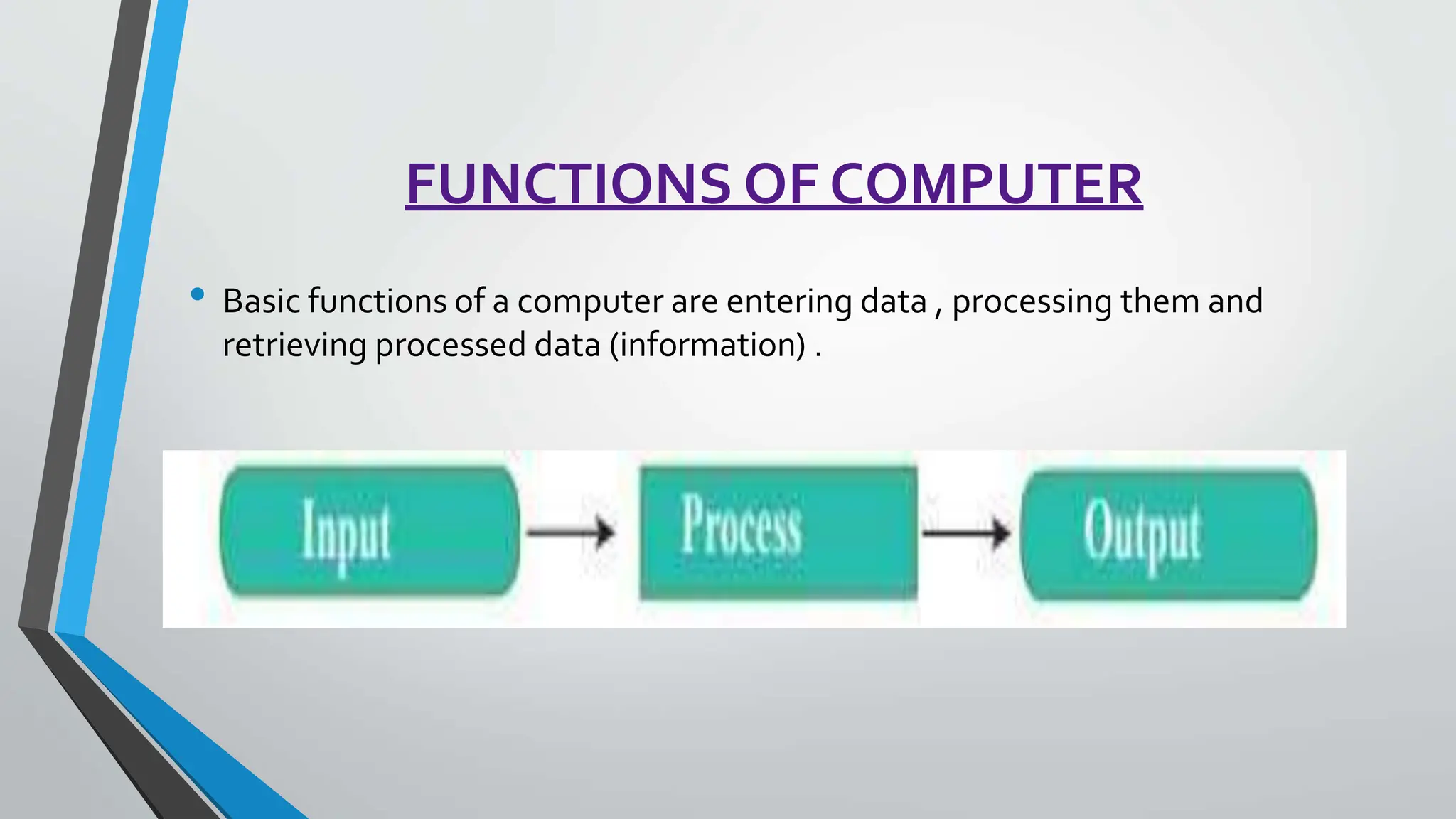
FUNCTIONS OF COMPUTER
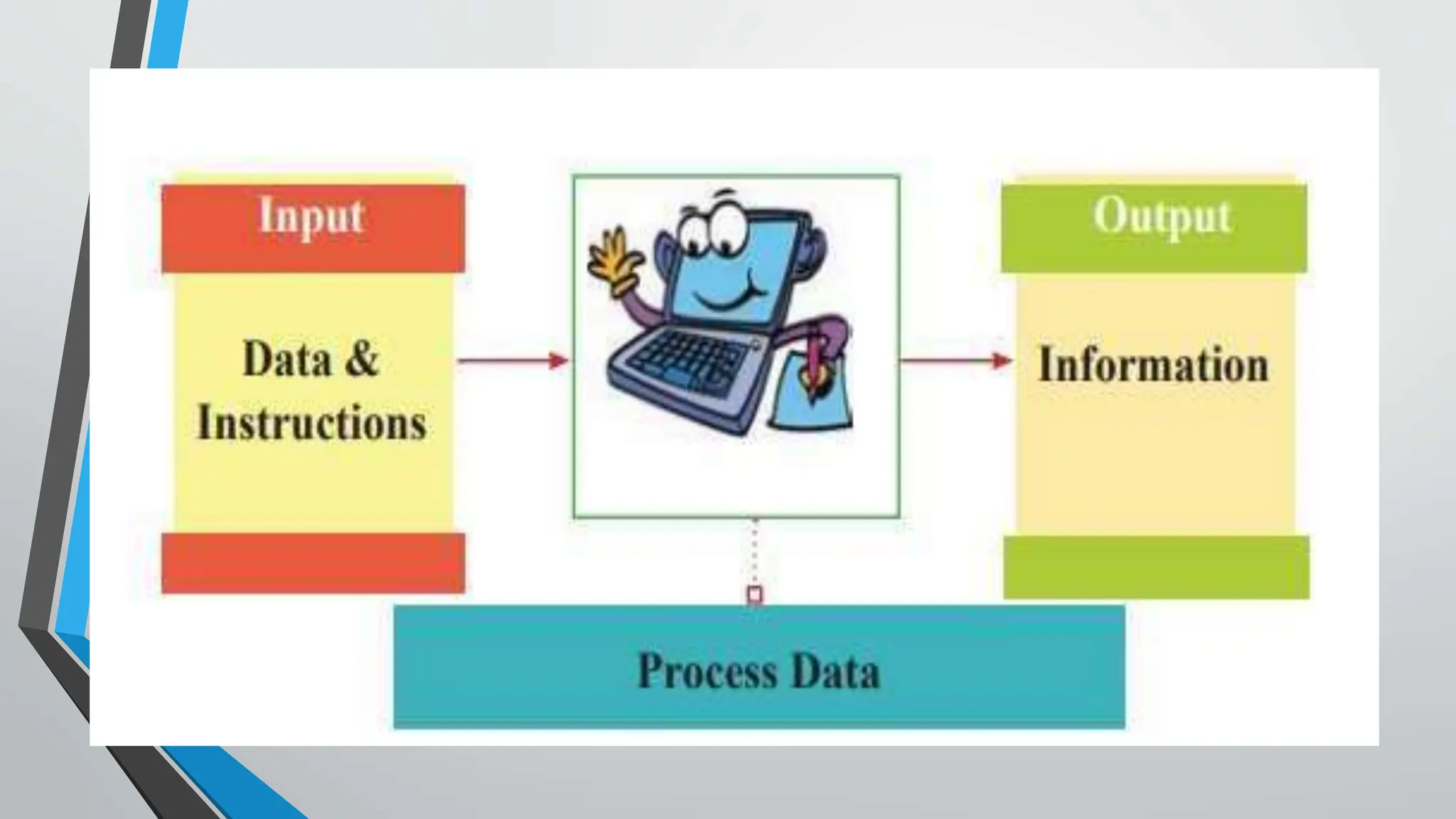
• Basic functions of a computer are entering data , processing them and
retrieving processed data (information) .
FEATURES OF COMPUTER
• Speed and efficiency – can finish any given task within a short period of
time
• Accuracy – can provide correct information
• Reliability – you can rely on the process of output
• Consistency – produces consistent output when the same input is given
• Storage capacity – can store large amount of data
• Cost – initial cost is high
• Intelligence – can act according to the given instructions
DEVICE EMBEDDED WITH COMPUTER
SYSTEM
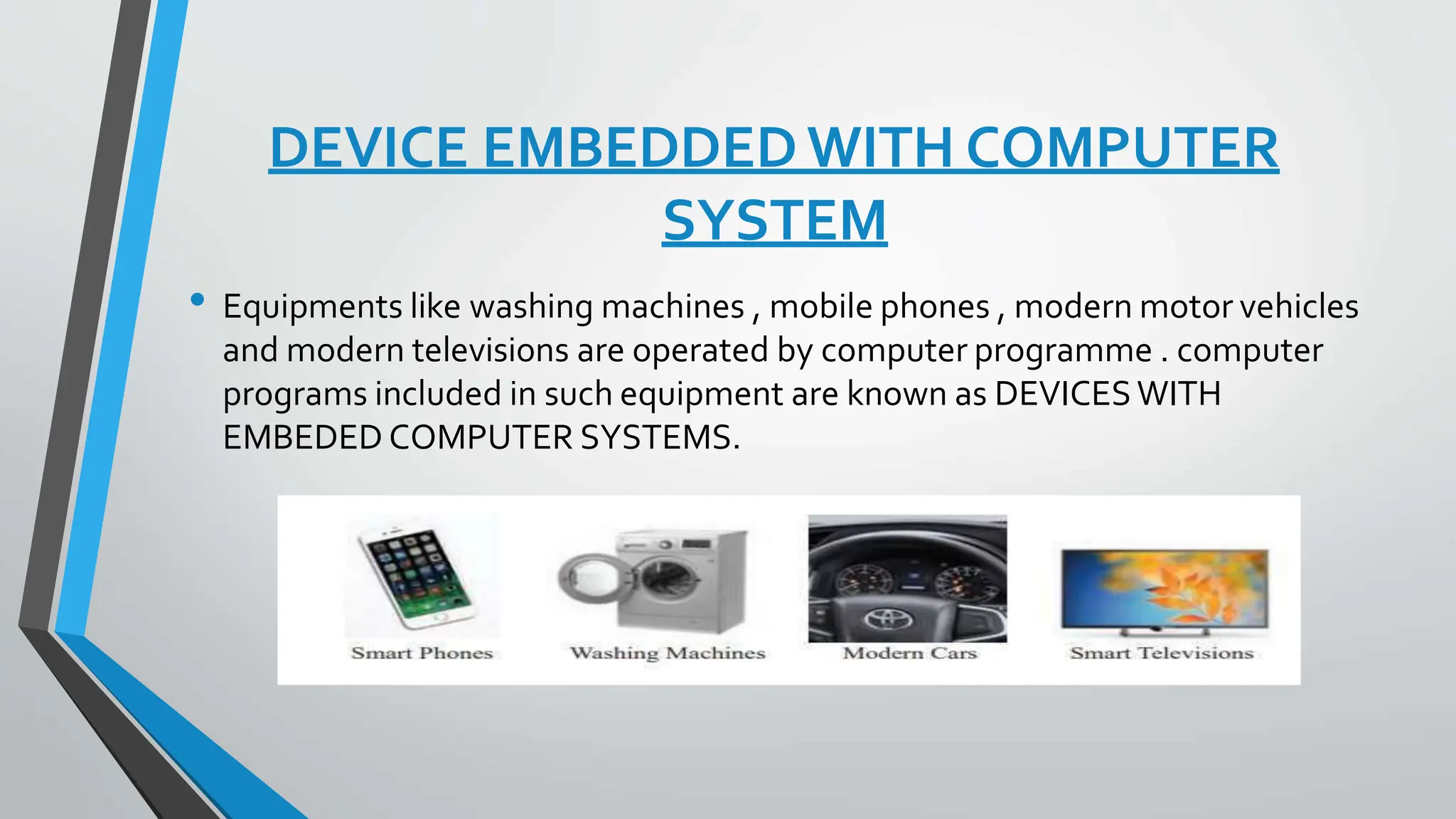
• Equipments like washing machines , mobile phones , modern motor vehicles
and modern televisions are operated by computer programme . computer
programs included in such equipment are known as DEVICESWITH
EMBEDED COMPUTER SYSTEMS.
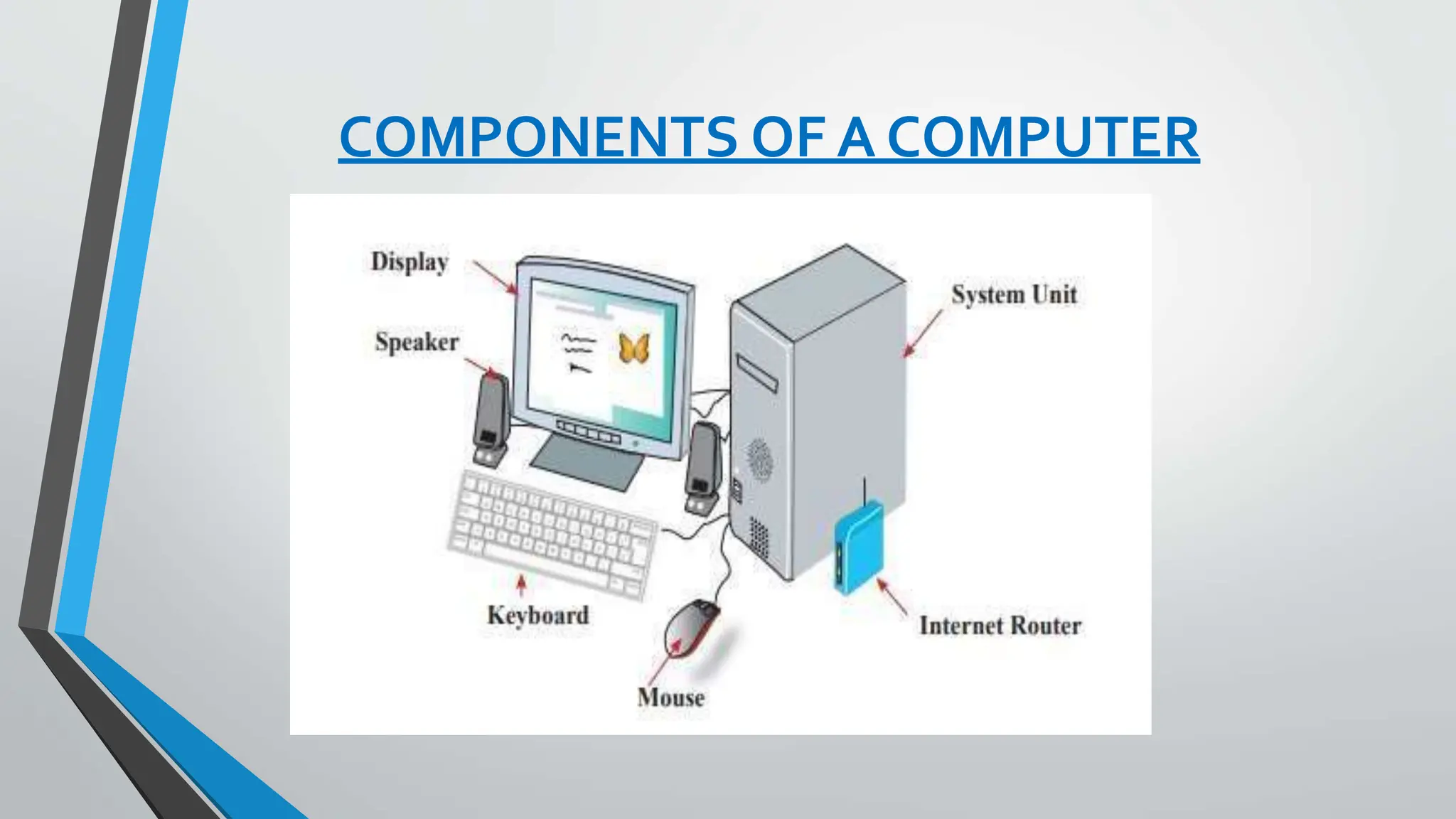
COMPONENTS OF A COMPUTER
COMPUTER SYSTEM
• All the essential parts which required to function a computer.
1. Hardware
2. Software
3. Firmware
4. Live ware
HARDWARE
• Tangible or physical components of a computer system.
1. Input hardware
2. Output hardware
3. Processing hardware
4. Storage hardware
5. Communicationhardware
INPUT HARDWARE
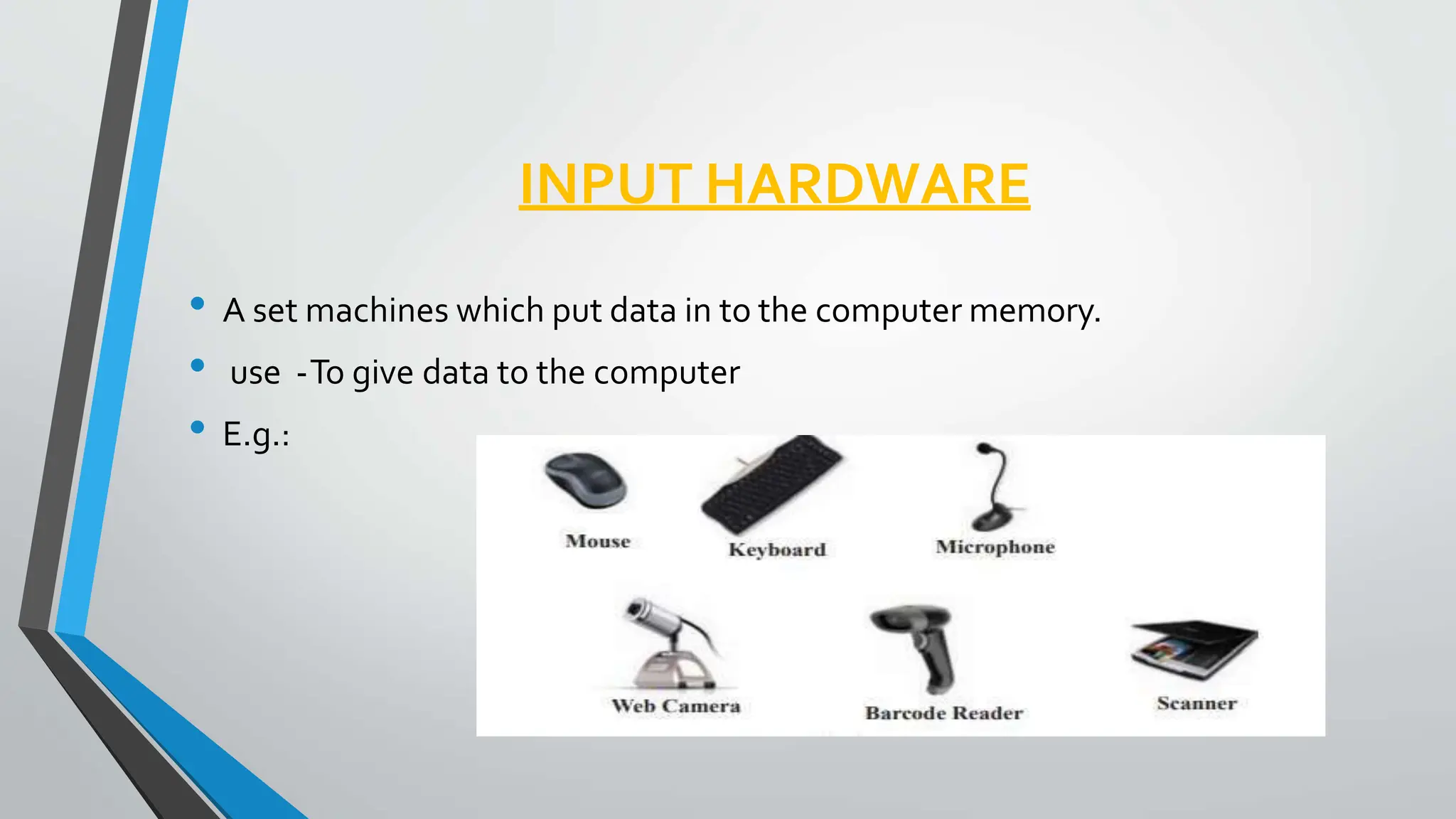
• A set machines which put data in to the computer memory.
• use -To give data to the computer
• E.g.:
OUTPUT DEVICES
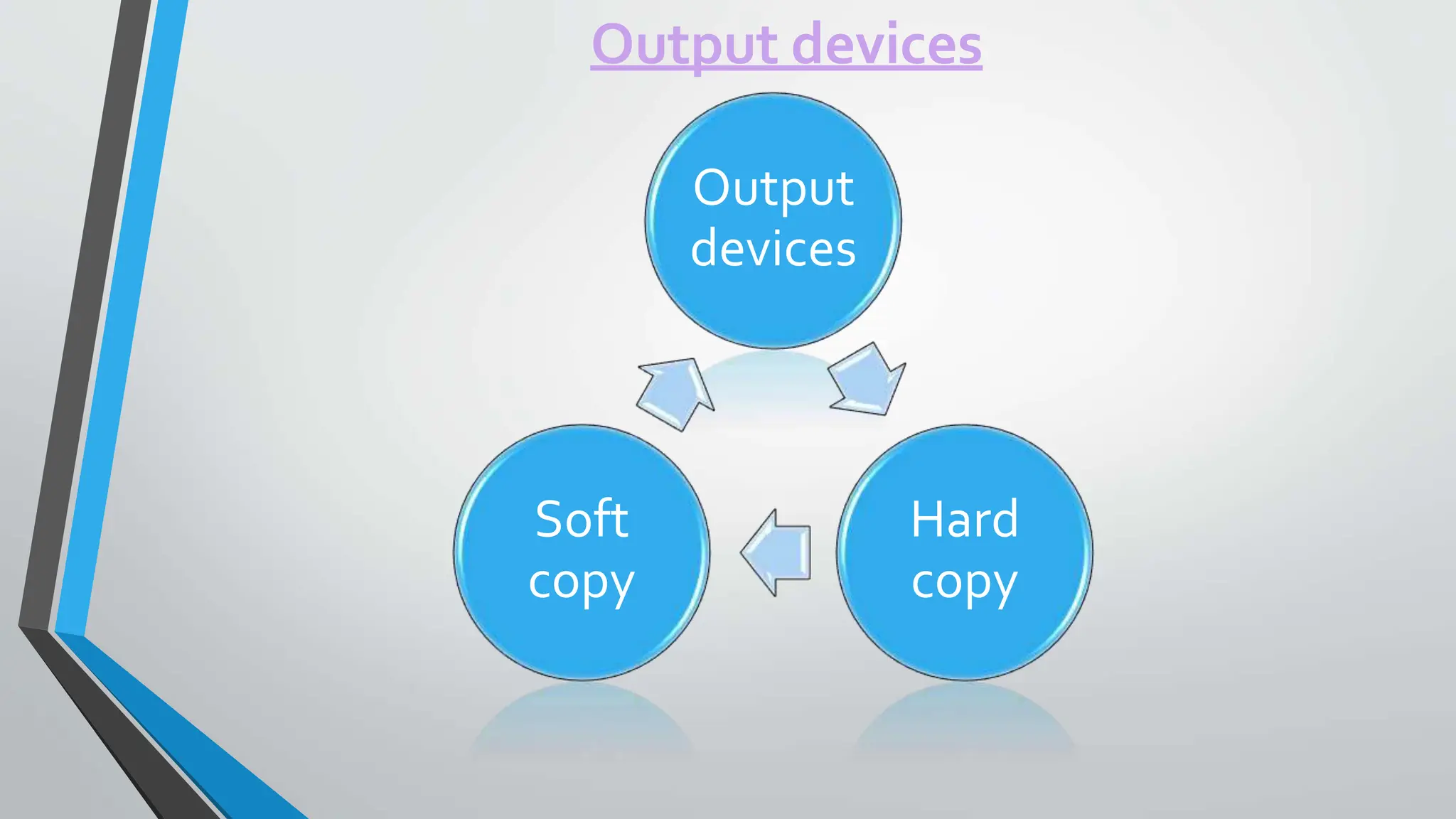
• The devices which are used to retrieve data and information are called
output devices
e.g. :
Output devices
Output
devices
Hard
copy
Soft
copy
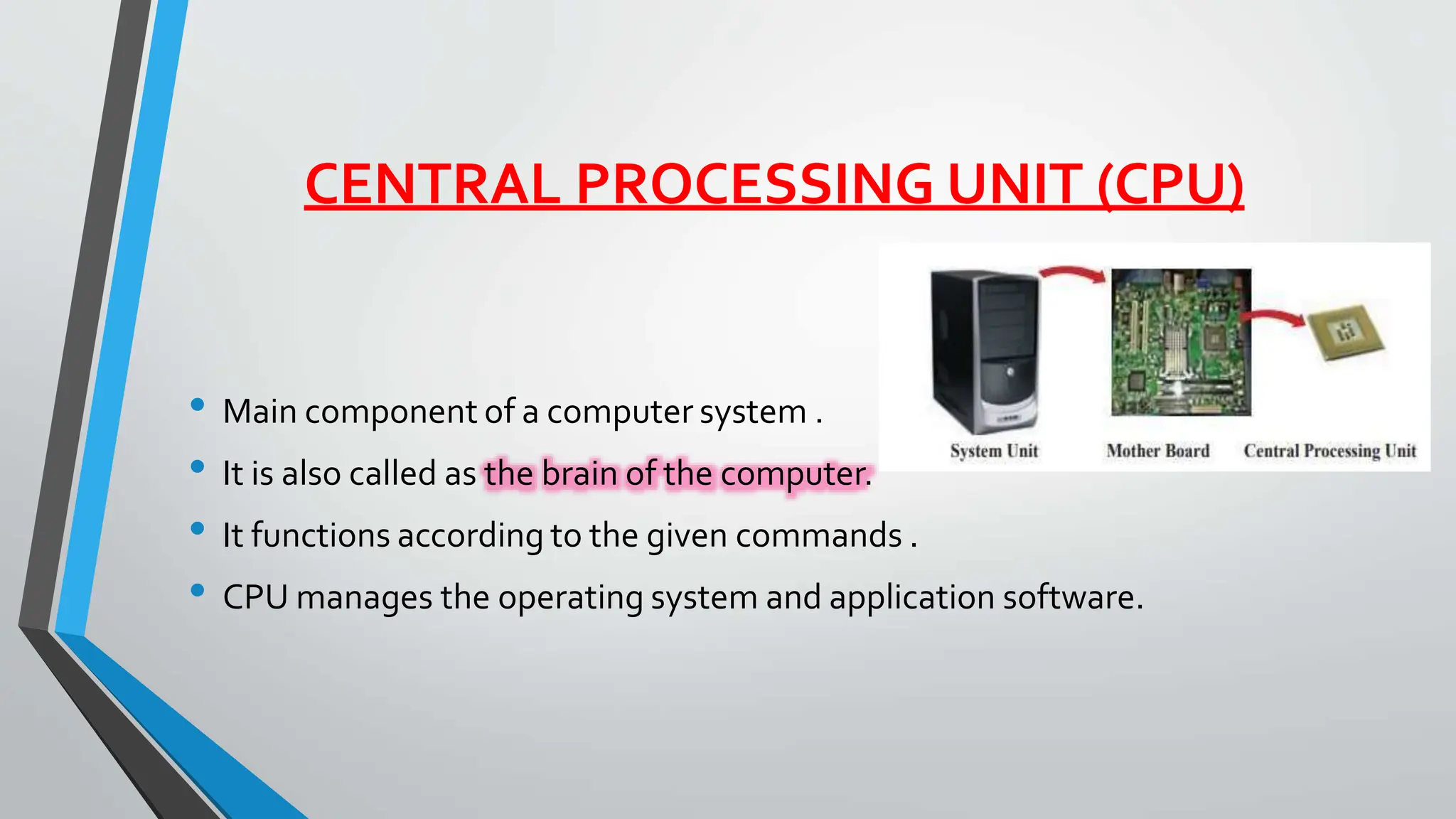
CENTRAL PROCESSING UNIT (CPU)
• Main component of a computer system .
• It is also called as the brain of the computer.
• It functions according to the given commands .
• CPU manages the operating system and application software.
COMPUTER SYSTEM
Computer
memory
RAM
ROM
Main
memory
Secondary
memory
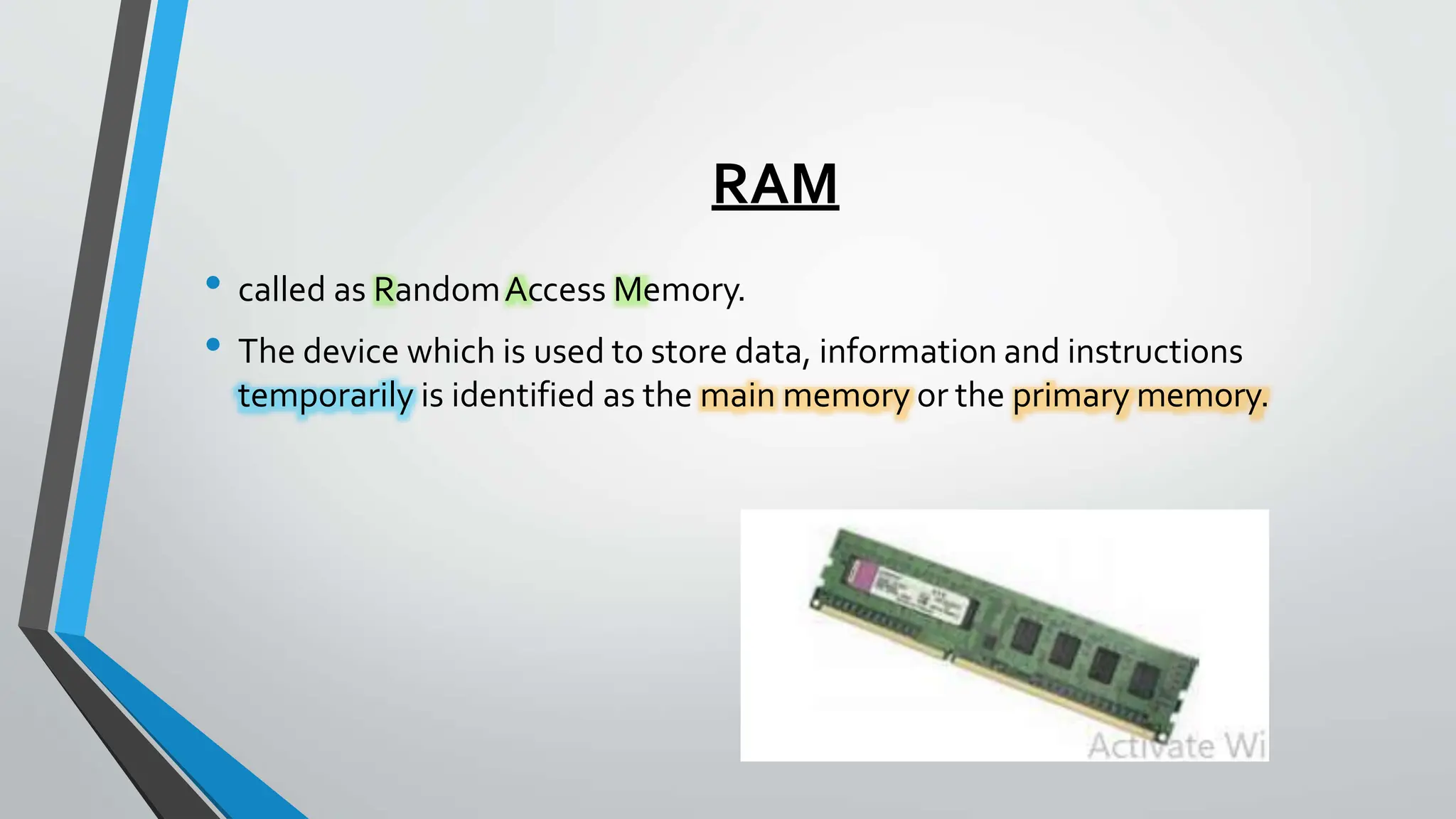
RAM
• called as RandomAccess Memory.
• The device which is used to store data, information and instructions
temporarily is identified as the main memory or the primary memory.
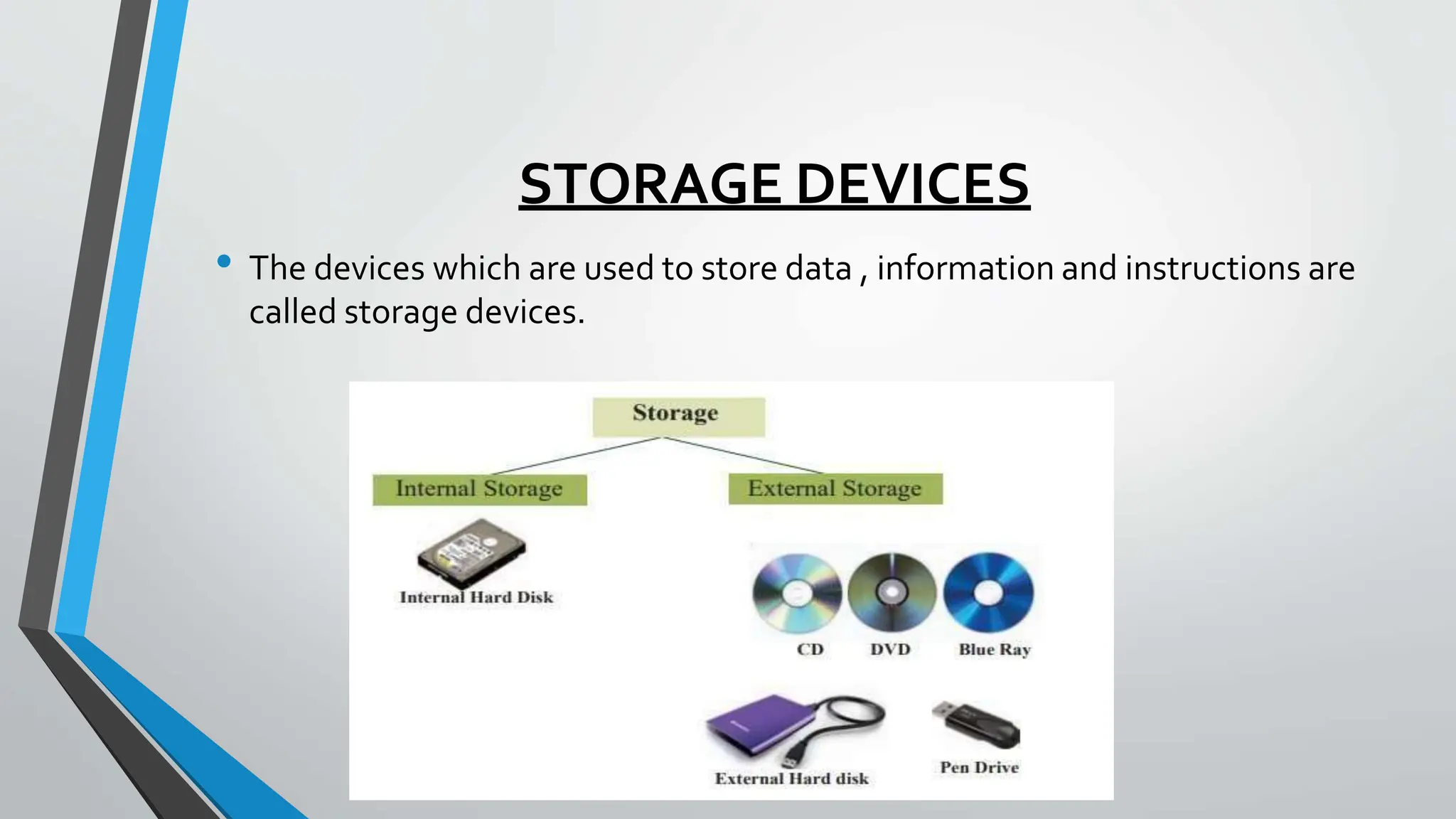
STORAGE DEVICES
• The devices which are used to store data , information and instructions are
called storage devices.
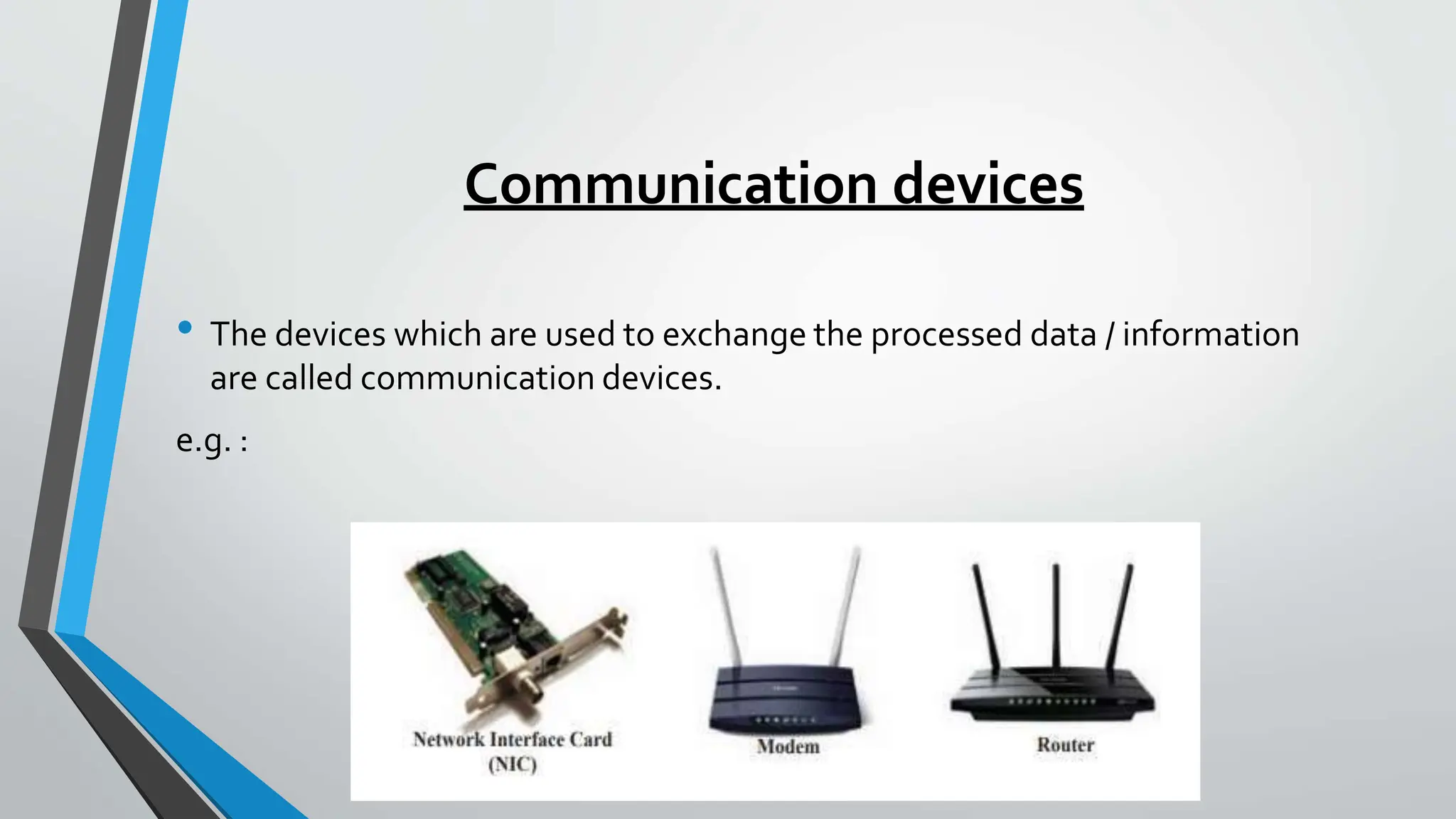
Communication devices
• The devices which are used to exchange the processed data / information
are called communication devices.
e.g. :
Software
• A software is a set of programmes designed to execute certain tasks by
using a computer.
e.g. :
1. MS word word processing software – to prepare documents
2. Computer games
3. Video editing software
4. Painting software - to draw pictures
5. Media player - to listen songs and watch videos
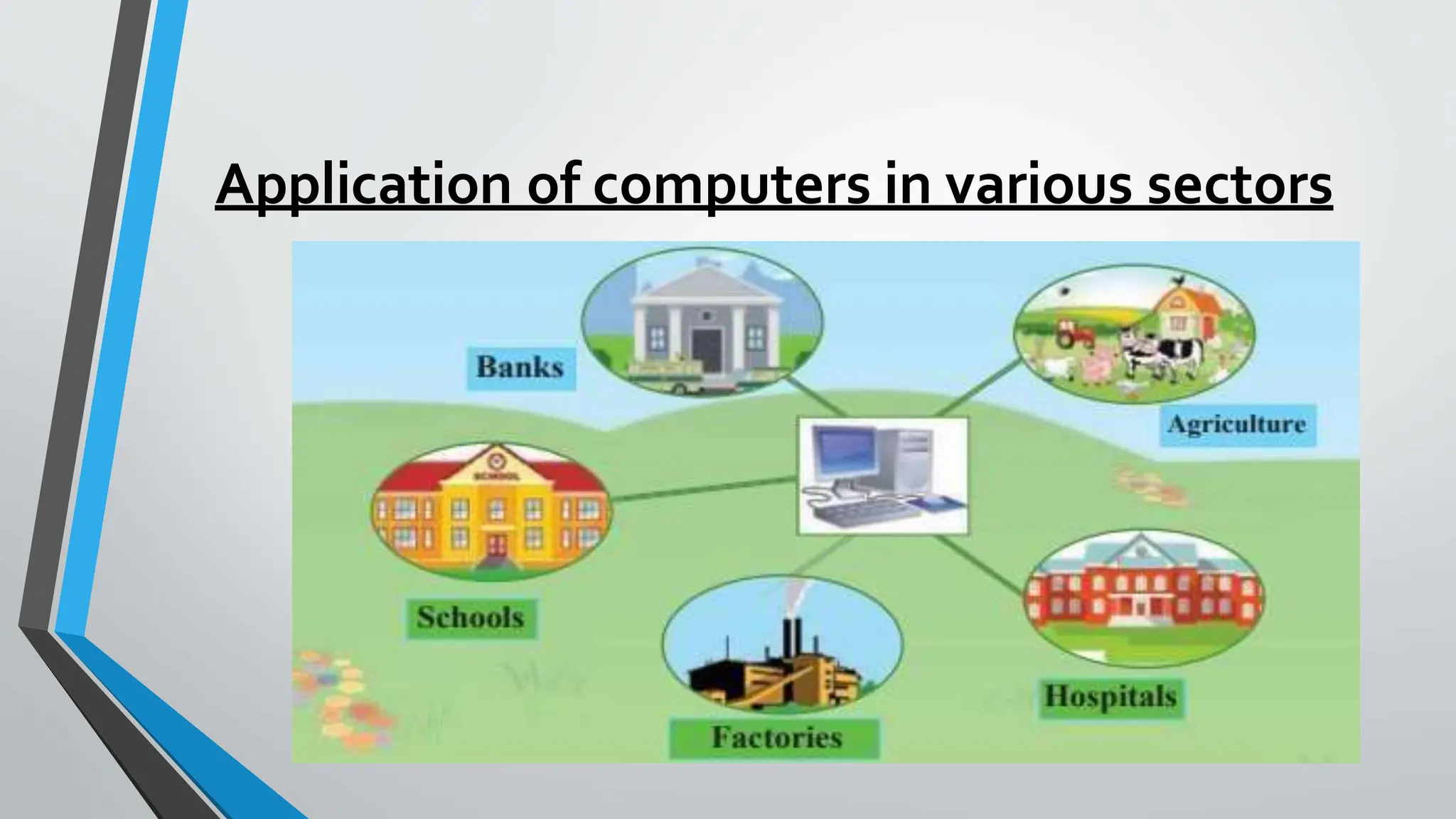
Application of computers in various sectors
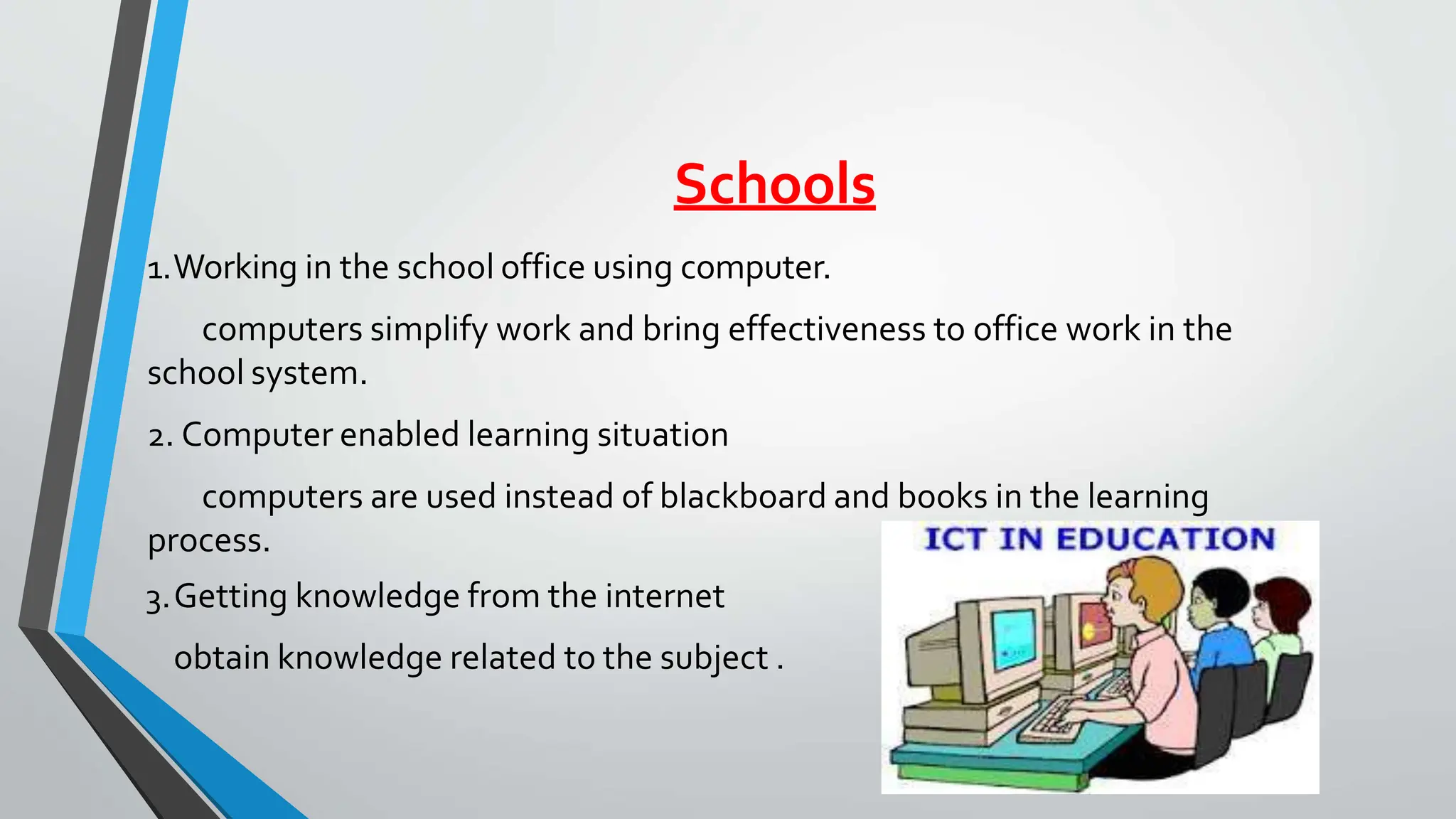
Schools
1.Working in the school office using computer.
computers simplify work and bring effectiveness to office work in the
school system.
2. Computer enabled learning situation
computers are used instead of blackboard and books in the learning
process.
3.Getting knowledge from the internet
obtain knowledge related to the subject .
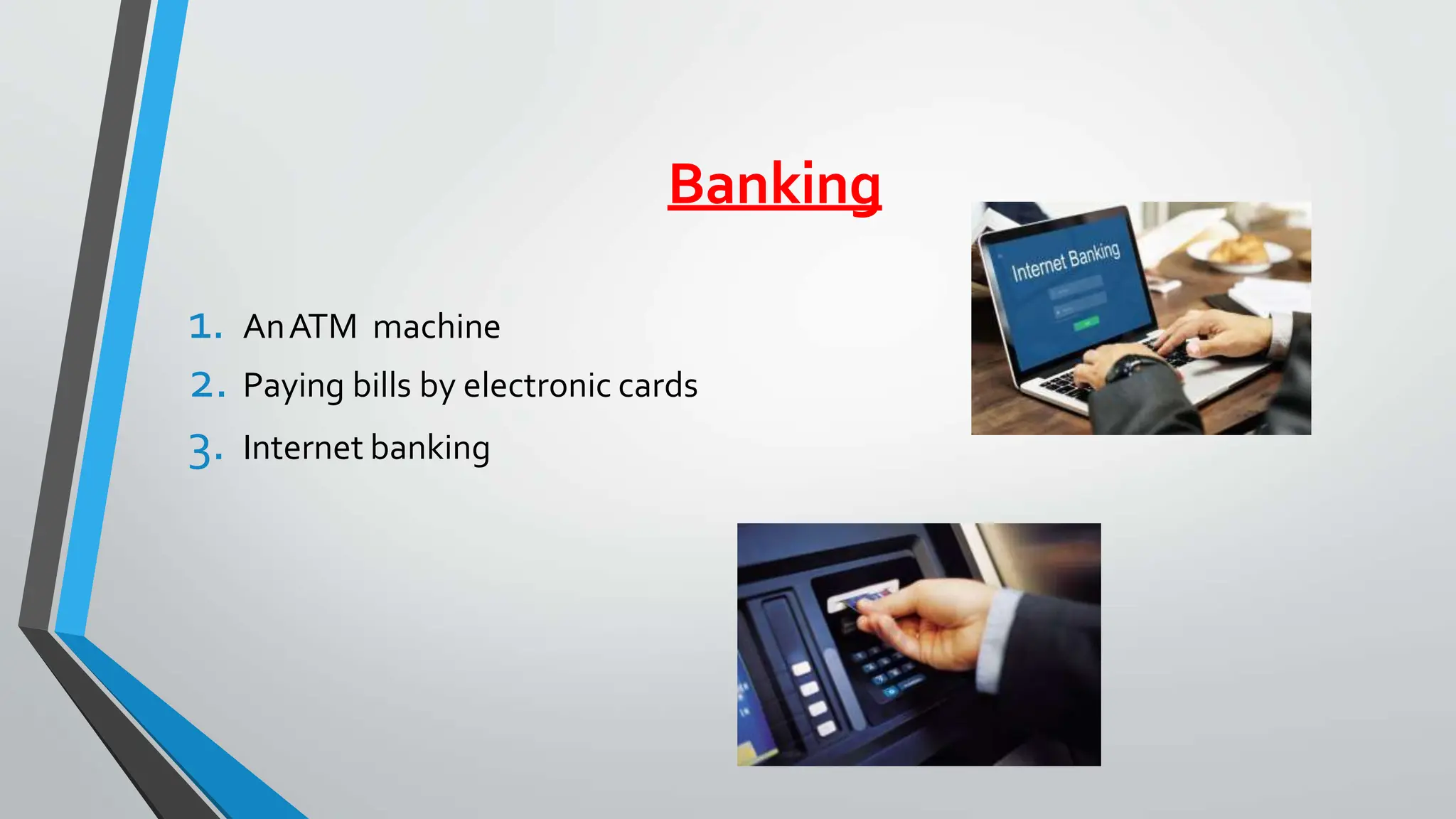
Banking
1. AnATM machine
2. Paying bills by electronic cards
3. Internet banking
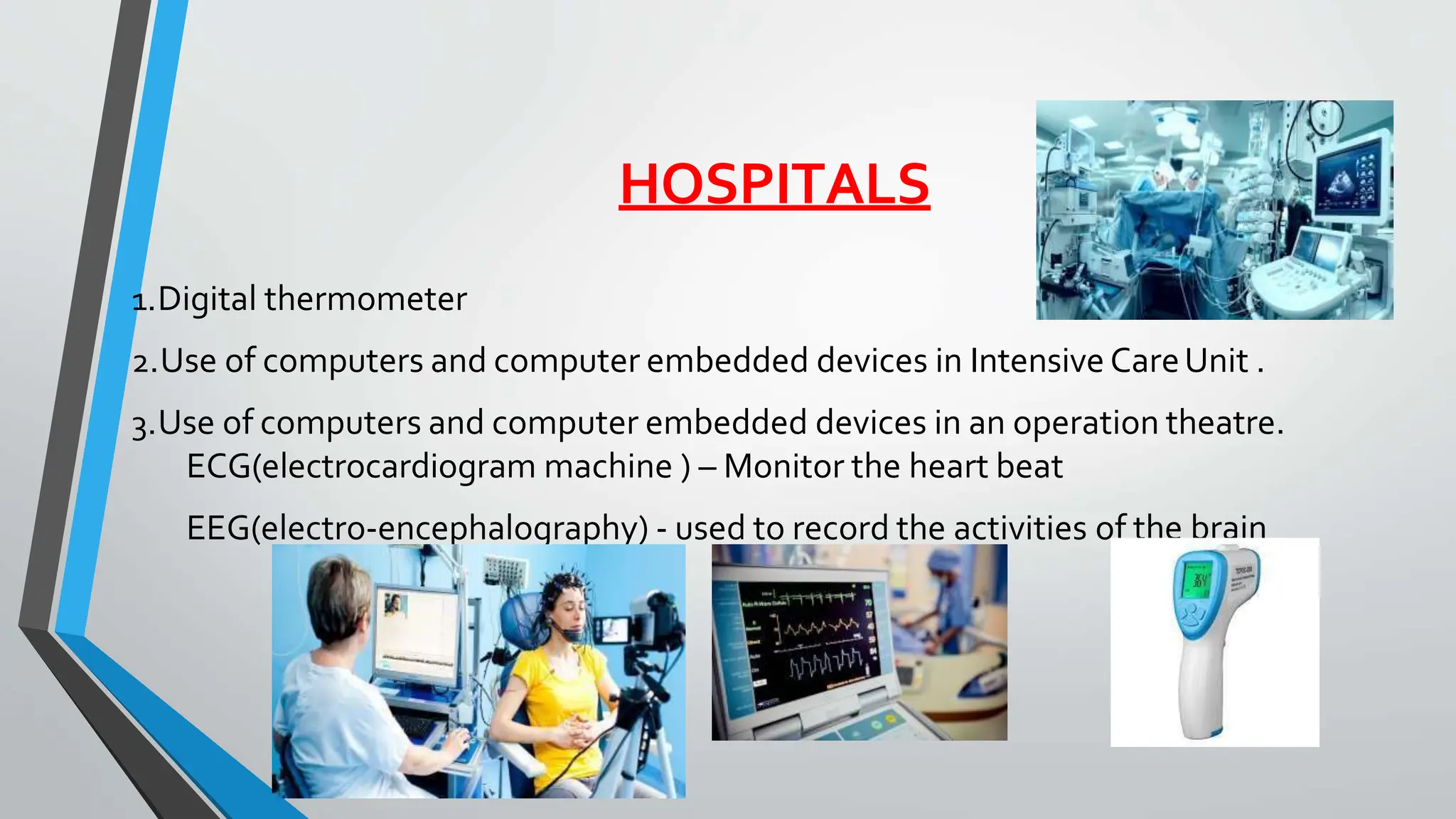
HOSPITALS
1.Digital thermometer
2.Use of computers and computer embedded devices in Intensive CareUnit .
3.Use of computers and computer embedded devices in an operation theatre.
ECG(electrocardiogram machine ) – Monitor the heart beat
EEG(electro-encephalography) - used to record the activities of the brain
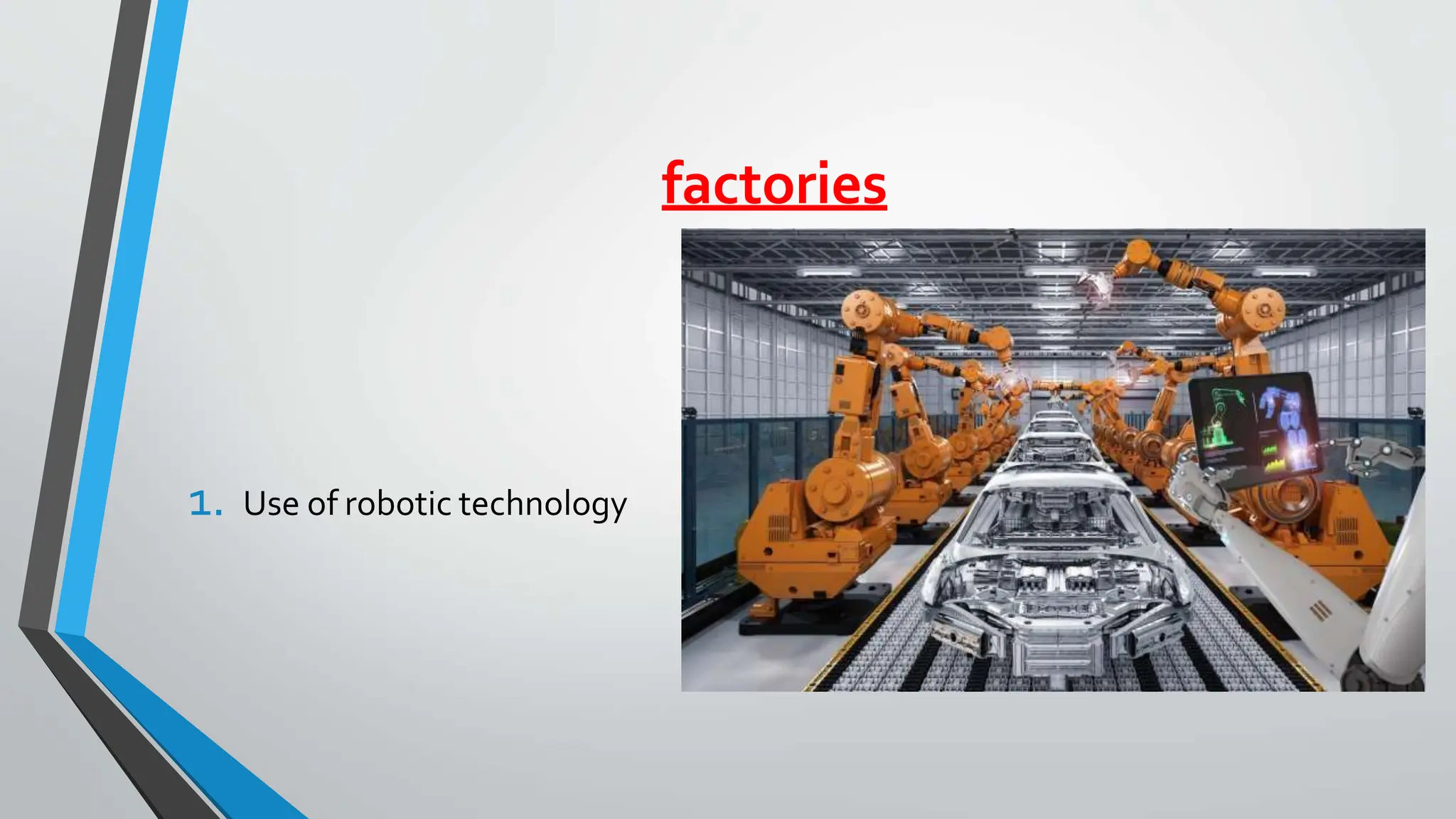
factories
1. Use of robotic technology
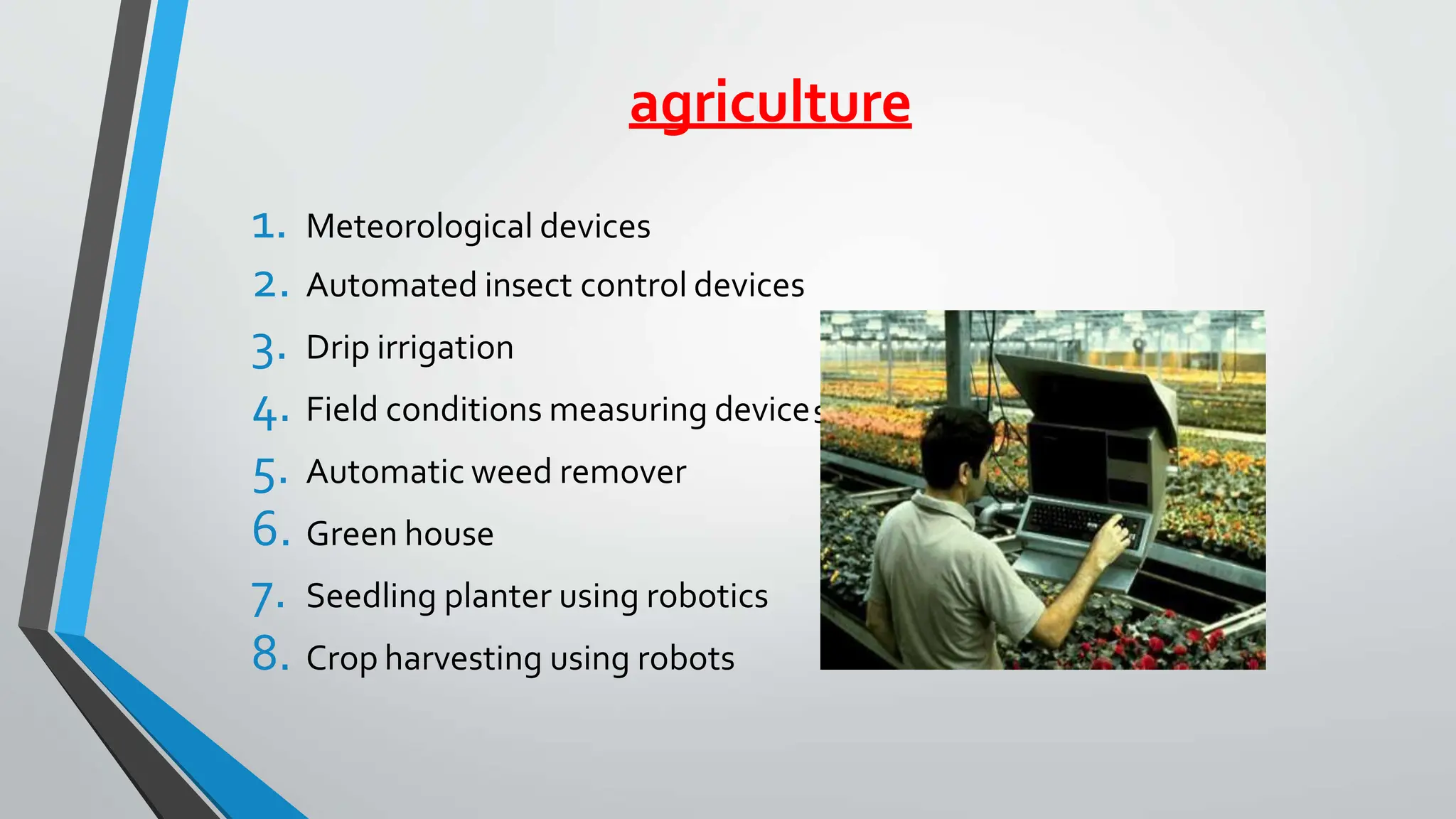
agriculture
s
1. Meteorological devices
2. Automated insect control devices
3. Drip irrigation
4. Field conditions measuring device
5. Automatic weed remover
6. Green house
7. Seedling planter using robotics
8. Crop harvesting using robots
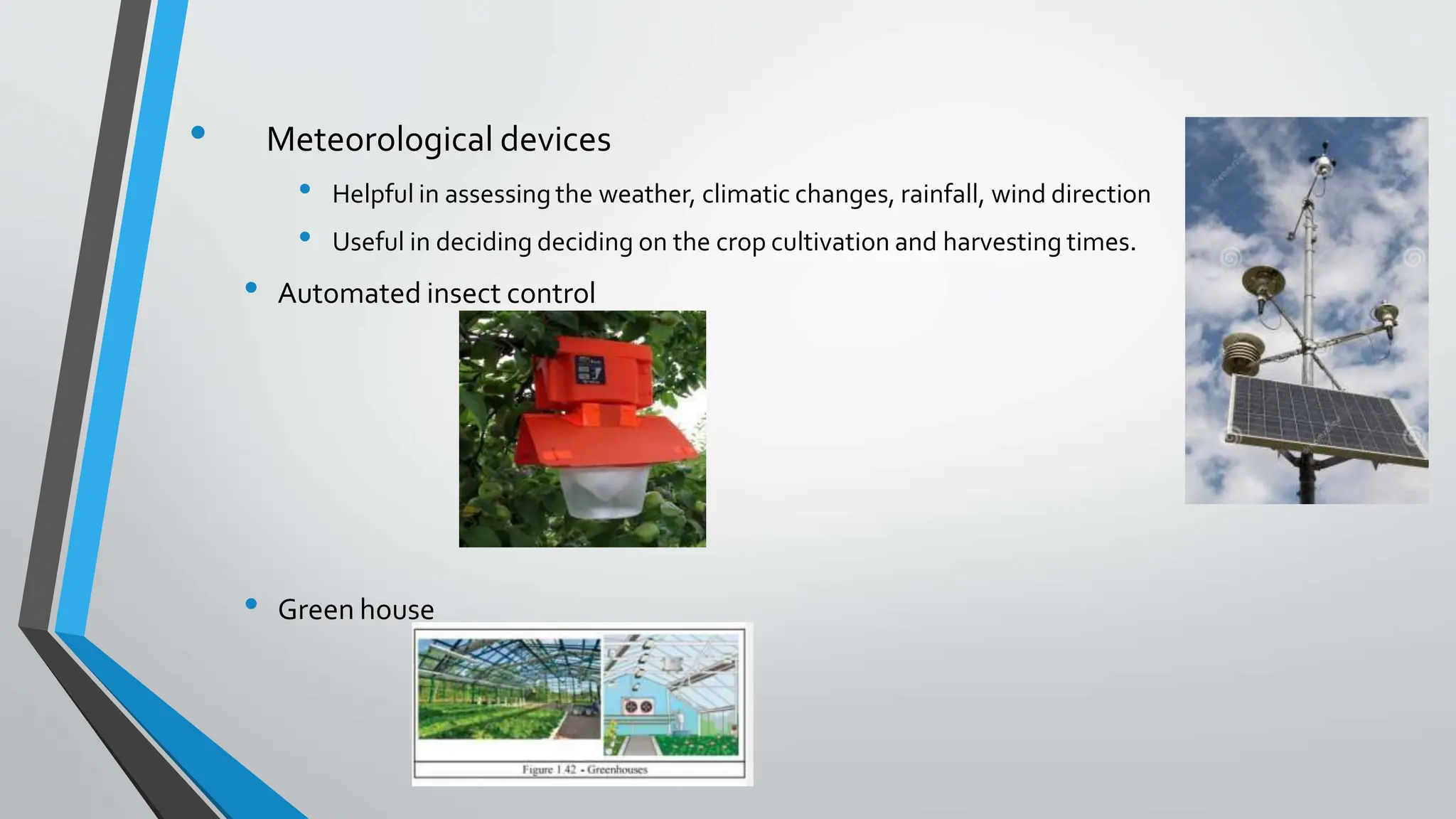
• Meteorological devices
• Helpful in assessing the weather, climatic changes, rainfall, wind direction
• Useful in deciding deciding on the crop cultivation and harvesting times.
• Automated insect control
• Green house
UNIT 01 FINISHED

Introduction to ICT.pptx

  • 1.
    Introduction to ICTand Basic Computer Skills ABZ Private School
  • 2.
    Lesson Objective To introducethe course ICT and Basic computer skills. Aim I know what is the meaning of ICT. I learned how the computer works. ABZ Private School
  • 3.
    *electronical multipurpose dataprocessing unit. *Any device which can accept data or information and put them into a series of process and gives the desired output.
  • 4.
    FUNCTIONS OF COMPUTER •Basic functions of a computer are entering data , processing them and retrieving processed data (information) .
  • 6.
    FEATURES OF COMPUTER •Speed and efficiency – can finish any given task within a short period of time • Accuracy – can provide correct information • Reliability – you can rely on the process of output • Consistency – produces consistent output when the same input is given • Storage capacity – can store large amount of data • Cost – initial cost is high • Intelligence – can act according to the given instructions
  • 7.
    DEVICE EMBEDDED WITHCOMPUTER SYSTEM • Equipments like washing machines , mobile phones , modern motor vehicles and modern televisions are operated by computer programme . computer programs included in such equipment are known as DEVICESWITH EMBEDED COMPUTER SYSTEMS.
  • 8.
  • 9.
    COMPUTER SYSTEM • Allthe essential parts which required to function a computer. 1. Hardware 2. Software 3. Firmware 4. Live ware
  • 10.
    HARDWARE • Tangible orphysical components of a computer system. 1. Input hardware 2. Output hardware 3. Processing hardware 4. Storage hardware 5. Communicationhardware
  • 11.
    INPUT HARDWARE • Aset machines which put data in to the computer memory. • use -To give data to the computer • E.g.:
  • 12.
    OUTPUT DEVICES • Thedevices which are used to retrieve data and information are called output devices e.g. :
  • 13.
  • 14.
    CENTRAL PROCESSING UNIT(CPU) • Main component of a computer system . • It is also called as the brain of the computer. • It functions according to the given commands . • CPU manages the operating system and application software.
  • 15.
  • 16.
    RAM • called asRandomAccess Memory. • The device which is used to store data, information and instructions temporarily is identified as the main memory or the primary memory.
  • 17.
    STORAGE DEVICES • Thedevices which are used to store data , information and instructions are called storage devices.
  • 18.
    Communication devices • Thedevices which are used to exchange the processed data / information are called communication devices. e.g. :
  • 19.
    Software • A softwareis a set of programmes designed to execute certain tasks by using a computer. e.g. : 1. MS word word processing software – to prepare documents 2. Computer games 3. Video editing software 4. Painting software - to draw pictures 5. Media player - to listen songs and watch videos
  • 20.
    Application of computersin various sectors
  • 21.
    Schools 1.Working in theschool office using computer. computers simplify work and bring effectiveness to office work in the school system. 2. Computer enabled learning situation computers are used instead of blackboard and books in the learning process. 3.Getting knowledge from the internet obtain knowledge related to the subject .
  • 22.
    Banking 1. AnATM machine 2.Paying bills by electronic cards 3. Internet banking
  • 23.
    HOSPITALS 1.Digital thermometer 2.Use ofcomputers and computer embedded devices in Intensive CareUnit . 3.Use of computers and computer embedded devices in an operation theatre. ECG(electrocardiogram machine ) – Monitor the heart beat EEG(electro-encephalography) - used to record the activities of the brain
  • 24.
    factories 1. Use ofrobotic technology
  • 25.
    agriculture s 1. Meteorological devices 2.Automated insect control devices 3. Drip irrigation 4. Field conditions measuring device 5. Automatic weed remover 6. Green house 7. Seedling planter using robotics 8. Crop harvesting using robots
  • 26.
    • Meteorological devices •Helpful in assessing the weather, climatic changes, rainfall, wind direction • Useful in deciding deciding on the crop cultivation and harvesting times. • Automated insect control • Green house
  • 28.