Melvin
   It’s a document given to the public for
    purchase of essential commodities at
    subsidized rates
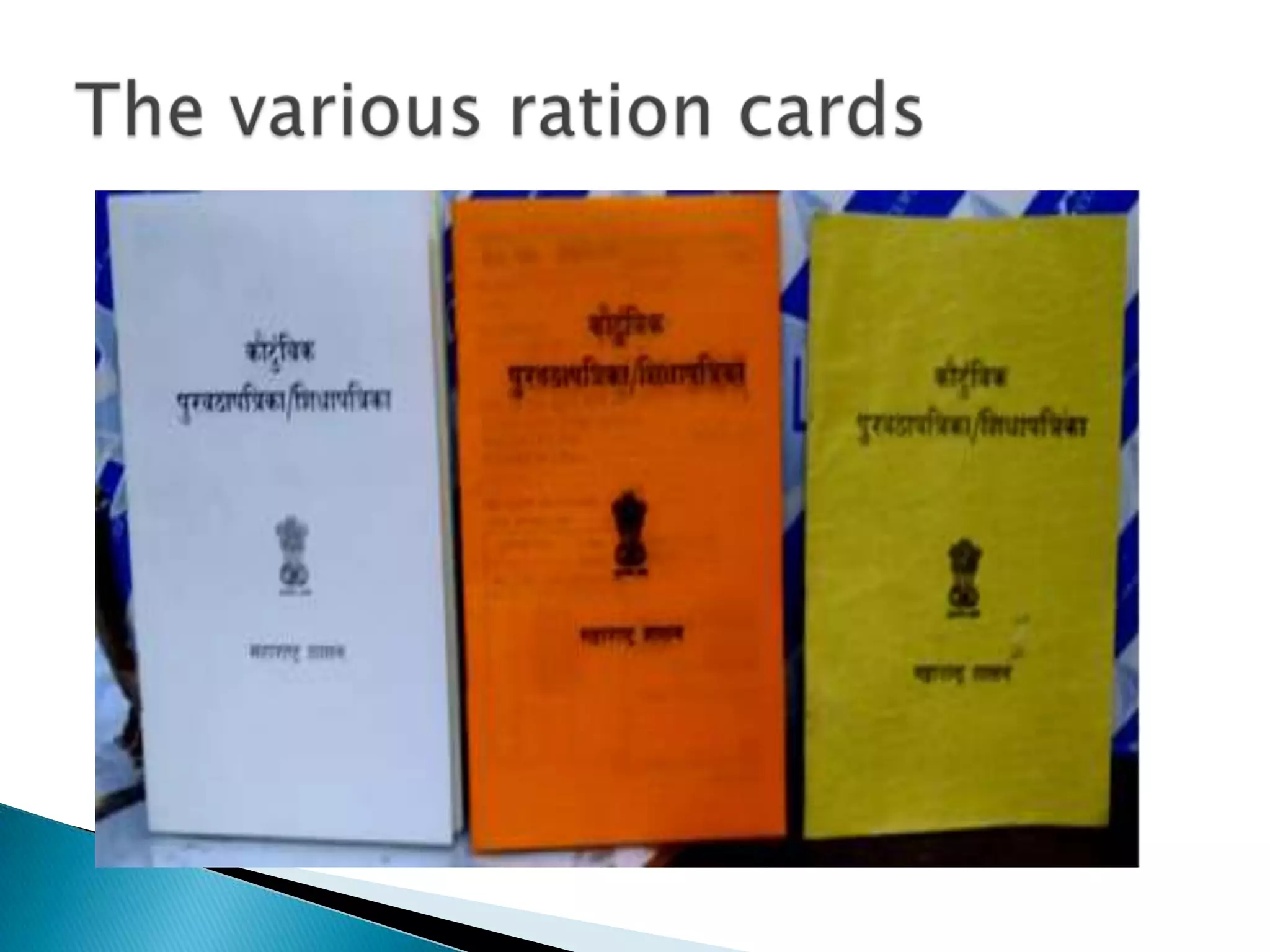
   Green cards and Yellow cards are issued to BPL
    families living in rural areas and urban slums.
   Antyodaya Anna Yojana cards are issued to poorest
    of the poor families living in rural areas and urban
    slums. The number of cards so issued is limited to
    4.797 lakh families as prescribed by the Government
    of India.
   APL cards which are of two types, namely saffron
    cards and photo cards, are issued to families living
    above the poverty line (APL). Saffron cards are issued
    to APL families in rural areas and photo cards are
    issued to APL families in urban areas.
   Honorary cards are issued to families which do not
    desire rationed commodities but require ration cards
    for identification purposes only.
   Three passport-sized photographs of the
    applicant
   Latest telephone bill on the name of the applicant
   Recent Postal mail received by the applicant
   Valid driving license
   Valid Passport
   Voter Identity card
   Latest tax paid receipt, if living in own house
   Extract of the Electoral Roll
   Rice and wheat are supplied to BPL families at
    subsidized prices.
   Only BPL families are entitled to get sugar
    under the TPDS. APL families are not entitled
    to get sugar.
   Kerosene is issued to ration cardholders
    subject to conditions imposed by the State
    Government.
   An applicant has to provide the biometric
    information, fingerprint as well as
    photograph, of himself and another member
    of the family, to obtain the ration card.
   20 Rs by APL
   10 Rs by BPL
   5 Rs by People registered under the
    Antyodaya Yojana scheme.
Ration card

Ration card

  • 1.
  • 2.
    It’s a document given to the public for purchase of essential commodities at subsidized rates
  • 5.
    Green cards and Yellow cards are issued to BPL families living in rural areas and urban slums.  Antyodaya Anna Yojana cards are issued to poorest of the poor families living in rural areas and urban slums. The number of cards so issued is limited to 4.797 lakh families as prescribed by the Government of India.  APL cards which are of two types, namely saffron cards and photo cards, are issued to families living above the poverty line (APL). Saffron cards are issued to APL families in rural areas and photo cards are issued to APL families in urban areas.  Honorary cards are issued to families which do not desire rationed commodities but require ration cards for identification purposes only.
  • 7.
    Three passport-sized photographs of the applicant  Latest telephone bill on the name of the applicant  Recent Postal mail received by the applicant  Valid driving license  Valid Passport  Voter Identity card  Latest tax paid receipt, if living in own house  Extract of the Electoral Roll
  • 8.
    Rice and wheat are supplied to BPL families at subsidized prices.  Only BPL families are entitled to get sugar under the TPDS. APL families are not entitled to get sugar.  Kerosene is issued to ration cardholders subject to conditions imposed by the State Government.
  • 9.
    An applicant has to provide the biometric information, fingerprint as well as photograph, of himself and another member of the family, to obtain the ration card.
  • 10.
    20 Rs by APL  10 Rs by BPL  5 Rs by People registered under the Antyodaya Yojana scheme.