TOPICAL CORTICOSTEROIDS
INTRODUCTION
• In 1952, Sulzberger and Witten first treated
eczematous dermatitis with topical
hydrocortisone.
• This success marked a cornerstone in
dermatology and the birth of a wonder drug
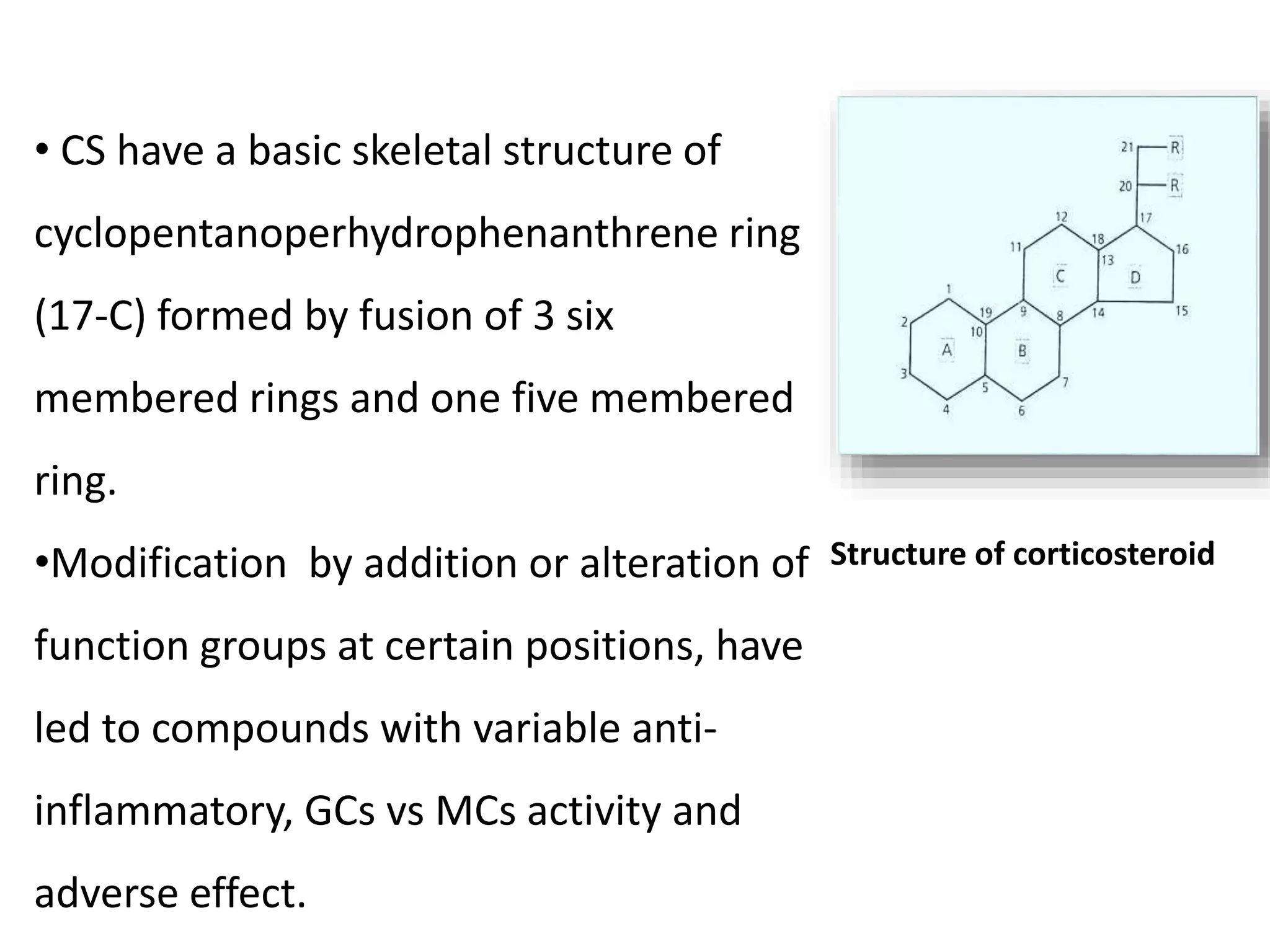
Structure of corticosteroid
• CS have a basic skeletal structure of
cyclopentanoperhydrophenanthrene ring
(17-C) formed by fusion of 3 six
membered rings and one five membered
ring.
•Modification by addition or alteration of
function groups at certain positions, have
led to compounds with variable anti-
inflammatory, GCs vs MCs activity and
adverse effect.
PHARMACOKINETICS
• Distribution : After application, distributed throughout
local skin; drug absorbed systemically is rapidly removed
from circulation and distributed to muscle, liver, skin,
kidneys, intestines
• Metabolism : mainly in the skin by:
a) Oxidation
b) Conjugation
• Small amount absorbed systemically is metabolised in the liver
to inactive metabolites which are excreted by kidneys.
PK and the potency of TCS preparation depends on 3
factors: Structure , vehicle and the skin condition
1. Structure of TCS molecule: HC is the backbone of most
TCS molecules. The addition or alteration of functional
groups (-OH, ester, F, Cl, acetonide, ketone) at certain
position affects the lipophilicity, solubility, percutaneous
absorption, biotransformation and GCR-binding activity.
Fluoridation renders the steroid more potent than
chlorination.
Fluoridation at C-9 increases potency more than at C-6
position.
An ideal topical steroid should permeate the stratum
corneum, reach an adequate conc. in epidermis without
crossing the dermis to enter systemic circulation.
This is achieved by molecules with high lipophilicity.
2. The vehicle: Vehicle is the sum of the formulation
ingredients in which the drug is presented to the skin. The
ideal vehicle should be- cosmetically acceptable,
biocompatible, chemically, microbiologically and physically
stable and should be able to release the drug in the
stratum corneum.
• The potent molecules may be made clinically ineffective or
that the enhanced efficacy may be generated with weaker
molecules, depending upon the vehicle used.
Important considerations for choosing a
vehicle:
1. Solubility of agent in vehicle
2. Rate of release of agent from vehicle
3. Ability of vehicle to hydrate stratum corneum
4. Stability of therapeutic agent in vehicle, any
physical/chemical interactions b/w the two
• Vehicles, previously considered to be an inactive molecule,
also do some important functions -
 Emollients: Smoothens the skin by filling spaces between skin
flakes, with droplets of oil and ↑ flexibility of skin.
 Emulsifying agent: Stabilizes the emulsion and also helps in even
distribution
 Solvents are used in lotions, solutions, gels and spray to create a
less viscous product.
 Humectants attract water to stratum corneum (transepidermal)
 Thickening agent can be used to make the preparation
stiffer.
 Ointments- ↑ the hydration of stratum corneum and
occludes the drug thus increasing its potency.
• The other functions of vehicle includes its cooling
effect, antipruritic, moisturization, ↑ing the PC
absorption by making it more soluble, anti-oxidant,
preservative and reduces friction.
3. Role of Condition of Skin in Percutaneous
Absorption:
The skin condition determines the bioavailability of drug.
Penetration is inversely α to the thickness of Stratum
corneum.
Penetration ↑ with inflammed or diseased skin and also
with ↑ hydration of stratum corneum and also with
temperature. Stratum corneum may also act as a reservoir
for TCS for upto 5 days, this retention is concentration &
formulation dependent.
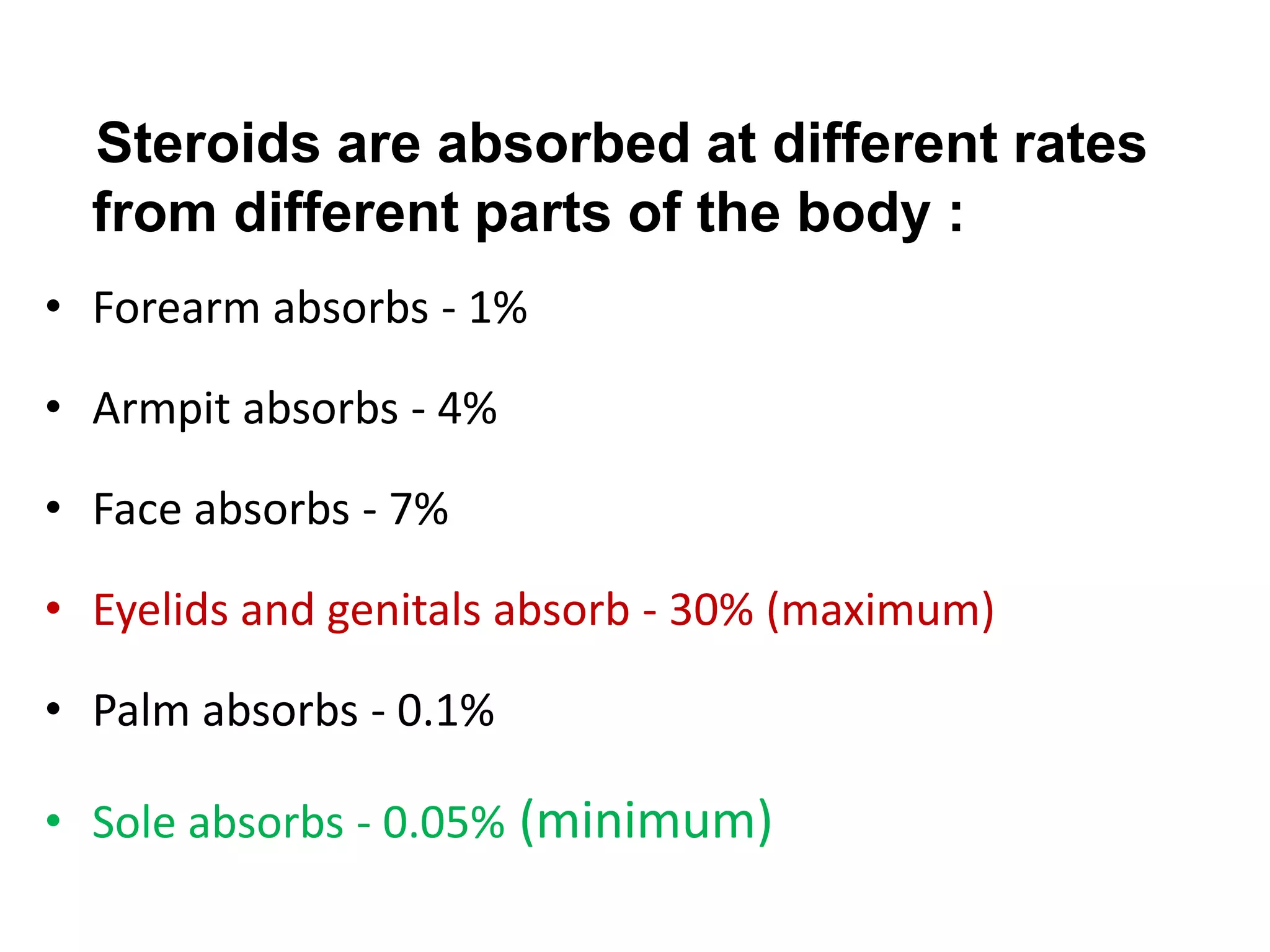
Steroids are absorbed at different rates
from different parts of the body :
• Forearm absorbs - 1%
• Armpit absorbs - 4%
• Face absorbs - 7%
• Eyelids and genitals absorb - 30% (maximum)
• Palm absorbs - 0.1%
• Sole absorbs - 0.05% (minimum)
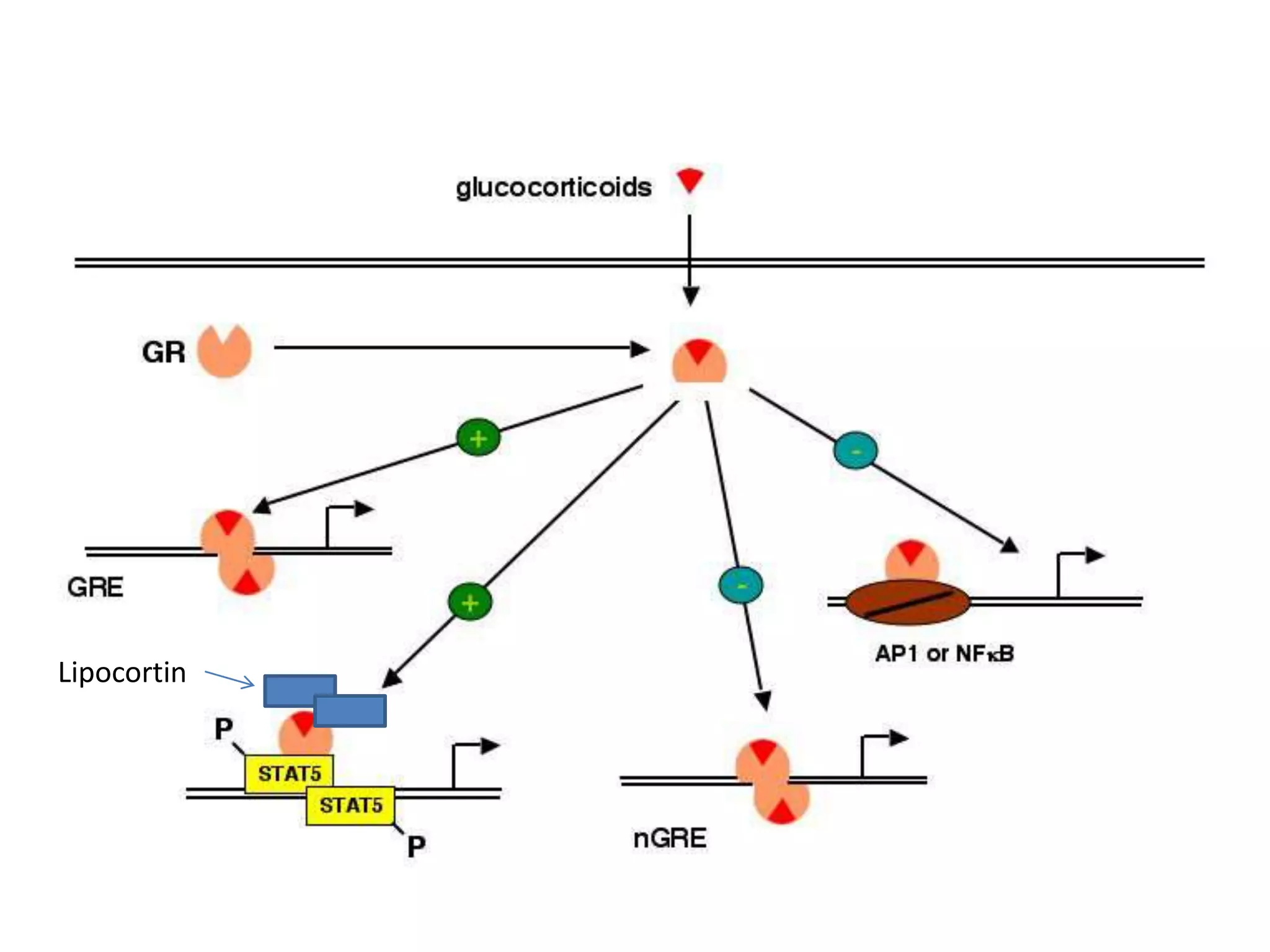
Mechanism Of Action Of Glucocorticoids
 The CS diffuse into the target cell & binds to the
GCR(found in almost all types of cells) in the cytoplasm
 The CS-GCR complex undergoes necessary
conformational changes (dissociation of hsp-90 and p59
from hetero tetrameric complex of GCR)
 The resulting active complex traverses the nuclear
envelope and binds to the GRE of many genes
 Gene regulation & transcription of various specific mRNA
occur.
Lipocortin
• CS inhibits transcription factors such as activator protein 1
and nuclear factor κB, that are involved in the activation of
pro-inflammatory genes.
• Genes that have anti- inflammatory role are upregulated by
CS and includes lipocortin and p11/calpactin-binding
proteins.
ANTI INFLAMMATORY ACTION
Direct effects( immediate)
 Stabilize cell and lysosomal membranes: prevent release of
lysosomal contents & phospholipid precursors for synthesis
of PGs & PAF
 Potentiates vascular response to catecholamines
 Reduce vascular sm sensitivity to histamine & bradykinin
 Inhibit mast cell sensitization induced by IgE
 Inhibit release of histamine & other mast cell mediators
GCR mediated effects(delayed)
 Induction of anti-inflammatory proteins- lipocortins, vasocortin
and vasoregulin
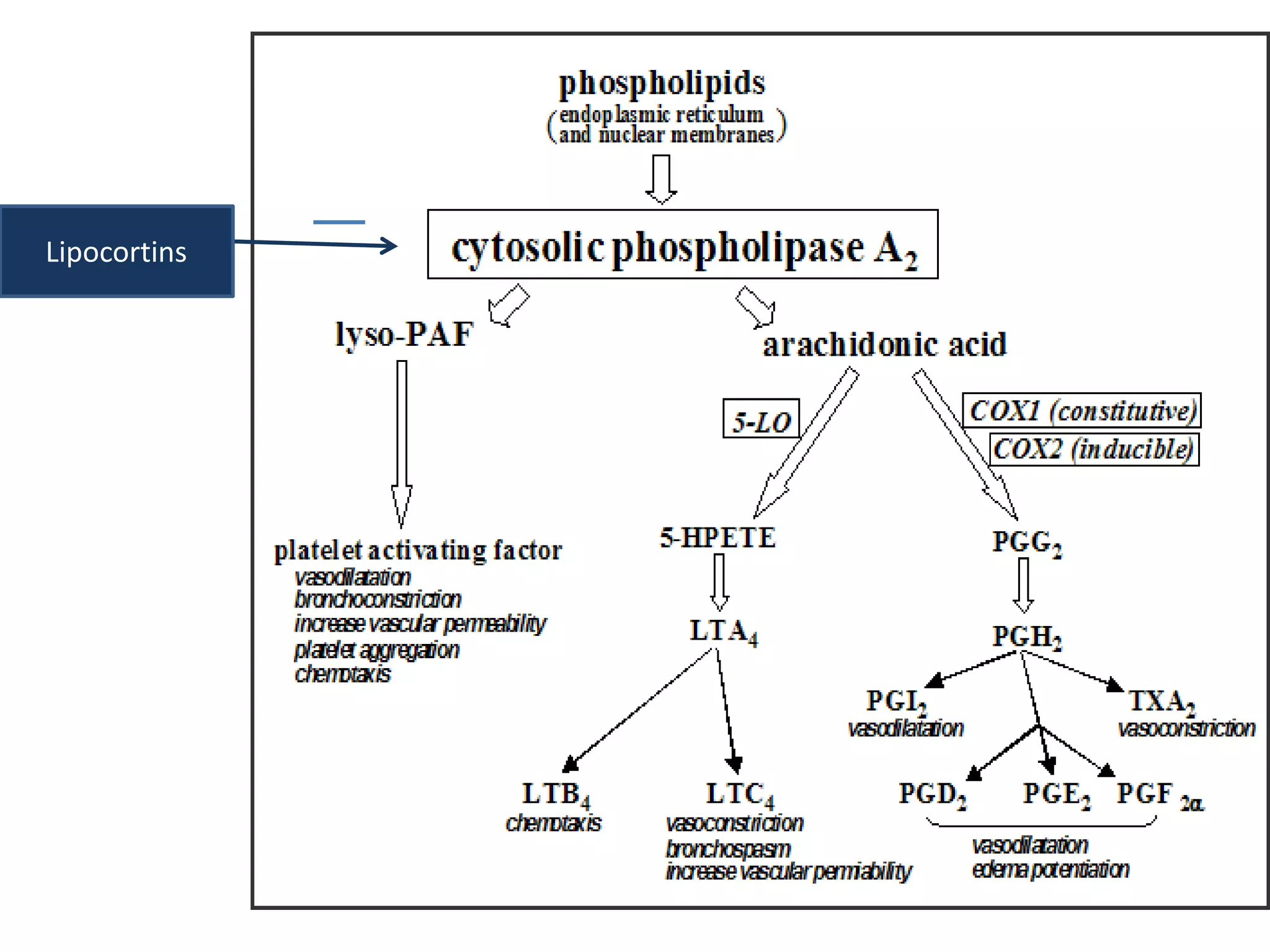
 Lipocortins inhibit phospholipase A2 & block release of AA &
PAF from cell membrane; thus prevent formation of PGs, LKTs,
12-HETE (Hydroxy eicosa tetraenoic acid) and 15-HETE.
 Lipocortins also prevent PAF induced wheal and flare rxns. &
leukocyte chemotaxis
 Vasocortin and vasoregulin ↓vascular permeability
Lipocortins
Anti-inflammatory actions on specific cells
Polymorphonuclear leucocytes
• ↓ ability to adhere to vascular endothelium
• ↓ migration to sites of inflammation
• ↓ no. at sites of inflammation
• Reduce phagocytosis, bactericidal activity, release of
acid hydrolases and pyrogens
Monocytes
• reduce number at sites of inflammation
• reduce fungicidal activity and clearance of opsonized
particle
• ↓ response to macrophage activating factor & chemotaxis
Lymphocytes
• ↓ response to concanavalin A induced T-cell blastogenesis
• Induction of T cell apoptosis
• ↓ response to tetanus toxoid
• ↓ Antibody mediated cell mediated cytotoxity
• ↓ NK cell activity
Langerhans cells
• Moderate potency TCS ↓ expression of Fc receptor , C3b
receptor and HLA DR positivity but no alteration in CD1a
antigen expression
• Superpotent TCS cause loss of cells expressing langerhans
cell markers
Effects on immune cytokine production
↓ production of interleukin-1 (IL-1α and IL-1β), IFN-γ, TNF,
IL-2, IL-8 and GMCSF
Anti inflammatory properties are:
• Useful in skin conditions like atopic dermatitis
and contact dermatitis in which excess
inflammatory response occurs
• Deleterious where inflammation is host
protective. Eg: dermatophyte infections
ANTIPROLIFERATIVE ACTION
EPIDERMIS
• Number of keratinocyte mitoses seen diminished
• Stratum corneum thickness reduced
• Granular layer reduced or absent
• Basal layer of keratinocytes flattened
• Keratinocytes growth factors suppressed
• Keratinocyte ultrastructure (keratin filaments, keratohyalin
granules, membrane-coating granules) normal
• Basement membrane unaffected
• Melanocyte pigment production inhibited
DERMIS
1) EARLY ATROPHY
• Dermal volume reduced: ↓ water content, loss of
glycosaminoglycans
• Hypoactive fibroblasts : suppression of procollagen-I
mRNA transcription, reduced activity of prolyl 4- OHase &
lysyl oxidase, collagenase activity reduced, hyaluronate
synthetase activity suppressed
• Collagen & elastic fibers unchanged
2) LATE ATROPHY
• Dermal volume reduced
• Collagen & elastic fibers diminished & abnormally
aggregated
• Hypoactive fibroblasts
• Dermal vessels fragile due to loss of fibrous & ground
substance support
Antiproliferative effects are :
• helpful in proliferative dermatoses like psoriasis
• Injurious when used in the wrong disease, location
or potency or in excess quantity
INDICATIONS
Dermatitis/ papulosquamous Bullous dermatosis
 Atopic dermatitis
 Diaper dermatitis
 Dyshydrotic eczema
 Erythroderma
 Lichen planus
 Lichen simplex chronicus
 Nummular dermatitis
 Piytriasis rosea
 Psoriasis-intertriginous
 Psoriasis–plaque or
palmoplantar
 Seborrheic dermatitis
Bullous pemphigoid
Cicatricial pemphigoid
Epidermolysis bullosa acquisita
Pemphigoid gestationis
Pemphigus Foliaceus
CONNECTIVE TISSUE DISEASE
 Dermatomyositis
 Lupus
NEUTROPHILIC DERMATOSIS
 Behcet’s disease
 Pyoderma gangrenosum
OTHER DERMATOLOGIC DISEASES
 Alopecia areata
 Acne keloidalis nuchae
 Chondrodermatitis nodularis
helicis
 CTCL- Patch stage
 Granuloma annulare
 Jessener’s lymphocytic infiltrate
 LSEA (lichen sclerosus et
atrophicus)
 Lichen planopilaris
 Morphea
 Sarcoidosis
 Vitiligo
 Well’s syndrome
 Pruritus- perianal, scrotal & vulvar
Responsiveness of Dermatoses to Topical
Application of Corticosteroids
Highly responsive
Psoriasis (intertriginous)
Atopic dermatitis (children)
Seborrheic dermatitis
Intertrigo
Moderately responsive
Psoriasis (body)
Atopic dermatitis (adults)
Nummular eczema
Primary irritant dermatitis
Papular urticaria
Lichen simplex Chronicus
Least responsive
Palmoplantar psoriasis
Psoriasis of nails
Dyshidrotic eczema
Lupus erythematosus
Pemphigus
Lichen planus
Granuloma annulare
Necrobiosis lipoidica
diabeticorum
Sarcoidosis
Allergic contact dermatitis,
acute phase insect bites
ESTIMATING TCS POTENCY
• Assays measure anti-inflammatory and/or
antiproliferative properties of TCS
• Stoughtan vasoconstriction assay – most commonly
used
• Involves:
1) Preparing test corticosteroid in 95% alcohol
2) Applying to volar surface of normal volunteer’s
forearm
3) Allowing alcohol to evaporate, occlusive dressing for
16 hours
4) Washing off the area
5) Assessing vasoconstriction 2 hrs later:
0 = none
1 = mild
2 = moderate
3 = intense
6) Statistical analysis based on sum of signed ranks of
difference
• Correlates well with clinical efficacy( except
aclometasone oint.,hydrocortisone cream) and is
reproducible
• Best evaluation with vasoconstriction assay in
combination with a second assay on spontaneously
occuring skin diseases in human volunteers
Commonly used Glucocorticoid assays
Assays of Anti-inflammatory potency
 LAB ANIMALS:
• Mitotic index suppression– hairless mouse
• Antigranuloma assay- rat
• Croton oil inflammation assay- rat
• 6-chloro-2,4-dinitrobenzene inflammation– guinea pig
 HUMAN VOLUNTEERS:
 Vasoconstrictor Assay
 Artificially induced inflammation
 Spontaneously occurring skin disease
Assay of Atrophogenicity
 LAB ANIMALS OR CELL CULTURES:
• Inhibition of fibroblast growth in vitro
• Neutral red release assay
• Mouse tail epidermis
• Guinea pig epidermis
 HUMAN VOLUNTEERS:
• Micrometer calipers
• HPE
• X ray radiography
• Pulsed ultrasound
Potency ranking of selected TCS preperation
US classification :
Class1- Superpotent
Betamethasone dipropionate 0.05% optimized vehicle-Gel/oint
Clobetasol propionate 0.05%- cream/gel/oint/spray/foam
Halobetasol propionate 0.05% - cream/oint
Class2- Potent
Betamethasone dipropionate 0.05%- cream
Mometasone furoate 0.1%- oint
Class3- Potent, upper mid strength
Betamethasone valerate 0.1%- oint
Fluticasone propionate 0.005%- oint
Class4- Mid strength
Betamethasone valerate 0.12%- foam
Hydrocortisone probutate 0.1%- cream
Hydrocortisone valerate 0.2%-oint
Triamcinolone acetonide 0.1%- oint
Mometasone furoate 0.1%- cream/lotion
Class5- Lower mid stength
Betamethasone dipropionate 0.05%- lotion
Betamethasone valerate 0.12%- cream/lotion
Fluticasone propionate 0.005%- cream
Hydrocortisone valerate 0.2%- cream
Hydrocortisone butyrate 0.1%- lipocream
Triamcinolone acetonide 0.1%- cream/lotion
Class6- Mild strength
Desonide 0.05%- cream/lotion/ointment
Alclometasone dipropionate 0.05%- cream/oint
Flucinolone acetonide 0.01%- cream/solution
Betamethasone valerate lotion 0.1%
Class7- Least potent
Topicals with dexamethasone, flumethasone, hydrocortisone,
methylprednisolone and prednisolone
British classificaton
Class IV Very potent (up to 600 times as potent as HC)
• Clobetasol propionate
• Betamethasone dipropionate
Class III Potent (50-100 times as potent as HC)
• Betamethasone valerate
• Betamethasone dipropionate
• Diflucortolone valerate
• Hydrocortisone 17-butyrate
• Mometasone furoate
• Methylprednisolone aceponate
• Halometasone 0.05%
Class II Moderate (2-25 times as potent as HC)
• Clobetasone butyrate
• Triamcinolone acetonide
Class I Mild
• Hydrocortisone 0.5-2.5%
SIDE EFFECTS
LOCAL SIDE EFFECTS
1) Atrophy:
• Most common
• Lax, depressed, wrinkled, shiny skin with
telangiectasias, purpura, striae, stellate pseudoscars,
prominent deep vessels and hypopigmentation
• Corticoid purpura: fragile skin with tears/bruises
• Atrophy of epidermis within 7 days of superpotent
TCS with occlusion; 2 weeks of less potent/
superpotent without occlusion
• Most signs of cutaneous atrophy (except striae)
resolve by 1 to 4 weeks of stoppage
2) Flaring up/increased incidence of infections:
Esp. if used - on flexural sites
- with polythene occlusion
e.g. : Tinea incognito, crusted scabies, candidiasis,
prolongation of herpes/molluscum, Staphylococcal folliculitis
3) Steroid face: erythema and telangiectasia with atrophy of
dermal conn. tissue and resultant loss of vascular supprt
4) Acneiform eruptions: dense, inflamed, monomorphic
eruption of erythematous follicular papules and pustules
5) Rosacea – esp.in fair skinned
6) Peri-oral dermatitis
7) Hypertrichosis, hypopigmentation
8) Delayed wound healing, genital ulceration
9) Burning, itching, irritation, dryness
10) Granuloma gluteale infantum like reaction
11) Reactivation of Kaposi sarcoma
12) Rebound syndrome:
• Initial improvement f/b lack of response ; subsequent
flare after TCS stopped.
• Skin is atrophic, erythematous with burning sensation
esp. on facial, genital and perioral skin
13) Tachyphylaxis: can occur if restarted within 1
week, so a gap of 1 week should be given before
restarting
14) Vehicle related side effects:
• Itching, burning, stinging, irritant contact dermatitis
• Very occlusive vehicles – folliculitis, miliaria,
exacerbation of acne/rosacea
Potential Contact Sensitizers in Topical
Corticosteroids
• Parabens
• Propylene glycol
• Benzyl alcohol
• Chlorocresol
• Ethylenediamine hydrochloride
• lsopropyl palmitate
• Polysorbate 60
• Stearyl alcohol
• The corticosteroid itself
15) Allergic contact dermatitis:
• Generally DTH; occasionally Type I
• Can be due to:
i) preservatives/stabiliser used
ii) steroid molecule (eg. Hydrocortisone)
• Suspect if : steroid responsive dermatoses fails to
respond/ worsens with TCS or evolves into a chronic
inflammatory condition which heals with stoppage of
incriminated steroid
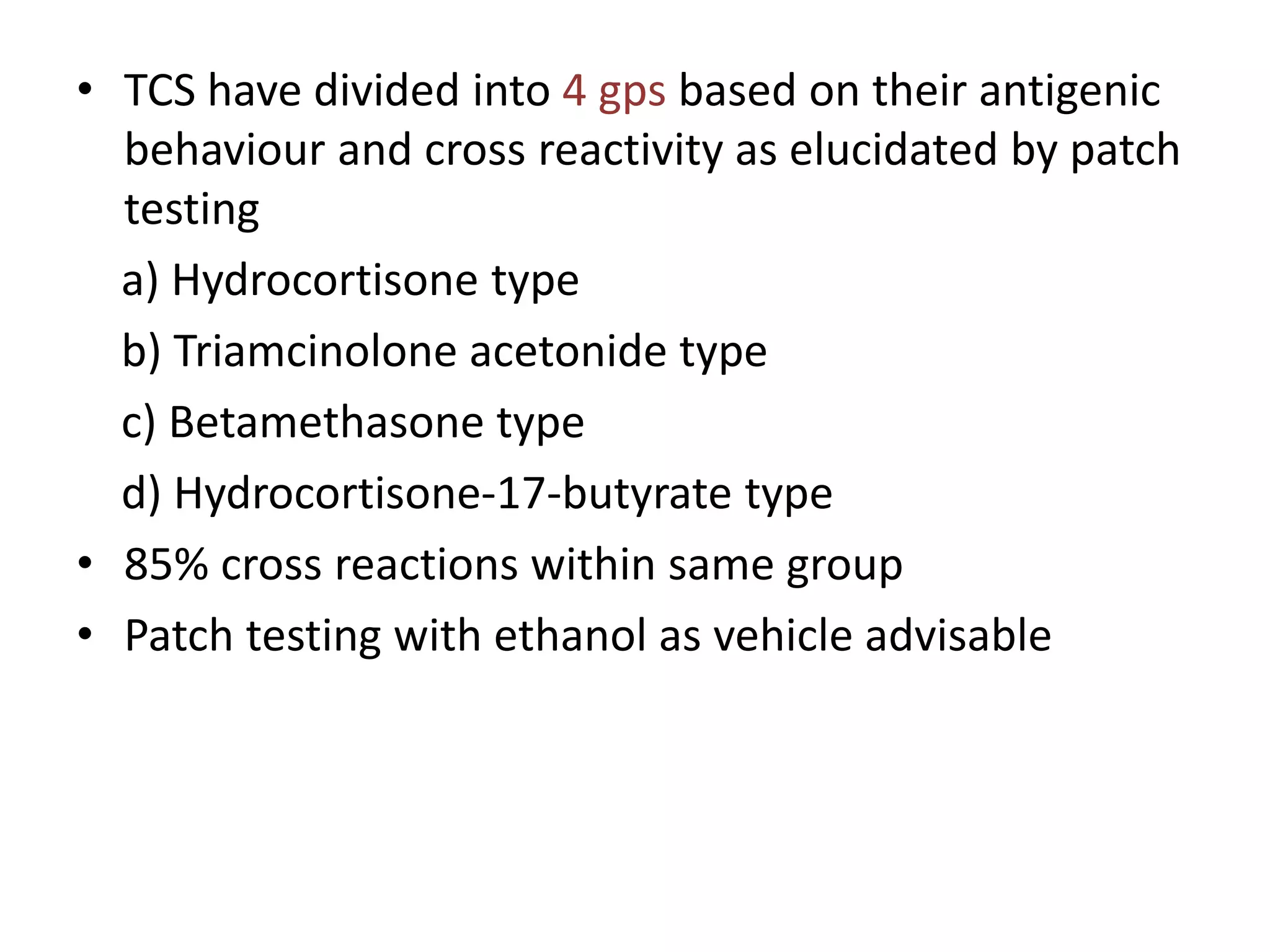
• TCS have divided into 4 gps based on their antigenic
behaviour and cross reactivity as elucidated by patch
testing
a) Hydrocortisone type
b) Triamcinolone acetonide type
c) Betamethasone type
d) Hydrocortisone-17-butyrate type
• 85% cross reactions within same group
• Patch testing with ethanol as vehicle advisable
TCS CROSS REACTION GROUPS
GROUP A
Hydrocortisone
Hydrocortisone acetate
Tixocortole pivalate
Methylprednisolone
Prednisolone
GROUP B
Triamcinolone acetonide
Budesonide
Desonide
Flucinolone acetonide
Flucinonide
GROUP C
Betamethasone
Betamethasone sod.PO4
Dexamethasone
Dexamethasone sod.PO4
GROUP D
Hydrocortisone-17-butyrate
Aclometasone dipropionate
Betamethasone valerate
Betamethasone dipropionate
Hydrocortisone-17-valerate
Clobetasone-17-butyrate
Clobetasone-17-propionate
16) Ocular side effects:
• TCS have 36-40 times ↑ penetration in eyelid
• Can cause: cataract, glaucoma, slow healing of
ulceration, exacerbation of herpetic ulcers, ↑
susceptibility to fungal/bacterial infections, ocular
hypertension
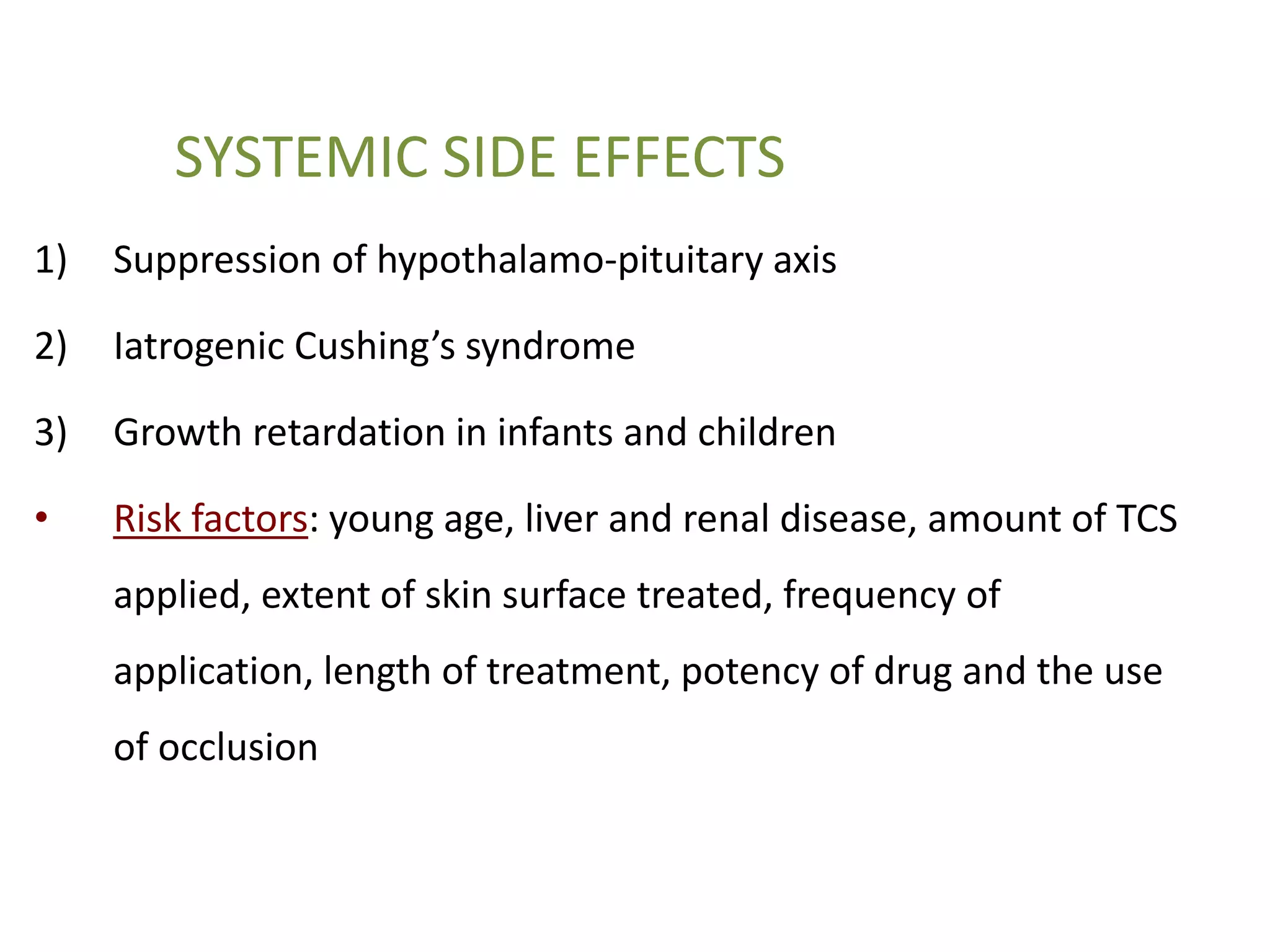
SYSTEMIC SIDE EFFECTS
1) Suppression of hypothalamo-pituitary axis
2) Iatrogenic Cushing’s syndrome
3) Growth retardation in infants and children
• Risk factors: young age, liver and renal disease, amount of TCS
applied, extent of skin surface treated, frequency of
application, length of treatment, potency of drug and the use
of occlusion
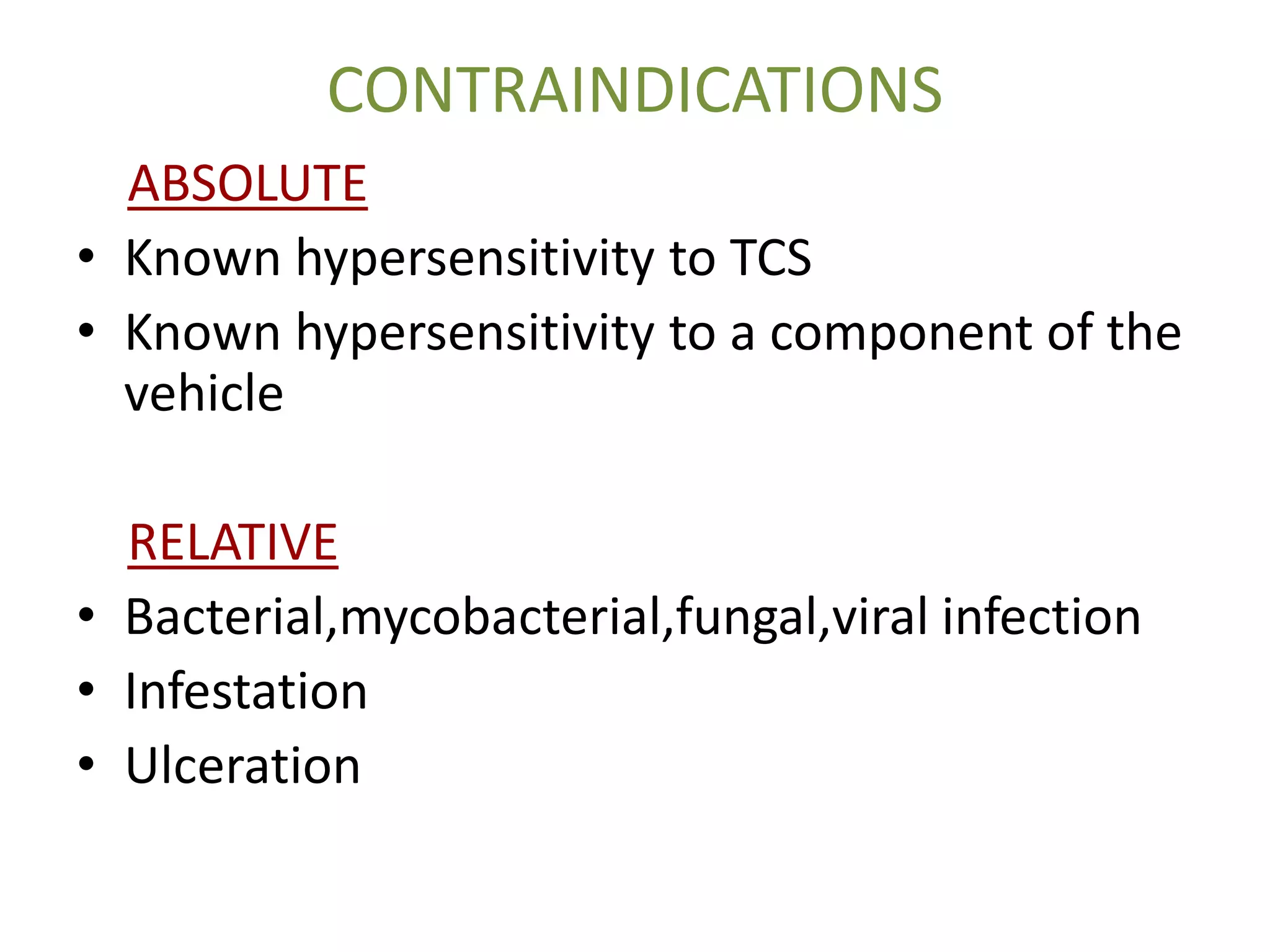
CONTRAINDICATIONS
ABSOLUTE
• Known hypersensitivity to TCS
• Known hypersensitivity to a component of the
vehicle
RELATIVE
• Bacterial,mycobacterial,fungal,viral infection
• Infestation
• Ulceration
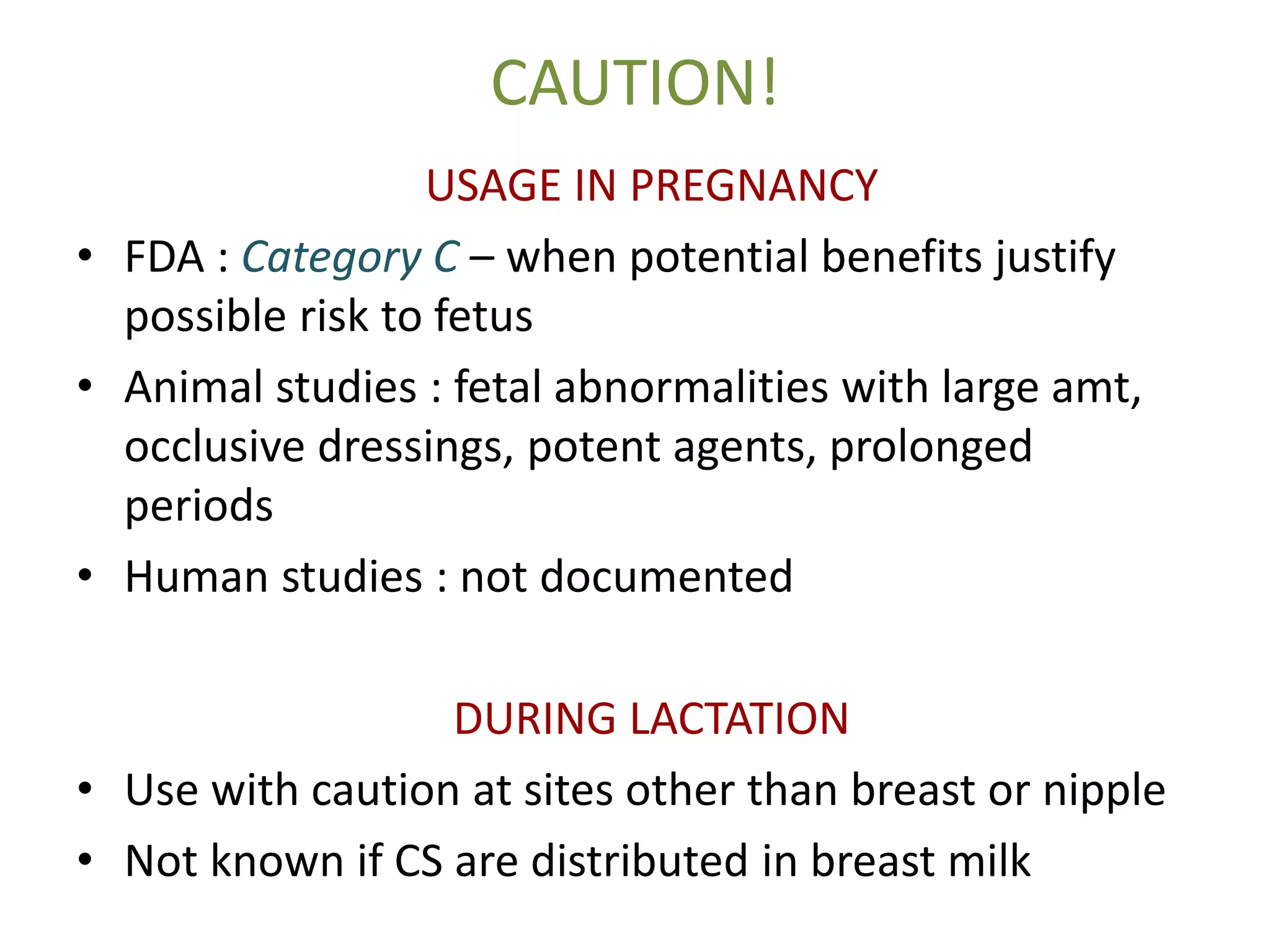
CAUTION!
USAGE IN PREGNANCY
• FDA : Category C – when potential benefits justify
possible risk to fetus
• Animal studies : fetal abnormalities with large amt,
occlusive dressings, potent agents, prolonged
periods
• Human studies : not documented
DURING LACTATION
• Use with caution at sites other than breast or nipple
• Not known if CS are distributed in breast milk
ELDERLY PATIENTS:
• Thin skin : ↑ penetration
• Clearance from skin may be reduced
• May have pre-existing skin atrophy secondary to
aging
• ↑purpura
To be used : 1) infrequently
2) for brief periods
3) under close supervision
PEDIATRIC USE
• Effective with few side effects if :
a) low potency preparation
b) brief period
c) without occlusion
• ↑ risk of side effects as:
1. ↑ skin surface area to body weight ratio - ↑
systemic absorption
2. ↓ ability to metabolise potent glucocorticoids
rapidly
3. Occlusion in diaper region – greater penetration
4) Premature infants – thinner skin – greater
penetration
5) Can suppress HPA axis –
- Addisonian crisis;
- Chronic suppression – growth retardation
- Near puberty – premature
epiphyseal closure
• Clobetasol & betamethasone to be used in children
of age > 12 yrs
• Fluticasone can be used in children of age > 3months
• Mometasone can be used in children of age >2 yrs.
CHOOSING A TCS PREPARATION
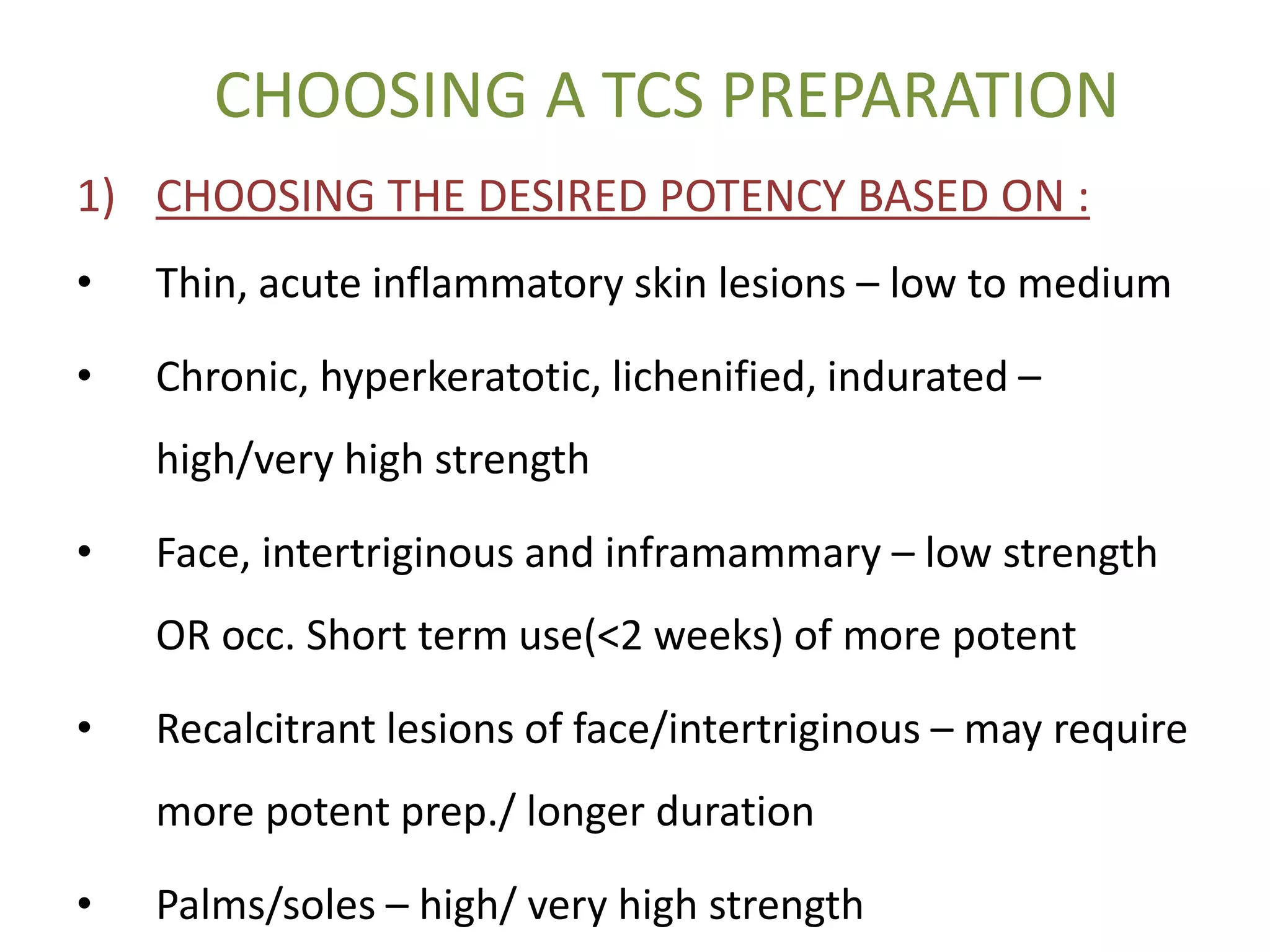
1) CHOOSING THE DESIRED POTENCY BASED ON :
• Thin, acute inflammatory skin lesions – low to medium
• Chronic, hyperkeratotic, lichenified, indurated –
high/very high strength
• Face, intertriginous and inframammary – low strength
OR occ. Short term use(<2 weeks) of more potent
• Recalcitrant lesions of face/intertriginous – may require
more potent prep./ longer duration
• Palms/soles – high/ very high strength
• BSA involved : low to medium strength when large body surface to
be covered
• AGE : children/elderly
• DURATION : duration of very-high strength TCS should not
exceed 3 weeks whenever possible.
- Medium/high strength TCS – side effects rare before 3 months (except
face/intertriginous) ; intermittent therapy preferrable for longer
duration
- Low strength – side effects rare ; prefer intermittent therapy for
long term use esp. if ↑ BSA
• TCS should be discontinued when the disease has
resolved ; they are not for disease prevention
• Sudden cessation during acute phase avoided –
may cause rebound worsening of skin disease
• Long term therapy may be required for chronic
skin diseases responding to treatment but with
monitoring for side-effects and tachyphylaxis
2) CHOOSE THE PROPER VEHICLE:
• Location
• Moisturizing/ drying effect required
• Potential for irritation
• H/o allergic reactions
• Type of disease
3) DETERMINING THE REQUIRED AMOUNT:
• One gram of cream will cover an area of skin approximately 10
X 10 cm(100cm²) assuming a layer 100 microns thickness. The
same amount of ointment will cover an area
• Based on Finger Tip Units
One fingertip unit (FTU) is the amount of topical steroid that is
squeezed out from a standard tube with a 5 mm nozzle from
the very end of the finger to the distal finger crease
5 – 10 % higher
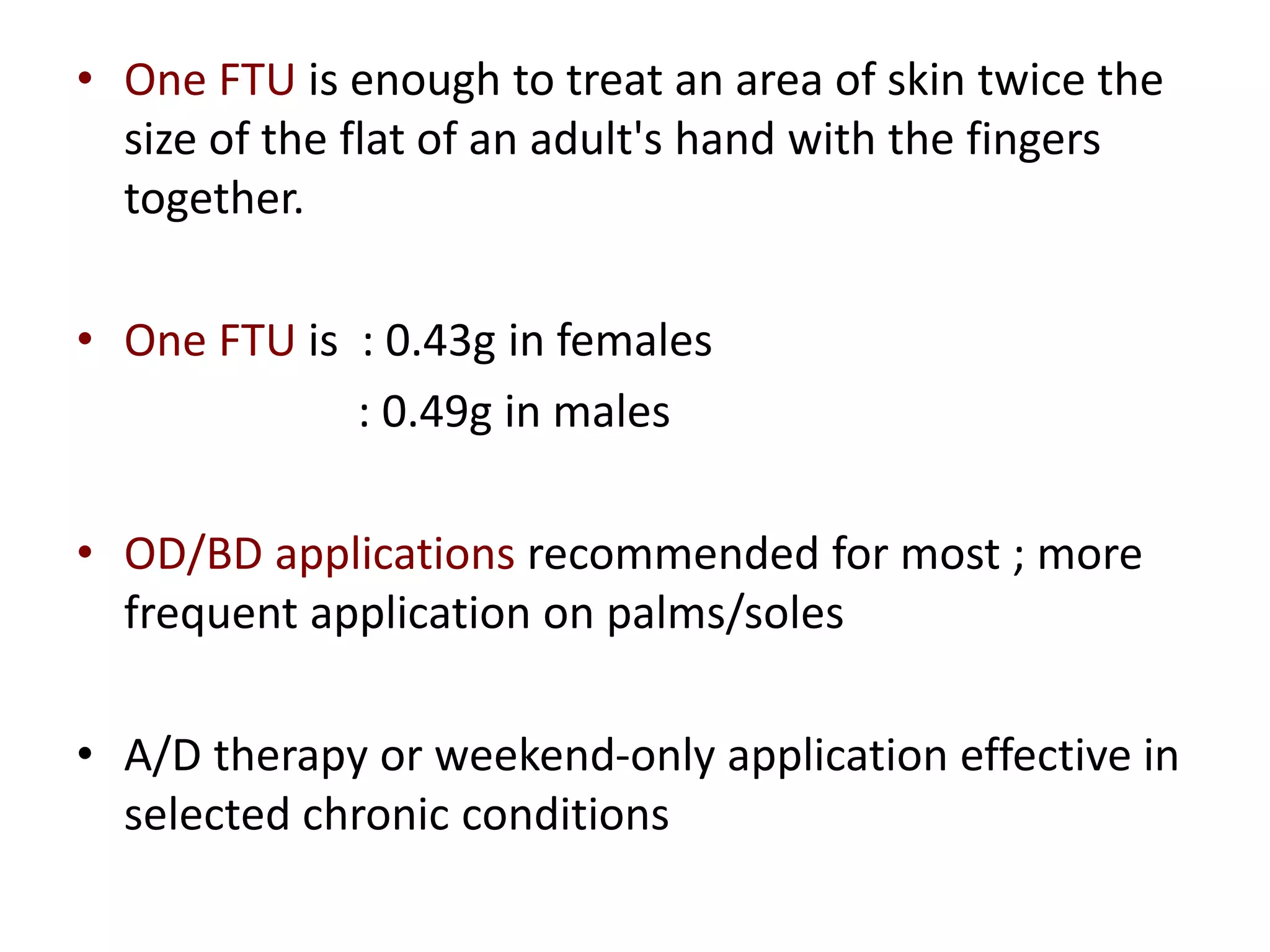
• One FTU is enough to treat an area of skin twice the
size of the flat of an adult's hand with the fingers
together.
• One FTU is : 0.43g in females
: 0.49g in males
• OD/BD applications recommended for most ; more
frequent application on palms/soles
• A/D therapy or weekend-only application effective in
selected chronic conditions
2.5
THANKYOU

Topical corticosteroids

  • 1.
  • 2.
    INTRODUCTION • In 1952,Sulzberger and Witten first treated eczematous dermatitis with topical hydrocortisone. • This success marked a cornerstone in dermatology and the birth of a wonder drug
  • 3.
    Structure of corticosteroid •CS have a basic skeletal structure of cyclopentanoperhydrophenanthrene ring (17-C) formed by fusion of 3 six membered rings and one five membered ring. •Modification by addition or alteration of function groups at certain positions, have led to compounds with variable anti- inflammatory, GCs vs MCs activity and adverse effect.
  • 4.
    PHARMACOKINETICS • Distribution :After application, distributed throughout local skin; drug absorbed systemically is rapidly removed from circulation and distributed to muscle, liver, skin, kidneys, intestines • Metabolism : mainly in the skin by: a) Oxidation b) Conjugation • Small amount absorbed systemically is metabolised in the liver to inactive metabolites which are excreted by kidneys.
  • 5.
    PK and thepotency of TCS preparation depends on 3 factors: Structure , vehicle and the skin condition 1. Structure of TCS molecule: HC is the backbone of most TCS molecules. The addition or alteration of functional groups (-OH, ester, F, Cl, acetonide, ketone) at certain position affects the lipophilicity, solubility, percutaneous absorption, biotransformation and GCR-binding activity.
  • 6.
    Fluoridation renders thesteroid more potent than chlorination. Fluoridation at C-9 increases potency more than at C-6 position. An ideal topical steroid should permeate the stratum corneum, reach an adequate conc. in epidermis without crossing the dermis to enter systemic circulation. This is achieved by molecules with high lipophilicity.
  • 7.
    2. The vehicle:Vehicle is the sum of the formulation ingredients in which the drug is presented to the skin. The ideal vehicle should be- cosmetically acceptable, biocompatible, chemically, microbiologically and physically stable and should be able to release the drug in the stratum corneum. • The potent molecules may be made clinically ineffective or that the enhanced efficacy may be generated with weaker molecules, depending upon the vehicle used.
  • 8.
    Important considerations forchoosing a vehicle: 1. Solubility of agent in vehicle 2. Rate of release of agent from vehicle 3. Ability of vehicle to hydrate stratum corneum 4. Stability of therapeutic agent in vehicle, any physical/chemical interactions b/w the two
  • 9.
    • Vehicles, previouslyconsidered to be an inactive molecule, also do some important functions -  Emollients: Smoothens the skin by filling spaces between skin flakes, with droplets of oil and ↑ flexibility of skin.  Emulsifying agent: Stabilizes the emulsion and also helps in even distribution  Solvents are used in lotions, solutions, gels and spray to create a less viscous product.  Humectants attract water to stratum corneum (transepidermal)
  • 10.
     Thickening agentcan be used to make the preparation stiffer.  Ointments- ↑ the hydration of stratum corneum and occludes the drug thus increasing its potency. • The other functions of vehicle includes its cooling effect, antipruritic, moisturization, ↑ing the PC absorption by making it more soluble, anti-oxidant, preservative and reduces friction.
  • 11.
    3. Role ofCondition of Skin in Percutaneous Absorption: The skin condition determines the bioavailability of drug. Penetration is inversely α to the thickness of Stratum corneum. Penetration ↑ with inflammed or diseased skin and also with ↑ hydration of stratum corneum and also with temperature. Stratum corneum may also act as a reservoir for TCS for upto 5 days, this retention is concentration & formulation dependent.
  • 12.
    Steroids are absorbedat different rates from different parts of the body : • Forearm absorbs - 1% • Armpit absorbs - 4% • Face absorbs - 7% • Eyelids and genitals absorb - 30% (maximum) • Palm absorbs - 0.1% • Sole absorbs - 0.05% (minimum)
  • 13.
    Mechanism Of ActionOf Glucocorticoids  The CS diffuse into the target cell & binds to the GCR(found in almost all types of cells) in the cytoplasm  The CS-GCR complex undergoes necessary conformational changes (dissociation of hsp-90 and p59 from hetero tetrameric complex of GCR)  The resulting active complex traverses the nuclear envelope and binds to the GRE of many genes  Gene regulation & transcription of various specific mRNA occur.
  • 14.
  • 15.
    • CS inhibitstranscription factors such as activator protein 1 and nuclear factor κB, that are involved in the activation of pro-inflammatory genes. • Genes that have anti- inflammatory role are upregulated by CS and includes lipocortin and p11/calpactin-binding proteins.
  • 16.
    ANTI INFLAMMATORY ACTION Directeffects( immediate)  Stabilize cell and lysosomal membranes: prevent release of lysosomal contents & phospholipid precursors for synthesis of PGs & PAF  Potentiates vascular response to catecholamines  Reduce vascular sm sensitivity to histamine & bradykinin  Inhibit mast cell sensitization induced by IgE  Inhibit release of histamine & other mast cell mediators
  • 17.
    GCR mediated effects(delayed) Induction of anti-inflammatory proteins- lipocortins, vasocortin and vasoregulin  Lipocortins inhibit phospholipase A2 & block release of AA & PAF from cell membrane; thus prevent formation of PGs, LKTs, 12-HETE (Hydroxy eicosa tetraenoic acid) and 15-HETE.  Lipocortins also prevent PAF induced wheal and flare rxns. & leukocyte chemotaxis  Vasocortin and vasoregulin ↓vascular permeability
  • 18.
  • 19.
    Anti-inflammatory actions onspecific cells Polymorphonuclear leucocytes • ↓ ability to adhere to vascular endothelium • ↓ migration to sites of inflammation • ↓ no. at sites of inflammation • Reduce phagocytosis, bactericidal activity, release of acid hydrolases and pyrogens
  • 20.
    Monocytes • reduce numberat sites of inflammation • reduce fungicidal activity and clearance of opsonized particle • ↓ response to macrophage activating factor & chemotaxis Lymphocytes • ↓ response to concanavalin A induced T-cell blastogenesis • Induction of T cell apoptosis • ↓ response to tetanus toxoid • ↓ Antibody mediated cell mediated cytotoxity • ↓ NK cell activity
  • 21.
    Langerhans cells • Moderatepotency TCS ↓ expression of Fc receptor , C3b receptor and HLA DR positivity but no alteration in CD1a antigen expression • Superpotent TCS cause loss of cells expressing langerhans cell markers Effects on immune cytokine production ↓ production of interleukin-1 (IL-1α and IL-1β), IFN-γ, TNF, IL-2, IL-8 and GMCSF
  • 22.
    Anti inflammatory propertiesare: • Useful in skin conditions like atopic dermatitis and contact dermatitis in which excess inflammatory response occurs • Deleterious where inflammation is host protective. Eg: dermatophyte infections
  • 23.
    ANTIPROLIFERATIVE ACTION EPIDERMIS • Numberof keratinocyte mitoses seen diminished • Stratum corneum thickness reduced • Granular layer reduced or absent • Basal layer of keratinocytes flattened • Keratinocytes growth factors suppressed • Keratinocyte ultrastructure (keratin filaments, keratohyalin granules, membrane-coating granules) normal • Basement membrane unaffected • Melanocyte pigment production inhibited
  • 24.
    DERMIS 1) EARLY ATROPHY •Dermal volume reduced: ↓ water content, loss of glycosaminoglycans • Hypoactive fibroblasts : suppression of procollagen-I mRNA transcription, reduced activity of prolyl 4- OHase & lysyl oxidase, collagenase activity reduced, hyaluronate synthetase activity suppressed • Collagen & elastic fibers unchanged
  • 25.
    2) LATE ATROPHY •Dermal volume reduced • Collagen & elastic fibers diminished & abnormally aggregated • Hypoactive fibroblasts • Dermal vessels fragile due to loss of fibrous & ground substance support
  • 26.
    Antiproliferative effects are: • helpful in proliferative dermatoses like psoriasis • Injurious when used in the wrong disease, location or potency or in excess quantity
  • 27.
    INDICATIONS Dermatitis/ papulosquamous Bullousdermatosis  Atopic dermatitis  Diaper dermatitis  Dyshydrotic eczema  Erythroderma  Lichen planus  Lichen simplex chronicus  Nummular dermatitis  Piytriasis rosea  Psoriasis-intertriginous  Psoriasis–plaque or palmoplantar  Seborrheic dermatitis Bullous pemphigoid Cicatricial pemphigoid Epidermolysis bullosa acquisita Pemphigoid gestationis Pemphigus Foliaceus
  • 28.
    CONNECTIVE TISSUE DISEASE Dermatomyositis  Lupus NEUTROPHILIC DERMATOSIS  Behcet’s disease  Pyoderma gangrenosum OTHER DERMATOLOGIC DISEASES  Alopecia areata  Acne keloidalis nuchae  Chondrodermatitis nodularis helicis  CTCL- Patch stage  Granuloma annulare  Jessener’s lymphocytic infiltrate  LSEA (lichen sclerosus et atrophicus)  Lichen planopilaris  Morphea  Sarcoidosis  Vitiligo  Well’s syndrome  Pruritus- perianal, scrotal & vulvar
  • 29.
    Responsiveness of Dermatosesto Topical Application of Corticosteroids Highly responsive Psoriasis (intertriginous) Atopic dermatitis (children) Seborrheic dermatitis Intertrigo Moderately responsive Psoriasis (body) Atopic dermatitis (adults) Nummular eczema Primary irritant dermatitis Papular urticaria Lichen simplex Chronicus Least responsive Palmoplantar psoriasis Psoriasis of nails Dyshidrotic eczema Lupus erythematosus Pemphigus Lichen planus Granuloma annulare Necrobiosis lipoidica diabeticorum Sarcoidosis Allergic contact dermatitis, acute phase insect bites
  • 30.
    ESTIMATING TCS POTENCY •Assays measure anti-inflammatory and/or antiproliferative properties of TCS • Stoughtan vasoconstriction assay – most commonly used • Involves: 1) Preparing test corticosteroid in 95% alcohol 2) Applying to volar surface of normal volunteer’s forearm 3) Allowing alcohol to evaporate, occlusive dressing for 16 hours 4) Washing off the area
  • 31.
    5) Assessing vasoconstriction2 hrs later: 0 = none 1 = mild 2 = moderate 3 = intense 6) Statistical analysis based on sum of signed ranks of difference • Correlates well with clinical efficacy( except aclometasone oint.,hydrocortisone cream) and is reproducible • Best evaluation with vasoconstriction assay in combination with a second assay on spontaneously occuring skin diseases in human volunteers
  • 32.
    Commonly used Glucocorticoidassays Assays of Anti-inflammatory potency  LAB ANIMALS: • Mitotic index suppression– hairless mouse • Antigranuloma assay- rat • Croton oil inflammation assay- rat • 6-chloro-2,4-dinitrobenzene inflammation– guinea pig  HUMAN VOLUNTEERS:  Vasoconstrictor Assay  Artificially induced inflammation  Spontaneously occurring skin disease
  • 33.
    Assay of Atrophogenicity LAB ANIMALS OR CELL CULTURES: • Inhibition of fibroblast growth in vitro • Neutral red release assay • Mouse tail epidermis • Guinea pig epidermis  HUMAN VOLUNTEERS: • Micrometer calipers • HPE • X ray radiography • Pulsed ultrasound
  • 34.
    Potency ranking ofselected TCS preperation US classification : Class1- Superpotent Betamethasone dipropionate 0.05% optimized vehicle-Gel/oint Clobetasol propionate 0.05%- cream/gel/oint/spray/foam Halobetasol propionate 0.05% - cream/oint Class2- Potent Betamethasone dipropionate 0.05%- cream Mometasone furoate 0.1%- oint Class3- Potent, upper mid strength Betamethasone valerate 0.1%- oint Fluticasone propionate 0.005%- oint
  • 35.
    Class4- Mid strength Betamethasonevalerate 0.12%- foam Hydrocortisone probutate 0.1%- cream Hydrocortisone valerate 0.2%-oint Triamcinolone acetonide 0.1%- oint Mometasone furoate 0.1%- cream/lotion Class5- Lower mid stength Betamethasone dipropionate 0.05%- lotion Betamethasone valerate 0.12%- cream/lotion Fluticasone propionate 0.005%- cream Hydrocortisone valerate 0.2%- cream Hydrocortisone butyrate 0.1%- lipocream Triamcinolone acetonide 0.1%- cream/lotion
  • 36.
    Class6- Mild strength Desonide0.05%- cream/lotion/ointment Alclometasone dipropionate 0.05%- cream/oint Flucinolone acetonide 0.01%- cream/solution Betamethasone valerate lotion 0.1% Class7- Least potent Topicals with dexamethasone, flumethasone, hydrocortisone, methylprednisolone and prednisolone
  • 37.
    British classificaton Class IVVery potent (up to 600 times as potent as HC) • Clobetasol propionate • Betamethasone dipropionate Class III Potent (50-100 times as potent as HC) • Betamethasone valerate • Betamethasone dipropionate • Diflucortolone valerate • Hydrocortisone 17-butyrate • Mometasone furoate • Methylprednisolone aceponate • Halometasone 0.05%
  • 38.
    Class II Moderate(2-25 times as potent as HC) • Clobetasone butyrate • Triamcinolone acetonide Class I Mild • Hydrocortisone 0.5-2.5%
  • 39.
    SIDE EFFECTS LOCAL SIDEEFFECTS 1) Atrophy: • Most common • Lax, depressed, wrinkled, shiny skin with telangiectasias, purpura, striae, stellate pseudoscars, prominent deep vessels and hypopigmentation • Corticoid purpura: fragile skin with tears/bruises • Atrophy of epidermis within 7 days of superpotent TCS with occlusion; 2 weeks of less potent/ superpotent without occlusion • Most signs of cutaneous atrophy (except striae) resolve by 1 to 4 weeks of stoppage
  • 40.
    2) Flaring up/increasedincidence of infections: Esp. if used - on flexural sites - with polythene occlusion e.g. : Tinea incognito, crusted scabies, candidiasis, prolongation of herpes/molluscum, Staphylococcal folliculitis 3) Steroid face: erythema and telangiectasia with atrophy of dermal conn. tissue and resultant loss of vascular supprt 4) Acneiform eruptions: dense, inflamed, monomorphic eruption of erythematous follicular papules and pustules 5) Rosacea – esp.in fair skinned 6) Peri-oral dermatitis 7) Hypertrichosis, hypopigmentation 8) Delayed wound healing, genital ulceration
  • 41.
    9) Burning, itching,irritation, dryness 10) Granuloma gluteale infantum like reaction 11) Reactivation of Kaposi sarcoma 12) Rebound syndrome: • Initial improvement f/b lack of response ; subsequent flare after TCS stopped. • Skin is atrophic, erythematous with burning sensation esp. on facial, genital and perioral skin
  • 42.
    13) Tachyphylaxis: canoccur if restarted within 1 week, so a gap of 1 week should be given before restarting 14) Vehicle related side effects: • Itching, burning, stinging, irritant contact dermatitis • Very occlusive vehicles – folliculitis, miliaria, exacerbation of acne/rosacea
  • 43.
    Potential Contact Sensitizersin Topical Corticosteroids • Parabens • Propylene glycol • Benzyl alcohol • Chlorocresol • Ethylenediamine hydrochloride • lsopropyl palmitate • Polysorbate 60 • Stearyl alcohol • The corticosteroid itself
  • 44.
    15) Allergic contactdermatitis: • Generally DTH; occasionally Type I • Can be due to: i) preservatives/stabiliser used ii) steroid molecule (eg. Hydrocortisone) • Suspect if : steroid responsive dermatoses fails to respond/ worsens with TCS or evolves into a chronic inflammatory condition which heals with stoppage of incriminated steroid
  • 45.
    • TCS havedivided into 4 gps based on their antigenic behaviour and cross reactivity as elucidated by patch testing a) Hydrocortisone type b) Triamcinolone acetonide type c) Betamethasone type d) Hydrocortisone-17-butyrate type • 85% cross reactions within same group • Patch testing with ethanol as vehicle advisable
  • 46.
    TCS CROSS REACTIONGROUPS GROUP A Hydrocortisone Hydrocortisone acetate Tixocortole pivalate Methylprednisolone Prednisolone GROUP B Triamcinolone acetonide Budesonide Desonide Flucinolone acetonide Flucinonide GROUP C Betamethasone Betamethasone sod.PO4 Dexamethasone Dexamethasone sod.PO4 GROUP D Hydrocortisone-17-butyrate Aclometasone dipropionate Betamethasone valerate Betamethasone dipropionate Hydrocortisone-17-valerate Clobetasone-17-butyrate Clobetasone-17-propionate
  • 47.
    16) Ocular sideeffects: • TCS have 36-40 times ↑ penetration in eyelid • Can cause: cataract, glaucoma, slow healing of ulceration, exacerbation of herpetic ulcers, ↑ susceptibility to fungal/bacterial infections, ocular hypertension
  • 48.
    SYSTEMIC SIDE EFFECTS 1)Suppression of hypothalamo-pituitary axis 2) Iatrogenic Cushing’s syndrome 3) Growth retardation in infants and children • Risk factors: young age, liver and renal disease, amount of TCS applied, extent of skin surface treated, frequency of application, length of treatment, potency of drug and the use of occlusion
  • 49.
    CONTRAINDICATIONS ABSOLUTE • Known hypersensitivityto TCS • Known hypersensitivity to a component of the vehicle RELATIVE • Bacterial,mycobacterial,fungal,viral infection • Infestation • Ulceration
  • 50.
    CAUTION! USAGE IN PREGNANCY •FDA : Category C – when potential benefits justify possible risk to fetus • Animal studies : fetal abnormalities with large amt, occlusive dressings, potent agents, prolonged periods • Human studies : not documented DURING LACTATION • Use with caution at sites other than breast or nipple • Not known if CS are distributed in breast milk
  • 51.
    ELDERLY PATIENTS: • Thinskin : ↑ penetration • Clearance from skin may be reduced • May have pre-existing skin atrophy secondary to aging • ↑purpura To be used : 1) infrequently 2) for brief periods 3) under close supervision
  • 52.
    PEDIATRIC USE • Effectivewith few side effects if : a) low potency preparation b) brief period c) without occlusion • ↑ risk of side effects as: 1. ↑ skin surface area to body weight ratio - ↑ systemic absorption 2. ↓ ability to metabolise potent glucocorticoids rapidly 3. Occlusion in diaper region – greater penetration
  • 53.
    4) Premature infants– thinner skin – greater penetration 5) Can suppress HPA axis – - Addisonian crisis; - Chronic suppression – growth retardation - Near puberty – premature epiphyseal closure • Clobetasol & betamethasone to be used in children of age > 12 yrs • Fluticasone can be used in children of age > 3months • Mometasone can be used in children of age >2 yrs.
  • 54.
    CHOOSING A TCSPREPARATION 1) CHOOSING THE DESIRED POTENCY BASED ON : • Thin, acute inflammatory skin lesions – low to medium • Chronic, hyperkeratotic, lichenified, indurated – high/very high strength • Face, intertriginous and inframammary – low strength OR occ. Short term use(<2 weeks) of more potent • Recalcitrant lesions of face/intertriginous – may require more potent prep./ longer duration • Palms/soles – high/ very high strength
  • 55.
    • BSA involved: low to medium strength when large body surface to be covered • AGE : children/elderly • DURATION : duration of very-high strength TCS should not exceed 3 weeks whenever possible. - Medium/high strength TCS – side effects rare before 3 months (except face/intertriginous) ; intermittent therapy preferrable for longer duration - Low strength – side effects rare ; prefer intermittent therapy for long term use esp. if ↑ BSA
  • 56.
    • TCS shouldbe discontinued when the disease has resolved ; they are not for disease prevention • Sudden cessation during acute phase avoided – may cause rebound worsening of skin disease • Long term therapy may be required for chronic skin diseases responding to treatment but with monitoring for side-effects and tachyphylaxis
  • 58.
    2) CHOOSE THEPROPER VEHICLE: • Location • Moisturizing/ drying effect required • Potential for irritation • H/o allergic reactions • Type of disease
  • 60.
    3) DETERMINING THEREQUIRED AMOUNT: • One gram of cream will cover an area of skin approximately 10 X 10 cm(100cm²) assuming a layer 100 microns thickness. The same amount of ointment will cover an area • Based on Finger Tip Units One fingertip unit (FTU) is the amount of topical steroid that is squeezed out from a standard tube with a 5 mm nozzle from the very end of the finger to the distal finger crease 5 – 10 % higher
  • 61.
    • One FTUis enough to treat an area of skin twice the size of the flat of an adult's hand with the fingers together. • One FTU is : 0.43g in females : 0.49g in males • OD/BD applications recommended for most ; more frequent application on palms/soles • A/D therapy or weekend-only application effective in selected chronic conditions
  • 62.
  • 63.