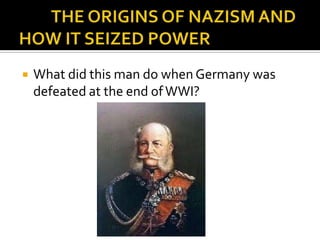

 What did this man do when Germany was
defeated at the end ofWWI?
 What new regime appeared in Germany
then?
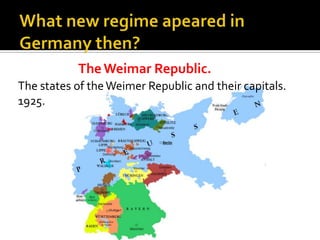
The states of theWeimer Republic and their capitals.
1925.
TheWeimar Republic.
 The political parties of the Weimer Republic:
1. Social-democratic party (moderate left-wing)
2. The Spartacists (extreme left-wing)
3. National socialist party (extrem right-wing)
 Which party governed in theWeimar
Republic?
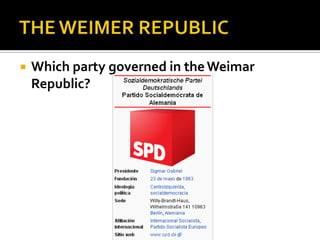
 Which party governed in theWeimar
Republic?
 Which parties opposed to the government
of the SPD?
Which parties opposed to the
government of the SPD?
The Spartacists The Nazi Party
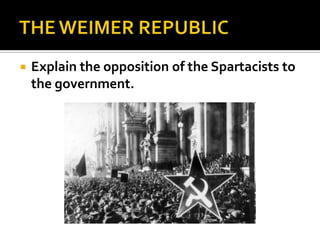
 Explain the opposition of the Spartacists to
the government.
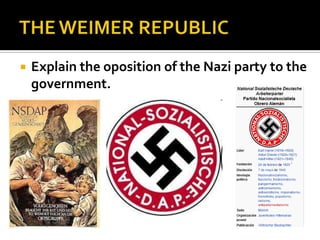
 Explain the oposition of the Nazi party to the
government.
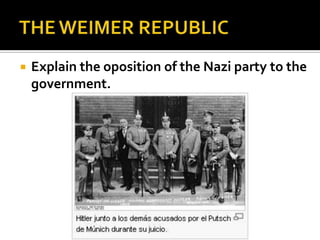
 Explain the oposition of the Nazi party to the
government.
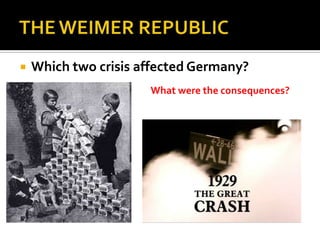
 Which two crisis affected Germany?
What were the consequences?
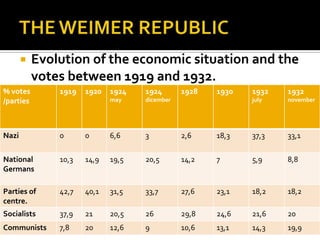
 Evolution of the economic situation and the
votes between 1919 and 1932.
% votes
/parties
1919 1920 1924
may
1924
dicember
1928 1930 1932
july
1932
november
Nazi 0 0 6,6 3 2,6 18,3 37,3 33,1
National
Germans
10,3 14,9 19,5 20,5 14,2 7 5,9 8,8
Parties of
centre.
42,7 40,1 31,5 33,7 27,6 23,1 18,2 18,2
Socialists 37,9 21 20,5 26 29,8 24,6 21,6 20
Communists 7,8 20 12,6 9 10,6 13,1 14,3 19,9
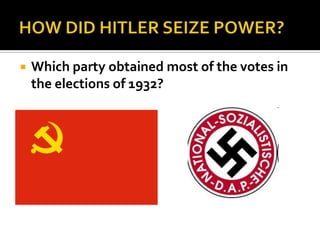
 Which party obtained most of the votes in
the elections of 1932?
 Which party obtained most of the votes in
the elections of 1932?
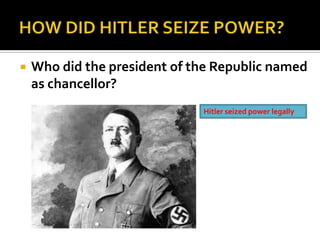
 Who did the president of the Republic named
as chancellor?
 Who did the president of the Republic named
as chancellor?
Hitler seized power legally
 What did Hitler do when he came to power?
The Night of the Long Knives
 The Night of the Long Knives involved the violent purge
of certain members of the Nazi Party from June 30th to
July 2nd in 1934. Called the Nacht der langen Messer in
Germany, this event occurred over a series of days and
entailed the Nazi regime’s murder of those Hitler
considered to be political enemies. In particular, those
targeted belonged to the Strasserist, a left wing faction
of the Nazi Party that Hitler distrusted.
 Those killed during these events included leaders and
major figures in the Strasserist such as Kurt von
Schleicher (a former Chancellor), Gustav Ritter von
Kahr, and Gregor Strasser.Also targeted and killed were
the main leaders of the Sturmabteilung (SA), a
paramilitary organization of the Strasserist which operated
in a manner similar to the Brownshirts of Mussolini’s fascist
regime in Italy.
After the Night of the Long Knives, Hitler had eliminated both
real and perceived opposition in the Nazi Party. He was able to
put his main loyalists in charge of various operations in the
German government and further expand his ability to control
the government and the populace
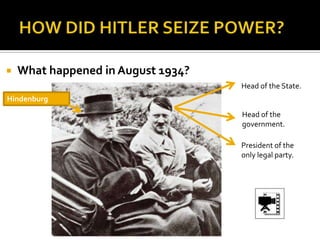
 What happened in August 1934?
Hindenburg
Head of the State.
Head of the
government.
President of the
only legal party.
Germany after WWI

Germany after WWI

  • 2.
     What didthis man do when Germany was defeated at the end ofWWI?
  • 3.
     What newregime appeared in Germany then?
  • 4.
    The states oftheWeimer Republic and their capitals. 1925. TheWeimar Republic.
  • 5.
     The politicalparties of the Weimer Republic: 1. Social-democratic party (moderate left-wing) 2. The Spartacists (extreme left-wing) 3. National socialist party (extrem right-wing)
  • 6.
     Which partygoverned in theWeimar Republic?
  • 7.
     Which partygoverned in theWeimar Republic?
  • 8.
     Which partiesopposed to the government of the SPD?
  • 9.
    Which parties opposedto the government of the SPD? The Spartacists The Nazi Party
  • 10.
     Explain theopposition of the Spartacists to the government.
  • 11.
     Explain theoposition of the Nazi party to the government.
  • 12.
     Explain theoposition of the Nazi party to the government.
  • 13.
     Which twocrisis affected Germany?
  • 14.
     Which twocrisis affected Germany? What were the consequences?
  • 15.
     Evolution ofthe economic situation and the votes between 1919 and 1932. % votes /parties 1919 1920 1924 may 1924 dicember 1928 1930 1932 july 1932 november Nazi 0 0 6,6 3 2,6 18,3 37,3 33,1 National Germans 10,3 14,9 19,5 20,5 14,2 7 5,9 8,8 Parties of centre. 42,7 40,1 31,5 33,7 27,6 23,1 18,2 18,2 Socialists 37,9 21 20,5 26 29,8 24,6 21,6 20 Communists 7,8 20 12,6 9 10,6 13,1 14,3 19,9
  • 16.
     Which partyobtained most of the votes in the elections of 1932?
  • 17.
     Which partyobtained most of the votes in the elections of 1932?
  • 18.
     Who didthe president of the Republic named as chancellor?
  • 19.
     Who didthe president of the Republic named as chancellor? Hitler seized power legally
  • 20.
     What didHitler do when he came to power?
  • 21.
    The Night ofthe Long Knives  The Night of the Long Knives involved the violent purge of certain members of the Nazi Party from June 30th to July 2nd in 1934. Called the Nacht der langen Messer in Germany, this event occurred over a series of days and entailed the Nazi regime’s murder of those Hitler considered to be political enemies. In particular, those targeted belonged to the Strasserist, a left wing faction of the Nazi Party that Hitler distrusted.  Those killed during these events included leaders and major figures in the Strasserist such as Kurt von Schleicher (a former Chancellor), Gustav Ritter von Kahr, and Gregor Strasser.Also targeted and killed were the main leaders of the Sturmabteilung (SA), a paramilitary organization of the Strasserist which operated in a manner similar to the Brownshirts of Mussolini’s fascist regime in Italy. After the Night of the Long Knives, Hitler had eliminated both real and perceived opposition in the Nazi Party. He was able to put his main loyalists in charge of various operations in the German government and further expand his ability to control the government and the populace
  • 22.
     What happenedin August 1934?
  • 23.
     What happenedin August 1934? Hindenburg Head of the State. Head of the government. President of the only legal party.