What can be
recycled?
Hallotex
is a company from China specialized in manufacturing
flat knits using recycled post-consumer yarns from India
and recycled polyester from China. The strength of this
company is product development and design. However, as
its focus is the middle market and upper middle market,
Neo-Concept’s main challenge is achieving a mainstream
price level
Recycled fashion is itself still a niche. It is possible however to distinguish between mainstream
recycled fashion and certain up-and-coming recycling methods and business models. Because
they are still uncommon, these niches are often buyer-specific.
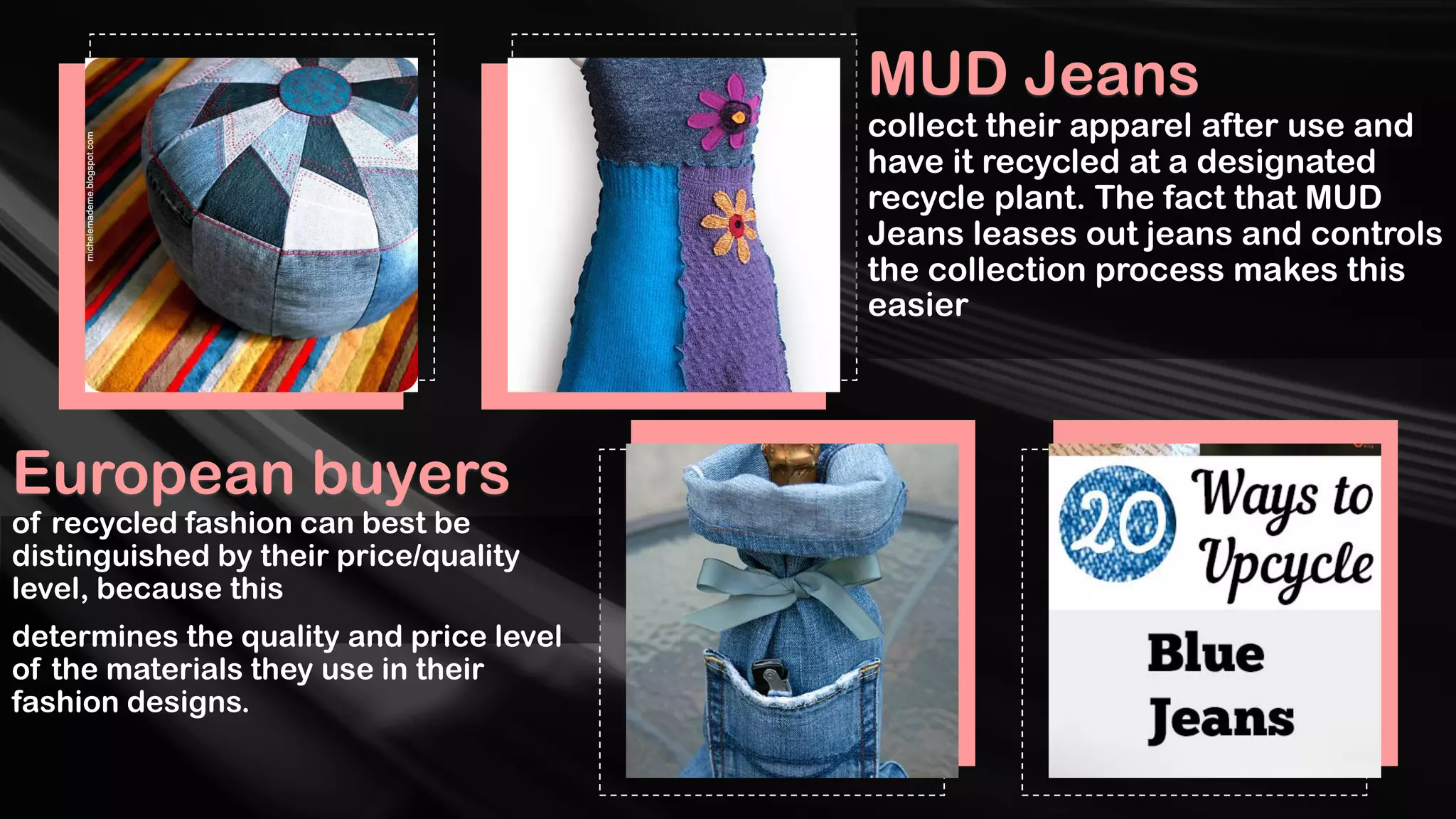
European buyers
of recycled fashion can best be
distinguished by their price/quality
level, because this
determines the quality and price level
of the materials they use in their
fashion designs.
MUD Jeans
collect their apparel after use and
have it recycled at a designated
recycle plant. The fact that MUD
Jeans leases out jeans and controls
the collection process makes this
easier
The luxury consumer
European luxury consumers shop with
European apparel brands in the luxury and
upper middle market, such as
Filippa-K or Viktor & Rolf. These brands
require top quality recycled materials and
workmanship. Recycled
cashmere and wool are popular fabrics in
this segment, as is recycled cotton
combined with a relatively
expensive virgin yarn (Tencel™ for
instance). Another common material is
recycled polyester, because of its
yarn stability, competitive price level and
good sustainability story. This segment is
growing.
The practical consumer The middle market
caters to the practical consumer. In this
market segment recycled cotton (both
cutting waste and post-consumer textile
waste) and wool are popular materials.
Check for instance Mango or Bestseller.
India is a large producer of these fabrics. In
this market segment you will also find
demand for recycled polyester (this is a
popular fabric in all market segments: from
luxury to budget). This segment is growing.
The lower-middle and budget markets, with
companies such as Inditex (parent company
of retail formula’s such
as Zara and Massimo Dutti) and JBC, cater to
price conscious consumers. They are
characterized by demand for
recycled polyester and cheap yarns and
fabrics made from cutting waste. Fabrics
made from post-consumer
waste are (still) rarely used in this segment,
as most available fabrics of this type are
more expensive than
virgin materials. This is because the recycled
content needs to be blended with high
percentages of virgin fibers
(cotton for instance), which cancels out the
economy of scale that comes with the
production of 100% cotton
yarns.
."
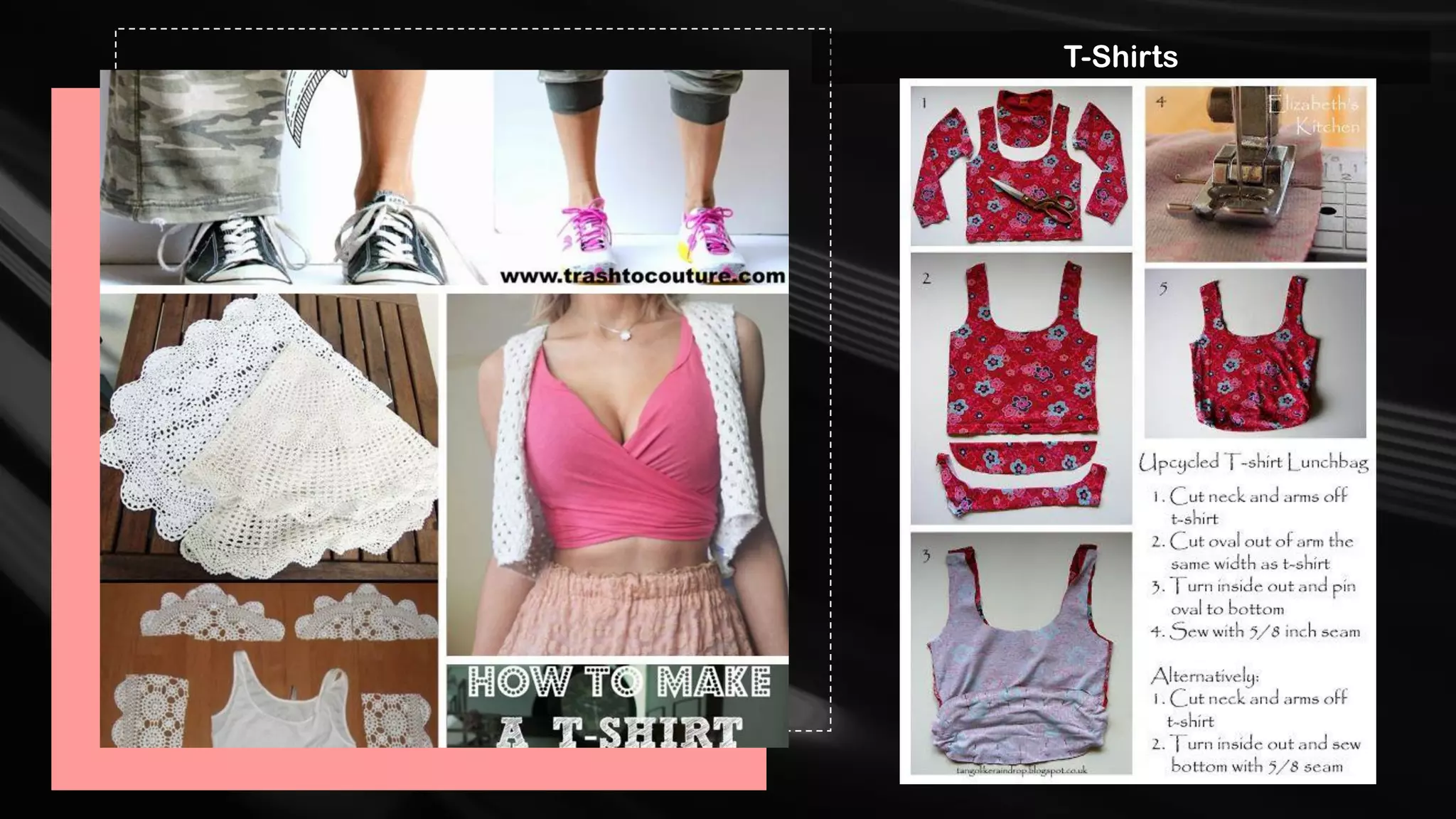
T-Shirts
,
Dress for Women
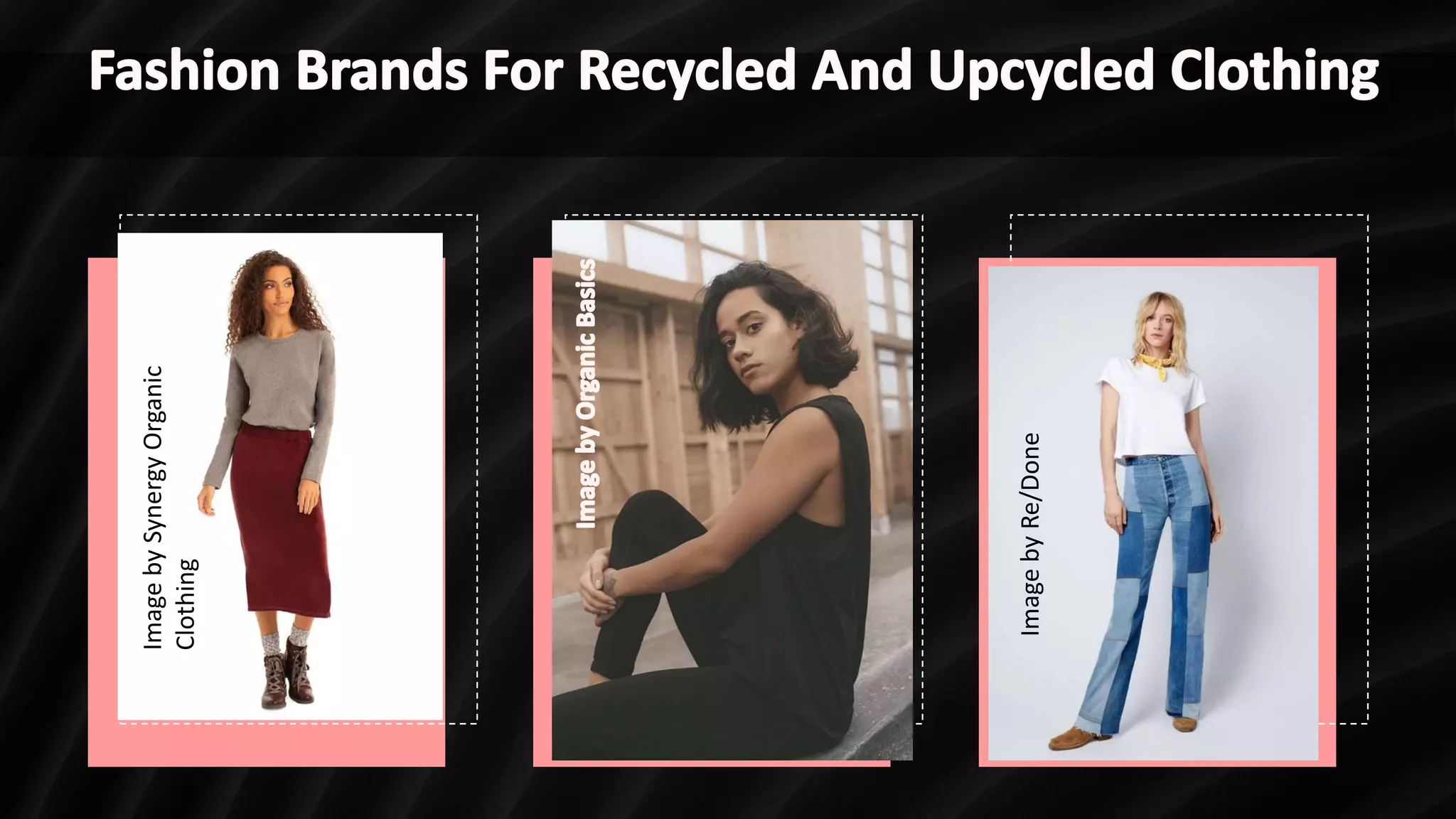
Image
by
Synergy
Organic
Clothing
Image
by
Re/Done
China
Market leader in recycled
polyester from PET bottles and
wool fabrics made from cutting
waste. The local availability of
fabrics, together with high
efficiency and excellent customer
service, gives Chinese
manufacturers an advantage over
competitors in developing
countries.
Low-cost producer of apparel
with a long history in textile
recycling. Indian manufacturers
have experience with recycling
post-consumer apparel waste for
use in carpets and curtains. More
recently, India has developed
recycled yarns that can be used
to make flat knits, denims, T-
shirts and socks. Has GSP status.
Market
scenario

Fashion - from recycled

  • 2.
  • 5.
    Hallotex is a companyfrom China specialized in manufacturing flat knits using recycled post-consumer yarns from India and recycled polyester from China. The strength of this company is product development and design. However, as its focus is the middle market and upper middle market, Neo-Concept’s main challenge is achieving a mainstream price level
  • 6.
    Recycled fashion isitself still a niche. It is possible however to distinguish between mainstream recycled fashion and certain up-and-coming recycling methods and business models. Because they are still uncommon, these niches are often buyer-specific.
  • 7.
    European buyers of recycledfashion can best be distinguished by their price/quality level, because this determines the quality and price level of the materials they use in their fashion designs. MUD Jeans collect their apparel after use and have it recycled at a designated recycle plant. The fact that MUD Jeans leases out jeans and controls the collection process makes this easier
  • 8.
    The luxury consumer Europeanluxury consumers shop with European apparel brands in the luxury and upper middle market, such as Filippa-K or Viktor & Rolf. These brands require top quality recycled materials and workmanship. Recycled cashmere and wool are popular fabrics in this segment, as is recycled cotton combined with a relatively expensive virgin yarn (Tencel™ for instance). Another common material is recycled polyester, because of its yarn stability, competitive price level and good sustainability story. This segment is growing.
  • 9.
    The practical consumerThe middle market caters to the practical consumer. In this market segment recycled cotton (both cutting waste and post-consumer textile waste) and wool are popular materials. Check for instance Mango or Bestseller. India is a large producer of these fabrics. In this market segment you will also find demand for recycled polyester (this is a popular fabric in all market segments: from luxury to budget). This segment is growing.
  • 11.
    The lower-middle andbudget markets, with companies such as Inditex (parent company of retail formula’s such as Zara and Massimo Dutti) and JBC, cater to price conscious consumers. They are characterized by demand for recycled polyester and cheap yarns and fabrics made from cutting waste. Fabrics made from post-consumer waste are (still) rarely used in this segment, as most available fabrics of this type are more expensive than virgin materials. This is because the recycled content needs to be blended with high percentages of virgin fibers (cotton for instance), which cancels out the economy of scale that comes with the production of 100% cotton yarns.
  • 12.
  • 13.
  • 14.
  • 15.
  • 17.
  • 18.
    China Market leader inrecycled polyester from PET bottles and wool fabrics made from cutting waste. The local availability of fabrics, together with high efficiency and excellent customer service, gives Chinese manufacturers an advantage over competitors in developing countries.
  • 19.
    Low-cost producer ofapparel with a long history in textile recycling. Indian manufacturers have experience with recycling post-consumer apparel waste for use in carpets and curtains. More recently, India has developed recycled yarns that can be used to make flat knits, denims, T- shirts and socks. Has GSP status.
  • 20.