Introduction to the ISA Programme


                                  Interoperability solutions for European
                                       Public Administrations (ISA)


      Karel De Vriendt

     European Commission
Directorate-General Informatics


                                                                   1
eGovernment

• eGovernment is the use of information and
  communication technologies in public
  administrations – combined with organisational
  change and new skills – to improve public
  services and democratic processes and
  strengthen support to public policies.
• eGovernment is a way for public administrations
  to become:
   – more open and transparent, and to reinforce democratic
     participation;
   – more service-oriented, providing personalised and
     inclusive services to each citizen;
   – productive, delivering maximum value for taxpayers'
     money.
Interoperability


• No ICT system “lives” in isolation
• Every ICT system communicates with the “external world”
  within a permanent evolving environment
• Interoperability: "the ability of disparate and diverse
  organisations to interact towards mutually beneficial and
  agreed common goals, involving the sharing of
  information and knowledge between the organizations via
  the business processes they support, by means of the
  exchange of data between their respective information and
  communication technology (ICT) system“
• Based on agreements between partners
• Neither ad-hoc, nor unilateral, nor even bilateral in nature,
  Interoperability is best understood as “a shared value of a
  community”
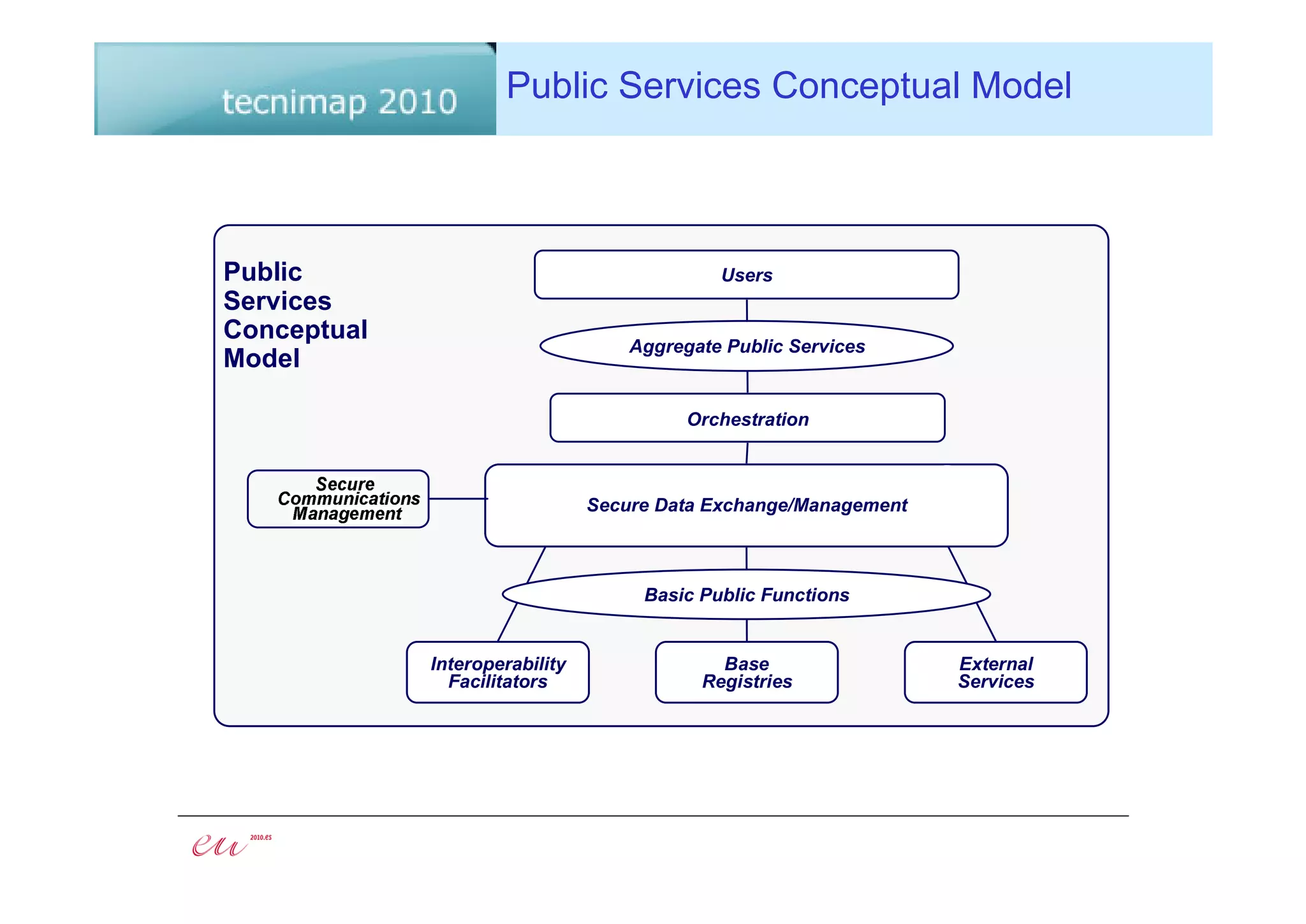
Public Services Conceptual Model


Public                                       Users
Services
Conceptual
                                    Aggregate Public Services
Model

                                          Orchestration


                                Secure Data Exchange/Management


                                     Basic Public Functions


             Interoperability                Base                 External
               Facilitators                Registries             Services
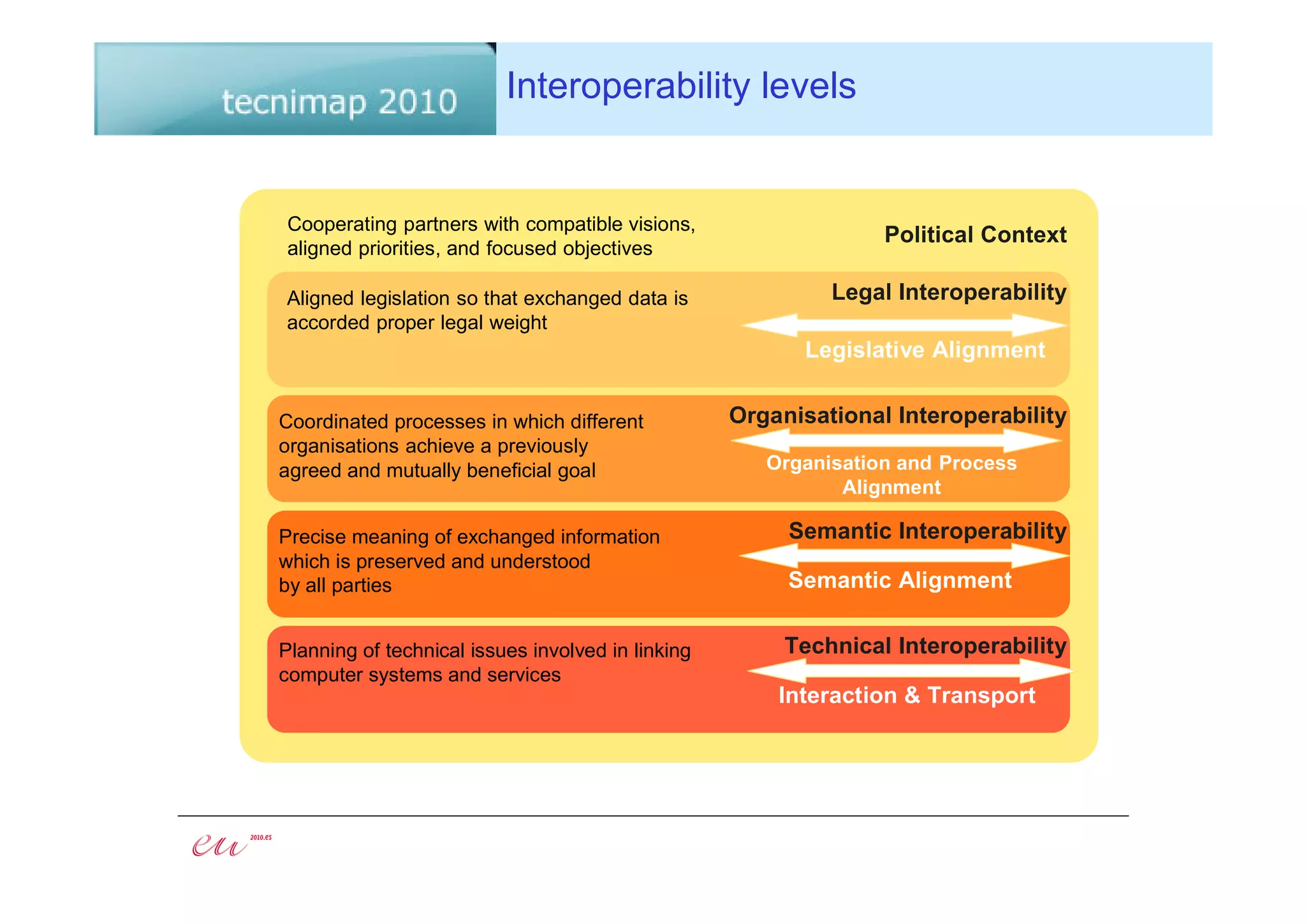
Interoperability levels


Cooperating partners with compatible visions,
                                                                 Political Context
aligned priorities, and focused objectives

Aligned legislation so that exchanged data is               Legal Interoperability
accorded proper legal weight
                                                         Legislative Alignment


Coordinated processes in which different           Organisational Interoperability
organisations achieve a previously
agreed and mutually beneficial goal                   Organisation and Process
                                                             Alignment

Precise meaning of exchanged information                Semantic Interoperability
which is preserved and understood
by all parties                                          Semantic Alignment

Planning of technical issues involved in linking        Technical Interoperability
computer systems and services
                                                       Interaction & Transport
The ISA Programme

• Interoperability Solutions for European Public
  Administrations (ISA)
• Decision N° 922/2009/EC of the European
  Parliament and of the Council – OJ L 260/20,
  03.10.2009
• 2010-2015, overall budget 164 million euros
• Commission driven, implemented in accordance
  with Community public procurement rules
• To be seen in the context of EU2020; the digital
  agenda for Europe and the European eGovernment
  Action plan 2011-2015
Objective


To support cooperation between European
 public administrations
    By facilitating efficient and effective cross-
    border and cross-sectoral interaction,
    Enabling the delivery of electronic public
    services supporting the implementation of
    Community policies and activities.
 For that purpose, to provide common and
 shared solutions facilitating interoperability
Stakeholders and beneficiaries

• Stakeholders
   –   European public administrations at all levels
   –   ICT Community
   –   Standardisation bodies
   –   International bodies
   –   …

• Direct beneficiaries
   – European public administrations
        •   Commission services
        •   Other EU institutions or bodies
        •   National administrations
        •   Regional and local administrations

• Indirect beneficiaries
   – Citizens and businesses
Key principles


• Technological neutrality and adaptability

• Openness

• Reusability

• Privacy and protection of personal data

• Security
Activities

The programme will support and promote:
– Common frameworks
– Common services
– Reusable generic tools
– Assessment of ICT implications of EU
  legislation
through
– Studies
– Projects
– Accompanying measures
Actions


• Actions must comply with the requirement
  specified in the ISA Decision - i.e., inter alia, be

   –   Based on a concrete business case
   –   Linked to EU policy initiatives
   –   Of general interest, meeting common user requirements
   –   Of cross-border and cross-sector nature

• Priority is given to actions falling with the activity
  clusters defined by the European Interoperability
  Strategy
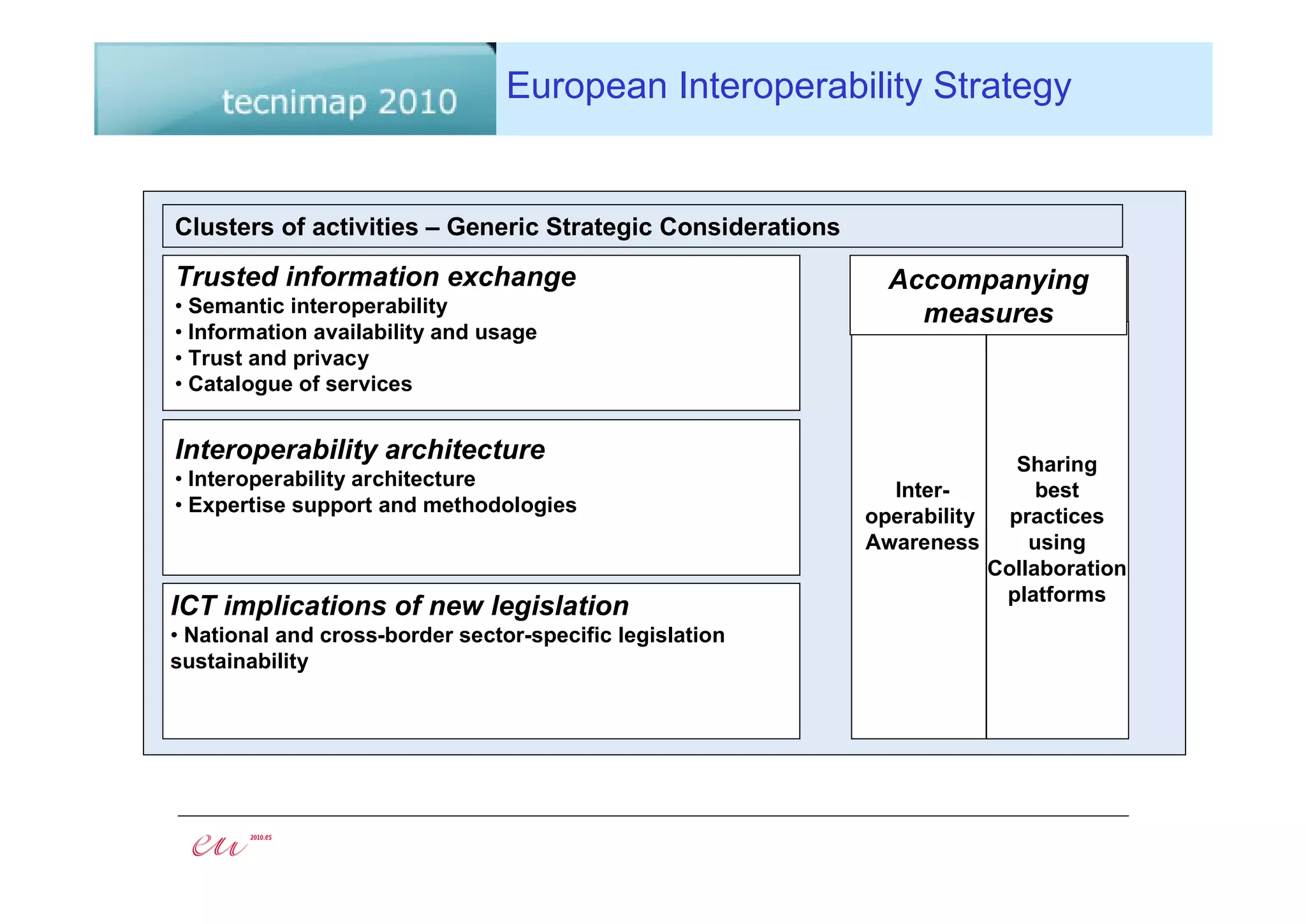
European Interoperability Strategy


Clusters of activities – Generic Strategic Considerations

Trusted information exchange                                  Accompanying
• Semantic interoperability                                     measures
• Information availability and usage
• Trust and privacy
• Catalogue of services


Interoperability architecture                                              Sharing
• Interoperability architecture
                                                              Inter-         best
• Expertise support and methodologies
                                                            operability   practices
                                                            Awareness       using
                                                                        Collaboration
                                                                         platforms
ICT implications of new legislation
• National and cross-border sector-specific legislation
sustainability
ISA Collaboration Platforms


• Semantic Interoperability
  http://www.semic.eu/

• Open Source Observatory and Repository
  http://www.osor.eu

• ePractice
  http://www.epractice.eu

• IDABC website
  http://ec.europa.eu/idabc
References


• ISA Programme
  http://ec.europa.eu/isa/

• ISA Decision
  http://eur-
  lex.europa.eu/JOHtml.do?uri=OJ:L:2009:260:SOM:EN:H
  TML

• European Interoperability Strategy
  http://ec.europa.eu/idabc/en/document/7772

• European Interoperability Framework
  http://ec.europa.eu/idabc/en/document/7728

Karel De Vriendt

  • 1.
    Introduction to theISA Programme Interoperability solutions for European Public Administrations (ISA) Karel De Vriendt European Commission Directorate-General Informatics 1
  • 2.
    eGovernment • eGovernment isthe use of information and communication technologies in public administrations – combined with organisational change and new skills – to improve public services and democratic processes and strengthen support to public policies. • eGovernment is a way for public administrations to become: – more open and transparent, and to reinforce democratic participation; – more service-oriented, providing personalised and inclusive services to each citizen; – productive, delivering maximum value for taxpayers' money.
  • 3.
    Interoperability • No ICTsystem “lives” in isolation • Every ICT system communicates with the “external world” within a permanent evolving environment • Interoperability: "the ability of disparate and diverse organisations to interact towards mutually beneficial and agreed common goals, involving the sharing of information and knowledge between the organizations via the business processes they support, by means of the exchange of data between their respective information and communication technology (ICT) system“ • Based on agreements between partners • Neither ad-hoc, nor unilateral, nor even bilateral in nature, Interoperability is best understood as “a shared value of a community”
  • 4.
    Public Services ConceptualModel Public Users Services Conceptual Aggregate Public Services Model Orchestration Secure Data Exchange/Management Basic Public Functions Interoperability Base External Facilitators Registries Services
  • 5.
    Interoperability levels Cooperating partnerswith compatible visions, Political Context aligned priorities, and focused objectives Aligned legislation so that exchanged data is Legal Interoperability accorded proper legal weight Legislative Alignment Coordinated processes in which different Organisational Interoperability organisations achieve a previously agreed and mutually beneficial goal Organisation and Process Alignment Precise meaning of exchanged information Semantic Interoperability which is preserved and understood by all parties Semantic Alignment Planning of technical issues involved in linking Technical Interoperability computer systems and services Interaction & Transport
  • 6.
    The ISA Programme •Interoperability Solutions for European Public Administrations (ISA) • Decision N° 922/2009/EC of the European Parliament and of the Council – OJ L 260/20, 03.10.2009 • 2010-2015, overall budget 164 million euros • Commission driven, implemented in accordance with Community public procurement rules • To be seen in the context of EU2020; the digital agenda for Europe and the European eGovernment Action plan 2011-2015
  • 7.
    Objective To support cooperationbetween European public administrations By facilitating efficient and effective cross- border and cross-sectoral interaction, Enabling the delivery of electronic public services supporting the implementation of Community policies and activities. For that purpose, to provide common and shared solutions facilitating interoperability
  • 8.
    Stakeholders and beneficiaries •Stakeholders – European public administrations at all levels – ICT Community – Standardisation bodies – International bodies – … • Direct beneficiaries – European public administrations • Commission services • Other EU institutions or bodies • National administrations • Regional and local administrations • Indirect beneficiaries – Citizens and businesses
  • 9.
    Key principles • Technologicalneutrality and adaptability • Openness • Reusability • Privacy and protection of personal data • Security
  • 10.
    Activities The programme willsupport and promote: – Common frameworks – Common services – Reusable generic tools – Assessment of ICT implications of EU legislation through – Studies – Projects – Accompanying measures
  • 11.
    Actions • Actions mustcomply with the requirement specified in the ISA Decision - i.e., inter alia, be – Based on a concrete business case – Linked to EU policy initiatives – Of general interest, meeting common user requirements – Of cross-border and cross-sector nature • Priority is given to actions falling with the activity clusters defined by the European Interoperability Strategy
  • 12.
    European Interoperability Strategy Clustersof activities – Generic Strategic Considerations Trusted information exchange Accompanying • Semantic interoperability measures • Information availability and usage • Trust and privacy • Catalogue of services Interoperability architecture Sharing • Interoperability architecture Inter- best • Expertise support and methodologies operability practices Awareness using Collaboration platforms ICT implications of new legislation • National and cross-border sector-specific legislation sustainability
  • 13.
    ISA Collaboration Platforms •Semantic Interoperability http://www.semic.eu/ • Open Source Observatory and Repository http://www.osor.eu • ePractice http://www.epractice.eu • IDABC website http://ec.europa.eu/idabc
  • 14.
    References • ISA Programme http://ec.europa.eu/isa/ • ISA Decision http://eur- lex.europa.eu/JOHtml.do?uri=OJ:L:2009:260:SOM:EN:H TML • European Interoperability Strategy http://ec.europa.eu/idabc/en/document/7772 • European Interoperability Framework http://ec.europa.eu/idabc/en/document/7728