The purpose of operating systems. By brody Holland
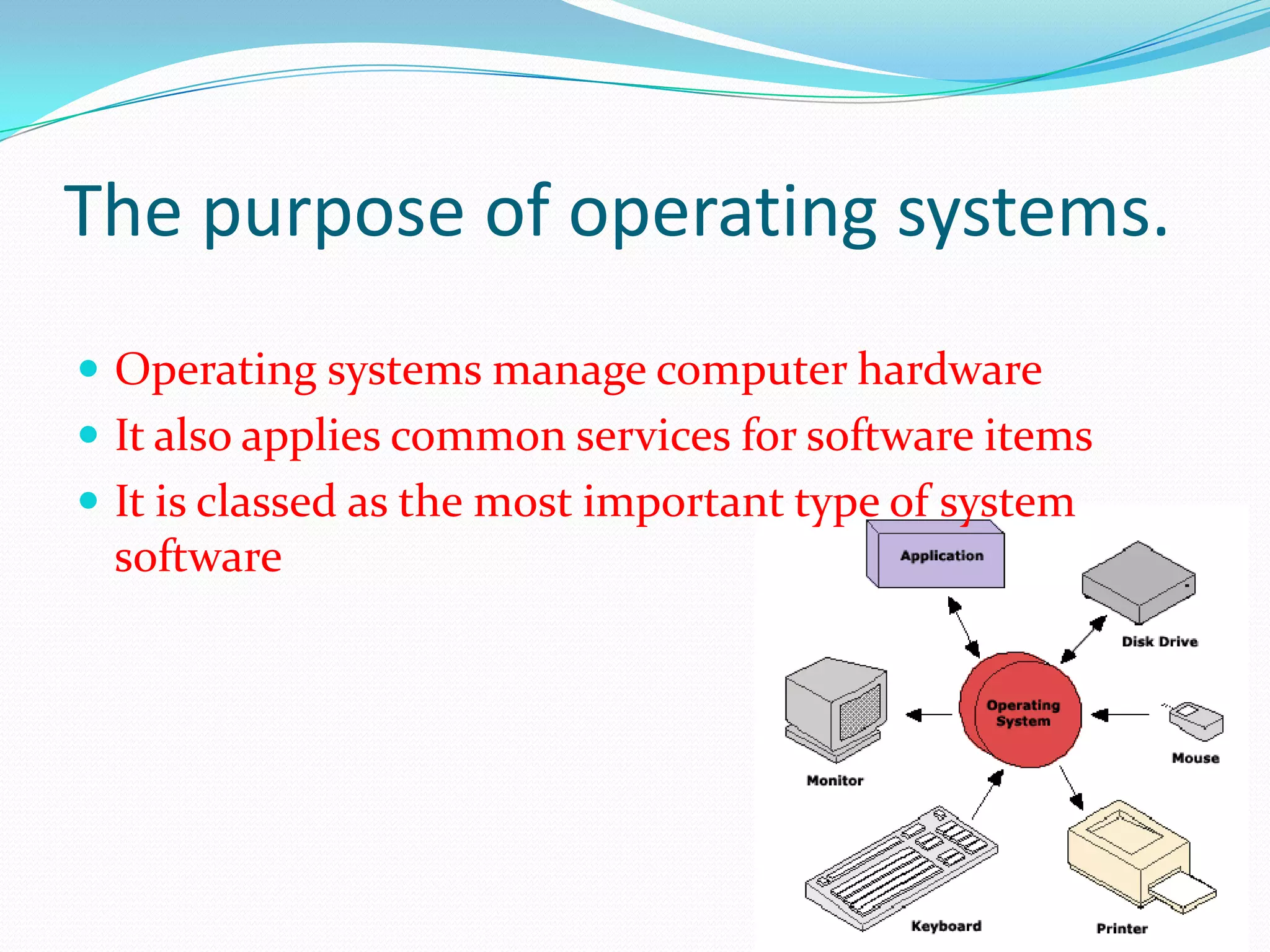
The purpose of operating systems. Operating systems manage computer hardware It also applies common services for software items It is classed as the most important type of system software
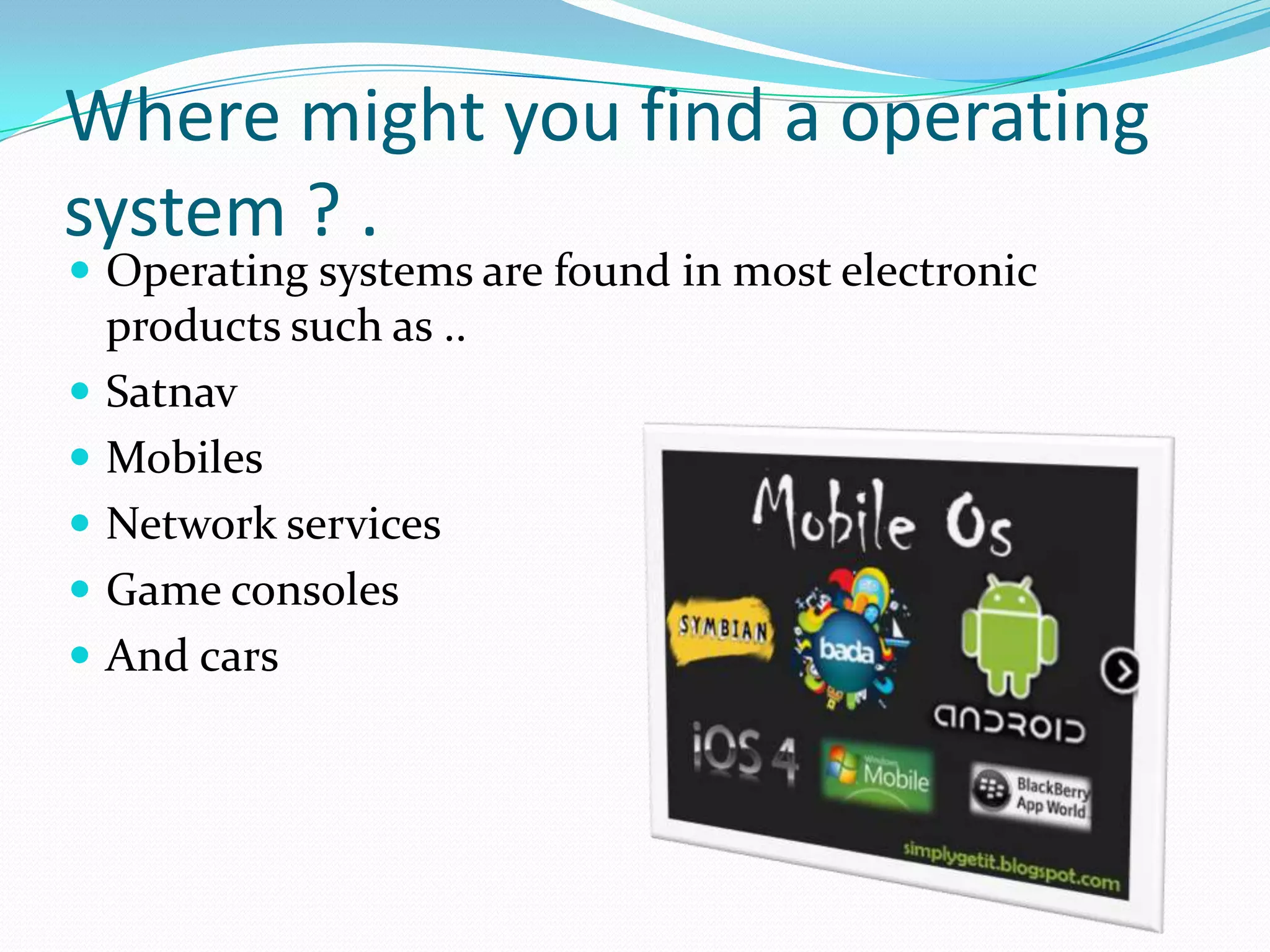
Where might you find a operating system ? .	Operating systems are found in most electronic products such as ..SatnavMobiles Network servicesGame consoles And cars
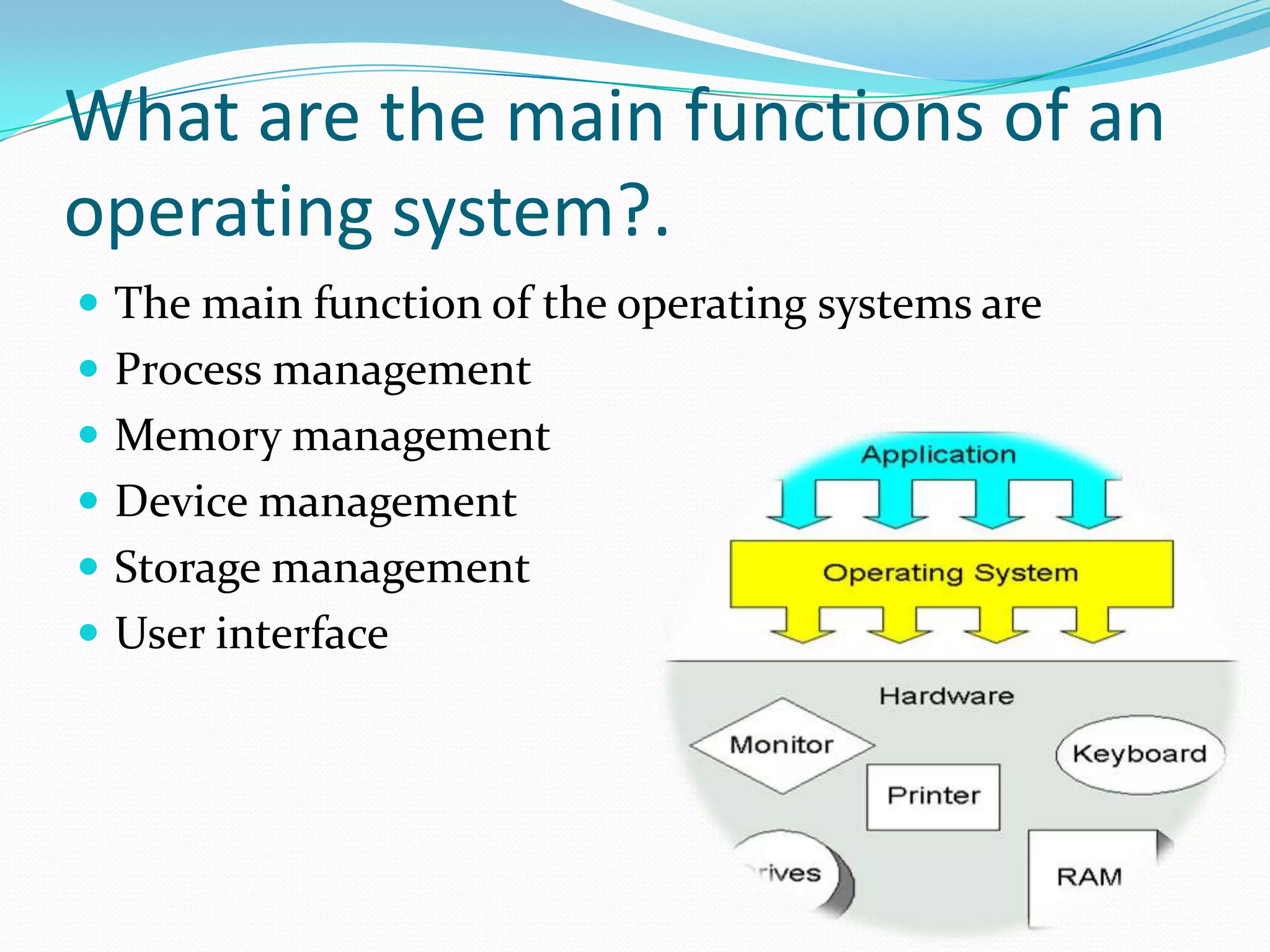
What are the main functions of an operating system?. 	The main function of the operating systems are Process management Memory management Device management Storage management	User interface
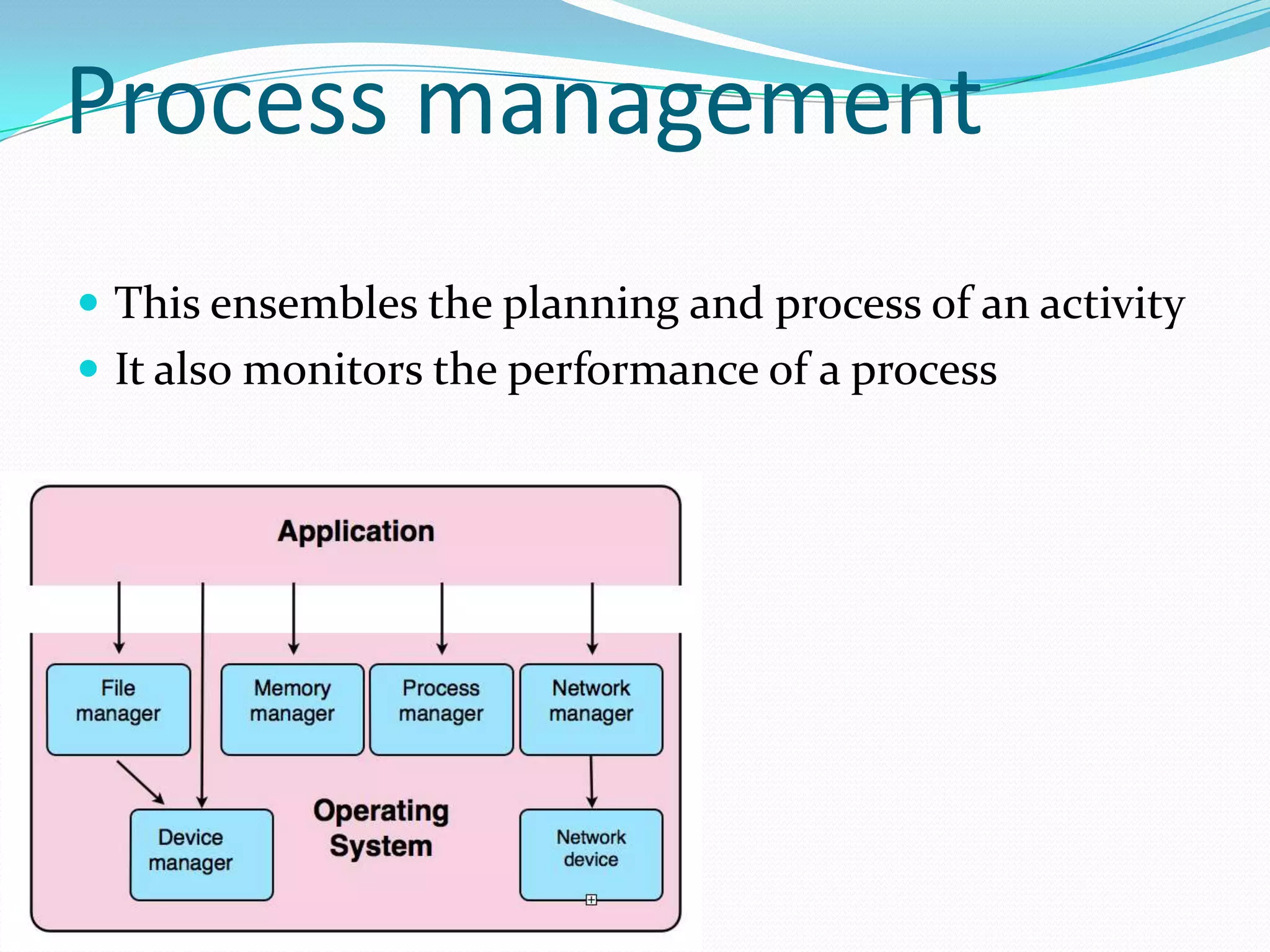
Process management This ensembles the planning and process of an activity It also monitors the performance of a process
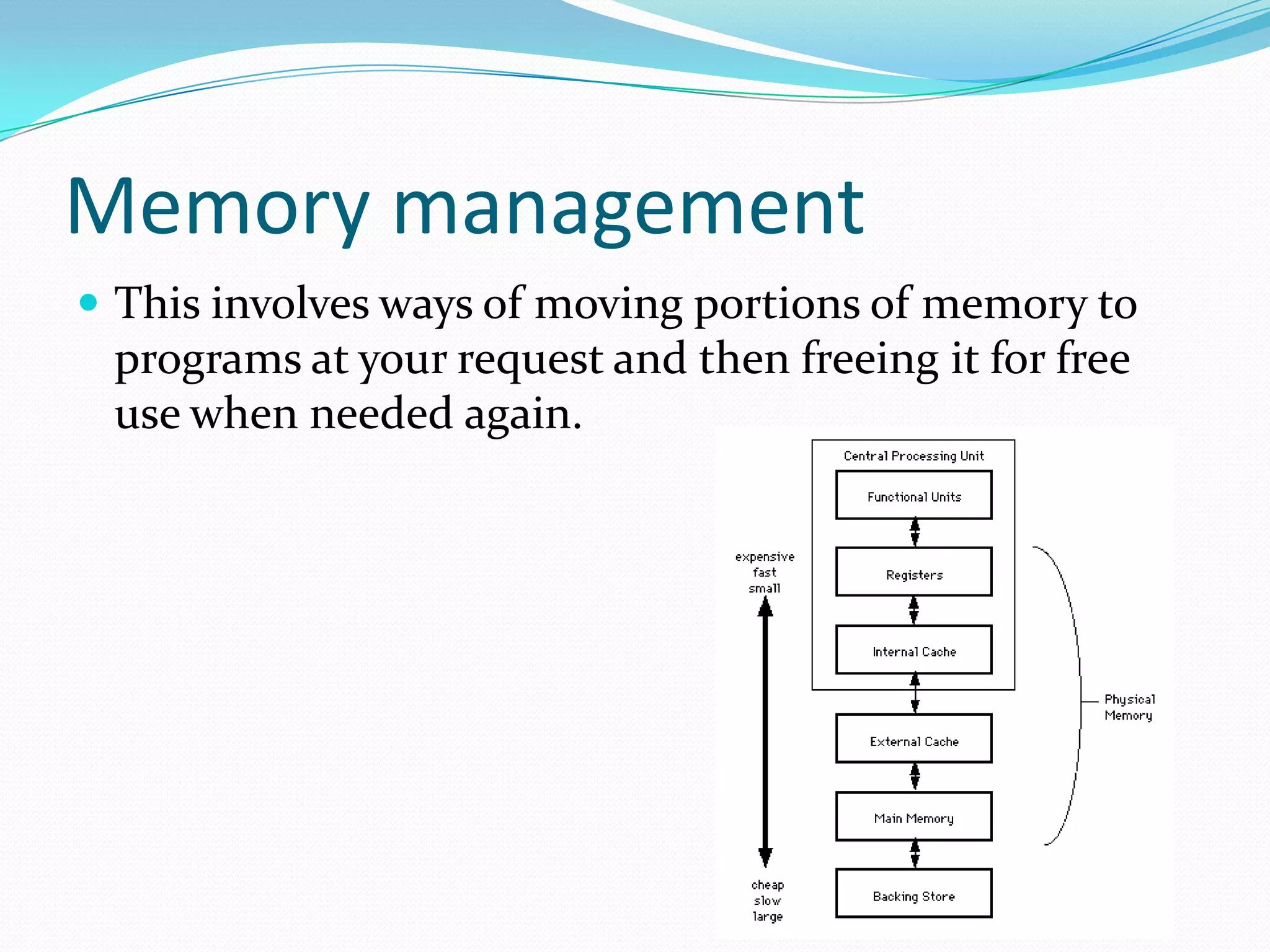
Memory management This involves ways of moving portions of memory to programs at your request and then freeing it for free use when needed again.
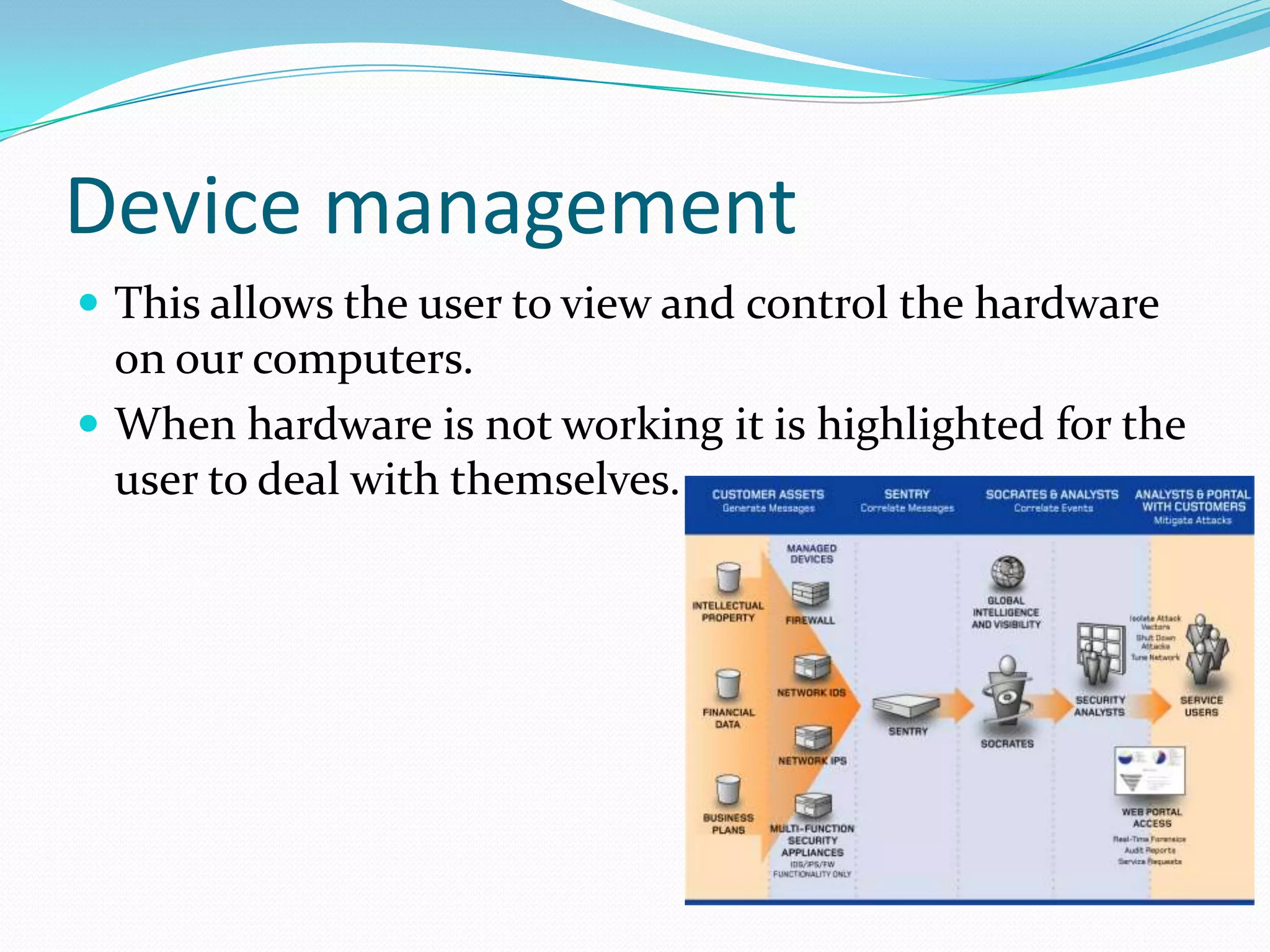
Device management This allows the user to view and control the hardware on our computers.When hardware is not working it is highlighted for the user to deal with themselves.
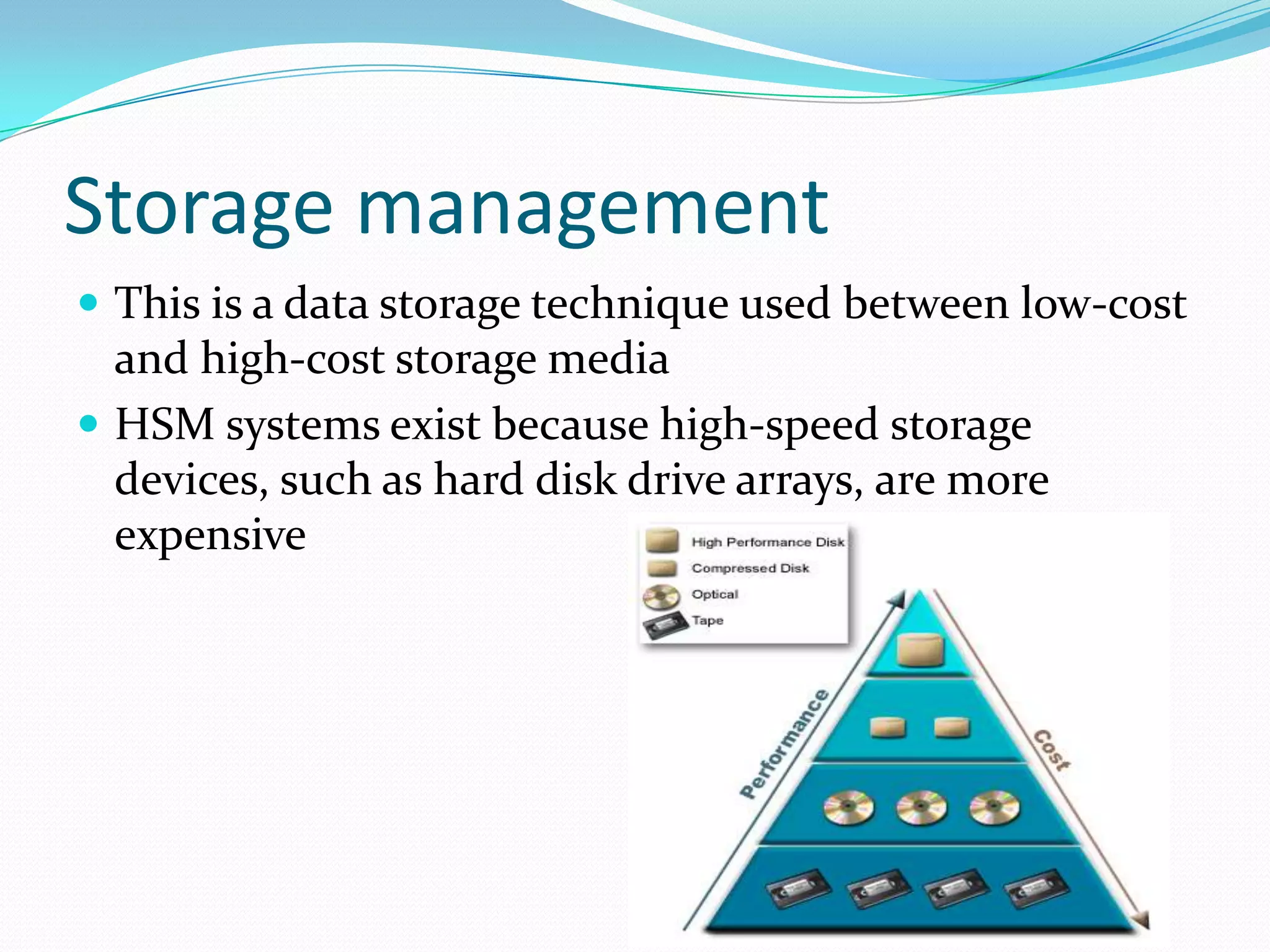
Storage management This is a data storage technique used between low-cost and high-cost storage media HSM systems exist because high-speed storage devices, such as hard disk drive arrays, are more expensive
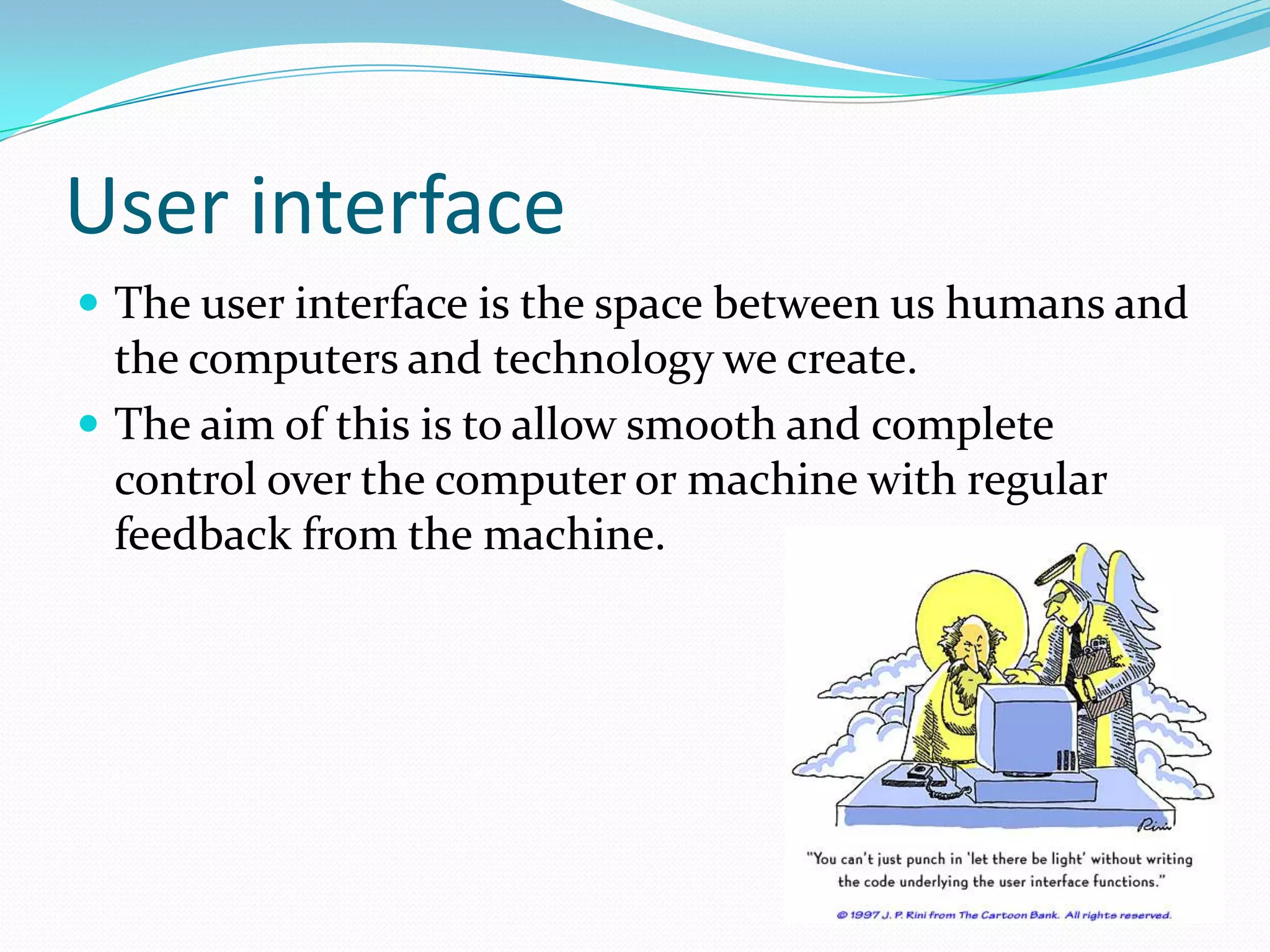
User interface The user interface is the space between us humans and the computers and technology we create.The aim of this is to allow smooth and complete control over the computer or machine with regular feedback from the machine.

The purpose of operating systems

  • 1.
    The purpose ofoperating systems. By brody Holland
  • 2.
    The purpose ofoperating systems. Operating systems manage computer hardware It also applies common services for software items It is classed as the most important type of system software
  • 3.
    Where might youfind a operating system ? . Operating systems are found in most electronic products such as ..SatnavMobiles Network servicesGame consoles And cars
  • 4.
    What are themain functions of an operating system?. The main function of the operating systems are Process management Memory management Device management Storage management User interface
  • 5.
    Process management Thisensembles the planning and process of an activity It also monitors the performance of a process
  • 6.
    Memory management Thisinvolves ways of moving portions of memory to programs at your request and then freeing it for free use when needed again.
  • 7.
    Device management Thisallows the user to view and control the hardware on our computers.When hardware is not working it is highlighted for the user to deal with themselves.
  • 8.
    Storage management Thisis a data storage technique used between low-cost and high-cost storage media HSM systems exist because high-speed storage devices, such as hard disk drive arrays, are more expensive
  • 9.
    User interface Theuser interface is the space between us humans and the computers and technology we create.The aim of this is to allow smooth and complete control over the computer or machine with regular feedback from the machine.