Internal Audit: Risk management &
Control Evaluation

Smitesh Bhosale
smitesh.bhosale@yahoo.co.in
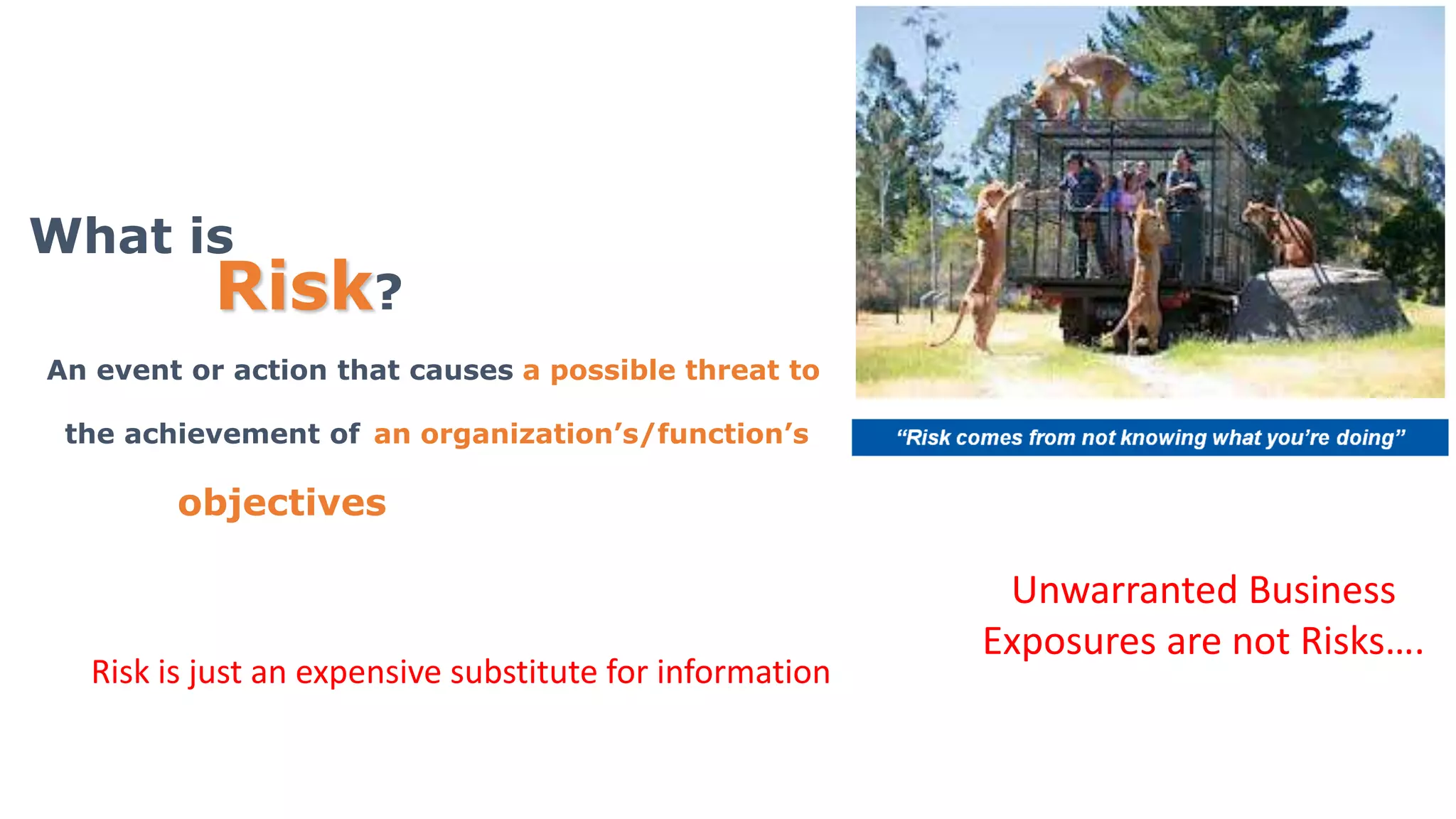
What is

Risk?

An event or action that causes a possible threat to
the achievement of an organization’s/function’s

objectives

Risk is just an expensive substitute for information

Unwarranted Business
Exposures are not Risks….
Risk Assessment
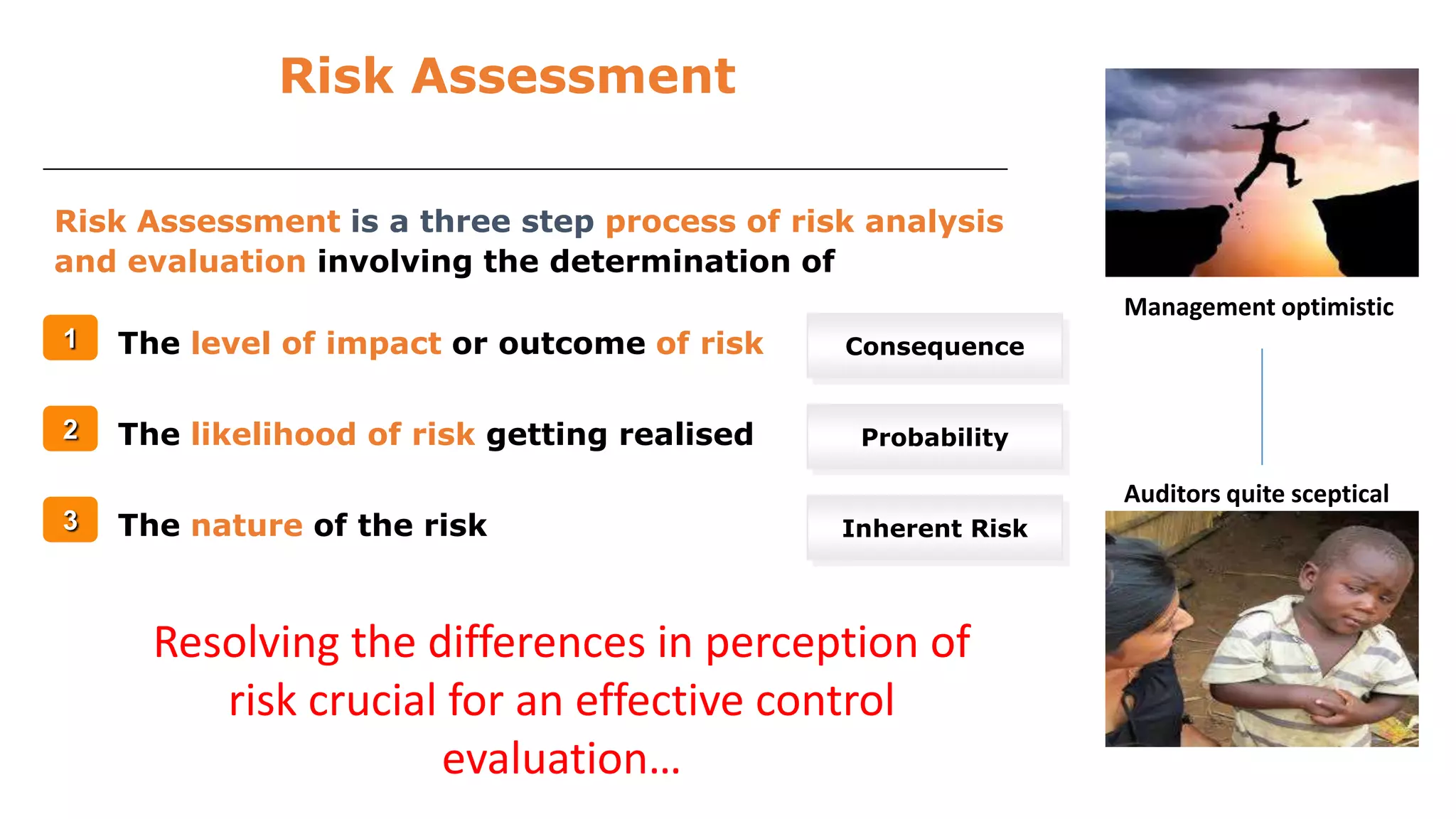
Risk Assessment is a three step process of risk analysis
and evaluation involving the determination of
Management optimistic
1

The level of impact or outcome of risk

Consequence

2

The likelihood of risk getting realised

Probability

3

The nature of the risk

Auditors quite sceptical
Inherent Risk

Resolving the differences in perception of
risk crucial for an effective control
evaluation…
Risk Assessment
• Where

do you devote considerable internal effort in order to control?

• What areas receive considerable management reporting?
• Where have you devoted significant resources?
• What are the analysts and rating agencies most interested in?
• What wouldn’t you want on the front page of the newspaper?
• What are key obstacles to taking advantage of opportunities?
• What is impeding growth?
A “WHAT CAN GO WRONG
ANALYSIS” prior to field work
will provide focus and
•What do people complain about within the organization?
judgement to the auditor on
• If you could fix one thing at the company, what would it be where to deploy his resources

• What do your competitors do better?

• What keeps you up at night?
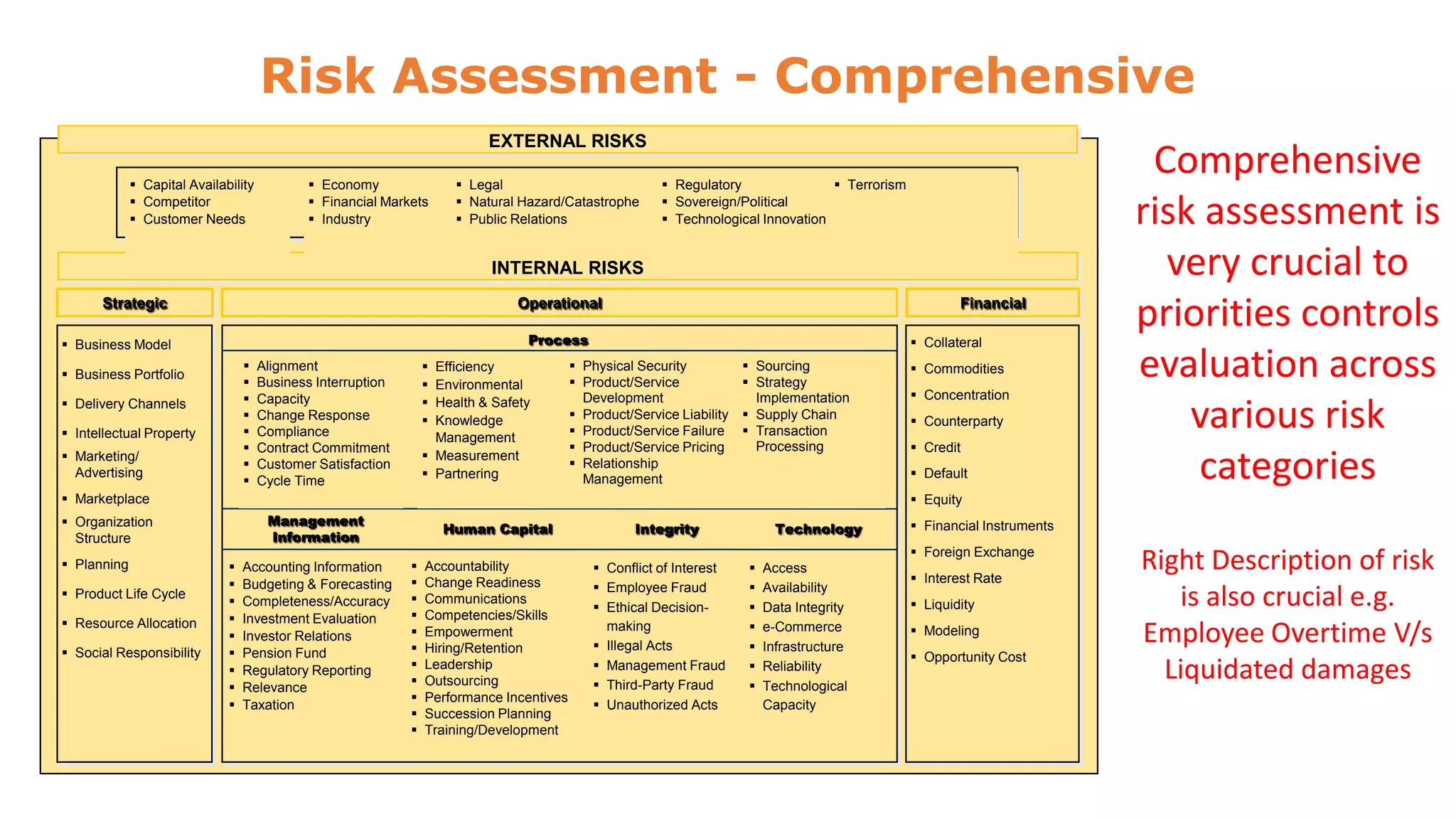
Risk Assessment - Comprehensive
EXTERNAL RISKS
 Capital Availability
 Competitor
 Customer Needs

 Economy
 Financial Markets
 Industry

 Legal
 Natural Hazard/Catastrophe
 Public Relations

 Regulatory
 Terrorism
 Sovereign/Political
 Technological Innovation

INTERNAL RISKS
Strategic

Operational

Financial

Process

 Business Model










 Business Portfolio
 Delivery Channels
 Intellectual Property
 Marketing/
Advertising






Alignment
Business Interruption
Capacity
Change Response
Compliance
Contract Commitment
Customer Satisfaction
Cycle Time

Efficiency
Environmental
Health & Safety
Knowledge
Management
 Measurement
 Partnering

 Collateral

 Physical Security
 Product/Service
Development
 Product/Service Liability
 Product/Service Failure
 Product/Service Pricing
 Relationship
Management

 Sourcing
 Strategy
Implementation
 Supply Chain
 Transaction
Processing

 Resource Allocation
 Social Responsibility

 Counterparty
 Credit

 Equity
Management
Information

 Organization
Structure

 Product Life Cycle

 Concentration

 Default

 Marketplace

 Planning

 Commodities

Comprehensive
risk assessment is
very crucial to
priorities controls
evaluation across
various risk
categories











Accounting Information
Budgeting & Forecasting
Completeness/Accuracy
Investment Evaluation
Investor Relations
Pension Fund
Regulatory Reporting
Relevance
Taxation

Human Capital












Integrity

Technology

 Financial Instruments
 Foreign Exchange

Accountability
Change Readiness
Communications
Competencies/Skills
Empowerment
Hiring/Retention
Leadership
Outsourcing
Performance Incentives
Succession Planning
Training/Development

 Conflict of Interest
 Employee Fraud
 Ethical Decisionmaking
 Illegal Acts
 Management Fraud
 Third-Party Fraud
 Unauthorized Acts









Access
Availability
Data Integrity
e-Commerce
Infrastructure
Reliability
Technological
Capacity

 Interest Rate

 Liquidity
 Modeling
 Opportunity Cost

Right Description of risk
is also crucial e.g.
Employee Overtime V/s
Liquidated damages
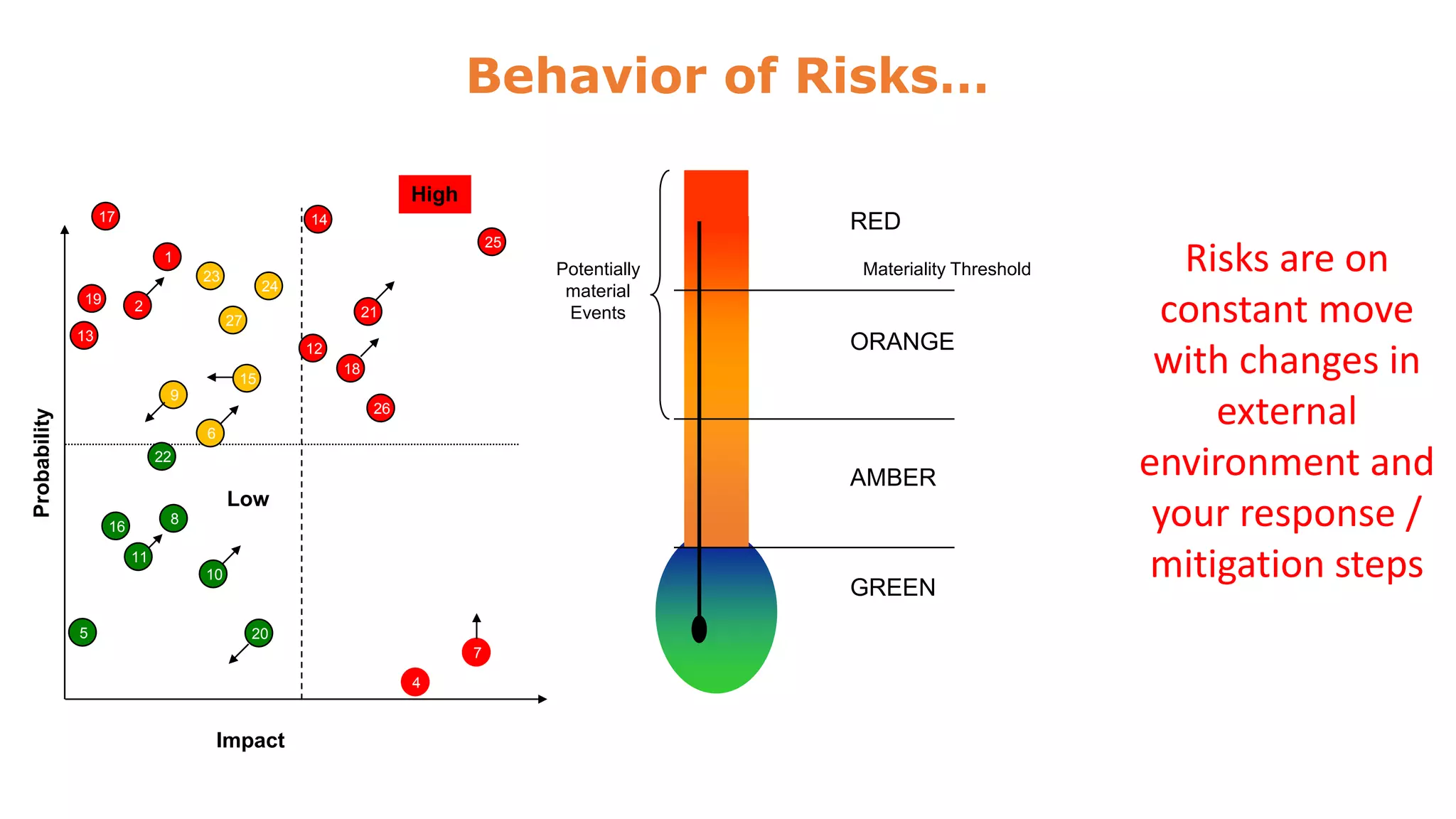
Behavior of Risks…
High
17

RED

14
25

1
23
19

Potentially
material
Events

24

2

21

27
13

ORANGE

12
15

Probability

9

Materiality Threshold

18
26

6
22

AMBER
Low
8

16
11

10

5

GREEN
20
7
4

Impact

Risks are on
constant move
with changes in
external
environment and
your response /
mitigation steps
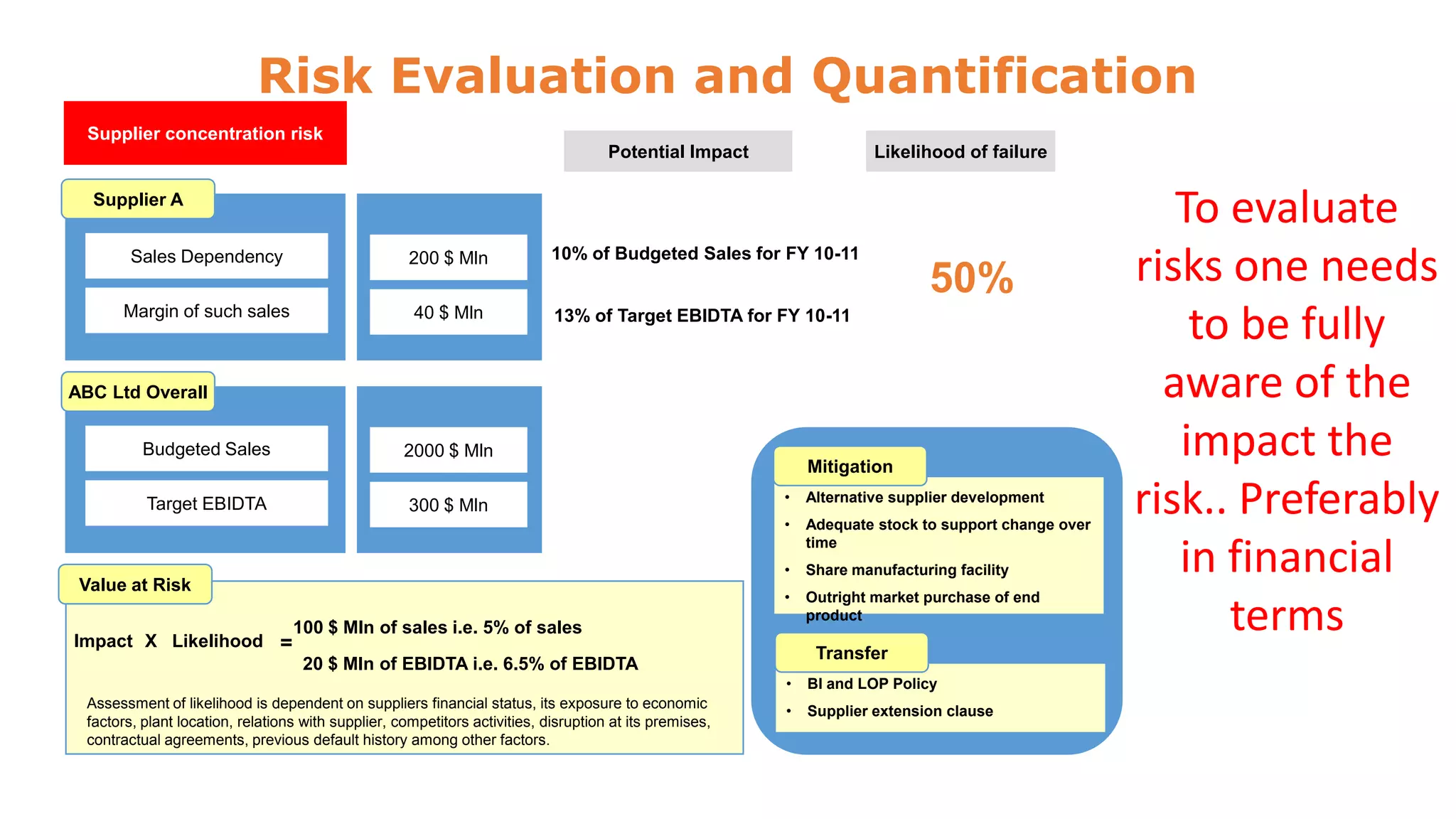
Risk Evaluation and Quantification
Supplier concentration risk
Potential Impact

Likelihood of failure

Supplier A
Sales Dependency

200 $ Mln

10% of Budgeted Sales for FY 10-11

Margin of such sales

40 $ Mln

13% of Target EBIDTA for FY 10-11

50%

ABC Ltd Overall
Budgeted Sales

2000 $ Mln

Mitigation

Impact X Likelihood =

Adequate stock to support change over
time

Share manufacturing facility

•

Value at Risk

Alternative supplier development

•

300 $ Mln

•
•

Target EBIDTA

Outright market purchase of end
product

100 $ Mln of sales i.e. 5% of sales

Transfer

20 $ Mln of EBIDTA i.e. 6.5% of EBIDTA
•
Assessment of likelihood is dependent on suppliers financial status, its exposure to economic
factors, plant location, relations with supplier, competitors activities, disruption at its premises,
contractual agreements, previous default history among other factors.

BI and LOP Policy

•

Supplier extension clause

To evaluate
risks one needs
to be fully
aware of the
impact the
risk.. Preferably
in financial
terms
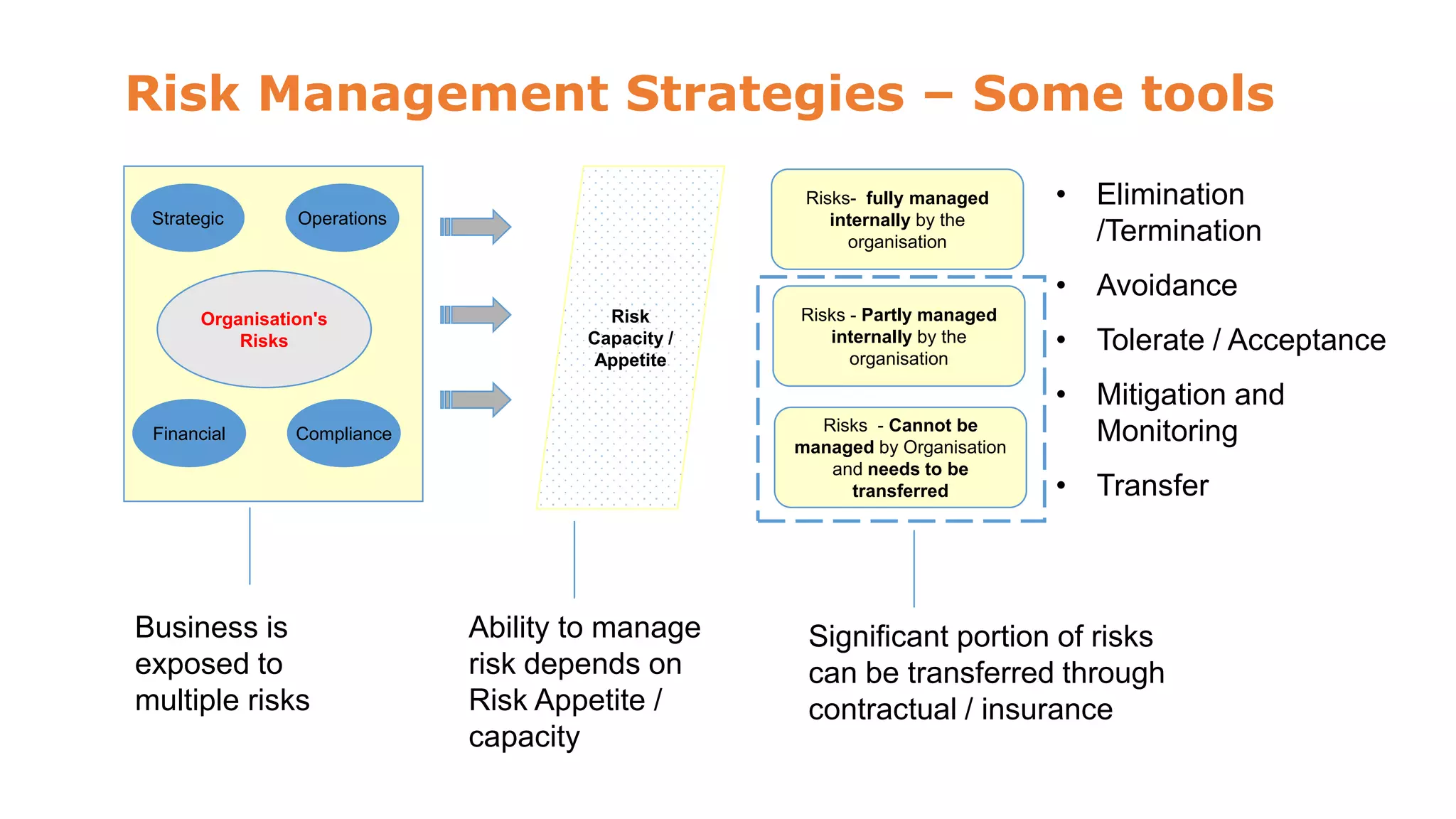
Risk Management Strategies – Some tools
Strategic

Risks- fully managed
internally by the
organisation

Operations

• Elimination
/Termination
• Avoidance

Organisation's
Risks

Financial

Risk
Capacity /
Appetite

Risks - Cannot be
managed by Organisation
and needs to be
transferred

Compliance

Business is
exposed to
multiple risks

Risks - Partly managed
internally by the
organisation

Ability to manage
risk depends on
Risk Appetite /
capacity

• Tolerate / Acceptance

• Mitigation and
Monitoring
• Transfer

Significant portion of risks
can be transferred through
contractual / insurance
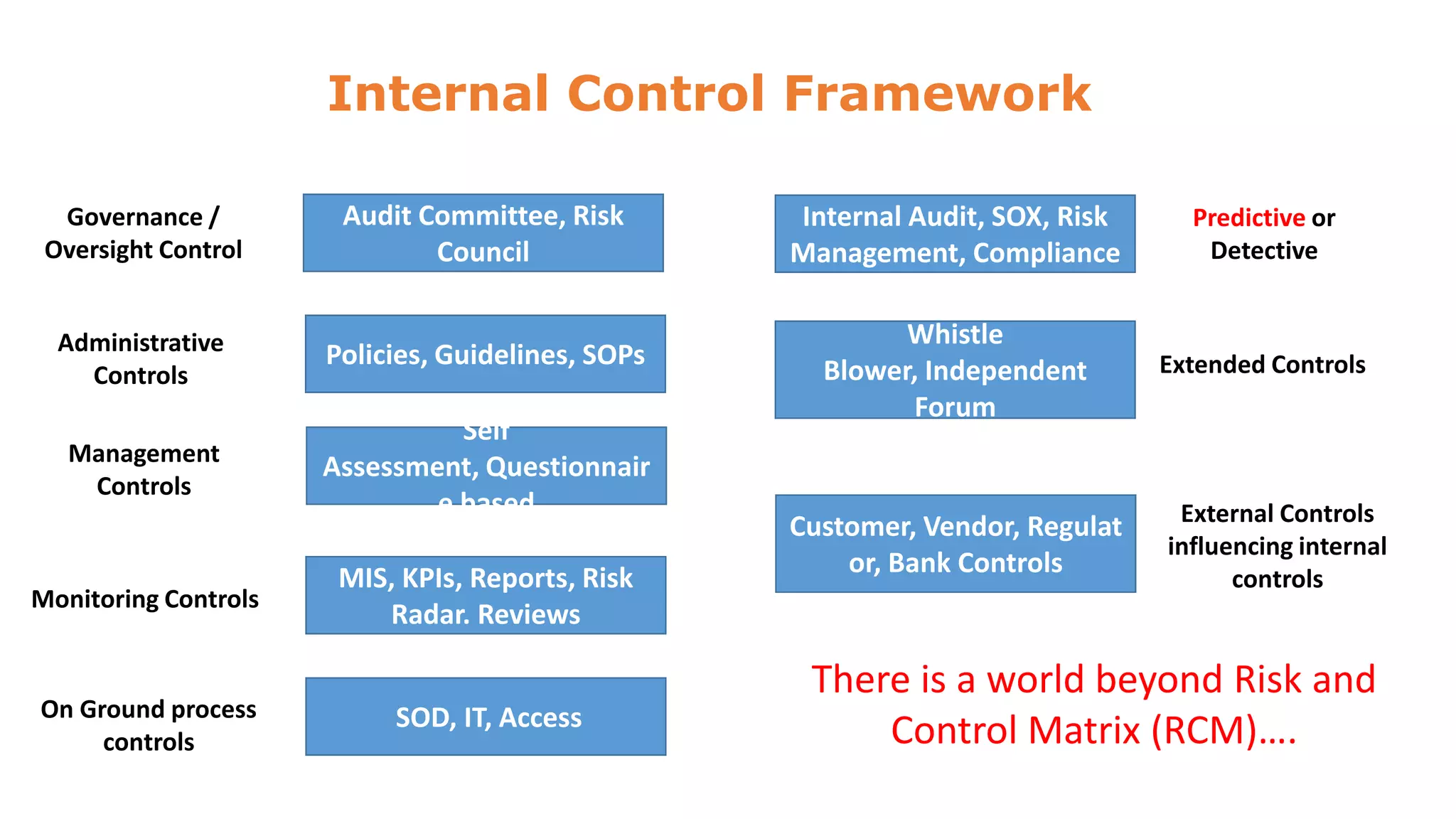
Internal Control Framework
Governance /
Oversight Control

Audit Committee, Risk
Council

Administrative
Controls

Policies, Guidelines, SOPs

Management
Controls

Self
Assessment, Questionnair
e based

Monitoring Controls

On Ground process
controls

MIS, KPIs, Reports, Risk
Radar. Reviews
SOD, IT, Access

Internal Audit, SOX, Risk
Management, Compliance

Predictive or
Detective

Whistle
Blower, Independent
Forum

Extended Controls

Customer, Vendor, Regulat
or, Bank Controls

External Controls
influencing internal
controls

There is a world beyond Risk and
Control Matrix (RCM)….
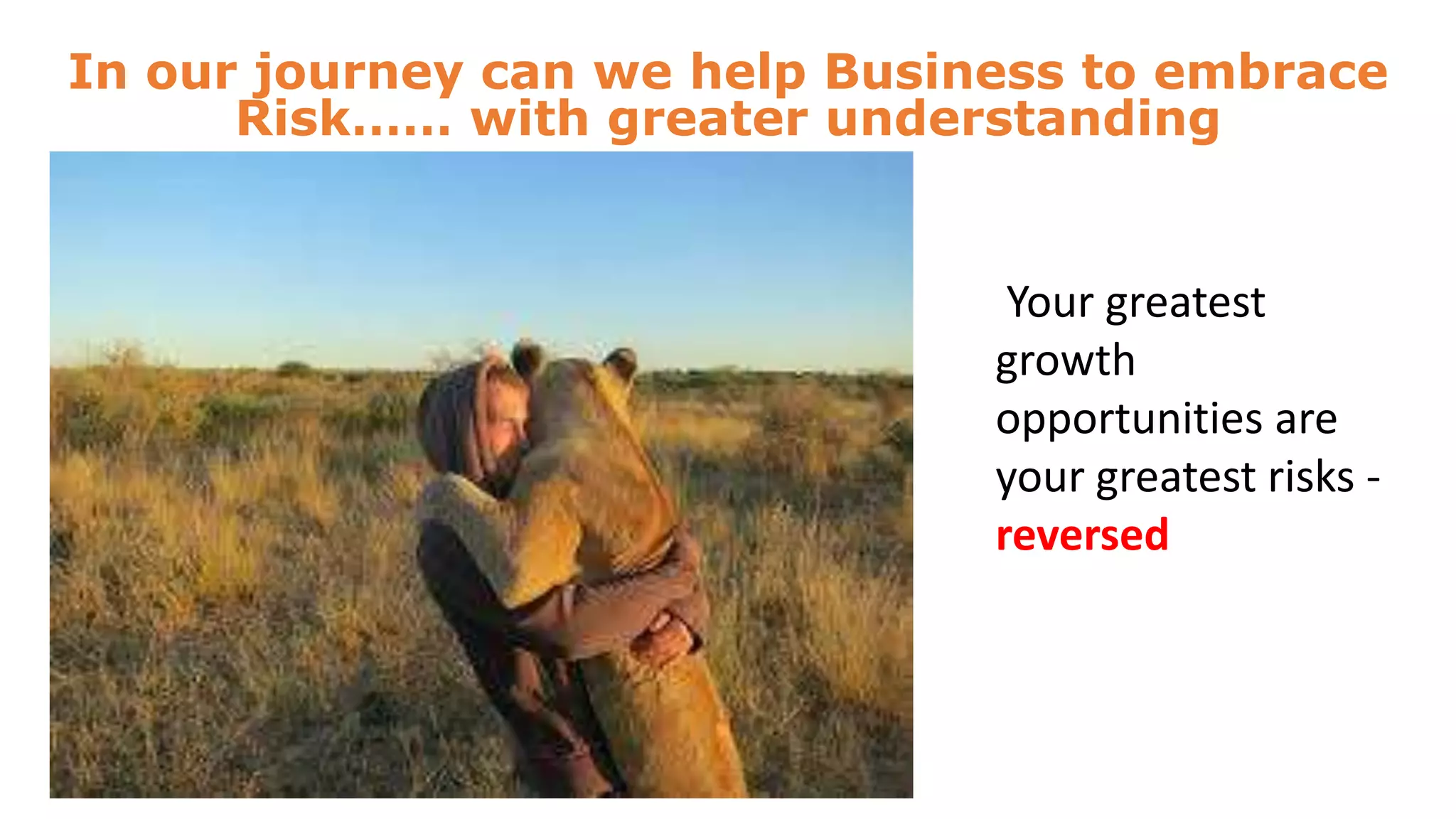
In our journey can we help Business to embrace
Risk…… with greater understanding

Your greatest
growth
opportunities are
your greatest risks reversed

Risk assessment and internal controls - Internal Audit

  • 1.
    Internal Audit: Riskmanagement & Control Evaluation Smitesh Bhosale smitesh.bhosale@yahoo.co.in
  • 2.
    What is Risk? An eventor action that causes a possible threat to the achievement of an organization’s/function’s objectives Risk is just an expensive substitute for information Unwarranted Business Exposures are not Risks….
  • 3.
    Risk Assessment Risk Assessmentis a three step process of risk analysis and evaluation involving the determination of Management optimistic 1 The level of impact or outcome of risk Consequence 2 The likelihood of risk getting realised Probability 3 The nature of the risk Auditors quite sceptical Inherent Risk Resolving the differences in perception of risk crucial for an effective control evaluation…
  • 4.
    Risk Assessment • Where doyou devote considerable internal effort in order to control? • What areas receive considerable management reporting? • Where have you devoted significant resources? • What are the analysts and rating agencies most interested in? • What wouldn’t you want on the front page of the newspaper? • What are key obstacles to taking advantage of opportunities? • What is impeding growth? A “WHAT CAN GO WRONG ANALYSIS” prior to field work will provide focus and •What do people complain about within the organization? judgement to the auditor on • If you could fix one thing at the company, what would it be where to deploy his resources • What do your competitors do better? • What keeps you up at night?
  • 5.
    Risk Assessment -Comprehensive EXTERNAL RISKS  Capital Availability  Competitor  Customer Needs  Economy  Financial Markets  Industry  Legal  Natural Hazard/Catastrophe  Public Relations  Regulatory  Terrorism  Sovereign/Political  Technological Innovation INTERNAL RISKS Strategic Operational Financial Process  Business Model          Business Portfolio  Delivery Channels  Intellectual Property  Marketing/ Advertising     Alignment Business Interruption Capacity Change Response Compliance Contract Commitment Customer Satisfaction Cycle Time Efficiency Environmental Health & Safety Knowledge Management  Measurement  Partnering  Collateral  Physical Security  Product/Service Development  Product/Service Liability  Product/Service Failure  Product/Service Pricing  Relationship Management  Sourcing  Strategy Implementation  Supply Chain  Transaction Processing  Resource Allocation  Social Responsibility  Counterparty  Credit  Equity Management Information  Organization Structure  Product Life Cycle  Concentration  Default  Marketplace  Planning  Commodities Comprehensive risk assessment is very crucial to priorities controls evaluation across various risk categories          Accounting Information Budgeting & Forecasting Completeness/Accuracy Investment Evaluation Investor Relations Pension Fund Regulatory Reporting Relevance Taxation Human Capital            Integrity Technology  Financial Instruments  Foreign Exchange Accountability Change Readiness Communications Competencies/Skills Empowerment Hiring/Retention Leadership Outsourcing Performance Incentives Succession Planning Training/Development  Conflict of Interest  Employee Fraud  Ethical Decisionmaking  Illegal Acts  Management Fraud  Third-Party Fraud  Unauthorized Acts        Access Availability Data Integrity e-Commerce Infrastructure Reliability Technological Capacity  Interest Rate  Liquidity  Modeling  Opportunity Cost Right Description of risk is also crucial e.g. Employee Overtime V/s Liquidated damages
  • 6.
    Behavior of Risks… High 17 RED 14 25 1 23 19 Potentially material Events 24 2 21 27 13 ORANGE 12 15 Probability 9 MaterialityThreshold 18 26 6 22 AMBER Low 8 16 11 10 5 GREEN 20 7 4 Impact Risks are on constant move with changes in external environment and your response / mitigation steps
  • 7.
    Risk Evaluation andQuantification Supplier concentration risk Potential Impact Likelihood of failure Supplier A Sales Dependency 200 $ Mln 10% of Budgeted Sales for FY 10-11 Margin of such sales 40 $ Mln 13% of Target EBIDTA for FY 10-11 50% ABC Ltd Overall Budgeted Sales 2000 $ Mln Mitigation Impact X Likelihood = Adequate stock to support change over time Share manufacturing facility • Value at Risk Alternative supplier development • 300 $ Mln • • Target EBIDTA Outright market purchase of end product 100 $ Mln of sales i.e. 5% of sales Transfer 20 $ Mln of EBIDTA i.e. 6.5% of EBIDTA • Assessment of likelihood is dependent on suppliers financial status, its exposure to economic factors, plant location, relations with supplier, competitors activities, disruption at its premises, contractual agreements, previous default history among other factors. BI and LOP Policy • Supplier extension clause To evaluate risks one needs to be fully aware of the impact the risk.. Preferably in financial terms
  • 8.
    Risk Management Strategies– Some tools Strategic Risks- fully managed internally by the organisation Operations • Elimination /Termination • Avoidance Organisation's Risks Financial Risk Capacity / Appetite Risks - Cannot be managed by Organisation and needs to be transferred Compliance Business is exposed to multiple risks Risks - Partly managed internally by the organisation Ability to manage risk depends on Risk Appetite / capacity • Tolerate / Acceptance • Mitigation and Monitoring • Transfer Significant portion of risks can be transferred through contractual / insurance
  • 9.
    Internal Control Framework Governance/ Oversight Control Audit Committee, Risk Council Administrative Controls Policies, Guidelines, SOPs Management Controls Self Assessment, Questionnair e based Monitoring Controls On Ground process controls MIS, KPIs, Reports, Risk Radar. Reviews SOD, IT, Access Internal Audit, SOX, Risk Management, Compliance Predictive or Detective Whistle Blower, Independent Forum Extended Controls Customer, Vendor, Regulat or, Bank Controls External Controls influencing internal controls There is a world beyond Risk and Control Matrix (RCM)….
  • 10.
    In our journeycan we help Business to embrace Risk…… with greater understanding Your greatest growth opportunities are your greatest risks reversed