
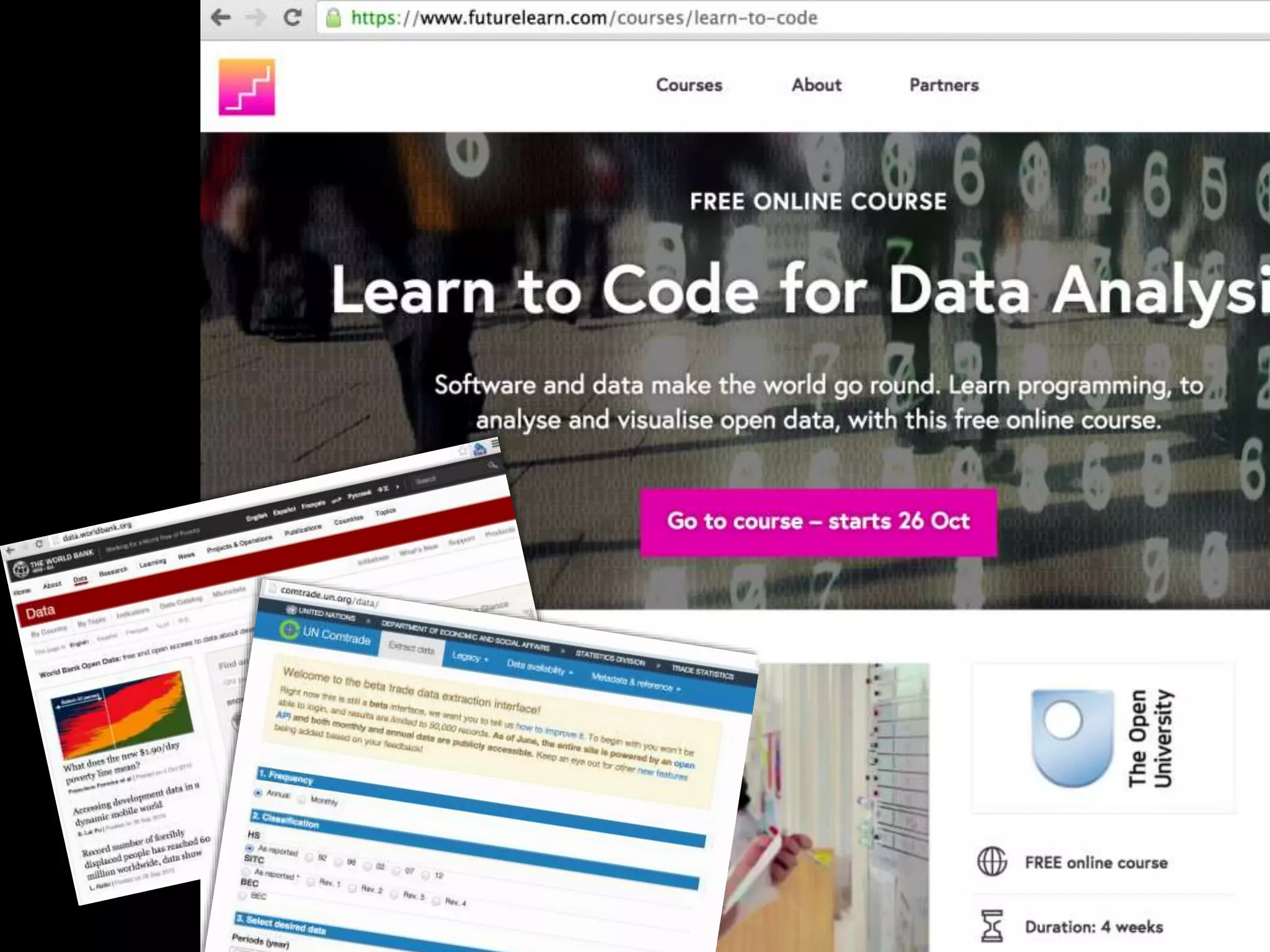


Tony Hirst
Computing and Communications,
The Open University, UK
@psychemedia / blog.ouseful.info
Notes on
the Future
#ILI2015
W2 - Preparing for the Future: Technological Challenges and Beyond
10.00 – 17.00
Brian Kelly, Cetis, University of Bolton
Tony Hirst, Department of Communication and Systems, The Open University
Despite the uncertainties faced by librarians and information professionals, technology
continues to develop at breakneck speed offering many new opportunities for the sector. At
the same time, technological developments can be distracting and may result in wasted time
and effort.
This workshop will help participants identify potentially relevant technological developments
by learning about and making use of processes for spotting and prioritising signals which may
indicate early use of technologies of future importance.
Having identified potentially important technological developments, organisations then need
to decide how to respond. What will be the impact on existing technologies? What are the
strategic implications and what are the implications for staff within the organisation?
This interactive workshop will provide opportunities to address the challenges in
understanding the implications of technological developments and making appropriate
organisational interventions.
“Know Thyself”
γνῶθι σεαυτόν
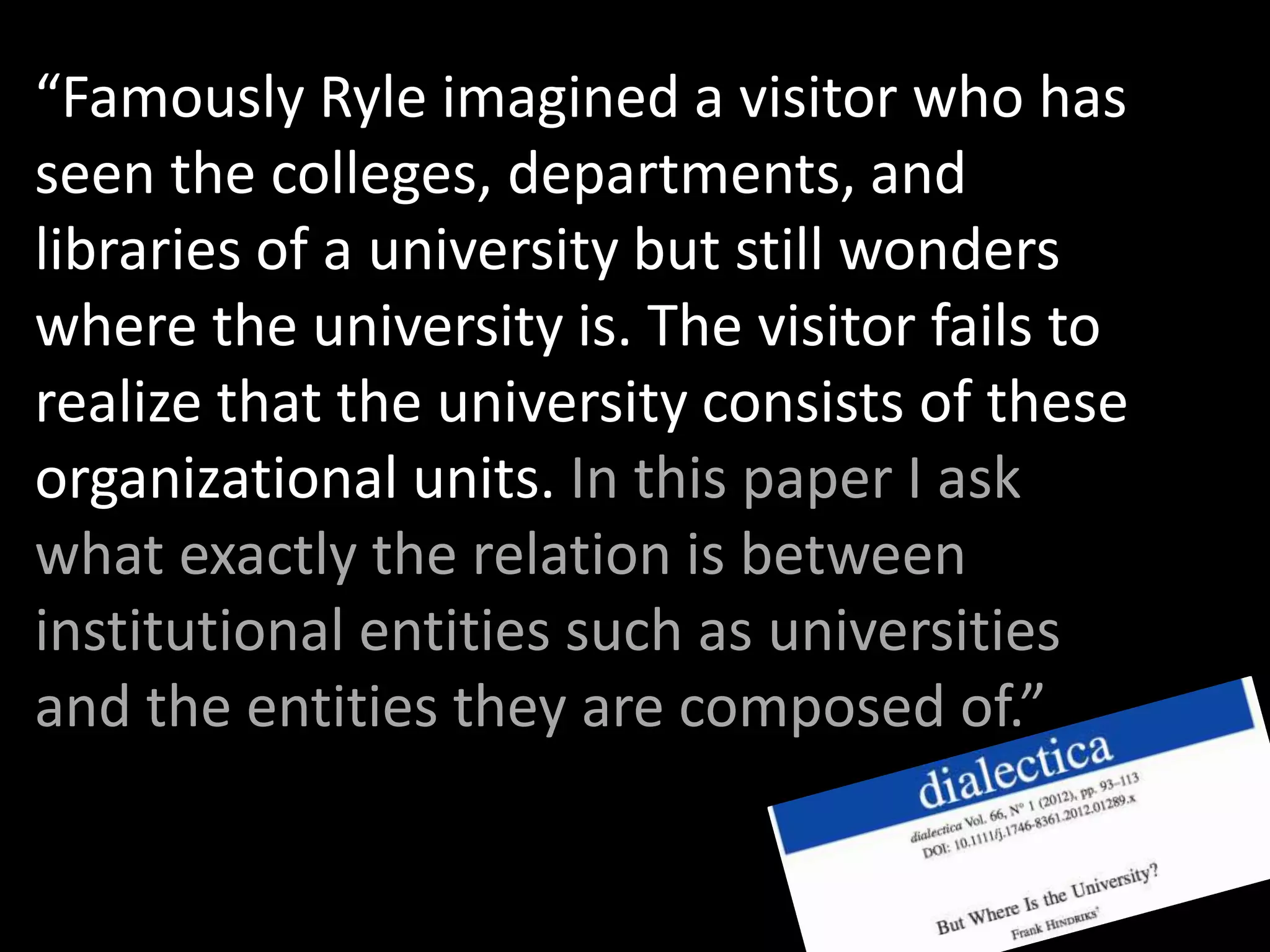
“Famously Ryle imagined a visitor who has
seen the colleges, departments, and
libraries of a university but still wonders
where the university is. The visitor fails to
realize that the university consists of these
organizational units. In this paper I ask
what exactly the relation is between
institutional entities such as universities
and the entities they are composed of.”
"But where
– or indeed, what –
is the Library?”
- with apologies to Gilbert Ryle
Public
Library
School
Library
Academic
Library
Legal /
Medical
Library
Company
Library
Gov’t Dept
/ Int’l
Agency
Library
“So what is the Library?”
- with even more apologies to Gilbert Ryle
ACTIVITY
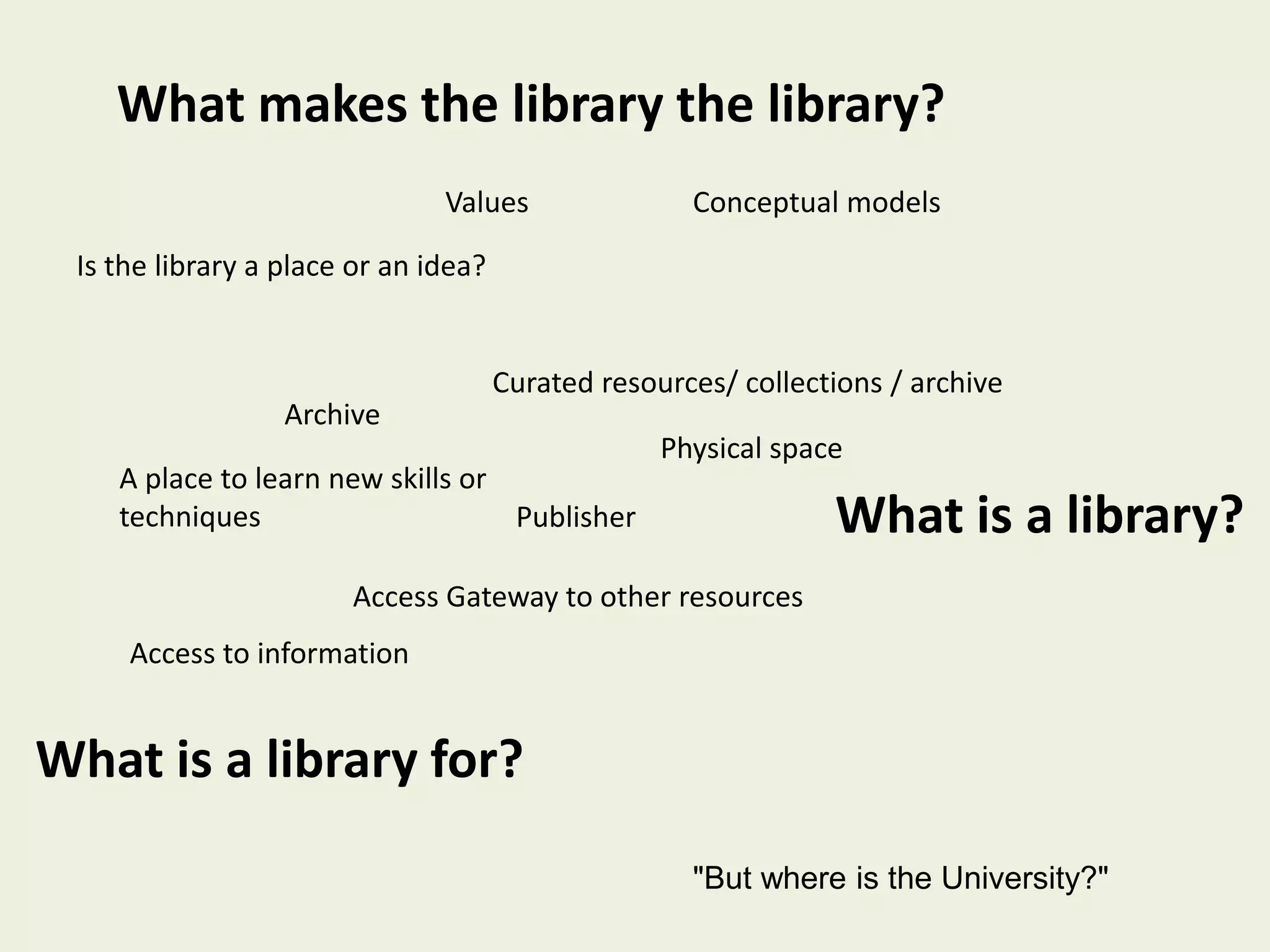
What is a library?
What is the library for?
What makes the library the library?
Values
A place to learn new skills or
techniques
Curated resources/ collections / archive
Access Gateway to other resources
Physical space
Conceptual models
What is a library?
Access to information
What is a library for?
Is the library a place or an idea?
"But where is the University?"
Publisher
What makes the library the library?
Archive
Infoskills:
looking things up
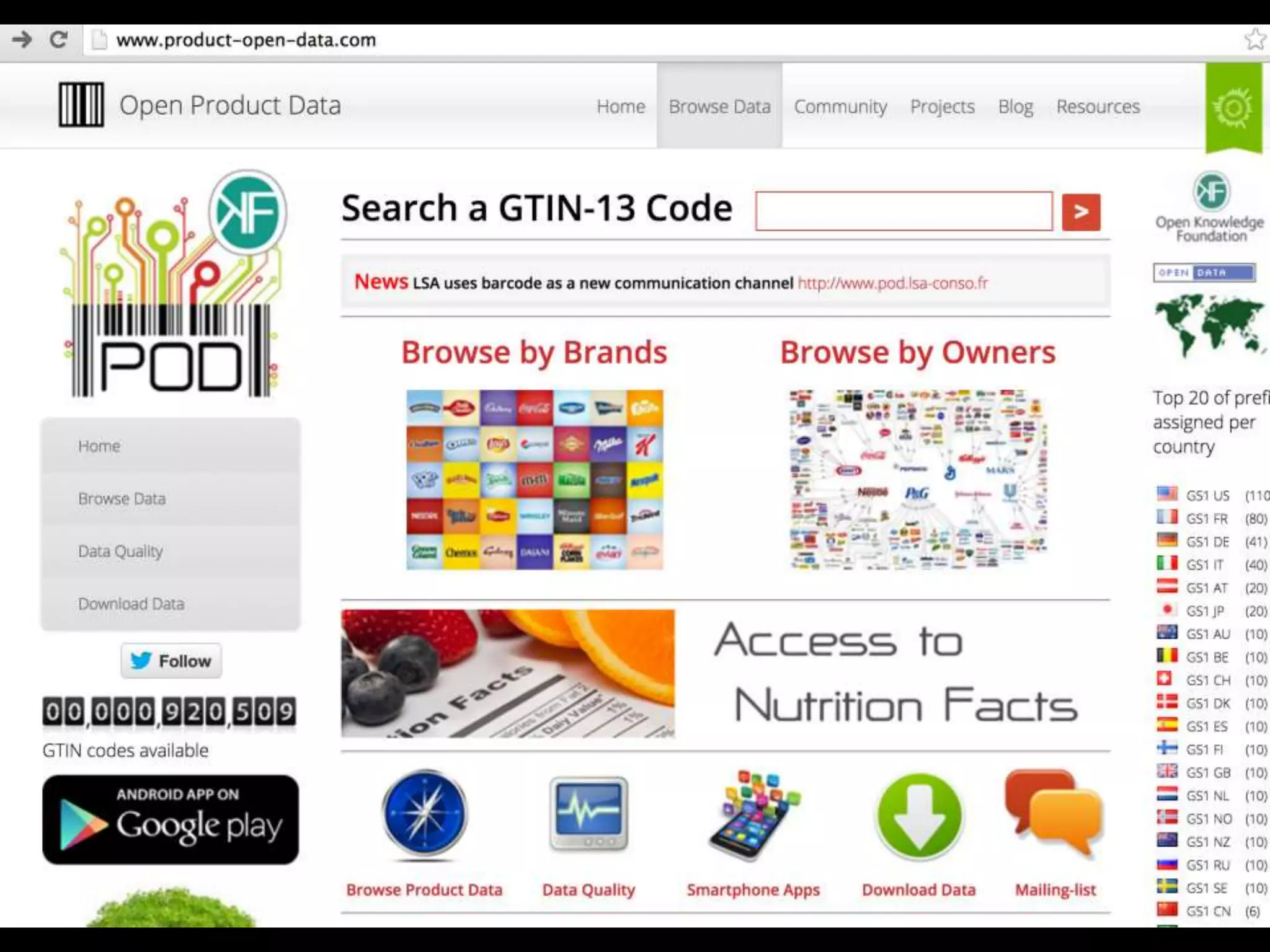
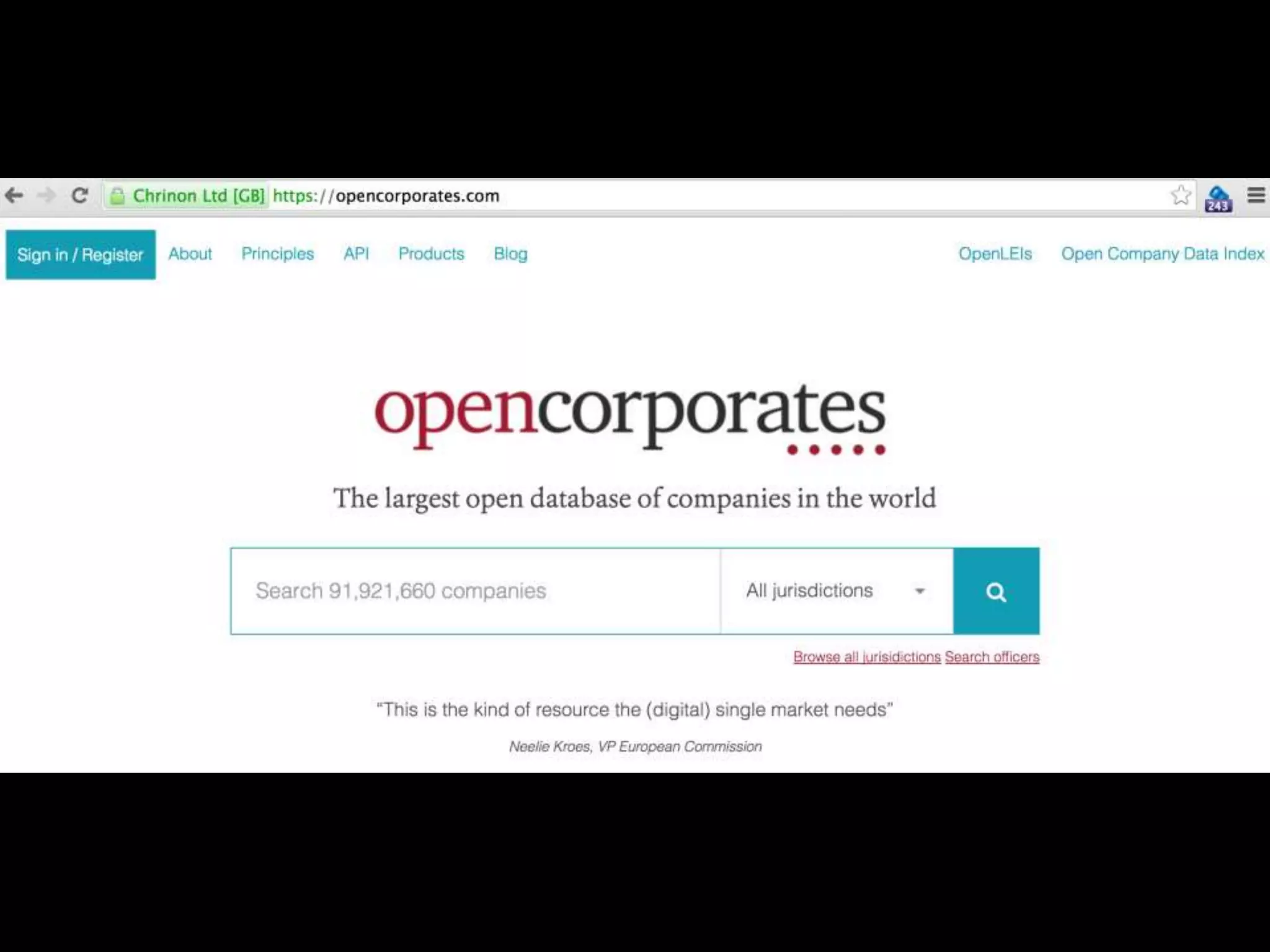
by numbers…
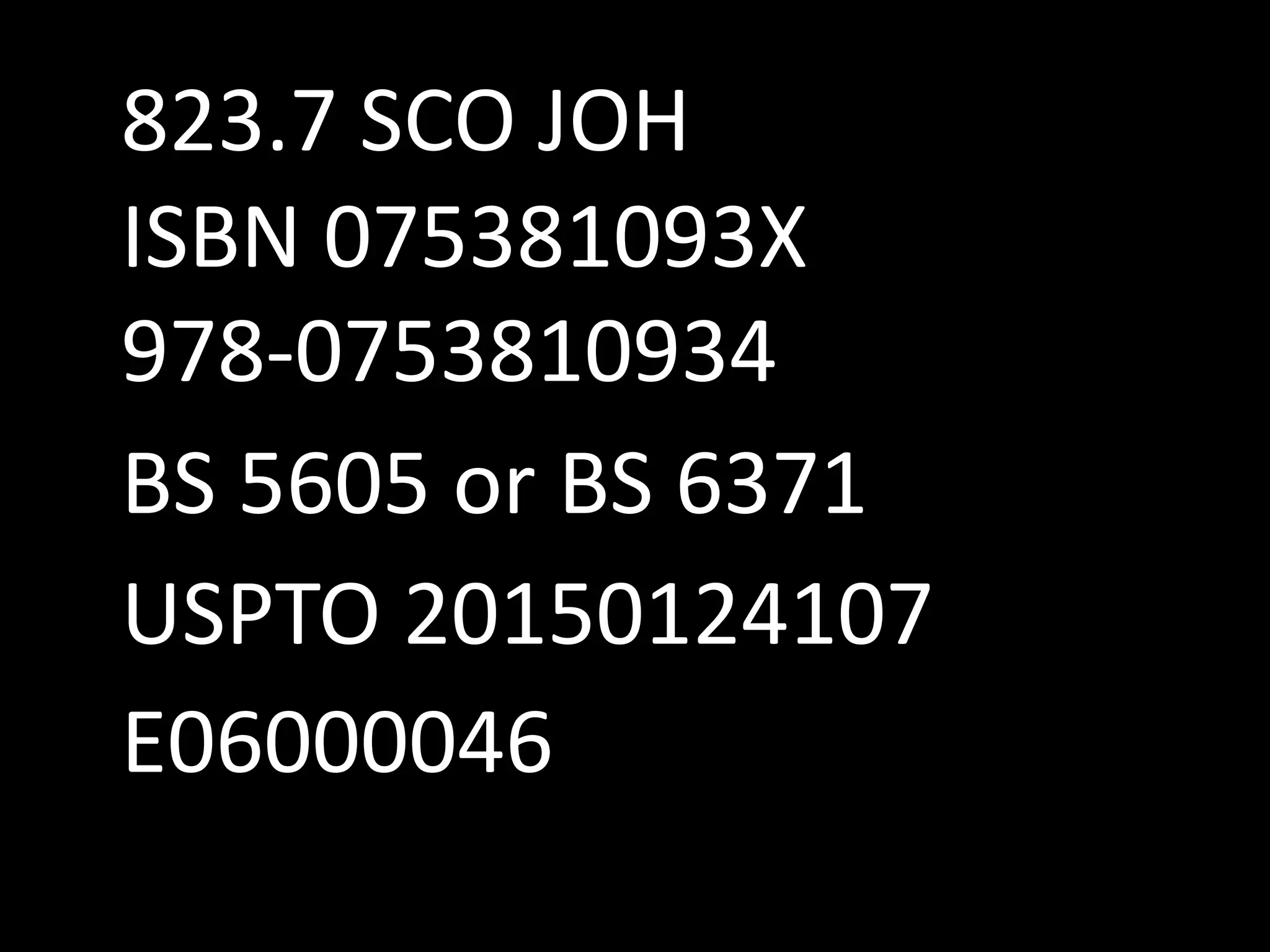
USPTO 20150124107
BS 5605 or BS 6371
ISBN 075381093X
978-0753810934
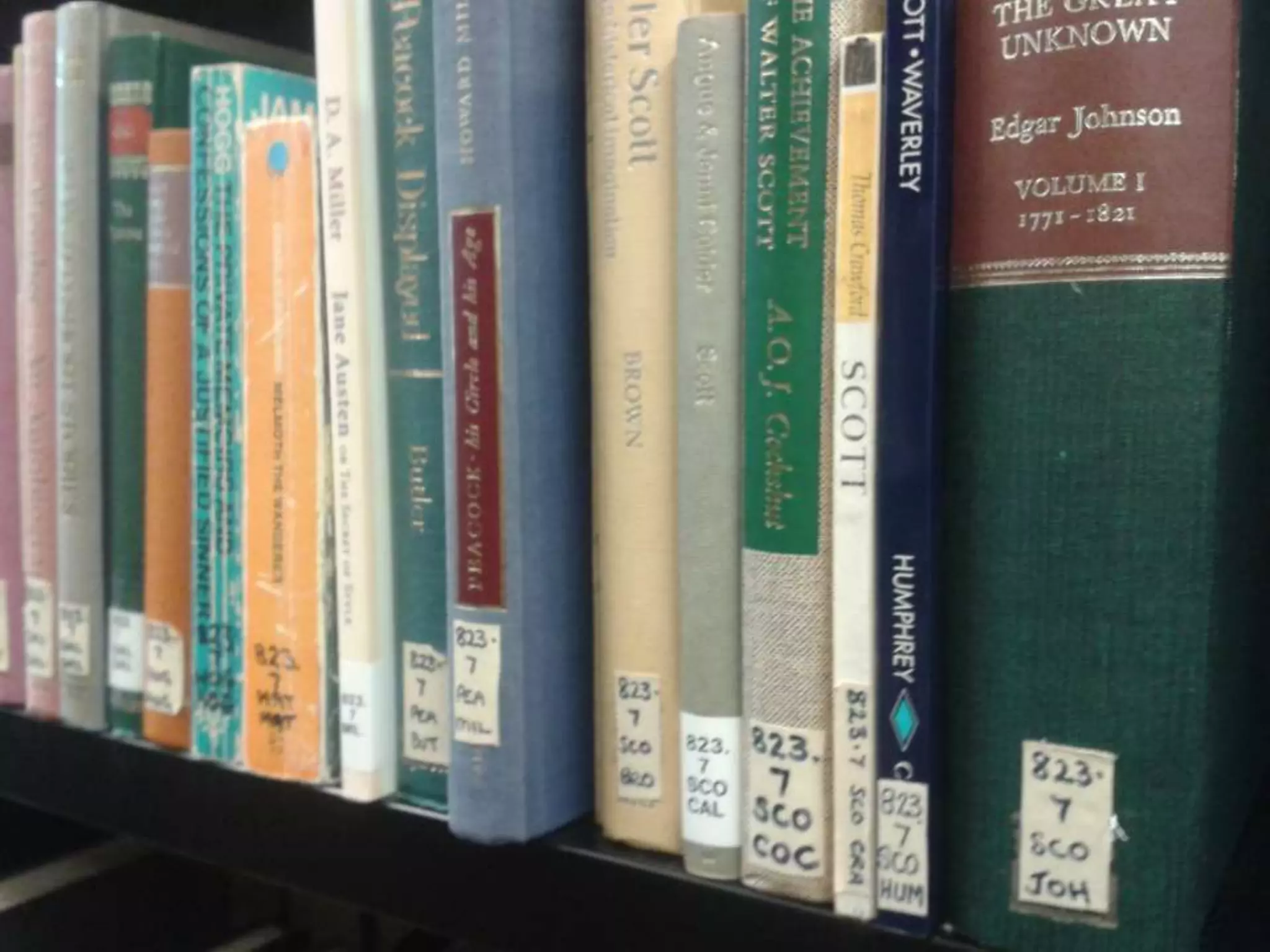
823.7 SCO JOH
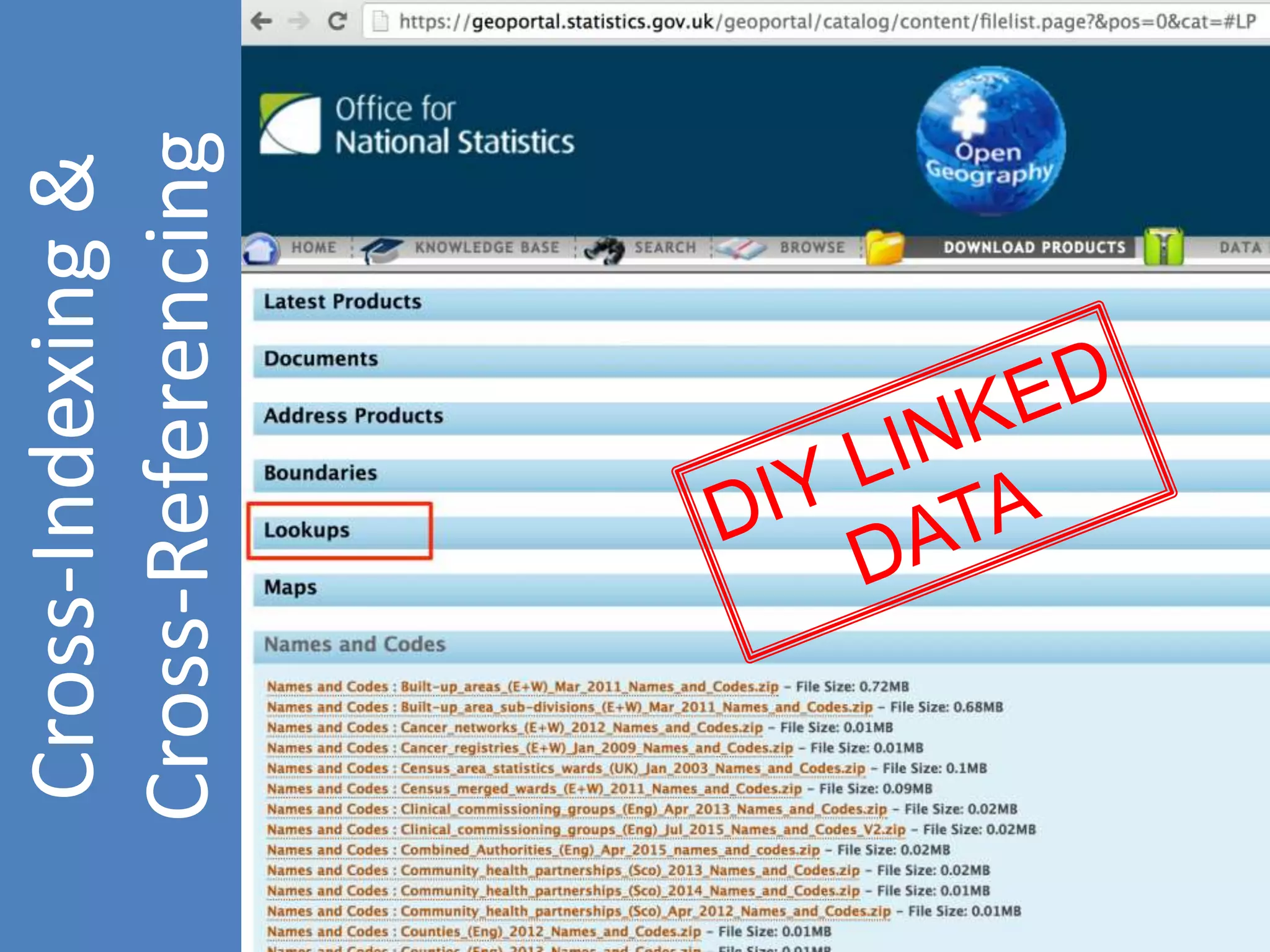
E06000046
Cross-Indexing&
Cross-Referencing
“Perceive what
You have heard”
Ακουσας νοει
We perceive the
future in the context
of the present and
the consequences of
the past
planning for the
future
planning the future
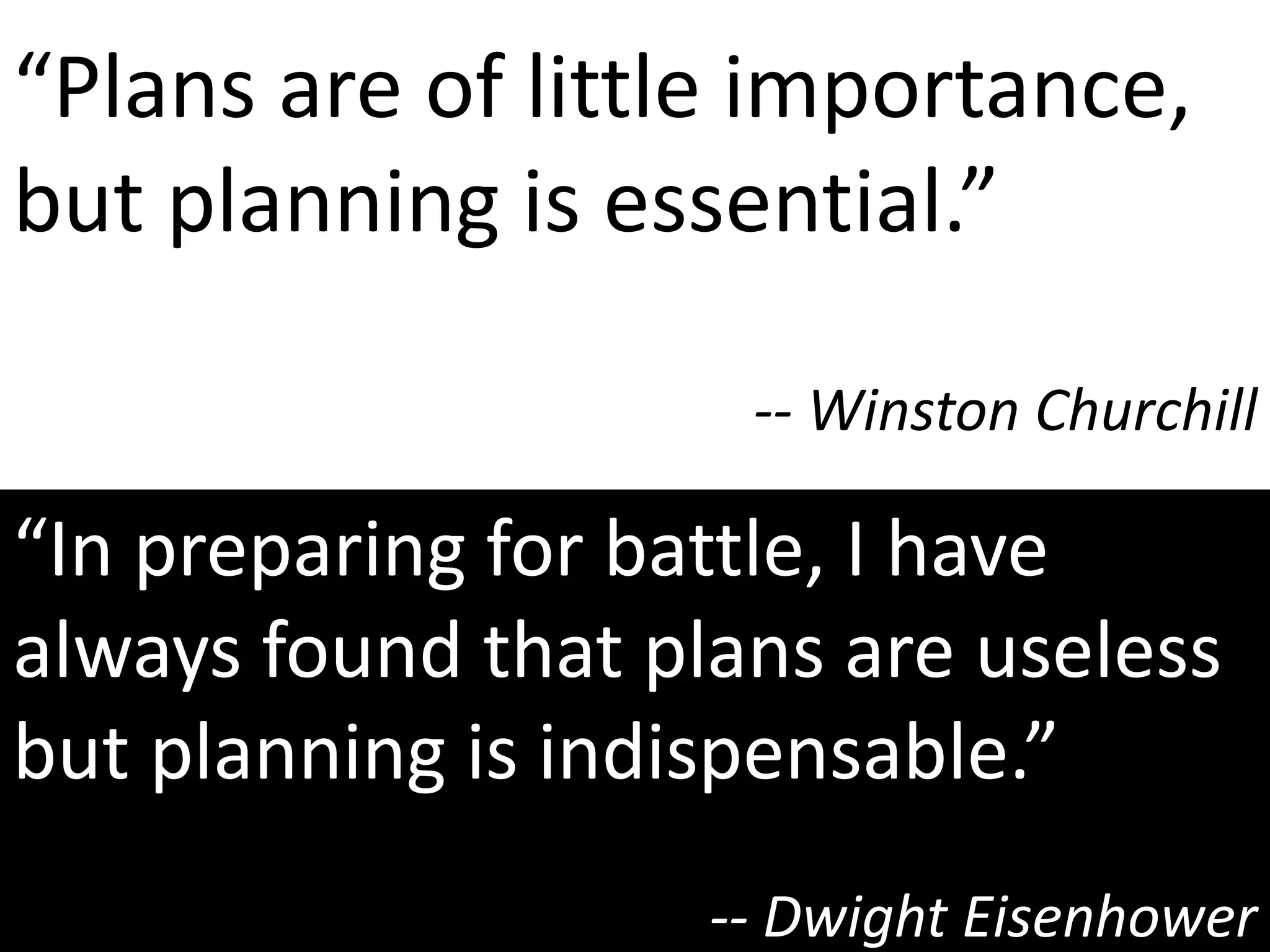
“Plans are of little importance,
but planning is essential.”
-- Winston Churchill
“In preparing for battle, I have
always found that plans are useless
but planning is indispensable.”
-- Dwight Eisenhower
If we’re planning for
the future of the
library, then what is
this library thing we’re
planning for?
Do your planning
tools allow you to
accommodate
the future?
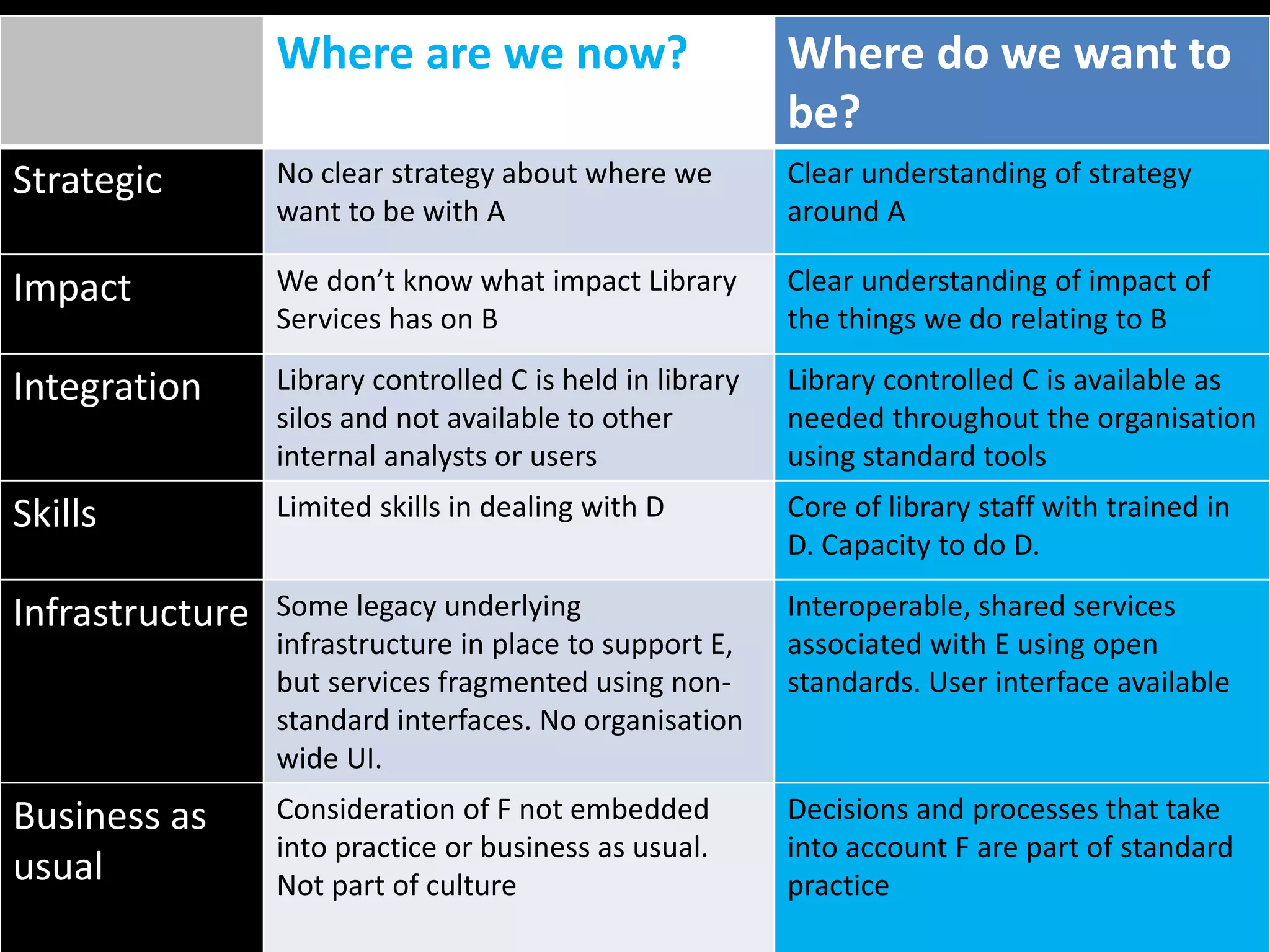
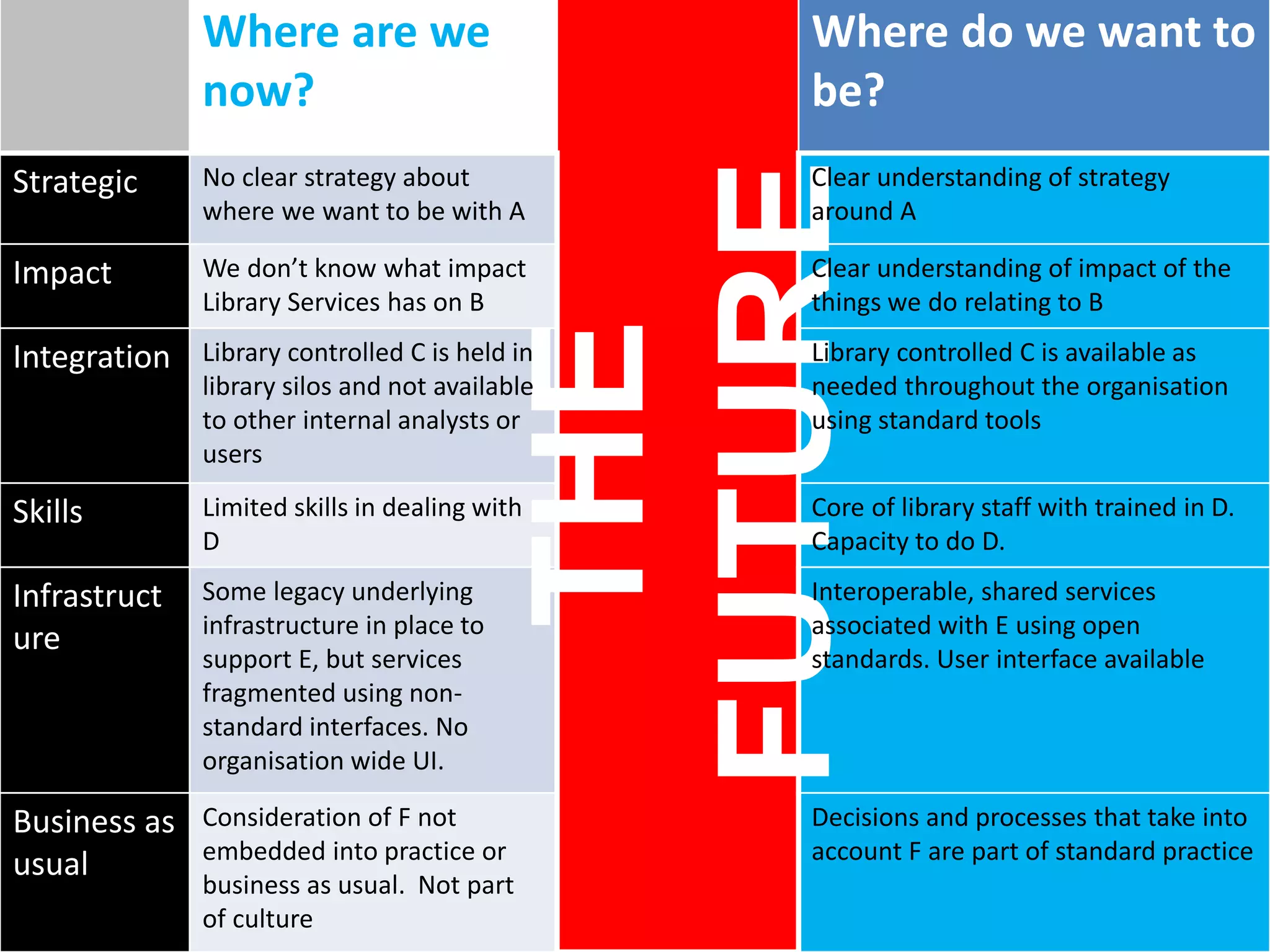
Where are we now? Where do we want to
be?
Strategic No clear strategy about where we
want to be with A
Clear understanding of strategy
around A
Impact We don’t know what impact Library
Services has on B
Clear understanding of impact of
the things we do relating to B
Integration Library controlled C is held in library
silos and not available to other
internal analysts or users
Library controlled C is available as
needed throughout the organisation
using standard tools
Skills Limited skills in dealing with D Core of library staff with trained in
D. Capacity to do D.
Infrastructure Some legacy underlying
infrastructure in place to support E,
but services fragmented using non-
standard interfaces. No organisation
wide UI.
Interoperable, shared services
associated with E using open
standards. User interface available
Business as
usual
Consideration of F not embedded
into practice or business as usual.
Not part of culture
Decisions and processes that take
into account F are part of standard
practice
Where are we
now?
THE
FUTURE
Where do we want to
be?
Strategic No clear strategy about
where we want to be with A
Clear understanding of strategy
around A
Impact We don’t know what impact
Library Services has on B
Clear understanding of impact of the
things we do relating to B
Integration Library controlled C is held in
library silos and not available
to other internal analysts or
users
Library controlled C is available as
needed throughout the organisation
using standard tools
Skills Limited skills in dealing with
D
Core of library staff with trained in D.
Capacity to do D.
Infrastruct
ure
Some legacy underlying
infrastructure in place to
support E, but services
fragmented using non-
standard interfaces. No
organisation wide UI.
Interoperable, shared services
associated with E using open
standards. User interface available
Business as
usual
Consideration of F not
embedded into practice or
business as usual. Not part
of culture
Decisions and processes that take into
account F are part of standard practice
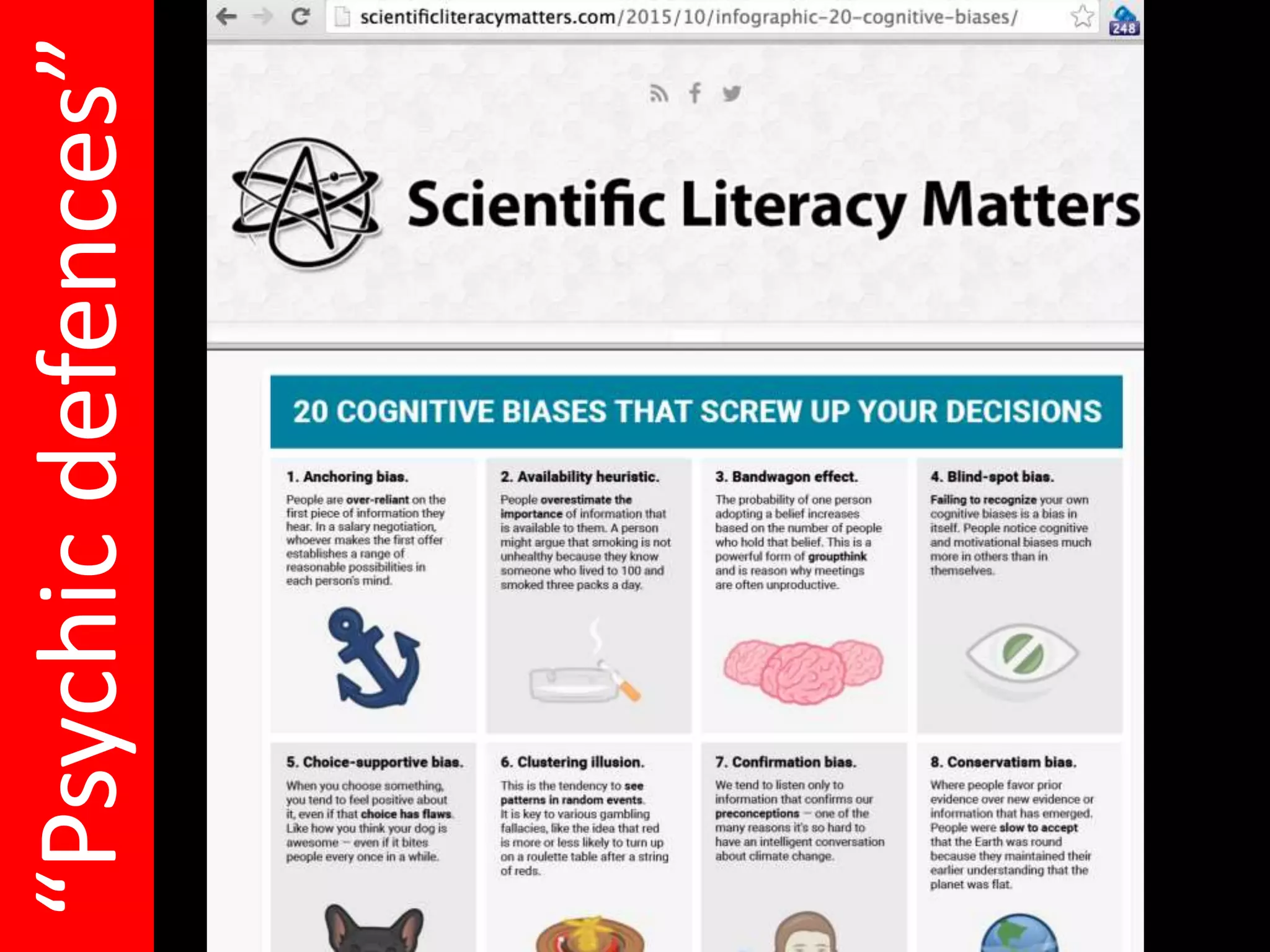
“Psychicdefences”
How does your
organisation
frame itself for
the future?
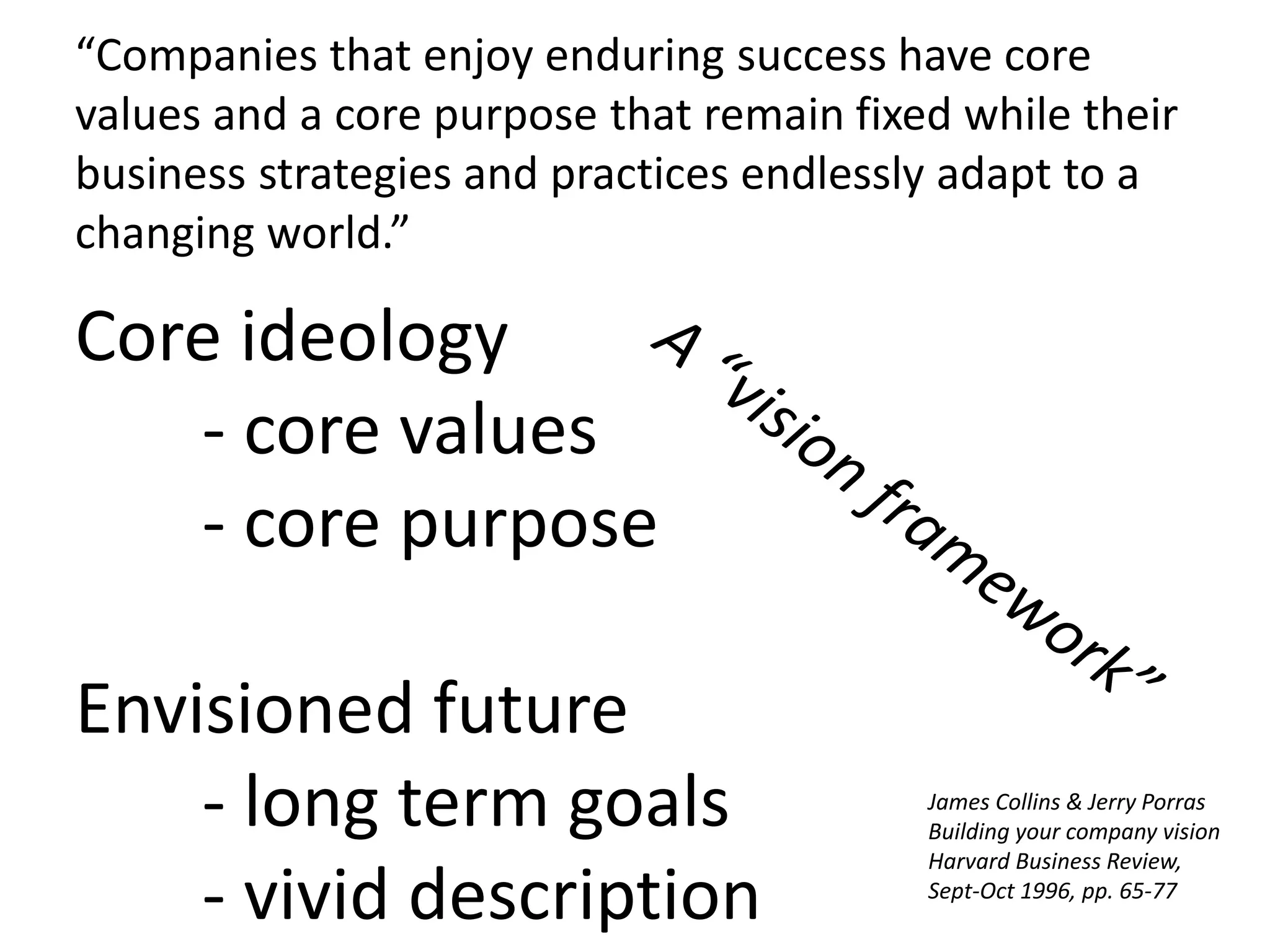
Core ideology
- core values
- core purpose
Envisioned future
- long term goals
- vivid description
“Companies that enjoy enduring success have core
values and a core purpose that remain fixed while their
business strategies and practices endlessly adapt to a
changing world.”
James Collins & Jerry Porras
Building your company vision
Harvard Business Review,
Sept-Oct 1996, pp. 65-77
“Core values are the essential and enduring
tenets of an organization. A small set of
timeless guiding principles, core values require
no external justification; they have intrinsic
value and importance to those inside the
organization.”
Core ideology “the enduring character of
an organization - a consistent identity that
transcends product or market life cycles,
technological breakthroughs, management
fads, and individual leaders.
“Core purpose, the second part of core
ideology, is the organization's reason for being.
An effective purpose reflects people's idealistic
motivations for doing the company's work.”
“Whereas you might achieve a goal or
complete a strategy, you cannot fulfill a
purpose”
“Core ideology needs to he meaningful and
inspirational only to people inside the
organization; it need not be exciting to
outsiders.”
“don't confuse core ideology with the concept
of core competence. Core competence is a
strategic concept that defines your
organization's capabilities - what you are
particularly good at – whereas core ideology
captures what you stand for and why you
exist.”
“One powerful method for getting at purpose is
the five whys.
Start with the descriptive statement: We make
X products or We deliver X services, and then
ask, Why is that important? five times.
After a few whys, you'll find that you're getting
down to the fundamental purpose of the
organization.”
The “second primary component of the vision framework is envisioned future. It
consists of two parts: a 10-to-30-year audacious goal plus vivid descriptions of what
it will be like to achieve the goal”
“BHAGs (pronounced Companies need an
audacious 10-to-30-year goal to progress
toward an envisioned future. BEE-hags and
shorthand for Big, Hairy, Audacious Goals”
Vivid Description. “In addition to vision-level
BHAGs, an envisioned future needs what we call vivid description - that is, a
vibrant, engaging, and specific description of what it will be like to achieve
the BHAG. Think of it as translating the vision from words into pictures, of
creating an image that people can carry around in their heads. It is a
question of painting a picture with your words. Picture
painting is essential for making the 10-to-30- year BHAG tangible in people's
minds.”
“A BHAG is a clearly articulated goal. Gore
purpose can never be completed, whereas the
BHAG is reachable in 10 to 30 years.”
“Foresee the
future”
Ορα το μελλον
What are the
changes that will
make a difference?
“This workshop will help participants identify
potentially relevant technological developments …”
-Legislation
-Market moves
-(Technological innovation)
The big changes in technology may not be
down just to “the technology”…
They are also OUTSIDE OF YOUR CONTROL…
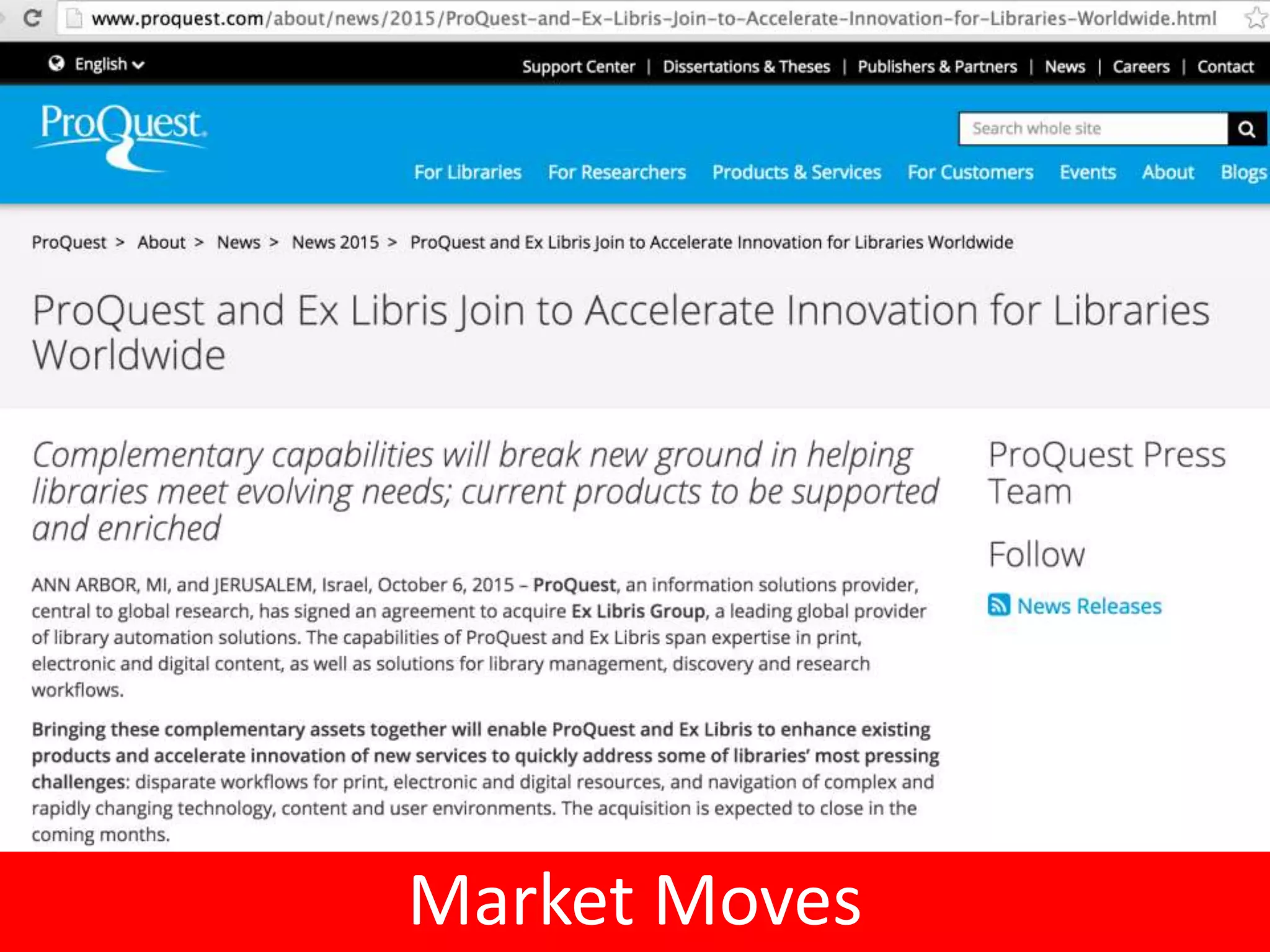
Market Moves
What is about
technology that
changes…?
…and does it matter?
- Will the predominant service model,
security model or user models change?
- Will the underlying business models
change?
- Will the underlying technological
platforms change?
- Will the actual applications change?
“What will be the impact on existing technologies? What
are the strategic implications and what are the
implications for staff within the organisation?”
What changes are relevant?
- ones that make a service you currently provide
obsolete
- ones that can’t be integrated or accommodated
within your current organisational structure
- ones that require you to start providing a
particular sort of service or replacement service
- ones that will require skills or capacity you
cannot currently provide
Stop doing something you
currently do
Start doing something you
currently don’t
Start doing something that’s
completely new to everyone
STEP
CHANGES
Step gradually?
“Act when
you know”
Γνους πραττε
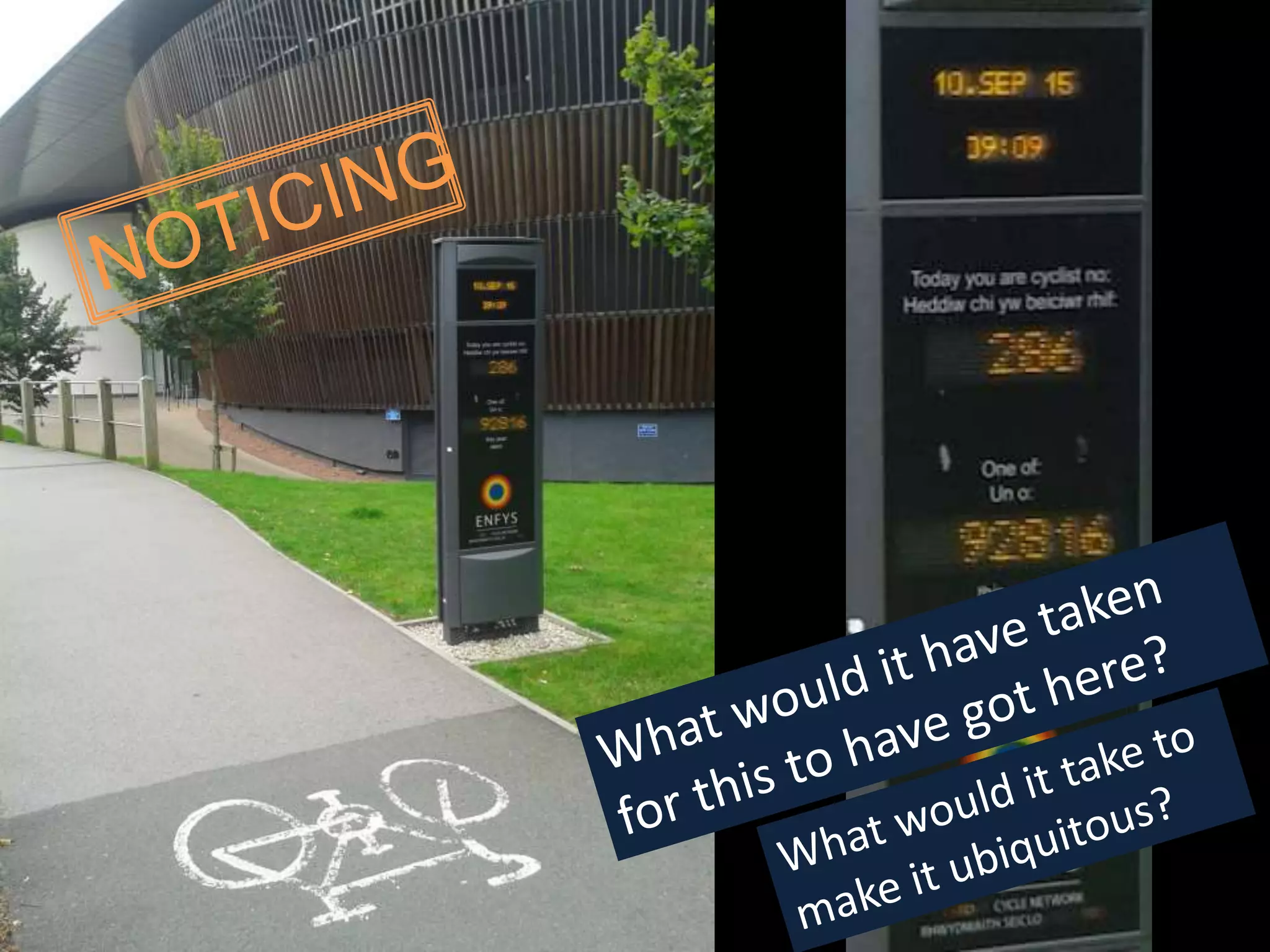
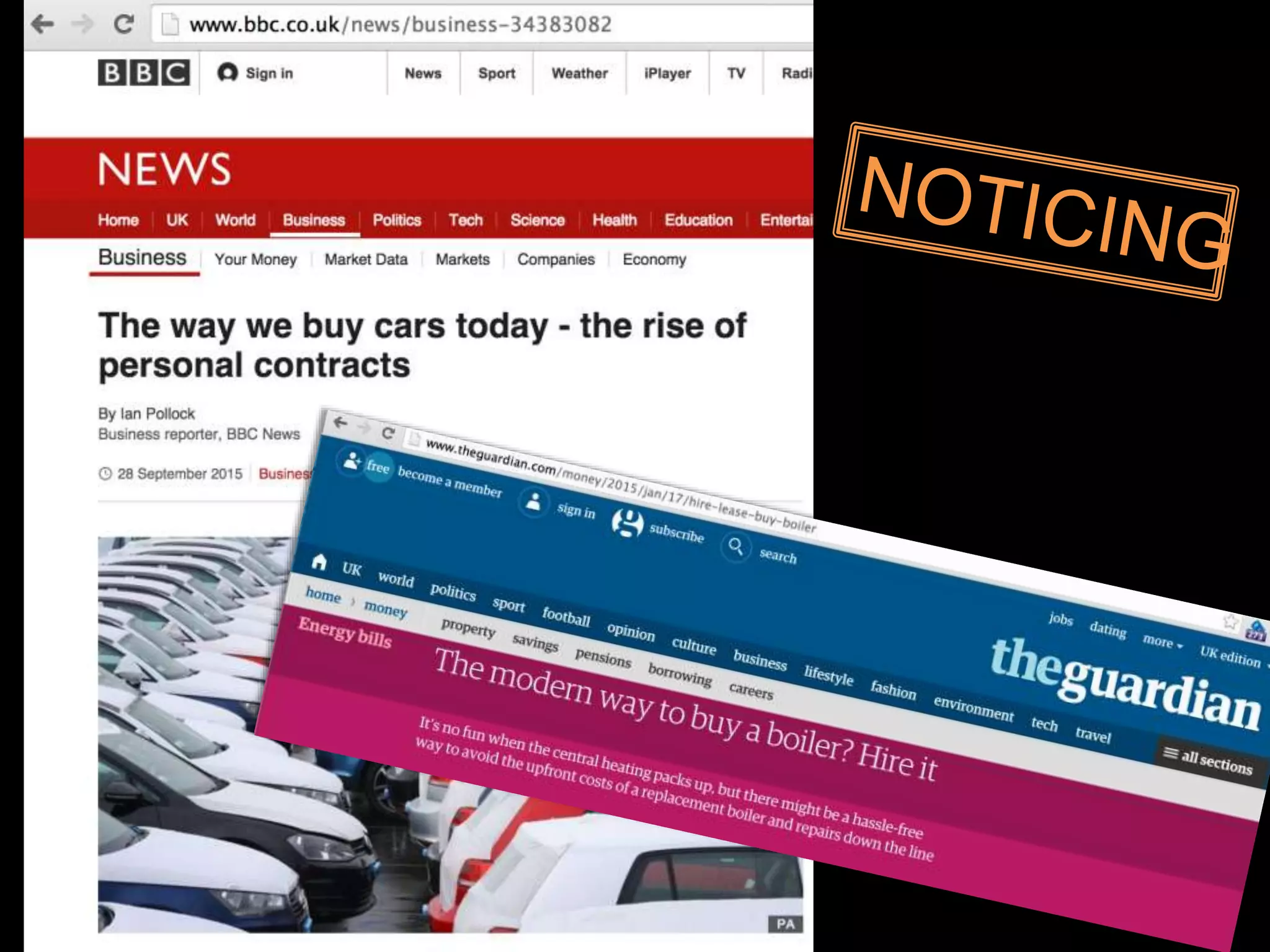
Noticing the future
that’s unevenly
distributed about
you…
“There must be a
better way…”
“So does that
mean I could…”
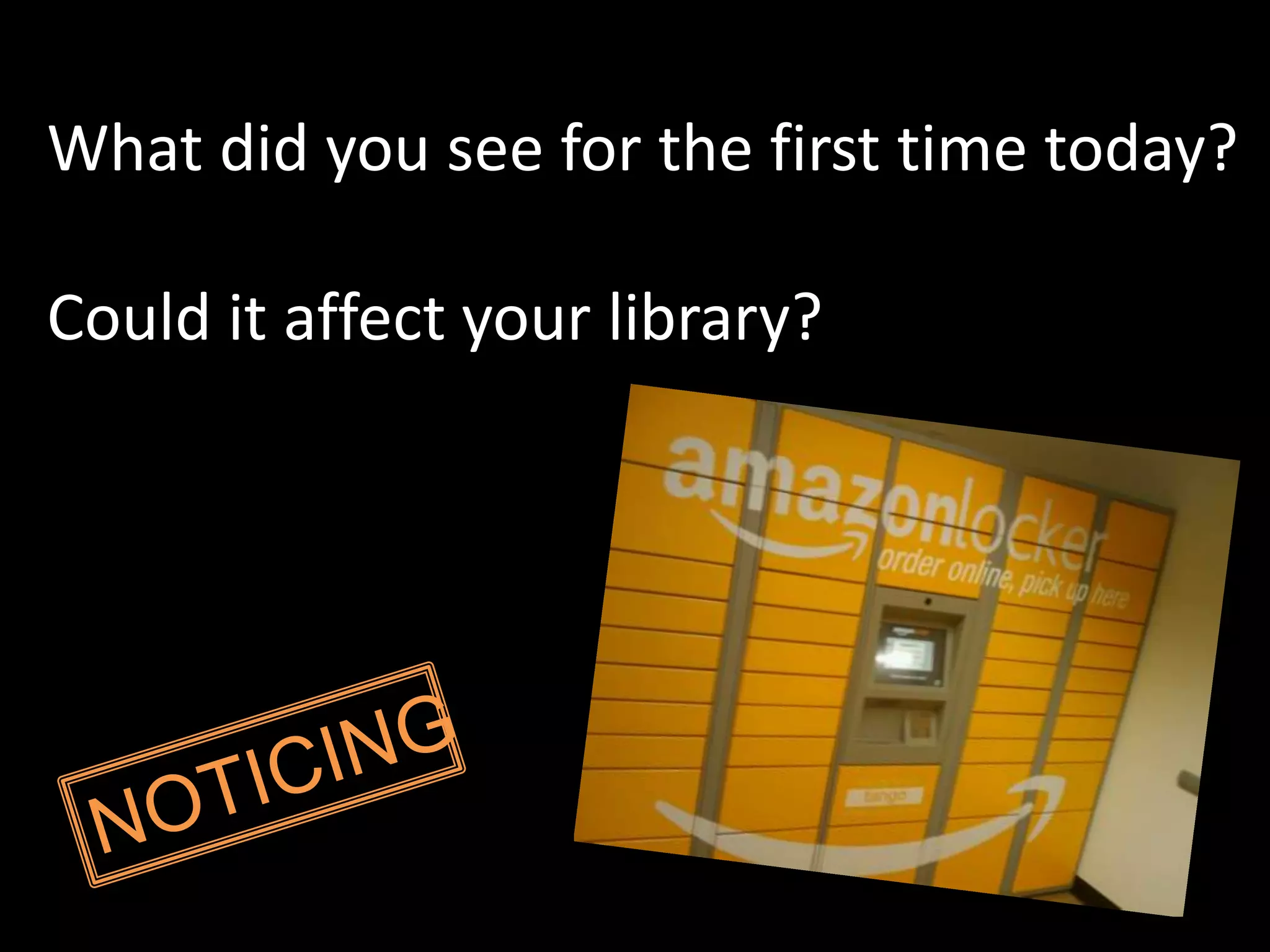
What did you see for the first time today?
Could it affect your library?
Two more things
to consider when
noticing the
future…
What if X
becomes
commoditised?
What’s the
adoption
path…?
“Have respect
For suppliants”
Ικετας αιδου
End user development
End user expectations
End-user adoption / BYOD
Listen to the User…?
“What is the Library for?”
The Library plays an important
role in the knowledge
ecosystem…
…so what can learn by
looking at failures in that
system?
“Educate
your sons”
Υιους παιδευε
Open Notebooks
& Reproducible
(“Replicable”)
Research
CodeOutput
CodeOutput
CodeOutput
Data Futures
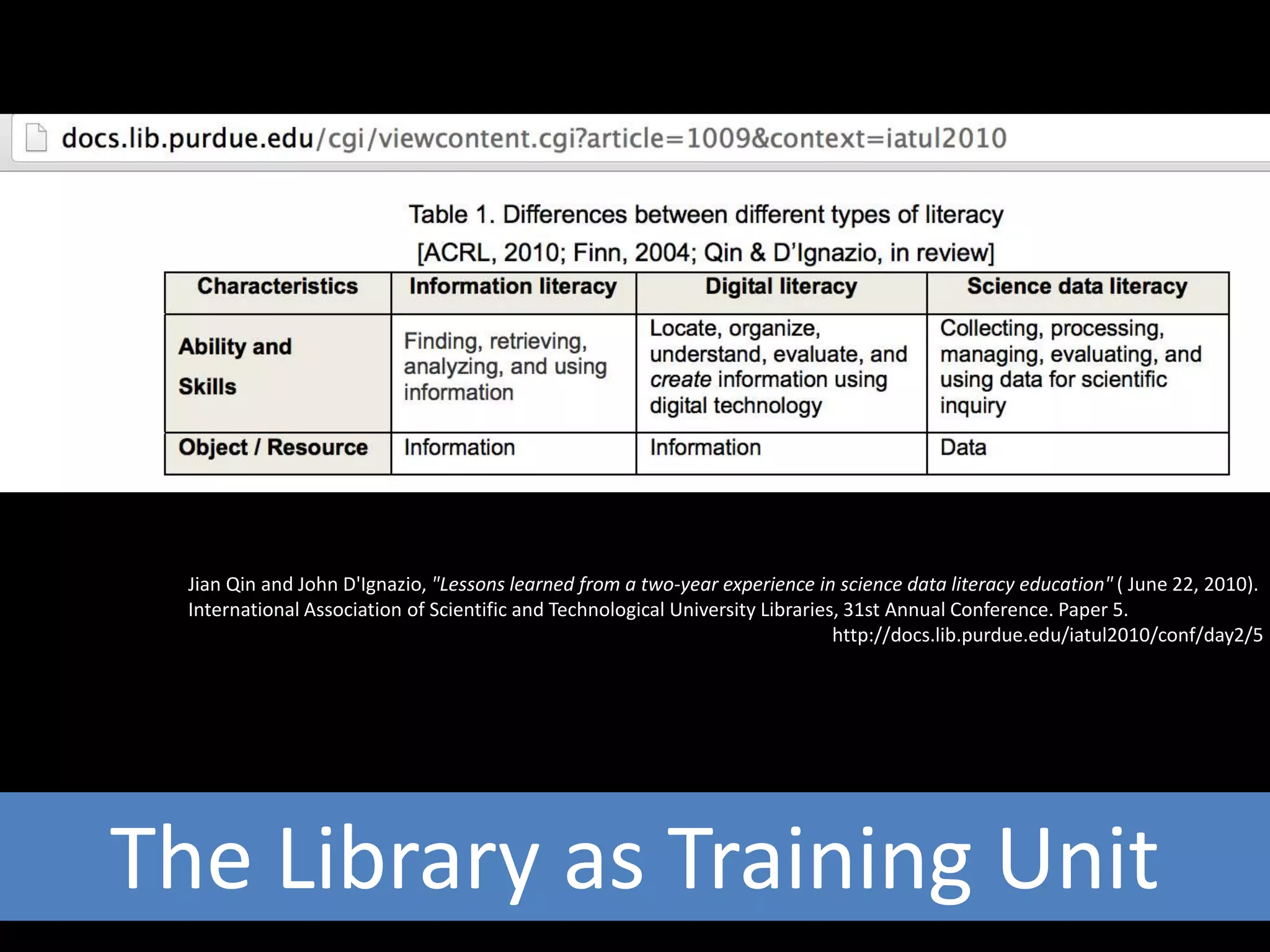
Jian Qin and John D'Ignazio, "Lessons learned from a two-year experience in science data literacy education" ( June 22, 2010).
International Association of Scientific and Technological University Libraries, 31st Annual Conference. Paper 5.
http://docs.lib.purdue.edu/iatul2010/conf/day2/5
The Library as Training Unit
“Do not tire
of learning”
Μανθανων μη καμνε
To what extent does
technology adoption
and/or changes to the
information environment
drive the need for skills
development?
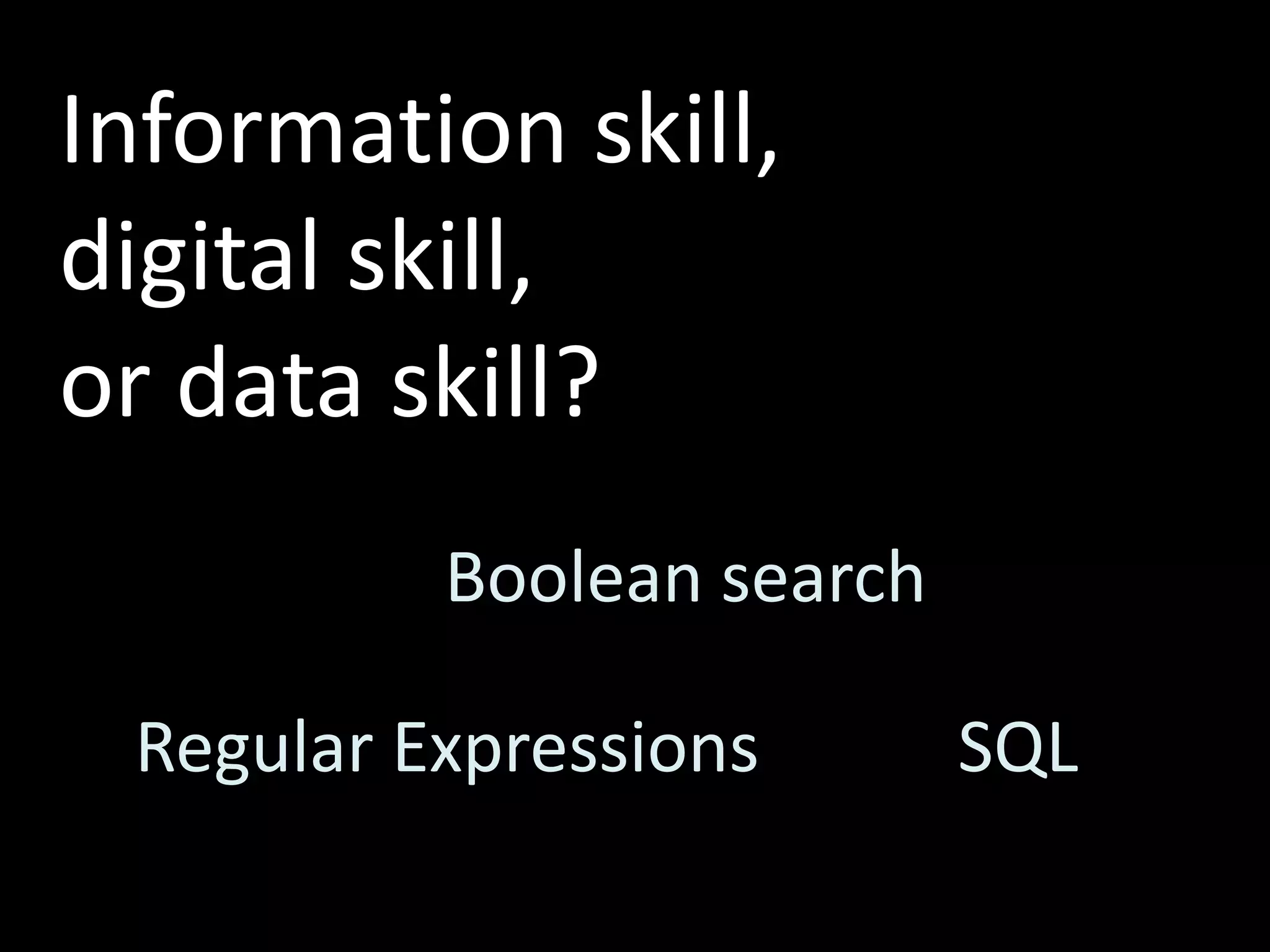
Information skill,
digital skill,
or data skill?
Boolean search
SQLRegular Expressions
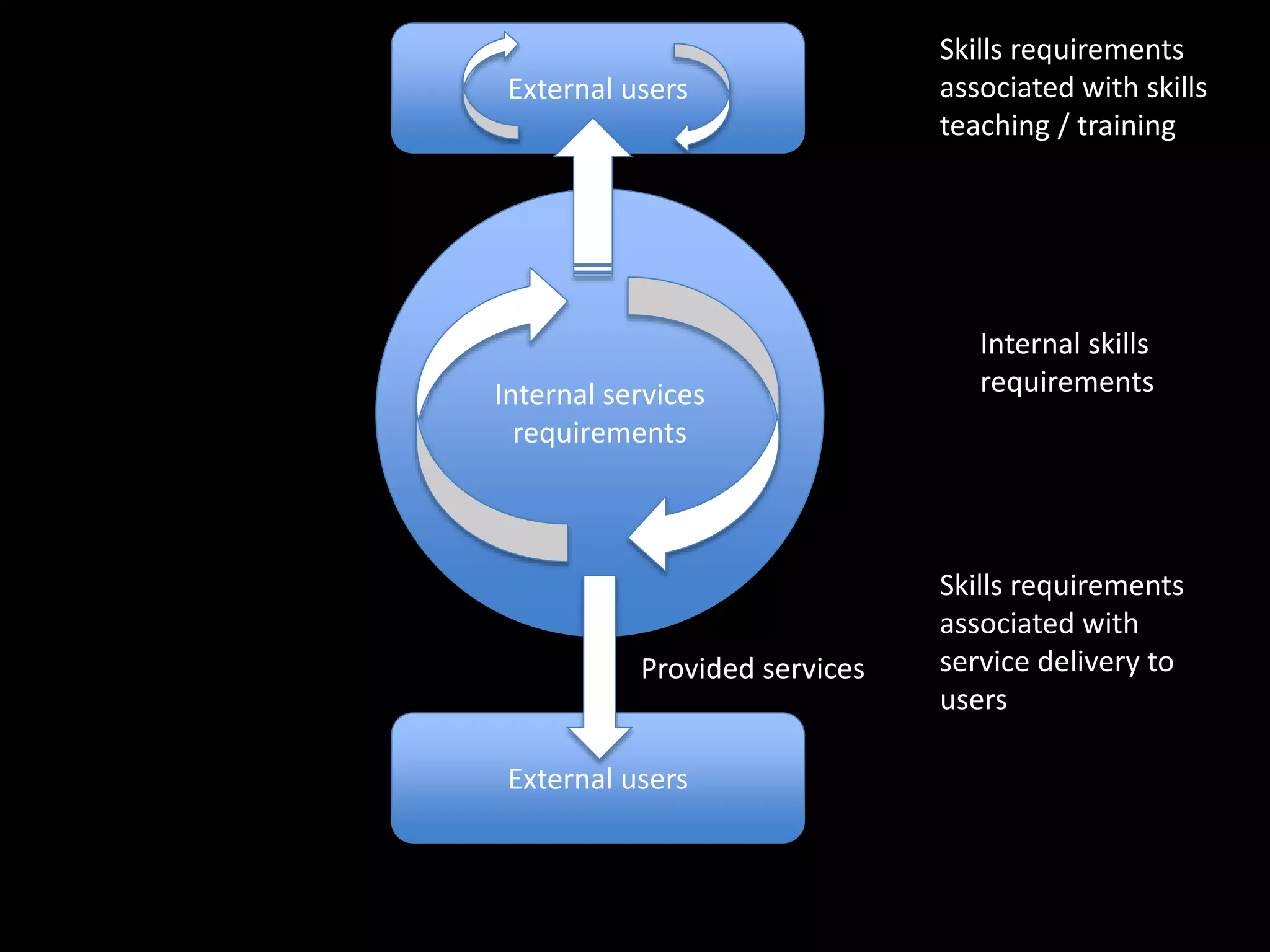
Internal services
requirements
External users
Provided services
External users
Internal skills
requirements
Skills requirements
associated with
service delivery to
users
Skills requirements
associated with skills
teaching / training
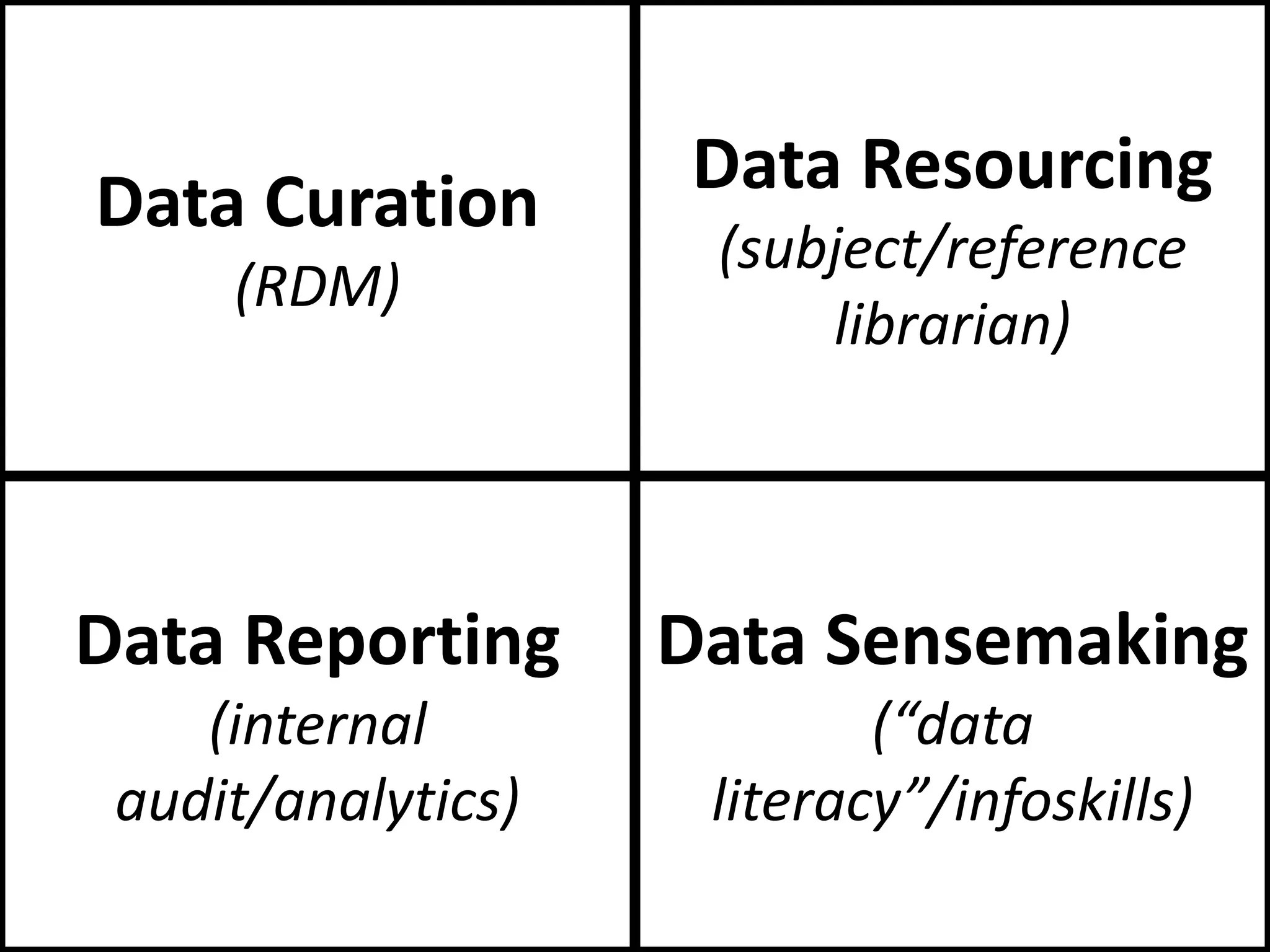
Data Curation
(RDM)
Data Resourcing
(subject/reference
librarian)
Data Reporting
(internal
audit/analytics)
Data Sensemaking
(“data
literacy”/infoskills)
“Be a seeker
Of wisdom”
Φιλοσοφος γινου
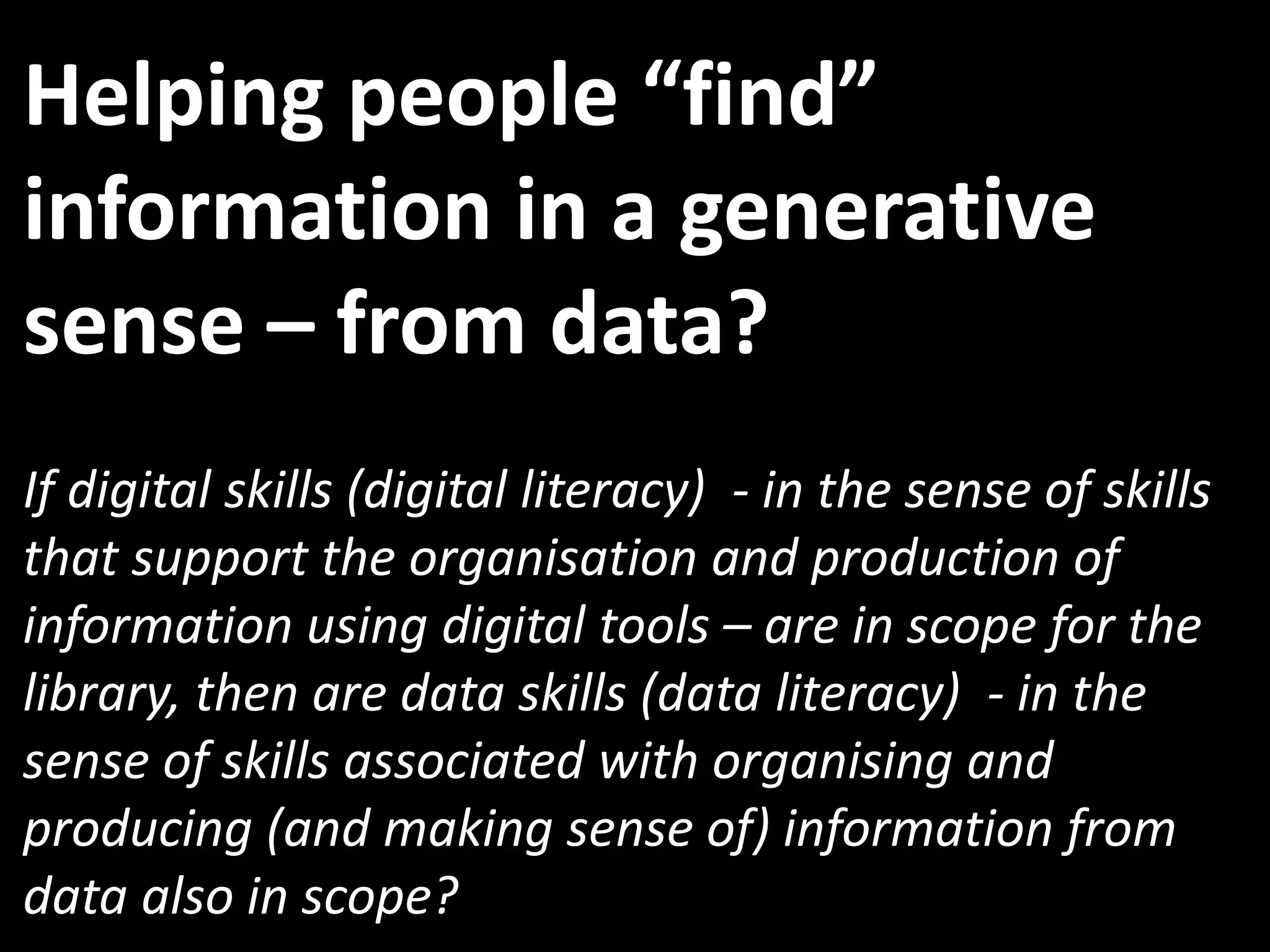
Helping people “find”
information in a generative
sense – from data?
If digital skills (digital literacy) - in the sense of skills
that support the organisation and production of
information using digital tools – are in scope for the
library, then are data skills (data literacy) - in the
sense of skills associated with organising and
producing (and making sense of) information from
data also in scope?
Trending
now…
Increasing
“open”ness
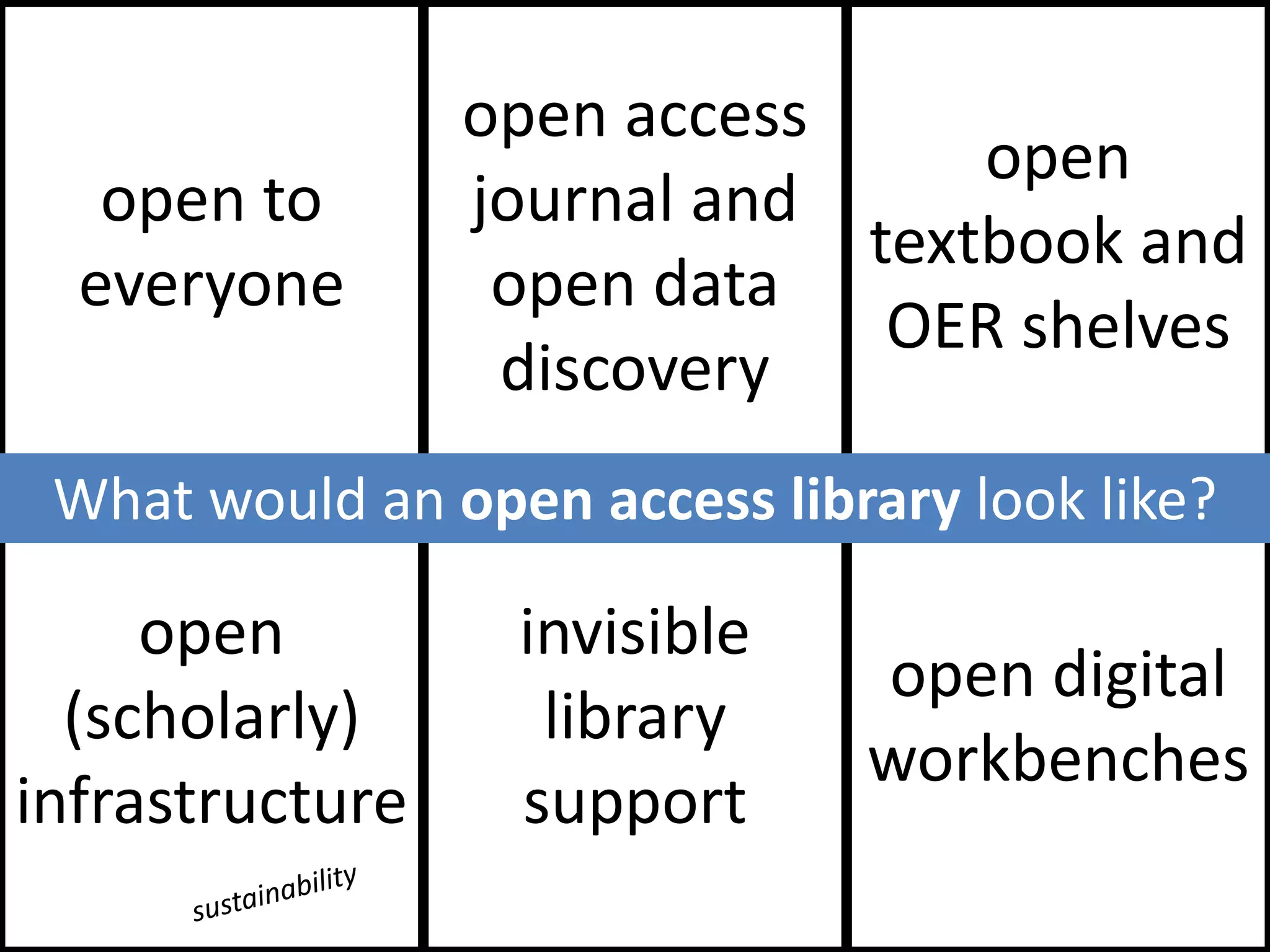
open to
everyone
open access
journal and
open data
discovery
open
textbook and
OER shelves
open
(scholarly)
infrastructure
invisible
library
support
open digital
workbenches
What would an open access library look like?
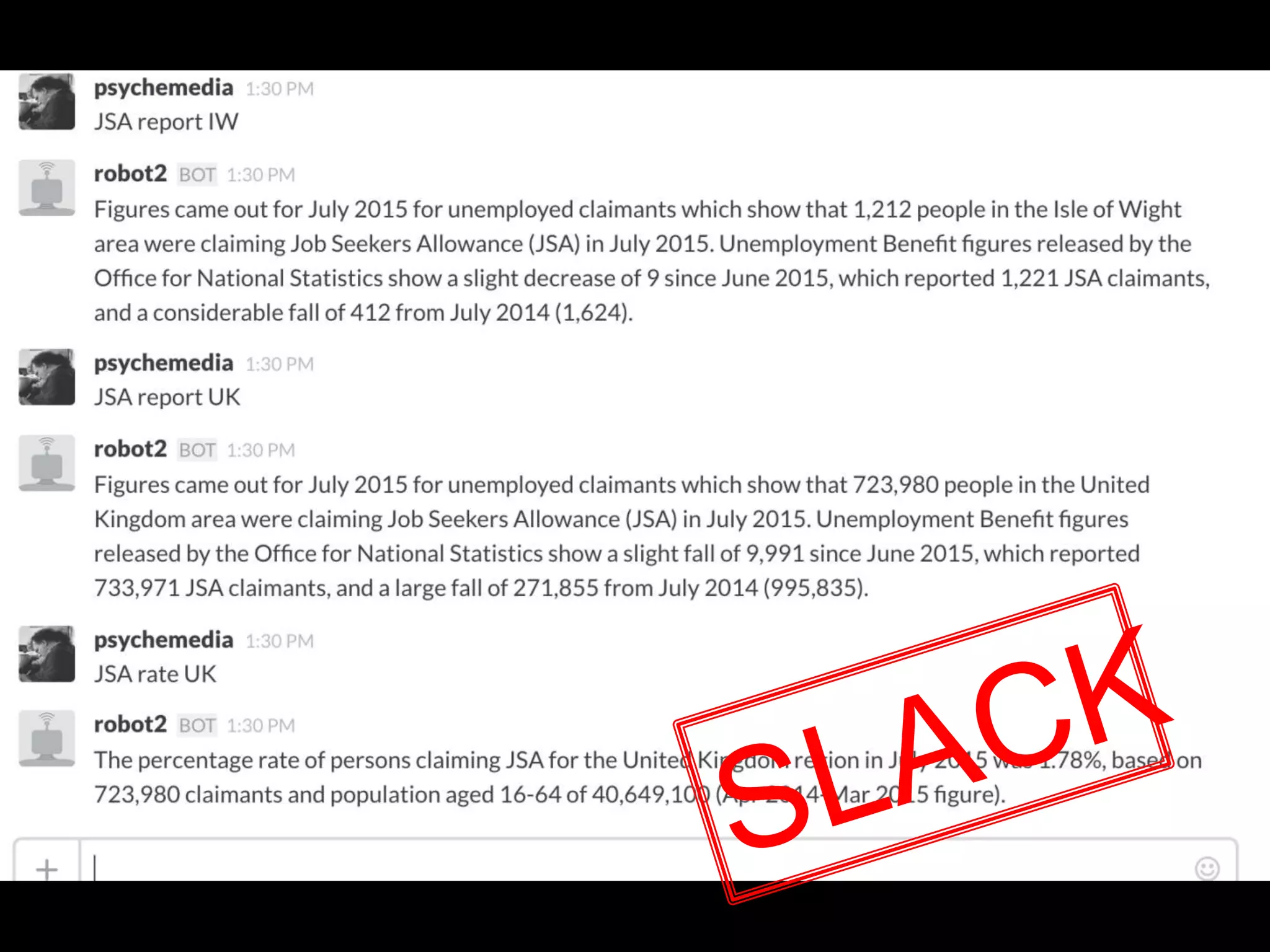
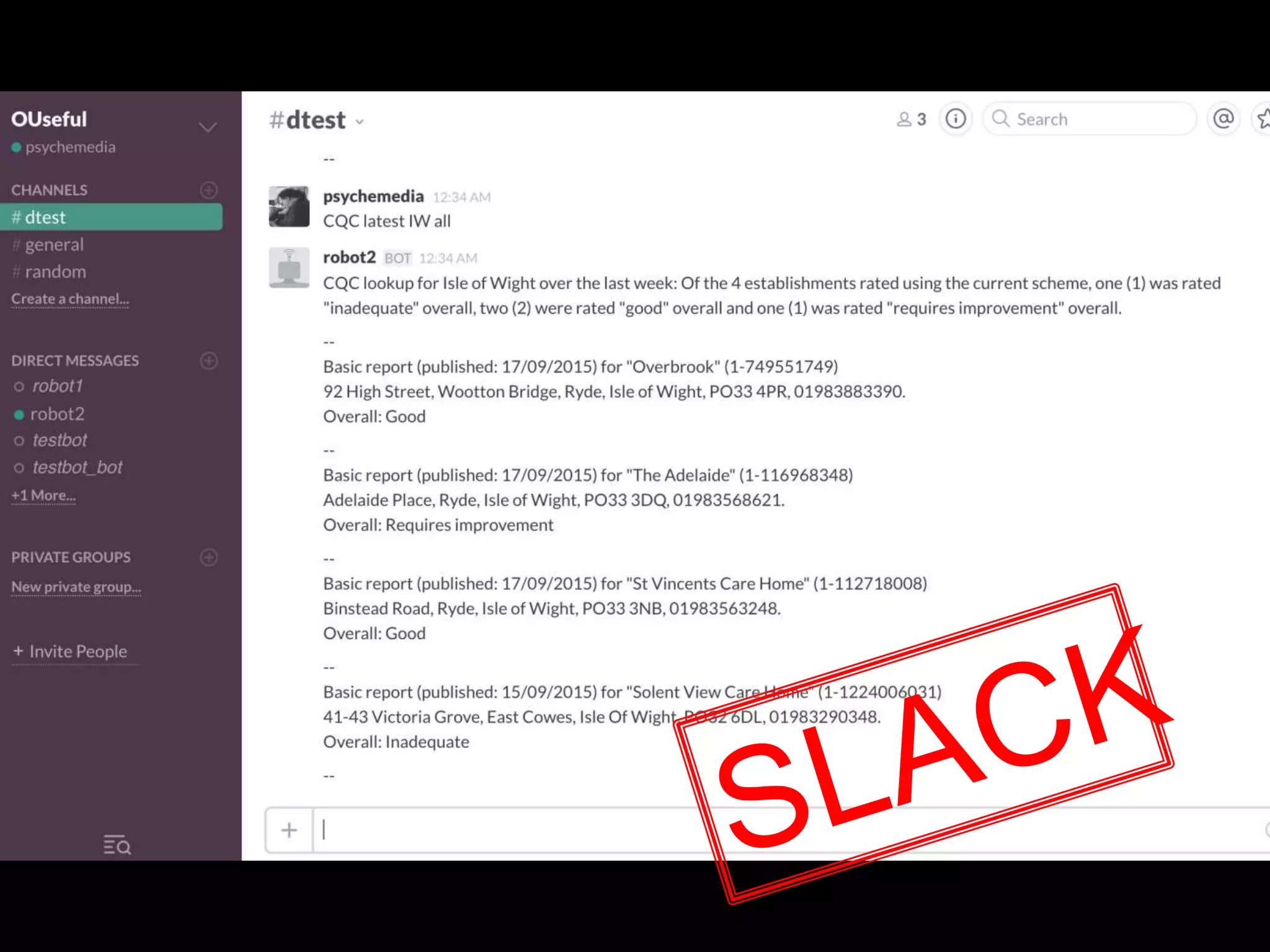
Conversational
Interfaces
From link-clicking
to conversational
UIs?
Seemless
updates
When did you last update (as in,
upgrade) your operating system?
When did you last update your
browser?
When did you last upgrade your car?
What does it mean if
you’ve always got the
latest, most up to date
version?
Staged
vs
continuous
deployment
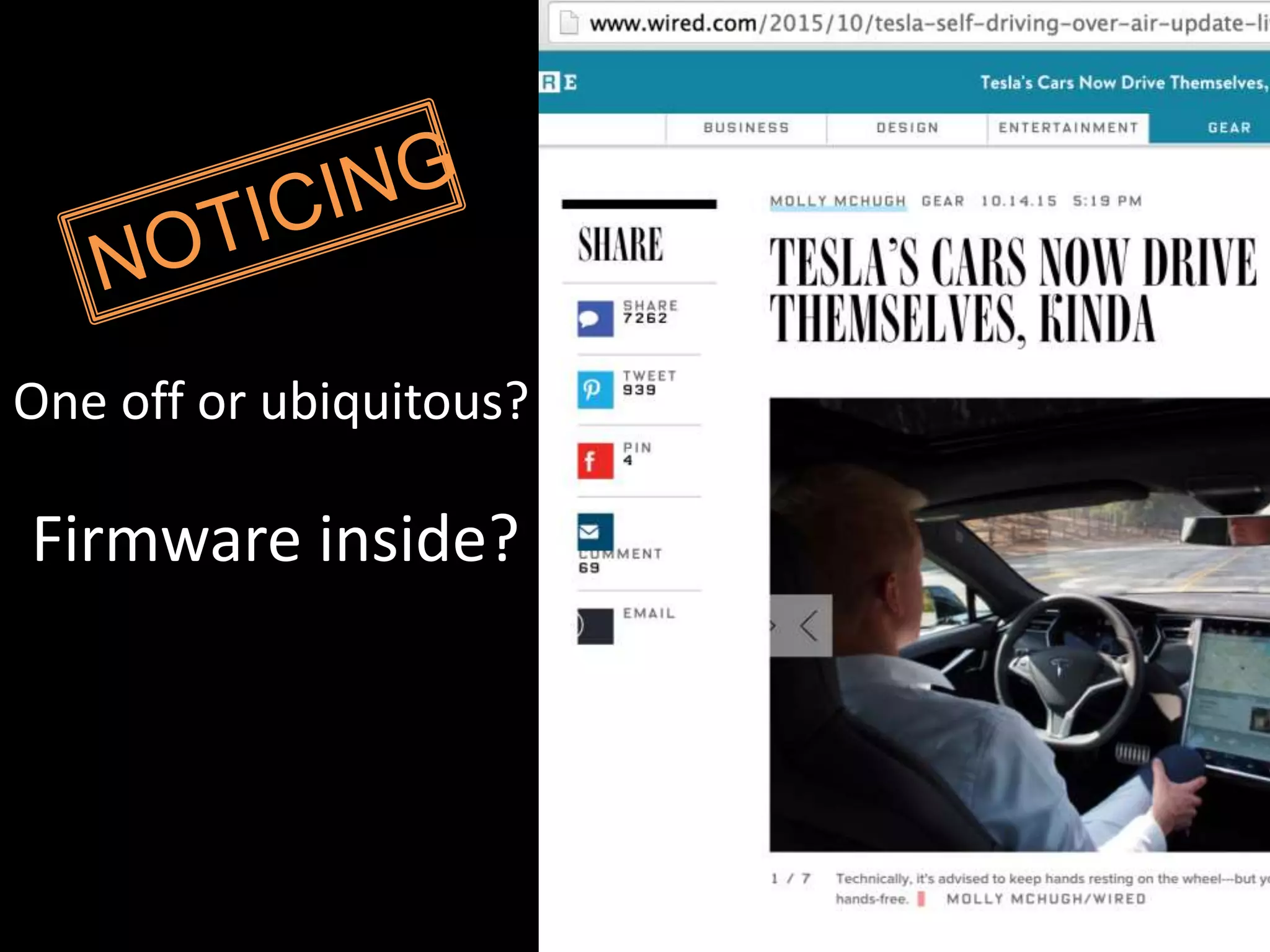
One off or ubiquitous?
Firmware inside?
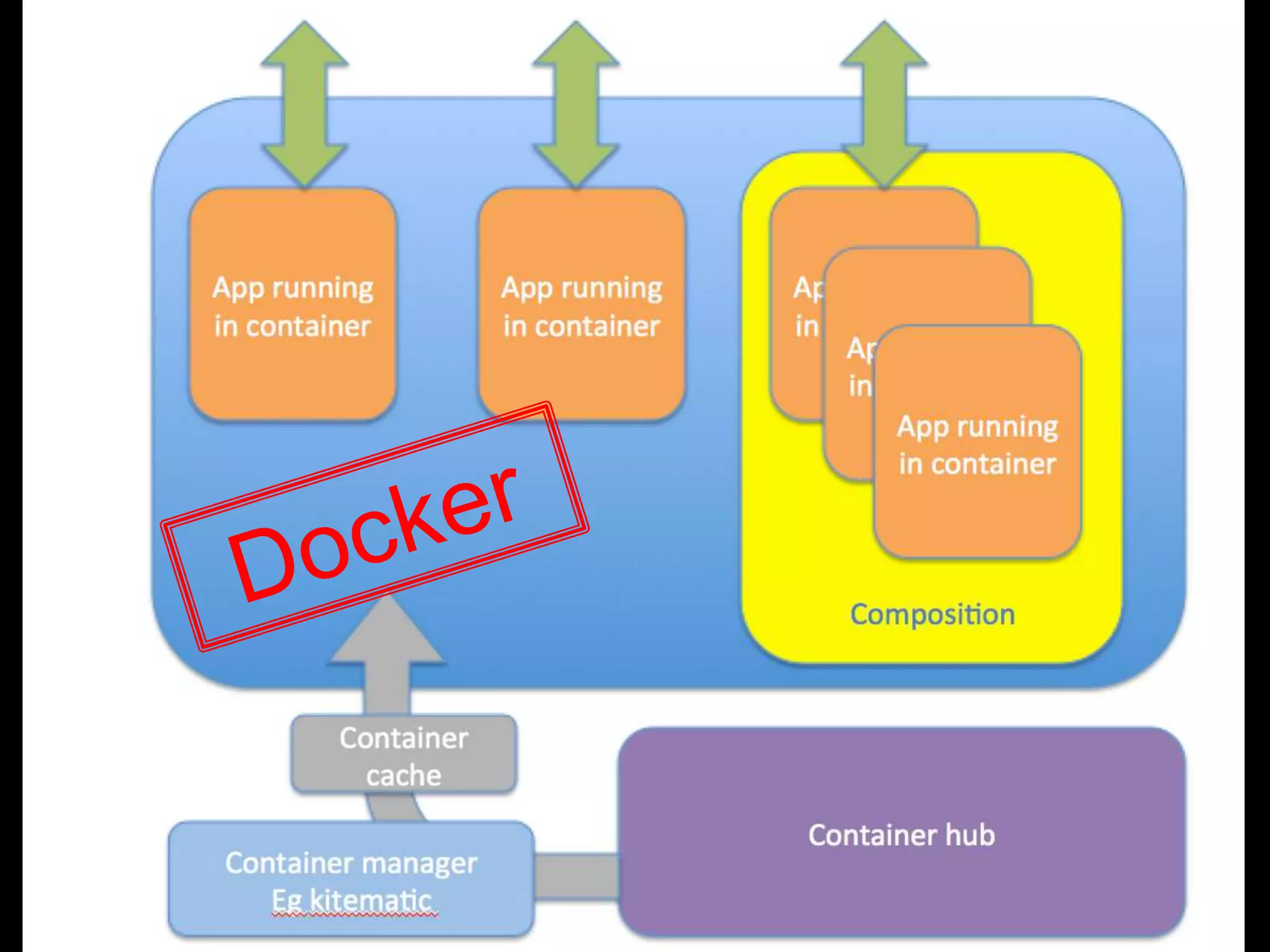
Virtual
Computing
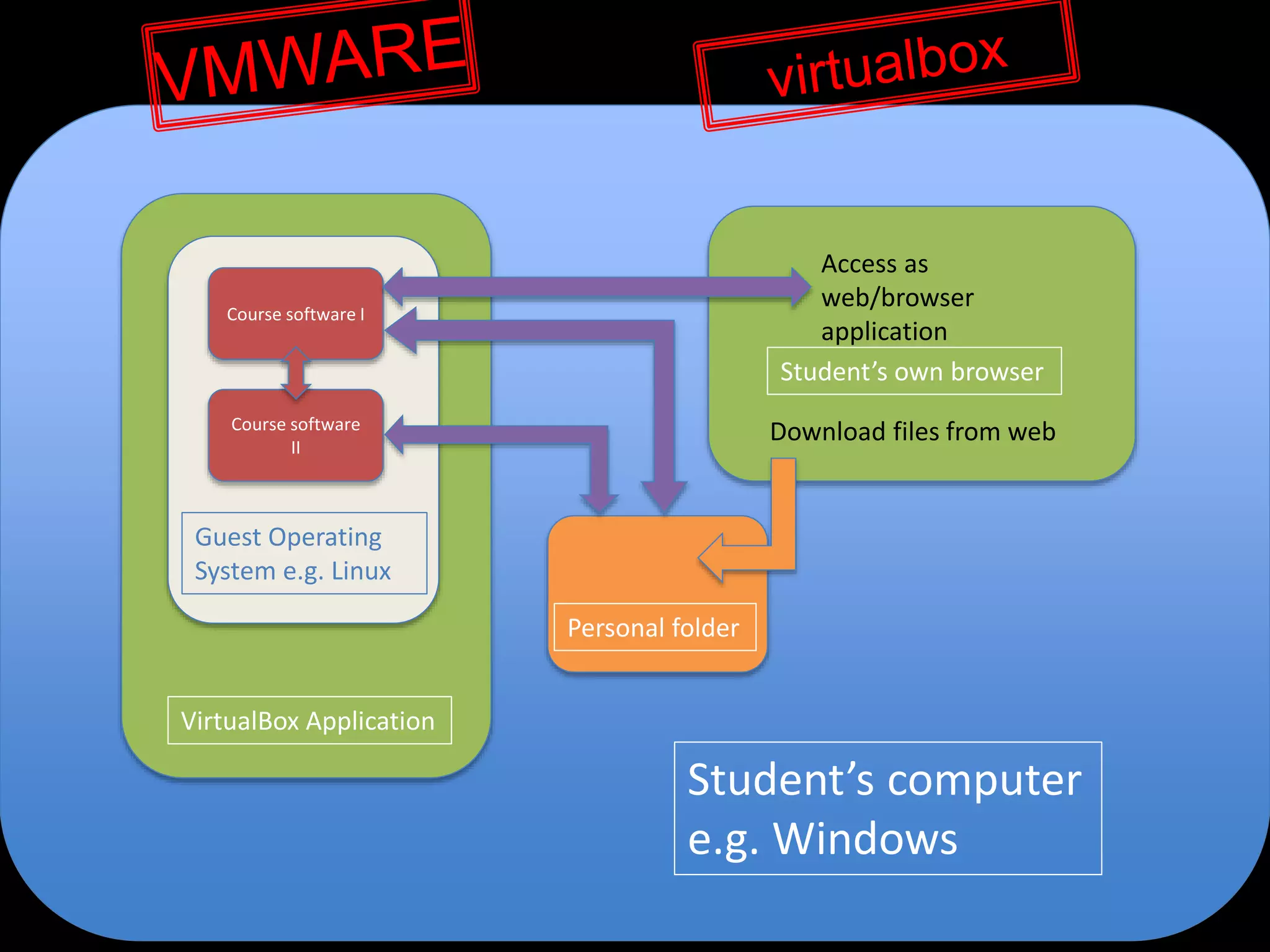
Student’s computer
e.g. Windows
VirtualBox Application
Guest Operating
System e.g. Linux
Course software I
Course software
II
Student’s own browser
Personal folder
Download files from web
Access as
web/browser
application
Identifying
Yourself
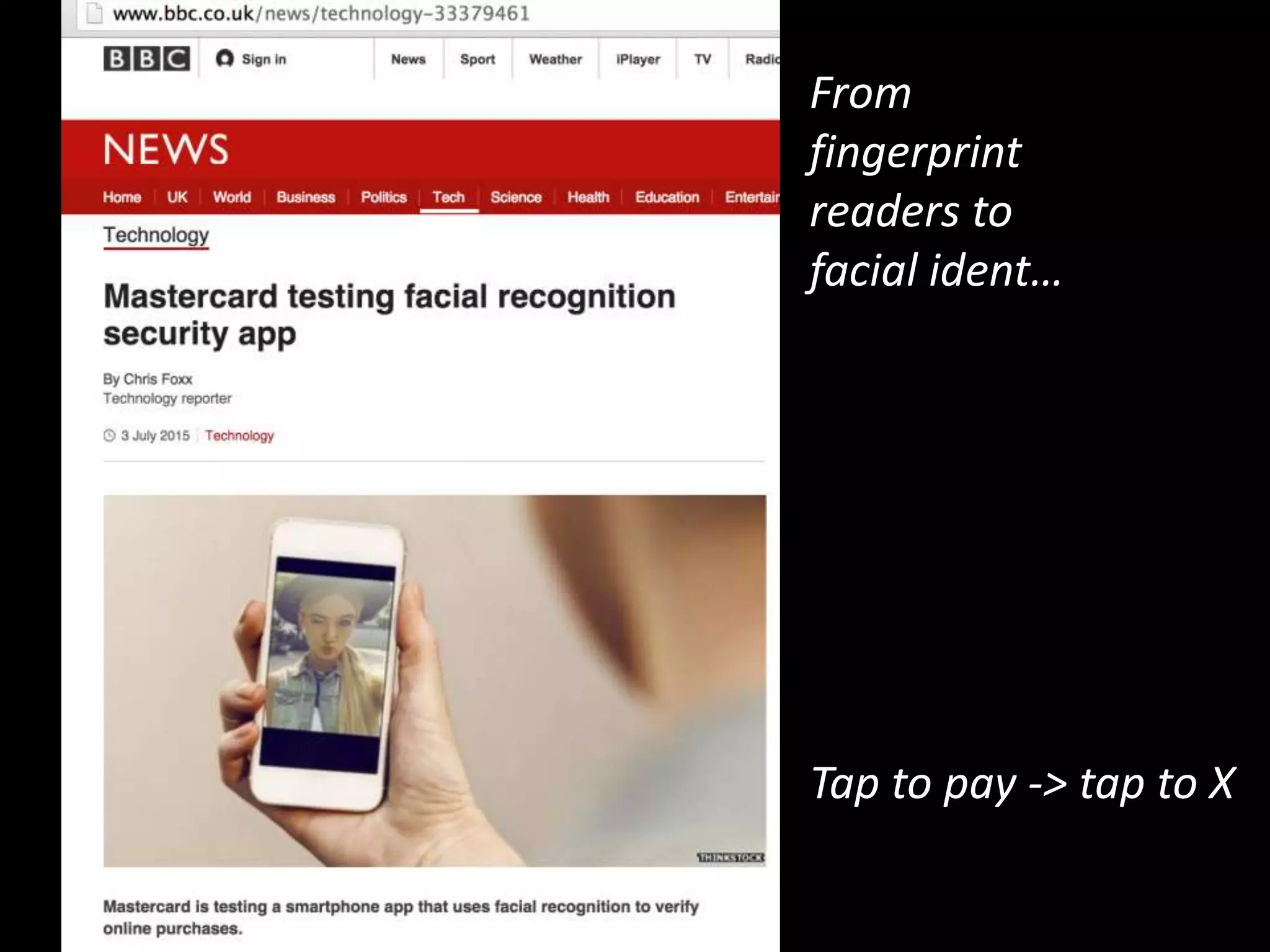
Tap to pay -> tap to X
From
fingerprint
readers to
facial ident…
“It’s Alive…”
[Smart X]
Soon-to-be-commodity
Computing?
Image recognition
Automatic language translation
“Robot authors” - data2txt
OCR
Text Analysis –
Named Entity Recognition
“Know your
opportunity”
Καιρον γνωθι
Ahead of the
curve or behind
the game?
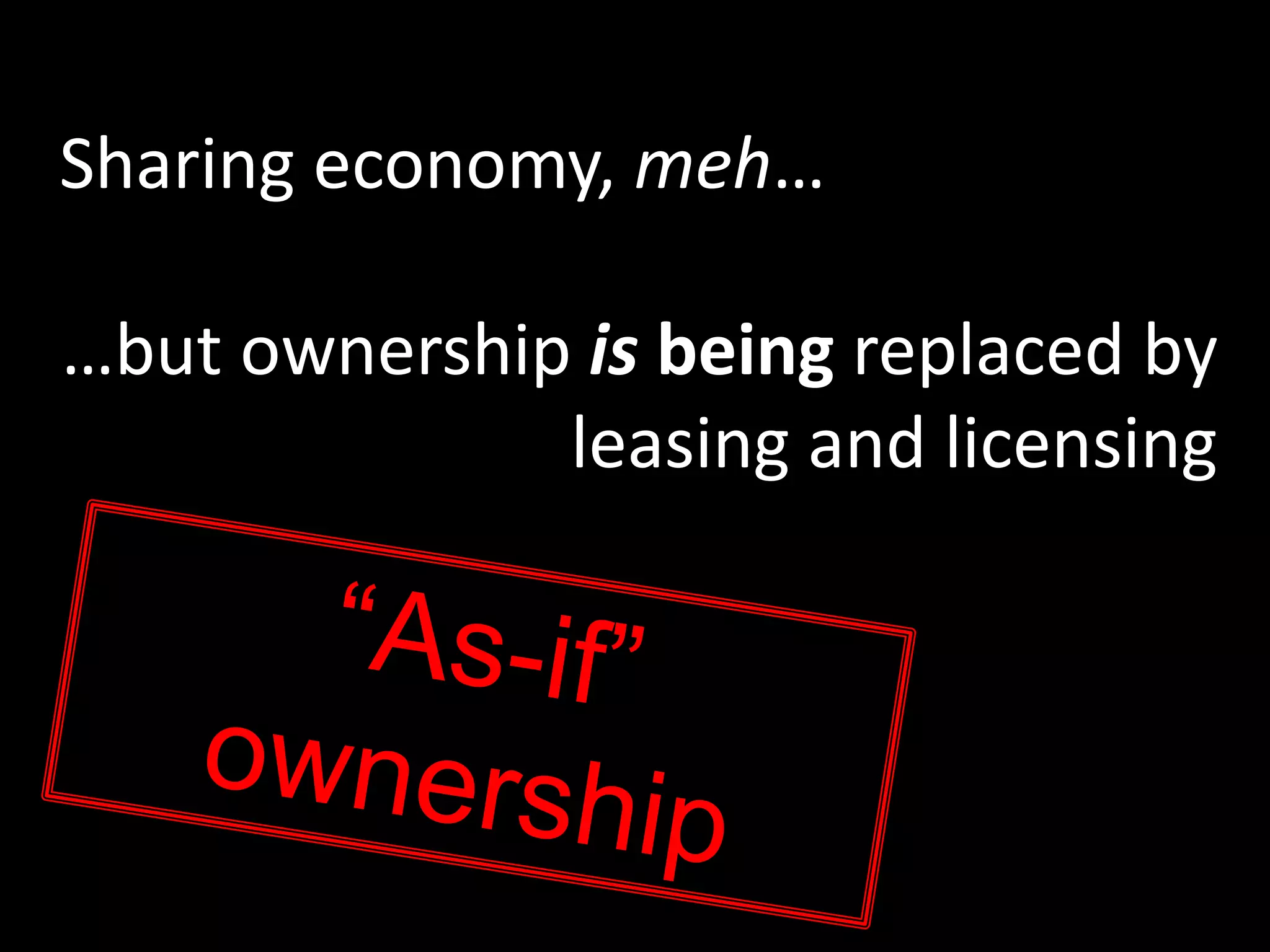
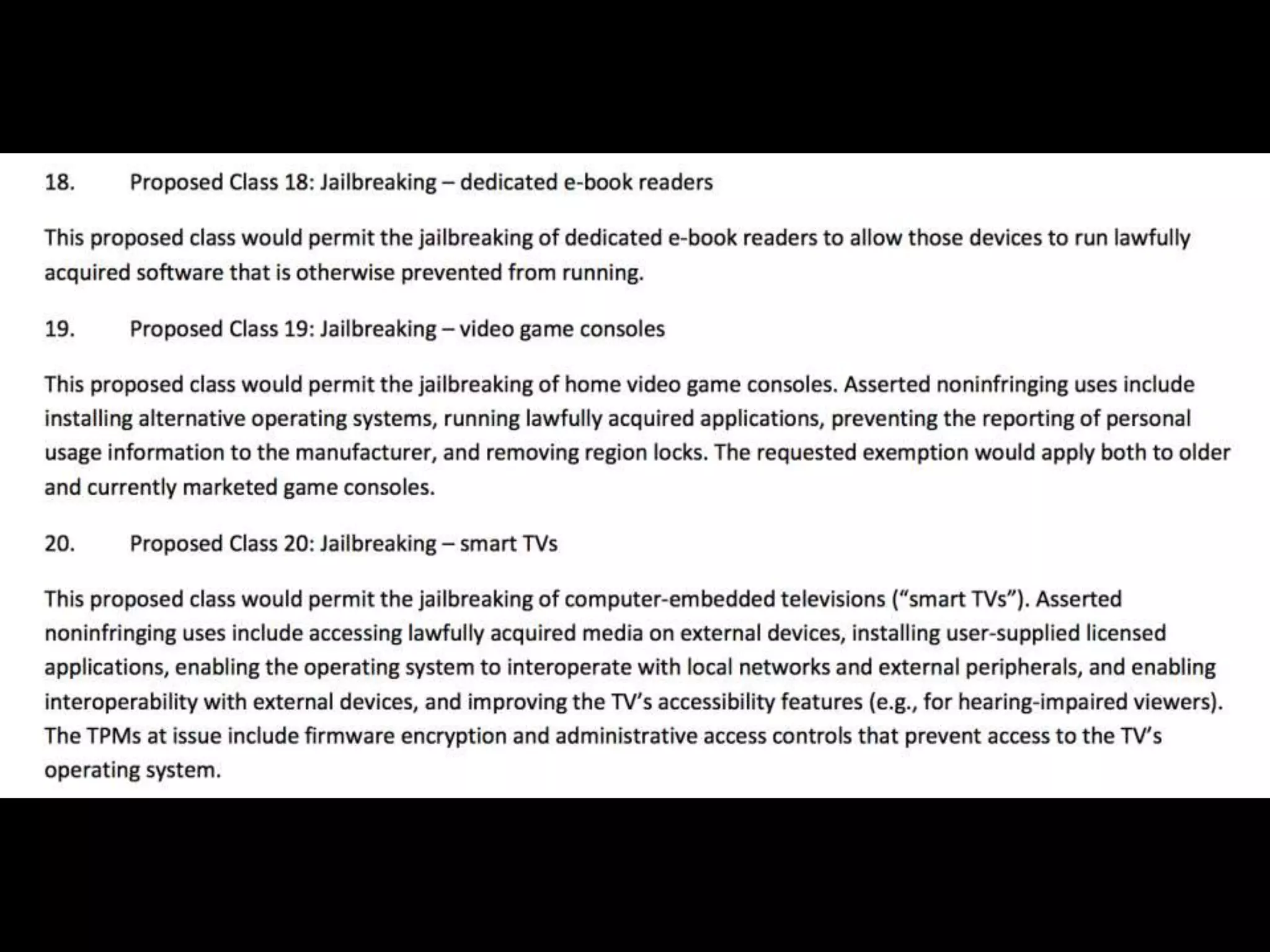
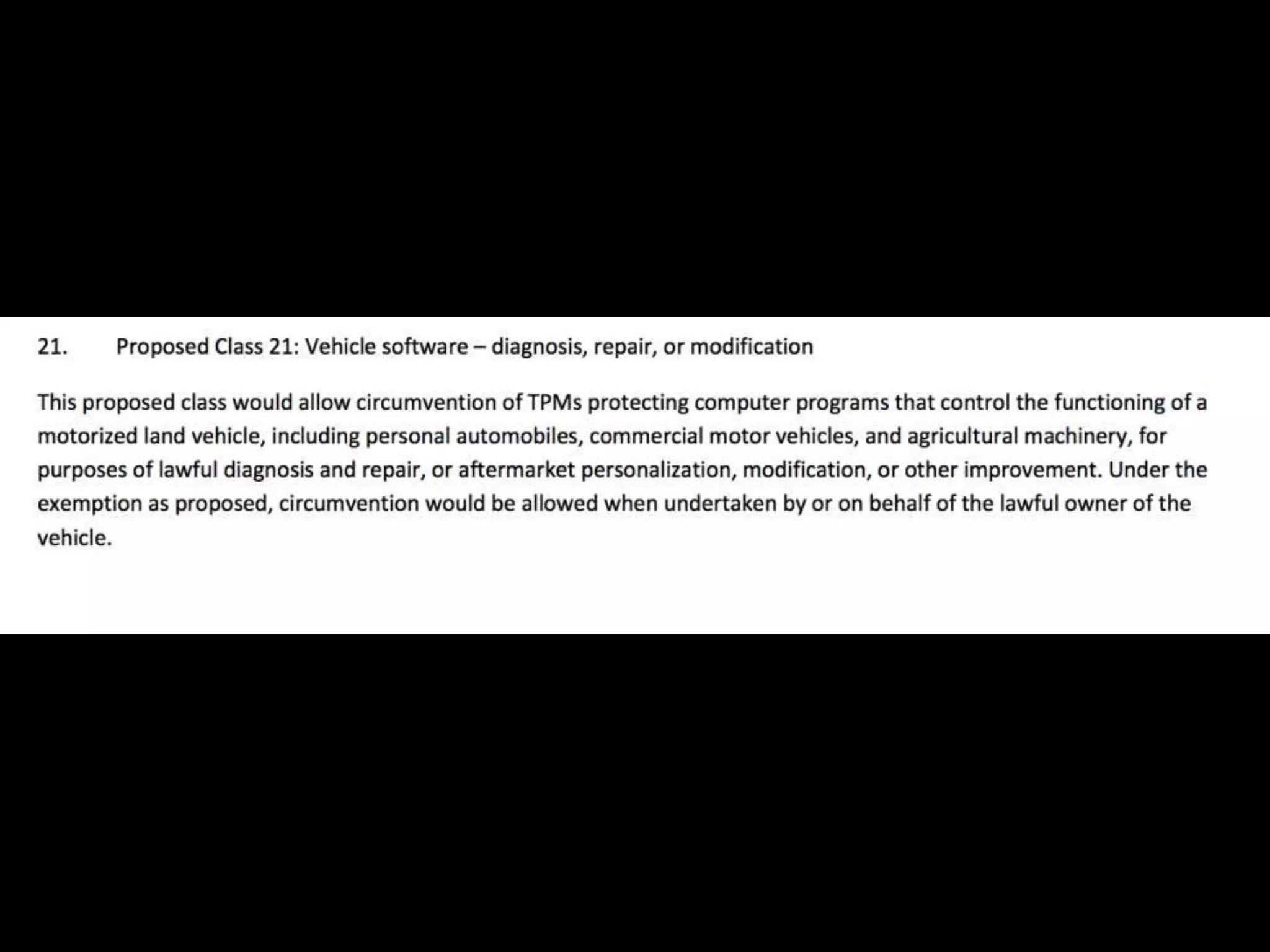
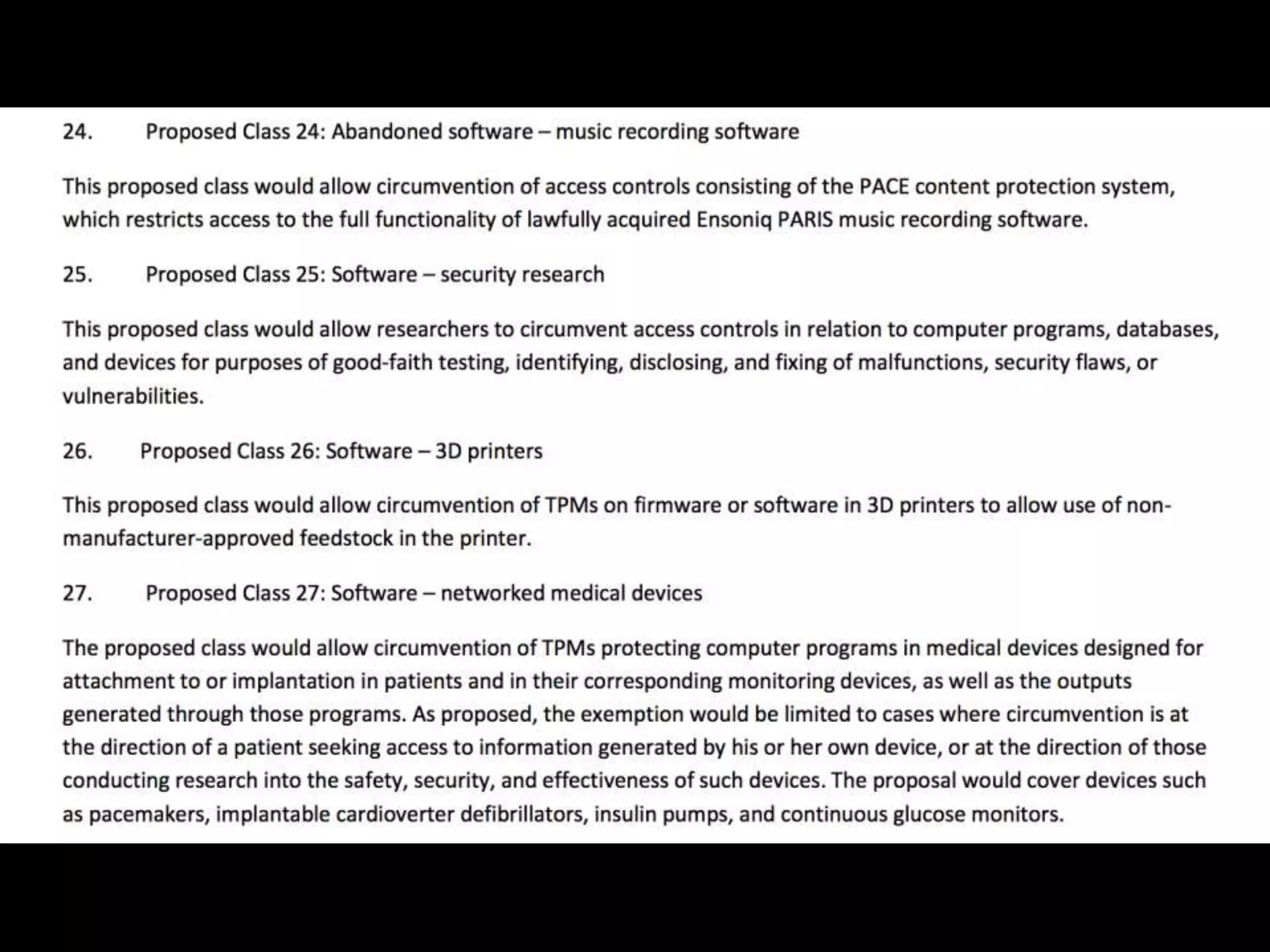
Sharing economy, meh…
…but ownership is being replaced by
leasing and licensing
“Gig economy”
"Th[e] so-called gig economy - the trading of
individual tasks and commissions (or “gigs”) online
- is associated with the growth of self-employed,
freelancers, and micro-entrepreneurs working
either full or part time.
“The business model of much of the gig economy
tends to transfer risk from the digital platform
providers to individual consumers and workers.”
Public service trends –
from service provision to
service commissioning
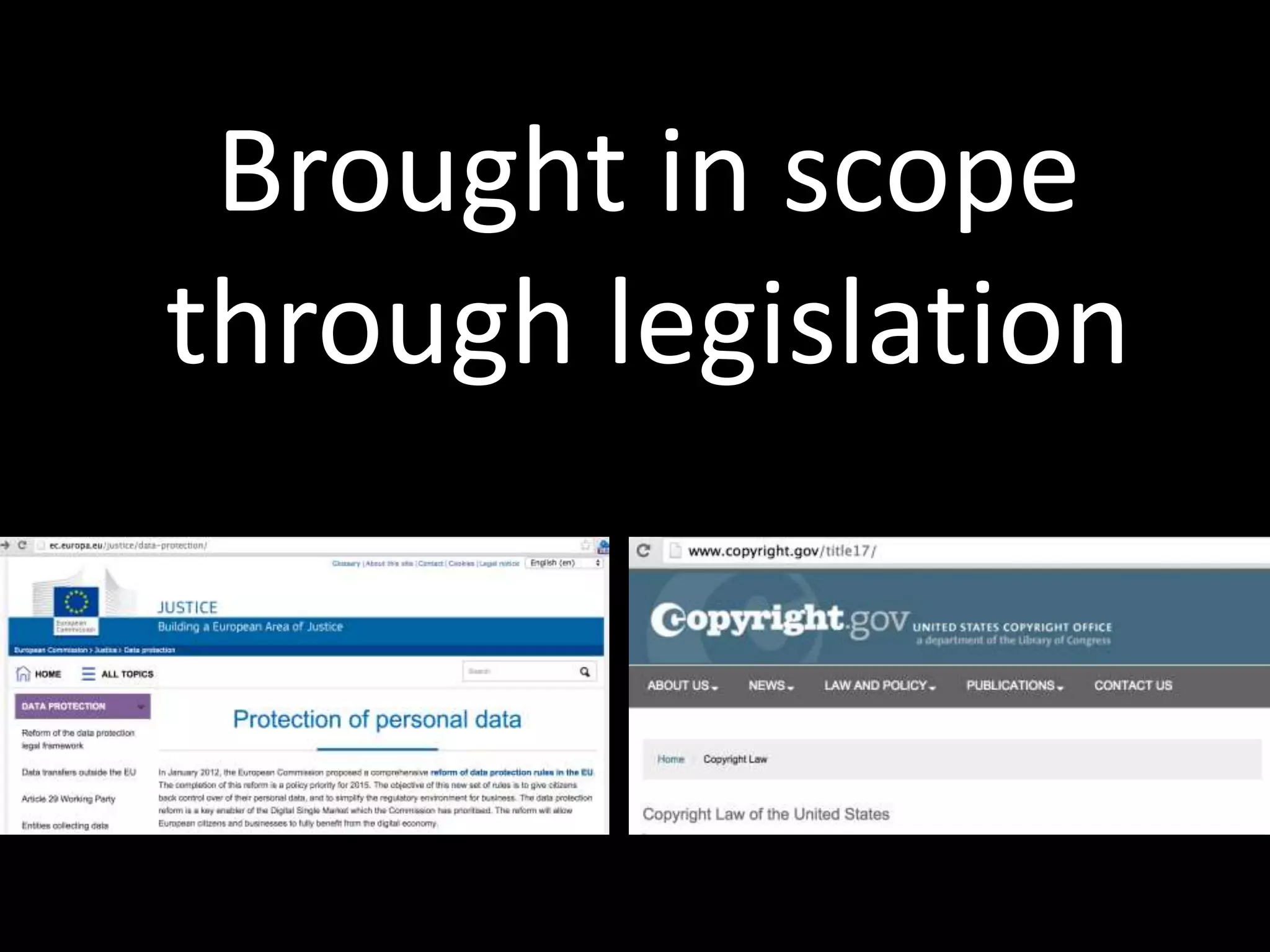
Brought in scope
through legislation
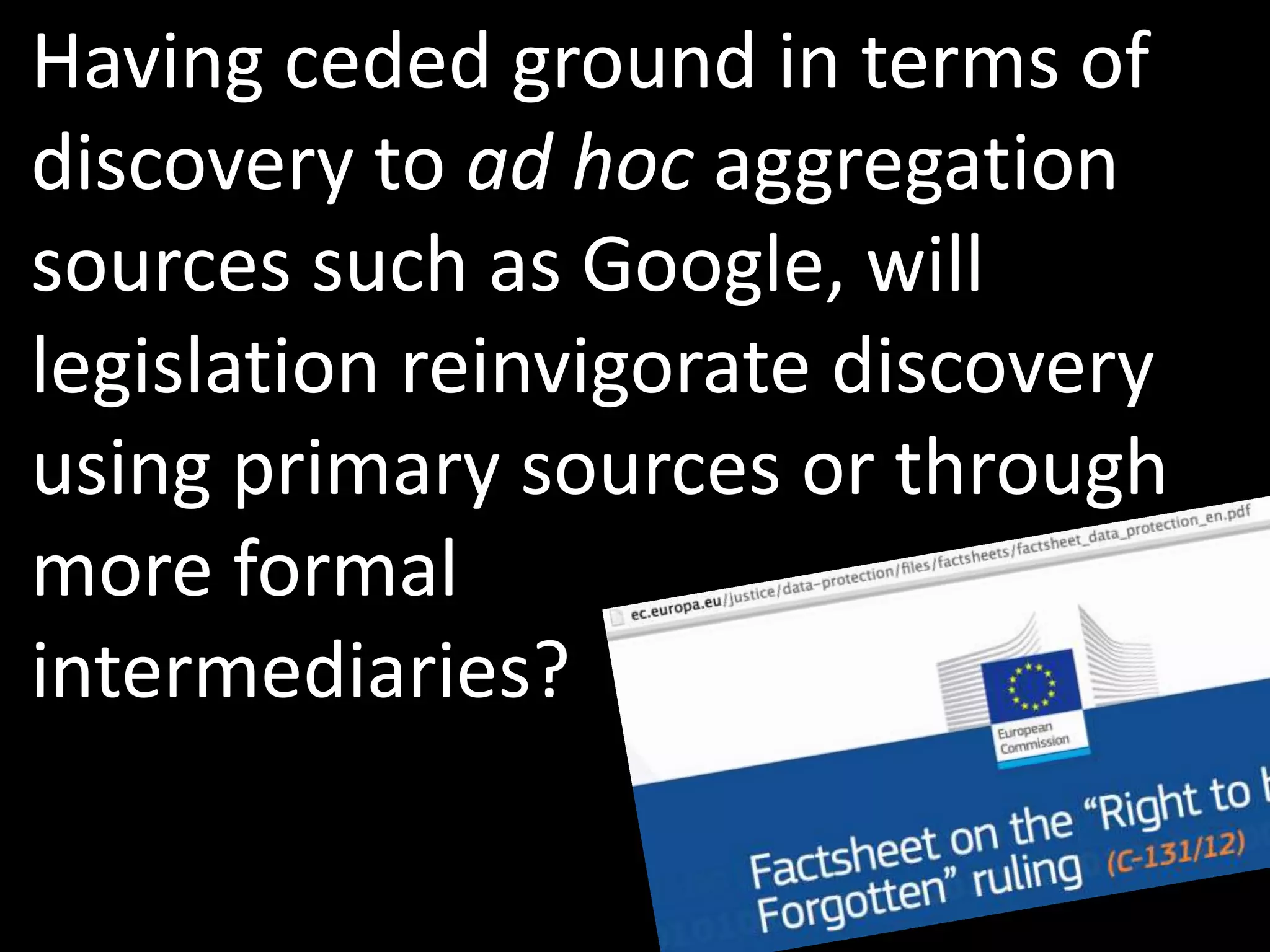
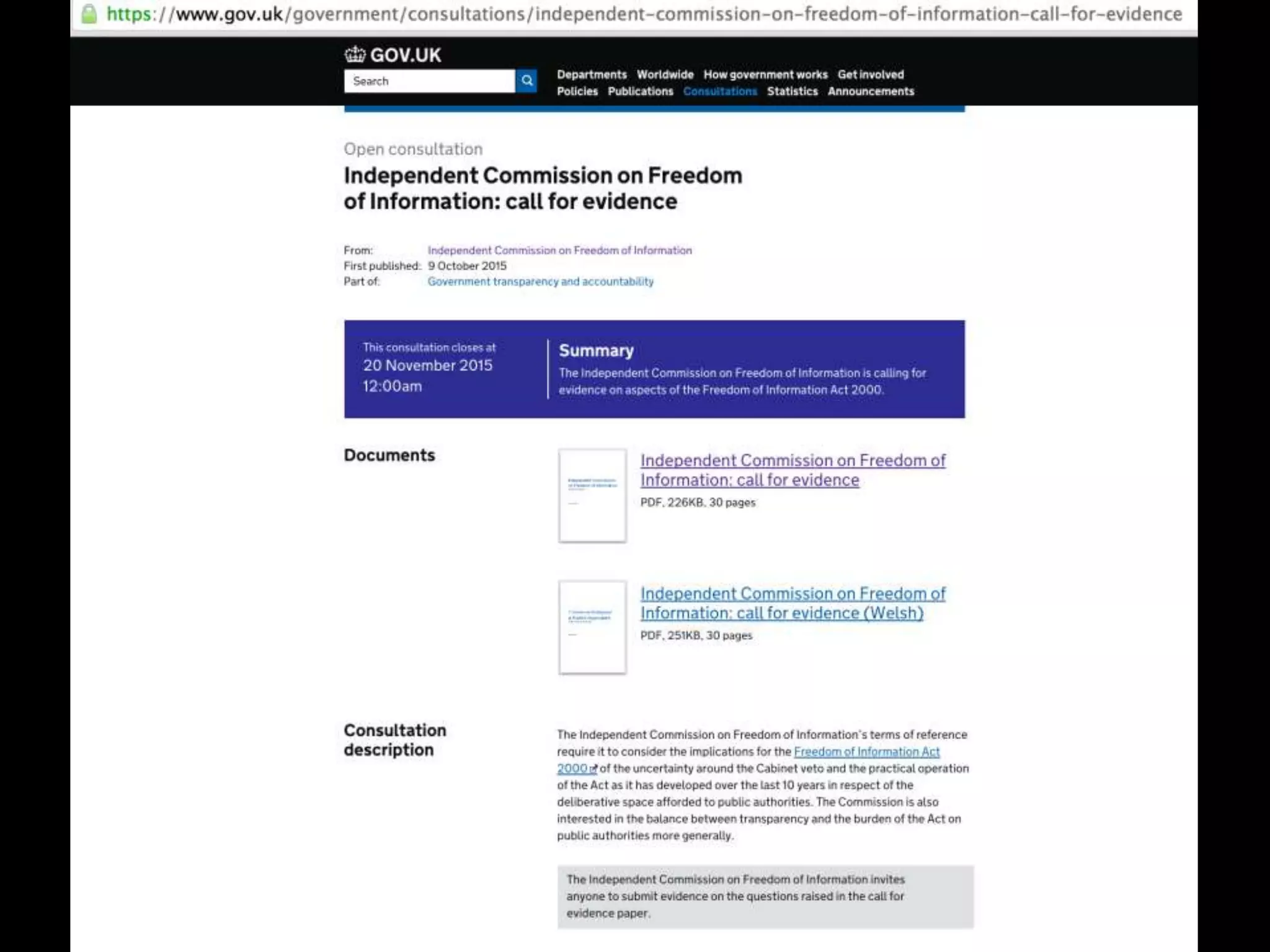
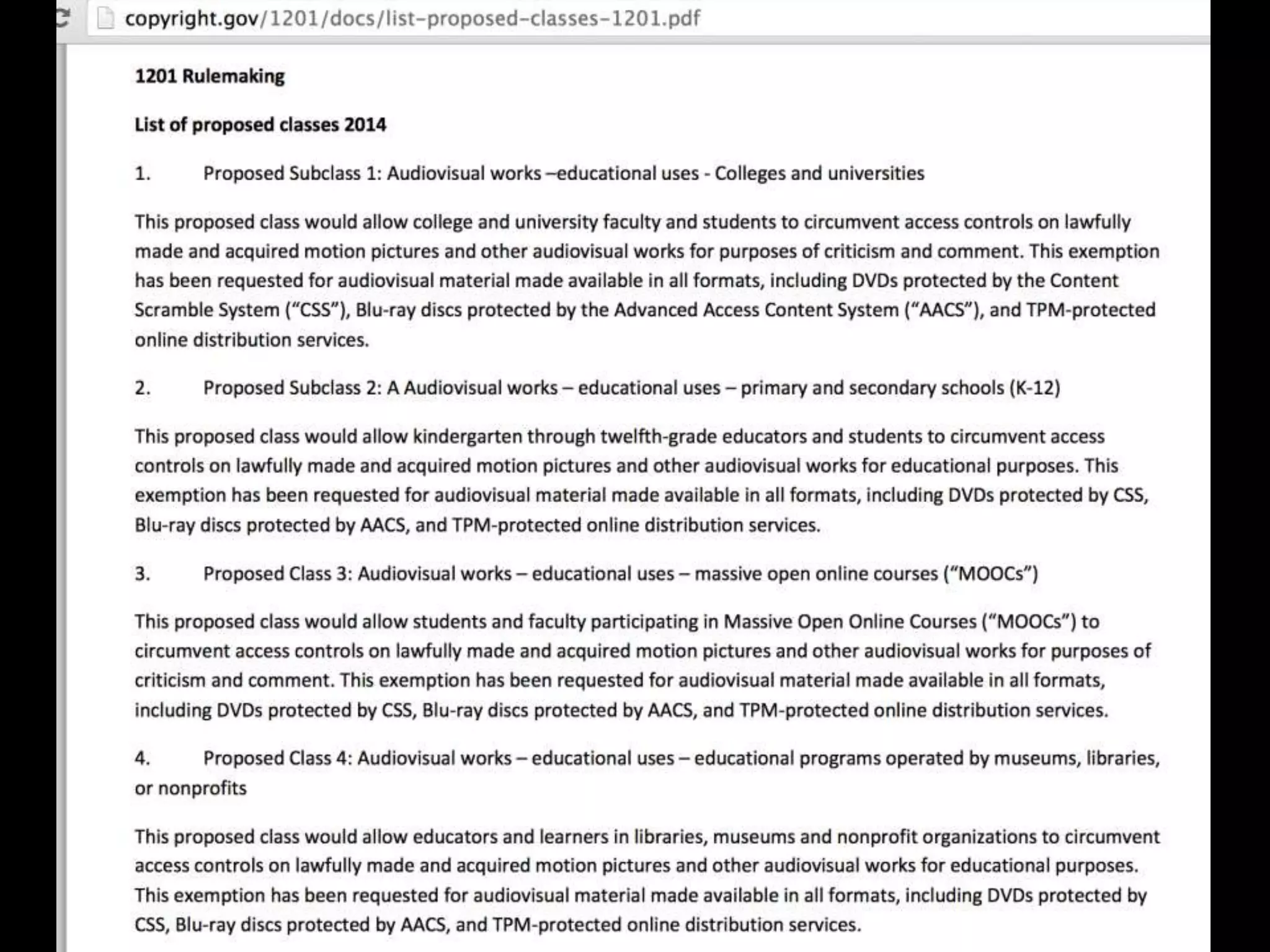
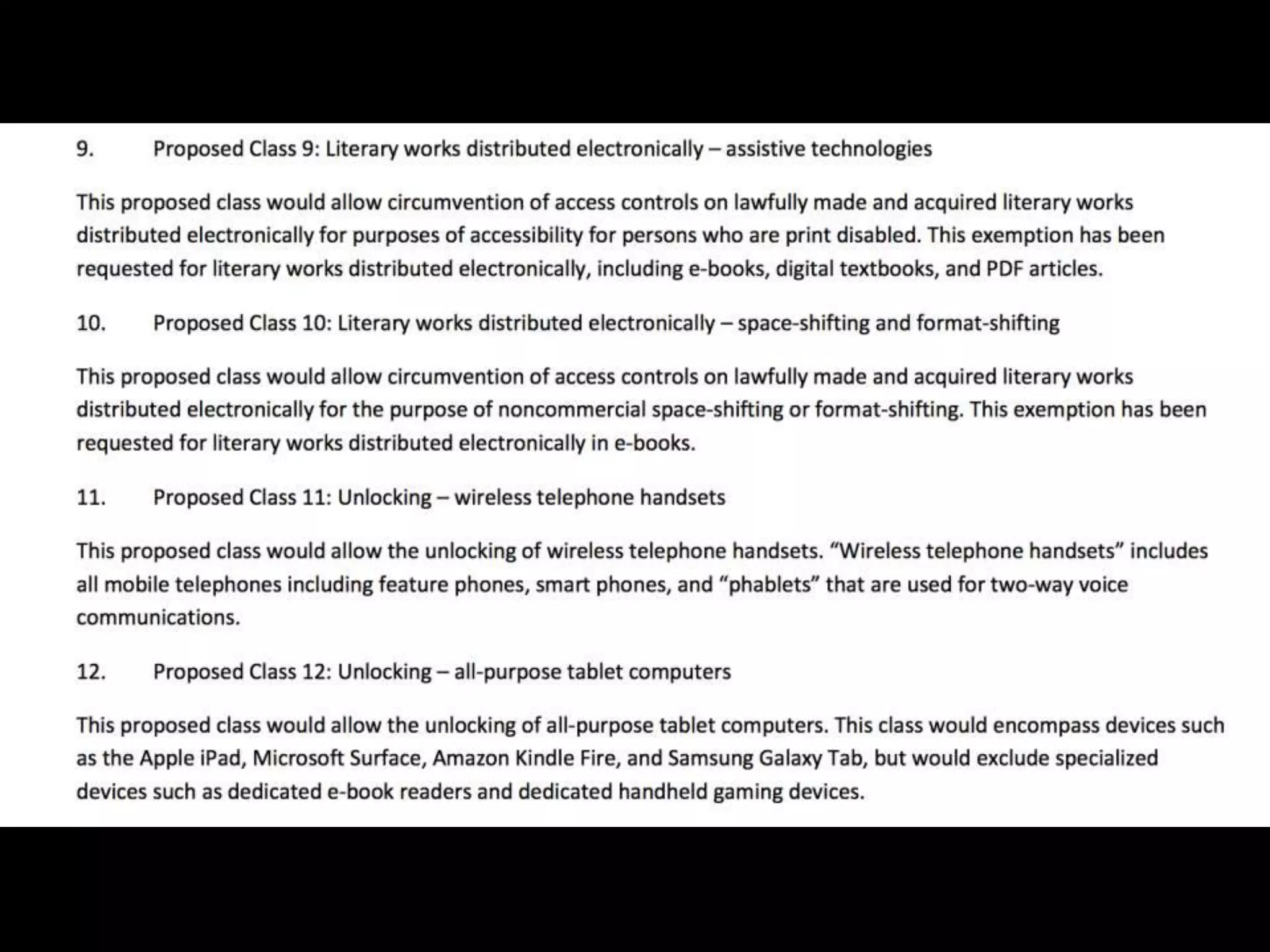
Having ceded ground in terms of
discovery to ad hoc aggregation
sources such as Google, will
legislation reinvigorate discovery
using primary sources or through
more formal
intermediaries?
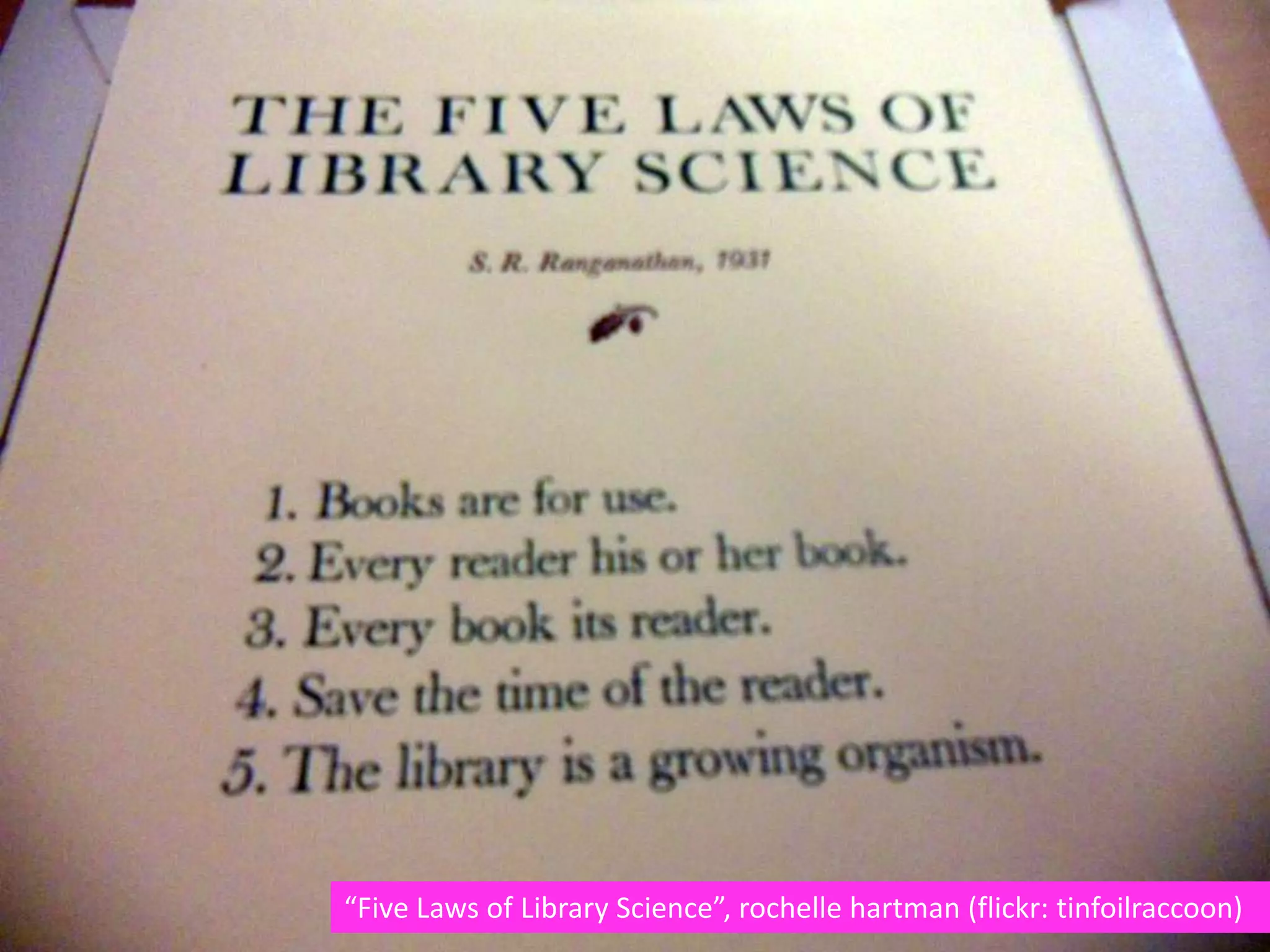
“Five Laws of Library Science”, rochelle hartman (flickr: tinfoilraccoon)

Notes on the Future - ILI2015 Workshop

  • 1.
    Tony Hirst Computing andCommunications, The Open University, UK @psychemedia / blog.ouseful.info Notes on the Future #ILI2015
  • 2.
    W2 - Preparingfor the Future: Technological Challenges and Beyond 10.00 – 17.00 Brian Kelly, Cetis, University of Bolton Tony Hirst, Department of Communication and Systems, The Open University Despite the uncertainties faced by librarians and information professionals, technology continues to develop at breakneck speed offering many new opportunities for the sector. At the same time, technological developments can be distracting and may result in wasted time and effort. This workshop will help participants identify potentially relevant technological developments by learning about and making use of processes for spotting and prioritising signals which may indicate early use of technologies of future importance. Having identified potentially important technological developments, organisations then need to decide how to respond. What will be the impact on existing technologies? What are the strategic implications and what are the implications for staff within the organisation? This interactive workshop will provide opportunities to address the challenges in understanding the implications of technological developments and making appropriate organisational interventions.
  • 3.
  • 4.
    “Famously Ryle imagineda visitor who has seen the colleges, departments, and libraries of a university but still wonders where the university is. The visitor fails to realize that the university consists of these organizational units. In this paper I ask what exactly the relation is between institutional entities such as universities and the entities they are composed of.”
  • 5.
    "But where – orindeed, what – is the Library?” - with apologies to Gilbert Ryle
  • 8.
  • 9.
    “So what isthe Library?” - with even more apologies to Gilbert Ryle ACTIVITY What is a library? What is the library for? What makes the library the library?
  • 10.
    Values A place tolearn new skills or techniques Curated resources/ collections / archive Access Gateway to other resources Physical space Conceptual models What is a library? Access to information What is a library for? Is the library a place or an idea? "But where is the University?" Publisher What makes the library the library? Archive
  • 11.
  • 13.
    USPTO 20150124107 BS 5605or BS 6371 ISBN 075381093X 978-0753810934 823.7 SCO JOH E06000046
  • 14.
  • 19.
    “Perceive what You haveheard” Ακουσας νοει
  • 20.
    We perceive the futurein the context of the present and the consequences of the past
  • 21.
  • 22.
    “Plans are oflittle importance, but planning is essential.” -- Winston Churchill “In preparing for battle, I have always found that plans are useless but planning is indispensable.” -- Dwight Eisenhower
  • 23.
    If we’re planningfor the future of the library, then what is this library thing we’re planning for?
  • 24.
    Do your planning toolsallow you to accommodate the future?
  • 25.
    Where are wenow? Where do we want to be? Strategic No clear strategy about where we want to be with A Clear understanding of strategy around A Impact We don’t know what impact Library Services has on B Clear understanding of impact of the things we do relating to B Integration Library controlled C is held in library silos and not available to other internal analysts or users Library controlled C is available as needed throughout the organisation using standard tools Skills Limited skills in dealing with D Core of library staff with trained in D. Capacity to do D. Infrastructure Some legacy underlying infrastructure in place to support E, but services fragmented using non- standard interfaces. No organisation wide UI. Interoperable, shared services associated with E using open standards. User interface available Business as usual Consideration of F not embedded into practice or business as usual. Not part of culture Decisions and processes that take into account F are part of standard practice
  • 26.
    Where are we now? THE FUTURE Wheredo we want to be? Strategic No clear strategy about where we want to be with A Clear understanding of strategy around A Impact We don’t know what impact Library Services has on B Clear understanding of impact of the things we do relating to B Integration Library controlled C is held in library silos and not available to other internal analysts or users Library controlled C is available as needed throughout the organisation using standard tools Skills Limited skills in dealing with D Core of library staff with trained in D. Capacity to do D. Infrastruct ure Some legacy underlying infrastructure in place to support E, but services fragmented using non- standard interfaces. No organisation wide UI. Interoperable, shared services associated with E using open standards. User interface available Business as usual Consideration of F not embedded into practice or business as usual. Not part of culture Decisions and processes that take into account F are part of standard practice
  • 27.
  • 28.
    How does your organisation frameitself for the future?
  • 29.
    Core ideology - corevalues - core purpose Envisioned future - long term goals - vivid description “Companies that enjoy enduring success have core values and a core purpose that remain fixed while their business strategies and practices endlessly adapt to a changing world.” James Collins & Jerry Porras Building your company vision Harvard Business Review, Sept-Oct 1996, pp. 65-77
  • 30.
    “Core values arethe essential and enduring tenets of an organization. A small set of timeless guiding principles, core values require no external justification; they have intrinsic value and importance to those inside the organization.” Core ideology “the enduring character of an organization - a consistent identity that transcends product or market life cycles, technological breakthroughs, management fads, and individual leaders. “Core purpose, the second part of core ideology, is the organization's reason for being. An effective purpose reflects people's idealistic motivations for doing the company's work.” “Whereas you might achieve a goal or complete a strategy, you cannot fulfill a purpose” “Core ideology needs to he meaningful and inspirational only to people inside the organization; it need not be exciting to outsiders.” “don't confuse core ideology with the concept of core competence. Core competence is a strategic concept that defines your organization's capabilities - what you are particularly good at – whereas core ideology captures what you stand for and why you exist.”
  • 31.
    “One powerful methodfor getting at purpose is the five whys. Start with the descriptive statement: We make X products or We deliver X services, and then ask, Why is that important? five times. After a few whys, you'll find that you're getting down to the fundamental purpose of the organization.”
  • 32.
    The “second primarycomponent of the vision framework is envisioned future. It consists of two parts: a 10-to-30-year audacious goal plus vivid descriptions of what it will be like to achieve the goal” “BHAGs (pronounced Companies need an audacious 10-to-30-year goal to progress toward an envisioned future. BEE-hags and shorthand for Big, Hairy, Audacious Goals” Vivid Description. “In addition to vision-level BHAGs, an envisioned future needs what we call vivid description - that is, a vibrant, engaging, and specific description of what it will be like to achieve the BHAG. Think of it as translating the vision from words into pictures, of creating an image that people can carry around in their heads. It is a question of painting a picture with your words. Picture painting is essential for making the 10-to-30- year BHAG tangible in people's minds.” “A BHAG is a clearly articulated goal. Gore purpose can never be completed, whereas the BHAG is reachable in 10 to 30 years.”
  • 33.
  • 34.
    What are the changesthat will make a difference? “This workshop will help participants identify potentially relevant technological developments …”
  • 35.
    -Legislation -Market moves -(Technological innovation) Thebig changes in technology may not be down just to “the technology”… They are also OUTSIDE OF YOUR CONTROL…
  • 36.
  • 37.
    What is about technologythat changes…? …and does it matter?
  • 38.
    - Will thepredominant service model, security model or user models change? - Will the underlying business models change? - Will the underlying technological platforms change? - Will the actual applications change? “What will be the impact on existing technologies? What are the strategic implications and what are the implications for staff within the organisation?”
  • 39.
    What changes arerelevant? - ones that make a service you currently provide obsolete - ones that can’t be integrated or accommodated within your current organisational structure - ones that require you to start providing a particular sort of service or replacement service - ones that will require skills or capacity you cannot currently provide
  • 40.
    Stop doing somethingyou currently do Start doing something you currently don’t Start doing something that’s completely new to everyone STEP CHANGES
  • 41.
  • 42.
  • 43.
    Noticing the future that’sunevenly distributed about you…
  • 44.
    “There must bea better way…”
  • 45.
    “So does that meanI could…”
  • 46.
    What did yousee for the first time today? Could it affect your library?
  • 47.
    Two more things toconsider when noticing the future…
  • 48.
  • 49.
  • 50.
  • 51.
    End user development Enduser expectations End-user adoption / BYOD Listen to the User…?
  • 52.
    “What is theLibrary for?”
  • 53.
    The Library playsan important role in the knowledge ecosystem… …so what can learn by looking at failures in that system?
  • 55.
  • 56.
  • 57.
  • 58.
  • 59.
  • 60.
  • 62.
    Jian Qin andJohn D'Ignazio, "Lessons learned from a two-year experience in science data literacy education" ( June 22, 2010). International Association of Scientific and Technological University Libraries, 31st Annual Conference. Paper 5. http://docs.lib.purdue.edu/iatul2010/conf/day2/5 The Library as Training Unit
  • 63.
    “Do not tire oflearning” Μανθανων μη καμνε
  • 64.
    To what extentdoes technology adoption and/or changes to the information environment drive the need for skills development?
  • 65.
    Information skill, digital skill, ordata skill? Boolean search SQLRegular Expressions
  • 66.
    Internal services requirements External users Providedservices External users Internal skills requirements Skills requirements associated with service delivery to users Skills requirements associated with skills teaching / training
  • 67.
    Data Curation (RDM) Data Resourcing (subject/reference librarian) DataReporting (internal audit/analytics) Data Sensemaking (“data literacy”/infoskills)
  • 68.
    “Be a seeker Ofwisdom” Φιλοσοφος γινου
  • 69.
    Helping people “find” informationin a generative sense – from data? If digital skills (digital literacy) - in the sense of skills that support the organisation and production of information using digital tools – are in scope for the library, then are data skills (data literacy) - in the sense of skills associated with organising and producing (and making sense of) information from data also in scope?
  • 71.
  • 72.
  • 73.
    open to everyone open access journaland open data discovery open textbook and OER shelves open (scholarly) infrastructure invisible library support open digital workbenches What would an open access library look like?
  • 76.
  • 77.
  • 82.
  • 83.
    When did youlast update (as in, upgrade) your operating system? When did you last update your browser? When did you last upgrade your car?
  • 84.
    What does itmean if you’ve always got the latest, most up to date version?
  • 85.
  • 86.
    One off orubiquitous? Firmware inside?
  • 87.
  • 88.
    Student’s computer e.g. Windows VirtualBoxApplication Guest Operating System e.g. Linux Course software I Course software II Student’s own browser Personal folder Download files from web Access as web/browser application
  • 91.
  • 92.
    Tap to pay-> tap to X From fingerprint readers to facial ident…
  • 93.
  • 95.
    Soon-to-be-commodity Computing? Image recognition Automatic languagetranslation “Robot authors” - data2txt OCR Text Analysis – Named Entity Recognition
  • 96.
  • 97.
    Ahead of the curveor behind the game?
  • 99.
    Sharing economy, meh… …butownership is being replaced by leasing and licensing
  • 100.
    “Gig economy” "Th[e] so-calledgig economy - the trading of individual tasks and commissions (or “gigs”) online - is associated with the growth of self-employed, freelancers, and micro-entrepreneurs working either full or part time. “The business model of much of the gig economy tends to transfer risk from the digital platform providers to individual consumers and workers.”
  • 101.
    Public service trends– from service provision to service commissioning
  • 102.
  • 103.
    Having ceded groundin terms of discovery to ad hoc aggregation sources such as Google, will legislation reinvigorate discovery using primary sources or through more formal intermediaries?
  • 110.
    “Five Laws ofLibrary Science”, rochelle hartman (flickr: tinfoilraccoon)

Editor's Notes

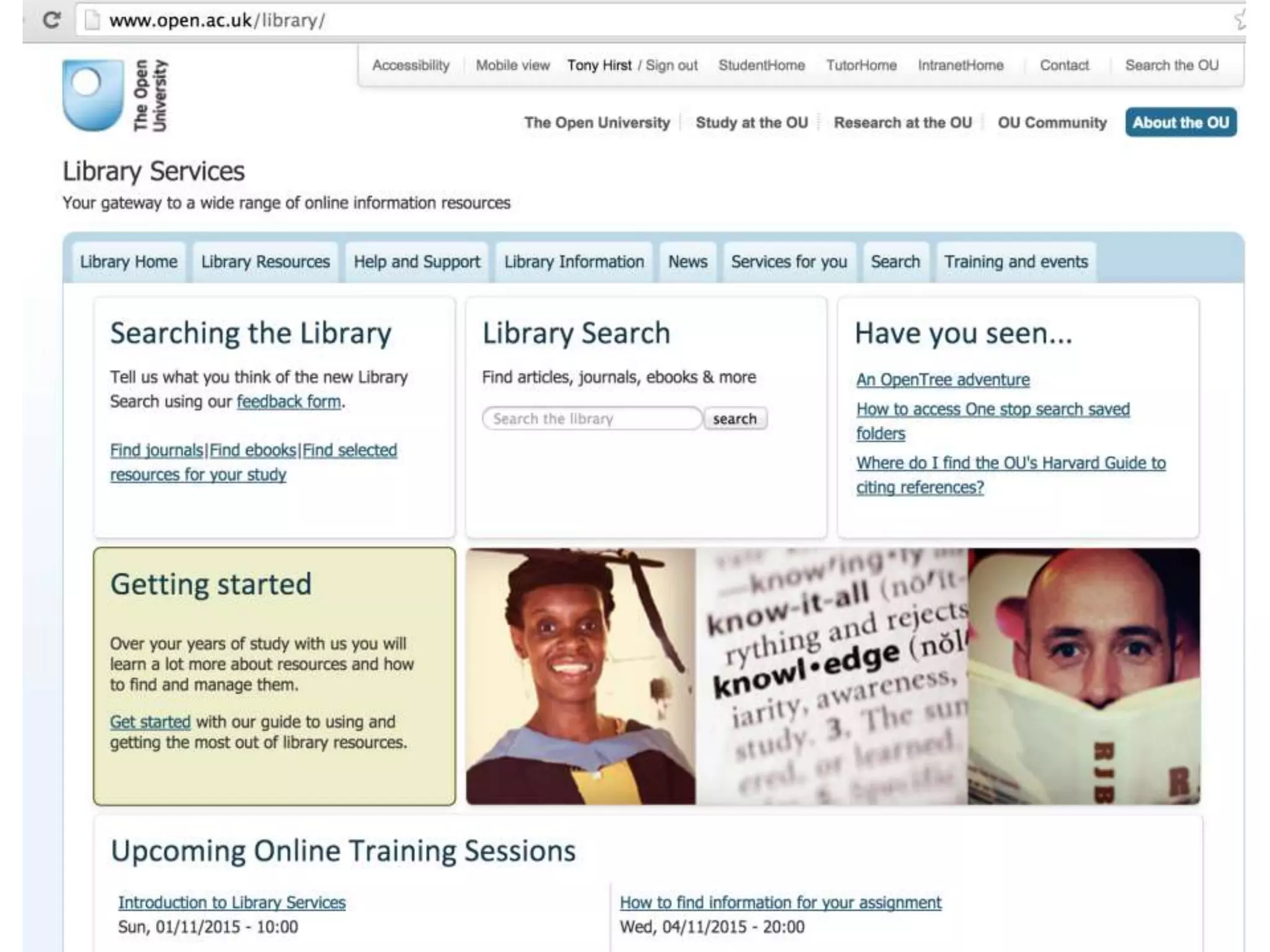
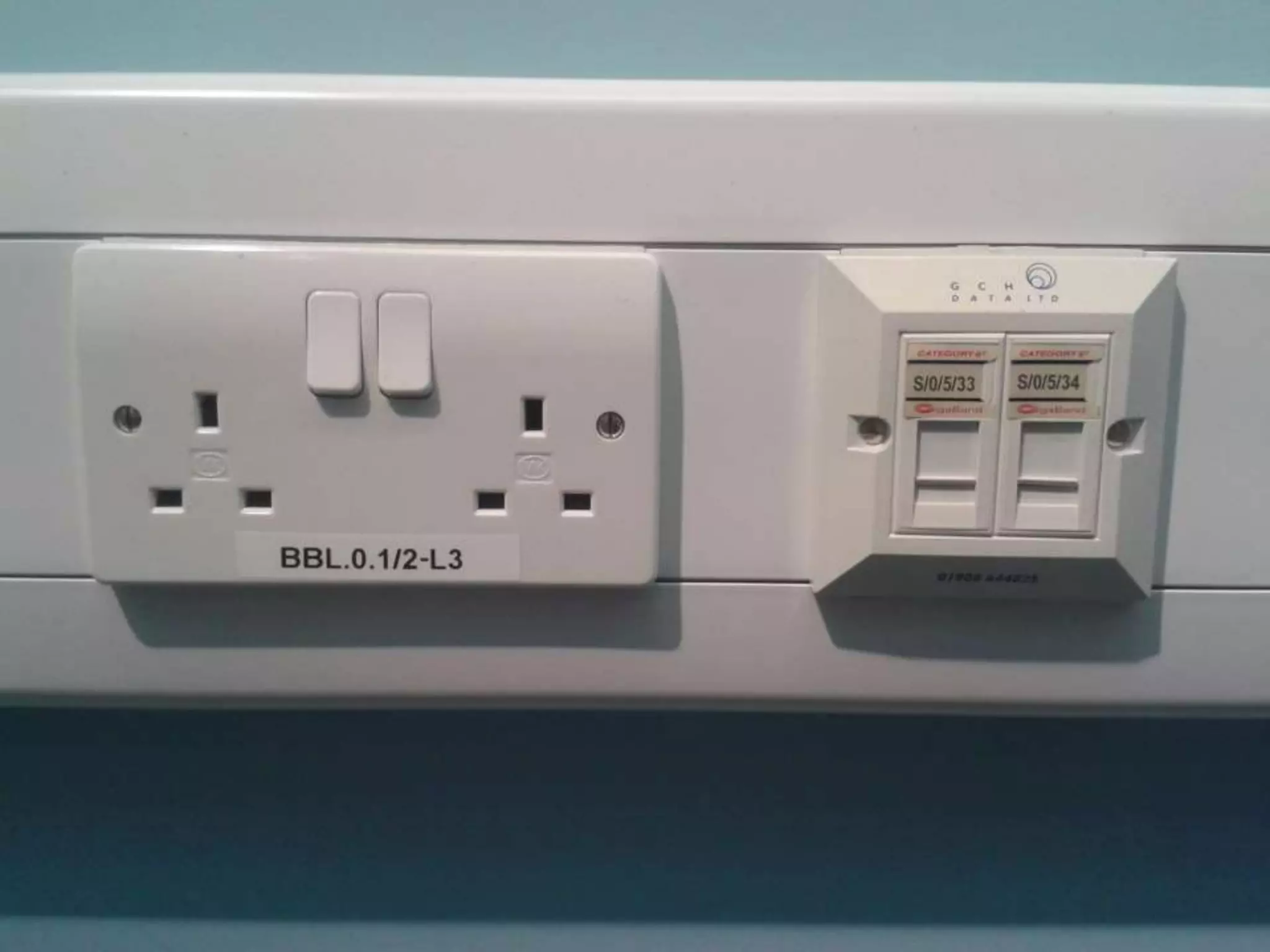
  • #7 This is “my library”, at the Open University campus in Milton Keynes. Originally dedicated to the library, counter services are now all but non0existend and the library staff reside pretty much on a single floor (not the ground floor…).
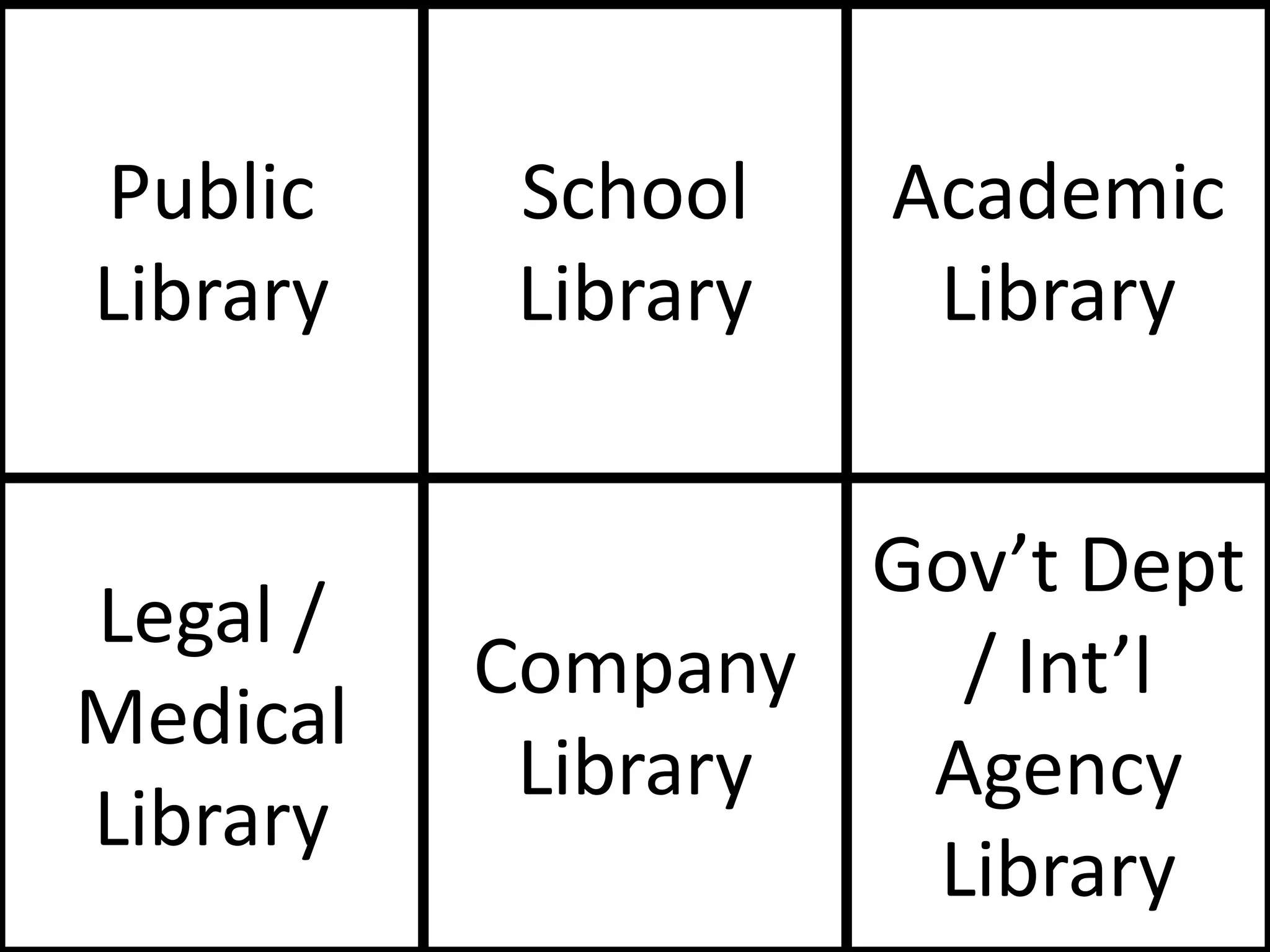
  • #9 What sort of library do you come from? Bear in mind - what sort of things are common across these different library types? What’s different?
  • #10 If the library is more than just the building, more even than the things you can point at, what is it?
  • #21 The present includes our understanding of the past and our thoughts about the future
  • #22 Whilst we might think we are planning the future, we are really planning for it, but perhaps not in the way you might think…
  • #25 We’re going to see how scenario planning provides one technique for trying to imagine possible futures, and then build a plan that is either resilient to various features associated those futures, or perhaps more riskily hedges a bet that elements of one or more particular futures don’t play out that way.
  • #26 This is an example of a visioning tool used recently as part of an OU Library Futures/Visioning exercise
  • #27 This is where the future may intrude….
  • #53 If the answer to aquestion is “try the library”, what’s the question?
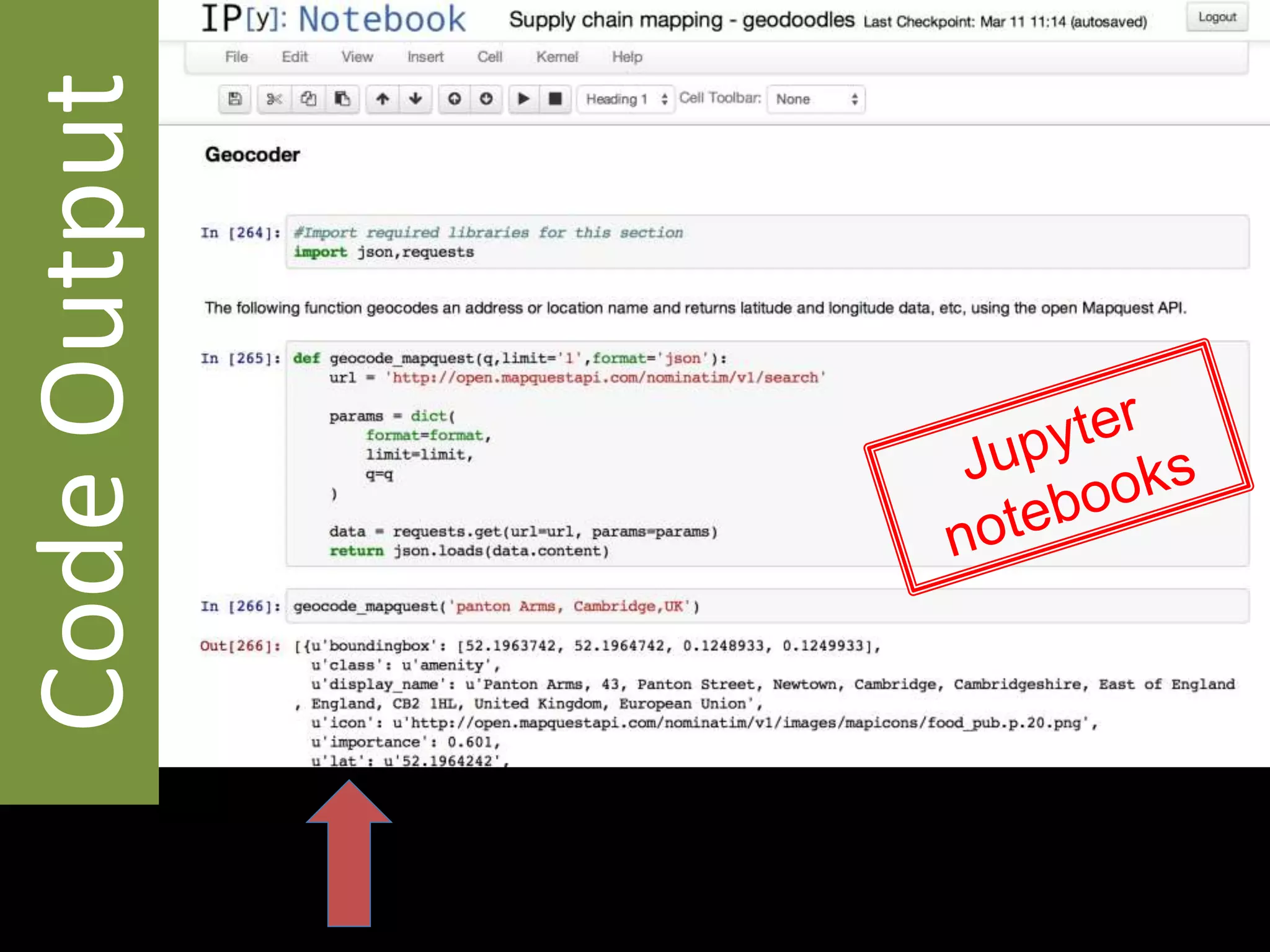
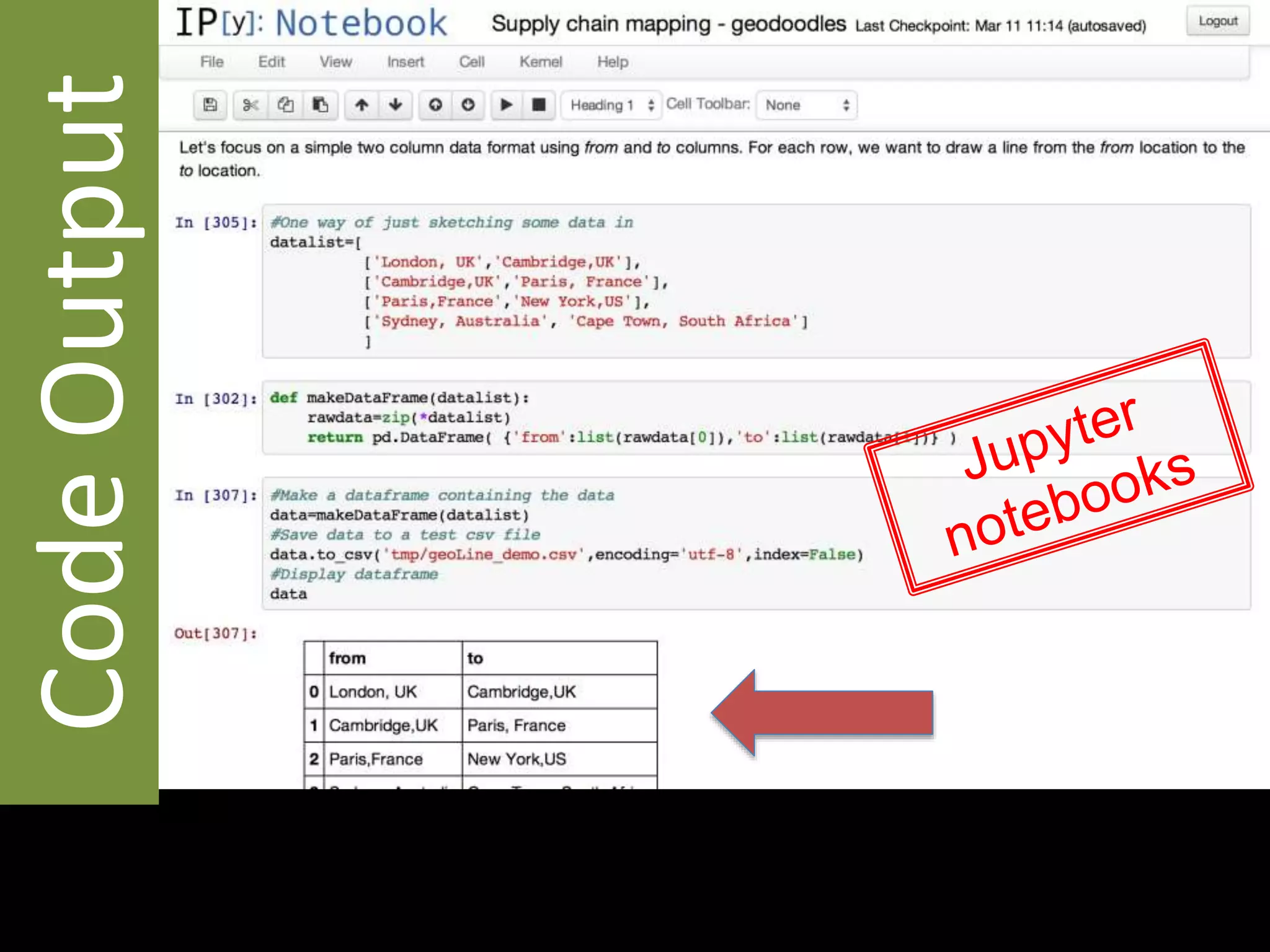
  • #58 The output of the code is not a human copied and pasted artefact. The output of the code – in this case, the result of executing a particular function – is only and exactly the output from executing that function on a specified dataset.
  • #59 The output of a code cell is not limited to the arcane outputs of a computational function. We can display data table results as data tables.
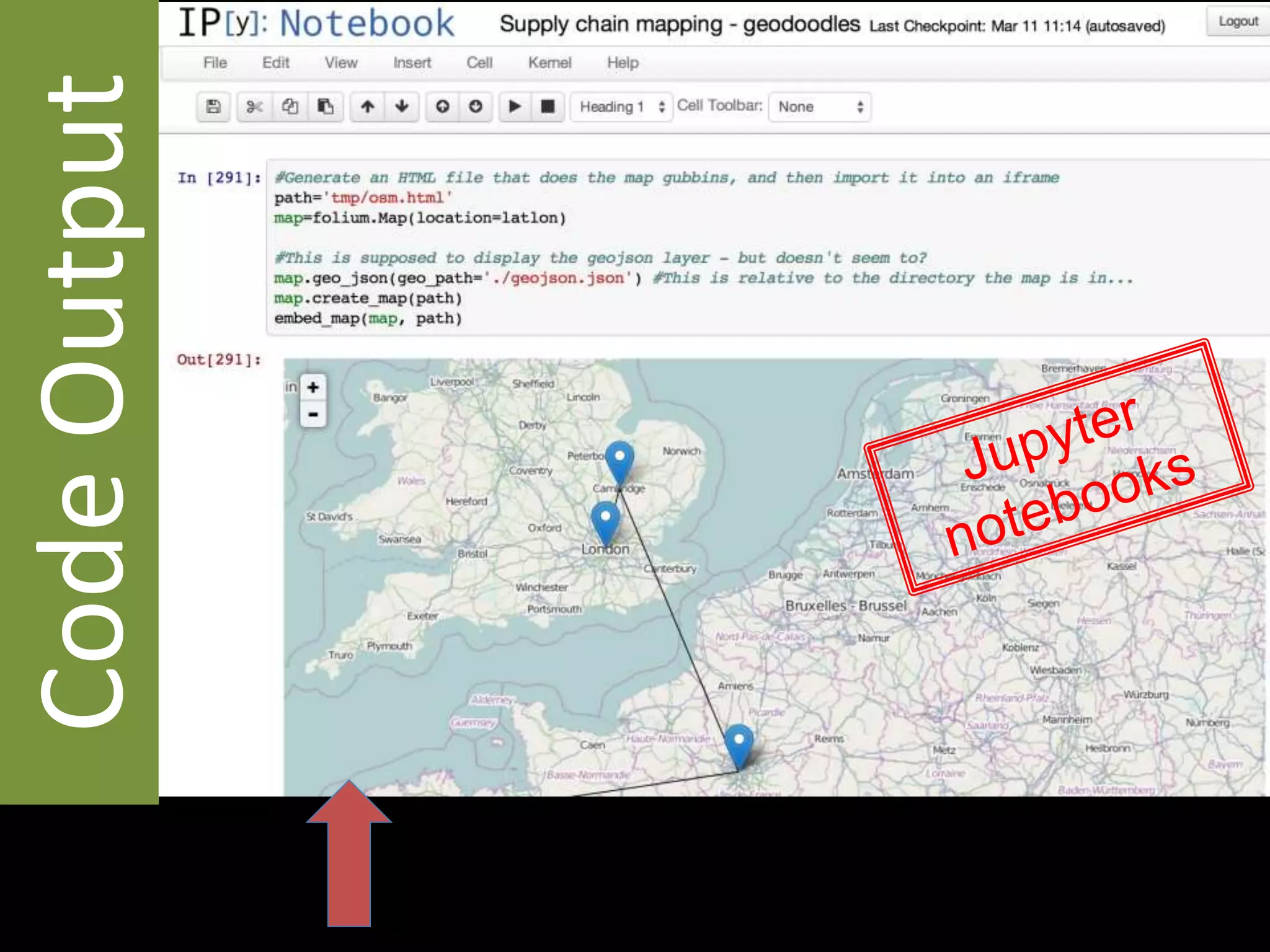
  • #60 We can also generate rich HTML outputs – in this case an interactive map overlaid with markers corresponding to locations specified in a dataset, and with lines connecting markers as defined by connections described in the original dataset. We can also delete the outputs of all the code cells, and then rerun the code, one step – one cell – after the other. Reproducing results becomes simply a matter of rerunning the code in the notebook against the data loaded in by the notebook – and then comparing the code cell outputs to the code cell outputs of the original document. Tools are also under development that help spot differences between those outputs, at least in cases where the outputs are text based.
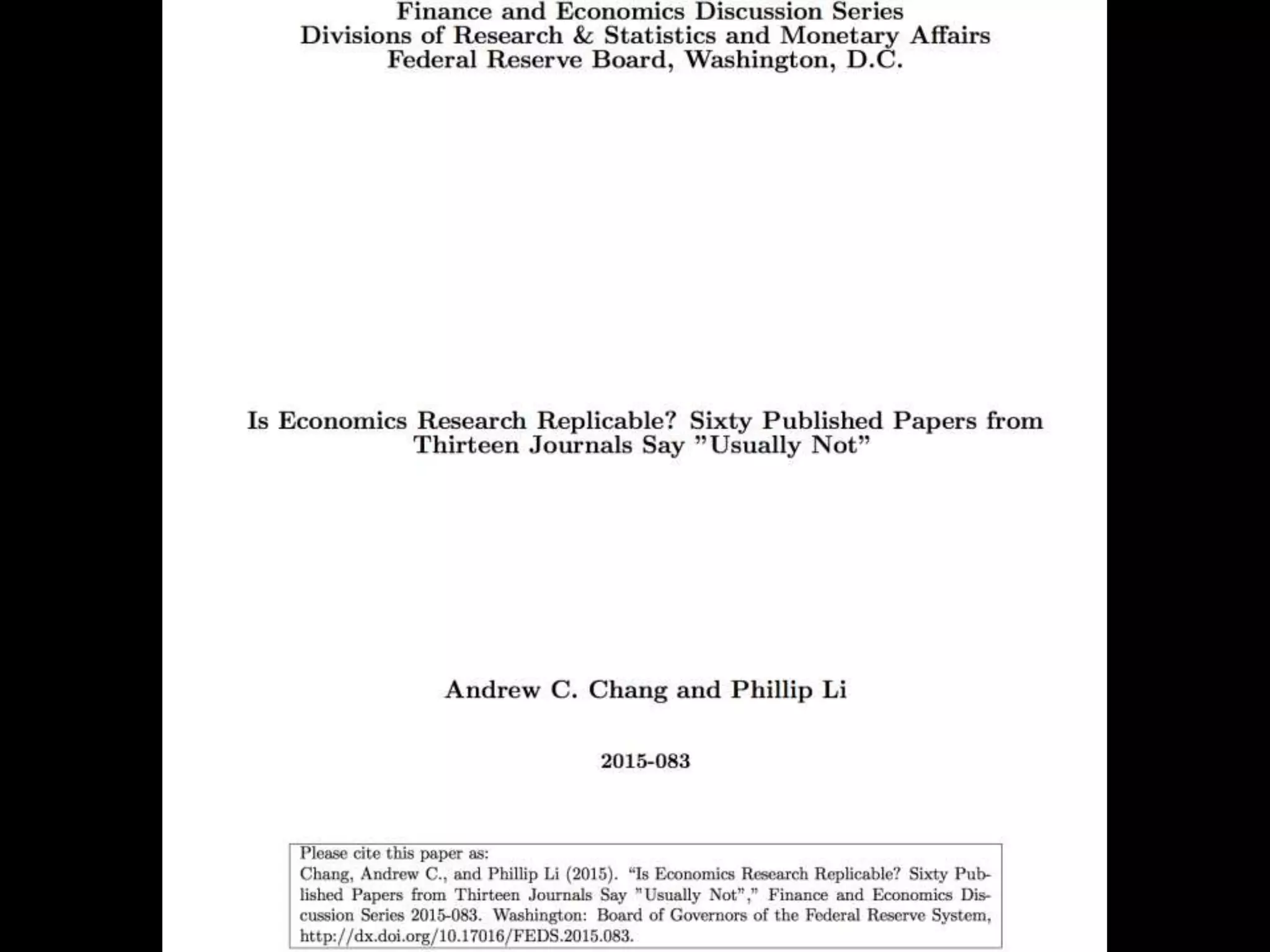
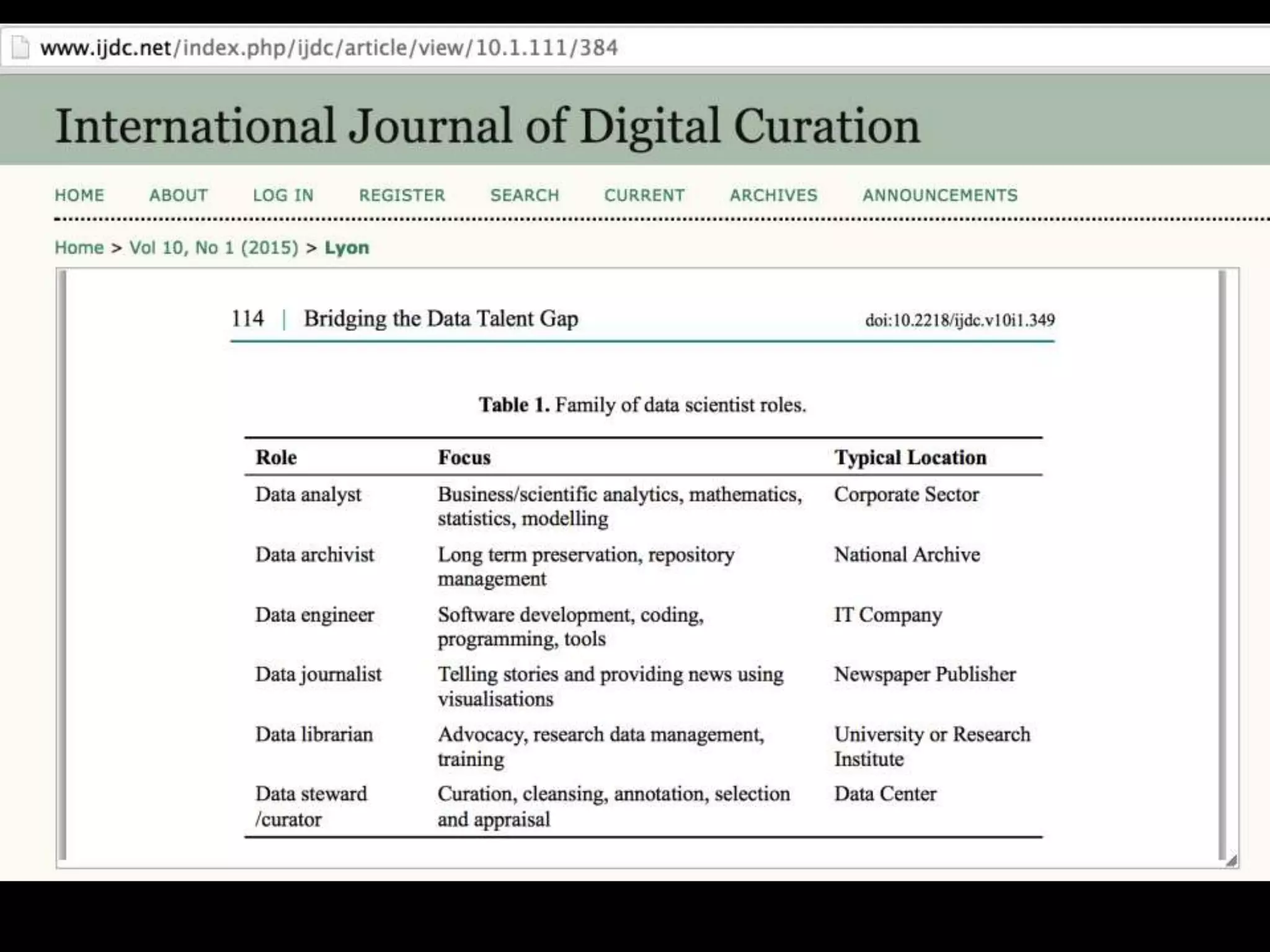
  • #62 Bridging_the_Data_Talent_Gap__Positioning_the_iSchool_as_an_Agent_for_Change___Lyon___International_Journal_of_Digital_Curation
  • #63 What sorts of skills does the library need to develop, both in order to deliver and operate its own internal services, but also in provide services to support others and helps others develop their own skills? docs_lib_purdue_edu_cgi_viewcontent_cgi_article_1009_context_iatul2010
  • #66 These “technologies” – whose use is manifest as skills – are all quite old technologies. They’ve been around for ages. But does the changing information environment change the extent to which people need to be able to use these techniques?
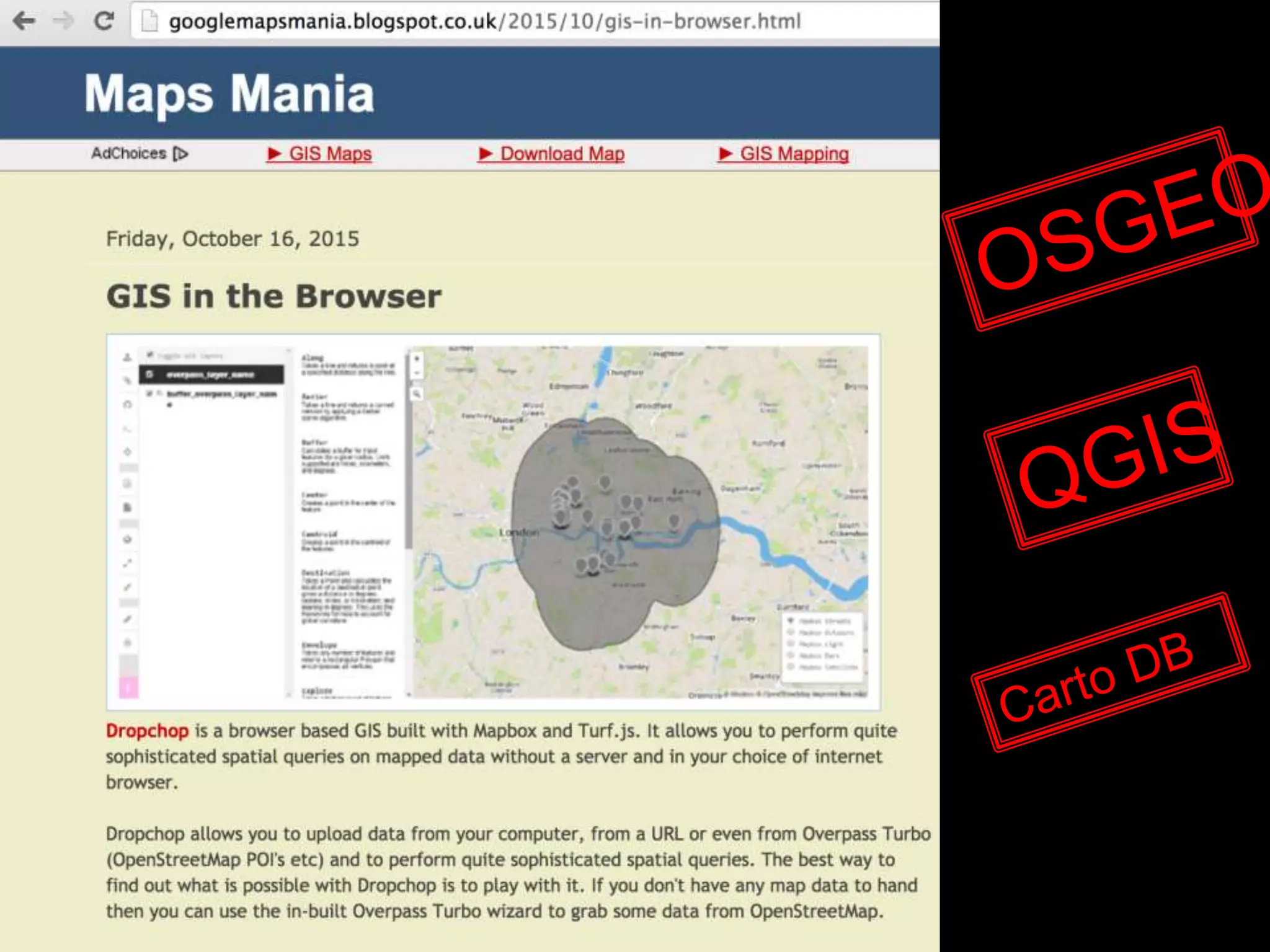
  • #76 Specialist blogs like Maps Mania – originally, “Google Maps Mania” – keep track of new uses of maps like Google Maps, Bing Maps, OpenStreetMap, and so on. As such, they provide specialist current awareness services. (Another site I like is SEO by the SEA, which tracks search related patents awarded to Google.) What struck me about this particular post was not the actual application particularly, more the crystallisation of the idea that GIS style tools and functionality are becoming more widespread, and the barriers to entry around using them are perhaps coming down to the level where a GIS application might be an expected part of a comprehensive “Office” style suite – and as such, some basic skills in using such an application might be expected (in the same way that we might expect children leaving school to be able to use a wordprocessor and a spreadsheet and perhaps even a simple database).
  • #98 Libraries were pioneers of sharing models – but are they being left behind?
  • #99 We’re all familiar with the idea that music and books are now “licensed” rather than owned. But this model also seems to be expanding to other areas ? In an acquisitive society, it seems that models of ownership are changing… Ref: also John Deere tractors.
  • #100 The ‘sharing economy” has been getting a lot of hype in recent years, but I fail to see the attraction. Groupon was just a coupon based discount intermediary, offering competition freebies without the competition, and Uber and Airbnb are just letting agents – they’re not supporting “sharing”, they’re benefitting from selling on the services of zero-hour contractors. So on the one hand, we have folk giving up ownership in favour of licensing; and on the other, folk opting in to offering occasional services through a top-slicing agency that offers few, if any, commitments or guarantees in return?
  • #101 What you do “own” is your own job… rather than offsetting some of that “employment responsibility” to an employer… http://www.theguardian.com/sustainable-business/2015/aug/19/gig-economy-no-game-changer-impact-uber-airbnb
  • #103 Libraries operate in an environment where information flows are often mediated by copyright. So when copyright changes, how might libraries be affected?
  • #105 Libraries are in the business of helping folk get access to information – but to what extent should libraries lobby around changes to legislation that affect access to information? For example, access to information from public bodies through freedom of information legislation?