By: Marsha Druker
January 11, 2012
   “A group with deep interpersonal connections
    built through shared experiences, rituals and
    traditions”

   Occupy space physically. The tribe, or at least
    some of its members, can gather and perform
    rituals in meeting-places such as places of
    worship or public spaces
     These spaces are known as “anchoring places”
   Humans have a basic need to
    connect with others, share
    experiences, and develop
    relationships

   Involvement with a tribe is an
    expression of self-identity

   Belonging to a tribe can be very
    helpful in guiding one through
    life, as well as increasing
    happiness

       Purely Social
       Values + Social
       Cultural + Social
       Business + Social
   “Groups of people emotionally connected by
    similar consumption values and usage, who
    use the social „linking value‟ of products and
    services to create a community and express
    identity”

   Relatively new concept, but one that has
    made a remarkable impact on marketing
    theory development
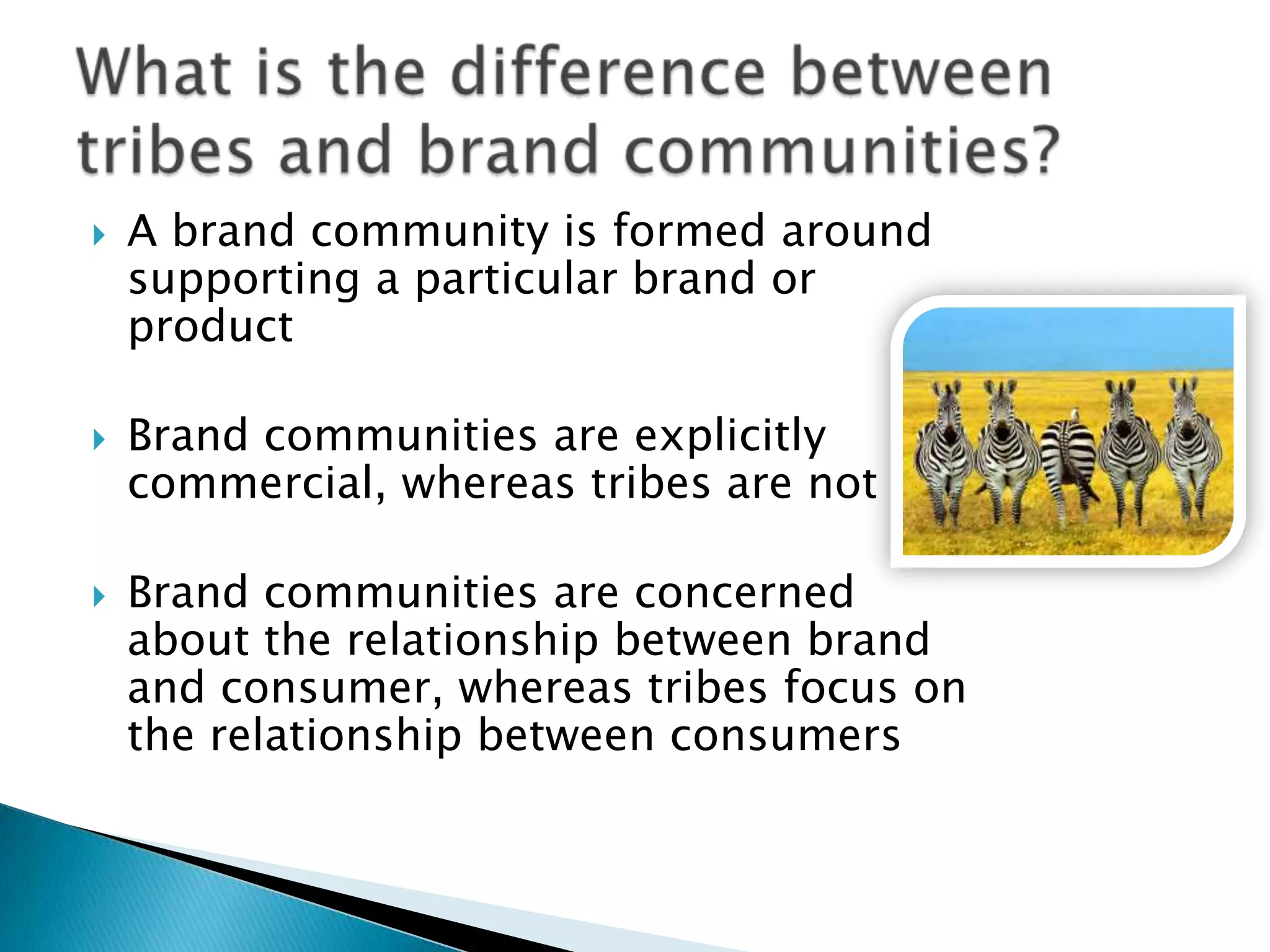
   A brand community is formed around
    supporting a particular brand or
    product

   Brand communities are explicitly
    commercial, whereas tribes are not

   Brand communities are concerned
    about the relationship between brand
    and consumer, whereas tribes focus on
    the relationship between consumers
   Social influences play a crucial role in
    an individual's consumption decisions

   In addition to sharing moral values and
    opinions, consumer tribes also share
    consumption preferences

   This provides opportunity for
    marketers to access a specific market
    segment and to create lasting loyalty
    through establishing both an emotional
    connection as well as a rational reason
    for commitment
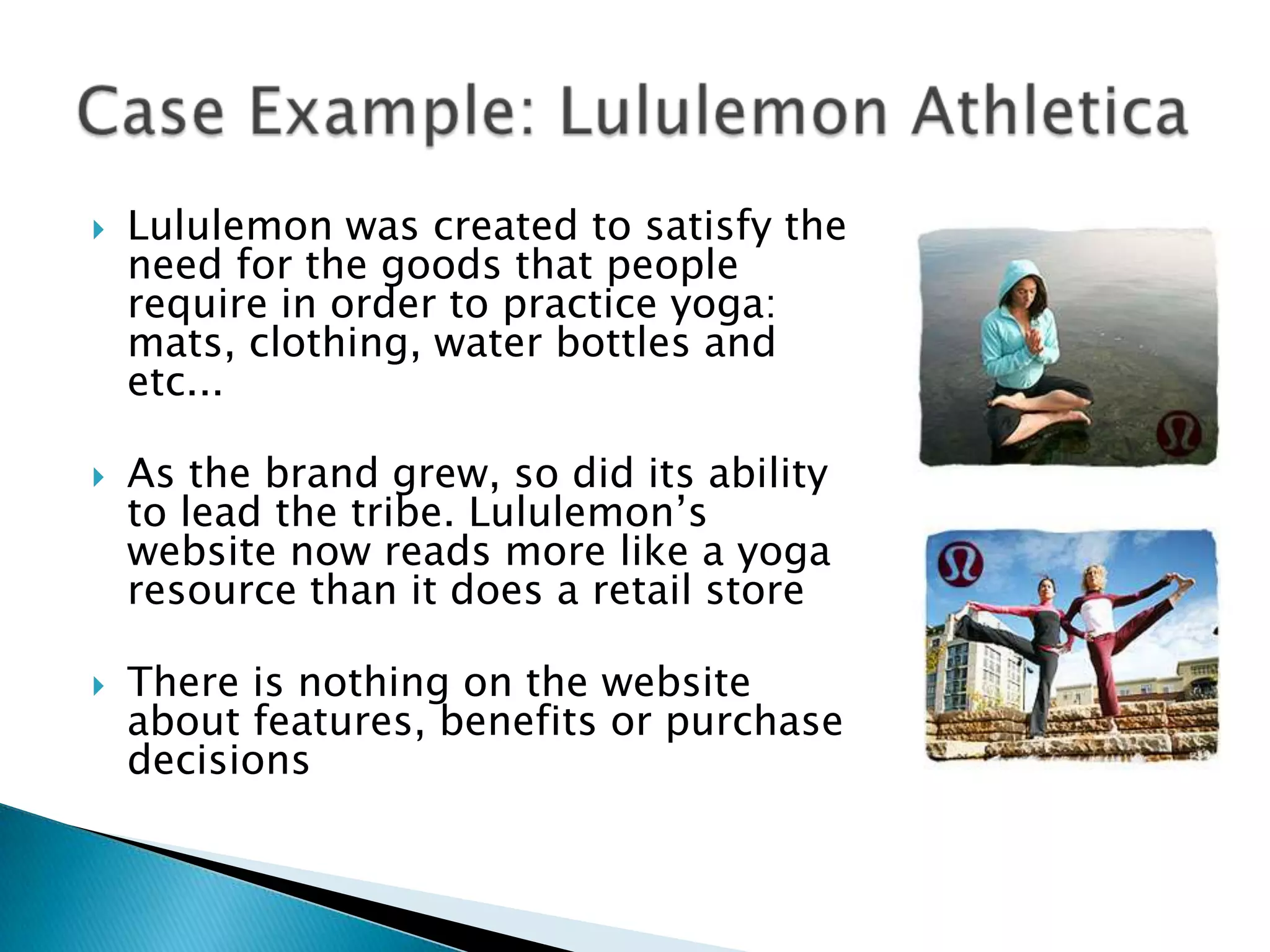
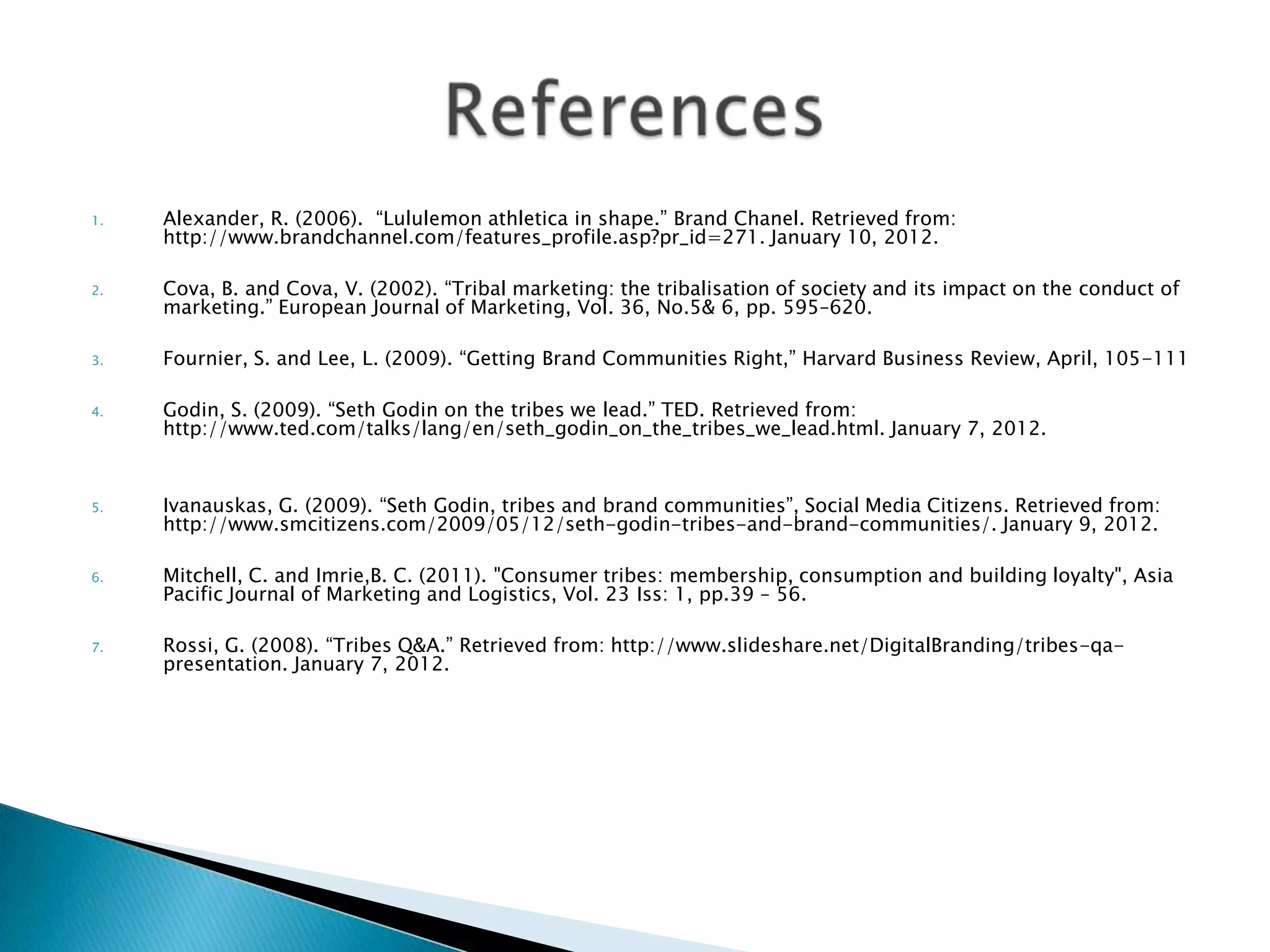
   Lululemon was created to satisfy the
    need for the goods that people
    require in order to practice yoga:
    mats, clothing, water bottles and
    etc...

   As the brand grew, so did its ability
    to lead the tribe. Lululemon‟s
    website now reads more like a yoga
    resource than it does a retail store

   There is nothing on the website
    about features, benefits or purchase
    decisions
   The yoga connection is at the very core of lululemon:
     sells high-quality yoga clothing
     pays for employees to take yoga classes
     holds its own classes five days a week at the head office

    “At the core, we‟re yoga both literally and figuratively. Yoga is so
      good for you. We feel it‟s a gift of health. If we can educate a
      customer on the benefits of yoga, we've made them a better
      person and the world a better place.” - Eric Petersen, lululemon‟s
      marketing director

   In-store bulletin boards feature fliers advertising nearby yoga sessions

   Lululemon employees, “educators,” are always happy to recommend
    their favourite instructor or answer any questions!

   Supports local athletic communities by providing a research and
    development (clothing, mats, water bottles, etc.) discount to certified
    yoga instructors, personal trainers or coaches
1.   Alexander, R. (2006). “Lululemon athletica in shape.” Brand Chanel. Retrieved from:
     http://www.brandchannel.com/features_profile.asp?pr_id=271. January 10, 2012.

2.   Cova, B. and Cova, V. (2002). “Tribal marketing: the tribalisation of society and its impact on the conduct of
     marketing.” European Journal of Marketing, Vol. 36, No.5& 6, pp. 595–620.

3.   Fournier, S. and Lee, L. (2009). “Getting Brand Communities Right,” Harvard Business Review, April, 105-111

4.   Godin, S. (2009). “Seth Godin on the tribes we lead.” TED. Retrieved from:
     http://www.ted.com/talks/lang/en/seth_godin_on_the_tribes_we_lead.html. January 7, 2012.


5.   Ivanauskas, G. (2009). “Seth Godin, tribes and brand communities”, Social Media Citizens. Retrieved from:
     http://www.smcitizens.com/2009/05/12/seth-godin-tribes-and-brand-communities/. January 9, 2012.

6.   Mitchell, C. and Imrie,B. C. (2011). "Consumer tribes: membership, consumption and building loyalty", Asia
     Pacific Journal of Marketing and Logistics, Vol. 23 Iss: 1, pp.39 – 56.

7.   Rossi, G. (2008). “Tribes Q&A.” Retrieved from: http://www.slideshare.net/DigitalBranding/tribes-qa-
     presentation. January 7, 2012.

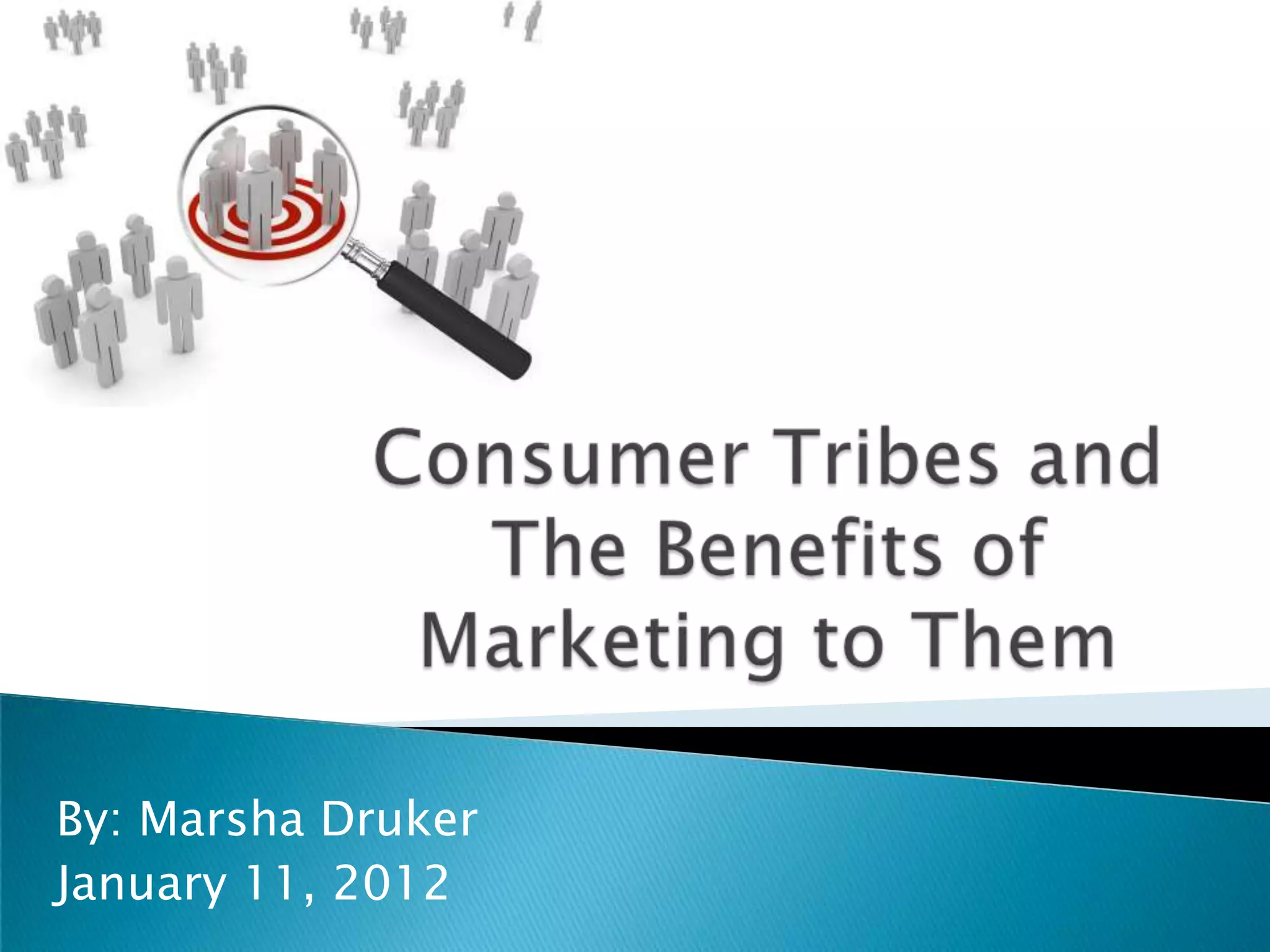
Consumer tribes and the benefits of marketing to them

  • 1.
  • 2.
    “A group with deep interpersonal connections built through shared experiences, rituals and traditions”  Occupy space physically. The tribe, or at least some of its members, can gather and perform rituals in meeting-places such as places of worship or public spaces These spaces are known as “anchoring places”
  • 4.
    Humans have a basic need to connect with others, share experiences, and develop relationships  Involvement with a tribe is an expression of self-identity  Belonging to a tribe can be very helpful in guiding one through life, as well as increasing happiness  Purely Social  Values + Social  Cultural + Social  Business + Social
  • 5.
    “Groups of people emotionally connected by similar consumption values and usage, who use the social „linking value‟ of products and services to create a community and express identity”  Relatively new concept, but one that has made a remarkable impact on marketing theory development
  • 6.
    A brand community is formed around supporting a particular brand or product  Brand communities are explicitly commercial, whereas tribes are not  Brand communities are concerned about the relationship between brand and consumer, whereas tribes focus on the relationship between consumers
  • 7.
    Social influences play a crucial role in an individual's consumption decisions  In addition to sharing moral values and opinions, consumer tribes also share consumption preferences  This provides opportunity for marketers to access a specific market segment and to create lasting loyalty through establishing both an emotional connection as well as a rational reason for commitment
  • 9.
    Lululemon was created to satisfy the need for the goods that people require in order to practice yoga: mats, clothing, water bottles and etc...  As the brand grew, so did its ability to lead the tribe. Lululemon‟s website now reads more like a yoga resource than it does a retail store  There is nothing on the website about features, benefits or purchase decisions
  • 12.
    The yoga connection is at the very core of lululemon:  sells high-quality yoga clothing  pays for employees to take yoga classes  holds its own classes five days a week at the head office “At the core, we‟re yoga both literally and figuratively. Yoga is so good for you. We feel it‟s a gift of health. If we can educate a customer on the benefits of yoga, we've made them a better person and the world a better place.” - Eric Petersen, lululemon‟s marketing director  In-store bulletin boards feature fliers advertising nearby yoga sessions  Lululemon employees, “educators,” are always happy to recommend their favourite instructor or answer any questions!  Supports local athletic communities by providing a research and development (clothing, mats, water bottles, etc.) discount to certified yoga instructors, personal trainers or coaches
  • 13.
    1. Alexander, R. (2006). “Lululemon athletica in shape.” Brand Chanel. Retrieved from: http://www.brandchannel.com/features_profile.asp?pr_id=271. January 10, 2012. 2. Cova, B. and Cova, V. (2002). “Tribal marketing: the tribalisation of society and its impact on the conduct of marketing.” European Journal of Marketing, Vol. 36, No.5& 6, pp. 595–620. 3. Fournier, S. and Lee, L. (2009). “Getting Brand Communities Right,” Harvard Business Review, April, 105-111 4. Godin, S. (2009). “Seth Godin on the tribes we lead.” TED. Retrieved from: http://www.ted.com/talks/lang/en/seth_godin_on_the_tribes_we_lead.html. January 7, 2012. 5. Ivanauskas, G. (2009). “Seth Godin, tribes and brand communities”, Social Media Citizens. Retrieved from: http://www.smcitizens.com/2009/05/12/seth-godin-tribes-and-brand-communities/. January 9, 2012. 6. Mitchell, C. and Imrie,B. C. (2011). "Consumer tribes: membership, consumption and building loyalty", Asia Pacific Journal of Marketing and Logistics, Vol. 23 Iss: 1, pp.39 – 56. 7. Rossi, G. (2008). “Tribes Q&A.” Retrieved from: http://www.slideshare.net/DigitalBranding/tribes-qa- presentation. January 7, 2012.