Why Is Agile Failing in
Large Enterprises…
… and what you can do about it
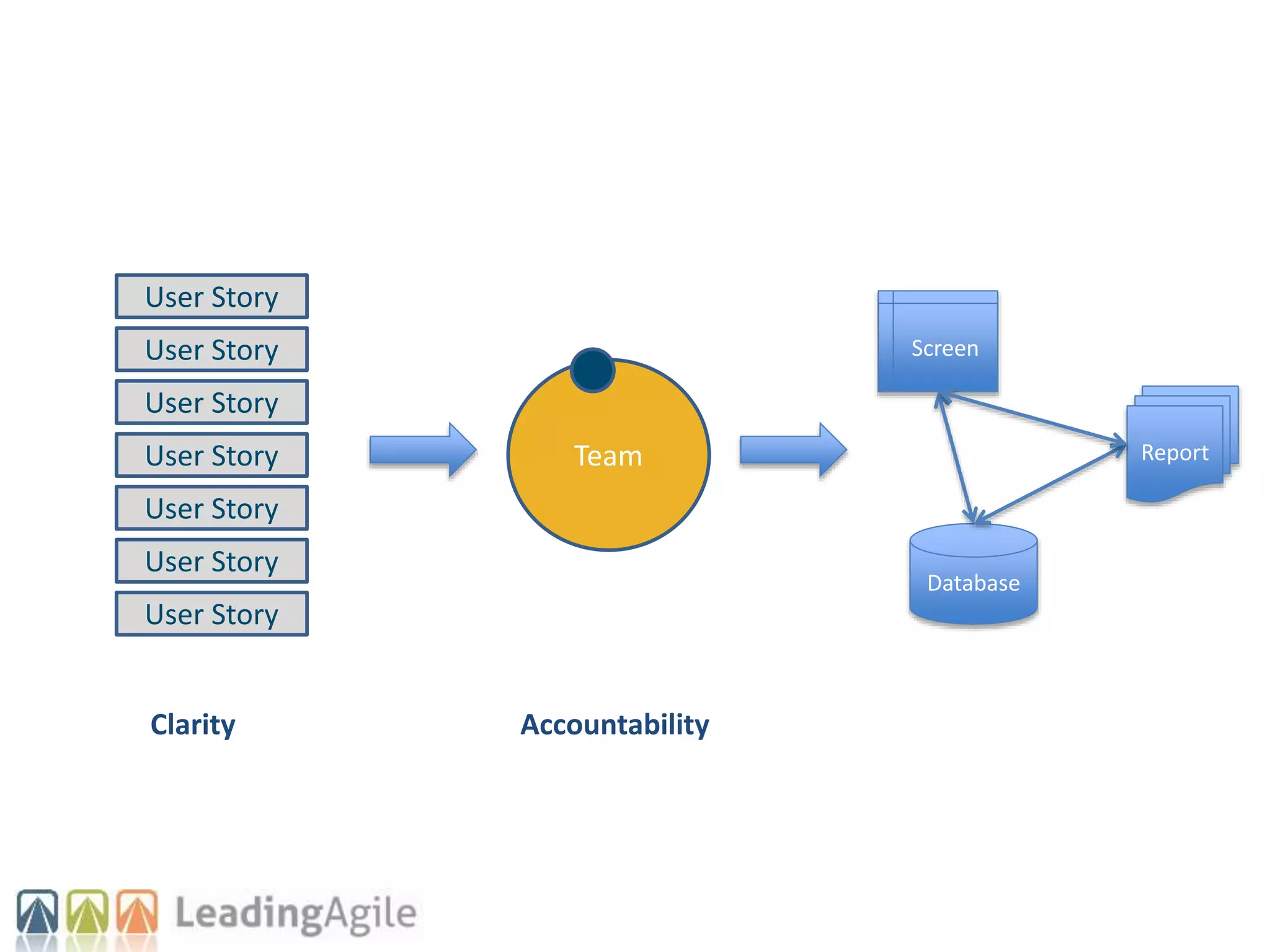
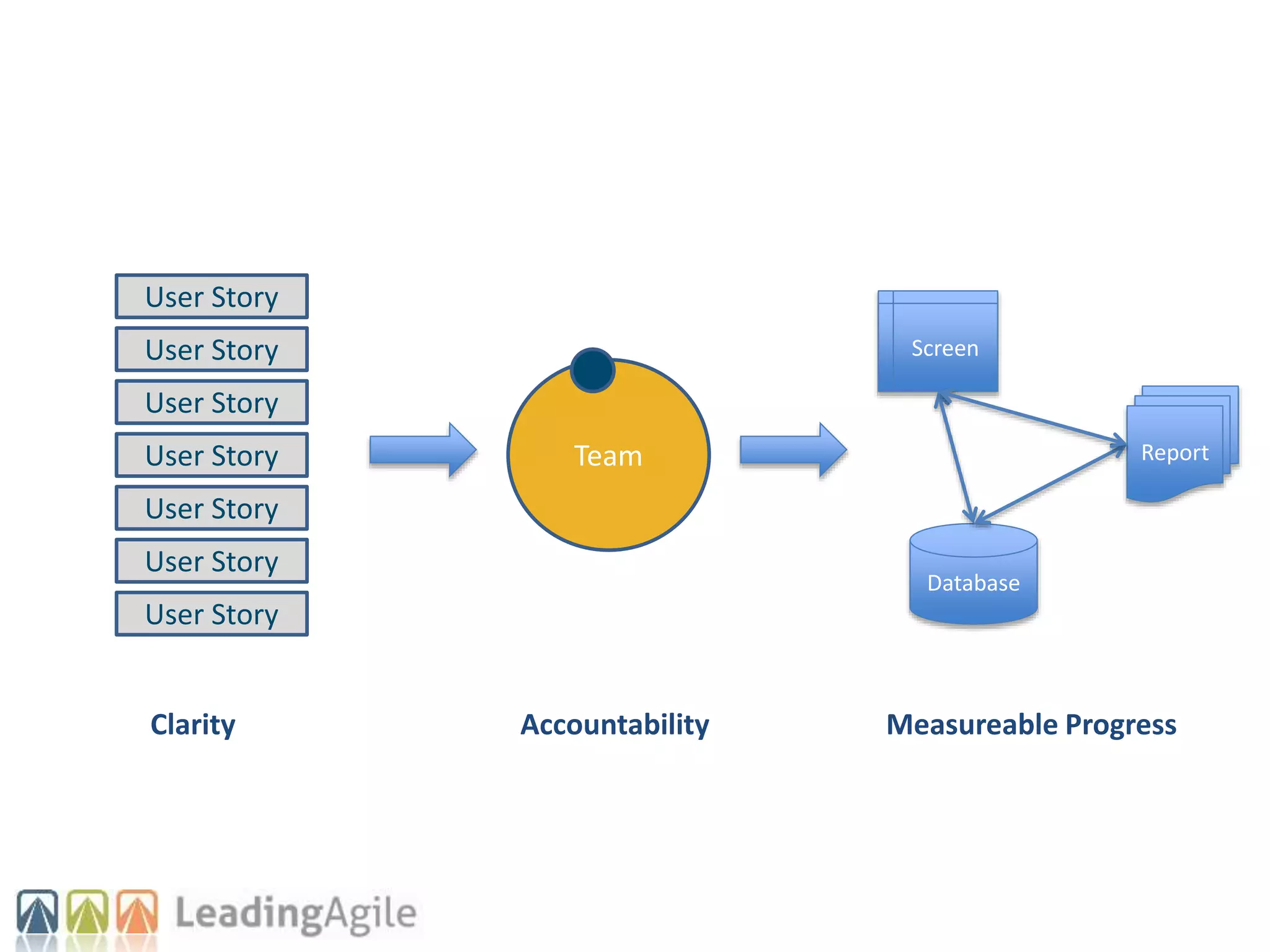
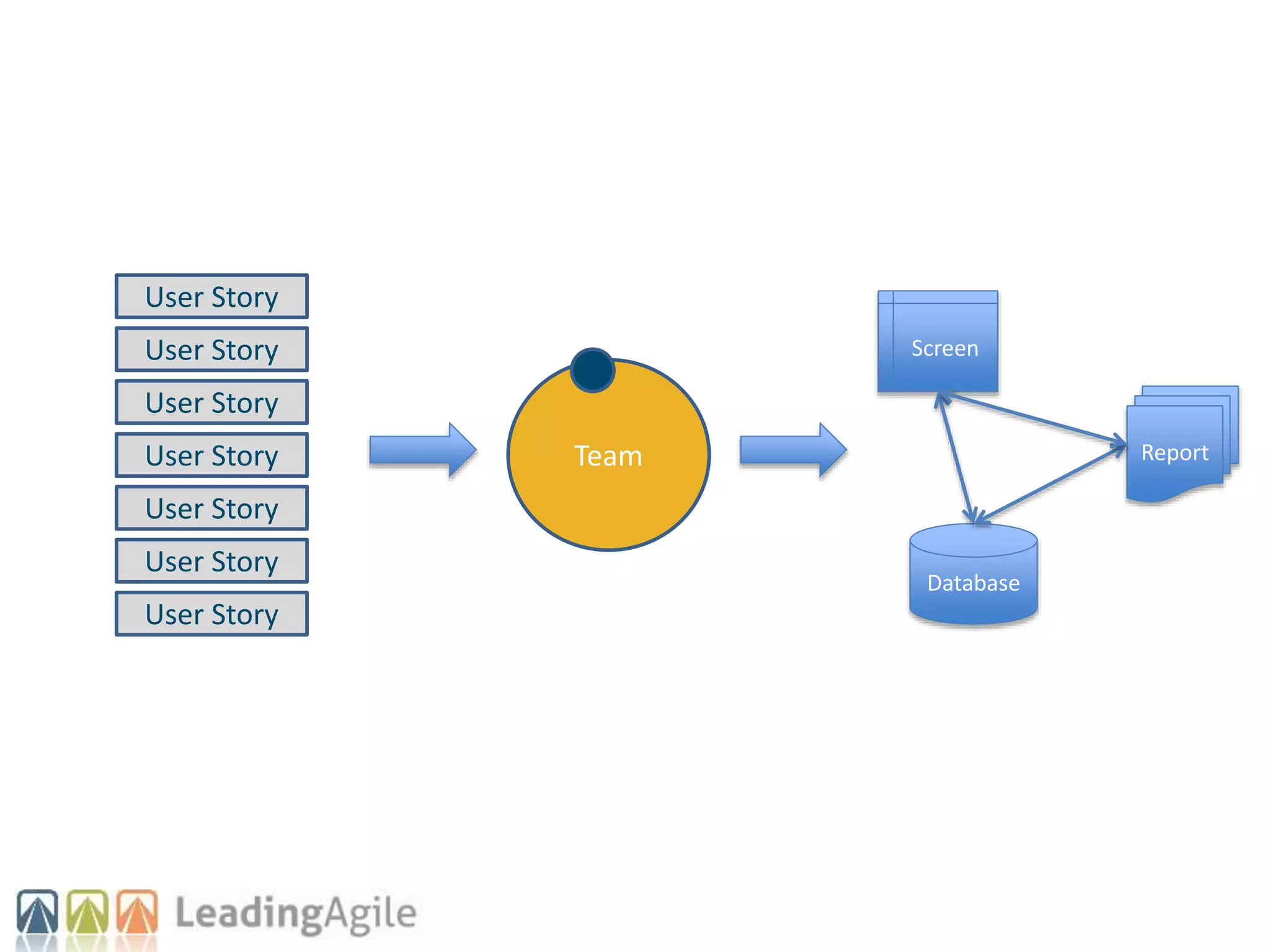
Why Agile Works?
Team
Database
Report
Screen
User Story
User Story
User Story
User Story
User Story
User Story
User Story
Team
Database
Report
Screen
User Story
User Story
User Story
User Story
User Story
User Story
User Story
Clarity
Team
Database
Report
Screen
User Story
User Story
User Story
User Story
User Story
User Story
User Story
Clarity Accountability
Team
Database
Report
Screen
User Story
User Story
User Story
User Story
User Story
User Story
User Story
Clarity Accountability Measureable Progress
Why Agile Fails?
Team
Database
Report
Screen
User Story
User Story
User Story
User Story
User Story
User Story
User Story
Team
Database
Report
Screen
User Story
User Story
User Story
User Story
User Story
User Story
User Story
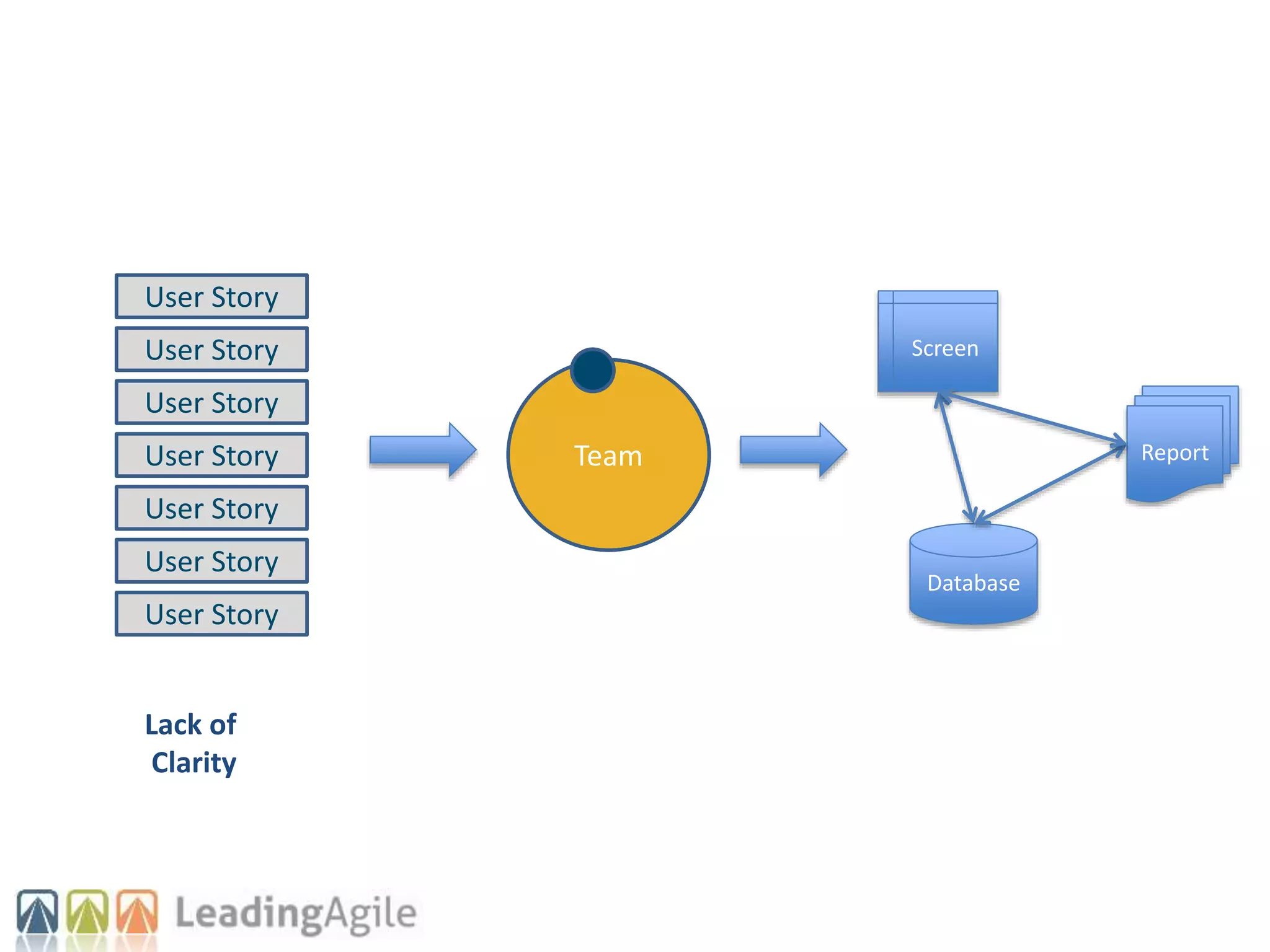
Lack of
Clarity
Team
Database
Report
Screen
User Story
User Story
User Story
User Story
User Story
User Story
User Story
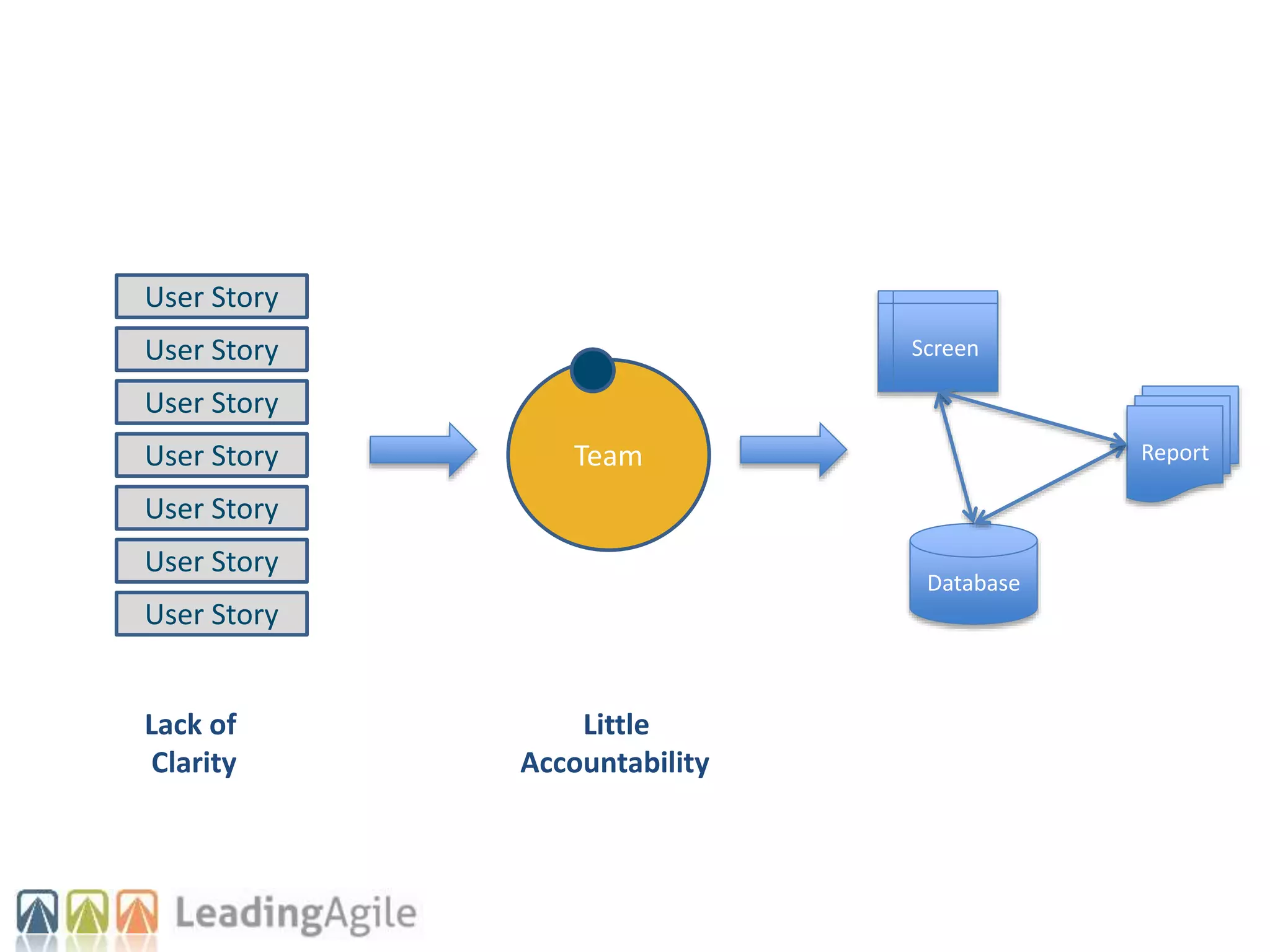
Lack of
Clarity
Little
Accountability
Team
Database
Report
Screen
User Story
User Story
User Story
User Story
User Story
User Story
User Story
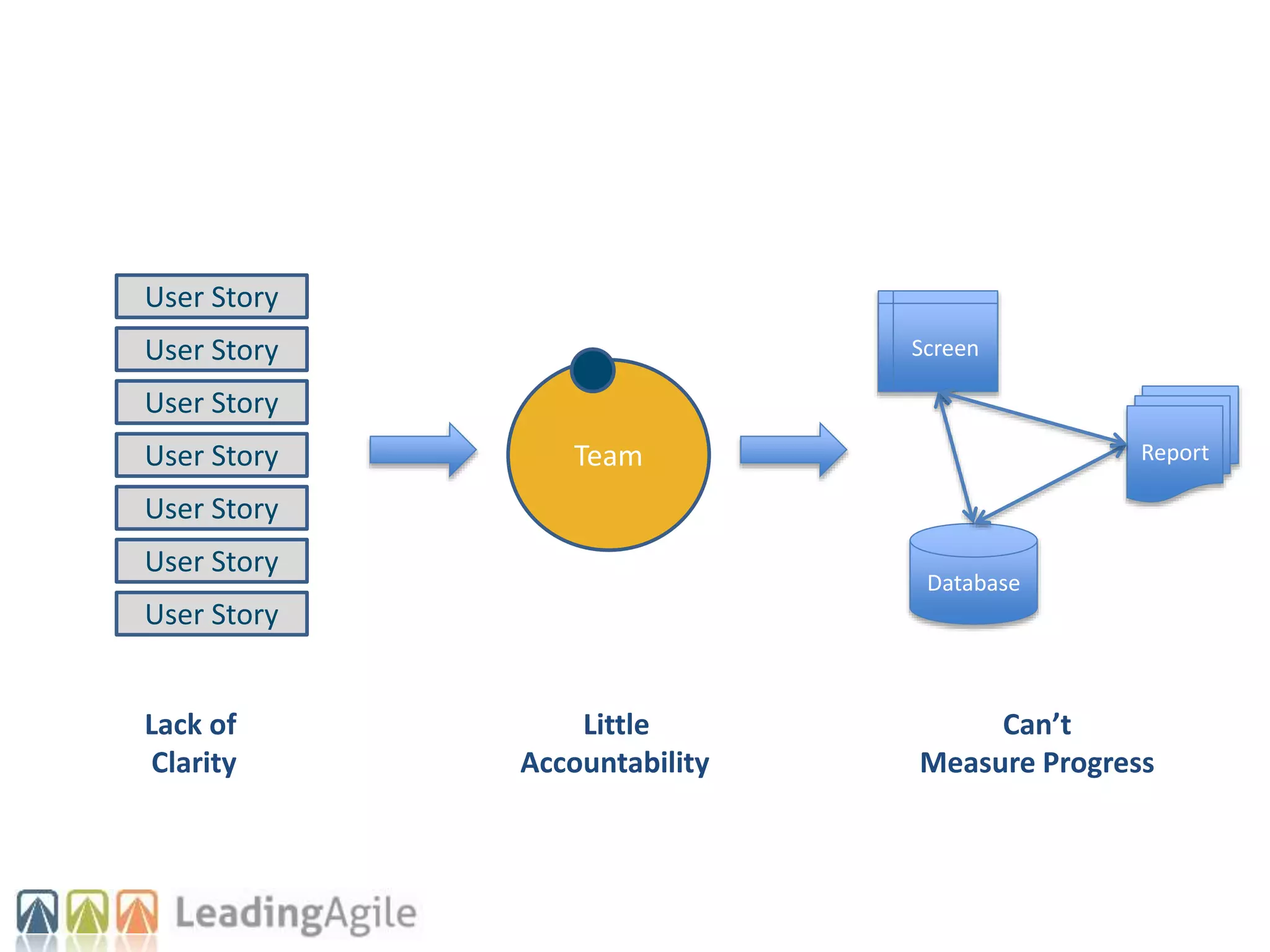
Lack of
Clarity
Little
Accountability
Can’t
Measure Progress
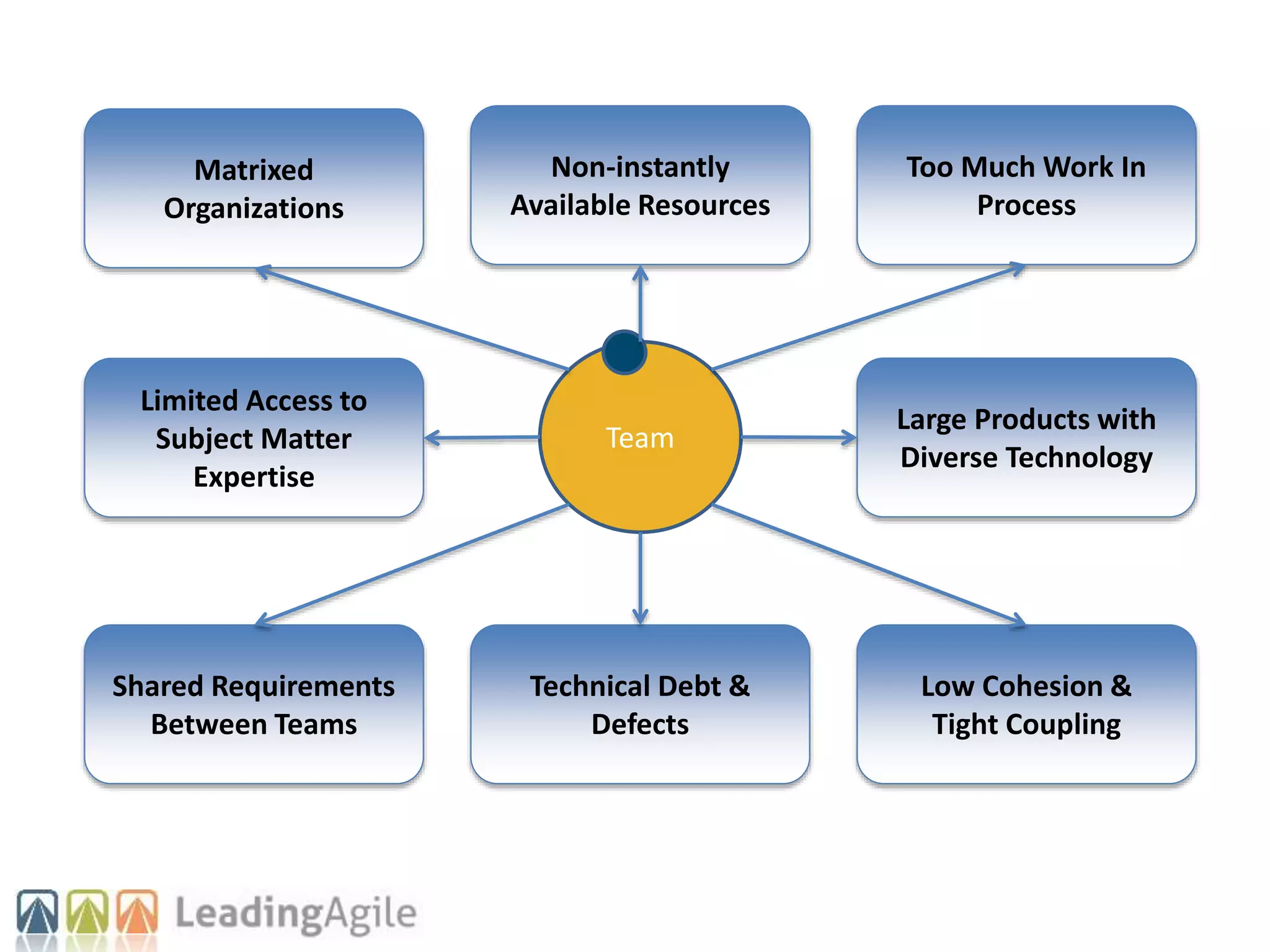
What Gets In The Way?
Team
Matrixed
Organizations
Limited Access to
Subject Matter
Expertise
Non-instantly
Available Resources
Too Much Work In
Process
Low Cohesion &
Tight Coupling
Shared Requirements
Between Teams
Technical Debt &
Defects
Large Products with
Diverse Technology
How Do You Begin
an Agile Transformation?
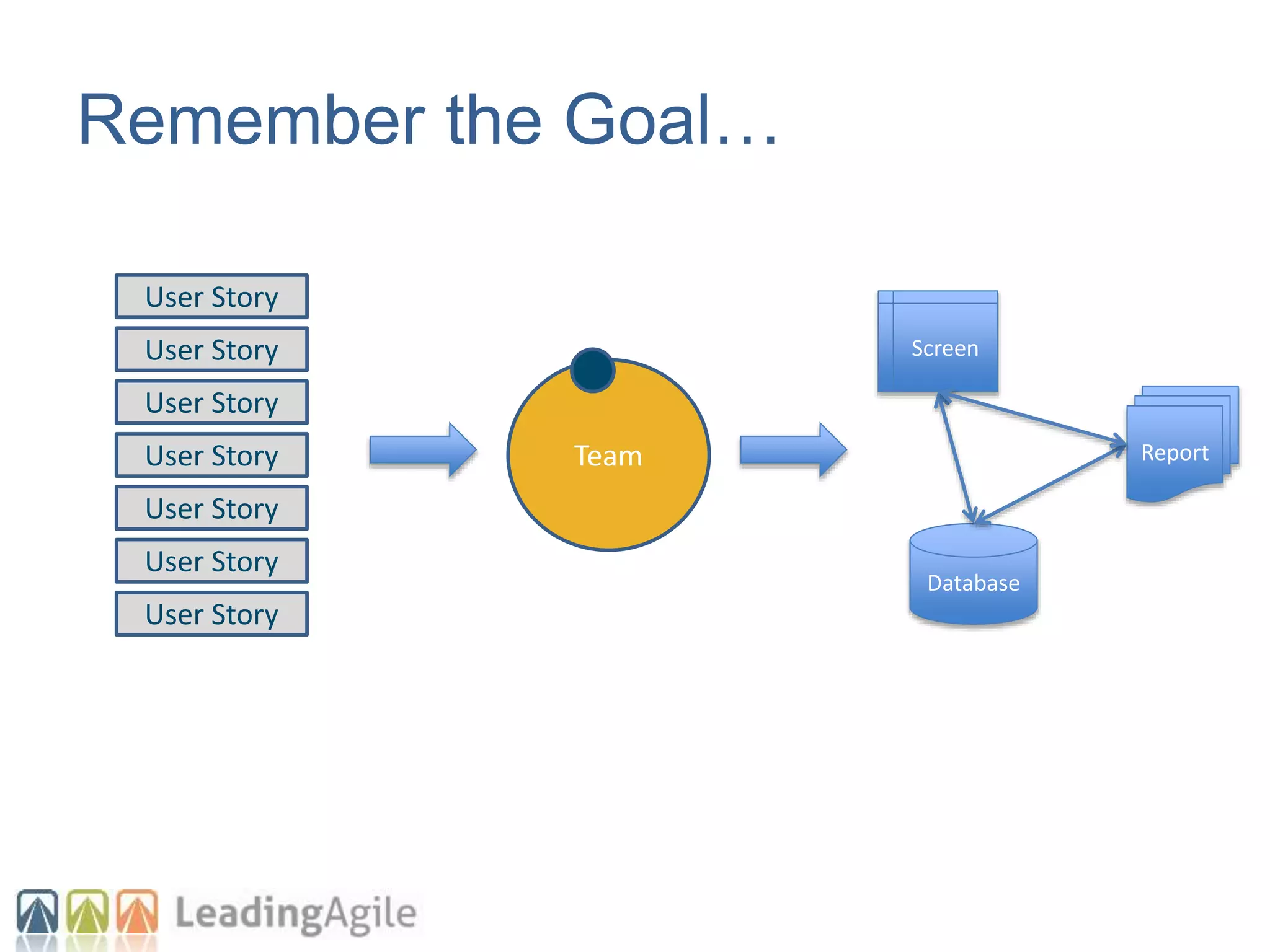
Team
Database
Report
Screen
User Story
User Story
User Story
User Story
User Story
User Story
User Story
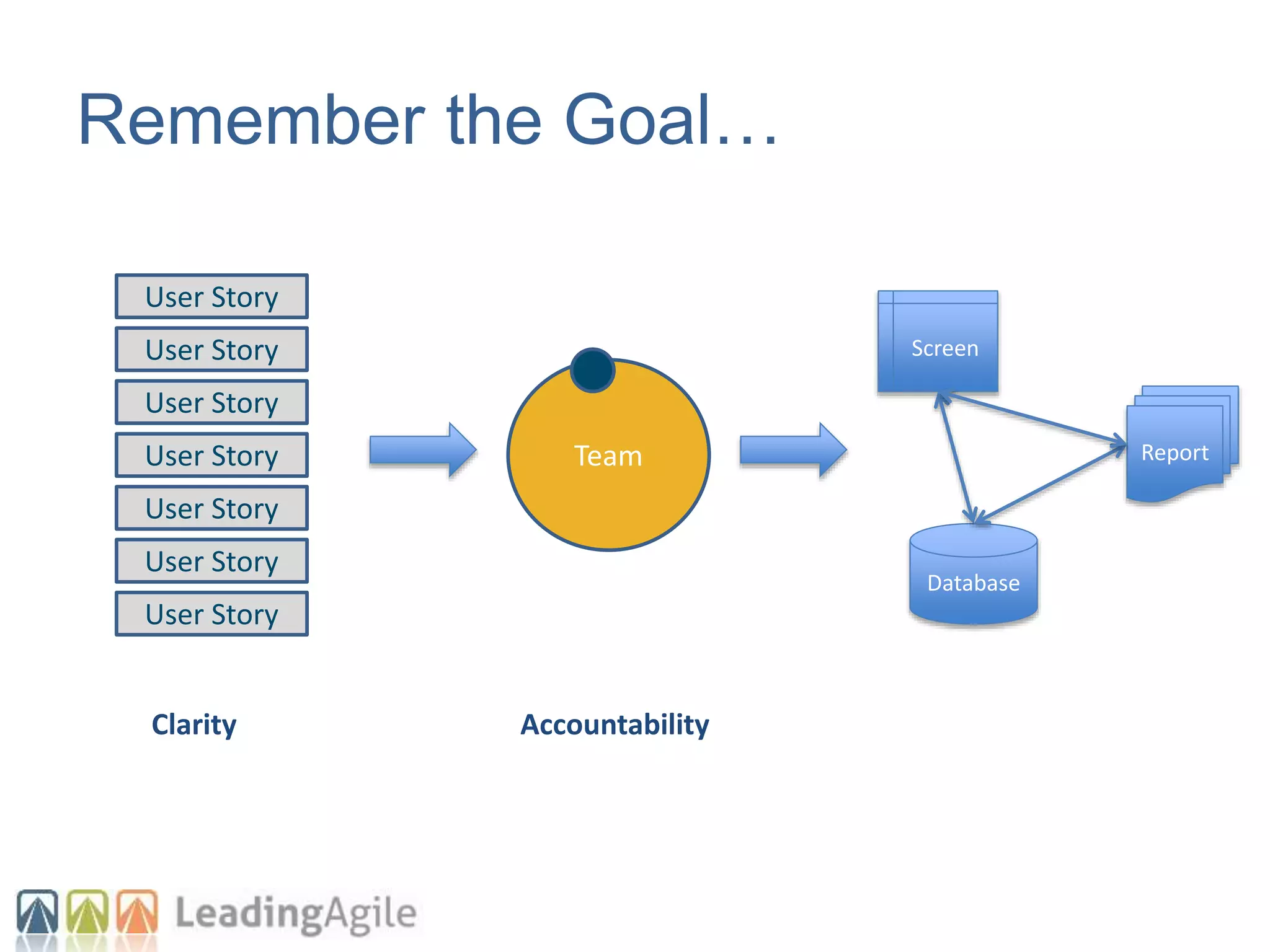
Remember the Goal…
Team
Database
Report
Screen
User Story
User Story
User Story
User Story
User Story
User Story
User Story
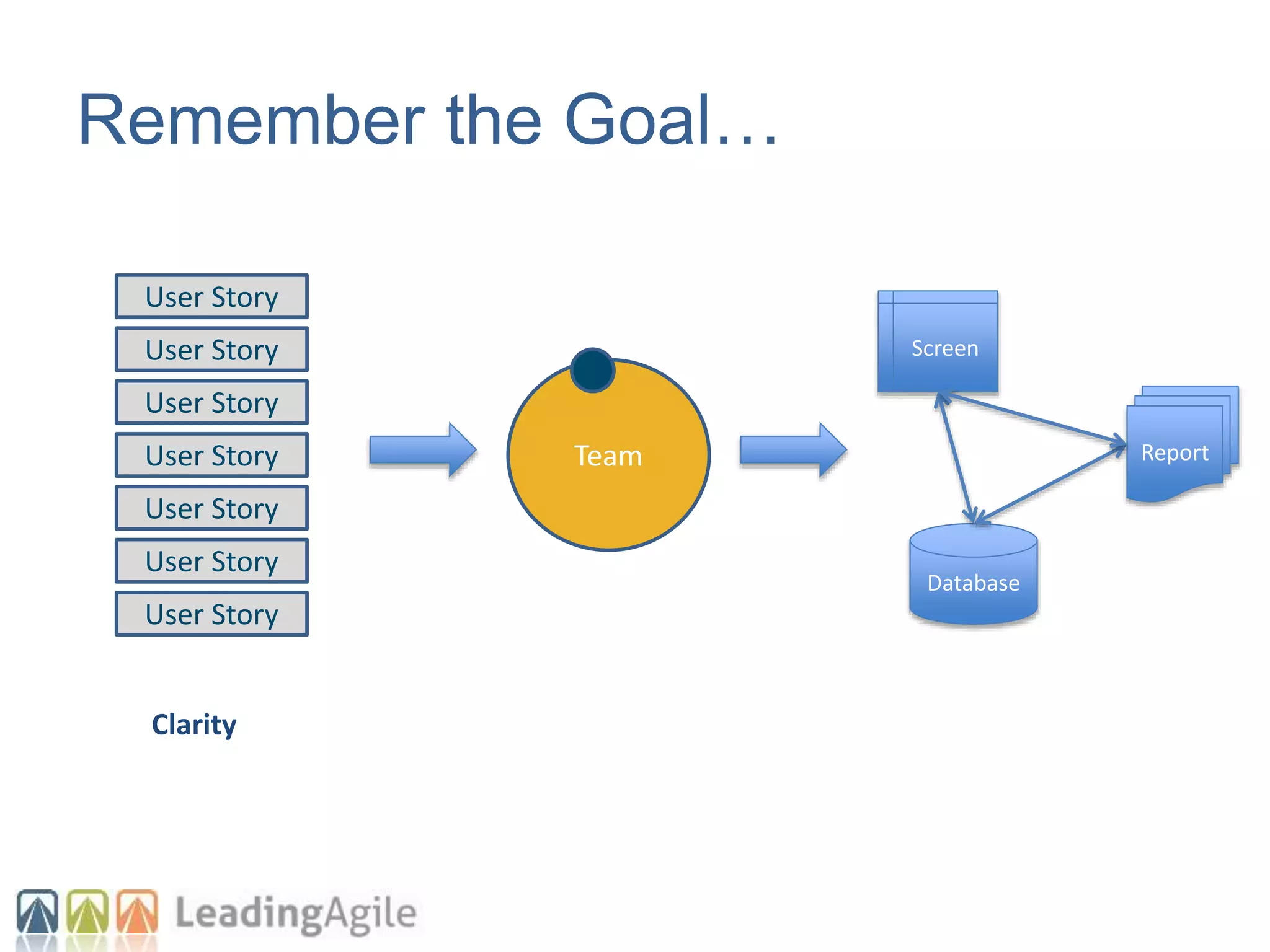
Clarity
Remember the Goal…
Team
Database
Report
Screen
User Story
User Story
User Story
User Story
User Story
User Story
User Story
Clarity Accountability
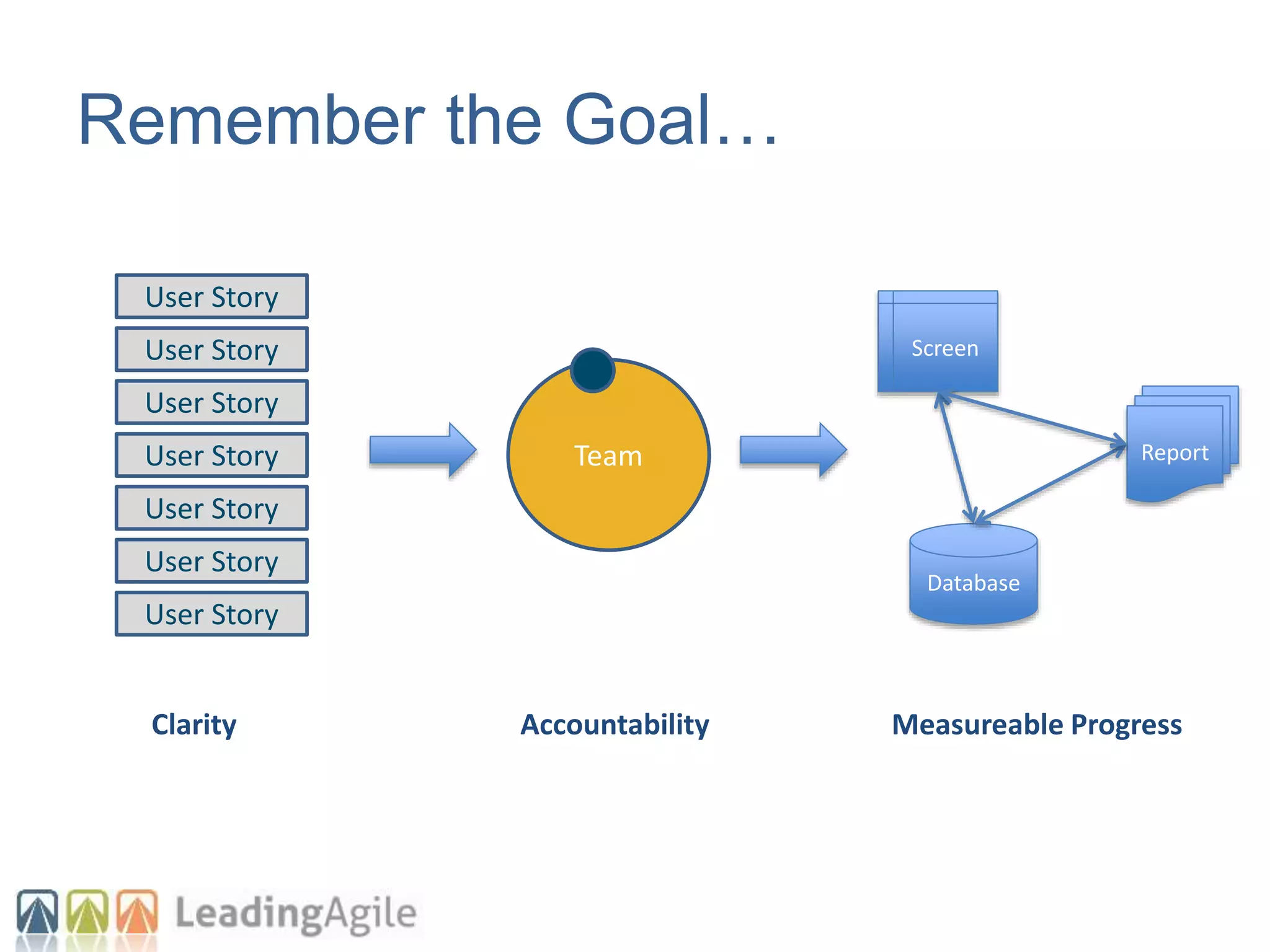
Remember the Goal…
Team
Database
Report
Screen
User Story
User Story
User Story
User Story
User Story
User Story
User Story
Clarity Accountability Measureable Progress
Remember the Goal…
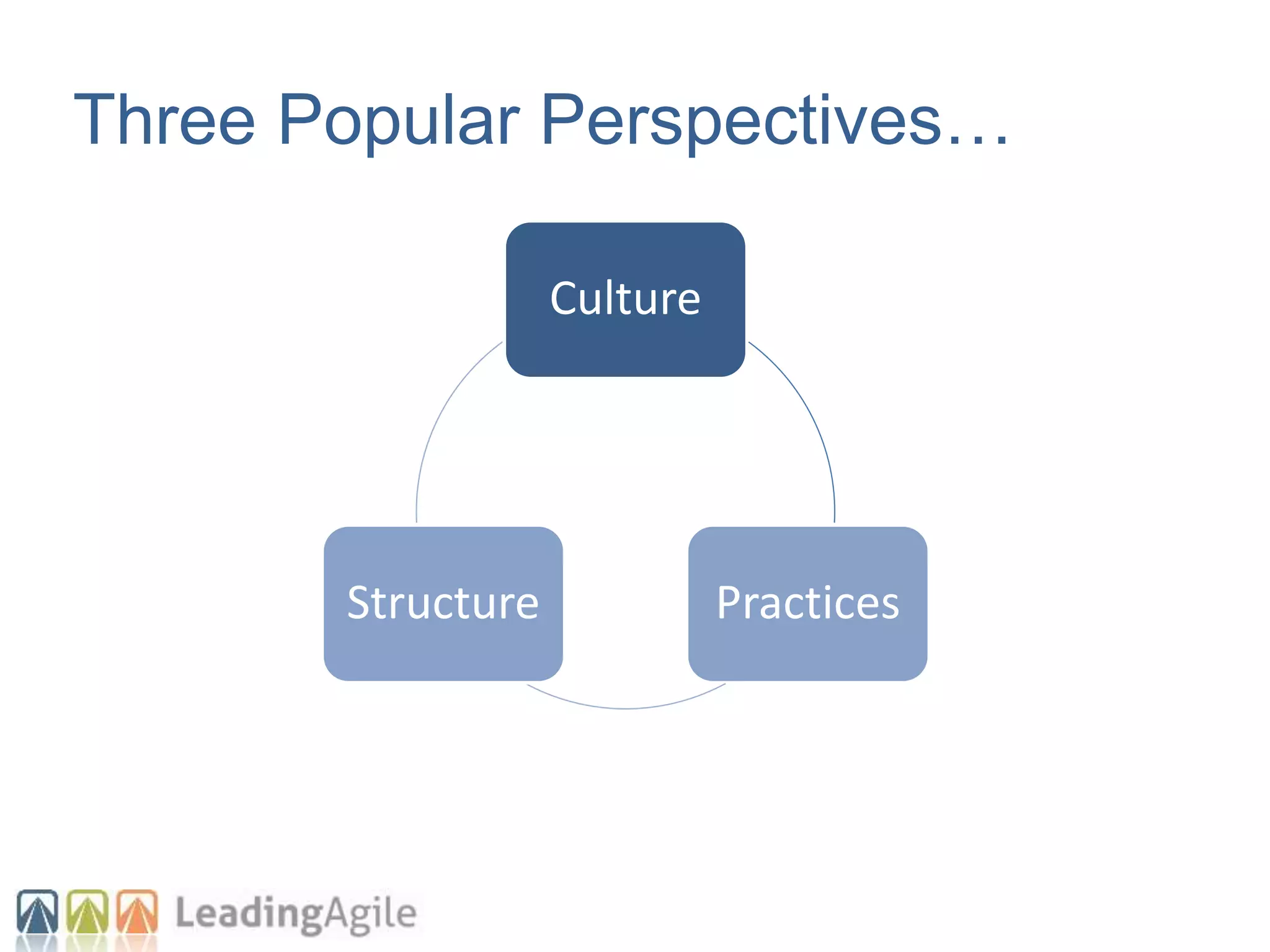
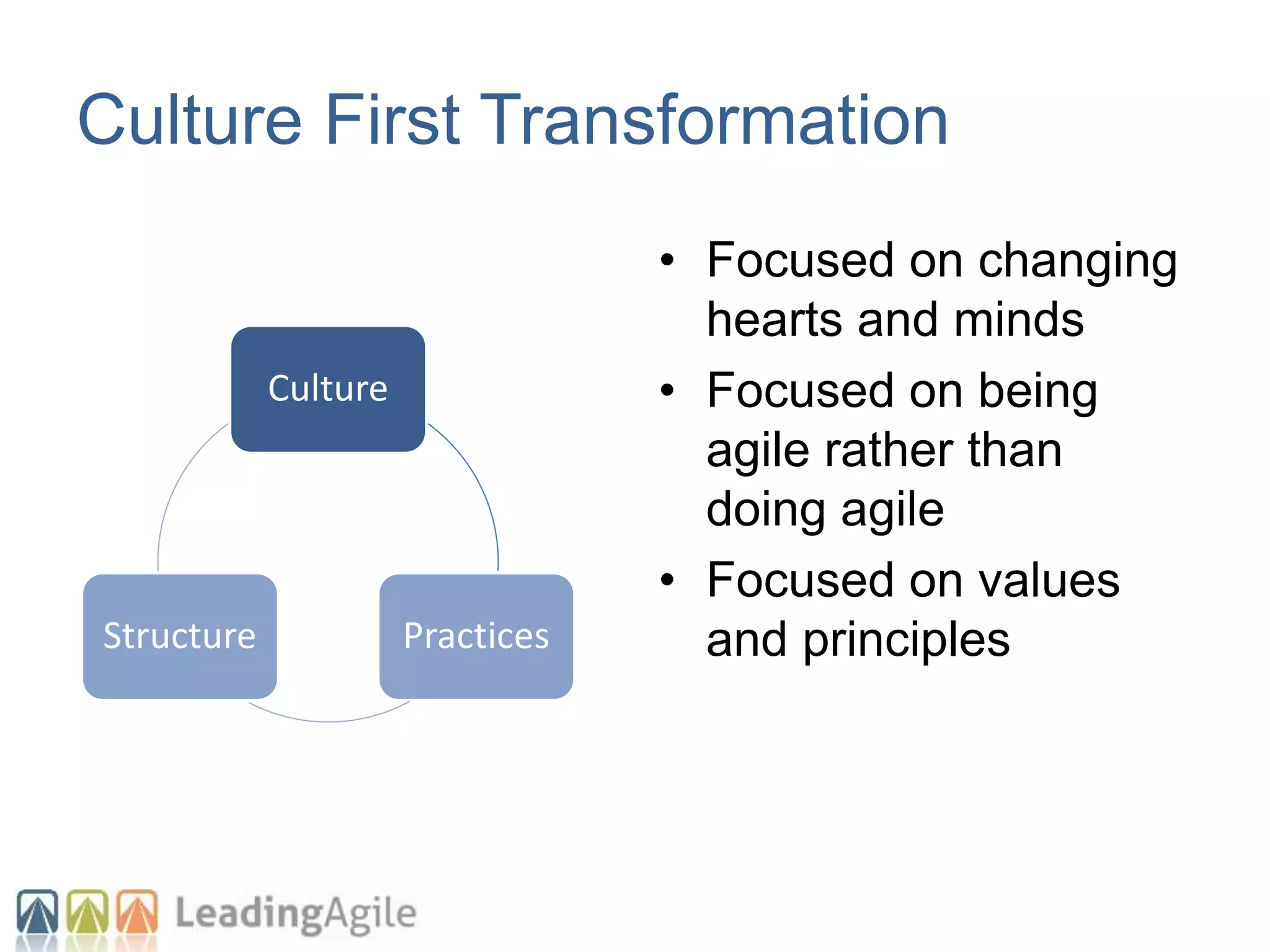
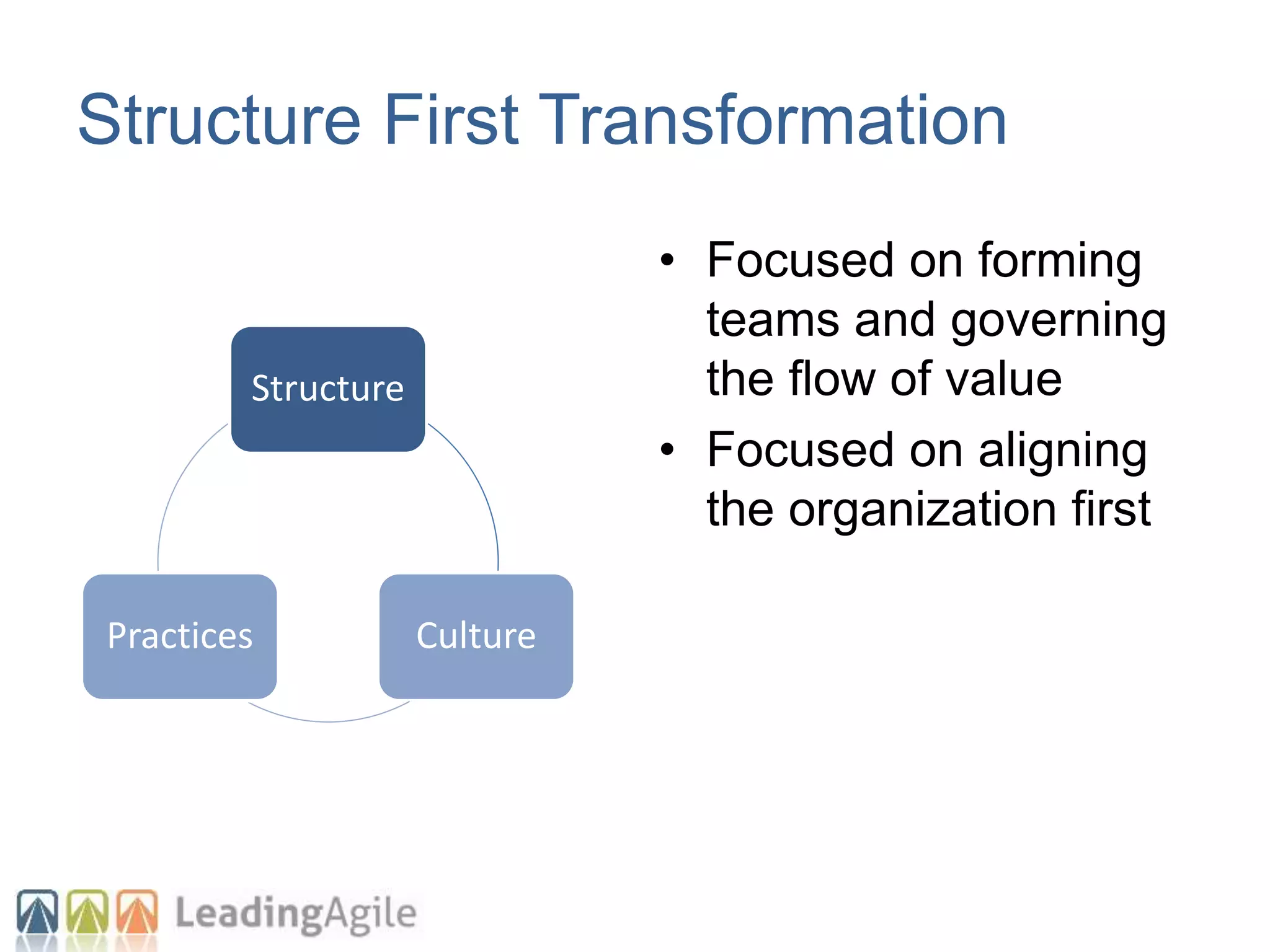
Culture
PracticesStructure
Three Popular Perspectives…
Culture
PracticesStructure
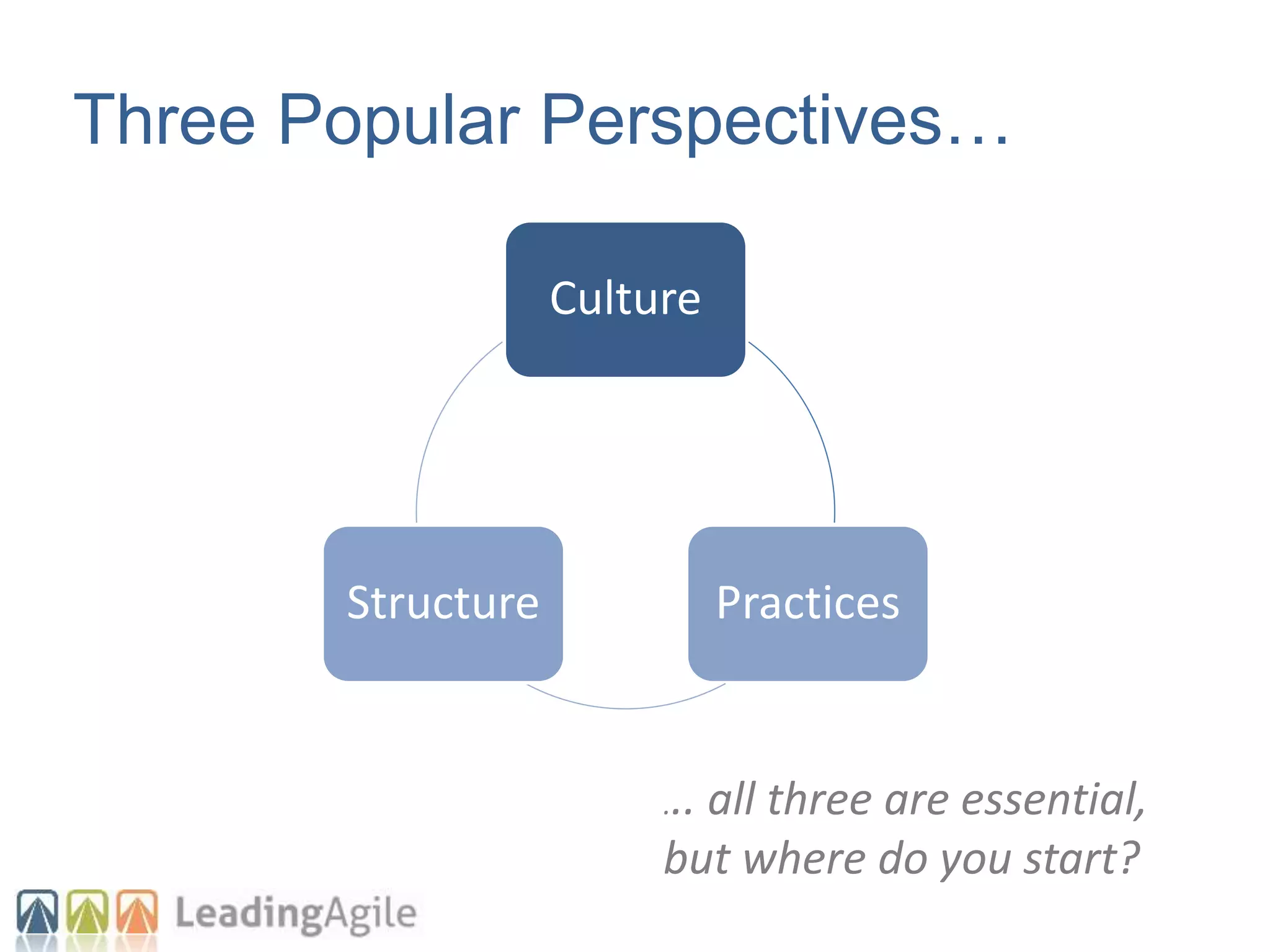
Three Popular Perspectives…
... all three are essential,
but where do you start?
Culture
PracticesStructure
Culture First Transformation
• Focused on changing
hearts and minds
• Focused on being
agile rather than
doing agile
• Focused on values
and principles
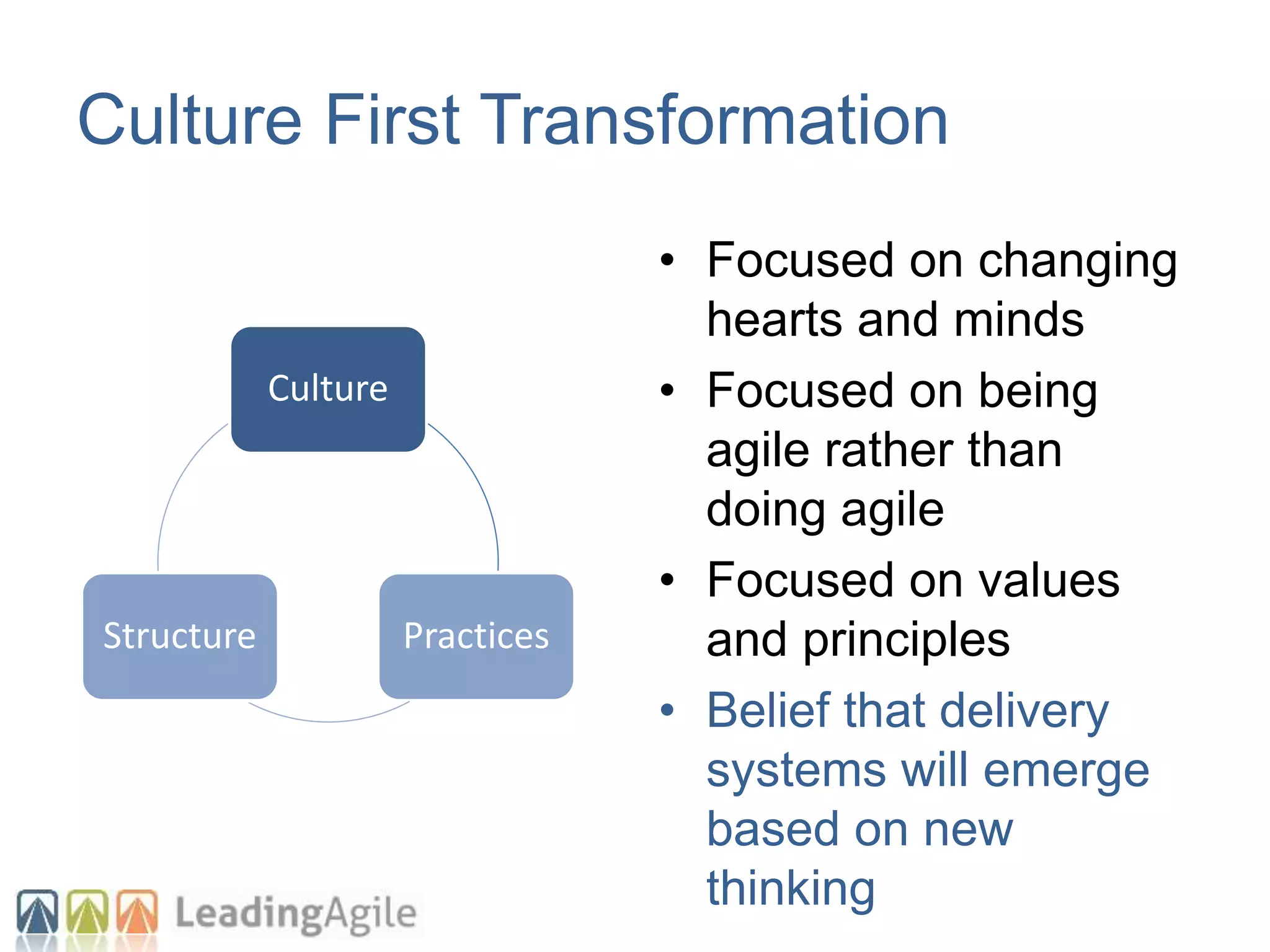
Culture
PracticesStructure
Culture First Transformation
• Focused on changing
hearts and minds
• Focused on being
agile rather than
doing agile
• Focused on values
and principles
• Belief that delivery
systems will emerge
based on new
thinking
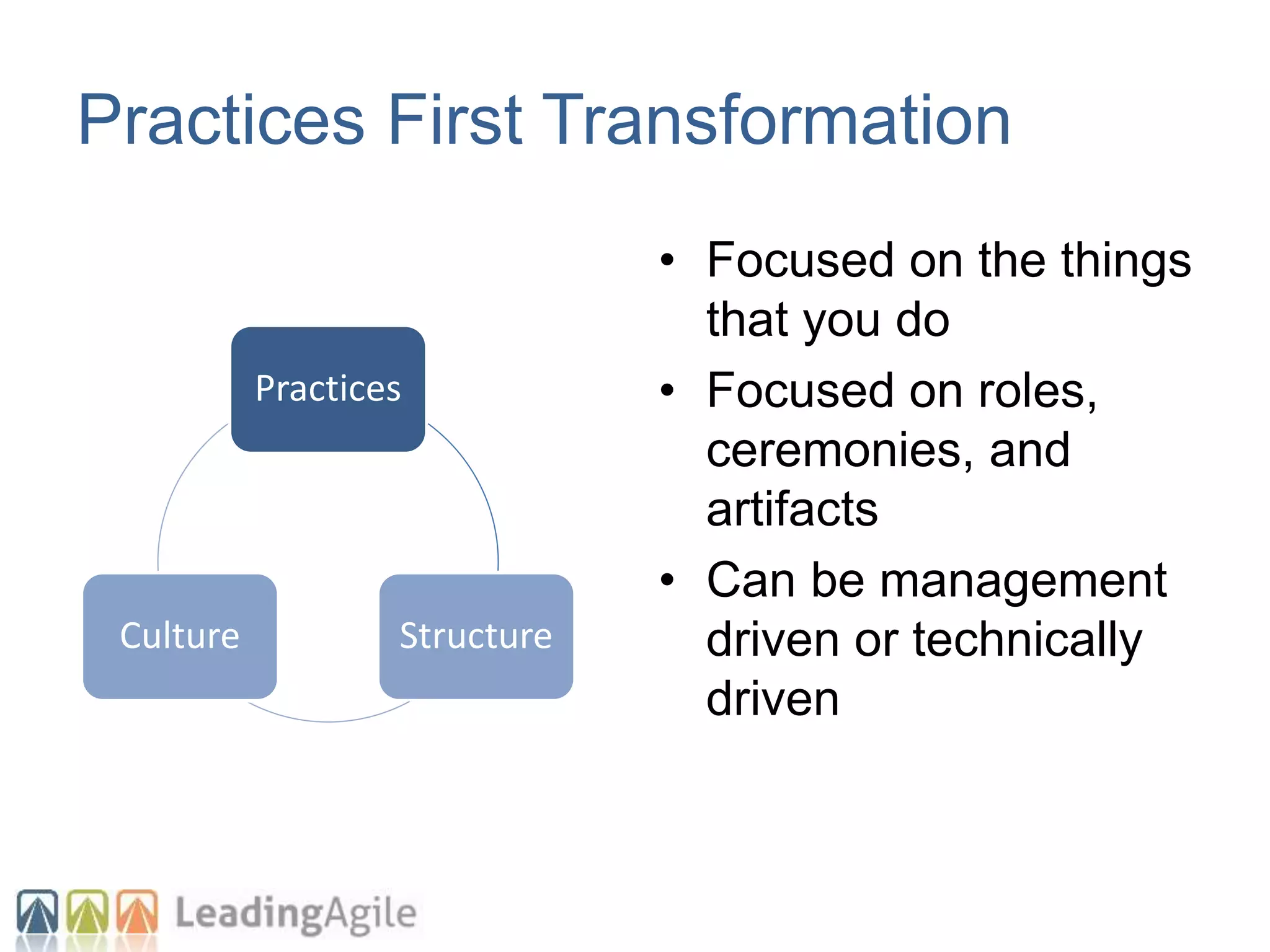
Practices
StructureCulture
Practices First Transformation
• Focused on the things
that you do
• Focused on roles,
ceremonies, and
artifacts
• Can be management
driven or technically
driven
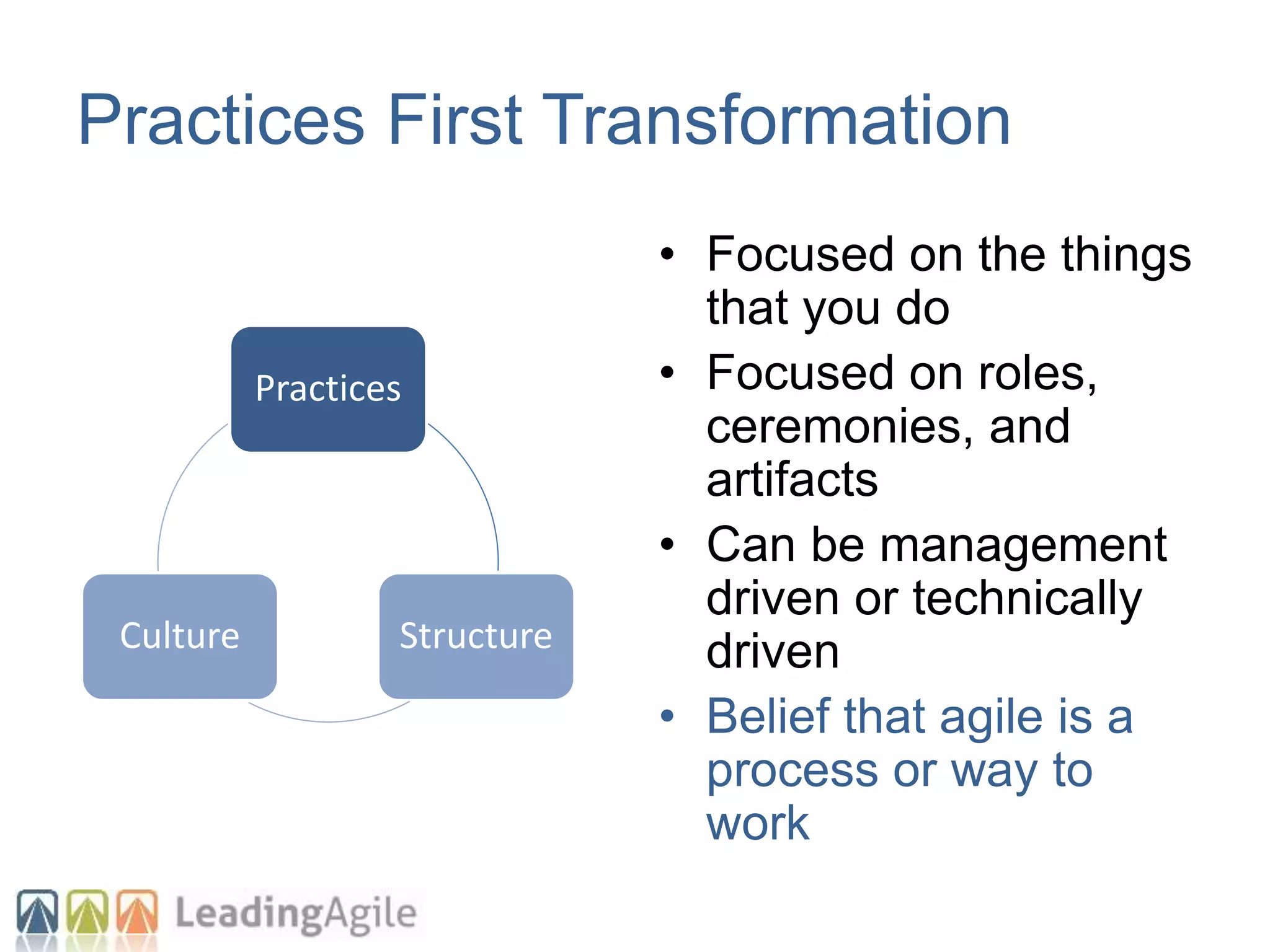
Practices
StructureCulture
Practices First Transformation
• Focused on the things
that you do
• Focused on roles,
ceremonies, and
artifacts
• Can be management
driven or technically
driven
• Belief that agile is a
process or way to
work
Structure
CulturePractices
Structure First Transformation
• Focused on forming
teams and governing
the flow of value
• Focused on aligning
the organization first
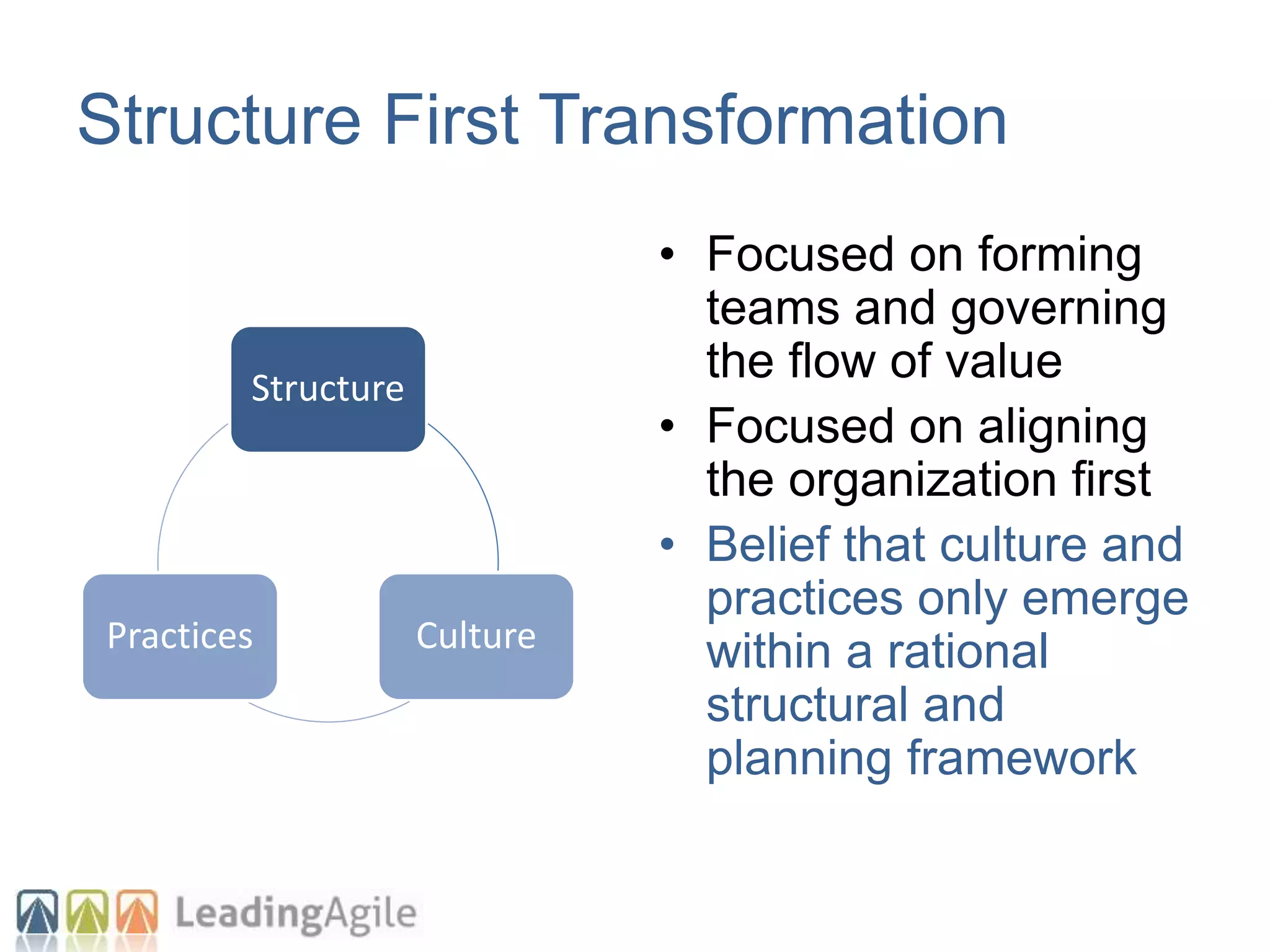
Structure
CulturePractices
Structure First Transformation
• Focused on forming
teams and governing
the flow of value
• Focused on aligning
the organization first
• Belief that culture and
practices only emerge
within a rational
structural and
planning framework
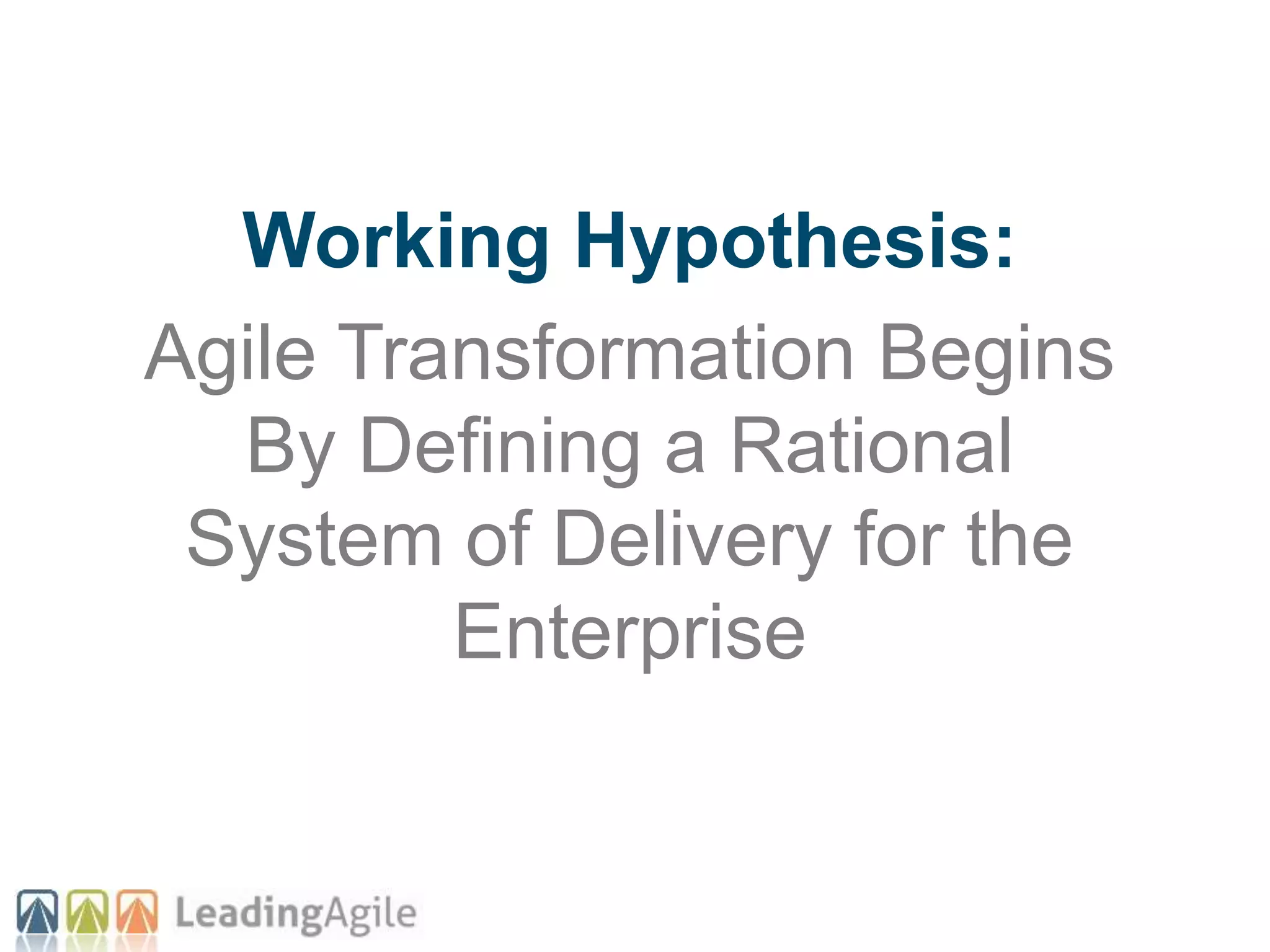
Working Hypothesis:
Agile Transformation Begins
By Defining a Rational
System of Delivery for the
Enterprise
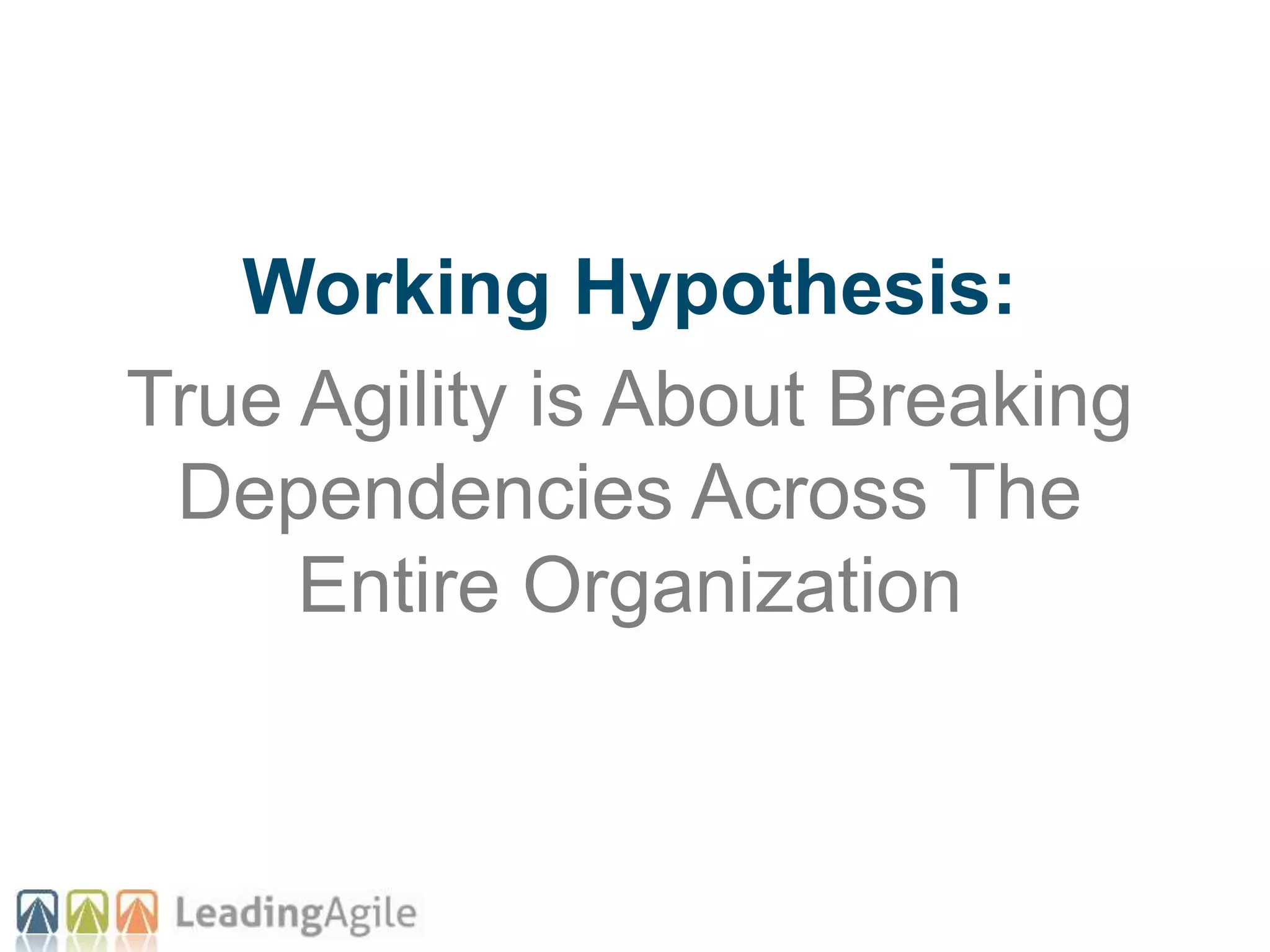
Working Hypothesis:
True Agility is About Breaking
Dependencies Across The
Entire Organization
Working Hypothesis:
Healthy Culture and Effective
Practices Only Emerge
Within a Rational Delivery
Framework
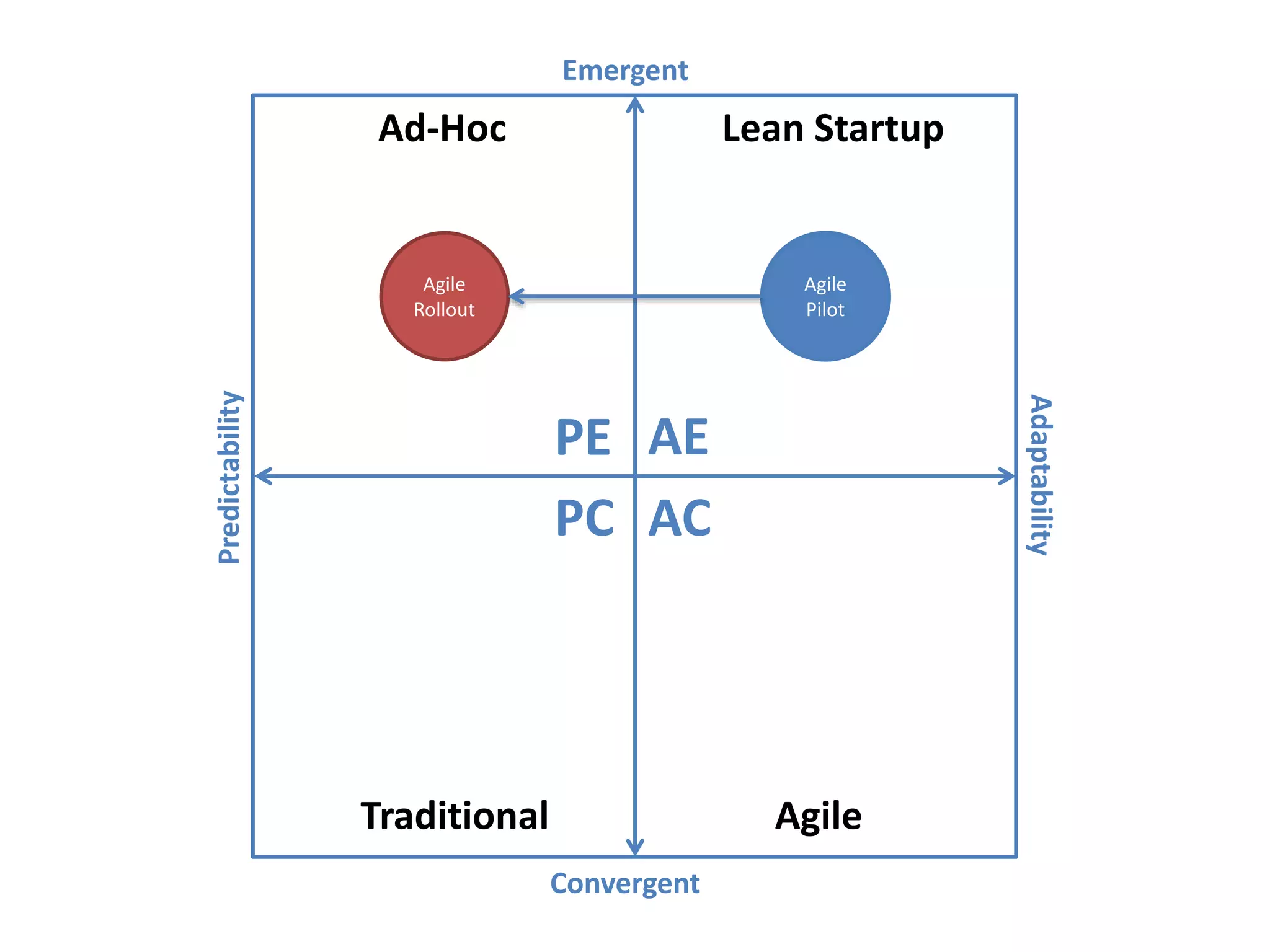
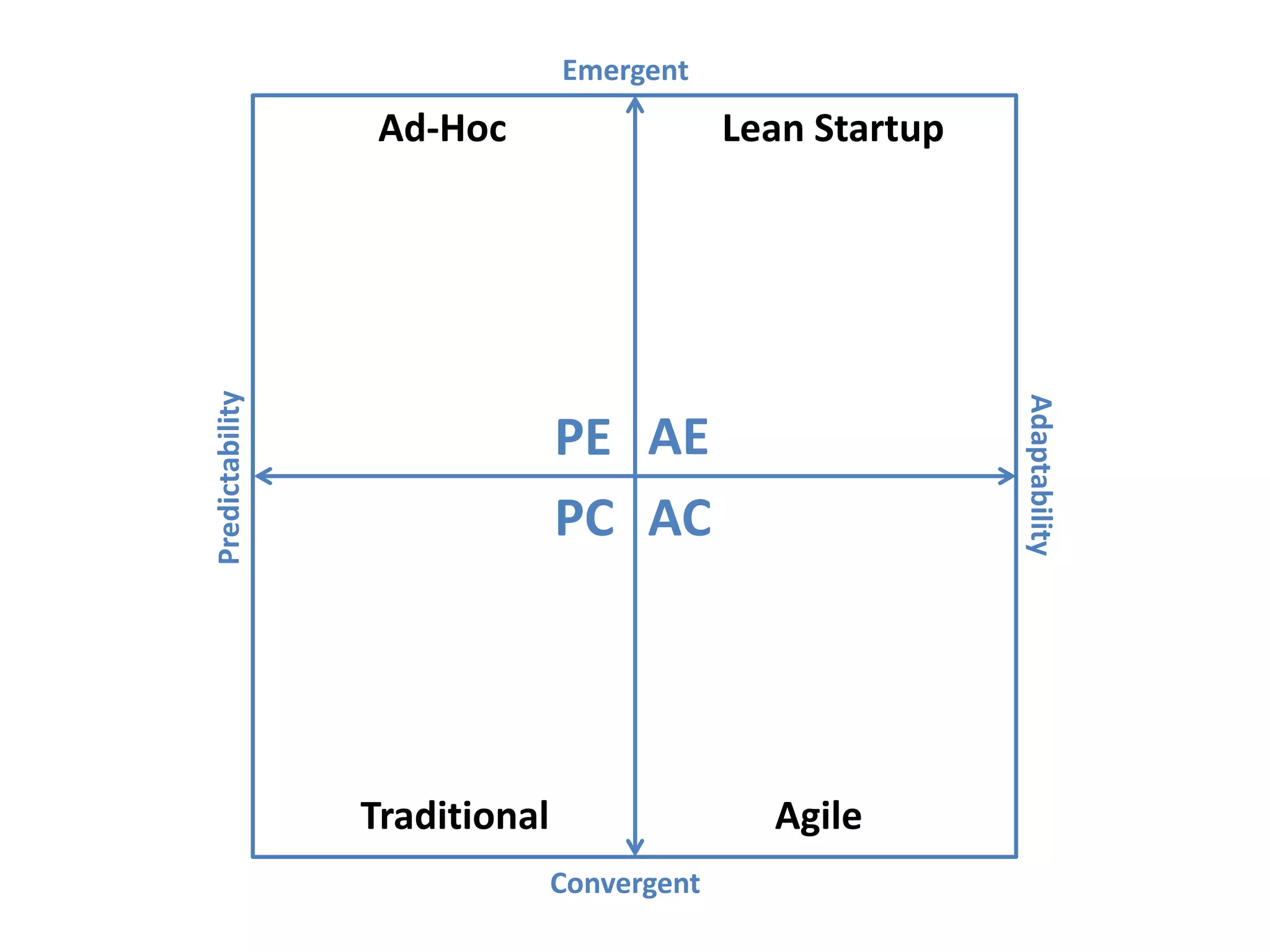
How To Map Your Enterprise
Agile Transformation
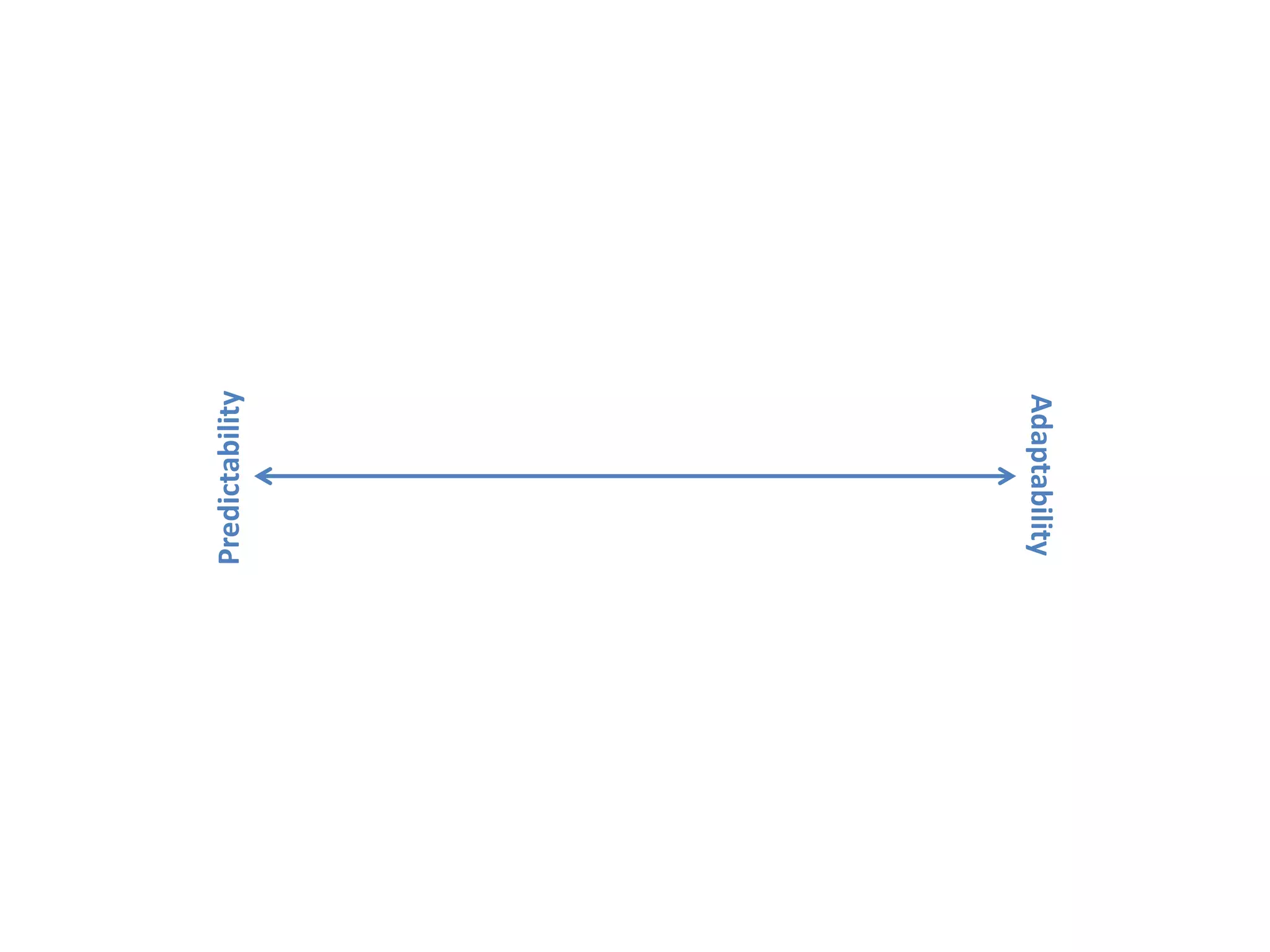
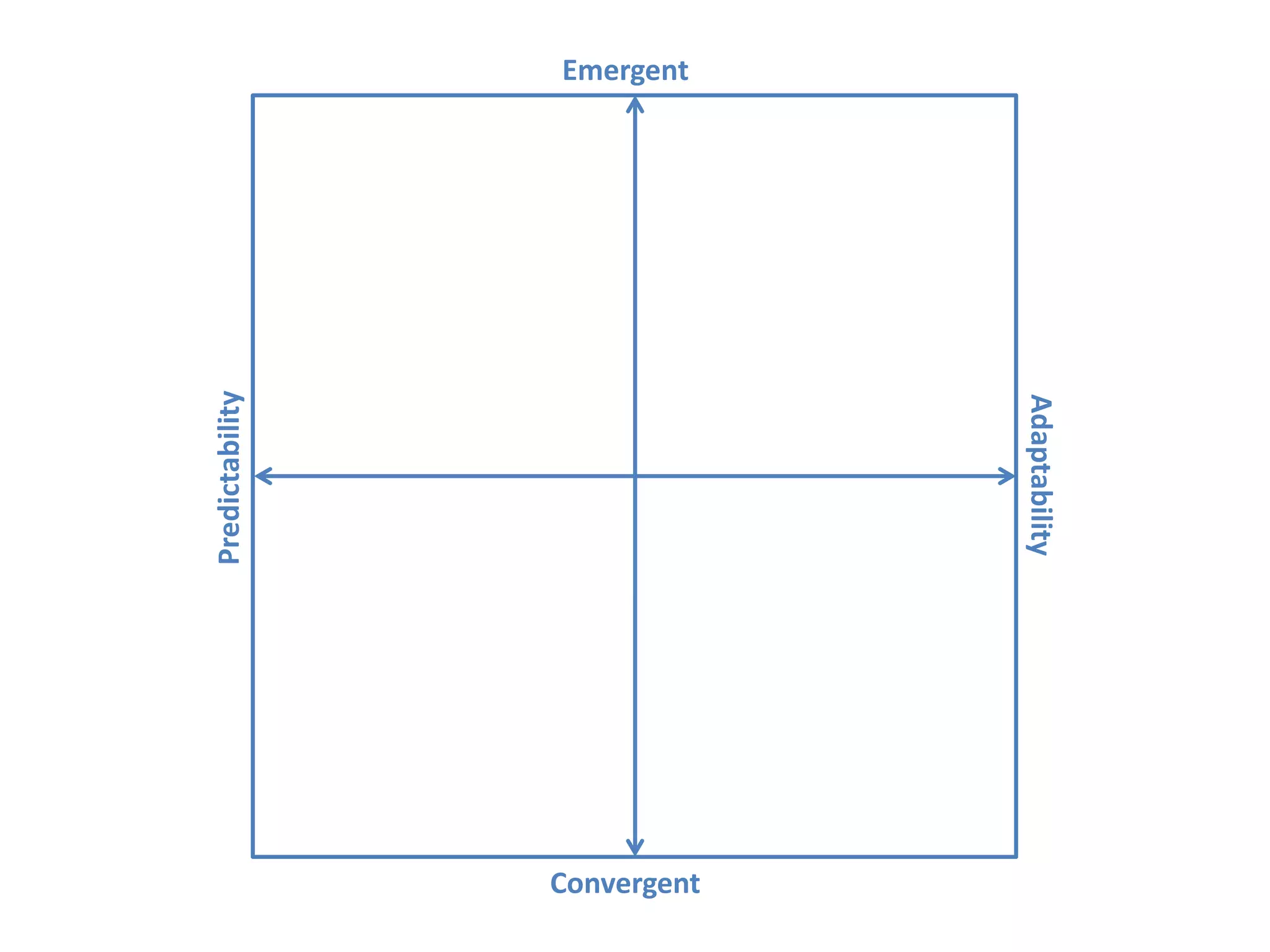
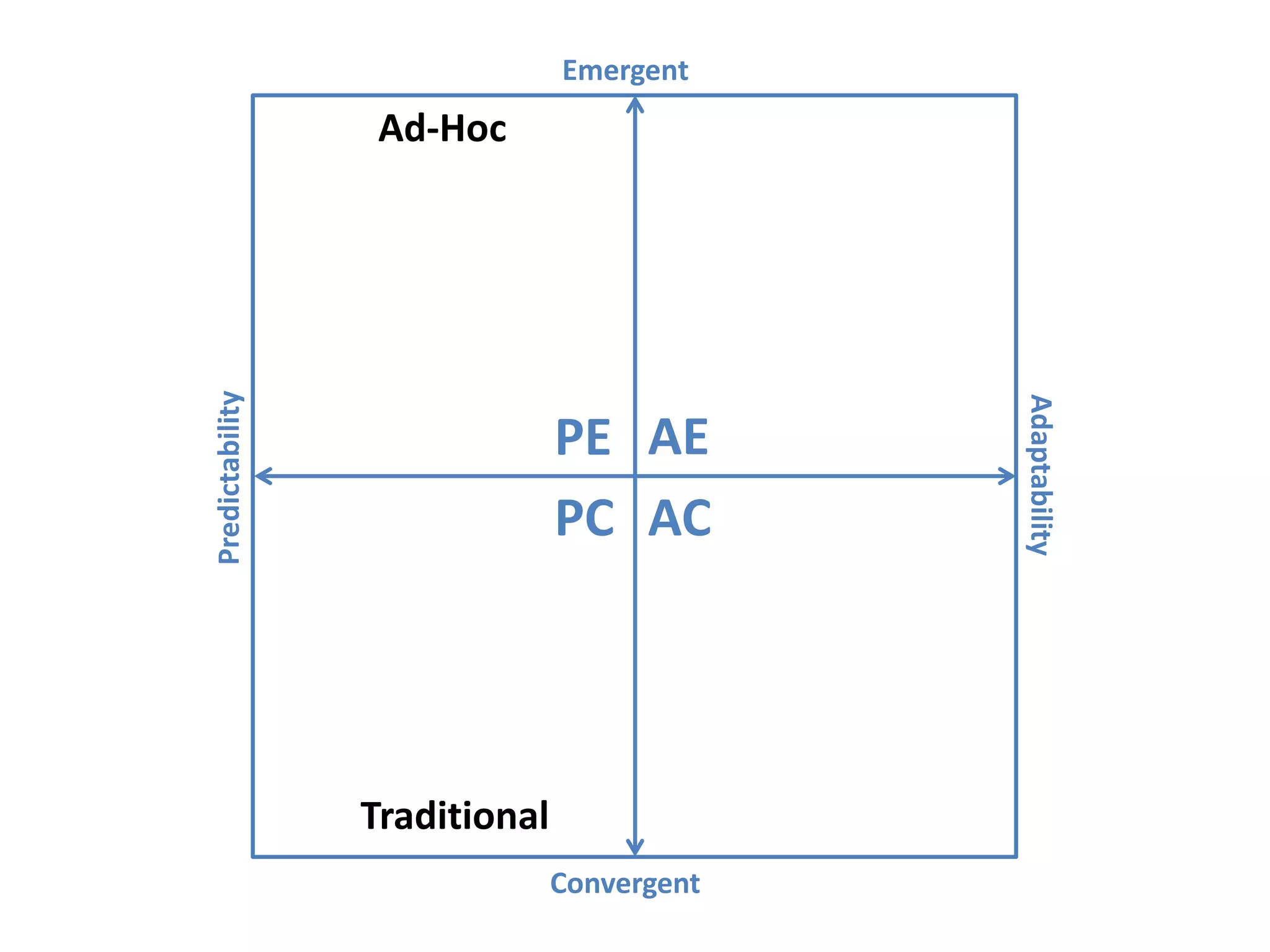
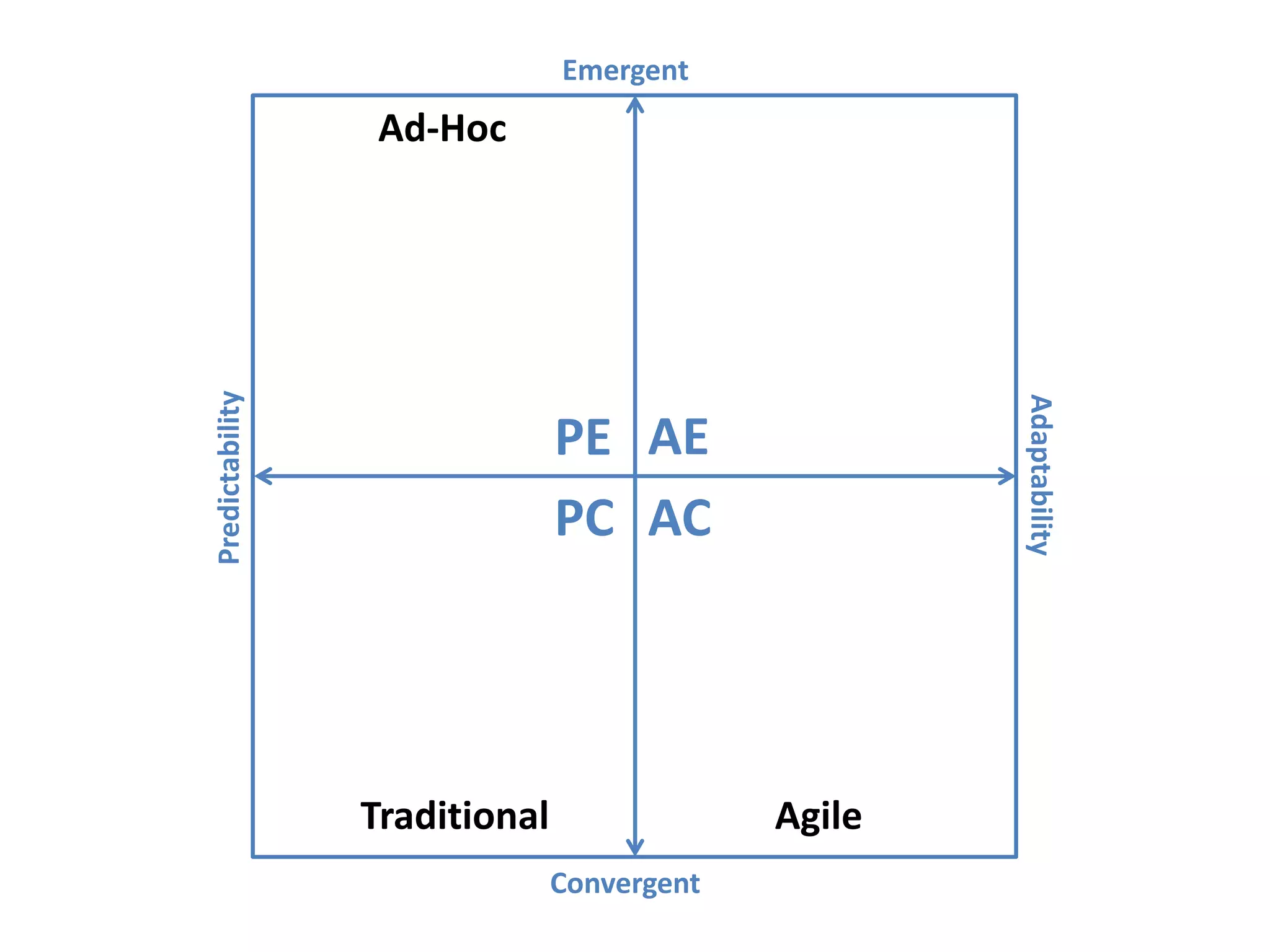
Predictability
Adaptability
Predictability
Adaptability
Emergent
Convergent
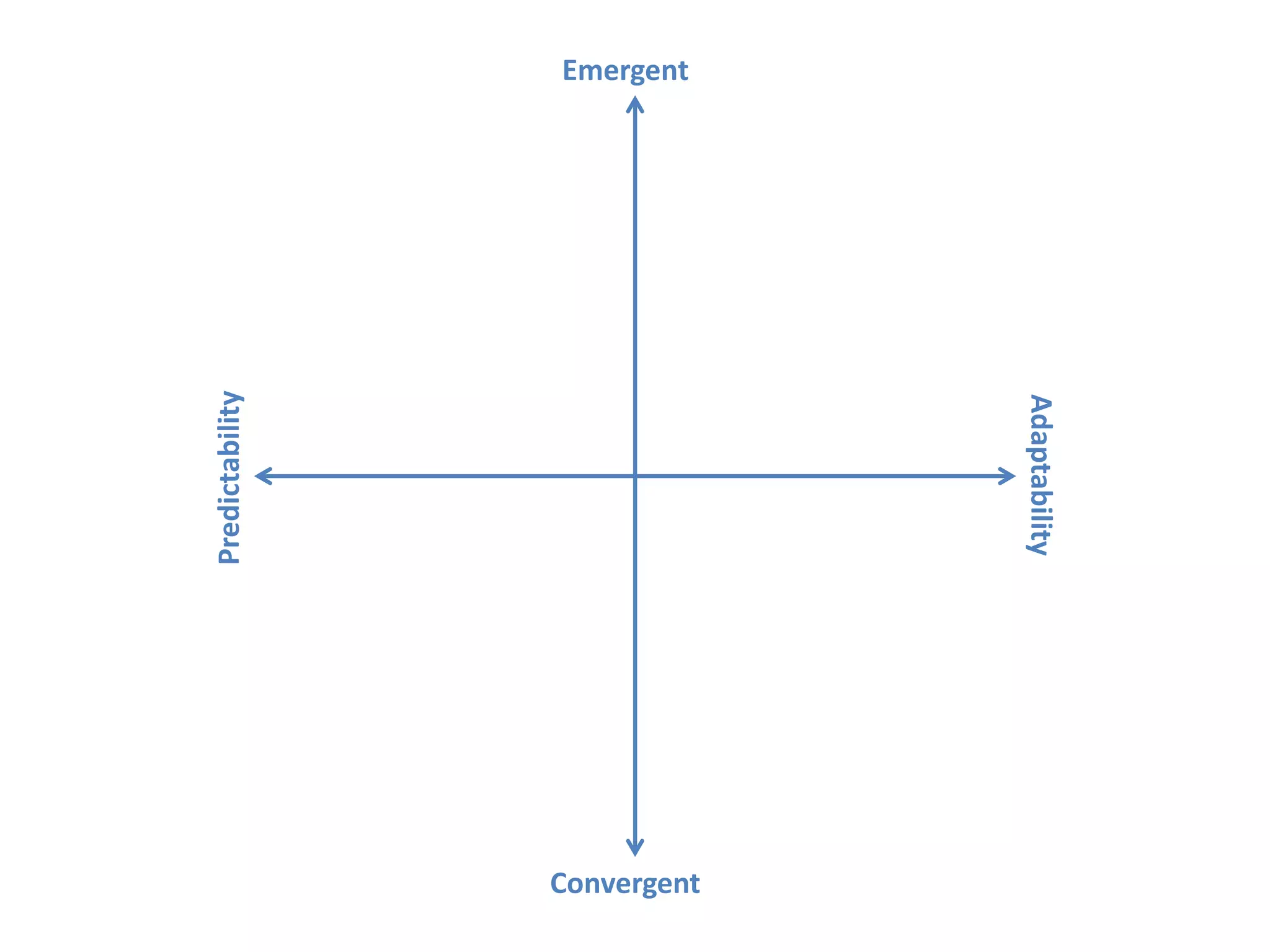
Predictability
Adaptability
Emergent
Convergent
Predictability
Adaptability
Emergent
Convergent
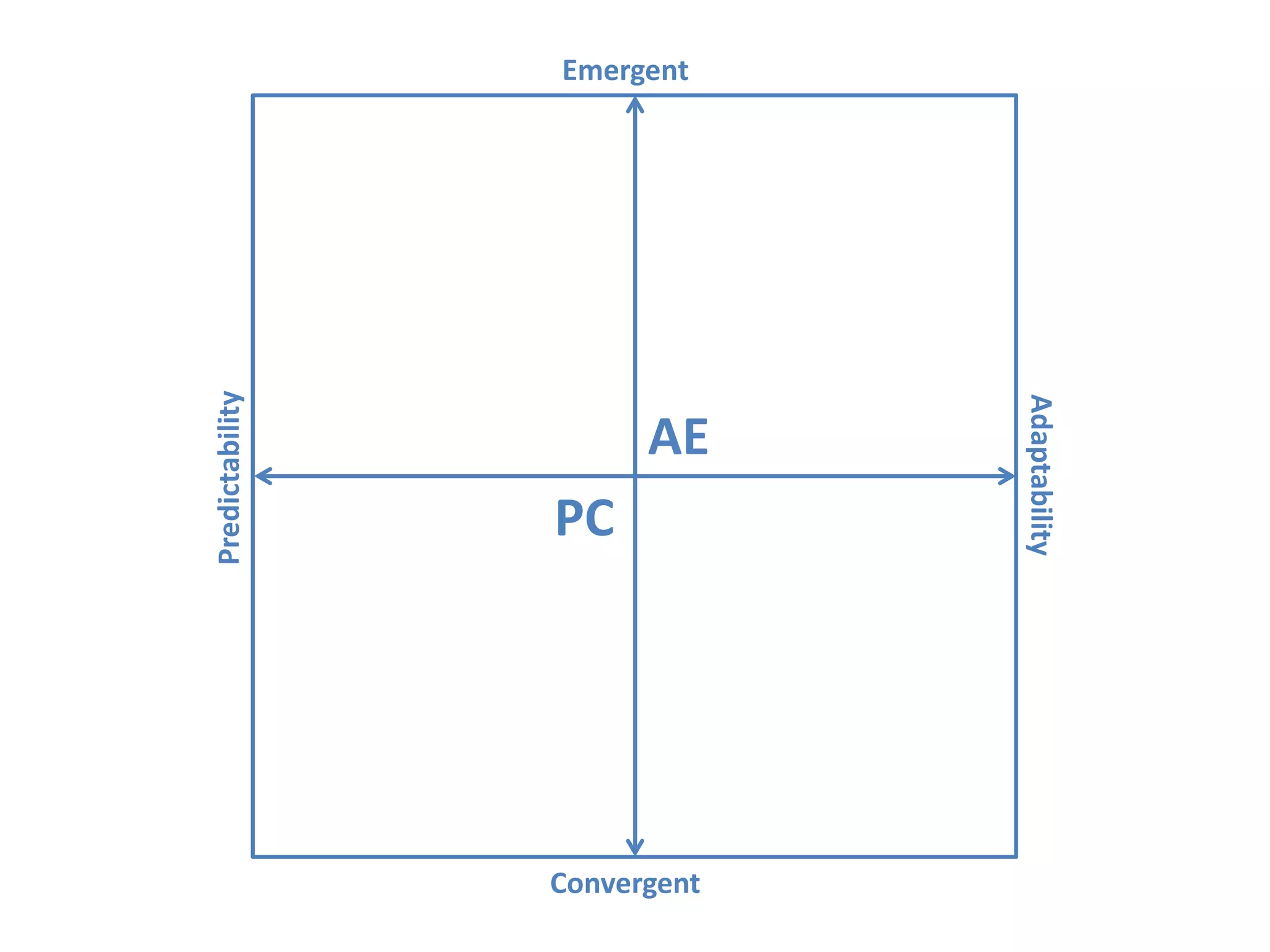
AE
PC
Predictability
Adaptability
Emergent
Convergent
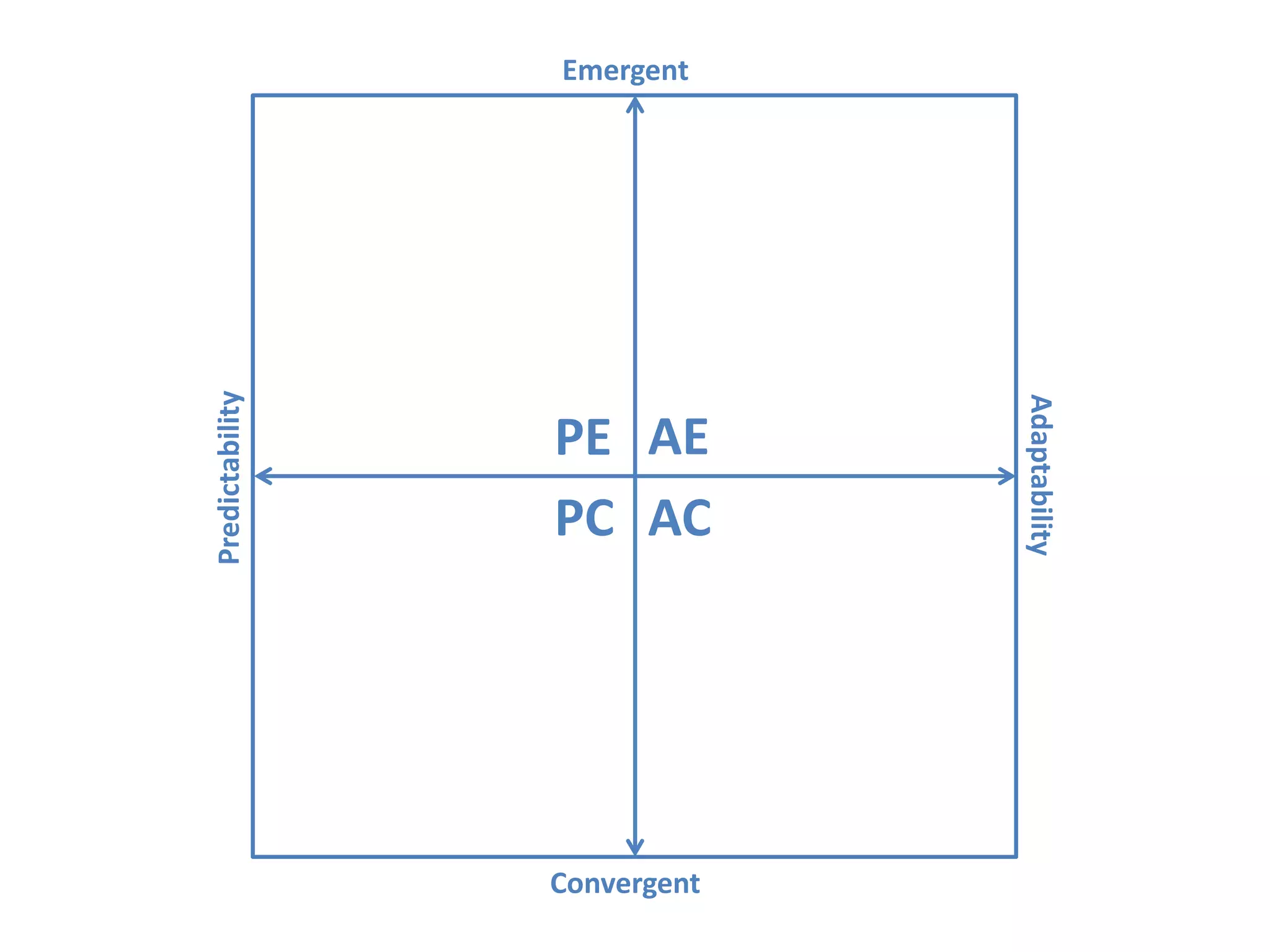
AEPE
PC AC
Predictability
Adaptability
Emergent
Convergent
AEPE
PC AC
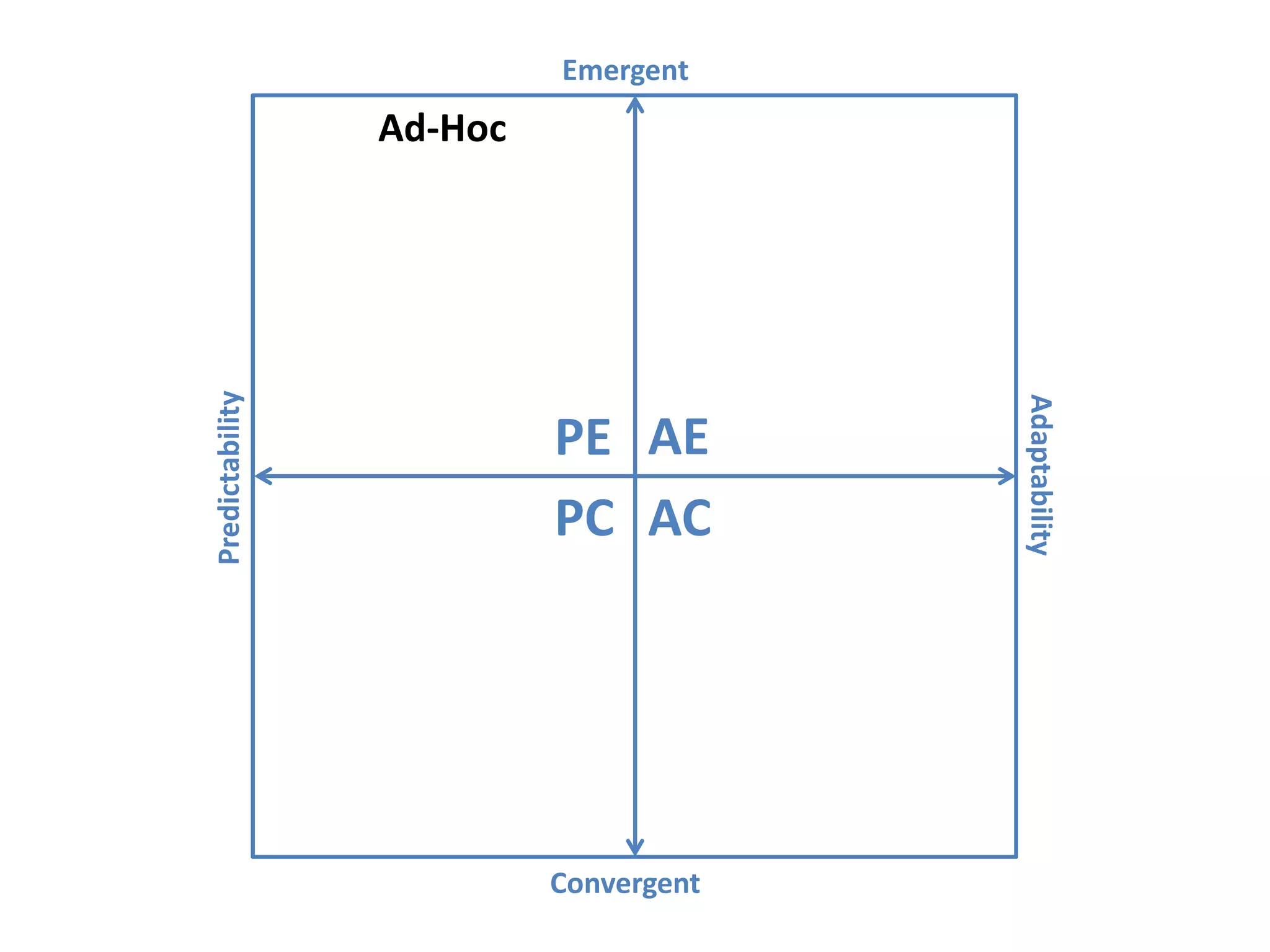
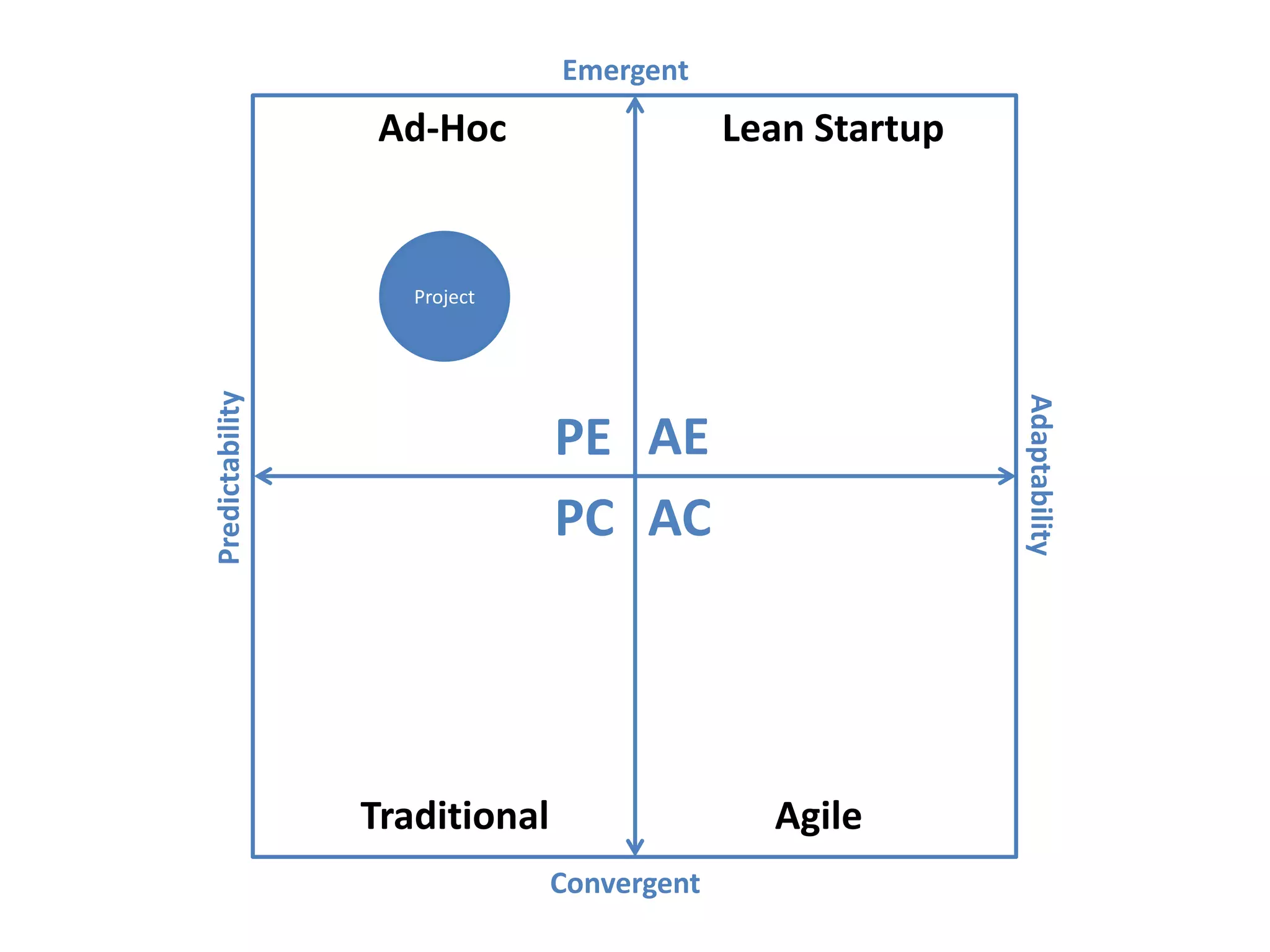
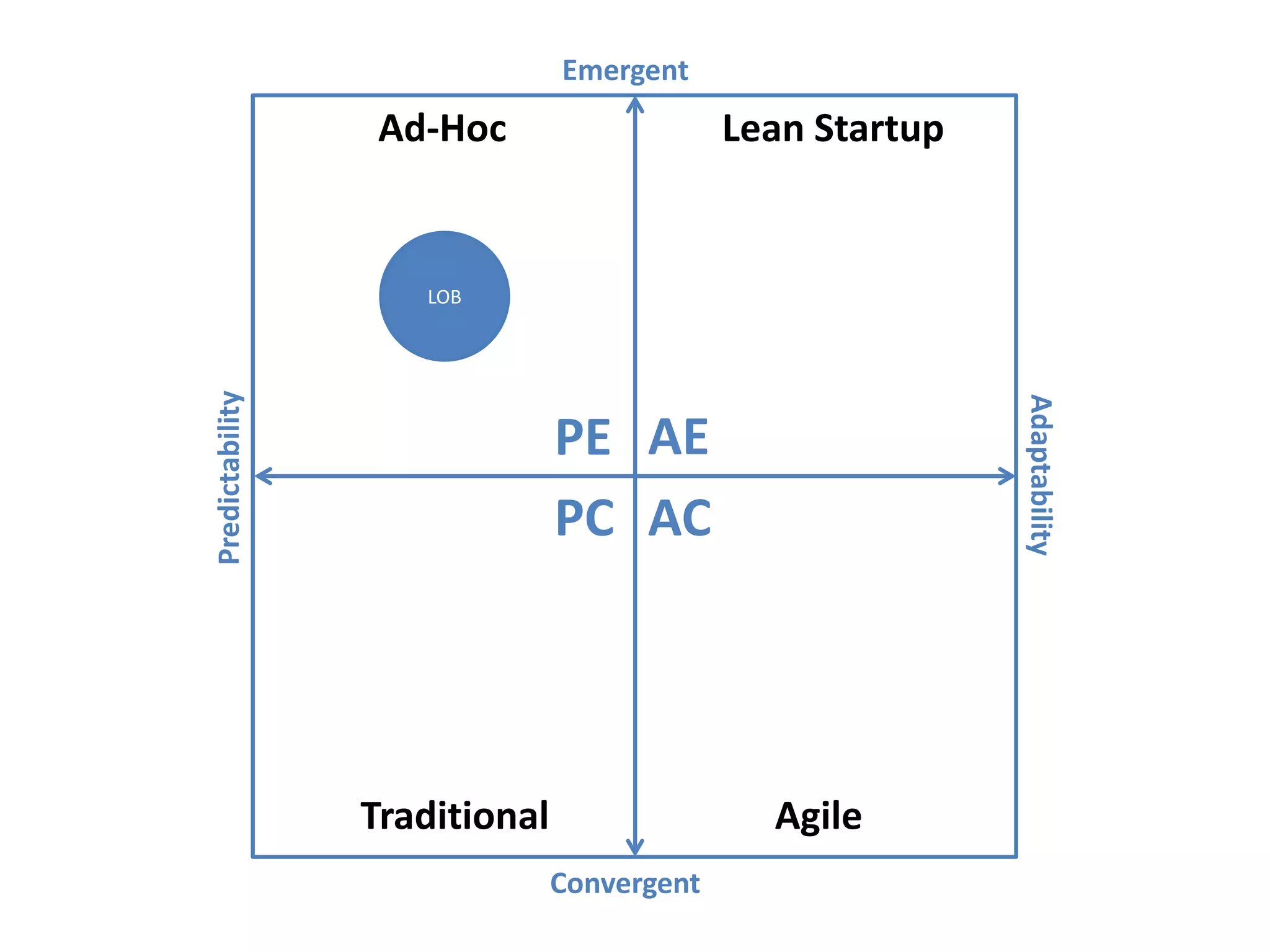
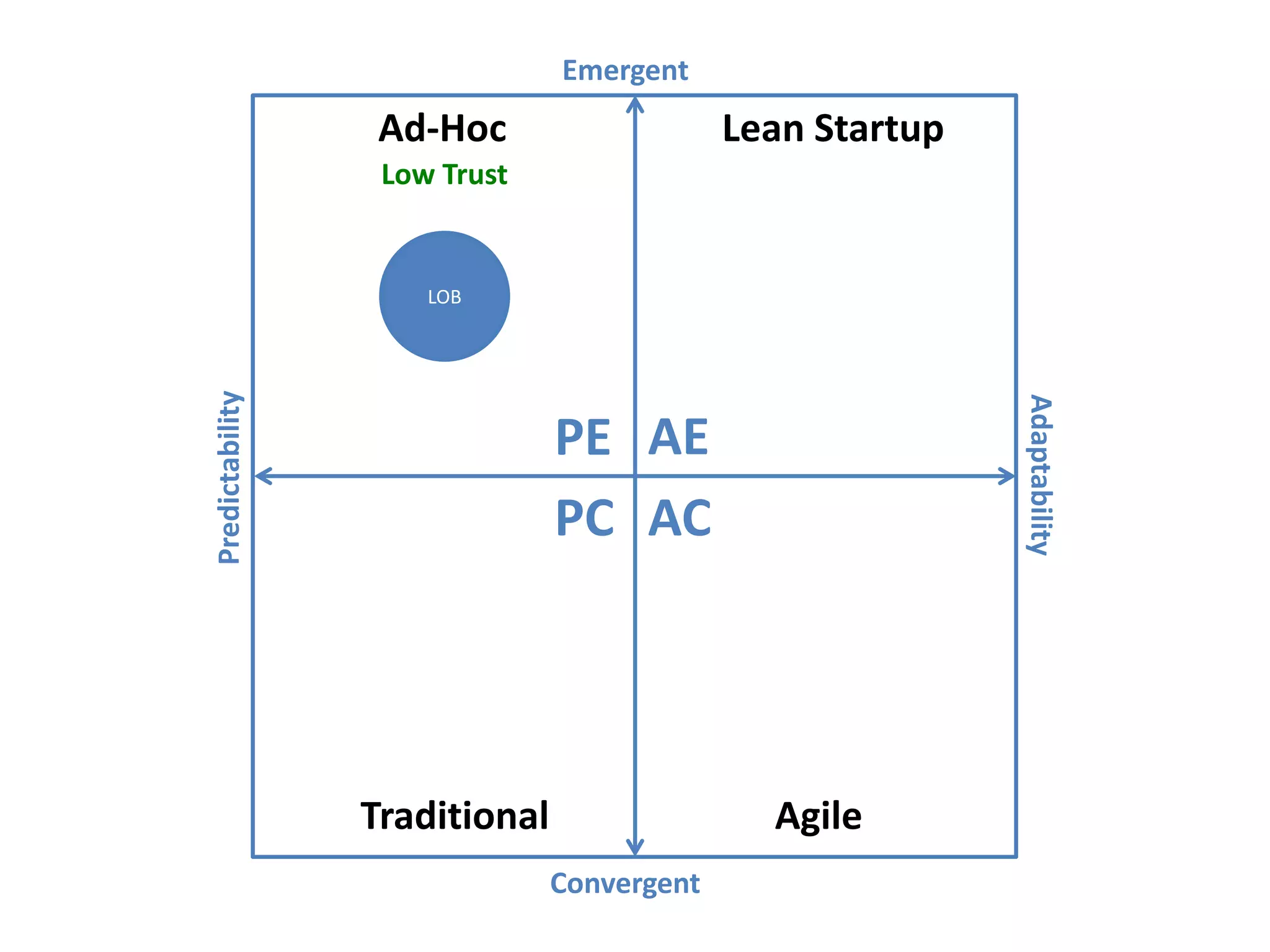
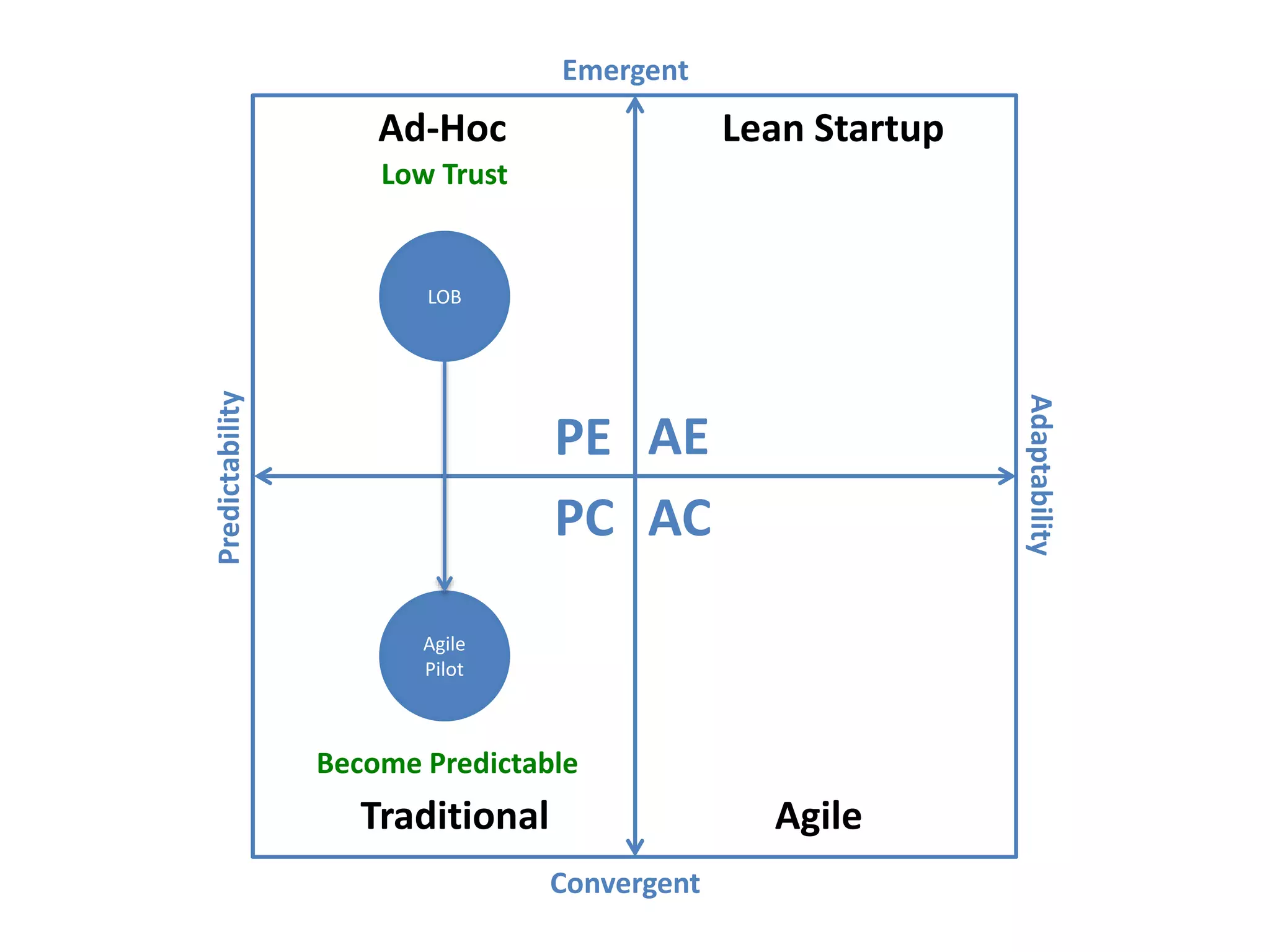
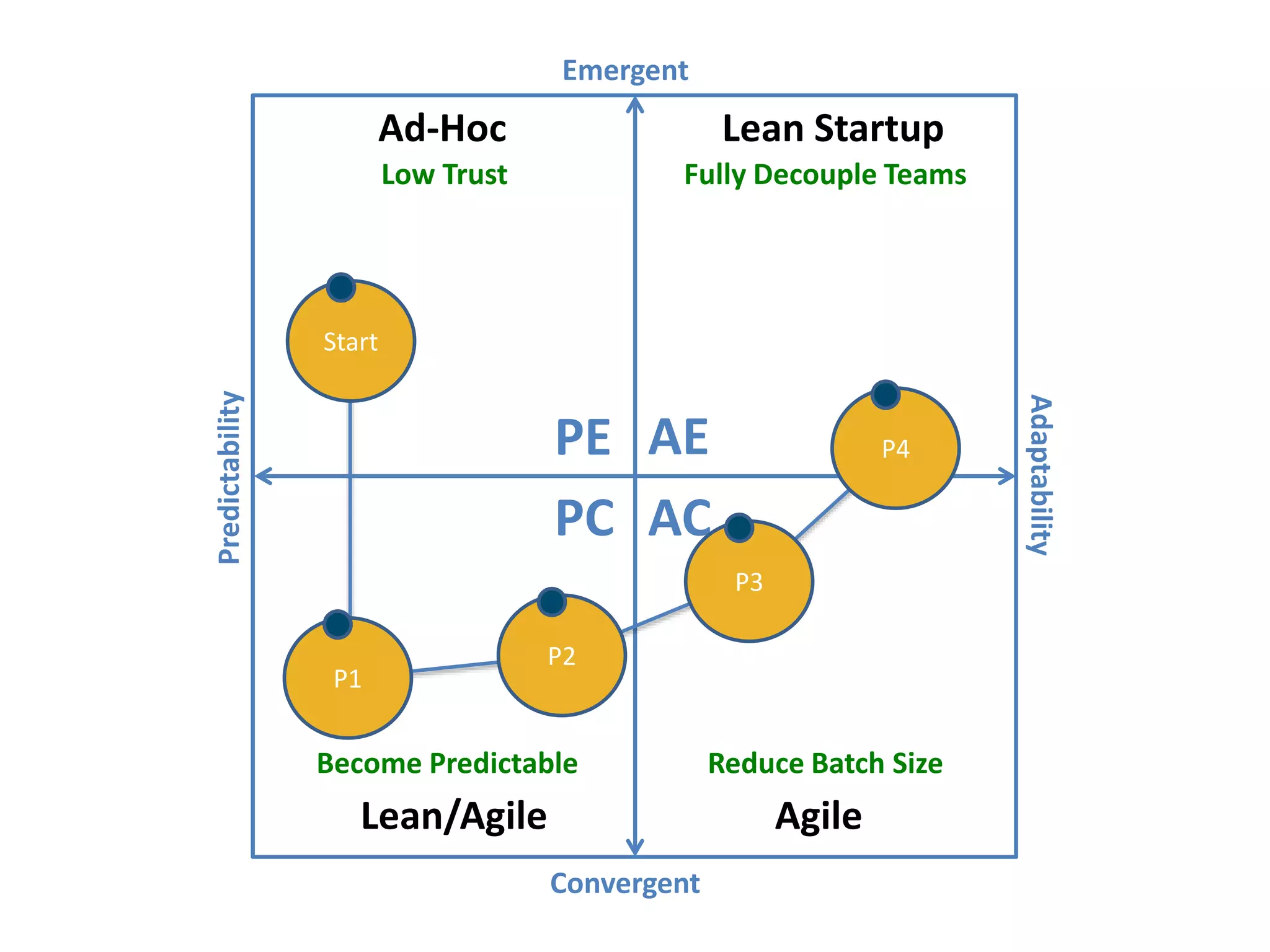
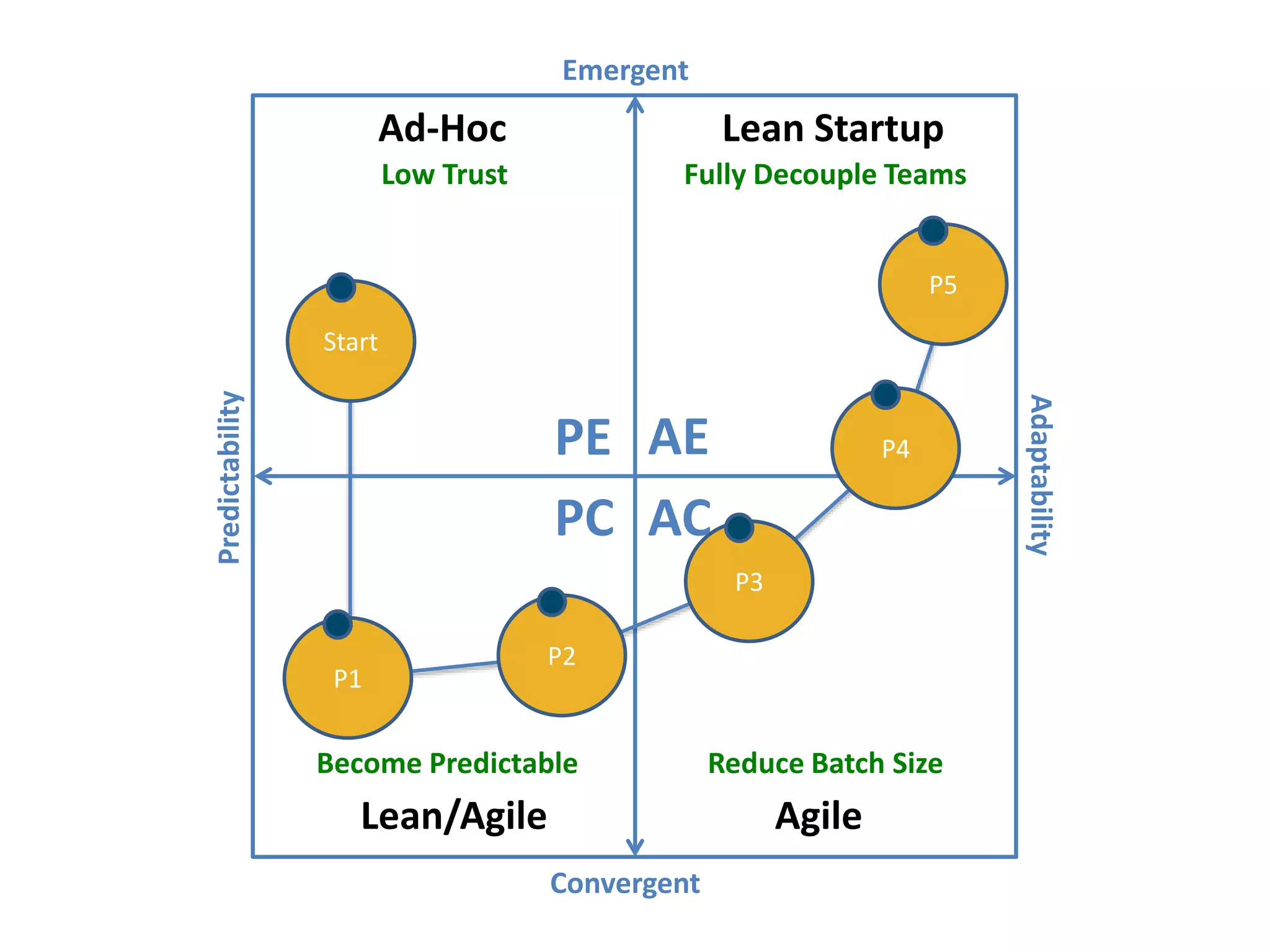
Ad-Hoc
Predictability
Adaptability
Emergent
Convergent
AEPE
PC AC
Ad-Hoc
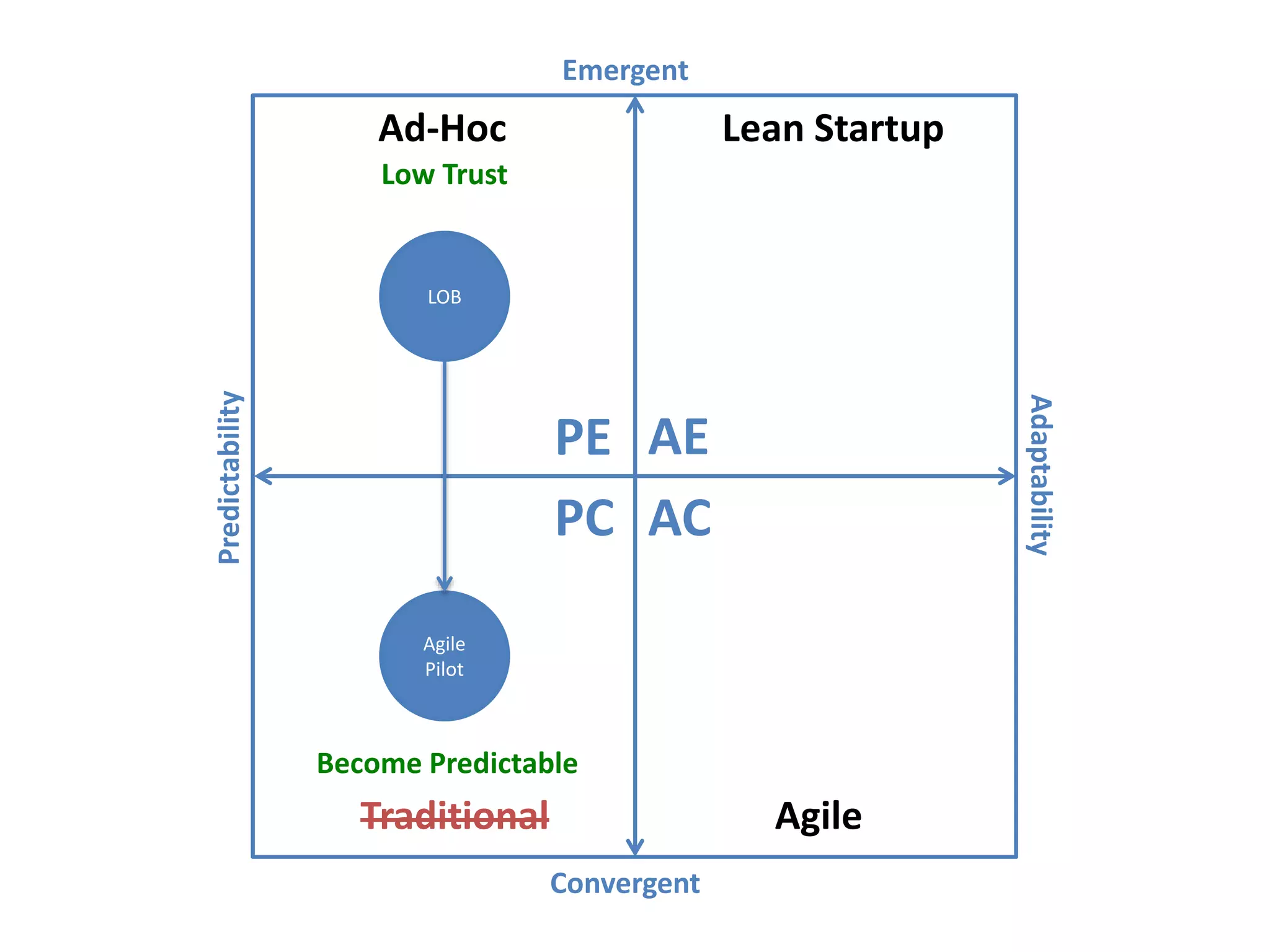
Traditional
Predictability
Adaptability
Emergent
Convergent
AEPE
PC AC
Ad-Hoc
Traditional Agile
Predictability
Adaptability
Emergent
Convergent
AEPE
PC AC
Ad-Hoc
Traditional Agile
Lean Startup
Predictability
Adaptability
Emergent
Convergent
AEPE
PC AC
Ad-Hoc
Traditional Agile
Lean Startup
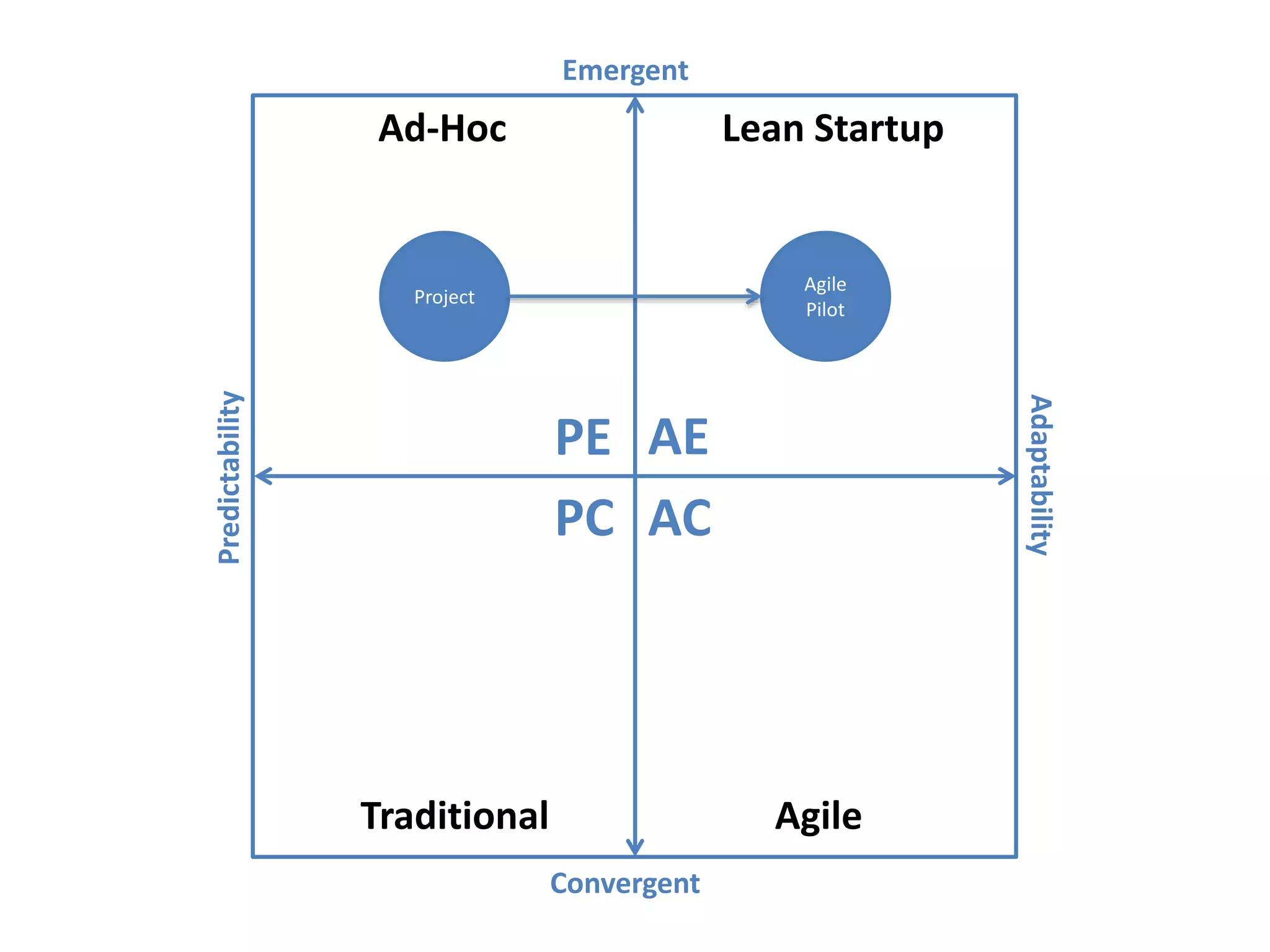
Project
Predictability
Adaptability
Emergent
Convergent
AEPE
PC AC
Ad-Hoc
Traditional Agile
Lean Startup
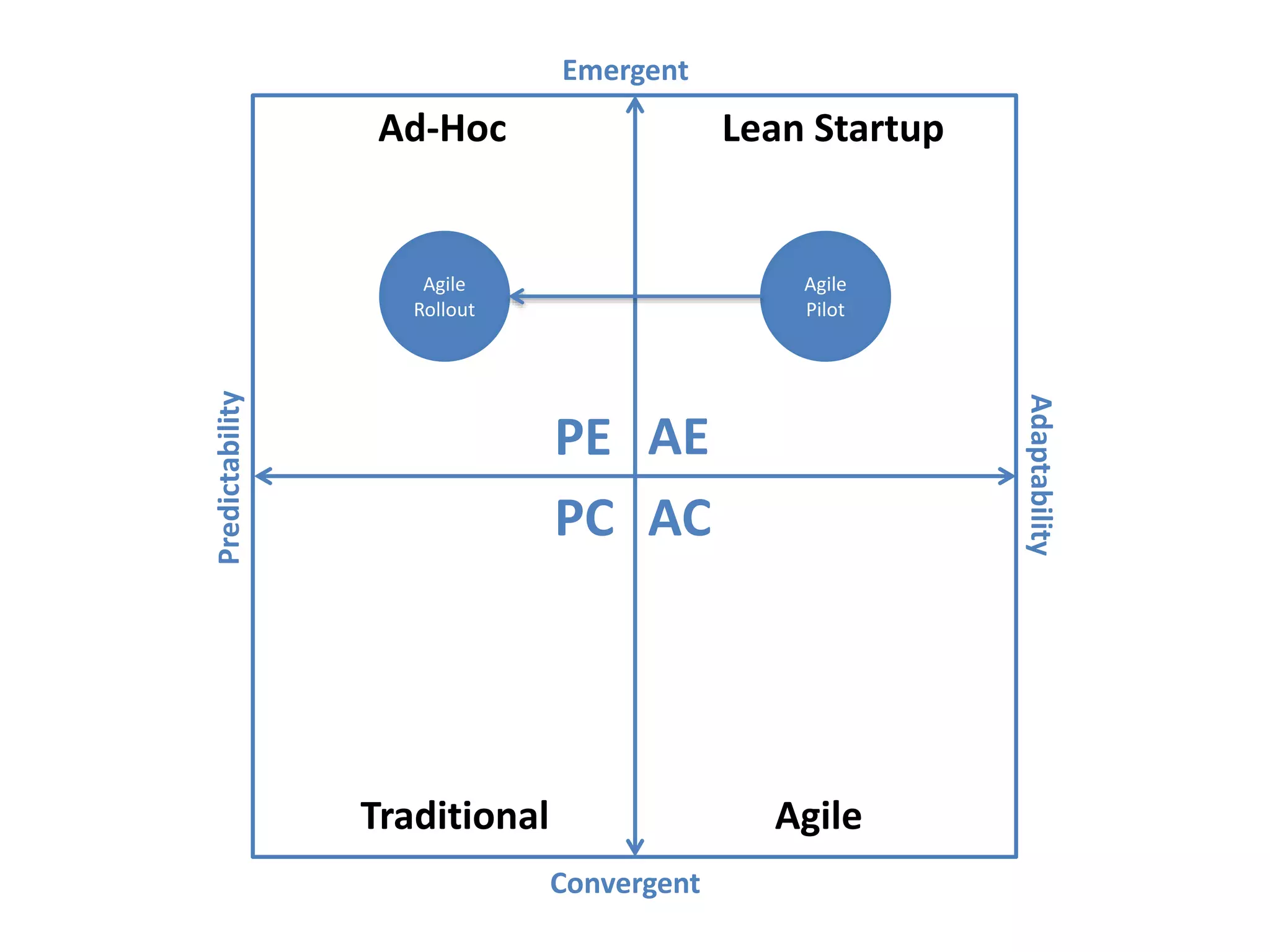
Agile
Pilot
Project
Predictability
Adaptability
Emergent
Convergent
AEPE
PC AC
Ad-Hoc
Traditional Agile
Lean Startup
Agile
Pilot
Agile
Rollout
Predictability
Adaptability
Emergent
Convergent
AEPE
PC AC
Ad-Hoc
Traditional Agile
Lean Startup
Agile
Pilot
Agile
Rollout
Predictability
Adaptability
Emergent
Convergent
AEPE
PC AC
Ad-Hoc
Traditional Agile
Lean Startup
LOB
Predictability
Adaptability
Emergent
Convergent
AEPE
PC AC
Ad-Hoc
Traditional Agile
Lean Startup
LOB
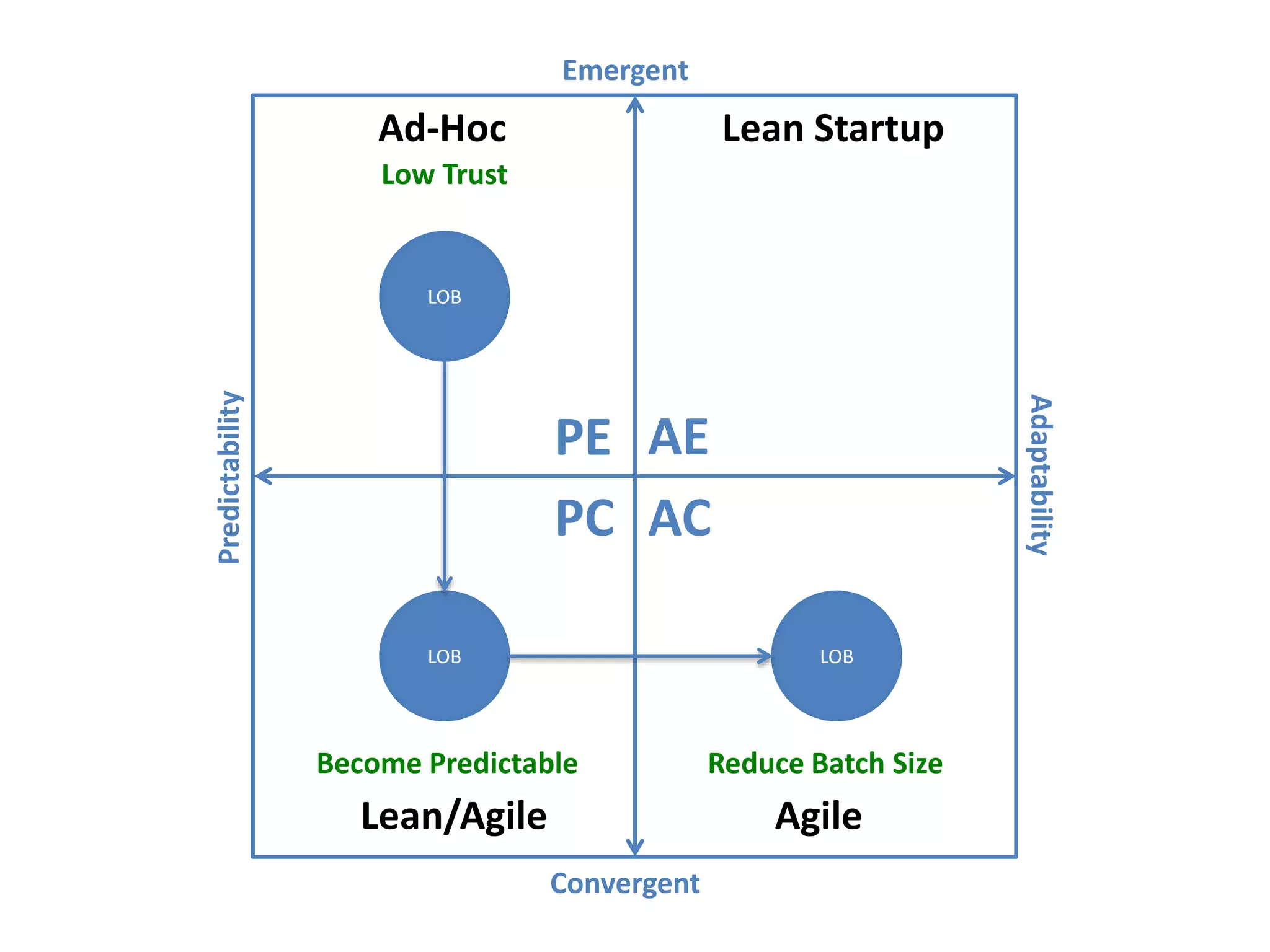
Low Trust
Predictability
Adaptability
Emergent
Convergent
AEPE
PC AC
Ad-Hoc
Traditional Agile
Lean Startup
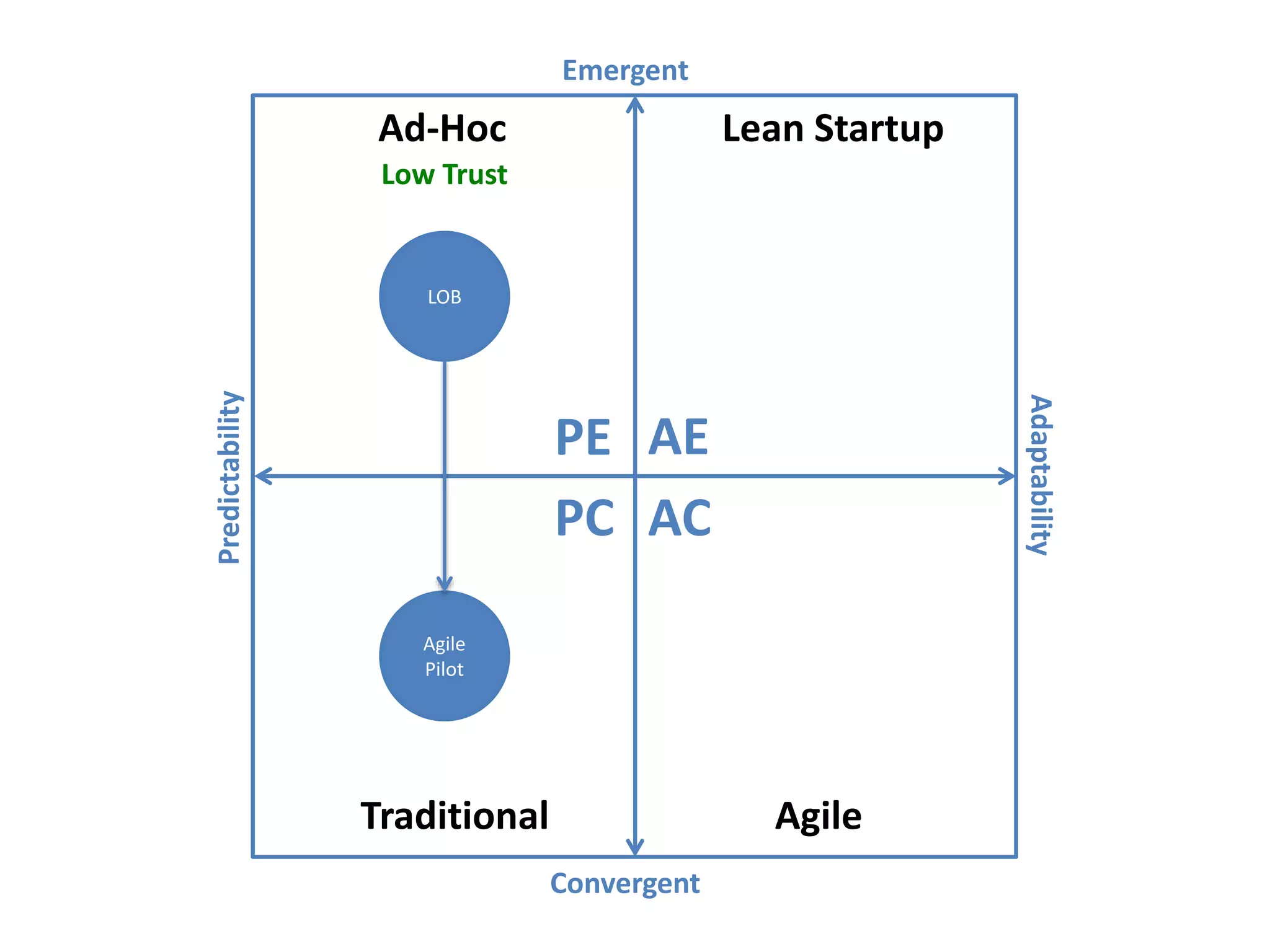
Agile
Pilot
LOB
Low Trust
Predictability
Adaptability
Emergent
Convergent
AEPE
PC AC
Ad-Hoc
Traditional Agile
Lean Startup
Agile
Pilot
LOB
Low Trust
Become Predictable
Predictability
Adaptability
Emergent
Convergent
AEPE
PC AC
Ad-Hoc
Traditional Agile
Lean Startup
Agile
Pilot
LOB
Low Trust
Become Predictable
Predictability
Adaptability
Emergent
Convergent
AEPE
PC AC
Ad-Hoc
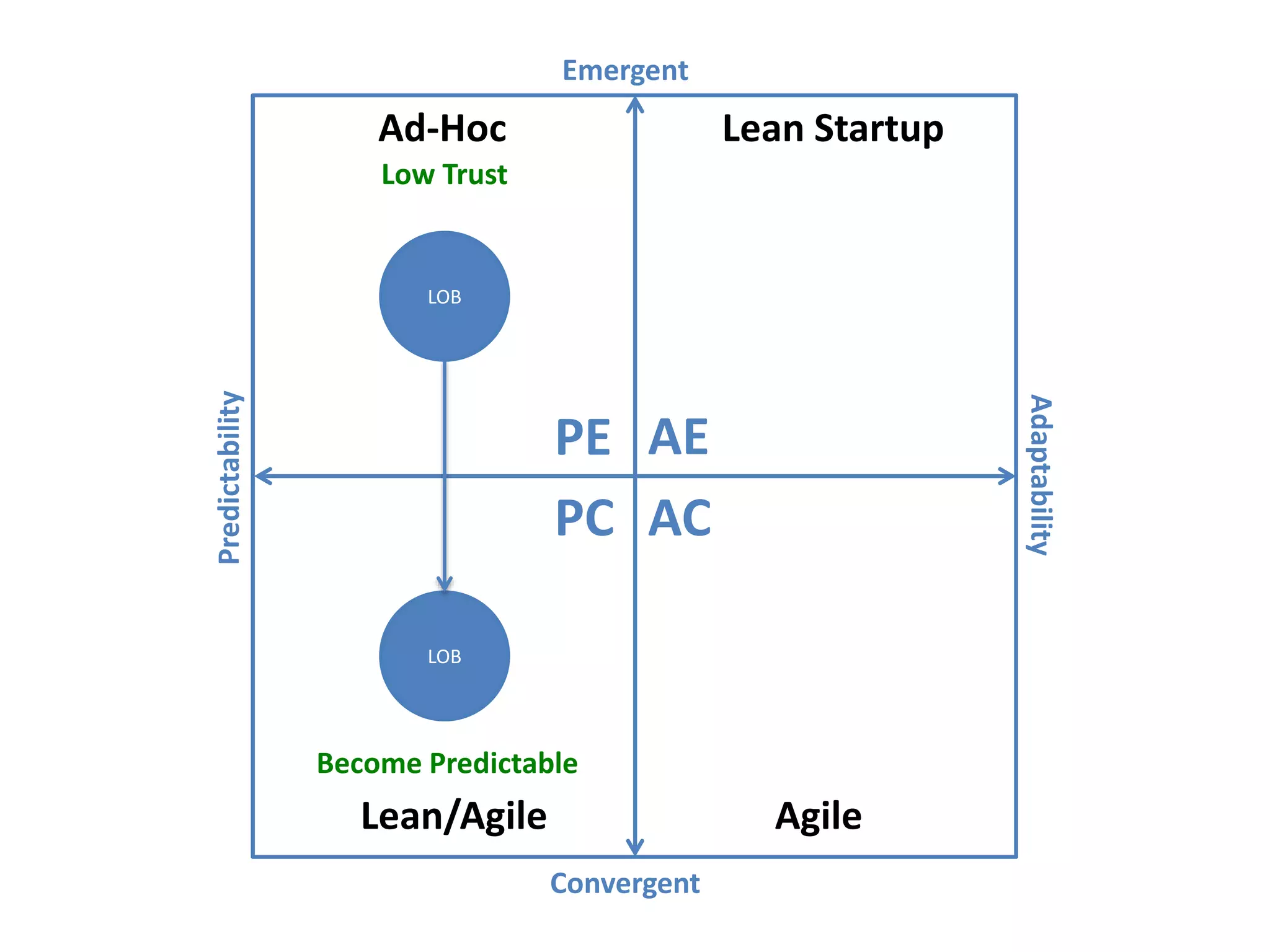
Lean/Agile Agile
Lean Startup
LOB
LOB
Low Trust
Become Predictable
Predictability
Adaptability
Emergent
Convergent
AEPE
PC AC
Ad-Hoc
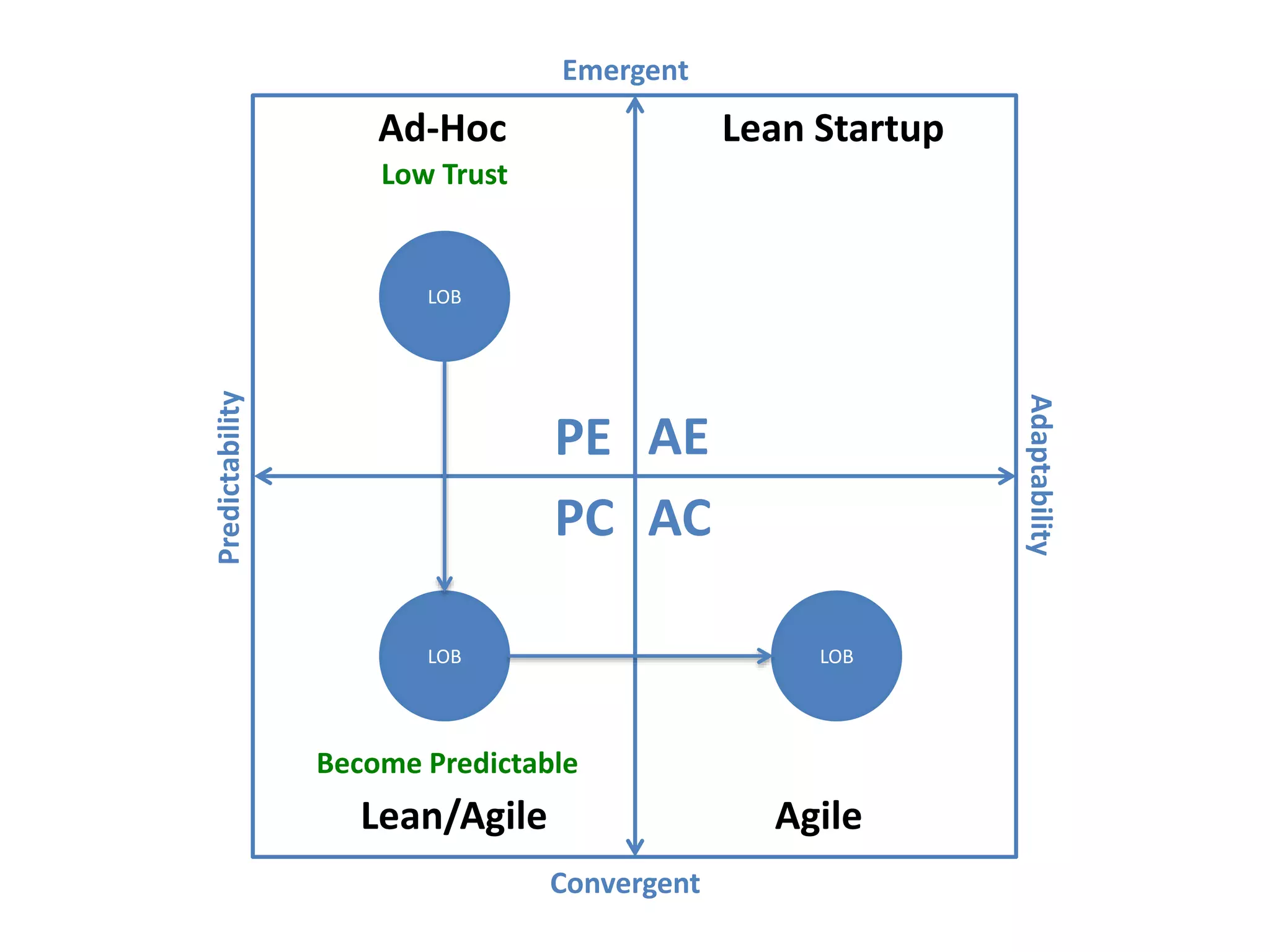
Lean/Agile Agile
Lean Startup
LOB
LOB
LOB
Low Trust
Become Predictable
Predictability
Adaptability
Emergent
Convergent
AEPE
PC AC
Ad-Hoc
Lean/Agile Agile
Lean Startup
LOB
LOB
LOB
Low Trust
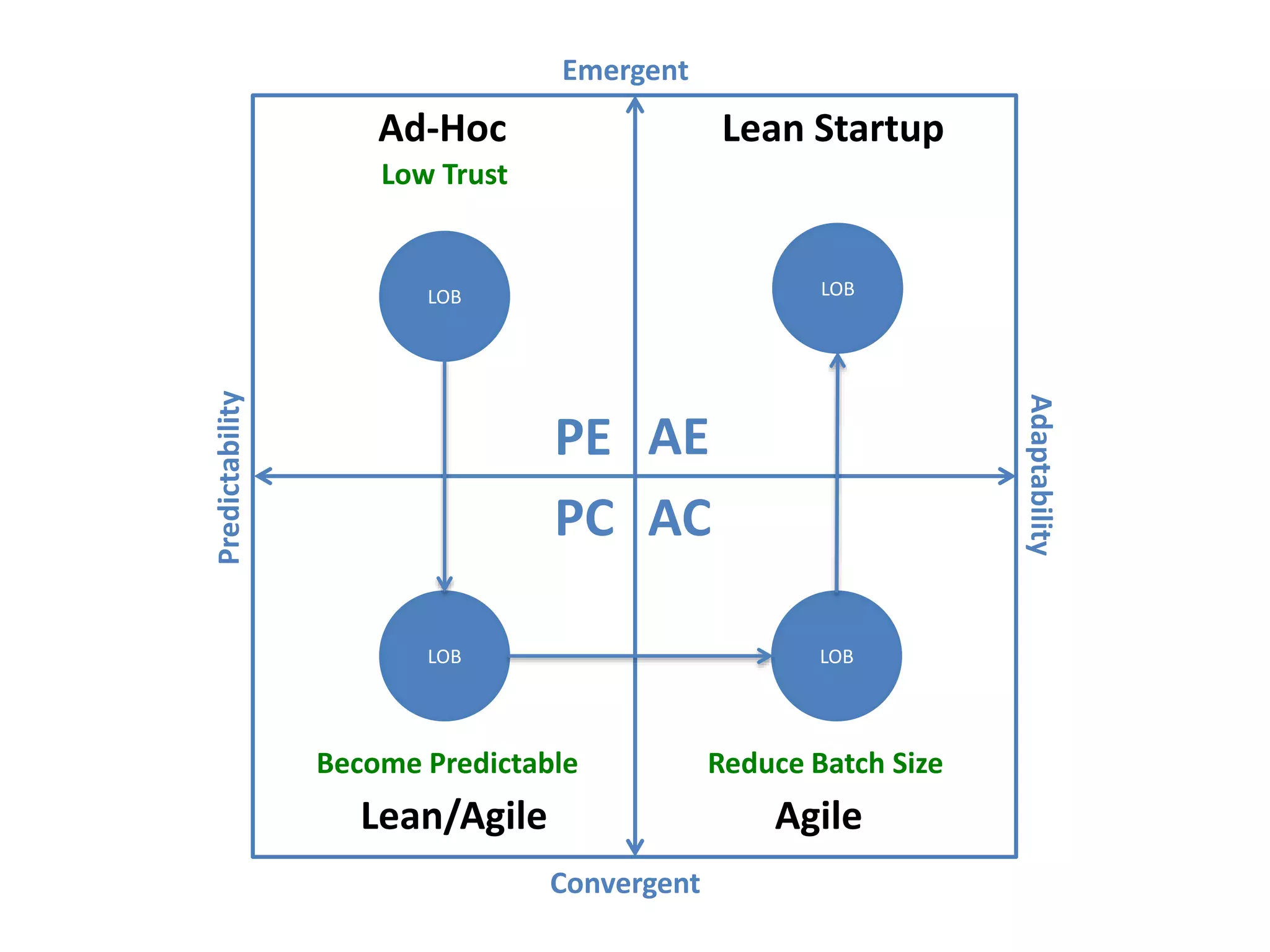
Become Predictable Reduce Batch Size
Predictability
Adaptability
Emergent
Convergent
AEPE
PC AC
Ad-Hoc
Lean/Agile Agile
Lean Startup
LOB
LOB
LOB
LOB
Low Trust
Become Predictable Reduce Batch Size
Predictability
Adaptability
Emergent
Convergent
AEPE
PC AC
Ad-Hoc
Lean/Agile Agile
Lean Startup
LOB
LOB
LOB
LOB
Low Trust
Become Predictable Reduce Batch Size
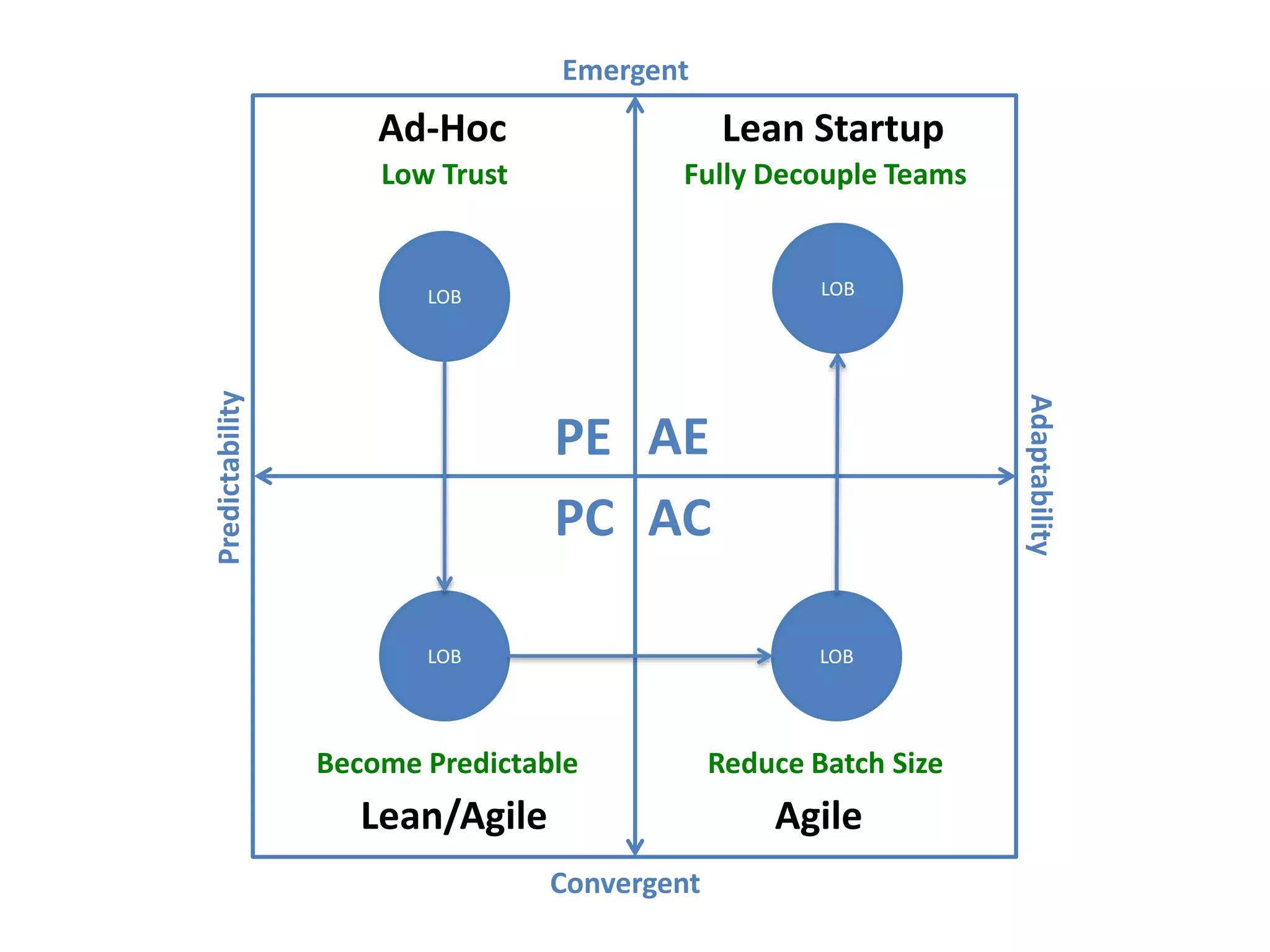
Fully Decouple Teams
Iterative and Incremental
Organizational Improvement
Predictability
Adaptability
Emergent
Convergent
AEPE
PC AC
Ad-Hoc
Lean/Agile Agile
Lean Startup
Low Trust
Become Predictable Reduce Batch Size
Fully Decouple Teams
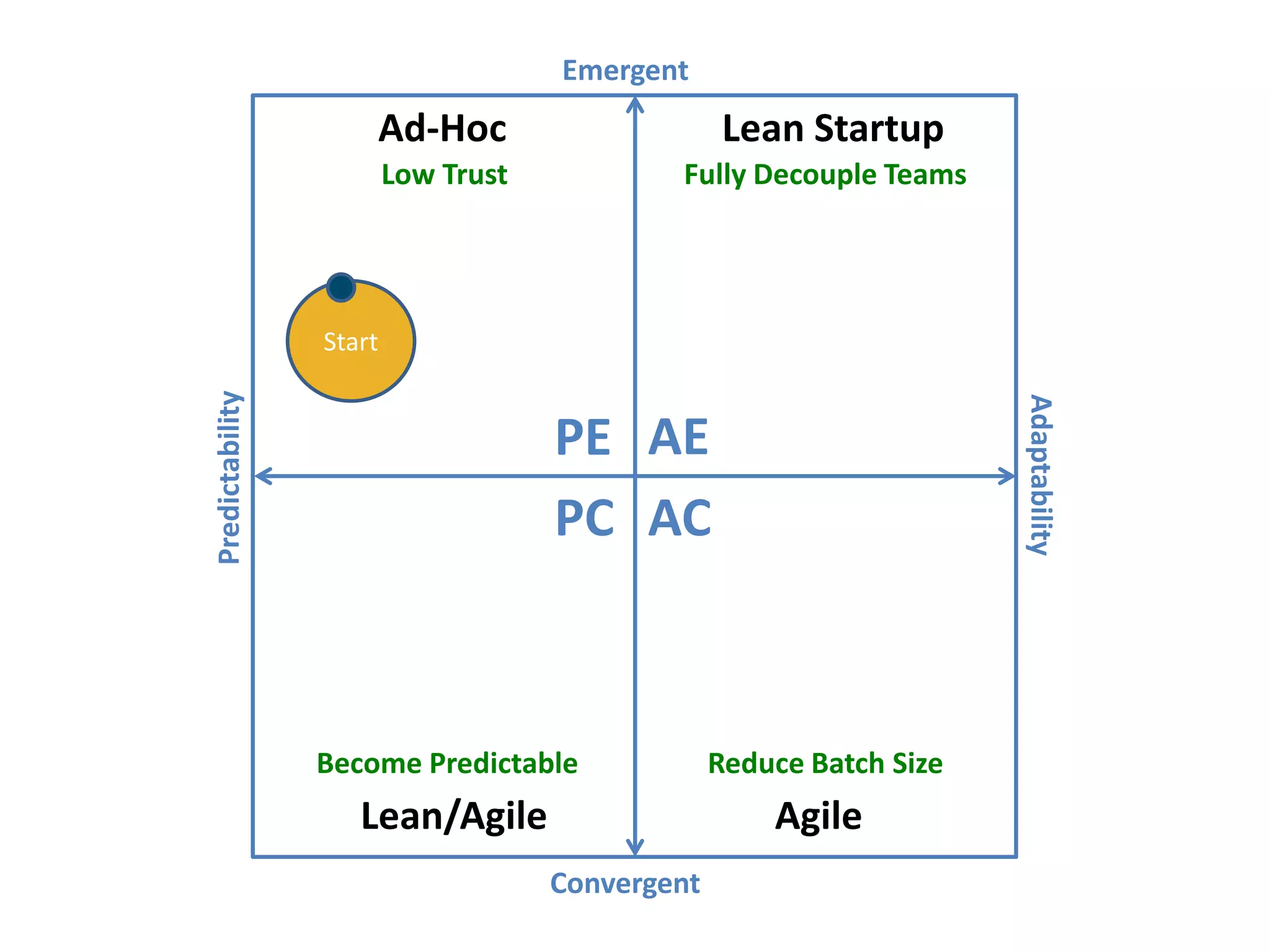
Start
Predictability
Adaptability
Emergent
Convergent
AEPE
PC AC
Ad-Hoc
Lean/Agile Agile
Lean Startup
Low Trust
Become Predictable Reduce Batch Size
Fully Decouple Teams
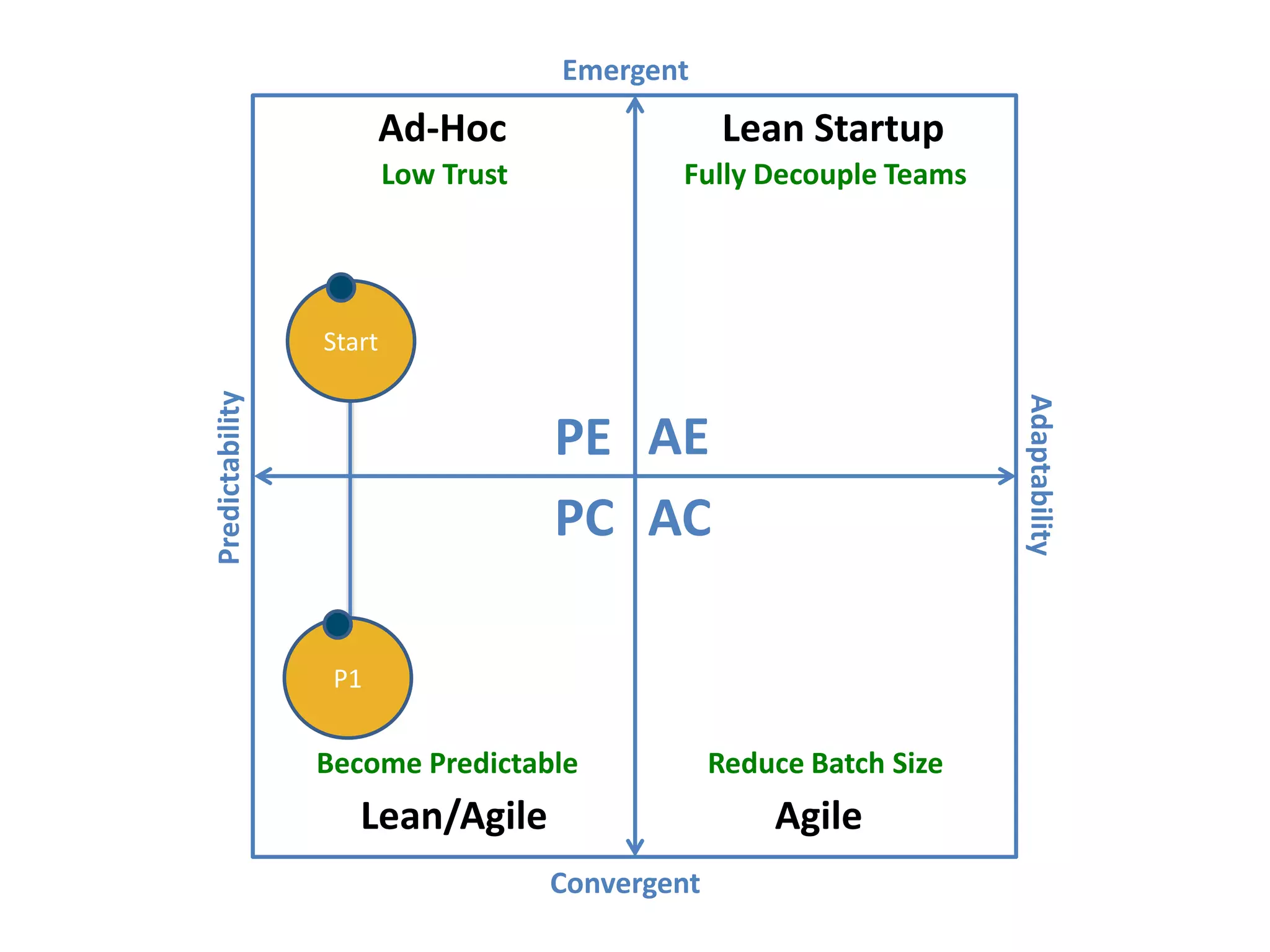
Start
P1
Predictability
Adaptability
Emergent
Convergent
AEPE
PC AC
Ad-Hoc
Lean/Agile Agile
Lean Startup
Low Trust
Become Predictable Reduce Batch Size
Fully Decouple Teams
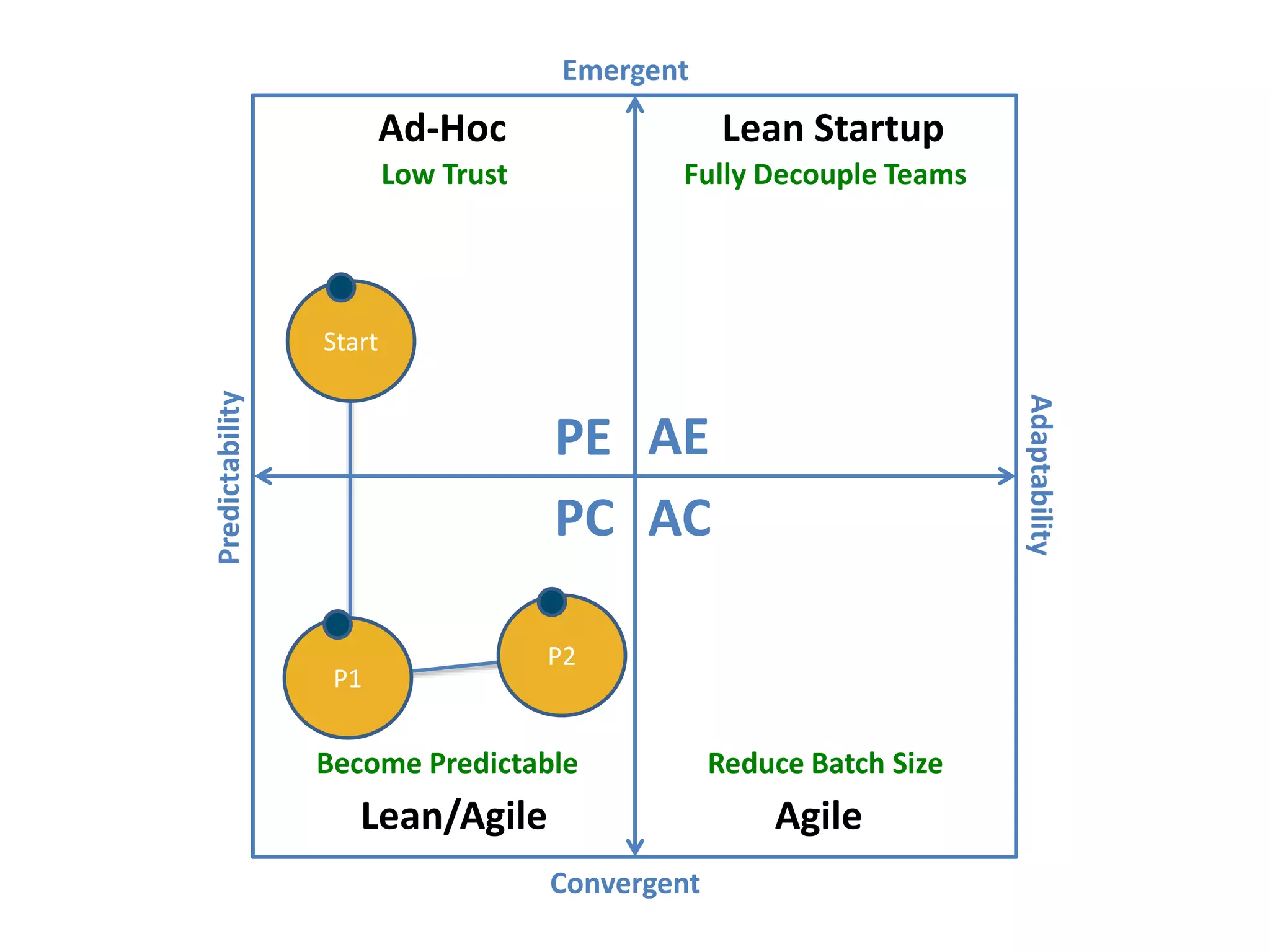
Start
P1
P2
Predictability
Adaptability
Emergent
Convergent
AEPE
PC AC
Ad-Hoc
Lean/Agile Agile
Lean Startup
Low Trust
Become Predictable Reduce Batch Size
Fully Decouple Teams
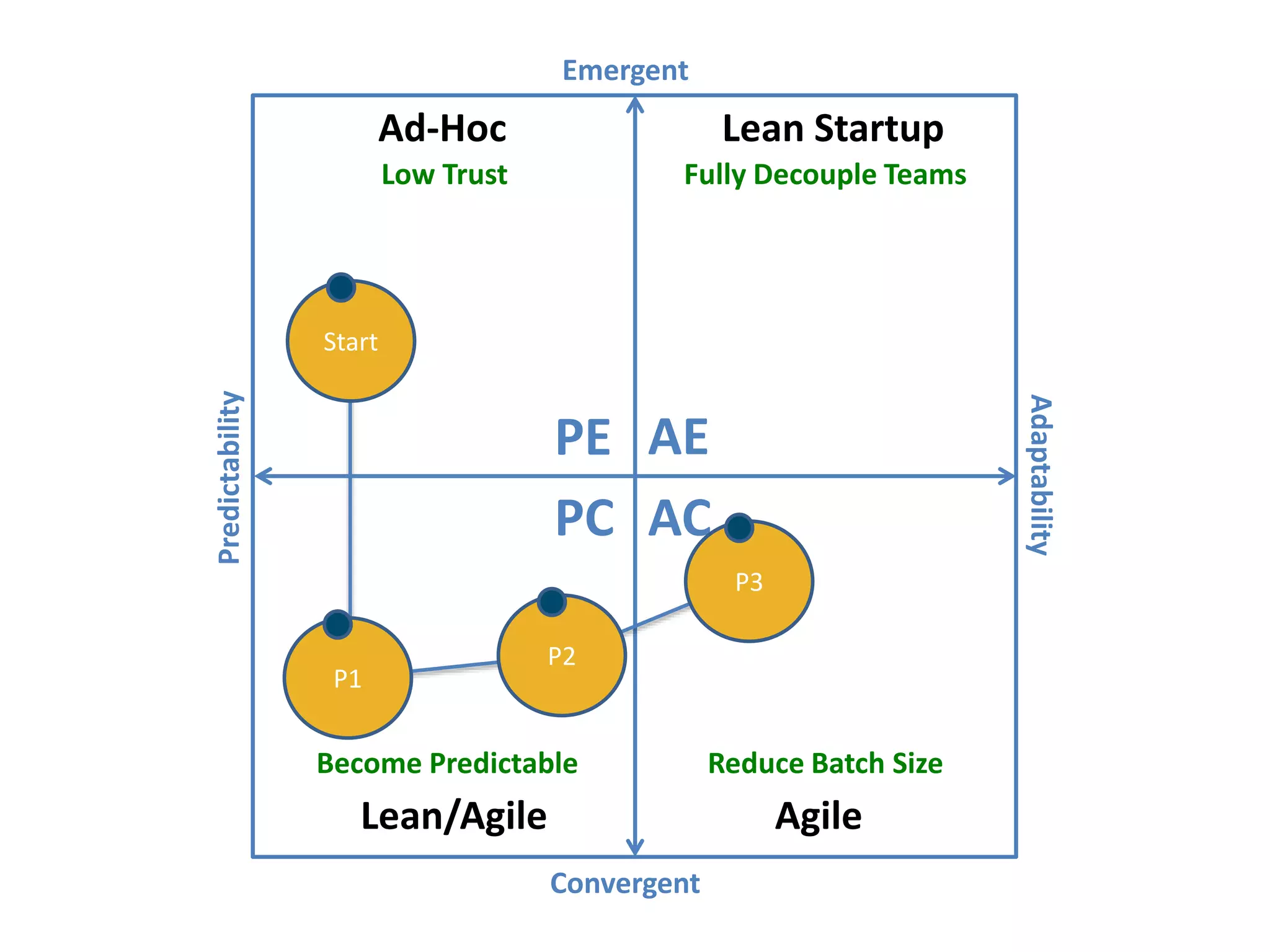
Start
P1
P2
P3
Predictability
Adaptability
Emergent
Convergent
AEPE
PC AC
Ad-Hoc
Lean/Agile Agile
Lean Startup
Low Trust
Become Predictable Reduce Batch Size
Fully Decouple Teams
Start
P1
P2
P3
P4
Predictability
Adaptability
Emergent
Convergent
AEPE
PC AC
Ad-Hoc
Lean/Agile Agile
Lean Startup
Low Trust
Become Predictable Reduce Batch Size
Fully Decouple Teams
Start
P1
P2
P3
P4
P5
Team
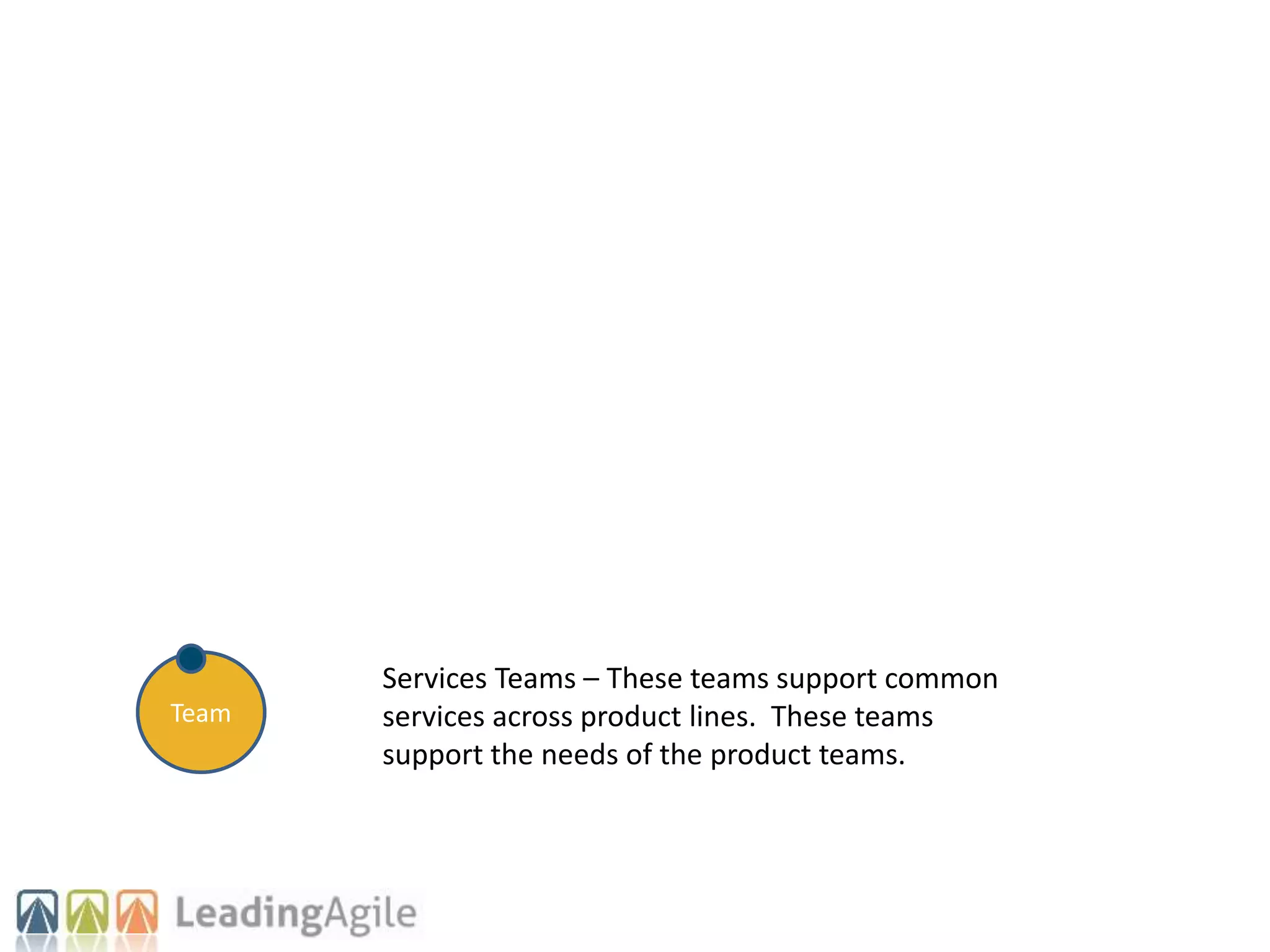
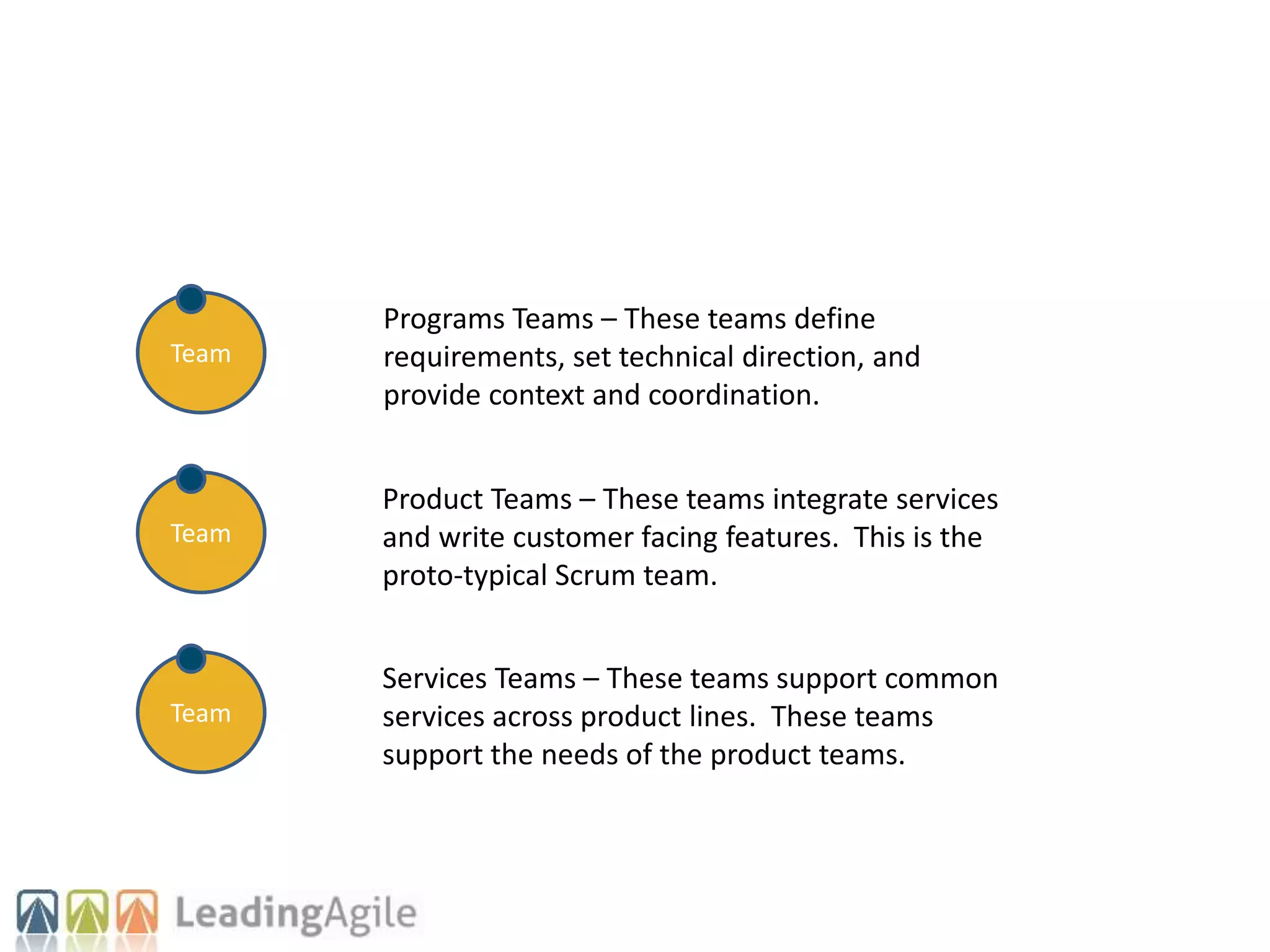
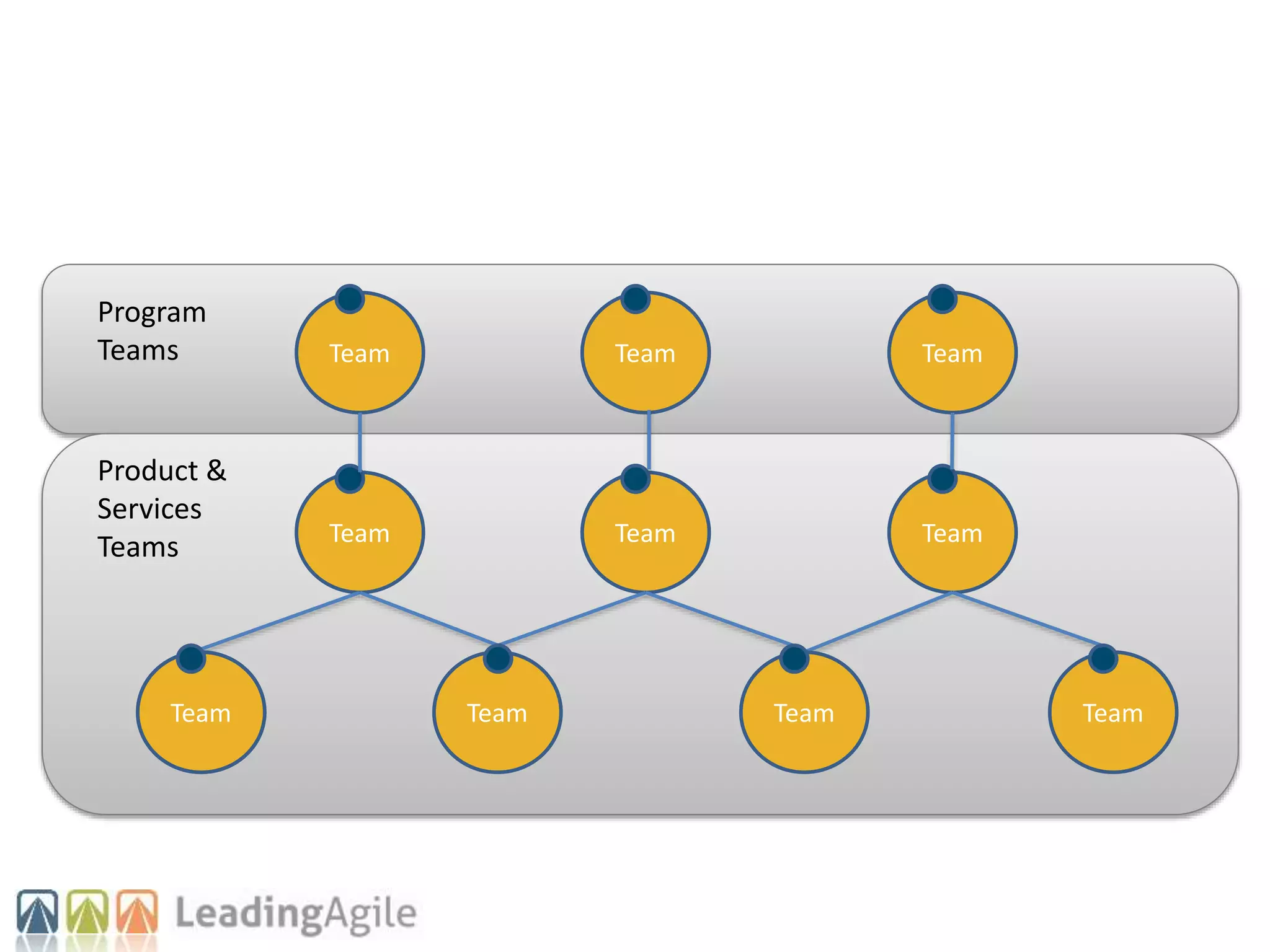
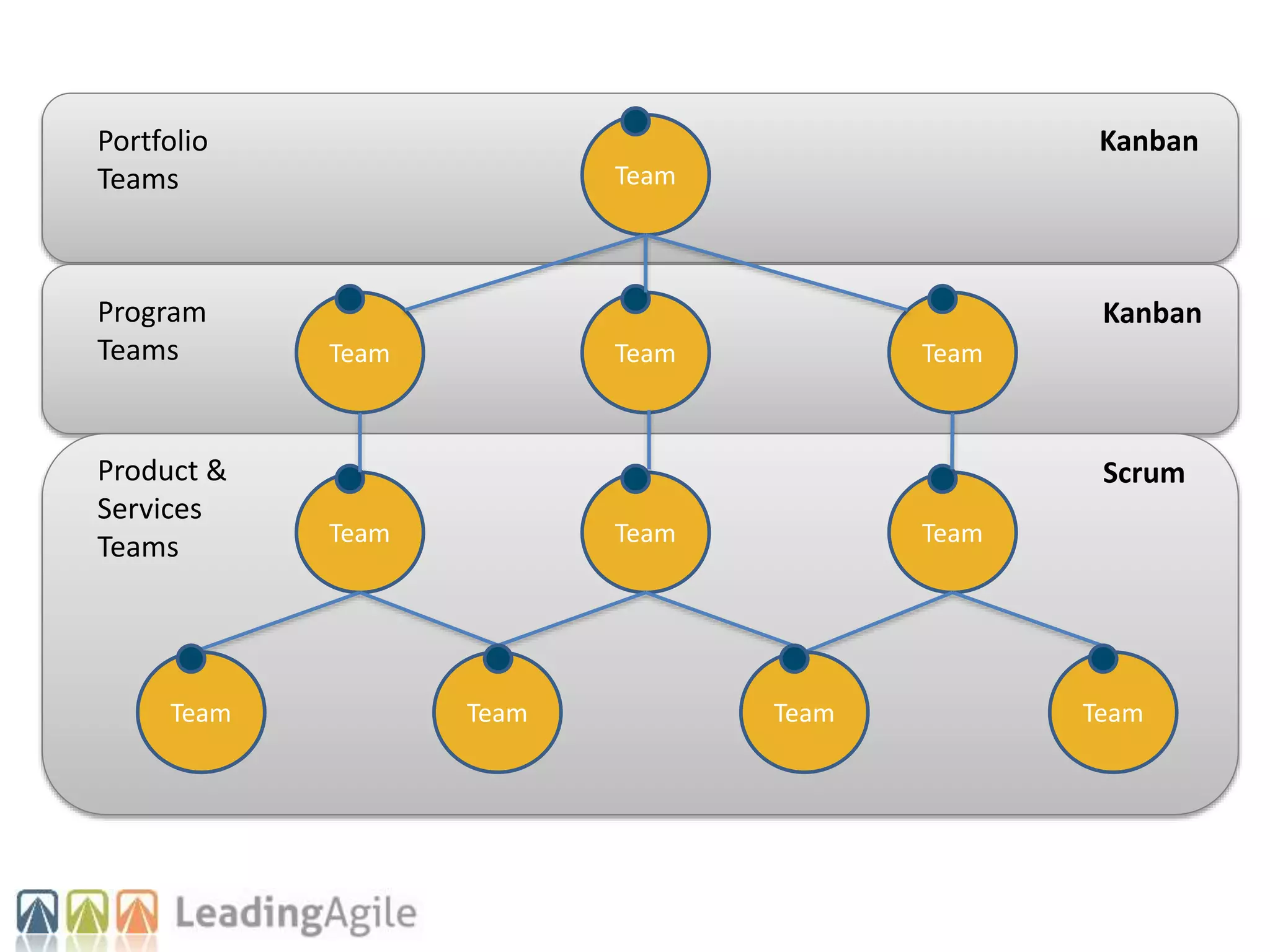
Services Teams – These teams support common
services across product lines. These teams
support the needs of the product teams.
Team
Team
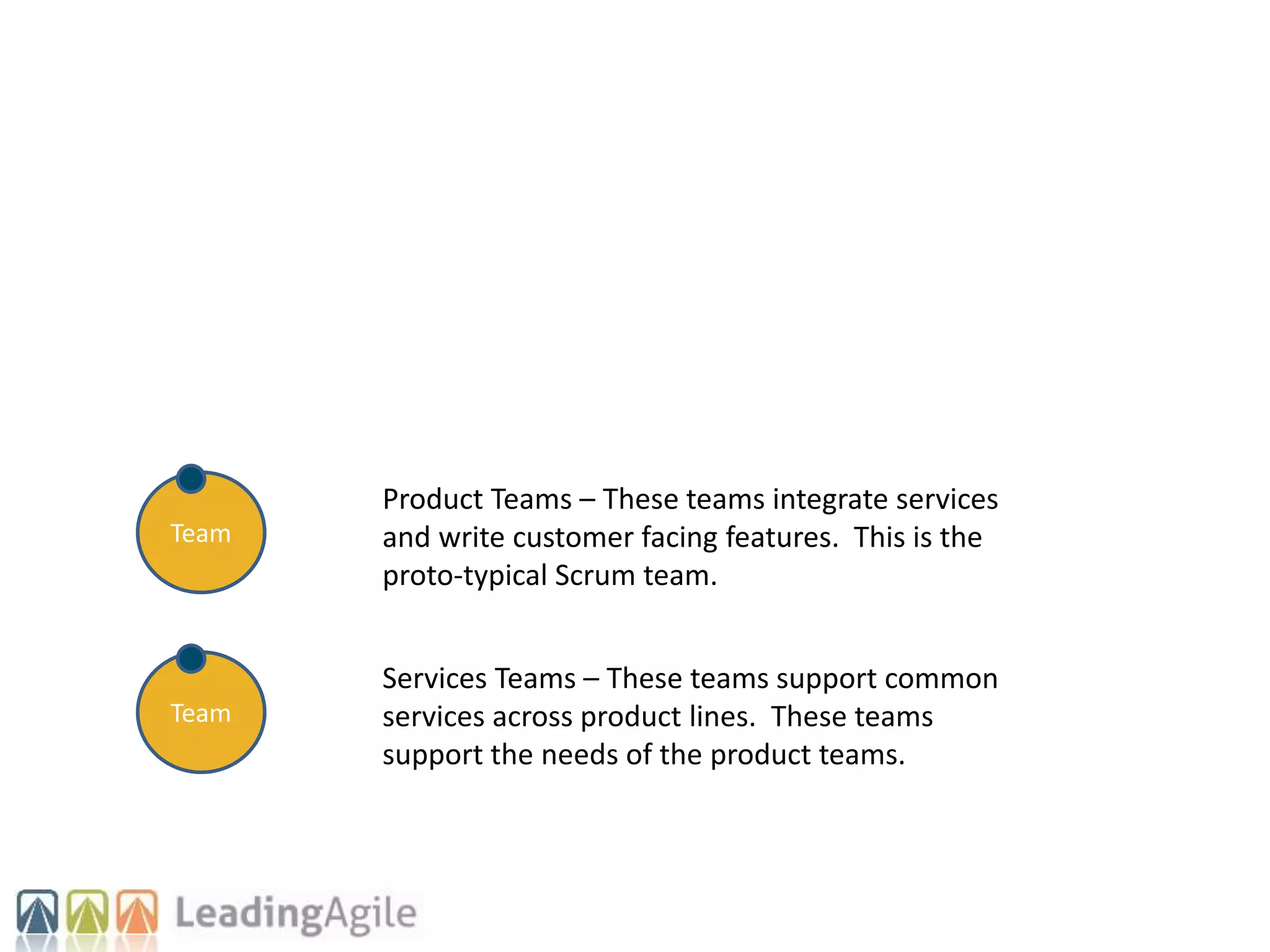
Product Teams – These teams integrate services
and write customer facing features. This is the
proto-typical Scrum team.
Services Teams – These teams support common
services across product lines. These teams
support the needs of the product teams.
Team
Team
Team
Programs Teams – These teams define
requirements, set technical direction, and
provide context and coordination.
Product Teams – These teams integrate services
and write customer facing features. This is the
proto-typical Scrum team.
Services Teams – These teams support common
services across product lines. These teams
support the needs of the product teams.
Team
Team
Team
Team
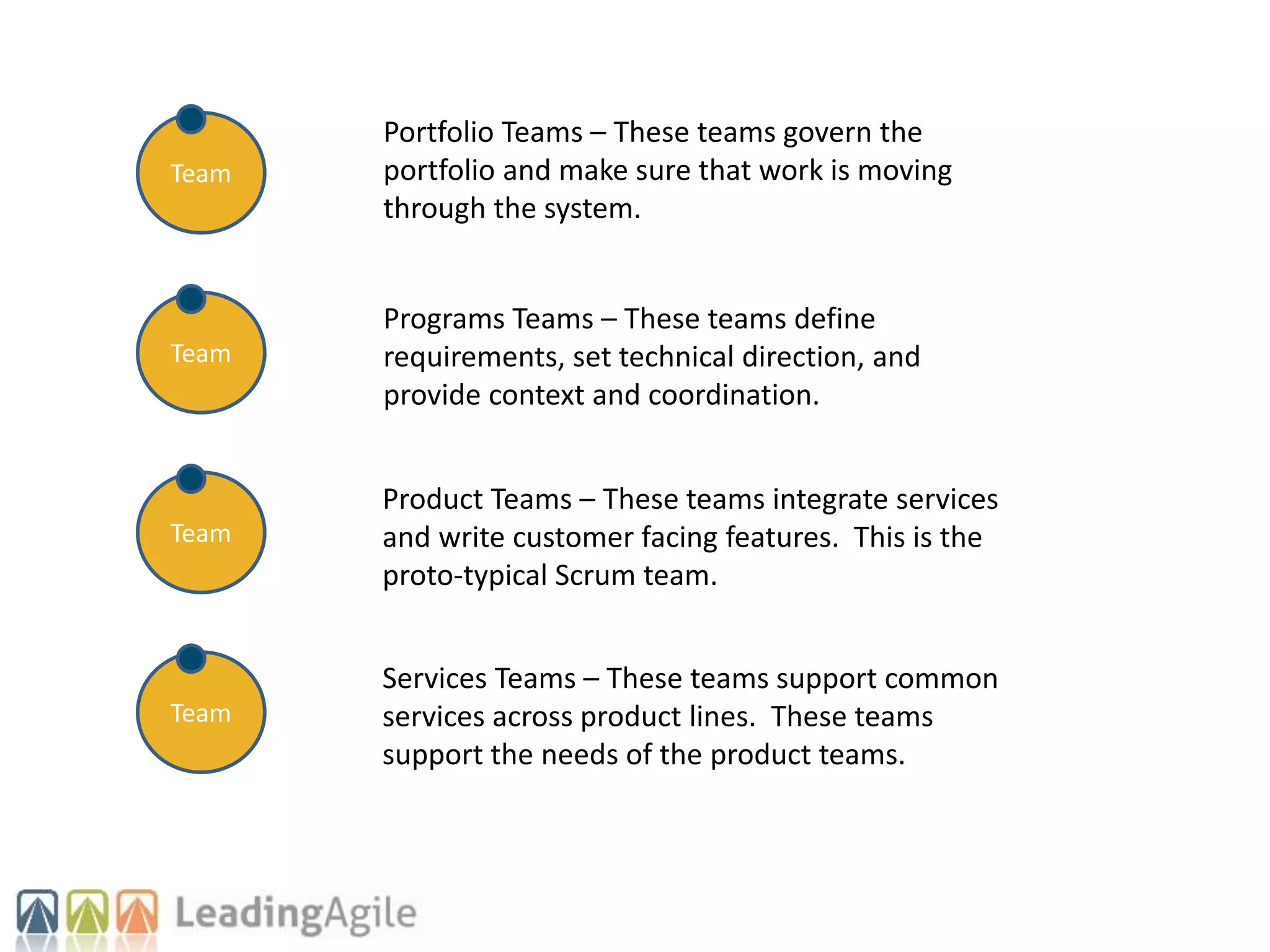
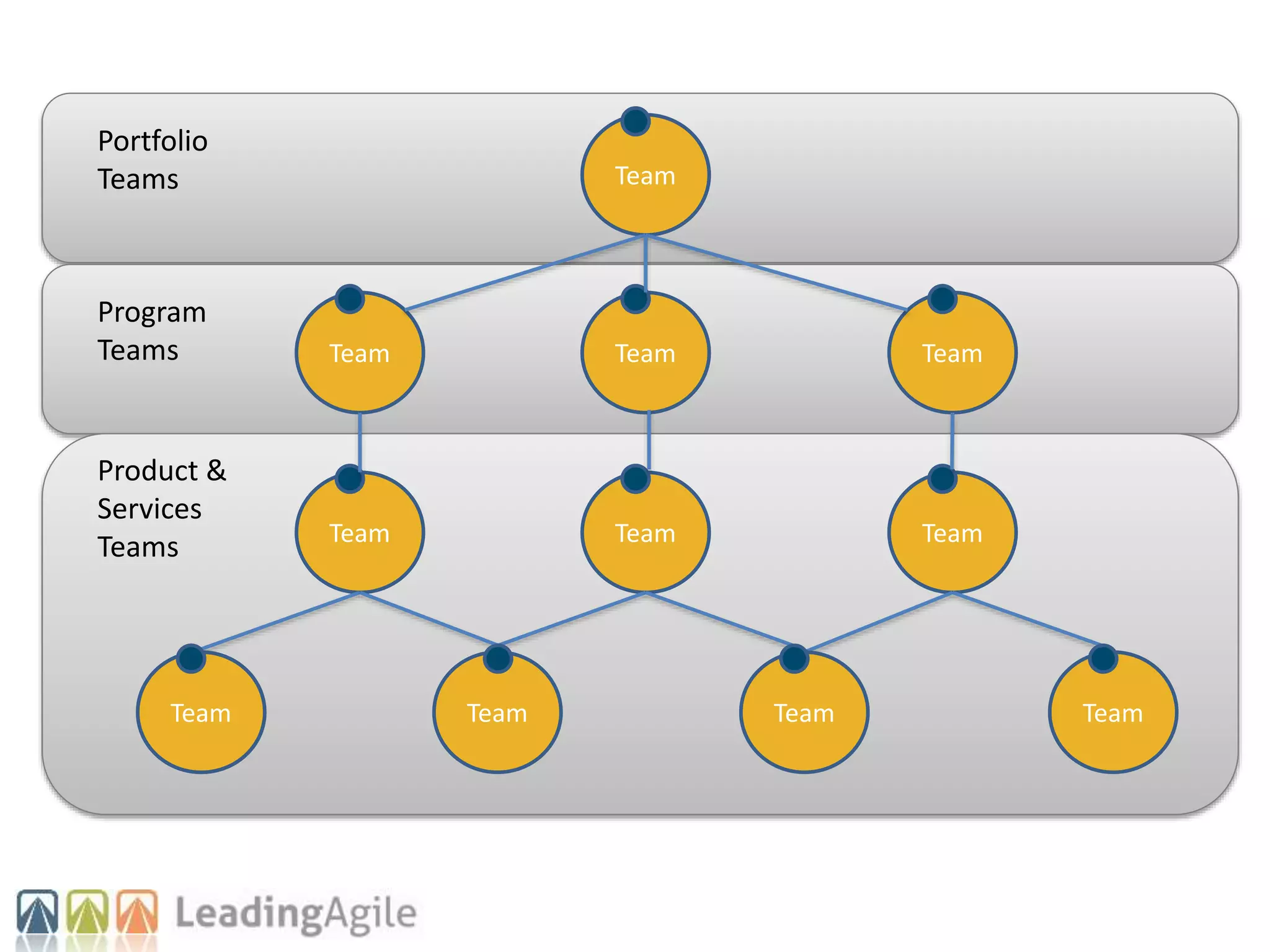
Portfolio Teams – These teams govern the
portfolio and make sure that work is moving
through the system.
Programs Teams – These teams define
requirements, set technical direction, and
provide context and coordination.
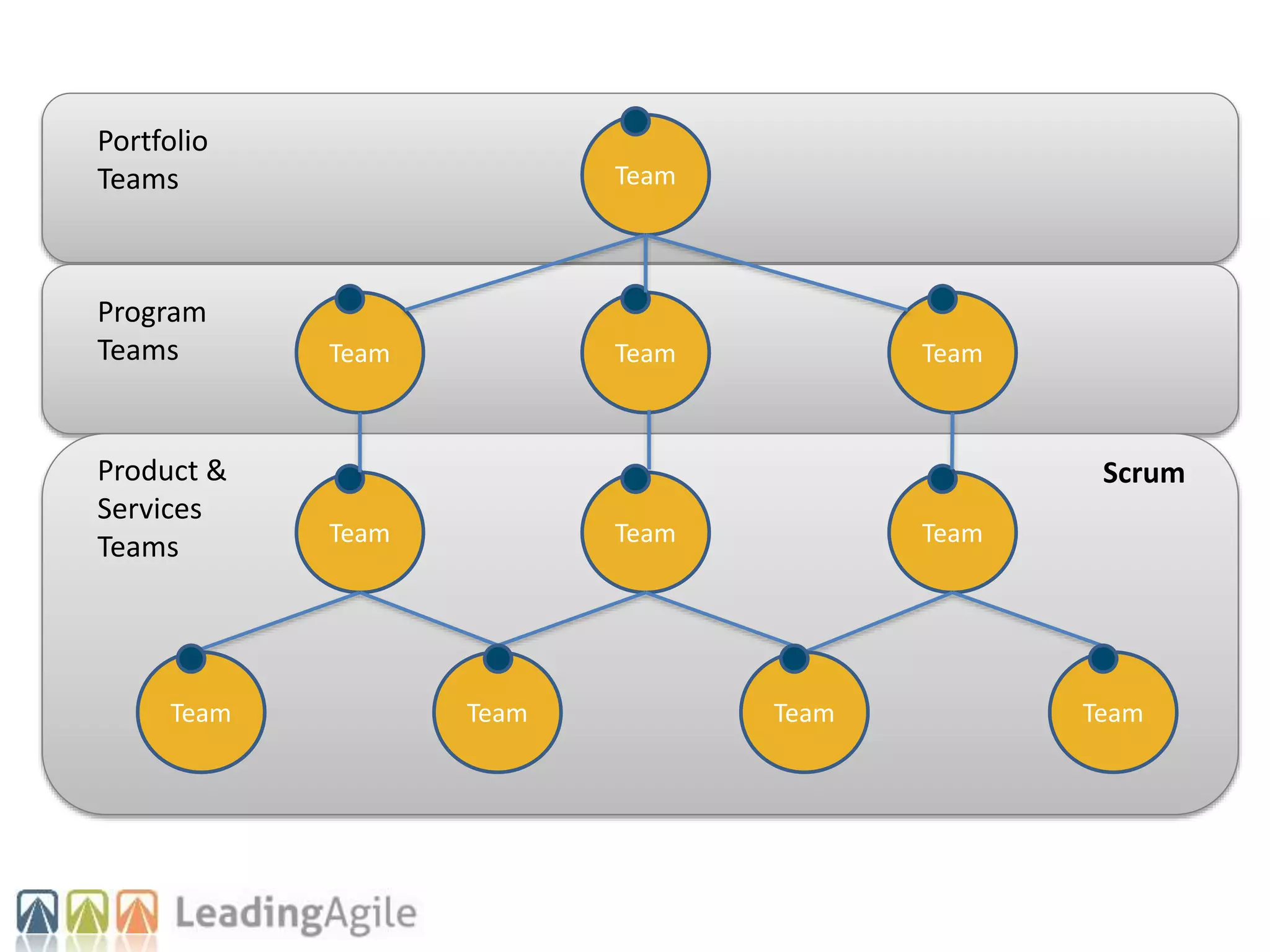
Product Teams – These teams integrate services
and write customer facing features. This is the
proto-typical Scrum team.
Services Teams – These teams support common
services across product lines. These teams
support the needs of the product teams.
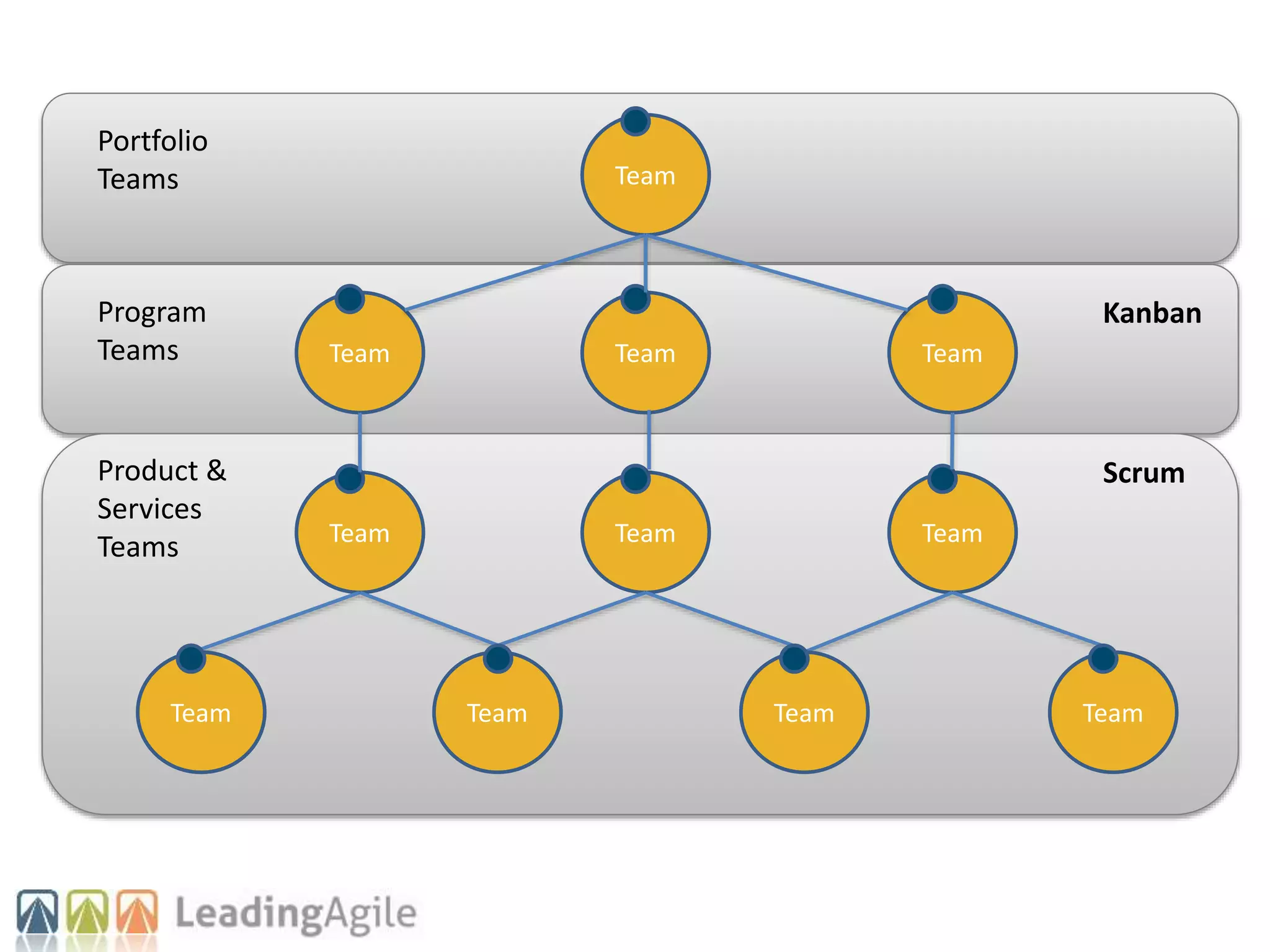
Agile Delivery Structure
Team
Team TeamTeam
Team Team Team Team
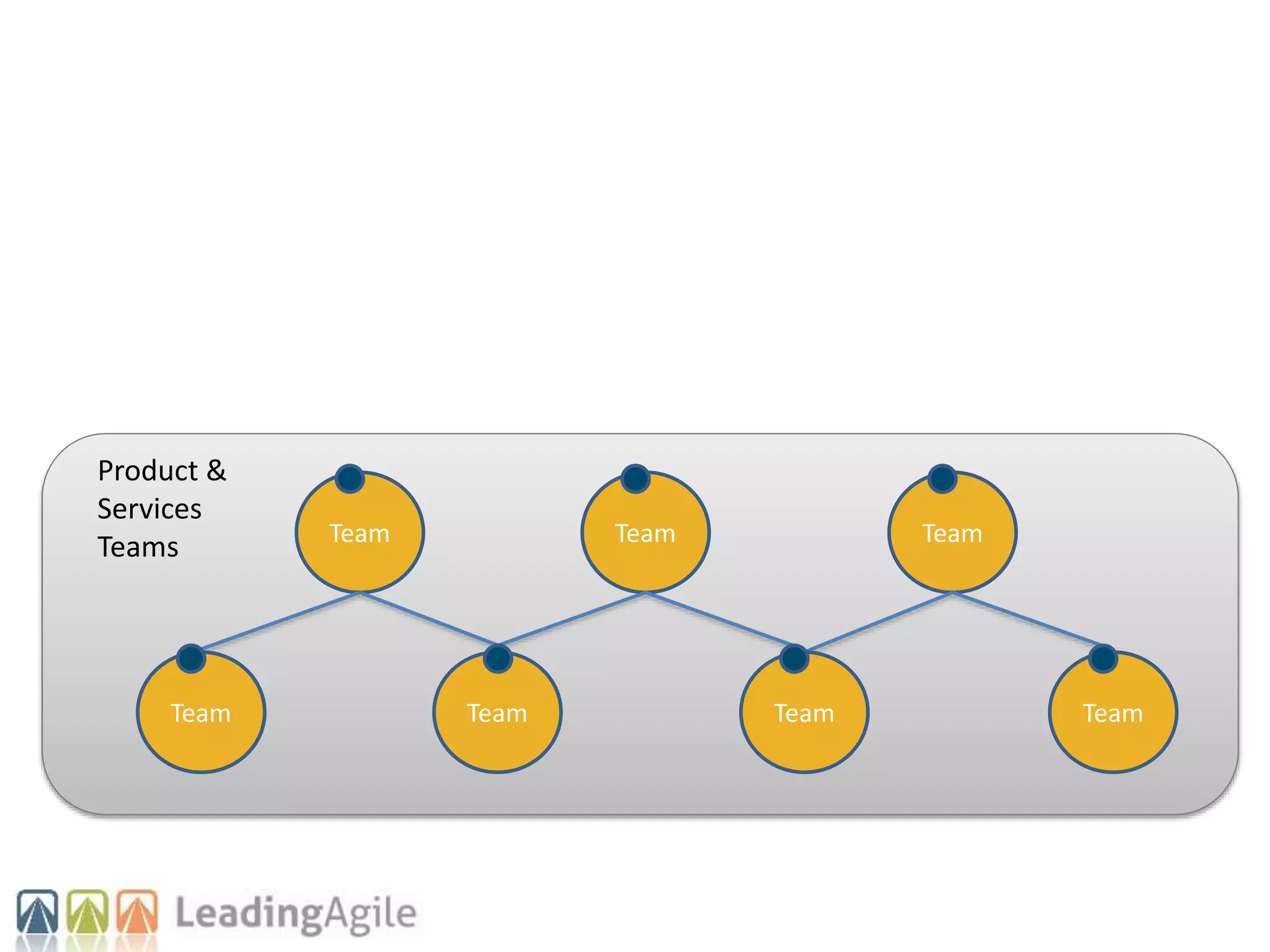
Product &
Services
Teams
Team
Team Team
Team Team
Team
Team
Team Team Team Team
Product &
Services
Teams
Program
Teams
Team
Team
Team
Team
Team Team
Team
Team
Team Team Team Team
Product &
Services
Teams
Program
Teams
Portfolio
Teams
Team
Team
Team
Team
Team Team
Team
Team
Team Team Team Team
Product &
Services
Teams
Program
Teams
Portfolio
Teams
Scrum
Team
Team
Team
Team
Team Team
Team
Team
Team Team Team Team
Product &
Services
Teams
Program
Teams
Portfolio
Teams
Scrum
Kanban
Team
Team
Team
Team
Team Team
Team
Team
Team Team Team Team
Product &
Services
Teams
Program
Teams
Portfolio
Teams
Scrum
Kanban
Kanban
Team
Team
Team
Team
Team Team
Team
Team
Team Team Team Team
Product &
Services
Teams
Program
Teams
Portfolio
Teams
Scrum
Kanban
Kanban
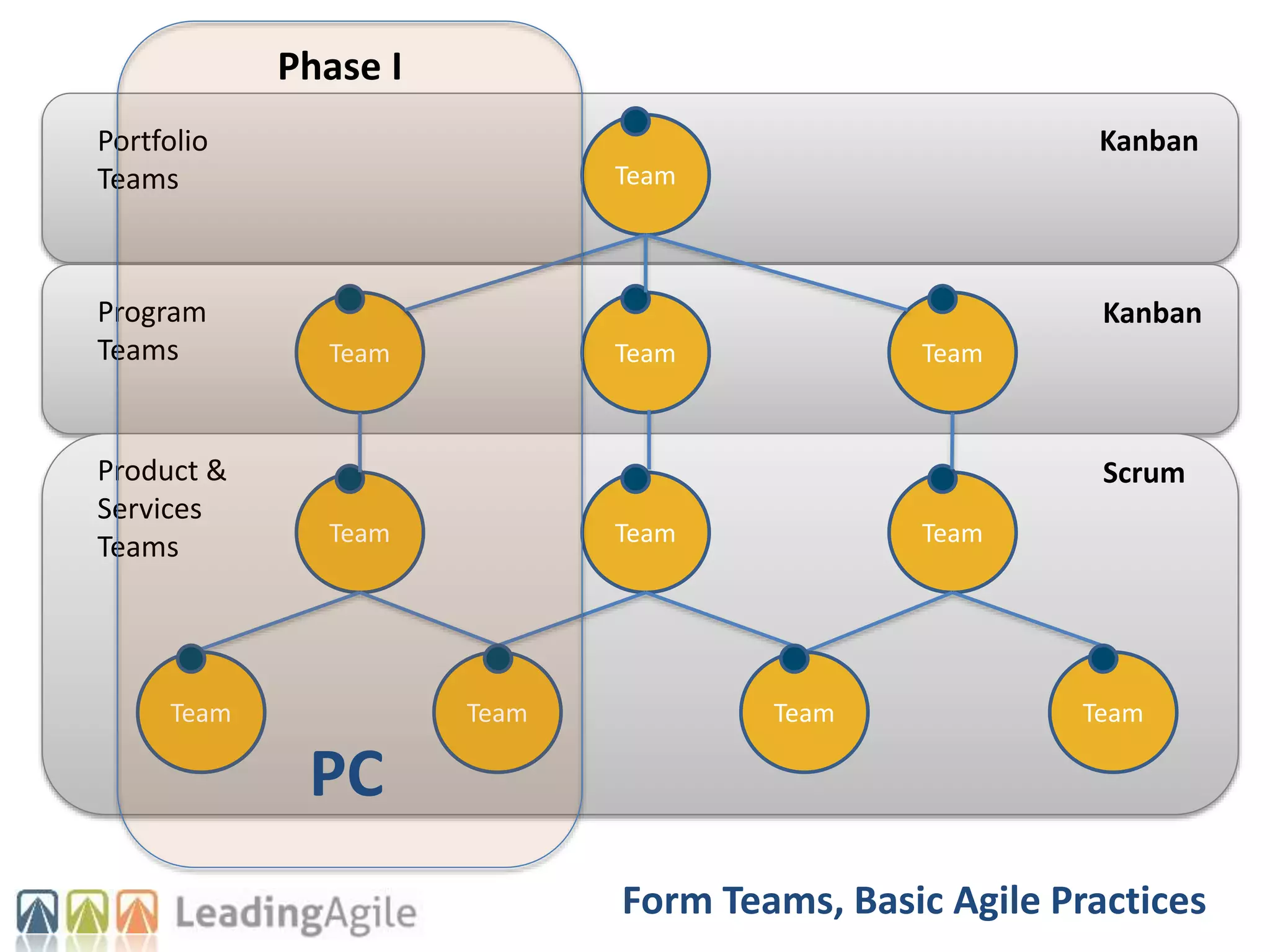
Phase I
Form Teams, Basic Agile Practices
PC
Team
Team
Team
Team
Team Team
Team
Team
Team Team Team Team
Product &
Services
Teams
Program
Teams
Portfolio
Teams
Scrum
Kanban
Kanban
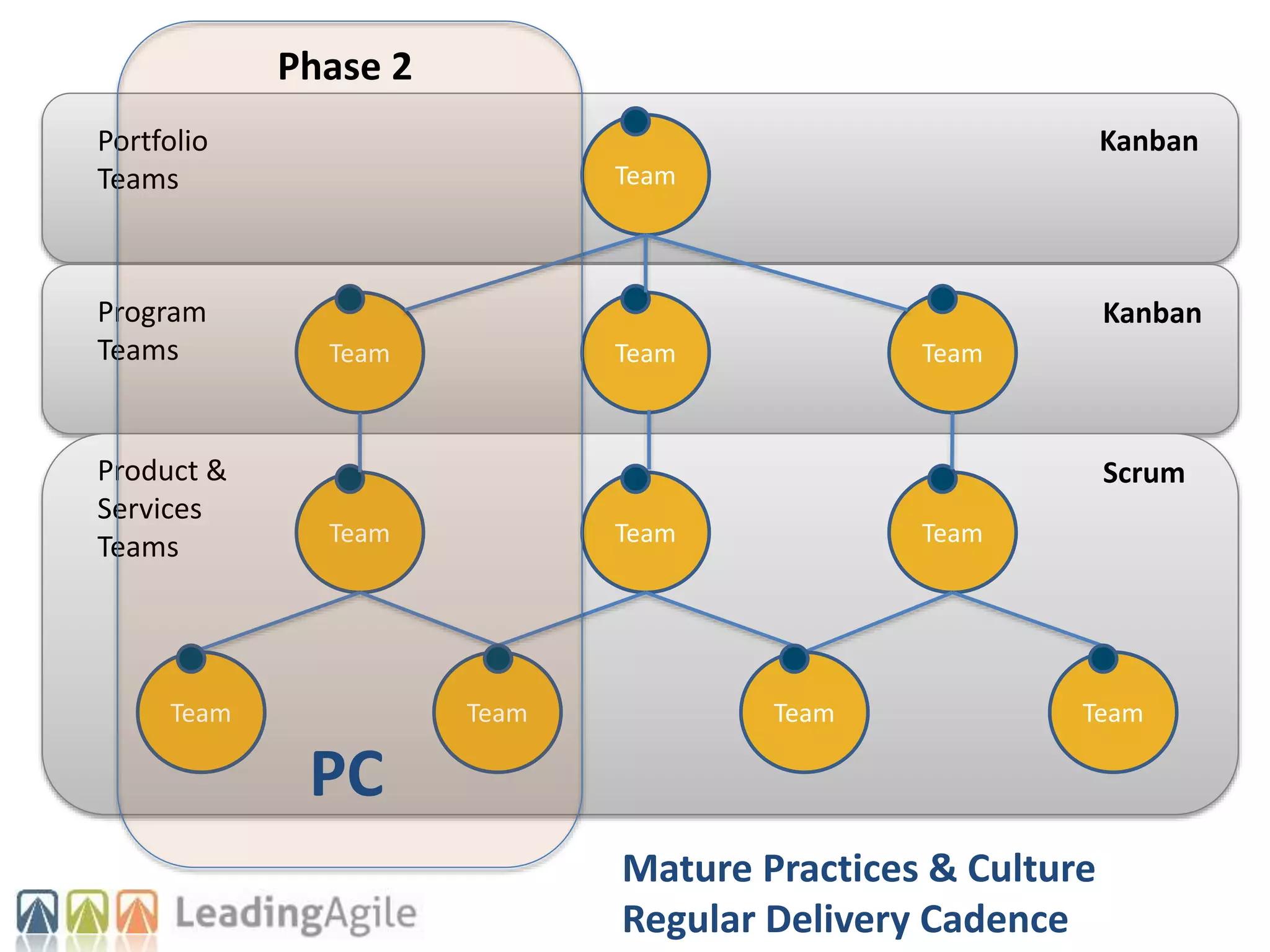
Phase 2
Mature Practices & Culture
Regular Delivery Cadence
PC
Team
Team
Team
Team
Team Team
Team
Team
Team Team Team Team
Product &
Services
Teams
Program
Teams
Portfolio
Teams
Scrum
Kanban
Kanban
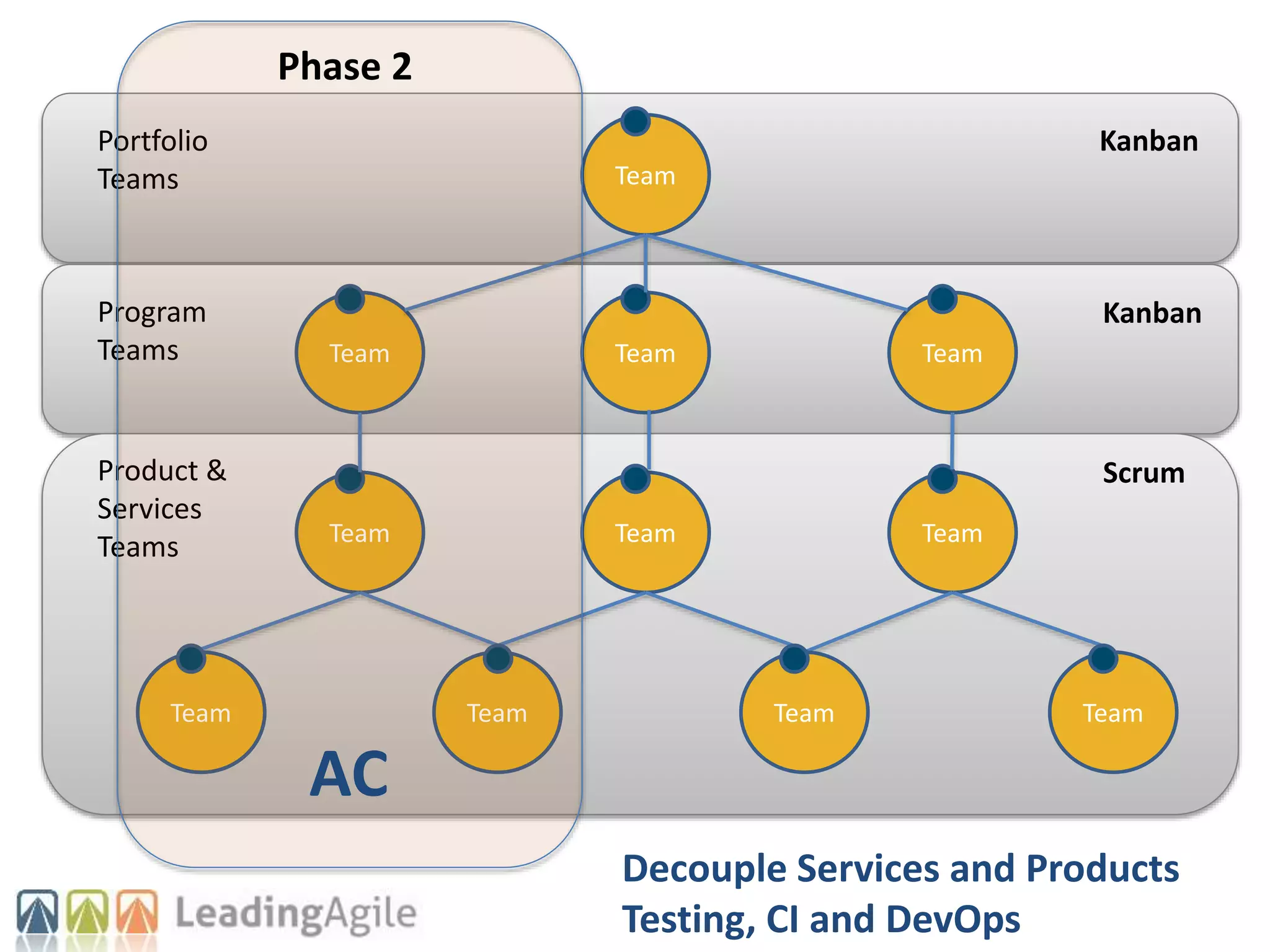
Phase 2
Decouple Services and Products
Testing, CI and DevOps
AC
Team
Team
Team
Team
Team Team
Team
Team
Team Team Team Team
Product &
Services
Teams
Program
Teams
Portfolio
Teams
Scrum
Kanban
Kanban
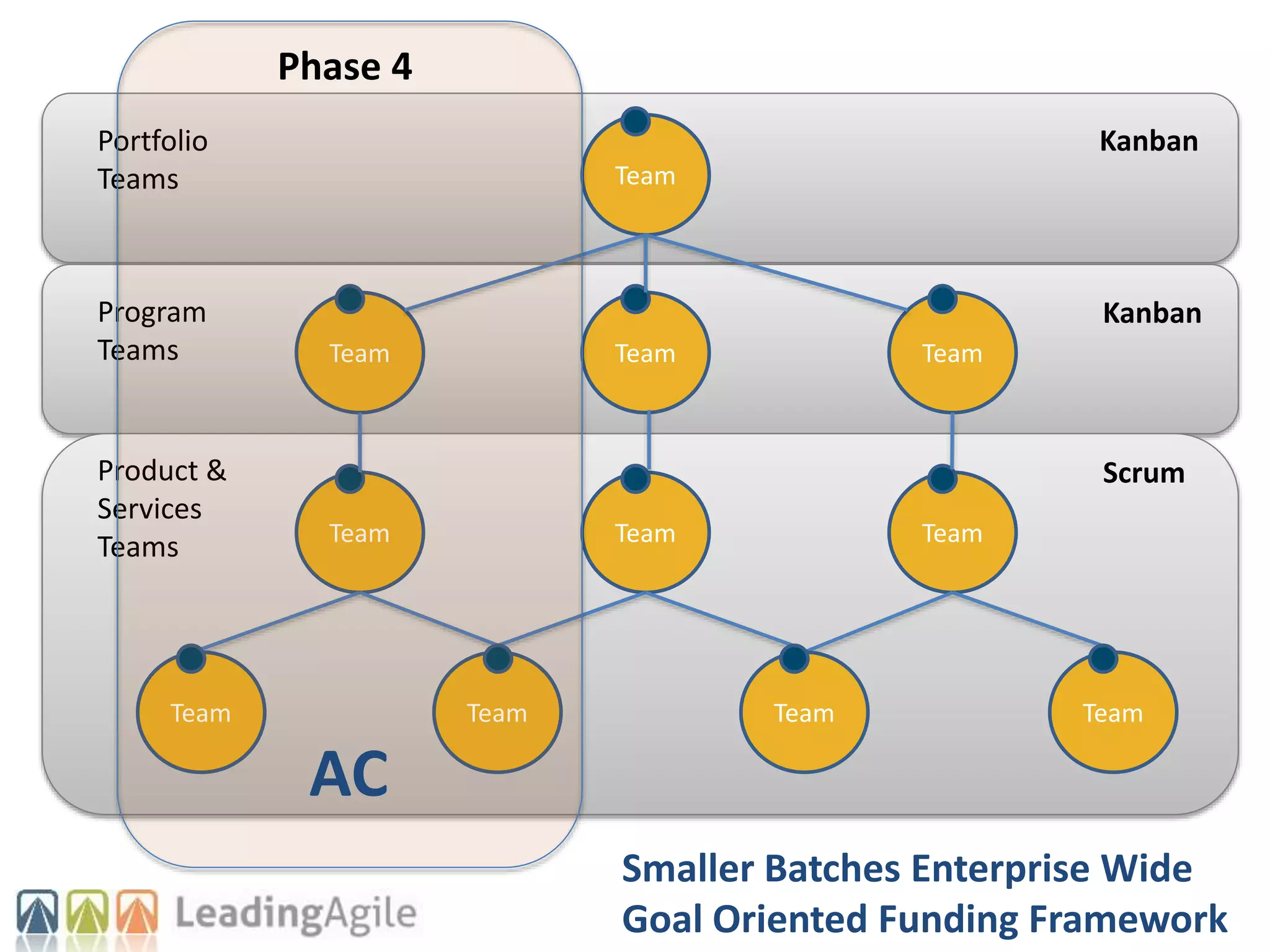
Phase 4
Smaller Batches Enterprise Wide
Goal Oriented Funding Framework
AC
Team
Team
Team
Team
Team Team
Team
Team
Team Team Team Team
Product &
Services
Teams
Program
Teams
Portfolio
Teams
Scrum
Kanban
Kanban
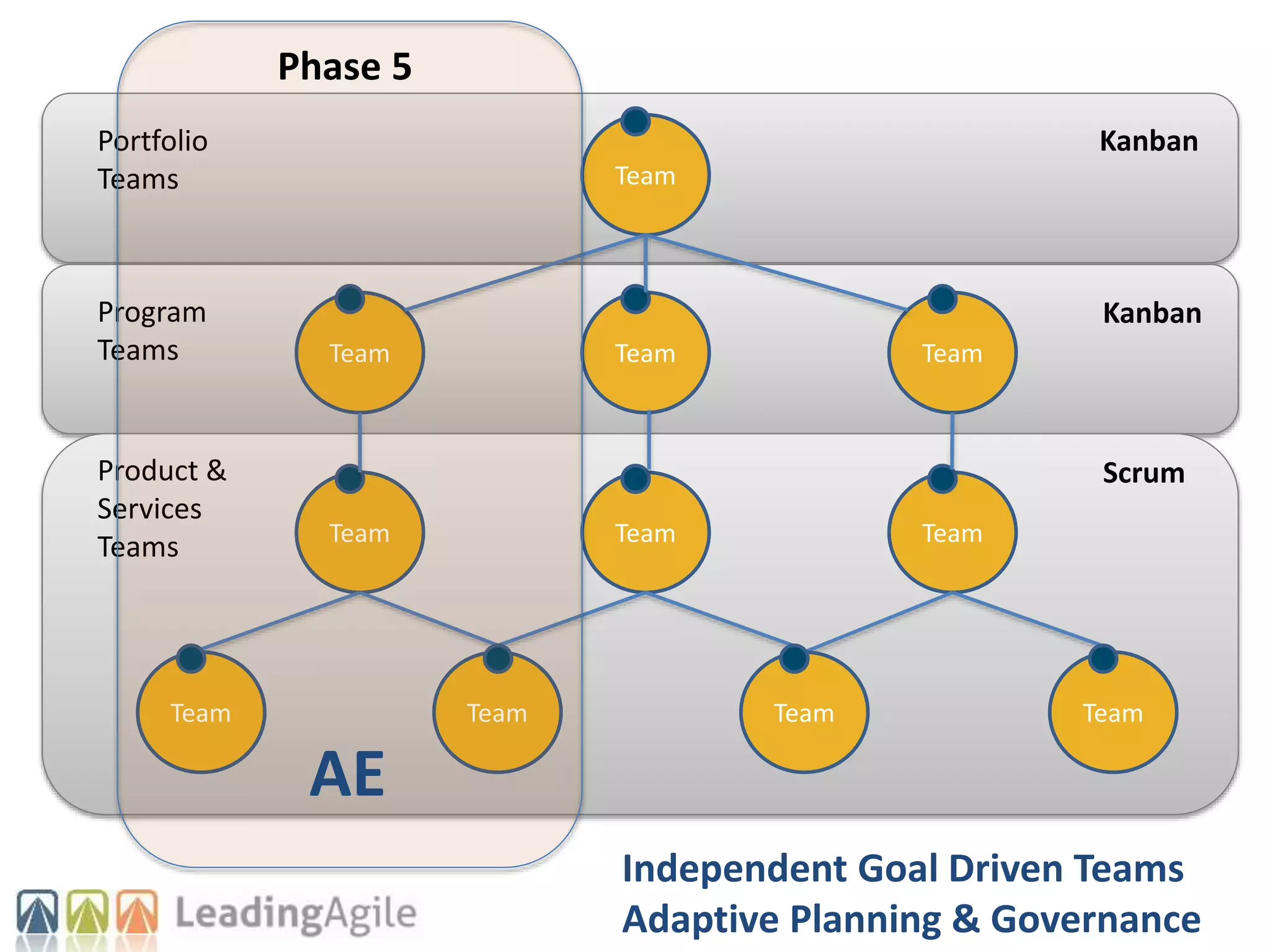
Phase 5
Independent Goal Driven Teams
Adaptive Planning & Governance
AE
By focusing on the
fundamentals and
systematically breaking
dependencies, we can
achieve true enterprise agility
at scale

Why Agile Is Failing in Large Enterprises, And What You Can Do About It

Editor's Notes

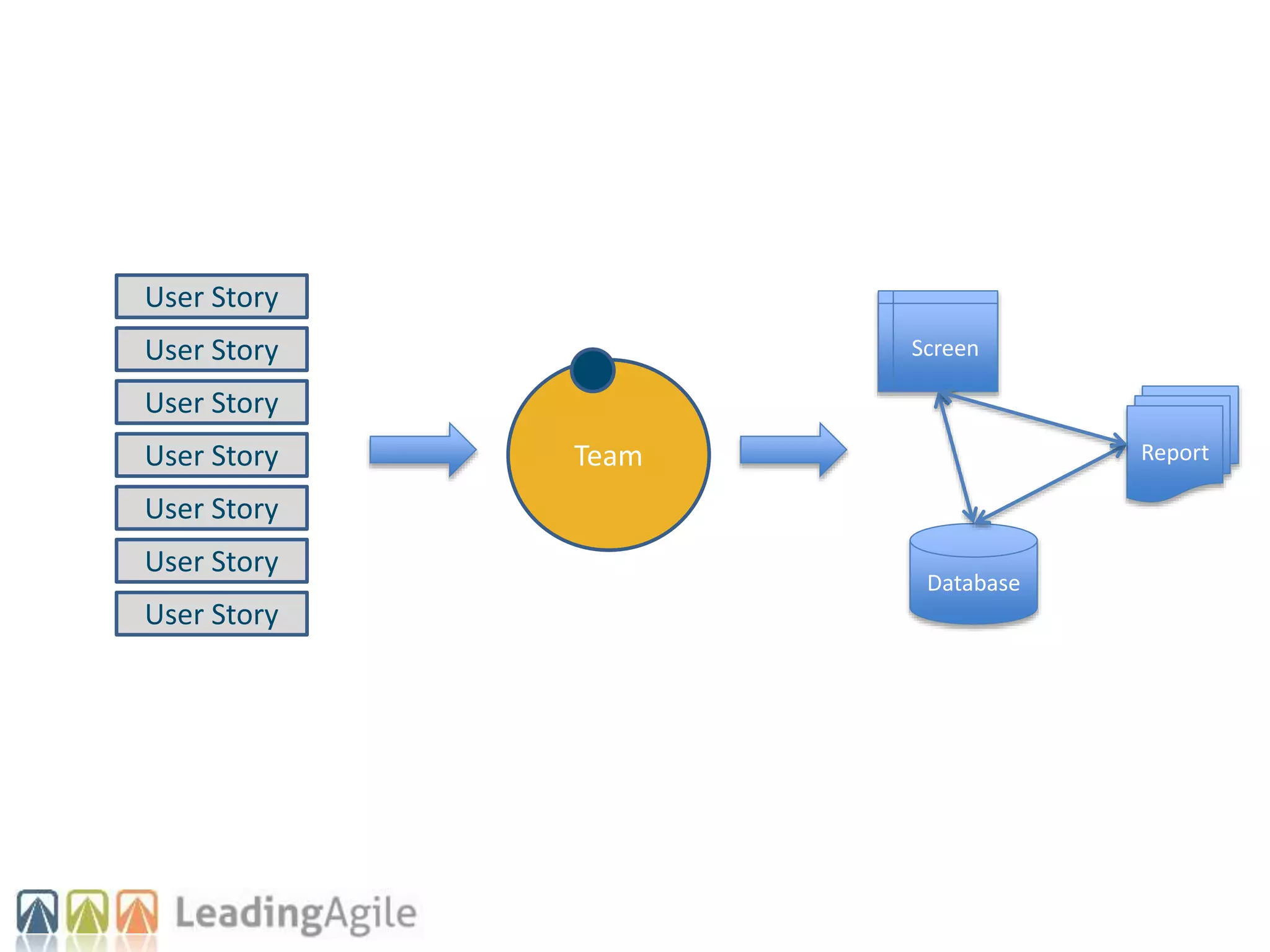
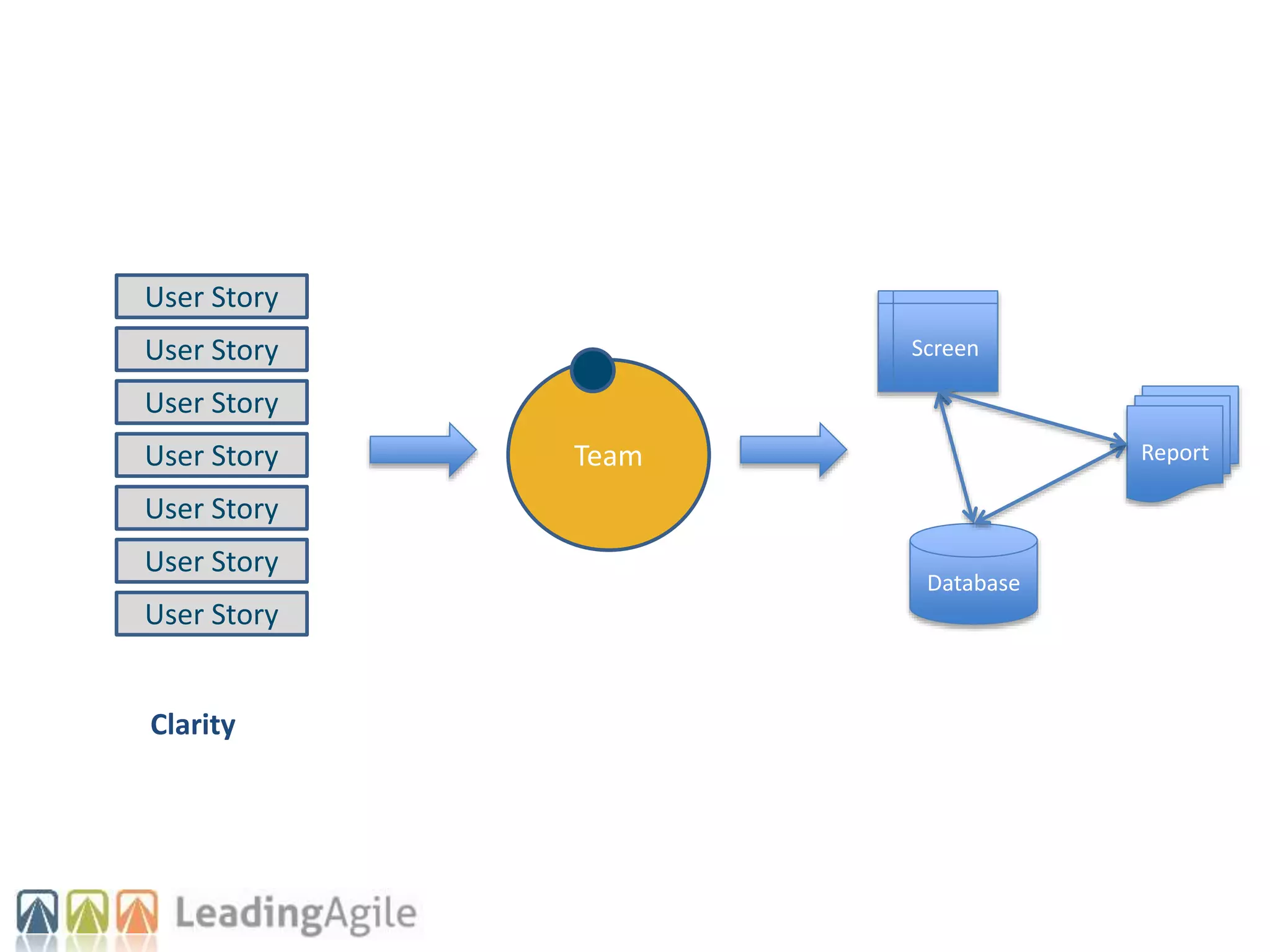
  • #4 11. We start with high level requirements that become more detailed as we learn more about the product we are building.  We start with high level architectural representations that emerge toward detailed design as we actually begin developing the working product.  You might think of this as rolling wave planning or progressive elaboration.  The idea is that we plan based on what we know, and plan more as we learn more.  
  • #5 11. We start with high level requirements that become more detailed as we learn more about the product we are building.  We start with high level architectural representations that emerge toward detailed design as we actually begin developing the working product.  You might think of this as rolling wave planning or progressive elaboration.  The idea is that we plan based on what we know, and plan more as we learn more.  
  • #6 11. We start with high level requirements that become more detailed as we learn more about the product we are building.  We start with high level architectural representations that emerge toward detailed design as we actually begin developing the working product.  You might think of this as rolling wave planning or progressive elaboration.  The idea is that we plan based on what we know, and plan more as we learn more.  
  • #7 11. We start with high level requirements that become more detailed as we learn more about the product we are building.  We start with high level architectural representations that emerge toward detailed design as we actually begin developing the working product.  You might think of this as rolling wave planning or progressive elaboration.  The idea is that we plan based on what we know, and plan more as we learn more.  
  • #9 11. We start with high level requirements that become more detailed as we learn more about the product we are building.  We start with high level architectural representations that emerge toward detailed design as we actually begin developing the working product.  You might think of this as rolling wave planning or progressive elaboration.  The idea is that we plan based on what we know, and plan more as we learn more.  
  • #10 11. We start with high level requirements that become more detailed as we learn more about the product we are building.  We start with high level architectural representations that emerge toward detailed design as we actually begin developing the working product.  You might think of this as rolling wave planning or progressive elaboration.  The idea is that we plan based on what we know, and plan more as we learn more.  
  • #11 11. We start with high level requirements that become more detailed as we learn more about the product we are building.  We start with high level architectural representations that emerge toward detailed design as we actually begin developing the working product.  You might think of this as rolling wave planning or progressive elaboration.  The idea is that we plan based on what we know, and plan more as we learn more.  
  • #12 11. We start with high level requirements that become more detailed as we learn more about the product we are building.  We start with high level architectural representations that emerge toward detailed design as we actually begin developing the working product.  You might think of this as rolling wave planning or progressive elaboration.  The idea is that we plan based on what we know, and plan more as we learn more.  
  • #14 Matrixed management Non-instantly available resources Project funding models Limited access to subject matter expertise Shared requirements between teams Technical debt Defects Tightly coupled architectures
  • #16 11. We start with high level requirements that become more detailed as we learn more about the product we are building.  We start with high level architectural representations that emerge toward detailed design as we actually begin developing the working product.  You might think of this as rolling wave planning or progressive elaboration.  The idea is that we plan based on what we know, and plan more as we learn more.  
  • #17 11. We start with high level requirements that become more detailed as we learn more about the product we are building.  We start with high level architectural representations that emerge toward detailed design as we actually begin developing the working product.  You might think of this as rolling wave planning or progressive elaboration.  The idea is that we plan based on what we know, and plan more as we learn more.  
  • #18 11. We start with high level requirements that become more detailed as we learn more about the product we are building.  We start with high level architectural representations that emerge toward detailed design as we actually begin developing the working product.  You might think of this as rolling wave planning or progressive elaboration.  The idea is that we plan based on what we know, and plan more as we learn more.  
  • #19 11. We start with high level requirements that become more detailed as we learn more about the product we are building.  We start with high level architectural representations that emerge toward detailed design as we actually begin developing the working product.  You might think of this as rolling wave planning or progressive elaboration.  The idea is that we plan based on what we know, and plan more as we learn more.