Analysis of Opening Film Techniques Employed

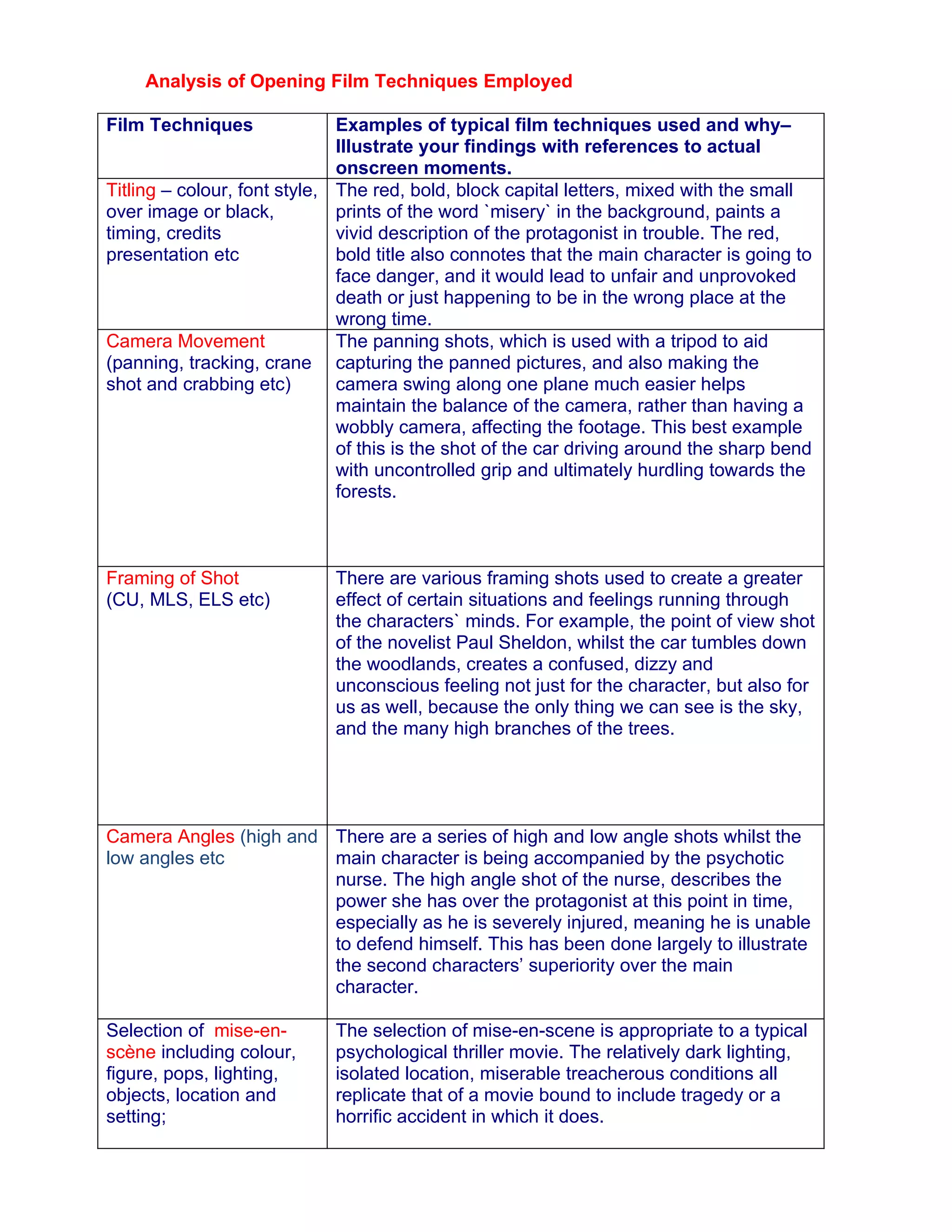
Film Techniques               Examples of typical film techniques used and why–
                              Illustrate your findings with references to actual
                              onscreen moments.
Titling – colour, font style, The red, bold, block capital letters, mixed with the small
over image or black,          prints of the word `misery` in the background, paints a
timing, credits               vivid description of the protagonist in trouble. The red,
presentation etc              bold title also connotes that the main character is going to
                              face danger, and it would lead to unfair and unprovoked
                              death or just happening to be in the wrong place at the
                              wrong time.
Camera Movement               The panning shots, which is used with a tripod to aid
(panning, tracking, crane capturing the panned pictures, and also making the
shot and crabbing etc)        camera swing along one plane much easier helps
                              maintain the balance of the camera, rather than having a
                              wobbly camera, affecting the footage. This best example
                              of this is the shot of the car driving around the sharp bend
                              with uncontrolled grip and ultimately hurdling towards the
                              forests.


Framing of Shot              There are various framing shots used to create a greater
(CU, MLS, ELS etc)           effect of certain situations and feelings running through
                             the characters` minds. For example, the point of view shot
                             of the novelist Paul Sheldon, whilst the car tumbles down
                             the woodlands, creates a confused, dizzy and
                             unconscious feeling not just for the character, but also for
                             us as well, because the only thing we can see is the sky,
                             and the many high branches of the trees.


Camera Angles (high and There are a series of high and low angle shots whilst the
low angles etc          main character is being accompanied by the psychotic
                        nurse. The high angle shot of the nurse, describes the
                        power she has over the protagonist at this point in time,
                        especially as he is severely injured, meaning he is unable
                        to defend himself. This has been done largely to illustrate
                        the second characters’ superiority over the main
                        character.

Selection of mise-en-        The selection of mise-en-scene is appropriate to a typical
scène including colour,      psychological thriller movie. The relatively dark lighting,
figure, pops, lighting,      isolated location, miserable treacherous conditions all
objects, location and        replicate that of a movie bound to include tragedy or a
setting;                     horrific accident in which it does.
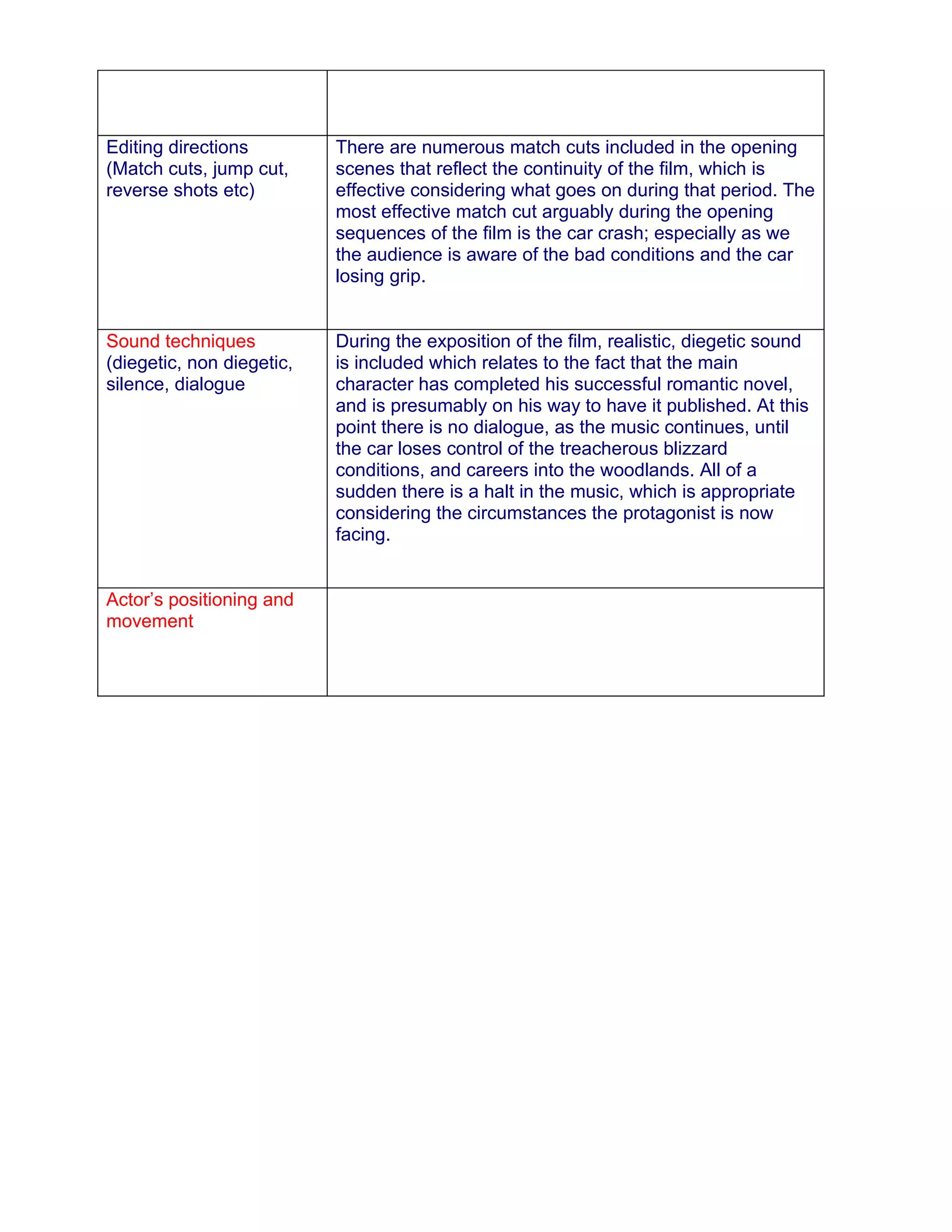
Editing directions         There are numerous match cuts included in the opening
(Match cuts, jump cut,     scenes that reflect the continuity of the film, which is
reverse shots etc)         effective considering what goes on during that period. The
                           most effective match cut arguably during the opening
                           sequences of the film is the car crash; especially as we
                           the audience is aware of the bad conditions and the car
                           losing grip.


Sound techniques           During the exposition of the film, realistic, diegetic sound
(diegetic, non diegetic,   is included which relates to the fact that the main
silence, dialogue          character has completed his successful romantic novel,
                           and is presumably on his way to have it published. At this
                           point there is no dialogue, as the music continues, until
                           the car loses control of the treacherous blizzard
                           conditions, and careers into the woodlands. All of a
                           sudden there is a halt in the music, which is appropriate
                           considering the circumstances the protagonist is now
                           facing.


Actor’s positioning and
movement

Analysis Of Opening Techniques Misery

  • 1.
    Analysis of OpeningFilm Techniques Employed Film Techniques Examples of typical film techniques used and why– Illustrate your findings with references to actual onscreen moments. Titling – colour, font style, The red, bold, block capital letters, mixed with the small over image or black, prints of the word `misery` in the background, paints a timing, credits vivid description of the protagonist in trouble. The red, presentation etc bold title also connotes that the main character is going to face danger, and it would lead to unfair and unprovoked death or just happening to be in the wrong place at the wrong time. Camera Movement The panning shots, which is used with a tripod to aid (panning, tracking, crane capturing the panned pictures, and also making the shot and crabbing etc) camera swing along one plane much easier helps maintain the balance of the camera, rather than having a wobbly camera, affecting the footage. This best example of this is the shot of the car driving around the sharp bend with uncontrolled grip and ultimately hurdling towards the forests. Framing of Shot There are various framing shots used to create a greater (CU, MLS, ELS etc) effect of certain situations and feelings running through the characters` minds. For example, the point of view shot of the novelist Paul Sheldon, whilst the car tumbles down the woodlands, creates a confused, dizzy and unconscious feeling not just for the character, but also for us as well, because the only thing we can see is the sky, and the many high branches of the trees. Camera Angles (high and There are a series of high and low angle shots whilst the low angles etc main character is being accompanied by the psychotic nurse. The high angle shot of the nurse, describes the power she has over the protagonist at this point in time, especially as he is severely injured, meaning he is unable to defend himself. This has been done largely to illustrate the second characters’ superiority over the main character. Selection of mise-en- The selection of mise-en-scene is appropriate to a typical scène including colour, psychological thriller movie. The relatively dark lighting, figure, pops, lighting, isolated location, miserable treacherous conditions all objects, location and replicate that of a movie bound to include tragedy or a setting; horrific accident in which it does.
  • 2.
    Editing directions There are numerous match cuts included in the opening (Match cuts, jump cut, scenes that reflect the continuity of the film, which is reverse shots etc) effective considering what goes on during that period. The most effective match cut arguably during the opening sequences of the film is the car crash; especially as we the audience is aware of the bad conditions and the car losing grip. Sound techniques During the exposition of the film, realistic, diegetic sound (diegetic, non diegetic, is included which relates to the fact that the main silence, dialogue character has completed his successful romantic novel, and is presumably on his way to have it published. At this point there is no dialogue, as the music continues, until the car loses control of the treacherous blizzard conditions, and careers into the woodlands. All of a sudden there is a halt in the music, which is appropriate considering the circumstances the protagonist is now facing. Actor’s positioning and movement