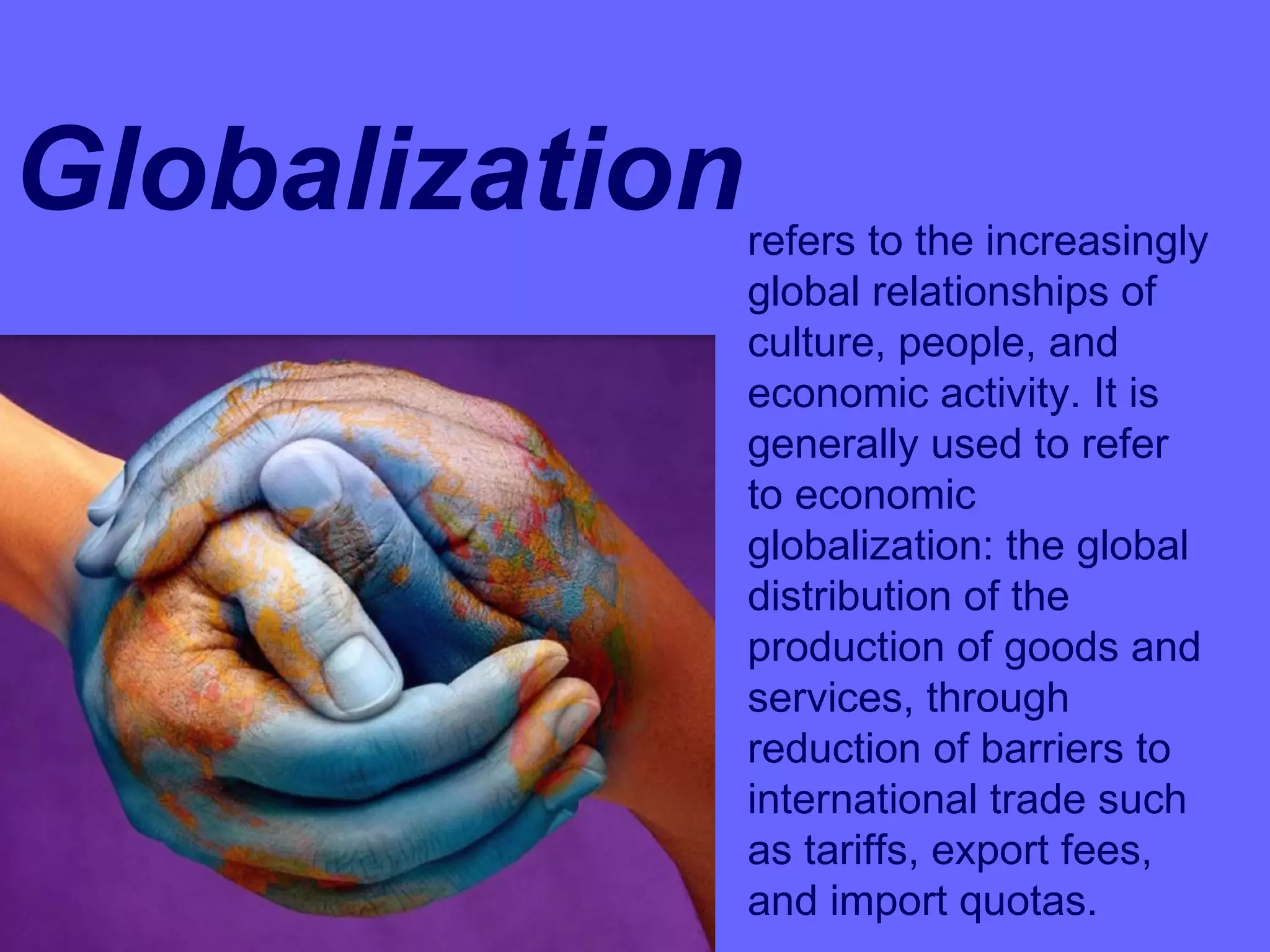
Globalization   refers to the increasingly
                global relationships of
                culture, people, and
                economic activity. It is
                generally used to refer
                to economic
                globalization: the global
                distribution of the
                production of goods and
                services, through
                reduction of barriers to
                international trade such
                as tariffs, export fees,
                and import quotas.
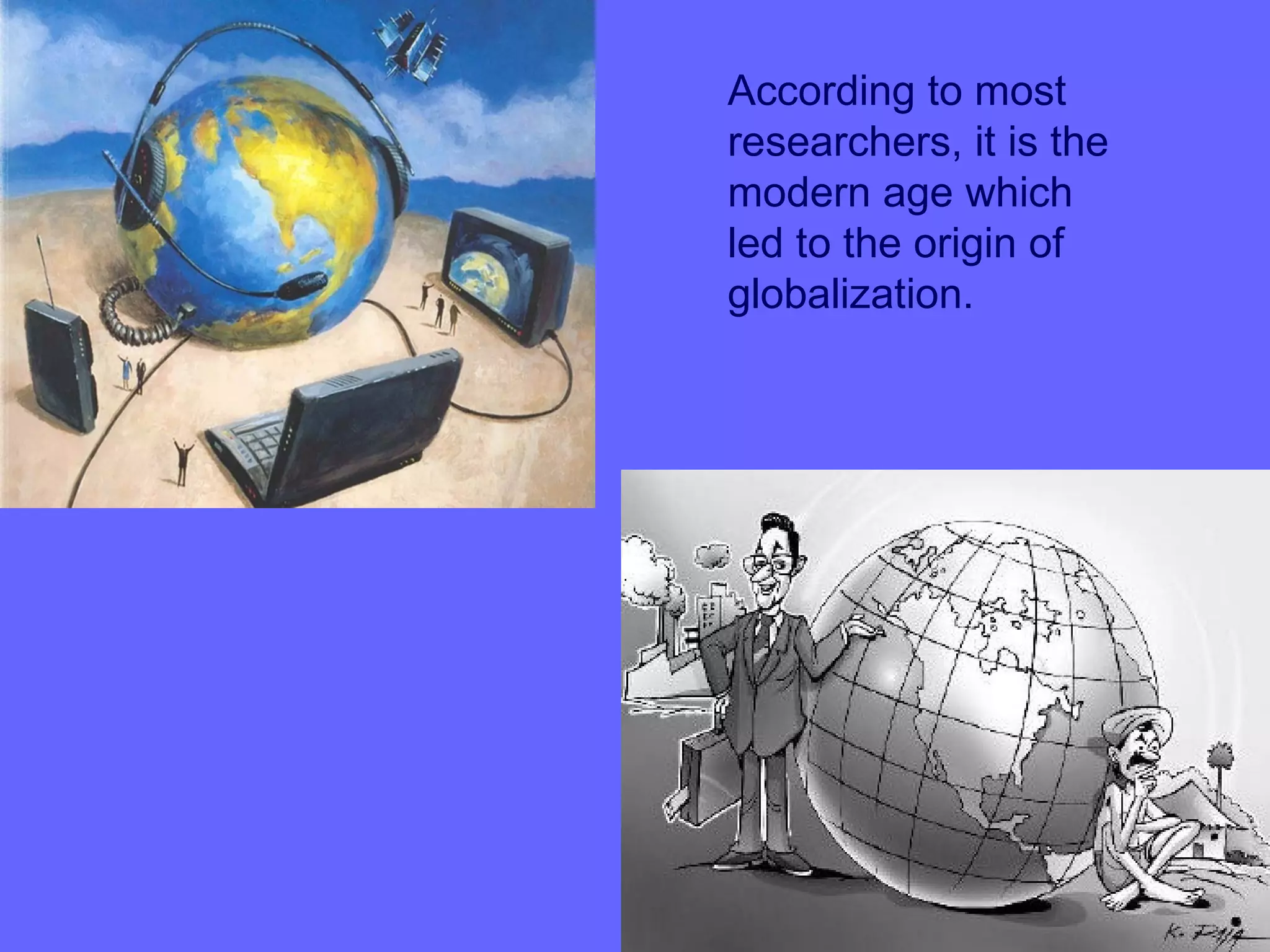
According to most
researchers, it is the
modern age which
led to the origin of
globalization.
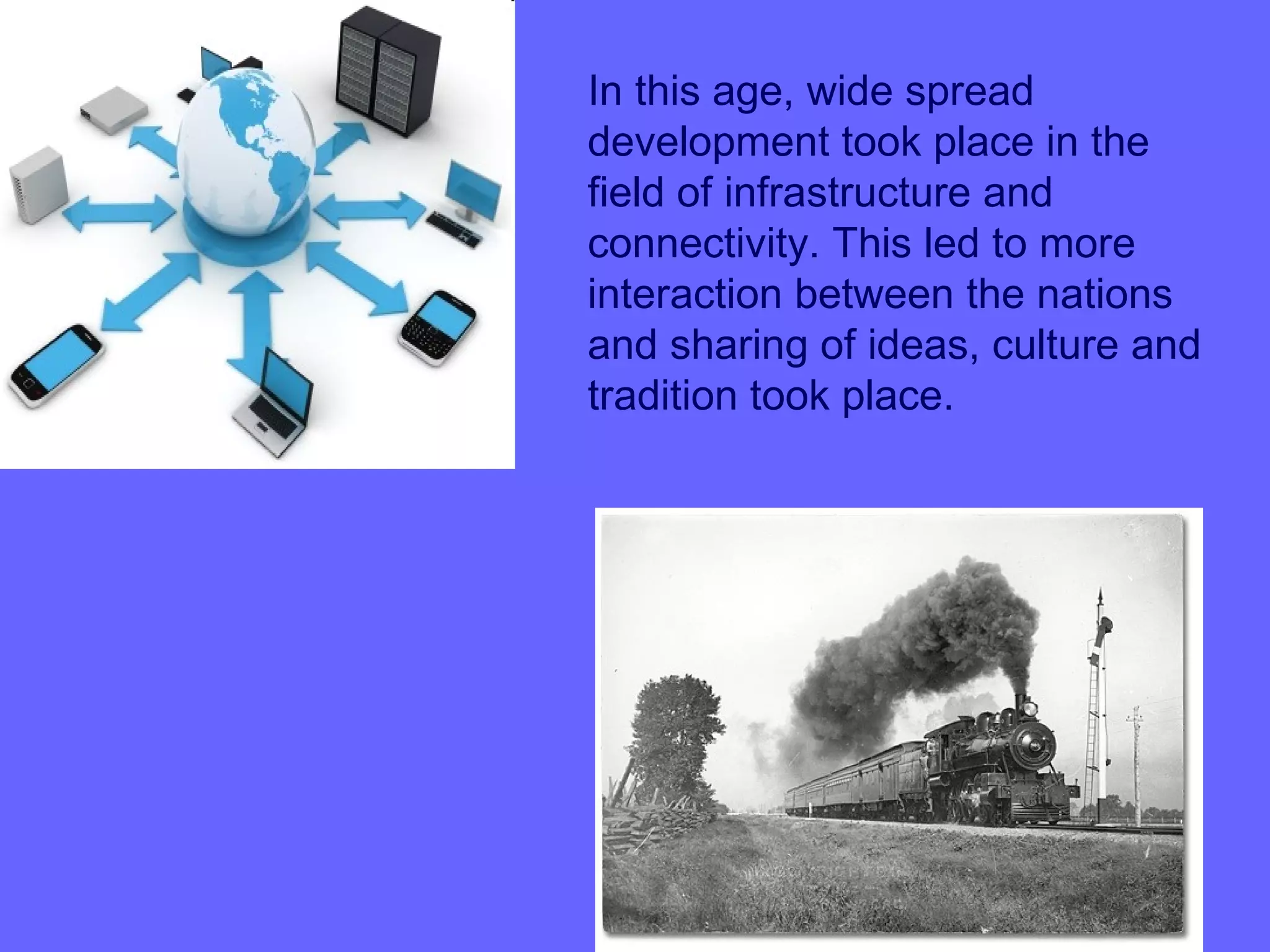
In this age, wide spread
development took place in the
field of infrastructure and
connectivity. This led to more
interaction between the nations
and sharing of ideas, culture and
tradition took place.
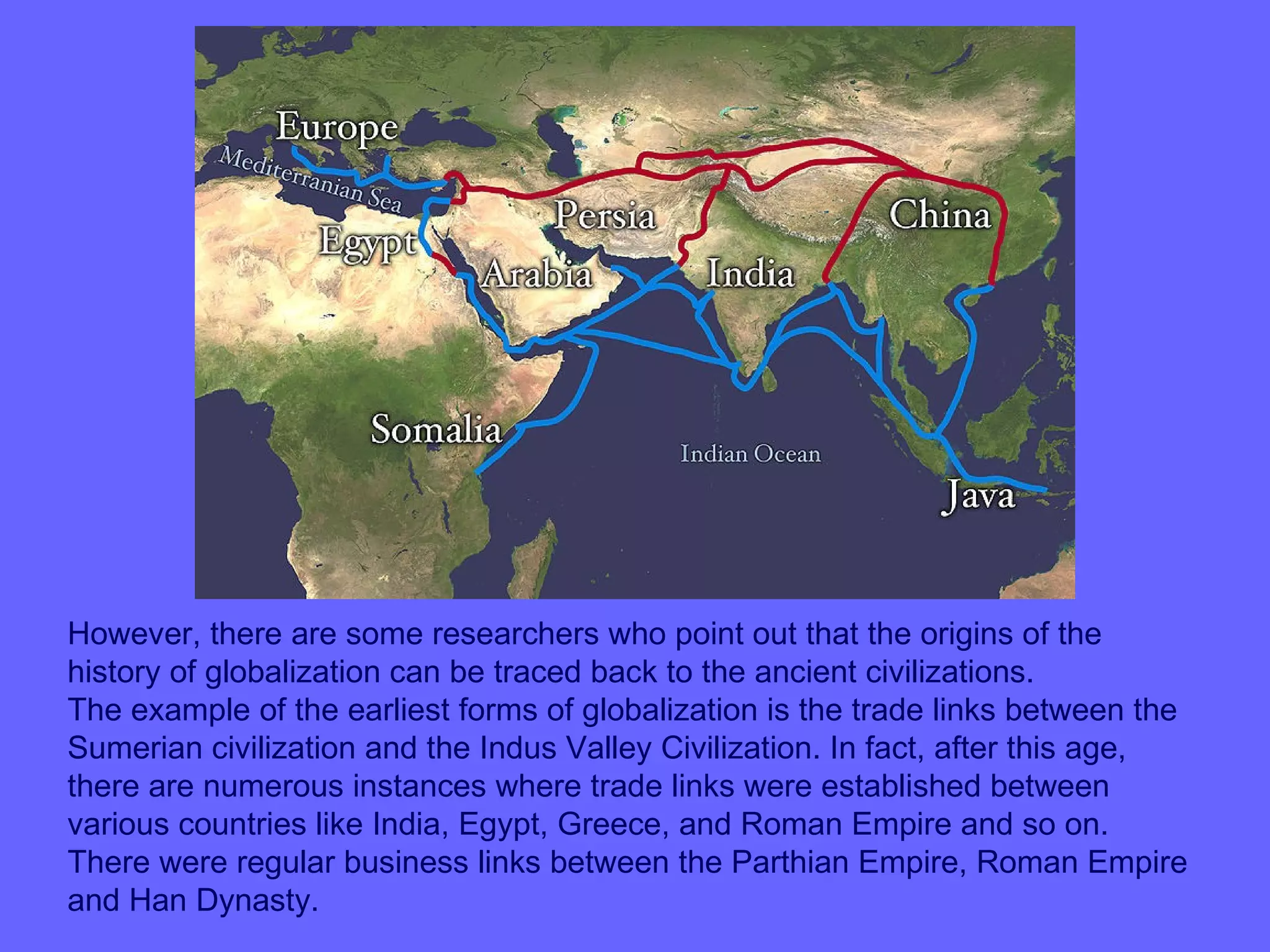
However, there are some researchers who point out that the origins of the
history of globalization can be traced back to the ancient civilizations.
The example of the earliest forms of globalization is the trade links between the
Sumerian civilization and the Indus Valley Civilization. In fact, after this age,
there are numerous instances where trade links were established between
various countries like India, Egypt, Greece, and Roman Empire and so on.
There were regular business links between the Parthian Empire, Roman Empire
and Han Dynasty.
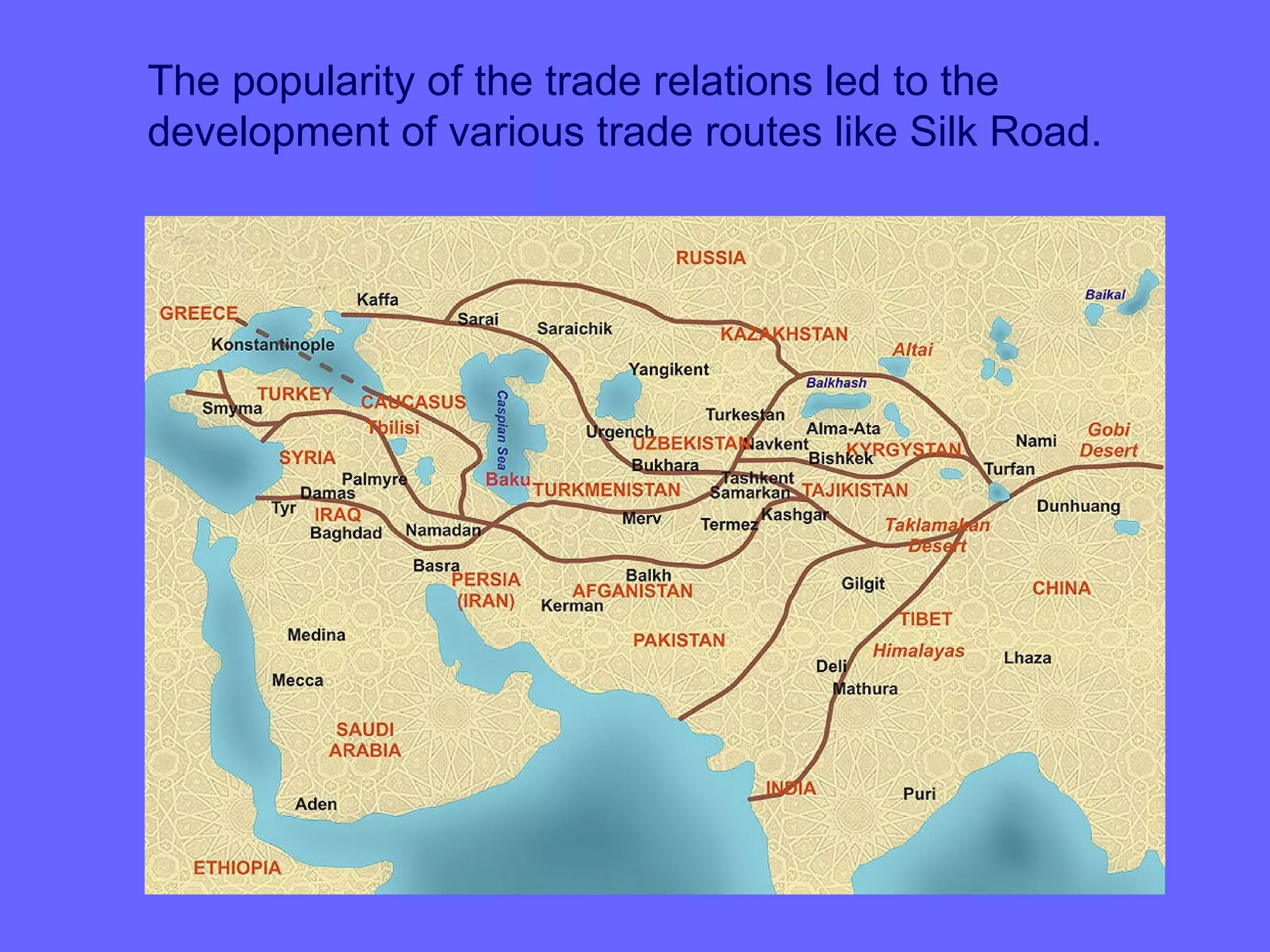
The popularity of the trade relations led to the
development of various trade routes like Silk Road.
Globalization in the medieval age


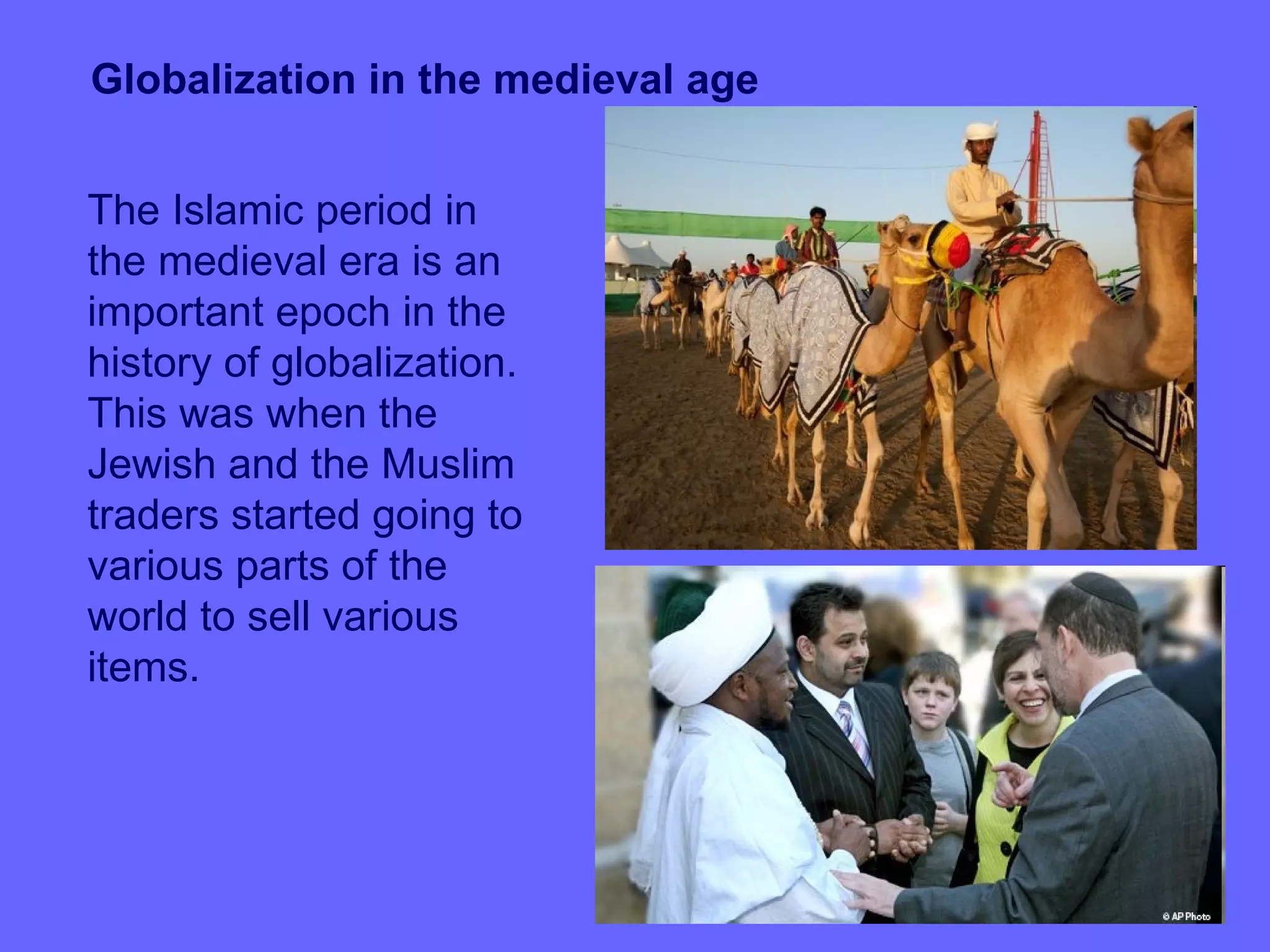
The Islamic period in
the medieval era is an
important epoch in the
history of globalization.
This was when the
Jewish and the Muslim
traders started going to
various parts of the
world to sell various
items.
In China, the
first postal
service was
introduced and
paper was
invented.
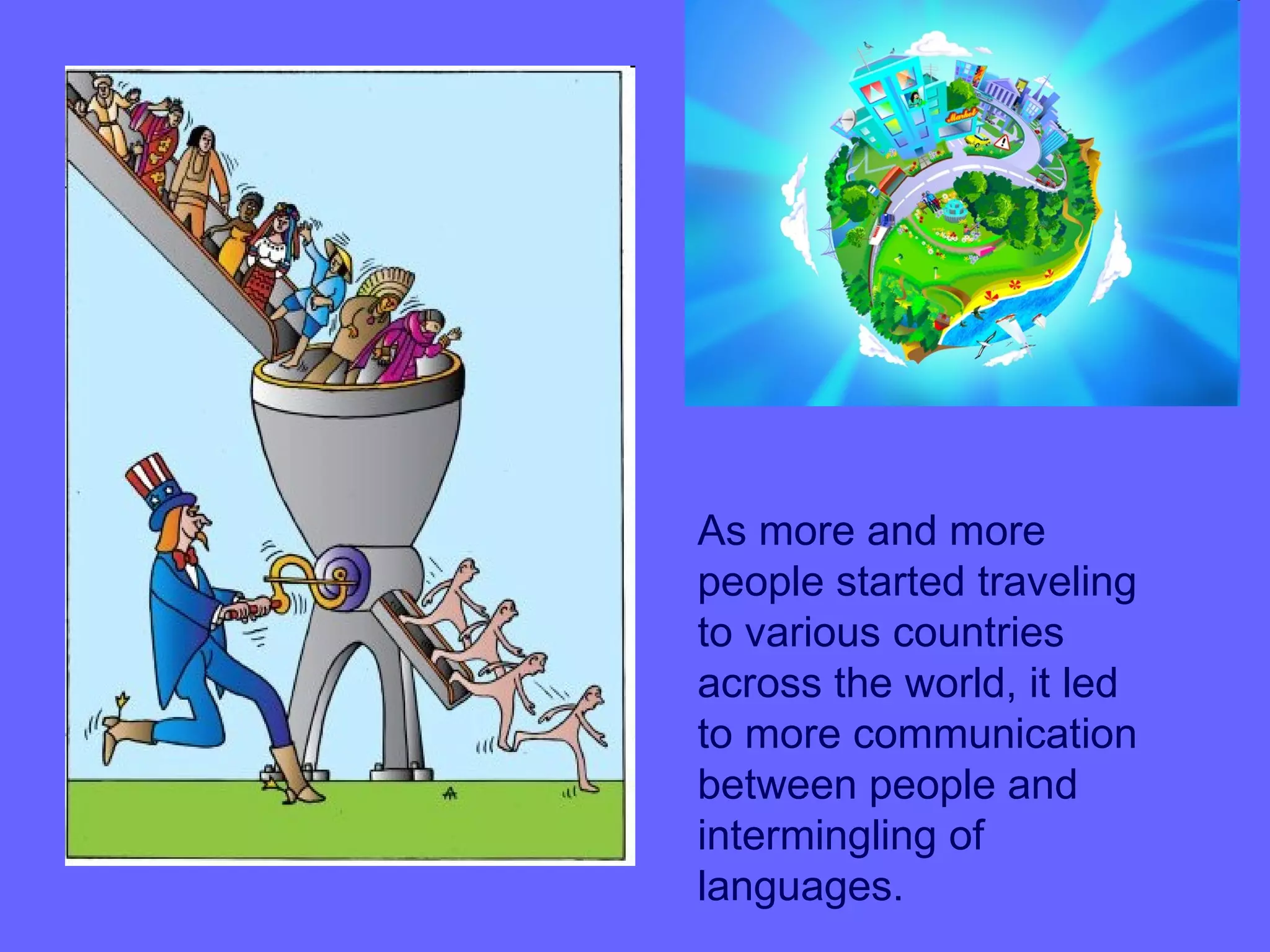
As more and more
people started traveling
to various countries
across the world, it led
to more communication
between people and
intermingling of
languages.
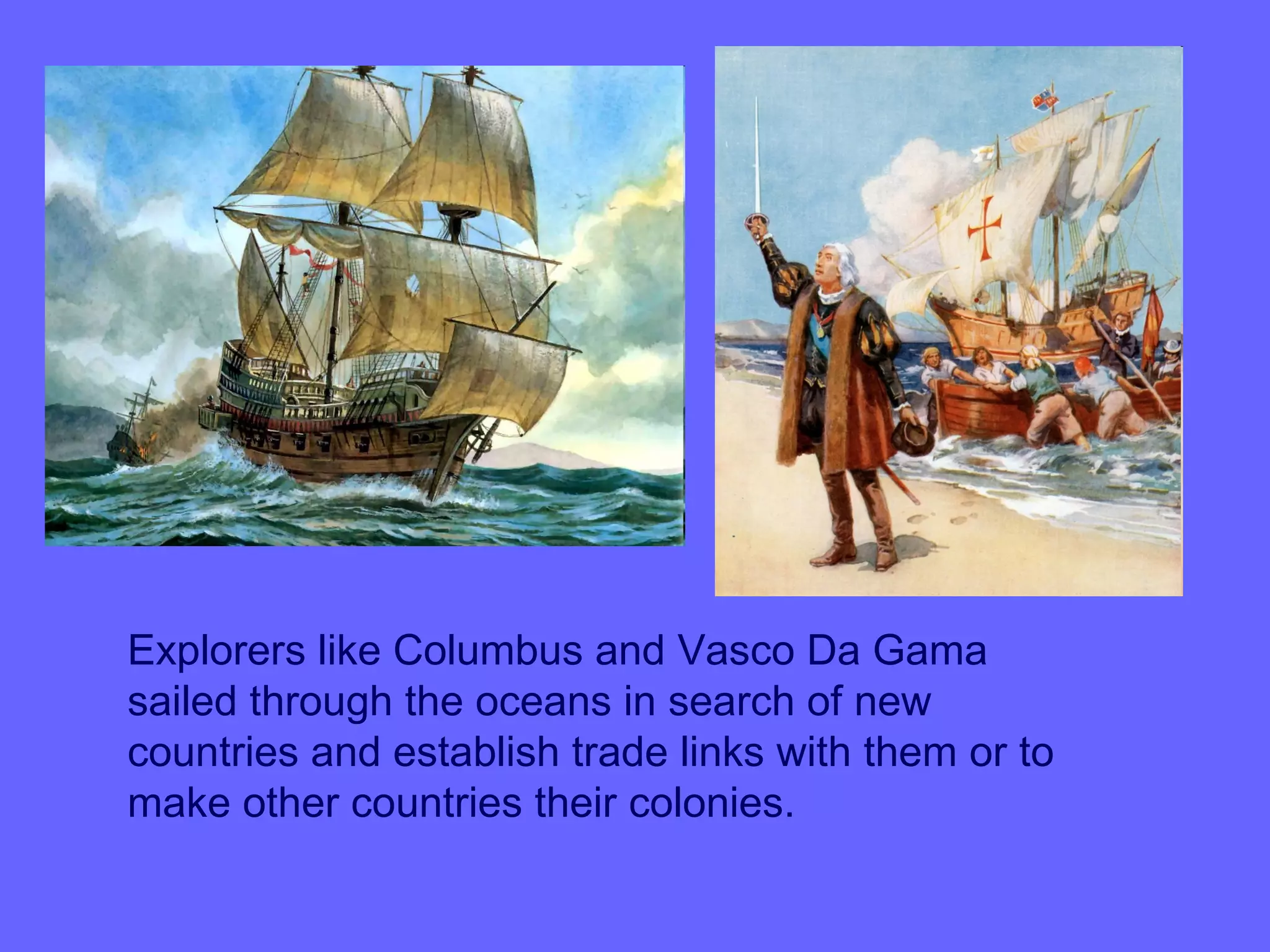
Explorers like Columbus and Vasco Da Gama
sailed through the oceans in search of new
countries and establish trade links with them or to
make other countries their colonies.
Globalization between the pre modern periods to
                     modern period
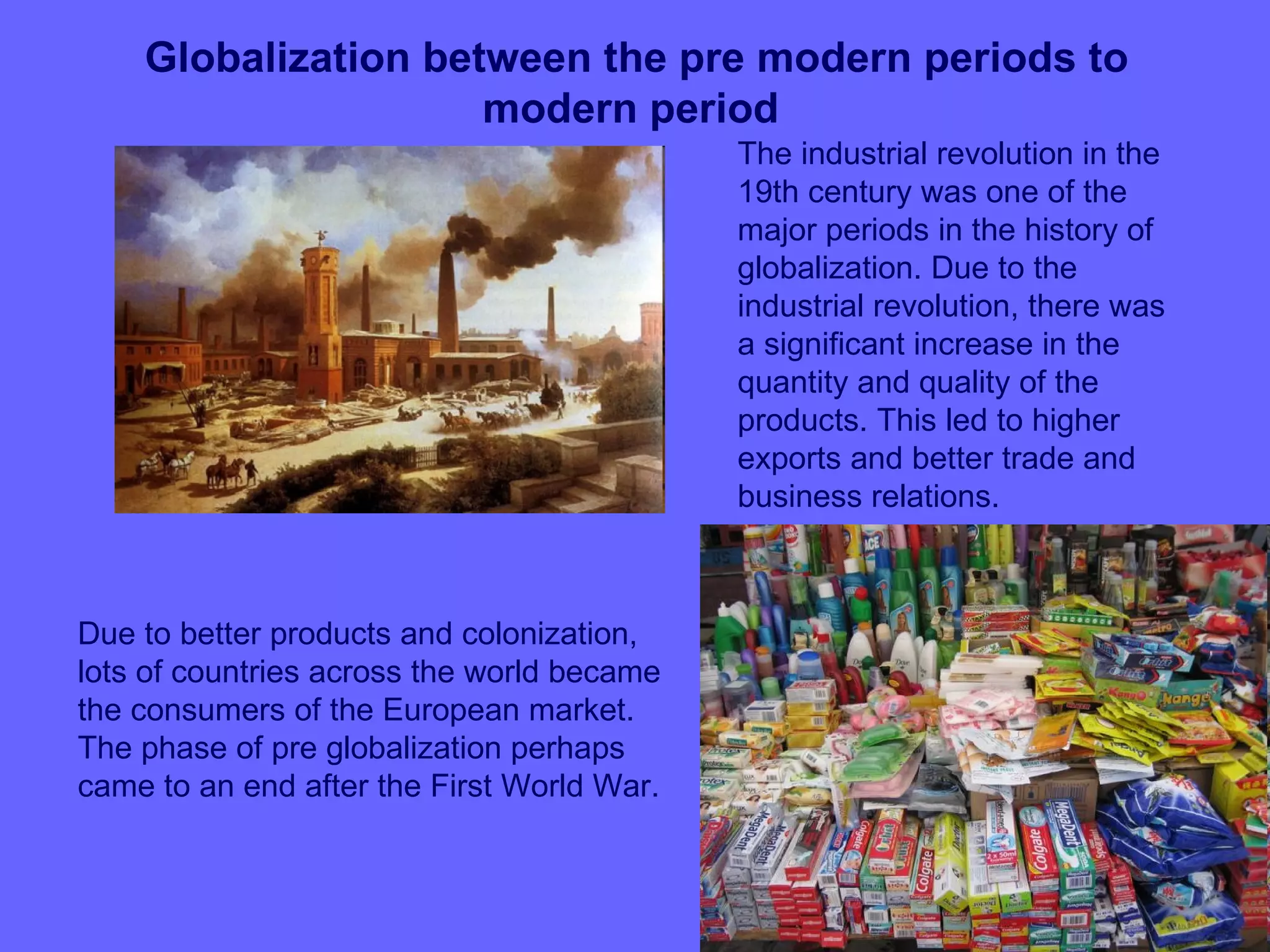
                                            The industrial revolution in the
                                            19th century was one of the
                                            major periods in the history of
                                            globalization. Due to the
                                            industrial revolution, there was
                                            a significant increase in the
                                            quantity and quality of the
                                            products. This led to higher
                                            exports and better trade and
                                            business relations.


Due to better products and colonization,
lots of countries across the world became
the consumers of the European market.
The phase of pre globalization perhaps
came to an end after the First World War.
Globalization in the modern era
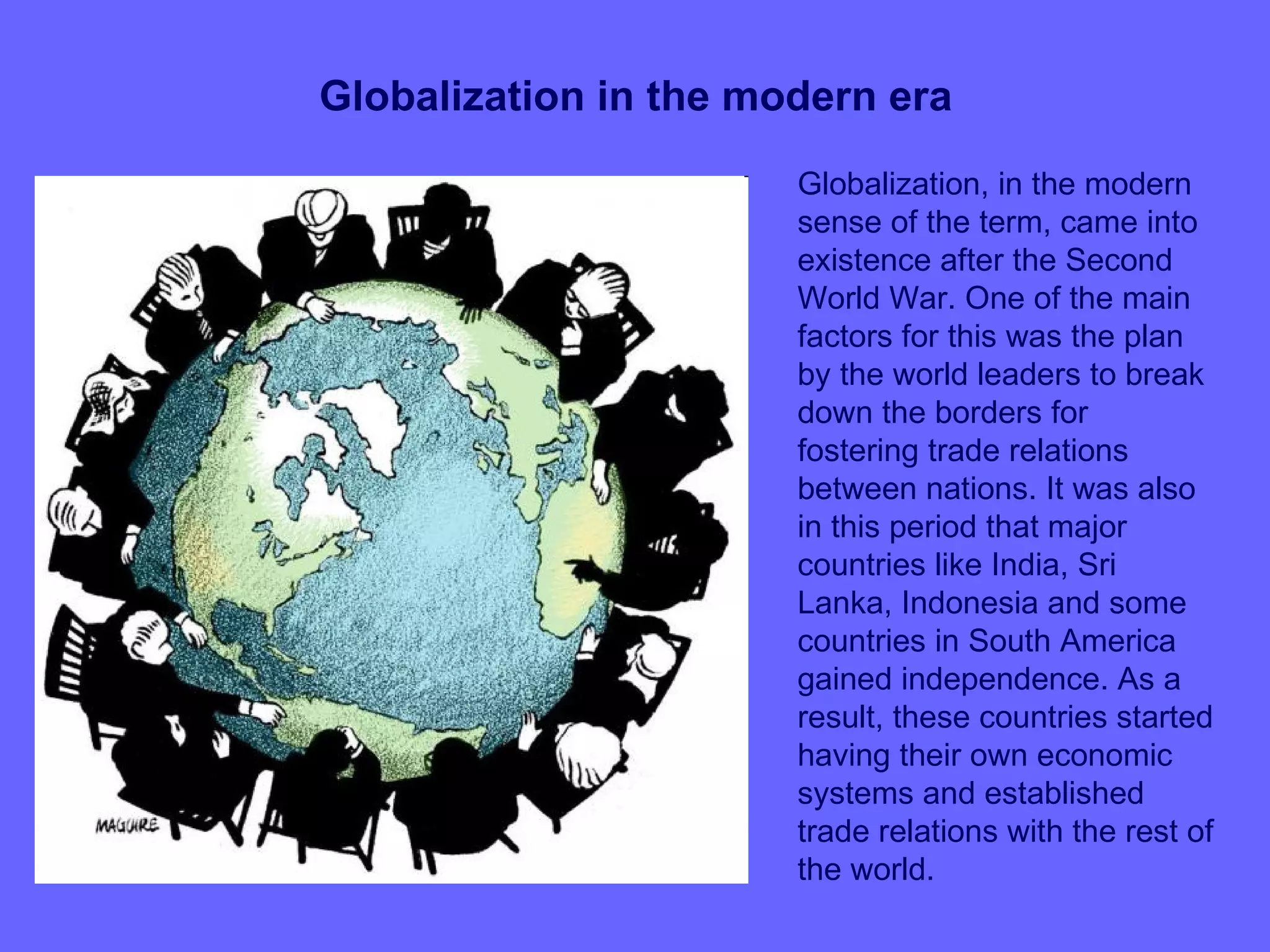
                       Globalization, in the modern
                       sense of the term, came into
                       existence after the Second
                       World War. One of the main
                       factors for this was the plan
                       by the world leaders to break
                       down the borders for
                       fostering trade relations
                       between nations. It was also
                       in this period that major
                       countries like India, Sri
                       Lanka, Indonesia and some
                       countries in South America
                       gained independence. As a
                       result, these countries started
                       having their own economic
                       systems and established
                       trade relations with the rest of
                       the world.
The establishment of
the United Nations
Organization (UNO)
was also a major step
in this regard.
Another milestone in
the history of
globalization is the
creation of the World
Trade Organization
which led to the growth
of a uniform platform to
settle trade and
commercial disputes.
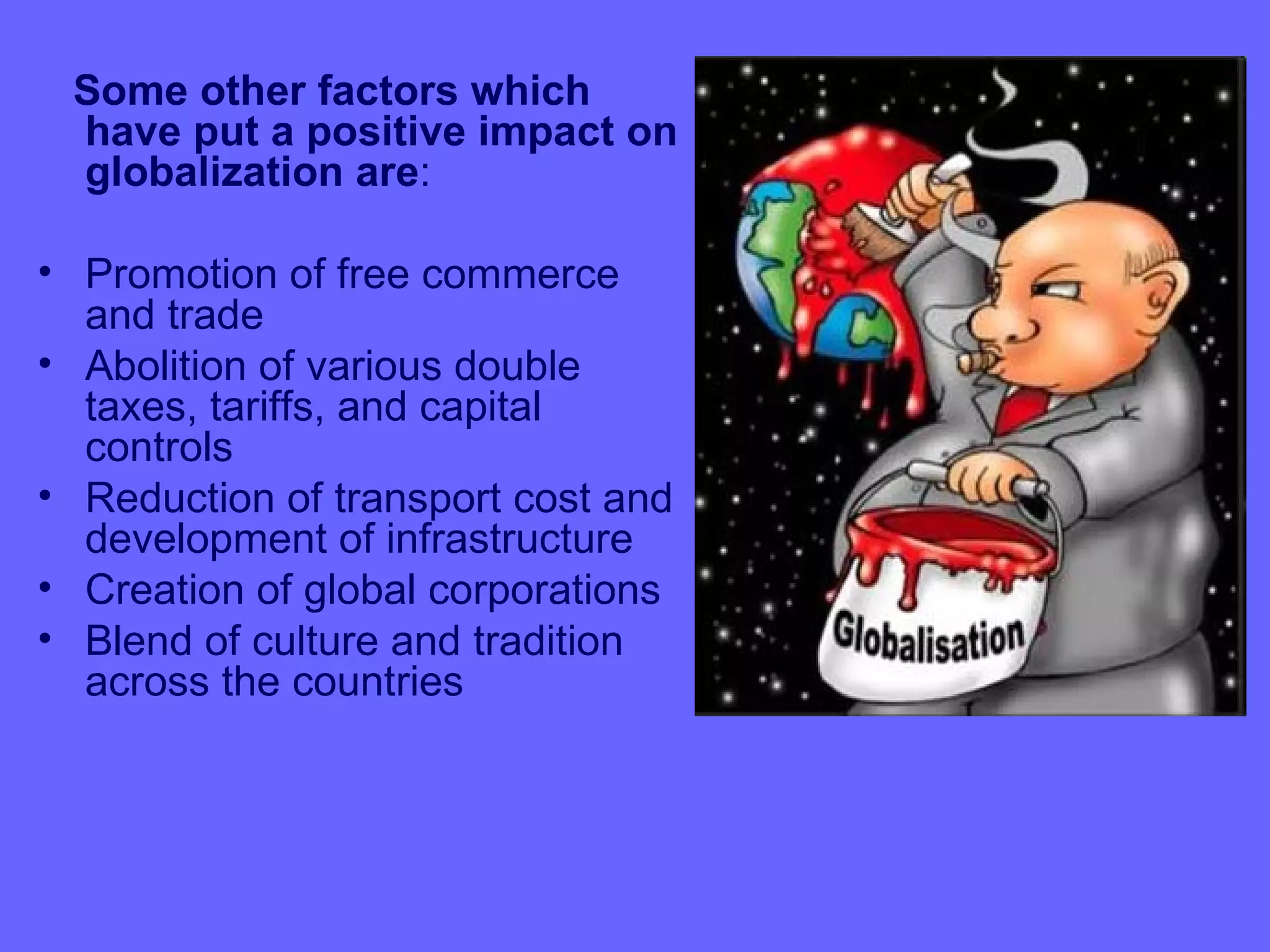
Some other factors which
 have put a positive impact on
 globalization are:

• Promotion of free commerce
  and trade
• Abolition of various double
  taxes, tariffs, and capital
  controls
• Reduction of transport cost and
  development of infrastructure
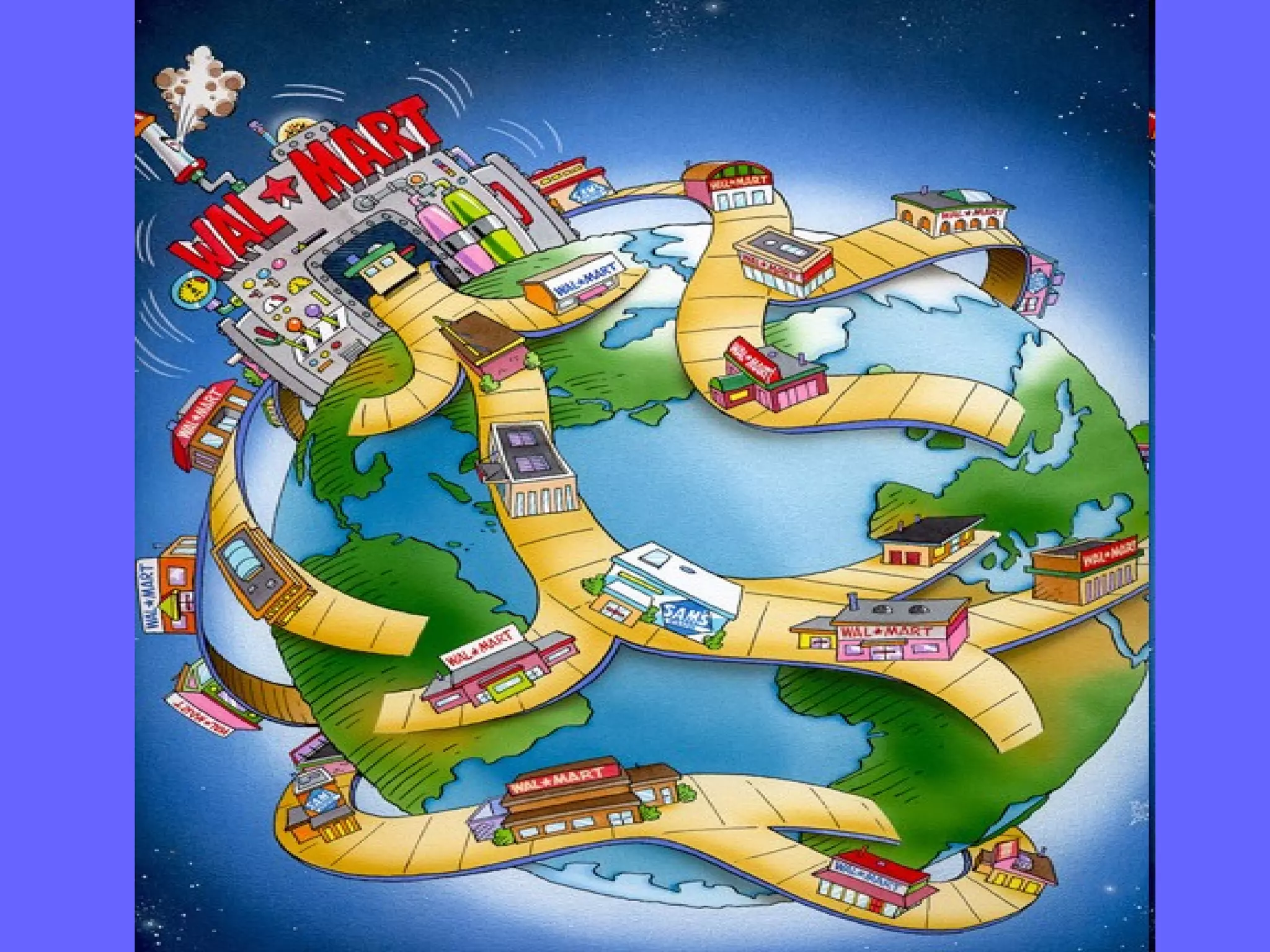
• Creation of global corporations
• Blend of culture and tradition
  across the countries
Thank you for your
    attention!

History of Globalisation

  • 1.
    Globalization refers to the increasingly global relationships of culture, people, and economic activity. It is generally used to refer to economic globalization: the global distribution of the production of goods and services, through reduction of barriers to international trade such as tariffs, export fees, and import quotas.
  • 2.
    According to most researchers,it is the modern age which led to the origin of globalization.
  • 3.
    In this age,wide spread development took place in the field of infrastructure and connectivity. This led to more interaction between the nations and sharing of ideas, culture and tradition took place.
  • 4.
    However, there aresome researchers who point out that the origins of the history of globalization can be traced back to the ancient civilizations. The example of the earliest forms of globalization is the trade links between the Sumerian civilization and the Indus Valley Civilization. In fact, after this age, there are numerous instances where trade links were established between various countries like India, Egypt, Greece, and Roman Empire and so on. There were regular business links between the Parthian Empire, Roman Empire and Han Dynasty.
  • 5.
    The popularity ofthe trade relations led to the development of various trade routes like Silk Road.
  • 6.
    Globalization in themedieval age The Islamic period in the medieval era is an important epoch in the history of globalization. This was when the Jewish and the Muslim traders started going to various parts of the world to sell various items.
  • 7.
    In China, the firstpostal service was introduced and paper was invented.
  • 8.
    As more andmore people started traveling to various countries across the world, it led to more communication between people and intermingling of languages.
  • 9.
    Explorers like Columbusand Vasco Da Gama sailed through the oceans in search of new countries and establish trade links with them or to make other countries their colonies.
  • 10.
    Globalization between thepre modern periods to modern period The industrial revolution in the 19th century was one of the major periods in the history of globalization. Due to the industrial revolution, there was a significant increase in the quantity and quality of the products. This led to higher exports and better trade and business relations. Due to better products and colonization, lots of countries across the world became the consumers of the European market. The phase of pre globalization perhaps came to an end after the First World War.
  • 11.
    Globalization in themodern era Globalization, in the modern sense of the term, came into existence after the Second World War. One of the main factors for this was the plan by the world leaders to break down the borders for fostering trade relations between nations. It was also in this period that major countries like India, Sri Lanka, Indonesia and some countries in South America gained independence. As a result, these countries started having their own economic systems and established trade relations with the rest of the world.
  • 12.
    The establishment of theUnited Nations Organization (UNO) was also a major step in this regard.
  • 14.
    Another milestone in thehistory of globalization is the creation of the World Trade Organization which led to the growth of a uniform platform to settle trade and commercial disputes.
  • 15.
    Some other factorswhich have put a positive impact on globalization are: • Promotion of free commerce and trade • Abolition of various double taxes, tariffs, and capital controls • Reduction of transport cost and development of infrastructure • Creation of global corporations • Blend of culture and tradition across the countries
  • 16.
    Thank you foryour attention!