THE JUDICIOUS USE OF ANTIBIOTICS “ New medicines, and new methods of cure, always work miracles  for a while ” - William Heberden, 1802
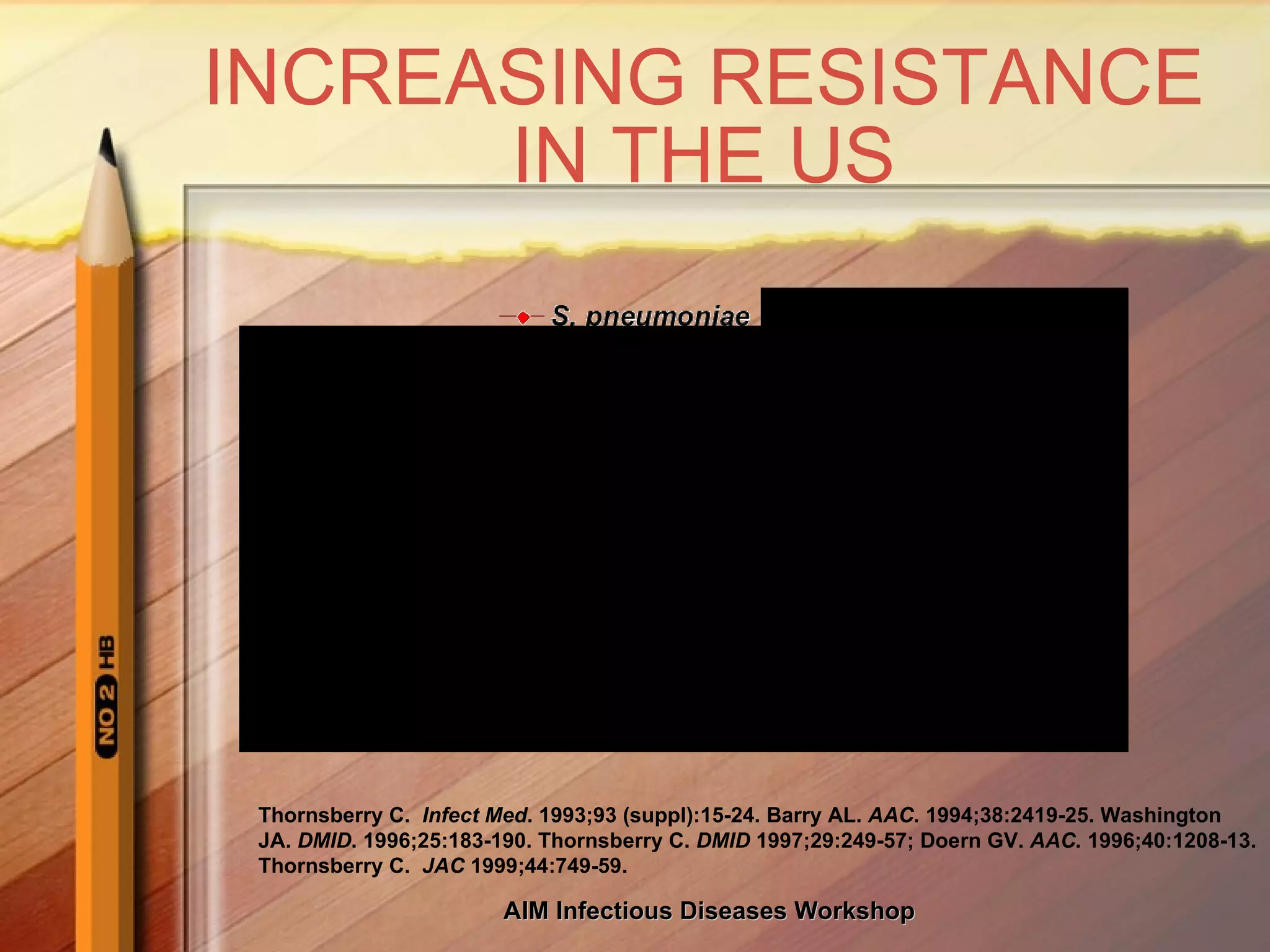
INCREASING RESISTANCE IN THE US Thornsberry C.  Infect Med . 1993;93 (suppl):15-24. Barry AL.  AAC . 1994;38:2419-25. Washington JA.  DMID . 1996;25:183-190. Thornsberry C.  DMID  1997;29:249-57; Doern GV.  AAC . 1996;40:1208-13. Thornsberry C.  JAC  1999;44:749-59.
INFECTIOUS DISEASES Syndrome Host Likely pathogens Antibiotic options
SYNDROME First distinguish infectious from non-infectious Allergy Malignancy Autoimmune Drugs
SYNDROME ANATOMY/ORGAN SYSTEM Site of infection influences Likely pathogens ABX activity - penetration, pH, foreign body Need for ‘cidal’ vs ‘static’ therapy
SYNDROME ANATOMY/ORGAN SYSTEM General - FUO, adenopathy Skin/soft tissue - cellulitis, wound infection, necrotizing fasciitis CNS - meningitis, encephalitis, brain abscess HEENT - sinusitis, otitis, pharyngitis, abscess Respiratory - bronchitis, pneumonia CV - endocarditis, phlebitis, bacteremia, catheter-related
SYNDROME ANATOMY/ORGAN SYSTEM Abdominal - peritonitis, abscess, cholecystitis/cholangitis, appendicitis Urinary tract - cystitis, pyelonephritis, perinephric abscess Genital tract - urethritis, cervicitis, PID, prostatitis Musculoskeletal - pyomyositis, osteomyelitis, septic arthritis
HOST Demographics - age, habits Exposure - sick contacts, residence/travel, hospitalization/institutionalization Co-morbidities - immunosuppression, organ dysfunction, surgery, foreign bodies Prior antibiotic use
LIKELY PATHOGENS Based on syndrome and host
ISOLATION/IDENTIFICATION Real vs contaminant Possible presence of others
SUSCEPTIBILITY Testing may not take into account: Inoculum effect ABX concentrations at site of infection Subpopulations Repressed but inducible genes
ANTIBIOTIC USAGE PRINCIPLES Use narrow spectrum when possible Use older agent when feasible Use combination therapy only when indicated
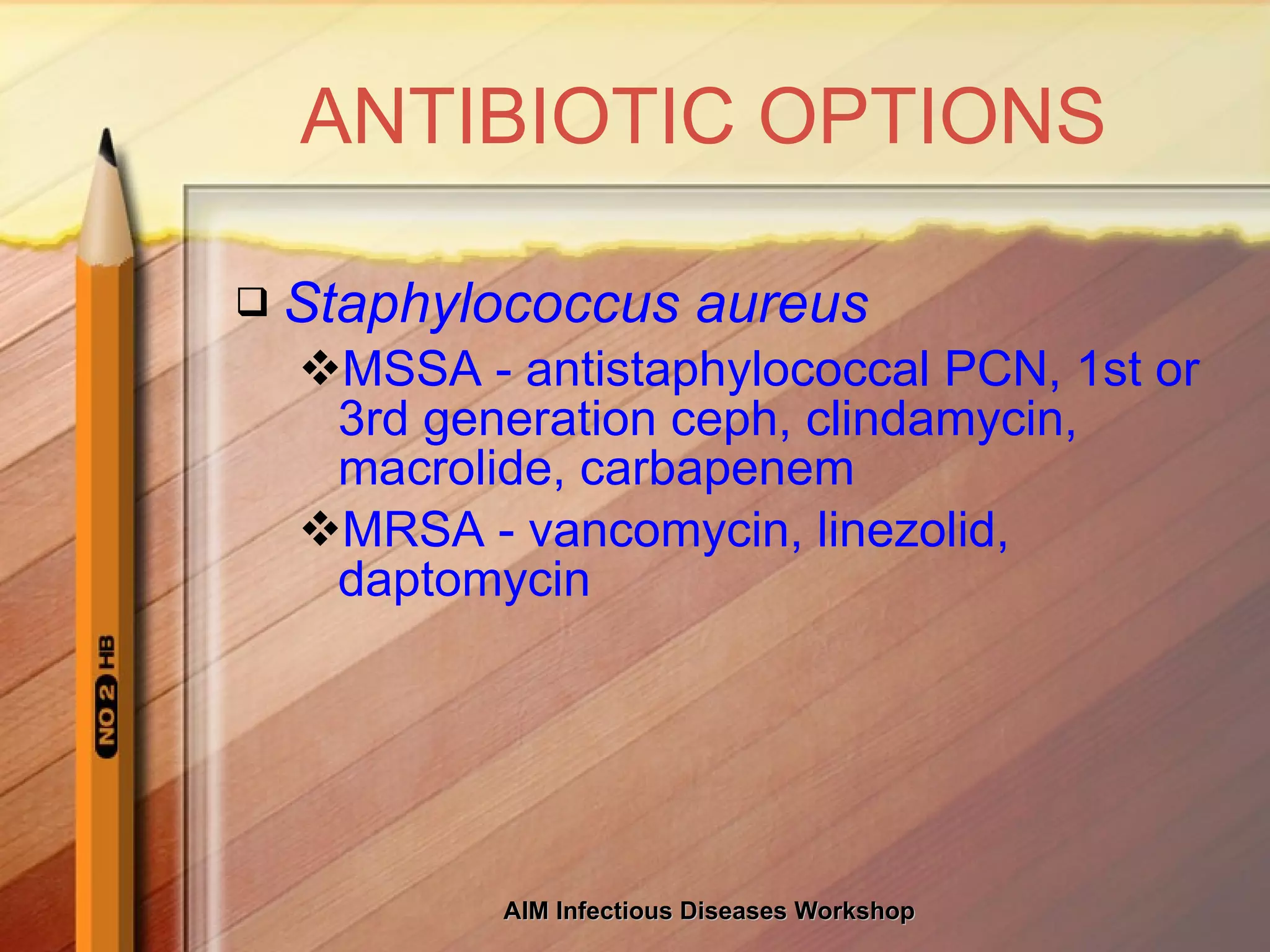
ANTIBIOTIC OPTIONS Staphylococcus aureus MSSA - antistaphylococcal PCN, 1st or 3rd generation ceph, clindamycin, macrolide, carbapenem MRSA - vancomycin, linezolid, daptomycin
ANTIBIOTIC OPTIONS Streptococcus pyogenes PCN, 1st or 3rd generation ceph, clindamycin, macrolide Streptococcus pneumoniae PSSP - PCN, 1st or 3rd generation ceph, clindamycin, macrolide, doxy PRSP - newer quinolone, 3rd generation ceph, vancomycin
ANTIBIOTIC OPTIONS Enterococci PCN-susceptible - PCN/amp ± AGC PCN-resistant - vancomycin or daptomycin ± AGC VRE - linezolid, quinopristin/dalfopristin, teicoplanin, daptomycin AGC-resistant - high-dose continuous infusion PCN/amp
ANTIBIOTIC OPTIONS Gram-negative rods Older quinolones, TMP/SMX, 2nd and 3rd generation ceph, beta-lactam/beta-lactamase inhibitor combinations, carbapenem SPACEY - inducible extended spectrum beta-lactamase production
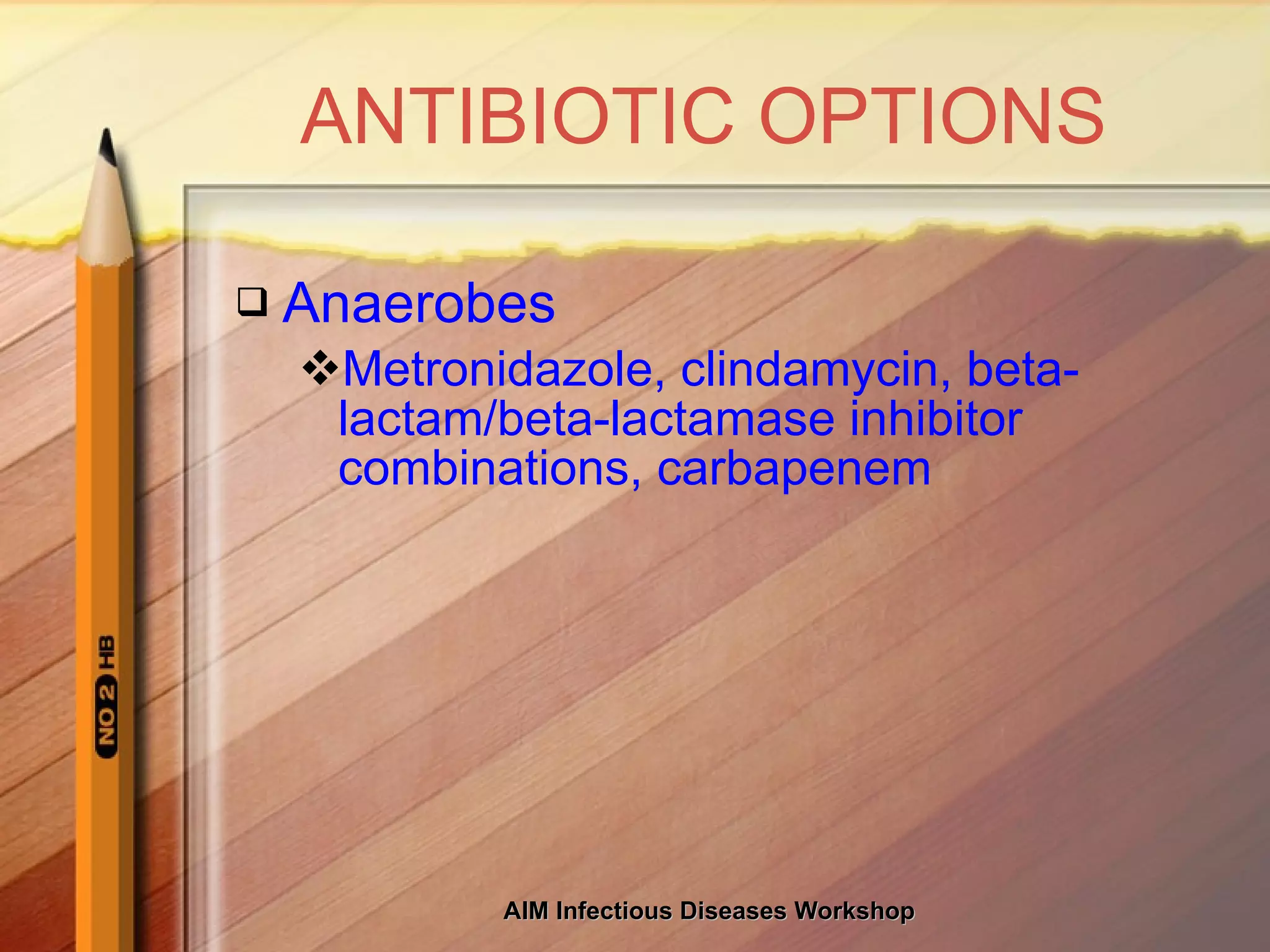
ANTIBIOTIC OPTIONS Anaerobes Metronidazole, clindamycin, beta-lactam/beta-lactamase inhibitor combinations, carbapenem
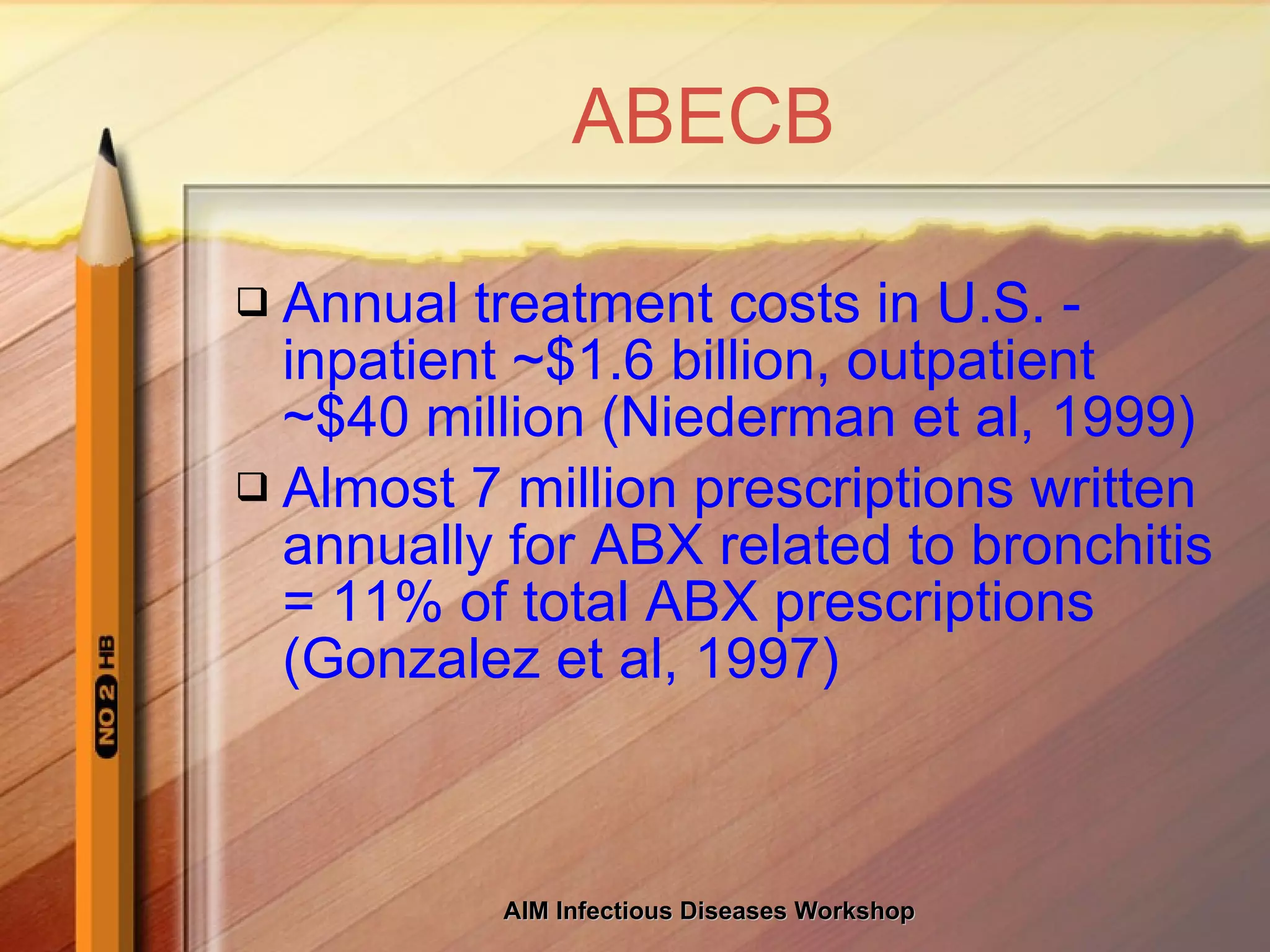
ABECB Annual treatment costs in U.S. - inpatient ~$1.6 billion, outpatient ~$40 million (Niederman et al, 1999) Almost 7 million prescriptions written annually for ABX related to bronchitis = 11% of total ABX prescriptions (Gonzalez et al, 1997)
ABECB Common Pathogens Fredrick, AM, et al.  Clin Ther  2001; 23: 1683-1706.
ABECB TREATMENT STRATEGIES Simple Increased dyspnea, sputum, sputum purulence 1st line: Amox, Doxy, TMP-SMX Alternatives: Amox-Clav, FQ, macrolide, 2nd generation Ceph Complicated Above Sx plus 1 of: frequent exacerbations, co-morbidity, age >65, chronic bronchitis >10 yr 1st line: FQ Alternative: Amox-Clav, 2nd-3rd generation Ceph, newer macrolide; consider hospitalization and iv Rx Chronic Above plus continuous year-round production of purulent sputum 1st line: Cipro + Amox-Clav Alternative: consider hospitalization and iv Rx
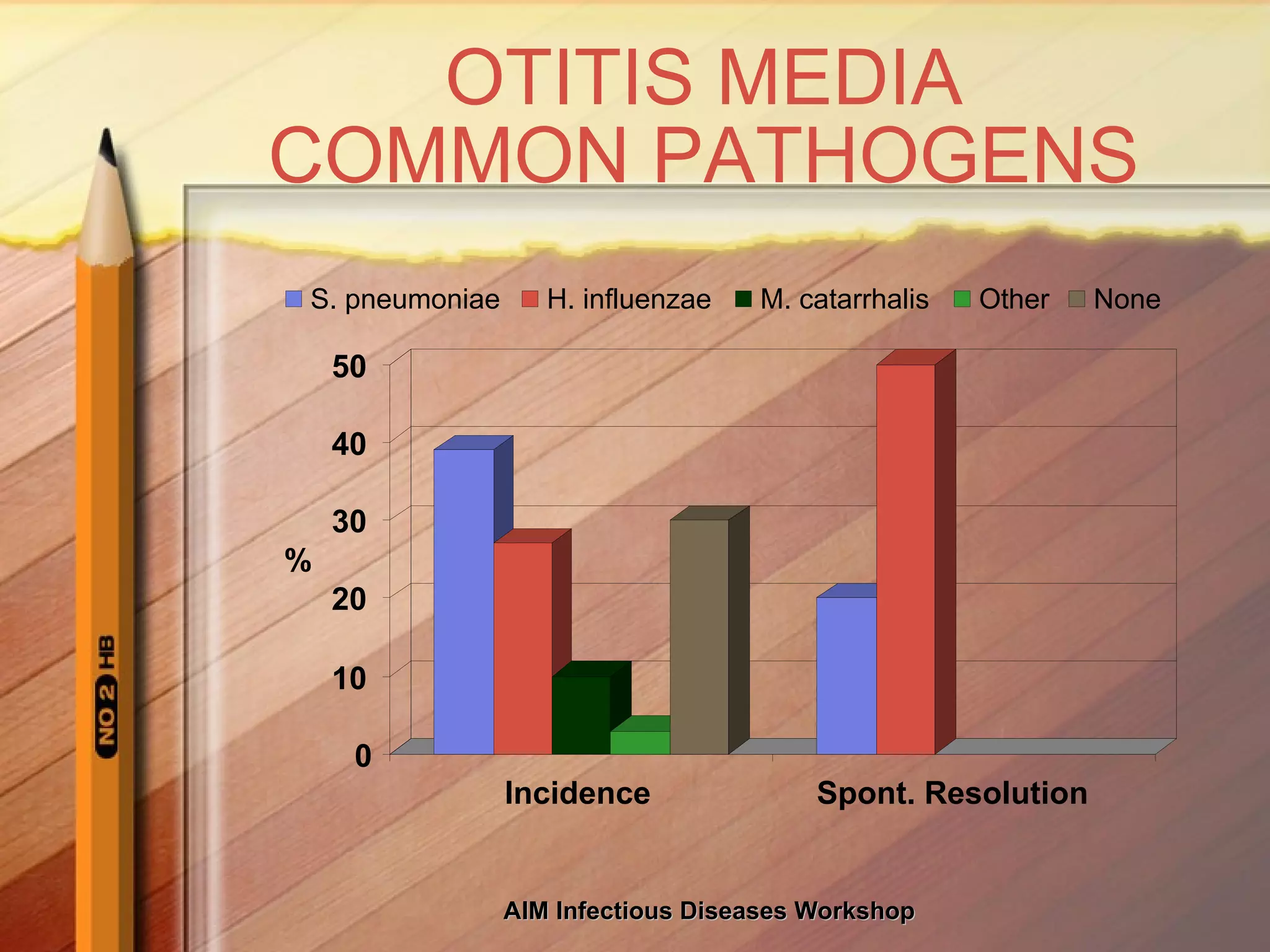
OTITIS MEDIA COMMON PATHOGENS
ACUTE OTITIS MEDIA DIAGNOSIS Acute onset Signs of middle ear effusion Signs and symptoms of middle-ear inflammation AAP. Pediatrics 2004;113:1451-54.
ACUTE OTITIS MEDIA MANAGEMENT Pain management Observation if: >2 y old Non-severe illness Ready means of communication Able to re-evaluate within 48-72 h if not improved Ability to obtain medications in timely manner Antibacterial therapy Amoxicillin 80-90 mg/kg/d Alternatives include cephalosporins or newer macrolides Amoxicillin-clavulanate 90 mg/kg/d for treatment failures AAP. Pediatrics 2004;113:1451-54.
SINUSITIS COMMON PATHOGENS Pfaller et al. AJM 2001; 111: 4S.
SINUSITIS DIAGNOSIS Most important criterion is persistence of nasal purulence for >14 days, associated with daytime cough Sinus pressure and tenderness are nonspecific markers
SINUSITIS TREATMENT Systematic review of 32 trials involving >7000 patients acute maxillary sinusitis => Penicillin and amoxicillin better than placebo No significant difference in cure rate between classes of antibiotics for the following comparisons: Newer non-penicillin antibiotics versus penicillins Newer non-penicillin antibiotics versus amoxicillin-clavulanate Tang. Ann EM 2003.
PNEUMONIA COMMON PATHOGENS Streptococcus pneumoniae Haemophilus influenzae  Moraxella catarrhalis  Legionella pneumophila Mycoplasma pneumoniae Chlamydia pneumoniae
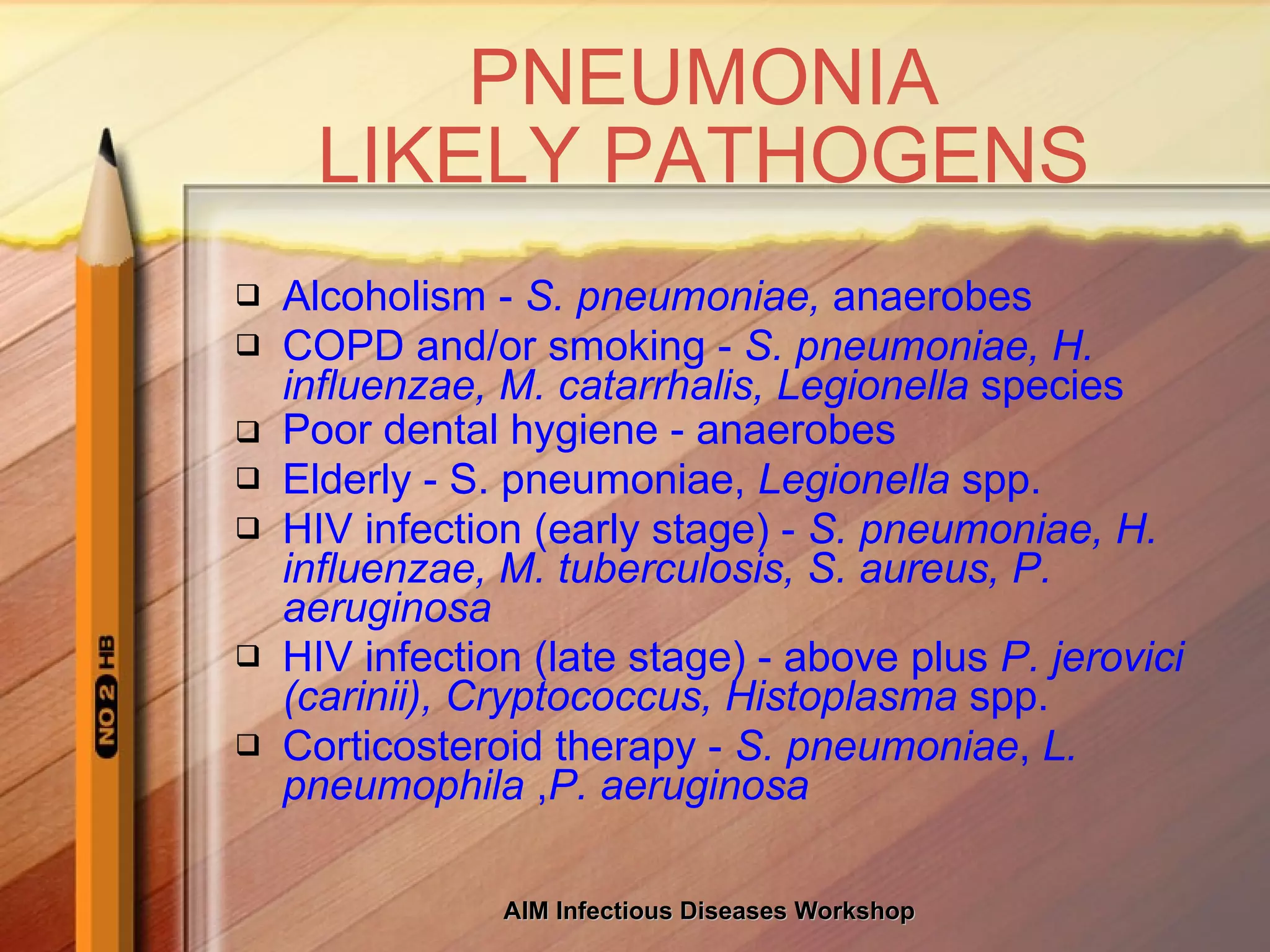
PNEUMONIA LIKELY PATHOGENS Alcoholism -  S. pneumoniae,  anaerobes COPD and/or smoking -  S. pneumoniae, H. influenzae, M. catarrhalis, Legionella  species Poor dental hygiene - anaerobes Elderly - S. pneumoniae,  Legionella  spp. HIV infection (early stage) -  S. pneumoniae, H. influenzae, M. tuberculosis, S. aureus, P. aeruginosa  HIV infection (late stage) - above plus  P. jerovici (carinii), Cryptococcus, Histoplasma  spp. Corticosteroid therapy -  S. pneumoniae ,  L. pneumophila  , P. aeruginosa
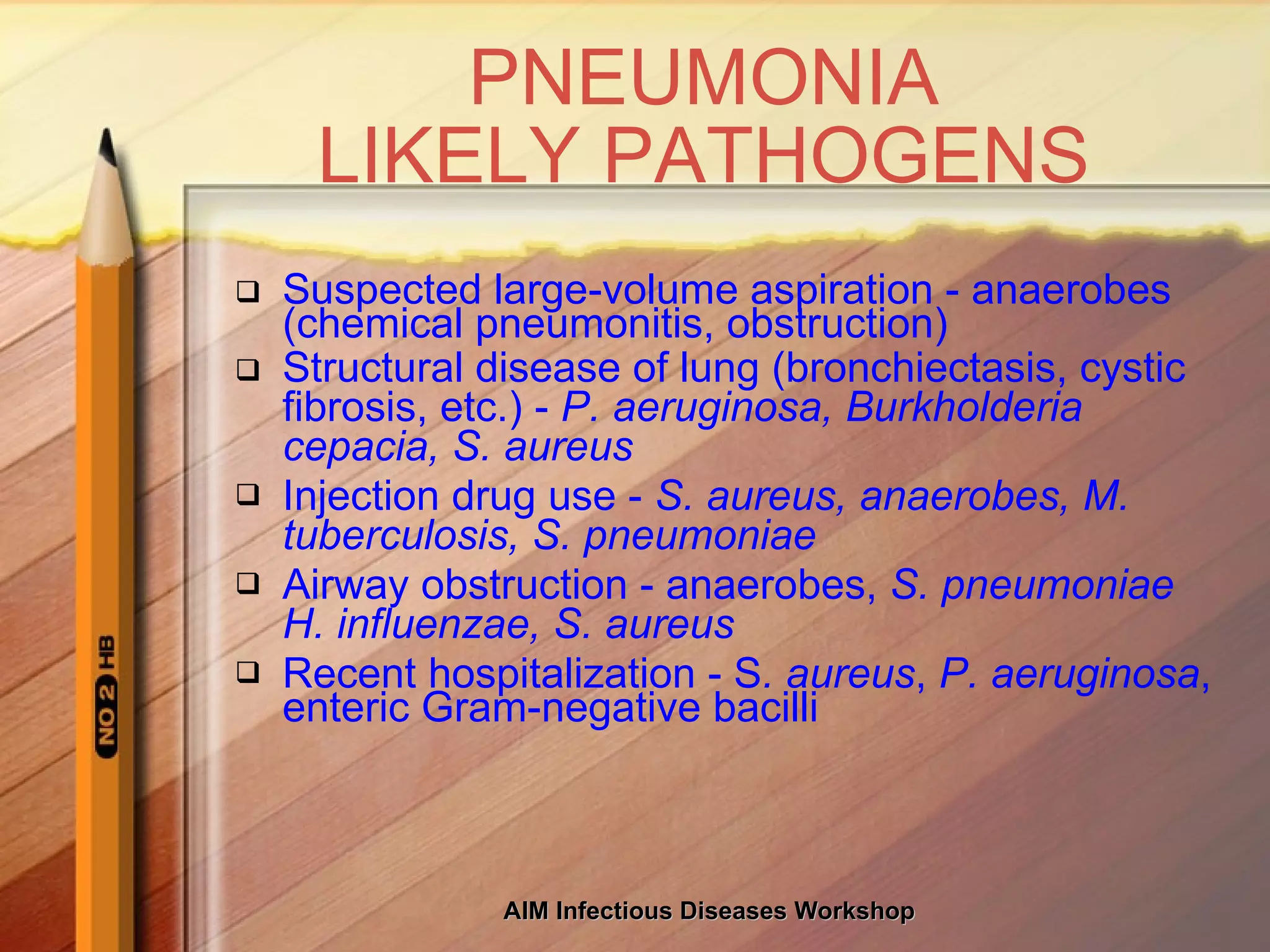
PNEUMONIA LIKELY PATHOGENS Suspected large-volume aspiration - anaerobes (chemical pneumonitis, obstruction) Structural disease of lung (bronchiectasis, cystic fibrosis, etc.) -  P. aeruginosa, Burkholderia cepacia, S. aureus Injection drug use -  S. aureus, anaerobes, M. tuberculosis, S. pneumoniae Airway obstruction - anaerobes,  S. pneumoniae H. influenzae, S. aureus Recent hospitalization - S . aureus ,  P. aeruginosa , enteric Gram-negative bacilli
PNEUMONIA LIKELY PATHOGENS Nursing home residency -  S. pneumoniae , gram-negative bacilli,  H. influenzae, S. aureus,  anaerobes,  C. pneumoniae Influenza active in community - influenza,  S. pneumoniae, S. aureus, S. pyogenes, H. influenzae Epidemic legionnaires' disease -  Legionella spp. Exposure to bats or soil enriched with bird droppings -  H. capsulatum, C. neoformans Exposure to birds -  Chlamydia psittaci Exposure to rabbits -  Francisella tularensis  Travel to southwestern US -  Coccidioides  spp. Exposure to farm animals or parturient cats -  Coxiella burnetii  (Q fever)
PNEUMONIA MANAGEMENT
UTI DIAGNOSIS Leukocyte esterase test ~80-90% sensitive, nitrite test ~50% sensitive compared with quantitative culture with greater than or equal to 10 5  cfu False-negative nitrite test results may occur with: low levels of bacteriuria patients taking diuretics patients on a low-nitrate diet infections with bacteria that do not reduce nitrates Combining both tests improves sensitivity => 85-90% Specificity ~ 95% for both
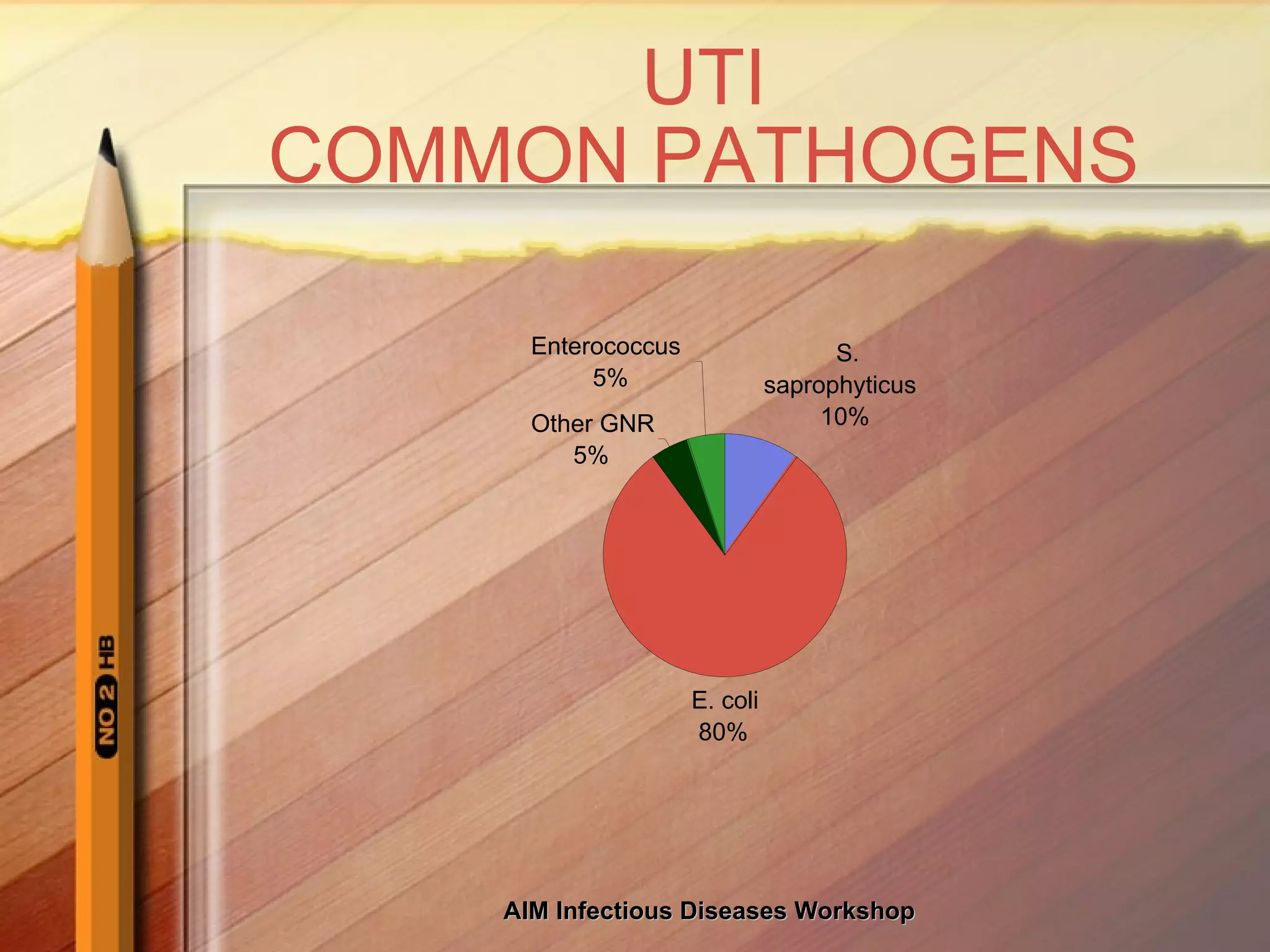
UTI COMMON PATHOGENS
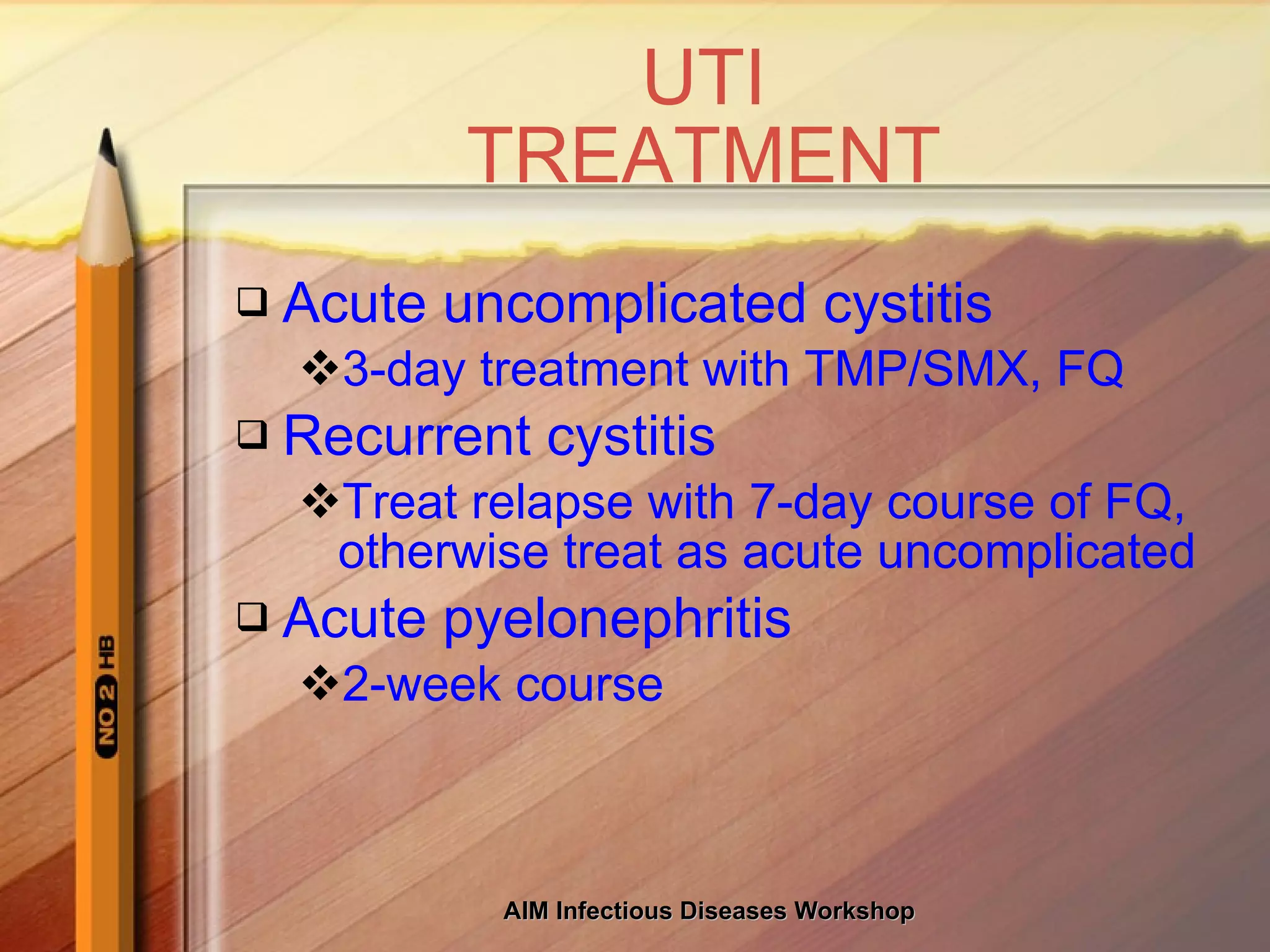
UTI TREATMENT Acute uncomplicated cystitis 3-day treatment with TMP/SMX, FQ Recurrent cystitis Treat relapse with 7-day course of FQ, otherwise treat as acute uncomplicated Acute pyelonephritis 2-week course
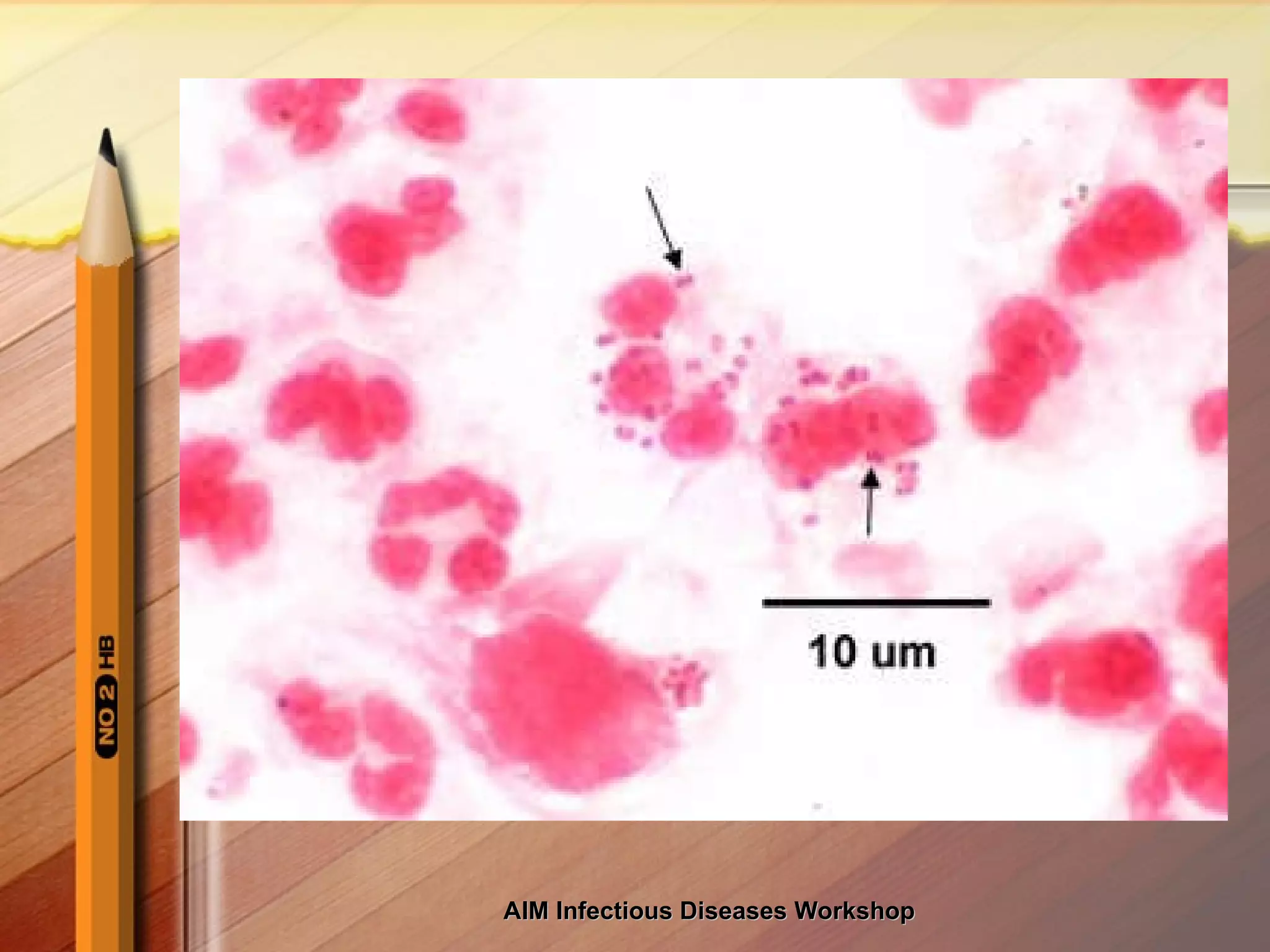
ANTIBIOTIC OVERUSE Of 6.5 million ABX prescriptions written in 1992 for children younger than 18 (Nyquist AC et al. JAMA 1998;279:875-877.): 12% for colds 9% for URI or nasopharyngitis 9% for bronchitis In Kentucky study (Mainous AG et al. J Fam Pract 1996;42:357-61): 60% of patients with common cold received ABXs Estimated $37.5 million spent  for ABX prescriptions in U.S. annually for common cold
 
 
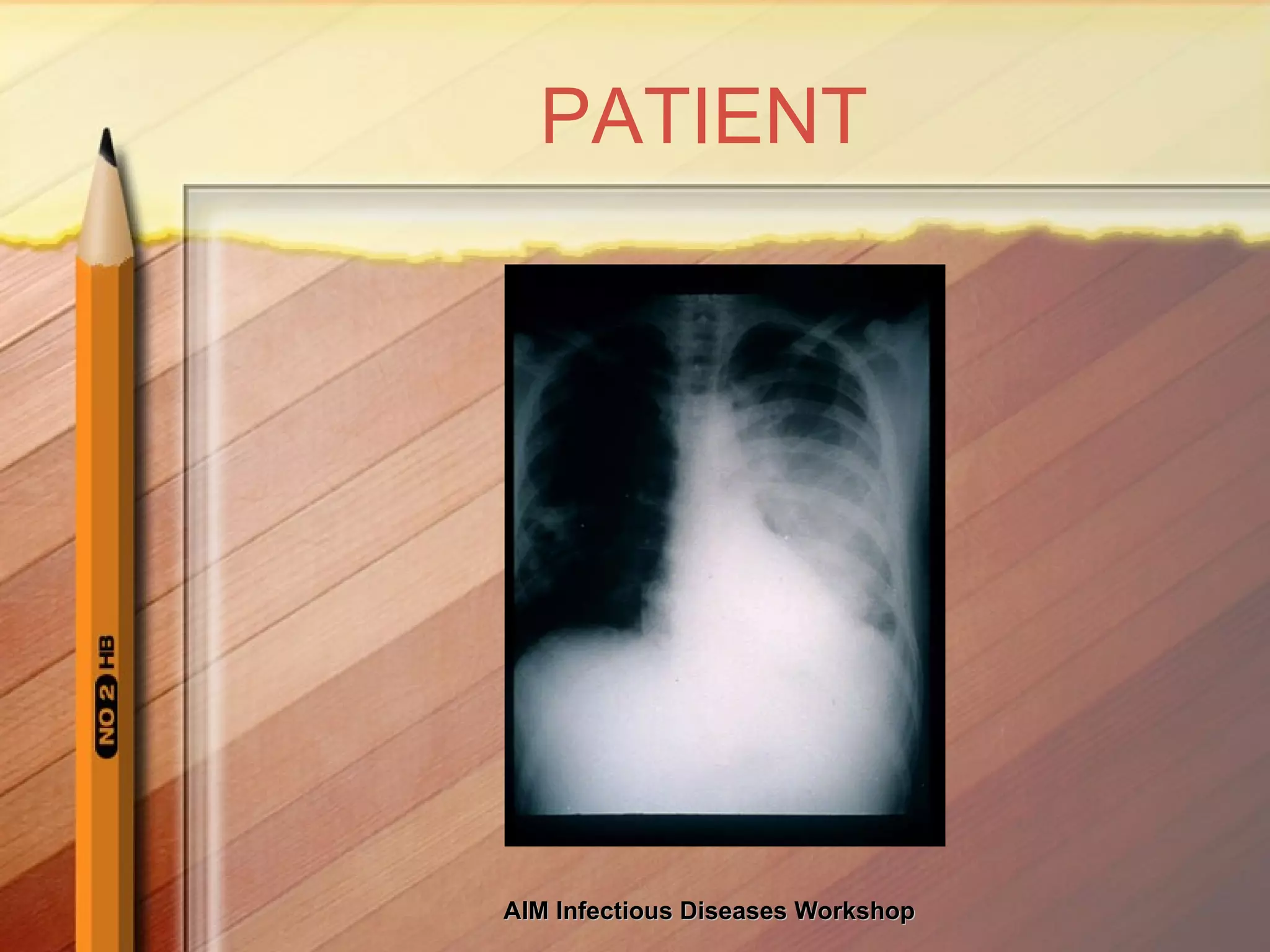
PATIENT 43 year old male presents with cough x 3 days
PATIENT
PATIENT
ANTIBIOTIC FAILURE Persistent or new fever or other signs of infection Persistent laboratory abnormalities Development of sepsis or other organ involvement Persistent isolation of organism from culture
ANTIBIOTIC FAILURE Antibiotic-related Compliance Wrong agent Wrong dose Drug interactions Poor tissue penetration
ANTIBIOTIC FAILURE Host-related Immunologic defect Anatomic defect Foreign body
ANTIBIOTIC FAILURE Organism-related Emergence of resistance Pre-existing co-infection Superinfection


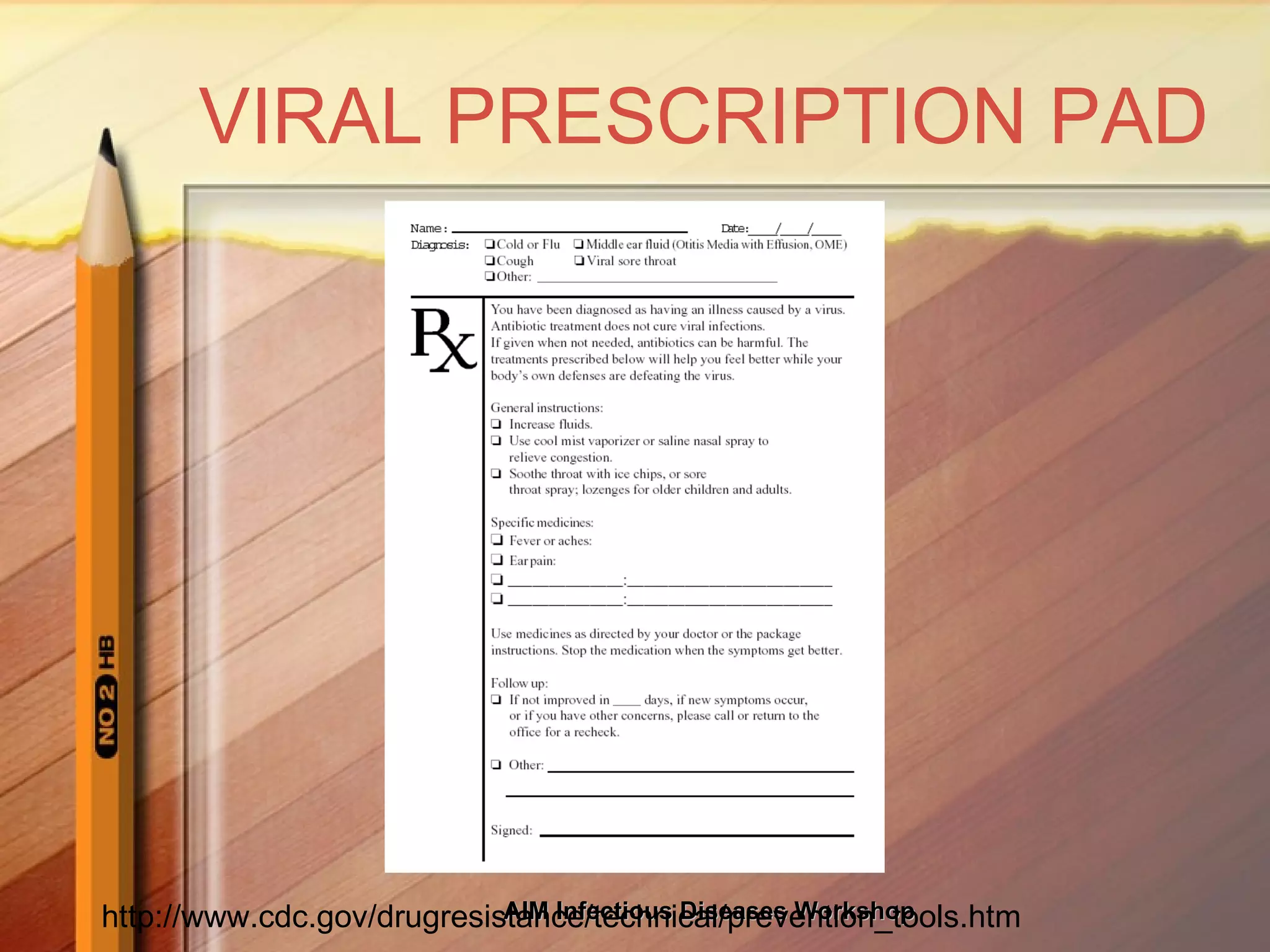
CONTROLLING OUTPATIENT RESISTANCE Explain that unnecessary antibiotics may be harmful Share the facts Build cooperation and trust Encourage active management of the illness Be confident with recommendations to use alternative treatments Start the educational process in the waiting room ( www.cdc.gov/ncidod/dbmd/antibioticresistance ) Involve office personnel in the process
VIRAL PRESCRIPTION PAD http://www.cdc.gov/drugresistance/technical/prevention_tools.htm
CONTROLLING INPATIENT RESISTANCE Alcohol hand rubs Isolation procedures Prescription restrictions Computer-assisted prescribing Cycling antibiotics?
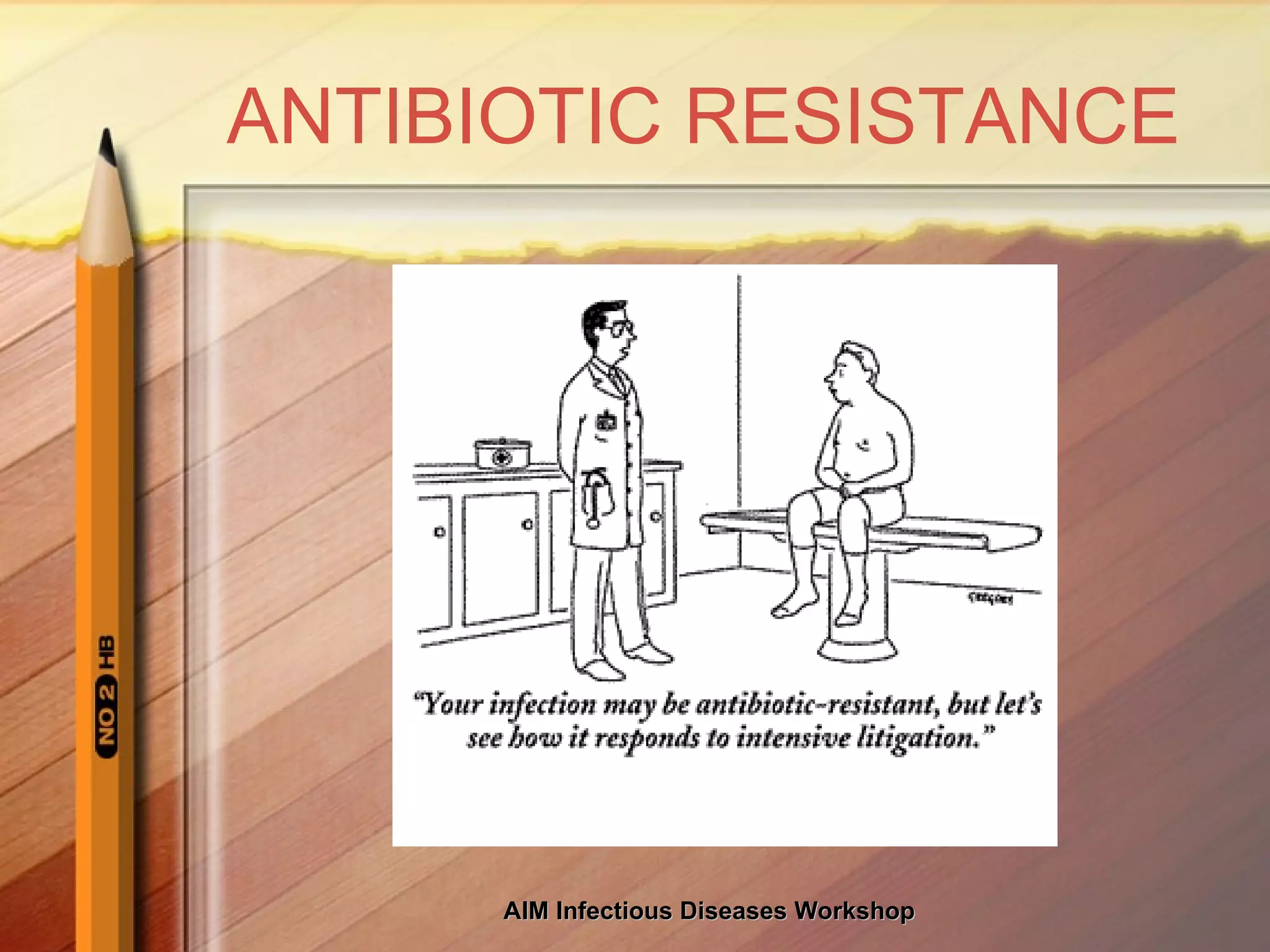
ANTIBIOTIC RESISTANCE

Antibiotic resistance

  • 1.
    THE JUDICIOUS USEOF ANTIBIOTICS “ New medicines, and new methods of cure, always work miracles for a while ” - William Heberden, 1802
  • 2.
    INCREASING RESISTANCE INTHE US Thornsberry C. Infect Med . 1993;93 (suppl):15-24. Barry AL. AAC . 1994;38:2419-25. Washington JA. DMID . 1996;25:183-190. Thornsberry C. DMID 1997;29:249-57; Doern GV. AAC . 1996;40:1208-13. Thornsberry C. JAC 1999;44:749-59.
  • 3.
    INFECTIOUS DISEASES SyndromeHost Likely pathogens Antibiotic options
  • 4.
    SYNDROME First distinguishinfectious from non-infectious Allergy Malignancy Autoimmune Drugs
  • 5.
    SYNDROME ANATOMY/ORGAN SYSTEMSite of infection influences Likely pathogens ABX activity - penetration, pH, foreign body Need for ‘cidal’ vs ‘static’ therapy
  • 6.
    SYNDROME ANATOMY/ORGAN SYSTEMGeneral - FUO, adenopathy Skin/soft tissue - cellulitis, wound infection, necrotizing fasciitis CNS - meningitis, encephalitis, brain abscess HEENT - sinusitis, otitis, pharyngitis, abscess Respiratory - bronchitis, pneumonia CV - endocarditis, phlebitis, bacteremia, catheter-related
  • 7.
    SYNDROME ANATOMY/ORGAN SYSTEMAbdominal - peritonitis, abscess, cholecystitis/cholangitis, appendicitis Urinary tract - cystitis, pyelonephritis, perinephric abscess Genital tract - urethritis, cervicitis, PID, prostatitis Musculoskeletal - pyomyositis, osteomyelitis, septic arthritis
  • 8.
    HOST Demographics -age, habits Exposure - sick contacts, residence/travel, hospitalization/institutionalization Co-morbidities - immunosuppression, organ dysfunction, surgery, foreign bodies Prior antibiotic use
  • 9.
    LIKELY PATHOGENS Basedon syndrome and host
  • 10.
    ISOLATION/IDENTIFICATION Real vscontaminant Possible presence of others
  • 11.
    SUSCEPTIBILITY Testing maynot take into account: Inoculum effect ABX concentrations at site of infection Subpopulations Repressed but inducible genes
  • 12.
    ANTIBIOTIC USAGE PRINCIPLESUse narrow spectrum when possible Use older agent when feasible Use combination therapy only when indicated
  • 13.
    ANTIBIOTIC OPTIONS Staphylococcusaureus MSSA - antistaphylococcal PCN, 1st or 3rd generation ceph, clindamycin, macrolide, carbapenem MRSA - vancomycin, linezolid, daptomycin
  • 14.
    ANTIBIOTIC OPTIONS Streptococcuspyogenes PCN, 1st or 3rd generation ceph, clindamycin, macrolide Streptococcus pneumoniae PSSP - PCN, 1st or 3rd generation ceph, clindamycin, macrolide, doxy PRSP - newer quinolone, 3rd generation ceph, vancomycin
  • 15.
    ANTIBIOTIC OPTIONS EnterococciPCN-susceptible - PCN/amp ± AGC PCN-resistant - vancomycin or daptomycin ± AGC VRE - linezolid, quinopristin/dalfopristin, teicoplanin, daptomycin AGC-resistant - high-dose continuous infusion PCN/amp
  • 16.
    ANTIBIOTIC OPTIONS Gram-negativerods Older quinolones, TMP/SMX, 2nd and 3rd generation ceph, beta-lactam/beta-lactamase inhibitor combinations, carbapenem SPACEY - inducible extended spectrum beta-lactamase production
  • 17.
    ANTIBIOTIC OPTIONS AnaerobesMetronidazole, clindamycin, beta-lactam/beta-lactamase inhibitor combinations, carbapenem
  • 18.
    ABECB Annual treatmentcosts in U.S. - inpatient ~$1.6 billion, outpatient ~$40 million (Niederman et al, 1999) Almost 7 million prescriptions written annually for ABX related to bronchitis = 11% of total ABX prescriptions (Gonzalez et al, 1997)
  • 19.
    ABECB Common PathogensFredrick, AM, et al. Clin Ther 2001; 23: 1683-1706.
  • 20.
    ABECB TREATMENT STRATEGIESSimple Increased dyspnea, sputum, sputum purulence 1st line: Amox, Doxy, TMP-SMX Alternatives: Amox-Clav, FQ, macrolide, 2nd generation Ceph Complicated Above Sx plus 1 of: frequent exacerbations, co-morbidity, age >65, chronic bronchitis >10 yr 1st line: FQ Alternative: Amox-Clav, 2nd-3rd generation Ceph, newer macrolide; consider hospitalization and iv Rx Chronic Above plus continuous year-round production of purulent sputum 1st line: Cipro + Amox-Clav Alternative: consider hospitalization and iv Rx
  • 21.
  • 22.
    ACUTE OTITIS MEDIADIAGNOSIS Acute onset Signs of middle ear effusion Signs and symptoms of middle-ear inflammation AAP. Pediatrics 2004;113:1451-54.
  • 23.
    ACUTE OTITIS MEDIAMANAGEMENT Pain management Observation if: >2 y old Non-severe illness Ready means of communication Able to re-evaluate within 48-72 h if not improved Ability to obtain medications in timely manner Antibacterial therapy Amoxicillin 80-90 mg/kg/d Alternatives include cephalosporins or newer macrolides Amoxicillin-clavulanate 90 mg/kg/d for treatment failures AAP. Pediatrics 2004;113:1451-54.
  • 24.
    SINUSITIS COMMON PATHOGENSPfaller et al. AJM 2001; 111: 4S.
  • 25.
    SINUSITIS DIAGNOSIS Mostimportant criterion is persistence of nasal purulence for >14 days, associated with daytime cough Sinus pressure and tenderness are nonspecific markers
  • 26.
    SINUSITIS TREATMENT Systematicreview of 32 trials involving >7000 patients acute maxillary sinusitis => Penicillin and amoxicillin better than placebo No significant difference in cure rate between classes of antibiotics for the following comparisons: Newer non-penicillin antibiotics versus penicillins Newer non-penicillin antibiotics versus amoxicillin-clavulanate Tang. Ann EM 2003.
  • 27.
    PNEUMONIA COMMON PATHOGENSStreptococcus pneumoniae Haemophilus influenzae Moraxella catarrhalis Legionella pneumophila Mycoplasma pneumoniae Chlamydia pneumoniae
  • 28.
    PNEUMONIA LIKELY PATHOGENSAlcoholism - S. pneumoniae, anaerobes COPD and/or smoking - S. pneumoniae, H. influenzae, M. catarrhalis, Legionella species Poor dental hygiene - anaerobes Elderly - S. pneumoniae, Legionella spp. HIV infection (early stage) - S. pneumoniae, H. influenzae, M. tuberculosis, S. aureus, P. aeruginosa HIV infection (late stage) - above plus P. jerovici (carinii), Cryptococcus, Histoplasma spp. Corticosteroid therapy - S. pneumoniae , L. pneumophila , P. aeruginosa
  • 29.
    PNEUMONIA LIKELY PATHOGENSSuspected large-volume aspiration - anaerobes (chemical pneumonitis, obstruction) Structural disease of lung (bronchiectasis, cystic fibrosis, etc.) - P. aeruginosa, Burkholderia cepacia, S. aureus Injection drug use - S. aureus, anaerobes, M. tuberculosis, S. pneumoniae Airway obstruction - anaerobes, S. pneumoniae H. influenzae, S. aureus Recent hospitalization - S . aureus , P. aeruginosa , enteric Gram-negative bacilli
  • 30.
    PNEUMONIA LIKELY PATHOGENSNursing home residency - S. pneumoniae , gram-negative bacilli, H. influenzae, S. aureus, anaerobes, C. pneumoniae Influenza active in community - influenza, S. pneumoniae, S. aureus, S. pyogenes, H. influenzae Epidemic legionnaires' disease - Legionella spp. Exposure to bats or soil enriched with bird droppings - H. capsulatum, C. neoformans Exposure to birds - Chlamydia psittaci Exposure to rabbits - Francisella tularensis Travel to southwestern US - Coccidioides spp. Exposure to farm animals or parturient cats - Coxiella burnetii (Q fever)
  • 31.
  • 32.
    UTI DIAGNOSIS Leukocyteesterase test ~80-90% sensitive, nitrite test ~50% sensitive compared with quantitative culture with greater than or equal to 10 5 cfu False-negative nitrite test results may occur with: low levels of bacteriuria patients taking diuretics patients on a low-nitrate diet infections with bacteria that do not reduce nitrates Combining both tests improves sensitivity => 85-90% Specificity ~ 95% for both
  • 33.
  • 34.
    UTI TREATMENT Acuteuncomplicated cystitis 3-day treatment with TMP/SMX, FQ Recurrent cystitis Treat relapse with 7-day course of FQ, otherwise treat as acute uncomplicated Acute pyelonephritis 2-week course
  • 35.
    ANTIBIOTIC OVERUSE Of6.5 million ABX prescriptions written in 1992 for children younger than 18 (Nyquist AC et al. JAMA 1998;279:875-877.): 12% for colds 9% for URI or nasopharyngitis 9% for bronchitis In Kentucky study (Mainous AG et al. J Fam Pract 1996;42:357-61): 60% of patients with common cold received ABXs Estimated $37.5 million spent for ABX prescriptions in U.S. annually for common cold
  • 36.
  • 37.
  • 38.
    PATIENT 43 yearold male presents with cough x 3 days
  • 39.
  • 40.
  • 41.
    ANTIBIOTIC FAILURE Persistentor new fever or other signs of infection Persistent laboratory abnormalities Development of sepsis or other organ involvement Persistent isolation of organism from culture
  • 42.
    ANTIBIOTIC FAILURE Antibiotic-relatedCompliance Wrong agent Wrong dose Drug interactions Poor tissue penetration
  • 43.
    ANTIBIOTIC FAILURE Host-relatedImmunologic defect Anatomic defect Foreign body
  • 44.
    ANTIBIOTIC FAILURE Organism-relatedEmergence of resistance Pre-existing co-infection Superinfection
  • 45.
  • 46.
  • 47.
  • 48.
  • 49.
  • 50.
    CONTROLLING OUTPATIENT RESISTANCEExplain that unnecessary antibiotics may be harmful Share the facts Build cooperation and trust Encourage active management of the illness Be confident with recommendations to use alternative treatments Start the educational process in the waiting room ( www.cdc.gov/ncidod/dbmd/antibioticresistance ) Involve office personnel in the process
  • 51.
    VIRAL PRESCRIPTION PADhttp://www.cdc.gov/drugresistance/technical/prevention_tools.htm
  • 52.
    CONTROLLING INPATIENT RESISTANCEAlcohol hand rubs Isolation procedures Prescription restrictions Computer-assisted prescribing Cycling antibiotics?
  • 53.