MANAGEMENT OF INVASIVE
FUNGAL INFECTIONS IN THE
NIGERIA SETTING

                 DR RITA OLADELE
                CLINICAL MYCOLOGIST
                CMUL/LUTH
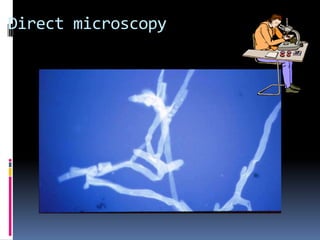
Direct microscopy
TRENDS IN FUNGAL DISEASES


   • Increasing cases of invasive
   fungal infections
   • Poor diagnostic tools
   • Replacement of sensitive
   species by resistant ones
Invasive fungal infections
• Candida                      Endogenous (mostly)

•   Aspergillus                Exogenous
•   Cryptococcus
•   Zygomycetes
•   Rare filamentous species

    •Histoplasmosis        Reactivation
    •Blastomycosis
    •Coccidioidomycosis
    •Paracoccidioidomycosis
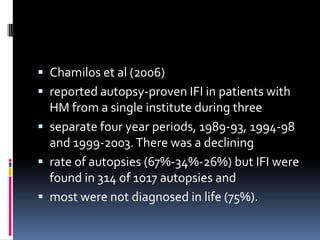
 Chamilos et al (2006)
 reported autopsy-proven IFI in patients with
  HM from a single institute during three
 separate four year periods, 1989-93, 1994-98
  and 1999-2003. There was a declining
 rate of autopsies (67%-34%-26%) but IFI were
  found in 314 of 1017 autopsies and
 most were not diagnosed in life (75%).
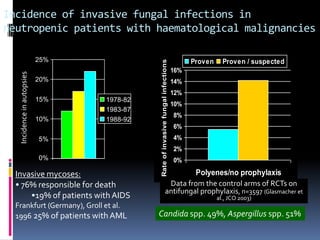
Incidence of invasive fungal infections in
neutropenic patients with haematological malignancies

                            25%                                                        Proven     Proven / suspected


                                            Rate of invasive fungal infections
                                                                                 16%
   Incidence in autopsies


                            20%                                                  14%
                                                                                 12%
                            15%   1978-82
                                                                                 10%
                                  1983-87
                                                                                 8%
                            10%   1988-92
                                                                                 6%
                            5%                                                   4%
                                                                                 2%
                            0%                                                   0%

  Invasive mycoses:                                                     Polyenes/no prophylaxis
  • 76% responsible for death                                   Data from the control arms of RCTs on
                                                               antifungal prophylaxis, n=3597 (Glasmacher et
      •19% of patients with AIDS                                                                al., JCO 2003)
  Frankfurt (Germany), Groll et al.
  1996 25% of patients with AML             Candida spp. 49%, Aspergillus spp. 51%
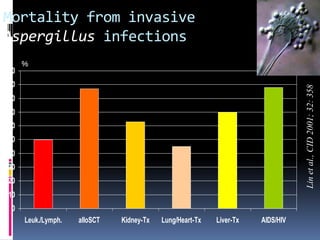
Mortality from invasive
Aspergillus infections
      %
100
 90


                                                                                 Lin et al., CID 2001; 32: 358
 80
 70
 60
 50
 40
 30
 20
 10
  0
      Leuk./Lymph.   alloSCT   Kidney-Tx   Lung/Heart-Tx   Liver-Tx   AIDS/HIV
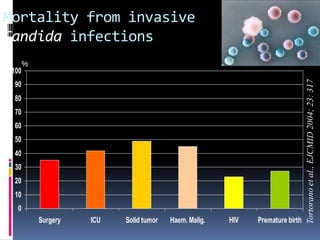
Mortality from invasive
Candida infections
       %
 100


                                                                                Tortorano et al., EJCMID 2004; 23: 317
  90
  80
  70
  60
  50
  40
  30
  20
  10
   0
           Surgery   ICU   Solid tumor   Haem. Malig.   HIV   Premature birth
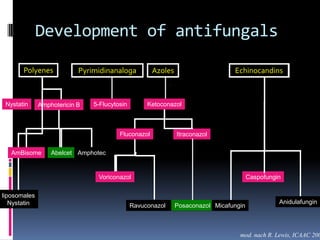
Development of antifungals

       Polyenes
        Polyene            Pyrimidinanaloga          Azoles
                                                     Azole                    Echinocandins
                                                                              Echinocandine


 Nystatin     Amphotericin B   5-Flucytosin        Ketoconazol


                                        Fluconazol            Itraconazol

   AmBisome      Abelcet
                 Abelcet Amphotec


                                Voriconazol                                          Caspofungin

liposomales
   Nystatin                                                                                    Anidulafungin
                                              Ravuconazol    Posaconazol
                                                            Posaconazol Micafungin


                                                                                mod. nach R. Lewis, ICAAC 200
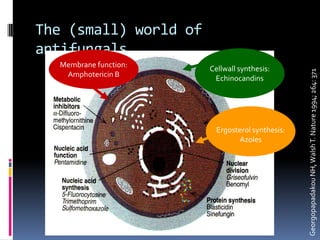
The (small) world of
antifungals
  Membrane function:   Cellwall synthesis:
   Amphotericin B
                        Echinocandins


                         Ergosterol synthesis:
                               Azoles
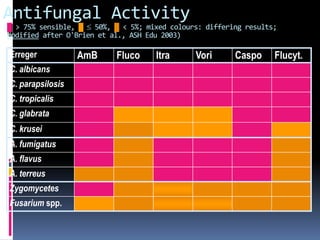
Antifungal Activity
(█ > 75% sensible, █ 50%, █ < 5%; mixed colours: differing results;
 modified after O'Brien et al., ASH Edu 2003)

 Erreger           AmB     Fluco     Itra      Vori     Caspo     Flucyt.
 C. albicans
 C. parapsilosis
 C. tropicalis
 C. glabrata
 C. krusei
 A. fumigatus
 A. flavus
 A. terreus
 Zygomycetes
 Fusarium spp.
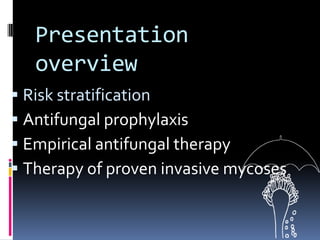
Presentation
   overview
 Risk stratification
 Antifungal prophylaxis
 Empirical antifungal therapy
 Therapy of proven invasive mycoses
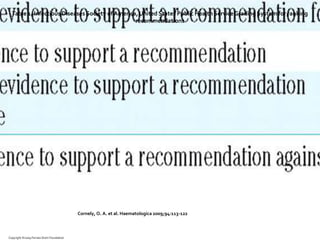
Table 1. Infectious Diseases Society of America, United States Public Health Service Grading System for ranking
                                                 recommendations


                                            Cornely, O. A. et al. Haematologica 2009;94:113-122


Copyright ©2009 Ferrata Storti Foundation
Evidence based

 Chamilos et al (2006)
 reported autopsy-proven IFI in patients with
  HM from a single institute during three
 separate four year periods, 1989-93, 1994-98
  and 1999-2003. There was a declining
 rate of autopsies (67%-34%-26%) but IFI were
  found in 314 of 1017 autopsies and
 most were not diagnosed in life (75%).
Evidence based
 fungal infection and the decrease of IFI attributable
  mortality. In a longitudinal observation survival benefit
  extended beyond the period of fluconazole treatment (75
  days) and was accompanied by a lower incidence of
  intestinal graft versus host disease.19
 Moreover, fluconazole has been reported to protect from
  cyclophosphamide toxicityUpton A, McCune JS, Kirby
  KA, Leisenring W, McDonald G, Batchelder A, et al.
 Fluconazole coadministration concurrent with
  cyclophosphamide conditioning may reduce regimen-
  related toxicity postmyeloablative hematopoietic cell
  transplantation. Biol Blood Marrow Transplant
  2007;13:760-4
Evidences still
 The clinical relevance of the development of resistance
  during fluconazole prophylaxis is still a matter of debate,
 while a general shift towards higher rates of strains
  exhibiting primary resistance have been clearly shown in
  the intensive care setting.
 favorable safety profile and patient compliance rate of
  fluconazole resulted in discontinuation rates of less than
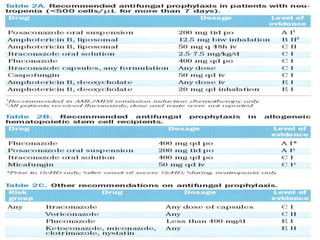
  8%. There is good evidence (Level A I) that primary
  prophylaxis with fluconazole 400 mg/d reduces the
  incidence of invasive candidiasis and the mortality rate
  after allogeneic hematopoietic stem cell transplant.
 For patients with acute leukemia prophylaxis with
  fluconazole 400 mg/d cannot be recommended with similar
  strength (Level C I). Doses less than 400 mg/d have not
  been effective in well designed trials (Level E I).
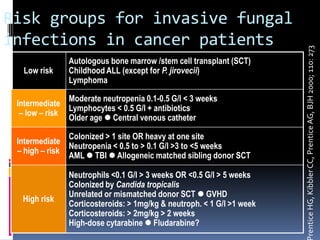
Risk groups for invasive fungal
infections in cancer patients


                                                                       rentice HG, Kibbler CC, Prentice AG, BJH 2000; 110: 273
               Autologous bone marrow /stem cell transplant (SCT)
  Low risk     Childhood ALL (except for P. jirovecii)
               Lymphoma

               Moderate neutropenia 0.1-0.5 G/l < 3 weeks
 Intermediate
               Lymphocytes < 0.5 G/l + antibiotics
  – low – risk
               Older age  Central venous catheter

               Colonized > 1 site OR heavy at one site
 Intermediate
               Neutropenia < 0.5 to > 0.1 G/l >3 to <5 weeks
 – high – risk
               AML  TBI  Allogeneic matched sibling donor SCT

               Neutrophils <0.1 G/l > 3 weeks OR <0.5 G/l > 5 weeks
               Colonized by Candida tropicalis
               Unrelated or mismatched donor SCT  GVHD
  High risk
               Corticosteroids: > 1mg/kg & neutroph. < 1 G/l >1 week
               Corticosteroids: > 2mg/kg > 2 weeks
               High-dose cytarabine  Fludarabine?
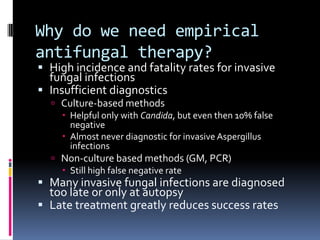
Why do we need empirical
antifungal therapy?
 High incidence and fatality rates for invasive
  fungal infections
 Insufficient diagnostics
   Culture-based methods
     Helpful only with Candida, but even then 10% false
      negative
     Almost never diagnostic for invasive Aspergillus
      infections
   Non-culture based methods (GM, PCR)
     Still high false negative rate
 Many invasive fungal infections are diagnosed
  too late or only at autopsy
 Late treatment greatly reduces success rates
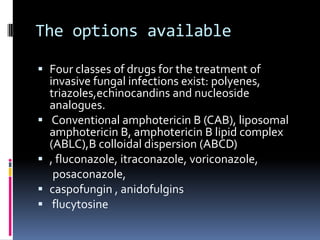
The options available

 Four classes of drugs for the treatment of
  invasive fungal infections exist: polyenes,
  triazoles,echinocandins and nucleoside
    analogues.
    Conventional amphotericin B (CAB), liposomal
    amphotericin B, amphotericin B lipid complex
    (ABLC),B colloidal dispersion (ABCD)
   , fluconazole, itraconazole, voriconazole,
     posaconazole,
   caspofungin , anidofulgins
    flucytosine
Predicting who will
become
infected……...
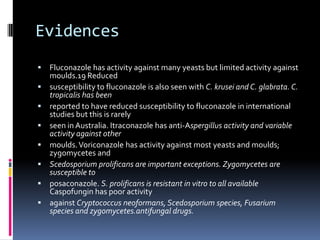
Evidences
   Fluconazole has activity against many yeasts but limited activity against
    moulds.19 Reduced
   susceptibility to fluconazole is also seen with C. krusei and C. glabrata. C.
    tropicalis has been
   reported to have reduced susceptibility to fluconazole in international
    studies but this is rarely
   seen in Australia. Itraconazole has anti-Aspergillus activity and variable
    activity against other
   moulds. Voriconazole has activity against most yeasts and moulds;
    zygomycetes and
   Scedosporium prolificans are important exceptions. Zygomycetes are
    susceptible to
   posaconazole. S. prolificans is resistant in vitro to all available
    Caspofungin has poor activity
   against Cryptococcus neoformans, Scedosporium species, Fusarium
    species and zygomycetes.antifungal drugs.
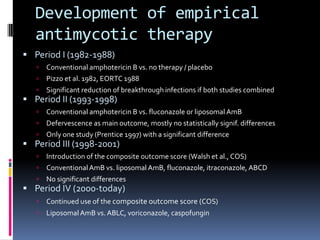
Development of empirical
   antimycotic therapy
 Period I (1982-1988)
    Conventional amphotericin B vs. no therapy / placebo
    Pizzo et al. 1982, EORTC 1988
    Significant reduction of breakthrough infections if both studies combined
 Period II (1993-1998)
    Conventional amphotericin B vs. fluconazole or liposomal AmB
    Defervescence as main outcome, mostly no statistically signif. differences
    Only one study (Prentice 1997) with a significant difference
 Period III (1998-2001)
    Introduction of the composite outcome score (Walsh et al., COS)
    Conventional AmB vs. liposomal AmB, fluconazole, itraconazole, ABCD
      No significant differences
 Period IV (2000-today)
      Continued use of the composite outcome score (COS)
      Liposomal AmB vs. ABLC, voriconazole, caspofungin
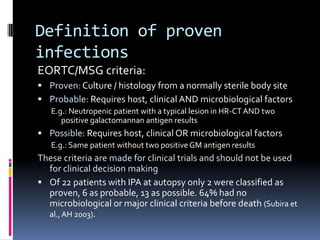
Definition of proven
infections
EORTC/MSG criteria:
 Proven: Culture / histology from a normally sterile body site
 Probable: Requires host, clinical AND microbiological factors
   E.g.: Neutropenic patient with a typical lesion in HR-CT AND two
      positive galactomannan antigen results
 Possible: Requires host, clinical OR microbiological factors
   E.g.: Same patient without two positive GM antigen results
These criteria are made for clinical trials and should not be used
  for clinical decision making
 Of 22 patients with IPA at autopsy only 2 were classified as
  proven, 6 as probable, 13 as possible. 64% had no
  microbiological or major clinical criteria before death (Subira et
  al., AH 2003).
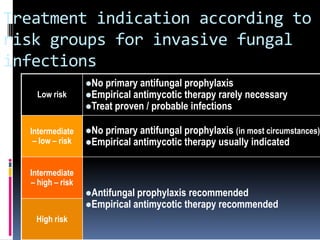
Treatment indication according to
risk groups for invasive fungal
infections
                  No primary antifungal prophylaxis
    Low risk      Empirical antimycotic therapy rarely   necessary
                  Treat proven / probable infections


  Intermediate    No primary antifungal prophylaxis (in most circumstances)
   – low – risk   Empirical antimycotic therapy usually indicated


  Intermediate
  – high – risk
                  Antifungal prophylaxis recommended
                  Empirical antimycotic therapy recommended
   High risk
Prophylaxis

 Patients receiving chemotherapy for acute
    leukaemia may have the
   same risk of IFI as allogeneic
    haematopoietic stem cell transplant
   patients.
    Prophylaxis of IFI should be confined to
    high risk patients
   The two most common organisms in all
    studies are Candida and Aspergillus spp
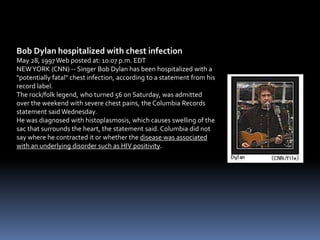
Bob Dylan hospitalized with chest infection
May 28, 1997 Web posted at: 10:07 p.m. EDT
NEW YORK (CNN) -- Singer Bob Dylan has been hospitalized with a
"potentially fatal" chest infection, according to a statement from his
record label.
The rock/folk legend, who turned 56 on Saturday, was admitted
over the weekend with severe chest pains, the Columbia Records
statement said Wednesday.
He was diagnosed with histoplasmosis, which causes swelling of the
sac that surrounds the heart, the statement said. Columbia did not
say where he contracted it or whether the disease was associated
with an underlying disorder such as HIV positivity.
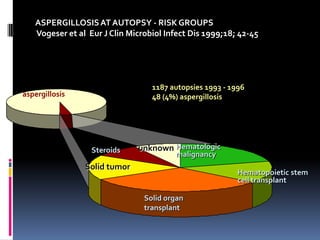
ASPERGILLOSIS AT AUTOPSY - RISK GROUPS
   Vogeser et al Eur J Clin Microbiol Infect Dis 1999;18; 42-45


                                  1187 autopsies 1993 - 1996
aspergillosis                     48 (4%) aspergillosis


                  Steroids    unknown Hematologic
                                        malignancy
                Solid tumor
                                                          Hematopoietic stem
                                                          cell transplant

                                Solid organ
                                transplant
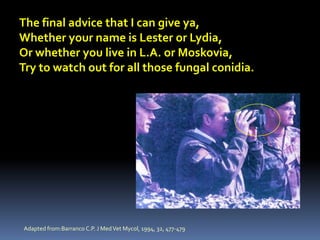
The final advice that I can give ya,
Whether your name is Lester or Lydia,
Or whether you live in L.A. or Moskovia,
Try to watch out for all those fungal conidia.


Adapted from:Barranco C.P. J Med Vet Mycol, 1994, 32, 477-479
Community-acquired pneumonia
Male, 45 year-old farmer, no relevant history

Since 1 month “malaise”

Admission to another hospital with pneumonia

Transfer due to respiratory insufficiency

High fever, CRP 307, LC 1.8

Chest X-ray: bilateral infiltrates
11 September
• Laboratory: ASAT 852, ALAT 514,
  creatinin 394, WBC 8.5 (left shift)
• gram negative rods (E. coli) in
  bloodcultures and bronchial secretions

• Rx/ ciprofloxacin
11 September
• Laboratory: ASAT 852, ALAT 514,
  creatinin 394, WBC 8.5 (left shift)
• gram negative rods (E. coli) in
  bloodcultures and bronchial secretions

• Rx/ ciprofloxacin
16 September

• Persistently febrile (40 oC)
• bloodcultures 14 Sept: Candida
• more bloodcultures 15 Sept:
 C. albicans       Fluconazole
• liver function improved
• abnormalities chest X -ray better
• respiratory failure improved
22 September
• Persistent febrile;fundoscopy normal
• CRP 163, WBC 15.2: 86% neutrophils
• No more clinical or radiological
  improvement (Cipro d. 11;Fluco d. 6)

 Bronchoalveolar lavage
                E. faecalis      4+
                A. fumigatus             +
                HSV                      +
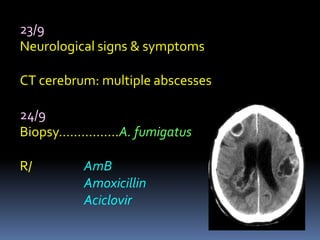
23/9
Neurological signs & symptoms

CT cerebrum: multiple abscesses

24/9
Biopsy…………….A. fumigatus

R/        AmB
          Amoxicillin
          Aciclovir
23/9
HIV-
No apparent host defence defects


29/9
No improvement
 -interferon, donor granulocytes, steroids

30/9
R/         Ambisome + rifampin
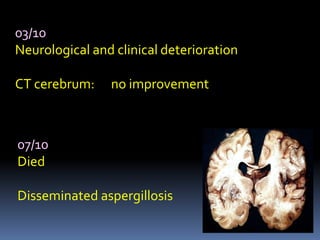
03/10
Neurological and clinical deterioration

CT cerebrum:    no improvement


07/10
Died

Disseminated aspergillosis
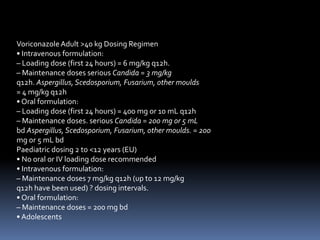
Voriconazole Adult >40 kg Dosing Regimen
• Intravenous formulation:
– Loading dose (first 24 hours) = 6 mg/kg q12h.
– Maintenance doses serious Candida = 3 mg/kg
q12h. Aspergillus, Scedosporium, Fusarium, other moulds
= 4 mg/kg q12h
• Oral formulation:
– Loading dose (first 24 hours) = 400 mg or 10 mL q12h
– Maintenance doses. serious Candida = 200 mg or 5 mL
bd Aspergillus, Scedosporium, Fusarium, other moulds. = 200
mg or 5 mL bd
Paediatric dosing 2 to <12 years (EU)
• No oral or IV loading dose recommended
• Intravenous formulation:
– Maintenance doses 7 mg/kg q12h (up to 12 mg/kg
q12h have been used) ? dosing intervals.
• Oral formulation:
– Maintenance doses = 200 mg bd
• Adolescents
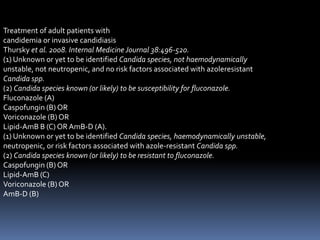
Treatment of adult patients with
candidemia or invasive candidiasis
Thursky et al. 2008. Internal Medicine Journal 38:496-520.
(1) Unknown or yet to be identified Candida species, not haemodynamically
unstable, not neutropenic, and no risk factors associated with azoleresistant
Candida spp.
(2) Candida species known (or likely) to be susceptibility for fluconazole.
Fluconazole (A)
Caspofungin (B) OR
Voriconazole (B) OR
Lipid-AmB B (C) OR AmB-D (A).
(1) Unknown or yet to be identified Candida species, haemodynamically unstable,
neutropenic, or risk factors associated with azole-resistant Candida spp.
(2) Candida species known (or likely) to be resistant to fluconazole.
Caspofungin (B) OR
Lipid-AmB (C)
Voriconazole (B) OR
AmB-D (B)
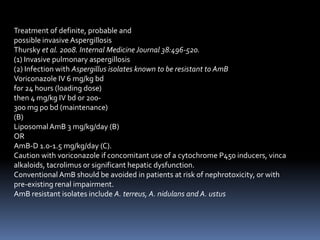
Treatment of definite, probable and
possible invasive Aspergillosis
Thursky et al. 2008. Internal Medicine Journal 38:496-520.
(1) Invasive pulmonary aspergillosis
(2) Infection with Aspergillus isolates known to be resistant to AmB
Voriconazole IV 6 mg/kg bd
for 24 hours (loading dose)
then 4 mg/kg IV bd or 200-
300 mg po bd (maintenance)
(B)
Liposomal AmB 3 mg/kg/day (B)
OR
AmB-D 1.0-1.5 mg/kg/day (C).
Caution with voriconazole if concomitant use of a cytochrome P450 inducers, vinca
alkaloids, tacrolimus or significant hepatic dysfunction.
Conventional AmB should be avoided in patients at risk of nephrotoxicity, or with
pre-existing renal impairment.
AmB resistant isolates include A. terreus, A. nidulans and A. ustus
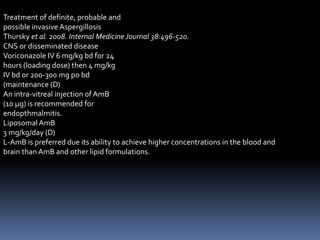
Treatment of definite, probable and
possible invasive Aspergillosis
Thursky et al. 2008. Internal Medicine Journal 38:496-520.
CNS or disseminated disease
Voriconazole IV 6 mg/kg bd for 24
hours (loading dose) then 4 mg/kg
IV bd or 200-300 mg po bd
(maintenance (D)
An intra-vitreal injection of AmB
(10 μg) is recommended for
endopthmalmitis.
Liposomal AmB
3 mg/kg/day (D)
L-AmB is preferred due its ability to achieve higher concentrations in the blood and
brain than AmB and other lipid formulations.

fungal management

  • 1.
    MANAGEMENT OF INVASIVE FUNGALINFECTIONS IN THE NIGERIA SETTING DR RITA OLADELE CLINICAL MYCOLOGIST CMUL/LUTH
  • 2.
  • 3.
    TRENDS IN FUNGALDISEASES • Increasing cases of invasive fungal infections • Poor diagnostic tools • Replacement of sensitive species by resistant ones
  • 4.
    Invasive fungal infections •Candida Endogenous (mostly) • Aspergillus Exogenous • Cryptococcus • Zygomycetes • Rare filamentous species •Histoplasmosis Reactivation •Blastomycosis •Coccidioidomycosis •Paracoccidioidomycosis
  • 5.
     Chamilos etal (2006)  reported autopsy-proven IFI in patients with HM from a single institute during three  separate four year periods, 1989-93, 1994-98 and 1999-2003. There was a declining  rate of autopsies (67%-34%-26%) but IFI were found in 314 of 1017 autopsies and  most were not diagnosed in life (75%).
  • 7.
    Incidence of invasivefungal infections in neutropenic patients with haematological malignancies 25% Proven Proven / suspected Rate of invasive fungal infections 16% Incidence in autopsies 20% 14% 12% 15% 1978-82 10% 1983-87 8% 10% 1988-92 6% 5% 4% 2% 0% 0% Invasive mycoses: Polyenes/no prophylaxis • 76% responsible for death Data from the control arms of RCTs on antifungal prophylaxis, n=3597 (Glasmacher et •19% of patients with AIDS al., JCO 2003) Frankfurt (Germany), Groll et al. 1996 25% of patients with AML Candida spp. 49%, Aspergillus spp. 51%
  • 8.
    Mortality from invasive Aspergillusinfections % 100 90 Lin et al., CID 2001; 32: 358 80 70 60 50 40 30 20 10 0 Leuk./Lymph. alloSCT Kidney-Tx Lung/Heart-Tx Liver-Tx AIDS/HIV
  • 9.
    Mortality from invasive Candidainfections % 100 Tortorano et al., EJCMID 2004; 23: 317 90 80 70 60 50 40 30 20 10 0 Surgery ICU Solid tumor Haem. Malig. HIV Premature birth
  • 10.
    Development of antifungals Polyenes Polyene Pyrimidinanaloga Azoles Azole Echinocandins Echinocandine Nystatin Amphotericin B 5-Flucytosin Ketoconazol Fluconazol Itraconazol AmBisome Abelcet Abelcet Amphotec Voriconazol Caspofungin liposomales Nystatin Anidulafungin Ravuconazol Posaconazol Posaconazol Micafungin mod. nach R. Lewis, ICAAC 200
  • 11.
    The (small) worldof antifungals Membrane function: Cellwall synthesis: Amphotericin B Echinocandins Ergosterol synthesis: Azoles
  • 12.
    Antifungal Activity (█ >75% sensible, █ 50%, █ < 5%; mixed colours: differing results; modified after O'Brien et al., ASH Edu 2003) Erreger AmB Fluco Itra Vori Caspo Flucyt. C. albicans C. parapsilosis C. tropicalis C. glabrata C. krusei A. fumigatus A. flavus A. terreus Zygomycetes Fusarium spp.
  • 13.
    Presentation overview  Risk stratification  Antifungal prophylaxis  Empirical antifungal therapy  Therapy of proven invasive mycoses
  • 14.
    Table 1. InfectiousDiseases Society of America, United States Public Health Service Grading System for ranking recommendations Cornely, O. A. et al. Haematologica 2009;94:113-122 Copyright ©2009 Ferrata Storti Foundation
  • 15.
    Evidence based  Chamiloset al (2006)  reported autopsy-proven IFI in patients with HM from a single institute during three  separate four year periods, 1989-93, 1994-98 and 1999-2003. There was a declining  rate of autopsies (67%-34%-26%) but IFI were found in 314 of 1017 autopsies and  most were not diagnosed in life (75%).
  • 16.
    Evidence based  fungalinfection and the decrease of IFI attributable mortality. In a longitudinal observation survival benefit extended beyond the period of fluconazole treatment (75 days) and was accompanied by a lower incidence of intestinal graft versus host disease.19  Moreover, fluconazole has been reported to protect from cyclophosphamide toxicityUpton A, McCune JS, Kirby KA, Leisenring W, McDonald G, Batchelder A, et al.  Fluconazole coadministration concurrent with cyclophosphamide conditioning may reduce regimen- related toxicity postmyeloablative hematopoietic cell transplantation. Biol Blood Marrow Transplant 2007;13:760-4
  • 17.
    Evidences still  Theclinical relevance of the development of resistance during fluconazole prophylaxis is still a matter of debate,  while a general shift towards higher rates of strains exhibiting primary resistance have been clearly shown in the intensive care setting.  favorable safety profile and patient compliance rate of fluconazole resulted in discontinuation rates of less than 8%. There is good evidence (Level A I) that primary prophylaxis with fluconazole 400 mg/d reduces the incidence of invasive candidiasis and the mortality rate after allogeneic hematopoietic stem cell transplant.  For patients with acute leukemia prophylaxis with fluconazole 400 mg/d cannot be recommended with similar strength (Level C I). Doses less than 400 mg/d have not been effective in well designed trials (Level E I).
  • 19.
    Risk groups forinvasive fungal infections in cancer patients rentice HG, Kibbler CC, Prentice AG, BJH 2000; 110: 273 Autologous bone marrow /stem cell transplant (SCT) Low risk Childhood ALL (except for P. jirovecii) Lymphoma Moderate neutropenia 0.1-0.5 G/l < 3 weeks Intermediate Lymphocytes < 0.5 G/l + antibiotics – low – risk Older age  Central venous catheter Colonized > 1 site OR heavy at one site Intermediate Neutropenia < 0.5 to > 0.1 G/l >3 to <5 weeks – high – risk AML  TBI  Allogeneic matched sibling donor SCT Neutrophils <0.1 G/l > 3 weeks OR <0.5 G/l > 5 weeks Colonized by Candida tropicalis Unrelated or mismatched donor SCT  GVHD High risk Corticosteroids: > 1mg/kg & neutroph. < 1 G/l >1 week Corticosteroids: > 2mg/kg > 2 weeks High-dose cytarabine  Fludarabine?
  • 20.
    Why do weneed empirical antifungal therapy?  High incidence and fatality rates for invasive fungal infections  Insufficient diagnostics  Culture-based methods  Helpful only with Candida, but even then 10% false negative  Almost never diagnostic for invasive Aspergillus infections  Non-culture based methods (GM, PCR)  Still high false negative rate  Many invasive fungal infections are diagnosed too late or only at autopsy  Late treatment greatly reduces success rates
  • 21.
    The options available Four classes of drugs for the treatment of invasive fungal infections exist: polyenes, triazoles,echinocandins and nucleoside analogues.  Conventional amphotericin B (CAB), liposomal amphotericin B, amphotericin B lipid complex (ABLC),B colloidal dispersion (ABCD)  , fluconazole, itraconazole, voriconazole, posaconazole,  caspofungin , anidofulgins  flucytosine
  • 22.
  • 23.
    Evidences  Fluconazole has activity against many yeasts but limited activity against moulds.19 Reduced  susceptibility to fluconazole is also seen with C. krusei and C. glabrata. C. tropicalis has been  reported to have reduced susceptibility to fluconazole in international studies but this is rarely  seen in Australia. Itraconazole has anti-Aspergillus activity and variable activity against other  moulds. Voriconazole has activity against most yeasts and moulds; zygomycetes and  Scedosporium prolificans are important exceptions. Zygomycetes are susceptible to  posaconazole. S. prolificans is resistant in vitro to all available Caspofungin has poor activity  against Cryptococcus neoformans, Scedosporium species, Fusarium species and zygomycetes.antifungal drugs.
  • 24.
    Development of empirical antimycotic therapy  Period I (1982-1988)  Conventional amphotericin B vs. no therapy / placebo  Pizzo et al. 1982, EORTC 1988  Significant reduction of breakthrough infections if both studies combined  Period II (1993-1998)  Conventional amphotericin B vs. fluconazole or liposomal AmB  Defervescence as main outcome, mostly no statistically signif. differences  Only one study (Prentice 1997) with a significant difference  Period III (1998-2001)  Introduction of the composite outcome score (Walsh et al., COS)  Conventional AmB vs. liposomal AmB, fluconazole, itraconazole, ABCD  No significant differences  Period IV (2000-today)  Continued use of the composite outcome score (COS)  Liposomal AmB vs. ABLC, voriconazole, caspofungin
  • 25.
    Definition of proven infections EORTC/MSGcriteria:  Proven: Culture / histology from a normally sterile body site  Probable: Requires host, clinical AND microbiological factors E.g.: Neutropenic patient with a typical lesion in HR-CT AND two positive galactomannan antigen results  Possible: Requires host, clinical OR microbiological factors E.g.: Same patient without two positive GM antigen results These criteria are made for clinical trials and should not be used for clinical decision making  Of 22 patients with IPA at autopsy only 2 were classified as proven, 6 as probable, 13 as possible. 64% had no microbiological or major clinical criteria before death (Subira et al., AH 2003).
  • 26.
    Treatment indication accordingto risk groups for invasive fungal infections No primary antifungal prophylaxis Low risk Empirical antimycotic therapy rarely necessary Treat proven / probable infections Intermediate No primary antifungal prophylaxis (in most circumstances) – low – risk Empirical antimycotic therapy usually indicated Intermediate – high – risk Antifungal prophylaxis recommended Empirical antimycotic therapy recommended High risk
  • 27.
    Prophylaxis  Patients receivingchemotherapy for acute leukaemia may have the  same risk of IFI as allogeneic haematopoietic stem cell transplant  patients.  Prophylaxis of IFI should be confined to high risk patients  The two most common organisms in all studies are Candida and Aspergillus spp
  • 28.
    Bob Dylan hospitalizedwith chest infection May 28, 1997 Web posted at: 10:07 p.m. EDT NEW YORK (CNN) -- Singer Bob Dylan has been hospitalized with a "potentially fatal" chest infection, according to a statement from his record label. The rock/folk legend, who turned 56 on Saturday, was admitted over the weekend with severe chest pains, the Columbia Records statement said Wednesday. He was diagnosed with histoplasmosis, which causes swelling of the sac that surrounds the heart, the statement said. Columbia did not say where he contracted it or whether the disease was associated with an underlying disorder such as HIV positivity.
  • 29.
    ASPERGILLOSIS AT AUTOPSY- RISK GROUPS Vogeser et al Eur J Clin Microbiol Infect Dis 1999;18; 42-45 1187 autopsies 1993 - 1996 aspergillosis 48 (4%) aspergillosis Steroids unknown Hematologic malignancy Solid tumor Hematopoietic stem cell transplant Solid organ transplant
  • 31.
    The final advicethat I can give ya, Whether your name is Lester or Lydia, Or whether you live in L.A. or Moskovia, Try to watch out for all those fungal conidia. Adapted from:Barranco C.P. J Med Vet Mycol, 1994, 32, 477-479
  • 32.
  • 33.
    Male, 45 year-oldfarmer, no relevant history Since 1 month “malaise” Admission to another hospital with pneumonia Transfer due to respiratory insufficiency High fever, CRP 307, LC 1.8 Chest X-ray: bilateral infiltrates
  • 34.
    11 September • Laboratory:ASAT 852, ALAT 514, creatinin 394, WBC 8.5 (left shift) • gram negative rods (E. coli) in bloodcultures and bronchial secretions • Rx/ ciprofloxacin
  • 35.
    11 September • Laboratory:ASAT 852, ALAT 514, creatinin 394, WBC 8.5 (left shift) • gram negative rods (E. coli) in bloodcultures and bronchial secretions • Rx/ ciprofloxacin
  • 36.
    16 September • Persistentlyfebrile (40 oC) • bloodcultures 14 Sept: Candida • more bloodcultures 15 Sept: C. albicans Fluconazole • liver function improved • abnormalities chest X -ray better • respiratory failure improved
  • 37.
    22 September • Persistentfebrile;fundoscopy normal • CRP 163, WBC 15.2: 86% neutrophils • No more clinical or radiological improvement (Cipro d. 11;Fluco d. 6) Bronchoalveolar lavage E. faecalis 4+ A. fumigatus + HSV +
  • 38.
    23/9 Neurological signs &symptoms CT cerebrum: multiple abscesses 24/9 Biopsy…………….A. fumigatus R/ AmB Amoxicillin Aciclovir
  • 39.
    23/9 HIV- No apparent hostdefence defects 29/9 No improvement -interferon, donor granulocytes, steroids 30/9 R/ Ambisome + rifampin
  • 40.
    03/10 Neurological and clinicaldeterioration CT cerebrum: no improvement 07/10 Died Disseminated aspergillosis
  • 41.
    Voriconazole Adult >40kg Dosing Regimen • Intravenous formulation: – Loading dose (first 24 hours) = 6 mg/kg q12h. – Maintenance doses serious Candida = 3 mg/kg q12h. Aspergillus, Scedosporium, Fusarium, other moulds = 4 mg/kg q12h • Oral formulation: – Loading dose (first 24 hours) = 400 mg or 10 mL q12h – Maintenance doses. serious Candida = 200 mg or 5 mL bd Aspergillus, Scedosporium, Fusarium, other moulds. = 200 mg or 5 mL bd Paediatric dosing 2 to <12 years (EU) • No oral or IV loading dose recommended • Intravenous formulation: – Maintenance doses 7 mg/kg q12h (up to 12 mg/kg q12h have been used) ? dosing intervals. • Oral formulation: – Maintenance doses = 200 mg bd • Adolescents
  • 42.
    Treatment of adultpatients with candidemia or invasive candidiasis Thursky et al. 2008. Internal Medicine Journal 38:496-520. (1) Unknown or yet to be identified Candida species, not haemodynamically unstable, not neutropenic, and no risk factors associated with azoleresistant Candida spp. (2) Candida species known (or likely) to be susceptibility for fluconazole. Fluconazole (A) Caspofungin (B) OR Voriconazole (B) OR Lipid-AmB B (C) OR AmB-D (A). (1) Unknown or yet to be identified Candida species, haemodynamically unstable, neutropenic, or risk factors associated with azole-resistant Candida spp. (2) Candida species known (or likely) to be resistant to fluconazole. Caspofungin (B) OR Lipid-AmB (C) Voriconazole (B) OR AmB-D (B)
  • 43.
    Treatment of definite,probable and possible invasive Aspergillosis Thursky et al. 2008. Internal Medicine Journal 38:496-520. (1) Invasive pulmonary aspergillosis (2) Infection with Aspergillus isolates known to be resistant to AmB Voriconazole IV 6 mg/kg bd for 24 hours (loading dose) then 4 mg/kg IV bd or 200- 300 mg po bd (maintenance) (B) Liposomal AmB 3 mg/kg/day (B) OR AmB-D 1.0-1.5 mg/kg/day (C). Caution with voriconazole if concomitant use of a cytochrome P450 inducers, vinca alkaloids, tacrolimus or significant hepatic dysfunction. Conventional AmB should be avoided in patients at risk of nephrotoxicity, or with pre-existing renal impairment. AmB resistant isolates include A. terreus, A. nidulans and A. ustus
  • 44.
    Treatment of definite,probable and possible invasive Aspergillosis Thursky et al. 2008. Internal Medicine Journal 38:496-520. CNS or disseminated disease Voriconazole IV 6 mg/kg bd for 24 hours (loading dose) then 4 mg/kg IV bd or 200-300 mg po bd (maintenance (D) An intra-vitreal injection of AmB (10 μg) is recommended for endopthmalmitis. Liposomal AmB 3 mg/kg/day (D) L-AmB is preferred due its ability to achieve higher concentrations in the blood and brain than AmB and other lipid formulations.