



An Empirical Look at Atkins v. Virginia and its Application in Capital CasesJohn H. BlumeAAIDD Annual Meeting Providence, RIJune
Empirical Survey of Post-Atkins CasesFloodgates and Frivolous Litigation?Prong by Prong:  More Evidence of State Deviations from the Clinical DefinitionsRace EffectsCurrent Research
I.  Floodgates and Frivolous Litigation?
Justice Scalia in Atkins	“This newest invention promises to be more effective than any of the others in turning the process of capital trial into a game.  One need only read the definitions of mental retardation to realize that the symptoms of this condition can readily be feigned.		And whereas the capital defendant who feigns insanity risks commitment to a mental institution until he can be cured (and then tried and executed), the capital defendant who feigns mental retardation risks nothing at all.”Atkins v. Virginia, 536 U.S. 304, 353 (2002) (Scalia, J., dissenting).
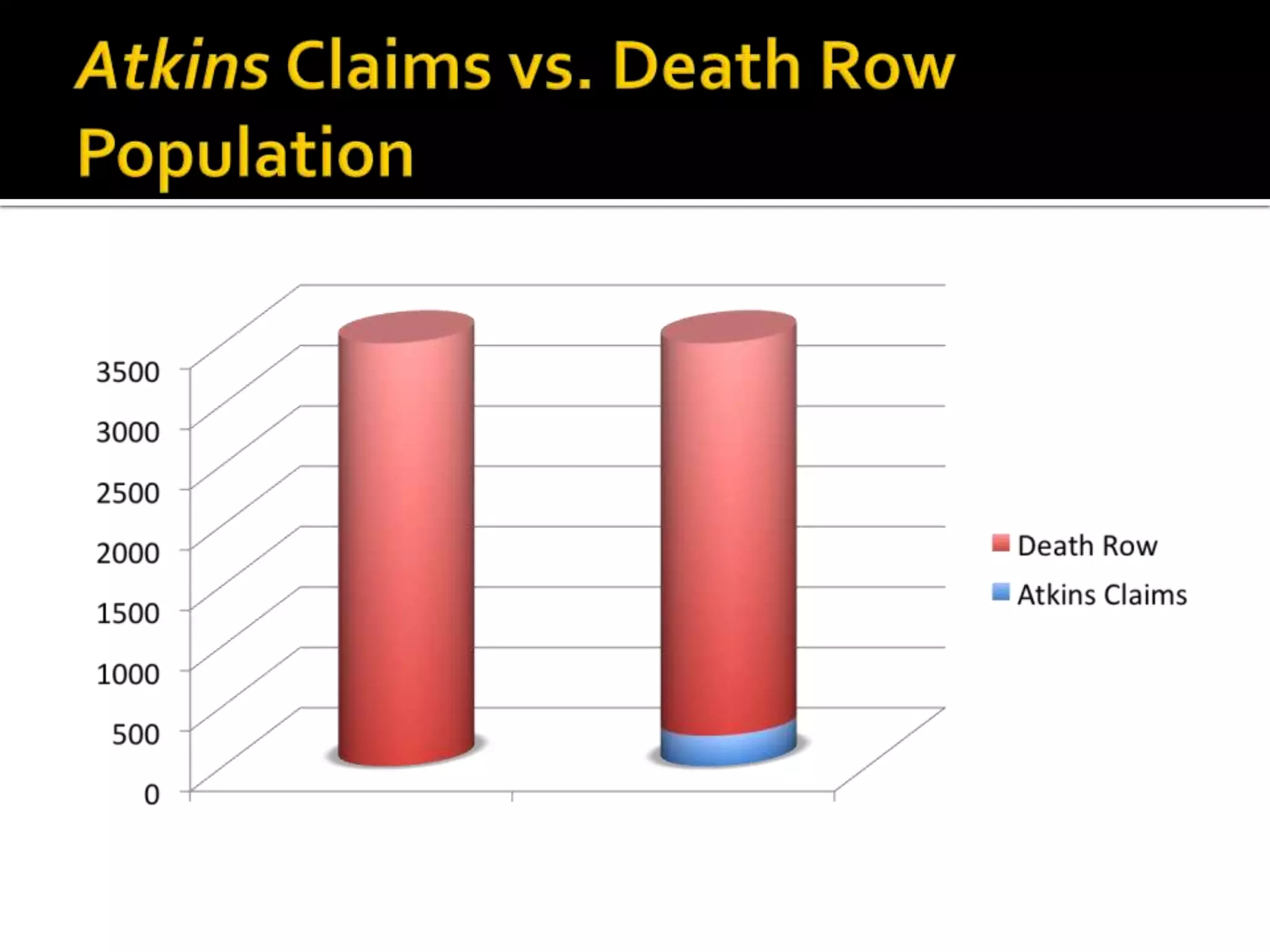
“Time will tell . . . .”Prisoners on death row nationwide:approximately 3,300Capital defendants or death row prisoners filing Atkins claims: approximately 7%
Atkins Claims vs. Death Row Population
High Success RatesWinning Atkins claims:approximately 40% of filed Atkins claims have wonProportion of death row population found to have MR:approximately 3%actual number may be higher
WIDE STATE VARIATIONThere is wide state variation among states:North Carolina: 17 of 21 cases have been successfulAlabama:  4 of 28 cases have been successfulBased on our research, the success rate appears to be linked toThe availability of fundingThe state definition of MR
II.  Prong by Prong:  The Impact of Divergent Applications of the Clinical Definitions
Do States “Generally Conform”?State deviations from clinical definitions of MR:
Prong 1 – Intellectual functioning
Strict IQ cutoff (“70 or below”)
Failure to account for standard error of measurement or practice effects
Disregarding the Flynn effect
Prong 2 – Adaptive functioning
Focusing on adaptive strengths rather than weaknesses
Giving too much weight to prison behavior and crime “sophisticaton”
Stereotyping
Prong 3 – Onset
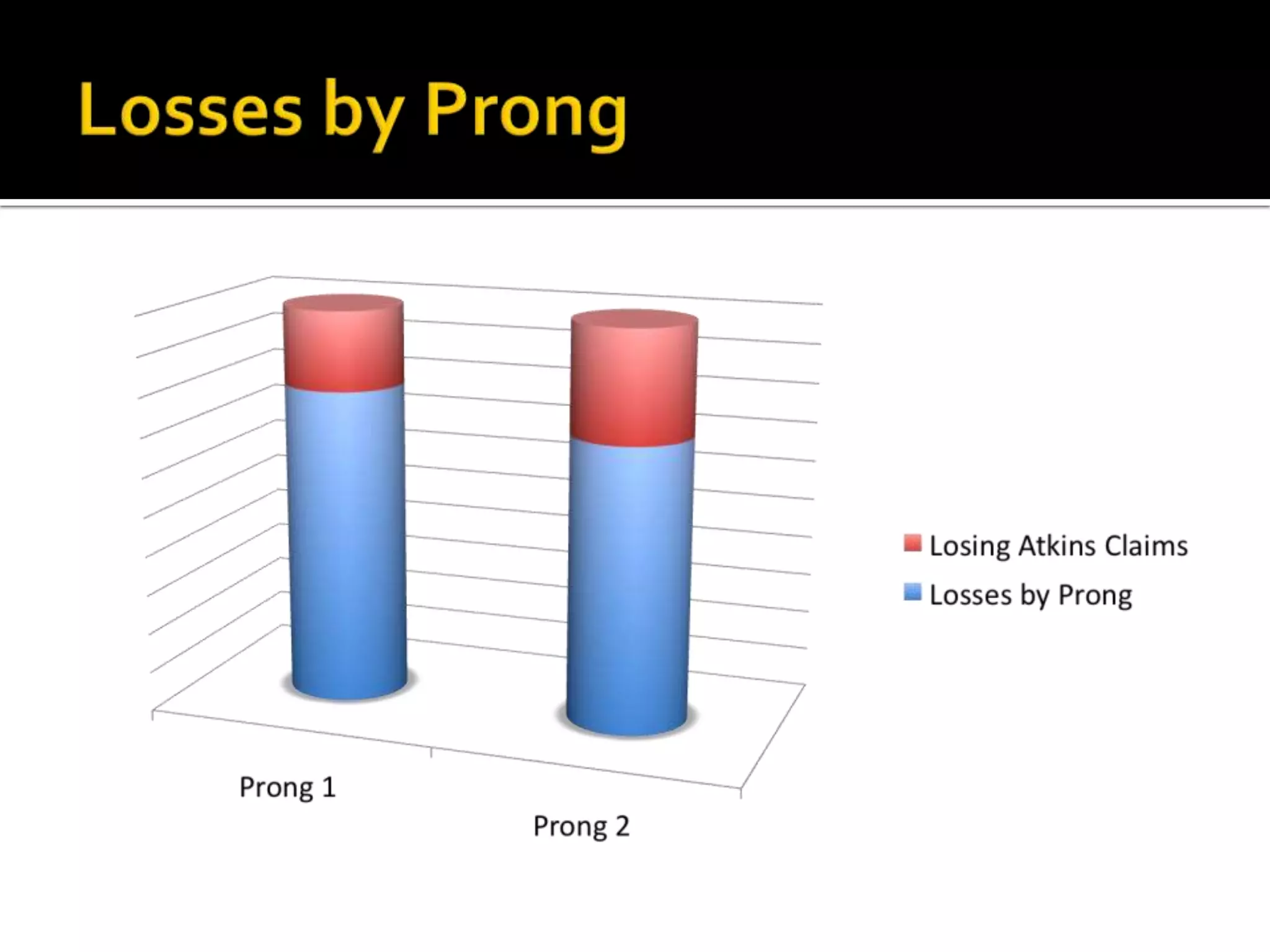
Demanding standardized test result as proof of onsetLosses by Prong
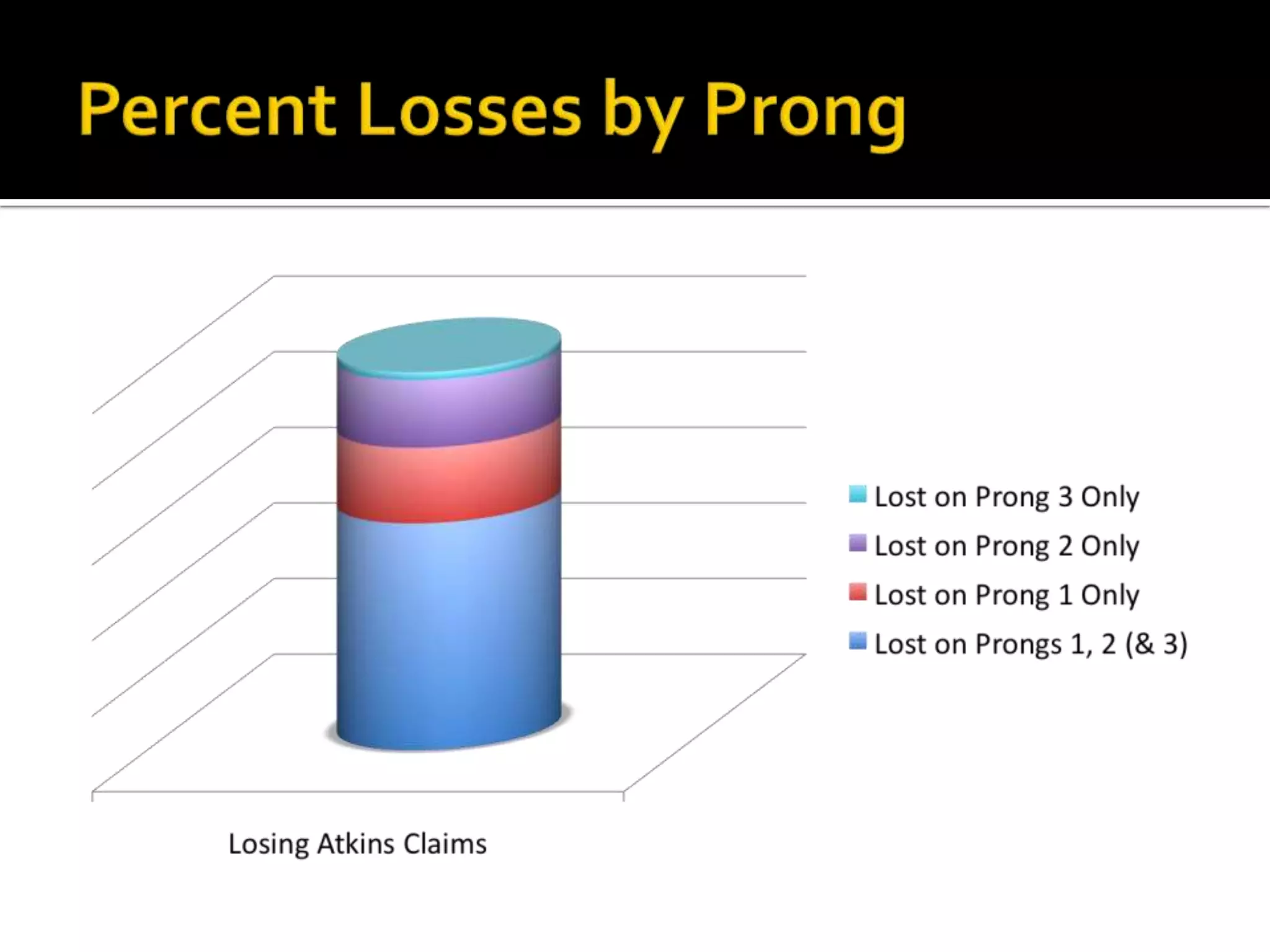
Percent Losses by Prong
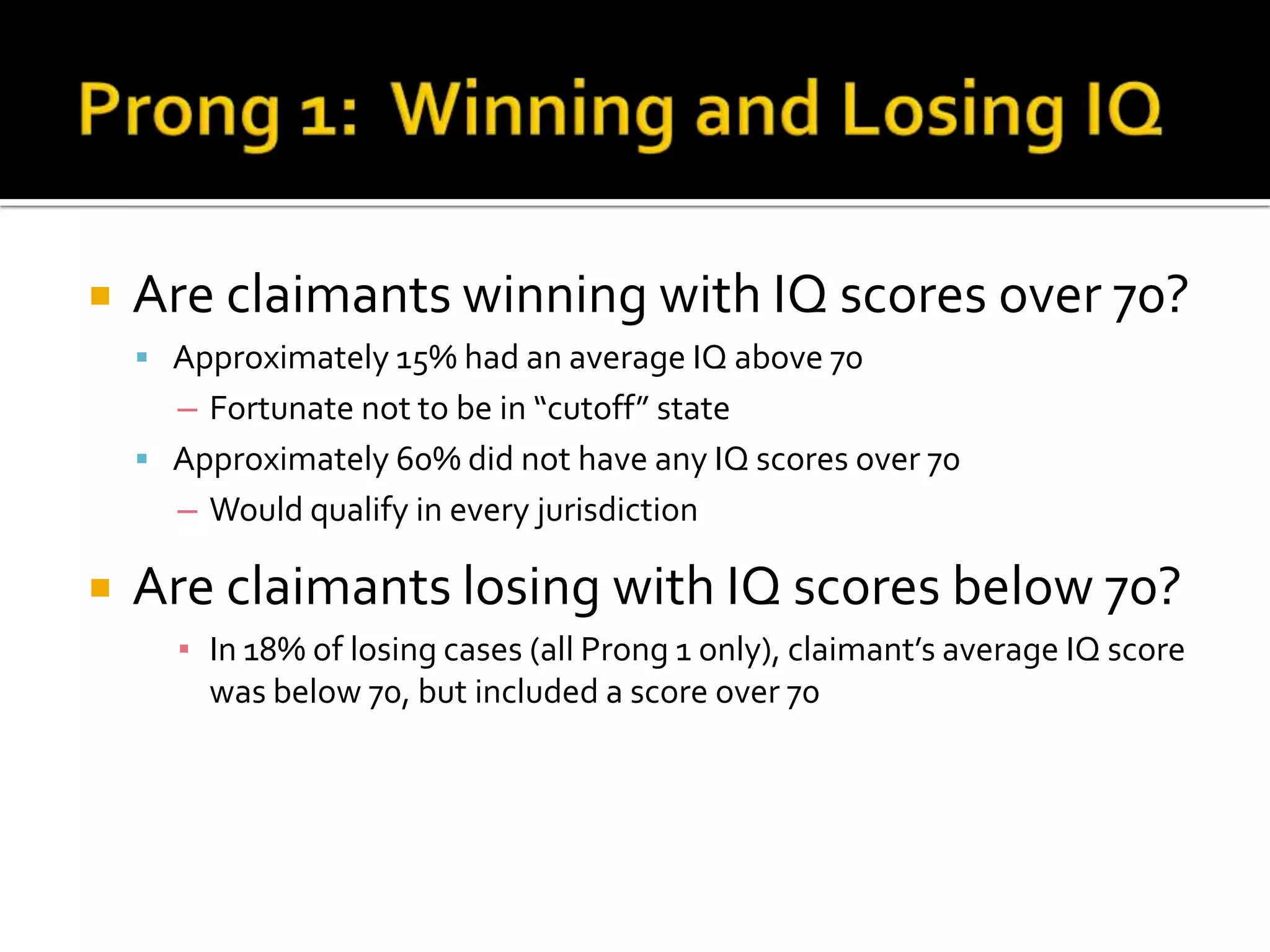
Prong 1:  Winning and Losing IQAre claimants winning with IQ scores over 70?Approximately 15% had an average IQ above 70Fortunate not to be in “cutoff” stateApproximately 60% did not have any IQ scores over 70Would qualify in every jurisdictionAre claimants losing with IQ scores below 70?In 18% of losing cases (all Prong 1 only), claimant’s average IQ score was below 70, but included a score over 70

Blume 2010 AAIDD Atkins MR/ID Death Penalty Symposium presentation

  • 1.
    An Empirical Lookat Atkins v. Virginia and its Application in Capital CasesJohn H. BlumeAAIDD Annual Meeting Providence, RIJune
  • 2.
    Empirical Survey ofPost-Atkins CasesFloodgates and Frivolous Litigation?Prong by Prong: More Evidence of State Deviations from the Clinical DefinitionsRace EffectsCurrent Research
  • 3.
    I. Floodgatesand Frivolous Litigation?
  • 4.
    Justice Scalia inAtkins “This newest invention promises to be more effective than any of the others in turning the process of capital trial into a game. One need only read the definitions of mental retardation to realize that the symptoms of this condition can readily be feigned. And whereas the capital defendant who feigns insanity risks commitment to a mental institution until he can be cured (and then tried and executed), the capital defendant who feigns mental retardation risks nothing at all.”Atkins v. Virginia, 536 U.S. 304, 353 (2002) (Scalia, J., dissenting).
  • 5.
    “Time will tell. . . .”Prisoners on death row nationwide:approximately 3,300Capital defendants or death row prisoners filing Atkins claims: approximately 7%
  • 6.
    Atkins Claims vs.Death Row Population
  • 7.
    High Success RatesWinningAtkins claims:approximately 40% of filed Atkins claims have wonProportion of death row population found to have MR:approximately 3%actual number may be higher
  • 8.
    WIDE STATE VARIATIONThereis wide state variation among states:North Carolina: 17 of 21 cases have been successfulAlabama: 4 of 28 cases have been successfulBased on our research, the success rate appears to be linked toThe availability of fundingThe state definition of MR
  • 9.
    II. Prongby Prong: The Impact of Divergent Applications of the Clinical Definitions
  • 10.
    Do States “GenerallyConform”?State deviations from clinical definitions of MR:
  • 11.
    Prong 1 –Intellectual functioning
  • 12.
    Strict IQ cutoff(“70 or below”)
  • 13.
    Failure to accountfor standard error of measurement or practice effects
  • 14.
  • 15.
    Prong 2 –Adaptive functioning
  • 16.
    Focusing on adaptivestrengths rather than weaknesses
  • 17.
    Giving too muchweight to prison behavior and crime “sophisticaton”
  • 18.
  • 19.
  • 20.
    Demanding standardized testresult as proof of onsetLosses by Prong
  • 21.
  • 22.
    Prong 1: Winning and Losing IQAre claimants winning with IQ scores over 70?Approximately 15% had an average IQ above 70Fortunate not to be in “cutoff” stateApproximately 60% did not have any IQ scores over 70Would qualify in every jurisdictionAre claimants losing with IQ scores below 70?In 18% of losing cases (all Prong 1 only), claimant’s average IQ score was below 70, but included a score over 70
  • 23.
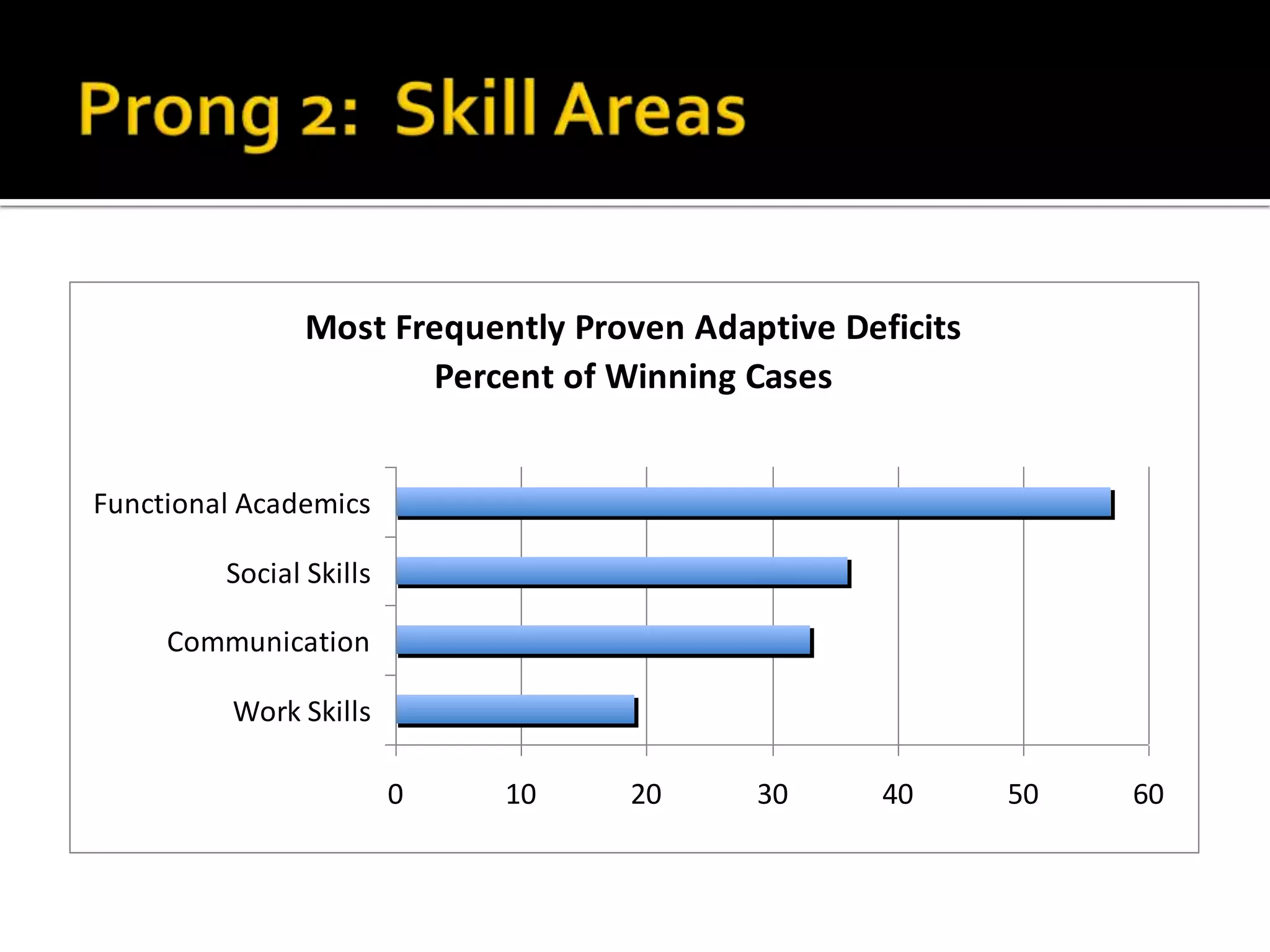
    Prong 2: Skill Areas
  • 24.
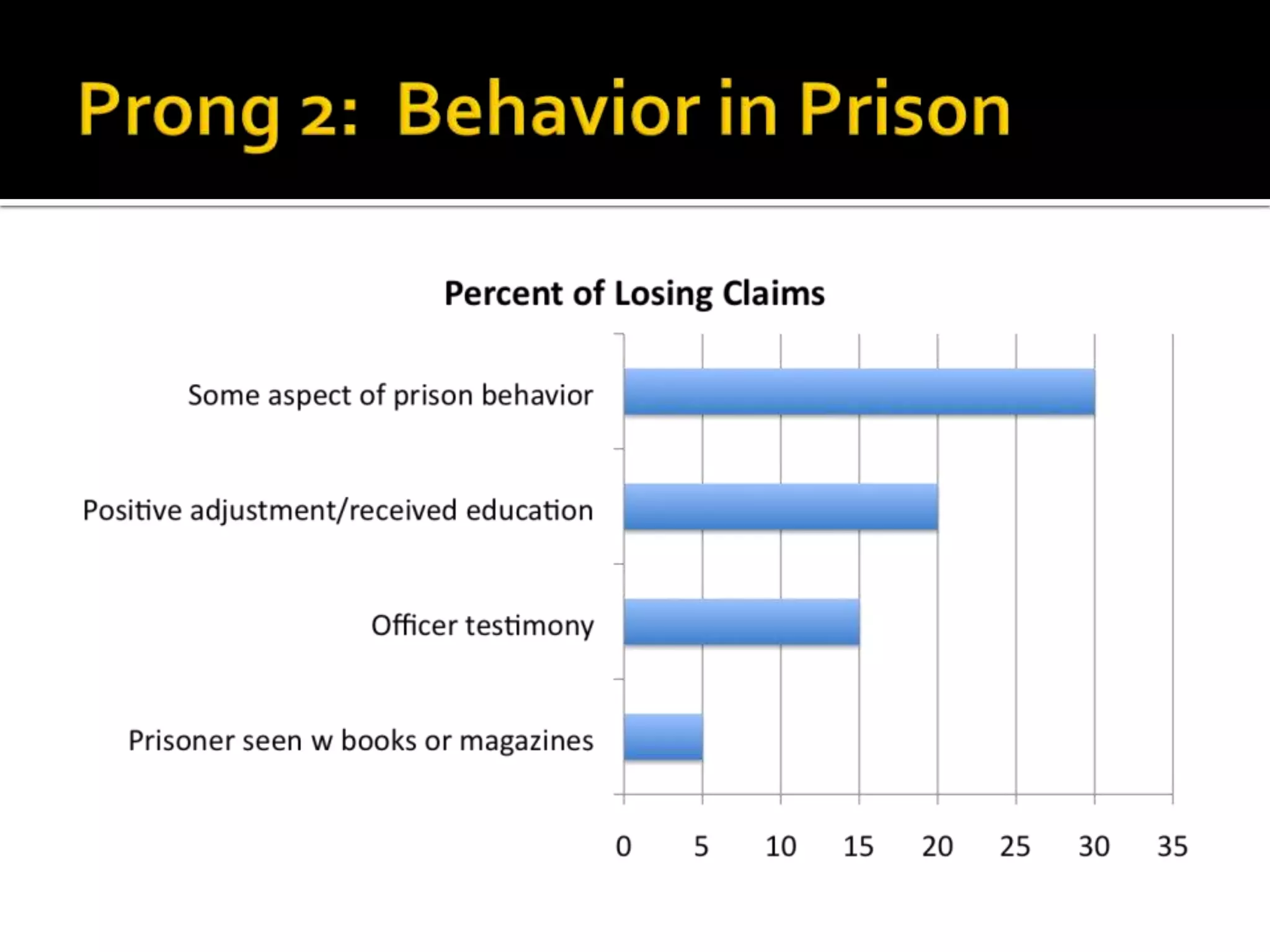
    Prong 2: Behavior in Prison
  • 25.
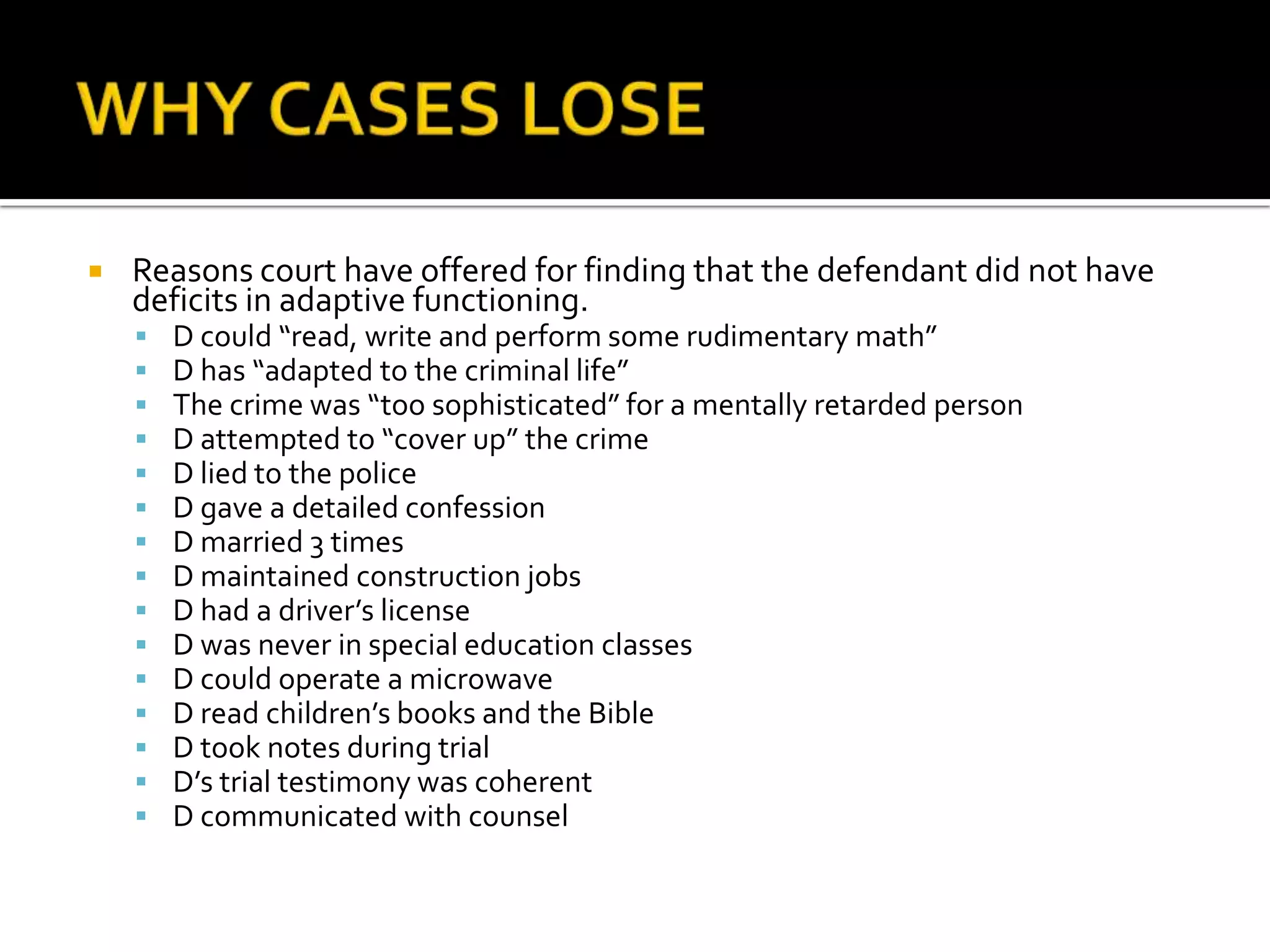
    WHY CASES LOSEReasonscourt have offered for finding that the defendant did not have deficits in adaptive functioning.
  • 26.
    D could “read,write and perform some rudimentary math”
  • 27.
    D has “adaptedto the criminal life”
  • 28.
    The crime was“too sophisticated” for a mentally retarded person
  • 29.
    D attempted to“cover up” the crime
  • 30.
    D lied tothe police
  • 31.
    D gave adetailed confession
  • 32.
  • 33.
  • 34.
    D had adriver’s license
  • 35.
    D was neverin special education classes
  • 36.
    D could operatea microwave
  • 37.
    D read children’sbooks and the Bible
  • 38.
    D took notesduring trial
  • 39.
  • 40.
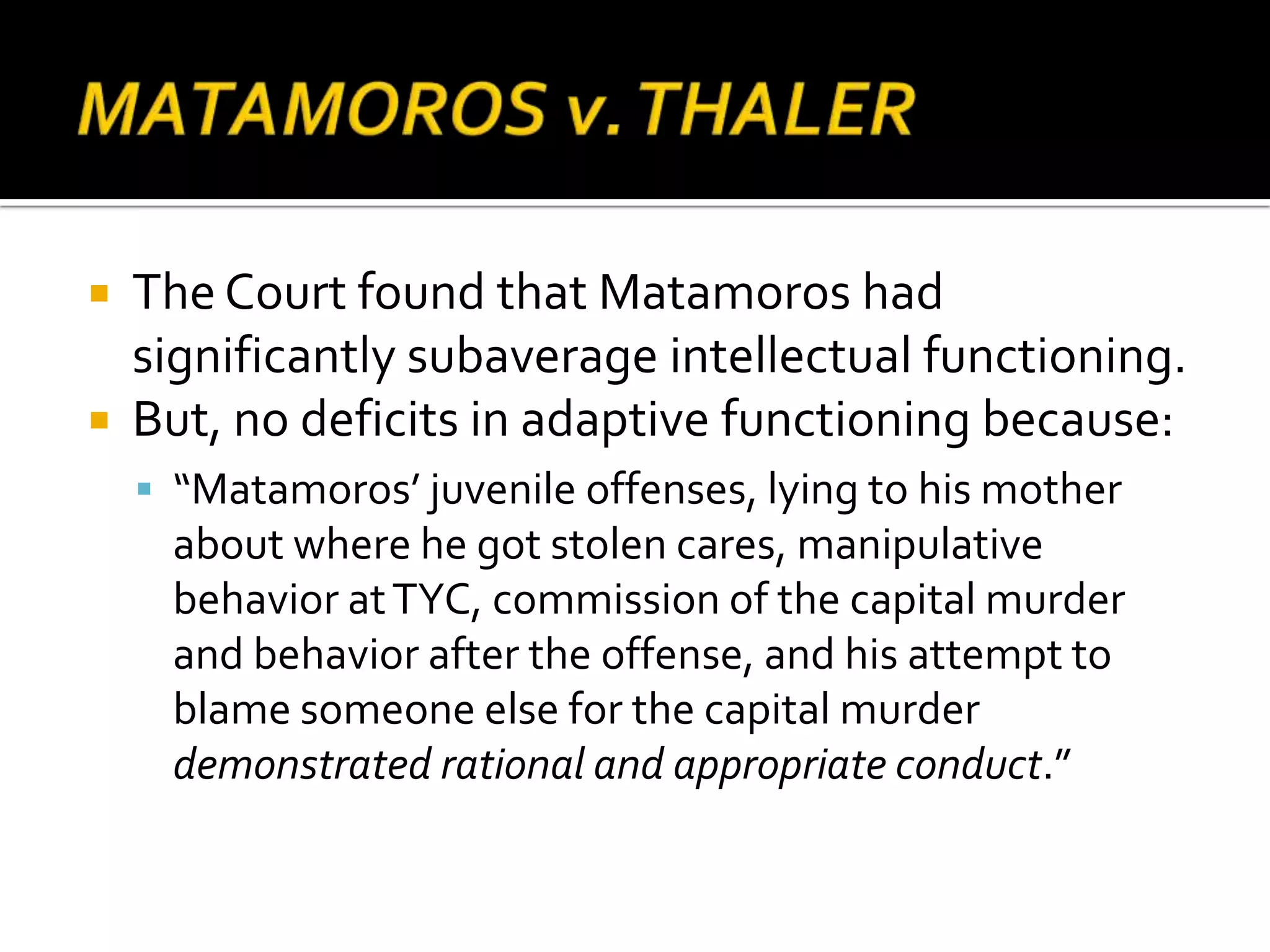
    D communicated withcounselMATAMOROS v. THALERThe Court found that Matamoros had significantly subaverage intellectual functioning.
  • 41.
    But, no deficitsin adaptive functioning because:
  • 42.
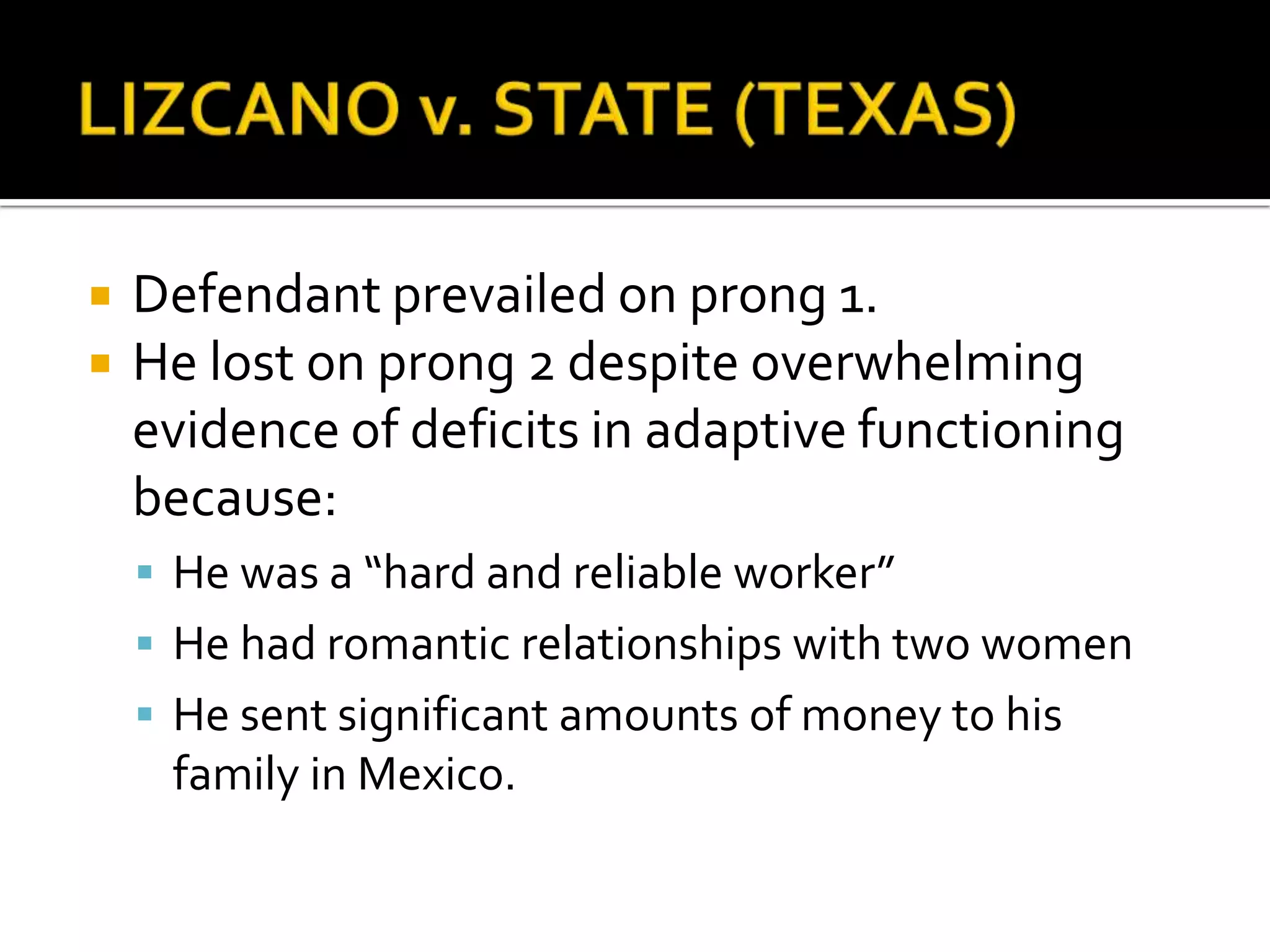
    “Matamoros’ juvenile offenses,lying to his mother about where he got stolen cares, manipulative behavior at TYC, commission of the capital murder and behavior after the offense, and his attempt to blame someone else for the capital murder demonstrated rational and appropriate conduct.”LIZCANO v. STATE (TEXAS)Defendant prevailed on prong 1.He lost on prong 2 despite overwhelming evidence of deficits in adaptive functioning because:He was a “hard and reliable worker”He had romantic relationships with two womenHe sent significant amounts of money to his family in Mexico.
  • 43.
    III. RaceEffects
  • 44.
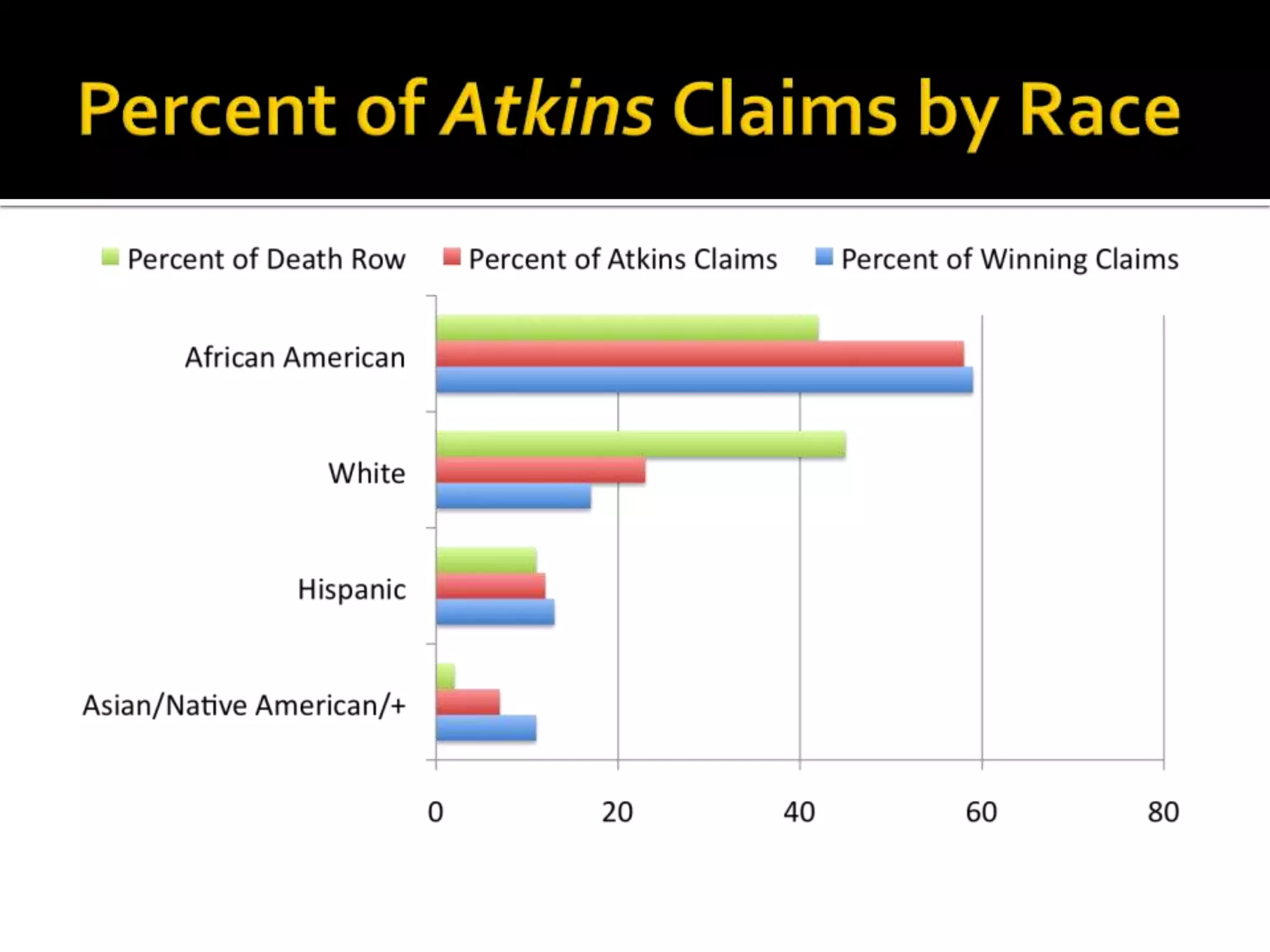
    Percent of AtkinsClaims by Race
  • 45.
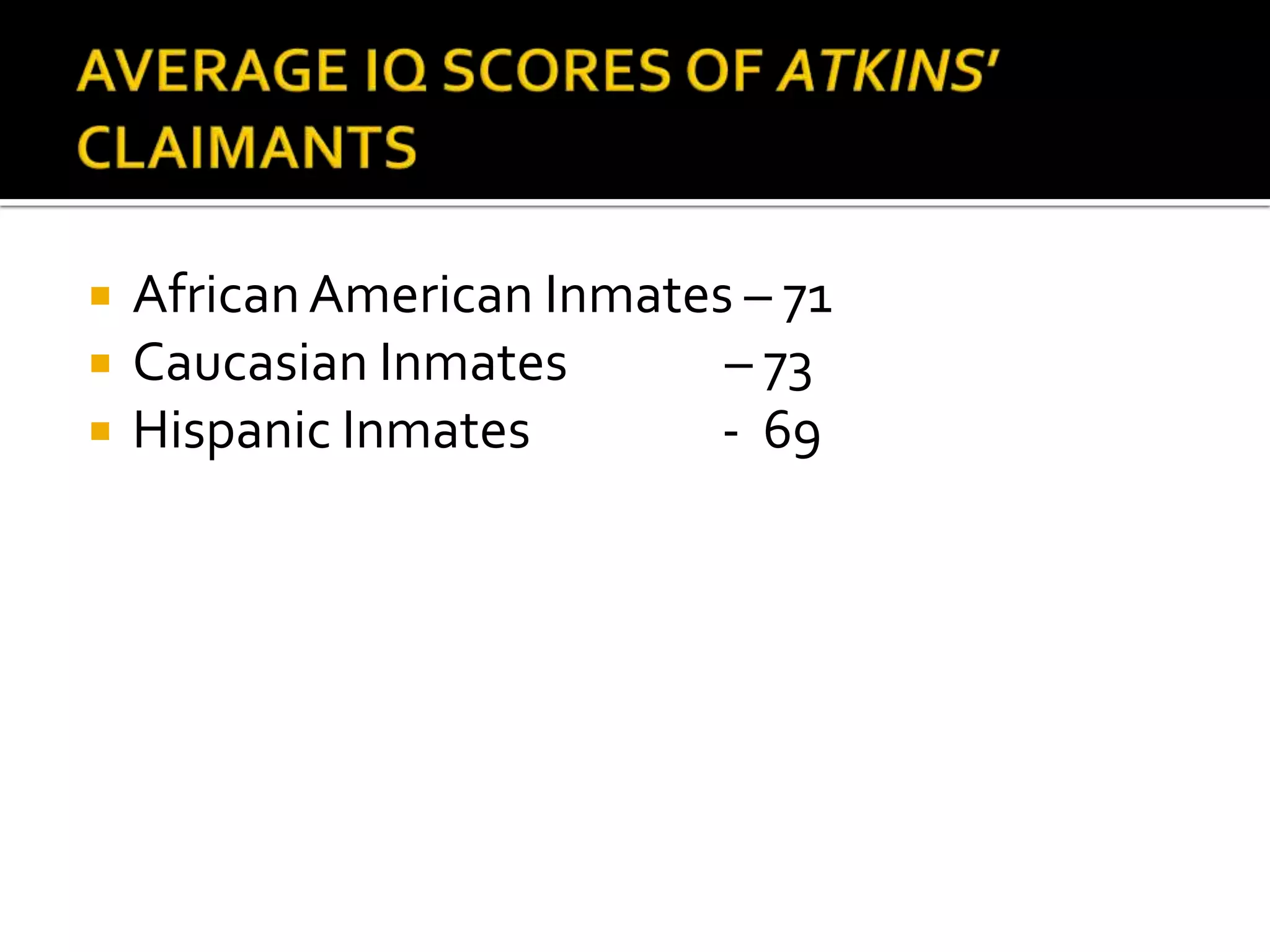
    AVERAGE IQ SCORESOF ATKINS’ CLAIMANTSAfrican American Inmates – 71Caucasian Inmates – 73Hispanic Inmates - 69
  • 46.
    IV. CURRENTRESEARCHJury v. Judge –There have been 24 jury determinations of whether a capital defendant is a person with mental retardation (that we are aware of) since Atkins was decided.In 1 case the jury found for the defendant.Juror InterviewsFactual Innocence