A new non-minimal algorithm for
 dating phylogenies of fossil taxa

   Graeme T. Lloyd, Matt Friedman and
               Mark A. Bell
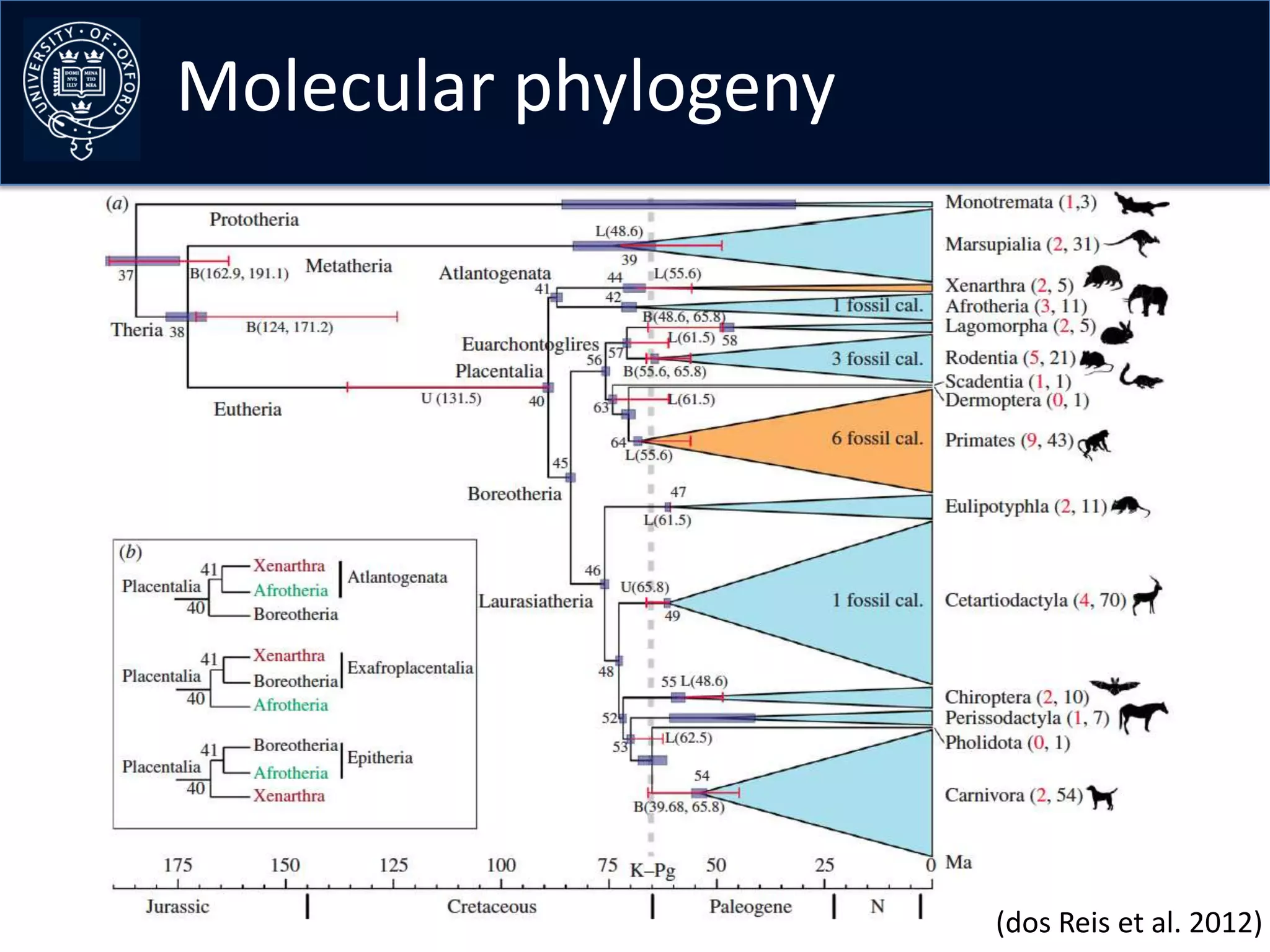
Molecular phylogeny


                      (dos Reis et al. 2012)
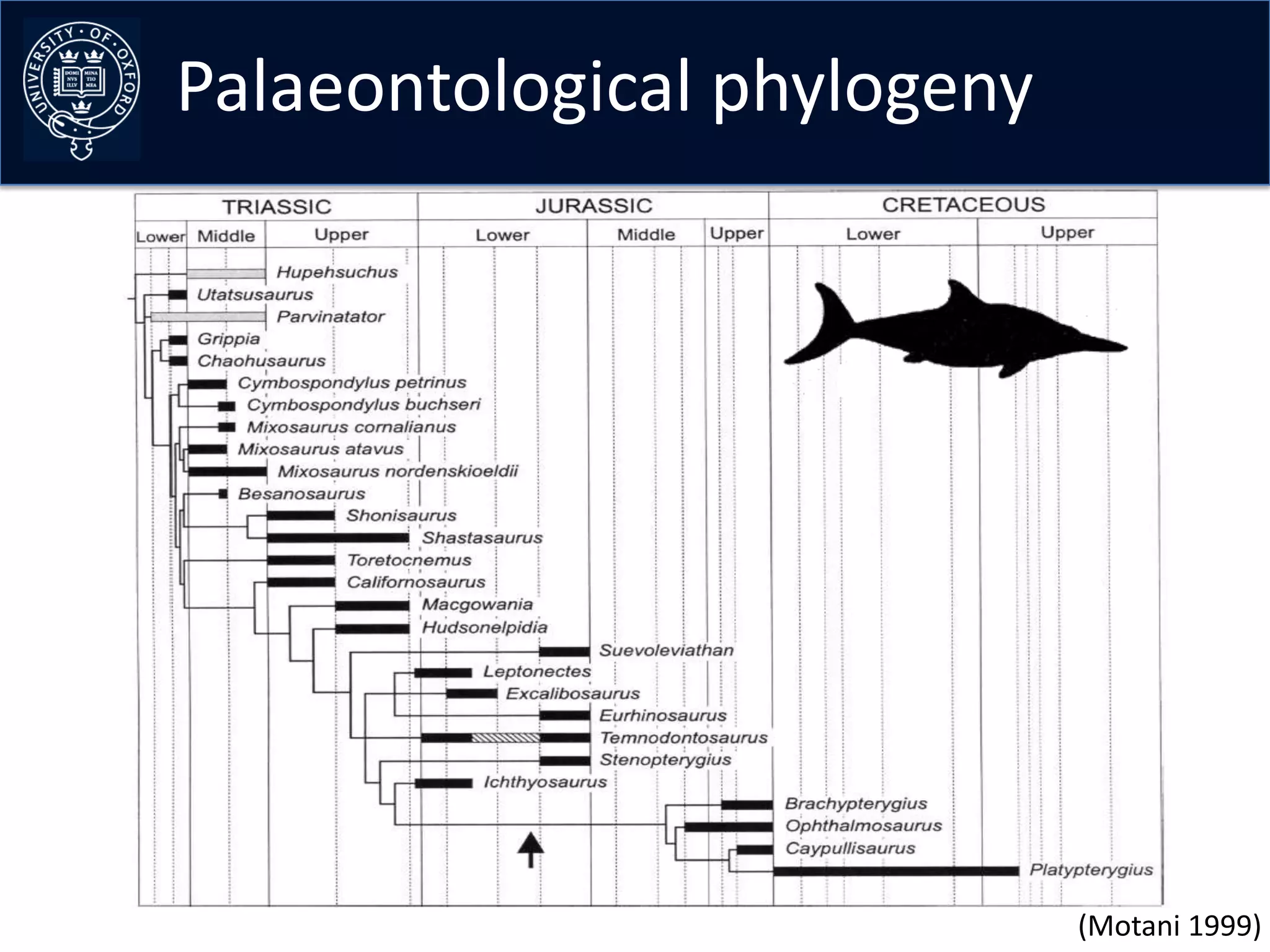
Palaeontological phylogeny


                             (Motani 1999)
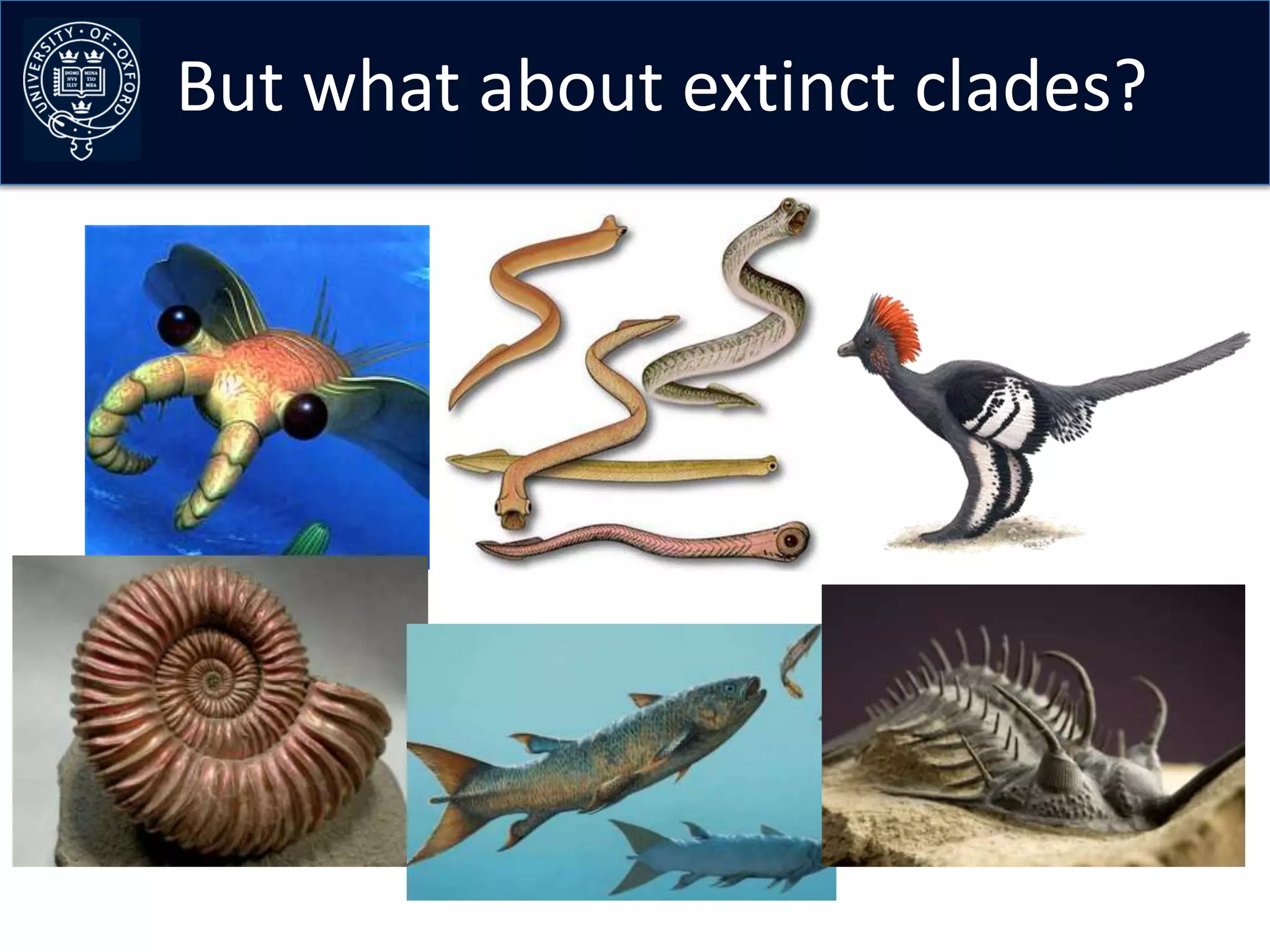
But what about extinct clades?
Branch lengths in palaeontology
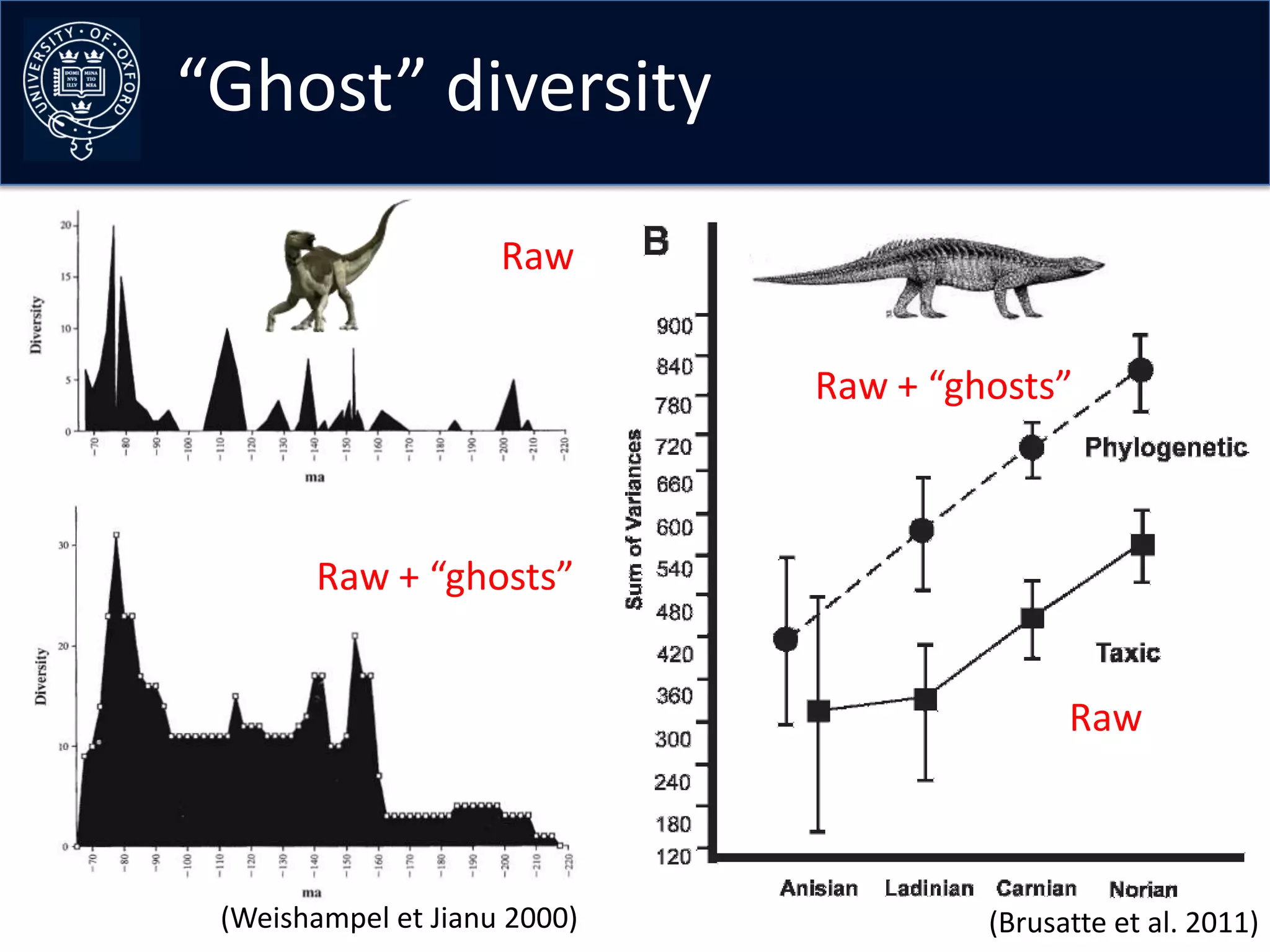
“Ghost” diversity

                     Raw


                              Raw + “ghosts”


       Raw + “ghosts”


                                             Raw


 (Weishampel et Jianu 2000)            (Brusatte et al. 2011)
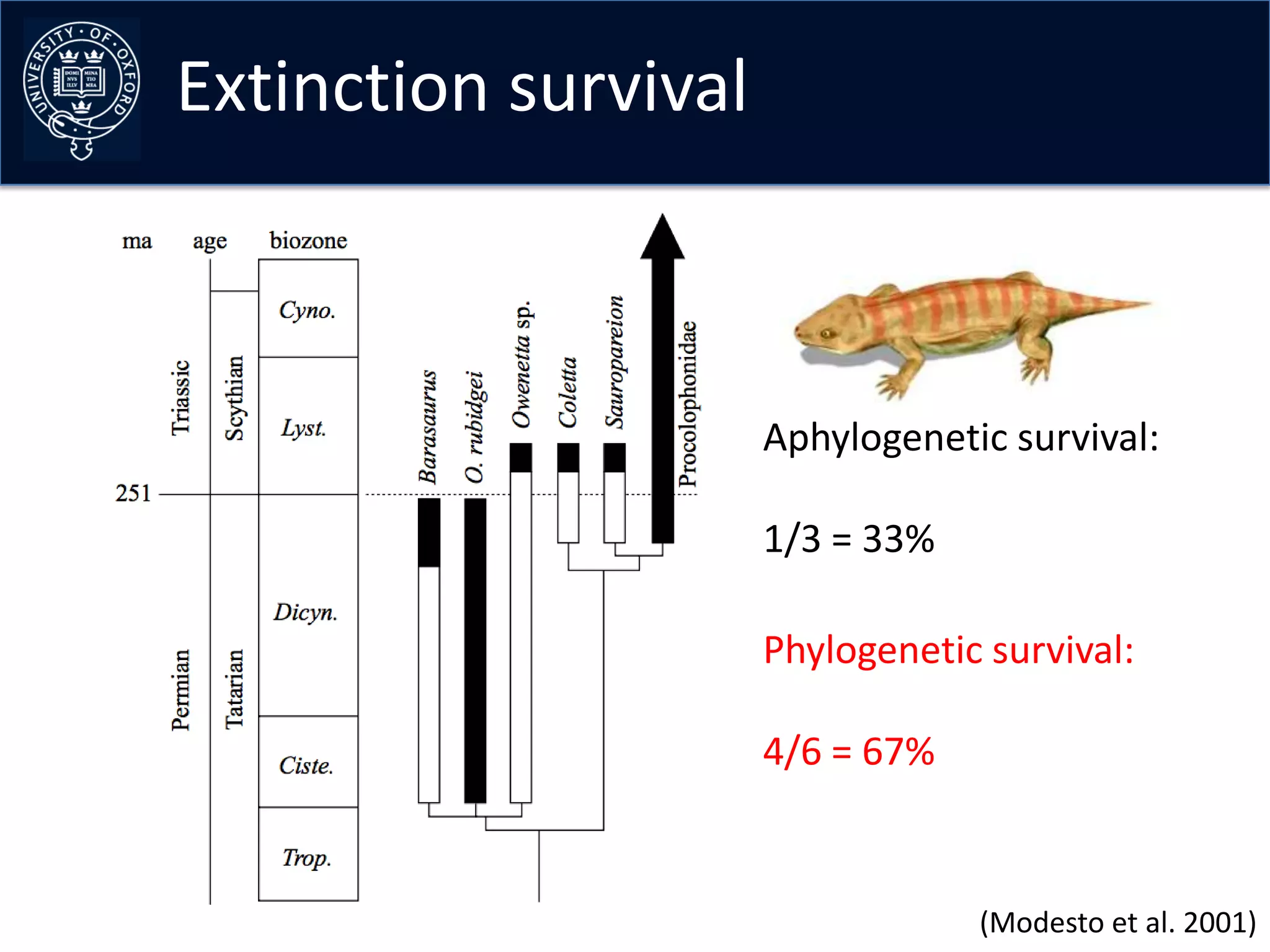
Extinction survival


                      Aphylogenetic survival:

                      1/3 = 33%

                      Phylogenetic survival:

                      4/6 = 67%


                                  (Modesto et al. 2001)
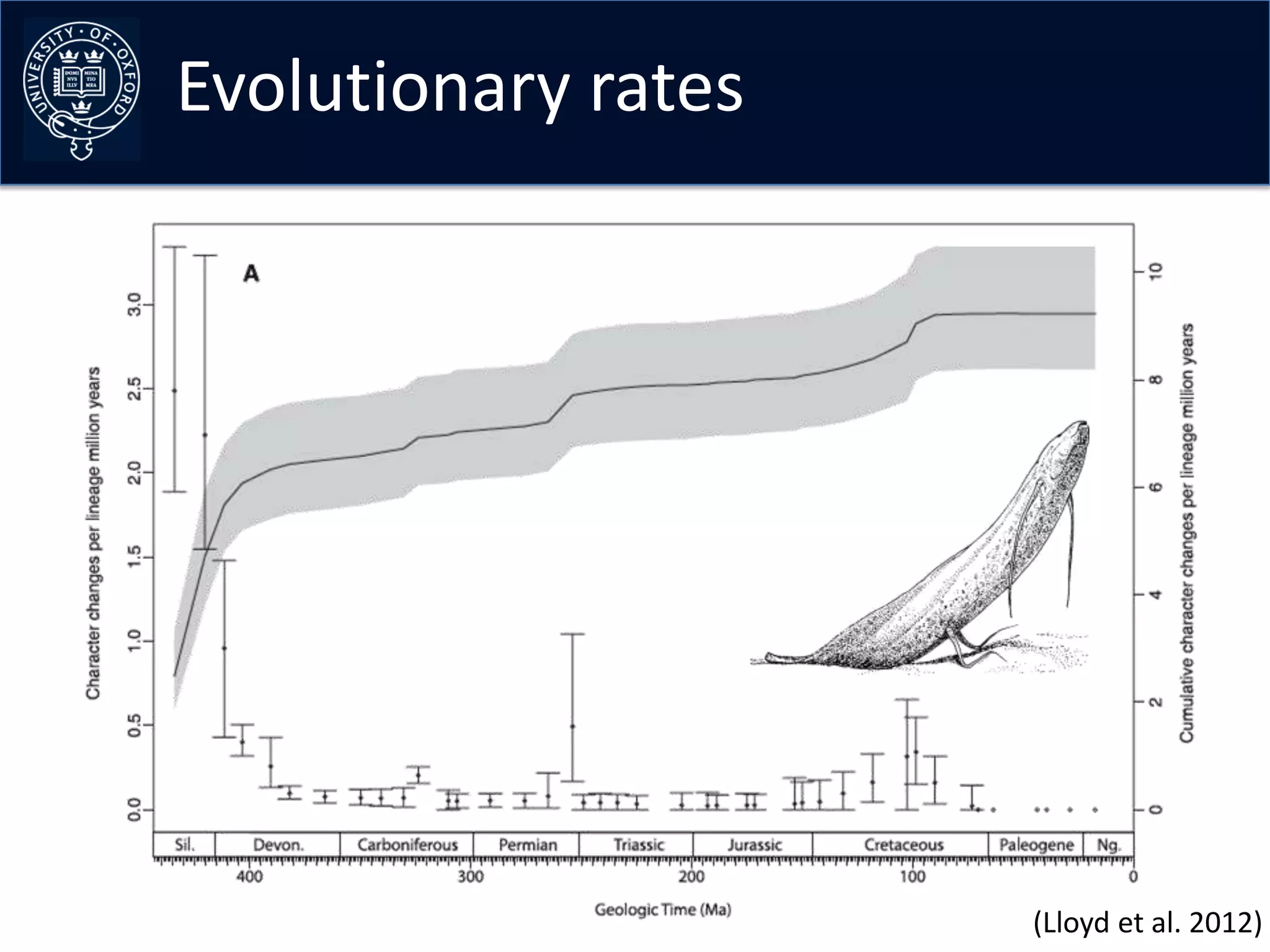
Evolutionary rates


                     (Lloyd et al. 2012)
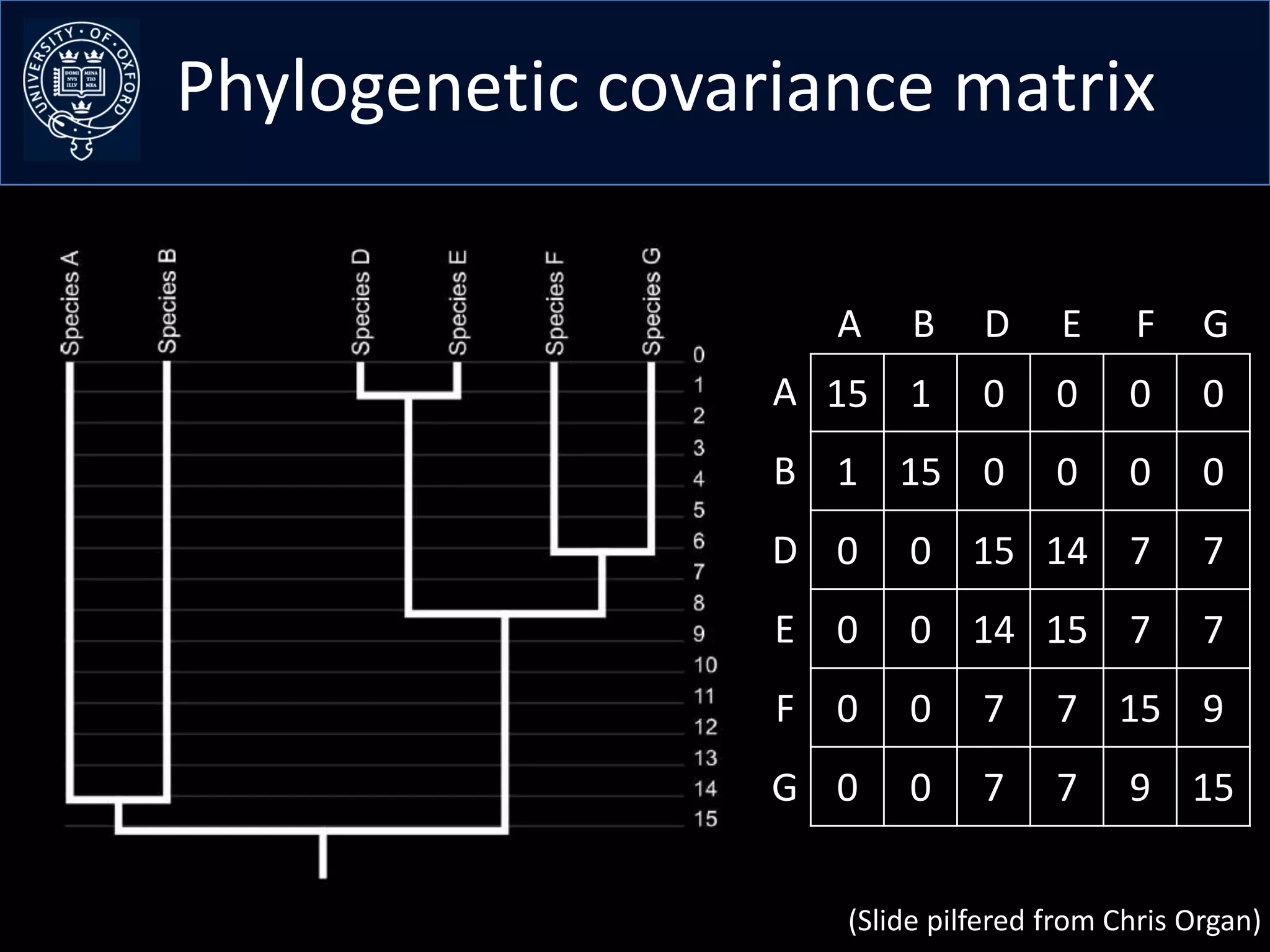
Phylogenetic covariance matrix

                    A    B    D      E    F     G
                  A 15 1      0     0     0     0
                  B 1 15 0          0     0     0
                  D 0   0 15 14 7               7
                  E 0   0 14 15 7               7
                  F 0   0     7     7 15 9
                  G 0   0     7     7     9 15


                    (Slide pilfered from Chris Organ)
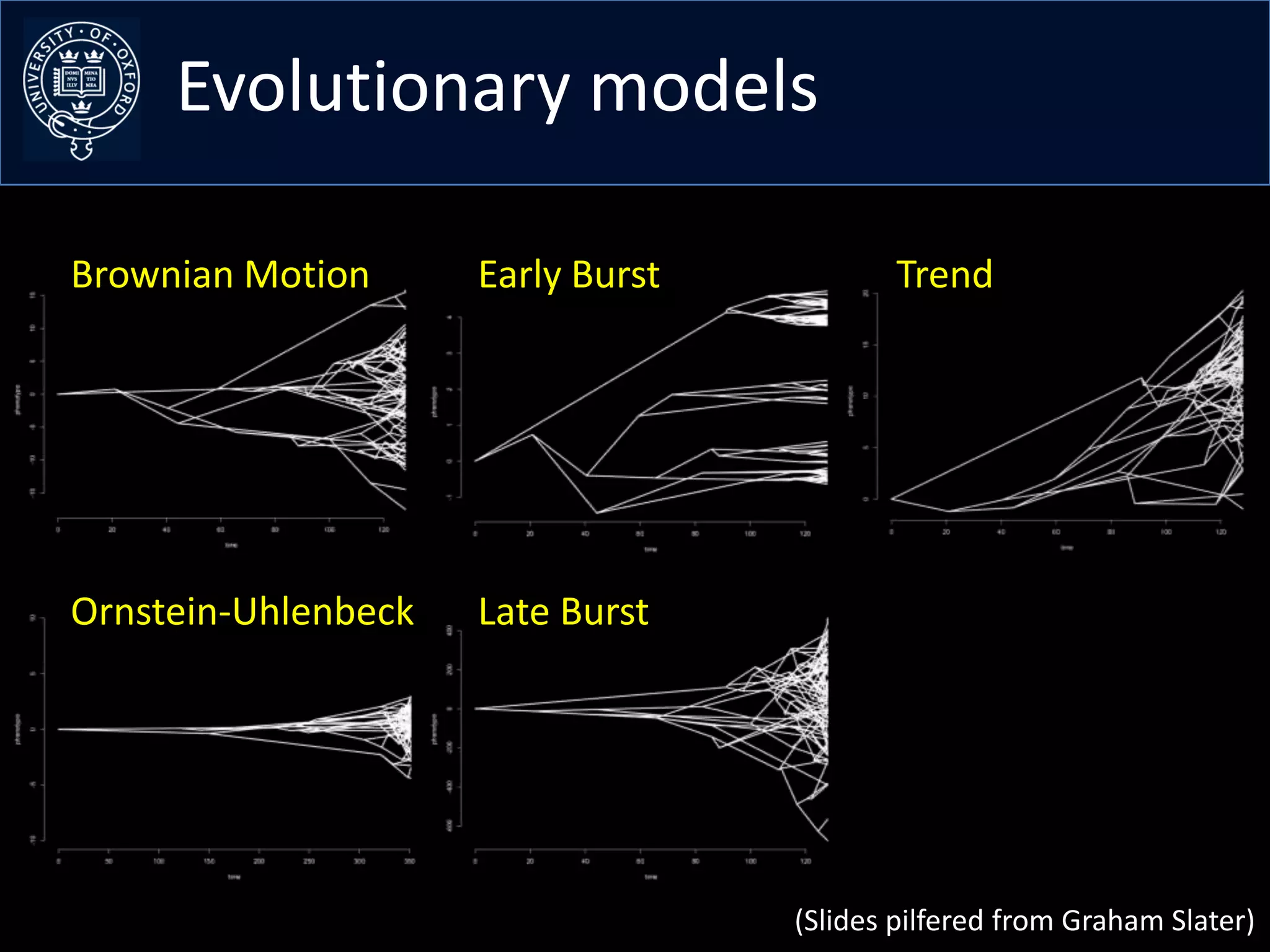
Evolutionary models

Brownian Motion      Early Burst          Trend


Ornstein-Uhlenbeck   Late Burst


                                   (Slides pilfered from Graham Slater)
A brief history of fossil-only
         tree dating
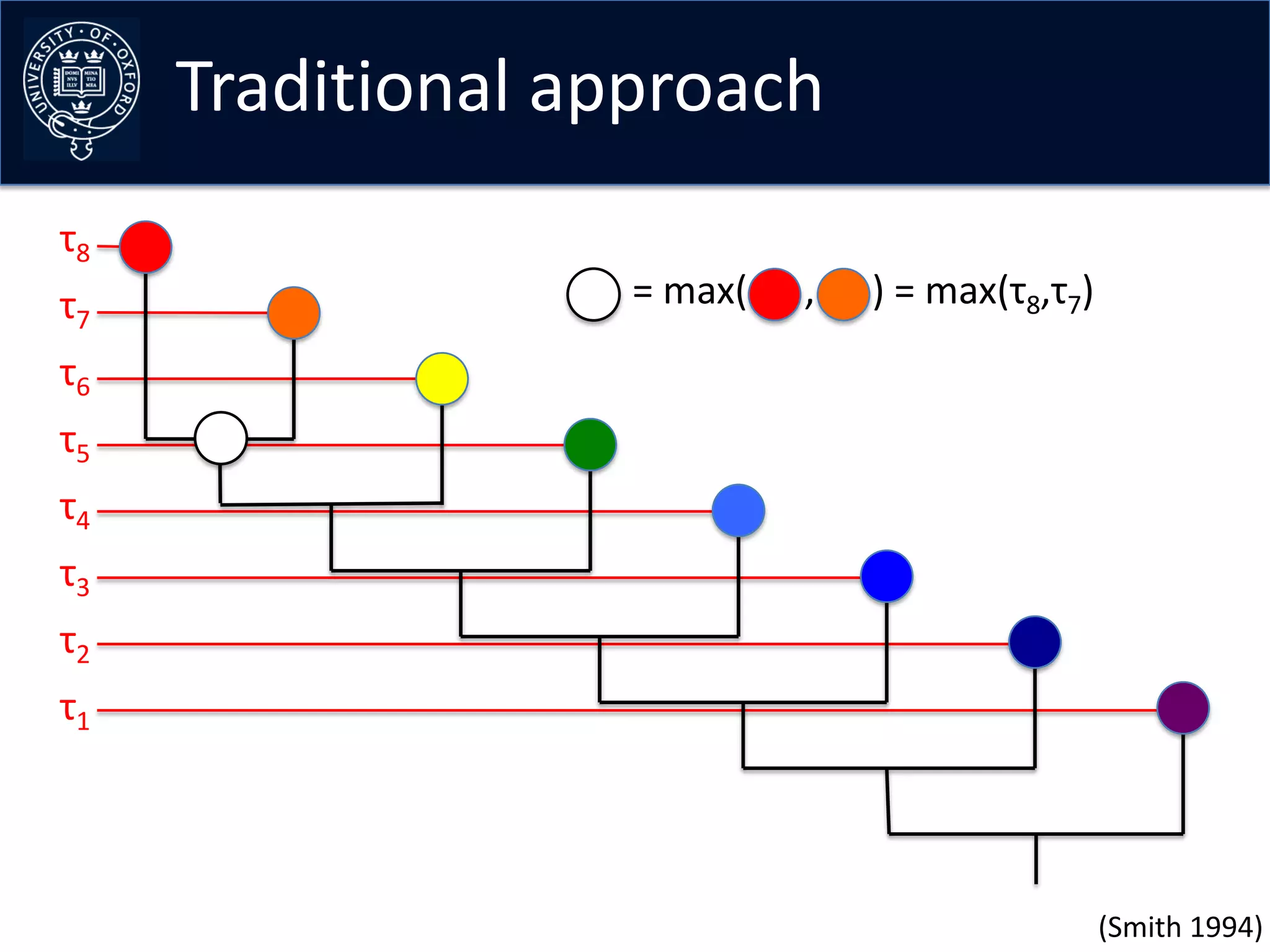
Traditional approach
τ8
τ7                 = max(   ,   ) = max(τ8,τ7)
τ6
τ5
τ4
τ3
τ2
τ1


                                                 (Smith 1994)
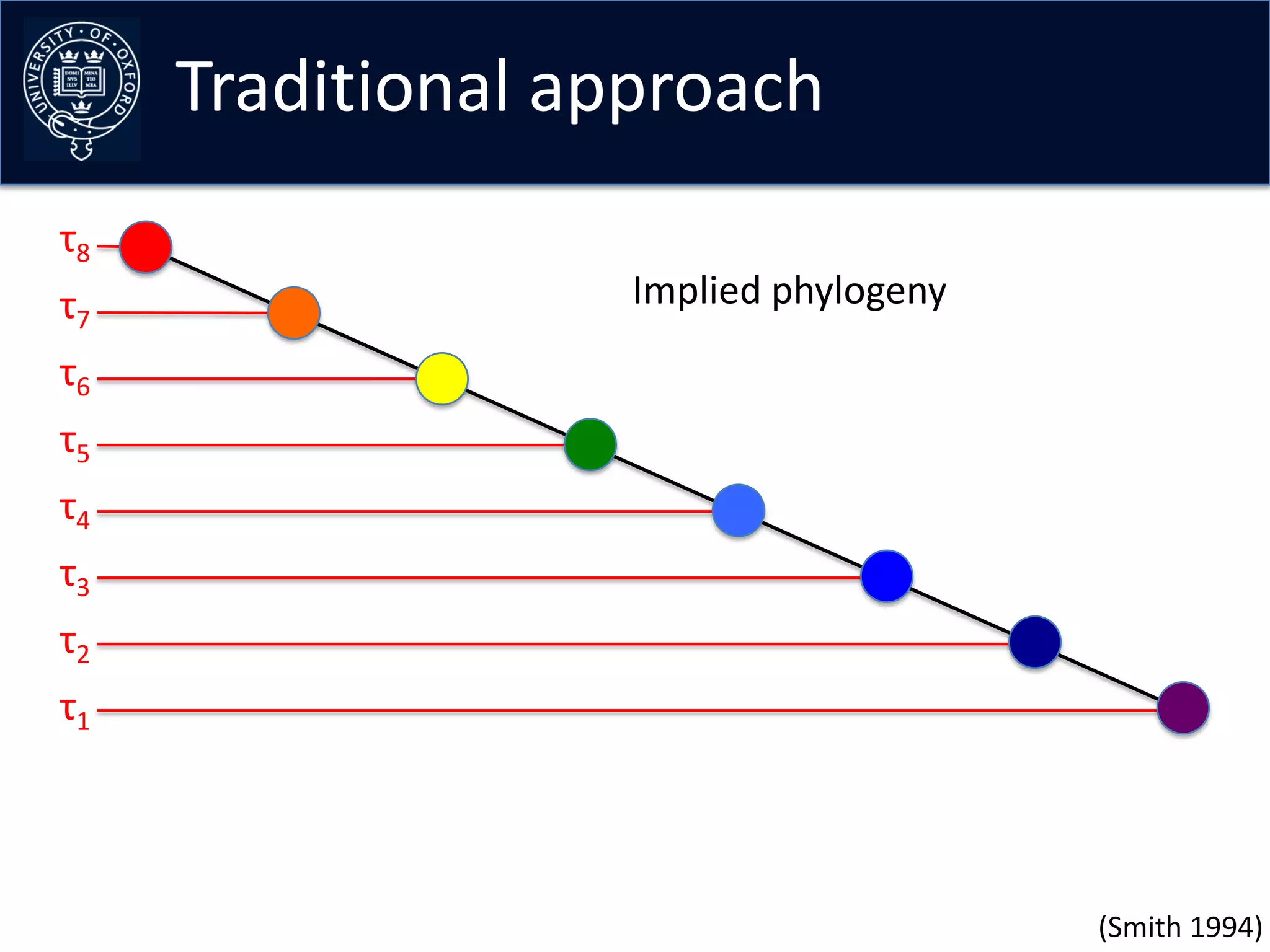
Traditional approach
τ8
τ7                 Implied phylogeny
τ6
τ5
τ4
τ3
τ2
τ1


                                       (Smith 1994)
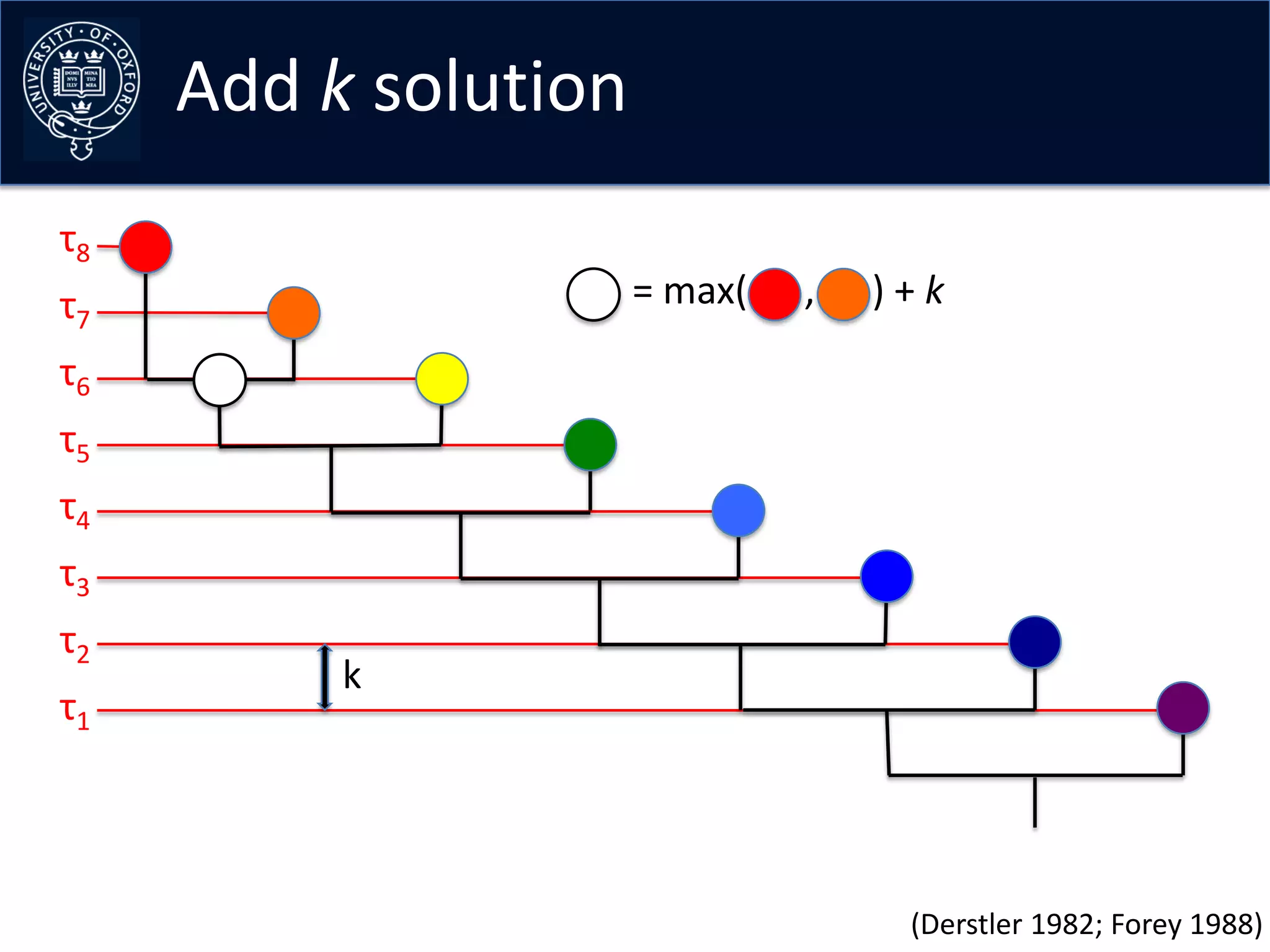
Add k solution
τ8
τ7                    = max(   ,   )+k
τ6
τ5
τ4
τ3
τ2
          k
τ1


                                    (Derstler 1982; Forey 1988)
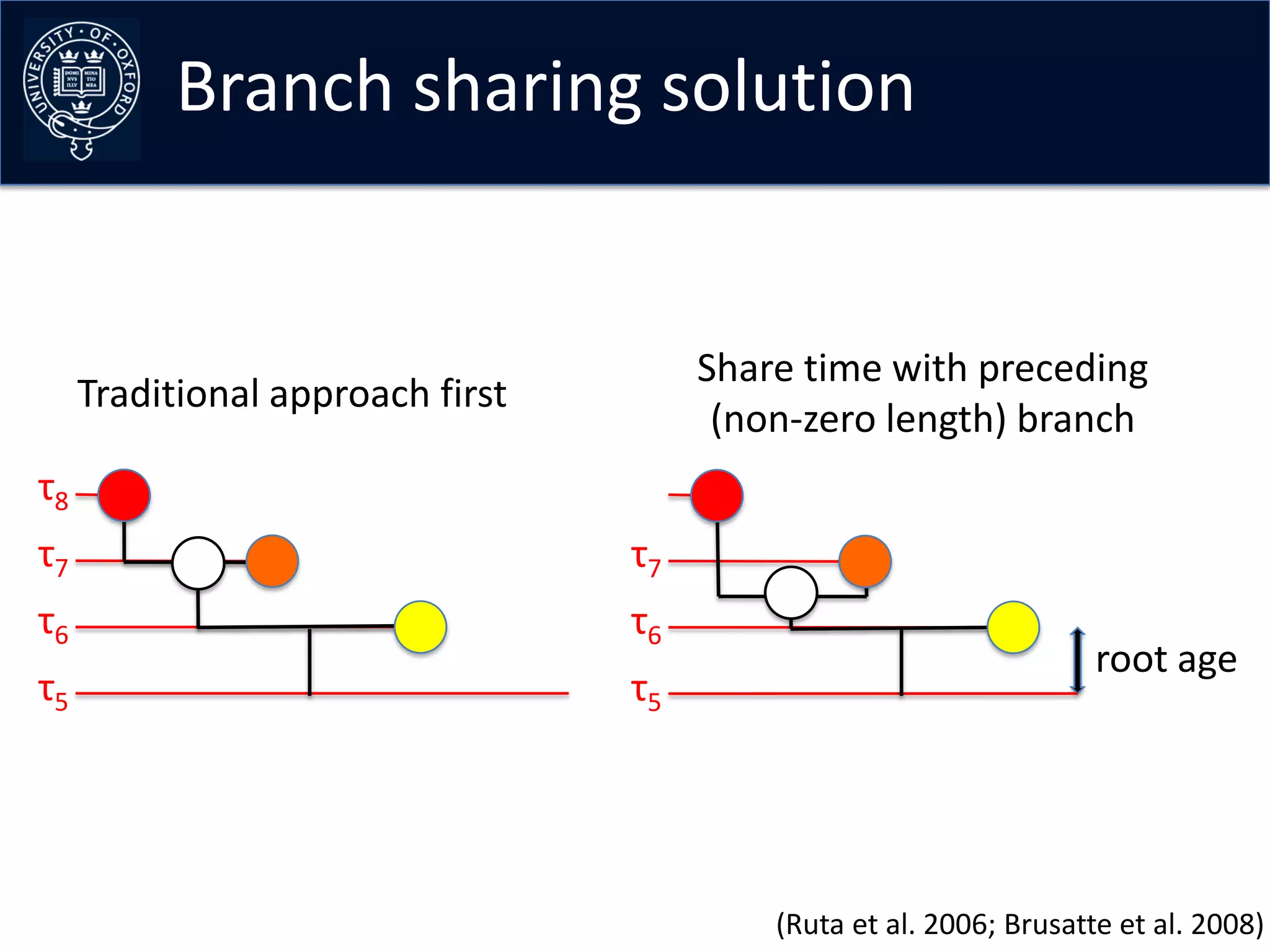
Branch sharing solution


                                       Share time with preceding
     Traditional approach first
                                        (non-zero length) branch
τ8
τ7                                τ7
τ6                                τ6
                                                                     root age
τ5                                τ5


                                           (Ruta et al. 2006; Brusatte et al. 2008)
A novel approach
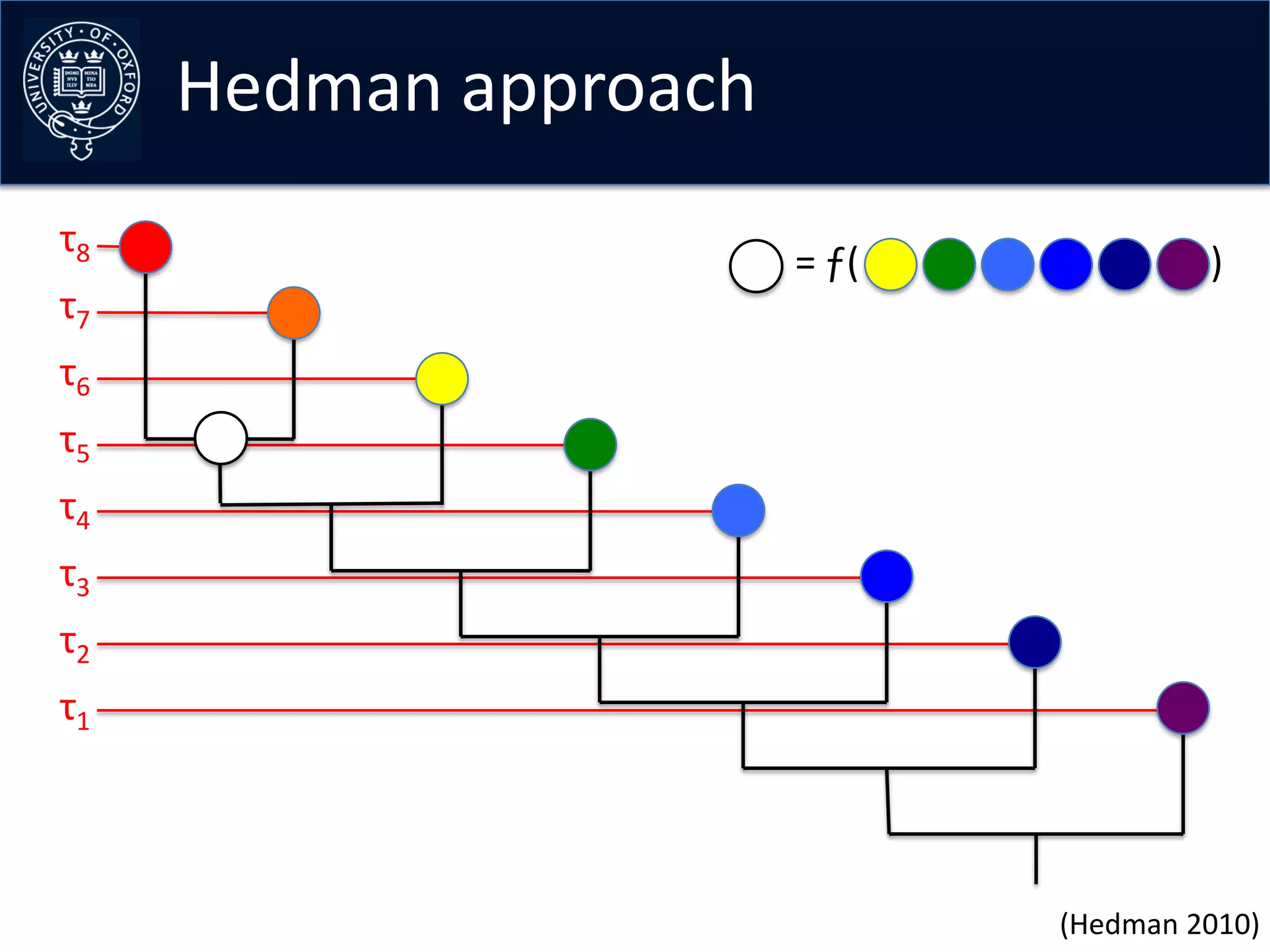
Hedman approach
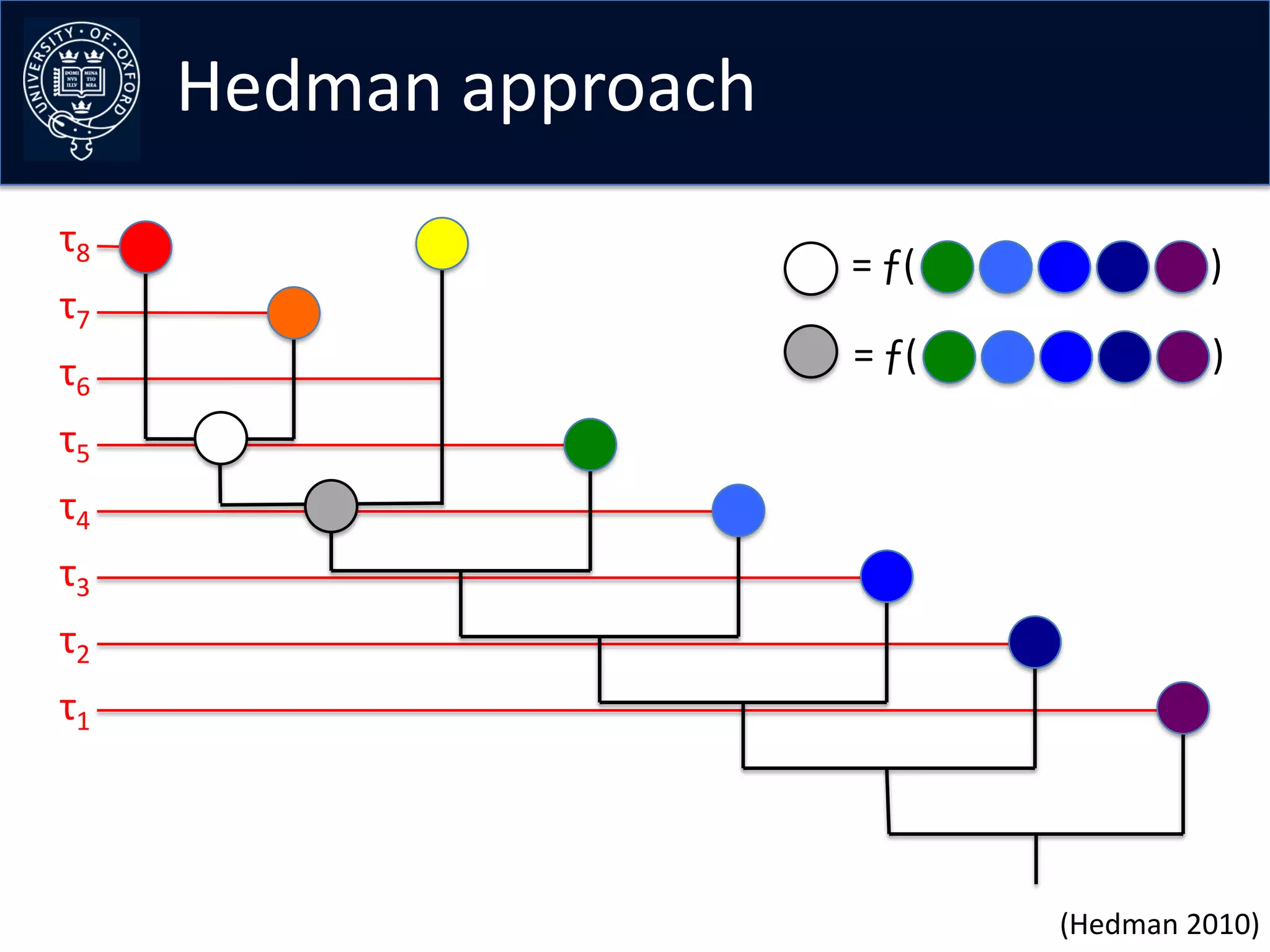
τ8
                       = ƒ(            )
τ7
τ6
τ5
τ4
τ3
τ2
τ1


                              (Hedman 2010)
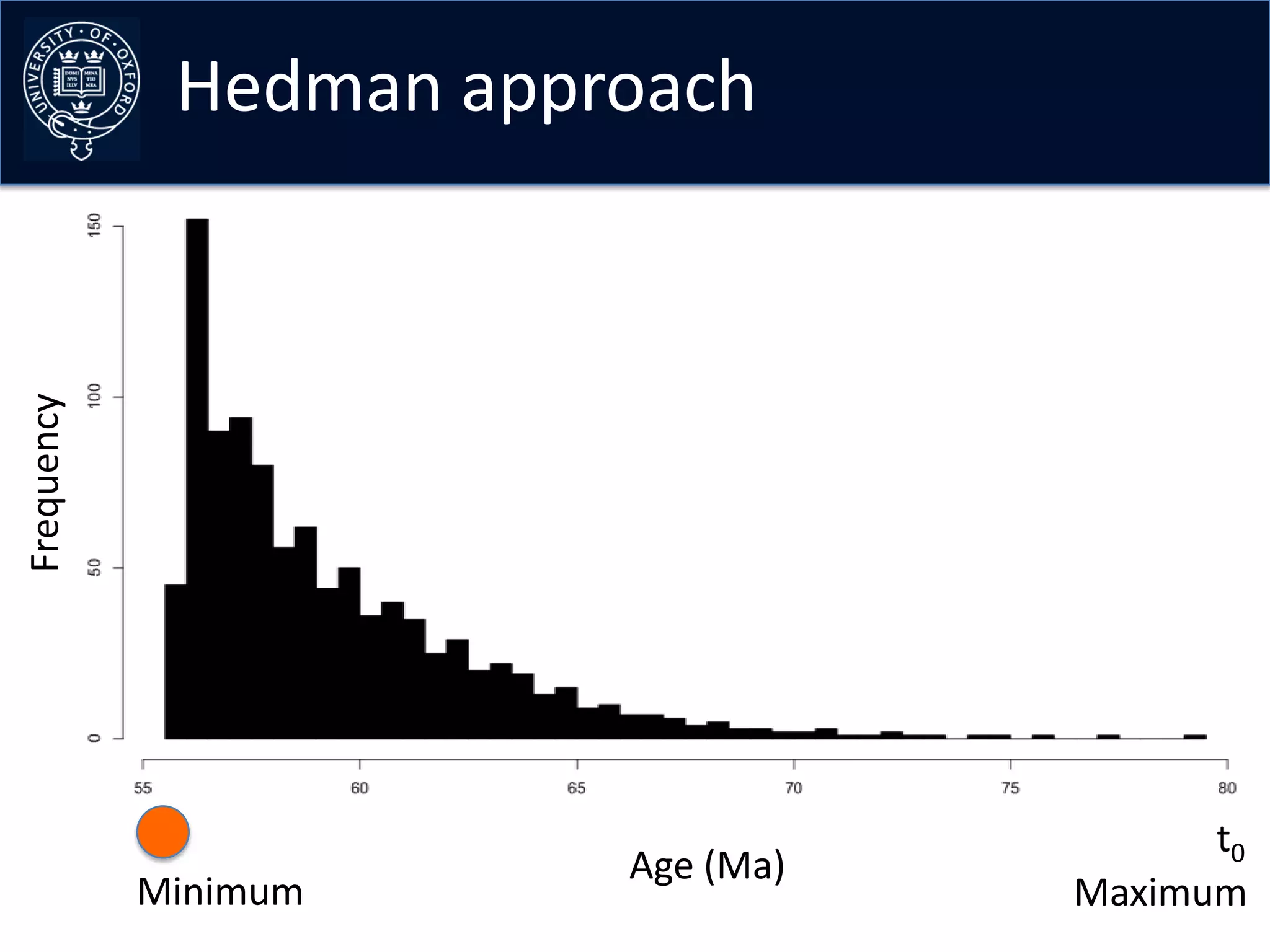
Hedman approach
Frequency


                                         t0
                        Age (Ma)
            Minimum                Maximum
Hedman approach
τ8
                       = ƒ(            )
τ7
τ6                     = ƒ(            )
τ5
τ4
τ3
τ2
τ1


                              (Hedman 2010)
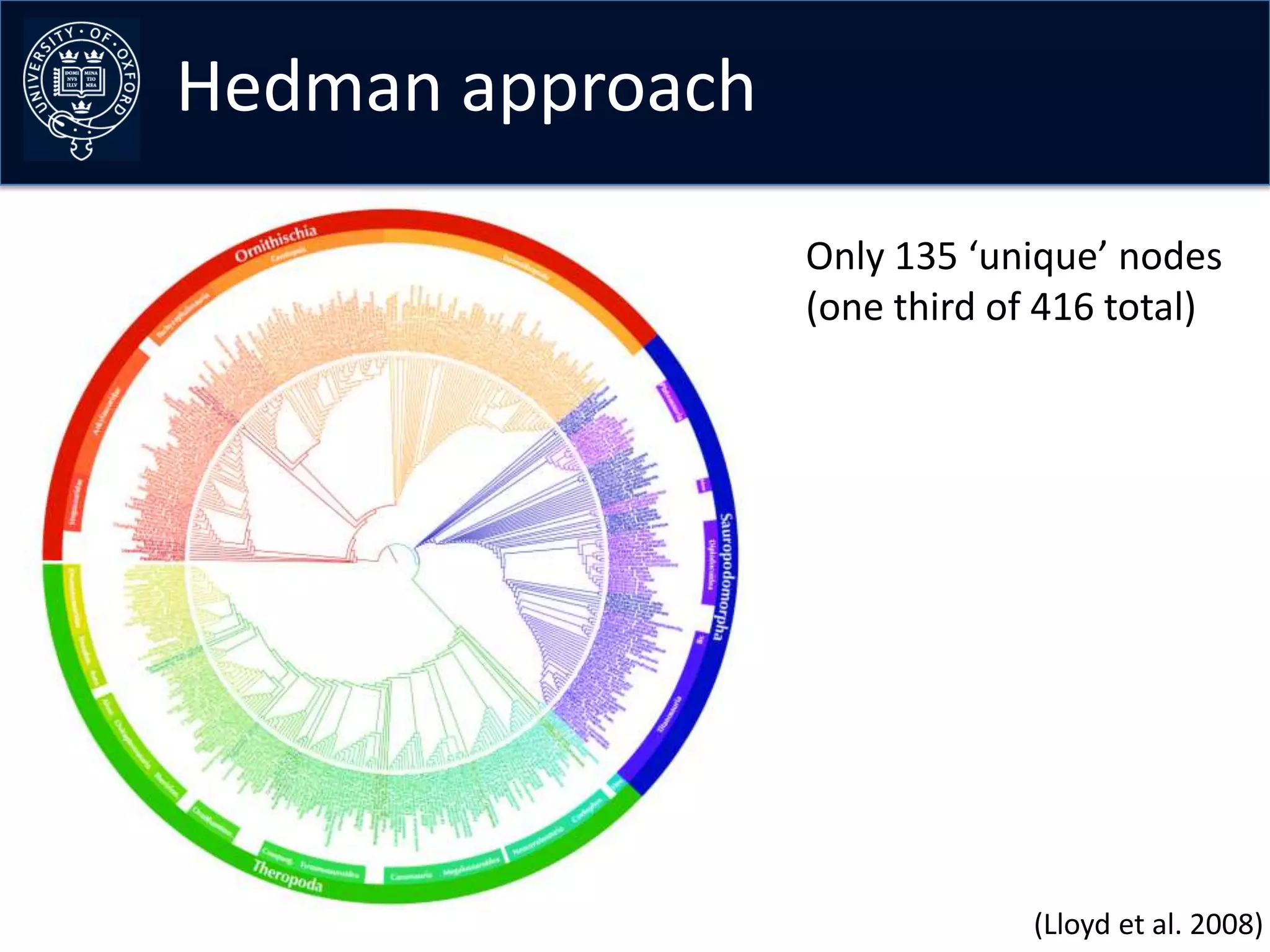
Hedman approach

                  Only 135 ‘unique’ nodes
                  (one third of 416 total)


                               (Lloyd et al. 2008)
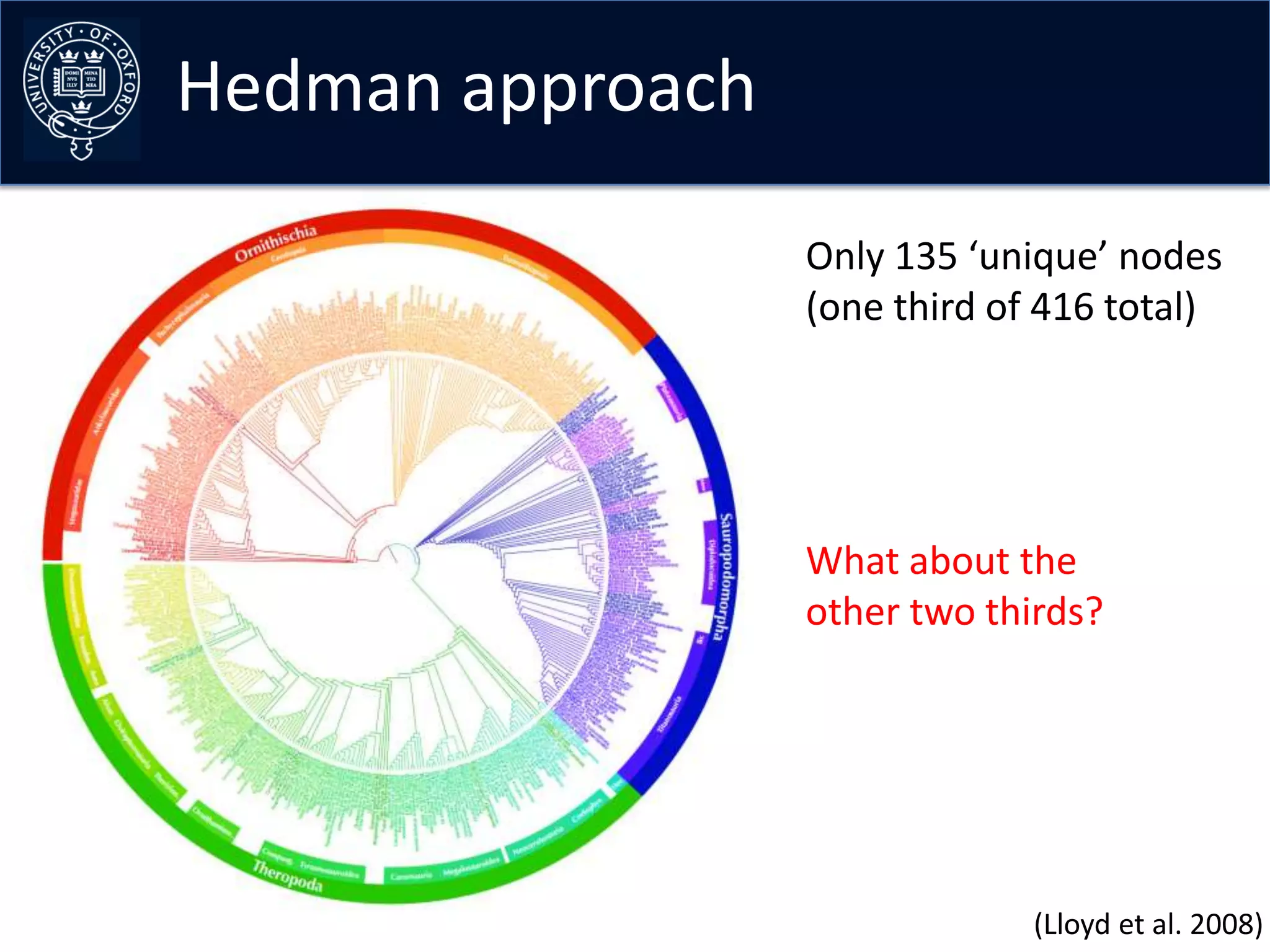
Hedman approach

                  Only 135 ‘unique’ nodes
                  (one third of 416 total)


                  What about the
                  other two thirds?


                               (Lloyd et al. 2008)
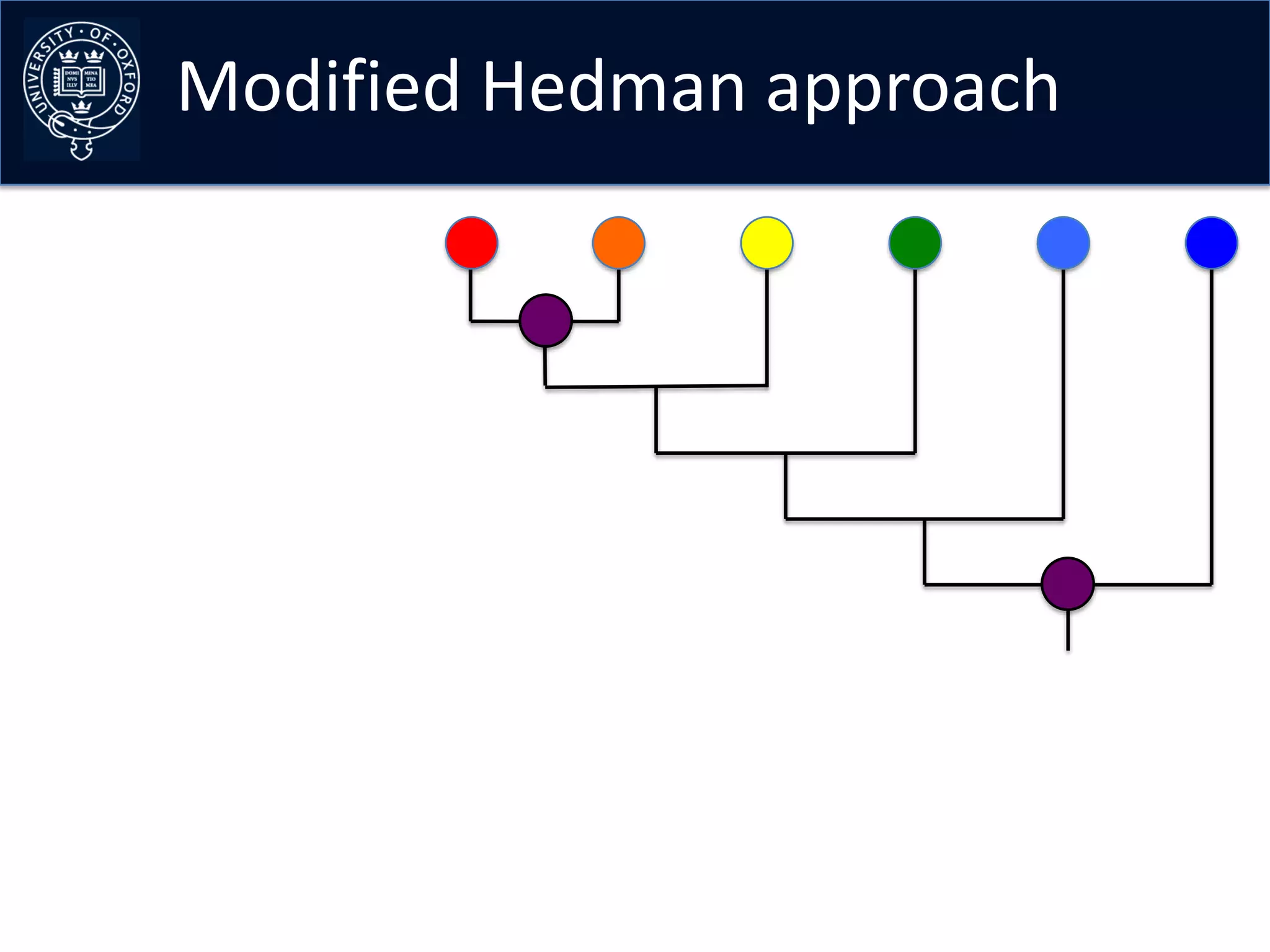
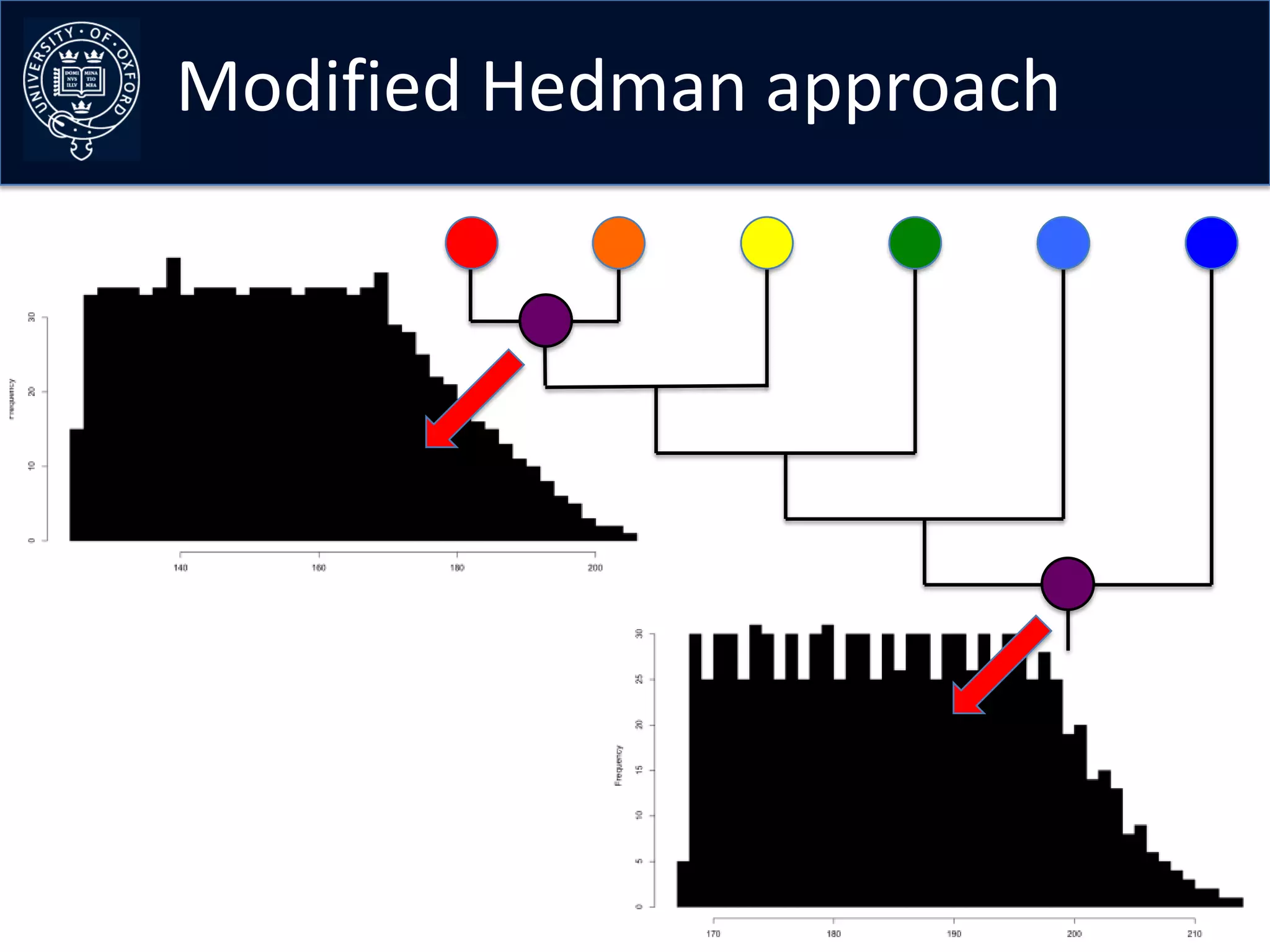
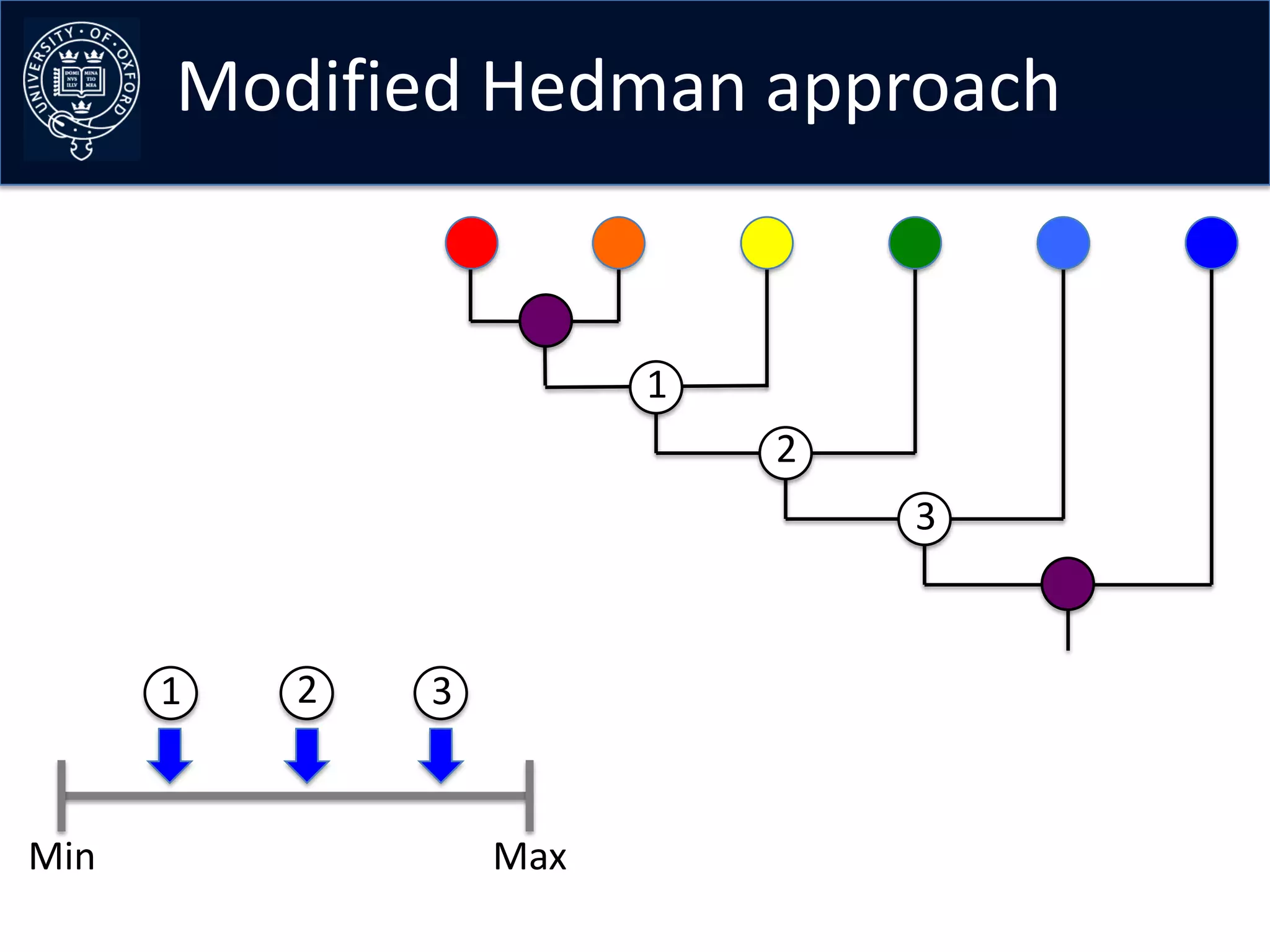
Modified Hedman approach


            1
                2
                    3
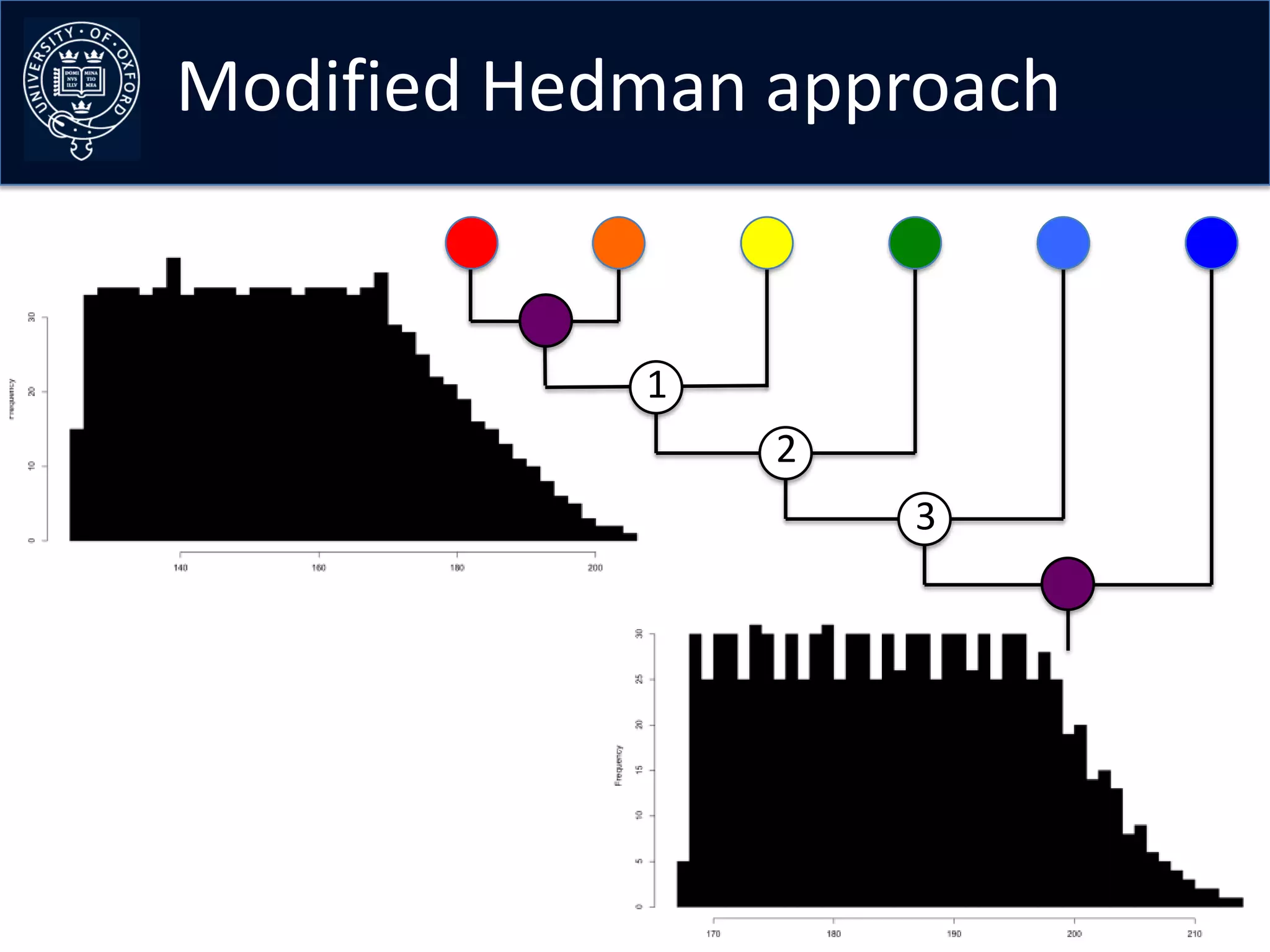
Modified Hedman approach


                    1
                        2
                            3


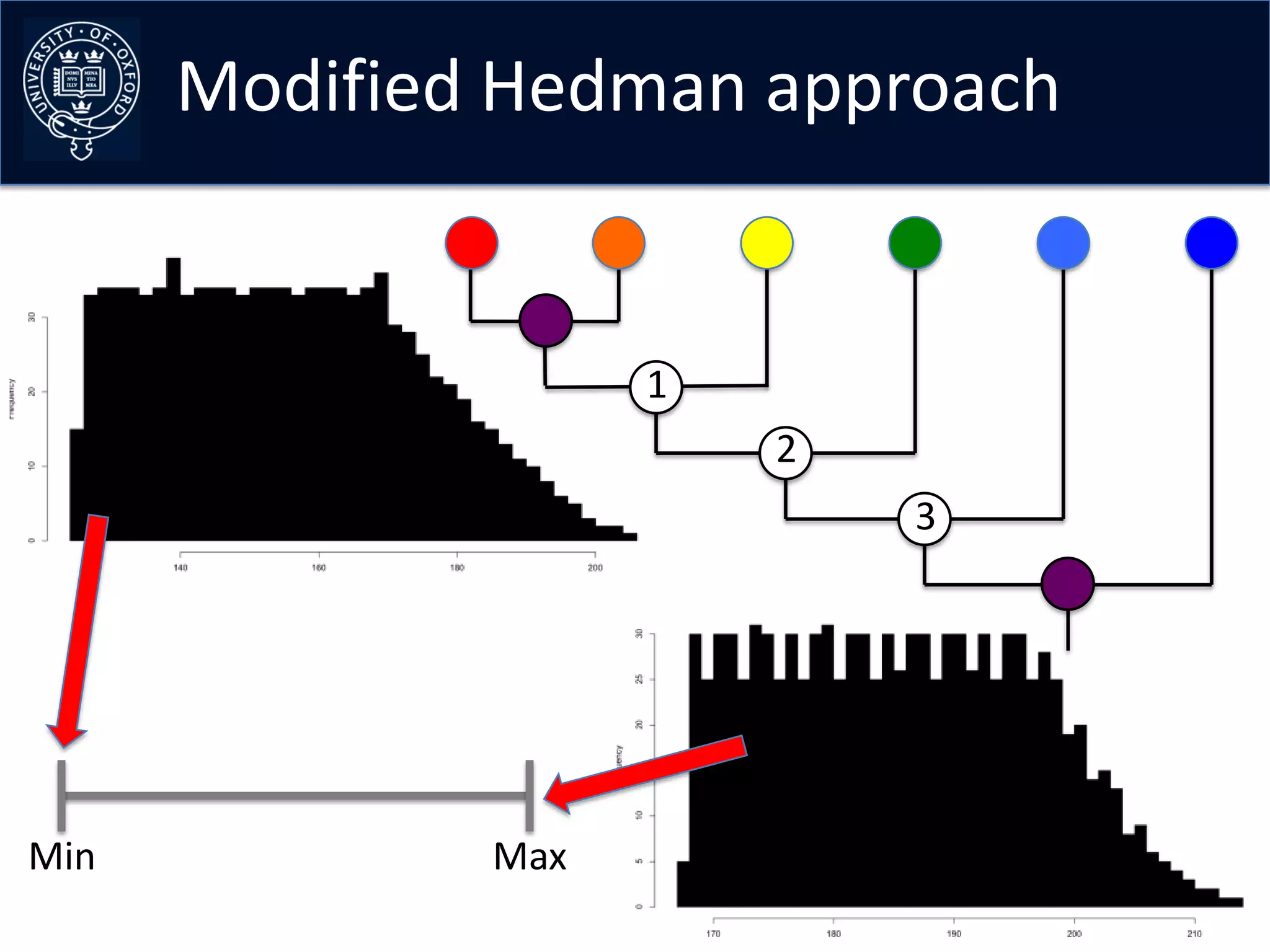
Min           Max
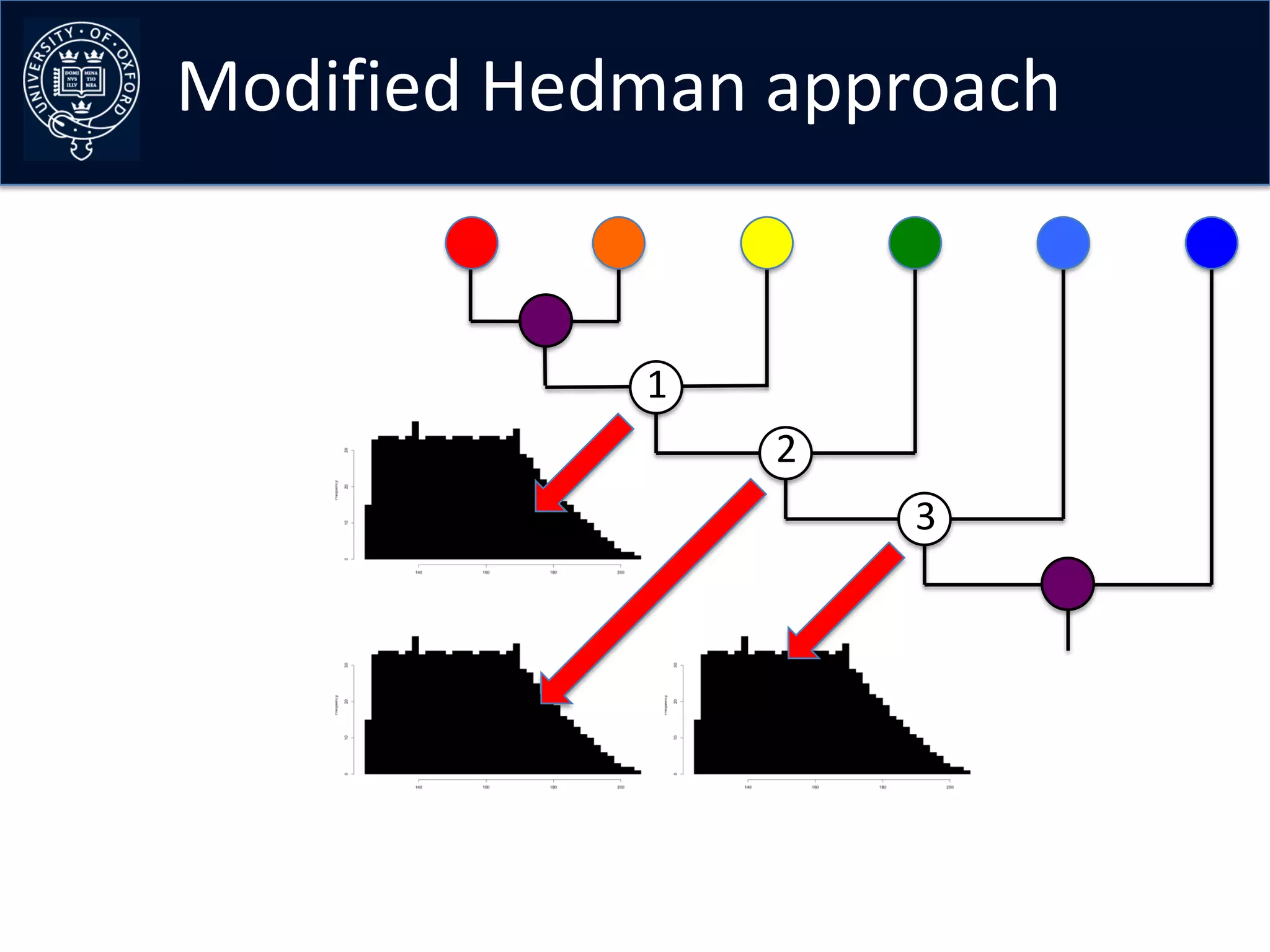
Modified Hedman approach


                        1
                            2
                                3


      1   2   3


Min               Max
Modified Hedman approach


            1
                2
                    3
Molecular versus fossil-only dating in
        placental mammals
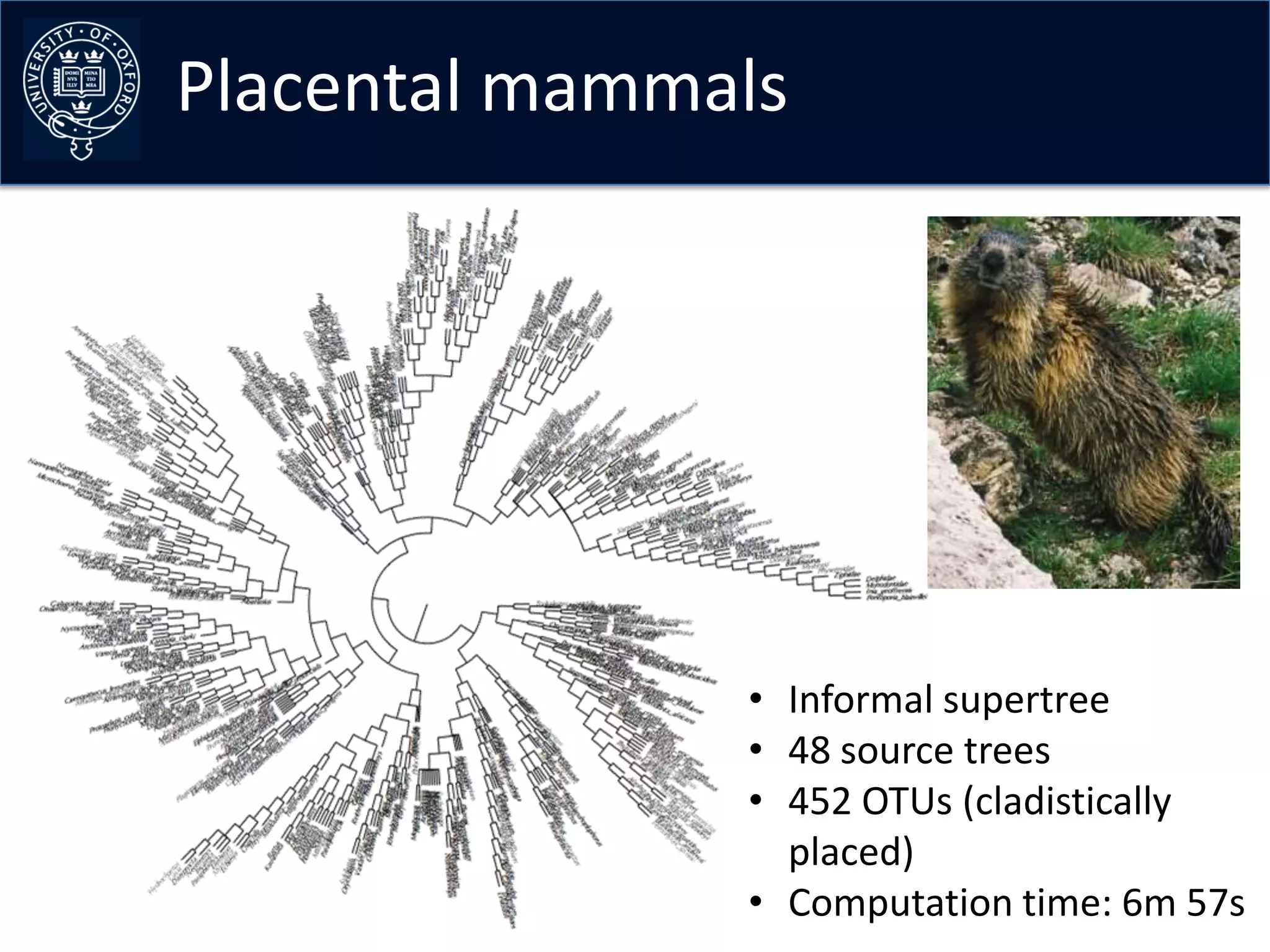
Placental mammals


               • Informal supertree
               • 48 source trees
               • 452 OTUs (cladistically
                 placed)
               • Computation time: 6m 57s
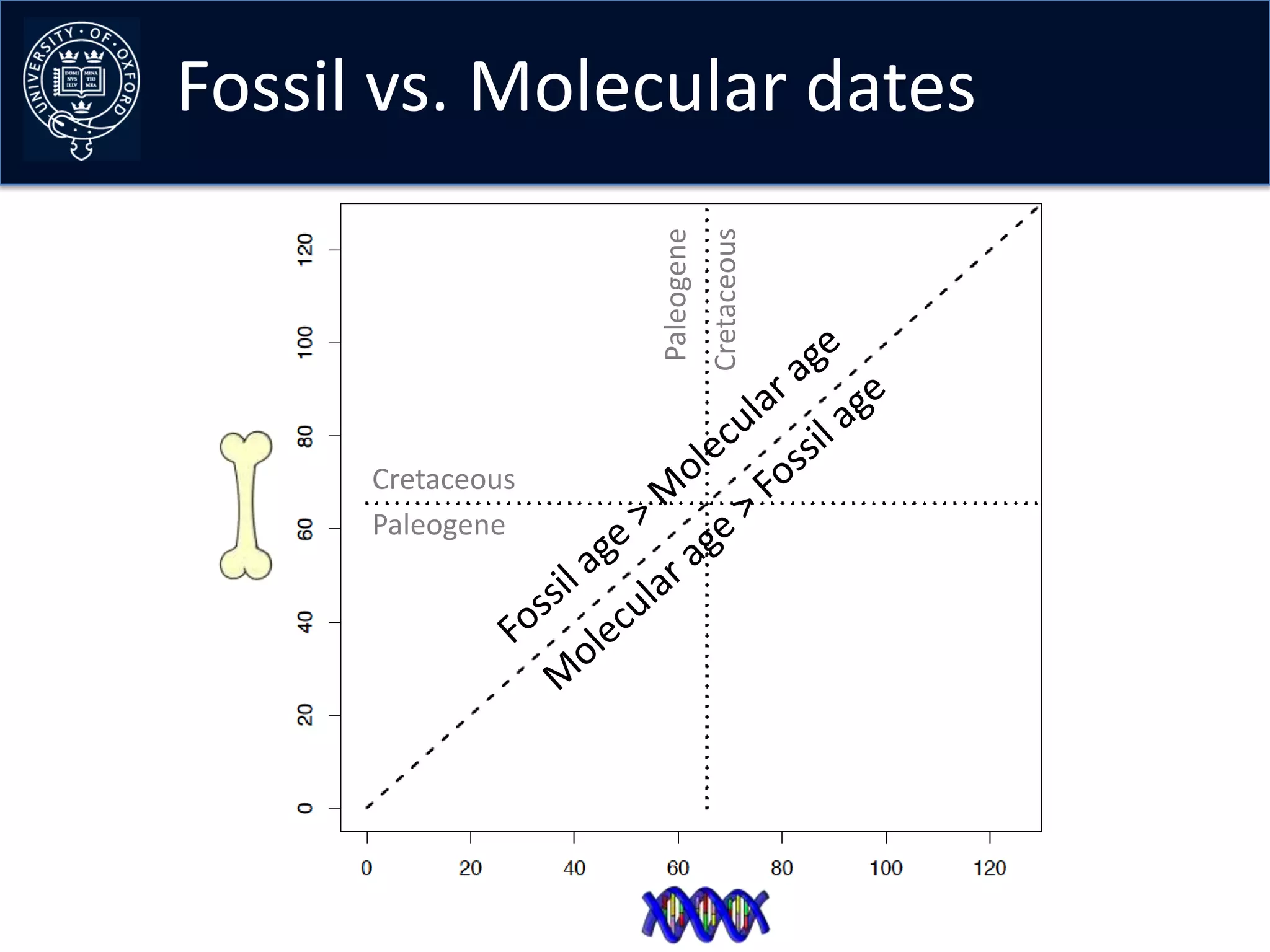
Fossil vs. Molecular dates


                               Cretaceous
                   Paleogene
      Cretaceous
      Paleogene
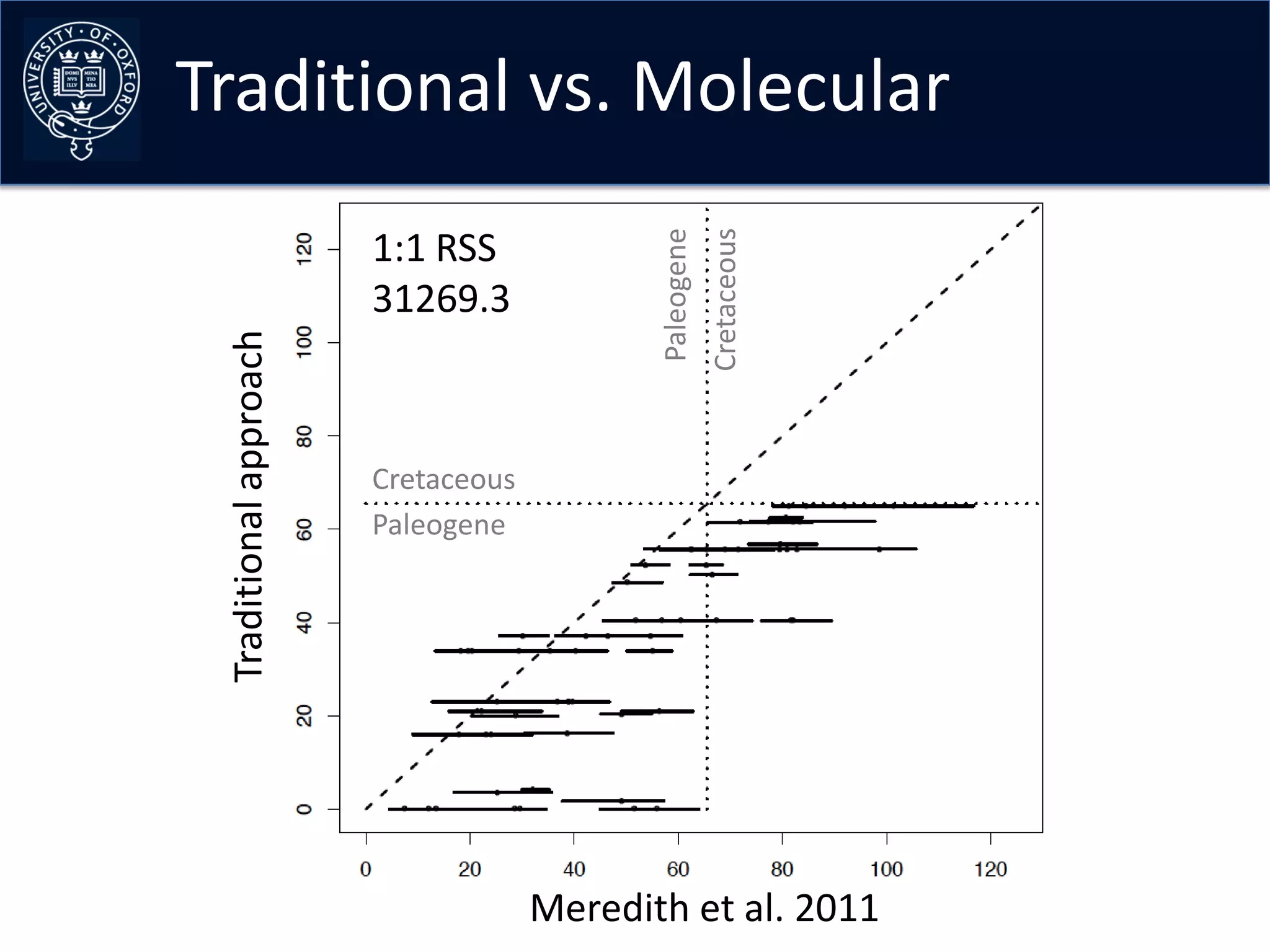
Traditional vs. Molecular


                                                        Cretaceous
                                            Paleogene
                        1:1 RSS
                        31269.3
 Traditional approach


                        Cretaceous
                        Paleogene


                                     Meredith et al. 2011
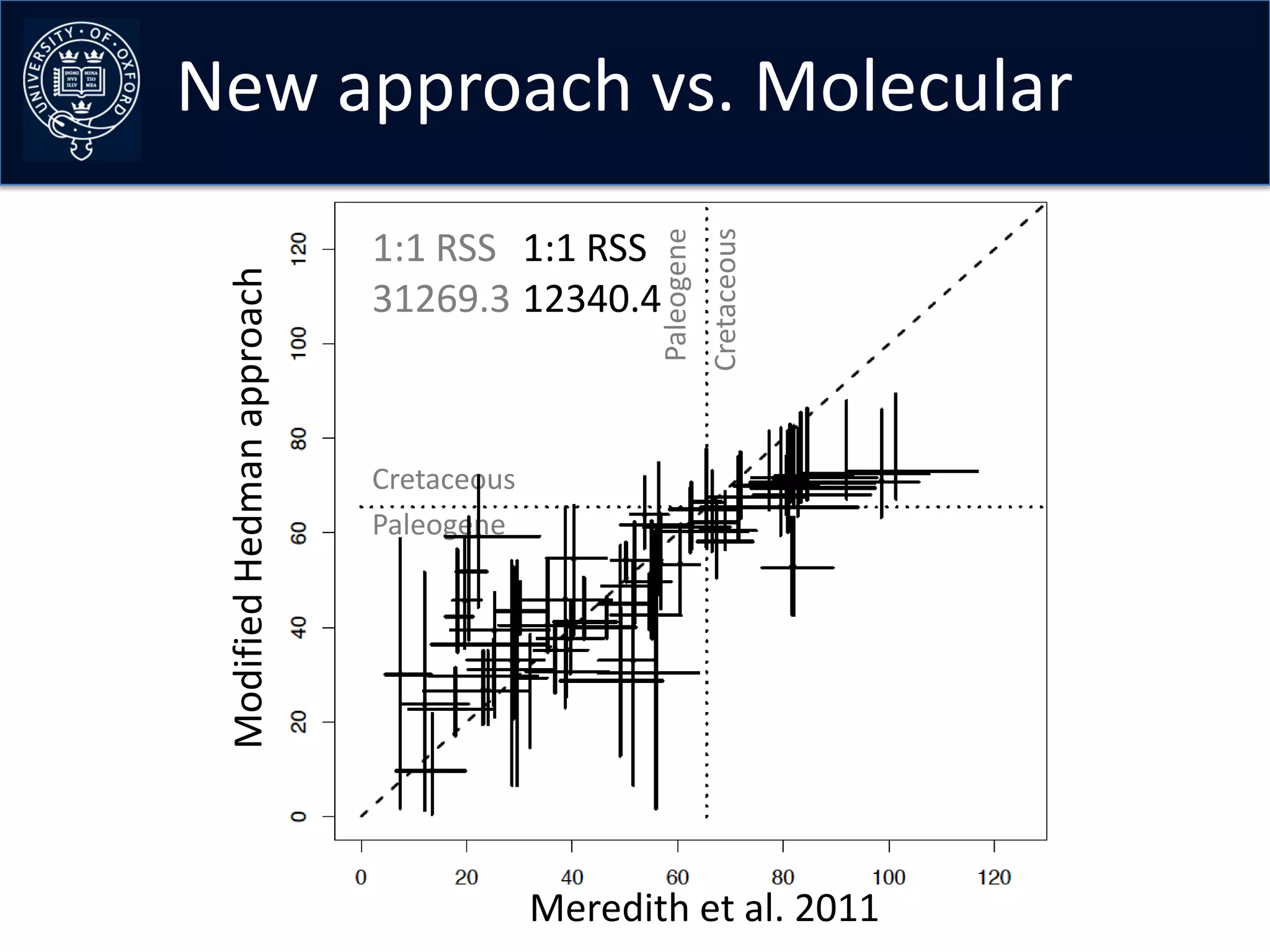
New approach vs. Molecular


                                                            Cretaceous
                                                Paleogene
 Modified Hedman approach   1:1 RSS 1:1 RSS
                            31269.3 12340.4


                            Cretaceous
                            Paleogene


                                         Meredith et al. 2011
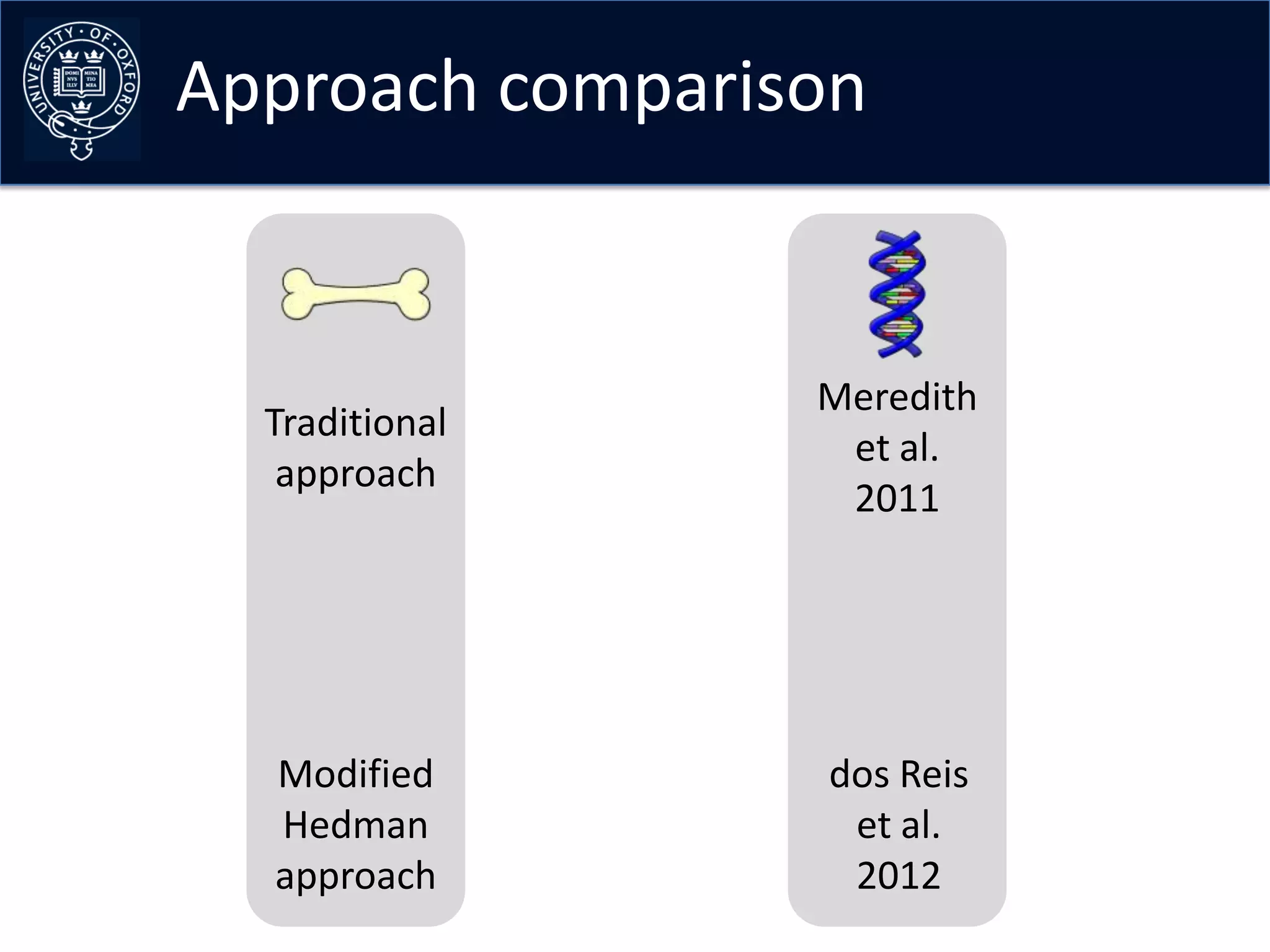
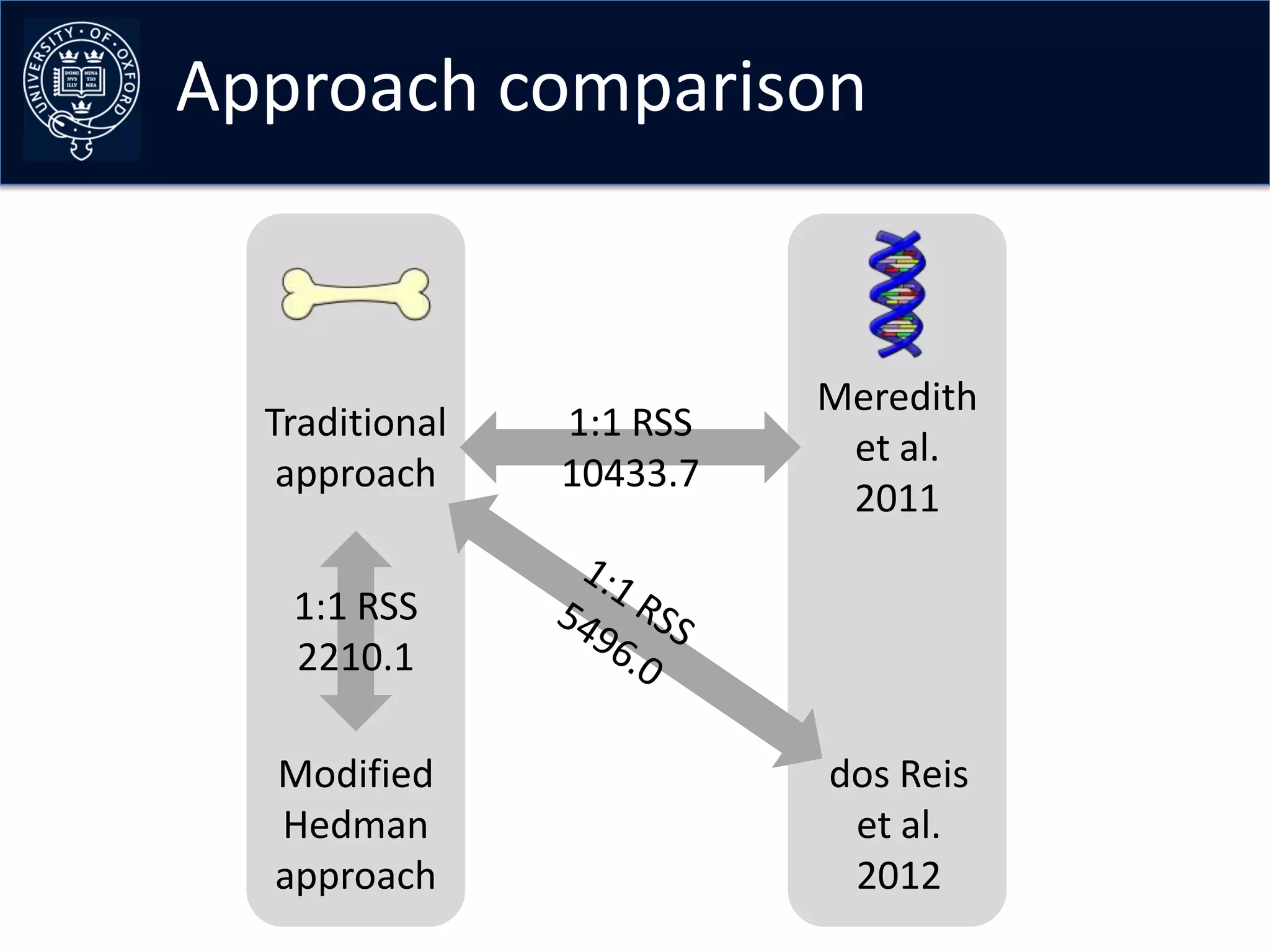
Approach comparison


                 Meredith
  Traditional
                  et al.
   approach
                  2011


  Modified       dos Reis
  Hedman          et al.
  approach        2012
Approach comparison


                          Meredith
  Traditional   1:1 RSS
                           et al.
   approach     10433.7
                           2011

   1:1 RSS
   2210.1

  Modified                dos Reis
  Hedman                   et al.
  approach                 2012
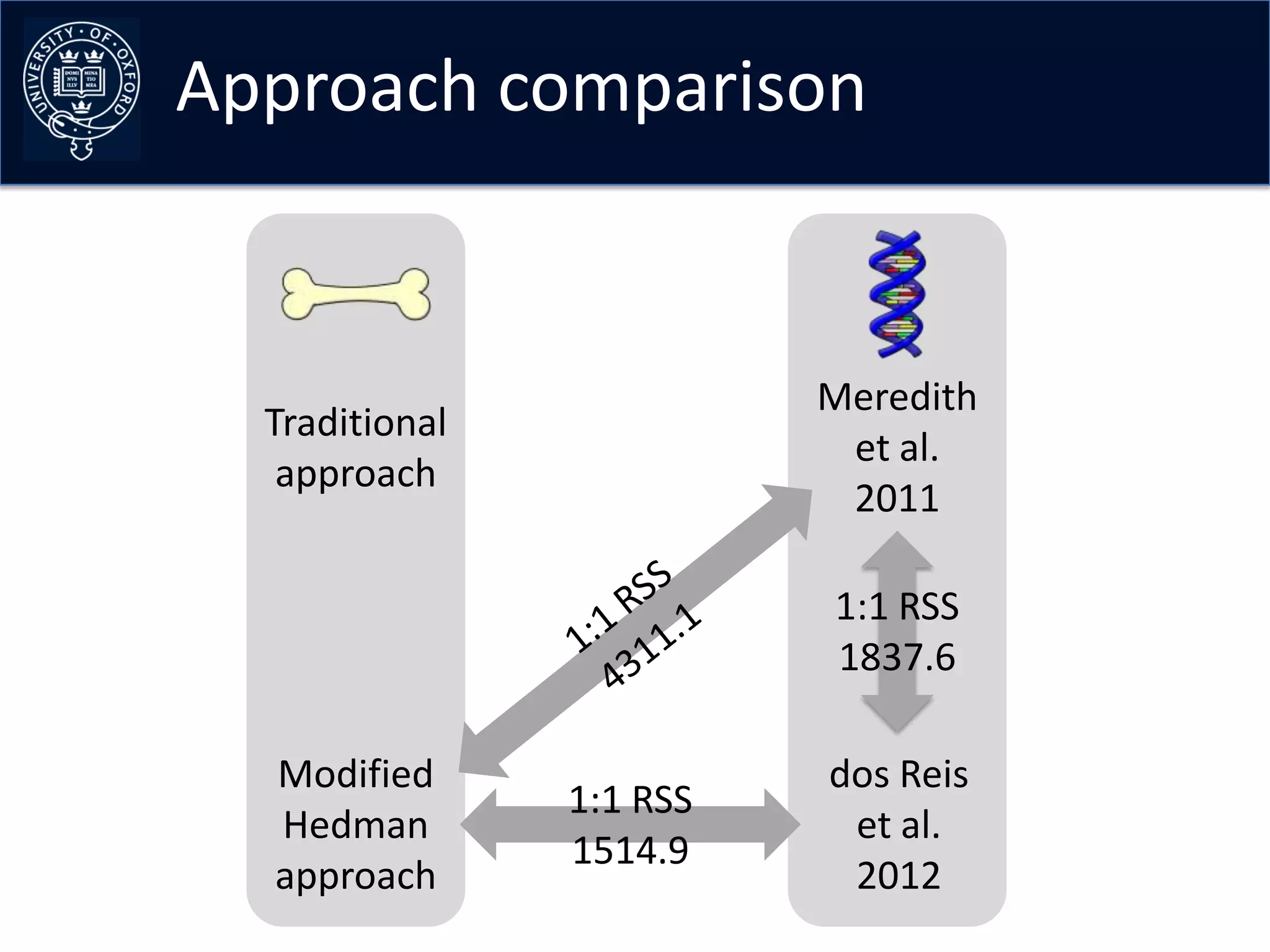
Approach comparison


                          Meredith
  Traditional
                           et al.
   approach
                           2011

                          1:1 RSS
                          1837.6

  Modified                dos Reis
                1:1 RSS
  Hedman                   et al.
                1514.9
  approach                 2012
Conclusions

• Novel fossil-only tree dating approach
Conclusions

• Novel fossil-only tree dating approach
• Mimics molecular approach (distribution)
Conclusions

• Novel fossil-only tree dating approach
• Mimics molecular approach (distribution)
• Helps close molecule-fossil gap
Conclusions

•    Novel fossil-only tree dating approach
•    Mimics molecular approach (distribution)
•    Helps close molecule-fossil gap
•    Implications for a wide range of topics, e.g.:
    • Phylogenetic diversity estimates
    • Extinction/Survival %s
    • Rates of evolution
    • Trait models
    • Better calibration distributions

A new non-minimal algorithm for dating phylogenies of fossil taxa