
California Grape Regions and Wine Varieties by Climate
•
0 likes•658 views

1) The document discusses grape growing regions in California and Spain based on degree-day heat summations, with five regions in California ranging from cool to warm. 2) It also covers several warm climate grape varieties like Tempranillo, Grenache, Syrah and Cabernet Sauvignon that do well in hot, dry conditions and their characteristics. 3) Traditional winemaking techniques are discussed for Sherry and Port production using solera systems in Spain and Portugal.

Recommended
More Related Content
Similar to California Grape Regions and Wine Varieties by Climate
Similar to California Grape Regions and Wine Varieties by Climate (20)
More from home
Recently uploaded
Recently uploaded (9)
California Grape Regions and Wine Varieties by Climate
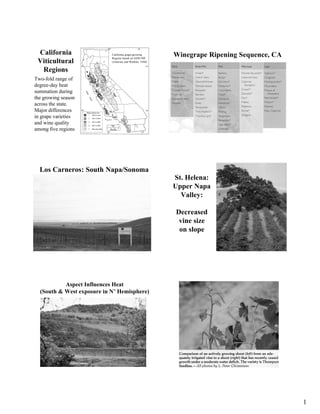
- 1. California California grape-growing Winegrape Ripening Sequence, CA Regions based on GDD-50F Viticultural (Amerine and Winkler, 1944) Regions Two-fold range of degree-day heat summation during the growing season across the state. Major differences in grape varieties and wine quality among five regions Los Carneros: South Napa/Sonoma St. Helena: Upper Napa Valley: Decreased vine size on slope Aspect Influences Heat (South & West exposure in N’ Hemisphere) 1
- 2. Climate Region x Cultivar Jackson & Lombard (1993) Combinations (From: Reynolds, 1996) Alpha/Beta Viticultural Regions Cool Warm Tempranillo Mourvedre Nebbiolo Barbera Sangiovese Syrah Palomino Pedro Ximenez Touriga Nacional “Warm Climate” Grapes & Wines • High heat unit (GDD) regions (3500-4500) Cabernet Sauvignon • Long growing seasons (180-220 days) • Does well in both cool and warm regions • Mid-winter low temps usually not extreme • Flavor and aromatic qualities of wine differ • Soils in these climate regions usually lack across climate zones. organic matter, droughty, low fertility • Late ripening advantage in warm areas • Vines often head trained, spur pruned, • Black currant, cedar, tannic in warm regions widely spaced, “sprawling” • Bell pepper aromas in cooler regions • Yields per ha relatively low w/out irrigation • Grapes often ripen high sugar, but low acid Cabernet Sauvignon Roman Viticultural Regions Purple areas are historical Roman viticultural regions,brown areas above 700 m a.s.l. (From Johnson & Robinson, 2001) 2
- 3. Viticultural regions of Spain Climate and Wine Zones: Spain • Jerez de la Frontera in the S’west • Upper Douro valley in West (From Johnson & Robinson, 2001) • Rioja and • Most of vineyards in drier regions Navarra in • Summers often too hot for grapevines, northeast actually delaying ripening • Rias Baixas • Little water available for irrigation Sierra Nevadas near Granada Spanish Wines and Grapes • Native grape varieties adapted to hot climates, low-fertility soils, very low (1/6) vine densities • “Isolated” until 1970s, making wines with traditional varieties and methods (tinajas) • High latitude (Madrid ~ Ithaca), high elevation plateau (meseta), long hot, dry growing season • Main varieties: Tempranillo, Touriga Nacional, Garnacha, Mourvedre, and a few white grapes like Palomino, Airen (brandy) and Verdejo in Galicia (Rías Baixas) Olives & Grapes: Olives, Grapes Marriage of Tree and Vine and Cork Oaks 3
- 4. Tempranillo (Tinto fino, Tinto del pais, Traditional Aragonez) on albariza soil, Rioja Spain Winemaking Tempranillo Grenache Noir • Notes of tobacco, leather, (Garnacha, Cannonao, Alicante) cloves, spice • Workhorse variety—blended • Intensely purple small with Tempranillo in classic berries (tinto = ink) wines of Rioja & Navarra • Early budbreak and • Does best in older vines, hot, ripening (hence its name) dry, windy regions; quality • Juice is low in TA, with declines with irrigation high malic fraction • In fortified wines or rosés, • Needs blending with another grape like low color & tannins on its Garnacha or Cabernet own. Simple, fruity wines. Sauvignon to produce • Common in California high-quality wines Languedoc blends, also used in Chateauneuf-du-Pape Weathered red clay soils: Estremadura Navarra Garnacha Vineyard 4
- 5. New Vineyard in Navarra Upper Rio Ebro (left) and Rioja Vineyards: Spain Head Trained Spur Pruned Vine Head Trained Cane Pruned Cabernet Sauvignon in Napa La Frontera: Moorish Spain Jerez de la Frontera: Solera Sherry 5
- 6. ‘Palomino Fino’ Viña near Jerez Solera System: Sherries Transfers Portugal: Douro Valley Region from Criaderas (Jackson, 2000) • Oldest DOC in Europe • Unique varieties (Touriga Nacional) • World’s steepest vineyards? Upper Douro Vineyards: Portugal Douro Terraced Vineyards 6
- 7. Hillside Vineyard Equipment Other Major Warm Region Grapes • Barbera: Italy, California, Argentina • Nebbiolo: unique to northern Italy • Carignan: Spain (Aragon), southern France, California. Most productive grape? • Sangiovese: Italy (Chianti), California • Mourvedre: Spain, southern France • Zinfandel: California, southern Italy (as Primitivo) • Syrah/Shiraz: France, Australia, California Barbera Nebbiolo • Signature variety of Piemonte • Mostly grown in (NW Italy) northwest Italy • California and Argentina • Notes of tar, roses, • Blended for its acidity, deep violets, citrus… color, low tannins • High in tannins, acid • “Fruity” aromas and pigments • High yields, ease of • Wines of great longevity mechanical harvest • Varietal character • Adapts well to various soil elusive outside of types in hot regions Piedmont (Alba) • May need fog? Carignan(e) Sangiovese (Catalan, Mazuelo) (Brunello) • May be the most • Main variety in Chianti productive vine Classico, Tuscan Italy worldwide • Clonal variability makes • Mostly grown in wine quality extremely south France, Spain, variable (Grosso & Piccolo) California, Chile • Low pigment content, ease • Very susceptible to of oxidation, fading wines mildew and other • Blends well with Cabernet diseases in humid Sauvignon regions • Traditional blends with • Main virtue is high Trebbiano (a white grape) yields (12 tons/acre), • Low yields but good and good color disease resistance 7
- 8. Zinfandel Mourvèdre (Monastrell, (Primitivo) Mataro) • California’s “native” grape variety • Main variety in Bandol wines of Provence • From Slovenia via Italy (as Primitivo) • Needs warm climate for • Widely planted in quality (California, Northern California Australia, Valencia) • Very productive vine • Notes of blackberry, • Robust wines, berry notes, “animal,” acidic and rich tannins, high alcohol, astringent juice spicy (wasted in blush) • Has substantial body, • Uneven bunch ripening blending well with Syrah • In warmer regions, needs and Grenache low vigor sites to produce high quality wines Syrah (Shiraz) • From upper Rhone Valley in France • Blended in Hermitage and Cote Rôtie wines • Notes of black pepper, chocolate, cloves, cinnamon; rich tannins • Major variety in Australia, increasing in California too • Produces very different but equally interesting wines in both cool and warm regions • Not synonymous with Petite Sirah in California 8