* Desert Willow – Chilopsis linearis ssp. arcuata

(kye-LOP-sis lin-ee-AIR-iss)

Family: Bignoniaceae (Trumpet-Creeper Family)
Native to: Foothills of the Mojave and Colorado Deserts from CA & AZ into Mexico; in rocky washes,
depressions and desert grasslands. Common in some areas.
deciduous tree
mature height: 15-30 ft.
mature width: 15-30 ft.
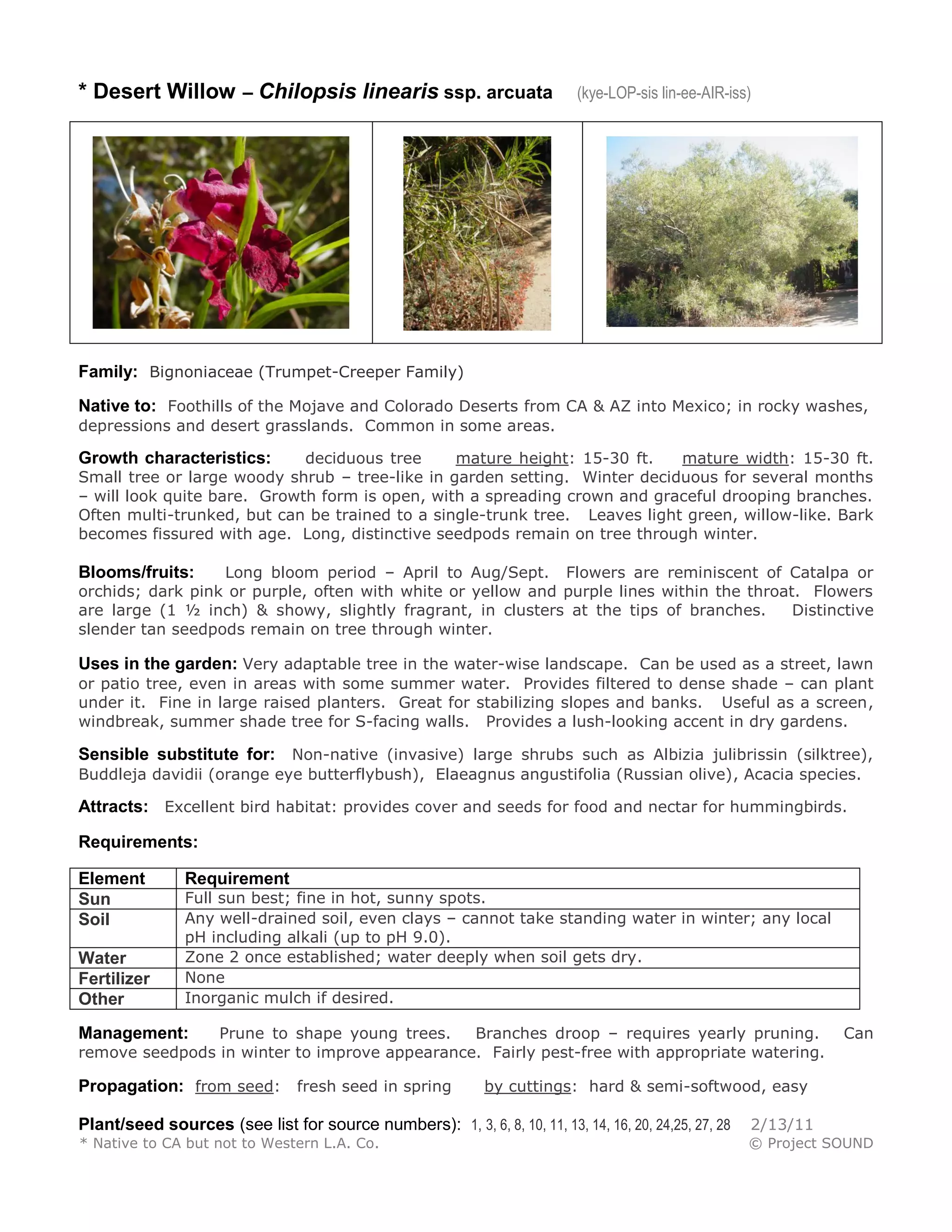
Small tree or large woody shrub – tree-like in garden setting. Winter deciduous for several months
– will look quite bare. Growth form is open, with a spreading crown and graceful drooping branches.
Often multi-trunked, but can be trained to a single-trunk tree. Leaves light green, willow-like. Bark
becomes fissured with age. Long, distinctive seedpods remain on tree through winter.

Growth characteristics:

Long bloom period – April to Aug/Sept. Flowers are reminiscent of Catalpa or
orchids; dark pink or purple, often with white or yellow and purple lines within the throat. Flowers
are large (1 ½ inch) & showy, slightly fragrant, in clusters at the tips of branches.
Distinctive
slender tan seedpods remain on tree through winter.

Blooms/fruits:

Uses in the garden: Very adaptable tree in the water-wise landscape. Can be used as a street, lawn
or patio tree, even in areas with some summer water. Provides filtered to dense shade – can plant
under it. Fine in large raised planters. Great for stabilizing slopes and banks. Useful as a screen,
windbreak, summer shade tree for S-facing walls. Provides a lush-looking accent in dry gardens.

Sensible substitute for: Non-native (invasive) large shrubs such as Albizia julibrissin (silktree),
Buddleja davidii (orange eye butterflybush), Elaeagnus angustifolia (Russian olive), Acacia species.

Attracts: Excellent bird habitat: provides cover and seeds for food and nectar for hummingbirds.
Requirements:
Element
Sun
Soil
Water
Fertilizer
Other

Requirement

Full sun best; fine in hot, sunny spots.
Any well-drained soil, even clays – cannot take standing water in winter; any local
pH including alkali (up to pH 9.0).
Zone 2 once established; water deeply when soil gets dry.
None
Inorganic mulch if desired.

Prune to shape young trees.
Branches droop – requires yearly pruning.
remove seedpods in winter to improve appearance. Fairly pest-free with appropriate watering.

Management:

Propagation: from seed: fresh seed in spring

Can

by cuttings: hard & semi-softwood, easy

Plant/seed sources (see list for source numbers): 1, 3, 6, 8, 10, 11, 13, 14, 16, 20, 24,25, 27, 28

2/13/11

* Native to CA but not to Western L.A. Co.

© Project SOUND

Chilopsis linearis

  • 1.
    * Desert Willow– Chilopsis linearis ssp. arcuata (kye-LOP-sis lin-ee-AIR-iss) Family: Bignoniaceae (Trumpet-Creeper Family) Native to: Foothills of the Mojave and Colorado Deserts from CA & AZ into Mexico; in rocky washes, depressions and desert grasslands. Common in some areas. deciduous tree mature height: 15-30 ft. mature width: 15-30 ft. Small tree or large woody shrub – tree-like in garden setting. Winter deciduous for several months – will look quite bare. Growth form is open, with a spreading crown and graceful drooping branches. Often multi-trunked, but can be trained to a single-trunk tree. Leaves light green, willow-like. Bark becomes fissured with age. Long, distinctive seedpods remain on tree through winter. Growth characteristics: Long bloom period – April to Aug/Sept. Flowers are reminiscent of Catalpa or orchids; dark pink or purple, often with white or yellow and purple lines within the throat. Flowers are large (1 ½ inch) & showy, slightly fragrant, in clusters at the tips of branches. Distinctive slender tan seedpods remain on tree through winter. Blooms/fruits: Uses in the garden: Very adaptable tree in the water-wise landscape. Can be used as a street, lawn or patio tree, even in areas with some summer water. Provides filtered to dense shade – can plant under it. Fine in large raised planters. Great for stabilizing slopes and banks. Useful as a screen, windbreak, summer shade tree for S-facing walls. Provides a lush-looking accent in dry gardens. Sensible substitute for: Non-native (invasive) large shrubs such as Albizia julibrissin (silktree), Buddleja davidii (orange eye butterflybush), Elaeagnus angustifolia (Russian olive), Acacia species. Attracts: Excellent bird habitat: provides cover and seeds for food and nectar for hummingbirds. Requirements: Element Sun Soil Water Fertilizer Other Requirement Full sun best; fine in hot, sunny spots. Any well-drained soil, even clays – cannot take standing water in winter; any local pH including alkali (up to pH 9.0). Zone 2 once established; water deeply when soil gets dry. None Inorganic mulch if desired. Prune to shape young trees. Branches droop – requires yearly pruning. remove seedpods in winter to improve appearance. Fairly pest-free with appropriate watering. Management: Propagation: from seed: fresh seed in spring Can by cuttings: hard & semi-softwood, easy Plant/seed sources (see list for source numbers): 1, 3, 6, 8, 10, 11, 13, 14, 16, 20, 24,25, 27, 28 2/13/11 * Native to CA but not to Western L.A. Co. © Project SOUND