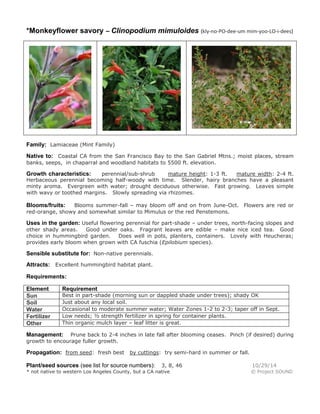
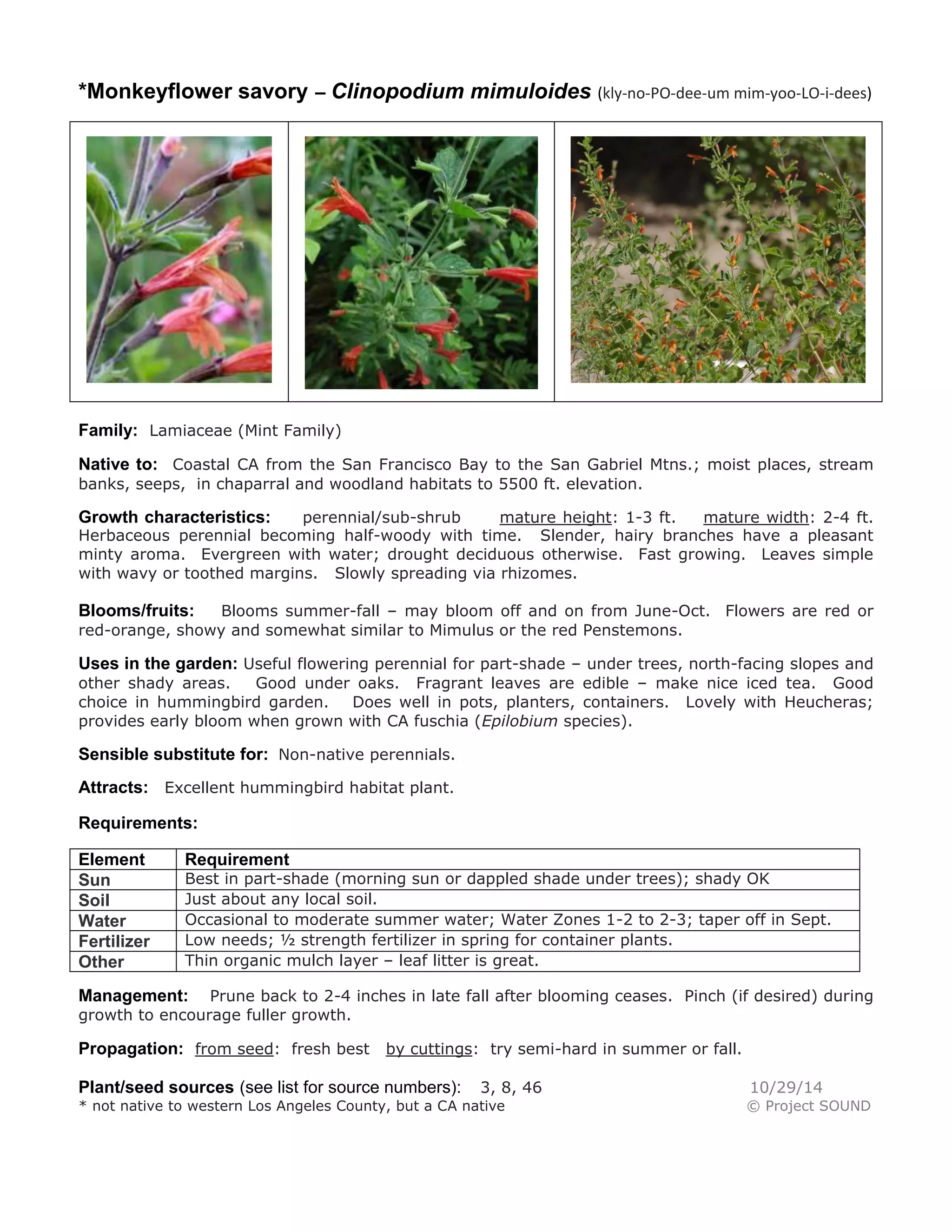
*Monkeyflower savory – Clinopodium mimuloides (kly-no-PO-dee-um mim-yoo-LO-i-dees) 
Family: Lamiaceae (Mint Family) 
Native to: Coastal CA from the San Francisco Bay to the San Gabriel Mtns.; moist places, stream banks, seeps, in chaparral and woodland habitats to 5500 ft. elevation. 
Growth characteristics: perennial/sub-shrub mature height: 1-3 ft. mature width: 2-4 ft. Herbaceous perennial becoming half-woody with time. Slender, hairy branches have a pleasant minty aroma. Evergreen with water; drought deciduous otherwise. Fast growing. Leaves simple with wavy or toothed margins. Slowly spreading via rhizomes. 
Blooms/fruits: Blooms summer-fall – may bloom off and on from June-Oct. Flowers are red or red-orange, showy and somewhat similar to Mimulus or the red Penstemons. 
Uses in the garden: Useful flowering perennial for part-shade – under trees, north-facing slopes and other shady areas. Good under oaks. Fragrant leaves are edible – make nice iced tea. Good choice in hummingbird garden. Does well in pots, planters, containers. Lovely with Heucheras; provides early bloom when grown with CA fuschia (Epilobium species). 
Sensible substitute for: Non-native perennials. 
Attracts: Excellent hummingbird habitat plant. 
Requirements: 
Element 
Requirement 
Sun 
Best in part-shade (morning sun or dappled shade under trees); shady OK 
Soil 
Just about any local soil. 
Water 
Occasional to moderate summer water; Water Zones 1-2 to 2-3; taper off in Sept. 
Fertilizer 
Low needs; ½ strength fertilizer in spring for container plants. 
Other 
Thin organic mulch layer – leaf litter is great. 
Management: Prune back to 2-4 inches in late fall after blooming ceases. Pinch (if desired) during growth to encourage fuller growth. 
Propagation: from seed: fresh best by cuttings: try semi-hard in summer or fall. 
Plant/seed sources (see list for source numbers): 3, 8, 46 10/29/14 
* not native to western Los Angeles County, but a CA native © Project SOUND

Gardening sheet clinopodium mimuloides

  • 1.
    *Monkeyflower savory –Clinopodium mimuloides (kly-no-PO-dee-um mim-yoo-LO-i-dees) Family: Lamiaceae (Mint Family) Native to: Coastal CA from the San Francisco Bay to the San Gabriel Mtns.; moist places, stream banks, seeps, in chaparral and woodland habitats to 5500 ft. elevation. Growth characteristics: perennial/sub-shrub mature height: 1-3 ft. mature width: 2-4 ft. Herbaceous perennial becoming half-woody with time. Slender, hairy branches have a pleasant minty aroma. Evergreen with water; drought deciduous otherwise. Fast growing. Leaves simple with wavy or toothed margins. Slowly spreading via rhizomes. Blooms/fruits: Blooms summer-fall – may bloom off and on from June-Oct. Flowers are red or red-orange, showy and somewhat similar to Mimulus or the red Penstemons. Uses in the garden: Useful flowering perennial for part-shade – under trees, north-facing slopes and other shady areas. Good under oaks. Fragrant leaves are edible – make nice iced tea. Good choice in hummingbird garden. Does well in pots, planters, containers. Lovely with Heucheras; provides early bloom when grown with CA fuschia (Epilobium species). Sensible substitute for: Non-native perennials. Attracts: Excellent hummingbird habitat plant. Requirements: Element Requirement Sun Best in part-shade (morning sun or dappled shade under trees); shady OK Soil Just about any local soil. Water Occasional to moderate summer water; Water Zones 1-2 to 2-3; taper off in Sept. Fertilizer Low needs; ½ strength fertilizer in spring for container plants. Other Thin organic mulch layer – leaf litter is great. Management: Prune back to 2-4 inches in late fall after blooming ceases. Pinch (if desired) during growth to encourage fuller growth. Propagation: from seed: fresh best by cuttings: try semi-hard in summer or fall. Plant/seed sources (see list for source numbers): 3, 8, 46 10/29/14 * not native to western Los Angeles County, but a CA native © Project SOUND