SPECIFIC PROPERTIES
AND USES
Nylon: Its melt viscosity is very low.
You can add nylon fiberglass to provide
increased stiffness .
It is a crystalline polymer and is thus very
resistant.
Nylon is soluble in phenol, cresol and formic
acid.
Its melting point is 263 ° C.
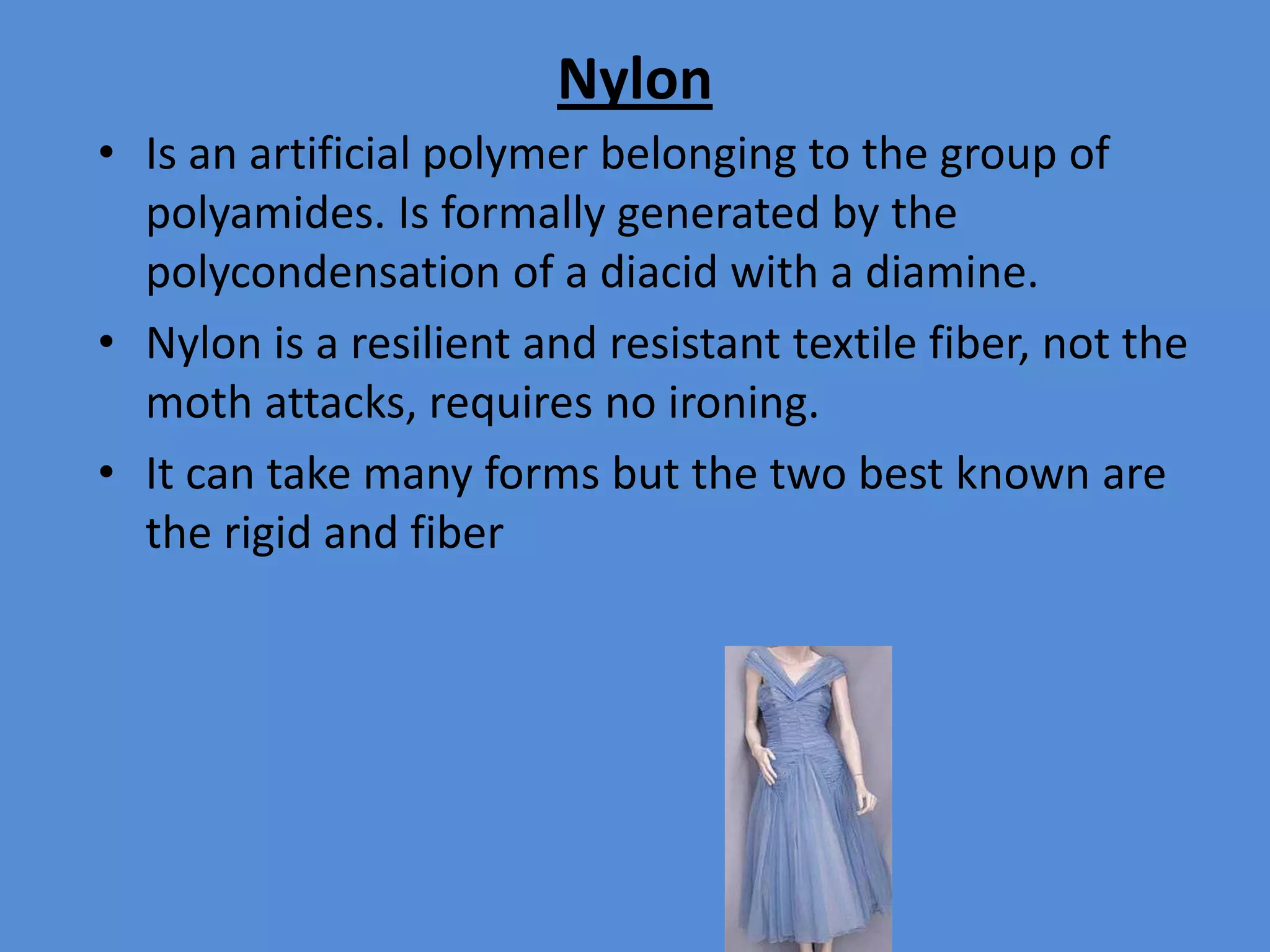
The nylon is used, for example, to make socks.
• Polyester: It is absorbent.
Retains heat better than linen.
Resistant to acids, alkalis and bleaches.
It has lots of shine.
50% crystalline.
Very sensitive to thermodynamic processes.
It is thermoplastic.
Melting point = 250 ° C.
Manufacture of beverage containers.
• Rayon: Rayon is a very versatile fiber and
has the same properties in terms of ease of
use than other natural fibers.
Can imitate the feel of silk, wool, cotton or
linen.
Rayon fabrics are soft, light, fresh,
comfortable and highly absorbent, but not
isolate the body, allowing perspiration.
Rayon is mostly used in the textile clothing,
in decoration, in industry and other uses.
• Lycra: Ability to stretch several times its size
far and resume its original shape.
It is lightweight, durable, easy to dye and
resists abrasion and pressing.
It also absorbs moisture naturally.
The Lycra can be found in each category of the
garment industry. The largest market segment
is the exercise and training. It has also
remained popular in both male and female
underwear.
SAÚL JOSÉ MAYORDOMO GONZÁLEZ
Synthetic fibers
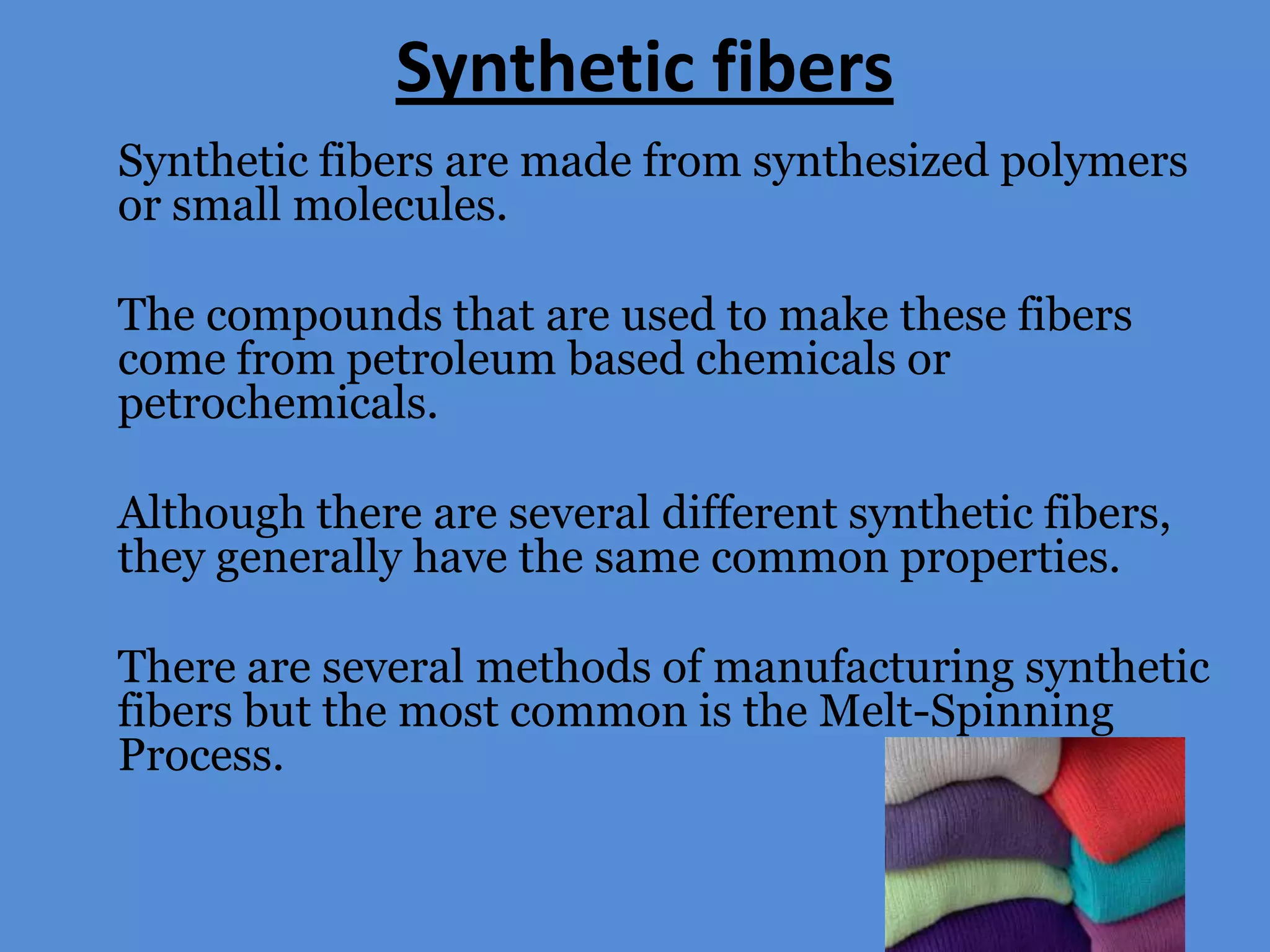
Synthetic fibers are made from synthesized polymers
or small molecules.
The compounds that are used to make these fibers
come from petroleum based chemicals or
petrochemicals.
Although there are several different synthetic fibers,
they generally have the same common properties.
There are several methods of manufacturing synthetic
fibers but the most common is the Melt-Spinning
Process.
Nylon
• Is an artificial polymer belonging to the group of
polyamides. Is formally generated by the
polycondensation of a diacid with a diamine.
• Nylon is a resilient and resistant textile fiber, not the
moth attacks, requires no ironing.
• It can take many forms but the two best known are
the rigid and fiber
Polyester
• Polyester is a category of polymers which contain the
ester functional group in their main chain.
• Natural polyesters and a few synthetic ones are
biodegradable
• Depending on the chemical structure, polyester can
be a thermoplastic or thermoset.
• Polyesters include naturally occurring chemicals,
such as in the cutin of plant cuticles, as well as
synthetics through step-growth polymerization such
as polycarbonate and polybutyrate.

DANIEL ASENSIO ROJAS

Specific properties and uses

  • 1.
    SPECIFIC PROPERTIES AND USES Nylon:Its melt viscosity is very low. You can add nylon fiberglass to provide increased stiffness . It is a crystalline polymer and is thus very resistant. Nylon is soluble in phenol, cresol and formic acid. Its melting point is 263 ° C. The nylon is used, for example, to make socks.
  • 2.
    • Polyester: Itis absorbent. Retains heat better than linen. Resistant to acids, alkalis and bleaches. It has lots of shine. 50% crystalline. Very sensitive to thermodynamic processes. It is thermoplastic. Melting point = 250 ° C. Manufacture of beverage containers.
  • 3.
    • Rayon: Rayonis a very versatile fiber and has the same properties in terms of ease of use than other natural fibers. Can imitate the feel of silk, wool, cotton or linen. Rayon fabrics are soft, light, fresh, comfortable and highly absorbent, but not isolate the body, allowing perspiration. Rayon is mostly used in the textile clothing, in decoration, in industry and other uses.
  • 4.
    • Lycra: Abilityto stretch several times its size far and resume its original shape. It is lightweight, durable, easy to dye and resists abrasion and pressing. It also absorbs moisture naturally. The Lycra can be found in each category of the garment industry. The largest market segment is the exercise and training. It has also remained popular in both male and female underwear. SAÚL JOSÉ MAYORDOMO GONZÁLEZ
  • 5.
    Synthetic fibers Synthetic fibersare made from synthesized polymers or small molecules. The compounds that are used to make these fibers come from petroleum based chemicals or petrochemicals. Although there are several different synthetic fibers, they generally have the same common properties. There are several methods of manufacturing synthetic fibers but the most common is the Melt-Spinning Process.
  • 6.
    Nylon • Is anartificial polymer belonging to the group of polyamides. Is formally generated by the polycondensation of a diacid with a diamine. • Nylon is a resilient and resistant textile fiber, not the moth attacks, requires no ironing. • It can take many forms but the two best known are the rigid and fiber
  • 7.
    Polyester • Polyester isa category of polymers which contain the ester functional group in their main chain. • Natural polyesters and a few synthetic ones are biodegradable • Depending on the chemical structure, polyester can be a thermoplastic or thermoset. • Polyesters include naturally occurring chemicals, such as in the cutin of plant cuticles, as well as synthetics through step-growth polymerization such as polycarbonate and polybutyrate. DANIEL ASENSIO ROJAS